Right-to-charge laws bring the promise of EVs to apartments, condos and rentals

20 07 2023

Charging at home is more convenient for apartment dwellers, too. Photo: Westend61 via Getty Images

By Eleftheria Kontou, Assistant Professor of Civil and Environmental Engineering, University of Illinois at Urbana-Champaign via The Conversation • Reposted: July 20, 2023

More than 3.6 million electric cars are driving around the U.S., but if you live in an apartment, finding an available charger isn’t always easy. Grocery stores and shopping centers might have a few, but charging takes time and the spaces may be taken or inconvenient.

Several states and cities, aiming to expand EV use, are now trying to lift that barrier to ownership with “right to charge” laws.

Illinois’ governor signed the latest right-to-charge law in June 2023, requiring that all parking spots at new homes and multiunit dwellings be wired so they’re ready for EV chargers to be installed. Colorado, Florida, New York and other states have passed similar laws in recent years.

But having wiring in place for charging is only the first step to expanding EV use. Apartment building managers, condo associations and residents are now trying to figure out how to make charging efficient, affordable and available to everyone who needs it when they need it.

Electric cars can benefit urban dwellers

As a civil engineer who focuses on transportation, I study ways to make the shift to electric vehicles equitable, and I believe that planning for multiunit dwelling charging and accessibility is smart policy for cities.

Transitioning away from fossil-fueled vehicles to electric vehicles has benefits for the environment and the health of urban residents. It reduces tailpipe emissions, which can cause respiratory problems and warm the climate; it mitigates noise; and it improves urban air quality and quality of life.

Surveys show most EV drivers charge at home, where electricity rates are lower than at public chargers and there is less competition for charging spots. In California, the leading state for EVs, 88% of early adopters of battery electric cars said they were able to charge at home, and workplace and public charging represented just 24% and 17% of their charging sessions, respectively. Nationwide, about 50% to 80% of all battery electric car charging sessions take place at home.

Yet almost a quarter of all U.S. housing structures have more than one dwelling unit, according to the 2019 American Housing Survey. In California, 32.5% of urban dwellings have multiple units, and only a third of those units include access to a personal garage where a charger could be installed.

Even if installing a personal charger is an option, it can be expensive in a multiunit dwelling if wiring isn’t already in place. And it often comes with other obstacles, including the potential need for electrical upgrades or challenges from homeowner association rules and restrictions. Installing chargers can involve numerous stakeholders who can impede the process – lot owners, tenants, homeowners associations, property managers, electric utilities and local governments.

However, if a 240-volt outlet is already available, basic charger installation drops to a few hundred dollars.

Right-to-charge laws aims for ubiquitous home charging

Right-to-charge laws aim to streamline home charging access as new buildings go up.

Illinois’ new Electric Vehicle Charging Act requires that 100% of parking spaces at new homes and multiunit dwellings be ready for electric car charging, with a conduit and reserved capacity to easily install charging infrastructure. The new law also gives renters and condominium owners in new buildings a right to install chargers without unreasonable restriction from landlords and homeowner associations.

A woman unloads a shopping cart in a parking lot and puts items into her EV, which is charging from a public charger.
Public chargers typically aren’t as convenient as charging at home, and chargers aren’t always available. Photo: martin-dm/E+ via Getty Images

California, Colorado, Florida, Hawaii, Maryland, New Jersey, New York, Oregon and Virginia also have right-to-charge lawsdesigned to make residential community charging deployment easier, as do several U.S. cities including Seattle and Washington, D.C. Most apply only to owner-occupied buildings, but a few, including California’s and Colorado’s, also apply to rental buildings.

Chicago officials have considered an ordinance that wouldinclude existing buildings, too.

Sharing chargers can reduce the cost

There are several steps communities can take to increase access to chargers and reduce the cost to residents.

In a new study, colleagues and I looked at how to design shared charging for an apartment building with scheduling that works for everyone. By sharing chargers, residential communities can reduce the costs associated with charger installation and use. 

The biggest challenge to shared charging is often scheduling. We found that a centralized charging management system that suggests charging times for each electric car owner that aligns with the owner’s travel schedule and the amount of charge needed can work – with enough chargers.
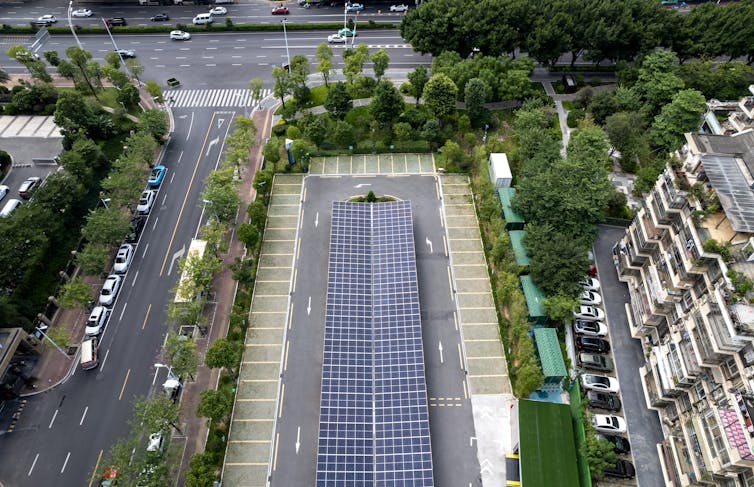
The view from high in an apartment building shows balconies below and the solar-panel covered roof over the parking area.
Apartments in a tower in China look down on an EV charging station covered in solar panels. Photo: Zhihao/Moment via Getty Images

In a typical multiunit dwelling in Chicago – with an average of 14 cars in the parking lot – a small community charging hub with two level 2 chargers, the type common in homes and office buildings, can cover daily residential recharging demand at a cost of about 15 cents per kilowatt-hour. But having only two chargers means residents are waiting on average 2.2 hours to charge.

A larger charging hub with eight level 2 chargers in the same city avoids the delay but increases the cost of charging to 21 cents per kWh because of upfront cost of purchasing and installing the chargers. To put that into context, the average electricity cost for Chicago residents is 16 cents per kWh

The future of charging management at multiunit dwellings will be automated for efficiency, with a computer or artificial intelligence determining the most efficient schedule for charging. Optimized scheduling can be responsive to the times renewable electricity generation sources are producing the most power – midday for solar energy, for example – and to dynamic electricity pricing. Automation can also eliminate delays for drivers while saving money and reducing the burden on the electric grid.

The current limited access to home charging in many cities constrains electric vehicle adoption, slows down the decarbonization of U.S. transportation and exacerbates inequitiesin electric vehicle ownership. I believe efforts to expand charging in multidwelling buildings can help lift some of the biggest barriers and help reduce noise and pollution in urban cores at the same time.

To see the original post, follow this link: https://theconversation.com/right-to-charge-laws-bring-the-promise-of-evs-to-apartments-condos-and-rentals-206721


GM, Ford Seek to Scale Up Virtual Power Plants

7 02 2023

Image credit: hasan/Adobe Stock

By Tina Casey from triple pundit.com • Reposted: February 7, 2023

Crusaders against socially responsible investing have been holding forth about the evils of “woke capitalism” in recent years. For all the red-hot rhetoric, though, leading U.S. businesses continue to promote clean power. The latest effort involves GM, Ford, and other leading stakeholders in an effort to grow the market for virtual power plants.

What is a virtual power plant?

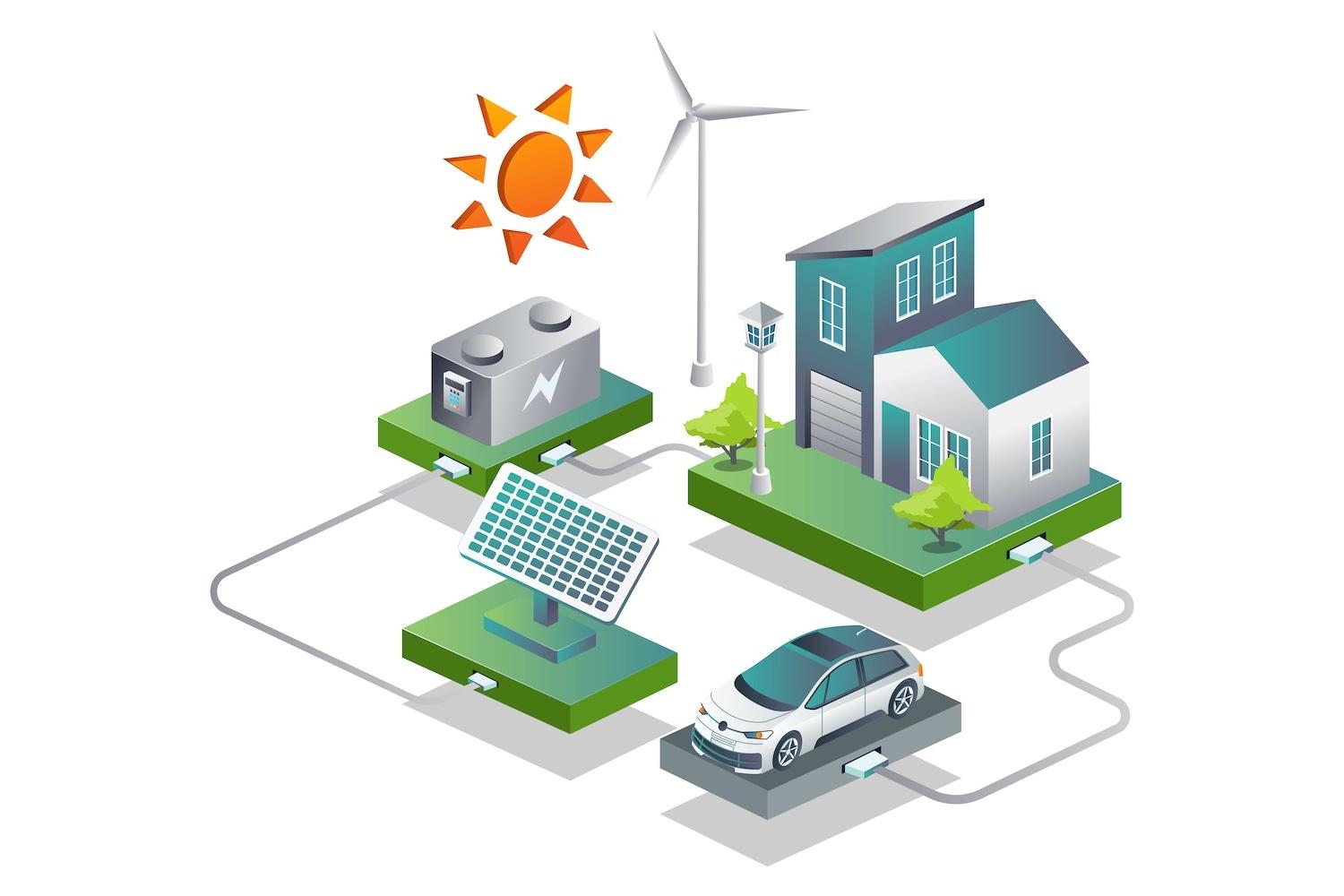
Although the idea may seem somewhat exotic, a virtual power plant is simply a networked grid system that enables individual electricity producers to interact with each other and with individual users. The overall aim is to avoid the cost of building new centralized power plants — and especially to avoid building new fossil power plants — while improving reliability and resiliency.

This network-based approach to grid planning is made possible by new smart grid and smart metering technology, along with the proliferation of rooftop solar and other small-scale renewable energy systems. It is a sharp contrast with the traditional strategy of building additional centralized power plants to get communities through periods of peak demand.

In addition, virtual power plants provide electricity users with new opportunities to save or even make money, depending on the incentives offered by their grid operator.

In a blog post last May, the U.S. Department of Energy described how virtual plants have come to include not only individual meters, but also individual appliances that are designed to interact with the grid, as well as electric vehicle charging stations and energy storage facilities.

“Operators gain the flexibility to better reduce peak demand and, as a result, defer investment in additional capacity and infrastructure to serve a peak load that is expected to increase as we electrify the nation’s economy,” explained Jigar Shah, director of the Energy Department’s Loan Programs Office.

Why don’t we all have virtual power plants?

For all their potential benefits, virtual power plants are a relatively new phenomenon, and they still account for a vanishingly small percentage of grid activity in the U.S.

In a followup blog post last October, Shah noted that the market for virtual power plants has only been open since 2020, through an order of the Federal Energy Regulatory Commission. “Nearly two years later, VPPs are just beginning to compete in organized capacity, energy, and ancillary services markets at a meaningful scale at the regional level,” Shah wrote.

In particular, Shah focused on the need for virtual power plants to secure revenue contracts. “To unleash the capital that makes ratepayer and wholesale power cost reductions possible, incumbent financiers need to see lower customer acquisition costs and consistent revenues for the critical services provided,” Shah noted.

Heeding the VPP call

GM and Ford have heeded the call for virtual power plants under the banner of the VP3, the new Virtual Power Plant Partnership hosted by the clean energy organization Rocky Mountain Institute (RMI). Other VP3 founding stakeholders include Google Nest, OhmConnect, Olivine, SPAN, SunPower, Sunrun, SwitchDin and Virtual Peaker.  

GM and Google Nest served as seed funders of VP3. RMI also hopes to build on the success of its Renewable Energy Buyers Association partnership, of which GM is also a founding member.

“VP3 is an initiative based at RMI that works to catalyze industry and transform policy to support scaling VPPs in ways that help advance affordable, reliable electric sector decarbonization by overcoming barriers to VPP market growth,” according to a press announcement from the Rocky Mountain Institute.

“Our analysis shows that VPPs can reduce peak power demand and improve grid resilience in a world of increasingly extreme climate events,” added RMI CEO Hon Creyts, in a statement. “A growing VPP market also means revenue opportunities for hardware, software, and energy-service companies in the buildings and automotive industries.”

As a collaborative effort, VP3 will work to raise awareness about the benefits of virtual power plants, develop best practices and standards across the industry, and promote supportive policies.

The electric vehicle connection

Electric vehicles are in a perfect position to contribute to and benefit from virtual power plants, due to their mobility, flexibility and large energy storage capacity. That explains why Ford and GM jumped at the opportunity to get involved with VP3 as founding members.

Mark Bole, GM’s head of V2X and battery solutions division, noted that the V3 collaboration “underscores GM’s commitment to creating a more resilient grid, with EVs and virtual power plants playing a key role in helping to advance our all-electric future.”

In a separate announcement, Bill Crider, head of global charging and energy services at Ford, explained that electric vehicles are “introducing entirely new opportunities for consumers and businesses alike, creating a greater need for sustainable energy solutions to responsibly power our connected lifestyles.”

“Supporting grid stability through the introduction of technologies like Intelligent Backup Power is central to Ford’s strategy, and collaborating to advance virtual power plants will be another important step to ensure a smooth transition to an EV lifestyle,” Crider added.

Who’s next on the virtual power plant bandwagon?

Among the Big Three legacy U.S. automakers, Stellantis has yet to engage with VP3. That could change as the company that now owns Dodge and Chrysler ramps up its interest in virtual power plants.

In 2020, Stellantis began work on a large-scale virtual power plant in Italy based on electric vehicle-to-grid technology. The company, which also counts Fiat and Peugeot among its subsidiaries, may be waiting on the results of that project before committing itself to a policymaking endeavor in the U.S.

Interest in virtual power plants is also growing at Volkswagen and other overseas automakers that have an eye on the U.S. market. In addition, Tesla has embarked on virtual power plant ventures in California and Texas, deploying both its vehicle batteries and its Powerwall home batteries.

It remains to be seen if Tesla will collaborate with VP3 on industry standards, though. Tesla CEO Elon Musk established a well-known reputation for not collaborating in the early days of electric vehicle commercialization. He held out Tesla’s charging system as unique to Tesla, even as other automakers worked to create the standard CCS charging technology for Europe and North America.

Since its introduction in 2011, CCS has been supported by almost all other auto manufacturers in those two markets. Even Tesla itself leans on CCS to some degree, since it provides Tesla owners with an adapter to use at CCS charging stations. (Note: Japan and China continue to use their own charging systems.)

More recently, Musk further cultivated his outsider status in the early days of the COVID-19 lockdown when he criticized the U.S. government’s public safety guidelines and upstaged an inter-industry collaboration to restart U.S. factories. He also spread confusion and misinformation about the virus and the COVID-19 vaccine on social media.

When U.S. President Joe Biden convened a major media event for auto manufacturers in August of 2021, it was no surprise to see Tesla left out in the cold. Last year, the S&P 500 also took Tesla to task for not keeping pace with its peers in the auto industry on corporate ESG (environment, social, governance) issues.

Musks’s use of social media also makes Tesla an outlier among CEOs in the auto industry and elsewhere, in regards to his willingness to amplify and normalize white nationalist rhetoric.

With or without Tesla, though, VP3 is yet another instance in which industry leaders are swatting away the anti-ESG agitators like flies to take advantage of new opportunities to grow their businesses and attract new customers.

To see the original post, follow this link: https://www.triplepundit.com/story/2023/gm-ford-virtual-power-plants/765201