
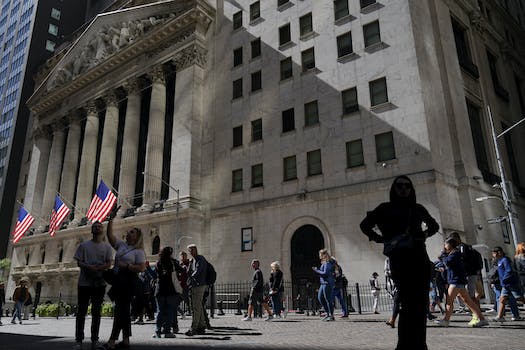
U.S. Securities and Exchange Commission Headquarters in Washington D.C. Photo: triple pundit
By Tina Casey from triplepundit.com • Reposted: April 6, 2023
When the U.S. Securities and Exchange Commission proposed new rules for climate risk disclosure last year, they were met with an unprecedented flood of public comments. Part of the firestorm could be an effect of partisan politics. However, some commenters raised legitimate concerns, and the SEC is reportedly poised to make some changes in the coming weeks.
The SEC responds to investor trends, not partisan ideology
When the climate disclosure rules were proposed last year, SEC Chair Gary Gensler emphasized the agency’s founding mission to ensure that investors are fully informed about risks. “Our core bargain from the 1930s is that investors get to decide which risks to take, as long as public companies provide full and fair disclosure and are truthful in those disclosures,” he said in a press statement announcing the rules, dated March 21, 2022.
Gensler was also quick to note that the proposed SEC climate rules are not derived from partisan ideology. They are based on the clear and indisputable fact that climate disclosures already have broad support among investors.
“Today, investors representing literally tens of trillions of dollars support climate-related disclosures because they recognize that climate risks can pose significant financial risks to companies, and investors need reliable information about climate risks to make informed investment decisions,” Gensler explained.
The proposed rules were also intended to level the playing field by creating a uniform standard for climate disclosures. “Companies and investors alike would benefit from … the clear rules of the road proposed in this release,” Gensler said. More information and more disclosures also allow issuers to meet investor demands for clarity on climate risks, he argued.
Pushback against new SEC climate rules
The fact-based genesis of the new SEC climate rules is a stark contrast to the mounting pushback against environmental, social and governance (ESG) considerations in business. High-profile public officials have been railing against ESG investing as a threat to the health of public pensions. However, they offer no facts to back up their arguments, which on closer inspection appear to be nothing more than thinly disguised efforts to protect fossil energy stakeholdersfrom competition. The anti-ESG messaging has also become entwined with the rhetoric of right-wing extremism and “anti-woke” posturing, which doesn’t help its legitimacy.
It is no surprise to see well-known conservative lobbying organizations promote anti-ESG messaging in their public comments on the proposed SEC climate rules. For example, the Heritage Foundation, a conservative think tank, colored its critique of the rules with a jab at ESG advocates in a lengthy public comment submitted on June 1, 2021, describing them as “increasingly strident” in their efforts to achieve “various social or political objectives.”
“This is being done under the banner of social justice; corporate social responsibility (CSR); stakeholder theory; environmental, social and governance (ESG) criteria; socially responsible investing (SRI); sustainability; diversity; business ethics; common-good capitalism; or corporate actual responsibility,” the Heritage Foundation’s comment reads.
“The social costs of ESG and broader efforts to repurpose business firms will be considerable,” the group warned. “Wages will decline or grow more slowly, firms will be less productive and less internationally competitive, investor returns will decline, innovation will slow, goods and services quality will decline and their prices will increase,” it added, without substantiation.
Another look at the SEC climate rules
All in all, Heritage dismissed the entire effort as a pointless, politics-driven exercise. “When all is said and done, climate change disclosure requirements will have somewhere between a trivial impact and no impact on climate change,” its comment reads.
In contrast, other commenters underscored the extent to which ESG principles and ESG reporting have already been adopted as a matter of business, not ideology. “The impacts of the climate crisis on our lives and our livelihoods are worsening at a dramatic rate,” the nonprofit B Lab — which operates the voluntary B Corp certification for responsible businesses — and the B Corp Climate Collective wrote in a joint comment to the SEC, in just one example
Commenters also noted that the economic landscape is fraught with physical risks from climate impact, as well as bottom-line risks involving changes in regulatory, technological, economic, and litigation scenarios as the economy shifts to net-zero.
“The risks can combine in unexpected ways, with serious, disruptive impacts on asset valuations, global financial markets, and global economic stability,” the B Corp groups argued, in making the case for stronger, more detailed disclosure rules based on the recommendationsof the Task Force on Climate-related Financial Disclosures (TCFD).
The SEC has some changes in store
The SEC has yet to announce a decision on what will be included in the revised rules. However, in a recent interview with CNBC, Chairman Gensler reminded the public of the agency’s investor protection mission. “I like to say we’re merit-neutral, whether it’s crypto or climate risk,” he told the outlet earlier this year. “But we’re not investor-protection-neutral or capital-formation-neutral.”
He reiterated that the new SEC climate rules are “about bringing consistency and comparability to disclosures that are already being made about climate risks,” adding that “investors seem to be, today, making decisions about this information.”
Some SEC observers anticipate that the agency will propose easing the original rules, in order to prevent unreasonable burdens on companies that are already engaged with climate disclosure.
That may be so. However, it is unlikely that the revised rules will provide a cloak of invisibility for companies that have not made plans for transitioning to a low-carbon economy.
In the CNBC interview, Gensler emphasized that the proposed rules don’t force companies to make a climate transition plan if they don’t already have one. “If a company doesn’t have a climate transition plan, that disclosure was: ‘We don’t we don’t have that such a plan or target,’” he explained.
That sounds simple enough. If that feature of the proposed rule remains in place when the SEC announces the revisions — which are expected later this month — investors will have a clear, accessible way in which to assess which companies are preparing to respond to the massive risks posed by climate impacts, and which still have their heads in the sand.
To see the original post, follow this link: https://www.triplepundit.com/story/2023/sec-climate-rule-changes/770581
 Eric Block On Responsible Branding
You must be logged in to post a comment.