Dirty Water and Dead Rice: The Cost of the Clean Energy Transition in Rural Minnesota

21 11 2023
Native Americans Harvey Goodsky Jr. and his wife Morningstar harvest wild rice during a perfectly calm day on Rice Lake in north central Minnesota. The Rice Lake National Wildlife Refuge in Aitkin County, in north central Minnesota is home to pristine a 4500 acre body of water that provides the wild rice harvest that the Ojibwe have depended on for countless generations. The harvest is done in the fall when the rice can be easily knocked off the plant using a couple sticks called knockers. (Photo by Richard Tsong-Taatarii/Star Tribune via Getty Images)

By Karina Atkins from Inside Climate News • Reposted: November 21, 2023

More than 250 years ago, the Ojibwe people, one of the largest Indigenous populations in North America, received a prophecy to migrate westward until they reached the land where food grows on water. 

When the Mille Lacs Band of Ojibwe encountered wild rice in north-central Minnesota, they knew they found their new home. Rice harvesting has been a cornerstone of Ojibwe culture ever since. 

Today, mining exploration company Talon Metals, also has its sights set on Minnesota. Some of the world’s richest high-grade nickel and copper deposits are thousands of feet below the state colloquially known as “the land of 10,000 lakes.”

Talon seeks to construct a mine in the rural town of Tamarack, which it says will be integral to building the nation’s domestic supply of materials necessary for a clean energy transition. 

Nickel and copper are key components of rechargeable lithium ion batteries that are widely used for low-emission technologies like electric vehicles (EVs). The company already has an agreement to supply Tesla with nickel from its proposed mine, potentially bringing hundreds of unionized mining jobs to this rural area.

The proposed mine, which Talon is exploring in a joint venture with multinational British-Australian mining company Rio Tinto, would be located near streams and wetlands where sacred wild rice—traditionally called manoomin—thrives. It has been a dietary staple, traditional medicine and spiritual offering for the Ojibwe for centuries. 

“It’s a tie to spirituality and culture. It’s our identity: the season of ricing. If that were to be impacted, it could be one of the greatest cultural erasers of mankind in North America. And that’s not something we will allow to happen,” said Applegate. 

Unlike iron, which has traditionally been mined in Minnesota, nickel and copper are bonded to sulfide ores. When exposed to air and water, a chemical reaction occurs that releases sulfuric acid and toxic metals like lead, mercury and arsenic that can contaminate water bodies via groundwater and runoff. 

Lakes, streams, and wetlands with high concentrations of these byproducts, known as acid mine drainage, are extremely unlikely to host wild rice, according to a 2017 University of Minnesota study. 

In an archival photo from 1900, an Ojibwa wild rice harvester thrashes grain heads with a stick so grain will fall in his boat. Photo by Corbis via Getty Images

Since Tamarack is at the headwaters of the Kettle River and Mississippi River watershed, the acid mine drainage has the potential to contaminate local water supplies and ecosystems, including some of the region’s most fertile manoomin beds. 

“The area where this mine is sited could not be worse. The area is so wet,” warned Applegate.

To date, no sulfide mine has been able to operate without causing pollution to the surrounding environment, according to Kathryn Hoffman, an environmental lawyer and the CEO of the Minnesota Center for Environmental Advocacy. 

Mining companies often point to Flambeau Mine, a copper-sulfide mine that operated in Wisconsin from 1993 to 1997, as a success story. But, water samples collected on site by the Wisconsin Department of Natural Resources since operations ceased show copper and zinc levels that exceed state toxicity standards. In 2012, a court found that the mine violated the Clean Water Act—a ruling that was later overturned due to a permitting technicality.

Aware of the negative perception many have of sulfide mining, Talon has committed to using new techniques to limit environmental disturbances, according to the company’s chief external affairs officer and head of climate strategy, Todd Malan.

The planned surface disturbance of the mine has been reduced to approximately 60 acres, the majority of which are drier uplands. For comparison, Flambeau, which was considered a small mine, disturbed 181 acres. 

Talon says it will achieve this by surgically removing orebodies found two- to three-thousand feet underground using a tunnel boring machine. The machine will lay a self-sealing cement tunnel as it penetrates through the most water-rich layers of earth found 150 feet below the surface to minimize interaction with groundwater. 

Talon has also agreed to build its processing and waste management facility at a dry industrial site in North Dakota instead of the fertile land near the mine. The nickel and copper ore will be transported there via sealed containers from a rail spur at the base of the Tamarack mine. 

“​​This is costing us money. It’s not the normal way that mines get developed. But we’re trying to listen to our community and to the concerns of the tribes and take some risk off the table in Minnesota,” said Malan.

An aerial photo of the Tamarack Project area. Photo courtesy Talon Metals

The Tamarack Project is currently undergoing a preliminary environmental review by the Minnesota Department of Natural Resources, which the Minnesota Center for Environmental Advocacy and Mille Lacs Band are watching closely. Bold commitments are often part of a mining company’s playbook to gain early supporters, according to both. 

“What Talon is doing at this point is very common for mining companies, which is they are making a lot of promises. Early on, they have ideas for what their project might look like, and some of those are pretty lofty. The typical path of a mining company is that they drop those quietly as time goes on,” said Hoffman. 

This is what happened with PolyMet, another mining company that proposed a nickel-copper mine in northeastern Minnesota. In an attempt to gain local support, it pledged to build a finishing plant at the mouth of the mine instead of shipping orebodies overseas for processing. This would have created local jobs and strengthened domestic supply chains. But, those plans were silently abandoned by the time PolyMet was awarded an operating permit in 2018. 

PolyMet was positioned to be the first sulfide mine in Minnesota, but its permit was revoked earlier this year before any operations began. The federal government determined that the company’s plans did not comply with the water quality standards of a sovereign tribe downstream. 

Transforming Tamarack? 

Now, Talon is poised to become the first sulfide mine in Minnesota and has already laid deep roots in north-central Minnesota. 

About 80 percent of its employees live in the state, and it is one of the largest employers in Tamarack. Talon says the proposed mine will directly create 300 to 500 new jobs in the town, which currently has a population of fewer than 100 residents. 

This comes as opportunities for miners across the state and country are increasingly scarce. 

Minnesota has a long, cherished history of mining. The state carried the U.S. through World War II, supplying over 70 percent of the iron ore used in the war effort, and it continues to be the nation’s largest iron producer. But, the supply is dwindling. 

As iron mines are depleted and the clean energy transition closes coal mines in Appalachia, United Steelworkers is optimistic that mines like Tamarack can provide much-needed jobs to career miners.

The union has entered partnership with Talon to provide workforce development, and eventually unionized jobs. 

“The last mine that opened in northern Minnesota was in the late ‘70s. And, with the direction that this country is headed towards a greener future, Talon is going to create jobs…. People who lost their mine or lost their job, come on up to northern Minnesota,” said John Arbogast, a United Steelworkers Minnesota staff representative and former iron miner.

Arbogast predicts that the Tarmack Mine will trigger a widespread economic boost for Aitkin County, which is one of Minnesota’s poorest. The influx of new miners will spark demand for new homes and local businesses and encourage locals to stay. 

“A kid that graduated from McGregor High School, now could probably walk into a very lucrative middle wage income here. They don’t have to move to the Twin Cities or something like that,” he said. 

Brian Goldner, head of exploration at Talon Metals, assesses the metals in a sample taken at the Tamarack plant on August 5, 2022 in Tamarack, Minnesota. Photo: Evan Halper/The Washington Post via Getty Images

Scarlett Korpela, 19, has done exactly that. She grew up in the nearby town of Cromwell and began working for Talon Metals right after high school as a field technician after hearing about the company from a family friend. 

“This position has opened up so many opportunities for me…Talon will give the community plenty of opportunities to grow together and bring more people here,” she said. 

Korpela already works with a handful of her former classmates, and Talon continues to attend job fairs at local high schools. 

Scarlett Korpela, 19, (left) assesses groundwater outside near the proposed mining site. She began working for Talon Metals as a field technician shortly after graduating high school. Photo courtesy Talon Metals

However, some residents like Tom Anderson, who lives just three and a half miles from the proposed mine site on land that his great-grandfather homesteaded in 1896, fear that Talon’s economic promises for Tamarack are a farce. 

Anderson, 70, watches with concern as his neighbors buy stock in Talon, which is publicly traded on the Toronto Stock Exchange and the U.S. over-the-counter market, giddy about potential new jobs. 

Talon has boldly stated that Tamarack will be at the cusp of a prosperous clean energy economy without being forthcoming about how the mine could pollute the local water supply, according to Anderson. Any influx of mining jobs is also years away since the project must still undergo a lengthy approval process before extracting any ores. 

“You don’t want to see local people getting taken advantage of like this,” said Anderson, who created the Tamarack Water Alliance with his wife and other concerned residents to educate his community about the harms of sulfide mining. 

Strengthening the Domestic Supply Chain

Talon and its investors are taking their cue from the federal government, which allotted $7.9 billion in the 2021 Bipartisan Infrastructure Law to strengthen the domestic supply chain of critical minerals and battery manufacturing. 

The company was one of the first recipients of this money, receiving a $114.85 million grant for the construction and execution of the processing facility in North Dakota. 

The U.S. is currently the world’s third-largest importer of raw nickel, primarily getting its supplies from Canada, Norway and South Africa. 

Indonesia, however, is the world’s largest nickel producer, accounting for over half of the world’s production in 2021, according to the U.S. Geological Survey. China has invested heavily in the Indonesian supply chain, putting U.S. policymakers on high alert as the rival nations race to have an edge on clean energy technology. 

Last month, Minnesota Senators Tina Smith and Amy Klobuchar co-signed a letter opposing a potential trade agreement between the U.S. and Indonesia for critical minerals. 

In addition to substantial Chinese influence, they cite concern with Indonesian mines’ weak labor protections and lack of environmental regulations. Recent reports suggest that at least 76,301 hectares of tropical forest—an area almost the size of New York City—have been cleared for nickel mining. About 30 percent of this deforestation has occurred since 2019, as the EV market has proliferated. 

Indonesia is on track to deplete its high-grade iron ore within the next six years, forcing it to increasingly turn to low-grade ore. Producing EV-grade nickel from these low-grade ores, however, is a more laborious process that releases two to six times more carbon dioxide emissions than high-grade nickel, like that found in Minnesota.

“For those people that are advocates for the energy transition, who are just kind of catching up to the fact that clean energy systems require a lot of minerals…the fact that we can (mine) at high standards in the U.S. or Australia or Canada, is one thing to keep in mind,” said Malan.

Expanding to Michigan

Even before Talon has broken ground in Minnesota, it already has its sights set on expansion. 

The company plans to use the $20.1 million matching grant from the Defense Department to scout Michigan’s Upper Peninsula, and already has an application pending with the state’s National Resources Department for a lease on 23,000 acres near Keweenaw Bay and Lake Superior. 

The Upper Peninsula currently has the country’s only operating nickel-sulfide mine, Eagle Mine. It began production in 2014 and is scheduled to close in 2026, creating an opportune window for Talon to enter the market. 

Eagle Mine was met with resistance from the Keweenaw Bay Indian Community, a local Ojibwe band that also harvests water-dependent wild rice. The band sued to block construction of the mine, but a Michigan federal appeals court ultimately ruled in favor of the mine. 

In an archival photo from 1940, an Ojibwa woman checks winnowed rice for any remaining chaff that needs to be removed. Photo by Corbis via Getty Images

Today, Eagle Mine conducts its own groundwater and surface water monitoring, which is verified by the Superior Watershed Partnership in conjunction with the Keweenaw Bay Indian Community. Available reporting shows that downstream water has exceeded EPA drinking water guidelines. The full extent of mining contamination, however, is often not apparent until years after a mine closes. Groundwater moves slower than surface water, so toxins in groundwater often remain undetected for long periods of time.

At a public hearing on the application in early October, Michiganians raised the same concerns about water pollution being voiced in Minnesota. 

Nickel’s Role in Clean Energy 

As Talon awaits approval to mine in Minnesota and explore in Michigan, battery technology is evolving rapidly. 

The EV industry is moving away from nickel-dependent lithium-ion batteries toward lithium iron phosphate batteries, or LFPs. These batteries have no nickel and instead use iron and phosphates, which are less expensive and more abundant. LFPs also have a lower energy density, longer lifecycle and less risk of overheating, making them extremely desirable. 

The trailblazing EV company Tesla reported that nearly half of their vehicles produced in the first quarter of 2022 were equipped with LFPs. 

Talon’s purchase agreement with Tesla could be void if Talon does not begin mining in Tamarack by 2026, which Malon says is a “very aspirational” and “very ambitious” timeline. However, he insists that LFP batteries are not a threat to Talon.  

“It’s really horses for courses. We need both battery chemistries to do what President Biden wants to do, which is to have half the U.S. fleet be EVs by 2035. We need LFP batteries for city cars that only go short distances and are not high performance. And we need nickel-based batteries that have longer range or high performance needs,” he said. 

Projections still forecast that nickel demand will increase in the coming years, but Talon’s stock has dropped more than 50 percent in 2023.

Given rapid and often unpredictable advancements in battery technology, Hoffman cautions that the nation should proceed judiciously.

“What are the investments we want to make now in order to both prepare for the possibility of higher demand but also not make destructive choices for a hypothetical scenario?” she said. 

Hoffman proposes prioritizing reclaiming and recycling nickel currently in circulation to meet the gap between supply and demand. Nickel is infinitely recyclable and the process produces 90 percent fewer greenhouse gasses than mining; however, there are currently few structures in place to optimize recycling. 

“Mining companies know how to make money and they know how to build a mine and extract the resources in such a way that they make a profit. We have not done a good job putting the resources into ensuring that the recycling and reuse strategies are just as profitable,” said Hoffman. 

Policy options include offering tax incentives for recycling or mandating producers to have recycling infrastructure in place before conducting business.

“Mining should be a last resort. It should be well regulated, and it should be rare,” she said.

The cost of innovations in so-called “green technology” is laid bare in Tamarack, where securing a resource deemed critical for the clean energy transition brings promise of new jobs but also threatens local water quality and indigenous culture. 

Applegate, the Mille Lacs natural resource commissioner, also champions recycling and views the Tamarack Project as another event in a long history of resource plundering from Native Americans. 

“They took our timber. Our lands were taken from us. Our waterways were manipulated. All of the decisions on infrastructure, it all impacted the band,” he said. “And now here we are again, and really what we’re being asked to do is trade one form of pollution to solve another.” 

Karina Atkins is a Chicago-based environmental journalist interested in the sociocultural dimensions of environmental issues. She regularly reports for the Chicago Tribune on the impacts of climate change and environmental policies on the Midwest. To see the original post, follow this link: https://insideclimatenews.org/news/21112023/talon-metals-tamarack-minnesota-copper-nickel-mining-wild-rice-water/

Feds slap 20-year mining ban on land near Boundary Waters

27 01 2023

The Kawishiwi River (right) flows Wednesday, in June 2019 near Ely, Minn. Twin Metals planned to setup its mining operations to the left of the river, but a 20-year ban Thursday on new mining projects in the area deals a huge blow to the proposal. Photo: Derek Montgomery for MPR News 2019

By Dan Kraker from Minnesota Public Radio News • Posted: January 27, 2023

The U.S. Department of the Interior issued a 20-year mining moratorium Thursday on 225,000 acres of federal land near the Boundary Waters, dealing a further blow to the proposed Twin Metals mine near Ely, Minn. and other potential mines for copper, nickel and precious metals within the watershed of the canoe wilderness area.

The decision is the latest milestone in a long and contentious tug of war over mining near the popular wilderness area that has spanned more than six years and three presidential administrations.

President Obama first proposed withdrawing federal land from future mineral exploration and leasing within the watershed of the Boundary Waters near the end of his second term in 2016. The Trump administration then stopped the environmental review of that proposal, before it was restarted under the Biden administration in 2021.

The decision announced Monday followed more than a year of analysis by the Bureau of Land Management and U.S. Forest Service of the potential environmental and cultural impacts of mining in the region upstream from the Boundary Waters, and the review of 225,000 public comments.

“Protecting a place like Boundary Waters is key to supporting the health of the watershed and its surrounding wildlife, upholding our Tribal trust and treaty responsibilities, and boosting the local recreation economy,” said Secretary of the Interior Deb Haaland in announcing her decision.

“With an eye toward protecting this special place for future generations, I have made this decision using the best-available science and extensive public input.”

Duluth Complex

The decision limits the mining of a significant portion of the Duluth Complex, one of the largest undeveloped deposits of copper, nickel, cobalt and other platinum-group metals in the world.

Those metals are critical for the manufacturing of electric vehicle batteries, solar panels, wind turbines and other technologies crucial to the transition to a carbon-free economy.

Industry proponents argue that modern mining in Minnesota would be conducted with stronger environmental and human rights protections than in many other parts of the world. They further contend the projects would bring major economic benefits and high-paying jobs to the northeastern corner of the state.

Proponents further argue mining companies should be allowed to submit their specific mining plans to state and federal officials for review — they say that’s the only way to predict whether they can protect the environment.

“This action begs the question: why doesn’t the government have confidence in its own agencies’ ability to review proposed specific projects?” asked David Chura, chair of the business and labor group Jobs for Minnesotans. 

Julie Lucas, executive director of the industry group Mining Minnesota, said the decision will make it more difficult to achieve President Biden’s climate goals. She said it will also limit the role the state can play in powering a transition to 100 percent carbon-free energy — something the state legislature is considering requiring by 2040. 

“We should be prioritizing the safe and responsible development of these minerals, not putting them in a lockbox to ensure they can’t be used,” Lucas said. 

An Interior Department official speaking on background said the Biden administration is committed to developing a strong domestic mineral supply chain, and supports responsible mining to develop those critical minerals.

“But we have to do so in a responsible manner,” the official said. “That includes balancing our commitment to ensure we protect some of our country’s most spectacular outdoor places for future generations. The Boundary Waters and its surrounding watersheds are one of those places.”

Mining impacts

While iron ore mining has a rich history in the state, mining for copper, nickel and precious metals has never been done before in Minnesota, and carries with it the risk for acid mine drainage and other severe water pollution.

Environmental groups have argued that risk is incompatible with the Boundary Waters — a fragile, million acre wilderness of interconnected lakes and rivers that hosts more than 150,000 visitors a year from around the world, and supports a thriving tourism and recreation-based economy.

As part of its analysis of the mineral withdrawal, the U.S. Forest Service looked at 20 other copper-nickel mines across the U.S. and Canada, and found all resulted in some level of environmental degradation, and that the environmental reviews of those projects frequently underestimated their eventual impacts.

“Our request for this withdrawal was based on concern for irreparable harm to this watershed,” said a Department of Agriculture official speaking on background.

“During the last decade or more numerous examples of environmental harm resulting from mining and sulfide mineral deposits have occurred. Although contamination containment strategies exist, the prospect of their failure as evidenced by harmful releases elsewhere, demonstrates the risk of irreparable harm to the Rainy River watershed, tribal treaty rights and the wilderness values in the Boundary Waters Canoe Area wilderness.”

Becky Rom, National Chair of the Campaign to Save the Boundary Waters, called the withdrawal the most significant land conservation measure in Minnesota in 45 years, since Congress passed a law in 1978 that expanded the Boundary Waters Canoe Area and banned mining within it. 

“Today Secretary Haaland completed the protection of the Boundary Waters adding to the mining ban area federal lands and minerals in the headwaters of the Boundary Wates, where all waters flow downstream into the Boundary Waters.” 

That area within the Rainy River watershed covers a swath of about 350 square miles where any rain or snow that falls flows north and west into the Boundary Waters, Quetico Provincial Park, Voyageurs National Park and beyond. 

“You don’t let the most polluting industry in America operate next to a pristine wilderness that contains an abundant supply of the cleanest water in the country,” said Chris Knopf, executive director of Friends of the Boundary Waters Wilderness. 

“This is commonsense, and it’s supported by the rigorous findings of an exhaustive, two-year scientific study.”

Twin Metals

Thursday’s decision places another roadblock in front of the proposed $1.7 billion dollar Twin Metals project, an underground copper-nickel mine near Ely, just south of the Boundary Waters and within the mineral withdrawal area. 

Last year the Biden administration canceled two federal mineral leases held by Twin Metals along Birch Lake in the Superior National Forest. Those leases are required to mine the valuable metals underground.

The company has sued to have those leases reinstated. But even if it prevails, the mineral withdrawal puts additional federal leases that Twin Metals had hoped to obtain off limits.

“Twin Metals Minnesota is deeply disappointed and stunned,” Twin Metals spokesperson Kathy Graul said about the withdrawal, adding the company remains “committed to enforcing Twin Metals’ rights.”

The withdrawal does not have an impact the proposed PolyMet mine, which lies within the Lake Superior watershed, south of the withdrawal area.

That project has been approved by state regulators, but has been tied up in legal and regulatory proceedings for the past three years.

Permanent protection? 

There have been about 90 mineral withdrawals enacted across the U.S. in the last roughly 50 years, said Save the Boundary Waters’ Rom. 

Over the years both Democrats and Republicans have supported withdrawals, including the protection of about 30,000 acres in Montana known as Paradise Valley, in 2018 under the Trump administration, from potential mining federal lands north of Yellowstone National Park. 

The withdrawal could be reversed by future administrations, or modified. That’s why DFL. Rep. Betty McCollum said she plans to reintroduce a bill to permanently ban mining within the watershed of the Boundary Waters. 

But that proposal would likely not pass out of the House with its newly elected Republican majority. 

“Today is an attack on our way of life,” said GOP Rep. Pete Stauber, who represents the area where the mineral withdrawal was imposed. “I can assure you that this Administration, from the President to the Forest Service, to the Interior Department, will answer for the pain they elected to cause my constituents.” 

Bills have also been introduced in the Minnesota legislature to ban mining on state lands within the watershed of the Boundary Waters.

To see the original post, follow this link. https://www.mprnews.org/story/2023/01/26/feds-slap-20year-mining-ban-on-land-near-boundary-waters


Deep seabed mining plans pit renewable energy demand against ocean life in a largely unexplored frontier

23 01 2023

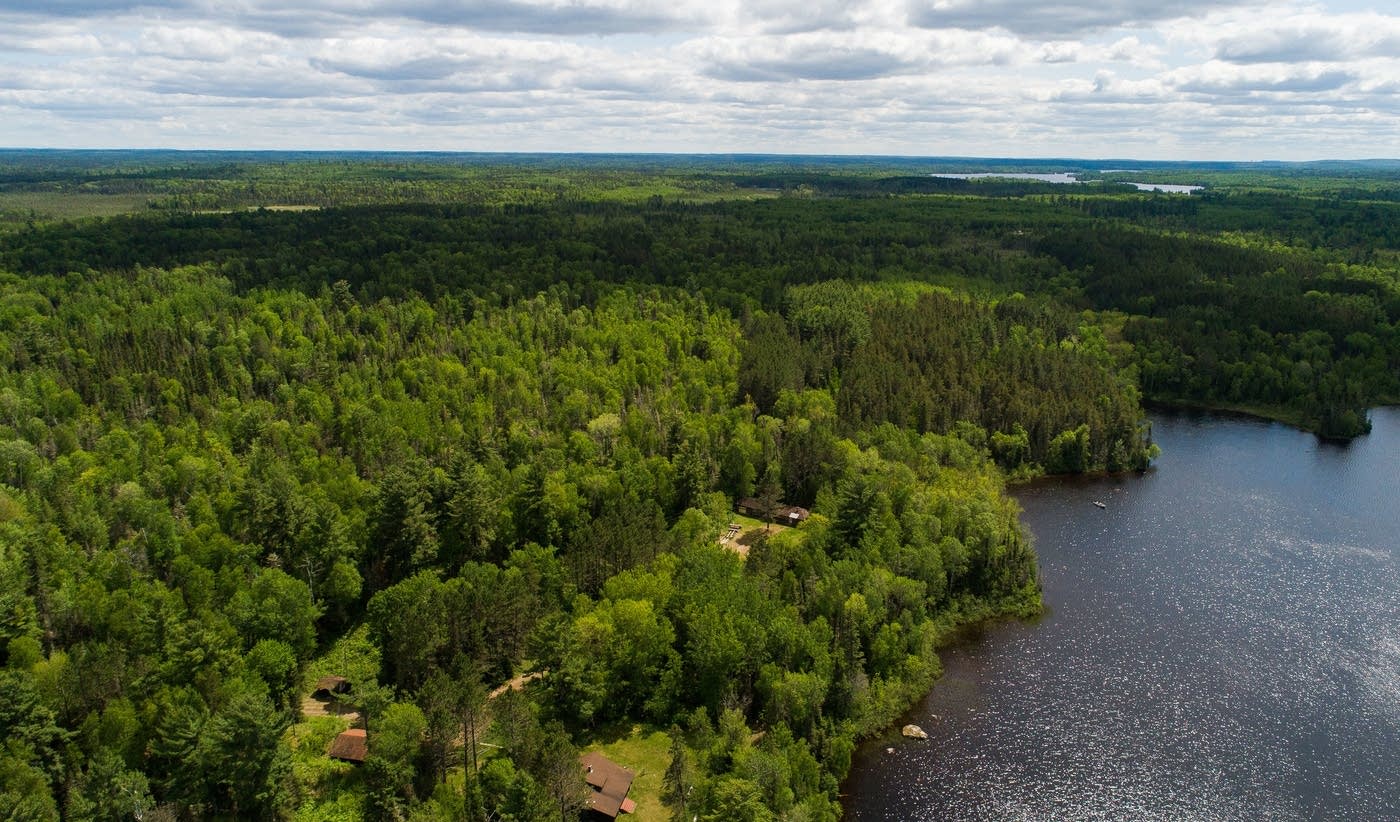
Brightly colored sea cucumbers and many other unusual deep sea creatures live among the nodules in the Clarion-Clipperton Zone. ROV KIEL 6000/GEOMAR

By Scott Shackelford, Professor of Business Law and Ethics, Indiana University, Christiana Ochoa, Professor of Law, Indiana University, David Bosco, Associate Professor of International Studies, Indiana University and Kerry Krutilla, Professor of Environmental and Energy Policy, Indiana University from The Conversation – Reposted: January 23, 2023

As companies race to expand renewable energy and the batteries to store it, finding sufficient amounts of rare earth metals to build the technology is no easy feat. That’s leading mining companies to take a closer look at a largely unexplored frontier – the deep ocean seabed. 

A wealth of these metals can be found in manganese nodules that look like cobblestones scattered across wide areas of deep ocean seabed. But the fragile ecosystems deep in the oceans are little understood, and the mining codes to sustainably mine these areas are in their infancy.

A fierce debate is now playing out as a Canadian company makes plans to launch the first commercial deep sea mining operation in the Pacific Ocean. 

The Metals Company completed an exploratory project in the Pacific Ocean in fall 2022. Under a treaty governing the deep sea floor, the international agency overseeing these areas could be forced to approve provisional mining there as soon as spring 2023, but several countries and companies are urging a delay until more research can be done. France and New Zealand have called for a ban on deep sea mining. 

As scholars who have long focused on the economicpolitical and legal challengesposed by deep seabed mining, we have each studied and written on this economic frontier with concern for the regulatory and ecological challenges it poses.

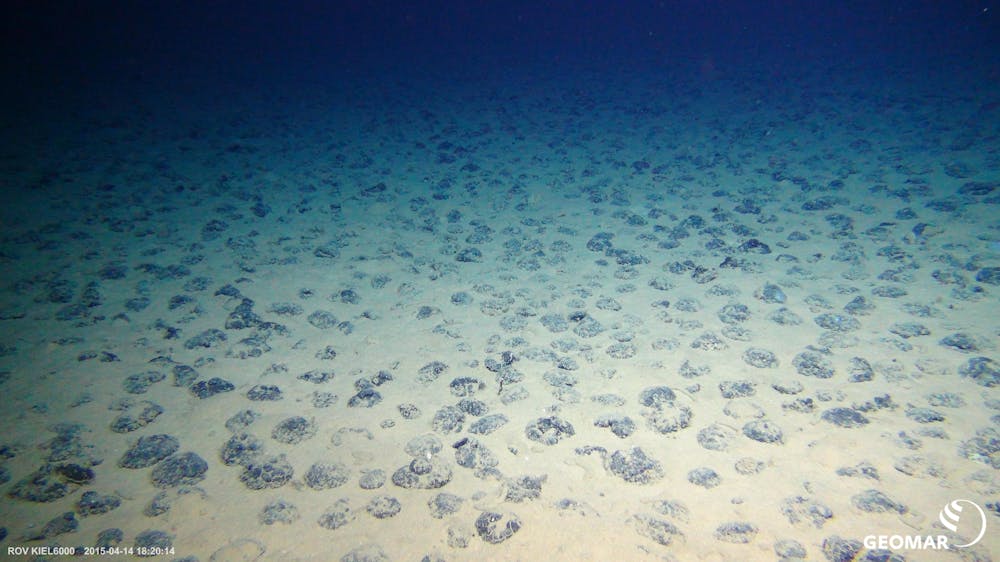
A view looking across a sea floor with nodules looking like cobblestones on a street.
Manganese nodules on the seafloor in the Clarion-Clipperton Zone, between Hawaii and Mexico, captured on camera by a remote vehicle in 2015. Photo: ROV KIEL 6000, GEOMARCC BY

What’s down there, and why should we care?

A curious journey began in the summer of 1974. Sailing from Long Beach, California, a revolutionary ship funded by eccentric billionaire Howard Hughes set course for the Pacific to open a new frontier — deep seabed mining

Widespread media coverage of the expedition helped to focus the attention of businesses and policymakers on the promise of deep seabed mining, which is notable given that the expedition was actually an elaborate cover for a CIA operation.

The real target was a Soviet ballistic missile submarine that had sunk in 1968 with all hands and what was believed to be a treasure trove of Soviet state secrets and tech onboard.

The expedition, called Project Azorian by the CIArecovered at least part of the submarine – and it also brought up several manganese nodules from the seafloor.

Manganese nodules are roughly the size of potatoes and can be found across vast areas of seafloor in parts of the Pacific and Indian oceans and deep abyssal plains in the Atlantic. They are valuable because they are exceptionally rich in 37 metals, including nickel, cobalt and copper, which are essential for most large batteries and several renewable energy technologies.

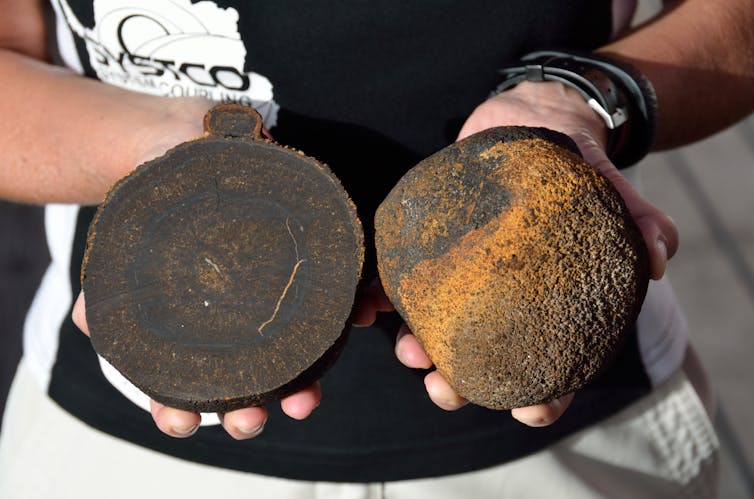
A person holds two halves of a split nodule, showing concentric rings
Manganese nodules form as metals accumulate around a shell or part of another nodule. Thomas Walter/GEOMAR

These nodules form over millennia as metals nucleate around shells or broken nodules. The Clarion-Clipperton Zone, between Mexico and Hawaii in the Pacific Ocean, where the mining test took place, has been estimated to have over 21 billion metric tons of nodules that could provide twice as much nickel and three times more cobalt than all the reserves on land.

Mining in the Clarion-Clipperton Zone could be some 10 times richer than comparable mineral deposits on land. All told, estimates place the value of this new industry at some US$30 billion annually by 2030. It could be instrumental in feeding the surging global demand for cobalt that lies at the heart of lithium-ion batteries.

Yet, as several scientists have noted, we still know more about the surface of the moon than what lies at the bottom of the deep seabed.

Deep seabed ecology

Less than 10% of the deep seabed has been mapped thoroughly enough to understand even the basic features of the structure and contents of the ocean floor, let alone the life and ecosystems therein.

Even the most thoroughly studied region, the Clarion-Clipperton Zone, is still best characterized by the persistent novelty of what is found there.

Between 70% and 90% of living things collected in the Clarion-Clipperton Zone have never been seen before, leaving scientists to speculate about what percentage of all living species in the region has never been seen or collected. Exploratory expeditions regularly return with images or samples of creatures that would richly animate science fiction stories, like a 6-foot-long bioluminescent shark.

Also unknown is the impact that deep sea mining would have on these creatures.

An experiment in 2021 in water about 3 miles (5 kilometers) deep off Mexico found that seabed mining equipment created sediment plumes of up to about 6.5 feet (2 meters) high. But the project authors stressed that they didn’t study the ecological impact. A similar earlier experiment was conducted off Peru in 1989. When scientists returned to that site in 2015, they found some species still hadn’t fully recovered.Video from MIT shows the sediment plume created by a nodule-collecting machine during an experiment.

Environmentalists have questioned whether seafloor creatures could be smothered by sediment plumes and whether the sediment in the water column could effect island communities that rely on healthy oceanic ecosystems. The Metals Company has argued that its impact is less than terrestrial mining.

Given humanity’s lack of knowledge of the ocean, it is not currently possible to set environmental baselines for oceanic health that could be used to weigh the economic benefits against the environmental harms of seabed mining.

Scarcity and the economic case for mining

The economic case for deep seabed mining reflects both possibility and uncertainty.

On the positive side, it could displace some highly destructive terrestrial mining and augment the global supply of minerals used in clean energy sources such as wind turbines, photovoltaic cells and electric vehicles. 

Terrestrial mining imposes significant environmental damage and costs to human health of both the miners themselves and the surrounding communities. Additionally, mines are sometimes located in politically unstable regions. The Democratic Republic of Congo produces 60% of the global supply of cobalt, for example, and China owns or finances 80% of industrial mines in that country. China also accounts for 60% of the global supply of rare earth element production and much of its processing. Having one nation able to exert such control over a critical resource has raised concerns.The Metals Company shared video of its first collection mission.

Deep seabed mining comes with significant uncertainties, however, particularly given the technology’s relatively early state.

First are the risks associated with commercializing a new technology. Until deep sea mining technology is demonstrated, discoveries cannot be listed as “reserves” in firms’ asset valuations. Without that value defined, it can be difficult to line up the significant financing needed to build mining infrastructure, which lessens the first-mover advantage and incentivizes firms to wait for someone else to take the lead. 

Commodity prices are also difficult to predict. Technology innovation can reduce or even eliminate the projected demand for a mineral. New mineral deposits on land can also boost supply: Sweden announced in January 2023 that it had just discovered the largest deposit of rare earth oxides in Europe.

In all, embarking on deep seabed mining involves sinking significant costs into new technology for uncertain returns, while posing risks to a natural environment that is likely to rise in value.

Who gets to decide the future of seafloor mining?

The United Nations Convention on the Law of the Sea, which came into force in the early 1990s, provides the basic rules for ocean resources.

It allows countries to control economic activities, including any mining, within 200 miles of their coastlines, accounting for approximately 35% of the ocean. Beyond national waters, countries around the world established the International Seabed Authority, or ISA, based in Jamaica, to regulate deep seabed mining.

Critically, the ISA framework calls for some of the profits derived from commercial mining to be shared with the international community. In this way, even countries that did not have the resources to mine the deep seabed could share in its benefits. This part of the ISA’s mandate was controversial, and it was one reason that the United States did not join the Convention on the Law of the Sea.

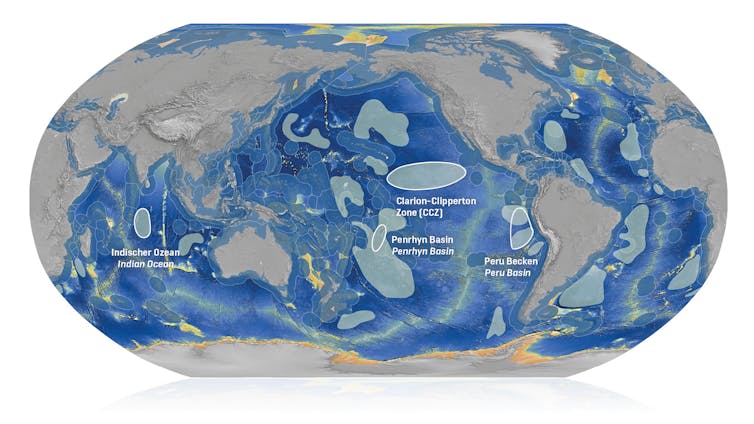
Map showing concentrations of nodules in the Pacific and Indian Ocean in particular
A map shows the distribution of manganese nodules, with areas of the greatest concentrations circled. Sven Petersen/GEOMAR

With little public attention, the ISA worked slowly for several decades to develop regulations for exploration of undersea minerals, and those rules still aren’t completed. More than a dozen companies and countries have received exploration contracts, including The Metals Company’s work under the sponsorship of the island nation of Nauru.

ISA’s work has started to draw criticism as companies have sought to initiate commercial mining. A recent New York Times investigation of internal ISA documents suggested the agency’s leadership has downplayed environmental concerns and shared confidential information with some of the companies that would be involved in seabed mining. The ISA hasn’t finalized environmental rules for mining.

Much of the coverage of deep seabed mining has been framed to highlight the climate benefits. But this overlooks the dangers this activity could pose for the Earth’s largest pristine ecology – the deep sea. We believe it would be wise to better understand this existing, fragile ecosystem better before rushing to mine it.

To see the original post, follow this link. https://theconversation.com/deep-seabed-mining-plans-pit-renewable-energy-demand-against-ocean-life-in-a-largely-unexplored-frontier-193273