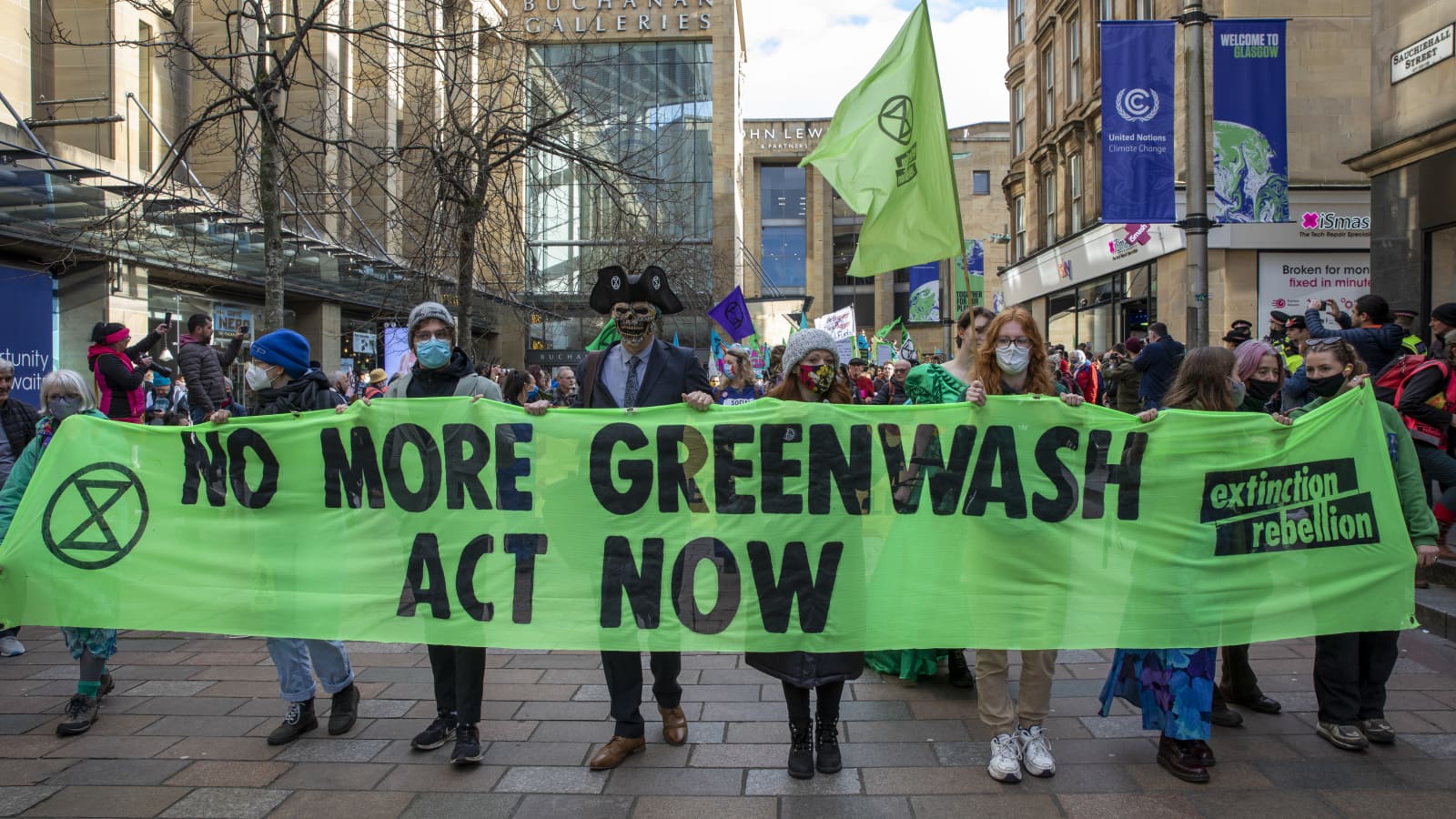
50% of American companies exaggerate sustainability efforts

29 05 2023

Photo: CNBC/Getty Images

Google Cloud & Harris Poll shared that 59% of executives overstate how they approach sustainable messaging. Here’s how companies can improve their efforts. By Lucy Buchholz from Sustainability Magazine • Reposted: May 29, 2023

Sustainability has become a popular topic as you hear climate change news daily. Ocean temperatures are rising, leading to melting glaciers and migrating ocean species. Storms have become more volatile, increasing the number of floods and torrential storms worldwide. 

Research shows climate change has strengthened hurricanes and raised storm surges due to rising sea levels. In late 2022, you could see the planet’s wrath through Hurricane Ian. The Category 5 storm devastated the Southeast, especially Florida.

Tom Knutson, a senior scientist at the National Oceanic and Atmospheric Administration (NOAA), says rising sea levels exacerbate flooding from hurricanes. The problem will only worsen as rainfall rates rise this century. 

Many have experienced the devastating effects, leading to a push for more sustainability efforts. You may have found ways to lower your carbon footprint by reducing your carbon dioxide (CO2) emissions. What about the rest of the country?

Talking about sustainability efforts is easy — following through with actions is a different story. Many Americans say they incorporate sustainable practices only to impress their friends. Reality shows another picture.

A March 2023 survey finds 53% of Americans exaggerate their sustainable practices. The same poll reveals 54% will revert to unsustainable actions if they’re alone. 

Jessica Hann, senior vice president of Avocado Green’s brand marketing and sustainability, says: “When it comes to sustainability, it matters less what people think and more that we all just do the best we can.”

The detrimental impact of greenwashing

Organisations that greenwash mislead customers about the environmental impact of their products and services. They may also use climate-friendly initiatives for PR to cover their environmental malpractice.  

A 2023 survey finds more than half of companies admit to greenwashing. Google Cloud and Harris Poll asked executives how they approach sustainability messaging – 59% said they overstate or inaccurately represent sustainable practices. 

For the planet’s sake, greenwashing needs to come to an end. Better knowledge and improved technology allow you to be friends with the environment instead of an enemy. These four strategies demonstrate how employers can help themselves and their employees improve their sustainability efforts:

1. Apply for sustainability certifications

A terrific way to prove your sustainability initiatives is to achieve certification. For example, you can receive Leadership in Energy and Environmental Design (LEED) accreditation if your building complies with the requirements. Getting LEED requires passing an examination with the United States Green Building Council.  

LEED is one of the most popular accreditation programs, but many others exist. For example, there’s the Sustainable Agriculture Initiative (SAI). This program tracks organisations in the agricultural industry and scores sustainability efforts by awarding bronze, silver or gold status. Achieving SAI’s gold equivalence means your organization has high marks in biodiversity, soil management and greenhouse gas (GHG) emissions. 

2. Introduce renewable energy

Buildings have significantly contributed to current climate issues. Data from the International Energy Agency reveals they are responsible for approximately 35% of global energy use. These structures require burning fossil fuels, using steel and cement in construction, and generating electricity and heat. The current blueprint for energy use is less sustainable as demand grows with the world’s population. 

One way to reduce your employees’ carbon footprint in the office is to introduce renewable energy. The easiest way to do that is with solar panels. These systems harness the sun’s power and convert it into electricity for your building. You’ll create energy instead of relying on the electrical grid. 

Now is an excellent time to buy a solar panel for residential and commercial purposes. The federal government extended the solar tax credit through 2033. Purchasing solar panels allows you to get a 30% rebate on the panels, labour costs and various equipment required for installation.  

3. Rethink the supply chain

Today’s businesses must be conscious of their environmental impact. It matters for their carbon footprint and environmental, social and governance (ESG) scores. Your ESG rating is vital because it demonstrates your social responsibility to investors and consumers. 

One way to improve your ESG scores is to rethink your supply chain and make it more efficient. 

For example, consider your suppliers. Are they domestic or international? International partners may have low costs, but the environmental impact is more significant due to the higher demand for fossil fuels. 

You can shorten the supply chain by partnering with domestic companies – preferably in your state. These businesses shorten your lead times and reduce your business’s environmental impact. 

4. Conserve water

Water is critical in industries like agriculture, construction, fashion and more. Even if you don’t work directly with it, you still need it for bathrooms and water fountains inside the office. The world’s freshwater supply has increasingly become concerning. Cities and states in the Southwest often implement water limits to conserve the resource in the summer. 

Your office can become more sustainable by increasing water efficiency. Use low-flow faucets and toilets to minimize use and only consume what’s needed. These systems reduce water usage and lower the money spent on this utility. Nowadays, you can utilize smart technology to monitor use and see where to improve. 

Help employees help the planet

Sustainability has become a vital topic of discussion lately. The conversation is necessary as the world faces the wrath of climate change. Most people agree it’s a problem but don’t always take the required actions. 

Employees spend a large part of their day in the office, so you should help your colleagues reduce their carbon footprint at work. Incorporate renewable energy and obtain sustainability certifications. These actions demonstrate care for the environment and inspire employees to do more at home. 

To see the original post, follow this link: https://sustainabilitymag.com/articles/50-of-american-companies-exaggerate-sustainability-efforts


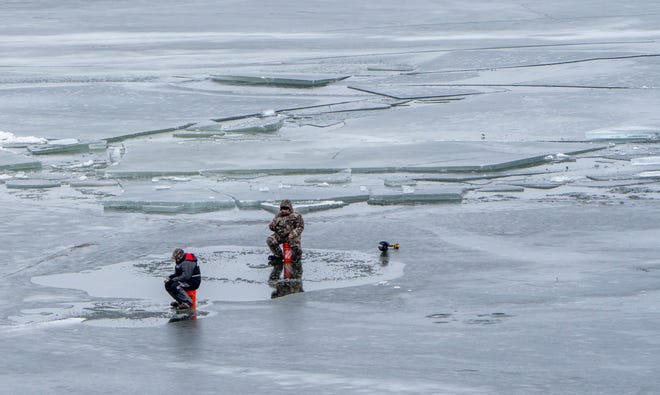

It’s mid-March and the Great Lakes are virtually ice-free. That’s a problem.

19 03 2023

By Caitlin Looby from the Akron Beacon Journal • Reposted: March 19, 2023

It’s the middle of March and the Great Lakes are virtually ice-free. 

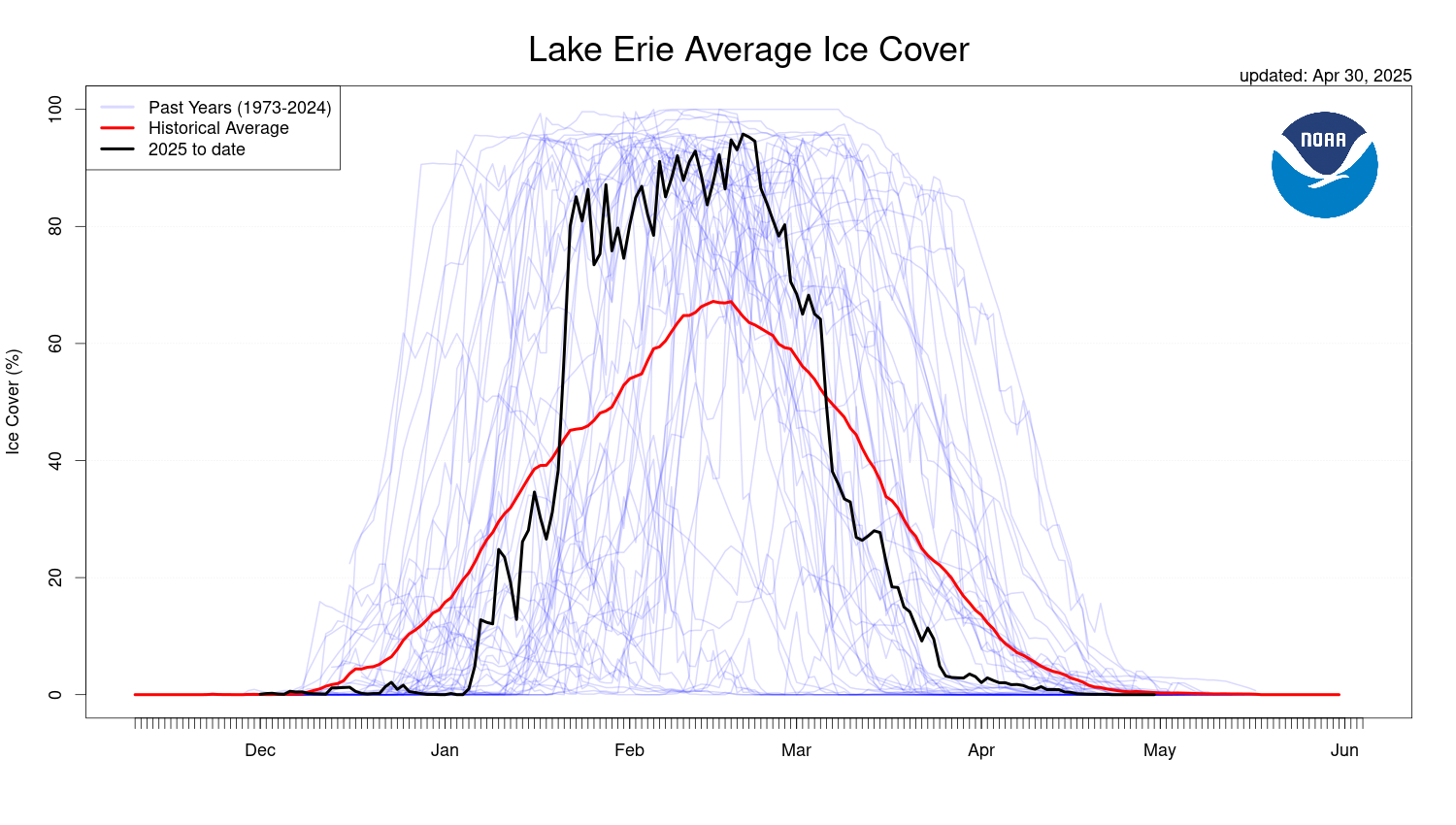
Ice has been far below average this year, with only 7% of the lakes covered as of last Monday — and no ice at all on Lake Erie. Lake Erie’s average ice coverage for this time of year is 40%, based on measurements over the past half-century. The lake typically freezes over the quickest and has the most ice cover because it’s the shallowest of the five Great Lakes. 

But communities along Ohio’s north coast, including Cleveland, Sandusky and Port Clinton, have seen considerably less ice forming on Lake Erie in recent years.

According to the National Oceanic and Atmospheric Administration’s Great Lakes Environmental Research Laboratory, Lake Erie’s ice coverage peaked in early February at 40%, a nearly 20% decrease from the historical average.

Seagulls sit on the thin ice along the shore of Lake Erie in Michigan's Monroe County in March 2022.

No ice isn’t a good thing for the lakes’ ecosystem. It can even stir up dangerous waves and lake-effect snowstorms.  So, what happens when the lakes are ice-free? What does it mean for the lakes’ food web? Is climate change to blame?

Little ice cover can be disastrous

This winter has already proved how dangerous lake-effect snow can be. 

At the end of November, more than 6 feet of snow fell on Buffalo, New York, which sits on the shores of Lake Erie. A few weeks later on Dec. 23, more than 4 feet of snow covered the city and surrounding areas once again. The storm resulted in 44 deaths in Erie and Niagara counties, which sit on Lakes Erie and Ontario, respectively. 

Cleveland and Sandusky reside on the shores of Lake Erie as well. The 2022 storm that swept the region on Dec. 23 dropped relatively little snow, only about 2-4 inches, but created dangerous conditions nonetheless.

In some places in Northeast Ohio, temperatures dropped from nearly 40 degrees to zero and below. Wind chills fueled by hurricane-force winds dragged the temperature even lower to minus 30 or even 35 below zero. This storm was the first time in almost a decade that the Cleveland Weather Forecast Office issued a blizzard warning.
A 46-vehicle pileup on the Ohio Turnpike near Sandusky claimed four lives
.

A 46-vehicle pileup killed four people injured many others on the Ohio Turnpike during a winter storm with whiteout conditions Dec. 23.

During stormy winter months, ice cover tempers waves. When there is low ice cover, waves can be much larger, leading to lakeshore flooding and erosion. That happened in January 2020 along Lake Michigan’s southwestern shoreline. Record high lake levels mixed with winds whipped up 15-foot waves that flooded shorelines, leading Gov. Tony Evers to declare a state of emergency for Milwaukee, Racine and Kenosha counties. 

And while less ice may seem like a good thing for the lakes’ shipping industry, those waves can create dangerous conditions. 

The Great Lakes are losing ice with climate change 

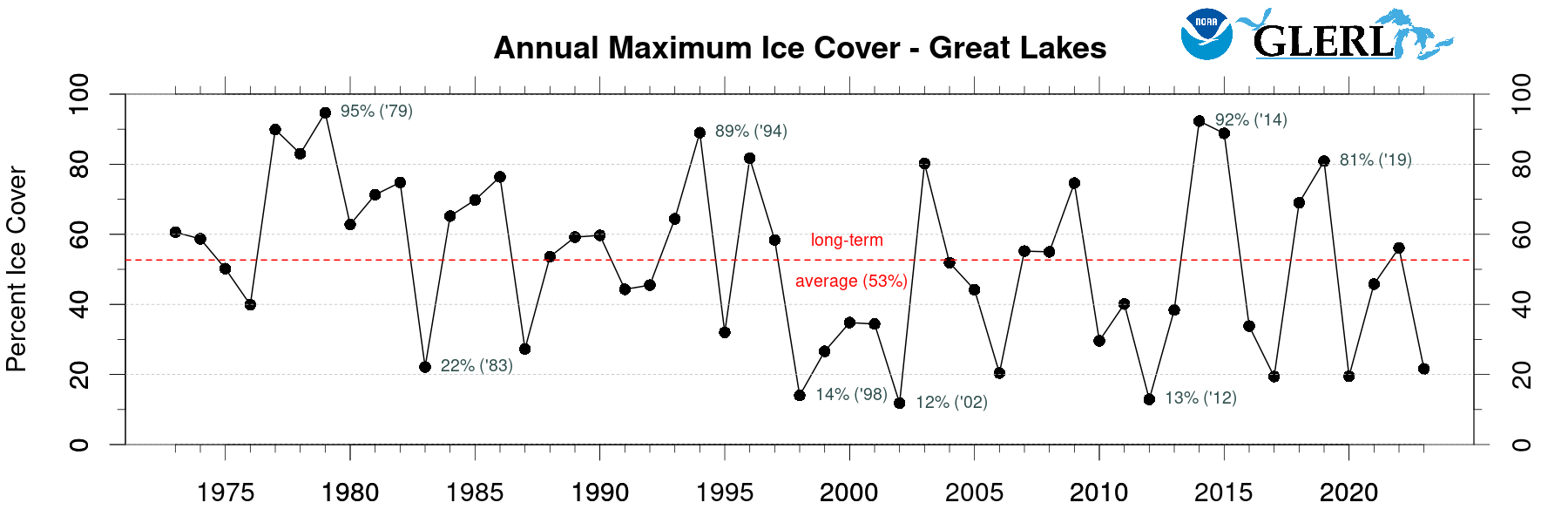
The Great Lakes have been losing ice for the past five decades, a trend that scientists say will likely continue. 

Of the last 25 years, 64% had below-average ice, said Michael Notaro, the director of the Center on Climatic Research at the University of Wisconsin-Madison. The steepest declines have been in the north, including Lake Superior, northern Lake Michigan and Huron, and in nearshore areas. 

But this also comes with a lot of ups and downs, largely because warming is causing the jet stream to “meander,” said Ayumi Fujisaki Manome, a scientist at the Cooperative Institute for Great Lakes Research at the University of Michigan who models ice cover and hazardous weather across the lakes. 

There is a lot of year-to-year variability with ice cover spiking in years like 2014, 2015 and 2019 where the lakes were almost completely iced over.    

Ice fishermen stay close to shore off of Bay Shore Park in New Franken, Wisconsin, in January, which saw relatively little ice cover on the Great Lakes.

No ice makes waves in the lakes’ ecosystems

A downturn in ice coverage due to climate change will likely have cascading effects on the lakes’ ecosystems. 

Lake whitefish, a mainstay in the lakes’ fishing industry and an important food source for other fish like walleye, are one of the many Great Lakes fish that will be affected, said Ed Rutherford, a fishery biologist who also works at the Great Lakes Environmental Research Laboratory. 

Lake whitefish spawn in the fall in nearshore areas, leaving the eggs to incubate over the winter months. When ice isn’t there, strong winds and waves can stir up the sediment, reducing the number of fish that are hatched in the spring, Rutherford said. 

Whitefish haul from the Great Lakes.
A walleye caught during a fishing trip in Lake Erie near Marblehead, Ohio.

Walleye and yellow perch also need extended winters, he said. If they don’t get enough time to overwinter in cold water, their eggs will be a lot smaller, making it harder for them to survive. 

Even so, the Ohio Department of Natural Resources Division of Wildlife released a report stating that Lake Erie’s 2022 walleye and yellow perch populations in the central and western basins are above average. Yellow perch hatches in the central basin are below average, however.

Declining ice cover on the lakes is also delaying the southward migration of dabbling ducks, a group of ducks that include mallards, out of the Great Lakes in the fall and winter, Notaro said. And if the ducks spend more time in the region it will increase the foraging pressure on inland wetlands. 

Warming lakes and a loss of ice cover over time also will be coupled with more extreme rainfall, likely inciting more harmful algae blooms, said Notaro. These blooms largely form from agricultural runoff, creating thick, green mats on the lake surface that can be toxic to humans and pets. 

In this 2017 photo, a catfish appears on the shoreline in the algae-filled waters of Lake Erie in Toledo.

Lakes Erie and Michigan are plagued with these blooms every summer. And now, blooms cropping up in Lake Superior for the first time are raising alarm. 

“Even deep, cold Lake Superior has been experiencing significant algae blooms since 2018, which is quite atypical,” Notaro said. 

More: Blue-green algae blooms, once unheard of in Lake Superior, are a sign that ‘things are changing’ experts say

There is still a big question mark on the extent of the changes that will happen to the lakes’ ecosystem and food web as ice cover continues to decline. That’s because scientists can’t get out and sample the lakes in the harsh winter months.

“Unless we can keep climate change in check … it will have changes that we anticipate and others that we don’t know about yet,” Rutherford said.

Caitlin Looby is a Report for America corps member who writes about the environment and the Great Lakes. Reach her at clooby@gannett.com or follow her on Twitter @caitlooby. Beacon Journal reporter Derek Kreider contributed to this article.

To see the original post, follow this link: https://www.beaconjournal.com/story/news/2023/03/19/lack-of-ice-upends-great-lakes-food-web-incites-algae-blooms/70005026007/


New “Climate Forward?” Report Advocates for the Use of Climate Projection Data by Architecture and Engineering Professionals

13 03 2023

From The University of Minnesota Climate Adaptation Partnership and national design firm HGA • Reposted: March 13, 2023

The University of Minnesota Climate Adaptation Partnership and national design firm HGA present the current practice, barriers, and opportunities for use of climate projection data and climate change resilience client services. 

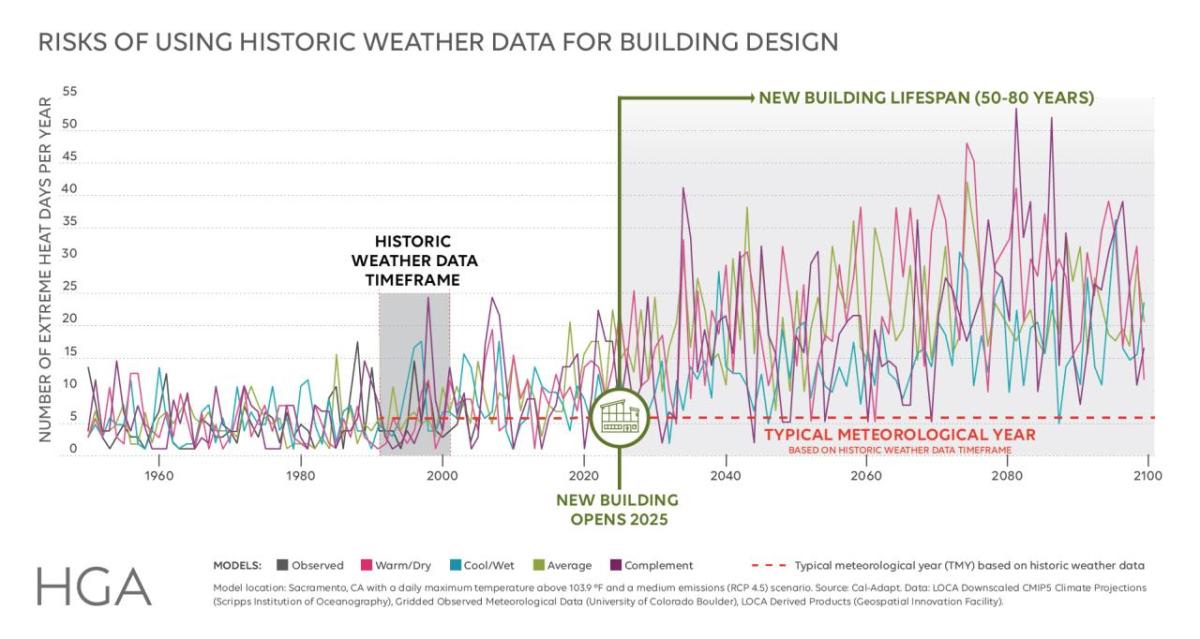
Climate change impacts are growing every year, threatening lives, business continuity, and infrastructure—costing an average of $152.9 billion dollars per year in the U.S. alone (NOAA, 2022). Yet the Architecture and Engineering (A&E) industry still relies on historical weather data as a primary resource for performance analysis, system sizing, and other design decisions, as climate projection data are not available in the formats used by A&E codes, process guidelines, and software.  

The new report “Climate Forward? How Climate Projections Are(n’t) Used to Inform Design” from the University of Minnesota Climate Adaptation Partnership (MCAP) and national interdisciplinary design firm HGA, reveals the alarming gap between the current state of A&E practice and climate science.

Currently, energy modelers most often use the Typical Meteorological Year (TMY3) dataset produced by the National Renewable Energy Laboratory (NREL)— based on past median weather conditions for a given location that is sometimes more than three decades old. Our changing climate makes ‘climate normals’ less useful for designers, poorly reflecting the range, frequency, and intensity of potential future weather conditions that a building will need to withstand during its lifespan. Key systems and infrastructure globally will continue to be vulnerable unless design standards change to account for changing climate.  

Risks of Using Historic Weather Data

“We know climate change is here and the past is no longer the best predictor of the future. As we seek to make our buildings more energy efficient and ‘climate-friendly’, we must also use climate projection data to ensure our built environment is resilient to the climate of the future.” say Dr. Heidi Roop, MCAP’s Director and a report author. “This report highlights that there is work to do by the climate science community and A&E professionals to ensure we are designing for climate resilience. Clients and professional societies also play a key role in driving a holistic, forward-looking approach to design of the buildings and infrastructure we all rely on.”

The research makes a decisive case for the development and promotion of industry standards, mandates (including building codes), guidance and training for using climate projections in A&E applications. It also articulates the critical role for boundary organizations and climate data developers to build partnerships and capacities to bridge this gap alongside A&E professionals.

“Climate Forward?” also addresses the missed opportunity to extend the life of our buildings. Today’s sustainable design efforts focus primarily on climate change mitigation—that of reducing carbon emissions. In contrast, MCAP and HGA’s research shows how the industry should also shift to design for climate change adaptation—which are a broader set of design measures that factor in the projected climate over the lifespan of the building and systems. 

Lead author of the report, Ariane Laxo, HGA’s Director of Sustainability said, “There is tremendous potential in climate resilience services—professional services related to climate change resilience and/or adaptation using climate projection data.” She continued, “identifying the right data formats and timescales to factor in the projected climate over the lifespan of the building, landscape, and systems, will dramatically change the way we design to create a more resilient future. Industry associations need to create standards for how to integrate these data into practice, so we are using consistent methodologies.”

The climate is changing rapidly. Action must be taken now, and must involve substantive collaboration with climate data developers, boundary organizations, A&E associations and professionals, policy makers, building code & standards bodies, higher education institutions, and any organization that hires A&E professionals. The report concludes with recommended actions that could close the gap between climate science and the A&E professionals who are designing buildings and infrastructure that must withstand climate change.

Read the full report, “Climate Forward? How architects and engineers are(n’t) using climate projections to inform design.” 

Report authors: Ariane Laxo, HGA, Brenda Hoppe, University of Minnesota Climate Adaptation Partnership, Heidi Roop, University of Minnesota Climate Adaptation Partnership, Patrick Cipriano, HGA and University of Minnesota Climate Adaptation Partnership

About MCAP

The University of Minnesota Climate Adaptation Partnership (MCAP) is a partnership among university, public, non-profit, and private sector groups organized to support Minnesota’s ability to adapt to a changing climate. MCAP conducts cutting-edge climate and adaptation research, champions climate leadership, develops the next generation of adaptation professionals, and advances implementation of effective, equitable adaptation actions across sectors, communities, and levels of government. Learn more about MCAP at climate.umn.edu or follow us on Twitter or LinkedIn.

About HGA 
HGA is a national interdisciplinary design firm committed to making a positive, lasting impact for our clients and communities through research-based, holistic solutions. We believe that great design requires a sense of curiosity—forming deep insight into our clients, their contexts, and the human condition. We are a collective of over 1,000 architects, engineers, interior designers, planners, researchers, and strategists. Our practice spans multiple markets, including healthcare, corporate, cultural, education, local and federal government, and science and technology. Visit HGA.com or follow us on Facebook, Twitter, LinkedIn, and  Instagram

To see the original post, follow this link: https://www.csrwire.com/press_releases/768271-new-climate-forward-report-advocates-use-climate-projection-data-architecture


Wintertime farming practices can help or worsen water pollution and algae blooms

28 01 2023

By Michelle Woodhouse, Water Program Manager, Environmental Defense • Reposted: January 28, 2023

If you’re a reader of our blogs or a lover of Lake Erie, you may already know that excess amounts of fertilizer are making their way into our waterways and are a key culprit in contributing to toxic algae blooms in Lake Erie and other freshwater bodies. Some of these fertilizers are chemicals, but some are just old-fashioned manure

Using a natural fertilizer such as manure is a good practice – but there are still some rules that need to be followed to minimize negative impacts on the environment. 

Fertilizer management best practices are called the “4 Rs.” Applying the right fertilizer source at the right rate, at the right time, and in the right place – are considered the rules of thumb for fertilizer application. These rules apply to manure as well as chemical fertilizers. And when it comes to applying manure, winter is the worst time.  

What are the risks of winter spreading?

Winter spreading of manure is a practice that is under intense scrutiny because of the elevated risks for nutrient losses and its effect on water quality. The risk of runoff to surface water increases when applied on frozen or snow-covered ground. Frozen soils have limited, or no infiltration, so immediate runoff occurs if rainfall or snow melts before the soil thaws. With winter applications, no growing crops are available to absorb the nutrients. 

Winter spreading of fertilizer is actively discouraged within the agricultural community and by the Ontario Ministry of Agriculture, Food, and Rural Affairs. However, it still occurs, and the practice of winter spreading is not only inefficient but also harmful to the watershed. 

One of the main reasons manure is applied in winter is due to insufficient manure storage capacity. Therefore, increasing manure storage capacity is a simple way to alleviate much of the need for winter spreading. A more heavy-handed approach taken by some governments is to ban winter spreading altogether to try and enforce full compliance within the farming community. 

What protections exist in Ontario to protect the Great Lakes from agricultural runoff and nutrient pollution? 

Several pieces of legislation exist in Ontario that make it an offence to allow manure to enter waterways. The main pieces of legislation are the Environmental Protection Act, the Ontario Water Resources Act, and federally, the Fisheries Act. The Nutrient Management Act regulations are also most restrictive for winter applications. Farmers are also required to follow nutrient management plans when fertilizing crops and managing animal waste, which includes ensuring enough storage capacity for manure

Despite these laws, however, excess nutrients are making their way into the watershed year-round, including in the wintertime. Only a limited number of farms that produce and use manure are included under the requirements of the Nutrient Management Actand its regulations. Governments are also relying too heavily on education and outreach to ensure that farms self-report whether they meet the conditions set out in the regulations. In the past, it has also been found that in Ontario, the Ministry of Agriculture has not followed up on issues of non-compliance and rarely used punitive measures – such as issuing offence notices – that may result in fines set by provincial courts. 

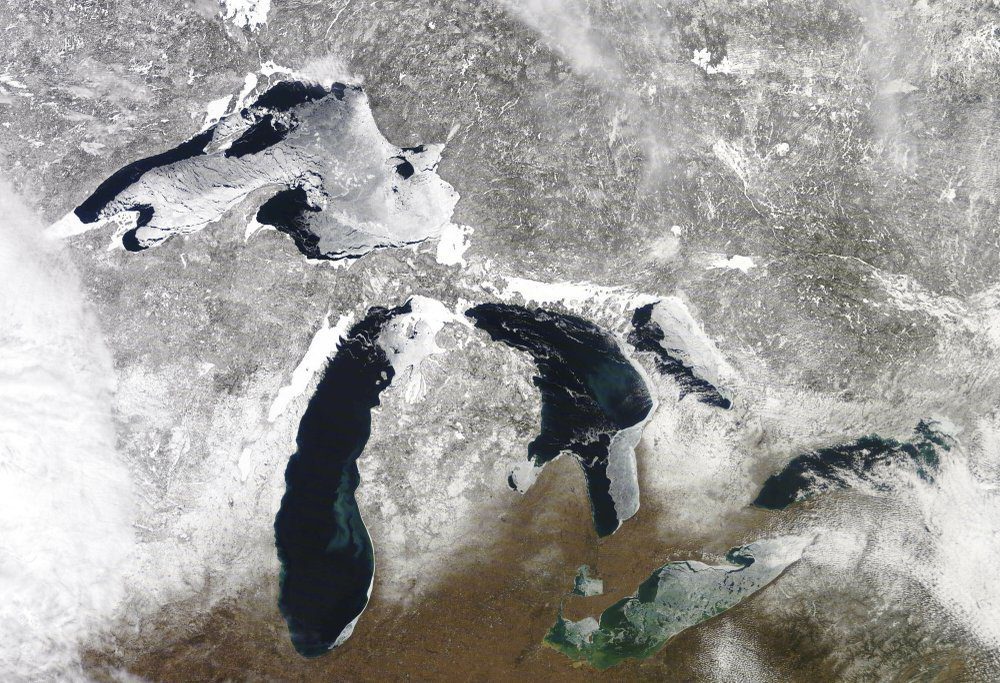
Satellite photo by NOAA, 2019

What more needs to be done? 

These weaknesses in the Nutrient Management Act contribute to year-round issues with nutrient losses and runoff, including in the winter months. All of this contributes to a deteriorating situation for the health of the Great Lakes and the toxic algae bloom issue that plagues Lake Erie annually. Governments need to strengthen the regulations requiring farms to have nutrient management plans. For the farms that do require plans, greater monitoring and enforcement of compliance are required. 

Every year, scientists from NOAA and the Great Lakes region warn us that Lake Erie is approaching a tipping point, and if we don’t get our act together in the near term, we could lose one of our greatest global treasures. Bringing an end to the winter spreading of manure is one of the critical actions we need to take if we want to avoid this devastating loss.

To see the original post, follow this link: https://environmentaldefence.ca/2023/01/26/wintertime-farming-practices-can-help-or-worsen-water-pollution-and-algae-blooms/