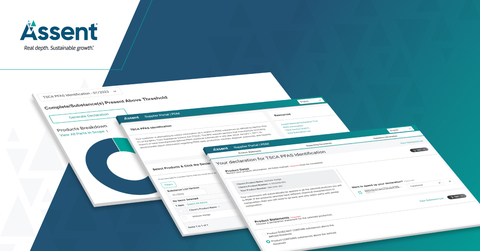
Assent Launches End-to-End Solution for Manufacturers to Mitigate PFAS Risks Across Supply Chains

30 06 2023

Assent’s Solution enables manufacturers to meet imminent EPA “forever chemicals” reporting requirements and mitigate business continuity risk through supply chain engagement. From Assent via Business Wire • Reposted: June 30, 2023

OTTAWA, Ontario–(BUSINESS WIRE)–Assent Inc. (Assent), a leading solutions provider in supply chain sustainability management, is helping manufacturers gain visibility into per- and polyfluoroalkyl substances (PFAS) in their supply chain in a time of significant regulatory change and unprecedented supply chain and market access risk. Today’s launch of Assent’s new solution at the company’s annual Evolve conference will empower manufacturers with a technology-enabled roadmap for managing PFAS risk.

“PFAS regulations are driving an unparalleled risk for companies. Today, we announced a solution enabling manufacturers to immediately engage with their suppliers and address PFAS chemicals in their products — all the way down the part level”Tweet this

Manufacturers can immediately leverage the Assent Supply Chain Sustainability Platform to collect PFAS data insights from supplier networks and take corrective action to reduce or eliminate regulated PFAS from within parts, products or processes. Assent’s regulatory expertsmonitor substances and regulations to create up-to-date risk mitigation programs to comply as required by law while staying ahead of constantly evolving global PFAS liability risks.

This launch comes at a critical time for manufacturers as they prepare for the EPA’s proposed reporting and recordkeeping requirements for PFAS under the Toxic Substances Control Act (TSCA), expected to be finalized in 2023. Manufacturers are facing supply disruption and liability risks, and need a solution to avoid fines and litigation, protect market access, and address product obsolescence issues.

“The concerns and pressures around PFAS are real. There has been a shift from looking at things through the lens of compliance, to going beyond that with a proactive risk management strategy,” said Bill Pennington, Vice President of Research, EHS & Risk Management at Verdantix. “Organizations will need to embrace technologies in the market to navigate this new world, and ensure they are resilient to the risks associated with PFAS.”

PFAS are a large family of synthetic compounds commonly used in products and manufacturing processes, desired for the ability to provide water resistance or electrical insulation – characteristics which also prevent the chemicals from breaking down over time. With broad and expansive use since the 1940’s, 97% of Americans now test positive for PFAS in their bodies. Due to an association with serious health risks, governments in the U.S., EU, and around the world are implementing a greater number of controls and restrictions on these chemicals.

The U.S. EPA has an extensive roadmap to address the use of PFAS nationwide, leveraging numerous regulatory instruments such as CERCLA and the Safe Drinking Water Act. One significant new requirement is listed under TSCA Section 8(a)(7). Proposed in June 2021 with the final rule expected in this year, this regulation will obligate companies to report on nearly 1,400 PFAS chemicals, due 12 months after the final rule is published.

“PFAS regulations are driving an unparalleled risk for companies. Today, we announced a solution enabling manufacturers to immediately engage with their suppliers and address PFAS chemicals in their products — all the way down the part level,” said Andrew Waitman, Assent CEO. “The complexity and urgency in the regulatory environment will only increase, and that’s why manufacturers need to act now. Assent will be in lockstep with the urgency of the market so we can deliver the transparency and accountability our customers demand from their supply chains.”

The new solution allows manufacturers to gather extensive supplier data on PFAS substances present in parts and products and align this data with TSCA requirements and other state regulations, including detailed reporting by supplier, content, and regulation.

“Portage Electric Products Inc. (PEPI®) strives to achieve deep sustainability throughout our supply chains and ensure our customers have access to compliance data to reduce operational and product risk. We are committed to ongoing due diligence in our activities, upholding the highest standard of transparency and compliance with regulatory requirements in our operations,” said Assent solution client Ted Monty, Vice President, BSO, Product Engineering and Regulatory Product Compliance at Portage Electric Products. “It is imperative for our company, our supply chain, and our customers to be aware that PFAS are currently in our environment. We recognize the importance of not adding to current levels, and working together with current product compliance regulations to eliminate future concerns, and ensure environments remain sustainable for many generations to come.”

For more information about Assent’s new PFAS solution or to request a demo, please visit: https://www.assent.com/solutions/product-compliance/pfas

To see the original post, follow this link: https://www.businesswire.com/news/home/20230614808783/en/Assent-Launches-End-to-End-Solution-for-Manufacturers-to-Mitigate-PFAS-Risks-Across-Supply-Chains


This New Spin on Decades-Old Technology Can Eliminate PFAS from Wastewater

26 06 2023

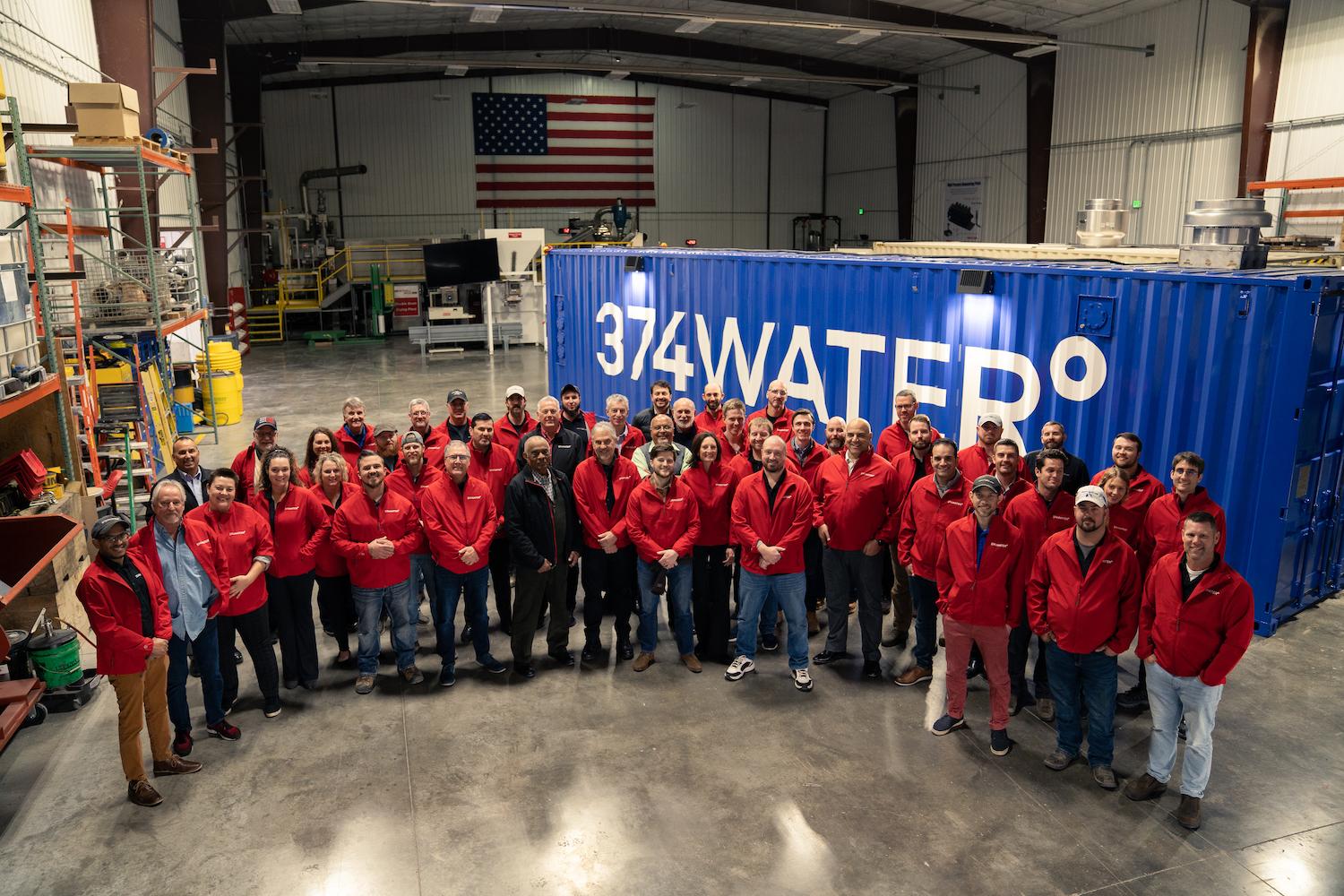
The team at North Carolina-based 374Water show off their prized invention. The container behind them may not look like much, but it can eliminate PFAS from up to 1 million gallons of wastewater per day. Image: 374Water

By Phil Covington from Triple Pundit • Reposted: June 26, 2023

PFAS (per- and polyfluoroalkyl substances) are a group of manufactured chemicals that have been produced since the 1940s. While they have myriad useful properties and manifest in a range of products from nonstick surfaces to personal care products, concerns over their use are growing. 

Current scientific research suggests exposure to PFAS may lead to a range of adverse health outcomes, including certain types of cancer, according to the U.S. Environmental Protection Agency.

PFAS are also known as “forever chemicals,” because they break down very slowly, if at all, in nature. Consequently, they continue to accumulate in greater concentrations in our environment, and by now they’ve even infiltrated our bloodstreams.

TriplePundit recently reported on new innovations aiming to mitigate the proliferation of PFAS by finding safer alternatives to them. But we need to find ways to remove existing PFAS, too. 

Though this is notoriously difficult, a North Carolina-based company found a way to eliminate these chemicals, somewhat by accident, in its effort to modernize wastewater treatment. “We got lucky in that we responded to the challenge to re-invent the toilet.” Sunny Viswanathan, VP and head of global sales at 374Water, told TriplePundit. 

Meeting that challenge, seeded by a grant from the Bill and Melinda Gates Foundation, focused the team on developing an optimal sanitation system which could be deployed in low-income parts of the world. In that effort, they sought ways to render waste sludges both useful and inert, leading them to consider supercritical water oxidation (SCWO) as a potential solution. 

Historically, SCWO was used to destroy persistent environmental damage resulting from chemical warfare, Viswanathan told us. But his team found the technology translated well to wastewater management, while coincidentally dealing with PFAS. 

What is supercritical water oxidation?

Water reaches the supercritical stage when both its temperature and pressure are increased to a point where it is no longer a liquid, nor is it a gas. Instead, as Viswanathan described it, “It goes into another ‘phase’ of water.”

Supercritical conditions for water arise at 374 degrees Celsius and a pressure of 218 atmospheres, or over 3,200 PSI (pounds-force per square inch). Once supercritical, water develops some interesting properties which are useful for processing organic waste. 

“Water as a liquid can dissolve salts, but it can’t dissolve organic matter,” Viswanathan explained. He used the example of adding pepper to water, which of course won’t dissolve. Why that’s the case has to do with the shape of the water molecule and consequent polarity of water, Viswanathan explained.

A water molecule has a V-shaped structure that includes a single oxygen atom with two hydrogen atoms attached. This structure affords it a positive and negative charge at an atomic level. Because of this, ionic salts can dissolve but, with very few exceptions, most organic matter — like, in this example, pepper — will be unaffected, Viswanathan explained. But the inverse is true under supercritical conditions.

“When you go supercritical, the shape of the water molecule literally changes — which means it loses its polarity and becomes a very good solvent of organic substances and a bad solvent of salts,” Viswanathan said. “Salts will come out of the solution, but now your pepper will disappear. Your poop will disappear.”

And here is the important point. Because PFAS substances are organic, “Your PFAS will disappear,” he said. 
 
In essence, under supercritical conditions, all the organic matter in wastewater — including PFAS — becomes completely dissociated. When air is added to the mix, an exothermic oxidation reaction takes place, completing the process.

“By introducing air, which has 21 percent oxygen, it will go after the carbon and make CO2 [carbon dioxide]. Once it removes carbon from the material, it becomes inorganic and will form salts and water — and energy, as it is an exothermic process,” Viswanathan said.

The last point is important. An exothermic reaction is one which produces heat. 374Water’s AirSCWO system uses the heat produced by the exothermic reaction to perpetuate the process. So long as you continue to put waste sludge in, “the waste is the fuel,” Viswanathan said. 

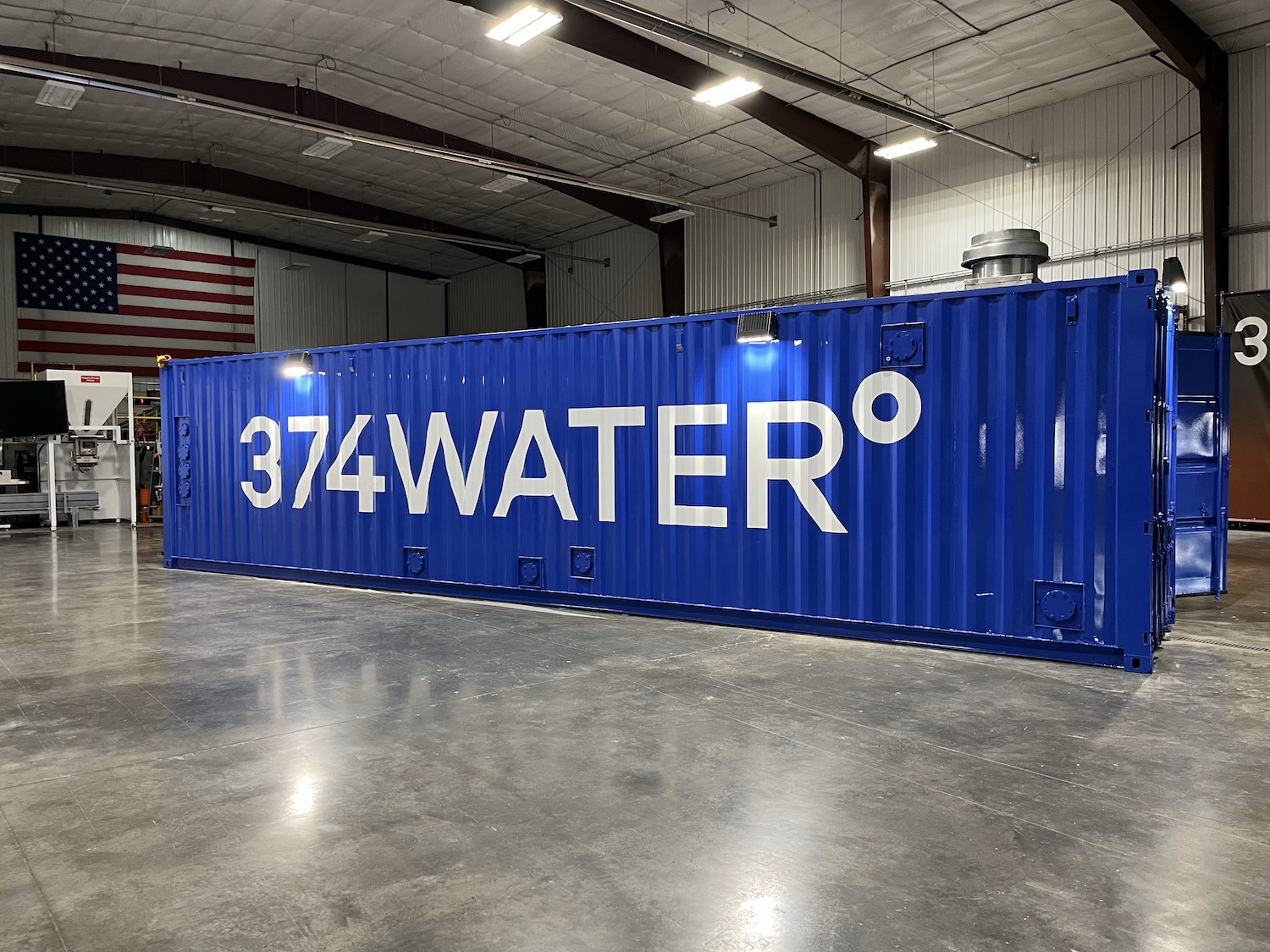
374Water container that can eliminate PFAS from water
374Water’s AirSCWO reactor units are packaged into 40-foot shipping containers that the company says can neutralize PFAS and other water contaminants in seconds. (Image: 374Water)

Putting the technology in the field to eliminate PFAS

With this simplified and abstract explanation of the science in mind, what does 374Water’s system look like in the field?

The company’s AirSCWO reactor units are packaged into 40-foot shipping containers (see above). The smallest reactor is a single container, while larger configurations would combine two or more. The company has plans for building-based systems, too.

Household or industrial wastewater comes into the container through a pipe at one end, and inside it, the contents of the pipe are pressurized and heated. Some external energy source is needed initially to start the system.

Wastewater sludge coming into the reactor is typically 80 percent water, and it’s the existing water content of the sludge which goes supercritical. Once that happens, all organic matter within gets dissociated and oxidized, which happens quite rapidly. “It takes four to 40 seconds to go from something that is completely toxic to something that is completely benign, clean and useful,” Viswathanan said.

Indeed, it’s useful in various ways. The system’s output is distilled water and useful minerals such as phosphorus which can be processed into fertilizer. Meanwhile, surplus energy from the exothermic reaction has the potential to be captured for electricity generation.

As for the PFAS, these are broken down into carbon, fluorine, hydrogen, oxygen and sulfur. As Viswathanan put it, “Just by exposing PFAS to supercritical conditions, you have actually destroyed them.”

What’s next for this high-potential PFAS solution?

It’s taken 10 years for 374Water to go from concept to commercialization. The company, now traded on the NASDAQ stock exchange, will see the first of its commercial units go into operation in Orange County, California, next month. 
 
Expansion from there will be carefully undertaken, as 374Water plans to start at a scale that is manageable. But the addressable market is substantial.

Each 40-foot reactor can process up to 1 million gallons of wastewater per day. Of the roughly 17,000 wastewater facilities treating household, commercial and some industrial wastewater in the U.S., only 9,000 of these are in the 1-million-gallon range. In theory, in combination with the larger reactors the company has planned, it would have the capacity to service all of these facilities.

That said, scalability relies to a large extent on the right incentives. The state of Maine offers one such example. 

Because of PFAS, the state has banned the application of wastewater sludge on the land, an increasingly common practice on U.S. farms. That shift means water treatment plants have to spend up to $200 per ton to send their wet sludge out of state. Since 374Water’s method eliminates PFAS and produces no waste sludge, the system would provide a huge cost avoidance opportunity under these circumstances. Consequently, municipal sanitation providers could see payback on a reactor in as few as three years, Viswathanan said. 

As a final point, he emphasized the long-term opportunity this way. “The technologies we are relying on now for waste treatment are nearly 100-year-old, antiquated technologies. We now have a system that is capable of not only treating the waste, but also destroying the recalcitrant waste and taking it out of the ecosystem.”

To see the original post, follow this link: https://www.triplepundit.com/story/2023/technology-eliminate-pfas-wastewater/777446


Companies to pay billions in “forever chemical” water pollution settlements

5 06 2023

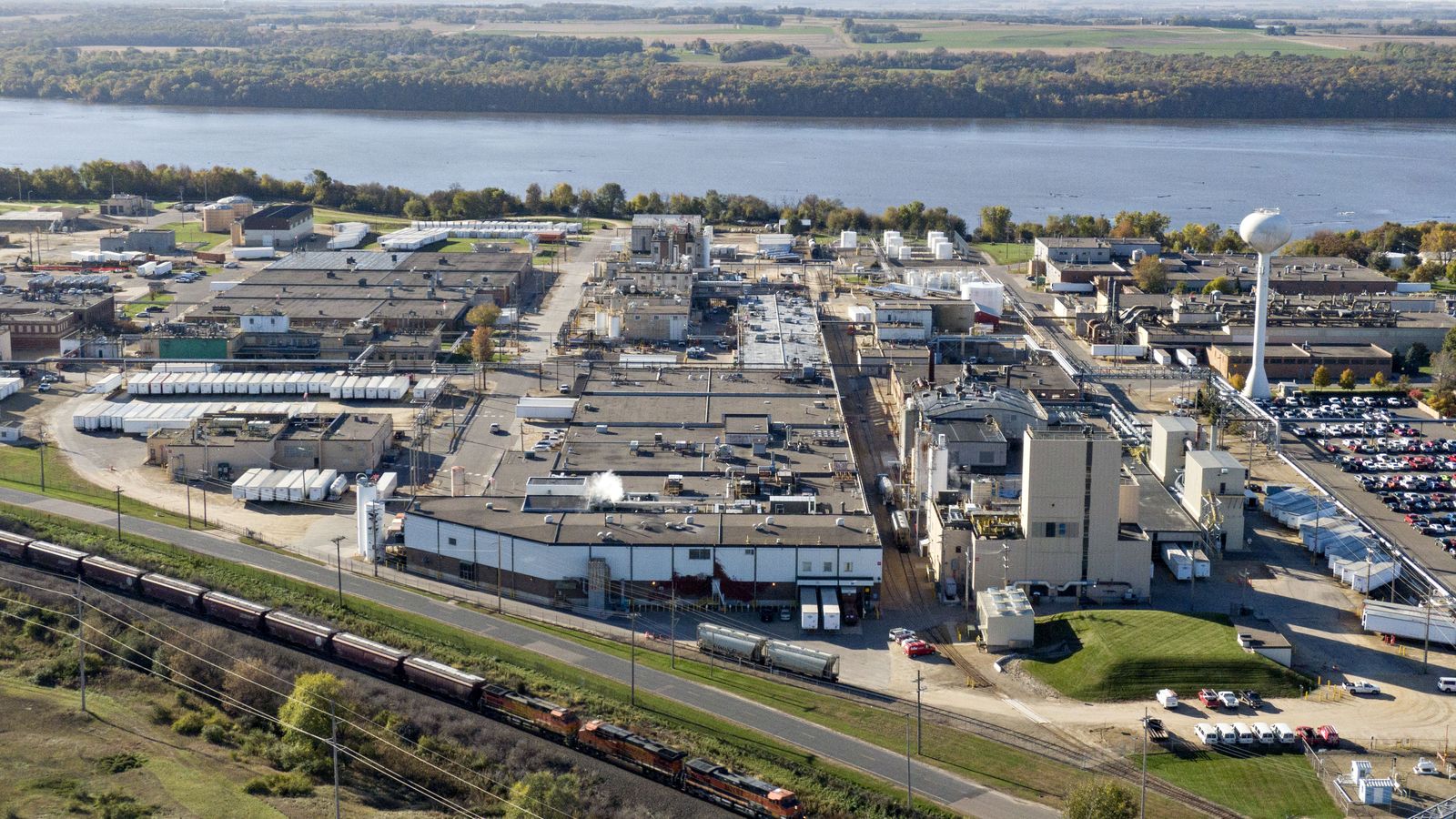
A 3M manufacturing facility in Cottage Grove, Minnesota, in 2018. Photo: Daniel Acker/Bloomberg via Getty Images.

By Jacob Knutson from axis.com • Reposted: June 5, 2023

Major chemical producers have agreed to pay billions of dollars to settle claims from U.S. water providers over toxic “forever chemicals” pollution.

Why it matters: The settlements are a significant step forward in the effort to reduce potentially dangerous chemicals in water systems across the country.

Driving the news: Chemours, DuPont and Corteva said Friday they reached a $1.19 billion settlement with water providers around the country.

  • The water providers had alleged that the companies were responsible for environmental pollution from firefighting foams they manufactured that contained PFAS.
  • Though the companies denied the allegations, the settlement would resolve hundreds of lawsuits against them that were consolidated in the federal district court for South Carolina, which must finalize the settlement for it to take effect.

What they’re saying: John O’Connell, the board president of the National Rural Water Association, said in a statement that the settlement “is the beginning of helping our utility members in the fight against PFAS.”

  • The group works with 50 state associations representing more than 31,000 water and wastewater utility systems, and helped filed a lawsuit on behalf of its members.

Yes, but: Not included in the settlements are systems operated by states and the U.S. government, some smaller drinking water systems, and systems in the lower Cape Fear River Basin of North Carolina, which has been plagued by high levels of PFAS.

How it works: The durable synthetic chemicals, which resist degradation by repelling oil and water and withstanding high temperatures, have been used in hundreds of nonstickwater- and oil-repellent, and fire-resistant products.

  • If the chemicals enter the environment through production or waste streams, they can resist breaking down for hundreds of years while contaminating water sources and bioaccumulating in fishwildlifelivestock, and people.
  • Research has shown that reducing levels of PFAS in drinking water or switching to other water distributors will likely require municipalities to invest millions of dollars into new infrastructure and incur ongoing maintenance costs.
  • For example, officials in Cape Fear allocated $46 million and a recurring annual operating cost of $2.9 million to upgrade a treatment plant designed to filter PFAS from drinking water.

Meanwhile, 3M — a major PFAS producer — has also reached a tentative settlement worth at least $10 billion with water providers, Bloomberg reported Friday.

  • News of a potential settlement came just days before the company’s first federal trial over PFAS pollution claims.
  • Facing extensive PFAS litigation — including a lawsuit from the Dutch government — 3M announced in December 2022 that it would stop manufacturing and using the chemicals by the end of 2025

To see the original post, follow this link: https://www.axios.com/2023/06/02/pfas-chemicals-companies-billions-settlement-water


Responsible Investment Requires a Deep Understanding of Water Risks and Opportunities

4 04 2023

The Milwaukee River flows through the city’s downtown harbor district. Image credit: Girish Shah/Flickr

By Cindy Bohlen, Chief Mindfulness Officer and Director of ESG Investing at Riverwater Partners via Triplepundit.com • Reposted: April 4, 2023

Milwaukee is gaining recognition as a global hub for expertise on water challenges and solutions. The Wisconsin city is located at the confluence of three rivers and Lake Michigan. That makes it part of one of the largest freshwater systems in the world. As a Milwaukee-based enterprise, Riverwater Partners has a great appreciation for the significance of water stewardship. Our proximity to these important bodies of water and the growing hub has led us to focus on water stewardship as a major theme in our responsible investment practice.

The importance of water stewardship

Water is one of the most important natural resources on the planet. It is integral to both life on Earth and conducting business. Seventy percent of the world’s freshwater is used in agriculture, making it critical for food production. Additionally, 57 percent of CEOs who responded to the U.N. Global Compact/Accenture survey in 2022 reported that air, water, and land pollution are having a high or moderate impact on their business today. 

Water stewardship ensures that resources are managed sustainably for communities and industry — making it critical for the well-being of society and business alike. Proper stewardship protects water quality and quantity, reduces the risk of water scarcity, and safeguards everyone’s access to clean water. 

A business risk and opportunity

Responsible investment advisors should seek to understand potential water-related risks and opportunities in the areas of access, regulation, reputation and more as part of their due diligence. They can do this by using publicly available company data, third-party data, and having a dialogue with management teams to learn about the potential for water to impact the business — or for the business to impact the water supply.

At Riverwater, our engagement practice seeks to raise awareness among management teams of the potential risks and opportunities that are presented by water. We offer educational information and suggestions for best practices to companies for which water stewardship is a salient issue. This is particularly applicable for businesses that rely on water for their operations — such as food and beverage companies, manufacturing companies, and extractive companies — as well as water technology companies and utilities that may potentially benefit from a focus on stewardship.

The Water Council is a helpful resource for investors who want to learn more about water. The Milwaukee-based nonprofit has an international reputation for supporting corporate water stewardship and fostering water-related technology, both of which could interest sustainable investors. Its Water Champions program, corporate water stewardship educational site, and thought leadership events like the annual Water Leaders Summit help individuals and organizations learn, connect and collaborate on important water topics.

Examples of scarcity and pollution

Water is a complicated issue that requires more attention. For example, low water levels in the Colorado River basin have already caused scarcity issues for communities and businesses in the western portion of the U.S., with more struggle and devastation expected. This is leading some to question new housing developments and increasing residential populations in places like Arizona. But the key factor is land use, said Kathryn Sorensen, director of research at the Kyl Center for Water Policy at Arizona State University, and speaker at the 2022 Water Leaders Summit. Several cities have stored up water reserves and increased efficiencies to handle the changing circumstances, she said. 

Meanwhile, since agriculture uses up to 80 percent of Colorado River resources, it could be hit hard as resources diminish. The discussion with Sorensen provided valuable insights for Riverwater’s continued dialogue with a portfolio company that grows citrus and avocados in California and Nevada and relies heavily on water from the endangered source.

Not even Milwaukee, with its access to abundant freshwater from Lake Michigan, is immune from water problems. High levels of per-and poly-fluoroalkyl substances — otherwise known as PFAS, or “forever chemicals” — have been found in the water in several areas around Wisconsin, including in groundwater and in private wells near Milwaukee’s airport. This could affect where and how businesses choose to operate in Milwaukee. But it also offers an opportunity for investment in companies working on the destruction and mitigation of PFAS.

Stewardship avoids “greenwashing”

The sustainable investment community is also desperately seeking credible frameworks from which to verify sustainability efforts and avoid “greenwashing” in their portfolio. This is particularly true for water stewardship, which can be difficult to quantify due to the resource’s complex and hyperlocal nature. 

The Water Council addresses this problem through its program for enterprise-wide water stewardship verification (WAVE). WAVE is an ideal tool for management teams that are interested in identifying their greatest water challenges and opportunities so that they can create a plan that will address them. Essentially, it rapidly moves companies from intention to action.

As responsible investors, our goal is to use sustainable investing to reduce business risk for portfolio companies while enabling better outcomes for our clients and society alike. Stewardship of our most precious natural resource has the potential to benefit the planet and its people while providing prosperity for all.

To see the original post, follow this link: https://www.triplepundit.com/story/2023/responsible-investment-water-stewardship/769931


Which state you live in matters for how well environmental laws protect your health

9 03 2023

Concerns about smog from vehicles that choked cities like Los Angeles helped lead to environmental laws in the 1970s. Image: Bettmann Archive/Getty Images

By Susan Kaplan, Research Assistant Professor of Public Health, University of Illinois at Chicago via The Conversation • Reposted: March 9, 2023

Our child could go to gym class on Monday morning and play soccer on a field that was sprayed over the weekend with 2,4-D, a toxic weedkiller that has been investigated as possibly causing cancer. Alternatively, the school grounds may have been treated with a lower-toxicity weedkiller. Or maybe the grounds were managed with safe, nontoxic products and techniques.

Which of these scenarios applies depends in large part on your state’s laws and regulations today – more so than federal regulations.

For example, Texas requires all school districts to adopt an integrated pest management program for school buildings; IPM prioritizes nonchemical pest control methods and includes some protections regarding spraying of groundsMassachusetts also restricts pesticide use on school grounds. Illinois requires IPM for school buildings only if economically feasible. States also vary greatly in the education and technical assistance they provide to implement these practices.

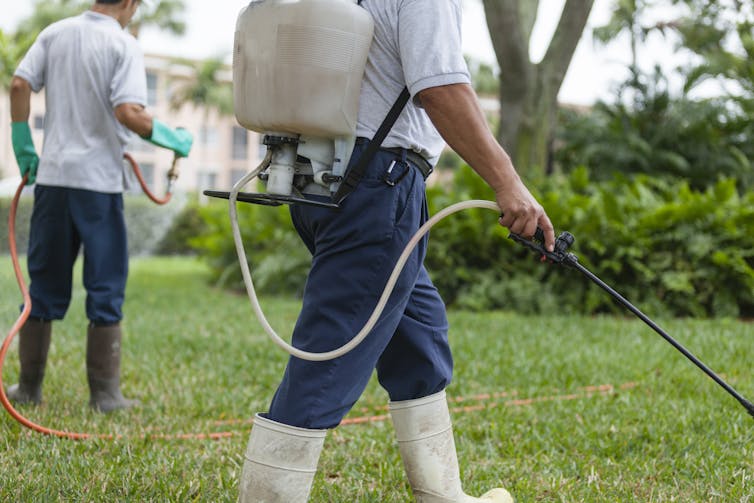
Two men with sprayers connected to hoses walk across a lawn, spraying it. One has a backpack container with liquid inside.
Chemical pesticides can be harmful to human health. Huntstock/Brand X Pictures via Getty Images

Although the U.S. Environmental Protection Agency is involved in some baseline pesticide functions, shortcomings of the main pesticide lawalong with industry influence, can leave vulnerable groups like children inadequately protected from these exposures. 

Analysis of the world, from experts

Get our newsletter

EPA registers products for use based on a finding that they do not cause an “unreasonable” risk but considers economic costs and benefits, an approach that can result in decisions that pose health risks. And required labels may omit ingredients considered trade secrets.

As an environmental health lawyer and professor, I teach, write and think about the pros and cons of one level of government or the other overseeing environmental health – the impact of the natural and human-made environment on human health. Pesticides on school grounds are just one example of the problem of uneven protection from one state to the next.

Congress eased off, states stepped in

State policy choices have become more important for limiting people’s exposure to pollution and toxins as the federal government has increasingly retreated from major environmental health lawmaking.

Many of the country’s major environmental health laws were passed in the 1970s on the momentum of the environmental movement and with bipartisan support that is rarely seen today. 

For example, the Clean Air Act amendments of 1970 required U.S. EPA to regulatea wide range of air pollutants, in some cases based explicitly on protecting human health. They were approved 374-1 in the House and 73-0 by the Senate and signed into law by President Richard M. Nixon. Nixon signed the law that created the Occupational Safety and Health Administration in 1971.

One analyst has written that groups that pressed legislators for environmental protection later splintered into groups advocating for and against environmental laws, reflecting an emerging debate over the appropriate extent of regulation.

At the same time, after the success of many federal environmental health laws, attention turned to problems that are harder for Washington to solve. With state environmental programs growing, some suggested that the U.S. EPA’s role should shift from compelling to catalyzing – from requiring specific pollution-reducing actions to helping states act by providing increased information and help with compliance. Yet this view acknowledged that under this scenario, residents of some states would enjoy stronger environmental health protections than others.

Reflecting this dynamic and the extent of political division in the U.S., even when the federal government does create tougher environmental regulations, they are often reversed by the succeeding administration or challenged in court.

Sometimes, states should make the decisions

In some cases, it makes sense to leave decisions to states. A health department in a western state may focus on protecting vulnerable groups from wildfire smoke, given the growth of blazes in that part of the country. Some states may welcome fracking operations while others prefer to keep them out.

States can also serve as laboratories of innovation, and the experiences of state programs and policies can inform federal actions.

But this regulatory patchwork creates inequities. If you live in one of the dozen-and-a-half states that follow California’s tailpipe emissions standards rather than the less stringent federal standards, you probably benefit from reduced air pollution. 

The same holds for East Coast residents within the confederation of the Regional Greenhouse Gas Initiative, which limits greenhouse gas emissions – and other air pollutants in the process. A recent study that compared RGGI states with neighboring non-RGGI states concluded that data “indicate that RGGI has provided substantial child health benefits,” including a reduction in childhood asthma cases.

Drinking water limits or labeling requirements for PFAS – perfluoroalkyl and polyfluoroalkyl substances – also vary by state. PFAS are found in products from nonstick cookware to some personal care products, and they have been linked with a range of troubling health effects. Because of their toxicity, broad scope of contamination and longevity in the environment, 18 states’ attorneys general are asking for a federal law.

How you can hold lawmakers to account

Environmental health often suffers from a cycle of panic and neglect. People worry about a concern like the chemical alar used on apples, until the next issue erupts. The public can keep up pressure on state and federal decision-makers to consider how the environment affects health in an array of ways:

  • One person can be dismissed as an outlier, so start a group or join other groups that have similar interests.
  • Research the problem and best practices and possible solutions, like program or policy development, education or stepped-up enforcement. Then call, email and send letters to elected representatives and request a meeting to clearly and concisely explain your concerns and ideas.
  • Identify a “champion” – someone in a position to spearhead a change, like a school nurse or facilities manager – and reach out to them.
  • Get the issue into the local news media by writing op-eds and social media posts. Be sure to communicate benefits of the action you’re advocating, like improved school attendance or financial return on investment.
  • Attend public meetings and speak on the issue during the public comment period. Successes at the local level can provide examples for state officials.

To see the original post, follow this link: https://theconversation.com/which-state-you-live-in-matters-for-how-well-environmental-laws-protect-your-health-200393


Regulating ‘forever chemicals’: 3 essential reads on PFAS

7 03 2023

Medical assistant Jennifer Martinez draws blood from Joshua Smith in Newburgh, N.Y., Nov. 3, 2016, to test for PFOS levels. PFOS had been used for years in firefighting foam at the nearby military air base, and was found in the city’s drinking water reservoir at levels exceeding federal guidelines. AP Photo/Mike Groll

By Jennifer Weeks, Senior Environment + Energy Editor, The Conversation • Reposed: March 7, 2023

The U.S. Environmental Protection Agency is preparing to release a draft regulation limiting two fluorinated chemicals, known by the abbreviations PFOAand PFOS, in drinking water. These chemicals are two types of PFAS, a broad class of substances often referred to as “forever chemicals” because they are very persistent in the environment. 

PFAS are widely used in hundreds of products, from nonstick cookware coatings to food packaging, stain- and water-resistant clothing and firefighting foams. Studies show that high levels of PFAS exposure may lead to health effects that include reduced immune system function, increased cholesterol levels and elevated risk of kidney or testicular cancer

Population-based screenings over the past 20 years show that most Americans have been exposed to PFAS and have detectable levels in their blood. The new regulation is designed to protect public health by setting an enforceable maximum standard limiting how much of the two target chemicals can be present in drinking water – one of the main human exposure pathways. 

These three articles from The Conversation’s archives explain growing concerns about the health effects of exposure to PFAS and why many experts support national regulation of these chemicals.

1. Ubiquitous and persistent

PFAS are useful in many types of products because they provide resistance to water, grease and stains, and protect against fire. Studies have found that most products labeled stain- or water-resistant contained PFAS – even if those products are labeled as “nontoxic” or “green.”

“Once people are exposed to PFAS, the chemicals remain in their bodies for a long time – months to years, depending on the specific compound – and they can accumulate over time,” wrote Middlebury College environmental health scholar Kathryn Crawford. A 2021 review of PFAS toxicity studies in humans “concluded with a high degree of certainty that PFAS contribute to thyroid disease, elevated cholesterol, liver damage and kidney and testicular cancer.”

The review also found strong evidence that in utero PFAS exposure increases the chances that babies will be born at low birth weights and have reduced immune responses to vaccines. Other possible effects yet to be confirmed include “inflammatory bowel disease, reduced fertility, breast cancer and an increased likelihood of miscarriage and developing high blood pressure and preeclampsia during pregnancy.”

“Collectively, this is a formidable list of diseases and disorders,” Crawford observed.

2. Why national regulations are needed

Under the Safe Drinking Water Act, the Environmental Protection Agency has the authority to set enforceable national regulations for drinking water contaminants. It also can require state, local and tribal governments, which manage drinking water supplies, to monitor public water systems for the presence of contaminants.

Until now, however, the agency has not set binding standards limiting PFAS exposure, although it has issued nonbinding advisory guidelines. In 2009 the agency established a health advisory level for PFOA in drinking water of 400 parts per trillion. In 2016, it lowered this recommendation to 70 parts per trillion, and in 2022 it reduced this threshold to near-zero

But many scientists have found fault with this approach. EPA’s one-at-a-time approach to assessing potentially harmful chemicals “isn’t working for PFAS, given the sheer number of them and the fact that manufacturers commonly replace toxic substances with ‘regrettable substitutes – similar, lesser-known chemicals that also threaten human health and the environment,” wrote North Carolina State University biologist Carol Kwiatkowski

In 2020 Kwiatkowski and other scientists urged the EPA to manage the entire class of PFAS chemicals as a group, instead of one by one. “We also support an ‘essential uses’ approach that would restrict their production and use only to products that are critical for health and proper functioning of society, such as medical devices and safety equipment. And we have recommended developing safer non-PFAS alternatives,” she wrote.

3. Breaking down PFAS

PFAS chemicals are widely present in water, air, soil and fish around the world. Unlike with some other types of pollutants, there is no natural process that breaks down PFAS once they get into water or soil. Many scientists are working to develop ways of capturing these chemicals from the environment and breaking them down into harmless components.

There are ways to filter PFAS out of water, but that’s just the start. “Once PFAS is captured, then you have to dispose of PFAS-loaded activated carbons, and PFAS still moves around. If you bury contaminated materials in a landfill or elsewhere, PFAS will eventually leach out. That’s why finding ways to destroy it are essential,” wrote Michigan State University chemists A. Daniel Jones and Hui Li

Incineration is the most common technique, they explained, but that typically requires heating the materials to around 1,500 degrees Celsius (2,730 degrees Fahrenheit), which is expensive and requires special incinerators. Various chemical processes offer alternatives, but the approaches that have been developed so far are hard to scale up. And converting PFAS into toxic byproducts is a significant concern.

“If there’s a lesson to be learned, it’s that we need to think through the full life cycle of products. How long do we really need chemicals to last?” Jones and Li wrote.To

To see the original article, follow this link: https://theconversation.com/regulating-forever-chemicals-3-essential-reads-on-pfas-201263