Climate Finance Must Combat Climate Prisoners

29 08 2023

A demonstrator shows support for climate justice at an Earth Day rally in Washington, D.C. earlier this year. Image credits: Victoria Pickering/Flickr and Markus Spiske/Unsplash

By David Hunter from Triple Pundit • Reposted: August 29, 2023

Early next month, representatives from more than 500 banks from around the world will gather to explore how to promote sustainable development and “align financial flows” with the Paris Agreement on Climate Change. Participants in the upcoming Finance in Common Summit account for 12 percent of global investment annually with $23 trillion in assets combined, allowing for enormous potential impact. 
 
Not surprisingly, financing energy transitions will be central to the discussions, including Just Energy Transition Partnerships (JETPs), or creative financing packages to support developing countries’ transitions away from coal. Four JETPs have been announced so far with South Africa, Indonesia, Vietnam and Senegal. India is next in line. G7 countries and development banks are instrumental to financing these initiatives. 
 
But like anything that requires a massive infrastructure shift, transparency and accountability are essential to ensure that the billions of allocated dollars are actually used for their intended purpose. In the case of the JETPs, this means moving toward renewable energy to benefit all communities. Such transparency and accountability is only possible where local NGOs and civil society experts can participate freely and fully in public discussions, provide independent monitoring of social and environmental impacts, and support communities to advocate for their rights.

This is what the “just” aspect of the just transition is all about — which is why financial institutions should be paying very close attention to the situation of civil society voices in the countries they are prioritizing. 
 
Take Vietnam as an example.
 
Two development banks — the International Finance Corp. and the Asian Development Bank — joined forces with the U.S., U.K. and other G7 nations to finance a $15.5 billion JETP with Vietnam. Meanwhile, in the last couple of years, the Vietnamese government has arrested and detained five of the country’s most prominent climate leaders who should be at the forefront of this process. The charges all relate to “tax evasion,” but ample evidence, including multiple declarations from U.N. experts and treaty bodies, point to these vague laws being used to silence environmental defenders in Vietnam. 
 
One of the climate justice heroes currently serving a five-year prison sentence in Vietnam is Mr. Dang Dinh Bach (“Bach”), whom I know personally both as a former student and as a partner in a U.S.-funded law reform project. His work centered around protecting vulnerable communities from pollution, including plastic waste, asbestos and coal-fired power plants. I was impressed with his strong sense of values, always respecting the Vietnamese legal system and speaking highly of the government. He’s still in jail despite numerous high-level calls for his release and a U.N. opinion that found his imprisonment a “violation of international law” in the context of a “systemic problem with arbitrary detention” of environmental defenders in Vietnam.
 
Just a few months ago, another climate champion in Vietnam, Obama Foundation ScholarHoang Thi Minh Hong, was detained on similar charges, continuing this highly concerning trendThe U.N. and several governments, including the U.S. and the U.K., have all released statements calling for her release, but to no avail. 
 
Internationally-renowned climate leader and Goldman Environmental Prize Winner Ms. Nguy Thi Khanh was recently released after serving 16 months in prison on similar tax-evasion charges. Environmental groups continue to face threats, and many have shut down in reaction to this chilling situation. 

For all banks that will be participating in the upcoming Finance in Common Summit, these arrests should be a red flag. Even more so for the International Finance Corp. and the Asian Development Bank, as they have recognized the link between dissent and sustainable financing, having adopted specific policies protecting those who voice opinions about the projects they fund. 
 
The World Bank, of which the International Finance Corp. is a part, has a zero-tolerance policyaround reprisals and retaliation against those who openly share their views about projects it funds, stating: “Any form of intimidation against people who comment on Bank projects, research, activities and their impact, goes against our core values of respecting the people we work for and acting with utmost integrity.” The Asian Development Bank’s policy similarly says that civil society participation in its projects “fundamentally supports good governance, citizenship and accountability of the state.”
 
Both development banks must know that funding a JETP in Vietnam while the government is punishing those who argued for this precise transition violates the spirit of their policies and undermines the ultimate effectiveness of their JETP investments.  
 
Banks should not be supporting JETPs in any country where advocating for clean energy is treated as a crime under the guise of tax fraud. If Bach, Hoang and Khanh can be arrested for taking reasoned positions against coal-fired power plants or other projects that exacerbate climate change, then anybody is at risk of being arbitrarily imprisoned in Vietnam for supporting the goals of the JETP in the future. Each of these individuals worked within the system and was eager to help monitor and implement the JETP on behalf of impacted communities. 
 
To achieve a truly just energy transition in Vietnam, financing of the JETP must be contingent upon the urgent release of Bach, Hoang, and the other environmental defenders serving harsh and unjust sentences. In addition, civil society must be able to safely and freely contribute to the work needed for Vietnam to meet its net-zero emission target by 2050 and the JETP commitments without retaliation or threat of imprisonment. The same should be true for all countries receiving billions of dollars to meet the Paris Agreement goals. 
 
At this year’s Finance in Common Summit, I urge the participating banks that finance JETPs or any other type of climate-forward initiatives to do their due diligence and make sure their money will actually be used to fund truly just energy transitions. 

To see the original post, follow this link: https://www.triplepundit.com/story/2023/climate-finance-climate-justice/782171


Can this former CEO fix the World Bank and solve the world’s climate finance and debt crises as the institution’s next president?

2 04 2023

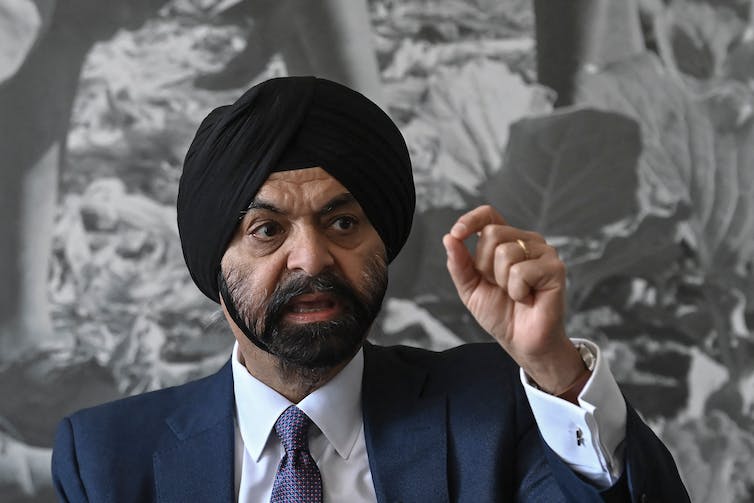
Ajay Banga is a former Mastercard CEO, past chair of the International Chamber of Commerce and an American. The U.S. is the largest World Bank shareholder, and the institution’s president has historically been American. Photo:Tony Karumba/AFP via Getty Images

By Rachel Kyte, Dean of the Fletcher School, Tufts University via The Conversation • Reposted: April 2, 2023

Many low- and middle-income countries – the population the World Bank is tasked with helping – are falling deeper into debt and facing growing costs as the impacts of climate change increase in severity. A chorus of critics accuse the World Bank of failing to evolve to meet the crises.

The job of leading that reform is now almost certain to fall to Ajay Banga, an Indian American businessman and former CEO of Mastercard who was nominated by President Joe Biden to replace resigning World Bank President David Malpass. Nominations closed on March 29, 2023, with Banga the only candidate

There is no shortage of advice for what Banga and the World Bank need to do.

The G-20 recently issued a report urging the World Bank and the other multilateral development banks to loosen their lending restrictions to get more money flowing to countries in need. A commission led by economists Nicholas Stern and Vera Songwe called for a rapid, sustained investment push that prioritizes transitioning to cleaner energy, achieving the U.N. sustainable development goals and meeting the needs of increasingly vulnerable countries. 

African ministers of finance will soon come out with their own “to do” list for the World Bank, and India’s minister of finance just pulled together an expert group to consider World Bank reform.

Banga will walk into the job with these and many other to-do lists. Yet he will inherit a corporate culture that makes the World Bank Group too inwardly focused and too slow to respond.

I have worked for the World Bank Group and with it from the outside. I see four key roles – four “C’s” – that Banga will need to master from the outset. From his track record and his reputation for deep thoughtfulness, I am confident that he can.

1) Act as a CEO and get the entire World Bank Group house in order.

The World Bank Group is a conglomerate with four balance sheets, three cultures and four executive boards, plus a dispute resolution arm.

Lending to low- and middle-income countries is just part of its role. The World Bank Group also provides technical assistance across all areas of economic development and invests in and provides risk insurance to encourage companies to invest in projects and places they might otherwise consider too risky. Its ability to mobilize private-sector finance and stretch every dollar is crucial for meeting the world’s development and climate adaptation and mitigation needs.How the World Bank operates.

Banga will need to set clear goals for each part of the World Bank Group and get them working more effectively to help the world achieve its goals.

2) Assume the mantle of collaborator in chief to take on the debt and climate crises.

Many of the World Bank Group’s client countries are facing both mounting debt and rising costs from climate change. 

The high cost of borrowing can hamper developing countries’ ability to invest in needed infrastructure to grow and protect their economies, and they fear being locked out of global trade as the United States’ green subsidies in the Inflation Reduction Act and Europe’s border carbon tax may make it more difficult for them to compete.

The solutions to cascading problems like these cannot be managed by one institution. However, the current multilateral development bank system – the World Bank Group and the regional development banks – is disjointed at best and competitive at worst./

In the past, the leaders of the development banks, the International Monetary Fund and the World Trade Organization have cooperated, more or less, depending on crises and personalities, and can move fast when they need to.

During the global financial crisis of 2008 and 2009, for example, the then-heads of the World Bank and the WTO hurried to develop trade finance facilities to support banks in developing countries as capital fled to the U.S. and Europe. It took intense diplomacy to push wealthy countries and institutions to get money out the door to shore up businesses and trade. Success was measured not in months but in days.

The new president of the World Bank will need to support more radical collaboration among development financial institutions, including pooling capital and talent, to help respond quickly to countries’ needs.

It won’t be easy. Institutional rivalries run deep. But with budgets tight, there is growing clarity that there is no choice – the capital that is already in the system is the closest at hand and can be deployed to better effect if the institutions are willing to adapt.

3) Be a convener.

Overhauling how international finance works will require everyone to be on board – development banks, central banks, regulators, investment banks, pension funds, insurance companies and private equity.

Banga and International Monetary Fund Managing Director Kristalina Georgieva can settle institutional differences and present a coordinated face to private investors and the major lending countries, including China – which has emerged as the biggest holder of developing country debt – to speed up support to struggling countries.

On other issues, such as nature-based solutions to climate change, building resilience and economic inclusion, the World Bank Group can bring its significant resources and skills, including data analysis, to global conversations that it has been painfully absent from for the past four years.

4) Be a champion for the most vulnerable.

The world’s most vulnerable people are the World Bank Group’s ultimate beneficiaries. For those living on the front line of biodiversity loss and climate impacts, such as extreme heat, drought and flooding, the current international financial system is proving inadequate.

The World Bank Group’s management incentives are still too oriented to lending approved by the board, not the outcomes of that lending, advice and assistance.

Throughout its history, World Bank leaders have been able to make rapid changesto better help vulnerable countries when they stay close to the needs of their ultimate beneficiaries and the goals that the world has set.

The next president faces turbulent times. Banga’s careful listening on his campaign tour signals that he understands the complexity. It’s an extraordinary moment in the history of the institution, with sky-high expectations of what one leader needs to do.

Copyright © 2010–2023, The Conversation US, Inc.

To see the original post, follow this link: https://theconversation.com/can-this-former-ceo-fix-the-world-bank-and-solve-the-worlds-climate-finance-and-debt-crises-as-the-institutions-next-president-202900


World Bank: Bleak Future Without Action

2 02 2013

Screen shot 2013-02-02 at 8.50.37 AM

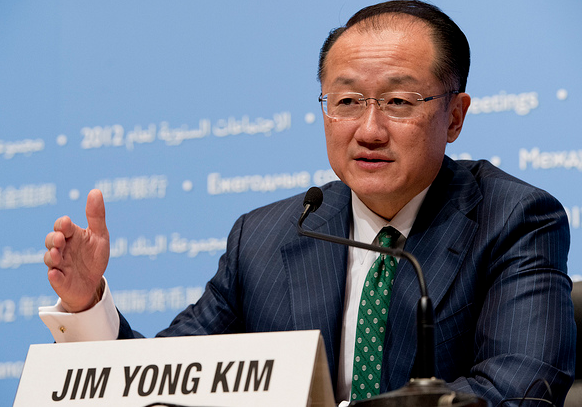
World Bank President Jim Yong Kim was interviewed recently in The Washington Post about Climate Change and its impact  on populations of people around the world.

“If there is no action soon, the future will become bleak. The World Bank Group released a report in November that concluded that the world could warm by 7.2 degrees Fahrenheit (4 degrees Celsius) by the end of this century if concerted action is not taken now.” said Yong Kim.

Especially vulnerable will be the largest population centers around the world who live near the oceans – who are expected to rise with melting polar ice.

He continued, “A world that warm means seas would rise 1.5 to 3 feet, putting at risk hundreds of millions of city dwellers globally. It would mean that storms once dubbed “once in a century” would become common, perhaps occurring every year. And it would mean that much of the United States, from Los Angeles to Kansas to the nation’s capital, would feel like an unbearable oven in the summer.”

Among the long-range scientific forecasts cited in the report, significant climate change is expected in key regions in the world.

• Drier conditions are projected for southern Europe, Africa(except some areas in the northeast), large parts of North America and South America, and southern Australia, among others.

• Wetter conditions are projected in particular for the northern high latitudes—that is, northern North America, northern Europe, and Siberia—and in some monsoon regions. Some regions may experience reduced water stress compared to a case without climate change.

• Sub-seasonal and sub-regional changes to the hydrological cycle are associated with severe risks, such as flooding and drought, which may increase significantly even if annual averages change little.