
At What Point Are Companies Doing Enough To Protect The Planet?

22 02 2023

By Jane Marsh from The Environmental Magazine • Reposted: February 22, 2023

Throughout the decades, the global economy has shown little regard for its environmental impact. However, businesses across all industries are now facing a reckoning. Amid increasing climate change, the calls for greater economic sustainability are coming in loud and clear — about 85% of consumers have modified their buying habits, opting for greener purchases. Another 34% are willing to pay a premium for eco-friendly goods and services.

To meet demand, brands have had to modify their operations and manufacturing processes to protect the planet. For some, the transition has been a struggle. Nevertheless, ignoring consumer pressures is a terrible business practice — adhering to eco-friendliness is essential if they hope to survive.

Of course, whether companies will ever do enough to protect the planet is the question. Here’s a closer look at how our economy has wasted our most precious resources and what companies can do to improve their sustainability.

How Companies Impact the Environment

Researchers have theorized and observed that when people gain access to a public resource — such as water, air and habitable land — they consume it based on personal needs, regardless of how its depletion hurts the planet.

This short-term overconsumption of resources can have dire impacts on the public and the environment. Here are four examples.

1. Aquifer Depletion From Agriculture 

Humans require clean groundwater for safe drinking to survive. However, human activities have contaminated and depleted groundwater resources at a rapid pace. In 2015, over half of the 30% of groundwater withdrawals were used and overconsumed for irrigation in the agricultural sector.

2. Food Insecurity From Environmental Degradation

Over 1.7 million acres of arable land were used for crops in 2016. However, poor farming operations — such as overuse of chemical fertilizers and monocropping — amid a steady rise in food demand have rendered fields unusable for future yields. This places our food system and the ability to feed the world at risk. Not even the 15,000 food pantries across the country will be able to resolve the food crisis if we can no longer grow food.

3. Endangered Wildlife From Coffee Consumption

Is it impossible to get through the day without three cups of coffee in the morning? Our overconsumption of goods has degraded habitats for much of the planet’s wildlife. For example, the international trade of coffee, tea and tobacco accounts for 70% of the extinction risk for endangered species.

4. Reduced Air Quality From Traffic

Commerce, traffic congestion and human activities have also affected air quality — one of the common natural resources shared by everyone. According to the World Health Organization (WHO), about 7 million people die prematurely from air pollution annually.

Holding Companies Accountable

In 2017, the CDP released the Carbon Majors Report, indicating that only 100 fossil fuel companies were responsible for 71% of the total global emissions since 1988.

Since then, many companies have begun analyzing their environmental degradation in the name of manufacturing and revenue, from making net-zero pledges to transitioning toward recyclable packaging alternatives to reduce waste.

However, 58% of companies admit they’ve overstated their progress. Despite their pledges, a recent NewClimate Institute report found that 25 major corporations were meeting only 40% of net-zero emissions — only three companies were genuinely committed to reducing 90% of their emissions by the target year.

Are companies doing enough to protect the planet? Not quite, but there is room for improvement. For instance, companies can implement the following measures:

  • Create a carbon footprint assessment to understand where they generate the most emissions.
  • Reduce waste by creating an end-use protocol and ramping up recycling.
  • Improve energy efficiency throughout operations and within office buildings.
  • Encourage employees and supply chain vendors to adopt eco-friendly behaviors.
  • Invest in carbon offsetting programs that address degraded land, water contamination and air pollution.

These measurable initiatives enable a clearer picture of a business’s sustainability. Of course, transparency is critical and companies should avoid greenwashing their efforts at all costs.

Corporate Responsibility the Key to Protecting the Planet

Businesses have come to understand the value of sustainability for their bottom line. In addition to consumer demand, companies more frequently face mandatory emissions disclosures, subsequent fees and arrests for pollution. At the end of the day, protecting the planet and our common goods are in companies’ best interest.

To see the original post, follow this link: https://emagazine.com/at-what-point-are-companies-doing-enough-to-protect-the-planet/


CDP: Companies Managing Climate Change Enjoy 18% Higher Return On Equity

4 10 2014

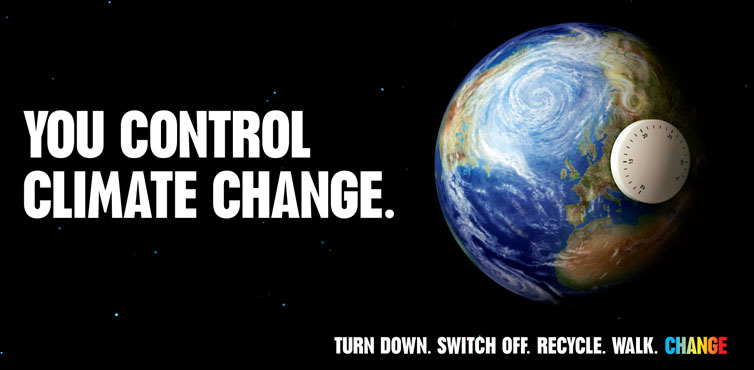
You-Control-Climate-Change-773583_1


In a significant new report, CDP has demonstrated that among S&P 500 Industry Leaders, those corporations who have made significant efforts to reduce their impact on climate change have much improved financial performance and return on equity (ROE) than those companies who are not taking such steps and do not disclose their carbon impact. CDP’s analysis shows that, on climate change management, S&P 500 industry leaders:

  • Generate superior profitability: ROE 18% higher than low scoring peers and 67% higher than non-responders.
  • Have more stability with 50% lower volatility of earnings over the past decade than low scoring peers.
  • Grow dividends to shareholders: 21% stronger than low scoring peers.
  • Exhibit value attributes attractive to equity investors.
The report presents the progress achieved by 70% of S&P 500 companies in integrating climate change risk management into strategic planning, taking action towards emissions reductions and demonstrating a long-term view of how to best manage the assets of shareholders. In the report, Paul Simpson, CEO of CDP says, “There is a palpable sea change in approach by companies driven by a growing recognition that there is a cost associated with the carbon they emit. Measurement, transparency and accountability drives positive change in the world of business and investment.” Here are the CDP leading companies and their corresponding three year return on equity. Screen Shot 2014-10-04 at 1.04.55 PM   In commenting on the report, HP Chairman Meg Whitman said, “By integrating sustainability across the entire value chain, companies can capture return on capital today and build leadership and business value for their future. These investments help companies create a competitive advantage, build stability, and provide assurances to stakeholders that they are well positioned for the challenges of the 21st century.” Read the CDP Climate Action and Profitability Report here


CDP Report: World’s Largest Companies Doing Little On Climate Change

17 09 2013

CarbonEmissions

“As countries around the world seek economic growth, strong employment and safe environments, corporations have a unique responsibility to deliver that growth in a way that uses natural resources wisely. The opportunity is enormous and it is the only growth worth having.” – Paul Simpson, Chief Executive Officer, CDP

Fifty of the 500 largest listed companies in the world are responsible for nearly three quarters of the group’s 3.6 billion metric tons of greenhouse gas emissions, so finds the CDP Global 500 Climate Change Report 2013 released this week. The carbon emitted by these 50 highest emitting companies, which primarily operate in the energy, materials and utilities sectors, has risen 1.65% to 2.54 billion metric tons over the past four years.

The report is co-written by CDP, formerly known as the Carbon Disclosure Project, and professional services firm PwC. It provides the most authoritative evaluation of corporate progress on climate change.

Inadequate momentum to mitigate climate change is also true of the biggest emitters found in each of the ten sectors covered in the report. Titled Sector insights: what is driving climate change action in the world’s largest companies, the new publication includes industry-specific analysis which shows that the five highest emitting companies from each sector have seen their emissions increase by an average of 2.3% since 2009.

Guardian Sustainable Business offered a biting analysis of the report, concluding companies are making little progress in addressing climate change.

“For all the talk of companies taking the threat of climate change seriously, the latest evidence shows the corporate sector is failing to respond in a meaningful way to the threat of environmental catastrophe,” wrote GSB’s Jo Confino.

Paul Simpson, CEO at CDP says: “Many countries are demonstrating signs of recovery following the global economic downturn. However, clear scientific evidence and increasingly severe weather events are sending strong signals that we must pursue routes to economic prosperity whilst reducing emissions of greenhouse gases. It is imperative that big emitters improve their performance in this regard and governments provide more incentives to make this happen.” 

While the biggest emitters present the greatest opportunity for large-scale change, the report identifies opportunities for all Global 500 companies to help build resilience to climate and policy shocks by significantly reducing the amount of carbon dioxide they produce each year. For example, the emissions from nearly half (47%) of the most carbon intensive activities that companies identify across their value chains are yet to be measured. The lack of detailed reporting and information of GHGs from sources related to company activities (Scope 3 emissions), as opposed to those from sources owned or directly controlled by them, may lead companies to underestimate their full carbon impact.

Malcolm Preston, global lead, sustainability and climate change, PwC says: “The report underlines how customers, suppliers, employees, governments and society in general are becoming more demanding of business. It raises questions for some organizations about whether they are focused on sustaining growth in the long term, or just doing enough to recover growth until the next issue arises. With the initial IPCC report only weeks away corporate emissions are still rising. Either business action increases, or the risk is regulation overtakes them.”

Companies that demonstrate a strong commitment to managing their impact on the environment are generating improved financial and environmental results. Analysis of the corporations leading on climate progress, as based on CDP’s acclaimed methodology and including BMW, Nestlé and Cisco Systems, suggests that they generate superior stock performance. Further, the businesses that offer employees monetary incentives related to energy consumption and carbon emissions are 18% more successful at accomplishing reductions.

The CDP Global 500 Climate Change Report 2013 is available to download free. It launches this week at CDP’s annual Global Climate Forum which is broadcast live online. The public disclosures of climate change information from Global 500 companies taking part in CDP this year are also available on the CDP website. Over 4,500 businesses in markets around the world have disclosed through CDP this year. Their data will be disseminated to investors via various channels, such as Bloomberg terminals, where it is downloaded an average of 1 million times every six weeks.

Read the CDP Report here

Adapted from an original article at Sustainable Industries blog here