As COP28 Goes Into Overtime, Hope Dwindles for Meaningful Climate Agreement

13 12 2023

Image: The Energy Mix

From Sustainable Brands • Reposted: December 13, 2023

Climate groups and world leaders decry draft agreement as falling fatally short of the clarity and ambition the climate and economy demand — including a phase-out of fossil fuels.

As the deadline to publish a final COP28 agreement passes and the summit enters overtime, hundreds of world leaders and global organizations are pleading with negotiators in Dubai to drastically improve the agreement to meet the urgency of the moment. One of these,Ceres, said that the draft text published yesterday falls fatally short of what the global climate and economy demand: a phase-out of unabated fossil fuels.

Ceres CEO and President Mindy Lubber said “the draft agreement published yesterday does not reflect the level of urgency and ambition demanded by the global climate crisis. Instead of requiring a phase-out of fossil fuels, it provides countries with a much weaker option to cut emissions and reduce both the consumption and production of fossil fuels. It fails to call for the phase-out of fossil fuels, which hundreds of private sector leaders have called for in the final agreement. The agreement also lacks specificity regarding interim targets, disclosure and transparency for reducing emissions from fossil fuels. This lack of specific direction leaves open the potential for countries and industries to not act aggressively on combatting the climate crisis.”

The draft text avoids the highly contentious calls for a “phase-out” or “phase-down” of fossil fuels, which have been the focus of deep disagreement among the more than 190 countries meeting in Dubai. Instead, it frames such reductions as optional — by calling on countries to “take actions that could include” reducing fossil fuels.

“That one word ‘could’ just kills everything,” said Ireland’s environment minister, Eamon Ryan — adding that the EU could walk out of the talks if the text did not improve. “We can’t accept this text — it’s not anywhere near ambitious enough. It’s not broad enough. It’s not what parties have been calling for … we have to stitch climate justice into every part of this text, and we are not anywhere near that yet.”

As Al Gore said in a tweet: “COP28 is now on the verge of complete failure. The world desperately needs to phase-out fossil fuels as quickly as possible; but this obsequious draft reads as if OPEC dictated it word for word. It is even worse than many had feared. It is ‘Of the Petrostates, By the Petrostates and For the Petrostates.’ It is deeply offensive to all who have taken this process seriously.

“In order to prevent COP28 from being the most embarrassing and dismal failure in 28 years of international climate negotiations, the final text must include clear language on phasing out fossil fuels. Anything else is a massive step backwards from where the world needs to be to truly address the climate crisis and make sure the 1.5°C goal doesn’t die in Dubai.”

According to Al Jazeera, COP28 director general for the United Arab Emirates, Majid Al Suwaidi, said at a news conference on Tuesday that the aim of the draft text was to “spark conversations:” “When we released it, we knew opinions were polarized; but what we didn’t know was where each country’s red lines were.”

It seems those red lines have since been made clear.

Climate groups — as well as the leaders of an umbrella group of countries including AustraliaCanadaJapanNorway, the UK and the US; and the Alliance of Small Island States — widely critiqued the text as being “grossly insufficient,” and said it reflected the world’s reluctance to emphatically close the door on new coal, oil and gas production. John Silk, Head of the Republic of Marshall Islands delegation, said his country won’t accept an outcome all but ensures its devastation.

“The Republic of the Marshall Islands did not come here to sign our death warrant. We came here to fight for 1.5 and for the only way to achieve that: a fossil fuel phase-out. What we have seen today is unacceptable. We will not go silently to our watery graves. We will not accept an outcome that will lead to devastation for our country, and for millions if not billions of the most vulnerable people and communities.”

It’s the latest in a string of ever-more-tepid agreements to come out of recent COP events: COP27’s agreement largely echoed what was officially stated at COP26 — aside from a dialing-back of the proposed “phase-out of fossil fuels” to the much weaker “phase-down” in the final hours of negotiation.

According to Reuters, as of early morning Wednesday, Dubai time, new deal text is due later in the day.

To see the original post, follow this link: https://sustainablebrands.com/read/defining-the-next-economy/cop28-overtime-meaningful-agreement


Why It Makes Sense for Companies to Scale Back Unrealistic Net-Zero Targets

13 06 2023

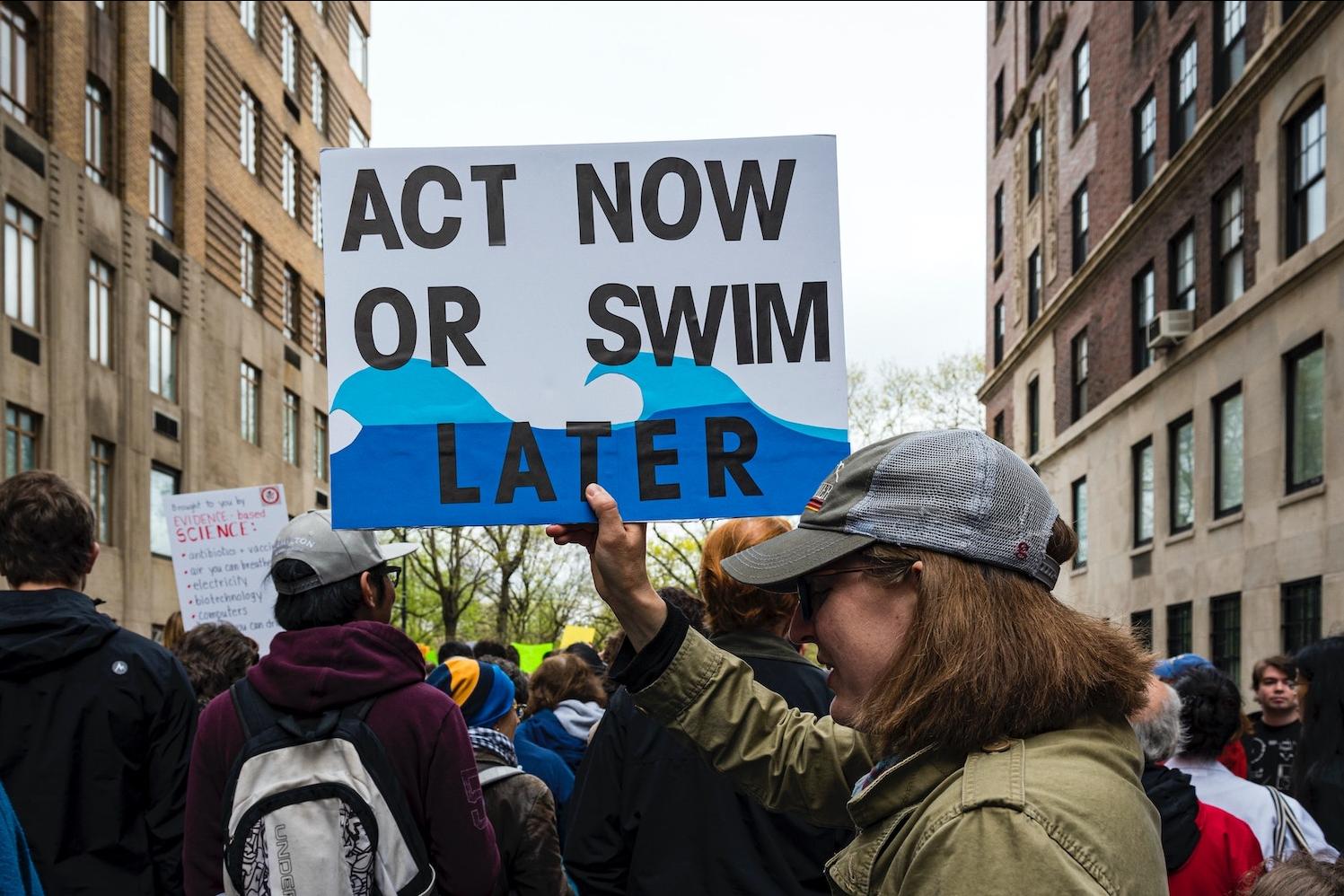
Demonstrators at the 2020 March for Science in New York City. (Image: Chris Boese/Unsplash)

By Amy Brown from Triple Pundit • Reposted: June 13, 2023

With growing evidence that nearly all companies will miss their net-zero targets unless they double emissions-reduction rates, some companies are biting the bullet and revising their targets. But that’s not necessarily a bad thing, as long as the new goals  are backed by action.

Comfort shoe manufacturer Crocs drew attention for pushing back its commitment to achieve net-zero emissions by 2030, after its emissions increased by more than 45 percent last year compared to a year earlier. The company now aims to reach net-zero by 2040 instead. Oil giant BP also recently lowered its 2030 emissions reduction goal, from a range of 35 percent to 40 percent in the initial target to 20 percent to 30 percent as of February

These companies are not outliers. More than 60 percent of the companies surveyed in a 2022 Accenture report have set targets far into the future or have no clear target date.

Coming clean on out-of-reach net-zero targets is a likely situation for many more companies as they get closer to 2030 or 2040 milestones on reducing their greenhouse gas emissions in line with global agreements to limit climate change. There are many reasons why companies might revise their targets — for example, a mismatch of ambition with the reality on the ground and slower-than-expected progress, or more accurate carbon accounting.

Ultimately, net-zero targets are only as good as their implementation plans. 

Investors want transparency 

The good news is that more companies are aiming for net-zero, even if they haven’t discovered the best path to get there. “Net-zero commitments now cover one-fifth of the world’s largest corporations and 68 percent of global GDP, compared to 16 percent in 2019,” according to the World Resources Institute.  

Setting net-zero targets can be tricky, as Crocs and other companies have discovered. There is no standardized approach for setting a net-zero target, leading to a lack of transparency on the scope and boundary of the targets and how organizations will reach them. From that perspective, companies owning up to a target that can’t be met isn’t necessarily a bad thing.  

“Many companies, even some of the leaders, are seeing gaps between where they can go with current strategies and initiatives and where they need to get to,” Meryl Richards, director of food and forest at the sustainability nonprofit Ceres, told TriplePundit. 

Some companies have opted to set ambitious targets and figure out how to meet them as they go, while others prefer to know exactly how they will get there before making a commitment, Richards said. “I don’t think one is necessarily more valid than the other. We need companies that are comfortable getting out in front and being leaders and setting the standard and encourage that ambition.”  

Given the need for ambition in the short term, she doesn’t think it’s a terrible thing for companies to adjust course as they go — as long as they stay on track to limit global warming to 1.5 degrees Celsius. “What investors are looking for is transparency around why a company had to adjust its net-zero strategy,” she said.

What would cause concern is if a company had to continually readjust its targets because it was experiencing growth. “That’s where the forward-looking strategy is really needed to plan how you’re going to integrate your emissions reduction strategy with that growth,” she explained. 

Why companies need a climate transition action plan

All of this trial and error is why investors want to see climate transition action plans, Richards said. “What investors are looking for [are] ambitious, science-based targets for companies to reduce their own emissions and an action-oriented plan for how to get there.”

Climate transition action plans, also known as transition plans, clearly define how companies will take action in the near-term to meet the long-term goals necessary to limit global warming. In 2022, Ceres, the We Mean Business Coalition, CDP, the Environmental Defense Fund and Ramboll Consulting created a framework to help companies create and implement these transition plans. 

Defining a clear path forward with transition planning can help to avoid a “scenario as we had with 2020 deforestation targets, where a number of companies committed to zero deforestation by 2020 and none of them met that goal because they didn’t have implementation plans,” Richards said. “It was a target with no plan behind it.”

Yet a recent Ceres study indicates those lessons are not yet being applied to net-zero targets. In a March assessment of 50 large food companies, Ceres found only 27 had plans in place to reduce their Scope 3, or value chain, emissions. None of them hit all the marks for climate transition planning in their disclosures, according to the analysis. 

How to ensure real net-zero progress

Along with setting science-based targets, companies need to integrate their climate strategy across every aspect of their operations to ensure realistic progress toward those targets, Richards said. 

“For example, when we get on a call with a company to discuss a climate transition action plan, and they’ve got representation from procurement, [research and development] and sustainability, we know they’re serious about it,” she said. “The leading companies are getting granular about their sources of emissions,” and they’re transparent about gaps and how they will bridge them.

“Along the way, companies also discover opportunities like meeting consumer preferences for lower-emissions products,” she said. “Having the right plan in place is what will help companies avoid 2029 backpedaling.”    

To see the original post, follow this link: https://www.triplepundit.com/story/2023/companies-push-back-net-zero-targets/776341


FTC takes a microscope to sustainability claims

26 04 2023

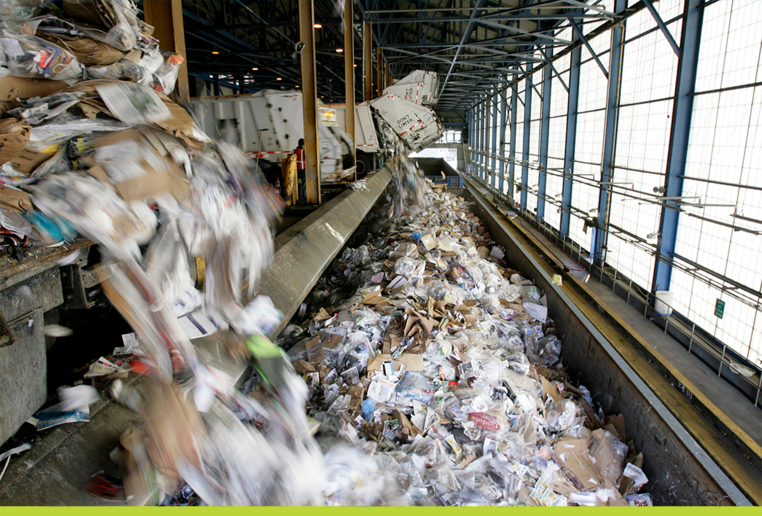
Does this count as recycling? | Seth Wenig/AP Photo

By Debra Kahn and Jordan Wolman from Politico.com • Reposted: April 26, 2023

Companies are talking the talk on sustainability. The Federal Trade Commission is gearing up to make sure they’re walking the walk, Jordan reports.

As demand for sustainable products has skyrocketed, so have concerns about greenwashing. Public comments were due yesterday on the FTC’s first update in 11 years of its “Green Guides,” which are essentially advice for how companies can make environmental marketing claims.

The nearly 60,000 comments shed light on what companies, industry trade groups and environmentalists are fighting over:

— Recycling claims. Current FTC guidelines say companies should qualify claims of “recyclability” when products aren’t recyclable in at least 60 percent of their market. The EPA wrote that the bar “should be much higher,” while environmental groups want to clarify that at least 60 percent of products need to actually be recycled — not just collected. That coalition also wants to set a higher bar of 75 percent for store drop-off programs.

The Plastics Industry Association wants the standards to stay as-is: The FTC “should not further complicate the issue by adding hurdles,” the group wrote. It also wants take-back or drop-off programs to be equally eligible to make unqualified recycling claims.

— Corporate net-zero claims. Ceres, a nonprofit focused on corporate sustainability, wants the FTC to give guidance on how companies can use carbon offsets to make claims about their climate commitments and achievements. Sierra Club and a half-dozen other groups want disclosure of specific offsets’ climate benefits.

— Chemical recycling. The American Chemistry Council and the Plastics Industry Association want to make it easier to claim that chemical recycling — a set of technologies that involve melting hard-to-recycle plastic down into its components — counts toward companies’ recycled content and recyclability standards. The ACC submitted a new poll showing that nearly 90 percent of consumers believe chemical recycling qualifies as “recycling.” Green groups are pushing back.

— Enforcement. Environmental groups want the FTC to initiate a formal rulemaking process to codify the Green Guides (currently, the agency can bring enforcement action via violations of the FTC Act), with an eye toward California’s “truth in labeling” law. EPA seems to be on board, too, but the Plastics Industry Association opposes rulemaking.

How much does this all matter? The FTC doesn’t do a ton of enforcement of green marketing claims: It’s taken enforcement action under the Green Guides 36 times since 2013. It hasn’t taken enforcement action based on recycling claims since 2014 — although it does send warning letters, which can nudge companies into compliance.

The agency tends to pick big cases that send a signal — like its $5.5 million penalty last year against Walmart and Kohl’s over claims that they marketed rayon textiles as made from eco-friendly bamboo, when in fact converting bamboo into rayon involves toxic chemicals.

But officials are signaling willingness to wade into the details on new technologies such as chemical recycling.

“Our job is to not say what’s good or bad for society, it is to make sure that people aren’t lying,” James Kohm, associate director of enforcement in the FTC’s Bureau of Consumer Protection, said in an interview. “We wouldn’t necessarily hesitate to get involved in a situation. What we don’t want to do is contradict the EPA, and we’ve been careful in a number of areas to not do that. There are a bunch of trade offs — that you have less trash, but you might have more air pollution, for example. If we had enough information, and we weren’t contradicting the EPA, we would probably give advice.”

We could be in this for the long haul: The last time the Green Guides were updated, the process started in 2007 and didn’t end until 2012. There’s an initial public workshop on recycling scheduled next month.

To see the original post, follow this link: https://www.politico.com/newsletters/the-long-game/2023/04/25/ftc-takes-a-microscope-to-sustainability-claims-00093682