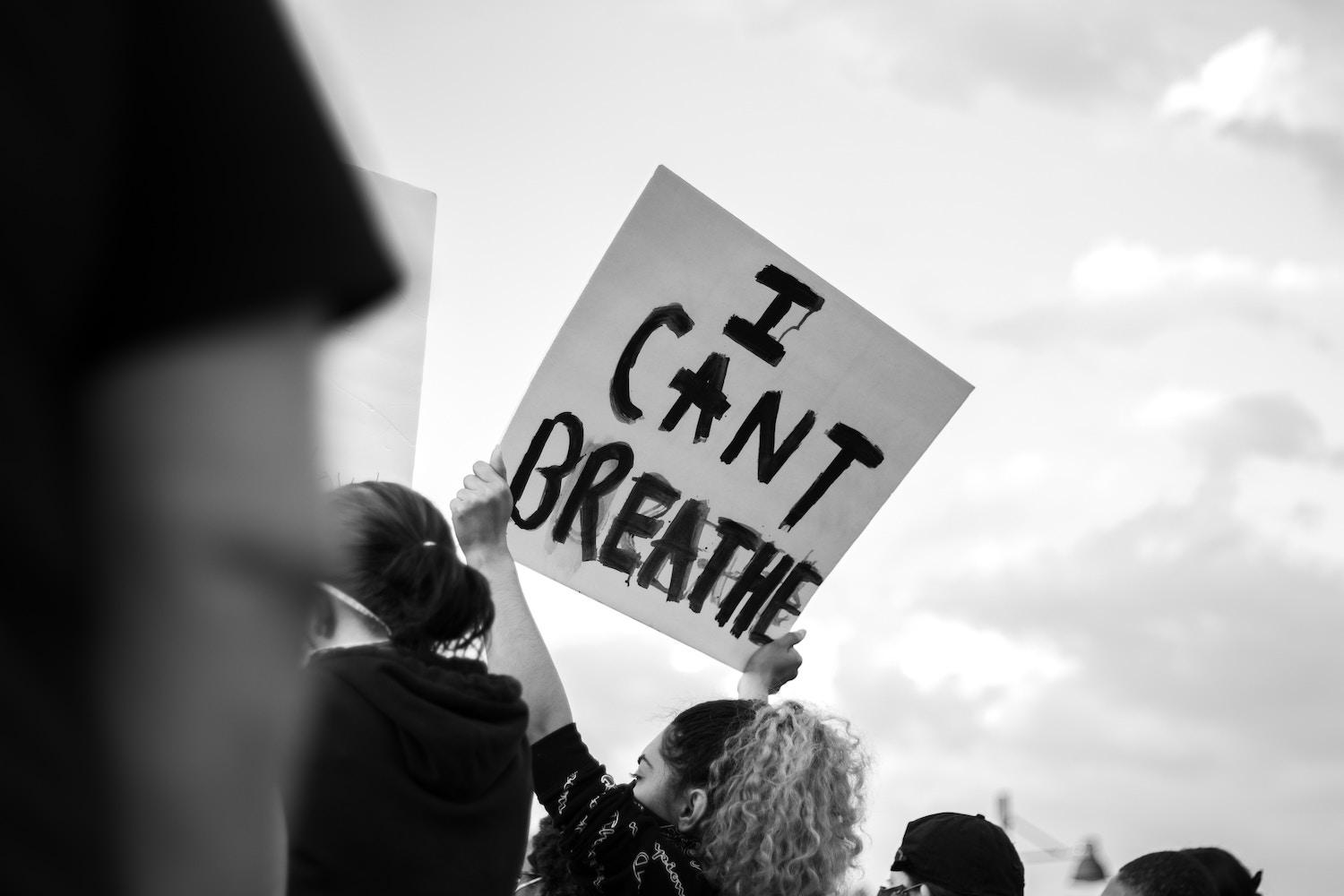
Uptick in Police Violence Offers a Chance for Brands to Address the Root of the Problem

29 06 2023

Image credit: Cooper Baumgartner/Unsplash

By Patrick McCarthy from Triple Pundit • Reposted: June 29, 2023

This is the second article in a two-part series about brands addressing police violence — click here to read part one.  

In 2020, corporations donated billions of dollars to under-served and over-policed communities hoping to correct the deep-rooted systemic injustice that breeds police violence and brutality and underscores every aspect of our country.

It didn’t work. 

An estimated 1,096 people were shot and killed by U.S. police last year, according to tracking from the Washington Post. That’s the highest number since the paper began keeping track in 2015 — with a disproportionate number involving Black Americans. U.S. police have killed 436 people since the start of 2023.

Creating a cultural renaissance to reduce police violence

When it comes to a polarizing topic like police violence, brands often prefer to weigh in with solutions-based rhetoric, rather than just restating the problem. So, brands are far more interested in suggesting police reform projects and less interested in publicly condemning police violence. 

“Positive action and language always has more staying power,” said Diane Primo, CEO of the Purpose Brand agency. “Gun prevention versus gun violence, think about it like that. That creates lasting impact.”

Primo recommends an approach that’s different from many advocates, calling on brands to work toward creating a cultural renaissance in police forces that have been perceived as having a bias against Black communities.

“The police’s relationship with the community has broken down. A few bad apples have tainted the reputation of the dedicated officers who are committed to serving and protecting the community,” Primo said. “Local governments and the citizens they protect rightfully hold them accountable.” 

So, how can brands support police-community engagement? “Continuous retraining and re-engagement with the community continues to be paramount,” Primo said. “Therefore brands should consider supporting and funding training and community engagement programs. Brands should ask police leadership what they need to accelerate their own transformation. I don’t think there’s a police force in this country that isn’t grappling with these issues while facing budgetary constraints.”

Police reform requires additional funding for police departments. If pro-reform Americans don’t want this additional funding to come out of local budgets, then they ought to embrace the concept of brands funding police department reform projects, Primo said.

Still, she understands the skepticism from critics wary of increased investments in police departments, the majority of which already boast hefty budgets. Though public safety across the nation has become inextricably linked to malpractice, corruption and the avoidance of accountability, Primo observed that similar issues are also prevalent in other sectors like healthcare, where a solutions-oriented approach has been effective.

“No one has a problem leaning in and saying, ‘Let me figure out ways to help ensure there is equitable health care,’” Primo said. “We know there are plenty of organizations with the ability to tactically provide solutions — what I’m proposing is not radically different.”

To achieve the police reforms advocates seek, it may be necessary to fund, rather than defund, police departments — just not directly. Diversity, equity and inclusion (DEI) goals, community outreach, de-escalation seminars, and interventions with problematic perspectives are all initiatives that brands can finance for police departments. 

“It’s not necessarily pledging money to the police department open-ended. It’s providing restricted funds to accelerate their own internal transformation and engagement with the community,” Primo said. “These funds should be dedicated to rebuilding processes that embrace diversity when hiring, promoting and engaging with the community. This ensures institutional change. This is equivalent to the same internal diversity challenges that corporations and brands face. I would argue that it is brutality of a different sort.”

Cops can take a page out of corporate America’s DEI playbook

Police departments increasingly find themselves tasked with addressing the symptoms of larger societal crises that complicate a police officer’s normal duties. Black-and-white laws cannot accommodate the gray space created by systemic issues like poverty, socioeconomic inequality and community disinvestment.

“The issue of policing is far more complex than many understand, meaning they are really at the center of things that are socially and economically so out of hand. This creates its own set of unique problems,” Primo said. “When you have a community that is not healthy because they can’t get jobs. They don’t have a living wage to support their families. There’s a transportation issue in their community. There’s a healthcare issue in their community. When you’re talking about crossing the ZIP code and having mortality change. That’s going to create a special set of problems.”

These same communities, though, hold the key to unlocking a better model of policing. In communities that harbor strong distrust, fear and skepticism of law enforcement, there lies the potential for a new generation of police officers who are better equipped to navigate the challenges of enforcing the law in an underserved and over-policed community.

Yet in areas where police departments have acted downright antagonistic toward civilians, how are these same departments to recruit from a group of people who have only ever had negative experiences with cops?

Once again, companies have the potential to bridge this gap, Primo said. If brands really want to commit to police reform, they will need to invest in reforming both police personnel, as well as the communities they serve and protect.

“What dollar amount can brands give to support education? What dollar amount can brands give to create a better relationship between the community and the police, and actually fund more positive policing in the community?” Primo asked. “Helping the police figure out how to attract more prospects of color into the police force so they, too, achieve diversity.”

American police officers lost the trust of the people they are supposed to protect. For many young people, trust in police is not eroded — it is non-existent. To win it back, police need to plant the seeds of community engagement. And corporations can help connect these seemingly incompatible camps. This young generation recognizes the power of corporations to enact change and has leveraged brands to act on various topics in the past, including police violence. So, it is not a stretch to suggest activists could again pressure corporations to fund police reform. 

“Sticking power really is about how to create positive change — you don’t approach that negatively. And that’s why during the George Floyd protests, people talked positively about, ‘What can I do? What does this mean?’” Primo said. “From a brand perspective, think about the transparency that was created in your own organization with the acceleration of DEI reporting, DEI officers and DEI hiring. The question remains: Will it continue, and what will the impact actually be today and over time?”

For this to work, though, police must commit to reforming their own procedures and perspectives. Brands must commit to putting their money where their mouth is and continue their reform work after the media stops covering it. Activists must acknowledge that abolishing and significantly defunding the police are unrealistic goals — the pursuit of which fails to address, and even exacerbates, the present policing problems.

“We know that whenever there’s a crisis, positive change can come out of it,” Primo said, “There is potential here for positive change, for brands to support the police in very positive ways.”

To see the original post, follow this link: https://www.triplepundit.com/story/2023/brands-fund-reducing-police-violence/777631


Brands Are Silent on Surging Police Violence. Were They Ever Loud?

27 06 2023

 Image credit: Jacob Morch/Unsplash

By Patrick McCarthy from Triple Pundit • Reposted: June 27, 2023

The common narrative of 2020 — and perhaps our collective memory of that tumultuous summer — is that corporations delved neck-deep into conversations of police brutality and a culture of excessive force. But for all the lofty words, the condemnations of violence and commitments to change, most corporations have quietly shifted back to their standard messaging and practices, even as police violence increased.

An estimated 1,096 people were shot and killed by police in 2022, an increase from 1,019 people in 2020, according to real-time tracking from the Washington Post.
 U.S. police have shot and killed 436 people since the start of the year, according to the database.

Last year marked the highest number of police killings since the paper started keeping track in 2015, with a disproportionate number involving Black Americans. So, what prompted large corporations to go quiet on police reform? Are consumers just not applying the same pressure?

Why have brands grown silent on police violence? Thinking back to what they really said

For starters, a brand can’t become silent on an issue it never explicitly addressed. Most companies that issued statements regarding civil unrest in the summer of 2020 did not address police brutality at all, observed Diane Primo, CEO of the Purpose Brand agency.

“When you actually go back and look really carefully, you don’t find many brands actually using the words ‘police brutality’ or ‘abuse of police power,’” Primo said. “They are purposefully choosing to stay away from those words specifically.”

Corporations flooded the internet with press releases and statements from CEOs weighing in on a violent police culture in need of reform — though most stopped short of explicitly condemning police brutality or police violence.

“This is a really important insight,” Primo said. “Brands give the impression that they talked about police brutality when, in fact, their focus is really on the larger issues in the community. They are focused on the end game, being that Black lives really do matter. If they matter, brands must take responsibility and help address the root cause by providing opportunities that ensure equal education, employment and economic mobility. The brands let the protests represent these issues, while they moved toward action and commitment to the community.”

Though most brands didn’t comment on police violence and brutality, their actions weren’t necessarily performative, nor their statements vapid, Primo said. By and large, corporations focused on issues they could directly control. Some brands focused on increasing their own internal representation in terms of diversity and inclusion, as well as making fresh commitments toward supplier diversity initiatives. Many banks and financial institutions made substantial investments to support community development and promote financial mobility in areas lacking both. 

For example, in June 2020, Bank of America announced a $1 billion commitment to health, housing and job training initiatives in historically underserved communities, with a special focus on addressing “economic and racial inequality accelerated by a global pandemic.” Likewise, in 2020 PepsiCo created its Racial Equality Journey (REJ) Initiative, pledging to invest more than $570 million over five years to increase Black and Hispanic representation at the company, while working to dismantle systemic barriers in Black and Hispanic American communities.

Though these investments were in direct response to the Black Lives Matter movement, the vast majority of these funds were not invested in the official Black Lives Matter organization or local Black Lives Matter chapters. Companies like Apple, Walmart and Comcast made similar investments to racial justice and community development, and immediately faced calls for boycotts from their conservative consumers. In response, some brands issued statements emphasizing that they had not donated to the Black Lives Matter organization, but rather invested in causes that support Black communities. While PepsiCo also hit back at false accusations from Fox News that it had donated directly to the organization, Gatorade (a PepsiCo brand) eventually did just that.

Outliers: Brands that spoke up early 

Some exceptions included statements from companies like Ben and Jerry’s and Dell that denounced police violence specifically. 

Ben & Jerry’s issued what some experts called the strongest and most substantive statement in response to the murder of George Floyd, denouncing white supremacy and demanding broad reforms to address the legacy of slavery and reign in law enforcement. 

Michael Dell, CEO of Dell Technologies, similarly focused on the undeniable connections between America’s legacy of slavery and its history of brutally policing Black communities. “From the devastating and disproportionate impacts of COVID-19 to the devastating impacts of police brutality, the long-standing racial injustice in America that began 400 years ago is impossible to ignore,” Dell wrote in a letter shared within the company and later on LinkedIn.


In 2020, protesters were able to pressure corporations to acknowledge the ubiquitous racial injustice that defined the segregation of U.S. communities and the disparate policing of American citizens. Police violence is the core issue that dragged brands into the conversation, whether or not they explicitly addressed it. Yet police violence has increased in the years since these corporations donated billions of dollars to support “community development.” 

To see the original post, follow this link: https://www.triplepundit.com/story/2023/brands-silent-police-violence/777546


Brands Have Grown Silent on Police Violence: How Can They Do Better?

17 03 2023

Image credit: Clay Banks/Unsplash

By Mary Mazzoni from triplepundit.com • Reposted: March 17, 2021

Despite increased attention on the issue — and the rollout of piecemeal reform policies in some cities — data indicates that police violence in the U.S. is actually getting worse.

The Washington Post’s real-time database has recorded more fatal police shootings every year since it launched in 2015, with 2022 being the deadliest to date. Communities of color, particularly Black communities, continue to be disproportionately affected. Already this year, U.S. police have shot and killed 195 people, according to the database. Many, including the killings of Tyre Nichols, Keenan Anderson, Anthony Lowe Jr. and Manuel “Tortuguita” Terán, were highly publicized. Yet most of the brands that proclaimed to “stand with” Black communities following the murder of George Floyd in 2020 were largely nowhere to be seen. 

So, why have brands gone silent on the issue of police violence, and how can they do better? TriplePundit connected with leaders in sustainability and diversity, equity and inclusion (DEI) to get a better understanding. 

The hard work is just beginning 

Like the Black Lives Matter movement itself, the corporate pledges made after Floyd’s murder were about much more than police violence. Companies committed billions of dollars in funding to tackle systemic inequities across society and the economy. Some succeeded in creating measurable progress — including the push to get more Black-owned brands on store shelves and devote more mainstream advertising spend to Black-owned media companies. 

But by and large, many of these initially outspoken brands have failed to follow through. “It’s easy for everyone to jump on the bandwagon,” Emerald-Jane “EJ” Hunter, founder of the DEI-focused integrated marketing firm myWHY Agency, said of corporate stands in favor of racial equity. “But it’s hard work and often calls for financial investment for companies to actually do the work, and do it well.”

Particularly during uncertain economic times, programming that is viewed as “nice-to-have” or unrelated to the business is always at risk of being cut. And unfortunately too many brands still view their racial equity work this way

“Many brands aren’t willing to part with the investment so take the lazy route by making a statement and claims and hope, just like many things, followers and consumers will forget over time what they said they would do,” Hunter told us. “The commitment simply isn’t there to do what it takes to make the shift and change, and therein lies the problem: Until companies make the investment and give it the time that it takes, we’ll never see change.”

The benefits of going bold: How can leaders convince their bosses it’s worth the risk? 

“The issue of police violence has also become so politically charged, it’s safer for brands to not go ‘too hard’ on this stance for fear of being cancelled,” Hunter said. While brands may be more keen to back off given the “anti-woke” political climate, consumer expectations — particularly among younger demographics — are only growing

“Remaining quiet when police brutality continues to disproportionately impact communities of color is no longer an option,” said Alix Lebec, founder and CEO of Lebec Consulting, which specializes in environmental, social and governance (ESG) issues and impact investing. “Eighty-two percent of millennial consumers expect corporations to align with their social and environmental values — and to stand up for key societal issues in real time.” 

Although it may seem safer to stay silent, brands that go bold — and back it up — stand to see real benefits. “Ben & Jerry’s is one of the best examples of a company and brand that immediately spoke up after George Floyd’s murder caused by inhumane police brutality in an authentic manner,” Lebec said. “From its voiceconsumer productsdonations and stance on public policy, Ben & Jerry’s took action. This is a brand that leads with empathy and purpose.” 

The brand continues to work with grassroots racial empowerment and civil rights organizations like the Advancement ProjectClose the Workhouse Coalition and the Power U Center for Social Change. “Taking bold positions on political topics has often helped the ice cream brand,” Hunter added, citing a 2020 analysis from YouGov which found customer affinity scores double after Ben & Jerry’s publicly condemned white supremacy and police violence. “The brand’s activism isn’t just the right thing to do. It also can help, in all honesty, your bottom line.”

Still, what’s a leader to do if their company remains hesitant? “One thing a business leader can tell their boss when they receive pushback is to look at the generations to follow and what matters to them. If their company wants to be around for years to come, they’ll soon be challenged by Gen Z and millennials for whom why businesses exist matters more than what they do,” Hunter said. “You won’t exist for much longer without aligning with a cause or issue or a why that goes beyond dollars and cents.”

“It doesn’t have to be specifically police brutality,” she added, “but should that be the cause, then it’s worth knowing that advocacy work equals longevity for a brand. It also takes time to become the likes of Ben & Jerry’s, so start now, be intentional, and practice what you preach internally and externally.”

Ready to take action to curb police violence and promote equity? Here’s how to start

Hunter highly recommends connecting with outside experts or enlisting an agency to help you get better about acting and communicating around issues like police violence and equity more broadly.

“This isn’t the time to risk making mistakes with a DIY approach. You’re in this boat because if you had known better, you would’ve done better,” she told us. “Nothing is worse than getting it wrong. Let the experts guide you so you do it right.” 

For most brands, the first step in “getting it right” will start internally, with building inclusivity in operations, hiring and promotion practices, and supply chains. “It begins at home, so ensure you’re all squared away internally before making external statements that become void of truth once you’re called out on your internal practices,” Hunter advised. 

Lebec agreed. “In addition to speaking up, companies need to truly live the values they espouse,” she said. “This includes engaging in catalytic and trust-based philanthropy, impact investing and public-private partnership, supporting public policies that value equality and sustainability, and showing up for local communities.”

If brand leadership has money to invest, the way they choose to do it also makes a big difference — both in terms of maximizing impact and supporting changemakers of color who are often overlooked. “Donate and invest in local, minority-owned businesses and nonprofitsthat have a strong track record with local communities, are typically underfunded, and have the potential to create more thriving local economies,” Lebec told us.

“Corporations can also leverage their philanthropy in ways that will attract other forms of financing to the table — such as impact investment capital — and financially support organizations that are really making a difference here in the U.S. and across developing and emerging markets,” she said. “Investing directly from corporate balance sheets, for instance, could unlock billions to trillion dollars of capital for economic and social equality.”

Don’t have money? Lend your voice. “Support public policies that are leveling the playing field for underrepresented business owners and entrepreneurs and are pro-equality and sustainability,” she advised. 

However they do it, brands would be wise to recognize the urgency of getting started. “In 2023, companies need to be vulnerable, action-oriented, timely, creative and authentic — or risk losing relevancy and loyalty,” Lebec said. 

To see the original post, follow this link: https://www.triplepundit.com/story/2023/brands-stance-police-violence/768631