
We Can’t Let Vogue Words Hinder Climate Action

17 07 2023

Image: United Nations

‘Regenerative’ has become the latest trend — a label that’s stuck on anything as a way of making it sound positive and reassuring. To guarantee genuine progress, we need a universal set of principles underpinning regenerative economics and a standardised way of quantifying success. By Amanda Powell-Smith from Sustainable Brands • Reposted: July 17, 2023

“Regenerative” is the new “sustainable.”

Globally, mentions of the word have gone up by 43 percent in online news stories and 282 percent on social media in the last year. Increasingly favoured by brands and companies to describe their positive approach to environmental challenges, regenerative is being stuck on everything from architecture to fashionteatravelskincare and even leather.

But what does it really mean? Originally, it was mostly used to describe an approach to agriculture. Regenerative farming is about producing food while restoring degraded soils and depleted wildlife populations and plant species. In this context, the use of the word ‘regenerative’ makes sense — it’s about keeping living ecosystems in balance. Metrics exist to measure tangible outcomes, like an increased percentage of organic matter in the soil or an upswing in insect numbers. We can track change.

Things become trickier when we apply the term ‘regenerative’ to human systems. What does a regenerative economy look like and how do we judge its success? As things stand, the term remains too broad-brush to be able to answer these questions in a consistent and meaningful way.

When applied to economics, it bears many similarities to the idea of a wellbeing economy — which is about healing, recovery and recuperation. However, the use of the word ’wellbeing’ offers much greater clarity because an existing suite of metrics exists to enable measurement of both healthy people and a healthy planet.

For example, the World Health Organization provides global figures on life expectancy and mother-and-child mortality rates. Likewise, for the animal world, the International Union for Conservation of Nature updates a red list of wildlife at threat of extinction. Plant and tree species numbers can similarly be tracked; no equivalent exists for the descriptor ‘regenerative.’

To guarantee genuine progress, we need a universal set of principles underpinning regenerative economics and a standardised way of quantifying success. Otherwise, the ‘regenerative’ epithet will lose its meaning and become just another empty badge exploited by greenwashers and climate deniers alike.

For those of us working in communications, this means — as ever — being careful with our use of language. We mustn’t decide that the word ‘sustainable’ is no longer important or relevant. Its meaning is critical but remains widely misunderstood with many aligning it to the environment only — when it’s about building an inclusive and resilient future for both people and the planet.

The United Nations defines sustainable as ‘meeting the needs of the present without compromising the ability of future generations to meet their own needs;’ and we won’t achieve that without the repair, renewal and regeneration of our natural world.

We can’t let ‘regenerative’ become the latest trend — a label that’s stuck on anything as a way of making it sound positive and reassuring. Those who want to use words such as ‘sustainable’ and ‘regenerative’ must always ally them with real substance, thought and impact. Words are important and what they stand for matters to us all.

To see the original post, follow this link: https://sustainablebrands.com/read/marketing-and-comms/vogue-words-hinder-climate-action


Global Hunger: The Growing ESG Issue That Few Companies Want to Face

3 04 2023

USAID distributes food assistance in East Africa, where an unprecedented drought is pushing millions to the brink of starvation. Image credit: USAID U.S. Agency for International Development/Flickr 

By Eric Bebernitz, Director of External Relations, Action Against Hunger via Triplepundit.com • Reposted: April 3, 2023

Companies are working to meet rising stakeholder expectations on environmental, social and governance (ESG) issues in ways that can differentiate, build brand reputation, and engage employees. Yet the predominant approach misses a critical opportunity since it doesn’t focus on a critical issue that few want to face: global hunger.

Hear me out. Just as the climate crisis is a universal challenge, global hunger is a fundamental issue that ultimately impacts business success — and humanity as a whole. In 2021, an Action Against Hunger survey with The Harris Poll found that nearly half of all Americans worry about increases to the price of food as a result of climate change. The most recent Trust Barometer found that 67 percent of people globally are worried about food shortages leading to hoarding, riots and hunger, which Edelman characterizes as an existential societal fear. As a priority, the issue ranked behind climate change and just ahead of energy shortages. It’s not hard to see why.
 
After decades of progress showed that it is possible to dramatically slash rates of malnutrition, global hunger is once again on the rise. Approximately 828 million people — 1 in 10 worldwide — are undernourished, and as many as 50 million people in 45 countries are on the verge of famine. The costs of inaction are high.

Yet global hunger is a predictable and preventable problem that we can solve in our lifetimes. Doing so can provide a strong return on investment. As a 2022 study showed, every $1 invested in preventing chronic malnutrition in children can result in gains from $2 to $81 annually. Among the range of ESG issues, addressing malnutrition stands out for its ability to advance other corporate priorities, such as the following. 

Long-term workforce development 

Hungry children struggle to learn, and hungry workers are less productive. Hunger robs the U.S. economy of at least $167.5 billion annually, and research published in The Lancet found that, across 95 low- and middle-income countries, childhood stunting costs the private sector at least $135.4 billion in sales annually, amounting to around 1.2 percent of national GDP.

Socio-economic growth

The U.S. Secretary of Commerce believes an aging population will hit the country “like a ton of bricks,” with migration as a potential solution. Africa is the only region projected to enjoy strong population growth long-term, which can provide a global demographic dividend — but only if we invest in the potential. Africa has the world’s youngest population as well as the highest hunger rates, with 9 out of 10 children not receiving even the minimum acceptable diet, according to the World Health Organization. One in 3 African children are permanently stunted by hunger, reducing the region’s present GDP per capita by 10 percent. Hunger is growing in other regions, as well.

Political stability

Conflict and global hunger are deeply linked. As U.N. Secretary-General António Guterres noted in a 2020 report, income inequality is creating a vicious cycle of discontent, leading to mass protests in both developed and developing countries. Roughly 70 percent of the world’s most malnourished people live in countries with an active conflict, which disrupts harvests, hampers aid delivery, and creates a burgeoning population of displaced people. This can contribute to even greater instability, often in already fragile regions. 

Permission to operate

The epochal shift from shareholder capitalism to stakeholder capitalism comes as a growing number of millennial and Gen Z adults — now a majority of the U.S. workforce and a growing share of the electorate — hold a negative view of capitalism itself. Public willingness to subsidize, tax and regulate business can, quite literally, hinge on bread-and-butter issues.

The bottom line: The untapped potential of investing to fight global hunger

Although addressing global  hunger is a wise investment, it’s one that isn’t being made. Countries with “crisis” levels of hunger face a 53 percent gap in hunger funding. Corporate giving to health and social services dropped 5 percent in 2022, and median international community investments decreased by 15 percent, according to CECP. Among the U.N. Sustainable Development Goals, companies consistently report providing the least support for the objective to eradicate global hunger. 

Inaction is particularly unwise in an era when economic anxieties and the mass-class divide are eroding trust. The effect is sharply pronounced among those with lower incomes: In the U.S., for example, there is a 23-point gap in the levels of institutional trust among lower-income and higher-income groups. Lack of trust has a corrosive effect on society, dimming long-term economic prospects.

In other words, chronic inequality — a major driver of global hunger — is bad for business. Ending hunger is no longer about charity or even being “woke.” It is now essential to foster the kind of operating environment that is essential to business value and long-term success.

To see the original post, follow this link: https://www.triplepundit.com/story/2023/global-hunger-esg-issue/770221


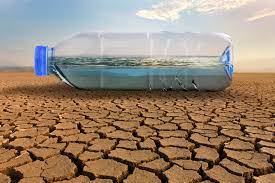
How the bottled water industry is masking the global water crisis

23 03 2023

Bottled water corporations exploit surface water and aquifers, buy water at a very low cost and sell it for 150 to 1,000 times more than the same unit of municipal tap water. Photo: Shutterstock

By Zeineb Bouhlel, Research Associate, Institute for Water, Environment and Health (UNU-INWEH), United Nations University and Vladimir Smakhtin, Former Director of the Institute for Water, Environment and Health (UNU-INWEH), United Nations University via The conversation • Reposted: March 23, 2023

Bottled water is one of the world’s most popular beverages, and its industry is making the most of it. Since the millennium, the world has advanced significantly towards the goal of safe water for all. In 2020, 74 per cent of humanity had access to safe water. This is 10 per cent more than two decades ago. But that still leaves two billion people without access to safe drinking water

Meanwhile, bottled water corporations exploit surface water and aquifers — typically at very low cost — and sell it for 150 to 1,000 times more than the same unit of municipal tap water. The price is often justified by offering the product as an absolute safe alternative to tap water. But bottled water is not immune to all contamination, considering that it rarely faces the rigorous public health and environmental regulations that public utility tap water does

In our recently published study, which studied 109 countries, it was concluded that the highly profitable and fast-growing bottled water industry is masking the failure of public systems to supply reliable drinking water for all.

The industry can undermine progress of safe-water projects, mostly in low- and middle-income countries, by distracting development efforts and redirecting attention to a less reliable, less affordable option.

Bottled water industry can disrupt SDGs

The fast-growing bottled water industry also impacts the UN’s Sustainable Development Goals (SDG) in many ways. 

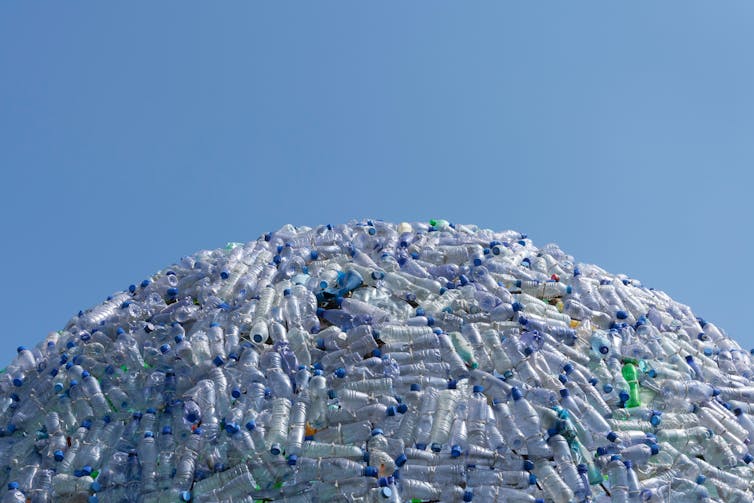
A pile of plastic bottle waste.
The rising sales of global bottled water is contributing to plastic pollution on land and in the oceans. Photo: Shutterstock

The latest UN University report revealed that the annual sales of the global bottled water market is expected to double to US$500 billion worldwide this decade. This can increase stress in water-depleted areas while contributing to plastic pollution on land and in the oceans.

Growing faster than any other in the food category worldwide, the bottled water market is biggest in the Global South, with the Asia-Pacific, Africa and Latin American and Caribbean regions accounting for 60 per cent of all sales.

But no region is on track to achieve universal access to safe water services, which is one of he SDG 2030 targets. In fact, the industry’s greatest impact seems to be its potential to stunt the progress of nations’ goals to provide its residents with equitable access to affordable drinking water.

Impact on vulnerable nations

In the Global North, bottled water is often perceived to be healthier and tastier than tap water. It is, therefore, more a luxury good than a necessity. Meanwhile, in the Global South, it is the lack or absence of reliable public water supply and water management infrastructure that drives bottled water markets. 

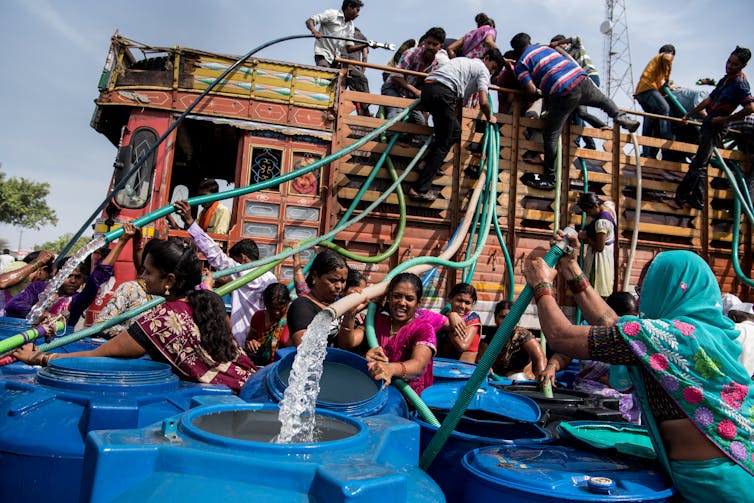
Therefore, in many low- and middle-income countries, particularly in the Asia Pacific, rising consumption of bottled water can be seen as a proxy indicator of decades of governments’ failure to deliver on commitments to safe public water systems.

A group of people fill water in their drums from a truck carrying municipal water.
The rising consumption of bottled water in some countries can be seen as a proxy indicator of decades of governments’ failure to deliver on commitments to safe public water systems. Photo: Shutterstock

This further widens the global disparity between the billions of people who lack access to reliable water services and the others that enjoy water as a luxury.

In 2016, the annual financing required to achieve a safe drinking water supply throughout the world was estimated to cost US$114 billion, which amounts to less than half of today’s roughly US$270 billion global annual bottled water sales. 

Regulating the bottled-water industry

Last year, the World Health Organization estimated that the current rate of progress needs to quadruple to meet the SDGs 2030 target. But this is a colossal challenge considering the competing financial priorities and the prevailing business-as-usual attitude in the water sector.

As the bottled water market grows, it is more important than ever to strengthen legislation that regulates the industry and its water quality standards. Such legislation can impact bottled water quality control, groundwater exploitation, land use, plastic waste management, carbon emissions, finance and transparency obligations, to mention a few.

Our report argues that, with global progress toward this target so far off-track, expansion of the bottled water market essentially works against making headway, or at least slows it down, adversely affecting investments and long-term public water infrastructure.

Some high-level initiatives, like an alliance of Global Investors for Sustainable Development, aim to scale up finance for the SDGs, including water-related ones. 

Such initiatives offer the bottled water sector an opportunity to become an active player in this process and help accelerate progress toward reliable water supply, particularly in the Global South.

To see the original post, follow this link: https://theconversation.com/how-the-bottled-water-industry-is-masking-the-global-water-crisis-201756