How to prove that sustainable business is good business

25 07 2024

Photo: Adobe Stock

By Natalie Runyon, Director / ESG content & Advisory Services / Thomson Reuters Institute • Reposted: July 25, 2024

A new return on sustainable investment methodology enables companies to quantify the financial benefits of their business investments and sustainability initiatives to better demonstrate sustainable growth and long-term value creation

Sustainability is key to both business and societal progress, but many companies struggle to demonstrate the financial benefits of their sustainability initiatives, especially when tackling environmental, social & governance (ESG) concerns.

To address this, the NYU Stern Center for Sustainable Business (CSB) created the Return on Sustainability Investment (ROSI) methodology. This approach connects sustainability efforts with financial outcomes, providing a stronger business case for existing and future sustainability projects, according to Tensie Whelan, Director of NYU Stern Center for Sustainable Business.

From corporate C-Suite leaders, the ROSI framework provides a structured approach to enhancing business performance across social, environmental, and financial dimensions. It achieves this by integrating sustainability principles into the core business strategy, decision-making processes, and accounting practices. (Previously, we have underscored how to embed sustainability into core operations through risk management and financial workflows.)

By quantifying the comprehensive range of costs and benefits, including intangible factors, the ROSI framework enables organizations to drive sustainable growth and create long-term value.

How to calculate the ROI of sustainable business

Quantifying the return on investment in sustainable business initiatives with the ROSI methodology involves five steps, including:

1. Make sure existing sustainability initiatives align with the enterprise’s material issues — You should evaluate whether your organization’s sustainability initiatives correspond with the company’s significant issues. Notably, Whelan said she discovered that many companies have not yet clearly outlined their material sustainability strategies — those that address sustainability issues which have a considerable impact on the company or are significantly influenced by the company’s operations.

In her work with the automotive industry, Whelan and her team identified 16 strategies focused on addressing critical sustainability challenges, including waste management, innovation in products such as electric vehicles, and water conservation. These broad strategies typically span multiple activities that may not initially be recognized as part of these strategies but should be included in future ROSI calculations.

2. Assess practices that are put in place — You should also evaluate the practices that have been implemented. In many organizations, the practices associated with a particular sustainability strategy have developed over time, and it’s often not clear who fully understands these changes. Additionally, it may not be immediately evident which modified practices will be financially beneficial. In such cases, you should try to identify as many altered practices as possible for each strategy, without initially assessing their financial impact. Multidisciplinary teams are essential in recording these developments.

A CSB analysis of the automotive industry identified 240 modified practices. One particular practice, within the waste management strategy, involved recycling paint and solvents in order to lower emissions of volatile organic compounds.

3. Document positive outcomes — This step includes grouping the benefits into four drivers — risk management, innovation, operational efficiency, and employee retention. For instance, enhanced management of waste, energy, and water typically boosts operational efficiency.

4. Measure the financial value of benefits — The next step is to identify how to measure the economic impact of beneficial results. This can often be accomplished by comparing a new approach to an established standard. For example, to evaluate the value of recycling solvents in the automotive industry, a team collected data on the quantity of solvent reclaimed and recycled, the cost per unit of new solvent, the cost per unit for reclaiming and recycling solvents, and the price of water-based alternative solvents. Although this information was readily available, it had not been previously compiled for analysis, Whelan said.

5. Determine the total financial value — It’s important to note that each broad strategy consists of various specific practices. By summing up the financial impact (positive or negative) of each practice within a strategy, it becomes possible to pinpoint which strategies are most lucrative and where to allocate resources effectively. For instance, CSB gathered data from an automotive company regarding the economic effects of lowering harmful emissions through enhanced filtration systems and the implementation of solvent reuse and substitution. Then, to quantify the financial advantages of increased production efficiencies, the CSB team calculated the savings by multiplying the annual reduction in solvent usage by the average price of new solvent, resulting in yearly savings of $72 million.

More rigor, C-Suite and board involvement needed

Many corporate leaders well known for their leadership in sustainability too often lack the rigor in accounting for the financial benefits of their sustainable business strategies. In addition, companies sometimes focus too narrowly on just the financial analysis of capital investments. In some cases, these investments can reduce costs by conserving natural capital or enhance employee retention and productivity. This is why companies must expand the lens in which they analyze capital investments and quantify the monetary value of their sustainability activities with the same diligence and discipline that they use to quantify the value of their core operational activities.

Whelan highlighted the critical nature of having visible ownership of sustainability at the most senior levels of the company leadership, including the chief legal officer, the chief financial officer, and the chief information officer.

In fact, company management and the board of directors should discuss embedding a sustainability strategy and ROSI-inspired key performance metrics (KPIs), in addition to enhancing reporting and compliance.

Indeed, boards already are being held accountable for greenwashing and for inaction on material negative impacts, Whelan notes, adding that there is still a ways to go before boards demonstrate they have the right level of expertise. In 2018, 21% of board members among Fortune 100 companies had Social experience — the S of ESG — and only 6% of corporate directors had expertise in the E and G, according to CSB’s analysis. By 2023, almost half of the 1,171 board members had ESG credentials (13% E credentials, 15% Gcredentials and 21% S credentials) — an significant rise over five years. To many, however, that is not enough given the urgency.

To help expedite urgency, Whelan said she urges companies to use ROSI to assess the financial risks associated with inaction vs. action — or simply the value of maintaining the status quo vs. making investments to ensure the sustainability of the business. The consequences of inaction on the existential threat of climate change will disproportionately affect vulnerable populations, exacerbating human rights violations (including the right to life, health, and dignity), and thwarting access to basic needs like clean water, food, and safe shelter.

It will also threaten business viability if not addressed.

To see the original post, follow this link: https://www.thomsonreuters.com/en-us/posts/esg/sustainable-business/




Two-thirds of US’s 100 biggest businesses “avoid greenwashing” by keeping quiet on ESG

10 07 2024

Photo (L to R) – Garrett Bond (Senior Director of Analytics, Ringer Sciences), Dr Lucy Walton (CEO, Connected Impact) and Taylor Schott (Senior Manager – Analytics, Ringer Sciences), who conducted the report research. Photo: Business Wire

From Business Wire • Reposted: July 11, 2024

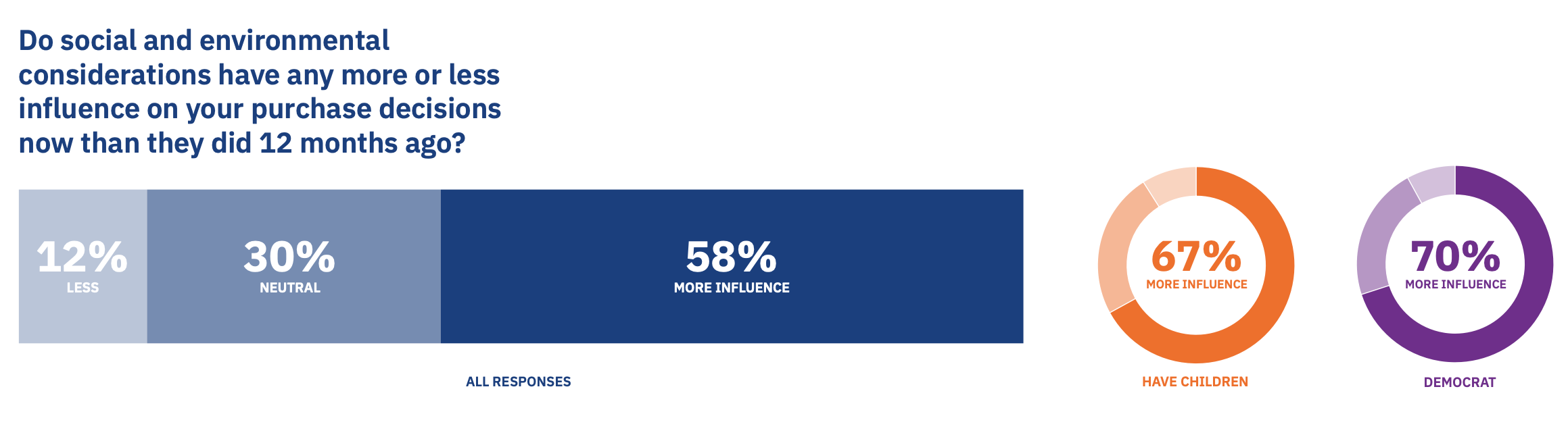
New research suggests that almost six in ten (58%) of the top 100 largest public and private US companies are responding to greenwashing concerns by keeping quiet on genuine ESG progress.

With global ESG assets surpassing $30 trillion in 2022 and 85% of investors reporting that ESG assets lead to better returns1, companies that remain quiet may be missing out on potential investment opportunities and consumer demand2.

The Transparency Index 2024 report, published by data insights company Connected Impact, and data science consultancy Ringer Sciences, reviewed over 600,000 corporate communications from 200 companies to identify the “transparency gaps” between what businesses communicate on social media about ESG topics, and what they factually disclose about their targets and performance in annual reports, websites and other corporate documents.

The findings reveal only 2% of US companies “over promoted” their ESG progress, with 58% “under promoting” and disclosing more factual data on ESG than promoted. In a climate of stringent regulatory scrutiny, where mistakes can result in fines and reputational damage, companies may be hesitant to promote their legitimate ESG credentials due to fears of greenwashing accusations. This puts them at risk of “greenhushing” – where organizations choose not to publicize details of their climate targets, or their plan to reach their targets, to avoid scrutiny and allegations of greenwashing.

Dr. Lucy Walton, CEO of Connected Impact, said: “Businesses are under increasing pressure to avoid greenwashing – with increasing regulations and potential fines for those who misrepresent their legitimate ESG efforts.

“But businesses must also take action to avoid ‘greenhushing’. Our data reveals that businesses are more likely to under-promote than over-promote their ESG initiatives. This cautious approach can deter investment and undermine credibility.”

Only four in ten (40%) of companies offered a “balanced” picture, with a minimal transparency gap. The report argues that businesses with a small gap are more trustworthy than their peers. The report examined emissions, ethics, diversity and inclusion topics to represent E, S and G criteria. Emission disclosures had the largest gap, with 67% of companies disclosing more on emissions than they communicated. While governance had the smallest gap, with 40% of companies having a gap between their ethics discloses and communications.

Dr. Walton added, “ESG transparency is currently a missed opportunity for the top 200 businesses in the UK and US. We know most consumers favor responsible brands and transparent businesses. We know a well-governed transparent business attracts more investment and top talent3. This report equips businesses to identify – and close – transparency gaps so we can all make better decisions about where to invest our money, time and attention.”

To see the original post, follow this link: https://www.businesswire.com/news/home/20240709169203/en/Two-thirds-of-US


80% Of CEOs Feel Pressured To Improve Human Sustainability

5 07 2024

The C-Suite is yielding to pressures to focus more on human sustainability in the workplace. Image ” Getty

By Bryan Robinson, Ph.D. via Forbes • Reposted: July 5, 2024

Recently, Deloitte released The important role of leaders in advancing human sustainability Report in partnership with Workplace Intelligence and based on a study of 3,150 employees, managers and C-level executives across the U.S., U.K., Canada and Australia. Now in its third year, the survey reveals that the majority of the C-suite, including around eight out of 10 CEOs, say they’re feeling pressure from employees (82%), customers (78%), investors (78%), partners (77%) and board members (77%) to make public commitments to improve human sustainability.

I spoke by email with Sue Cantrell, vice president of products, workforce strategies at Deloitte Consulting, who defines human sustainability as, “the degree to which an organization creates value for people as human beings, leaving them with greater health and well-being, stronger skills and greater employability, good jobs, opportunities for advancement, progress toward equity, increased belonging, and heightened connection to purpose.”

She told me the survey found that shifting from a mindset that centers on extracting value from people toward an approach that refocuses on helping humans thrive is a leading course of action, especially in the face of growing stakeholder pressures, dwindling worker health and other workforce-related risks.

One of the more surprising facts, according to the report, is that leaders are mostly embracing this pressure: 88% would like their pay to be tied to human sustainability metrics, and 71% believe their company’s leadership should change if they aren’t advancing human sustainability. Around three out of four executives agree that human sustainability is an enterprise risk that should be measured and monitored (73%) and discussed at the board level (75%).

The report claims that doing well by workers and the world offers long-term benefits for both people and organizations. I recently reported on a meQ survey that supports these claims, showing that when employers refocus on employee hope and well-being, workers are less likely to suffer from burnout (74%), anxiety (74%) and depression (75%). And 33% are less likely to endorse quiet quitting.

But to help companies move their human sustainability efforts forward and reap these benefits, Cantrell recommends that leaders increase their understanding of worker realities at their own organizations. “In our survey, most executives (93%) and workers (88%) agree that the purpose of a company should be to create value not just for shareholders, but for human beings and society as well.” Cantrell points out that data from the survey also uncovers a disconnect between workers and leaders when it comes to taking action, as the following statistics indicate:

  • Advancing human sustainability. 82% of executives believe their company is advancing human sustainability, but just 56% of workers agree. The report found that some leaders fail to recognize that for most people surveyed, work is a negative rather than a positive force in their lives.
  • Company’s positive effect on employee well-being. Around 90% of executives believe working for their company has a positive effect on employee well-being, skills development, career advancement, inclusion and belonging and their sense of purpose and meaning. But just 60% (or fewer) of workers agree.
  • Improvement of well-being dimensions. Seven out of 10 executives believe well-being dimensions—a key component of human sustainability—improved for their employees. But workforce well-being continues to need focus as only around one out of three workers say their physical (34%), mental (32%), financial (35%) and social (31%) well-being improved last year.
  • Seven out of 10 workers say if their organization increased its commitment to human sustainability, this would improve their overall experience at work (72%) and increase their engagement and job satisfaction (71%), productivity (70%), desire to stay with their company long-term (70%) and trust in their company’s leadership (69%).
  • Eighty-two percent of executives say companies should be required to publicly report their human sustainability metrics. However, 81% admit their own organization isn’t doing enough when it comes to making public commitments around human issues. Around a third (32%) of these leaders say this is because the goals they could realistically accomplish are trivial and they’re embarrassed to make public commitments around them.
  • A significant majority of executives (88%) would like their compensation to be tied to human sustainability metrics. Remarkably, nearly half (47%) would like at least 75% of their compensation to be linked to these metrics. What’s more, 61% of the C-suite say they’d accept a pay cut to work for a company that is advancing human sustainability.

“It’s promising that so many of today’s leaders are willing to take ownership of human sustainability,” said Dan Schawbel, managing partner at Workplace Intelligence.“However, some executives don’t realize that their own employees are dealing with a sub-optimal work experience. The disconnects uncovered in our research should be a call to action for leaders as they embark on their mission to create greater value for all stakeholders within the broader human ecosystem.”

Cantrell suggests that to close that gap, leaders must consider using metrics focused on human outcomes, making public commitments around these metrics and aligning compensation with these outcomes. She believes that by prioritizing a positive human impact, organizations can reap the benefits of attracting new talent, appealing to customers and clients and increasing profitability, while workers can experience a positive effect on their well-being, skills development career advancement, inclusion and belonging, and their sense of purpose and meaning.

“Embracing human sustainability can have benefits for both business and people,” declares Paul Silverglate, U.S. executive accelerators leader and Deloitte’s U.S. technology sector vice chair. “Today’s C-suite has the opportunity to help ensure it is prioritized at the highest levels of their organizations, helping them become more rewarding and productive places to work.”

Renée Zavislak, a burnout expert and licensed California-based therapist, informed me that corporations big and small are starting to realize that refusing to proactively address employee well-being isn’t an option, but many businesses are learning this lesson the hard way. Burned out employees are costing employers $3,400 of every $10,000 in salary as productivity decreases. And depression alone is costing the global economy $1 billion in lost productivity.

“Companies need to respond to employee needs by respecting boundaries and the right to disconnect before resentment and burnout make top performers leave,” Zavislak declares. “Companies usually wait until it’s too late to act on burnout. They need to start embracing preventative solutions.” Zavislak concludes that when someone’s job security depends on working 60-80 hours a week, and they have to take calls on vacation, it means companies aren’t taking mental health seriously.

“There is an incredible momentum building for organizations to make meaningful change, adds Jen Fisher, retired managing director at Deloitte U.S. “But leaders should move away from a legacy mindset that centers on extracting value from people and instead embrace the concept of human sustainability, which can support the long-term, collective well-being of individuals, organizations and society.”

To see the original post, follow this link: https://www.forbes.com/sites/bryanrobinson/2024/07/03/80-of-ceos-feel-pressured-to-improve-human-sustainability/


Why Your Business Needs an Effective Sustainability Strategy

21 06 2024

Graphic: Entrepreneur

By Cristina Martinez Gonzalez, SSG Market Leader Iberia, Lenovo from CSR Newswire • Reposted: June 21, 2024

It’s vital that we look after the planet for future generations, but that’s not the only reason to implement a sustainability strategy within your organisation. Cutting emissions, embracing the circular economy, and helping to keep already efficient devices running for longer makes sense from a financial point of view as well, and can even help your organisation to attract the best employees.

Of course, putting people and planet first should top your considerations, and an effective sustainability strategy can help towards limiting our impact on climate change, reducing waste, conserving resources, and protecting delicate eco-systems.

How legislation is helping to drive change

Legislation around ESG (Environmental, Social and Governance) and sustainability is beginning to shape industries around the world, with governments adopting increasingly stringent targets.

EU rules[1] already require large and listed companies in the European Union to publish regular reports on the social and environmental risks member state’s face, and on how their activities impact people and the environment. The regulations facing all organisations are only likely to become stricter.

According to Deloitte[2], the transition to a lower carbon and more sustainable society is reshaping the economy in Europe, creating new opportunities, and altering the cost of doing business. The implications are stark, the organisation explains. “Failing to become more sustainable will make companies vulnerable to the loss of revenue and reputation, as well as to litigation and regulatory penalties.”

It’s clear that simply ignoring sustainability is not an option for organisations in the long run, but there are also opportunities and benefits for businesses that implement a sustainability strategy sooner than later.

An effective sustainability strategy could also help you be more cost-effective

For starters, there’s potential to be more cost-effective. Scalable as-a-Service solutions such as Lenovo TruScale can help your business to simplify the procurement, deployment and management of reliable IT equipment, taking a flexible and cost-efficient approach to new levels of demand.

Embracing the latest energy-efficient devices can help your business to manage CO2 emissions and power consumption, potentially saving on operating costs, while also helping you to tackle challenges such as growing your business, simplifying security, and general maintenance.

There’s also scope to offset emissions when you do purchase new IT equipment, thanks to solutions such as Lenovo’s CO2 Offset Services. This service estimates the carbon emissions across the average lifecycle of the device from manufacturing to shipping, typical use, and end-of-life, and supports a variety of climate action projects.

Just because you buy new devices doesn’t necessarily mean your old equipment will end up in landfill. We do everything we can at Lenovo to ensure older devices get a second lease of life, and our Asset Recovery Service(ARS) is designed to maximise the reuse, recycling, and/or environmental disposal of replaced and end-of-life products, parts, and waste. And with Lenovo’s recently launched Certified Refurbished PCs, you have the option to buy quality refurbished IT equipment and support the circular economy.

Keep older energy-efficient technology running for longer

Naturally, there are plenty of organisations that don’t need to overhaul their tech stack. If your equipment is already energy efficient and performs well, your tech provider can also help you to keep your devices running for longer, doing your bit when it comes to reducing waste and conserving resources.

Solutions such as Lenovo Premier Support Plus come with Accidental Damage Protection (ADP)[3] as standard, which can make a big difference when it comes to device longevity and saving money. Compared to the cost of most common repairs or system replacements, for example, you could save between 50%-93%[4] with ADP, which could be the difference between keeping an old laptop for another couple of years or having to replace immediately.

Attracting top talent

Social and regulatory requirements aside, embracing sustainability can also enhance your company’s reputation. This can play a key role in helping you to attract and retain the best talent.

According to a survey from IBM[5], 71% of employees and employment seekers say that environmentally sustainable companies are more attractive employers. More than two-thirds of the full potential workforce* are more likely to apply for and accept jobs with environmentally and socially responsible organisations, and nearly half surveyed would accept a lower salary to work for such organisations.

The potential to grow your business

An effective sustainability strategy isn’t just appealing to potential employees – it’s becoming increasingly important to society at large. Consumers also care about sustainability, and your strategy could be the difference between customers picking your business or opting for a competitor.

Deloitte explains[6] a third (34%) of consumers stated their trust in brands would be improved if the brand was recognised as an ethical/sustainable provider by an independent third party. A similar proportion (32%) claimed that their trust in brands would be improved if the company had a transparent, accountable, and socially and environmentally responsible supply chain.

All of these factors add weight to the already critical importance of a sustainability strategy, not only because it makes sense to limit our impact on the planet, but because it also makes justifiable business sense.

It’s inevitable that you’ll need to embrace sustainability at some point if you want your business to thrive in the long term, so why not look at ways you can get ahead of your competition as part of the journey?

To see the original post, follow this link: https://www.csrwire.com/press_releases/804626-why-your-business-needs-effective-sustainability-strategy


Sustainability Is Now A Critical Link In Corporate Talent Strategy

19 06 2024

By Mary Foley, Contributor from Forbes • Reposted: June 19, 2024

Working, team and computer work of office teamwork workers group with diversity using technology. Tech staff busy with cloud computing data information and web research for a online project together
Photo: Getty

Sustainability is a huge factor for the modern workforce.

Now more than ever, corporations are combing the ends of the Earth to find skilled workers. Unfortunately, they’re coming up short, and it may not just be prospects holding out for better benefits or more flexible hours.

According to a recent analysis, by 2030, it’s likely that more than 85 million jobs could go unfilled globally because there aren’t enough skilled people to take them. In critical industries – like cybersecurity for example, where the explosion of generative AI (GenAI) has created a massive need for talent – the gap between the number of skilled staffers needed and the number available has risen 12.6% year over year worldwide, according to another analysis. And now, there is a whole new level of complexity to add to the equation: sustainability.

More than 40% of Generation Z and Millennial workers plan to change jobs due to climate concerns, as stated in a new survey from Deloitte. That’s a stark contrast for a culture that’s only a few decades removed from worshipping the power tie-wearing, greed-is-good, Gordon Gecko-style antihero. But that is the new reality in which corporations must operate, and it’s just the latest in a laundry list of sustainability-related vulnerabilities that they’ll have to account for.

An Employee Evolution

This trend has already started to take root as Millennials begin to unseat Baby Boomers and Gen Xers as the dominant presence in the global workforce. Over three-quarters (76%) of Millennials said back in 2016 that they consider environmental, sustainability, and governance (ESG) commitments when deciding where to work, a number that likely has and will continue to increase as more corporations put sustainability strategies front and center in their recruiting practices.

Meanwhile, changing social norms have also caused an evolution within the pool of available workers. Gen Z – whose entrance into the workplace was interrupted and permanently disrupted by the COVID-19 pandemic – says the workplace is a critical environment for their social interaction. This group, who only know the era of Zoom calls and Teams meetings, also report lower levels of emotional and social well-being compared with other age groups. Mental health and wellbeing are key components of the S (Social) element of ESG and in addition to the global legal compliance obligations associated with employers’ duty of care, there is also the consideration that lower well-being usually correlates with worse performance at work.

Considering that Millennials and Gen Z will account for over half of the global workforce by 2030, these factors represent a huge departure from how companies have grown accustomed to recruiting. And now, as longtime employees with decades of institutional knowledge are retiring, workers who are starting to assume critical roles in the corporate hierarchy, have very different priorities and skill sets. That creates a perfect storm of challenges for companies looking to not only hire good talent and retain the acquired knowledge of the departing talent, but also define their sustainability objectives and initiatives.

Overcoming the Vulnerability

That’s not to say that corporations can’t navigate their way through this new era. For years, experts and analysts have been warning about the high stakes that are riding on corporate sustainability strategies. This is no different. Those companies that fall short on compliance run the risk of fines, reputational harm, and delays in their supply chains. However, those that can prove their leadership in taking a proactive stance on sustainability have a huge opportunity to not only manage these risks but also to become the employers of choice for the growing crop of talent that’s putting their values at the center of their career journeys.

Throughout that process, clear, quantifiable data will be the critical ingredient that separates the leaders from the laggards. Increasingly, corporate reputations for sustainability will be determined not by advertising campaigns or bold pronouncements about emissions targets, but by a detailed set of performance metrics that will be reported in accordance with the Corporate Sustainability Reporting Directive (CSRD), the Corporate Sustainability Due Diligence Directive (CSDDD) and new global sustainability standards developed by the International Sustainability Standards Board (ISSB).

The new world order of corporate sustainability is one where so-called “green” credentials are being treated like finance and accounting data instead of aspirational ideals. To get to a place where companies can clearly and efficiently report this data and communicate it to key stakeholders – including employees – companies will need excellent reporting, monitoring and – importantly – subject matter experts with enough institutional memory and domain knowledge to understand how all the pieces fit together.

With new legislation cropping up seemingly every day, maintaining that level of commitment to embedding sustainability isn’t easy, but it is well worth the investment. Don’t believe me? Ask the next interview candidate yourself.

To read the original post, follow this link: https://www.forbes.com/sites/maryfoley/2024/06/17/sustainability-is-now-a-critical-link-in-corporate-talent-strategy/


Gen Z Becoming More Skeptical of Influencers, Sustainability Messaging

3 06 2024

From Sustainable Brands • Reposted: June 3, 2024

New survey of Gen Zs in the US and Canada suggest a growing distrust of influencers; and while sustainability is still a consideration when purchasing, budget, price and brand authenticity are paramount.

AI-powered conversational-research firm Rival Technologies and market-research consultancy Reach3 Insights have released a new report revealing Gen Z’s shifting attitudes on social media, influencer marketing, online shopping, sustainability and brand loyalty.

Based on a mobile-first, conversational survey of 750 Gen Zs (aged 18-27) in the US and Canada in April 2024, the 2024 Gen Z Marketing & Engagement Report found that social media’s role in purchase discovery is increasing — but it is only one step in a long and complex buying journey. Among Gen Z consumers who shop online, only 18.4 percent complete the purchase directly through social channels. In contrast, 88.2 percent buy via online marketplaces (AmazonEtsy, etc) and 74.6 percent through brand websites.

When asked which social media platforms they use to discover new brands, Gen Zs highlight Instagram (70.3 percent), TikTok (34.3 percent), and YouTube (33.1 percent) as top channels.

The research also suggests that the buzz around influencer marketing may be fizzling out: Contrary to studies even from last year, in which a majority of younger consumers credited influencers with having a major impact on their sustainable purchasing and lifestyle habits, 47.5 percent of Gen Zs now say they are “not very likely” or “not likely at all” to buy something recommended by influencers. Many respondents described paid influencer partnerships as “very insincere” or “annoying,” with some respondents asserting a preference instead for “normal people with normal incomes and lives” to be the voices promoting the products. The report points out that influencer marketing can still work; but authenticity is key, as these shoppers are showing a new preference for substance over style — emphasizing the importance of ensuring that any influencer used is a good fit for the product and can create relatable content.

“Influencer marketing is at risk of facing a serious reckoning,” says Paula Catoira, Chief Marketing Officer at Rival Group — parent company of Rival Tech and Reach3. “To ensure ROI from influencer partnerships, brand marketers need to understand their Gen Z customers and align their marketing strategy with the need of this audience.”

Gen Z attitudes on sustainability itself also seem to be shifting. The report found that 42.9 percent of Gen Zs prefer sustainable products when available, but it’s not the only consideration. Budget and price are big factors in buying decisions. This helps explain why fast fashion, for example, continues to grow despite its impact on the environment — a phenomenon that was recently parodied in the season finale of “Saturday Night Live.”

And as always, authenticity is key — as Gen Zs are one of several consumer segments that are increasingly savvy about identifying greenwashing. Influencers themselves are well aware of this; and a 2023 study found more and more content creators are steering clear of sustainability-related content due to a lack of insight and clarity around company and product sustainability claims.

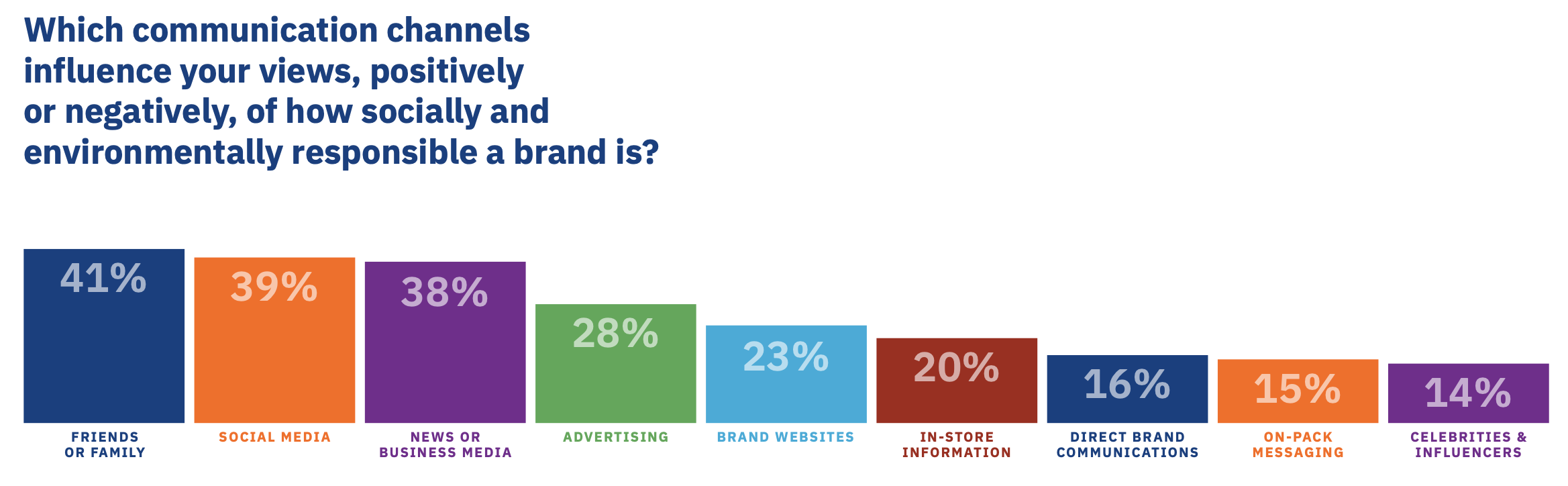
The report points out that for many brands that cater to Gen Zs, sustainability can still be a huge competitive advantage as long as product prices remains competitive. And being transparent about brand claims is paramount: The research suggests that brand websites (59.9 percent) and packaging (43.5 percent) play a key role in communicating details about brand sustainability efforts; when it comes to this, Gen Zs say they are much more likely to believe third-party websites (42 percent) than influencers (12 percent).

“Our research highlights how the attitudes and behaviors of Gen Zs can shift significantly as they go through different life stages and as socio-economic factors evolve,” said Andrew Reid, CEO and founder of Rival Technologies. “To get accurate and nuanced insights on Gen Zs and win their loyalty, brands need to engage with these young consumers on an ongoing basis and do it in a way that’s aligned with their expectations and behaviors.”

One of the study’s key takeaways for marketers is that Gen Zs want to feel they can build an authentic and personal connection with brands; and while they still prioritize sustainability, socio-economic factors such as inflation have very real impact on how this group views and prioritizes sustainability-related issues.

As Jennifer Reid, Co-CEO and Chief Methodologist at Rival Group, points out: “Among a generation fueled by skepticism, trust is paramount for both engagement and loyalty. And since authenticity, honesty and transparency are critical in building that trust, they should be the goals of every marketer with young consumers in their sightlines.”

To see the original post, follow this link: https://sustainablebrands.com/read/marketing-and-comms/gen-z-skeptical-influencers-sustainability-messaging


6 Approaches To Translating Sustainability Into Strategy

28 05 2024

Sustainability has become crucial for companies around the globe, yet many struggle to incorporate … Image: GETTY

By Mike Rosenberg (IESE Business School) via Forbes.com • Reposted: May 28, 2024

With the world at an environmental tipping point, sustainability has become a vital strategic consideration for companies around the globe.

Catastrophic weather events are more frequent and more prolongued. A generation of young people is demanding solutions to the planet’s problems. And the financial community has awakened to the reality that climate and other sustainability-related issues will have real impact on their businesses.

Yet many companies still struggle to come to terms with what environmental and social sustainability means for them and for their strategy and operations. Here, I explore how senior managers might choose to address the sustainability challenge, offering six strategic options that I’ve seen companies take.

Weighing the strategic options

Each company must decide how much to do along the different aspects of environmental and social sustainability, assuming that the baseline is compliance with legal requirements and regulations. There are many factors that go in to determining this, from location and sector to corporate values and consumer demands.

1. Take the Low Road

This approach involves doing the minimum required to comply with the laws in each of the countries and territories where your company operates. It implies taking a reactive stance to changes in legislation, societal norms or new industry developments.

While there is nothing wrong with this approach from a legal standpoint, one might question its wisdom from a dynamic perspective since, over time, laws and regulations will inevitably change. Adapting late to evolving trends might be more costly than being an early mover. Another danger is that if senior management tells employees that minimal compliance is sufficient, they may interpret this as tacit approval to test the limits of regulation.

2. Wait and See

Some companies will want not only to comply with the basic legal requirements in force today but also to actively monitor the situation in terms of the evolving attitudes of employees, consumers and the general public, and track leglislation in the pipeline.

This approach requires a somewhat higher degree of sensibility to these issues than Take the Low Road as it will make sense to begin gathering data on your firm’s current environmental and social performance, in order to have the information you’ll need for future actions.

3. Show and Tell

This strategy involves making important progress on sustainability and then making it a key part of your firm’s communications strategy. It should not be confused with greenwashing, which is about showcasing token sustainable activities to give a false impression. Show and Tell, on the contrary, is about telling an authentic and coherent story.

The risk of Show and Tell is that if sustainability is central to communications, your firm needs to show consistent commitment in all of its activities and in all countries and territories. Evidence of a double standard between environmental practices in developed and developing countries, for example, can be seized upon to challenge a firm’s social license to operate.

A related problem is what Helle Bank Jorgenson, founder and CEO of Competent Boards, calls “greenwishing,” which is about making bold claims for the future without having detailed plans or initiatives to actually bring them about.

4. Keep Quiet

An interesting counterpoint to Show and Tell is what I call Keep Quiet. There are a number of companies that do amazing work on both the environmental and social side of sustainability but that do not, for a variety of reasons, make it the center piece of their communications. Such companies will publish their sustainability report and participate in initiatives such as the Carbon Disclosure Project and Science Based Targets but they keep a relatively low public profile.

Recently I have seen a trend for companies to move from Keep Quiet to more of a Show and Tell stance, sharing with stakeholders their sustainability efforts.

5. Pay for Principle

This is what I call companies in which the founder or lead shareholders choose to take the firm in a sustainable direction based on their own ethical convictions. The fundamental rationale is not a medium-term business case but rather deeply held beliefs that reducing air and water pollution, protecting the natural landscape, becoming carbon neutral and/or supporting the community should form part of the corporate agenda.

What sometimes happens in these cases is that the company then uncovers a market segment which values what it is doing sufficiently to pay more for its products and services.

6. Think Ahead

The final approach requires going beyond what’s needed today, based not so much on principle but on hard business logic. Here, the senior management team is convinced that the world is changing in specific ways and has an asset base which requires a medium- or long-term approach to transforming it.

If, for example, your company has 30 manufacturing facilities, 300 aircraft or 30,000 trucks and believes that it will have to transform those assets over the next 10-20 years, then following a Think Ahead strategy would begin today with pilot projects. The asset base would be gradually transformed as each element reaches the end of its natural life.

Think Ahead is the opposite of greenwishing: it means crafting a detailed plan for the next five to 15 years to transform your operations to a more sustainable model.

Which of these six approaches should your company take? My recommendation is for your leadership team to honestly assess where the company is today and agree where it should be someday in the future. Next, define when “someday” is, and work out a real plan on how to get there.


Mike Rosenberg is a professor in the Strategic Management Department of IESE Business School. To see the original post, follow this link: https://www.forbes.com/sites/iese/2024/05/27/6-approaches-to-translating-sustainability-into-strategy/?sh=4907dd0227f3


80% of Companies See Sustainability as a Potential Revenue, Profitability Driver: Morgan Stanley Survey

23 05 2024

By Mark Segal from ESGtoday.com • Reposted: May 23, 2024

The vast majority of companies view sustainability as a value creation opportunity, with more than three quarters anticipating potential benefits ranging from higher revenues and profitability to lower cost of capital, although many also expect increased sustainability-related costs and a need for significant investment, according to a new survey released by Morgan Stanley.

For the study, “Sustainable Signals: Understanding Corporates’ Sustainability Priorities and Challenges,” Morgan Stanley surveyed more than 300 public and private companies with revenues greater than $100 million, across North America, Europe and Asia Pacific, and representing a broad range of industries.

The survey indicated that nearly all companies now recognize the impact of sustainability on their long-term corporate strategies, with 85% of respondents reporting that they see sustainability as a value creation opportunity, including 53% who view it primarily as value creation and 32% as both value creation and risk management, while 15% view sustainability primarily as risk management. Only 1% responded that sustainability is not material to long-term corporate strategy.

Sustainability as a value creation opportunity topped the list of “very significant” reasons reported by companies for pursuing sustainability strategies, cited by 50% of respondents, followed closely by compliance with government regulation at 48%, and a moral obligation at 47%.

According to the survey, more than 80% of companies see potential financial opportunities from their sustainability strategies over the next five years, including 81% who see sustainability as somewhat (41%) or very (40%) likely to drive higher profitability, 79% to drive higher revenue (35% very likely, 44% somewhat likely), and 82% to improve cash generation capabilities (38% and 44%). Another key benefit highlighted by the study was improved access to capital, with 77% of respondents reporting that sustainability could drive lower costs of equity or debt over the next five years.

While respondents saw opportunities to benefit from sustainability, the survey found that companies are also aware of the potential challenges and costs associated with their sustainability strategies, including 69% anticipating very (28%) or somewhat likely (41%) costs from changing processes, 72% seeing higher costs or legal risks from sustainability regulation, and 73% seeing higher costs or scarcity of raw materials over the next five years. The most cited challenge reported by respondents was restructuring supply chains to meet human rights obligations, viewed as somewhat or very likely by 74% of companies.

Accordingly, respondents reported the high level of investment required as a very significant barrier to delivering or establishing a sustainability strategy, cited by 31% of companies, in addition to 28% citing conflicts with the financial goals of the company, while 22% said that it is hard to justify the near term negative financial impact, even with the long-term benefits.

The study also found nearly all companies, 92% expect climate change to impact their business models by 2050, while 23% report that it is already a risk to their business model today, similar to risks including technological change (25%), competitor actions (25%) and supply chain instability (23%).

The survey also highlighted a perceived need by the companies for sustainability expertise at the board level, with 57% of respondents reporting that board members could benefit from more knowledge regarding sustainability regulations, 43% in sustainability-labelled financial instruments, and 40% in sustainability disclosure. Overall, only 37% of respondents agreed that their company’s board has sustainability expertise.

Jessica Alsford, Chief Sustainability Officer at Morgan Stanley and CEO of the Institute for Sustainable Investing, said: “Sustainability strategies and core business strategies are converging, with companies increasingly seeing sustainability factors as integral to the company’s long-term value creation. There may yet be challenges in developing expertise and financing models, but corporate leaders view sustainable business practices as fueling the creation of value as well as the mitigation of risk.”

To see the original post, follow this link: https://www.esgtoday.com/80-of-companies-see-sustainability-as-a-potential-revenue-profitability-driver-morgan-stanley-survey/


Building New Levels Of Consumer Trust Through Ethical Marketing And PR Practices

10 05 2024

Image: Getty

By Nick Leighton, Forbes Councils Member via Forbes • Reposted: May 10, 2024

There’s no doubt that we live in an extremely competitive economic environment. With the costs of living rapidly increasing, consumers are more hesitant to let go of their hard-earned money. This shift is forcing marketing and public relations (PR) professionals to rethink the way they are promoting their brands, products and services. The unfortunate consequence of added pressure is the temptation to implement marketing strategies that can be deceptive, unethical and sometimes illegal. These unethical practices can include exaggerating the consumers’ expected results, using tricky terminology or designing intentionally confusing terms and conditions.

Marketing and PR professionals who engage in these activities and behaviors risk destroying their brand’s reputation in the marketplace. The reality is that consumers are becoming more aware of these unethical practices. In fact, “one study by the American Association of Advertising Agencies found that 96% of people believe advertising and marketing professionals don’t practice integrity.” This is important to note since over 70% of consumers believe trust is essential when making purchasing decisions. For this reason, it’s critical that marketing and PR professionals carefully balance implementing new and innovative ways of marketing without crossing ethical boundaries.

Equip your team with an ethics toolbox.

Marketing and PR is typically a team sport since there are usually a handful of individuals or departments that are involved in crafting the consumer’s experience and messaging. Since the actions of each group or individual are direct reflections of the brand, firms should start by establishing clear, ethical guidelines for the team to follow.

These guidelines should outline expected ethical behavior, actions that are not acceptable, compliance with any government regulations and a commitment to keep communication honest and transparent. This guide should also provide the team with instructions on how to report unethical behavior to management.

In addition to policy documents, the company should also prioritize continuous education on ethical standards by offering regular training sessions, workshops and other resources. This can help the team better spot unethical trends and conflicts of interest and avoid any legal implications.

Embrace transparent and open communication.

Transparency is the key to building trust with consumers. Marketing and PR firms can embrace transparency by being open about their practices, disclosing potential conflicts of interest and clarifying product outcomes. No brand is perfect. Mistakes can and will happen. However, you can still maintain transparency by quickly acknowledging any mistakes publicly and letting the consumer know how you are correcting the situation.

By adopting transparent communication strategies, consumers will quickly recognize your brand as a trusted source of information. This is a win-win. For the consumer, this removes barriers of skepticism and provides confidence that they are getting the service or product they want. Brands benefit by differentiating themselves from competitors in the marketplace and ultimately don’t have to work as hard to convince consumers to trust them.

Adopt responsible technology practices.

Technology is quickly changing the way brands create and market products and services. This can create a slippery slope when it comes to ethical practices. Incorporating responsible technology practices is essential for marketing and PR firms leveraging consumer data and artificial intelligence (AI) to shape strategies. Brands can foster responsible technology practices by having processes in place to protect consumer privacy, disclose the use of AI-generated products and content and provide a level of human oversight to maintain authenticity.

Conduct thorough research.

All it takes is one half-truth or incorrect statement to destroy a marketing firm’s reputation and credibility with consumers. It’s critical that marketing and PR professionals take the time to carefully conduct proper research and due diligence to avoid inadvertently spreading misinformation or using misleading statistics and instead ensure accurate representation of their brand. By investing time and resources in robust research practices, firms can uphold ethical standards and maintain their credibility.

Form ethical partnerships.

Marketing and PR firms can strengthen their ethical initiatives by collaborating with like-minded organizations and engaging in cause-focused marketing. Partnering with industry associations and advocacy groups amplifies ethical advocacy and the sharing of best practices. Cause-focused marketing initiatives demonstrate commitment to social responsibility by appealing to socially conscious consumers.

This mindset can also extend to scrutinizing the clients you choose to work with by carefully evaluating any potential clients, as associating your brand with an unethical partner can indirectly influence the reputation of your firm.

Track and monitor consumer feedback and sentiment.

Understanding consumer sentiment is crucial for marketing and PR professionals to avoid potential ethical concerns in their campaigns. By regularly tracking sentiment indicators and soliciting feedback, firms can work to adjust and align their practices with ethical standards. This can help maintain trust and credibility with the audience while fostering transparency and accountability.

As businesses adapt to the changing landscape of marketing and PR, embracing ethics is crucial for building trust and success in a socially conscious marketplace. Having a business coach in your corner can provide invaluable guidance in establishing ethical practices, navigating evolving expectations and holding your brand accountable. By leveraging the expertise of a business coach, firms can drive long-term success while making a positive impact on society.

To see the original post, follow this link: https://www.forbes.com/sites/forbescoachescouncil/2024/04/30/building-new-levels-of-consumer-trust-through-ethical-marketing-and-pr-practices/?sh=1bdbc4276e78


Brands and the Responsibility for Sustainable Shopping Habits

10 04 2024

By Emma Lewis from Sustainable Brands • Reposted: April 10, 2024

s we work to find a balance between greenwashing and greenhushing sustainability claims, here are several tips for brands to keep authentically guiding consumers toward better purchases.

Easter. A time for fun and family time, or a case of excessive consumerism? It’s no secret that Easter candies, chocolates and gifts often come in plastic, non-recyclable or multi-material packaging. Consumers can find themselves caving to the pressure of the yearly egg- and treat-buying ritual, and in an ethical conundrum where the build-up of waste is almost inevitable. But are brands doing enough to encourage sustainable behaviour in the frenzy?

Only last year, the UK Advertising Standards Authority (ASA) began stamping down ongreenwashing — introducing new guidelines and issued a record-breaking 29 formal rulings on sustainability issues, notably banning adverts by airlines including Air FranceLufthansaand Etihad for portraying a misleading picture of their environmental impacts. This year, the ASA is focusing on the food and beverage industry and has introduced new AI tools to help identify and evaluate claims from brands making sustainability assertions.

Yet, these greenwashing countermeasures may have inadvertently swung the pendulum towards ‘greenhushing‘ — with some companies not actively promoting their sustainability progress to avoid criticism. This may create the unintended knock-on effect of limiting sustainability action and instituting a vicious cycle where such activities are deprioritised.

Sustainability and shopping — a dichotomy?

Shopping sustainably should be a seamless and stress-free experience. But complexity can burden shoppers with a myriad of products, promotions and promises — particularly during holiday seasons. Confusing consumers around the meanings of terms including ‘carbon neutral’, ‘compostable’ or ‘recyclable’; or by over-egging their sustainable offer and listing an overwhelming number of sustainable practices intensify the complexity.

By applying a philosophy of simplicity when integrating sustainable claims, brands can make it intuitive and easy to engage with. This is a win for the consumer — which, in turn, is a win for the brand; and ultimately, a win for the planet.

Simplifying your sustainability claims

Brands ought to consider how to authentically embed sustainability credentials into their business strategy, product offering, portfolio approach and manufacturing in a way that is simple and standardised. They should then communicate these successes clearly — when they have the power to influence other brands as well as the sustainability footprint of millions of consumers, getting it right matters. Take IKEA — its ‘People & Planet Positive’ sustainability strategy is embedded into all of its business practices; and the brand clearly outlines itsambitions and commitments.

The below considerations should be key for any brand looking to become a beacon for sustainable business and attract like-minded partners and consumers.

Design

On-pack sustainability credentials should be direct, provable and to the point. Don’t bombard the pack with too much information, as this will only increase shopping stress. Streamline product packaging and eliminate unnecessary layers and components that will contribute to waste. In terms of the actual product, consider using minimal, eco-friendly packaging materials and durable, high-quality items. There are alternative materials out there which are both sustainable and innovative — think seaweed plastic or shrimp-shell polystyrene!

Digital transparency

Incorporating QR codes into packaging and marketing materials provides easy access to more detailed information about sustainability terms, sustainable practices and the supply chain. Link these codes to a dedicated webpage or digital platform to enable customers to learn about environmental initiatives, product lifecycle, and tips for reducing waste.

Local & domestic sources

Domestically or locally source products and materials to secure and simplify your supply chain, reduce your carbon footprint and support the community. This enables companies to build an authentic story into the brand — after all, people don’t buy products; they buy stories.Patagonia is a key example of a brand built around locally sourced materials and fair labour practices, working directly with farmers wherever possible.

Forge partnerships

The above point also rings true when developing brand partnerships. Actively participate in initiatives that contribute to reforestation, renewable-energy projects, or other sustainable practices.

By simplifying your brand offer, consumers are less likely to be overwhelmed by decision paralysis and be more thoughtful about purchases. Instead, consideration is made towards important sustainability factors — such as the supply chain, manufacturing processes, materials used and impact on local communities.

Empower consumers

While brands should make every effort to embed sustainability initiatives, consumers should also be making a conscious effort to join up with brands — the brand sets the target and consumers finish the race.

For example, if a brand communicates its involvement in a closed-loop recycling system, it should also provide recommendations for how consumers can do their own due diligence and participate. This could be through recycling collection programs, reusing or repurposing packaging materials, or supporting brand take-back programs that accept products back for recycling or refurbishment.

Brands, this Easter and throughout the year … while it’s tempting to cave to pressures to enhance your sustainability credentials, you must consider the authentic reasons you are evolving for the future. Take meaningful steps to tangibly simplify the customer experience and your own practices at the same time.

To see the original post, follow this link: https://sustainablebrands.com/read/marketing-and-comms/responsibility-sustainable-shopping-habits


People Want Their 401(k) Plans to Align With Their Values, Survey Finds

10 04 2024

(Image credit: Markus Spiske/Unsplash)

By Mary Mazzoni from Triple Pundit • Reposted: April 10, 2024

Most financial professionals likely assume a strong return is all everyday investors are looking for as they save for their retirement. But even in a tough economy, a growing segment of global investors are equally concerned about aligning their money with their personal values, according to new research. 

The global insights consultancy GlobeScan and the climate policy think tank InfluenceMap surveyed 5,000 retail investors — in other words, regular people who participate in 401(k) retirement plans and pension schemes or who dabble in purchasing individual stocks — to understand more about their preferences. Surveyed investors represent 10 countries and territories around the world, including the United States, Canada, Australia, France, Germany, Hong Kong and Japan.

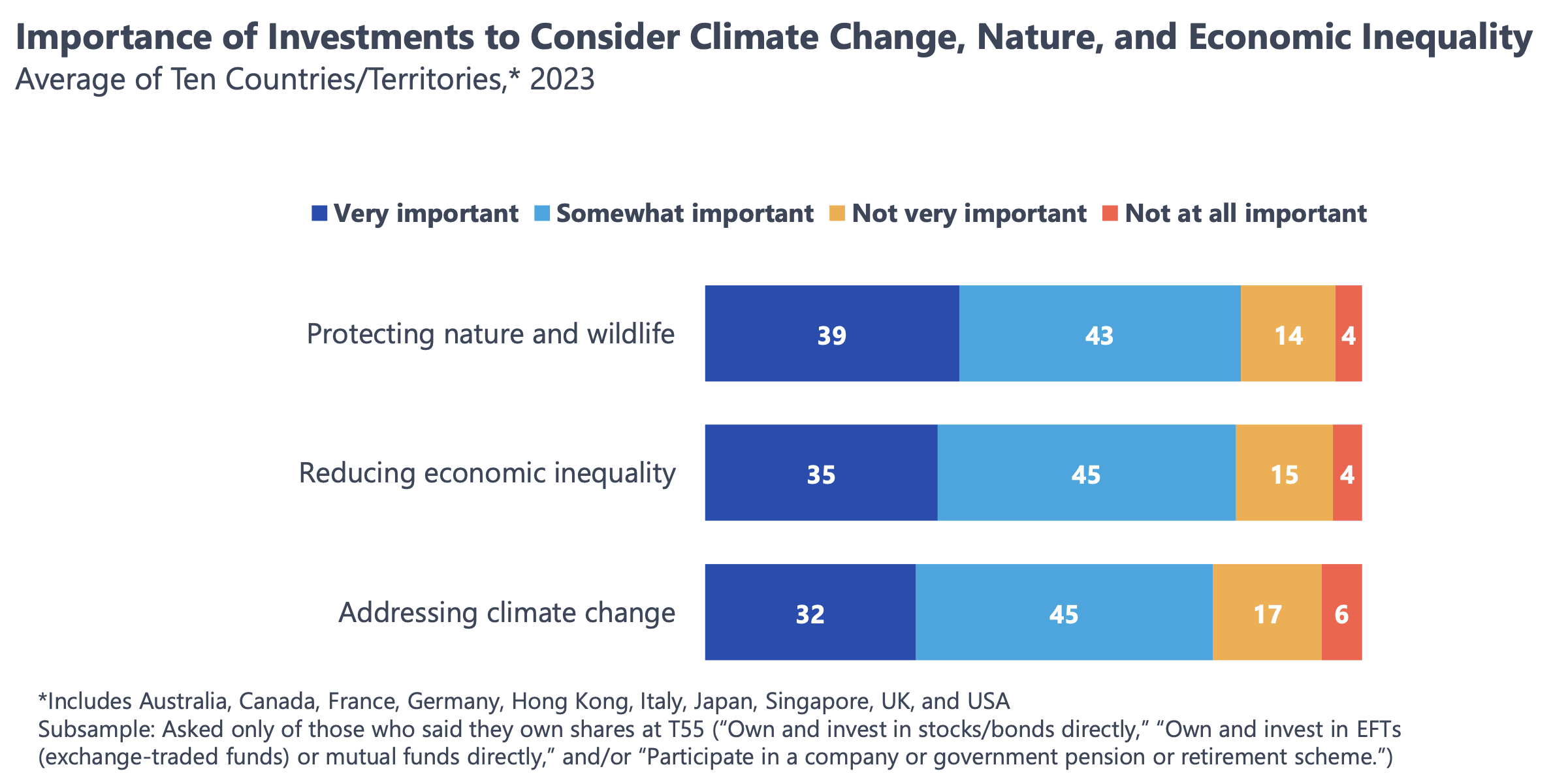
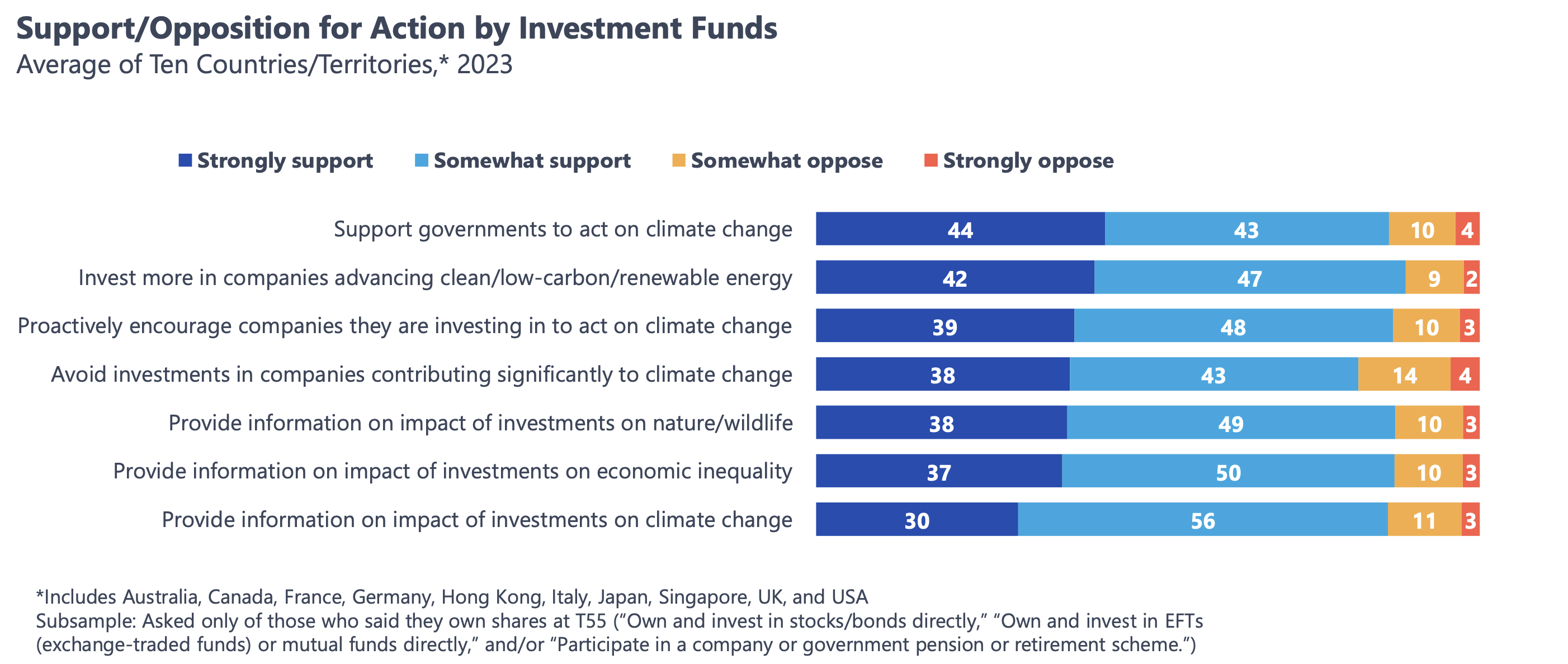
More than 8 in 10 of these investors (89 percent) either “strongly” or “somewhat” support investment funds putting money behind companies in the clean energy space, and 87 percent support funds actively encouraging the companies in their portfolios to act on climate change, according to the research. Further, over a third of surveyed investors strongly support funds excluding “companies that contribute significantly to climate change,” and another 43 percent somewhat support it.

Many of these investors are also looking for the funds they do business with to provide information about how their investments impact nature and wildlife, economic inequality, and climate change, with more than 85 percent either strongly or somewhat supporting these disclosures. 

“The financial system is all obviously predicated upon fiduciary responsibility and maximizing profits, but I don’t think the industry is very good at engaging their passive investors,” Chris Coulter, CEO of GlobeScan, told TriplePundit. “In this world of transparency and ability to reach people, we probably underestimate the innate, baseline sense of importance of sustainability issues for investment decisions among retail investors.” 

Level of importance for funds acting to support nature and climate action
Interest in sustainability issues among global investors. (Click to enlarge)
How can funds align with investor preferences?

Findings like these dovetail with recent research from TriplePundit, in which more than half of surveyed U.S. consumers agreed it is “important” or “very important” for financial service companies to act responsibly when it comes to society and the environment. Over 30 percent said they switched their retirement fund provider in 2023 for sustainability reasons, according to the study conducted in partnership with 3BL, the research technology company Glow and panel partner Cint. 

But even as sustainability becomes a more influential purchase driver for everyday investors, fund managers have been slow to respond. 

“GlobeScan’s research shows the extent of retail investors’ demand for ambitious climate action by their fund and pension managers,” Daan Van Acker, program manager at InfluenceMap, said in a statement. “This stands in stark contrast to InfluenceMap’s findings that the world’s 45 largest asset managers are investing almost three times more assets in fossil fuel companies than green ones, while the proportion of managers with ambitious investee company stewardship has almost halved since 2021.”

Given the ongoing disconnect, research like this is a powerful tool for financial professionals interested in aligning their firms’ activities more closely with consumer preference. 

“If I was in a fund and saw these metrics, I’d be intrigued, because you’re looking at 80 to 90 percent of people saying this stuff is important,” Coulter said. “There’s depth and foundational elements that even if you eroded a little bit, you still have significant majorities that are into this, so there’s an opportunity here.”

Investors support investment funds acting on climate biodiversity and inequality - survey finds
Levels of support for investment funds acting on various sustainability issues among global investors. (Click to enlarge

Still, growing political backlash against the use of environmental, social and governance (ESG) principles in investment decisions poses real risk for funds, particularly in the U.S. Among the recent examples, Texas’s Permanent School Fund pulled $8.5 billion out of BlackRock last week, arguing the asset manager’s focus on ESG hurts investors and runs counter to its fiduciary duties.

BlackRock stopped using the term ESG to describe its interactions with portfolio companies, citing increased weaponization of the term, CEO Larry Fink said last year. But the so-called “anti-ESG” backlash still cost the company an estimated $4 billion in assets in 2023.

Amidst this environment, fund managers would be wise to pay attention to the global interest in sustainability among investors, and perhaps test new offerings and policies in markets outside the U.S. first, Coulter advised.

“The context of the ESG politicization and the weaponization of these issues makes it much more challenging,” he said. “It’s only for the brave, probably, in the U.S. In most other markets, it’s much less of an issue. Testing in other markets outside the U.S., where there’s a bit of a stronger sense of interest and importance and also less risk around the anti-ESG backlash, would be a sensible thing to do.” 

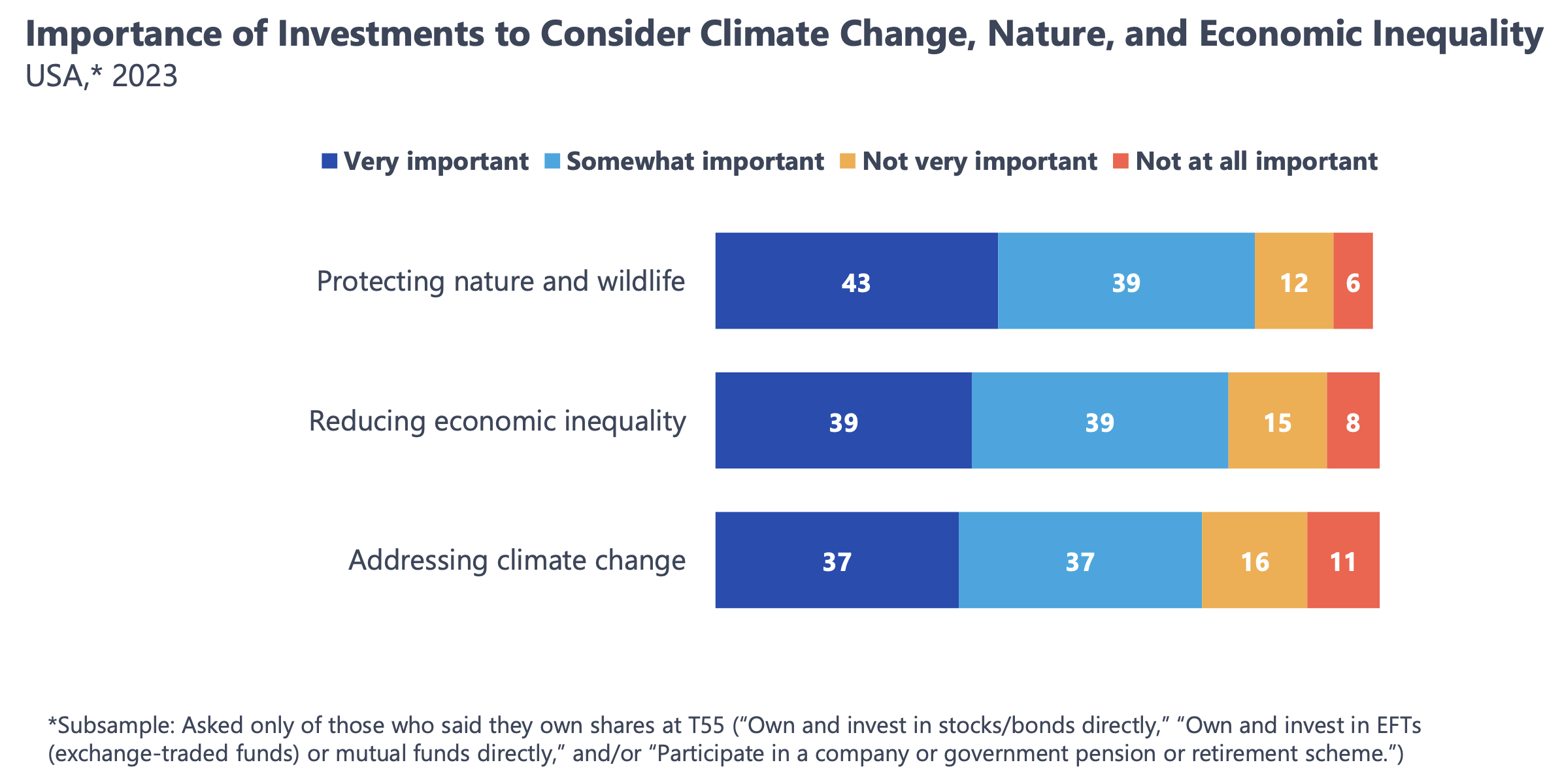
Taking note of these global trends — with an eye toward a continued strong interest in the U.S., where more than 70 percent of investors say it’s important for their investments to consider climate change, nature and economic inequality — can help fund managers maintain perspective in a difficult time. 

“There’s a lot of noise out there, a lot of politicization, but the underpinning reality once this fever breaks is that there’s opportunity here to build something,” Coulter said. “Listening, understanding, getting close to people, hearing their own words, language and needs, and then finding ways to develop value propositions on the back of that, is really important.” 

Interest in sustainability among US investors
Interest in sustainability among U.S. investors. (Click to enlarge
Messaging matters for funds, investors and the public

Even in the U.S., financial companies have an opportunity to connect with investors around issues that are less subject to political partisanship, with investments in nature, conservation and biodiversity being a clear example. Where the gravity of the climate crisis can easily overwhelm people to the point they tune out, the proactive, solutions-oriented tone of conversations around nature lend themselves to greater engagement among investors and the public, Coulter said. 

“Winning on climate change means we avoid the apocalypse and we all don’t die. That is sort of the extreme expression of success on climate change and net zero, so it’s inherently negative or inherently focused on avoiding tragedy,” he explained. “Winning or being resilient on nature is infinitely positive in consumers’, retail investors’ and other stakeholders’ minds. You can always imagine a much more positive future for nature, and that means it’s got more energy and more possibility than just the climate conversation and decarbonization.”

Leaning into these areas with universal appeal can help fund managers to meet consumer preferences while providing much-needed funding to preserve natural resources, which also helps to fight climate change and promote economic equality

Still, there is only so much that mainstream sustainable investing can do to drive progress. “With the trillions of dollars of assets under management that meet certain ESG criteria, it’s extraordinary numbers, and yet we don’t see any dramatic change in the impact that companies have on the environment or on people on the ground,” Coulter said. “There are two potential reasons for that. One is that it’s in the system now: There’s a lag in the system, while this amazing hockey stick impact curve is taking shape, and things will start to change dramatically because capital has been allocated in certain ways. Or two, the bar has not been high enough to differentiate what good looks like versus what average or status quo looks like.” 

In particular, most sustainable funds apply negative screens to exclude entire sectors, such as oil and gas, or exclude companies with especially poor social and environmental records. But fewer have built funds around companies that have an especially positive impact on people and the environment, leaving investors with little information about how this approach would really perform. “Someone has to prove that the social impact approach actually delivers much more returns, and that’s still to be done,” Coulter said.

Research like this indicates the approach could be well received. “There’s an underlying value set that people have: People love nature, they’re worried about climate, and they care about inequality. And these are generally long-term investments, so it’s not about next quarter. It does change the future discounting risk for people that in the next 30 years, this makes sense. It’s very rational and it also fits with my values.”

Graphics courtesy of GlobeScan and InfluenceMap.

To see the original post, follow this link: https://www.triplepundit.com/story/2024/investors-interest-sustainability-esg/798556


80% of Global Investors Now Have Sustainable Investment Policies in Place: Deloitte/Tufts Survey

5 04 2024

Photo: Deloitte

By Mark Segal via esgtoday.com • Reposted: April 5, 2024

The vast majority of professional investors globally have put in place ESG investment policies over the past several years, with investors looking both to minimize sustainability-related risk and capitalize on opportunities, and citing factors including regulatory requirements, improved performance and talent attraction, according to a new study released by global professional services firm Deloitte and The Fletcher School at Tufts University.

For the study, Deloitte and The Fletcher School surveyed more than 1,000 asset owners, asset managers, and investment advisers, including CEOs, CIOs, Heads of Strategy and other senior investment executives across regions including North America, Europe, and Asia, and also conducted interviews with sustainability and investment leaders, between January and December 2023.

The study found significant growth in the proportion of investors establishing sustainable investment policies, with 79% of investors reporting having a policy in place, up from only 20% 5 years ago. Nearly all other investors report having a “loosely defined ESG investing policy” in place or have plans to develop a sustainable investment policy, with only 1% reporting no plans for a policy.

Despite highly visible anti-ESG campaigns ongoing in the U.S., the survey found that U.S. investors were actually more likely to have sustainable investment policies in place than their global peers, with 83% of professional U.S. investors reporting having ESG investing policies, up from 27% five years ago. European investors lagged their U.S. counterparts slightly, at 75%.

The study asked investors to list the top 3 drivers for integrating sustainability factors into their investment decision-making processes, with the most commonly cited reasons including regulatory requirements (39%), improved financial performance (36%) and stakeholder influence or pressure (34%). Interestingly, U.S. investors, while also reporting regulatory pressure as the most common driver for integrating sustainability factors (39%), were more likely to cite talent retention and attraction as a key driver, at second place at 37%.

Chris Ruggeri, a Deloitte Risk & Financial Advisory principal and sustainability, climate and equity leader, said:

“Many factors, including evolving regulatory requirements, financial performance pressures, and stakeholder expectations, are driving the U.S. movement toward integrating sustainability and ESG into investment decision-making. As such, company leaders and their boards have an important opportunity to take actions that can improve investor confidence and trust levels in those investments, such as making enhancements to the sustainability information, disclosures, and other sources that inform buy, sell, and hold decisions.”

Additionally, while more than 83% of investors reported either regularly or occasionally using sustainability information in their fundamental investment analysis, interviewed investors said that they did not believe that ESG factors are effectively incorporated into equity prices yet, according to the study.

The survey also assessed the key barriers inhibiting organizations’ ability to implement sustainable investing, with the most commonly cited challenges including a lack of clarity on how to integrate ESG information and inconsistency or incomparability of ESG ratings data, with other top factors including over- or under-regulation, cost constraints, and a lack of clear strategies by corporations to achieve their ESG goals.

The study also found a strong correlation between the trust investors have in ESG data sources and their use of those sources, with in-house proprietary data systems and audited or assured corporate disclosures reported as the top 2 trusted (70% and 69%, respectively) and most regularly employed (51% and 52%, respectively) sustainability data sources. Interviewed investors indicated that they expect that recently launched sustainability disclosure standards and regulations will address many of the ESG data challenges, with increased consistency and standardization.

Michael Bondar, a Deloitte Risk & Financial Advisory principal and global enterprise trust leader, said:

“There is considerable room for improvement in how organizations collect, measure, report on, and validate sustainability data to earn investor trust. But, more consistency and dependability in sustainability reporting for measurement and analysis purposes should help enhance confidence for stakeholders throughout the corporate ecosystem.”

Bhaskar Chakravorti, Dean of Global Business at The Fletcher School at Tufts University, added:

“The focus on sustainability data is growing globally. India’s Securities and Exchange Board requires top public companies to disclose ESG related activities, and the European Union now requires sustainability disclosures under the Corporate Sustainability Reporting Directive starting from periods beginning in 2024. And as of this month, rules were adopted in the United States as well.” 

To view the study and see the original post, follow this link: https://mail.google.com/mail/u/0/#inbox/FMfcgzGxSbkzrMzcjlSHttMWmQVwZSfj


4 ways to become a conscious leader in sustainability

2 04 2024

Source: Shutterstock/Philip Steury Photography

By Shannon Houde from GreenBiz.com • Reposted: April 2, 2024

A conscious leader is someone who understands their role in creating a world that works for everyone and takes action to make it happen.”
— Gabrielle Bernstein

Conscious leadership connects many of the most inspiring changemakers. 

There’s former Unilever CEO and Dutch businessman Paul Polman, who prioritized social and environmental responsibility at the consumer goods giant, resolutely carving out a path for the good of the planet rather than solely commercial gain. 

Former New Zealand prime minister Jacinda Ardern, now trustee of the Earthshot Prize, called the climate crisis a matter of “life or death” as she laid out an ambitious but controversial “green” roadmap for the country. 

And Costa Rican diplomat Christiana Figueres artfully negotiated the Paris climate accord while navigating turmoil in her personal life. 

Each of these leaders embodied their values, acted with courage and prioritized empathy and humility over personal plaudits — three core components of a conscious leader. 

You can break these components down much further, of course. In fact, according to U.S. consultancy Conscious Leadership Group, 15 commitments are required to become a conscious leader, including candor, curiosity and responsibility.  However you define it, the crux of conscious leadership is acting for the good of people and the planet.  Here are four ways to become a more conscious leader. 

1. Start at home

Take the time to embed routines and rituals into your day that get you in the right mindset before you even reach the office, recommended Holley Chant, CSO at regenerative tourism company Salva, while speaking in February at an Impact Leaders Lab event, a private platform in which sustainability professionals can accelerate their professional development. “You’ve got to get up every morning and clean your slate.” For Chant that means fitness, meditation and ice baths. Seek out connection as part of these rituals, too. “The work that we’re meant to do as sustainability leaders doesn’t just happen when we’re at work with our ESG hat on. It’s also our work as humans, in the way we show up in our community, how we help both ourselves and other people to deal with the ups and downs of life. It’s how we find joy, community and those connections.” 

2. Flex your curiosity 

Conscious leaders look beyond their own role, organization and industry in their quest for inspiration. For those working within sustainable leadership, whose remit often transcends a single function, department or even sector, this willingness to cast the net wide in their hunt for relevant ideas and potential solutions is invaluable. So flex that curiosity muscle as often as you can. That could be as simple as checking out a new podcast that looks at climate developments from a brand new perspective or reading a nonfiction book by an environmental campaigner you admire. But it also means being more curious in your interactions with others. Next time you find yourself ready to disagree with a point made during a meeting, for example, take a pause and challenge yourself to understand the other person’s viewpoint. Get curious about these perspectives, rather than jumping to judgment, and you’ll find skills such as empathy, innovation and communication develop naturally. 

3. ‘Listen as if your life depended on it’

According to 2018 research by the University of Illinois, most people can recall only 20 percent of the ideas expressed by the other person in a conversation. Imagine what implications that has for a CSO looking to understand the barriers to change that are stalling progress on sustainability within an organization? Or the sheer volume of original ideas they might be missing when they fail to absorb the feedback from frontline staff? So instead, “listen as if your life depended on it,” recommended Chant. “That means turning off all your planned responses and really listening with the aim of being able to repeat back 90 percent of what they said.” As well as allowing you to tap into ideas you’d otherwise have missed, this skill of active listening helps develop all sorts of critical skills required to excel within sustainability, from communication, to engagement, curiosity and empathy.   

4. Choose gratitude 

The future of the planet can be a heavy topic, one that triggers fear, grief and anxiety. One 2021 study in The Lancet found that more than half (59 percent) of 16-25 year olds — the demographic most likely to pursue “green” jobs — were “extremely worried” about the climate crisis. But rather than wallow alongside them, conscious leaders find ways to lift others from a sense of despair and divert their attention to solutions and opportunities instead. To cultivate this skill, practice presence and gratitude. Intentionally take time to identify milestones that have been reached, progress that has been made and exciting new solutions that offer hope.

To see the original post, follow this link: https://www.greenbiz.com/article/4-ways-become-conscious-leader-sustainability


A sustainable future begins at ground level

2 04 2024

The planet contains myriad types of soil and ground cover, each with unique properties and sustainability requirements. (AP Photo/Virginia Mayo)

By Shahid Azam, Professor, Geotechnical and Geoenvironmental Engineering, University of Regina via The Conversation • Reposted: April 2, 2024

In 2015, the United Nations adopted the Sustainable Development Goals (SDGs) as a “call to action” in “global partnership.” By 2023 it appears that our progress has been far from satisfactory in achieving these goals

Setbacks due to natural disasters, rising costs, armed conflicts, and the COVID-19 pandemic have even reversed progress already made on some of the goals.

The UN 2023 report concludes that aspects of sustainability (environmental, economic, and social) should be considered as a whole to bring about meaningful recovery. Science is identified as the vehicle for that change. But it must be “multidisciplinary, equitably and inclusively produced, openly shared, widely trusted and embraced, and ‘socially robust’ – relevant to society.”

The report also shows that progress in other areas of development can negatively impact land — and the life that depends upon it. Furthermore, terrestrial ecosystems are at further risk due to climate change, landslides, earthquakes and environmental pollutants. 

To improve the quality of life for both current and future generations we have to protect, restore and promote sustainable land.

Scientific principles are available

To manage our environment, we need to understand the relationships between atmosphere, soil, and pollutants at local and regional scales — and also across time.

The grounds surface — excluding many manufactured surfaces like concrete — is like a membrane that allows the migration and retention of air, water, contaminants and heat

Every type of human development activity including commodity extraction, building roads and urban facilities, agricultural practices and even the containment of mining and municipal waste is affected by the porous nature of soils.

Soil falls from a mands hand.
A man inspects dry soil, in Nador, northern Morocco, on March 8, 2024. (AP Photo/Mosa’ab Elshamy)

We know that the removal of groundwater results in soil settlement. On the flip side rainfall causes landslides as the excess water pressure breaks down the soil’s structure. Moreover, seasonal weather causes both wet and dry cycles and freeze and thaw cycles which generate repeated soil shifting. 

It is essential that we as scientists and policymakers consider the geology, climate and environment to help predict soil behaviour at a given site. 

Canada has capacity and experience

Canada possesses the second largest landmass on the planet and is home to a wide variety of soils including clay, loess, organic peats, glacial tills, aquifers and even deserts and permafrost. This huge variety of ground conditions presents unique challenges at each location.

Over the decades, engineers have met these challenges through the development of methods to avoid soil failure in major projects with examples ranging from the Downie Slide in British Columbia to the Confederation Bridge linking New Brunswick with Prince Edward Island.

The success of large and lengthy projects is directly the result of the willingness of planners, scientists and policymakers to work across diverse disciplines, accommodate regional experiences, broadly share information and use observation to continually improve. All together, this has generated an extensive body of empirical data.

The logical next step is to develop a scientific framework that can address complex atmosphere-soil-contaminant interactions. Such a context can be applied to almost any situation involving various types of fluids and solid particles. 

Take, for example, the case of tailings storage facilities. These facilities contain waste slurries (residual solids in processed liquids) often for many decades after the mine they originally served has closed. The experiences of dam breaches at Mount Polley, B.C. and Brumadinho, Brazil raise acute public concern over the conventional disposal of mining wastes.

A clear understanding of the interfaces between soil particles and polluted liquids in wet, dry and frozen states will provide a foundation to devise new methods to reduce building projects’ required footprint and risk of failure. Similar specific solutionscan be developed to reduce the impact of deicing salts on roads, fertilizers on farmland and terrestrial oil spills.

Sustainability makes socioeconomic sense

The Canadian Critical Minerals Strategy accelerates the extraction of critical minerals, however, it also requires safer tailings management across all stages from opening to long after the mine closes. 

Likewise, the design of urban infrastructure in light of climate change and the management of agriculture lands is critical to restore societal confidence while ensuring we meet our target of net-zero emissions by 2050. Scientific solutions can enable economic growth and address environmental issues at the same time. 

Applying new methods in the field will need public approval. We will have to work together within our communities to usher in a new era of socially robust science to safeguard our lands. At the same time, we should strive to transfer local experience into knowledge that can combat global challenges.

To see the original post, follow this link: https://theconversation.com/a-sustainable-future-begins-at-ground-level-222943


Consumers Vote With Their Wallets: The Unspoken Consensus On Sustainability

30 03 2024

Image: Getty

By Ross Meyercord, CEO of Propel Software via Forbes • Reposted: March 30, 2024

In an era where political divisions often seem insurmountable, there’s an underlying consensus among American consumers that transcends party lines: the importance of sustainability.

As the CEO of a company at the forefront of product value management (PVM) SaaS solutions, I’ve observed firsthand how sustainability has moved from a niche concern to a driving factor influencing consumer purchase decisions. In the 2024 election year, we will witness polarization among the two sides, but as consumers cast their votes—with dollars rather than ballots—a clear message of unity around brands that support environmental causes is being sent.

Customers Prioritize Sustainability

Propel recently conducted a consumer sentiment survey with OnePoll to determine what influences purchasing behaviors for sustainable products and brands. The survey was designed to offer businesses a window into consumer purchase behaviors and to help companies identify how closely they should be tracking and publicizing their sustainability efforts for the products they develop. The data compiled from a study of 2,000 U.S. consumers revealed compelling insights on how Americans prioritize eco-friendly purchasing decisions and how political affiliations impact those purchasing decisions.

The data shows consumers, regardless of political affiliation, are putting their hard-earned money towards brands and products that elevate environmental causes. And those brands that accurately communicate their environmental practices to consumers are being rewarded by consumers with increased revenue and greater loyalty.

Propel’s survey confirms a trend that Americans are severing ties with companies that aren’t focused on sustainability. In fact, the New York University Stern Center for Sustainable Business discovered in a survey that sustainability-marketed products are not only growing twice as fast as conventionally marketed products, but they are going at premium prices.

Likewise, Propel’s survey uncovered that more than 50% of consumers from both major political parties stated they’d be willing to spend extra on brands that champion environmental causes. And, contrary to traditional thinking about party ideology, more Republicans (66%) than Democrats (55%) cited they’d pay a 10% to 30% premium for eco-friendly brands. This data dismantles the myth of sustainability as a partisan issue, highlighting the shared commitment consumers have that bridges the political divide.

Why Businesses Must Rethink Their Sustainability Strategy

Many of the statistics we uncovered about consumer behavior challenge us to rethink our strategies to align business processes with the value of sustainability and environmental stewardship. As business leaders, CIOs, tech innovators and C-suite executives, we all need to sit up and pay attention.

As the architects of products and services that define our daily lives, we have a responsibility to embed sustainability into the fabric of our business practices. It’s up to us to reimagine how we design, manufacture and dispose of products, ensuring that every step of the lifecycle minimizes its environmental impact and promotes a circular economy.

The findings send a clear message to brands about how consumers view their products and how those brand messages influence purchase behavior. In particular, many consumers are actively looking for environmental claims when making purchases (66%), with a significant portion (58%) willing to alter their brand loyalty if a company fails to demonstrate eco-friendly practices. This is a powerful reminder that sustainability is not just a moral imperative, but a competitive advantage.

These findings further back up a 2021 PwC survey that found environmental, social and governance (ESG) has become a “make or break” consideration for investors globally, with nearly half willing to divest from companies that aren’t taking sufficient action on ESG. In a marketplace where consumers and investors are increasingly discerning, brands that fail to prioritize environmental considerations risk not just alienation but obsolescence.

Despite the tumultuous political climate of the past decade, there’s common ground to be found in the values we share as consumers and citizens. And, the message we as business leaders should be taking from it is: Aligning with sustainable practices is not just about catering to a niche market but resonating with a broad, bipartisan consumer base.

We are in a unique position to drive this change. By leveraging advanced analytics, AI and collaborative tools, we can optimize resource use, reduce waste and ensure products are designed with their entire lifecycle in mind.

Businesses that are unsure where to start must first turn their attention inward. One important variable is your current supply chain. With a direct line of sight into the development and creation of your products, you can easily track sustainable business processes. If you don’t include your supply chain practices currently, it’s time to make that change. It’s only when companies can see every aspect of their internal and external processes that they can have a complete understanding of their practices to meet consumer expectations as they relate to sustainability.

Conclusion

The consumer mandate is clear: Sustainability is not a partisan issue but a universal value that guides purchasing decisions. As we navigate this election year, let us remember that the most powerful votes are often cast outside of the ballot box through the choices we make as consumers and the products we develop, market and sell as business innovators.

It’s time for us all to respond to this call to action by embedding sustainability into our DNA and, in doing so, securing our place in a future where environmental stewardship and economic success are inextricably linked.

To see the original post, follow this link: https://www.forbes.com/sites/forbestechcouncil/2024/03/29/consumers-vote-with-their-wallets-the-unspoken-consensus-on-sustainability/?sh=6c5d352d6132


The path to embedded sustainability

27 03 2024

Image: IBM

From IBM • Reposted: March 27, 2024

Businesses seeking to accelerate sustainability initiatives must take an integrated approach that brings together all business and technology functions. Sustainability is no longer the responsibility of only the chief sustainability officer (CSO). It is not managed by a single department in a silo. Driving true sustainable impact, at scale, takes place when an enterprise is fully aligned to that transformation. To scale progress in combating climate change, this alignment and collaboration must happen across value chain partners, ecosystems, and industries.

Sustainability and ESG: An opportunity for synergy

Sustainability and ESG are not synonymous. While ESG seeks to provide standard methods and approaches to measuring across environmental, social and governance KPIs, and holds organizations accountable for that performance, sustainability is far broader. ESG can serve as a vehicle to progress sustainability but it can also distract from the urgent need of combating climate change and working toward the 17 UN SDGs.

As we have seen with any sort of external reporting liabilities, this type of accountability does drive action. It’s our responsibility to ensure we don’t just do ESG reporting for the sake of reporting, and that it doesn’t impede actual progress in sustainability. We must ensure ESG progress and sustainability are driving towards a common goal. The reality is companies might be ready to fund ESG initiatives, but not as ready to fund ‘sustainability’ initiatives.

If designed intentionally, these do not have to be separate initiatives. When something is ‘regulatory,’ ‘mandatory,’ or ‘involuntary,’ companies have no choice but to find a way. A pre-existing sustainability office may find resources or funds shifted to ESG, or a reprioritization of targets based on ESG measurements. However, to capture both the business value behind ESG compliance as well as its ability to drive impact, it requires a holistic approach that strategically captures these synergies.  

We are helping our clients maximize those investments, leveraging the requirements of ESG to drive compliance as well as sustainability. Our clients are improving their ability to measure and track progress against ESG metrics, while concurrently operationalizing sustainability transformation.

Maximizing value with a holistic strategy

The first step in maximizing that dual value is upfront due diligence. It is necessary to assess the current state of reporting readiness, the alignment between ESG requirements and voluntary sustainability initiatives, and any consideration on how to drive acceleration with future-proofed solutions. Questions might include:

  • Where is the organization relative to its required and voluntary sustainability goals?
  • Have the sustainability goals evolved in response to recent regulation or market shifts? 
  • How aligned is the sustainability strategy to the business strategy? 
  • Is ownership of delivering sustainability goals distributed throughout the organization or is every leader aware of how they are expected to contribute?
  • How is sustainability managed—as an annual measuring exercise or an ongoing effort that supports business transformation?
  • What regulations are owned by specific functional areas that may contribute to a broader ESG roadmap if viewed holistically?
  • Are there in flight business or technology initiatives where I can embed these requirements?

Up until recently, sustainability was most likely handled by one central team. Now, functional areas across the organization are recognizing their role in measuring ESG progress as well as their opportunities to help make their company more sustainable.  

Similar to a company executing any corporate strategy, progress is made when the organization understands it, and employees are aware of how they play a role in bringing it to life. All leaders must enable teams and departments to understand how sustainability is part of the corporate strategy. They must provide the enablement and tools so these teams can integrate the overarching sustainability purpose and objectives within the corporate strategy into their respective roles in accelerating sustainable outcomes.

I see a clear shift in companies becoming more aware that they must work across departments to drive sustainability. A company cannot report on scope 3 category 7 of employee commute without employee data from HR or facilities management data, or without the technology platform and data governance to have an auditable view of that data. Businesses cannot prove there is no forced labor in their supply chain without working with procurement to understand their supplier base, where they are located, and what might be high risk, and then solution to embed proactive risk management in vendor onboarding. 

Embedding sustainability in practice

Accountability is where an enterprise can ensure that sustainability is embedded and activated. The idea of embedding is integrating it into the day-to-day role. It’s enabling employees to make informed decisions and understanding the climate impact based on that decision. Any business or investment decision has a profit lever, a cost lever, and sometimes a performance lever, such as an Service Level Agreement (SLA). Now, sustainability can be a lever to truly embed impact into everyday operations. Employees can make more sustainable decisions knowing the tradeoff and impact.

A recent study from the IBM Institute for Business Value surveyed 5,000 global C-suite executives across 22 industries to find out why sustainability isn’t generating more impact for organizations. The study found companies were just “doing sustainability,” or approaching sustainability as a compliance task or accounting exercise rather than a business transformation accelerator.

Executives recognize the importance of data to achieve sustainability objectives; 82% of the study’s respondents agree that high-quality data and transparency are necessary to succeed. However, a consistent challenge they encounter in driving both ESG reporting and sustainable transformation is the shared reality is that companies cannot manage what they cannot measure.

Data not only provides the quantitative requirements for ESG metrics, it also provides the visibility to manage the performance of those metrics. If the employees of a company don’t have the data, they cannot publish financial grade reporting, identify opportunities for decarbonization, or validate progress towards becoming a more sustainable company.

One point addressed in our study surrounds the data specific challenges that can come with sustainability. Findings revealed that “despite recognizing the link between data and sustainability success, only 4 in 10 organizations can automatically source sustainability data from core systems such as ERPenterprise asset managementCRMenergy management, and facilities management.”

When clients embed the right processes and organizational accountability across ESG reporting and sustainability, they can make sure they are getting the right information and data into the hands of the right people, often system owners. Those ‘right people’ can now make more informed decisions in their respective roles and scale transformation from one team to the entire organization while also incorporating these needs of ESG data capture, collection, and ingestion for the sake of both reporting and operationalizing. 

The study found organizations that successfully embedded sustainability approached the data usability challenge through a firmer data foundation and better data governance. The criticality of a clear data strategy and foundation brings us to our final topic: how generative AI can further accelerate sustainability.

Utilizing generative AI to embed sustainability

There are many different applications for generative AI when it comes to embedding sustainability, especially when it comes to filling in data gaps. The data needed for ESG and sustainability reporting is immense and complex. Oftentimes, companies don’t have it available or have the correct protocols to align their data and sustainability strategies.

Most clients, regardless of the size of the company, have sustainability teams that are stretched, trying to manually chase data instead of focusing on what the data is saying. Generative AI can unlock productivity potential, accelerating data collection and ingestion reconciliation. As an example, instead of sustainability teams manually collecting and reviewing paper fuel receipts, technology can help translate receipt images into the necessary data elements for fuel-related metrics. This allows these teams to spend more time on how to optimize fuel use for decarbonization, using time for data insights instead of time chasing the data.

By spending all your time on reconciling invoices or collecting physical fuel receipts, how are you or others in your organization going to have the time to understand the data and in turn make changes to drive sustainability? If time is spent collecting data and then pulling together reports, there is little time left to garner actionable insights from that data and enact change. Systems and processes must be in place so that an organization can drive sustainability performance, while meeting ESG reporting requirements, and not use all of its resources and funding on data management that provides eventual visibility without the capacity to use it for impact.

As mentioned in the study, generative AI can be a “game changer for data-driven sustainability, enabling organizations to turn trade-offs into win-wins, identify improvement opportunities, and drive innovation at speed and scale.” It is little wonder why 73% of surveyed executives say they plan to increase their investment in generative AI for sustainability.

To truly leverage the power of generative AI tomorrow, companies must first understand their data readiness today. Then, we can prioritize how generative AI can improve existing data for visibility and use that data for performance insights.

Companies can identify immediate opportunities for generative AI to help them move faster, while concurrently ensuring that the core data collection and management is established to support current and future reporting needs. We want our clients to focus on leveraging ESG reporting to have a return on investment (ROI) financially, as well as in driving sustainable impact. While external mandatory requirements will be a driver for where an organization’s budget is allocated, organizations can intentionally embed sustainability as a part of those initiatives to capture the full value of their transformation efforts.

To see the original post, follow this link: https://www.ibm.com/blog/the-path-to-embedded-sustainability/


Climate Action and the Case for Voter Engagement

22 03 2024

Image: Phillip Goldsberry/Unsplash

By Tina Casey via Triple Pundit • Reposted: March 22, 2024

Business leaders who support voting rights face a difficult challenge. Aside from overcoming new partisan laws that make voting more difficult, they need to overcome a chronic undercurrent of voter apathy in the U.S. However, now that communities in many parts of the country are feeling the impacts of climate change firsthand, voting rights supporters have a new opportunity to engage voters and encourage them to choose leadership on climate action.

On climate action, who’s elected matters

“It makes no difference who is elected president,” is the reason cited by 53 percent of voting-age adults who decided not to cast a ballot in 2020.

In terms of the climate crisis, though, the differences are all too real. Former U.S. President Donald Trump changed the game with one stroke of the pen shortly after taking office when he summarily pulled the U.S. out of the landmark Paris Agreement on climate change.

U.S. business leaders quickly allied with labor unions to advocate for the Paris Agreement and reaching net-zero greenhouse gas emissions by 2050. Ongoing federal programs also continued to support progress on decarbonization, despite the efforts of Trump appointees to the contrary.

Still, without strong White House support for climate action, the U.S. lost a key opportunity to provide global leadership at a time of looming crisis.

“While the US now represents around 15 percent of global greenhouse gas emissions, it remains the world’s biggest and most powerful economy,” BBC environment correspondent Matt McGrath observed in November of 2020. “So, when it becomes the only country to withdraw from a global solution to a global problem, it raises questions of trust.”

The leadership pendulum swings both ways

That trust cannot be restored in a single election cycle, but the current administration took a giant step in the right direction. Newly elected President Joe Biden took office in 2021 with a focus on leveraging government resources and private-sector investment to accelerate decarbonization.

In a new analysis, Carbon Brief credits President Biden with implementing new policies that bring the U.S. closer to meeting its near-term goal to halve greenhouse gas emissions by 2030, highlighted by climate provisions in the 2021 Bipartisan Infrastructure Law and the 2022 Inflation Reduction Act

In the analysis dated March 6, Carbon Brief notes that the Joe Biden administration has brought the country “close to meeting its 2030 target range.” If Biden is reelected in 2024, “emissions would fall to around 43 percent below 2005 levels” by 2030, Carbon Brief projects, though existing policies fall short of where the country needs to be to reach net-zero two decades later. 

Conversely, the alternative — a second term in office for Trump — would once again turn back the clock: “In total, the analysis suggests that U.S. greenhouse gas emissions would fall to 28 percent below 2005 levels by 2030 if Trump secures a second term and rolls back Biden’s policies — far short of the 50 to 52 percent target.”

By way of visualizing the difference, Carbon Brief projects that Trump’s second term in office would wipe “all of the [emissions] savings from deploying wind, solar and other clean technologies around the world over the past five years” off the books, twice over.

Rolling back the Inflation Reduction Act would have catastrophic consequences 

Though advising that other variables may impact the actual results, Carbon Brief anticipates a negative outcome for a second Trump term based largely on his pledge to roll back the Inflation Reduction Act (IRA).

“The IRA accounts for the most significant part of the emissions reductions expected as a result of Biden’s climate policies to date,” Carbon Brief authors led by deputy and policy editor Simon Evans explained. “This has been called the largest package of domestic climate measures in U.S. history.”

“It offers incentives covering a broad swathe of the economy from low-carbon manufacturing to clean energy, electric vehicles, ‘climate-smart’ agriculture and low-carbon hydrogen,” they added. “Regardless of the precise impact, a second Trump term that successfully dismantles Biden’s climate legacy would likely end any global hopes of keeping global warming below 1.5 degrees Celsius.”

The shield of apathy may be cracking

newly published study from the University of Colorado at Boulder indicates that climate change already impacts voter behavior, providing some basis to believe that the Inflation Reduction Act — and President Biden — will prevail for another four years.

“We find that climate change opinion has had a significant and growing effect on voting that favors the Democrats and is large enough to be pivotal to the outcomes of close elections,” the researchers concluded. “We project that climate change opinion probably cost Republicans the 2020 presidential election, all else being equal.”

Signs of growing voter engagement emerged in the 2022 midterm elections as well.  Business leaders who value both the environmental and the bottom-line benefits of the IRA can help make sure that it survives into 2025 and beyond by seizing the momentum, building on their voter registration programs, and keeping climate action front and center in the national conversation as Election Day comes closer.

Tina writes frequently for TriplePundit and other websites, with a focus on military, government and corporate sustainability, clean tech research and emerging energy technologies. To see the original post, follow this link: https://www.triplepundit.com/story/2024/climate-action-election-trump-biden/797491


This Platform Turns Your Branded Video Content Into Support for Nature Conservation

20 03 2024

By Tom Idle from Sustainable Brands • Reposted: March 20, 2024

With Ecoflix — a nonprofit streaming platform on a mission to be the ‘Netflix for nature’ — brands can produce compelling sustainability content that also helps protect nature and wildlife.

In 2016, filmmaker Mark Downes was in the South of France for the annual Cannes Lions Festival. As a seasoned ad-video producer, he had been to the event many times before — but that year, something happened that changed his life.

“I had my ‘purpose turn,’” he tells Sustainable Brands®. “I happened to be in the room when Ban Ki-moon came on stage to deliver a keynote about something called the Sustainable Development Goals — and my mind was just blown, totally blown.”

Downes’ chance encounter with the South Korean diplomat, who was the UN Secretary-General at the time, encouraged him to quit his job and pursue a career dedicated to using brand communications to turn the dial on sustainability. Since then, he has graduated from the Cambridge Institute for Sustainability Leadership, conceived an animated series to help teach children about sustainability, and picked up a regular gig tutoring for AdGreen — helping his peers understand climate science and what it takes to create commercial films in alow-carbon-impact way.

Then, 18 months ago, he joined the team at Ecoflix — a nonprofit streaming platform on a mission to be the Netflix for nature-, wildlife- and environment-themed movies and documentaries. Backed by philanthropist and retired litigator David B. Casselman, it was borne out of his frustration at the difficulty in distributing documentaries about nature — a subject close to his heart; Casselman has dedicated much of his life to animal-welfare causes, with pro bono legal work to help protect wildlife.

With Ecoflix, he has created a subscription platform giving people access to “science-based, positive storytelling to try and inspire people,” as Downes puts it.

“The main mission is saving animals and the planet,” he explains. “We have around 70 NGOs on board as our partners. While they are amazing, they’re also underfunded and understaffed. But they have great access to incredible content. They’ve got hard drives of great stuff, but they don’t know how to craft a film. So, we’re using our skillset to help craft their stories.”

On sign-up, subscribers can choose which NGOs or charities to support: “If you’re crazy about elephants, you can support Tusk. And we will make sure they get your subscription money each month.”

The content featured on the self-described “Netflix for nature” is not intended to be binged as with most streaming services. And the films are not designed to highlight environmental doom and gloom — there are no shots of animals in distress, for example. And the filmmakers ask themselves whether a five-year-old would be frightened if they saw their film: “If the answer is yes, we edit it accordingly.”

But Ecoflix is keen to tell stories beyond its own online platform. It’s new ‘thing’ is Ecoflix Media — a new commercial arm to the organisation that is designed to make films for brands that will not only realise the benefits of working with great filmmakers, but also be encouraged knowing their investment is flowing back into nature and wildlife conservation.

“We want to work with sustainable brands, but we don’t want to sell their products,” Downes asserts. “We’re not interested in creating adverts; we want to tell the story about who they are, what they do, their essence, their positivity, and how they celebrate that internally or externally. Ultimately, we want to tell inspiring stories. And the brands can choose which NGOs they want to support. Most already have charities they work with, anyway.”

In the face of threatening greenwash (“we need to be careful we’re not a magnet for people who want to use us to greenwash their claims, because we’re squeaky clean”), Downes is keen to tell the stories of not only the leaders, but also the companies who might be at the very start of their sustainability journey to “turn the ocean liner around.”

“A lot of people are afraid to start talking about [sustainability] out loud until they’ve figured it all out. They’ve locked in how they’re going to do it, and then they will shout about it. But, actually, the initial stage of that journey is really fascinating and inspiring — because nobody’s doing it perfectly. You’re more likely to inspire other people to start that journey by watching a film like that, rather than somebody who’s doing it perfectly and winning awards. You know what I mean?”

Right now, there are more than 16,000 production companies in the UK alone. It is a crowded market, but Downes — Ecoflix’s Head of Sustainability — is confident the organisation can stand out. Alongside him is COO Aimée Anderson (“a powerhouse of ideas and energy”), Head of Content Peter von Puttkamer (“a three-time Emmy judge”) and Head of Conservation Ian Redmond OBE (“an amazing character who’s currently in Kazakhstan at an animal migratory conference”).

Downes is infinitely inspired to keep things positive in his storytelling because of his young children. Whenever he takes them to the supermarket, they always pick up products to check the labels for things such as palm oil, he says. It’s not something he’s ever mentioned to them; they’ve just picked it up from school.

“They’re militant. We’re doing this for the right reasons — not for my kids or their kids. It’s for seven generations down the line.”

It is this ethos that drives the filmmaker’s passion to find new narratives and cinematic techniques to drive awareness and education.

“That’s the thing that really bugs me about sustainability. If we didn’t have solutions, we’d be in a right pickle. But the fact that there are solutions, means it’s just an awareness and education thing. That’s where my positivity comes from.”

Tom Idle is founder of storytelling strategy firm Narrative Matters — which helps organizations develop content that truly engages audiences around issues of global social, environmental and economic importance. To see the original post, follow this link: https://sustainablebrands.com/read/marketing-and-comms/branded-video-content-nature-conservation


Making Sustainability More Tangible

16 03 2024

Photo: Makiko Tanigawa/Getty Images

By Gregory C. Unruh from the Harvard Business Reviews • Reposted: March 16, 2024

When I became the sustainability guest editor for the MIT Sloan Management Review a decade ago, I joined a research project sponsored by the Boston Consulting Group to track the evolution of corporate sustainability management. Over the course of nine years, our annual global surveys reached more than 60,000 respondents in 118 countries.

While there were many insights, a persistent managerial challenge was how to account for the intangible value generated from sustainability initiatives. Executives recognize the impacts these efforts engender with key stakeholders. Socially minded millennial employees, for example, want to work for responsible companies, and our surveys have shown that they’ll reward their employers with loyalty, lower absenteeism, and engagement. Similarly, customers want to feel good about their purchases, so they give their business to companies that care for communities and the environment. Comparable arguments can be made for other stakeholders, such as investors, partners, politicians, and the like. The challenge is that these important stakeholder impacts are difficult to see or measure.

Think of it like this: I can show you two eggs and tell you one is sustainable — but you can’t tell which by looking at them. The egg’s sustainability depends on things like how the chickens were raised, what they were fed, how the farmers were treated and compensated and so on. Holding an egg in the grocery store aisle, you can’t see any of that. It’s an intangible attribute for the typical buyer.

How do you overcome this? One option is to “tangibilize,” that is make the intangible benefits more clear, for stakeholders.

At one end of the spectrum is marketing. An egg crate can be plastered with logos, pictures of happy hens, and statements like “organic,” “cage free,” “no antibiotics,” “free range,” and so on. Of course, the customer can’t confirm any of this. They have to take the company’s word for it. Any perceived sustainability value is contingent on the customer trusting the brand’s claims.

Another option is to make claims more tangible is through third-party certifications. Labels like “Certified Humane” or “Fair Trade” are more tangible than marketing because they’re backed by verifiable standards. It’s analogous to having a company’s financial statements audited and certified by accountants.

These approaches work when there is a tangible product and process in place that can be evaluated for its sustainability performance. But what if the product or process is not yet available, but business success depends upon stakeholders believing that there will be tangible benefits in the future?

“Tangibilizing” an Uncertain Future

For highly intangible sustainability impacts, the communication challenge increases. Take sustainable agriculture, for example. Advocates claim the practice can engender resilient food systems, conserve cultural heritage, and mitigate climate change, and more. These benefits are not only intangible to consumers, some will only materialize in the future. Is there a way to demonstrate these intangible benefits in ways that can influence consumers shopping for eggs today?

Over the last few years, I’ve been studying how Intel has dealt with this intangibility challenge. In the late 2010s, the company was positioning itself in the rapidly growing artificial intelligence business, investing billions in optimized AI chip capabilities and integrated AI applications.

Realizing value from these investments depended on business leaders, government officials, and the general public embracing the AI revolution. However, this was years before ChatGPT demonstrated the potential of artificial intelligence to the world. At the time, the only impressions people had of AI came from science-fiction movies and pundits.

As they surveyed stakeholders, Intel’s public affairs team detected competing narratives arising about AI. On the negative side were anxieties about AI’s potential to eliminate jobs, exacerbating global economic inequality. The positive AI story was about human-machine collaboration to solve problems, where people do the creative work that AI can’t, leaving the rote work to machines. The competing narratives were based on an imagined future that was unmanifest, thus intangible, to the public.

The intangible narratives began having tangible implications in 2016 when several countries began developing national AI strategy plans. If the negative narrative took hold, risk-averse government policy could slow the technology’s uptake. What was needed was to demonstrate the sustainability benefits of AI — and in doing so, to tangibilize a positive AI future.

To help manifest this future, Intel launched AI4Y, a cross-sectoral collaboration with governments and national school systems to deliver AI training for K-12 students in an array of global markets. Students learned the technical aspects of AI applications, and were also trained in a humanistic approach that emphasized ethical deployment of AI to solve real-world sustainability problems in their communities. The goal was to demystify AI for policy makers and the public while democratizing AI and get it in the hands of users around the world.

By 2019, tens of thousands of students across nine countries had engaged in AI4Y programs. As part of the program design, pupils applied what they’d learn to solve real challenges in their communities, creating AI applications to address social and environmental issues such as bullying, computer energy use, and depression screening. In one case, a group of students at Busan Computer Science High School, in South Korea, used their AI skills to predict prices of kimchi, the Korean staple food made from fermented cabbage. Called Project VEGITA (derived from “vegetable” and “data”), they confronted the problem of cabbage price fluctuations that were hurting kimchi preparation and consumption. The team used machine learning to analyze 3,000 temperature and precipitation data points collected by the Korea Meteorological Administration and Ministry of Agriculture and then built a predictive analytics interface that could estimate cabbage prices based on seasonal forecasts. The results could then be used by producers to help them time the buying of cabbage for kimchi production.

AI4Y provided a powerful response to the concerns in the negative narrative about the future of artificial intelligence. If AI could be used by children to solve real sustainability problems in their schools and communities, how else could it be applied for good?

As of July 2021, AI4Y was available in more than 15 countries and Intel is planning to roll it out to 30 countries. It’s one of Intel’s five “digital readiness programs,” each targeting a different stakeholder group, from citizens to leaders. These programs make many of the potential benefits of AI real and tangible to students, workers, and decision makers around the world. By partnering with governments, Intel’s programs help prepare the country’s workforce to participate in and create a positive AI future.

Tangible Value Capture

For sustainability to be sustained it must be profitable for a company. If it is not profitable, it’s a subsidy and, almost by definition, subsidies are temporary. If markets shift, leadership changes, or economies collapse, subsidies can disappear. But if profitable, meaning that it creates value in excess of cost, it will be sustained because it’s just good business. By tangibilizing sustainability value for stakeholders, companies position themselves to capture more business value and help ensure that their sustainability efforts will be sustained.

Read more on Environmental sustainability or related topics: Sustainable business practices,Corporate social responsibility,Business and societySocial and global issues and Business management

Gregory C. Unruh is the Arison Professor of Values Leadership at George Mason University. To see the original post, follow this link: https://hbr.org/2024/03/making-sustainability-more-tangible


Brands risk losing sales for failing to demonstrate support amid rising ethical consumerism, says GlobalData

16 03 2024

Photo: Investopedia

From Global Data • Reposted: March 16, 2024

Consumers are purchasing more ethical products because they align with a set of values they believe in, including social causes, human and animal welfare, fair trade, and health awareness. With companies being held to a higher level of accountability regarding their position on social issues, failing to take proactive measures puts brands at risk of being boycotted, given the rising activism and consumer-facing messaging,  says  GlobalData, a leading data and analytics company.

Meenakshi Haran, Lead Consumer Analyst at GlobalData, comments: “Consumers are increasingly making decisions based on responsibility towards ethical and social issues, driving the need for companies and brands to continually set measures to create and develop genuinely responsible products and services. As many as 31% of Middle East & African^ consumers and 29% of Asian consumers admitted that they find it essential for products to be ethical or support social causes*.”

The Israel–Palestine conflict, for instance, has led to leading global brands facing blowback, especially from Muslim-majority nations in Southeast Asia as well as across West Asia. According to UNRWA, the United Nations agency for Palestinian refugees, the conflict has displaced over 1.9 million Palestinian civilians following Hamas’ attack on Israel in October 2023.  While Unilever acknowledged its fourth-quarter sales declined by 15% in Indonesia, McDonald’s admitted that the backlash was stronger in the Middle East with the company putting off any expansion plans.

Isha Varma, Middle East Business Development Manager at GlobalData, adds: “By being heavily influenced to buy a product and its attributes, consumers are sending a clear message to manufacturers and producers about what they are looking for and what their priorities look like.”

Haran continues: “The Middle East with its high spending ability and Asia with its surging population offer formidable growth potential for food & beverage companies. As such, brands operating in this market need to send a clear and transparent message about their commitment to ethical and social responsibility to mitigate any loss of reputation and revenues.”

Varma concludes: “Amid the evolving geopolitical landscape, brands are faced with tough market conditions, especially around nuanced social and economic issues, which threaten their ability to do business if left unaddressed.”

^GlobalData 2023 Q4 Consumer Survey – Middle East and Africa, published in December 2023, 2000, respondents

*GlobalData 2023 Q4 Consumer Survey – Asia & Australasia, published in December 2023, 6,000 respondents

To see the original post, follow this link: https://www.globaldata.com/media/consumer/brands-risk-losing-sales-failing-demonstrate-support-amid-rising-ethical-consumerism-says-globaldata/


What Does the New SEC Climate-Risk Reporting Rule Mean for Brands?

13 03 2024

Graphic: ESG Enterprise

By Tom Idle from Sustainablebrands.com • Reposted: March 13, 2024

While the new mandate was scaled back from what was originally proposed, US companies must now prepare to join many markets around the world in the climate-risk disclosure game.

Finally, we have a decision from the US Securities and Exchange Commission (SEC) on mandatory climate-risk disclosure for businesses — described in many quarters as a “landmark decision.”

The final ruling means that all public companies will have to include information in their annual reports setting out the climate-related risks to their business, and what they are doing to manage those risks — including material climate targets and goals and governance processes. The mandatory rules kick in for all annual report issued for the year ending next Decembers.

The final SEC decision — which the organization’s Chair Gary Gensler said would give investors “consistent, comparable, decision-useful information” — has been scaled back from what was originally proposed after receiving “record levels” of feedback. The biggest shift is the fact that companies will not be forced to disclose their difficult-to-assess Scope 3 greenhouse gas (GHG) emissions at all.

Companies are also being given a bit more time to get themselves prepared and organized for compliance. Large companies have almost two years to provide most disclosures, three years to organise their GHG emissions information, and six years to obtain assurance over their GHGs.

So, what does all of this mean to brands? Well, there are lots of complex components to the requirements that company executives will need to read up on, understand and prepare for when it comes to disclosing certain information. Much of the information being asked for will be familiar to large businesses (separately reporting Scope 1 and Scope 2 GHGs, for instance), and some of it will be new. For example, firms will need to understand how severe weather might impact their income — providing details of investments being made to protect facilities and assets against, for example, hurricanes, sea level rises and flooding; and what sort of losses might be incurred should the company be negatively impacted. Companies will also need to show how their Board of directors and management team is structured and able to oversee the management of climate-related risks.

According to Deloitte, 97 percent of Fortune 500 companies mentioned climate change in their latest annual report. So, firms are much more aware of their relation to the climate crisis — but, by and large, current reporting focuses solely on risk factors such as increased regulation and reputational risk. The new SEC rule will demand much more expansive reporting and many companies will need to up their game and invest in their reporting teams and capabilities.

Of course, new reporting demands are good news for investors. In a statement, the Interfaith Center on Corporate Responsibility (ICCR), which represents 300 investors with more than $4 trillion under management, celebrated the SEC ruling. It also applauded the “sustained commitment” of the Commission, which has spent two years bringing “standardization of climate reporting to financial filings,” as CEO Josh Zinner put it.

Elsewhere, others lamented a missed opportunity for companies to start addressing their Scope 3 emissions — which account for the vast majority of a firm’s carbon footprint. Including supply chain emissions reporting in the rule would have increased data availability and highlighted the importance of tackling Scope 3, said William Theisen, CEO of EcoAct North America — a consultancy that helps brands with their GHG reporting: “Scope 3 emissions are a pivotal aspect of understanding a company’s environmental impact. Despite concerns about the consistency of Scope 3, this would have led to accelerated improvement in greenhouse has accounting.”

The move to drop Scope 3 reporting requirements was “not ideal; but not surprising, given the politically charged atmosphere at the moment,” according to Scope 3 collaboration guru Oliver Hurrey. But there are plenty of ways companies can begin to tackle Scope 3, regardless, he says: “There has been a big push emerging in the last few weeks by business and procurement leaders to co-develop a methodology for adding carbon pricing into the commercial evaluation criteria for tenders and supplier selection. This will create a significant competitive-advantage incentive for suppliers to baseline and decarbonize.”

As with many new pieces of regulation, the business world must brace itself for potential legal challenges to the final rule. As with most ESG-related policy, the SEC decision has become something of a political hot potato across the US — with some arguing it is simply another example of progressive politics interfering with business.

However, many commentators have said that this new rule is not significant at all, considering policy development in other parts of the world.

US companies operating overseas (or in the state of California) will be familiar with the numerous voluntary and mandatory climate and ESG disclosure schemes that have come about in the last two years. The IFRS Sustainability Disclosure Standards, and the EU’s Corporate Sustainability Reporting Directive (CSRD) and related European Sustainability Reporting Standards have had the most airtime. The SEC’s final rule has taken much of what already exists in disclosure frameworks such as the GHG Protocol and the Task Force on Climate-Related Financial Disclosures (TCFD) as its foundation. Having said that, the SEC’s requirements only relate to climate-related reporting, as opposed to wider ESG issues.

“The ruling, more or less, is pointless — because, regardless, disclosure is coming,” says Ed Gabbitas, founder of ESG consultancy EVORA Global. “Regardless of the SEC’s ruling, firms shouldn’t hesitate to draw up an action plan around sustainability reporting — especially amid growing global mandates from the EU and Asia. More and more investors are expecting to see climate disclosures; and the US rule will now raise the bar for entry.”

So, it’s time to prepare for enhanced climate-risk disclosure in the US — something that, Gabbitas adds, will require a “multi-fold strategy that may take months of preparation to establish.”

To see the original post, follow this link: https://sustainablebrands.com/read/marketing-and-comms/sec-climate-risk-reporting-rule-brands


Newsweek Green Rankings Reveal Companies Making Sustainability a Priority

11 03 2024

A light display created using drones is performed before the city skyline and United Nations headquarters as part of a campaign to raise awareness about the Amazon rainforest and the global climate crisis ahead of the 78th United Nations General Assembly and Climate Ambition Summit, in New York City on September 15, 2023. Newsweek has analyzed the top publicly traded U.S. and global companies based on their overall environmental performance. Image: ED JONES/AFP VIA GETTY IMAGES

By Jason Daniel Nuckolls , Editor from Newsweek.com • Reposted: March 11, 2024

Newsweek Green Rankings, one of the world’s foremost corporate environmental listings, rank the top publicly traded U.S. and global companies based on their overall environmental performance. The project is driven by an environmental focus across Newsweek‘s regular rankings features, in particular the 2024 ranking of America’s Greenest Companies and America’s Most Responsible Companies, the latter of which has a large focus on sustainability.

Here’s how those rankings weigh companies’ moves to help the environment.

For America’s Greenest Companies 2024, Newsweek partnered with data analysts Plant-A and GIST Impact to identify the top 300 U.S. companies based on environmental sustainability. The candidates, which all had publicly disclosed sustainability data, needed a minimum market capitalization of $5 billion to be considered.

The Greenest Companies were scored on more than 25 parameters in four categories: greenhouse gas emissions, water usage, waste generation and sustainability data disclosures and commitments. Some of the 25 individual parameters included things like percentage of energy use that is from renewable sources, efforts to reduce waste generation and frequency of disclosures.

Sixty-two companies of the 300 achieved a perfect five-star rating. Household names like Apple, Mastercard and Pfizer were all ranked with the the top score.

Apple was also the largest company featured in the ranking, based on revenue, followed by UnitedHealth, which achieved four and a half stars, and CVS, which received five stars. IT services—which includes things like cloud technology—was the most represented industry on the list.

In her introduction to the Greenest Companies ranking, Newsweek Editor-in-Chief Nancy Cooper highlighted how it complemented the recent launch of Better Planet, a Newsweek platform “where we highlight innovators and innovations making the world healthier and safer.”

Better Planet’s mission is to highlight the ways that individual actions can help the environment, because, as its homepage says,”the first step in making a difference is recognizing that we can make a difference.” That point-of-view that could also, arguably, be attributed to many of the companies featured on Newsweek‘s Most Responsible Companies ranking.

The ranking of America’s Most Responsible Companies 2024, done in partnership with data-gathering specialist Statista, focuses on a holistic view of corporate responsibility that considered, among other criteria, the three pillars of ESG: environment, social and corporate governance.

For the ranking, several dimensions of environmental data were analyzed, including waste, emissions, energy use, water use and long-term performance.

Within those categories, various KPIs were examined. These included things like a company’s amount of recycled waste versus its total waste, its Scope 1 and Scope 2 greenhouse gas emissions versus its revenue, and the amount of renewable energy it uses versus its total energy usage.

The overall highest-ranked company was pharmaceutical manufacturer Merck, which achieved a score of 91.98 out of 100, which was a combination of an environmental score, a “social concerns” score that considered factors like leadership diversity and employee safety, and a governance score that incorporated disclosure and transparency. “For every metric ton of product we put out,” she said, “we seek to take a metric ton back.”

To see the original post, follow this link: https://www.newsweek.com/newsweek-green-rankings-reveal-companies-making-sustainability-priority-1877468


The business value of social sustainability

8 03 2024

Photo: RIDOFRANZ IStock

By NTT from CIO.com • Reposted: March 8, 2024

Social sustainability is good for business. It can help to unlock new markets, attract and retain customers, build trust and credibility, and spark innovation. And companies are taking it seriously: a recent NTT reportfound that more than 40 percent of executives surveyed said social sustainability is a top imperative for their C-suite and Board of Directors.

The United Nations defines social sustainability as, “Identifying and managing business impacts, both positive and negative, on people.”

Directly or indirectly, companies affect what happens to employees, workers in the value chain, customers and local communities and it is important to manage impacts proactively.

NTT’s report, based on a ThoughtLab survey of 250 senior executives with a combined revenue of $2.2 trillion, underscores the financial advantages of prioritizing social sustainability. These firms collectively unlocked more than $177 billion in additional revenue due to their social sustainability endeavors. That’s an average of $710 million in revenue per company.

Benefits of social sustainability

Businesses are investing to build momentum in their social sustainability efforts. Those companies defined as beginners (about 22 percent of those surveyed) reported spending about $5.3 million on average on social sustainability, while those considered leaders (also about 22 percent of those surveyed) invest nearly four times as much, at $19.5 million on average.

More than 60 percent of firms surveyed said they plan to increase their spending over the next two years.

The benefits are clear. Companies reported financial, strategic, and operational improvements, which only grow as they move further along in their social sustainability journeys.

Businesses that invest the most in social sustainability reported an increase in revenue of up to 9.6 percent and a boost in employee productivity of up to 11.4 percent, showcasing the transformative power of sustainability initiatives on workforce efficiency.

Issues around social sustainability – such as lack of opportunity and deep-seated inequalities – can have a substantial impact on local economies.

For instance, the World Bank estimates a $160.2 trillion loss in human capital wealth from gender inequality. That is why it is important that the NTT report found social sustainability initiatives not only bolstered individual firm revenues but also contributed significantly to the broader local economy.

The study estimated that social sustainability unlocked nearly $675 billion in GDP across eight regions (U.S., Canada, Mexico, Germany, UK, Australia, Hong Kong, Singapore) and five industries (Manufacturing, Telecoms & Tech, Retail & CPG, Financial Services, Healthcare & Life Sciences). A strategic shift towards further sustainability leadership could unlock a further $115 billion in GDP.

Social sustainability and the future of business

NTT’s report shows that companies are making progress towards their social sustainability goals, and approximately one-quarter are integrating those goals into their products, services and business models. More than 50 percent of those surveyed said over the next two years they expect their social sustainability endeavors to improve productivity and support economic growth, boost jobs in local economies, and lead to higher quality education.

By aligning social and business values, these companies at the forefront of social sustainability drive top-line and bottom-line growth, enhance reputation, and bolster shareholder value while also contributing to long-term sustainability for the wellbeing and prosperity of all.

Learn more about the business case for social responsibility. To see the original post, follow this link: https://www.cio.com/article/1312267/the-business-value-of-social-sustainability.html


Greenhushing:World’s Biggest Brands Leaving Billions on the Table

5 03 2024

[Source Image: DragonTiger/Getty Images]

From Sustainable Brands • Reposted: March 5, 2024

Brand Finance finds the world’s biggest brands are missing out on billions of dollars of potential value by failing to properly communicate their sustainability achievements and progress.

The latest edition of the Sustainability Perceptions Index — produced by London-based brand-valuation consultancy Brand Finance, in association with the International Advertising Association (IAA) — indicates that the world’s biggest brands are missing out on billions of dollars of potential value by failing to properly communicate their sustainability achievements and progress.

As sustainability claims are more widely scrutinized, by both the public and regulators, companies may be tempted to stop talking about their efforts altogether, for fear of greenwashing accusations. But the risks of brands avoiding the topic to protect their reputation have much farther-reaching implications than they may think.

“We see this as an incredibly potent tool to incentivize action that aligns with the UN SDGs and wider aims of the UN Global Compact,” says Dagmara Szulce, Managing Director at IAA Global, says of the Sustainability Perceptions Index. “By highlighting the financial value that is contingent on sustainability perceptions, we hope to harness businesses’ profit motive — moving them past the point where they see sustainability as a ‘hygiene factor’ to a point of rapid, concerted action.”

Last summer, Brand Finance released its Sustainability Gap Index — which exposed whether public perceptions of a brand’s sustainability performance align with its actual performance, and the substantial financial risks associated with any gap. Now, the latest Sustainability Perceptions Index — based on a study of over 150,000 respondents across 40 countries — digs further into these risks. Key findings include:

  • the brands that global consumers believe are most committed to sustainability
  • the financial value of a reputation for sustainability
  • the value at risk, or value to be gained, arising from a gap between sustainability perceptions and performance.

Standout brands

According to the report, Apple has the highest sustainability perceptions value of any brand — at US$33.3 billion. This huge sum is driven by a combination of Apple’s financial scale and supportive consumer perception. Actual sustainability performance aside, the research shows that consumers have clear confidence that Apple is committed enough to minimizing its negative impacts for them continue buying and paying a premium for its products.

Microsoft has the second highest total value (US$22.7billion) — along with the highest “gap value” of any brand in the index at US$3.2 billion. The tech giant has engaged extensively in sustainability initiatives — including committing to becoming carbon neutral, water positive, and zero waste by 2030; and erasing its 45 years’ worth of carbon emissions by 2050. Yet its communication of its commitment and progress has been somewhat muted. According to Brand Finance’s calculations, with concerted effort to communicate its sustainability achievements more effectively, Microsoft could add over US$3 billion of value for shareholders.

Microsoft is not alone in leaving value on the table in this way: According to the Index, 85 brands have a positive gap value of over US$100 million, totalling US$25 billion.

At the other end of the spectrum is Tesla — well known as a pioneer of the electric vehicles and battery technology aiding in the transition to a lower-carbon economy. This image has carried across into the sustainability perceptions held by global consumers. In several countries, including Mexico and the UK, Tesla is regarded as the brand with the greatest commitment to environmental sustainability. However, the strength of this perception creates its own risk; whilst Tesla performs fairly well on perceived sustainability, it falls significantly short of peer average on sustainability performance. As a result, Tesla has US$1.54 billion of value at risk.

“Brands have to strike a fine balance when communicating about sustainability,” explains Brand Finance’s Strategy & Sustainability Director Robert Haigh. “Consumers are now rightly attuned to potential greenwashing; in response, brands are becoming too precautionary and restrictive in their approach to sustainability communications. This greenhushing could reduce the incentive for competitors to improve their performance, slowing progress industry-wide. Just as importantly, these brands are letting financial go to waste — short-changing shareholders and other stakeholders in the process.”

Check out the full report for the full ranking, additional insights, charts, and more information about the methodology.

To see the original post, follow this link: https://sustainablebrands.com/read/marketing-and-comms/greenhushing-brands-leaving-billions-table


Sustainable Brands Are Worth $44 Billion to U.S. Consumers, New Study Finds

29 02 2024

(Image credit: .shock/Adobe Stock)

By Mary Mazzoni from Triple Pundit • Reposted: February 29, 2024

We often hear that consumers are looking for sustainable products and brands, and that many are even willing to pay more for them. But it’s often difficult for brand leaders to pin down just how much of an impact sustainability really has on consumer purchasing, making it harder to tie investments in sustainability to the bottom line. A new piece of research out this week puts a dollar figure on consumer affinity for sustainable brands for the first time — and it’s big enough to make leaders take notice. 

A $44 billion prize is up for grabs as consumers switch from brands they perceive as less sustainable to brands they perceive as more sustainable, according to the analysis from the research technology firm Glow, in partnership with TriplePundit, our parent company 3BL and panel partner Cint. 

“We wanted to really understand: If it’s important, can we see it in the data? Can we show a link between business performance and the investment in sustainability from a consumer perspective?” Glow CEO Tim Clover said during an on-demand webcast we hosted about the research. “The key point here is that the opportunity is quantifiable.”

Consumers are voting with their wallets, and now we know how much that’s worth for sustainable brands 

The notion that businesses acting responsibly is somehow controversial has crept into the fringes of the U.S. cultural zeitgeist over the past few years. But there’s little evidence the public is on board, and our research is the latest to prove this out. 

More than 85 percent of U.S. consumers consider it important for businesses to act responsibly with regards to society and the environment, compared to only 3 percent who don’t, according to our survey of more than 3,000 U.S. adults conducted in November 2023. 

“In this study we show, as has been shown previously, that this issue is almost universally important to consumers,” Mike Johnston, data product leader at Glow, said during our webcast interview. “We also show there’s an expectation for businesses to act on these issues.” 

consumers think it is important for businesses to act responsibly - study on consumer perception of sustainable brands

That expectation increasingly translates into how people spend their money. As part of the report, we asked consumers about the level of influence sustainability has on their choice of products and brands across 12 industries. About a quarter of respondents said they stopped doing business with a brand in 2023 because of its social or environmental behavior.

The rate of sustainability-driven brand switching is even higher in some sectors. In the food and grocery sector, 33 percent of consumers said they switched from one brand to another because of sustainability last year, while 31 percent said the same about pension fund providers and airlines. 

“In a sector like food and grocery, this might be expected,” observed TriplePundit contributor Andrew Kaminsky, lead author of the report. “Think about how often consumers make food and grocery purchases, and how easy it is to try a different product. Pension funds, on the other hand, are much less transitory, and consumers need to go through considerable efforts to make sustainable changes.” 

Still, 22 percent of consumers say social and environmental issues are “the single most important factor” in choosing a pension fund provider, according to the report. A finding like this is significant “not just for pension fund managers, but for all companies nationwide,” Kaminsky noted. “As pension funds invest in a wide range of companies across sectors, the high priority placed on sustainability means that companies that want to attract investors will have to improve their sustainability credentials.”

Interest in sustainability as a purchase driver is increasing - study about consumer perception of sustainable brands
Brand switching and preference for sustainable brands is only increasing

Even as the rising cost of living reaches crisis proportions across the U.S., people are still interested in sustainable brands and products. Of course price is an important factor for consumers, but it’s far from the only thing they’re looking for in a company they patronize — and most told us that sustainability will only play a bigger role in their buying patterns over time. 

More than half (58 percent) of consumers say social and environmental considerations are more influential today than they were a year ago, and half expect this influence to continue growing in 2024.

“We hear a lot of talk about, ‘People say sustainability is important, but they won’t act.’ Well, that’s not what the data says,” Clover told us. “What it says is that there are cohorts of people in the population who are very well-educated around key issues for particular categories and industries, and that they will often act. And that cohort of people is growing.”

The fact that sustainability plays such an important role alongside other purchase drivers like price and product quality — enough to put it in a top-three rank or higher for many industries we analyzed — may be surprising to some. But Johnston cautions brand leaders to pay close attention to findings like these and not fall into the trap of prioritizing price above all else. 

“This kind of report does two things. One, it really gives the rationale and the economic viability to act now because there is payoff, but it also shows that there’s a future imperative,” Johnston said. “As cost of living starts to reduce for certain cohorts of the population — and it will — those that have ignored sustainability while it’s been growing in importance in the background will be playing catch-up. And you don’t want to be in that position with something that is going to continue to be of increasing importance to how customers make their decisions.”

which channels most influence consumer perception of sustainable brands
The communication opportunity for sustainable brands

Consumers have to know what sustainable brands are doing in order to reward them for it. Our research shows many are actively seeking more information about what brands do when it comes to society and the environment, presenting a golden opportunity for sustainable brands to reach consumers with effective messaging and score new sales. 

“If we don’t communicate, we can’t educate people about where we are and why we’re investing and taking the pathway we’re taking,” Clover said. 

Around a quarter of consumers said the reason sustainability didn’t factor more into their purchase decisions is because they “don’t know enough” about brands’ sustainability credentials to make an informed purchase. 

“Price and lack of information are the leading reasons why consumers don’t consider sustainability more in their purchases,” Kaminsky noted in the report. “While the need to pay more for products that are responsibly managed might be unavoidable, lack of information is certainly within a brand’s control.” 

The report explores in detail how to best reach various audiences with effective messaging on the platforms where they gather to learn more about sustainability, but the top-line message is: A growing segment of people want to learn more, and if brands don’t tell their own sustainability stories in a way that reaches and resonates with these consumers, others will tell that story for them.

“There are ways to discuss sustainability in an accurate and informative way, without falling prey to ‘greenhushing’ or retreating to the sidelines,” Kaminsky wrote in the report. “It’s fairly straightforward, but it’s something that brands and their marketing teams struggle to do effectively.”

The type of messaging that stands out is keenly focused on the issues consumers care about, backed up by evidence and, ideally, confirmed by third parties like media partners, researchers and influencers who consumers look to and trust.

Mary Mazzoni has reported on sustainability and social impact for over a decade and now serves as executive editor of TriplePundit. To see the original post, follow this link: https://www.triplepundit.com/story/2024/sustainable-brands-consumer-purchasing/795941


Businesses Embedding Sustainability Outperforming on Profitability, Talent Attraction: IBM Survey

29 02 2024

Submitted Photo

By Mark Segal from ESG Today • Reposted: February 29, 2024

Companies that embed sustainability into their operations are likely to experience significant benefits over their peers in areas including revenue growth, profitability and talent attraction, even without spending more on their sustainability efforts, according to a new global survey of senior executives released by IBM.

For the new study, IBM’s Institute for Business Value (IBV), in collaboration with Oxford Economics, surveyed 5,000 C-suite executives across 22 countries and 22 industries, examining the progress, investments, outcomes and key challenges facing organizations in their sustainability efforts.

The survey results indicated that senior executives globally anticipate deriving significant value from their sustainability initiatives, with 75% agreeing that sustainability drives better business results, and 72% saying that it can be a revenue enabler rather than a cost center. Similarly, 76% reported that sustainability is central to their business strategy, and 69% said that sustainability needs to be a higher priority in their organizations.

Despite the consensus view on the business benefits of sustainability, however, the study found that nearly half (47%) of executives surveyed reported that they struggle to fund sustainability investments, and only 30% said that they have made significant progress in executing their sustainability strategies – although this is up significantly from only 10% in a prior year survey.

One of the key insights from the study highlighting the difficulties companies are facing in their sustainability efforts and investments is a focus on compliance over strategy, with IBM’s research finding that companies’ spending on sustainability reporting exceeds spending on sustainability innovation by 43%.

Along these lines, the survey indicated that one of the greatest factors influencing the impact of sustainability on business performance was the extent to which companies embedded sustainability across their organizations. Companies identified by the study as “embedders,” meaning that sustainability had been integrated across business units in core functions and workflows rather than treating it as a functional silo or compliance requirement, were likely to see significant business value, including a 16% higher rate of revenue growth, and 75% who were more likely to attribute revenue growth to their sustainability improvements. Similarly, embedders were 52% more likely to outperform their peers on profitability, and 56% more likely to outperform on talent attraction.

Interestingly, “embedders” were more likely to demand better financial outcomes from their sustainability initiatives, with 53% of these companies reporting that business benefits are essential to justifying sustainability investments, and only 17% saying that meeting sustainability objectives alone justified investment. Similarly, these organizations were not found to be spending more on sustainability than their peers, and did not pursue larger sustainability programs, but rather benefited from the incorporation of sustainability into their core operations, according to the study.

The study also examined some of the key challenges facing businesses to embedding sustainability, with “data usability” emerging as one of the top barriers. While a large majority (82%) of respondents agreed that high-quality data and transparency are necessary to achieve sustainability outcomes, only around 40% reported that their organizations can automatically source sustainability data from core systems such as ERP, enterprise asset management, CRM, Energy Management Systems, or Facilities Management systems. According to the report, however, generative AI may be a ”game changer” for sustainability, with 64% of executives saying that generative AI will be important for their sustainability efforts, and 73% planning to increase investment in generative AI for sustainability.

Other key challenges included skill-building, with nearly 40% of executives reporting a lack of requisite skills as the top barrier to sustainability progress, and the limited integration of sustainability into core business functions, although respondents reported that they expect significant increases in the level of sustainability integration in several areas over the next few year, with the greatest improvements anticipated in areas including finance, energy management and enterprise asset management.

Oday Abbosh, Global Managing Partner, Sustainability Services, IBM Consulting, said:

“An organization’s approach to sustainability may be holding it back. There is no quick fix. Sustainability requires intentionality and a shared corporate vision. Sustainability needs to be part of the day-to-day operations, not viewed only as a compliance task or reporting exercise. By embedding sustainability across their business, organizations are more likely to drive internal innovation, attract and retain skilled talent, and be better positioned to deliver both positive environmental impact and financial outcomes.”

Click here to access the study. To see the original post, follow this link: https://www.esgtoday.com/businesses-embedding-sustainability-outperforming-on-profitability-talent-attraction-ibm-survey/


The anti-ESG backlash is not just an American phenomenon as Europe waters down its sustainability agenda

24 02 2024

Farmers protest outside the European Parliament in Strasbourg on Feb. 6. A wave of farmer protest has erupted across Europe, demanding an easing of the EU’s environmental policies. Photo: FREDERICK FLORIN – AFP – GETTY IMAGES

By Camille Fumard from Fortune • Republished: February 24, 2024

A wave of discontent over sustainability policies is sweeping across the Atlantic, making green growth harder and putting the leaders and financiers who are fighting to implement environmental, social, and governance (ESG) policies under pressure. And the upcoming U.S. election will not make life any easier for the companies that are navigating the powerful currents of anti-ESG lobbies.

In Europe, the ardor for ESG regulations has somewhat cooled. The strong polarization around ESG criteria has not waited for the result of the U.S. election. It is lurking in the undertones of financial and standardization talks. The dynamism of U.S. President Joe Biden’s Inflation Reduction Act is still having ripple effects and unforeseen consequences as the IRA compels Brussels to adapt. This trend can be seen in the significant changes in July to the last draft of the new European Sustainability Reporting Standards (ESRS). One of the major changes made by the EU Commission to the European Financial Reporting Advisory Group’s (EFRAG) proposals was to align the ESRS standards with the International Financial Reporting Standards (IFRS) to ensure international interoperability. The die is close to being cast in the European battle over accounting standards–in favor of the ISSB’s softer financial philosophy.

The prospect that truly sustainable finance may be unable to preserve itself looms large over 2024. The idea of a comprehensive fair transition of the economy seems to be morphing into a niche approach to sustainable finance.

Poorly devised communications around ESG investing have contributed to weakening the movement toward a responsible and forward-looking economy. Faced with angry farmer protests, the EU has given up on its goal of halving pesticide use by 2040. Financially illiterate environmental activism is also having a chilling effect on companies. For example, a parliamentary inquiry in France is scrutinizing the environmental commitments of energy giant TotalEnergies. With accusations of “greenhushing,” “greenwashing,” and “woke capitalism,” the three letters “ESG” have become synonymous with backlash.

The rhetoric is simple if one wishes to undermine economic decisions that encourage ethical behavior as a primary concern. It plays upon the fears of Western democratic public opinion amidst growing disquiet in the face of deepening inequality and the fragmentation of the world. Essentially, this rhetoric benefits from the misfortunes of the population. For example, in France and Germany, the far right is cynically capitalizing on the anger of the farmers who have to contend with European Green Deal policies as well as the increase in energy prices. All of this is happening because farmers are being caught up in the middle of the geopolitical reality of an exporting industry with a short-term high exposure to the green transition.

In the long term, however, Europe’s companies, economy, and people will be the ones paying a high price for the policies of cynicism that have no set agendas or tangible projects for the future.

Nevertheless, the green breeze is still blowing gently across Europe. At Davos, French President Emmanuel Macron used his trump card: “at the same time.” It’s a reference to the Paris Agreement formula, “for people and planet,” and the IRA’s philosophy. Indeed, a united Europe can achieve growth and decarbonization “at the same time.” By providing renewed hope for the middle classes and with the help of a sustainability agenda that encourages investments in Europe, Brussels can bolster its mandate.

As the hustle and bustle of the upcoming U.S. elections continues to captivate and sway the opinions of European political leaders, companies in Europe that have always remained neutral in the past, following the customs of the Old Continent, might have to change their way of doing business. They must be more vocal–or 2024 may be the year in which they find themselves trapped by the politics of cynicism. 

Camille Fumard is a special advisor on strategic affairs to C-suite executives at European boutique communications agency JIN and the author of a book on leadership in the XXIst century.  To see the original post, follow this link: https://fortune.com/europe/2024/02/22/anti-esg-backlash-america-europe-waters-down-sustainability-agenda-environment-politics/


Unleashing the secret power of marketing and HR collaboration

24 02 2024

Source Photo: Ashkan Forouzani/Unsplash

By Ron Johnson from Fast Company • Reposted: February 24, 2024

There are certain pairings that just seem custom-made for each other. Macaroni and cheese, fish and chips, cookies and cream, and, of course, peanut butter and jelly. There’s just something about these pairings—a sense of culinary synergy where the presence of each individual ingredient enhances the taste of the other. Or, as philosopher Aristotle would say, makes the sum of the whole greater than the sum of its parts. The same principle applies in business. Some roles just seem to complement each other—like marketing and HR.

As Dwayne Weiser, a former HR Process Consultant, notes: “Marketing and human resources are two departments in organizations with common points of interaction. The success of each organization depends on how these departments work together for a common purpose. Efficient marketing starts with investing in your employee experience. If you develop a team that’s passionate about the firm’s purpose, values, and mission, you can come up with an influential group of marketers and create a more holistic and consistent brand experience.”

This move toward branding and HR integration is driven primarily by two trends. The first trend can be summarized by what HR veteran Rajeev Bhardwaj describes as the transformation of HR “from an administrative overhead to the fountainhead of innovative solutions to cultivate and nurture talent.” The second trend involves changes in the world of branding where brand professionals are taking a more holistic, experiential approach to branding rather than relying solely on advertising—a move that requires modern marketers to look inwards towards employees to support their branding initiatives as much as they look outwards to engage customers.

As a result, marketing and HR often end up collaborating on projects that were previously “owned” by only one of these two important groups of professionals. Here are five reasons why marketing and HR go together like PB&J:

BOTH ARE RESPONSIBLE FOR BRAND POSITIONING

Modern HR professionals are joining their marketing peers in the brand positioning arena—admittedly in a slightly different way. While marketing professionals use brand positioning tools to influence the perceptions of consumers and influence them to buy their organizations’ products and services, HR professionals focus their efforts on positioning their organizations as great places to work. 

However, there are times when marketing and HR work collaboratively on positioning their brands. Research carried out by i4cp, an organization focused on “next practices in human capital,” found that “a partnership between HR and marketing is 6x more likely to be in place in high-performance organizations, which are also more likely to constantly market (internally and externally) themselves as great places to work.” 

MARKETING AND HR ARE BOTH RESPONSIBLE FOR ENGAGEMENT

Modern HR professionals use many of the same engagement tools that their marketing peers have used for decades, but they have repurposed these tools for a slightly different outcome. While marketers use their skill sets to engage customers, modern HR professionals use their skills to engage employees and to inspire them to become brand ambassadors who are excited about helping their organizations to achieve their branding and business goals. In order for organizations to win the battle for talent, HR professionals need to engage employees as effectively as their marketing peers engage customers. 

BOTH ARE  RESPONSIBLE FOR BRAND STORYTELLING

The world’s most successful marketers tell (and retell) compelling brand stories that help them to become more known, liked, and trusted by customers. But modern companies recognize that as much as they need to tell compelling stories that help customers feel connected to their brands, they also need to use strong storytelling principles to help drive employee performance, demonstrate empathy towards their team members, and build a sense of belonging throughout their organizations.

And that’s where HR comes in. At many companies, HR professionals are taking the lead in identifying inspiring stories of outstanding employee performance and remarkable customer experience from across the organization and packaging those stories for internal consumption. They are also taking the lead in using these stories to help employees feel recognized and appreciated by their organizations, and to keep them updated about major developments in their organizations. By sharing resources and by having marketers and HR professionals work together to identify, package, and distribute inspiring stories for consumption by both internal and external audiences, companies are finding that they can greatly improve the effectiveness of their storytelling efforts.PRESENTED BY STARBUCKSThe power of positivityFor Giant Spoon’s Ian Grody, gratitude is essential to unlocking creativity

MARKETING AND HR ARE RESPONSIBLE FOR BRAND LOYALTY

You’ve probably heard the saying that it is less expensive to keep an existing customer happy than it is to acquire new customers. This saying speaks directly to the importance of customer brand loyalty—the tendency for customers to keep on buying from you again and again, even if your competitors offer similar products and services. Customer brand loyalty is the holy grail that all businesses aspire to develop and hold on to—and both marketing and HR are responsible, to some degree, for helping their organizations to achieve this all-important goal. 

Some may even argue that HR professionals bear more responsibility for brand loyalty than marketing professionals do. Sure, marketing may bring customers through your doors, but even the most clever marketing, advertising, or social media campaign can be completely derailed by disengaged employees delivering service. If you want to have consistently high levels of customer brand loyalty, you must first have consistently high levels of employee brand loyalty. And who better to develop and lead employee brand loyalty than your HR team—the individuals most likely to be responsible for your company culture, employee engagement, and employee experience. 

BOTH CAN BETTER “SELL” THEIR IDEAS IF THEY WORK TOGETHER

David Ogilvy, considered to be the father of modern advertising, once said, “In the modern world of business, it is useless to be a creative, original thinker unless you can also sell what you create. Management cannot be expected to recognize a good idea unless it is presented to them by a good salesman.” 

Marketers are certainly no strangers to having to sell what they create. Most marketing departments and agencies frequently have to “pitch” their ideas to a group of decision-makers before their final campaigns ever see the light of day. While Ogilvy’s advice about selling what you create is most often applied to the marketing industry, his sage words could easily be applied to the creative, original thinkers in the world of HR. 

When HR and marketing work together to sell their ideas as a single, cohesive strategy for both internal and external implementation rather than as separate, individual ideas, both groups of professionals have a better chance of having their projects approved by their organization’s decision-makers.

Modern companies understand that brands are built from the inside, not the outside. And, if brands are built from the inside, your HR team needs a seat at your marketing table so they can support your marketing team from the inside out. If you want to build a stronger brand and a stronger business, consider combining marketing and HR in the same way that culinary enthusiasts combine peanut butter and jelly. You just might be pleasantly surprised with the powerful organizational synergies that come about when your marketing and HR teams work more closely together.

To see the original post, follow this link: https://www.fastcompany.com/91030096/unleashing-the-secret-power-of-marketing-and-hr-collaboration


Companies Can Advance Social Justice and Do Good Business: Here’s How

23 02 2024

Demonstrators gather for a Black Lives Matter rally in the summer of 2020. (Image credit: Ying Ge/Unsplash)

By Harriet Gardner from Triple Pundit • Reposted: February 23, 2024

Only a few years ago, companies and organizations were scrambling to build diversity, equity and inclusion (DEI) programming, hiring new staff and implementing programs. Fast-forward to 2024 and many of these same companies are pulling their efforts back publicly. Some because of increased attacks by politicians and the U.S. Supreme Court’s ruling on affirmative action, some because they believe this is a cost center that can be cut. 

Yet the work is as important as ever. As leaders, we must continue to invest in DEI and social impact efforts and reaffirm that it not only is legally sound to do so, but also imperative to combat misinformation. In fact, employees and customers expect brands to make meaningful investments in advancing social justice. 

Put simply, now is not the time for companies to back down, but rather stand out by strengthening their commitment to social justice and by leveraging their time, money and influence. This may not be easy to do, but these strategies can move us forward, increase employee and customer engagement, and strengthen business practices. 

Connect social impact work to core business efforts

Social impact work should not stand alone. It must be integrated into every aspect of a company’s core business. This way it is not seen as an “add-on,” but instead is a key piece of success.

For example, Google.org launched its Cybersecurity Clinics Fund in 2023 to support colleges and universities by increasing access and opportunities for hands-on, real-world training for students interested in pursuing careers in cybersecurity. Through this opportunity, Google is not only providing support through grantmaking, but it is also offering free access codes to its Google Cybersecurity Certificate courses, in-kind products, and mentorship from Google employees. This commitment addresses a need to invest in the future cybersecurity workforce and offer affordable cybersecurity services to under-resourced community organizations, while also aligning with Google’s business and technical strengths.

By closely connecting social impact strategies to their business, companies create a business case where sustained philanthropic support makes operational sense since, in addition to funding, for-profit companies may have products and expertise to directly support social impact projects.

Engage employees and customers

Social impact programs are a critical component of attracting and retaining top talent. These programs reflect the values of the company and of many of its employees. A recent poll by Benevity found that 80 percent of U.S. employees believe “it is the responsibility of company leaders to take action in addressing racial justice and equity issues.” 

In this area, Sephora models what a consistent, cross-organizational commitment to progress on racial equity can look like. The beauty retailer took the 15 Percent Pledge to ensure at least 15 percent of the products on its shelves come from Black-owned brands — a move that doubled the number of Black-owned brands available at Sephora stores.

Meanwhile, the company has been building a diverse workforce that more accurately reflects its diverse consumers. Black leadership increased by 7 percent across Sephora since 2021, while Latinx leadership grew by 10 percent, according to its latest DEI report. The company also says it trains store employees to better serve diverse clients and their beauty needs.

Invest in community-led organizations

Investing in organizations with proximate leaders — that is, leaders who share the identity, lived experience, and/or geography of the community they serve — is a highly effective way to drive impact and improve relationships with the communities that a company seeks to support. Communities and their leaders know what they need to thrive, and there is growing evidence that nonprofits led by and for people closest to a community or issue are more innovative and better problem solvers.

However, only 4 percent of U.S. philanthropic dollars go to organizations led by people of color who are most impacted by systemic inequity. For companies, this means that there is an opportunity and an obligation to stand out by supporting under-resourced and highly effective grassroots organizations. Tides’ approach to supporting companies with their philanthropic strategy is rooted in the belief that this work must be connected to the lived experience of the communities they seek to benefit, as our partner Kate Spade New York demonstrates with its On Purpose Fund.

Practice trust-based approaches

Trust-based philanthropy addresses inequality by shifting power from donors to those doing the work on the ground. By reducing reporting requirements, giving unrestricted funds, and reducing barriers to resources, companies can alleviate the burden on grantees and community organizations. Simply put, trusting your grantees to deliver impact benefits both organizations and the shared impact that you seek to create.

For example, the software development company Unity engages in trust-based philanthropy by offering grants to projects and organizations that align with its mission of empowering creators. Unity’s grantmaking approach emphasizes collaboration and innovation, supporting initiatives that leverage technology and creativity for social impact. For example, the Unity for Humanitycreator program provides mentorship and community to creators using their skills for good. Unity partners closely with Tides by fostering a community-centric model that seeks to build long-term relationships with grantees and that emphasizes mutual trust and flexibility through general operating support grants.

The bottom line: Supporting social justice is good for business

Corporate giving is a powerful way for companies to demonstrate their purpose and commitment to the people who have invested in them: their employees, their customers, and the communities they serve.

By staying the course during these challenging times and supporting diverse communities, companies can join a movement to advance social justice while seeing a real impact on their own business goals. And that’s just good business. 

To see the original post, follow this link: https://www.triplepundit.com/story/2024/companies-social-justice-good-business/795566


The Best And The Rest: The Sorry State Of Sustainability Today

12 02 2024

Sad unhappy girl. Depression, apathy and bad mood concept. Dark clouds and rain above the woman head. Vector illustration, cartoon flat style. Image: Getty

By Robert G. Eccles, Contributor, Tenured Harvard Business School Professor, Now At Oxford University via Forbes • Reposted: February 12, 2024

Last summer Professor Alison Taylor (who has just published an excellent book “Higher Ground: How Business Can Do the Right in a Turbulent World) and I published an article in the Harvard Business Review titled “The Evolving Role of the Chief Sustainability Officers.” The tagline asserted “They once focused on optics and reputation. Today many are interacting with investors and helping set strategy.”

Our article was based on interviews with 29 leading CSOs and 31 investors. We noted that “Historically CSOs have acted like stealth PR executives—their primary task was to tell an appealing story about corporate sustainability initiatives to the company’s many stakeholders, and their implicit goal was to deflect reputational risk.” In the companies we studied this was changing rapidly over the past two to three years. Interestingly enough, this was especially apparent for companies in challenged industries such as athletic wear (e.g., Nike), food and consumer goods (e.g., Unilever), electric utilities (e.g., AEP), mining (e.g., Vale) oil and gas (e.g., ConocoPhillips), packaging (e.g., Greif), retailing (e.g., Groupe Casino), and tobacco (e.g., Philip Morris International).

In the best companies when it comes to really integrating material environmental, social, and governance (ESG) issues into strategy and capital allocation the CSO has a much more strategic role and is closely integrated with other functions, such as finance, operations, product development, and technology. Sustainability professionals no longer simply reside in the function itself but throughout the organization. CSOs are joining meetings with investor meetings, and with both the ESG/stewardship teams and portfolio managers. At the same time, investors are seeing more integration between these two roles. People in the CSO role have also changed. Instead of coming up through the sustainability function (still called corporate social responsibility in some companies), CSOs are coming from functions more core to the company such as finance, investor relations, operations, product development, and research and development.

Alison and I were well aware of the fact that we had chosen a selected sample of companies since we were looking to find the leading edge of practice. This obviously begged the question of what’s going on in the more general population of CSOs. Towards that end we teamed up with GlobeScan, where the team was led by CEO Chris Coulter, and Salesforce, whose team was led by Brian Komar, Vice President Global Sustainability Solutions. In November and December of 2023 we conducted a global survey that resulted in 234 responses (mostly from the sustainability function but also others, such as finance and technology) in a wide range of industries. The results showed that the rest are a long way from being the best. Here is the full report, “Sustainable Value Creation: Closing the gap between commitments and operational realities.” You can also watch a webinar hosted by GreenBizand moderated by Grant Harrison, Director Sustainable Finance & ESG, where Chris, Suzanne DiBianca, EVP & Chief Impact Officer at Salesforce, Alison, and I discuss the results of the survey.

The hope and good intention are there. Ninety-three percent of respondents felt that sustainability was very important or fairly important to commercial success. From there it unravels, showing a serious lack of real commitment which demonstrates the sorry state of sustainability for many, if not most, companies today. Only 37% of respondents saw sustainability as very integrated into the core of the business. Only half of senior management teams (SMTs) are focused on sustainability risks, opportunities, and impacts. Only quarter of companies are devoting sufficient capital to sustainability initiatives. One result of this is that the lack of high quality data on sustainability performance is enormous. While 95% believe that high quality data is very or fairly important only 29% report having it. One reason is that lack of integration with the finance and technology functions, although that is improving.

The consequences of these gaps between intent and execution are telling but not surprising. The areas where sustainability is perceived as having the highest value are the usual hard to quantify ones—enhancing brand and reputation, stronger stakeholder and community relations, employee attraction and retention, and facilitating partnerships and collaborations. This is not to belittle their role in shareholder value creation. But ranked much lower are more well-defined economic benefits such as growing sales, attracting more investment, and increasing efficiencies to reduce costs. It is one thing to issue the mantra “Sustainability is key to value creation!” It is quite another to show it. The respondents don’t see it themselves and there is a lack of data to help make the case.

Perhaps even worse is the low levels of belief of what kinds of sustainability actions can unlock more value. The one with the highest score, at only 42%, is with R&D and product innovation. It goes downhill from there. About one-third cite engagement with customers and employees and defining clear goals and targets for sustainability. Imagine if only one-third of CFOs thought clear financial goals and targets would unlock more value.

It gets worse. In dramatic comparison to the best, only 29% cite improved sustainability metrics (so I guess the data gap isn’t all that important), 24% cite identifying which topics are most material to the business (no wonder there is a lack of integration with the core business), 20% cite engagement with investors (one of the most defining features of the best), and 16% percent cite improving the reporting process (how can you effectively engage with investors if you’re not reporting high quality data on sustainability performance and showing its impact on financial performance?).

Actions for Delivering More Value from Sustainability
Actions for Delivering More Value from Sustainability GLOBESCAN AND SALESFORCE

Given that the EU is seen as being more receptive to sustainability than polarized America around all things ESG, it’s fair to ask if things are better there. Not really. For the most part, the results are the same. European companies have a slight edge on SMT focus on sustainability risks (65% vs. 40%)—although no difference on opportunities and impact—and attribute more importance to managing climate risk (70% vs. 46%). And that’s it. These results aren’t surprising. Both can be explained by the “European Green Deal,” the “EU taxonomy for sustainable activities,” and various regulations such as the Corporate Sustainability Reporting Directive (CSRD) and the Sustainable Finance Disclosure Regulation (SFDR).

The most recent proposed regulation is the Corporate Sustainability Due Diligence Directive (CSDDD) “which aims to enhance the protection of the environment and human rights in the EU and globally. The due diligence directive will set obligations for large companies regarding actual and potential adverse impacts on human rights and the environment, with respect to their own operations, those of their subsidiaries, and those carried out by their business partners.” The CSDDD has proven to be very controversial with pushback from both the business community and some countries. As I write, its fate sits on a knife’s edge, likely to be decided by a final vote in a week or so. Although I appreciate the good intent of this directive I have also written about some of my concerns about it.

Here’s another one. Our survey raises the question of whether companies have the necessary capabilities and resources in place to effectively implement this directive should it be passed. And explain to their investors how it is value enhancing for shareholders, as many of its supporter claim it to be. I’m not saying it can’t be. I’m just saying that this needs to shown, not asserted. Most companies seem poorly equipped to do so.

Putting the CSDDD aside, advocates for sustainability (and I include myself among them) have a lot of work to do to make reality match the rhetoric. Adoption of the standards of the International Sustainability Standards Board can be helpful in showing the link to value creation because they are focused on financial materiality. Standards developed by the European Financial Advisory Group’s Sustainability Reporting Board and the Global Reporting Initiative can be helpful in showing impact materiality. While reporting standards are very useful, they are not a silver bullet. Alone they do not ensure good performance. Our survey provides some suggestions for what else must be done. Doing this hard work will finally make sustainability a key contribution to value creation.

Robert G. Eccles of Saïd Business School, University of Oxford is the author of a number of books on integrated reporting, sustainability and the role of business in society. To see the original post, follow this link: https://www.forbes.com/sites/bobeccles/2024/02/11/the-best-and-the-rest-the-sorry-state-of-sustainability-today/?sh=4459219d8ae5


Why Your Sustainable Brand’s Name Is More Important Than You Think

6 02 2024

Photo: Impossible Foods

By David Placek via Sustainable Brands • Reposted: February 6, 2024

The names that resonate with consumers and shop optimism in an industry hoping to fix a host of complicated, global problems will help form a foundation for many years of success.

Over the last decade, the renewable-energy and sustainability industries have experienced huge growth and demand. Environmental concerns regarding fossil fuels, urbanization, and responsible, equitable economic growth have contributed to the rise — coupled with increased legislation and consumer demand for brands committed to making positive social and environment impacts. As this demand continues, we will continue to see an influx of new brands starting out and securing venture capital that are focused on sustainability and clean energy.

New brands in this space should take the time to develop one of their most important brand assets — their name. After all, nothing will be used longer or more often than your brand or product name. Brand names must capture your audience’s attention, communicate your brand story, reflect your values, and transcend global boundaries. Not only that — it must also be able to clear the necessary legal hurdles, which are more difficult now than ever, to get a trademarked name. Sustainability-focused brands are also in the unique position of not only highlighting what they currently do but also conveying a future promise of a sustainable world ahead. The brand name needs to convey optimism and longevity — and most importantly, help build trust with potentially skeptical consumers.

Many brands in this space have launched or branded themselves to include nature-centric names or include terms such as “eco” or “green” in their identity. While you can easily imply sustainability by putting “eco” or “carbon” next to a name, that will be tired and outdated within the next year and does little to differentiate or become memorable.

Think of the name as a vessel that can carry your brand story into the marketplace. Truly iconic brand names are those that stick in our head and make you think. This is why we counsel brands to think of their naming process as more of a strategic exercise coupled with creativity and rooted in linguistics.

DECODING EFFECTIVE METHODS OF DRIVING CONSUMER BEHAVIOR CHANGE

Join us for a transformational experience at SB Brand-Led Culture Change — May 8-10 in Minneapolis. This event brings together hundreds of brand leaders eager to delve into radical lifestyle shifts and sustainable consumer behavior change at scale. The trends driving cultural acceleration are already underway, and you can be at the forefront of this transformative movement.

Tell me more!

Sometimes, the result is a name that has some risk and challenges you. For example, take Impossible Foods: The company, initially called Maraxi, had the goal of producing great-tasting, vegan alternatives to meat products. It needed a name that spoke to this lofty goal, caught your attention and had an element of surprise. Impossible Foods checked all these boxes — it’s patently false, since the product proves that it is in fact possible; and it acknowledges that the consumer will be skeptical (“this can’t possibly taste like meat!”). With this novel approach, the name has generated unsurpassed interest in a disruptive category in sustainable food.

Another approach is to find a name that allows your audience to think and imagine what the company stands for. While it’s helpful to flat out describe what a company does, give your audience space to come to their own conclusion and allow them to be curious. Enverus is an energy data and analytics company. Initially named DrillingInfo, it needed a new name and identity that spoke to its goal of collaboration in the energy space. The name Enverus was developed through the combination of three word parts that together captured the company’s past, present, future and mission: ‘En’ signaled the energy industry, while ‘ver’ connoted clarity and truth, and ‘us’ communicated their partnership and collaboration with both its customers and partners across the entirety of the energy sector.

Lastly, be original but approachable. Sustainability has many facets and nuances that can be considered high tech or complicated to understand. Instead of going with a high-tech, jargony name, keep it simple but relatable. Luxury electric carmaker Lucid is an example of an original idea in the EV space. “Lucid” is a real English word that conveys intelligence and awareness, so the name’s sound indirectly conveys efficiency and the quiet sanctuary of the driver’s experience. Another example is Lunar Energy — a renewable-energy startup with the mission to make it easy for every home in the world to be powered by the sun with an integrated solar energy system. The brand needed to convey reliability and power, while also maintaining a degree of optimism and positivity. The company landed on Lunar Energy — an unexpected name that takes inspiration from the way that the moon captures the sun’s light to illuminate itself. The use of lunar instead of solar was a surprising yet memorable word for the startup brand.

For startups in the sustainability space or for brands looking to reinvent themselves, look for a name that stands out, and is surprising and aspirational. The names that resonate with consumers and shop optimism in an industry hoping to fix a host of complicated, global problems will help form a foundation for many years of success. Regardless, companies should make a commitment to sustainability branding as a strategic brand-building opportunity.

David Placek is founder of Lexicon Branding — the agency behind the names of iconic brands including BlackBerry, Swiffer, Febreze, PowerBook, Lucid and hundreds of others. To see the original post, follow this link: https://sustainablebrands.com/read/marketing-and-comms/brand-name-important


Three Sustainability Strategies Even The Busiest CEO Can Commit To

1 02 2024

Photo: Getty

By Noel Asmar, Forbes Councils Member via Forbes • Reposted: February 2, 2024

Noel Asmar is the Founder and Creative Director of Noel Asmar Group of Companies, which services spa, healthcare, hospitality & equestrian.

The last decade has brought a seismic shift in public awareness around the climate crisis we face. Consumers are increasingly demanding businesses become more accountable, but often, the path to building a sustainable business is far from convenient. If I’ve learned one thing working in busy industries like spa, hospitality and healthcare, it’s for meaningful change to happen, solutions have to be simplified.

As we enter 2024, here are three steps any leader can take to lessen their company’s environmental footprint, regardless of their organization’s size or resources:

Gather data on your operations.

When it comes to measuring your environmental impact as a business, the simplest way to get started is to collect data on your operations. Start by taking stock of what your business purchases and disposes of both in quantity and nature, then assess what end-of-life options you have.

Often when businesses make purchasing decisions, we’re focused on aesthetic or performance—while those qualities are important, considering whether or not a product can be easily upcycled, recycled or degraded in the landfill is one of the most effective ways to lessen your environmental impact.

For example, in our business certain polyester fabrics can be used to make insulation for homes. By talking to your manufacturers and suppliers, you can become more educated on the circularity of your products.

The average small business spends $40K annually and product costs are largely a business’s greatest expense. Fortune 500s, on the other hand, can easily exceed $100 billion in annual spending. When we start to gather concrete data and calculate our environmental impact into our purchasing decisions, we can create a ripple effect that benefits all stakeholders.

Invest in quality upfront.

What set our company apart from competitors when we first entered the market in 2002 was our unwavering focus on quality. For our uniforms, we intentionally selected commercial-grade fabrics that withstood heavy washing, were fade-resistant and repelled materials like oil, which practitioners came into regular contact with. This decision was controversial because it set our price point higher than the industry norm.

Investing in high-quality products may throw off the balance sheet for businesses initially, but the long-term economic benefits often outweigh the short-term strain on budgets.

For example during the economic downturn between ’09 and ’11, many hotel properties were forced to cut spending. During this time, I recall getting a call from the spa director of a major resort in Scottsdale, Arizona. He mentioned how grateful he was that the property had invested in our uniforms; while their competitors were struggling to replace faded and damaged uniforms monthly, their staff was still well clad in uniforms that had maintained their color and condition.

Investing in quality upfront, isn’t just an economic play, it also greatly reduces the amount of waste businesses contribute to the landfill. According to the UN, consumers purchase 60% more clothing now than we did 15 years ago, and each item is kept only half as long.

This “throw away” mentality is the reason 134 million tonnes of textiles are expected to be discarded annually by 2030. Considering nearly 85% of all textiles thrown away in the U.S. end up in the landfill or burned, reducing how often your business has to replace goods is a win for the environment and your bottom line.

Find like-minded partners.

One of the greatest challenges businesses face when it comes to responsibly disposing of their waste is navigating logistics. Becoming a sustainable business is highly interdependent on the systems around us. Often recycling requirements are complex and businesses don’t have the resources to fulfill them. For this reason, establishing cross-beneficial partnerships can make a big difference.

A few years ago, my company started a sustainability initiative in an effort to break down the barriers spas and hotels were facing in responsibly disposing of their textiles. In doing so, it became clear recycling stations wanted products to be perfectly segregated down to the yarn, and the big ones had minimum volume requirements. These specific requirements weren’t realistic for spas and hotels because they disrupted the flow of operations, acting as a barrier to doing the right thing.

So we started to explore partnerships in the areas we serviced. We teamed up with a like-minded waste management company and carved out a solution that allowed us to utilize their recycling factories for our spa and hotel partners in the U.S., regardless of their volume.

When you use sustainability as a lens to filter partnerships, you’d be surprised at what becomes possible. For us, it’s even resulted in working with fabric mills to create products from recycled water bottles that naturally degrade if our uniforms do end up in the landfill.

The journey toward sustainability is not without challenge, but it doesn’t have to be overwhelming. By getting a clear picture of your company’s footprint, considering end-of-life strategies and partnering with like-minded suppliers, it is possible to implement practical solutions that are both accessible and scalable. Real change takes time, but there’s never a better time to start than right now.

To see the original post, follow this link: https://www.forbes.com/sites/forbesbusinesscouncil/2024/01/31/three-sustainability-strategies-even-the-busiest-ceo-can-commit-to/?sh=7189c4d44184


Greenhushing at Work: Why 70% of Companies Are Hiding Their Climate Goals

1 02 2024

By Kate Yoder via Triple Pundit • Reposted: February 2, 2024

(Image: Iryna/Adobe Stock)

This story was originally published by Grist. Sign up for Grist’s weekly newsletter here.

For decades, environmental advocates have been pushing back against “greenwashing,” when polluting companies misleadingly present themselves as environmentally friendly. Governments are finally starting to tackle the problem with stricter regulations: The European Union agreed to ban deceptive environmental ads in September, and the U.S. Fair Trade Commission is in the process of updating its guidelines around green advertising. 

But as new rules go into effect, they’re contributing to a different problem: Many companies, even honest ones, are afraid to talk about their work on climate change at all.

The practice of “greenhushing” is now widespread, according to a new report released last week by South Pole, a Switzerland-based climate consultancy and carbon offset developer. Some 70 percent of sustainability-minded companies around the world are deliberately hiding their climate goals to comply with new regulations and avoid public scrutiny. That’s in contrast to just a few years ago, when headlines were full of splashy corporate promises on climate change and even oil companies were pledging to zero out their emissions. The report suggests that this newfound silence could impede genuine progress on climate change and decrease pressure on the big emitters that are already lagging behind.

South Pole found that climate-conscious companies in fashion, consumer goods, tech, oil, and even environmental services are “greenhushing.” Nearly half of sustainability representatives reported that communicating about their climate targets has become harder in just the past year. But companies aren’t giving up on going net-zero — just the opposite. Of the 1,400 companies surveyed, three-quarters said they were pouring more money than before into efforts to cut carbon emissions. They just didn’t want to talk much about it.

“We really just cannot afford to not learn from each other,” said Nadia Kähkönen, a deputy director at South Pole and the report’s lead author. Companies should be sharing the lessons they’ve learned from trying to cut their emissions, engaging one another in hard conversations about “what is working and what is not, and how we can improve it,” she said.

Greenhushing was the most common, unexpectedly, among the greenest companies. Some 88 percent of those in environmental services, a category that includes renewables and recycling, said they were decreasing their messaging about their climate targets, even though 93 percent said they were on track to meet their goals. Consumer goods companies, like those that sell food, beverages, and household goods, were the next likely to be greenhushing (86 percent), more than the oil and gas industry (72 percent).

The survey, conducted anonymously, is the first to offer insight from companies as to whythey’re keeping quiet. Environmental service companies had one of the same top reasons as oil companies: heightened scrutiny from investors, customers, and the media. Among all the companies that admitted to greenhushing, well over half listed changing regulations as a reason why they’re not talking about their climate pledges. Some companies also cited a lack of sufficient data or clear industry guidance around how to communicate their green claims.

Their hesitation has real consequences, researchers from South Pole said. For one, it cuts down on the sense of competition and pressure that can drive companies to be more ambitious with their environmental targets. “If you’re hiding what you’re doing, or not talking about it in a prominent way, it can hold back others,” said George Favaloro, South Pole’s head of climate solutions for North America. The trend also could also cut down on sharing tips and tricks for decarbonizing that could help others trim their carbon emissions. 

The report found that greenhushing isn’t unfolding equally across the 12 countries surveyed. American companies aren’t as quiet — likely because the United States has less regulation around environmental claims. U.S. companies were the second least likely to be greenhushing, behind Japan. European companies were on the opposite end of the scale. France, which has laws that explicitly limit greenwashing, led the pack with 82 percent of companies staying mum.

“They’re really up against it in Europe now, and in the U.S., it’s still a bit off in the future,” Favaloro said. “It’s coming, but it’s not quite here yet.” One of the first anti-greenwashing laws in the U.S. went into effect in California earlier this month, mandating that large companies disclose their emissions to back up climate-friendly claims. Lawsuits are also a growing threat: Last year, Nike and Delta Air Lines were sued for making questionable claims about their environmental impacts.

It might be surprising that U.S. companies are unafraid of communicating their climate goals considering the conservative backlash against ESG, short for “environmental, social and governance,” a set of standards investors use to assess companies. But the ESG drama has more serious consequences for asset managers like Vanguard and BlackRock, which removed references to sustainability goals on their websites last year, than for corporations.

The 1,400 companies surveyed in the South Pole report are some of the furthest along when it comes to corporate climate action. Overall, however, most companies haven’t even started yet. Only 8 percent of a broad group of 77,000 corporations, which includes global Fortune 500 companies, have set a net-zero target, the report found. “The more that even the leaders don’t talk about what they’re doing, it’s going to provide less motivation to get that group in the game,” Favaloro said.

This article originally appeared in Grist. Grist is a nonprofit, independent media organization dedicated to telling stories of climate solutions and a just future. Learn more at Grist.org


It’s time to put sustainability at the heart of customer experience transformation

31 01 2024

Sustainable CX transformation: both possible and essential, says Raymond Manookian of Zone / Image: Melanfolia via Unsplash

Raymond Manookian of agency Zone says that technological advancement and sustainability can go hand-in-hand, and brands can build meaningful relationships with consumers while building a better future. By Raymond Manookian | Design Director, Zone via The Drum • Reposted: January 31, 2024

The 28th Conference of the Parties to the United Nations Framework Convention on Climate Change, better known as Cop28, finished last month. It was a melting pot of ideas. Among them were unique insights and inspirations from the intersection of innovation and sustainability, which are particularly pertinent to those of us in the customer experience (CX) and digital transformation sectors.

It was clear at this meeting of global minds and ideas that environmental sustainability must be central to our future digital transformation endeavors. The conference crystallized the role of (and responsibilities within) the CX industry, providing fresh clarity on how we can move forward responsibly and sustainably.

Stakeholder and partner engagement are imperative in driving any such transformation. Inspiring a fundamental shift in mindset, where ecological sustainability is seen as just as crucial as economic growth, is critical.

Cop28 underscored that sustainability strategies must be implemented in context-specific ways, taking into consideration local cultural and environmental specifics. Companies need to adopt a flexible, adaptable approach, recognizing that solutions that work in one region may not be effective in another. To successfully navigate this variability, they should seek out diverse perspectives, engage local stakeholders, and strive to create inclusive, equitable solutions. By embracing a dynamic and context-sensitive approach, companies can develop compelling, relatable sustainability initiatives that are effective across global contexts.

Patagonia, a company renowned for its commitment to sustainability, is a prime example of how integrating sustainability into a brand can enhance its value and deepen customer loyalty. Patagonia and its peers have shown how embracing sustainability can enhance brand value and deepen customer loyalty, but this move towards sustainability is about more than just meeting consumer demand. It’s also about creating a more environmentally responsible and resilient future for all stakeholders – and a better world for future generations.

Technological advancements that benefit the environment

Better data analytics and insights have a crucial role to play in helping us to understand consumer behavior and to measure the impact of sustainability initiatives. Data is the foundation on which companies can build strategies to balance profitability with positive environmental impact. By using data to inform decision-making, companies can align their business objectives with environmental goals, creating a win-win situation for both the planet and their bottom line.

Artificial Intelligence is transitioning, too – from a mere business efficiency tool to an aid for sustainable development. While there may be concerns about the environmental costs of running AI, it’s also important to recognize its potential benefits to the environment. For example, IBM’s AI-driven weather technology assists farmers in making environmentally conscious decisions, while AI broadly has vast potential for resource management and environmental care. By leveraging AI’s capabilities responsibly and sustainably, we can harness its power to create a better future for businesses and the planet.

Building better business and a brighter future

The shift toward sustainability presents companies with an opportunity to drive positive change with CX. By embracing sustainable practices and integrating them into customer engagement strategies, companies can differentiate themselves in the marketplace and cultivate loyalty that extends beyond traditional marketing approaches.

Consumers increasingly seek brands that reflect their values. Sustainability can play a crucial role here. By demonstrating a commitment to sustainability and actively engaging customers in this journey, companies can build trust, foster a community of like-minded people, and drive long-term loyalty.

In CX and digital transformation, we’re continually evolving to reflect a deeper purpose. We’re not just creating and implementing digital solutions; we have an integral role to play in making sure technology and sustainability can harmoniously coexist. Each strategy we develop and every experience we design provides an opportunity to blend technical expertise with environmental commitment.

The insights from Cop28 underscore the importance of integrating sustainability into the foundations of our industry. We must incorporate sustainable solutions into existing practices while building a future where business success and environmental responsibility are inseparable. This requires a delicate balance between strategic foresight and practical action, with the decisions and innovations we make today laying the groundwork for a harmonious and sustainable future.

By treating sustainability as a value rather than a trend, and incorporating it into our decision-making processes and actions, the industry can demonstrate our commitment to responsible and forward-looking practices. However, the need for sustainable transformation is urgent, and the window of opportunity is narrowing. Businesses must embrace sustainability as a core value and work with stakeholders and partners to drive positive change. The time is now.

To see the original post, follow this link: https://www.thedrum.com/opinion/2024/01/30/it-s-time-put-sustainability-the-heart-customer-experience-transformation


Global watchdog proposes new ethics code to combat greenwashing

31 01 2024

U.S. dollar banknotes are seen in this illustration taken March 10, 2023. REUTERS/Dado Ruvic/Illustration/File Photo

By Simon Jessop and Huw Jones via Reuters.com • Reposted: January 31, 2023

Firms that check environmental, social and governance claims made by companies will be asked to follow a proposed new ethics code to help combat greenwashing, the chief of a global standards body told Reuters.

Trillions of dollars have flowed into investment funds touting green credentials, but these can be misleading, a practice known as greenwashing. As a result, companies are increasingly being asked to disclose more about their actions on climate change and other issues such as board diversity.

Companies in the European Union and globally from this year will have to use new, mandatory disclosures on ESG and climate-related factors in their annual reports for 2024 and onwards.

These disclosures will need checking by external auditors as a safeguard against greenwashing.

Gabriela Figueiredo Dias, chair of the International Ethics Standards Board for Accountants (IESBA), said it was proposing revisions and additions to its ethics standards for auditing sustainability information from companies.

The IESBA is an independent global body that sets ethics standards for business and other organisations.

The standards spell out best practice for verifying a company’s sustainability claims by offering detailed instructions in areas such as accounting for the impact of corporate actions on emissions, relying on outside experts, and identifying and tackling conflicts of interest.

“There is nothing more central to sustainable finance than the information that is provided to those who decide to invest or fund projects and businesses.”

Dias said the proposed standards, which will be open for public consultation until May, would complement the development of new technical assurance standards from the International Auditing and Assurance Standards Board.

“Ethics is the baseline for the whole infrastructure. If you think about… greenwashing and misinformation, (it) always has behavioural issues at its root and not technical reporting reasons.”

“It’s not because preparers and providers don’t know what they have to report and assure, it’s because there are ethical or independence issues such as conflicts of interest,” she said, for example, financial interests, pressure from client companies or their management, inducements or a lack of competence.

Global securities watchdog IOSCO has encouraged the moves by IESBA to update its standards as climate related disclosures under mandatory rules, rather than private sector guidance, are rolled out, making enforcement against greenwashing easier.

IOSCO board Chair Jean-Paul Servais said he welcomed IESBA’s action to call on issuers, investors and assurance providers to participate in the consultation.

“Trust in such disclosures will be enhanced when they receive external assurance based upon globally accepted standards regarding ethical behaviour and independence.”

IESBA said the proposed new standards could also be used by firms other than professional accountants for auditing sustainability disclosures, such as consultants, engineers or lawyers, responsible for more than half of sustainability reports.

EU rules allows non-accounting firms to audit sustainability disclosures – which will be checked to a lower standard than financial statements – to provide competition for KPMG, EY, Deloitte and PwC, dubbed the Big Four who dominate corporate auditing.

To see the original post, follow this link: https://www.reuters.com/sustainability/global-watchdog-proposes-new-ethics-code-combat-greenwashing-2024-01-29/


Language barrier: Shoppers don’t understand common green claims, survey reveals

27 01 2024

A survey of 1,000 Brits has found that most don’t understand environmental terms frequently used in business communications, such as ‘carbon offsetting’, ‘circular economy’ and ‘biodiversity’. Image: Edie. net

From Edie.net • Reposted: January 27. 2024

Nine in ten of those polled said it is important for businesses to talk to the general public about their environmental sustainability work. But the survey, conducted by Fleet Street and Trajectory Partnership, found a disconnect between the language used by businesses and that used by customers.

While three-quarters of survey respondents had heard the term ‘sustainability’ or ‘sustainable’ in relation to businesses, only a quarter felt they could confidently offer up a definition.

Most also said they did not thoroughly understand what a brand meant when it described itself, or a product, as ‘green’. ‘Eco’ and ‘conscious’ were found to have even lower levels of confidence in understanding.

An awareness-understanding gap was also found in relation to more specific terms about carbon emissions. Six in ten had seen businesses use the term ‘net-zero’, rising to almost seven in ten for ‘carbon-neutral’. Yet only 11% felt confident in their understanding of carbon offsetting, which most brands and businesses will need to use to some extent to achieve net-zero or carbon neutrality.

Among those who had seen businesses use ‘net-zero’ or ‘carbon-offsetting’, the perception of the term was only slightly positive.

Levels of awareness and understanding were even lower around the terms ‘biodiversity’, ‘traceability and ‘the circular economy’.

Fleet Street co-founder Mark Stretton said: The lack of understanding around what many businesses would probably consider to be standard terms, such as net-zero and environmentally friendly, is striking, and indicates a level of disconnect between brands and consumers.

“Many businesses are investing very heavily in sustainability, setting ambitious objectives in the process, but there is a big piece missing; there’s massive work to be done on the language used, and the more consumers understand, the more likely they are to positively engage with, and respond to what is clearly an enormous issue.”

The circular economy conundrum 

‘The circular economy’ was found to be the least well-known or meaningfully understood claim assessed in the survey. Less than one-fifth of respondents had ever seen the term used in the private sector, and only 4% felt certain of what it means.

This was despite the fact that ‘recyclable’ was the most widely recognised term, with eight in ten respondents seeing it used regularly and the majority able to offer a robust definition. Awareness and understanding was similarly high for ‘single-use plastic’.

These terms were evenly recognised and understood by those with different levels of education and income, whereas most other terms assessed were less understood by those on lower incomes and/or without a university education.

Across all demographics, people said they would feel more positively about a business communicating recyclability and a reduction in single-use plastics.

It bears noting that recycling and the circular economy are not synonyms. A truly circular economy prioritises reuse of materials in their highest possible value above recycling and, in the Ellen MacArthur Foundation’s definition, also includes the restoration of nature.

On nature, half of those polled had never seen a business use the term ‘biodiversity’, and almost nine in ten were uncertain of its definition.

To see the original post, follow this link: https://www.edie.net/language-barrier-shoppers-dont-understand-common-green-claims-survey-reveals/


How socially responsible companies can help conscious consumerism achieve critical mass

24 01 2024

[Photos: maytih/iStock/Getty Images Plus, Anastasiia Bid/Getty Images]

It’s time for more collaboration, more excellence, and a reframing of what conscious consumerism can mean. By Heath Shackleford vcvic Fast Company • Reposted: January 14, 2024

If you are a longtime supporter of the conscious consumerism movement, this may be the moment you’ve been waiting for. Despite growing pessimism about the state of the world, Americans are engaging socially responsible brands at an unprecedented level. It seems we are approaching critical mass, and we are on the precipice of a tipping point for “good” business. 

These assertions are based on findings from the 11th annual Conscious Consumer Spending Index (#CCSIndex), a benchmarking study our agency fields each year to gauge momentum for conscious consumerism, charitable giving, and earth-friendly practices. Using a proprietary algorithm, we generate the Index score based on the importance consumers place on purchasing from socially responsible brands, the actions they’ve taken to support such brands, and whether they plan to buy more from good brands in the future. Specific questions that influence the Index score include:

  • How important is it for you to support socially responsible products and services?
  • Have you purchased products or services from socially responsible brands in the past year?
  • Do you plan to increase the amount you spend with socially responsible brands in the coming year?

In light of the economic, political, environmental, societal, and humanitarian crises we face as a world, it should not come as a surprise that Americans continue to feel worse about our collective future. In this year’s study, almost half (48%) of respondents said the world is getting worse. The first year we asked this question was in 2019. Only 38% had a pessimistic view at that point. (Read about last year’s results here.)

Yet in the face of this declining outlook, the ideology of supporting brands who promise to make the world better is clicking at a quickening rate. The latest #CCSIndex score is 57, up from 48 the previous year. In the inaugural year of the Index (which was 2013), the score was 45. The index is based on a 100-point scale and is fine-tuned so that even a 1-point shift indicates real movement. With that context in mind, seeing a 17% increase year over year is significant. 

Here are a few things to consider for companies that are looking to capitalize on this moment:

COLLABORATION OVER COMPETITION

We’ve reached an opportunity for scale within the community of B Corporations as well as other organizations such as Conscious Capitalism and the Social Enterprise Alliance. We need to collaborate more consistently and effectively within the social responsibility space and resist the capitalistic temptation to compete with one another. Now is the time to fuel the consumer fire. We need to do that together. 

COMMIT TO EXCELLENCE

We must continue to live up to our promises and deliver exceptional experiences for our customers. It should always feel different when someone engages with a socially responsible brand. Every interaction, every experience—without exception. This goes for product quality, customer service, and every point along a customer’s journey. In our data, individuals have consistently shown us that purpose alone is not enough. Brands have to first meet their needs as consumers. What if we set the expectation that the definition of a purposeful brand extends not only to the company’s mission but also to its commitment to excellence and doing all the right things for customers along the way? That’s how we build long-term loyalty with consumers and keep this train moving.

ENCOURAGE THE INTRAPRENEURS

We need to continuously apply more pressure to big brands to be part of the solution. We can do that by making conscious organizations more and more attractive for talent and for customers. We can also do that through intrapreneurs. Too often, we determine the only two paths that lead to a purposeful career are either working for a socially responsible organization or starting a new social enterprise. 

There is a third, and very important, path though. We need mission-minded people climbing ladders within major corporations as well. Some big brands may eventually crumble if they don’t respond to the conscious consumer movement, but many will continue to operate, and they will always have an outsize impact on society and the environment. It is important to have changemakers embedded in these companies to help steer them toward a better future. 

DEFINE THE JOURNEY

We have to position social responsibility as a journey, not a destination. This would be beneficial on a few different levels. For one, it would help consumers who are new to this to not be overwhelmed. We can reinforce that every step counts, and that every little bit helps. Not everyone is going to transform the entirety of their consumer behavior overnight. We should create a safe space where we positively reinforce progress. At the same time, positioning this as a journey also helps prevent more experienced conscious consumers from becoming complacent and feeling like they’ve reached the peak of social responsibility. 

After all, being socially responsible is not just about buying the right product. It’s also about supporting nonprofits. About reducing consumption. About protecting the environment. About being an advocate for the do-good movement and recruiting others to join. 

As conscious consumerism has ascended over the past decade, we’ve seen a decline in the number of Americans who are financially supporting charities. We also have seen a reduction in the percentage of individuals who are committed to earth-friendly practices such as recycling and reducing consumption. We need to continue to educate consumers and nudge them to delve deeper into this journey. There is always another step every consumer can take.

Heath Shackleford is the founder/kick starter of Good.Must.Grow. a socially responsible marketing consultancy that helps social companies and nonprofit causes succeed.  To see the original post, follow this link: https://www.fastcompany.com/90987296/morgan-housel-explains-why-we-should-focus-on-the-things-that-never-change


ESG Investing Will Have A Good Year In 2024, Despite Turmoil In The U.S.

24 01 2024

(Image credit: Aditya Vyas/Unsplash)

By Tina Casey from Triple Pundit • Reposted: January 24. 2024

Critics have raised plenty of fire and brimstone in their opposition to investments made through the lens of environmental, social and governance (ESG) principles, but most of that energy has gone to waste. The ESG movement continues to gain momentum globally, and research shows that anti-ESG laws passed in the U.S. had a limited impact. In fact, the only clear losers appear to be the very people that anti-ESG legislation ostensibly aims to protect.

ESG investing gains global momentum while facing headwinds in the U.S. in 2023

The firm Russell Investment has surveyed how the investment management industry integrates ESG principles for the past nine years. Its 2023 survey, released in October, observed “the United States remains mired in a contentious debate” over ESG. That presents a sharp contrast with global jurisdictions that have strengthened their ESG reporting mandates, most notably CanadaEurope and Australia.

The contrast is also reflected in the adoption of the Net-Zero Investment Framework, a set of guidelines to help investors align their holdings with the global push to cap temperature rise at 1.5 degrees Celsius this century. Russell found that 80 percent of the managers surveyed in Europe had already signed on, with the U.S. lagging far behind at just 20 percent.

Others including the sustainable investing asset manager Robeco also noted a growing “ESG backlash in the U.S.” in 2023. 

The big question is how financial firms are handling the oppositional environment in the U.S. Some have simply decided not to use the acronym “ESG,” without actually changing how they use ESG principles. Those taking this approach include the world’s largest asset manger, BlackRock, CEO Larry Fink said at the Aspen Ideas Festival in June. 

Marjella Lecourt-Alma, CEO and co-founder of the ESG and risk management platform Datamaran, has noticed a similar shift in the way clients talk about ESG. “Some of them say we watch our words a little bit. They are bringing back things like ‘corporate sustainability,’” she told TriplePundit in December.  

Kris Tomasovic Nelson, senior director and head of ESG investment management for Russell Investments, agreed. “ESG factors are increasingly driving investment decisions,” he told Pensions & Investments reporter Hazel Bradford earlier this month, but “the door is open to using different terminology.”

He hastened to note that strategies at many U.S. financial firms still include ESG principles, even if companies are more careful in talking about them, and said he doesn’t see the U.S. situation impacting the global landscape. “Outside of the U.S., I don’t see any slowing of momentum,” he added.

Taking the anti-ESG bull by the horns heading into 2024

As of last year, 22 U.S. states adopted some form of “anti-ESG” legislation that seeks to limit how ESG principles can be used in investment decision-making or minimize investment in specific funds and firms, according to the law firm K&L Gates. Republican legislators in 12 different states enacted such legislation in 2023 alone, according to an S&P Global analysis. Many were “revised and weakened as they moved through the legislative process,” S&P reported, though they still have had a “chilling effect.”

In another strategy for navigating this complex landscape, some U.S. investors are taking advantage of vague language in these laws to forge ahead. 

Earlier this week, for example, Financial Times reporter Will Schmitt highlighted the case of the Texas Permanent School Fund, which deployed an opening in the state’s strict anti-ESG law to put $300 million into an energy transition fund under the Macquarie Green Investment Group. The investment occurred in 2022, shortly after the Texas state comptroller published a “blacklist” of forbidden firms that included Macquarie’s energy transition solutions fund.

“The investment highlights how fiduciaries are finding ways to navigate gaps in rules designed by conservative officials to keep environmental, social and governance considerations out of public investment portfolios,” Schmitt observed.

In other states, fiduciaries are taking matters even further into their own hands. The Oklahoma Public Employees Retirement System, for example, avoided a potential loss of $10 million when its board voted to retain BlackRock and State Street as investment advisors, even though the two firms were on an anti-ESG blacklist compiled by the state treasurer, S&P reporter Karin Rives observed in an analysis published last week.

“If we thought that we could have abided by the law without hurting the pension fund, we would have done that in a heartbeat. But we have a fiduciary responsibility,” Oklahoma’s insurance commissioner, Glen Mulready, told Rives.

Some U.S. firms have also lobbied their representatives in state government for changes to proposed legislation, in hopes of preventing the worst damage.

U.S. public funds face outsized risk under anti-ESG legislation, new analyses show

Despite these workarounds, anti-ESG legislation is impacting public funds, and not in a good way. The supporters of anti-ESG legislation claim the laws are needed to protect the financial interests of pensioners and other members of the general public. However, they neglect to mention that financial firms can simply pack up and take their business out of state.

One such example occurred in Texas, where legislators passed an anti-ESG law in 2021. The new law immediately reduced competition in the municipal bond market, costing the small city of Anna an estimated $277,334 on its bond sale.

That’s just the tip of the iceberg. Texas cities could pay up to $532 million in additional intereston their bonds in less than a year under the legislation, according to an analysis from the University of Pennsylvania and the Federal Reserve Bank of Chicago. 

“In Indiana, a bill to limit ESG investing could cut state pension returns by $6.7 billion over the next 10 years,” former Maryland Attorney General Brian Frosh and former Maryland State Treasurer Nancy Kopp wrote in Bloomberg last year, while the Arkansas Public Employees Retirement System risks losing $30 million to $40 million annually.

Karin Rives of S&P Global also cited an analysis by Econsult Solutions Inc., which estimates that six U.S. states could be hit with $708 million in higher borrowing costs due to anti-ESG laws impacting municipal bonds.

In the face of these swift and damaging results, it is fair to ask how legislators and other public servants could miscalculate the impact of anti-ESG laws so badly, especially when they were warned of the risk. They’re poised to lose more ground in 2024, as analysts including Thompson Reuters predict ESG will have a transformational impact on business models as more companies focus on reducing their Scope 3 supply chain emissions.

And investors will follow the money, as they always have.

Tina Casey writes frequently for TriplePundit and other websites, with a focus on military, government and corporate sustainability, clean tech research and emerging energy technologies. To see the original post, follow this link: https://www.triplepundit.com/story/2024/esg-investing-good-year/793256


Driving Sustainable Growth Through Brand-Led Culture Change

23 01 2024

Image: Gustavo Fring

By Kristen Tetrick via Sustainable Brands • Reposted: January 23, 2024

Building a culture of sustainable living can only be achieved when brands and consumers align their efforts and take action together on the most impactful behaviors.

As we discuss often here at Sustainable Brands® (SB), brands are uniquely equipped to align business and society on the path to a flourishing future. With the rising popularity of sustainable living, demand for innovative sustainable products and services continues to increase. This reality provides brands with the opportunity to explore new business avenues and boost growth while playing an active role in shaping the future of society and our planet. By developing brand-led solutions that encourage sustainable shifts, brands can not only gain a competitive edge but also enhance their relevance, strengthen brand trust, and generate increased consumer engagement and brand love. This approach positions them at the forefront of harnessing the power of brand influence for positive change.

SB Socio-Cultural Trends Research™ shows that sustainability has become mainstream: Three years of data consistently show that 96 percent of US citizens try to behave in ways that protect the planet, its people, and its resources. This research, conducted in partnership with Ipsos, focuses on the changing drivers and behaviors of mainstream consumers at the intersection of brands and sustainable living. Consumer actions and intentions are analyzed through a selection of previously researched, defined sustainable behaviors — as well as the persistent intention-action gap. To spark brand-led cultural shifts in consumer behavior, brands must bridge the gap between what customers are already doing and brand-purpose initiatives. This means aligning their efforts more explicitly with existing intentions.

To better understand where brands can have the most impact on driving consumer behavior change, qualitative and quantitative research was conducted to consider the behaviors that brands could influence — and consumers could meaningfully act upon — to have the strongest impact on people, planet and society; these actions became the basis for the SB Nine Sustainable Behaviors™ framework. The behaviors are written to be as consumer-friendly, approachable and accessible as possible, grouped within three broad categories. They are applicable to any brand, in any industry along with any consumer, in any segment. All brands can align their sustainability and marketing strategies with at least one of these behaviors.

By demonstrating leadership around the SB Nine Sustainable Behaviors, brands can set themselves on a path that not only deepens their relevance and recognition, but also begins to transform the cultural stories shaping our shared future. Those who do it well will shine and win in the marketplace. SB research shows that US citizens view climate change as the second most critical issue to address — with 8 in 10 saying they want to take action to reduce their carbon footprint. Moreover, they want brands to support their efforts — with 85 percent saying they are loyal to brands that help them achieve a better and more balanced life. However, when it comes to measuring brand trust, consumers say that brands acting to benefit society and the planet is a stronger driver than a brand helping consumers to make environmentally conscious or socially responsible choices — they want to see companies taking responsibility: 78 percent say they support companies that act sustainably by purchasing their products or services.

The most successful brand leaders in this space understand that brand action and consumer action are two sides of the same coin. Consumers are looking to brands for sustainable solutions; and brands have the ability to lead society toward a reality where sustainable products and services are the norm in the marketplace. Building a culture of sustainable living can only be achieved when brands and consumers align their efforts and take action together on the most impactful behaviors.

Learn more with industry peers and leaders

Dive further into this nuanced topic while discovering more insights on how today’s brands can enlist consumers in building a better tomorrow at the SB Brand-led Culture Change conference — May 8-10, 2024 in Minneapolis. Unpack consumer trends; understand strategies and tactics that drive behavior change; and craft culture-changing communications through live sessions, workshops and industry forums presented by the leading brand marketers and experts from around the world.

To see the original post, follow this link: https://sustainablebrands.com/read/behavior-change/driving-sustainable-growth-brand-led-culture-change


4 critical steps to embed sustainability into your organization

23 01 2024

Source: Shutterstock/UnImages

Integrating a sustainability strategy throughout the company can put your ESG goals on the fast track. By Shannon Houde from Greenbiz.com • Reposted: January 23, 2024

We all know that it’s not enough for sustainability teams to act in a silo. To achieve real change, an organization must embed ESG commitments across all products and teams, and draw on the efforts and engagement of everyone from the CEO to frontline staff. 

Yet for so many sustainability leaders, this level of integration remains one of their biggest challenges. According to research by The Conference Board in July, just 13 percent of executives believe that sustainability is currently deeply embedded and less than half (49 percent) believe it is even moderately embedded. 

Clearly, it isn’t easy to achieve. 

As Niki King, vice president and head of sustainability at The Clorox Co., and formerly head of sustainability at Unilever North America, points out, “To embed sustainability there are no trade-offs, there’s not a separate stand-alone sustainability strategy. It’s all-encompassing. There has to be accountability at all levels of the organization. There need to be incentives tied to sustainability performance and all of your employees need to understand how they can play a part in helping to achieve the goals.” 

In short, there are no half measures. So, for those currently working to better embed sustainability into their organizations, make sure you put the following four building blocks in place first.

1. Employee buy-in

This starts at the board level. Without buy-in from at the highest level of an organization, any effort to embed sustainability elsewhere will almost certainly fall flat, and sustainability leaders will find themselves spinning their wheels. Ultimately though, a sense of ownership over a sustainability strategy needs to come from all levels of an organization, with each employee made to feel empowered by leadership to share their ideas, provide feedback and get involved in sustainability programs. This may be achieved by way of financial incentives tied to either teams or individuals achieving ESG targets, says King.

According to research by Harvard Business Review, this sense of ownership is the most important element in embedding sustainability. It found that organizations that transformed employees from bystanders into active participants in achieving ESG goals not only ensured their teams felt empowered but also stood a far better chance of integrating those commitments successfully. At financial services company Old Mutual, for example, the sustainability chief organized a workshop for midlevel managers to demonstrate their direct impact on customers. Participants noted that they felt empowered to do far more than crunch numbers after attending, laying the foundations for wider discussions about ESG.

2. Governance 

Next, ensure the right governance structures are in place to integrate accountability at all levels of the organization. At larger organizations, creating this framework may be one of the primary roles of the board, working in collaboration with a chief sustainability officer (CSO). At small and medium enterprises, ensuring the right questions are being asked regarding the management of ESG programs may fall under the remit of a sustainability leader. If so, it’s a critical part of the role. Without the right scrutiny in place, it’s too easy for sustainability strategies to fall through the cracks. 

3. Strong leadership

CEOs can’t simply add sustainability to their long list of responsibilities and expect ESG programs to look after themselves. In fact, although 98 percent of CEOs say sustainability is core to their role, just 2 percent of the same organizations say their sustainability strategies succeed. That’s because CEOs need to be highly engaged with policies but also — need to delegate primary responsibility to a CSO who has the right combination of skills. These include resilience, both technical and business skills and — perhaps most important — the soft skills needed to inspire and encourage others to join them in making transformative change. Or as King puts it, leaders that know “building relationships has to be your superpower.”

4. Awareness of local context 

Finally, ensure that sustainability strategies are developed with an appreciation for the local context. Often a sustainability strategy is developed by a small sustainability team at global headquarters without seeking input from the local markets. Then when the global team tries to tell the local market to adopt the strategy that it came up with, it doesn’t always resonate. Instead, organizations need to be as inclusive as possible, seeking input from local markets to ensure there’s buy-in at every level. At international consumer goods company Danone, for example, the team included country-specific roadmaps in its Climate Transition Plan, each one adapted to local market features. 

The path to embedding sustainability across an organization isn’t always a straightforward one. It takes time, patience and, most likely, frustrating pushbacks. But it’s a critical component of achieving scalable change on ESG issues and — by implementing these four elements — the practitioner will see progress faster and with more support.

To see the original post, follow this link: https://www.greenbiz.com/article/4-critical-steps-embed-sustainability-your-organization