Lego’s ESG dilemma: Why an abandoned plan to use recycled plastic bottles is a wake-up call for supply chain sustainability

7 10 2023

Legos are designed to last for decades. That posed a challenge when the toymaker tried to switch to recycled plastics. AP Photo/Shizuo Kambayashi

By Tinglong Dai, Professor of Operations Management & Business Analytics, Carey Business School, Johns Hopkins University, Christopher S. Tang, Professor of Supply Chain Management, University of California, Los Angeles and Hau L. Lee, Professor of Operations, Information & Technology, Stanford University via The Conversation • Reposted: October 7, 2023

Lego, the world’s largest toy manufacturer, has built a reputation not only for the durability of its bricks, designed to last for decades, but also for its substantial investment in sustainability. The company has pledged US$1.4 billion to reduce carbon emissions by 2025, despite netting annual profits of just over $2 billion in 2022. 

This commitment isn’t just for show. Lego sees its core customers as children and their parents, and sustainability is fundamentally about ensuring that future generations inherit a planet as hospitable as the one we enjoy today. 

So it was surprising when the Financial Times reported on Sept. 25, 2023, that Lego had pulled out of its widely publicized “Bottles to Bricks” initiative.

This ambitious project aimed to replace traditional Lego plastic with a new material made from recycled plastic bottles. However, when Lego assessed the project’s environmental impact throughout its supply chain, it found that producing bricks with the recycled plastic would require extra materials and energy to make them durable enough. Because this conversion process would result in higher carbon emissions, the company decided to stick with its current fossil fuel-based materials while continuing to search for more sustainable alternatives.

As experts in global supply chains and sustainability, we believe Lego’s pivot is the beginning of a larger trend toward developing sustainable solutions for entire supply chains in a circular economy. New regulations in the European Union – and expected in California – are about to speed things up.

Examining all the emissions, cradle to grave

Business leaders are increasingly integrating environmental, social and governance factors, commonly known as ESG, into their operational and strategic frameworks. But the pursuit of sustainability requires attention to the entire life cycle of a product, from its materials and manufacturing processes to its use and ultimate disposal.

The results can lead to counterintuitive outcomes, as Lego discovered.

Understanding a company’s entire carbon footprint requires looking at three types of emissions: Scope 1 emissions are generated directly by a company’s internal operations. Scope 2 emissions are caused by generating the electricity, steam, heat or cooling a company consumes. And scope 3 emissions are generated by a company’s supply chain, from upstream suppliers to downstream distributors and end customers. 
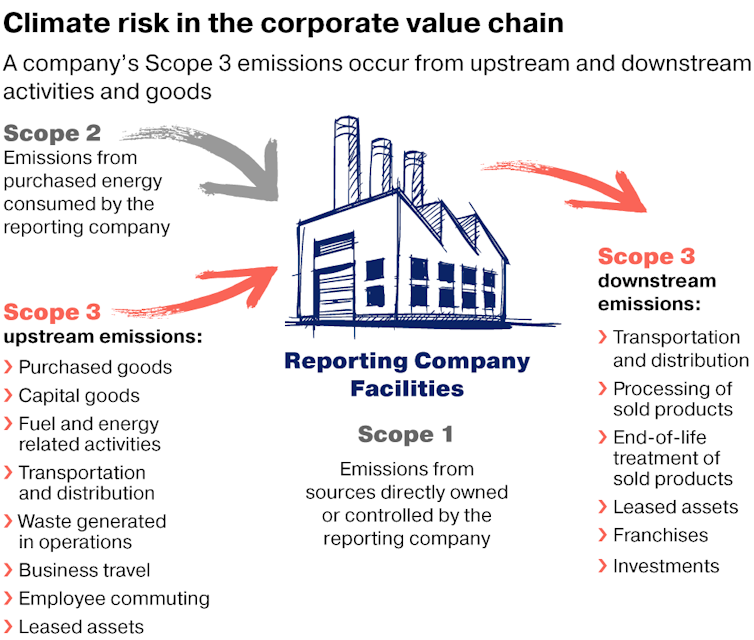
Lists of examples of sope 1, 2, 3 emissions sources with an illustration of a factory in the center
What scope 1, 2 and 3 emissions involve. Graphic: Chester Hawkins/Center for American Progress

Currently, fewer than 30% of companies report meaningful scope 3 emissions, in part because these emissions are difficult to track. Yet, companies’ scope 3 emissions are on average 11.4 times greater than their scope 1 emissions, data from corporate disclosures reported to the nonprofit CDP show.

Lego is a case study of this lopsided distribution and the importance of tracking scope 3 emissions. A staggering 98% of Lego’s carbon emissions are categorized as scope 3. 

From 2020 to 2021, the company’s total emissions increased by 30%, amid surging demand for Lego sets during the COVID-19 lockdowns – even though the company’s scope 2 emissions related to purchased energy such as electricity decreased by 40%. The increase was almost entirely in its scope 3 emissions.

As more companies follow in Lego’s footsteps and begin reporting scope 3 emissions, they will likely find themselves in the same position, realizing that efforts to reduce carbon emissions often boil down to supply chain and consumer-use emissions. And the results may force them to make some tough choices.

Policy and disclosure: The next frontier

New regulations in the European Union and pending in California are designed to increase corporate emissions transparency by including supply chain emissions.

The EU in June 2023 adopted the first set of European Sustainability Reporting Standards, which will require publicly traded companies in the EU to disclose their scope 3 emissions, starting in their reports for fiscal year 2024.

California’s legislature passed similar legislation requiring companies with revenues of more than $1 billion to disclose their scope 3 emissions. California’s governor has until Oct. 14, 2023, to consider the bill and is expected to sign it.

At the federal level, the U.S. Securities and Exchange Commission released a proposal in March 2022 that, if finalized, would require all public companies to report climate-related risk and emissions data, including scope 3 emissions. After receiving significant pushback, the SEC began reconsidering the scope 3 reporting rule. But SEC Chairman Gary Gensler suggested during a congressional hearing in late September 2023 that California’s move could influence federal regulators’ decision.

This increased focus on disclosure of scope 3 emissions will undoubtedly increase pressure on companies. 

Because scope 3 emissions are significant, yet often not measured or reported, consumers are rightly concerned that companies that claim to have low emissions may be greenwashing without taking action to reduce emissions in their supply chains to combat climate change. 

At the same time, we suspect that as more investors support sustainable investing, they may prefer to invest in companies that are transparent in disclosing all areas of emissions. Ultimately, we believe consumers, investors and governments will demand more than lip service from companies. Instead, they’ll expect companies to take actionable steps to reduce the most significant part of a company’s carbon footprint – scope 3 emissions. 

A journey, not a destination

The Lego example serves as a cautionary tale in the complex ESG landscape for which most companies are not well prepared. As more companies come under scrutiny for their entire carbon footprint, we may see more instances where well-intentioned sustainability efforts run into uncomfortable truths. 

This calls for a nuanced understanding of sustainability, not as a checklist of good deeds, but as a complex, ongoing process that requires vigilance, transparency and, above all, a commitment to the benefit of future generations.

To see the original post, follow this link: https://theconversation.com/legos-esg-dilemma-why-an-abandoned-plan-to-use-recycled-plastic-bottles-is-a-wake-up-call-for-supply-chain-sustainability-214573





‘The Climate Crisis Is, in Part, a Communication Crisis:’ Brands Must Walk Their Talk to Galvanize Consumers

7 10 2023

IMAGE: VIKTORIA SLOWIKOWSKA

From Sustainable Brands • Reposted: October 7, 2023

A new study by Magna, Teads and Project Drawdown confirms consumers are relying on brands to create a clear, tangible and compelling vision — backed by substantive action — to guide them toward more sustainable lifestyles.

Today, MAGNA — the investment and intelligence arm of IPG Mediabrands — released a study conducted in partnership with Project Drawdown and cloud-based, omnichannel advertising platform Teads to better understand consumer perspectives on sustainability, especially as it relates to the continued barriers that prevent more sustainable lifestyles.

Sustainability Speaks: Breaking the Barrier of Climate Communication explores how brands can help bridge these barriers and how advertisers can more effectively communicate their sustainability goals while also supporting brand growth.

MAGNA surveyed 9,112 people in the United States, the United Kingdom and Australia, and held five focus groups in the US. Along with echoing recent research from Sustainable Brands® and Deloitte on the most common, ongoing barriers to consumer adoption of more sustainable habits and lifestyles (expense and lack of access), the study found that despite these barriers, people remain motivated to ensure a better future — with 99 percent of people agreeing that they can be motivated to take sustainable action.

“The climate crisis is, in part, a communication crisis,” said Jonathan Foley, Ph.D., Executive Director of Project Drawdown. “We already have the solutions we need to turn things around; but we are still paralyzed by misinformationfear and the lack of will to act. We need a clear and compelling vision to move forward — a vision of a better future, where we come together to stop climate change, and build a better world for all. That could change the world.”

Additional key findings confirm the imperative for brands to be part of the conversation: 77 percent of respondents said they wanted brands to take a stance on sustainability. Furthermore, 75 percent somewhat or strongly agreed that if brands took meaningful action on sustainability, it would have a tremendous impact on the environment; and 35 percent would be motivated to act, if they see brands have, too.

A brand that offers tangible, relevant data in advertising — such as a statistic on how much water was saved in manufacturing — scores better than ambiguous messaging. Defining sustainability itself, a broad term that can vary by product category, makes a difference in helping consumers align around a company’s actions.

The study also ranked which channels consumers favor more when receiving sustainability messaging. Advertising, at 66 percent, was the optimal channel; followed by social media (62 percent), newsletters (57 percent), and influencers and other brand representatives (52 percent).

But advertising itself is also in the hot seat, thanks to its until-recently-unchecked carbon footprint — initiatives such as Scope3 and Ad Net Zero have emerged to help ensure the climate impacts of the messengers no longer undermine their sustainability messaging.

“Sustainability practices are good for business, with innovation, transparency, and information key for brands to strengthen their customer relationships long term,” added Neala Brown, SVP of Strategy & Insights at Teads. “While brands should ease customer hesitations toward adopting a sustainable lifestyle and given advertising as an optimal channel for that messaging, we are simultaneously working with our brand partners to reduce their own digital carbon footprint with supply chain and media optimization via direct publisher relationships.”

Going forward, in addition to reining in the physical impacts of ad production, brands would do well to focus on two aspects of their messaging:

The full study can be found here.

To see the original post, follow this link: https://sustainablebrands.com/read/marketing-and-comms/climate-crisis-communication-crisis-brands-walk-talk-galvanize-consumers


Climate change is about to play a big role in government purchases – with vast implications for the US economy

4 10 2023

The U.S. government is the single largest buyer of services and goods, like vehicles. That has an impact on the economy. Photo: Saul Loeb/AFP via Getty Images

By Jesse Burkhardt, Associate Professor of Energy Economics, Colorado State University and Lauren Gifford, Associate Director of the Soil Carbon Solutions Center, Colorado State University via The Conversation • Reposted: October 4, 2023

Each year, the federal government purchases about 50,000 new vehicles. Until recently, almost all of them ran on diesel or gasoline, contributing to U.S. demand for fossil fuels and encouraging automakers to continue focusing on fossil-fueled vehicles.

That’s starting to change, and a new directive that the Biden Administration quietly issued in September 2023 will accelerate the shift. 

The administration directed U.S. agencies to begin considering the social cost of greenhouse gases when making purchase decisions and implementing their budgets.

That one move has vast implications that go far beyond vehicles. It could affect decisions across the government on everything from agriculture grants to fossil fuel drilling on public lands to construction projects. Ultimately, it could shift demand enough to change what industries produce, not just for the government but for the entire country.

What’s the social cost of greenhouse gas?

The social cost of greenhouse gases represents the damage created by emitting 1 metric ton of carbon dioxide, methane and other greenhouse gases into the atmosphere. 

These greenhouse gases, largely from fossil fuels, trap heat in the atmosphere, warming the planet and fueling climate change. The result is worsening stormsheat waves, droughts and other disasters that harm humans, infrastructure and economies around the world. The estimate is intended to include changes in agricultural productivity, human health, property damage from increased flood risk, and the value of ecosystem services.

By directing agencies to consider those costs when making purchases and implementing budgets, the administration is making it more likely that agencies will purchase products and make investments that are more energy efficient and less likely to fuel climate change.

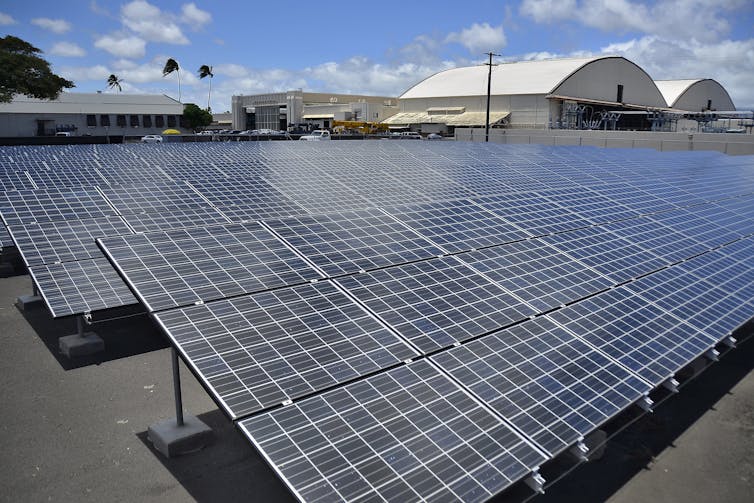
Solar panels outside a military airplane hangar.
The Department of Defense has been taking steps to reduce emissions for several years. Many of its military bases have solar panels, which can produce renewable energy for a few buildings or larger installations. Photo:  U.S. Navy

While only a fraction of the roughly $6 trillion that the U.S. government spends each year would likely be considered under the new directive, that fraction could have far-reaching impacts on the U.S. economy by reducing demand for fossil fuels and lowering emissions across sectors.

Estimating the cost

The Obama administration introduced the first federal social cost of carbon to incorporate climate risk in regulatory decisions. It’s calculated using models of the global economy and climate and weighs the value of spending money today for future benefits. 

When the Trump administration arrived, it cut the estimated cost from around $50 per metric ton to less than $5, which justified rolling back several environmental regulations, including on power plant emissions and fuel efficiency. The Biden administration restored an interim price to about $51, with plans to raise it.

Recent research suggests that the actual social cost of carbon is closer to $185 per metric ton. But carbon dioxide is just one greenhouse gas. The new directive takes other greenhouse gases into consideration, too – in particular, methane, which has about 80 times the warming power of carbon dioxide over 20 years.

Estimates of the social cost of methane, which comes from livestock and leaks from pipelines and other natural gas equipment, range from $933 per metric ton to $4,000 per metric ton

Photo of a rusted oil pump in an overgrown field in Texas. Rusted parts are piled beside it.
Oil and gas wells and pipelines are a common source of methane emissions, including what the Environmental Protection Agency estimates to be more than 3 million abandoned wells across the U.S. AP Photo/Eric Gay

Without directives like these, decision-makers implicitly set the cost of greenhouse gas emissions to zero in their benefit-cost analyses. The new directives allow agencies to instead compare the expected climate damages, in dollars, when making decisions about vehicle purchases, building infrastructure and permitting, among other choices.

The vehicle fleet as an example

The federal vehicle fleet is a good example of how the social costs of greenhouse gases add up.

Let’s compare the costs of driving an electric Ford Focus and an equivalent conventional-fuel Ford Focus. 

Assume each vehicle drives an average of 10,000 miles (about 16,000 kilometers) per year – that’s less than the U.S. average per driver, but it’s a simple number to work with. The damages from emissions in dollars from driving a conventional Ford Focus 10,000 miles are between $133 and $484, depending on whether you use a social cost of carbon of $51 per metric ton or $185 per metric ton.

The climate harm from driving an equivalent electric Ford Focus 10,000 miles, based on the average carbon dioxide emissions intensity from the U.S. electricity grid, would be between $59 and $212, using the same social costs.

Scale that to 50,000 new vehicle purchases, and that’s a cost difference of about $4 million to $13.5 million per year for emissions from operating the vehicles. While producing an EV’s battery adds to the vehicle’s emissions up front, that’s soon outweighed by operational savings. These are real savings to society.

The U.S. government is also a major consumer of energy. If agencies begin to consider the climate damages associated with fossil energy consumption, they will likely trend toward renewable energy, further lowering their own emissions while boosting the burgeoning industry.

How the government can shift demand

These types of comparisons under the new directive could help shift purchases toward a wide range of less carbon-intensive products.

Much of the U.S. government’s spending goes toward carbon-intensive goods and services, such as transportation and infrastructure development. Directing agencies to consider and compare the social cost of purchases in each of these sectors will send similar signals to different segments of the market: The demand for less carbon-intensive goods is rising.

Because this new directive expands to other greenhouse gases, it could have broad implications for new permitting for oil and gasdevelopment and agricultural production, as these are the two largest sources of methane in the U.S.

While this decision is not a tax on carbon or a subsidy for less carbon-intensive goods, it will likely send similar market signals. With respect to purchases, this policy is akin to tax rebates for energy efficient products, like electric vehicle incentives in the Inflation Reduction Act, which boost demand for EVs.

Ultimately, if one of the largest segments of demand, the U.S. government, transitions to less carbon-intensive products, supply will follow.

To see the original post, follow this link: https://theconversation.com/climate-change-is-about-to-play-a-big-role-in-government-purchases-with-vast-implications-for-the-us-economy-214549


Why Committing To Sustainability Is Critical For Today’s Businesses

4 10 2023

Photo: Getty Images

By Gajen Kandiah, Brand Contributor, Hitachi Vantara Perspectives via Forbes.com • Reposted: October 4, 2023

When we think of sustainability, of doing what we can in business and society to preserve and protect the environment, it’s easy to want to think of quick fixes; things we can do right now to solve the problem. We think in terms of products that we can buy to help, and products to avoid; processes to implement, and those to abandon. We want to solve the problem and move on to something else.

But sustainability is not a trend. It will not fade away or be replaced by a new trend. As such, our collective responsibility cannot fade. Operating sustainably is the new way of doing business. We must operate thoughtfully with an eye on how our decisions may impact those that come after us, down the road and into the future.

The concept is not new. I’ve always been fond of the adage, the world is not given by his fathers, but borrowed from his children.

As I wrote last November, despite the well-intentioned efforts of governments and international bodies, like the United Nations’ Climate Change Conference, industry need not wait for regulation to act on emissions, energy, and waste. We can, and many organizations have, act now to reduce and eliminate our carbon emissions, to increase our use of renewables, and to insist that our supply chains are aligned with our missions.

For our part at Hitachi, we are aggressively implementing initiatives to improve our environmental footprint, from our energy usage and emissions, all the way to the products and solutions we develop that are more eco-friendly than previous iterations. We are also expanding this work to involve our extensive partner ecosystem to ensure that everyone with whom we work is on the same sustainability page as we are. Our corporate goals are well documented, to be carbon neutral as a global company by 2030, and to be carbon neutral across our entire value chain by 2050. And while there is tremendous work being done, there’s much more to come.

Like many, I was heartened by the recent Global Electricity Report 2023 from the global energy think tank, Ember, that reported electricity generation was its “cleanest ever” in 2022, falling to a record low of 436 gCO2/kWh, due to dramatic growth in wind and solar generation around the globe. In fact, the report noted that more than 60 countries “now generate more than 10% of their electricity from wind and solar.”

The Future is Not Ours

As we spend Earth Day speaking of policies, programs, and targets to be more environmentally responsible, I encourage you to think of the potential value of all your programs on the future. When we ingrain sustainability into everything we do, with a view of the impact of our decisions on the next generation, it sets in motion actions for the next generation to replicate; momentum is generated and perpetuated, ad infinitum.

A little more than 100 years ago, Theodore Roosevelt said, “I recognize the right and duty of this generation to develop and use the natural resources of our land; but I do not recognize the right to waste them, or to rob, by wasteful use, the generations that come after us.”

The future is not ours, but it is our responsibility. And unless you haven’t been paying attention, our children, the next generation, are in many ways taking a more proactive leadership role in this area than we are. They are demanding action, and it is time for us to step up and meet the challenge.

Let us demonstrate to them, through decisive action, that we are listening and that we are committed to creating a better world for them. It is time to set aside short-term thinking and embrace a long-term approach that considers the implications of our actions on future generations.

Indeed, let us be inspired by the leadership of our children and work together to create a greener future. By doing so, we can ensure that we leave behind a legacy we can be proud of – a world that is healthy and sustainable.

For more on Hitachi Vantara’s eco-first approach to data centers, view here.

To see the original post, follow this link: https://www.forbes.com/sites/hitachi-vantara-perspectives/2023/10/03/why-committing-to-sustainability-is-critical-for-todays-businesses/?sh=e14e58f1d6e8


New Sustainability Expert Travel Certification For Travel Agents Launches

3 10 2023

By Kate Harden-England from travolution • Reposted: October 3, 2023

New free e-learning platform empowers the future of a responsible tourism industry

The ‘Sustainability Expert’ initiative was launched during the ANTOR Media Awards Gala Dinner in London.

The new free-to-use e-Learning platform provides a “convenient and easily accessible” resource for responsible tourism education and training worldwide.

It serves as a singular hub for the global travel industry, highlighting organisations, destinations and travel brands committed to environmental stewardship, cultural responsibility, and eco-conscious practices.

The hub, curated by Equator Global, enables individuals to attain the Sustainability Expert certification by successfully completing a minimum of four courses from the 28 free courses featured. 

It is endorsed by leading travel and tourism players and underscores the collective responsibility of the worldwide travel industry in working together towards shared goals, in building a sustainable future.

Courses cover a wide spectrum of topics, including Costa Rica’s Pura Vida eco-tourism pledge, Switzerland’s Swisstainable programme and Finland’s Sustainable Travel objectives. 

Participants will also be able to delve into Alaska’s conservation endeavours and explore the preservation investments made by AlUla, Thailand and Egypt to protect their timeless cultural treasures, among other topics.

Ian Dockreay, CEO of Equator Global and Travel Uni, said: “For the first time, travel and tourism professionals worldwide can gain recognition as advocates for this crucial initiative for free. 

“By just investing their time in learning about the eco efforts of destinations and travel-related companies, they will be better equipped to advise and guide consumers in their holiday choices. 

“With travellers increasingly prioritising sustainability in their travel decisions, it is imperative that those arranging their trips can provide informed and confident guidance.”

To see the original post, follow this link: https://www.travolution.com/news/new-sustainability-expert-travel-certification-for-travel-agents-launches/


Building an Economic Case for Sustainability Transformation

3 10 2023

Graphic: Vectormine/stock.adobe.com

By Karthik Balakrishnan from Supply and Demand Chain Executive • Reposted: October 3, 2023

Ultimately, sustainability-linked investments result in reduced liabilities, reduced risk of stranded assets, and reduced risk of regulatory backlash, and improved unit economics and supply chain resilience.

In recent years, corporate sustainability efforts have focused on measurement and reporting. We’ve heard the phrase “what gets measured gets managed” countless times and taken it to heart. The result has been a robust carbon accounting and reporting universe filled with tools that can estimate the emissions for every industry, and an alphabet soup of reporting standards. This result, however, hasn’t been particularly promising. Even companies with the most ambitious climate goals and robust measurement and accounting programs have had trouble cutting their emissions. It turns out that simply measuring something doesn’t mean it’s going to be managed. Measurement is an important first step for an organization to understand and prioritize sustainability efforts. However, sustainability is about the real-world impact that can only be achieved with real-world investments, not an endless cycle of measurement and reporting. Put another way, what gets measured might get managed if you can show that the upfront costs of sustainability are truly investments in a classical business sense, with benefits including ROI, customer retention and risk mitigation.

When your organization is part of a complex supply chain, achieving sustainability targets is made difficult because the investments needed to meet your sustainability goals often involve assets outside of your organization. In these cases, a business justification is especially important, since achieving your targets will only come from partnering with other organizations and showing them the benefits of either investing in their facilities on your behalf, or accepting direct investments for actions and equipment that they might not otherwise purchase.

The first step is to map the key outcomes that apply to your business that can be enhanced by sustainability- and ESG-linked investments. For example, a product’s unit economics can each be improved by changing designs to use less raw material, adjusting production dies and molds to waste less material, and switching to equipment which uses less fuel and is easier to maintain. An existing factory or distribution center can benefit from lower insurance costs by investing in solutions for climate resilience. Meanwhile, a brand-new factory can benefit from a lower cost of capital by investing in future-proof clean technologies that reduce the risk that the facility ends up as a stranded asset due to changing market demands or regulatory conditions. 

In all of the examples above, the benefits of sustainability-driven efforts actually benefited the business as a whole. Instead of a green premium, these businesses would benefit from a green return. 

As sustainable technologies improve and become more mature, these returns will only improve as well. Holistically studying the impacts of sustainability and ESG investments allows supply chain leaders to build a business case for sustainability that goes beyond marginal abatement curves. Simply focusing on minimizing the cost of sustainability is not a winning strategy when the cost of capital is high. Instead, it’s critical to show how sustainability-linked investments maximize return and positively impact financial outcomes. This is especially helpful when making a case for investment to a key supplier or manufacturer, who may be reluctant to make the process, material or equipment investments standing between you and your sustainability goals.

There is, of course, the elephant in the room. Is it even worth considering ESG and sustainability given all of the controversy and political turmoil surrounding the term? After all, a modern supply chain is fine-tuned, and ultimately performs best by minimizing all sorts of risk, especially those like political risks that live outside your control. The answer, surprisingly, is yes. There are several real unassailable trends that have gained momentum in the last couple of years. In the wake of the Inflation Reduction Act (IRA), passed in August 2022, 80% of money allocated by the bill for clean energy and sustainability projects has gone towards Congressional districts represented by individuals who publicly oppose ESG messaging. Deployments of large, utility-scale solar projects follow the annual resource (how much sunlight is available in a given year) independent of political boundaries. And regardless of the political sentiment, over two-thirds of consumers consider sustainability positively when making at least some of their purchase decisions — nearly sixteen times the number that are influenced negatively by sustainability. Fundamentally, the science and economics of sustainability are sound, and while reporting frameworks and standards may change, the real-world drivers which led to the creation of ESG remain. The bottom line is that while the term “ESG” is facing backlash and the name will change as it has in the past, these principles are being “hardwired” into financial strategies in all but name at full speed. The ROI of sustainability not only shows up at the level of the individual initiative, but increasingly contributes to the overall financial position and investability of the company as a whole.

Ultimately, sustainability-linked investments result in reduced liabilities, reduced risk of stranded assets and reduced risk of regulatory backlash, and improved unit economics and supply chain resilience. Quantifying and clearly communicating these financial and performance benefits, on top of the pure ESG benefits, is critical to move beyond measurement and reporting to achieve real impact.

To see the original post, follow this link: https://www.sdcexec.com/sustainability/carbon-footprint/article/22874707/actual-building-an-economic-case-for-sustainability-transformation


How to Market to the Increasingly Socially Conscious Customer

30 09 2023

Graphic: U.S. Chamber of Commerce

By Gino Sesto from Entrepreneur.com • Reposted: September 30, 2023

Key Takeaways 
  • Socially conscious shopping is more than a trend; it’s a movement shaping the current consumer landscape.
  • Brands have unique opportunities to highlight their commitment to social responsibility. 

In today’s dynamic retail environment, there’s a significant shift occurring in the way brands approach their customers. Historically, many industries prioritized competitive prices and discounts. However, the modern consumer is evolving, and the marketing world must follow suit. Brands are now transitioning away from emphasizing price to highlighting values, beliefs and overarching ethos. This shift from cost awareness to conscious consumerism redefines the marketing approach across sectors.

The emergence of the socially conscious consumer

Socially conscious shopping is more than a trend; it’s a movement shaping the consumer landscape. Customers increasingly make purchasing decisions based on the broader impact of their choices, whether environmental sustainability, ethical manufacturing or social justice.

https://06715d8bd140d1d3ebf3e9a280cf1e69.safeframe.googlesyndication.com/safeframe/1-0-40/html/container.html

Recent surveys like the Harris Poll show these changes in consumer spending habits happening in multiple industries. However, while price remains a dominant factor for many consumers, it’s not the sole consideration anymore. Although numerous shoppers still prioritize cost, a growing group is willing to pay a premium for products aligned with their values.

Take fashion as an example. Data reveals that while 22% of shoppers now consider where apparel is manufactured, 17% evaluate brands based on their sustainability initiatives. Fifteen percent examine a brand’s attitude to social issues, and 13% consider its employment practices. While these figures might appear modest, they indicate a growing inclination toward value-driven, socially conscious shopping. As modern shoppers progressively align spending habits with their values, brands that adapt to this approach will reap the benefits of a loyal and expanding customer base.

https://06715d8bd140d1d3ebf3e9a280cf1e69.safeframe.googlesyndication.com/safeframe/1-0-40/html/container.html

Related: 10 Ways to Make Your Business More Socially Conscious

Crafting marketing strategies for diverse audiences

Successful brands are those that understand their audience’s nuances. It’s crucial to segment the audience not just by age or gender but by values, beliefs and priorities. For older generations, emphasizing cost-effectiveness and quality remains key. While baby boomers focus on price and quality, younger generations like GenZ-ers and Millennials are more inclined to consider a brand’s values and beliefs. For this generation, the key lies in the tangibles. Brands must emphasize cost-effectiveness without compromising on quality. Promotions, discounts, and loyalty programs are effective marketing tools, while Gladly’s 2022 Customer Expectations Report indicates the importance of the entire shopping experience. Convenience also makes a difference through easy returns, a seamless online shopping experience, or efficient customer service. Boomers are looking for value, but they also want ease and simplicity.

This doesn’t mean cost isn’t essential for younger consumers, but they’re more likely to pay more for products and services that align with their values. Younger audiences and people of color are even more likely to align shopping habits with their values. For these audiences, shopping isn’t just a transaction; it’s a statement. Quality, style and, most importantly, a brand’s position on social and environmental issues have all become equally significant. Brands must integrate values into the shopping experience by showcasing their efforts transparently. Clear stances on social issues and ethical employment practices are effective strategies. Collaborations with influencers who support their values, limited edition “cause” collections, or even a percentage of sales going to a social cause can also be successful

Harnessing digital channels for socially conscious marketing

In the current digital age, brands have unique opportunities to highlight their commitment to social responsibility. Digital marketing platforms allow companies to convey their values, initiatives, and beliefs transparently. Research from The Roundup shows consumers are becoming increasingly environmentally conscious, with many actively seeking out sustainable products.

This shift is supported by a 2021 study that showed 45% of consumers are willing to pay a premium for sustainable products. Additionally, 52% of the respondents emphasized the importance of purchasing from companies whose values align with theirs, marking a significant increase from 43% in 2019. Recent findings from the ninth annual Conscious Consumer Spending Index also showed a 25% surge in socially responsible spending in 2021 compared to the prior year. This data underscores the shift in consumer behavior, where decisions are influenced not just by product quality or cost but also by a brand’s ethical and societal values.

Digital platforms, especially social media, have become the epicenter for brands to showcase their alignment with social causes, sustainable manufacturing processes, and ethical sourcing. By integrating these values into their marketing strategies, brands can foster deeper connections with their audience, building a trustworthy and value-driven image. As consumer preferences continue to evolve, the significance of socially conscious marketing in nurturing brand loyalty and fostering trust becomes even more evident.

Staying nimble in a dynamic landscape

Change is the only constant in the retail world. Brands must remain adaptable as consumer preferences evolve, influenced by global events, cultural shifts, and generational differences. Success lies in understanding and catering to the modern, socially conscious consumer. Companies must balance offering cost-effective solutions and championing values, ethical practices, and social responsibility. As brands navigate this new terrain, those who genuinely connect with their audience’s values will be the ones to thrive.

To see the original post, follow this link: https://www.entrepreneur.com/growing-a-business/how-to-market-to-the-increasingly-socially-conscious/459456


Coalition Connects Brands With Schools Struggling to Teach Sustainability

29 09 2023

Students work together on an assignment about ecosystems and environmental impacts during a seventh-grade science class in December 2020. While more schools are introducing sustainability curriculum, some are struggling to get started. (Image credit: Allison Shelley for EDUimages via Flickr)

By Gary E. Frank from Triple Pundit • Reposted: September 29, 2023

Elementary and secondary school teachers want to teach about sustainability, yet many lack the time, resources, and in particular, the tools to do so effectively. For those in the United States, help is on the way. 

By 2030, the Sustainability Education Coalition aims to give more than 10 million K-12 students access to educational resources that will help them make informed decisions and take responsible actions when it comes to sustainability.

It’s a first-of-its-kind initiative aligned with the United Nations Sustainable Development Goals and launched by Discovery Education, a leader in developing digital content for K-12 teaching. 

“The need for comprehensive sustainability education has never been more pressing,” Amy Nakamoto, Discovery Education’s general manager of social impact, said in a statement. “Recent statistics reveal a concerning trend: While the majority of teachers recognize the importance of teaching students about climate and sustainability, only half of them are currently addressing these vital topics within their classrooms.” 

Three factors hinder teaching sustainability to K-12 students in the U.S., Natamoto said. First, some teachers have difficulty figuring out where classes on sustainability belong in their curricula. 

“It could be in science classrooms, it could be in social studies classrooms, it could be in blended STEM [science, technology, engineering and math] classrooms. I think currently, teachers are having a hard time figuring out where it fits in the school day,” Nakamoto told TriplePundit. 

Others feel they do not know how to teach sustainability topics, she said. Teachers need and want more support in this area, according to a report from the Smithsonian Science Education Center. Of the teachers surveyed, 69 percent said professional development on sustainability would be helpful. 

“They want to be able to talk about this with their students, but they don’t know how,” Nakamoto told us. Lastly, while school administrators believe sustainability is a critically important topic to teach, they don’t know how to get the resources to do so, she said.

The Sustainability Education Coalition aims to solve all three problems. It uses insight and expertise from partner companies to create digital content for students to learn from alongside the lessons on the Discovery Education Experience learning platform, Nakamoto said. Support is specifically focused on providing STEM and sustainability education resources to school districts that would struggle to access them otherwise.

“Another way the collaboration happens, in addition to the curriculum and the content, is through strategic thought leadership that takes educators and administrators and puts them in the same rooms as these leading companies,” Nakamoto said. “So [the companies] can understand the challenges of schools to talk about these topics, and the schools and administrators can understand how companies are wrestling with these topics in more real-time.”

On the other side, company partners benefit from joining the coalition through employee engagement, Nakamoto said. Employees want to see their companies investing in initiatives that align their corporate mission with a local community mission. 

“Employee engagement is leveraging the employees of our partners to be part of the story. So, we are telling their stories, we are filming them and the solutions they’re doing,” Nakamoto said. “We deeply believe in showing the people who are the leaders in this movement to the students in classrooms across the U.S.”

So far, Subaru of America, LyondellBasell, Nucor, Honeywell, and the National Environmental Education Foundation have partnered with the coalition. Each company that joins helps to unlock access to a complete library of STEM and sustainability education resources for some critical communities, Nakamoto said.

“[Sustainability] is a topic that everybody is both wrestling with and evolving with at the same time,” she concluded. “We have a big vision to grow this to represent multiple sectors, multiple interests because the sustainability story is an everyday story that we all experience just walking through the world. In order to tell that story to students, we need to be influenced by all of the sectors that are engaged in sustainability at their corporate and community level.”

To see the original post, follow this link: https://www.triplepundit.com/story/2023/sustainability-education-k-12/784606


The Arrival of Mandatory Corporate Sustainability Reporting

27 09 2023

By Steve Cohen from the Columbia Climate School • Reposted: September 27, 2023

To paraphrase the management icon Peter Drucker, you can’t manage something unless you measure it. Without measurement, you can’t tell if management’s actions are making things better or worse. The importance and seriousness of sustainability management requires the development of generally accepted sustainability metrics. Just as financial accounting requires agreement on terms and reporting requirements to facilitate independent auditing, sustainability requires the same level of precision. Publicly traded and owned corporations are under pressure from investors to report environmental risks, and more and more companies are disclosing environmental and social governance (ESG) measures.

A recent Wall Street Journal survey of corporate sustainability officers indicates that while more companies are disclosing sustainability metrics, there is confusion about the measures and a demand for uniform reporting requirements. According to Journal reporter David Breg:

“Public companies in the U.S. are increasingly disclosing sustainability information, but many say they find it a challenge to report fundamental climate data that many regulators around the globe likely will require under incoming mandatory reporting standards. Nearly two-thirds of respondents said their company was disclosing environmental, social and governance information, up from 56% in the prior year, according to the annual survey of sustainability officials that WSJ Pro conducted this spring.”

The reporting challenge is due to imprecise measures and a lack of experience collecting and reporting these data. That challenge will be met by sustainability professionals trained in measuring greenhouse gasses and conducting life cycle analyses. In Columbia’s MS in Sustainability Management program, we offer courses in each of those areas, and before long, hundreds of our graduates will be helping corporations meet their reporting requirements.

The U.S. Securities and Exchange Commission has been revising its proposed sustainability reporting requirements in response to a deluge of comments and has delayed issuing those requirements, once expected last spring. The political calendar of a national election next year creates extreme pressure to issue those standards this fall, and currently, they are expected in October. There will certainly be legal challenges to whatever rule is issued, but to the extent that the rules connect environmental risk to financial risk, they are well within the SEC’s enabling legislation. Additionally, the SEC is not the only body working on uniform sustainability metrics. Again, according to Breg:

“Regulators around the globe are finalizing rules that would require companies to publish standardized information after years of patchy voluntary ESG reporting based on a host of frameworks. California’s governor has said he would soon sign that state’s requirements into law. The U.S. Securities and Exchange Commission’s rules are expected later this year. European regulations are already in place and many other countries are also working on standards. The International Sustainability Standards Board hopes its climate framework, completed this past summer, becomes the global baseline.”

Assuming the SEC rules survive the ideological onslaught they will face, it is likely, just as with financial accounting, that an American rule would be highly influential and, over time, would become a global standard. If the extreme element of America’s right wing dominates the debate over disclosure and overturns the rules in the conservative Supreme Court, U.S. corporations operating globally would be subject to foreign or global reporting requirements that they would have little hope of influencing. The realpolitik of sustainability reporting requirements may convince American corporations to focus their attention on influencing rather than overturning reporting requirements. The ideological and dysfunctional side of American national politics will certainly result in court challenges to the SEC rule, but the seriousness of the effort and its impact is unknowable.

The initial SEC rule is more limited than many of the other frameworks under development and focuses narrowly on carbon disclosure. My guess is that carbon emissions from a company’s supply chain will be omitted or optional in the final disclosure rule. My view is that this initial rule is a foot in the door and, like financial accounting, will evolve over time.

A growing number of publicly traded companies and even many privately owned companies are disclosing sustainability metrics. The ideologues labeling this as “woke” management fail to understand the degree to which these measures are indicators of effective and sophisticated management. ESG measures do not drive out financial indicators, they are, in fact, correlated with financial success. The principal concerns of a private firm do not change under sustainability management. They remain profit, market share, and return on equity. But modern organizations recognize that they are operating on a more crowded, interconnected, and warming planet. These facts of organizational environments require that they manage their environmental, social, and community impacts as a part of routine organizational life.

In addition, modern organizations compete for talent, and that means that workers have influence over management behavior. Young employees care about a company’s ESG performance. The post-pandemic push for hybrid work arrangements is ample evidence that top-down management is no longer possible, and organizations must respond to employee preferences.

Corporations operate in a regulated environment. That is why they have in-house counsel and engage outside law firms on a regular basis. When employees are fired or laid-off it is not unusual for them to sue their ex-employer. An American corporation operating nationally must understand state law and even local ordinances to successfully function. Companies operating globally must understand the rules of other nations. Over 10,000 non-European companies are subject to the European Union’s new ESG reporting requirements. About a third—or over 3,000—are U.S. corporations. This regulatory environment is normal and expected and fully integrated into decision-making in modern corporations. The free market is a relative and not absolute concept. There has never been and will never be a totally free market since that is akin to anarchy. An indicator of a successful company is its ability to navigate its regulatory environment while achieving its financial goals. The widespread and growing voluntary disclosure of sustainability metrics is happening in anticipation of government regulation but also in response to investor, customer, and employee demands.

But the problem with voluntary disclosure is that the measures they use do not enable investors to compare one company’s environmental risk to another, and the disclosures are not audited. Even worse, some of the NGOs that help companies measure and report sustainability are paid by the companies they report on, so these ESG reports might be fiction, and we’d never know. Uniform disclosure metrics are urgently needed. Only the SEC, with its gatekeeper function to the public capital marketplace, has the power to develop and impose standard reporting and audit requirements.

The move to decarbonize our economy will continue to be quietly and, at times, visibly opposed by fossil fuel interests. But they are increasingly unable to counter the facts of our warming planet. They will persist and, as Mike Bloomberg’s recent initiative recognizes, will shift their emphasis from burning fossil fuels for energy to utilizing them for plastics and other petrochemicals. Bloomberg is spending $85 million to block chemical plant siting as part of his effort to reduce global warming. If petrochemical plants were required to measure and report on their air pollutants, they might well be motivated to learn how to reduce those emissions while producing what they are selling. It’s easy to see why they might oppose reporting requirements, but if the alternative is to fight siting wars with local community groups, it might be in their financial interest to measure, report, and reduce emissions.

Sustainability metrics and indeed sustainability management have finally arrived. For those of us who have been working for well over a decade to develop these practices and this profession, this is welcome but not a surprise. The climate crisis modeled and predicted in the final decade of the twentieth century is now with us. The biodiversity loss feared has also arrived. I continue to believe that we can develop a productive and growing economy without destroying our home planet. It takes brainpower, ingenuity, and technology, but most of all, our attention and concern. Carbon disclosure is a critical step in carbon management. Standardized sustainability metrics are a crucial step in realizing the vision of sustainability management.

To see the original post, follow this link: https://news.climate.columbia.edu/2023/09/25/the-arrival-of-mandatory-corporate-sustainability-reporting/


Luxury To Responsibility: Hospitality’s Journey Towards Sustainability

25 09 2023

Graphic: Cambro

Balancing luxury with the imperative of sustainability presents an ongoing dilemma. The challenge lies in finding a harmonious path that doesn’t compromise customer satisfaction. Achieving this delicate balance requires a multifaceted approach. By Manthati Sai Kiran from Business World • Reposted: September 25, 2023

The hospitality industry is known for its exceptional services. Luxury and facilities. The sector is now not only known for creating exceptional experiences for its guests but also for driving positive change. This sector presents unique opportunities and challenges.

Similar to many other industries, the hospitality sector is committed to advancing sustainable practices. But it has faced considerable adversities, particularly due to the impacts of the COVID-19 pandemic. As it looks ahead, sustainability cost stands as one of the challenges.

In mathematical terms, the hospitality industry contributes approximately 11 per cent of global carbon emissions and it is expected to grow by 85 per cent over the next few years. The growth comes at a cost and it involves a high environmental impact, including increased water usage and the generation of disposable and non-disposable waste. Implication – more emission of carbon footprint.

Balancing luxury with the imperative of sustainability presents an ongoing dilemma. The challenge lies in finding a harmonious path that doesn’t compromise customer satisfaction. Achieving this delicate balance requires a multifaceted approach.

In a recent panel discussion, industry leaders shared their strategies and best practices for addressing various issues, minimising food waste, sustainability initiatives, and inclusive and active engagement with local communities. These collaborative efforts demonstrate the industry’s commitment to making a positive impact while navigating the complexities of luxury and sustainability.

Gaurav Sinha, Hotel Manager, JW Marriot said “Sustainability is not just a path we aspire to explore as an industry, but a responsibility we embrace. Our guests, play a pivotal role alongside with us in giving back to society and preserving our precious natural resources. Through dedicated practices and innovative equipment, we aim to make a meaningful contribution. Tonight, as our conversation unfolds, we look forward to discussing these vital steps towards a brighter, more sustainable future”.

HC Vinayaka, VP Technical, EHS & Sustainability, ITC Hotels, shared strategies for minimizing food waste, from removing dustbins in cafeterias to implementing programs where food is measured every time it is thrown and target food wastage reduction year-by-year plans. 

He strongly believes, educating management teams, and fostering a shared commitment to sustainability are the cornerstones to tackling food waste.

Manish Garg, General Manager, Hilton and Hilton Garden Inn Bengaluru Embassy Manyata Business Park, shared inclusive practices, that he led in his organisation. He has taken steps to include specially-abled individuals in the workforce, recognizing the importance of diversity and inclusivity. However, it’s not just about hiring, it’s about fostering an environment where everyone can thrive. This means equipping ourselves and our teams with the skills and understanding needed to work effectively with differently-abled colleagues. It’s about learning sign language, adapting communication methods, and ensuring safety measures are inclusive.

“In my experience, the biggest challenge lies in ongoing training, where we continuously strive to improve our communication and support for our specially-abled team members. In the hotel industry, there are diverse roles, such as operators, where physically challenged individuals can excel. It’s about creating an environment where they not only have a job but also feel valued and motivated to come to work, just like any other team member”, he added.

To see the original post, follow this link: https://www.businessworld.in/article/Luxury-to-Responsibility-Hospitality-s-Journey-Towards-Sustainability/24-09-2023-492476/


Greenhushing: Is Silence Hindering Sustainability?

24 09 2023

Unlike greenwashing, a quieter phenomenon raises concerns about transparency and authenticity. By Patricia Costinhas from impakter.com • Reposted: September 24, 2023

In the world of corporate sustainability, it’s not always about what companies proudly proclaim; sometimes, it’s the hushed secrets they keep that reveal their true shades of green. You’ve probably heard of greenwashing before, but now there is a subtler player lurking in the shadows: greenhushing.

While greenwashing wears its false eco-badges loud and proud, greenhushing prefers to stay in the background, quietly concealing its true colors. But make no mistake; silence can speak volumes. It raises questions about companies’ transparency, accountability, and their true sustainability efforts.

What is Greenhushing?

Though not a term that rolls off the tongue as easily as greenwashing, greenhushing has been growing in popularity. In essence, it revolves around companies deliberately opting to keep their environmental and social credentials discreet, almost as if they are hushing their sustainability efforts. Greenhushing involves downplaying or conveniently omitting mention of a company’s environmental initiatives.

Now, you might wonder, isn’t modesty a virtue? Indeed, in the realm of corporate sustainability, there is merit in humility. However, the practice of greenhushing raises a cause for concern when it comes to sustainability communication. Companies that embrace greenhushing may aim to convey that they are committed to sustainability without making a fuss about it. Yet, by choosing to remain vague and ambiguous, they can inadvertently give the impression that their environmental efforts are more substantial than they truly are.

his subtle approach to sustainability communication has its drawbacks, as it can obscure the reality of a company’s emissions and sustainability initiatives. Furthermore, it opens the door to sophisticated greenwashing tactics, which exploit this hushed narrative to create a façade of environmental responsibility.

Measuring Sustainability

Assessing a company’s commitment to sustainability in today’s corporate world can be a tough task. While financial metrics enjoy well-established and standardized criteria, the same cannot be said for sustainability metrics, which are often kept hidden.

Numerous organizations, frameworks, and industry groups within the business landscape have their own sets of reporting guidelines. This diversity of standards results in a fragmented sustainability landscape, making it challenging to compare how businesses fare in terms of sustainability targets and environmental credentials.

Then there’s the commonly designated ESG reporting field, a trio encompassing Environmental, Social, and Governance aspects. This reporting framework seeks to gauge a company’s commitment to sustainability, social well-being, and upholding ethical standards. However, it now finds itself in middle of growing scrutiny and criticism within the corporate world.

ESG Metrics and Growing Criticism

Quantifying social impact and ethical governance is no easy feat, and the absence of robust regulatory oversight has raised concerns about the relevance of ESG reporting. Many companies grapple with how to measure their environmental impact and fulfill their sustainability targets, adding to the complexity of the situation.

Last year, Tesla CEO Elon Musk made headlines by publicly denouncing ESG, going as far as labeling it a “scam.” This declaration came after Tesla’s removal from the S&P 500 ESG Index, a move that prompted Musk to voice his discontent on Twitter. He suggested that the integrity of the index provider had been compromised, pointing out the irony of oil giant Exxon Mobil retaining its top-10 position while his electric car company was removed from the list altogether.

Then there is the case of rampant greenwashing. Without clear-cut or standard sustainability reporting metrics, what we find is a breeding ground for corporations to exaggerate or falsify their initiatives.

The new EU CSRD Directive will make ESG reporting mandatory from January 2025. This means companies should start to collect their data from January 2024. Starting from larger companies and then later SMEs everyone will have to report on their sustainability efforts.

Motivations Behind Greenhushing

To truly grasp why organizations choose the path of greenhushing, we must first understand the driving forces behind it.

Resource Constraints

One significant factor in the greenhushing equation is resource constraints. Imagine a smaller company with limited manpower and budget resources. When they start trumpeting their sustainability achievements, they can quickly find themselves overwhelmed with demands for more data, additional proof, and numerous reports. These resource limitations can swiftly transform the green spotlight into a glaring interrogation lamp. Consequently, some organizations choose to maintain discretion as a shield.

Regulatory Costs

Navigating the labyrinth of regulations can be expensive, particularly for companies seeking to solidify their green credentials. The fear of incurring regulatory fines due to inadvertent missteps acts as a potent deterrent. Therefore, some organizations opt to remain under the radar until they are absolutely certain they can meet all regulatory requirements. Some companies prefer quiet, prolonged testing of their green initiatives before making grand announcements. This approach helps them avoid both the financial and administrative costs associated with compliance.

Shielding from Scrutiny

By selectively revealing their sustainability efforts, organizations can avoid intense scrutiny and accusations of greenwashing. Companies making exaggerated or false green claims not only risk reputational damage but also potential legal consequences. Thus, through greenhushing, firms can remain unnoticed by watchful eyes. An example is the recent accusation against global banking giant HSBC. They faced allegations of greenhushing when they downgraded funds exclusively invested in sustainable assets to those including environmental or social factors, without necessarily targeting a sustainable outcome. While the company claimed compliance with EU regulations, critics viewed it as an attempt to evade investor scrutiny.

Taking a critical stance on these motivations for greenhushing is vital. While resource constraints and regulatory costs are valid concerns, they should not excuse a lack of transparency. In an era where consumers and stakeholders demand responsible investment decisions, underreporting sustainability efforts can backfire. Some may inadvertently damage trust and credibility in their attempt to shield themselves from scrutiny.

The Sustainability Imperative

All things considered, sustainability rests on transparency and accountability. It goes beyond marketing or shielding from criticism. Despite ESG criticism, customers now focus on product carbon footprints, integral to their choices. This awareness drives firms to adjust emissions goals and prioritize strong sustainability credentials in their climate strategies.

Ultimately, the path towards sustainability is far from silent. By wholeheartedly embracing transparency and accountability, organizations can not only avert allegations of greenwashing but also make substantive contributions to the collective mission of combatting climate change and addressing environmental challenges.

To see the orignal post, follow this link: https://impakter.com/greenhushing-is-silence-hindering-sustainability/


U.S. Housing Crisis Thwarts Recruitment for Nature-Based Infrastructure Projects

24 09 2023
Strong storms often lead to bluff erosion on the shores of Lake Superior. Credit: Juli Beth Hinds

Strong storms often lead to bluff erosion on the shores of Lake Superior. Credit: Juli Beth Hinds

Even when the funding is lined up for green restoration efforts in northern Wisconsin, a lack of affordable housing makes it hard to attract workers and get started. By Lydia Larsen from Inside Climate News • Reposted: September 24, 2023

Northern Wisconsin’s landscape is defined as much by the stunning shores of Lake Superior or the Bad River as the region’s seemingly endless winters. But as climate change accelerates, attention is shifting to ways of controlling a steep increase in stormwater, which means doubling down on existing management practices and turning to nature for inspiration. 

Nature-based solutions involve strategies like restoring streams degraded by intense logging activity, installing rain gardens next to parking lots and buildings to absorb moisture, and bringing back wetlands to purify and protect shorelines. Such efforts not only help mitigate the effects of climate change but can also create new jobs. 

Yet even when local governments, nonprofit groups and indigenous tribes can drum up the funding to take on these projects, they are stymied by a major obstacle: People who can do the work can’t find a place to live. 

“Housing!” the planning expert Juli Beth Hinds yelled recently in her kitchen while watching a PBS NewsHour television segment on Living Breakwaters, a coastal resilience project in Staten Island.

The veteran NewsHour journalist Jeffery Brown had just asked Kate Orff, a renowned landscape architect, why more people weren’t putting similar nature-based solutions into practice across the United States. Orff pointed out some of the obstacles, like deciding which jurisdiction controls what, in mapping out large-scale projects that cross boundaries. 

But Hinds, who works on land-use and water-resource policy, knows that housing can be an equally important piece of the puzzle. All too often, she said, planners cannot hire people for nature-based projects when affordable places to rent or buy are scarce to nonexistent.

“We have a housing crisis,” Hinds said. “But we have not unpacked this as really a critical issue in whether, and how, we’re going to begin implementing nature-based solutions at scale.” Based on her experience and conversations with colleagues, she adds, the problem is impeding projects elsewhere in the Midwest and on the East Coast as well.

In March, the statewide research and outreach group Wisconsin Sea Grant released a report on the workforce barriers to launching more nature-based solutions in northern Wisconsin, which has experienced more flooding, higher lake levels and more intense winter storms in recent years. 

For the study, Hinds and her colleague Linda Reid interviewed stakeholders across four northern Wisconsin counties, from tribal representatives to county conservationists to environmental nonprofits. Housing came up in every interview, they said. 

A History of Tribal Expertise

“I thought we’re gonna go up there and we’re gonna hear what kind of classes they need, or what audiences need the education,” said Reid, a consultant who works on climate resilience and water quality issues around the Great Lakes region. “And we get up there, and we find there’s a few things they need to learn, but for the most part, that is not the issue.”

Northern Wisconsin has a long history of involvement in sustainability and environmental stewardship. Reid notes that the Red Cliff Band and the Bad River Band of Lake Superior Chippewa were tending to the earth and waterways long before white settlers arrived in the 17th century and are highly invested in maintaining them. The region is also home to some of the first eco-municipalities in the United States, meaning that local governments have enshrined sustainability in their charters. 

When Reid and Hinds arrived in April 2022 for four months of research, a large number of nature-based projects were already underway, like capturing or rerouting stormwater and snowmelt next to parking lots and buildings in the city of Superior and restoring streams in Iron County. 

A devastating storm hit Iron County’s Saxon Harbor in 2016 leading to massive infrastructure damage and ultimately killing three people. Stream and coastline restoration in the area improves coastal resilience. Credit: Juli Beth Hinds

Excessive clear-cutting by the logging industry around the turn of the 20th century destabilized local streams by overloading them with sediment, a problem that continues to this day and creates a vast number of opportunities for stream restoration. Wetland restoration projects help draw wildlife back to their original habitats and improve water quality. 

Many local governments are also working on surveying and on replacing culverts that cannot handle the increasing runoff from heavier rainfall, although such work is not considered a nature-based strategy. A robust network of nonprofit organizations are similarly involved in restoring wetlands, monitoring water quality and educating the public on remediation efforts. Northland College, an environmentally focused liberal arts college in Ashland, contributes knowledge and expertise as well. 

While these projects could always benefit from more funding, local governments and nonprofit organizations can for the most part cobble together enough grants to get started. The communities are well versed in nature-based practices, and many local contractors are experienced in executing them. But to invest in more of these infrastructure changes, planners need people to fill salaried and hourly-wage jobs, with the work ranging from removing invasive plants to installing rain gardens. 

“We have all of these jobs unfilled, and it’s all about housing,” Hinds said. “And then we start to peel the onion one more layer. What’s going on with housing? We’ve lost an enormous share of the rental market to Airbnb and Vrbo.”

The “Covid Effect” on Rural Rentals 

After the COVID-19 pandemic took hold in the United States in the spring of 2020, prompting city dwellers to flee dense neighborhoods in search of open spaces and fresh air, the number of property owners turning dwellings into AirBnB rentals in northern Wisconsin soared, said Kelly Westlund, the housing educator for Bayfield County at the University of Wisconsin-Madison Extension. 

Westlund describes the region as “a rural recreation gateway community” with abundant outdoor opportunities and beautiful scenery. Units that were once rented by locals and by people arriving after accepting jobs are now offered as vacation homes or short-term rentals.

A search of Airbnbs in Bayfield County yields options ranging from a yurt overlooking Lake Superior for $75 a night to apartments and cabins costing $200 to $300 a night. By contrast, census data shows that the county’s median monthly rent is $767. Westlund says that 44 percent of Bayfield County’s housing stock is currently considered “unoccupied,” a category that applies to seasonal vacation homes and short-term rentals that sit empty in the off season or for most of the year.

“Over the course of COVID, the Airbnb situation has just absolutely exploded,” she said. “I can’t fault individual property owners, putting their house on the market and realizing that they could really make a bundle.”

Nile Merton, who founded a local environmental consulting firm in 2016 after graduating from Northland College, contends with the housing shortage on a regular basis. His two full-time and two part-time seasonal staff members work on a variety of environmental restoration projects throughout the region, including stormwater management, controlling the spread of invasive plants, and designing and installing rain gardens to soak up the runoff from major storms. 

While it’s been difficult for his employees to find a place to live in the area, they are managing. 

“Whether it’s a room in a house, studio, apartment, two-bedroom, one-bedroom, they’re just not really available,” Merton said. “My employees kind of lucked out.”

Merton said that one of his employees has to drive 45 minutes to get to work. Another rents a room, he added, but it’s expensive, at $500 a month, and he barely found it in time to start work. Although Merton found a good candidate to replace a full-time worker who just left, he added, that person is still looking for a place to live. 

Merton’s company, Bay Area Environmental Consulting in Washburn, is still able to take on all the restoration work he wants to accept, he said, but when it is short-staffed, he has to put off pressing management tasks for muscular work in the field. 

Westlund said the housing challenges in northern Wisconsin are mirrored elsewhere in the country, with not enough homes being built and the cost of construction materials soaring in recent years. 

Even when it’s available, much of the housing in northern Wisconsin is old and in need of renovation and weatherization. Given the local income statistics—the four northern counties combined have a median household income of $59,253—and the low population density, developers aren’t keen on investing in the area. 

Waiting, and Waiting, to Hire a City Engineer

Because of the housing challenges, a variety of jobs that involve environmental restoration and stewardship sit open for years at a time. The report noted that the Bad River Tribal Government in Ashland offered a job to a qualified attorney who was eager to move back to the area but then backed out after she failed to find housing. 

Sara Hudson has lived in Ashland for 20 years and works as its parks and recreation director. Part of her role involves managing the city’s four public beaches, which have frequently been shut down because of high levels of E. coli from bird droppings and, occasionally, human sewage. That led her to investigate and champion green infrastructure that helps protect water quality. 

For the past three years, the city has been trying to hire an engineer. Every time it finds a promising candidate, “they look at how much a house costs and they’re like, ‘Oh my, really?’” Hudson said. 

As of last month, the median price for a home in Ashland County was $152,000. But the Sea Grant report said that houses often require extensive renovation to meet “basic contemporary standards.”

For three years, Ashland’s public works director, John Butler, therefore doubled as a city engineer. “You don’t have time for everything,” Butler said, “and some things have to drop.” Among those things were maintaining and improving Ashland’s stormwater infrastructure.

Finally the city found a candidate to take the job, and because he knew a family member who was moving out of the area, he was able to secure housing. 

Alex Faber, executive director of the Superior Rivers Watershed Association, an environmental nonprofit, said she has watched colleagues from partner organizations struggle with staffing as a result of the housing crunch. The region has talented people who know how to plan nature-based restoration projects, but not enough workers to execute them. While this has not affected her organization, Faber said, it tempers how she deals with various partner groups. 

“A lot of my time is spent navigating, like, ‘Can I call up this person and ask them for help?’,” before realizing, “‘Oh, no, they’re probably pretty overwhelmed right now because they’re trying to fill three different jobs.’” she said. “They still haven’t filled that job that’s been open for a year because nobody can move here because there’s nowhere to move to.”

For Those Denied, a Paradox

Hinds said she had run into housing shortages in projects she has worked on in Vermont as well as in Wisconsin and Michigan. She encourages environmental organizers to embrace the notion that housing, and even broader development, are necessary for promoting climate resilience in communities. 

And Reid, who consults on climate and sustainability efforts in Ireland as well as in the U.S., emphasized that the housing problem is global. 

In the United States, she suggests, the people most affected by the housing crisis could profit the most from green infrastructure—either by being hired to work on such projects or by benefiting from climate remediation in their long-neglected neighborhoods.

“That lower socioeconomic and middle socioeconomic group that could, and should, be capable of making the improvements,” Reid said, “is probably going to be most likely to be harshly affected if the improvements aren’t made.” 

To see the original post, follow this link: https://insideclimatenews.org/news/24092023/midwest-housing-shortage-hampers-environmental-restoration/


Moving Beyond Targets: The Time is Now for Climate Transition Action Plans

22 09 2023

Image credit: Karsten Würth/Unsplash

By Steven Clarke from Triple Pundit • Reposted: September 22, 2023

As the material business risks from climate change become increasingly clear, more than a third of the world’s largest 2,000 companies have set goals to reach net zero emissions by 2050 or sooner. Many companies have gone even further, setting emission reduction targets that are in line with what the latest climate science says are needed to meet the goals of the Paris Accords and limit global warming to 1.5 degrees Celsius. They are also disclosing information about the impacts of their business on carbon dioxide and other greenhouse gas emissions, water quality and scarcity, and nature. 
 
This is tremendous progress and highlights that companies see opportunities to be had in tackling these risks. But awash with targets and goals, investors and other stakeholders still have one core question: What meaningful and measurable actions are companies taking today, and in the near-term, to meet these targets? 
 
Climate transition action plans have emerged as a leading framework for companies to identify, plan, and implement strategies that reduce climate-related risks and maximize opportunities.  These actions should be specific, time-bound and, if possible, quantified to detail the emissions reductions that companies expect to achieve. 
  
While targets and disclosures are both deeply important, too often companies lack a forward-looking strategy that defines how they will work to achieve these targets in the next three to five years — both within and beyond their operations.  
 
In fact, organizations that analyze and track climate action — such as the Science-Based Target initiative, Net Zero Tracker, Transition Pathway Initiative and CDP — have found that an alarming number of companies have yet to develop these plans. For instance, out of nearly 19,000 companies that annually report their climate impacts to CDP, only 13 percent have disclosed a sufficient number of indicators to be considered a credible plan — and only 0.40 percent of companies met all 21 of CDP’s key indicators. 
 
Every company knows that delivering on a goal takes a plan. Just as companies set goals and develop detailed plans for driving sales, investing in new markets or recruiting talent, they also need a detailed climate action transition plan for delivering on their goals for slashing emissions and addressing their exposure to climate risk. 
 
And the pressure on companies to deliver these plans is ramping up. In 2022, Ceres counted just nine investors asking companies they held to publish transition plans via shareholder resolutions. In 2023, that number jumped to 61. 
 
Addressing the Ceres Global climate conference in March 2023, Mary Schapiro, vice chair for global public policy at Bloomberg and vice chair of the Glasgow Financial Alliance for Net Zero, said: “If 2021 was the year of mainstreaming net-zero commitments and 2022 was the year of target-setting and developing the frameworks to operationalize these commitments, we are now calling 2023 the year of transition plans.” 
 
The momentum is building as investors are already implementing transition action plans to mitigate the risks climate poses to their portfolios. To help companies create and implement these plans to achieve their emissions reductions targets, Ceres’ Ambition 2030 initiative and our partners have developed action-oriented guidance and tools. At a high level, we outline four components for every transition plan:  

  1. Actions a company will take to reduce its Scope 1, 2 and 3 emissions, covering its entire supply and value chains, in line with limiting global temperature rise to 1.5 degrees Celsius. 
  2. Actions to identify, manage, and address climate risks and opportunities and incorporate these considerations into core business strategy and governance. 
  3. Actions to advocate for public policies that support and enable the achievement of corporate climate targets and economy-wide emissions reductions.
  4. Actions to consider and support workforces, suppliers, customers, impacted communities and other stakeholders in the transition to a net-zero-emissions economy. 

The time for action is now, and we encourage all companies to follow these guidelines as they develop the plans to make their targets a reality. 

To see the original post, follow this link: https://www.triplepundit.com/story/2023/climate-transition-action-plans/783621


Well behind at halftime: here’s how to get the UN Sustainable Development Goals back on track

21 09 2023

Photo: United Nations

By Cameron Allen, Research Fellow, Monash University and Shirin Malekpour, Associate Professor in Sustainable Development Governance, Monash University via The Conversation • Reposted: September 21, 2023

This week world leaders are gathering at the United Nations (UN) headquarters in New York to review progress against the Sustainable Development Goals. We’re halfway between when the goals were set in 2015 and when they need to be met in 2030.

As authors of a global UN report on the goals, we have a message to share. Currently, the world is not on track to achieve any of the 17 goals. 

There is much at stake. Failing to achieve the goals would mean by the end of the decade, 600 million people will be living in extreme poverty. More than 80 million children and young people will not be in school. Humanity will overshoot the Paris climate agreement’s 1.5℃ “safe” guardrail on average global temperature rise. And, at the current rate, it will take 300 yearsto attain gender equality.

But there is hope. With decisive action, we can shift the dial towards a fairer, more sustainable and prosperous world by 2030.

What does the research say?

The set of 17 universal goals agreed in 2015 to aim to end poverty, improve health and education, and reduce inequality – while tackling climate change and preserving our oceans and forests. Each of the goals are broken down into targets. 

Every four years, the UN Secretary-General appoints an independent group of 15 international scientists to assess progress against these goals and recommend how to move forwards. We were among the authors of the latest Global Sustainable Development Report published late last week.

To provide a snapshot of progress, we reviewed 36 targets. We found only two were on track (on access to mobile networks and internet usage) and 14 showed fair progress. Twelve showed limited or no progress – including around poverty, safe drinking water and ecosystem conservation. 

Worryingly, eight targets were assessed as still going backwards. These included reducing greenhouse-gas emissions and fossil fuel subsidies, preventing species extinction and ensuring sustainable fish stocks.

What is holding us back?

Recent studies have identified feasible and cost-effective globaland national pathways to accelerate progress on the goals. 

Unfortunately, in many developing countries, insufficient financial resources and weak governance hinder progress. In other cases, existing investments in fossil fuels have generated strong resistance from powerful vested interests. Achieving some goals, such as responsible consumption and production, will also require big, unpopular changes in habits and lifestyles, which are very ingrained.

To accelerate progress on the goals, targets must be fully integrated by government and business at all levels into core decision making, budgeting and planning processes. We need to identify and prioritise those areas that lag furthest behind. To be effective, we also need to uncover and address the root causes of inadequate outcomes, which lie in our institutions and governance systems.

Accountability also remains weak. The goals are not legally binding and even though countries have expressed their support, this has often failed to translate into policy and investments. In practice, the targets are often “painted on” to existing strategies without redesigning norms and structures to deliver improved outcomes.

If the world is to accelerate progress on the goals, governments need to play a more active part, by setting targets, stimulating innovation, shaping markets, and regulating business. 

We call on policymakers to develop tailored action plans to accelerate progress on the goals in the remaining years to 2030, including measures to improve accountability. 

Scientists have a major role to play too. As we argued in Nature, scientists can help us redesign institutions, systems and practices. By studying ways to strengthen governance and build momentum for tough but transformative reforms, research can overcome resistance to change, and manage negative side-effects.

What does it mean for Australia?

Australia tends to perform poorly on the goals when compared to our peers in the OECD (Organisation for Economic Co-operation and Development), ranking 40th in the world in 2023. Our best-performing goals include health and education, while progress lags on environmental goals, economic inequality and cost-of-living pressures. 

While some environment agenciesbusinesses and local groupshave embraced the goals, Australia’s poor performance is symptomatic of limited traction and commitment at the centre of government. 

Here, the goals are often seen as an international development issue rather than central to domestic policy efforts. We lack a high-level statement or any strategy or action plan for the goals. There is no lead unit or coordination mechanism in place and no reference to the goals in the federal budget. One promising development, a national Sustainable Development Goal monitoring portal, hasn’t been updated in five years. 

The best performing countries have taken concrete steps to mainstream the targets and ensure accountability:

  • Denmark requires new government bills to be screened and assessed for their impacts on the goals 
  • Finland has taken steps to place sustainable development and people’s wellbeing at the heart of policy and decision making. A sustainable development commission, annual citizens’ panel on sustainable development and national audits provide increased accountability
  • Wales requires public bodies to use sustainable development as a guiding principle reflecting the values and aspirations of the Welsh people.

Australia’s first wellbeing framework is an important step forward. The framework of 50 indicators has considerable overlap with the goals, despite notable exceptions such as the lack of a poverty indicator or any specific targets or benchmarks. 

To see the original post, follow this link: https://theconversation.com/well-behind-at-halftime-heres-how-to-get-the-un-sustainable-development-goals-back-on-track-206677


Big businesses say they are helping to restore ecosystems – but proof remains elusive

21 09 2023

A coral restoration project in Indonesia. Martin Colognoli/Ocean Image BankCC BY-NC-SA

By Tim Lamont, Research Fellow, Lancaster University via The Conversation • Reposted Septsmber 21, 2023

We’re witnessing first-hand an alarming decline of the world’s ecosystems, which is having a devastating impact on the people who rely on them. In many cases, it’s no longer enough to just protect what remains – degraded ecosystems must be restored.

Expanding restoration efforts at the rate required will only be possible with committed buy-in from local communities, regional and national governments, civil society and – crucially – the corporate sector. 

Many businesses are starting to embrace this vision by launching ambitious restoration projects to replant trees, wetlands, coral reefs and mangroves that far exceed their legal responsibilities. 

These endeavours are promising. In some cases, these projects are even delivering significant benefits. But according to a study, which was carried out by myself and several colleagues, we can’t be sure whether large corporations are making good on these environmental promises.

The hidden reality

We delved into the publicly available sustainability reports of 100 of the world’s biggest businesses. Our aim was to summarise the extent of their restoration work and its impacts.

What we found was both eye-opening and disconcerting. Two-thirds of these corporations stated that they carry out restoration activities. But the devil lay in the detail — or, in this case, the lack thereof.

Many of the corporate sustainability reports gave very little evidence to back up their claims about ecosystem restoration. They lacked rigour in defining restoration, outlining methodologies and quantifying outcomes. 

They also failed to clearly distinguish between projects designed to merely align with legal responsibilities and those that would genuinely contribute to global restoration goals. 

The majority (80%) of the reports failed to disclose how much money they were spending on ecosystem restoration. And 90% didn’t report any of the ecological impacts that their work had. A third of the reports didn’t even say how big their projects were.

In essence, the evidence supporting many corporate-led ecosystem restoration projects is glaringly inadequate.

The potential power of ‘Big Business’

The world’s largest businesses are powerful entities. They possess the resources, wealth, logistics expertise and influence to play a pivotal role in the mission to restore the world’s ecosystems.

Imagine a world where corporations use their vast finances, labour forces, manufacturing capabilities and social influence help rebuild forests, wetlands, savannas and coral reefs around the globe. It’s a vision of corporate responsibility that goes beyond mere compliance with environmental regulations.

But ecosystem restoration is notoriously difficult to do well. It requires careful and strategic consideration of a range of environmental and social factors.

Genuine attempts to restore ecosystems can sometimes do more harm than good. They can, for example, accidentally cause environmental damage, disempower local people and landowners or destabilise local governance. Some corporations also oversell their efforts to gain an undeserved boost to their reputation (a practice known as “greenwashing”).


Read more: How corporations use greenwashing to convince you they are battling climate change


Two people restoring a coral reef.
Coral restoration in Indonesia. Martin Colognoli/Ocean Image BankCC BY-NC-SA

Improving transparency and accountability

Better reporting will be essential for big businesses to become genuine leaders of global ecosystem restoration. It will allow us to properly track the progress of corporate-led initiatives, hold businesses to account against the claims they make, and learn from those businesses that are leading the way.

In our paper, we suggest that the rigour of corporate reporting could be improved by implementing several key principles taken from restoration science

For example, corporate sustainability reports could better meet the principle of “proportionality” (understanding how much restoration activity has been carried out) by providing information about the spatial extent and number of organisms planted in each individual restoration project that a company carries out. It would then be possible to evaluate the likely scale of the project’s impact. 

The principle of “permanence” (committing to long-term restoration commitments) could be better evidenced by companies reporting on the number of years they’ve committed to maintain, monitor and report on projects after they’ve been started. 

By reporting in ways that adhere to scientific principles like these, companies will be able to demonstrate much more convincingly that their efforts in ecosystem restoration are delivering the environmental and social benefits that they claim.

A woman holding a bowl of urucum in a forest.
A smallholder shows urucum produced in the Santarem region of the Brazilian Amazon. Marizilda Cruppe Rede/Amazonia SustentavelCC BY-NC-SA

Big business is showing an increasing interest in contributing to global sustainability. As part of this movement, corporate-led ecosystem restoration could become a valuable asset in the battle to protect our planet’s vulnerable ecosystems. But it will only work if we can ensure transparency, accountability and adherence to best practice. 

The idea of big business helping to rebuild the planet is an alluring rhetoric. Now it’s time to back it up with evidence.

To see the original post, follow this link: https://theconversation.com/big-businesses-say-they-are-helping-to-restore-ecosystems-but-proof-remains-elusive-213282


Diversity and Inclusion Policies Are at Threat – Here’s How To Keep Them on Track

20 09 2023
Image: SAP
By Supriya Jha, Chief Diversity and Inclusion Officer, SAP via World Economic Forum • Reposted: September 20, 2023
  • A debate in the United States around affirmative action has placed doubt on the future of broader diversity and inclusion (D&I) policies in the workplace.
  • The adversity around proactive D&I can provide an opportunity to revisit internal policies and practices to strengthen them.
  • Here are four things organizations can do to ensure D&I goals stay on track.

Diversity and inclusion (D&I) is under fire. In the United States (US), the courts recently ruled that race could no longer be a factor in university admissions, defeating affirmative action policies. There is now a passionate and polarizing debate on whether D&I strategies in the corporate environment lead to equity or bring down meritocracies. 

To make matters worse, the narrative of defunding D&I initiatives in the corporate arena can unnerve companies’ small D&I teams. As we stand in the throws of this debate, it should be clear that D&I has not been a fleeting trend and remains an imperative that shapes the fabric of organizations and society. 

The US trajectory on D&I might seem uncertain but the need for it is clear, including at a global level. Today’s challenges are opportunities to refine and strengthen our strategies so workplaces and communities are genuinely inclusive.

Maintaining the path to an inclusive future

As organizations stand at a crossroads, here are four things that can keep one grounded in the D&I journey:

1. Cultivating a sense of belonging 

D&I is not a checkbox exercise; a common misconception is that it targets only people of colour. The purpose of D&I is to nurture a sense of belonging regardless of individual differences. When individuals feel welcomed, valued and respected, they contribute their best. 

Gone are the days when people can simply be viewed as organizational assets: employees want to be valued as individuals and creators of change. Nothing cultivates belonging more than love and care – that’s evident as we feel genuinely connected to familial units, societies and organizations that care for us.

Nurturing that belonging in the workplace requires genuine and consistent leadership, commitment and vision. When I reflect on the many actions companies took during the pandemic, the most compelling ones contributing to higher retention involved leaders being accessible and present to listen to employees. 

Creating opportunities for leaders to listen to and act on the needs of their diverse employee base is a strategy that works well in many directions. From the CEO to the front-line manager, empathetic listening skills assure employees they are heard and seen.

2. Doing the groundwork for our future

Efforts in the D&I arena are not momentary but also exist for future generations. 

As a mother of two girls, I have a vested interest in driving forward D&I in organizations. I want my daughters to experience a workplace where they can be themselves and their differences and uniqueness are celebrated. They should be provided with opportunities based on their skills and talent. 

More importantly, the workplace should help staff optimize their potential instead of wasting time fitting into cultures made by a homogenous majority. My hope is the pandemic-induced flexible and remote work policies don’t become exceptional but are normalized across industries where feasible. Additionally, providing employees with tools to recognize and address unconscious biases via continuous education and training can help raise collective awareness and foster a more inclusive environment.

Having served in the [diversity and inclusion] space for over 16 years, I’ve learned that [it] is not a one-time action; it requires resilience and constant adaption.”— Supriya Jha, Chief Diversity and Inclusion Officer, SAP SE

3. Unleashing the power of employee resource groups

Employee resource groups are beacons of progress in a company’s journey. hese networks are voluntary, employee-led groups that unite individuals with shared backgrounds, experiences, identities or interests. More importantly, they need to be open to all – so that the “upstanders” – not bystanders – and allies can find a space to learn and grow.

Spaces for shared experiences spark conversations that lead to meaningful change for the community and business. Making employee resource groups part of the business strategy with executive involvement has been tried and tested in most organizations. Enabling these groups to contribute to partner, supplier and community interactions can further help unleash the collective’s power. What makes for great strategy within the workplace can translate to a growing movement in society and the marketplace. 

4. Consistency is key

Having served in the D&I space for over 16 years, I’ve learned that it is not a one-time action; it requires resilience and constant adaption. To bring about lasting change, we must show evidence of incremental progress. But any win is worthwhile, even minor achievements.

It is essential to remember that accumulating these steady, incremental steps leads to success overall. As we navigate the complexities of implementing D&I strategies, let us recognize that it is not about a destination but the journey. 

Inculcating inclusive hiring practices at all levels, fostering environments that champion the engagement of neurodivergent talent and opening doors for underrepresented businesses will all set us on a path to a more equitable future. Setting clear and measurable goals, recalibrating at every step, celebrating the diversity and uniqueness of the workforce and amplifying the achievements loudly are the factors contributing to success.

Ultimately, our quest for belonging is a tapestry woven with threads of diverse experiences, united by a shared purpose. Let us continue weaving this tapestry, creating a world where our differences are not divisions but vibrant threads that enrich the canvas of human existence.

To see the original post, followo this link: https://www.weforum.org/agenda/2023/09/diversity-and-inclusion-policies-are-at-threat-here-s-how-to-keep-them-on-track/


A Majority of Large U.S. Companies Adopting Ambitious Sustainability Goals

18 09 2023

By Boston Real Estate Times • Reposted: September 18, 2023

A new Veolia North America survey of 245 large U.S. companies shows that more than half will have ambitious goals addressing net zero carbon, zero waste to landfill, zero liquid discharge, and targeted increases in water efficiency, reuse, and waste recycling by 2025, with many firms already setting specific targets.

The survey shows reductions in greenhouse gas emissions are the top sustainability priority for most firms, but it is clear that priorities to address water and waste reductions are catching up.

While the commitments being made by firms are encouraging, the data in the new Veolia survey shows that the majority of companies have yet to identify specifically what the exact steps are to achieve their most ambitious medium- and long-term commitments.

Here are some highlights of the survey, which was conducted over the past year:

  • 60% of firms identified specific projects and initiatives to achieve their short term sustainability goals (less than five years), while 37% had not.
  • 40% of firms reported that reducing operational costs is a very important driver for pursuing sustainability goals.
  • While investments included in the landmark U.S. Inflation Reduction Act have gone far in providing firms with the financial support they need to convert to sustainable practices, it will not be enough to meet all their needs. Based on an analysis by the International Energy Agency and Boston Consulting Group, the overall transition to sustainable energy across U.S. industries will require at least $18 trillion in additional capital by 2030.

“This survey provides many important insights on how firms across America are responding to the growing concern around climate change, and why they are looking to reduce their impact on carbon emissions, waste streams and water use,” said Veolia North America President and CEO Fred Van Heems. “A large number of companies are genuinely committed to achieving sustainability objectives, yet they are not sure how to begin, which is keeping many of them from moving forward. The good news is there are solutions available to get them on track and help them sustain momentum.”

The survey findings point to the need for more urgency in clearing the way for industries to adopt more sustainable practices as soon as possible, according to Charles Iceland, Director of Freshwater Initiatives for the World Resources Institute, an environmental think tank based in the U.S.

“It’s clear from this survey that for large companies that are genuinely committed to operating on a more sustainable basis, more resources and data are needed to help them determine where their greatest needs are so they can take effective action,” Iceland said.

The survey found that a majority of companies are committing to sustainability goals primarily because of reporting requirements, regulatory compliance, cost savings and brand reputation. Of the firms surveyed, roughly one-third said the environmental risks to their operations were not a very important driver.

The survey findings are being announced one year after passage of the U.S. Inflation Reduction Act, which was meant to kickstart the economy with investments in critical infrastructure, with a special focus on initiatives that will help meet sustainability goals for addressing climate change.

The survey found that many respondents are prioritizing sustainability initiatives because of the incentives and opportunities available in the IRA legislation and other factors such as regulatory requirements and investor focus on climate disclosures.

What remains a challenge, the survey showed, is that companies still lack the funding to support the transition and take the concrete steps necessary to achieve their goals. They also are struggling to achieve alignment of internal goals and responsibilities and easy access to data to understand where they are and track progress.

“Before firms can invest in reducing their impact on the environment and become more sustainable, they need information on their current baseline, such as data on their energy emissions, waste and water use,” said Patrick Schultz, President and CEO of VNA’s Sustainable Industries and Buildings division. “This will enable them to choose measures that can be immediately and easily implemented, and ones that may require a strategy to mitigate over time.”

Schultz added, “This kind of analysis is only effective if it is conducted holistically, taking into account each firm’s contributions not only to high-profile factors like greenhouse gas emissions, but also equally important considerations like reducing landfill waste and preserving water resources. This is what Veolia North America means by triple zero – achieving net zero goals for energy, waste and water.”

To see the original post, follow this link: https://bostonrealestatetimes.com/a-majority-of-large-u-s-companies-adopting-ambitious-sustainability-goals/


Content Creators Hold Back on Promoting Sustainability Amid Greenwashing Fears

18 09 2023

IMAGE: MIZUNO K

Unilever study uncovers barriers influencers face around creating sustainability content. The company is partnering with climate-focused nonprofits and launching a Creator Council to help address these barriers. From Unilever via Sustainable Brands • Reposted: September 18, 2023

A first-of-its-kind study by Unilever has revealed that although 60 percent of social media content creators want to make a positive impact on the environment, the majority (84 percent) are holding back from mentioning sustainability more in their content. While their content has the potential to drive more sustainable behaviors — with 78 percent of consumers claiming in an earlier study that influencers have the biggest impact on their sustainable purchasing and lifestyle habits — content creators fear greenwashing amongst other barriers.

According to the study — which polled the views of 232 content creators across YouTubeTikTok and Instagram in the UKUSBrazil and the Philippines — almost two-thirds (63 percent) are creating more sustainability content this year compared to last year; and three-quarters (76 percent) want to create even more in the future.

But content creators say they are holding back, with the fear of greenwashing coming out as the top barrier for over a third (38 percent). Other barriers include finding it difficult to transition from the main focus of their content to sustainability; thoughts on what is or isn’t sustainable can change; and not feeling educated enough on the key sustainability issues — all receiving 21 percent. Concerns about being cancelled was cited as a problem by 18 percent of respondents.

While more than half (58 percent) of influencers say they feel confused about sustainability or environmental labels, the study also found that over 9 in 10 (91 percent) would find each of the following types of advice helpful:

  • direct support to ask questions on sustainability briefs;
  • support dealing with audience comments;
  • and access to training about making trustworthy statements about company and product sustainability claims.

To help address this, Unilever — alongside a coalition of partners including sustainability nonprofits and a new Creator Council — today calls on other brands, agencies and technology companies to join forces with them to help content creators authentically and accurately drive more sustainable consumer choices through social media content.

The new coalition of partners includes sustainability experts from Count Us InUnited Nations Development ProgrammeRare and Futerra Solutions Union; as well as an independent Creator Council — a community of social media content creators across travel, beauty and lifestyle sectors specifically brought together to advise on and shape this initiative.

“We have long known that climate action isn’t only for governments. In fact, the IPCC reports tell us that public action could quickly save 5 percent of ‘demand side’ carbon emissions,” says Count Us In co-founder Eric Levine. “There has never been a more critical moment in history to be part of a coalition that puts creators at the heart of advancing new solutions. Using credible, science-based guidelines and behavior change theory, we have the potential to influence billions of people through the collective reach of the creator economy.”

The coalition will work to co-create an industry-wide digital solution that will bring together social media content creators, nonprofits and brands to accelerate accurate and effective sustainability content built upon science and behavior change theory to encourage more sustainable behaviors. Partners are currently developing a framework and guidelines to ensure the solutions are in line with the latest climate science.

Dr Adanna Steinacker — entrepreneur, public speaker, digital influencer and member of the Creator Council — says: “As a digital content creator, I feel a responsibility to inspire my audience with solutions that are better for our environmental and planetary health. It is crucial that brands and creators unite in this mission, dissecting science-backed information into creative storytelling that resonates with the public and influences change on a global scale. With adequate brand support, we can enhance sustainability content on social media, inform our communities accurately, and collectively contribute to a better environment.”

“We know that sustainability content on social media has the potential to drive more sustainable behaviors; but it needs to be informative and meaningful content,” asserts Rebecca Marmot, Unilever’s Chief Sustainability Officer. “Climate Week NYC 2023 is the perfect opportunity to collaborate with others and empower influencers to communicate on the key issues with credibility.”

Unilever invites brands, nonprofits and social media content creators to join the coalition by contacting Count Us In at contact@countusin.com.

To see the original post, follow this link: https://sustainablebrands.com/read/marketing-and-comms/content-creators-not-promoting-sustainability-greenwashing-fears


Sustainability Is About Your Workforce, Too

18 09 2023

Javier Zayas Photography/Getty Images

By Josh Bersin from Harvard Business Review • Reposted: September 18, 2023

The EU has long been committed to improving worker well-being, claiming it wants to create more transparent and predictable working conditions for all its 182 million workers. Now, it’s moving ahead with this objective on a number of fronts:

  • Its Transparent and Predictable Working Conditions Directive, which member states were required to enact by August 2022, is geared toward improving employee protections and increasing labor market transparency.
  • Its Work-Life Balance Directive, which came into effect in 2019, aims to set minimum standards for paternity, parental, and career leave as well as flexible work arrangements.
  • Its Corporate Sustainability Reporting Directive (CSRD) mandates that, starting in May 2024, any company with €40 million in net turnover, €20 million in assets, or 250 or more employees that trades in Europe publish detailed information about their efforts to address a range of sustainability challenges.

In recent years, many companies hired a chief sustainability officer and established a set of high-priority programs to reduce carbon emissions and the risk of global climate change. The enactment of these new regulations signals a new era in which it’s time to extend the concept of sustainability to include similarly critical issues with the workforce — an idea I call people sustainability.

People sustainability takes a holistic approach to corporate human capital practices, including diversity and inclusion, well-being, employee safety, and fair pay. It raises these human capital issues to the C-suite and obliges chief human resource officers to work with chief sustainability officers on these programs. It means that your employee well-being efforts are no longer delivered piecemeal, which was ineffective no matter how well-intentioned or resourced they might be.

The EU is essentially saying that all these “HR programs” are much bigger than HR: They now fall into the category of global citizenship mandates, and companies must treat and report them as such.

How to Integrate People Sustainability into Your Company

I’m talking to European and U.S. firms about how they are gearing up for the Corporate Sustainability Reporting Directive and developing people sustainability metrics. Here are examples of how a few companies are approaching this:

  • Heineken has developed standard measurements of human rights, fair pay, and even living conditions for all its contract workers helping it deliver beverage sales around the world.
  • Enterprise software leader SAP has coupled its industry-leading diversity program to new pay equity and sustainability initiatives. For example, the company now openly publishes all pay bands so employees can see where they are and the pay scales for all new jobs posted. In parallel, it provides hiring and workplace support for neurodivergent employees. After undertaking a progressive gender pay equity analysis, it inaugurated a very aggressive program of promotions of women into senior leadership — all long-term “people sustainability” strategies.
  • Financial services firm Liberty Mutual sees people sustainability as a factor in limiting the global risks of its customers, partners, and employees in the face of accelerating climate change. Chief sustainability officer Francis Hyatt, who previously served as executive vice president of enterprise talent practices, oversees the integration of global climate issues in the firm’s risk management approach and promotes sustainability solutions for employees, resellers, and customers. The company promotes thought-through generational and gender equality programs, and Hyatt ensures that every employee understands how their long-term safety and success is part of the company’s overall sustainability strategy. In other words, this new job function unifies all the brand’s existing HR work into the context of sustainability and helping the planet.

What links all three of these major corporations is the way each separately discovered that when you frame human capital investment in the context of sustainability, it assumes even more importance than it did before.

If you see value in this approach, where should you start at your organization? Building on the European Union’s new detailed CSRD reporting requirements, leaders will need to address issues ranging from greenhouse gas emissions to gender pay across their own operations, as well as that of their suppliers and business partners. You should try to ensure sustainability becomes a pillar of operations as early as possible, as the compliance clock is ticking.

The real action is to get your HR team to start working as soon as possible with their ESG colleagues to get people sustainability metrics and strategies into your business goals. To drive this, bring together a team including your heads of HR, DEI, and ESG, as well as representatives from your corporate finance and legal teams, to design your people sustainability program. You’ll ultimately want to see these goals reflected in your annual report and other stakeholder communications, so that these programs are seen as a core part of company strategy.

A recent survey by PwC reveals that many CEOs anticipate climate risk will affect their cost profiles and supply chains in the next year. However, despite these challenges, 60% of the surveyed CEOs do not plan to reduce headcount, and 80% do not plan to decrease compensation, as they recognize the importance of retaining talented employees.

Data like this underlines how people sustainability has become an integral strategy for corporate growth. Investors will soon begin to measure the effectiveness of a company’s well-being initiatives as a key metric of overall performance as much as its P&L.

You don’t have to be directly affected by Europe’s new sustainability laws to see that bringing together previously disconnected efforts such as DEI, purpose, or L&D under the umbrella of “long-term organizational sustainability” makes a lot of sense. You might even see it as meeting the needs of the present without compromising your future: a measure of sustainability that certainly gets my support.

Josh Bersin is founder and CEO of human capital advisory firm The Josh Bersin Company. He is a global research analyst, public speaker, and writer on the topics of corporate human resources, talent management, recruiting, leadership, technology, and the intersection between work and life. To see the original post, follow this link: https://hbr.org/2023/09/sustainability-is-about-your-workforce-too


Fashion industry’s environmental impact is largely unknown – here’s why

14 09 2023

Photo: BAZA Production/Shutterstock

By Alana James, Assistant Professor in Fashion, Northumbria University, Newcastle via The Conversation • Reposted: September 14, 2023

How do the clothes you buy wear out the natural world? To take stock of the damage you have to account for the materials, water and energy that went into making a garment, and the greenhouse gas emissions, chemical pollutants and other byproducts associated with its disposal. 

For example polyester, a kind of plastic widely used in T-shirts, is made from oil – a fossil fuel. If you throw it out it degrades slowly, and chemicals from its dyes and surface treatments leach into the soil. 

The UK consistently buys more garments than any other European country, spending more than £45 billion (US$56 billion) annually. Fast fashion, an industry trend which involves getting cheap reproductions of catwalk designs out to a mass market as quickly as possible, encourages this buying frenzy. 

Much of fast fashion is known to depend on sweatshop labour and polluting factories. But alongside the demand for ever faster fashion at low prices, there is a growing awareness among consumers that something has to change. 

Some firms have caught on: many brands now report their environmental footprint and have disclosed their intention to shrink it.

But how trustworthy are these assessments? My research uncovers how the fashion industry collates, analyses and assesses environmental impact data. Unfortunately, as a result of inaccurate and unreliable methods, among other issues, the true cost of fast fashion remains largely unknown. 

A worker in a cloth factory assembly line turns to look at the camera.
Fast fashion adds to the strain on garment workers. Frame China/Shutterstock
The hidden price tag

A multitude of metrics, certification schemes and labels mark the environmental consequences of making and selling clothing. Brands have been accused of greenwashing due to the poor quality of information used in some of them.

One common product-labelling tool within the industry was the Higg Materials Sustainability Index. Introduced in 2011, the Higg Index was a rating system used by several large brands and retailers to determine and report the global warming impact and water consumption of different products, among other environmental measures. 

The approach adopted by the index was challenged by the Norwegian Consumer Authority for limiting its assessment to only certain phases of a product’s lifecycle, such as the sourcing of materials. It was criticised for overlooking pollutants such as microfibres, which are released from textiles during manufacture, wear and washing. As a result, the index was suspended in June 2022. 

Since then, further issues have come to light. These include:

  • unreliable data – measures often rely on brands self-reporting without their information being verified by an impartial third party
  • vested interests – many tools and indices are funded, or part funded, by organisations that could benefit from more positive reporting
  • tunnel vision – existing methods tend to focus on only one environmental impact, such as water use or carbon emissions, while the relationship between these factors is overlooked
  • paywalls – many tools require brands to pay into them. This can effectively exclude smaller businesses and limit the tool’s coverage
  • lack of standards – there is no official baseline to determine acceptable thresholds of environmental footprint of any one product.

Without reliable and accurate assessments of a product’s environmental impact, consumers are left in the dark. For example, a common misconception is that cotton, being a natural fibre, is better for the environment than synthetic materials such as acrylic and elastane. 

But cotton requires vast quantities of water to grow, harvest and process. A standard cotton t-shirt, for example, requires 2,500 litres while a pair of jeans consumes 7,600 litres.

One fibre is not necessarily better than the other. Rather, every material and manufacturing process affects the natural world in one form or another. With such misconceptions rife, it’s difficult for consumers to make sound comparisons. That’s why accurate measures are desperately needed. 

An aerial view of a machine picking cotton in a field.
Cotton farms also use insect-killing chemicals to boost yields. StockStudio Aerials/Shutterstock
The true cost of fashion

The complexity of fashion’s global supply chain, which spans thousands of miles from fields to shop floors, makes accurate measurements exceptionally difficult. Capturing an accurate picture of the industry’s environmental footprint will rely on a certain level of transparency across the industry. It will also require multiple sectors – including production, manufacturing and retail – working collectively towards a common goal. 

An acceptable definition for “sustainable”, informed by standards and baselines, could empower consumers to make more informed decisions about their purchases. With Gen-Z labelled the sustainable generation, it is time for fashion to reform.

To see the original post, follow this link: https://theconversation.com/fashion-industrys-environmental-impact-is-largely-unknown-heres-why-212825


The importance of renewing focus on the ‘S’ in ESG

14 09 2023

Graphic: Harvard University

From Consultancy.UK • Reposted: September 14, 2023

Business strategy has predominantly focused on the ‘E’ in Environmental, Social and Governance policy; but fostering good growth requires a renewed emphasis on the importance of the ‘S’ pillar, according to Xynteo Managing Partner Jonah Grunsell. He explains how this can help to create socially consciousness, inclusive and profitable supply chains. 

In today’s dynamic business landscape, the integration of social consciousness and inclusivity within supply chains is crucial. Enterprises that prioritise these principles not only contribute to a fairer and more equitable world but also gain a competitive edge through the fostering of stronger relationships with diverse stakeholders. So, what can businesses do to embed social consciousness and inclusivity within their supply chains at every step?

The 2022 Global Sustainability Study shows that 66% of consumers rank sustainability as one of the top five drivers behind a purchase decision; meaning that transparent communication in supply chain practices plays a pivotal role in establishing trust with consumers, investors, and stakeholders. Businesses must strive for openness regarding their sourcing, labour practices, and social and environmental initiatives. Research by Label Insight showed a staggering 94% of consumers are likely to remain loyal to a brand that offers complete transparency about its supply chain, underscoring the growing importance of supply chain visibility in understanding a business’s impact.

Yet, transparency in supply chains goes beyond consumers, with investors, suppliers and other stakeholders also seeking clarity and openness.PwC revealed that 83% of investors believe that non-financial disclosures, such as supply chain information, are essential when making investment decisions. Enhancing communication with consumers, NGOs, and industry partners is also a vital element in creating a positive impact through supply chain practices. According to a study by the Harvard Business Review, 65% of consumers want to buy purpose-driven brands that advocate sustainability.

In the quest for responsible supply chain practices, reporting and certification play a crucial role in demonstrating a company’s commitment to transparency and accountability. Sustainability reports provide comprehensive insights into an ESG performance, showcasing their efforts to minimise environmental impacts, promote social welfare, and ensure ethical business practices.

While, environmental management certifications, such as ISO 14001, demonstrate a company’s dedication to reducing its environmental footprint and fairtrade certification guarantees that products meet strict standards, ensuring fair wages and better working conditions for farmers and workers. According to a study by the Global Reporting Initiative (GRI), 96% of the world’s 250 largest companies now disclose their sustainability performance through these reports.

A good example from the technology world is Apple, which has taken great strides both on reporting on its sustainability efforts as well as acting on the insights generated by increased transparency and tracking. This level of transparency instils trust among consumers, investors, and partners, encouraging them to support and collaborate with socially and environmentally responsible companies.

Embracing diverse and ethical strategies

True inclusivity requires forging partnerships with a diverse supplier base, particularly those within underrepresented groups such as women, minorities, and social enterprises. Businesses can support local communities, create economic opportunities and promote social mobility by actively seeking out and collaborating with these suppliers.  A study by the Harvard Business Review indicates that actively embracing a supplier diversity programme can foster innovation and increase the bottom line. A procurement strategy that prioritises inclusivity expands the range of potential suppliers and fosters healthy competition within the supply base, leading to enhanced product quality and cost reduction.

One fundamental aspect of improving supply chains is ensuring fair labour practices and ethical sourcing. Businesses can take proactive steps to verify that their suppliers adhere to responsible labour standards, treat workers fairly, and provide safe working conditions. This includes regular audits, transparent supplier relationships, and collaboration with industry initiatives promoting ethical practices. By sourcing ethically, businesses can contribute to the well-being of workers, reduce social inequalities, and enhance the reputation of their brands.

Prioritising ethical sourcing practices involves scrutinising suppliers’ labour conditions, environmental impact, and compliance with human rights standards. Partnering with suppliers who align with these values ensures that products and services are not tainted by exploitation or harm to communities.

Providing suppliers with training, resources, and support can significantly enhance their operational efficiency, product quality, and compliance with ethical and environmental standards. This not only improves the overall supply chain’s performance but also promotes sustainable practices and responsible behaviour. Businesses also can make a positive impact on communities by investing in social programmes and projects that tackle pressing challenges such as education, healthcare, and infrastructure.

Prioritising local suppliers and supporting small businesses within the community can stimulate economic growth, create job opportunities, and promote entrepreneurship. Embracing local sourcing strengthens community ties, boosts regional development, bolsters community resilience, enhances quality of life, and contributes to societal progress, generating a broader positive influence beyond the business itself. The good news is that ethical business practices make commercial sense when you consider that, for example, 70% of American consumers think either “somewhat” or “very important” for companies to make the world a better place; while a huge 93% of employees believe companies must be led by purpose.

Unilever, for example, has set ambitious social targets under its ‘Sustainable Living Plan’, including empowering 5 million women through its value chain by 2020 and enhancing economic growth in local communities. Their ‘Partner with Purpose’ strategy aims to drive mutual growth that’s consistent, competitive, profitable and responsible, and influence the people they buy from to, in turn, buy from diverse suppliers, leading to the transformation of their value chain.

Nurture responsibility

Businesses must play a pivotal role in encouraging responsible consumption by engaging consumers and raising awareness about the social and environmental impacts of their products. A study by Nielsen reveals that sustainability is more important to 69% of global consumers than it was two years ago. Providing transparent information about sourcing and ethical considerations empowers consumers to make informed choices aligned with their values. By actively involving consumers in the journey towards a more socially conscious supply chain, businesses can build trust, loyalty, and a positive brand image.

Integrating social consciousness and inclusivity into supply chains enables businesses to create positive societal impact while ensuring long-term sustainability. Ethical sourcing practices, diverse partnerships, sustainable logistics, and responsible consumption are essential steps in achieving these goals.

Xynteo encourages businesses to take a proactive stance, transforming their supply chains into vehicles for change that promote fairness, equality, and environmental stewardship. Through collective efforts, we can build a more just and inclusive world, one supply chain at a time.

To see the original post, follow this link: https://www.consultancy.uk/news/35365/the-importance-of-renewing-focus-on-the-s-in-esg


Consumers Demand That Governments, Brands And Retailers Do More To Ensure Packaging Is More Sustainable

14 09 2023

Image: Felins

From Two Side Europe • Reposted: September 14, 2023

The Trend Tracker Survey 2023, the latest consumer research from Two Sides Europe, seeks to understand changing consumer perceptions towards print and paper products, looking specifically at environmental awareness, reading habits, packaging preferences and attitudes towards tissue products.

Online Shopping – Good News For Paper Packaging
The shift to online shopping has accelerated dramatically in recent years. At the touch of a screen, consumers can search for a product, order and have it delivered to their door, sometimes on the same day. As consumers have come to appreciate the safety, speed and convenience of buying products online, they also are increasingly more concerned about how those products are packaged and delivered.

European consumers are demanding that retailers do more to ensure their packaging is widely recyclable, and 49% believe that paper-based packaging is easier to recycle than other materials. Recycling data reflects this belief: 82% of paper packaging is recycled, the highest recycling rate of any packaging material. Glass has a recycling rate of 76%, metal 76% and plastic just 38% (Eurostat, 2020).

71% of European consumers prefer products ordered online to be delivered in fitting packaging to reduce waste, up from 68% in 2021. 59% prefer products to be delivered in paper packaging, and perceive sustainable benefits of paper compared to other packaging materials, including glass, metal and plastic.

Consumers Demand Retailers Do More
Retailers play a crucial role in the innovation of product packaging and the use of recyclable, sustainable packaging materials. In response to increasing media and consumer pressure to perform and behave in a more sustainable way, retailers throughout Europe, particularly supermarkets, are improving and communicating their environmental credentials, commitments, and achievements. Even so, less than half of those surveyed (46%) believe that retailers are doing enough to inform consumers of their commitments and achievements related to sustainability.

The survey revealed that consumers would be willing to act if they don’t think a retailer is doing enough to become more sustainable. 41% would consider avoiding a retailer that is not actively trying to reduce their use of non-recyclable packaging, and 55% would buy more from retailers who remove plastic from their packaging.

Because consumers are concerned about the impacts that packaging waste has on our planet, they increasingly expect that governments and brands, as well as retailers, do more to ensure packaging is widely recyclable. When consumers were asked to rank who they believe has the most responsibility for reducing the use of non-recyclable single-use packaging, 39% believe that governments and local authorities are the most responsible, followed by brands, retailers and supermarkets (22%), packaging manufactures (20%) and the individual (19%).

To find out more about the Two Sides campaign, and how you can become a supporter, visit www.twosides.info

An executive summary of the Trend Tracker Survey 2023 was published in June and is available to industry stakeholders on request. Visit twosides.info/trend-tracker-2023 to register your interest in receiving this summary.

To see the original post, follow this link: https://whattheythink.com/news/116482-consumers-demand-governments-brands-retailers-do-more-ensure-packaging-more-sustainable/


A new approach to environmental, social and governance policies is needed before it’s too late

13 09 2023

Image: Wharton

By Daniel Tsai, Lecturer in Business and Law, University of Toronto and Peer Zumbansen, Professor of Business Law, McGill University via The Conversation • Reposted: September 23, 2023

This summer has proven how destructive climate change can be. We have been plagued by harrowing images of Maui, Hawaii in ashes, news about wildfires spreading smoke across Canada and the United States and record-breaking heat waves worldwide.

It’s clear we are facing a crisis on a planetary scale, requiring immediate political, social and economic action.

Corporations and governments have rushed to declare their commitment to environmental, social and governance (ESG) principles in response to the climate crisis. One of the issues with ESG is how difficult it is for investors, consumers and the public to assess how effectively companies have implemented it

In addition, the lack of government leadership and the fragmentation of the ESG landscape has created uncertainty about its future. Many firms don’t know if they should lead by example or wait to follow the pack.

Several large investors and corporations in the U.S. — most notably BlackRock — have recently become targets of the “anti-woke” movement, adding further uncertainty and hesitancy to committing to ESG.

The public debate around ESG, stakeholder governance, sustainability and responsible investment continues to gain momentum in the midst of all this. 

In response, McGill University’s CIBC Office of Sustainable Finance hosted academics and experts from 11 countries to confront the issues of ESG, climate change governance and democratic politics. The resulting impact paper proposes several policy recommendations for governments and corporations to work together to transform ESG standards into practice.

Increased transparency and accountability

Despite recurring financial crises and staggering socio-economic inequalitycorporations find themselves conflicted by the need to maximize profits with ESG. But profit can still coexistalongside a significant business and investment shift towards sustainability.

A fully transparent and publicly available ESG and sustainability index for financial institutions and corporations would improve transparency, accountability and address the demand for ESG.

If large public corporations were required to report universal ESG metrics, it would lead to healthy competition among corporations to go above and beyond the minimum index requirements. This would allow investors and consumers to see how companies are actually implementing ESG policies, leading to increased transparency.

Meaningful disclosure will ultimately lead to a transformation of a company’s buying, production, selling and investing practices. 

A glass-fronted building with the word Blackrock written across the front in capital letters
The BlackRock investment company in the Hudson Yards neighbourhood of New York City on March 14, 2023. AP Photo/Ted Shaffrey

Corporations and influential asset managers — such as BlackRock, State Street or Vanguard — must address stakeholder interests in ESG by changing their governance and investment practices in relation to their position of global power and influence.

A public index would provide a reference point for public and private behaviour to effectively address the causes of disastrous climate change. It would go beyond empty social media posts and corporate website statements by exposing companies’ shortcomings in across-the-board implementation of ESG policies. 

Increased transparency would also help prevent companies from greenwashing by boosting their ESG ratings before quarterly or semiannual public disclosures.

In addition, a shared public commitment would not kill profits, as some have argued. Instead, it can mobilize people to think differently about gains, growth and what it means to run a successful business.

This forward momentum can lead to the integration of sustainability officers, who play a key role in ensuring effective ESG implementation, into businesses and organizations.

Incentivizing green investment

Another recommendation is for governments worldwide to offer incentives for green and purpose-driven investments, as Canada has done with green tax credits that were unveiled in the 2023 budget.

But these tax credits need to go further. For example, the government could provide tax credits to the oil, gas and mining sectors for investing in renewable energies. The government could also allow investors to deduct related corporate losses against their personal income. 

That will help spur economic growth, investment and development in beneficial industries and technologies, as we have seen with the rise of the electric vehicle industry.

A row of windmills seen from across a river
The West Pubnico Point Wind Farm is seen in Lower West Pubnico, N.S. in August 2021. Image: THE CANADIAN PRESS/Andrew Vaughan

The goal should be to encourage corporations to better integrate sustainable practices within their business models and create targeted investment that favours socially responsible investment. That way, governments can use their tax systems to support technologies and business models that address climate change.

The bigger picture

Governments need to take a longer view on the development of sustainability policies and push back against short-term criticism. One way world governments can do this is by publicly endorsing ESG initiatives. Government officials should also do more to promote ESG.

Governments can also help make the financial sector sustainable by providing favourable loans and financing for greener investment portfolios.

Governments, central banks and banking regulators can create regulations that require financial institutions to implement sustainability into their underwriting policies. This would involve placing higher interest costs on loans with poor ESG outcomes to encourage industries to invest in better ESG.

By setting transparent standards for ESG accountability, requiring corporations to participate in sustainability indexes and standards and offering economic incentives through tax reform, governments can have a transformative effect on businesses through ESG. But it requires effective leadership.

To see the original post, follow this link: https://theconversation.com/a-new-approach-to-environmental-social-and-governance-policies-is-needed-before-its-too-late-211473



Business schools must step up on sustainable investing education

11 09 2023

Student-Managed Investment Funds provide students with experience managing real investment portfolios. But new research shows only. a small minority of funds include environmental, social and governance (ESG) factors in their mandates. Photo: Shutterstock

By Lorin Busaan, PhD Student, Gustavson School of Business, University of Victoria and Basma Majerbi, Associate Professor of Finance, Gustavson School of Business, University of Victoria via The Conversation • Reposted: September 11, 2023

Sustainable investing takes into account environmental, social and governance (ESG) factors alongside traditional financial components. While this form of investing has existed for a long time, ESG has become a hot-button issue due to recent politicization and widespread public misconceptions around what it really entails. 

ESG investing examines quantitative and qualitative non-financial data on companies. This includes environmental issues like carbon emissions, pollution and resource use; social issues like employee treatment and relationships with communities; and governance issues like diversity of corporate boards, business ethics and transparency. 

Criticisms of ESG investing have been exacerbated by post-secondary finance programs that barely touch upon these issues, resulting in a significant shortage of qualified sustainable investment professionals

Due diligence

A basic qualification for finance graduates is the ability to analyze the environmental, social or governance factors that create risks and opportunities for a given company and, in turn, affect investors’ returns. 

Unfortunately, graduates often lack even this basic qualification, in addition to more advanced expertise required to assess the investment impacts on people and the planet.

Given the climate crisis and persistent inequality, business schools must urgently and immediately tackle the sustainability deficit in finance education. Formal instruction must be enhanced with experiential learning techniques that expose students to the complexity and nuances of sustainable investing.

Our research shows that Student Managed Investment Funds (SMIFs) — currently present at many Canadian universities — are an underused, hands-on learning opportunity for training the next generation of sustainable investment professionals. 

ESG under fire

Despite the potential of sustainable investing to accelerate the net-zero carbon transition and support the UN Sustainable Development Goals (SDGs), it has come under fire in recent years. 

A dark-haired man speaks into a microphone.
The head of the Kansas Public Employees Retirement System testifies before a Kansas legislative committee in March 2023 about a bill that would bar the pension system from ESG investing. (AP Photo/John Hanna)

Politically, sustainable investing has become a flashpoint for partisan conflict in America’s culture wars. Right-wing critics argue that including ESG considerations in investment decisions is intrusive moralizing and part of a “woke capitalism” agenda

Counterparts on the left downplay concerns about economic transition costs or exaggerate the power of ESG investing to create a better world. 

Recent studies also show that third-party ESG ratings are unreliable, leaving considerable room for greenwashing or, at minimum, “greenwishing” — when companies or investors have good intentions but fail to meet their sustainability goals. 

Criticisms and politicization, combined with other factors, have curtailed flows to ESG funds. This is unfortunate given the urgent need to mobilize more financial capital to address climate change, biodiversity loss and inequality. 

Reforming business schools

Developing competence in sustainable investing requires a serious revision in business school finance programs. 

Core courses must include sustainable investing concepts and tools as part of mainstream financial education. This is especially important given fast-evolving ESG and climate-related regulations and rising global risks that pose new threats to companies and investors. 

It’s also important that students learn the limits of different forms of sustainable investing to avoid falling into the trap of greenwashing. 

Many ESG strategies primarily focus on risk mitigation with, at best, a marginal impact on people or the planet. Others, such as impact investing, focus on measurable social and environmental outcomes, often using the UN’s SDGs for their impact goals, alongside financial returns. 

Impact investing could unlock much needed capital for critical sectors in the net-zero transition that would otherwise be underfunded when using traditional financial metrics. 

In short, sustainable investing, in all its forms, requires additional skills that are currently lacking in finance education. Social and environmental impacts can be difficult to quantify and may require longer-term perspectives and qualitative judgements about potential impacts on many stakeholders. 

A lecture hall with a man at the front delivering a lecture.
It’s important that students learn the limits of different forms of sustainable investing to avoid falling into the trap of greenwashing. Image: Unsplash
Student-managed investment funds

These skills are best developed through hands-on practice that supplements formal instruction. Student-Managed Investment Funds (SMIFs) provide students with experience working together to manage real investment portfolios under the guidance of faculty supervisors and industry professionals. 

Canadian universities have established more than 30 funds that students oversee as portfolio managers, buying and selling stocks, bonds or other assets. The capital in these funds comes from a variety of sources, including donations from companies, philanthropic gifts from individuals or foundations, and in some cases from university endowments.

Unfortunately, our research shows that only a small minority of these funds include ESG considerations in their mandates. 

Of the 31 Canadian SMIFs we analyzed (totalling $79.5 million managed by students), only five (16 per cent) have some level of ESG consideration. Since business schools have long used student-managed funds to train the next generation of investment bankers, financial analysts and other financial industry professionals, this is surprising — and disappointing.

a graph shows the number of smifs in canada with esg components.
Authors’ analysis of SMIFs in Canada with ESG components based on publicly available data from major Canadian business schools’ websites as of fall 2022. Impact Investing Hub, University of Victoria

The gap is even more pronounced for impact investing, which is barely mentioned in any of the funds in our sample, despite universities’ commitments to the UN’s Sustainable Development Goals. 

a graph shows the size of smifs in canada with and without ESG components.
Authors’ analysis of the size of SMIFs with and without ESG components, based on publicly available data from major Canadian business schools’ websites as of fall 2022. Impact Investing Hub, University of Victoria

Sustainable finance education could benefit greatly when students work together to integrate financial, environmental and social factors in student-managed investment funds. 

Learning by doing helps students develop important analytical skills, familiarizes them with key tools and data sources and helps them navigate the maze of ESG standards, frameworks and guidelines.

The role of universities

Including sustainability mandates in finance programs and student-managed investment funds will ensure Canadian universities train the next generation of sustainable investment professionals needed to accelerate the net-zero transition. 

We encourage university administrators and finance educators across the country to immediately implement ESG policies for existing student-managed investment funds. In collaboration with industry and donors, new funds could also be established that focus on particular themes, like climate solutions or nature-positive investing

One encouraging initiative in this regard is by Propel Impact, a non-profit that is collaborating with seven universities to run their own local student impact funds. 

Through creative partnerships with investors, Propel has been supporting student training while benefiting local communities, with $750,000 directed by students toward 14 Canadian social enterprises over the past three years. We offer this program to University of Victoria students and hope it expands to more Canadian universities. 

As we confront pressing social and environmental challenges, we can’t be discouraged by partisan sniping. Instead, we must build momentum for sustainable investing by training future financial professionals more effectively.

To see the original post, follow this link: https://theconversation.com/business-schools-must-step-up-on-sustainable-investing-education-208352


Fairtrade: US consumers prioritise supply chain transparency

9 09 2023

By Lucy Buchholz from Sustainability Magazine • Reposted: September 09, 2023

The 2023 Fairtrade America Consumer Insights report reveals that 61% of Americans now identify the Fairtrade label, marking a 20% increase since 2021

The world’s most recognised label for social justice and sustainability, Fairtrade America, shared that recognition for the mark has more than doubled in the last four years – marking monumental progress.

According to the 2023 Fairtrade America Consumer Insights, 61% of American consumers now recognise the Fairtrade Mark, an increase of 20% from 2021.

The online study – which surveyed 2,000 American consumers and 11,000 from across 12 countries – disclosed that four in five consumers are willing to pay more for ethical and sustainability-sourced products, despite the cost of living crisis. Additionally, these findings demonstrate that shoppers are prioritising transparency amongst supply chains.

“Shoppers in the US are driving change with their purchasing power,” said Amanda Archila, executive director of Fairtrade America. “We are energised by these results and remain focused on increasing the US market for Fairtrade-certified products by meeting consumers where they are in their sustainable shopping journey and building strength with farming communities around the world. 

Consumers demonstrate a growing trust in the Fairtrade mark

As trust in the Fairtrade label has steadily grown, 85% of US shoppers believe that featuring the label positively influences their perception of a brand. 

In fact, two out of every three shoppers familiar with Fairtrade prefer retailers that stock certified products and globally, the Fairtrade mark remains the world’s most recognised ethical label, with 71% of shoppers having encountered it. 

Among Fairtrade-certified products, coffee takes the lead with 48% recognition, and consumers are willing to pay up to 35% more for a bag of Fairtrade-certified coffee. Fairtrade chocolate closely follows with 43% visibility, and shoppers are ready to pay a premium of up to 55% for a Fairtrade-certified chocolate bar.

“We firmly believe that businesses can grow responsibly while ensuring that farmers and workers who grow our favourite foods including cocoa, coffee and bananas get a fairer deal,” Archila, adds. “And it’s clear that consumers are demanding the same.”

To see the original post, follow this link: https://sustainabilitymag.com/articles/fairtrade-us-consumers-prioritise-supply-chain-transparency


The Wisdom Of Failure On The Path To Better Business

6 09 2023

Photo: Getty

By Tara Milburn, Forbes Councils Member via Forbes • Reposted: September 6, 2023

Failure stings, and when we feel we’ve done something wrong, we respond accordingly in order to diminish the chances of repeating the error. Nothing stings more than making the same mistake twice; we know this and usually do anything to avoid it.

Failure in our corporate system works in the same way. When things go wrong, the collective recruits resources to reduce the risk of a repeat. As it stands, 69% of consumersare actively concerned about climate change. Only 50% of executives feel their organizations’ strategies are reflective of their purpose, according to a study by Harvard Business Review and EY. The health of our planet and the purpose of our work are too important to get wrong twice; somewhere, our collective brain is recruiting some serious resources.

The impact of those resources is already taking effect. The twin crises of meaning and climate have quickly changed how we do business, and stakeholders are rewarding the effort. Companies that have established that clear, shared purpose within their organizations are seeing successa 10% increase in growth in three years, according to the same HBR and EY report.

Similarly, consumers, investors and employees have all turned climate anxiety into action. According to findings from Gartner, 85% of investors prioritize ESG factors in their due diligence. Moreover, 66% of consumers pay more for responsible and sustainable products. Sixty-six percent of Gen Z employees opt for lower-paying jobs at more ethically and environmentally responsible companies.

Failure motivates us, and our societal shortcomings motivate profound and meaningful change in our businesses. Failure is a painful education, but finding these solutions could be worth every second. Here are a few ways business owners can follow the wisdom of failure toward a better way of doing business.

P&L&G: A New Kind Of Corporate Accounting

As business owners, we’ve learned to let the numbers do much of the talking. Profit and loss statements guide most of our decisions from hiring to business development to pricing. But stakeholders are making it clear that our “giving” is just as consequential to our corporate accounting, and it’s no longer just the thought that counts.

Before they make a purchase or an investment, individuals and institutions evaluate the social efforts of organizations. They’re looking for transparent ESG metrics, developed reporting, evidence of social impact and substantial long-term goals. Internally and externally, stakeholders hold organizations to higher sustainability standards, ESG transparency and social responsibility. They’re expanding the old definition of success as shareholder value; it makes good business sense for companies to take these fundamentals as seriously as they take their profit and loss (P&L).

Stronger internal cultures, heightened purchase motivation and improved long-term loyalty are proven outcomes of well-developed corporate impact programs. We can add better profit to that list; 82% of consumers“prefer a brand’s values to align with their own.” The support and the cause can take different forms. Many giants—Patagonia and TOMS come to mind—have made corporate responsibility famous with campaigns like 1% for the planet and “buy one, give one.”

Giving can also mean improving compensation and benefit structures, donating time to your immediate community, and supporting sustainability efforts across your supply chain.

Thoughtful Products Can Speak Louder Than Pledges

As companies put more resources into corporate responsibility, the impact will come from their actions. Stakeholders know it’s not what we say but what we do that matters. Small and actionable fixes reflect the larger aims of the corporation.

Employee gifts, customer outreach, and promotional products embody a company’s values. Opt for sustainable products, support small businesses and partner with thoughtful suppliers to walk the walk.

Sharing The Sharing: How Busy Teams Find Meaning

With a plan for giving and gifting, it’s time to delegate. Sharing the lift reduces the chances that a campaign is sidetracked. More importantly, delegation empowers your team to make the difference they want to see.

Choice-based gifting—offering your team ahead-of-time selection for their onboarding or holiday packages—can decrease waste and extend the chance to have a hand in supporting sustainable suppliers, small businesses and ESG leaders. Similarly, a recent study shows 86% of employees want to weigh in on their company’s corporate giving strategy by self-selecting charities or collectively deciding on the focus of a more extensive campaign.

When we make a mistake, we mobilize; we naturally make every effort we can to do things differently next time. In the same way, the failures of our societal and corporate structures are directing our next steps, showing us the improvements we can make. If we pay attention, the natural selection of our stakeholders could reduce our chances of committing the same collective errors and put us all on the path to a better kind of business.

Tara Milburn is the founder of Ethical Swag, a B Corp that helps brands source sustainable swag for employee and client gifting. To see the original post, follow this link: https://www.forbes.com/sites/forbesbusinesscouncil/2023/09/05/the-wisdom-of-failure-on-the-path-to-better-business/?sh=161ed9e77ed6


Creating a Greener Future: The Role of Strategic Partners in Sustainability

6 09 2023

Graphic: accelerationeconomy.com

By Janet Schijns from accelerationeconomy.com • Reposted: September 6, 2023

The U.S. recently pledged to cut agriculture sector emissions by 50% by 2030. The sector accounts for over 10% of the overall emissions, making it a great first target. Once thought of as a “nice-to-have,” sustainability has now become a must-have not only for agriculture but also for businesses across every sector due to consumer expectations, climate change pressures, and numerous policy changes. This shift to the main stage underscores the importance of technological collaboration in formulating and executing responsible strategies that emphasize energy efficiency, carbon reduction, and waste management. This is where great partnerships can ease the burden for firms by helping them make sustainability matter.

Model Sustainability Partnerships

The Accenture Technology Ecosystem is an example of an ecosystem play in this arena. With more than 350 partners and suppliers, each selected for its exceptional, market-relevant offerings, Accenture leverages comprehensive industry insights and data-driven analytics to determine potential strategies to future technological needs. The Accenture Technology Ecosystem strives to lead in sustainability through its integrated approach.

Another example is how Microsoft, in partnership with Accenture and Avanade, is making significant strides towards a more sustainable future. This partnership is proving its worth as it embraces green software development principles, sustainable cloud migrations, and digital twin technology adoption. These efforts drive stronger performance, competitiveness, and progress toward their decarbonization goals and the journey to net zero emissions. Its joint sustainability efforts, particularly its pivotal role in the Green Software Foundation, showcase a collective commitment to constructing a trusted ecosystem that supports environmentally responsible software development.  

Finally, Chrome OS demonstrates an exemplary commitment to sustainable computing. Through its cloud-first platform, which prioritizes energy efficiency, Chrome OS has created a progressive method for more sustainable computing. Collaborations with partners, including Insight Enterprises and CDW, further the goal of systemic change, enhancing efficiency across various operational areas. 

Sustainability Across Industries

Sustainability extends across diverse industries, each with distinct applications and benefits that can be brought to the market by a variety of partners:

Automotive Industry: Manufacturers can utilize advanced tracking mechanisms to monitor their sustainability efforts. By setting and continually evaluating targets, they can enhance their performance in reducing environmental impact, focusing on energy consumption, waste production, and water usage. IoT partners are helping those in this industry adapt their processes and systems to utilize their technologies for sustainability gains.

Banking Industry: Green bonds and loans symbolize the integration of sustainability into financial practices. Data analytics enable banks to identify and invest in environmentally friendly projects and reduce their carbon footprints. Fintech-friendly tools from independent software vendors (ISVs) are helping to make this banking industry future a reality today.

Energy Sector: Embracing renewable energy sources such as solar and wind power, energy companies are utilizing data analytics to optimize operations and decrease environmental impact. But these efforts require a multitude of partnerships to develop software and equipment as well as do installations and service.

These are just a few examples — the widespread adoption of sustainability across various sectors reveals a transformation in corporate values and operations. Companies are not merely adopting sustainability as a trend but are integrating it into core business practices. They are guided and supported by technology partners who drive innovation and efficiency.

Finding the Right Partner

So, just how do you understand what will make a great partner for your business? Let’s explore that a little more here:

Identify the Right Partner

In the quest for sustainability, choosing the right partner is akin to finding the perfect piece in a complex puzzle. An ideal partner should have a shared vision and commitment to sustainability, backed by tangible actions and track record. Assessing a potential partner’s corporate values, technological capabilities, industry expertise, and alignment with the specific sustainability goals is essential. Conducting a thorough due diligence that includes their previous sustainability initiatives, compliance with environmental regulations, and cultural fit with your organization ensures that the collaboration rests on a foundation of common purpose and integrity.

Structure a Clear, Comprehensive Agreement

A partnership for sustainability requires a clear and comprehensive agreement, a legal tapestry weaving together shared goals, responsibilities, and performance metrics. Defining specific roles and responsibilities for each party, along with setting measurable objectives, timelines, and key performance indicators (KPIs), is essential. The agreement should also encompass financial arrangements, resource allocation, governance structures, and conflict resolution mechanisms. Furthermore, incorporating flexibility to adapt to changing regulations, market conditions, or technological advancements ensures that the partnership remains resilient and responsive to evolving sustainability landscapes.

Ensure Collaboration and Continuous Improvement

An effective sustainability partnership transcends contractual obligations and enters the realm of true collaboration and innovation. Regular communication, transparency, and joint decision-making fortify the partnership, making it more than a mere transaction. Implementing a robust monitoring and evaluation system to track progress, coupled with a commitment to continuous improvement and innovation, cultivates a dynamic collaboration. Encouraging creativity and fostering an environment where both partners can contribute ideas, insights, and strategies ensures that the partnership thrives, continually advancing towards sustainability goals with mutual respect and shared success.

Final Thoughts

By carefully selecting a partner with shared values, meticulously crafting a well-structured agreement, and fostering a culture of collaboration and continuous improvement, organizations can set the stage for a successful and enduring partnership for sustainability. It’s more than a business transaction; it’s a collective journey towards a greener and more responsible future.

Sustainability represents a complex, multifaceted challenge for modern enterprises. The collaboration between technology ecosystem partners and various industries is forging a path toward a more responsible and sustainable future. This movement is no longer confined to isolated initiatives but is manifesting as a comprehensive approach to business, reflecting a profound shift in corporate responsibility and ethical governance.

To see the original post, follow this link: https://accelerationeconomy.com/cxo/creating-a-greener-future-the-role-of-strategic-partners-in-sustainability/


We Can Eat Our Way Out of the Climate Crisis

4 09 2023

Image: UCLA

By Antony Yousefian via Sustainable Brands • Reposted: September 4, 2023

Applied to food supply chains, ambient IoT allows farmers, distributors, grocers, regulators and consumers to know where food came from, how far it traveled, how it was transported and stored, and what condition it’s in — in real time.

The world can’t count on carbon offsets to deliver us from the climate crisis. As helpful as it may be for corporations to offset some of their emissions, the greatest force for good is the everyday citizen. Specifically, it’s the well-informed, carbon-savvy grocery shoppers who buy sustainably grown produce — not just because they know the carbon footprint of bananas, zucchini, or beef; but because it’s also clear which farmers are regenerating the land to support a healthy planet.

How on earth can shoppers know? By tracking everything, everywhere, all the time.

My time in the financial markets drew me to climate tech startups and the importance of impact investing. Indicators from our planet were signaling code red. At the same time, the increased frequency of supply chain disruptions from biodiversity decline and climate change was hitting corporate profitability.

Investment funds focused on environmental, social and governance (ESG) commitments were ballooning; but I struggled to quantify or have visibility into exactly which corporations, or their products, were actually “doing good.” Quantification of the E in ESG was a real problem; and it was a multitrillion-dollar opportunity that made sense on all levels.

Since then, I’ve been involved with various innovative companies committed to tackling the issue head on — from carbon removal in supply chains to restoring biodiversity in soils. The latter led me to agriculture technology (AgTech) and the cutting-edge field of the Ambient Internet of Things(IoT) — a system of ubiquitous Bluetooth tags and cloud-based software that makes anything traceable and intelligent.

One of my first ventures into AgTech was to leverage IoT to measure leaf temperatures, soil conditions and root health — all key to driving sustainable farming decisions. It gave food producers the tools to see or digitize their risks in real-time, make improvements, and share the results with the supply chain. But the cost to acquire the data was high, which hindered scalability.

Ambient IoT changes the whole calculus because it’s based on ultra-low-cost, battery-free, stamp-sized computer sensors that can go anywhere and communicate wirelessly with existing systems or off-the-shelf, standardized network devices. Applied to food supply chains, ambient IoT allows farmers, distributors, grocers and even regulators to know where food came from, how far it traveled, how it was transported and stored, and what condition it’s in — and not only back when the food was harvested, packed or put on a truck; but in real time.

Taken together, ambient IoT data — location, time-in-transit, temperature, humidity and more — provides crucial primary data to calculate the carbon footprint not just of the food companies involved but of every individual product on a supermarket’s shelves. It’s a chief sustainability officer’s dream. Armed with this information, we as citizens can be given a choice to select food products that make the planet healthier — to do our part by eating sustainably.

Carbon visibility and trust

In a recent study by the Boston Consulting Group, 77 percent of consumers said they were concerned about the sustainability of the food they buy; 63 percent said they were trying to shop more sustainably. Their challenge? Acting on their concern.

There are a couple of reasons it’s hard for consumers to shop for sustainable food (or for that matter, sustainable clothes, cosmetics or household supplies). First is that they don’t always know which groceries are, in fact, sustainable. Second is that they’re not sure who they can trust.

In stores, consumers are bombarded by signs and food labels touting “local,” “organic” or “sustainable.” But when it comes to climate impact, such messaging can be confusing, if not misleading. Locally grown vegetables may have been stored in carbon-hungry refrigeration or cultivated in greenhouses that emit more carbon than a slow boat from another continent. And those organic fruits may have been grown with regenerative practices on a different continent and flown (then, driven miles) to the store. Yet each product does, indeed, have an individual carbon footprint that can be traced.

But in the absence of product-level carbon data, consumers look to brands for guidance, seeking those committed to “net zero” or other pledges to protect the climate. These are laudable efforts but susceptible to what the public and regulators have come to identify asgreenwashing — an act of climate fraud best combatted with credible, real-time data.

Not to mention, even responsible companies can only report on their sustainability commitments annually or quarterly — whenever a report is finished. Even monthly reporting falls short of what should be the standard for carbon tracing in the food chain: real-time, product-level carbon visibility. And only the ambient IoT can achieve that.

Real-time carbon data

Consumers have become skeptical, with some justification. Recently, a Dutch environmental foundation — in association with other food groups — reported on the pervasiveness of greenwashing in the food supply chain, which experts say contributes one-third of global emissions.

In response, regulators have taken it upon themselves to require producers of all kinds to prove sustainability claims through data. The best way to do it reliably and consistently is through meaningful, real-time metrics delivered through a credible medium.

Consumers live in a real-time world of social media feeds, fitness trackers and generative AI. Carbon visibility should be the next killer app — not only as it relates to what people eat but what they wear, where they vacation, and more.

Whether on people’s smartphones or via smart, digital shelf signage, supermarkets can use ambient IoT data to deliver carbon visibility the same way they engage shoppers in points clubs, digital coupons, and other social media-style promotions. Yes, gamification can help save the planet when it leads to more sustainable food consumption.

Unlocking the benefits of ambient IoT

Real-time carbon visibility is just part of the ambient IoT equation. Companies that deploy an ambient IoT infrastructure can solve other challenges, some that further support their climate goals and others that align the planet with profitability.

In addition to tracking the carbon footprint of products in their supply chain, companies can use ambient IoT data to capture missed revenues and reduce food waste. Ambient IoT can collect environmental data on elements such as temperature and humidity, even in stores and trucks, which determine freshness and shelf life. And it produces data to comply with new supply chain regulations and ensure food safety. Until now, most compliance checks have been manual, expensive and ad hoc. Ambient IoT automates compliance and cuts costs because now every product effectively shouts its status (i.e., sends data packets) on the way to supermarket shelves.

But ambient IoT is capable of even more. In the long run, to combat climate change, we must use it to restore biodiversity and put carbon back into the ground. The food system can achieve these goals through regenerative agriculture, which improves the health of soil and creates healthy plants and nutrient-rich food. There is already an ecosystem of innovative solutions to help measure the process of regenerative agriculture and accelerate its adoption. Ambient IoT has a role in that measurement.

Ultimately, ambient IoT will help mobilize data about the land and nature’s status. It can determine whether that next meal is traceable to a healthy, sustainable, regenerative source. Already, major initiatives like the EU’s regulation on deforestation-free products and the USgovernment’s Food Safety Modernization Act will require companies to prove they know where food comes from. This is a game-changer because it requires visibility into the flow of goods and materials and the ability to identify who is contributing to regenerating the land.

I’m confident that when citizens are turned onto this level of visibility, we’ll see them over-consume delicious, healthy meals. That’s how we eat our way out of climate change.

To see the original post, follow this link: https://sustainablebrands.com/read/defining-the-next-economy/eat-our-way-out-climate-crisis


The Global Rise of Healthy Building Policy

30 08 2023

From the International Well-being Institute via CSR Newswire • Reposted: August 30, 2023

The past few years in the United States have seen remarkable progress in the adoption and implementation of healthy building policies. The U.S. Conference of Mayors (USCM) has issued two unanimous policy resolutions, one in 2020 and another in 2022, endorsing healthy buildings as a powerful tool to advance public health and an essential defense against future health threats. Heeding the call, cities like MiamiJersey City and Oklahoma City are now leading by example, scaling the WELL Health-Safety Rating across a portfolio of municipal buildings. The Biden Administration too has shined a bright light on healthy buildings with the first ever White House Summit on Indoor Air Quality and the launch of the Clean Air in Buildings Challenge, not to mention CDC’s recent guidance on ventilation and GSA’s efforts to drive healthy building research and promote the Health in Buildings roundtable.

It’s clear that, increasingly, governments at all levels are stepping up to help create spaces that support health and well-being. And just as the momentum continues to build in the U.S., a similar trend is unfolding in other parts of the world, reflecting a universal demand for healthier spaces.

  • In the United Kingdom, the Department for Work and Pensions (DWP) and Department of Health and Social Care (DHSC) in July announced efforts to increase uptake of occupational health services in the workplace. The policy effort encourages employers to ramp up these services to help employees access vital mental and physical health support at work, particularly for those working in small and medium-sized enterprises.
  • In the United Arab Emirates, The Dubai Land Department (DLD)’s Real Estate Regulatory Agency (RERA) has officially adopted the WELL Health-Safety Rating and is encouraging organizations to align with the program in jointly owned properties (JOPs) and enhance investor confidence.
  • In the European Union this past spring, the EU Parliament passed its Energy Performance of Buildings Directive (EPBD), a key legislative tool to set and implement building decarbonization goals. The approved EPBD included an important healthy building provision, Article 11a, titled, “Indoor Environmental Quality,” which says, “Member States shall set requirements for the implementation of adequate indoor environmental quality standards in buildings in order to maintain a healthy indoor climate.”
  • In Australia, the Australian Health Protection Principal Committee, the national government’s top health protection committee, announced that it was making indoor air quality a national priority. “Today is about putting this on the agenda, on the map,” said Member of Parliament Dr. Michelle Ananda-Rajah, a longtime advocate of prioritizing IAQ and who, earlier this year, also hosted a Clean Air Forum earlier this year.
  • In Singapore, the National Environmental Agency recently issued updated guidance on improving ventilation and indoor air quality in buildings to better support an healthy indoor environment.

Globally, healthy building policies are shaping more than just urban landscapes, they’re transforming how our indoor spaces protect and enhance our health. As the global understanding deepens about the pivotal role healthy buildings can play in improving public health, there’s a mounting urgency to utilize policy to accelerate spaces that advance human health and well-being. Together, these global policy efforts will help accelerate the healthy buildings movement, enabling their benefits to reach more and more people around the world.

To see the original post, follow this link: https://www.csrwire.com/press_releases/782271-global-rise-healthy-building-policy


Could AI Root Out the Greenwash Marring Sustainability Communications?

30 08 2023

Image: University of Michigan

By Tom Idle from Sustainable Brands • Reposted: August 30, 2023

It’s about to get more costly for companies that exaggerate environmental and social claims in their communications. But what if artificial intelligence could eradicate greenwash forever?

As anyone working in sustainability communications is well aware, the risks associated with greenwashing are multifaceted and go well beyond mere marketing deception. Making wild claims can genuinely hamper sustainability progress, erode consumer trust, undermine regulatory efforts and mislead investors. To foster true sustainability and responsible business practices, there must be a collective effort to expose and curb greenwashing — promoting transparency and holding companies accountable for their environmental claims.

Legislators and advertising standards authorities are only too well aware of this and are imposing stricter regulations on how products and services are marketed. The US Federal Trade Commission’s new guidelines on how brands should use terms such as ‘eco-friendly’ and ‘biodegradable’ were warmly welcomed. In France, companies can face fines of up to 10 percent of their annual turnover for deceptive environmental marketing; and the UK is set to adopt a similar deterrent. In Australia, consumer protection laws have beenstrengthened, with the Competition and Consumer Act prohibiting false or misleading representations about environmental benefits.

It’s about to get more costly for companies that fall into the trap of over-egging environmental and social claims in their marketing and communications. But what if the answer to eradicating greenwash forever could be solved by artificial intelligence (AI)?

AI is being used to solve all manner of challenges. It is revolutionizing healthcare by improving diagnosis accuracy and treatment effectiveness — IBM’s Watson for Oncology is a great example of how AI can analyze patient data to suggest personalized treatment options for cancer patients. The Nature Conservancy is using it to study satellite data and predict illegal fishing activities to protect marine ecosystems. AI algorithms are scanning social media posts and satellite images to map disaster-affected areas and aid rescue and relief efforts. In cities, AI is helping local authorities become smarter and more efficient, with urban planners using AI simulations to address traffic problems and make the air cleaner. And companies are even using it to craft more effective sustainability strategies.

Now, a company called Greenifs has come up with a solution that it hopes will enable firms to avoid the common pitfalls associated with greenwashing — using the versatility of AI technology to transform ESG communications.

The platform lets you copy and paste written content into a form (currently limited to a social media post length of characters) and have it scanned by robots for any potentially misleading and unsubstantiated messages. In a matter of seconds, it then creates a fully automated analysis of the content — highlighting where the writing might have veered into greenwash territory. Finally, it serves up a series of recommendations as to where the writer might need to add more information, provide evidence and be clearer in what’s being said.

Image credit: Greenifs

Speaking on Zoom from his base in Lithuania, Greenifs founder and CEO Vytautas Sabaliauskas is excited about the possibilities for his new creation: “We’re taking the human error and human labour out of keeping track of the latest green marketing regulations,” he tells Sustainable Brands®.

He shares his screen so that I can explore the platform. We share a few examples of recent social media posts that have caught our eye and plug them into the platform — changing the region, according to where the business is located; this is a defining criterion that will alter the AI results served up.

As we await the aggregated analysis and recommendations, Sabaliauskas acknowledges that his new product might be somewhat ahead of the legislation. But he is buoyed by the changing regulatory landscape, which has created a gap in the market. Companies could really use his AI tool — as “a lot of money will be burned,” he says. “Brand reputation is very hard to gain; and companies can make simple mistakes. Our AI gives them a second opinion and allows them to understand what might be missing.”

The idea for Greenifs.ai came while Sabaliauskas was working on other brand projects — and a realisation that there isn’t a single online source of information that highlights companies’ sustainability credentials. There are plenty of rankings and benchmarks, of course; but no one way of exploring or verifying green claims.

“We started playing with AI and wanted to explore where we could have a big impact. We thought that this type of product could be crucial for brands, with big fines coming and the harm that could be done by greenwashing,” he explained.

For all the good AI is bringing to sectors everywhere, there is a risk the technology might fuel certain problems. Could the use of AI in marketing and communications teams actually be contributing to greenwash in the first place?

“We’re not concerned about how companies create their messages; we just want them to make claims they can prove,” says a defiant Sabaliauskas. “AI is there to help — but decisions are still made by people.”

The greenifs.ai platform is available to try out — users can analyse five posts as part of a free trial.

To see the original post, follow this link: https://sustainablebrands.com/read/marketing-and-comms/ai-root-out-greenwash-sustainability-communications


Climate Finance Must Combat Climate Prisoners

29 08 2023

A demonstrator shows support for climate justice at an Earth Day rally in Washington, D.C. earlier this year. Image credits: Victoria Pickering/Flickr and Markus Spiske/Unsplash

By David Hunter from Triple Pundit • Reposted: August 29, 2023

Early next month, representatives from more than 500 banks from around the world will gather to explore how to promote sustainable development and “align financial flows” with the Paris Agreement on Climate Change. Participants in the upcoming Finance in Common Summit account for 12 percent of global investment annually with $23 trillion in assets combined, allowing for enormous potential impact. 
 
Not surprisingly, financing energy transitions will be central to the discussions, including Just Energy Transition Partnerships (JETPs), or creative financing packages to support developing countries’ transitions away from coal. Four JETPs have been announced so far with South Africa, Indonesia, Vietnam and Senegal. India is next in line. G7 countries and development banks are instrumental to financing these initiatives. 
 
But like anything that requires a massive infrastructure shift, transparency and accountability are essential to ensure that the billions of allocated dollars are actually used for their intended purpose. In the case of the JETPs, this means moving toward renewable energy to benefit all communities. Such transparency and accountability is only possible where local NGOs and civil society experts can participate freely and fully in public discussions, provide independent monitoring of social and environmental impacts, and support communities to advocate for their rights.

This is what the “just” aspect of the just transition is all about — which is why financial institutions should be paying very close attention to the situation of civil society voices in the countries they are prioritizing. 
 
Take Vietnam as an example.
 
Two development banks — the International Finance Corp. and the Asian Development Bank — joined forces with the U.S., U.K. and other G7 nations to finance a $15.5 billion JETP with Vietnam. Meanwhile, in the last couple of years, the Vietnamese government has arrested and detained five of the country’s most prominent climate leaders who should be at the forefront of this process. The charges all relate to “tax evasion,” but ample evidence, including multiple declarations from U.N. experts and treaty bodies, point to these vague laws being used to silence environmental defenders in Vietnam. 
 
One of the climate justice heroes currently serving a five-year prison sentence in Vietnam is Mr. Dang Dinh Bach (“Bach”), whom I know personally both as a former student and as a partner in a U.S.-funded law reform project. His work centered around protecting vulnerable communities from pollution, including plastic waste, asbestos and coal-fired power plants. I was impressed with his strong sense of values, always respecting the Vietnamese legal system and speaking highly of the government. He’s still in jail despite numerous high-level calls for his release and a U.N. opinion that found his imprisonment a “violation of international law” in the context of a “systemic problem with arbitrary detention” of environmental defenders in Vietnam.
 
Just a few months ago, another climate champion in Vietnam, Obama Foundation ScholarHoang Thi Minh Hong, was detained on similar charges, continuing this highly concerning trendThe U.N. and several governments, including the U.S. and the U.K., have all released statements calling for her release, but to no avail. 
 
Internationally-renowned climate leader and Goldman Environmental Prize Winner Ms. Nguy Thi Khanh was recently released after serving 16 months in prison on similar tax-evasion charges. Environmental groups continue to face threats, and many have shut down in reaction to this chilling situation. 

For all banks that will be participating in the upcoming Finance in Common Summit, these arrests should be a red flag. Even more so for the International Finance Corp. and the Asian Development Bank, as they have recognized the link between dissent and sustainable financing, having adopted specific policies protecting those who voice opinions about the projects they fund. 
 
The World Bank, of which the International Finance Corp. is a part, has a zero-tolerance policyaround reprisals and retaliation against those who openly share their views about projects it funds, stating: “Any form of intimidation against people who comment on Bank projects, research, activities and their impact, goes against our core values of respecting the people we work for and acting with utmost integrity.” The Asian Development Bank’s policy similarly says that civil society participation in its projects “fundamentally supports good governance, citizenship and accountability of the state.”
 
Both development banks must know that funding a JETP in Vietnam while the government is punishing those who argued for this precise transition violates the spirit of their policies and undermines the ultimate effectiveness of their JETP investments.  
 
Banks should not be supporting JETPs in any country where advocating for clean energy is treated as a crime under the guise of tax fraud. If Bach, Hoang and Khanh can be arrested for taking reasoned positions against coal-fired power plants or other projects that exacerbate climate change, then anybody is at risk of being arbitrarily imprisoned in Vietnam for supporting the goals of the JETP in the future. Each of these individuals worked within the system and was eager to help monitor and implement the JETP on behalf of impacted communities. 
 
To achieve a truly just energy transition in Vietnam, financing of the JETP must be contingent upon the urgent release of Bach, Hoang, and the other environmental defenders serving harsh and unjust sentences. In addition, civil society must be able to safely and freely contribute to the work needed for Vietnam to meet its net-zero emission target by 2050 and the JETP commitments without retaliation or threat of imprisonment. The same should be true for all countries receiving billions of dollars to meet the Paris Agreement goals. 
 
At this year’s Finance in Common Summit, I urge the participating banks that finance JETPs or any other type of climate-forward initiatives to do their due diligence and make sure their money will actually be used to fund truly just energy transitions. 

To see the original post, follow this link: https://www.triplepundit.com/story/2023/climate-finance-climate-justice/782171


Looking for a US ‘climate haven’ away from heat and disaster risks? Good luck finding one

25 08 2023

Burlington, Vt., is often named as a ‘climate haven,’ but surrounding areas flooded during extreme storms in July 2023. Education Images/Universal Images Group via Getty Images

By Julie Arbit. Researcher at the Center for Social Solutions, University of Michigan; Brad Bottoms, Data Scientist at the Center for Social Solutions, University of Michigan and Earl Lewis, Director and Founder, Center for Social Solutions, Professor of History, Afroamerican and African Studies, and public policy, University of Michigan via The Conversation • Reposted: August 25, 2023

Southeast Michigan seemed like the perfect “climate haven.” 

“My family has owned my home since the ‘60s. … Even when my dad was a kid and lived there, no floods, no floods, no floods, no floods. Until [2021],” one southeast Michigan resident told us. That June, a storm dumped more than 6 inches of rain on the region, overloading stormwater systems and flooding homes.

That sense of living through unexpected and unprecedented disasters resonates with more Americans each year, we have found in our research into the past, present and future of risk and resilience.

An analysis of federal disaster declarations for weather-related events puts more data behind the fears – the average number of disaster declarations has skyrocketed since 2000 to nearly twicethat of the preceding 20-year period.

A man and woman sit on a park bench with water up to the  man's knees. The woman is sitting on the chair back. A car in the street is flooded up to the roof.
A powerful storm system in 2023 flooded communities across Vermont and left large parts of the capital, Montpelier, underwater. John Tully for The Washington Post via Getty Images

As people question how livable the world will be in a warming future, a narrative around climate migration and “climate havens” has emerged.

These “climate havens” are areas touted by researcherspublic officials and city planners as natural refuges from extreme climate conditions. Some climate havens are already welcomingpeople escaping the effects of climate change elsewhere. Many have affordable housing and legacy infrastructure from their larger populations before the mid-20th century, when people began to leave as industries disappeared.

But they aren’t disaster-proof – or necessarily ready for the changing climate. 

Six climate havens

Some of the most cited “havens” in research by national organizations and in news media are older cities in the Great Lakes region, upper Midwest and Northeast. They include Ann Arbor, Michigan; Duluth, Minnesota; Minneapolis; Buffalo, New York; Burlington, Vermont; and Madison, Wisconsin.

Yet each of these cities will likely have to contend with some of the greatest temperature increases in the country in the coming years. Warmer air also has a higher capacity to hold water vapor, causing more frequent, intense and longer duration storms.

These cities are already feeling the impacts of climate change. In 2023 alone, “haven” regions in WisconsinVermont and Michigan suffered significant damage from powerful storms and flooding. 

The previous winter was also catastrophic: Lake-effect snow fueled by moisture from the still-open water of Lake Erie dumped over 4 feet of snow on Buffalo, leaving nearly 50 people dead and thousands of households without power or heat. Duluth reached near-record snowfall and faced significant flooding as unseasonably high temperatures caused rapid snowmelt in April.

Two people shovel knee-deep snow off a roof.
A lake-effect snowstorm in November 2014 buried Buffalo, N.Y., under more than 5 feet of snow and caused hundreds of roofs to collapse. A similar storm hit in December 2022. Patrick McPartland/Anadolu Agency/Getty Images

Heavy rainfall and extreme winter storms can cause widespread damage to the energy grid and significant flooding, and heighten the risk of waterborne disease outbreaks. These effects are particularly notable in legacy Great Lakes cities with aging energy and water infrastructure.

Older infrastructure wasn’t built for this

Older cities tend to have older infrastructure that likely wasn’t built to withstand more extreme weather events. They are now scrambling to shore up their systems. 

Many cities are investing in infrastructure upgrades, but these upgrades tend to be fragmented, are not permanent fixes and often lack long-term funding. Typically, they also are not broad enough to protect entire cities from the effects of climate change and can exacerbate existing vulnerabilities.

Workers in a rock cavern underground look up at a giant hole in the ceiling and pipe.
Crews in Minneapolis work on a new stormwater tunnel underneath downtown. It’s designed to help protect part of the city, but not all of it. Alex Kormann/Star Tribune via Getty Images

Electricity grids are extremely vulnerable to the mounting effects of severe thunderstorms and winter storms on power lines. Vermont and Michigan are ranked 45th and 46th among the states, respectively, in electricity reliability, which incorporates the frequency of outages and the time it takes utilities to restore power. 

Stormwater systems in the Great Lakes region also regularly fail to keep pace with the heavy rainfall and rapid snowmelt caused by climate change. Stormwater systems are routinely designed in accordance with precipitation analyses from the National Oceanic and Atmospheric Administration called Atlas 14, which don’t account for climate change. A new version won’t be available until 2026 at the earliest.

At the confluence of these infrastructure challenges is more frequent and extensive urban flooding in and around haven cities. An analysis by the First Street Foundation, which incorporates future climate projections into precipitation modeling, reveals that five of these six haven cities face moderate or major flood risk.

Disaster declaration data shows that the counties housing these six cities have experienced an average of six declarations for severe storms and flooding since 2000, about one every 3.9 years, and these are on the rise.

An aerial photo shows the shoreline of Lake Mendota and the University of Wisconsin-Madison campus.
Madison, Wis., has seen warmer summers and more precipitation in the past decade. Jeff Miller/UW-MadisonCC BY

Intensified precipitation can further stress stormwater infrastructure, resulting in basement floodingcontamination of drinking water sources in cities with legacy sewage systems, and hazardous road and highway flooding. Transportation systemsare also contending with hotter temperatures and pavement not designed for extreme heat.

As these trends ramp up, cities everywhere will also have to pay attention to systemic inequalities in vulnerability that often fall along lines of race, wealth and mobility. Urban heat island effectsenergy insecurity and heightened flood risk are just a few of the issues intensified by climate change that tend to hit poor residents harder.

What can cities do to prepare?

So, what is a haven city to do in the face of pressing climate changes and population influx?

Decision-makers can hope for the best, but must plan for the worst. That means working to reduce greenhouse gas emissions that are driving climate change, but also assessing the community’s physical infrastructure and social safety nets for vulnerabilities that become more likely in a warming climate. 

Collaborating across sectors is also essential. For example, a community may rely on the same water resources for energy, drinking water and recreation. Climate change can affect all three. Working across sectors and including community input in planning for climate change can help highlight concerns early.

There are a number of innovative ways that cities can fund infrastructure projects, such as public-private partnerships and green banks that help support sustainability projects. DC Green Bank in Washington, D.C., for example, works with private companies to mobilize funding for natural stormwater management projects and energy efficiency. 

Cities will have to remain vigilant about reducing emissions that contribute to climate change, and at the same time prepare for the climate risks creeping toward even the “climate havens” of the globe.

To see the original post, follow this link: https://theconversation.com/looking-for-a-us-climate-haven-away-from-heat-and-disaster-risks-good-luck-finding-one-211990


Consumers Already Care About Sustainability, and Signs of Economic Recovery Could Shift Preferences Further

25 08 2023

Image credit: Jacob Lund/Adobe Stock

By Andrew Kaminsky from Triple Pundit • Reposted: August 25, 2023

Indicators suggest that the worst of the economic strain is behind us. And while this doesn’t mean consumers will enjoy unabated shopping sprees any time soon, it may hint that more people will consider factors beyond the price tag when selecting a brand.

In tight economic times, consumer decision-making is generally limited to factors of price and quality — in other words, how do I get the most bang for my buck? When the grip on household spending loosens, though, and consumers find themselves with more disposable income, they have more room to consider other factors in their decision-making. 

The U.S. Consumer Price Index for June 2023 saw the smallest monthly increase since 2021, signaling that inflation may have plateaued and offering consumers a bit of reprieve from the previous years’ bank account blitz.

In 2022, U.S. food prices had their largest annual increase since the 1980s, and per-capita disposable income fell by 6.6 percent. Now, food prices are beginning to stabilize, and the forecast for 2023 indicates that disposable income will start to see a small climb. Meanwhile, the global economy is also beginning to recover from disruptions caused by the COVID-19 pandemic.

If consumers find economic relief in the near future, they’ll enjoy more freedom to choose products and services based on preferences beyond simply finding the best price.

What does the data say about purchase drivers?

Data from Glow, a consumer data research company, shows that U.S. consumers consider price and quality as the most important factors when selecting goods or services in any industry. Given the state of the economy as of late, this isn’t much of a surprise.

Alongside price and quality, other purchase drivers include ease of use, customer support, availability and convenience, features and benefits, and sustainability. The final factor there, sustainability, is already top of mind for many consumers — and its relevance is quickly growing. 

So, what really goes through consumers’ minds when they consider making a purchase? In industries where the price-quality combo is comparable between brands, consumers are more likely to look to the next set of drivers to aid in their final decision-making, said Mike Johnston, managing director of data products at Glow.

When we look at the Glow data for sustainability as a purchase driver across industries, it features as a top-three driver for 40 percent of U.S. consumers when it comes to energy providers, as well as 31 percent in the auto industry. The industry that sustainability ranked lowest in, convenience stores, still saw 20 percent of consumers ranking it as a top-three purchase driver.

“If there is a factor that is important to 1 in 5 consumers, or more, this is significant for any business as it can have a material impact on whether their brand is selected,” Johnston said.  

Why is sustainability demand on the rise?

The whole spectrum of environmental, social and governance (ESG) issues is gaining traction with a large share of consumers. Granted, some consumers stand firmly in the “anti-ESG” camp, but a significant portion of shoppers are shifting their purchase drivers to prioritize sustainability.

Based on a recent study by NIQ, 69 percent of global consumers say that sustainability and ESG concerns have increased in importance to them over the last two years. It’s no surprise that the climate crisis has prompted many people to reevaluate their buying habits, but that’s only part of the reason why sustainability issues are playing a more prominent role.

“There are a mix of reasons for the growing importance of sustainability across consumers,” Johnston said. He points to the growing exposure in society of social issues, corporate scandals and the global climate crisis, as well as the changing demographics of the consumer base, as to why sustainability demand is on the rise.

“Sustainability and ESG issues are routinely seen to be more important with younger consumers,” Johnston said. These younger consumers, like millennials and Gen Z, are growing in importance quickly and increasingly occupying a larger share of the market.

‘Young’ consumers drive the sustainability surge

We can call them young, but there’s a good chunk of millennials who are closer to retirement than they are to high school, and they aren’t getting any younger. The dynamics of the market are changing as baby boomers and Gen Xers scale back their market influence.

For millennials, 61 percent say that sustainability and ESG issues have increased in importancefor them in the last 12 months. Across all categories, sustainability is a top-three purchase driver for 33 percent to 50 percent of these consumers. Aside from convenience stores, at least 10 percent of millennials ranked sustainability as the top purchase driver in all categories.

On the other side of the coin, baby boomers are least concerned about sustainability when making a purchase, according to Glow data.

Sustainability has to work in tandem with other purchase drivers

It’s growing in importance, but sustainability hasn’t yet reached the level of a standalone purchase driver in most cases. Depending on the product, price or quality has the ability to settle decisions single handedly.

It’s not uncommon to think or hear a shopper say, “I don’t care, just give me the cheapest one you got,” signaling price as the sole purchase driver. Or, likewise, “I don’t care what it costs, I just want the job done right,” meaning quality trumps everything else.

Consumers who care about sustainability are often willing to pay more and possibly even make a sacrifice on quality or convenience. But how much more will they pay, and how much else will they sacrifice? The answers to those questions vary depending on the product, industry, and consumer but are generally something like, “A little bit, but not too much.”

“There are many studies that show that consumers are willing to pay a premium for sustainable products,” Johnston said. In particular, Gen Z and millennials are more eager to pay those premiums.

Businesses that embrace the sustainability surge and can find that sweet spot between price, quality and sustainability will position themselves to attract a large share of the growing market for more sustainable products. 

This article series is sponsored by Glow and produced by the TriplePundit editorial team. To see the original post, follow this link: https://www.triplepundit.com/story/2023/consumers-sustainability-purchasing-driver/782061


What does it take to be a Chief Sustainability Officer?

22 08 2023

Image: Odgers Berndtson

By Lucy Buchholz from Sustainability Magazine • Reposted: August 22, 2023

Sarah Gould discusses the crucial aspects needed for Chief Sustainability Officer

Shirley Parsons’ Sarah Gould discusses the crucial aspects needed for Chief Sustainability Officer to succeed in their businesses, to make lasting change

The pressure is on businesses, governments and other enterprises to deliver on commitments to hit decarbonisation targets. An organisation’s Chief Sustainability Officer or Head of Sustainability can lead that fight, but how do you get the right person for the job?  

​In an ever-changing economic landscape, the one thing that continues to grow is the demand for sustainability professionals, which makes it imperative to choose the right individual to take the lead in implementing vital policies. 

Sustainability Magazine speaks exclusively to Sarah Gould, Principal Sustainability & ESG Consultant at Shirley Parsons, who is an expert in recruiting sustainability leaders and was recently placed as Head of Sustainability for a global logistics organisation.

What are the critical sustainability challenges for organisations?

The critical challenge for any organisation is recruiting a skilled, proactive and effective sustainability leader to drive its strategy forward. Without the right person at the helm, any sustainability drive can quickly end up on the rocks or going around in circles.

“We are seeing specialists in carbon, social values, waste, biodiversity, circular economy, energy and many other skills,” Sarah says. “Considering what an organisation wants to achieve from a senior hire helps set a clear direction and helps us effectively partner with our clients to make that match.”

Sarah continues to explain that it’s a collaboration to scope out the role and understand the purpose of the hire, as well as how it feeds into the goals and vision of the company. “It’s important to look at things from the candidate’s perspective when hiring,” she adds. “A candidate will not move just because it is a good name on their CV – they want to know what you will offer them, and they aren’t just talking about finances.”

How to attract and retain candidates

Retention and attraction are key challenges for a lot of organisations in a tight labour market. More individuals now want to know about an organisation’s mission – including their values, culture, diversity, social responsibility and career development opportunities, to name a few. That’s why it’s important to be prepared to answer their questions and provide a real sense of what it is like to work at your company. 

“A candidate going for a Chief Sustainability Officer, Head of Sustainability or ESG position will want to know how much freedom they have to drive sustainability, who they report to – which gives them an idea of the influence they will have – and whether the organisation wants to make a positive change or if they are just greenwashing,” Sarah shares.

“It’s important to always be honest with candidates about your organisation’s commitment because if something is promised and not delivered, you will likely need to start hiring again quickly. Thinking about a candidate’s aspirations and how you can help them achieve their goals will prove beneficial.”

Assessing the suitability of candidates for sustainable careers 

To identify critical personality traits and aspirations, Shirley Parsons uses MAPP (motivations, aspirations, personality and progression), a bespoke personality profiling system which is used both as part of the interview process and to assess teams ahead of future hires, determine what is missing and what is needed.

“Most suitable candidates have several options to choose from and will judge how efficient an organisation is from how you deal with them,” Sarah says. “Companies are losing candidates due to a lack of speed so consider how you can quicken your interview process. Make sure you have all the details sorted – development opportunities, training, benefits, location, and flexible working are all questions suitable candidates will ask.” 

Sarah continues to explain that many organisations expect a Head of Sustainability to have several years of experience in their sector. However, sustainability is a growing skill area and doesn’t have the candidate pool of other technical industries, such as health and safety. Therefore, sector experience can be learned.

Finally, organisations should consider what can be gained by hiring someone outside of the sector. “You are hiring the Head of Sustainability for their expertise in sustainability, leadership, commercial awareness, and personality skills,” Sarah says, “and not for their 10 years of working in the sector.”

To see the original post, follow this link: https://sustainabilitymag.com/articles/what-does-it-take-to-be-a-chief-sustainability-officer


Rethinking Growth: Is Degrowth The Answer To A Sustainable Future?

22 08 2023

Is continuous growth compatible with our sustainable development goals? Photo: GETTY

By Nils Rokke, Contributor via Forbes • Reposted: August 22, 2023

The word “degrowth” might be unfamiliar to many ears, but its meaning has never been more critical to understand. Our current economic model’s foundation lies in a presumptive flaw—the continuous belief in infinite growth. But what happens when the pillars of this belief crumble?

For years, experts warned of the impending limitations of continuous growth. The groundbreaking 1972 book, “Limits to Growth,” spotlighted our planet’s sustainable boundaries. This work evaluated how population, living standards, and resource utilization converge and affect sustainability.

Almost four decades later, Professor Jorgen Randers, one of the book’s authors, published an update titled “2052.” Here, he highlighted a critical turning point: our economic model becomes flawed when equity becomes central, and justice prevails.

Consumption and wealth continue to define strategy

Western countries often equate a happy life with high resource consumption and wealth. However, Bhutan offers a contrasting model. It introduced the “happiness economy,” where the nation prioritizes citizens’ happiness over economic growth, suggesting that happiness can be decoupled from resource-intensive activities.

Yet, the growth principle continues to dominate global strategies, evident in the UN’s Sustainable Development Goals (SDGs). Target number 8, for instance, emphasizes “decent work and economic growth.” Recent Holberg Prize awardee, Professor Joan Martinez-Alier, has openly criticized this, arguing that such a goal might be incompatible with other SDGs.

Introducing degrowth and demand reduction

“Degrowth” is a term that advocates for a deliberate, socially just, and equitable reduction in the scale of production and consumption. The goal of degrowth is to achieve better well-being and improved ecological conditions, reducing the size of the global economy to fit within the planet’s biophysical limits.

There are several key principles to degrowth, including sustainability, social well-being, equity, direct democracy, and localized economies.

Understanding degrowth also requires us to examine the concept of demand reduction. This can be categorized into three intertwined yet distinct components:

Efficiency: Maximizing output while minimizing resource use. It’s about doing more with less.

Sufficiency: Re-evaluating the amount of production and consumption truly necessary for human well-being.

Behavioral Change: Shifting societal habits towards sustainability, wherein society collectively and willingly opts for less consumption.

Demand reduction is usually only discussed in policy debates regarding a short-term response to the energy crisis, and rarely as a prerequisite to reaching net zero.

Sometimes the term degrowth is confused with post-growth, a common designation of the various paths we can take when growth has stopped or declined. This gives more freedom to choose paths that allow a continuation of some practices at a smaller scale, whereas degrowth is a clear strategy to decrease growth. Degrowth is therefore one specific pathway in the post growth concept.

Degrowth requires a mindset shift

Jason Hickel, an economic anthropologist from the University of Barcelona, is a staunch advocate for degrowth. At a recent Brussels conference attended by top EU officials, Hickel emphasized the urgent need to reconsider GDP growth as our benchmark for societal success.

He critiqued the western world’s continued exploitation of global resources, effectively maintaining a colonial economy. His take: the real focus should be on meeting human needs, not just growth. However, this suggests a more dominant role for state governance, a model reminiscent of eco-communism, which has been criticized in the past.

Timothy Parrique from Lund University echoed these sentiments. He refuted the idea of producing more while using fewer resources, highlighting the necessity of a complete decoupling to stay within planetary boundaries.

Challengers to degrowth

However, the degrowth principle isn’t without its challengers. How, they argue, can we meet the energy and food demands of a growing population without growth? How can we simultaneously tackle climate change, poverty, and other pressing challenges without the momentum that growth provides?

Nobel laureate Joseph Stiglitz raises an essential consideration: while sacrifices may be necessary, ensuring they’re fairly distributed is crucial. The core challenge with degrowth lies in this equity—how can we ensure everyone gets a fair share?

We must also consider if degrowth is genuinely a viable economic model. It could be argued that if our growth-centric model continues unchecked, it may simply stagnate and consequently ‘degrow’ on its own. But what repercussions would such organic degrowth have on our socio-economic structures?

The heart of the matter isn’t just about stopping growth but ensuring that any model adopted, whether growth or degrowth-oriented, satisfies people’s real needs in a manner that is considered fair and transparent.

Exceeded sustainable limits

Professor Johan Rockström of the Stockholm Resilience Centre, introduced and spent years analyzing the “planetary boundaries” principle. The findings are alarming: we’ve exceeded sustainable limits in various critical areas, from nitrogen cycles to extinction rates.

Moreover, while technological advances push for efficiency, there’s no evidence to suggest that increased efficiency results in decreased resource use. Instead, it seems to enable more people to use these resources, which again poses the question: how can we truly embrace degrowth?

Looking at unsustainable economic activities brings the issue into sharp focus. For instance, the sight of massive cruise ships and leisure boats at picturesque sites serves as a reminder of our high-resource consumption habits.

Infinite growth in a finite world is, by definition, unsustainable. Yet, as a society, we seem trapped in this growth mindset because we haven’t found an alternative. More research, discussions, and debates on these concepts are crucial.

The UN’s latest review on SDGs called for a “wholesale reform of our morally bankrupt financial system.” While such an acknowledgment is a step forward, the commitment to GDP growth as a primary measure persists. It’s high time for a global debate on the sustainability and equity of our growth principles.

Nils Rokke is Executive Vice President in SINTEF, Norway’s largest research institute. To see the original post, follow this link: https://www.forbes.com/sites/nilsrokke/2023/08/21/rethinking-growth-is-degrowth-the-answer-to-a-sustainable-future/?sh=23fda7203ba5


Sustainability Drives Consumer Choice For Travelers

19 08 2023

Photo: Getty

By Richard Razgaitis, Forbes Councils Member via Forbes • Reposted: August 19, 2023

Travel contributes a disproportionate amount of greenhouse gas emissions into our atmosphere, and a powerful and growing movement has emerged within the travel and hospitality industry to show a commitment to environmentally friendly practices.

Consider that the 2,000-room New York Hilton Midtown now runs on a cogeneration plant that reduces its carbon footprint by over 30%, or that Royal Caribbean cruise ships use purification systems that remove 97% of sulfur dioxide emissions from their exhaust. Not satisfied with incremental steps, the Hotel Marcel in Connecticut is the country’s first net-zero energy hotel and generates all of its power needs through solar panels.

While it would be nice to believe that brands were making these choices for purely altruistic reasons, the reality is that these businesses are responding to consumer demand. For example, a survey commissioned by my company found that nearly 6 out of 10 travelers would prefer to stay at hotels that prioritized eco-friendly practices such as eliminating single-use plastics. That same study found that 30% of travelers would be willing to pay more to stay at hotels with green amenities, including available EV charging stations.

And while it’s true that this survey represents just one data point, it is consistent with the numbers we’ve seen in other research. A 2021 sustainability survey by Virtuoso found that 78% of luxury travelers prefer doing business with companies with strong sustainability policies, while a 2022 survey found that 75% of travelers would pay more for eco-friendly options if they knew how those funds were being used. And in the U.K., 61% of electric vehicle drivers consider EV charging stations a key factor when booking a hotel.

Whatever study you look at, one trend is abundantly clear: Demand for sustainable options and policies from the travel industry is not only strong but continuing to grow year after year.

It’s also worth noting that while many of these travel operators are making changes based on consumer preference, some are also responding to a growing number of laws meant to accelerate the trend. California and New York have both passed bills banning single-use toiletry bottles in hotels. To get ahead of this trend, mega-hotel chains such as Marriott and Hyatt enacted policies to remove all single-use toiletries from their properties.

Meanwhile, hotel chains and resorts as diverse as the Four Seasons, Hyatt and Disneyland have all launched initiatives to include water refill stations throughout their properties. In an interview with the New York Times (subscription required), Janet Redman, the climate and energy director for Green Peace, stated: “The travel world isn’t ignoring the severity of climate change. Many are even trying to find a way to slow it down so that tourism can keep thriving.”

How Hospitality Leaders Can Take Action

So what can hospitality leaders do to bring their businesses up to this new standard of sustainability that consumers expect? Here are a few options to consider.

• Decarbonize. Embracing energy efficiency and lowering your carbon footprint is appealing to guests and can also serve as a potential cost-savings where renewable energy sources, such as solar panels, are available and affordable.

• Reduce single-use plastics. Instead of offering guests single-use plastic water bottles, provide them with purified water through refill stations (full disclosure: my company offers these services, as do others.) Likewise, single-use plastic toiletries can be replaced with refillable bottles or recyclable packaging. Replacing plastic utensils with biodegradable bamboo ones can also give your guests a positive impression of your sustainability efforts.

• Reduce water usage. Installing water-efficient fixtures, such as flow regulators on showerheads or self-closing faucets that can shut off if inadvertently left on, can provide significant water savings. Even forgoing the use of pressure washers for cleaning can reduce the amount of water your property uses.

• Go car-free. Provide your guests with alternatives to driving their cars. Bikes and electric golf carts are excellent transportation in isolated areas. If you’re in an urban location with mass transit, provide guests with maps, schedules and guides to help them navigate your city’s trains and buses.

Remember that while many sustainability practices require an upfront investment, they can quickly pay for themselves by reducing waste and energy usage. In travel, good for the Earth is also good for business. If your hospitality brand isn’t prepared to adapt to this new reality, you could be increasingly out of step with your customers’ needs.

Rich ‘Raz’ Razgaitis co-founded FloWater in 2013 with a singular mission to put an end to single-use plastic water bottles. To see the original post, follow this link: https://www.forbes.com/sites/forbesbusinesscouncil/2023/08/18/sustainability-drives-consumer-choice-for-travelers/?sh=f90b27c273f5


Why Sustainability Is A Strategic Imperative, Not An Option

19 08 2023

Graphic: Getty

By Shane Price, Forbes Councils Member via Forbes • Reposted August 19, 2023

So much of business goes on behind the scenes. A million and one factors go into building a company, selling a product and marketing a brand. But increasingly, there’s one issue that’s been at the crux of consumer behavior: Not how good the product or service is but how good it is for the planet.

Sustainability is more than just a buzzword, it’s the backbone of decision making for many consumers, particularly the up-and-coming generation. Comprising roughly a quarter of the world’s population, Gen-Z are expected to account for 40% of U.S. consumers once they come of age. Their motivations are drastically different from previous generations—they’re less brand loyal, they’re the first digitally-immersed cohort in history and they currently command a whopping $360 billion in purchasing power.

Beyond those dramatic differentiations, they’re also the driving force behind a tectonic shift in consumer priorities. Approximately three-quarters of them make their buying decisions based on sustainability, not brand name.

Let that sink in. No matter how good your product or reputation is, a huge subset of consumers will put that on the backburner if your company isn’t doing its part to lessen its environmental impact. From reducing your carbon footprint to implementing sustainable packaging to CSR strategies that contribute to global change, there are a lot of ways companies across all industries and verticals can make a difference. So, why aren’t more doing it?

Going green hasn’t always been a big part of the national identity, let alone consumer drive. In the 1960s, only 7% of all waste in the United States was recycled or diverted from landfills. Today, that number is closer to 35%, a 5x increase. That seems like great news until you look at that figure alongside the amount of waste produced. In the 1960s, the U.S. generated approximately 88 million tons of garbage. Today, that amount has more than tripled to 292 million tons.

More sustainable solutions are critical to the health of the planet. Gen-Z’s focus on environmentalism is a welcome change from the previous “waste not, want everythingethos. But sustainability solutions are also critical to the health of your business. According to a joint study from McKinsey and NielsenIQ, products making environmental-, social- and corporate-governance-related claims averaged 28% cumulative growth over a five-year period, versus 20% for products that made no such claims.

The need is evident, but action isn’t universal. Although 90% of business leaders think sustainability is important, only 60% of companies have a sustainability strategy. For some, defining and measuring sustainability is a challenge. Others may be duped by an “if it ain’t broke, don’t fix it” mentality. But for many, fitting eco-friendly practices into their business case is simply too daunting a prospect and the benefits too far a reach. Being sustainable does often come with a significant cost, whether in materials, packaging or practices, but the long-range benefits are clear.

The McKinsey NielsenIQ study found that 60% of respondents of any age would pay more for a product with sustainable packaging. And they’ll keep coming back for it. A recent report found that 77% of consumer products and retail organizations saw that sustainability leads to a significant uptick in customer loyalty.

What’s more, sustainability can actually help make your business run better—companies with strong sustainability programs have higher employee morale (55% higher in companies with strong sustainability programs) and increased employee loyalty (38% higher). Increased motivation and morale, in turn, can help reduce absenteeism and boost productivity.

To recap: Sustainability can attract new customers, boost your bottom line, create a loyal customer base, foster a better employee culture and, last but certainly not least, help the planet thrive.

If you’re at the helm of a business and haven’t implemented sustainability into your organization, the time is now. Here are a few ways you can get started:

• Find your champions: In your business, who cares deeply about sustainability in their own lives? Who can help you lead the charge? Sharing the buy-in can help shepherd initiatives from the idea stage through the implementation process.

• Pick one big goal: Although there are many ways to become sustainable, focusing on one big, bold goal can help define your efforts and keep you from getting overwhelmed in the process.

• Be transparent: There will be challenges along the way, but sharing successes, failures, roadblocks and big wins internally and externally is a great way to be both accountable and authentic (two of Gen-Z’s favorite things).

• Partner up: You don’t have to do this alone. No matter your industry, chances are someone has a service, product or approach that can help you start and sustain these practices.

• Brag for the brand: Adopting sustainable solutions is a huge positive step, and people deserve to know. Make your team and customers a part of your success by celebrating your wins.

Being sustainable isn’t always easy, but it is worth it. We now know that without a healthy ecology, we will not have a healthy economy. By marrying the two, you can make sure your business doesn’t get left behind.

Shane Price is the Founder & CEO of Green Circle Salons. To see the original post, follow this link: https://www.forbes.com/sites/forbesbusinesscouncil/2023/08/18/why-sustainability-is-a-strategic-imperative-not-an-option/?sh=67c9ddee74ab


Franchise Concepts With a Purpose: Exploring Socially Responsible and Impactful Business Models

18 08 2023

By Robert Brown from Global Trade Daily • Reposted: August 18, 2023

Franchise owners can make a significant impact on the world. Their collective teams and resources kickstart movements to help people and the environment, depending on which industry the owner enters. 

These are some of the best franchise concepts because they’re socially responsible, impactful and profitable.

Sustainable Seafood Companies

Many consumers assume seafood is a better industry for future franchise owners because it doesn’t use the same business processes as beef farms. Although sustainable fishing supplies are readily available, corporations sometimes rely on methods like trawling to keep up with high demand.

Trawling drags large nets across the ocean floor. They pull up thriving coral communities and plant life without guaranteeing a full catch of the intended fish species. Trawlers also create significant amounts of carbon dioxide, contributing to the issue of global warming.

Entrepreneurs can mitigate this issue by opening sustainable seafood companies, like a franchise with Shuckin’ Shack. The brand works with a sustainable seafood supplier, recycles its oyster shells and has multiple approvals from ocean-focused environmental groups like the Plastic Ocean Project. By working with a brand such as Shuckin Shack, the franchise owner’s corresponding eco-friendly business models would rely on similar production methods to avoid harming endangered plant and marine animal species.

Plant-Based Meat Brands

Cultures transform meats with widespread arrays of recipes, but it’s not the best ingredient for the environment. Livestock industries contribute 12–18% of greenhouse gas emissions globally. Becoming part of a franchise that tries to reduce that statistic is a significant way to create positive change for the planet.

Home Care Businesses

While mainstream companies focus on catering to younger generations, entrepreneurs can enter the socially responsible home care industry. The demand for in-home assistance is projected to rise by 29% through 2024, leading to a higher demand for more home care service providers throughout the U.S.

There are numerous reasons why people prefer to age at home. They may not be able to afford an assisted living facility. Some people live in rural areas that don’t have those facilities or have health conditions that require specialized care.

It’s especially beneficial if the prices for those home care services match the economic abilities of older adults in the surrounding area. When patients and their loved ones don’t have to go into additional medical debt to access health care, franchise services become humanitarian efforts.

Junk Removal Trucks

Municipal solid waste is a challenge wherever people live. Based on the most updated research, it contributes an average of 35 million tons of garbage to landfills, but it doesn’t all belong there. People often throw out reusable or recyclable goods, not realizing those options are available or have them nearby.

Junk removal franchises are a socially responsible way to fight this ongoing issue. Gone for Good is one brand to consider that donates whatever goods it can while recycling leftover materials from client pickup sites. It’s a convenience consumers appreciate because it makes their lives easier while keeping landfill waste from polluting the environment.

Learning Center Brands

Daycares help parents return to work, but only if they can afford it. The average parent pays between $5,357–17,171 annually for childcare. It’s a significant financial burden, but learning center franchises can solve this systemic challenge.

Learning centers provide daycare for young kids while combining their daytime activities with learning opportunities. Each parent’s monthly payment becomes an investment in their child’s academic success. Kids can learn custom curriculum lessons that help them later in life and prepare them for grade school.

The key is matching the daily, weekly and monthly care costs with the economic abilities of families in the surrounding area. Discounts also make learning centers more affordable by merging socially responsible business models with what people can comfortably manage.

Solar Panel Franchise

Social and environmental responsibility merge with solar panel installation franchises. They allow homeowners to reduce their monthly utility bills by harvesting solar energy from their rooftops. Saving money is why 92% of homeowners who installed solar panels went through with the purchase or seriously considered it.

Using less electricity from power plants also helps the environment. The plants don’t have to produce as much electricity for surrounding areas, leading to fewer carbon emissions per plant.

Entrepreneurs with green values can open a business with franchise brands like Solar Grids. The company provides the training and management resources a new business owner needs to launch a successful enterprise. Solar Grids also assists with training installation specialists so every newly installed panel works at peak efficiency.

Green Landscaping Companies

Landscaping is a foundational part of many neighborhoods, but it’s not always helpful for the planet. Sprinklers use excessive water to keep plants alive, while chemical-based products kill insects and leak into surrounding habitats.

Nearby clients would ensure the environment benefits from organic fertilizers, chemical-free pesticides and recommended plant choices to reduce water usage. Expert team members could also provide landscape design appointments to pitch ideas like hardscaping. Utilizing rock formations, fire pits and patios would make any yard better for the environment while making the homeowner’s yard-care routine more manageable.

Urgent Care Clinics

Prioritizing the health of a community through a franchise is one of the most socially responsible and impactful business models. Research shows over 100 rural hospitals shut down between 2013 and 2020, forcing people to travel an average of 20 miles farther for essential services.

Urgent care franchise locations can assist with this issue. Entrepreneurs often reach out to companies like American Family Care to open clinics in medically underserved areas like rural communities.

The brand helps new owners navigate the legal steps of providing new medical services while streamlining the location’s success with tailored marketing and developmental plans. The centers become crucial to the region’s medical infrastructure, guaranteeing long-term success and positive social impact.

Franchise owners can also look into providing services for affordable rates based on the average wage in the surrounding city or zip code. Gallup polling shows 38% of Americans skipped medical care in 2022 due to the rising costs of essential services. Meeting a community’s needs with affordable medical treatments at an urgent care venue would merge humanitarian and franchising opportunities.

Open a Franchise With a Purpose

Humanitarian needs range from a healthy planet that provides a long-term home to affordable medical services. Franchise owners can fill those gaps, depending on the type of franchise they open. Entrepreneurs must consider these impactful business opportunities to start the career they desire while making lasting positive changes in their communities.

To see the original post, follow this link: https://www.globaltrademag.com/franchise-concepts-with-a-purpose-exploring-socially-responsible-and-impactful-business-models/


Plant-Based Plastics Gain Favor as Companies Pursue Sustainability Goals

18 08 2023

Eastman Chemical has more than $1 billion in sales annually from bioplastics made from cellulose acetate. PHOTO: EASTMAN CHEMICAL/REUTERS

Bioplastic production is growing at a record clip amid strong demand from fashion and food-packaging companies, in particular. By Dieter Holger from the Wall Street Journal • Reposted: August 18, 2023

The future is more plastic. Plant-based plastic, that is.

Plant-based plastics, or bioplastics, have accounted for just 1% of the world’s plastic production for well over a decade, according to a review of more than 100 companies by research organization nova-Institute. Bioplastics haven’t taken off largely because they are typically 50% to 80% more expensive than traditional fossil-fuel-based plastics, but their production is now growing 14% a year, putting them on track to reach up to 3% of the plastics market in the next five years. 

Bioplastics are expanding faster than recycled plastic in some cases, such as in Asian countries like China and Japan that are mandating more ecologically friendly materials, nova-Institute founder Michael Carus said. Even if global plastic recycling rates someday reach 70% compared with around 9% today, bioplastics alongside materials made from captured carbon dioxide will have a big role to play as the world transitions away from fossil-fuel-based materials, he said.

“Not one of them can do it alone,” Carus said, referring to the sustainable materials that will drive the green transition.  Regional share of biobased polymer​production, usually for plastics, in 2022Source: nova-InstituteAsiaEuropeNorth​AmericaSouth​America0%1020304050

Bioplastics’ benefits

Bioplastics are usually derived from plants rich in starch, sugar or pulp, such as corn, wheat, sugar cane, wood and cotton, which makes them costlier than plastics made from fossil fuels because crops need fertilizer and other resources such as water. However, the environmental benefits of plant-based plastics are increasingly appealing to companies promising to use more sustainable materials by the end of the decade. 

Plants absorb the atmosphere’s carbon dioxide, which cuts the greenhouse-gas emissions from making bioplastics to at least half that of fossil-fuel-based plastics. Bioplastics can also sometimes cause less pollution when they degrade in the environment. 

Broadly, there are two types of bioplastics: Materials that have similar performance to plastic, such as pulp-derived cellulose acetate found in eyeglasses and textiles, and bioplastics that are chemically identical to conventional plastics, such as a polyethylene, polyester and nylon. Around half of today’s bioplastics are biodegradable, according to nova-Institute, meaning they break down more naturally and are less harmful to habitats. Still, many of these bioplastics require industrial composting facilities to degrade and aren’t designed to be thrown away in a home garden. 

A Lululemon shirt containing plant-based nylon. PHOTO: LULULEMON ATHLETICA INC.

Some of the earliest adopters of bioplastics are fashion companies, including Lululemon, which has a goal to replace the majority of oil-based nylon with plant-based nylon by 2030. A big selling point for the sportswear company is using plants to make chemically identical nylon that can be easily switched in, but still cuts emissions by nearly half.

The strongest demand for bioplastics is currently from fashion and food-packaging companies, but interest is also rising from companies in cosmetics, electronics and more durable goods such as tools, Eastman Chemical’s Chief Technology Officer Chris Killian said. 

Eastman, formerly a division of Kodak, earns more than $1 billion of its $10 billion or so in yearly sales from bioplastics made from cellulose acetate, a material it has produced for more than 70 years. Cellulose acetate, which Eastman makes from cotton linters and wood pulp, was first used in Kodak film in the company’s early days, but it is now expanding into packaging, textiles and other applications. In 2022, Eastman signed an agreement withWarby Parker for the material to be used in eyewear. Share of produced biobased polymers by​product type, in 2022Source: nova-InstituteFibersPackagingAutomotive​and​transportBuilding and​construction0%102030

“It has a great deal of legs,” he said of the cellulose acetate-derived plastics. 

Challenges ahead

Plant-based plastics remain a tough sell because fossil-fuel-based plastics are much cheaper, but prices could fall if companies continue to buy more bioplastics and governments encourage their use. This year, the Biden administration called on the federal government to assess the potential for biomaterials, including for plastics, fuels and medicines. And last year, the U.S. Defense Department said it would invest $1.2 billion in biomanufacturing. The European Union is also considering mandating bioplastics under packaging rules that are being discussed.

In the U.S., there is government support at the state and federal level to convert biological raw materials into fuels such as ethanol, but that level of support doesn’t yet exist for plant-based plastics, said Manav Lahoti, chemical giant Dow’s global sustainability director, olefins, aromatics and alternatives. 

“The market is ready to take off on the demand side,” he said. “But to make the economics work, there is some regulatory support that is required.”Global biobased polymer production, which​usually is for plasticsSource: nova-Institute2018’19’20’21’220123456million metric tons

Another hurdle to scaling up bioplastics is what happens at their end of life. Only plant-based plastics that are chemically identical to fossil-fuelbased versions can enter the existing and growing recycling infrastructure. The world’s limited amount of feedstock, which often goes to feeding cattle and other livestock, also presents challenges to using more bioplastics.

One answer: turning agricultural waste into recyclable plastics.

This year, Dow struck an agreement with biomass refinery startup New Energy Blue to buy bioethylene made from the stalks and leaves of corn grown in Iowa. Dow will then make conventional and recyclable plastics from the material and sell to companies in transportation, footwear, and packaging. 

Dow is already providing bioplastics for Crocs shoes and LVMH Moët Hennessy Louis Vuitton’s perfume packaging, and sees demand outstripping supply, said Haley Lowry, Dow’s global sustainability director for packaging and specialty plastics.

“We are trying to find more sources,” she said. “The demand from our customers is there; it’s really finding the sources of biofeed that makes sense.”

Write to Dieter Holger at dieter.holger@wsj.com. To see the original post, follow this link: https://www.wsj.com/articles/plant-based-plastics-gain-favor-as-companies-pursue-sustainability-goals-b0ea7dd8


Just in time for back-to-school shopping: How retailers can alter customer behavior to encourage more sustainable returns

17 08 2023

Retail returns have become big business for UPS. AP Photo/Toby Talbot

By Christopher Faires, Postdoctoral Researcher in Supply Chain Management, Iowa State University and Robert Overstreet,Assistant Professor of Supply Chain Management, Iowa State University via The Conversation Reposted: August 17, 2023

Back-to-school sales are underway, and people across the country will be shopping online to fill up backpacks, lockers and closets – and they’ll be taking advantage of free returns.

Making it easy for customers to return items at no cost started as a retail strategy to entice more people to shop online. But it’s getting expensive, for both retailers and the planet.

In 2022, retail returns added up to more than US $800 billion in lost sales. The transportation, labor, and logistics involved raised retailers’ costs even higher. Product returns also increase pollution, greenhouse gas emissions and waste in landfills, where many returned products now end up.

So how can retailers fix this problem and still provide quality customer service?

We conduct research in reverse logistics, focusing primarily on the intersection of retail returns and customer behavior. Here are some insights that can help reduce the abuse of free returns and lower costs without losing quality.

https://datawrapper.dwcdn.net/V7yOA/1/

Nudging: In-store vs. shipped returns

Where a product is returned makes a difference. Items returned to the store can be restocked an average of 12 to 16 days faster than those that are mailed. Mailed returns also cost companies more: The difference between the most expensive shipped returns and least expensive in-store returns is $5 to $6 per item. That adds up quickly.

Studies show that customers may be willing to change their return behavior – with a little help.

Behavioral nudges are a technique used in decision-making to steer a person toward a specific behavior. Putting candy at eye-level at the grocery store checkout counter to encourage impulse purchases is an example, or making employee participation in a 401(k) savings program the default option. Another type of nudge involves providing more information.

If you’ve ever shopped online and seen statements like “10 out of 10 customers recommend this product” or “Only 2 items left in stock,” you have experienced the use of information to influence your decision. Nudges emphasizing sustainability may also appeal to customers and have a positive impact on return behavior.

A man hands a slip of paper to a woman a returns desk at Saks Fifth Avenue.
Returning items to a store can avoid extra transportation, shipping and packaging, saving money and avoiding waste and emissions. AP Photo/Mark Lennihan

In a recent survey, 94% of merchants said customers were concerned about sustainability, according to a report from Happy Returns, a logistics firm that works with retailers.

However, a much lower percentage of customers actually make sustainable return decisions. That suggests that customers do not fully understand the environmental impact of their return choices – and it offers a way for retailers to help.

Our research found that when customers were given information about the environmental impact of the different return options, they were nearly 17 times more likely to choose an in-store return rather than returning an item by mail. Nudges like this offer a simple and inexpensive way for retailers to alter customer behavior in favor of sustainability.

Picking up returns to speed up the process

Some customers request to return an item but then wait weeks before mailing it. It’s known as customer procrastination, and it also has a cost. The longer these products remain unprocessed, the more value they can lose.

High-priced electronics, such as laptops and tablets, have short product life cycles and lose value quickly, sometimes at a rate of 1% per week. Seasonal items, such as back-to-school supplies or winter coats, become more difficult to resell if retailers get them back on shelves after demand has bottomed out. A returned item’s resale value determines its destination: It can end up back on store shelves, sold to liquidators for pennies on the dollar or sent to a landfill.

A worker carries an Amazon box as another checks over a box and address.
Transportation is a large expense for retail returns, for both companies and the planet. AP Photo/Mark Lennihan

A home pickup service for time-sensitive returns could reduce delays in a way that is also useful to the customer. A small number of pickup vehicles collecting returns from customers could avoid multiple shipments, reducing total miles traveledand cutting vehicle emissions, while also avoiding the need for each return to be individually packaged.

Our research found that a pickup service could help retailers collect returns faster and reduce product value loss, particularly for high-priced products and products that lose value quickly, such as consumer electronics.

How to change policies without losing customers

While several retailers have stopped offering free returns or changed their return policies over the past year, our research suggests that changes affecting all customers might not be the best choice.

Broad policy changes that affect everyone might involve limiting the number of returns per customer, charging a fee for returns or shortening the window for returns. An alternative is a targeted return policy that applies only to people who abuse the system. For example, retailers can restrict free returns for people who repeatedly buy more items than they intend to keep, knowing they can return the rest.

A woman standing a computer terminal checks boxes on an assembly line.
Offering free returns carries a cost for retailers, but ending return policies can also turn off customers.Johannes Eisele / AFP via Getty Images

We conducted two studies to explore how customers would view changes to a retailer’s return policies.

In the first study, 460 participants were significantly more likely to speak negatively about the retailer – a fictitious company, in this case – when the retailer’s returns policy change applied to everyone and affected everyone equally.

Our follow-up study asked 100 online customers about their thoughts regarding generalized versus targeted policy changes. When the return policy change targeted customers who abused returns, 44% of the participants expressed positive emotions, and only 13% expressed negative emotions.

Those positive emotions included comments like, “I would feel proud of the company for taking action against people who try to cheat the system.” Such responses indicated that participants understood that cheaters were increasing the price paid by everyone. 

But when the return policy change applied to everyone, 64% of the participants expressed negative emotions. Nearly half indicated they would speak negatively about the policy change to family and friends, and 42% said they would shop at another store.

Other ways to help customers make better decisions

Retailers can also change the online shopping experience before the customer makes a purchase to avoid the need for returns.

One way is to obtain detailed customer feedback on returns and use that to provide better product descriptions to customers. Another is to avoid incentivizing the wrong behavior. Well-intentioned free shipping on orders over a set dollar amountcould encourage customers to overpurchase and later return products.

Posting videos of items for sale can help buyers spot problems that photos might hide. Virtual fitting rooms that use an avatar of the customer to try on clothes virtually can help customers choose the right size the first time.

There is no doubt that managing retail returns is a difficult task. To make the process more sustainable, retailers need to help customers make choices that limit the need for a return or that minimize the impact of a return on the environment and, of course, the retailer’s bottom line.

To see the original post, follow this link: https://theconversation.com/just-in-time-for-back-to-school-shopping-how-retailers-can-alter-customer-behavior-to-encourage-more-sustainable-returns-206164