Decades of public messages about recycling in the US have crowded out more sustainable ways to manage waste

25 07 2023

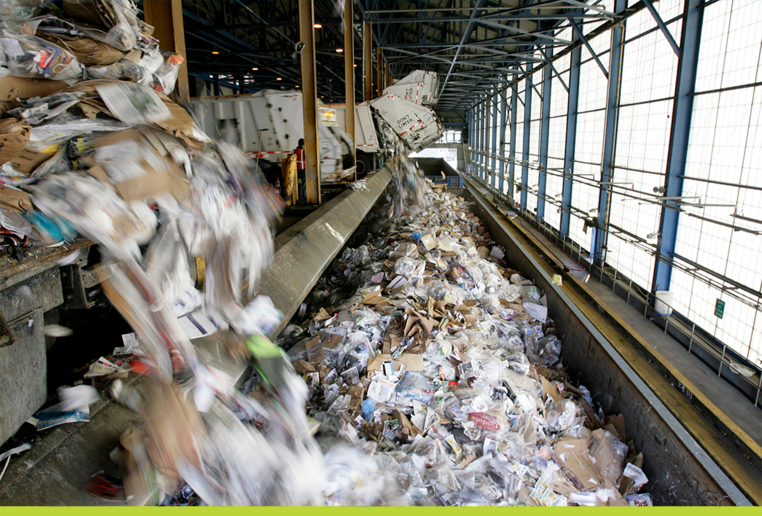
A worker sorts cardboard at a recycling center in Newark, N.J. Photo: Jeff Greenberg/Universal Images Group via Getty Images

By Michaela Barnett, Founder, KnoxFill, University of Virginia, Leidy Klotz, Associate Professor of Engineering and Co-Director, Convergent Behavioral Science Initiative, University of Virginia, Patrick I. Hancock, Postdoctoral fellow, University of Virgini and Shahzeen Attari, Associate Professor of Public and Environmental Affairs, Indiana University via The Conversation • Reposted: July 25, 2023

You’ve just finished a cup of coffee at your favorite cafe. Now you’re facing a trash bin, a recycling bin and a compost bin. What’s the most planet-friendly thing to do with your cup?

Many of us would opt for the recycling bin – but that’s often the wrong choice. In order to hold liquids, most paper coffee cups are made with a thin plastic lining, which makes separating these materials and recycling them difficult. 

In fact, the most sustainable option isn’t available at the trash bin. It happens earlier, before you’re handed a disposable cup in the first place. 

In our research on waste behaviorsustainabilityengineering design and decision making, we examine what U.S. residents understand about the efficacy of different waste management strategies and which of those strategies they prefer. In two nationwide surveys in the U.S. that we conducted in October 2019 and March 2022, we found that people overlook waste reduction and reuse in favor of recycling. We call this tendency recycling bias and reduction neglect.

Our results show that a decadeslong effort to educate the U.S. public about recycling has succeeded in some ways but failed in others. These efforts have made recycling an option that consumers see as important – but to the detriment of more sustainable options. And it has not made people more effective recyclers.

A global waste crisis

Experts and advocates widely agree that humans are generating waste worldwide at levels that are unmanageable and unsustainable. Microplastics are polluting the Earth’s most remote regions and amassing in the bodies of humans and animals

Producing and disposing of goods is a major source of greenhouse gas emissions and a public health threat, especially for vulnerable communities that receive large quantities of waste. New research suggests that even when plastic does get recycled, it produces staggering amounts of microplastic pollution

Given the scope and urgency of this problem, in June 2023 the United Nations convened talks with government representatives from around the globe to begin drafting a legally binding pactaimed at stemming harmful plastic waste. Meanwhile, many U.S. cities and states are banning single-use plastic products or restricting their use.

Upstream and downstream solutions

Experts have long recommended tackling the waste problem by prioritizing source reduction strategies that prevent the creation of waste in the first place, rather than seeking to manage and mitigate its impact later. The U.S. Environmental Protection Agency and other prominent environmental organizations like the U.N. Environment Programme use a framework called the waste management hierarchy that ranks strategies from most to least environmentally preferred. 
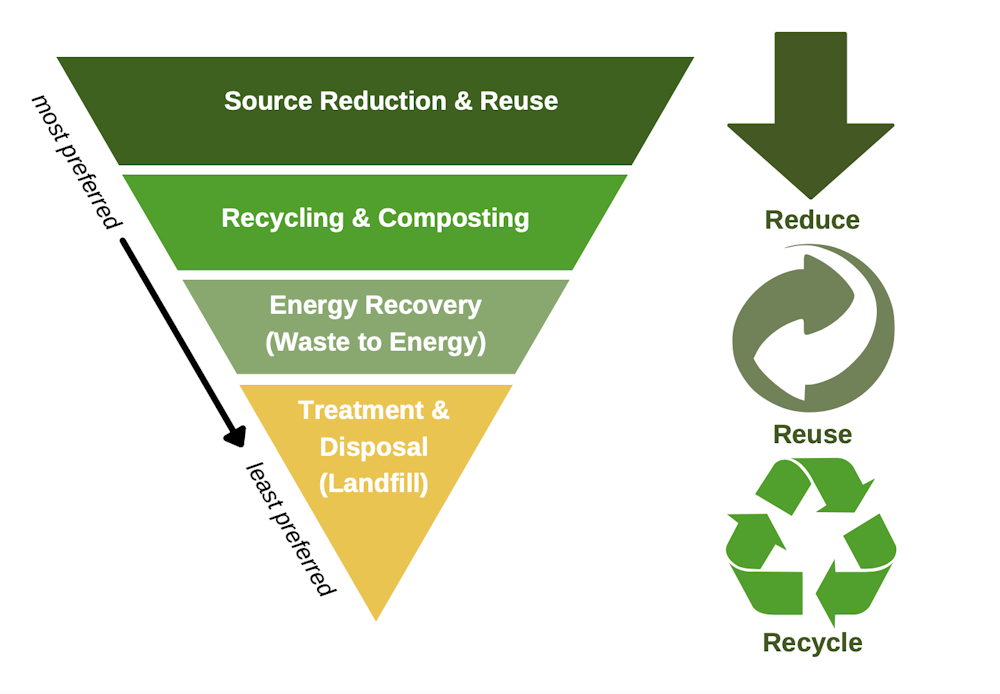
Graphics showing options for managing waste, moving from upstream (production) to downstream (disposal).
The U.S. EPA’s current waste management hierarchy (left, with parenthetical explanations by Michaela Barnett, et al.), and a visual depiction of the three R’s framework (right). Michaela Barnett, et al., CC BY-ND

The familiar waste management hierarchy urges people to “Reduce, Reuse, Recycle,” in that order. Creating items that can be recycled is better from a sustainability perspective than burning them in an incinerator or burying them in a landfill, but it still consumes energy and resources. In contrast, reducing waste generation conserves natural resources and avoids other negative environmental impacts throughout a product’s life. 

R’s out of place

In our surveys, participants completed a series of questions and tasks that elicited their views of different waste strategies. In response to open-ended questions about the most effective way to reduce landfill waste or solve environmental issues associated with waste, participants overwhelmingly cited recycling and other downstream strategies. 

We also asked people to rank the four strategies of the Environmental Protection Agency’s waste management hierarchy from most to least environmentally preferred. In that order, they include source reduction and reuse; recycling and composting; energy recovery, such as burning trash to generate energy; and treatment and disposal, typically in a landfill. More than three out of four participants (78%) ordered the strategies incorrectly. 

When they were asked to rank the reduce/reuse/recycle options in the same way, participants fared somewhat better, but nearly half (46%) still misordered the popular phrase. 

Finally, we asked participants to choose between just two options – waste prevention and recycling. This time, over 80% of participants understood that preventing waste was much better than recycling.

Recycling badly

While our participants defaulted to recycling as a waste management strategy, they did not execute it very well. 

This isn’t surprising, since the current U.S. recycling system puts the onus on consumers to separate recyclable materials and keep contaminants out of the bin. There is a lot of variation in what can be recycled from community to community, and this standard can change frequently as new products are introduced and markets for recycled materials shift. 

Our second study asked participants to sort common consumer goods into virtual recycling, compost and trash bins and then say how confident they were in their choices. Many people placed common recycling contaminants, including plastic bags (58%), disposable coffee cups (46%) and light bulbs (26%), erroneously – and often confidently – in the virtual recycling bins. 

This is known as wishcycling – placing nonrecyclable items in the recycling stream in the hope or belief that they will be recycled. Wishcycling creates additional costs and problems for recyclers, who have to sort the materials, and sometimes results in otherwise recyclable materials being landfilled or incinerated instead. 

Although our participants were strongly biased toward recycling, they weren’t confident that it would work. Participants in our first survey were asked to estimate what fraction of plastic has been recycled since plastic production began. According to a widely cited estimate, the answer is just 9%. Our respondents thought that 25% of plastic had been recycled – more than expert estimates but still a low amount. And they correctly reasoned that a majority of it has ended up in landfills and the environment. 

Empowering consumers to cut waste

Post-consumer waste is the result of a long supply chain with environmental impacts at every stage. However, U.S. policy and corporate discourse focuses on consumers as the main source of waste, as implied by the term “post-consumer waste.” 

Other approaches put more responsibility on producers by requiring them to take back their products for disposalcover recycling costs and design and produce goods that are easy to recycle effectively. These approaches are used in some sectors in the U.S., including lead-acid car batteries and consumer electronics, but they are largely voluntary or mandated at the state and local level.

When we asked participants in our second study where change could have the most impact and where they felt they could have the most impact as individuals, they correctly focused on upstream interventions. But they felt they could only affect the system through what they chose to purchase and how they subsequently disposed of it – in other words, acting as consumers, not as citizens.

As waste-related pollution accumulates worldwide, corporations continue to shame and blame consumers rather than reducing the amount of disposable products they create. In our view, recycling is not a get-out-of-jail-free card for overproducing and consuming goods, and it is time that the U.S. stopped treating it as such.

To see the original post, follow this link: https://theconversation.com/decades-of-public-messages-about-recycling-in-the-us-have-crowded-out-more-sustainable-ways-to-manage-waste-208924

This New Spin on Decades-Old Technology Can Eliminate PFAS from Wastewater

26 06 2023

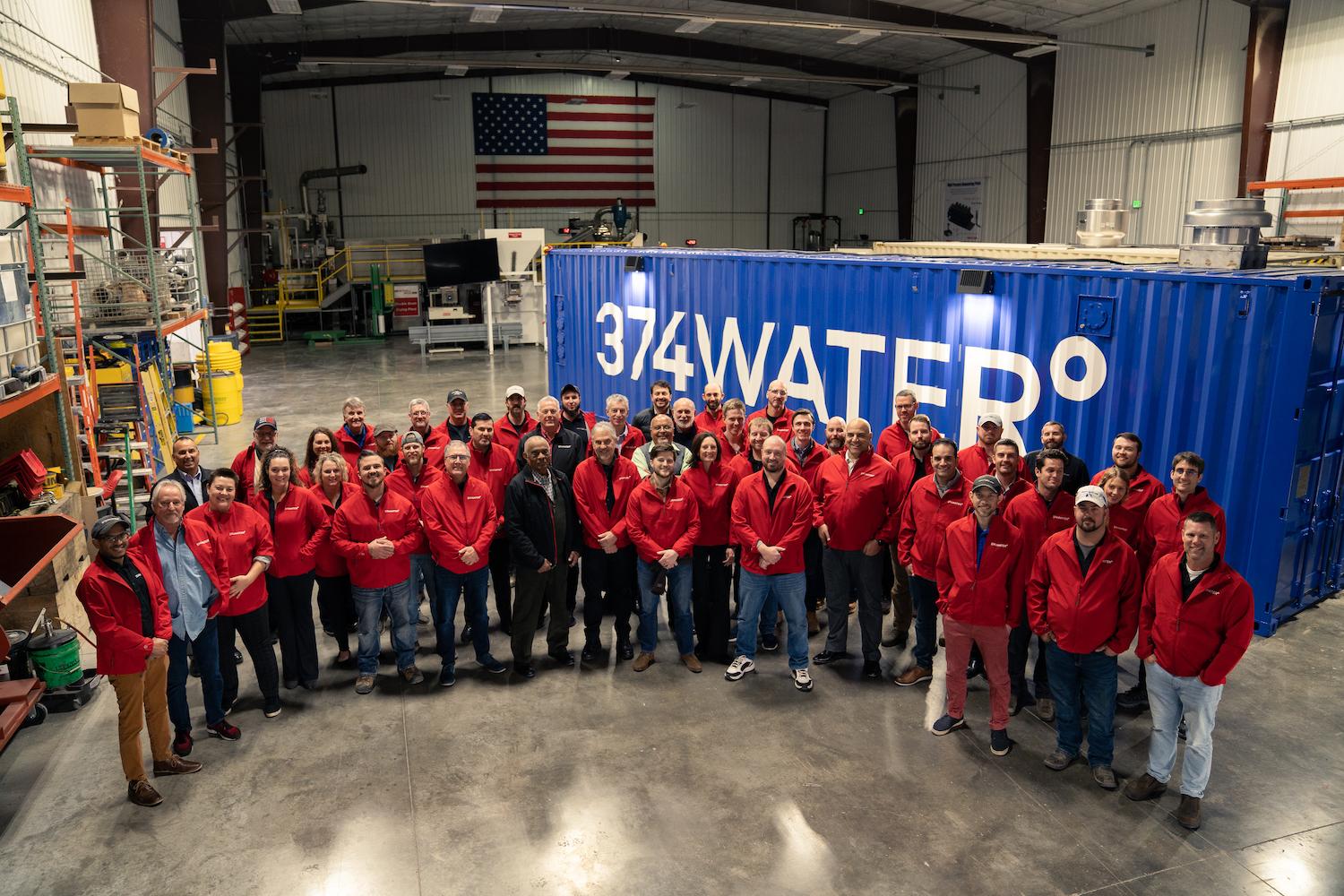
The team at North Carolina-based 374Water show off their prized invention. The container behind them may not look like much, but it can eliminate PFAS from up to 1 million gallons of wastewater per day. Image: 374Water

By Phil Covington from Triple Pundit • Reposted: June 26, 2023

PFAS (per- and polyfluoroalkyl substances) are a group of manufactured chemicals that have been produced since the 1940s. While they have myriad useful properties and manifest in a range of products from nonstick surfaces to personal care products, concerns over their use are growing. 

Current scientific research suggests exposure to PFAS may lead to a range of adverse health outcomes, including certain types of cancer, according to the U.S. Environmental Protection Agency.

PFAS are also known as “forever chemicals,” because they break down very slowly, if at all, in nature. Consequently, they continue to accumulate in greater concentrations in our environment, and by now they’ve even infiltrated our bloodstreams.

TriplePundit recently reported on new innovations aiming to mitigate the proliferation of PFAS by finding safer alternatives to them. But we need to find ways to remove existing PFAS, too. 

Though this is notoriously difficult, a North Carolina-based company found a way to eliminate these chemicals, somewhat by accident, in its effort to modernize wastewater treatment. “We got lucky in that we responded to the challenge to re-invent the toilet.” Sunny Viswanathan, VP and head of global sales at 374Water, told TriplePundit. 

Meeting that challenge, seeded by a grant from the Bill and Melinda Gates Foundation, focused the team on developing an optimal sanitation system which could be deployed in low-income parts of the world. In that effort, they sought ways to render waste sludges both useful and inert, leading them to consider supercritical water oxidation (SCWO) as a potential solution. 

Historically, SCWO was used to destroy persistent environmental damage resulting from chemical warfare, Viswanathan told us. But his team found the technology translated well to wastewater management, while coincidentally dealing with PFAS. 

What is supercritical water oxidation?

Water reaches the supercritical stage when both its temperature and pressure are increased to a point where it is no longer a liquid, nor is it a gas. Instead, as Viswanathan described it, “It goes into another ‘phase’ of water.”

Supercritical conditions for water arise at 374 degrees Celsius and a pressure of 218 atmospheres, or over 3,200 PSI (pounds-force per square inch). Once supercritical, water develops some interesting properties which are useful for processing organic waste. 

“Water as a liquid can dissolve salts, but it can’t dissolve organic matter,” Viswanathan explained. He used the example of adding pepper to water, which of course won’t dissolve. Why that’s the case has to do with the shape of the water molecule and consequent polarity of water, Viswanathan explained.

A water molecule has a V-shaped structure that includes a single oxygen atom with two hydrogen atoms attached. This structure affords it a positive and negative charge at an atomic level. Because of this, ionic salts can dissolve but, with very few exceptions, most organic matter — like, in this example, pepper — will be unaffected, Viswanathan explained. But the inverse is true under supercritical conditions.

“When you go supercritical, the shape of the water molecule literally changes — which means it loses its polarity and becomes a very good solvent of organic substances and a bad solvent of salts,” Viswanathan said. “Salts will come out of the solution, but now your pepper will disappear. Your poop will disappear.”

And here is the important point. Because PFAS substances are organic, “Your PFAS will disappear,” he said. 
 
In essence, under supercritical conditions, all the organic matter in wastewater — including PFAS — becomes completely dissociated. When air is added to the mix, an exothermic oxidation reaction takes place, completing the process.

“By introducing air, which has 21 percent oxygen, it will go after the carbon and make CO2 [carbon dioxide]. Once it removes carbon from the material, it becomes inorganic and will form salts and water — and energy, as it is an exothermic process,” Viswanathan said.

The last point is important. An exothermic reaction is one which produces heat. 374Water’s AirSCWO system uses the heat produced by the exothermic reaction to perpetuate the process. So long as you continue to put waste sludge in, “the waste is the fuel,” Viswanathan said. 

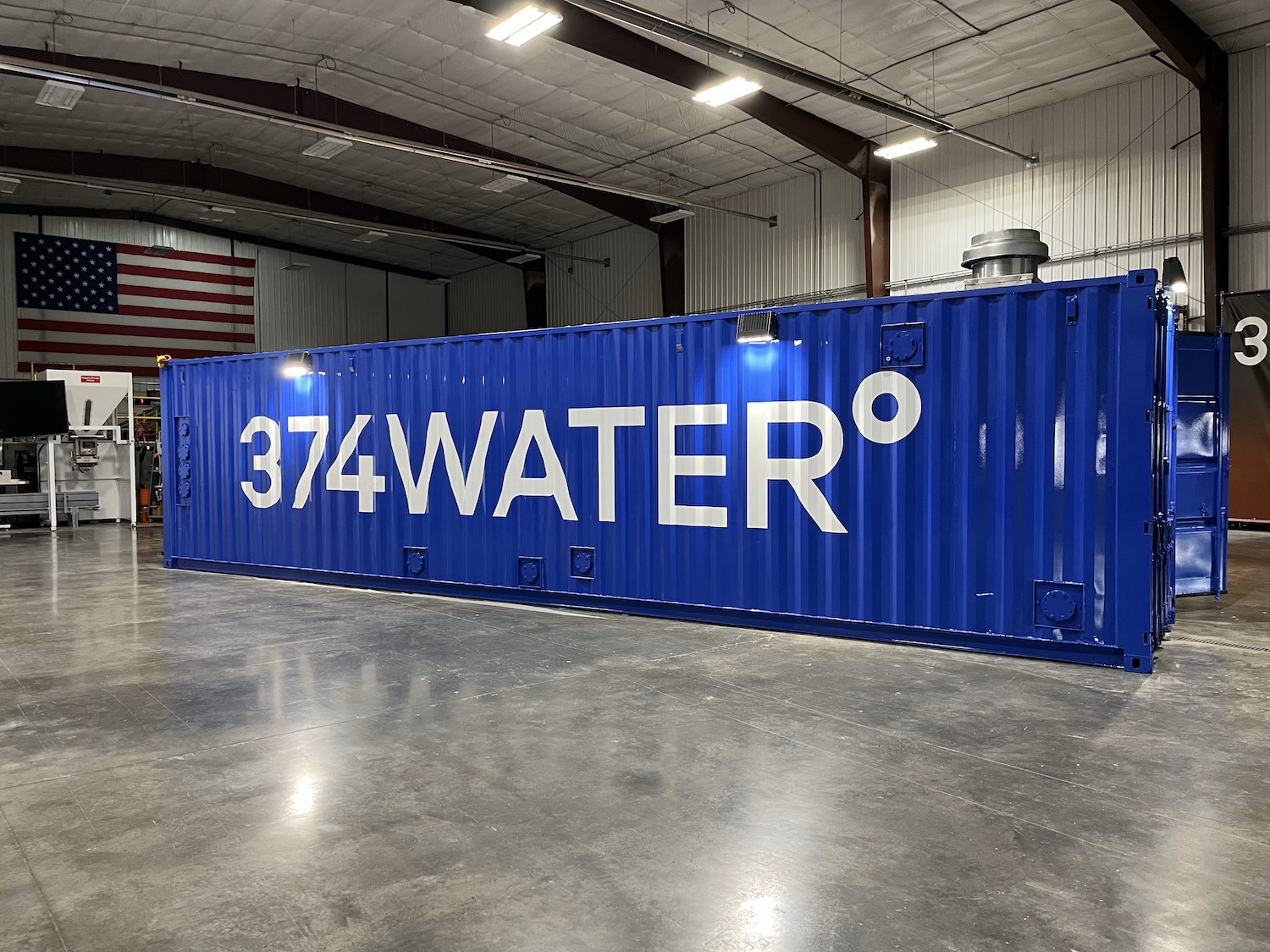
374Water container that can eliminate PFAS from water
374Water’s AirSCWO reactor units are packaged into 40-foot shipping containers that the company says can neutralize PFAS and other water contaminants in seconds. (Image: 374Water)

Putting the technology in the field to eliminate PFAS

With this simplified and abstract explanation of the science in mind, what does 374Water’s system look like in the field?

The company’s AirSCWO reactor units are packaged into 40-foot shipping containers (see above). The smallest reactor is a single container, while larger configurations would combine two or more. The company has plans for building-based systems, too.

Household or industrial wastewater comes into the container through a pipe at one end, and inside it, the contents of the pipe are pressurized and heated. Some external energy source is needed initially to start the system.

Wastewater sludge coming into the reactor is typically 80 percent water, and it’s the existing water content of the sludge which goes supercritical. Once that happens, all organic matter within gets dissociated and oxidized, which happens quite rapidly. “It takes four to 40 seconds to go from something that is completely toxic to something that is completely benign, clean and useful,” Viswathanan said.

Indeed, it’s useful in various ways. The system’s output is distilled water and useful minerals such as phosphorus which can be processed into fertilizer. Meanwhile, surplus energy from the exothermic reaction has the potential to be captured for electricity generation.

As for the PFAS, these are broken down into carbon, fluorine, hydrogen, oxygen and sulfur. As Viswathanan put it, “Just by exposing PFAS to supercritical conditions, you have actually destroyed them.”

What’s next for this high-potential PFAS solution?

It’s taken 10 years for 374Water to go from concept to commercialization. The company, now traded on the NASDAQ stock exchange, will see the first of its commercial units go into operation in Orange County, California, next month. 
 
Expansion from there will be carefully undertaken, as 374Water plans to start at a scale that is manageable. But the addressable market is substantial.

Each 40-foot reactor can process up to 1 million gallons of wastewater per day. Of the roughly 17,000 wastewater facilities treating household, commercial and some industrial wastewater in the U.S., only 9,000 of these are in the 1-million-gallon range. In theory, in combination with the larger reactors the company has planned, it would have the capacity to service all of these facilities.

That said, scalability relies to a large extent on the right incentives. The state of Maine offers one such example. 

Because of PFAS, the state has banned the application of wastewater sludge on the land, an increasingly common practice on U.S. farms. That shift means water treatment plants have to spend up to $200 per ton to send their wet sludge out of state. Since 374Water’s method eliminates PFAS and produces no waste sludge, the system would provide a huge cost avoidance opportunity under these circumstances. Consequently, municipal sanitation providers could see payback on a reactor in as few as three years, Viswathanan said. 

As a final point, he emphasized the long-term opportunity this way. “The technologies we are relying on now for waste treatment are nearly 100-year-old, antiquated technologies. We now have a system that is capable of not only treating the waste, but also destroying the recalcitrant waste and taking it out of the ecosystem.”

To see the original post, follow this link: https://www.triplepundit.com/story/2023/technology-eliminate-pfas-wastewater/777446


Companies to pay billions in “forever chemical” water pollution settlements

5 06 2023

A 3M manufacturing facility in Cottage Grove, Minnesota, in 2018. Photo: Daniel Acker/Bloomberg via Getty Images.

By Jacob Knutson from axis.com • Reposted: June 5, 2023

Major chemical producers have agreed to pay billions of dollars to settle claims from U.S. water providers over toxic “forever chemicals” pollution.

Why it matters: The settlements are a significant step forward in the effort to reduce potentially dangerous chemicals in water systems across the country.

Driving the news: Chemours, DuPont and Corteva said Friday they reached a $1.19 billion settlement with water providers around the country.

  • The water providers had alleged that the companies were responsible for environmental pollution from firefighting foams they manufactured that contained PFAS.
  • Though the companies denied the allegations, the settlement would resolve hundreds of lawsuits against them that were consolidated in the federal district court for South Carolina, which must finalize the settlement for it to take effect.

What they’re saying: John O’Connell, the board president of the National Rural Water Association, said in a statement that the settlement “is the beginning of helping our utility members in the fight against PFAS.”

  • The group works with 50 state associations representing more than 31,000 water and wastewater utility systems, and helped filed a lawsuit on behalf of its members.

Yes, but: Not included in the settlements are systems operated by states and the U.S. government, some smaller drinking water systems, and systems in the lower Cape Fear River Basin of North Carolina, which has been plagued by high levels of PFAS.

How it works: The durable synthetic chemicals, which resist degradation by repelling oil and water and withstanding high temperatures, have been used in hundreds of nonstickwater- and oil-repellent, and fire-resistant products.

  • If the chemicals enter the environment through production or waste streams, they can resist breaking down for hundreds of years while contaminating water sources and bioaccumulating in fishwildlifelivestock, and people.
  • Research has shown that reducing levels of PFAS in drinking water or switching to other water distributors will likely require municipalities to invest millions of dollars into new infrastructure and incur ongoing maintenance costs.
  • For example, officials in Cape Fear allocated $46 million and a recurring annual operating cost of $2.9 million to upgrade a treatment plant designed to filter PFAS from drinking water.

Meanwhile, 3M — a major PFAS producer — has also reached a tentative settlement worth at least $10 billion with water providers, Bloomberg reported Friday.

  • News of a potential settlement came just days before the company’s first federal trial over PFAS pollution claims.
  • Facing extensive PFAS litigation — including a lawsuit from the Dutch government — 3M announced in December 2022 that it would stop manufacturing and using the chemicals by the end of 2025

To see the original post, follow this link: https://www.axios.com/2023/06/02/pfas-chemicals-companies-billions-settlement-water


The Carrot or the Stick: Which Inspires Business to Be More Sustainable?

30 05 2023

Image credit: THIS IS ZUN/Pexels

By Riya Anne Polcastro from Triple Pundit • Reposted: May 30, 2023

Corporations are more likely to embrace sustainability when it benefits the bottom line. That isn’t surprising considering they are ultimately in business to make a profit. For many, purpose may very well come in second — if at all. Still, there’s more than one way to encourage businesses to do better by people and the planet.

TriplePundit spoke with Dr. Steven Cohen, a professor of public affairs at Columbia University and author of the new book “Environmentally Sustainable Growth,” about how the profit motive can catalyze the desired effect where shame and guilt have failed.

Incentivizing sustainability can be easier than it sounds

The best way to make corporations behave is by creating an environment in which doing so will help them make more money, Cohen argues. “In some cases, you don’t have to do anything other than educate people and say, you know, this will be a profitable item,” he told TriplePundit. 

Cohen advocates for a carrot instead of a stick approach. He’s hopeful that making good behavior profitable will hasten more wide-sweeping changes at the business level than punishing or charging companies for the negative impacts they have. And he’s not alone in that opinion. 

“Sustainability is on the cusp of an evolutionary leap,” Georgia Makridou of the ESCP (École Supérieure de Commerce de Paris) Business School wrote in an impact paper on the challenges confronting sustainable energy companies and their resulting tactics. “Sustainable companies are becoming the new norm as those that have a well-rounded approach to sustainability can see wide-ranging growth opportunities.”

That’s because many business leaders now see that sustainable practices can actually lower their operating costs in the long run — and that naturally leads to increased profits, Cohen explained. Additionally, doing the right thing resonates with consumers — especially those in younger generations — and promotes brand loyalty over time.

Further, employees want to work for companies that align with their values. “If I’m in a business that requires talented engineers, talented designers and and so forth, to attract those people, I have to be a company they want to work for,” Cohen said. “That’s also incentivizing companies to start behaving this way: If you want to attract the best brains out there, then companies are under internal pressure to behave and to start focusing on their energy use and their waste and pollution.”

Environmentally Sustainable Growth - book cover - book on corporate sustainability
Dr. Steven Cohen unpacks practical steps to push sustainable business forward in his new book “Environmentally Sustainable Growth: A Pragmatic Approach,” out this month from Columbia University Press. Image provided.

Major companies reap cost savings through sustainability, while creating measurable impact that matters

Cohen gave examples of major multinational companies that moved toward sustainable practices because they foresaw a financial benefit. For example, “Walmart discovered they have a lot of flat roofs,” he said. All that space adds up vast solar energy potential — and Walmart and its big-box competitor, Target, are on the job.

Together, they’re the top two business installers of onsite solar. “In their case, you don’t have to do anything. They just had to internally figure out this was going to help them make money,” Cohen said. If fully harnessed, Walmart’s available roof space at stores across the country could produce enough solar energy to power more than 842,000 homes, according to the nonprofit Environment America. 

This month Walmart also teased new plans to roll out electric vehicle charging stations at thousands of stores across the U.S. The move will help bring in shoppers, while making EV charging more accessible to millions of people in towns large and small. 

One of the country’s top agricultural producers, Land O’Lakes, also cut its footprint through cost reduction measures. The company uses satellite telemetry, artificial intelligence, and robotics to ensure it doesn’t waste inputs like water, pesticides and fertilizer — using only what’s needed and none of what’s not. “They’ve now created a much more efficient form of agriculture, which also just so happens to cost less and pollute less,” Cohen said. 

Apple’s engagement in sustainability came out of a need to satisfy its customer base. “[Young people] started to make the demand that Apple reduce the pollution [associated with] their products, and Apple has done that dramatically over the last 10 years,” Cohen said. He cited the company’s buyback program and the fact that it hired a former Environmental Protection Agency administrator to manage its environmental endeavors as examples. “It’s not required by the government, but in order to meet their market, they have to do that,” he said. 

Incentives and regulations work. Shame and guilt doesn’t, this expert says.

That’s not to say there isn’t room for regulations — there still needs to be rules of the road. The key is a good balance between government regulations and the incentives provided by an improved profit margin, Cohen said.

“What doesn’t work is trying to shame people, to shame companies,” he argued. “People want to live their lives, and companies want to make money. I think that green principles are most effective when they line up with the self interest of people and of corporations. And when that happens, you see a lot of activity.”

As for how to shift from a scapegoating and punishment approach to one that focuses on financial rewards: “Instead of thinking about the company as an enemy, you think about the company as a partner,” Cohen said. “And the only way they’re going to be a partner is if they see they’re gonna make money out of it.” 

To see the original post, follow this link: https://www.triplepundit.com/story/2023/corporate-sustainability-carrot-stick/775116


FTC takes a microscope to sustainability claims

26 04 2023

Does this count as recycling? | Seth Wenig/AP Photo

By Debra Kahn and Jordan Wolman from Politico.com • Reposted: April 26, 2023

Companies are talking the talk on sustainability. The Federal Trade Commission is gearing up to make sure they’re walking the walk, Jordan reports.

As demand for sustainable products has skyrocketed, so have concerns about greenwashing. Public comments were due yesterday on the FTC’s first update in 11 years of its “Green Guides,” which are essentially advice for how companies can make environmental marketing claims.

The nearly 60,000 comments shed light on what companies, industry trade groups and environmentalists are fighting over:

— Recycling claims. Current FTC guidelines say companies should qualify claims of “recyclability” when products aren’t recyclable in at least 60 percent of their market. The EPA wrote that the bar “should be much higher,” while environmental groups want to clarify that at least 60 percent of products need to actually be recycled — not just collected. That coalition also wants to set a higher bar of 75 percent for store drop-off programs.

The Plastics Industry Association wants the standards to stay as-is: The FTC “should not further complicate the issue by adding hurdles,” the group wrote. It also wants take-back or drop-off programs to be equally eligible to make unqualified recycling claims.

— Corporate net-zero claims. Ceres, a nonprofit focused on corporate sustainability, wants the FTC to give guidance on how companies can use carbon offsets to make claims about their climate commitments and achievements. Sierra Club and a half-dozen other groups want disclosure of specific offsets’ climate benefits.

— Chemical recycling. The American Chemistry Council and the Plastics Industry Association want to make it easier to claim that chemical recycling — a set of technologies that involve melting hard-to-recycle plastic down into its components — counts toward companies’ recycled content and recyclability standards. The ACC submitted a new poll showing that nearly 90 percent of consumers believe chemical recycling qualifies as “recycling.” Green groups are pushing back.

— Enforcement. Environmental groups want the FTC to initiate a formal rulemaking process to codify the Green Guides (currently, the agency can bring enforcement action via violations of the FTC Act), with an eye toward California’s “truth in labeling” law. EPA seems to be on board, too, but the Plastics Industry Association opposes rulemaking.

How much does this all matter? The FTC doesn’t do a ton of enforcement of green marketing claims: It’s taken enforcement action under the Green Guides 36 times since 2013. It hasn’t taken enforcement action based on recycling claims since 2014 — although it does send warning letters, which can nudge companies into compliance.

The agency tends to pick big cases that send a signal — like its $5.5 million penalty last year against Walmart and Kohl’s over claims that they marketed rayon textiles as made from eco-friendly bamboo, when in fact converting bamboo into rayon involves toxic chemicals.

But officials are signaling willingness to wade into the details on new technologies such as chemical recycling.

“Our job is to not say what’s good or bad for society, it is to make sure that people aren’t lying,” James Kohm, associate director of enforcement in the FTC’s Bureau of Consumer Protection, said in an interview. “We wouldn’t necessarily hesitate to get involved in a situation. What we don’t want to do is contradict the EPA, and we’ve been careful in a number of areas to not do that. There are a bunch of trade offs — that you have less trash, but you might have more air pollution, for example. If we had enough information, and we weren’t contradicting the EPA, we would probably give advice.”

We could be in this for the long haul: The last time the Green Guides were updated, the process started in 2007 and didn’t end until 2012. There’s an initial public workshop on recycling scheduled next month.

To see the original post, follow this link: https://www.politico.com/newsletters/the-long-game/2023/04/25/ftc-takes-a-microscope-to-sustainability-claims-00093682


Want People to Use Less Water? Arm Them With Information

24 03 2023


Image credit: Karolina Grabowska/Pexels

By Kate Zerrenner from triple pundit.com • Reposted: March 24, 2023

Every March 22 is World Water Day — an observance designated by the United Nations to bring attention to different issues surrounding water and how it impacts our lives. The 2023 theme is Be the Change, an effort to encourage people to be more active in how they use, consume and manage water. 

This feels like both a straightforward task and a daunting one. Most people are unaware of where their water comes from, let alone the volume they use and how. Having that information is the first step toward more effective water management at the individual level, which can help water boards and utilities better manage the larger systems and watersheds.

Can you guess what accounts for most residential water use?

Most people do not have a clear idea of where they are using water — and so do not know where they are wasting water. Inside the home, toilets, showers and faucets are the biggest water hogs. But if you have a yard, your biggest culprit is probably irrigation and lawn care. According to the U.S. Environmental Protection Agency, about a third of all residential water use in the U.S. is for landscape irrigation — about 9 billion gallons per day.

In the Western U.S., a region prone to both droughts and awash with lush green lawns, the situation is even more dire as the Colorado River runs dry. On background, a meter reader with Austin Water told TriplePundit that maintaining lawns accounted for 50 percent to 75 percent of many homes’ water usage — and many consumers often don’t believe it until they’re shown the meter reading.

Some utilities are now focusing solely getting customers to better manage their outdoor use, cutting back on indoor incentives. For example, San Antonio Water System, the city’s water utility, now only offers outdoor rebates and incentives. Program staff told TriplePundit that focusing on irrigation and pools would lead to greater water savings in the water-stressed city. The utility has also hired landscape experts to help residents replace turf with more native and drought-resistant plants. 

Smart metering offers more opportunity for water conservation

Another big water waster is leaks. On the utility side, more utilities are getting better at identifying and fixing leaks, but the state of the country’s water infrastructure is going to require significant investment. On the demand side, however, if customers better understand where they’re using the most water — and how to catch leaks when they first happen — they can be more active conservationists.

Much like electric smart meters, water smart meters can help people better understand their usage. The technology is not as widespread as it is in the electricity space due to a number of factors, such as available resources and challenges in measurement that make it harder to pinpoint water usage versus electric usage (i.e., it’s easier to measure electrons than drops). But as climate change continues to put pressure on watersheds, more companies are bringing technologies onto the market.

For example, in 2022, several California water utilities started rolling out water smart meters to customers. While the utilities have a big lift on the supply side, demand needs to be lowered where it can. Much like with electricity — where energy efficiency is the first and best defense — water conservation is the critical component of ensuring water is available when and where it is needed.

Working along the energy-water nexus

And like energy efficiency, water conservation is a climate strategy. Treating, pumping and distributing water uses copious amounts of energy, and generating fossil fuel- and nuclear-powered energy uses a lot of water. So, by reducing water demand, people are also taking action to lower emissions systemwide, while reducing energy use can also help with water conservation. Most people don’t think about the source of electricity when they flip a light switch or the source of water when they turn on their faucets. But the fact remains that both actions are inextricably linked.

World Water Day 2023 calls for people to be more active in their water conservation. It is a good reminder that understanding where your water comes from and how you use it has ripple effects throughout the community and the system. Utilities can help people be the change. But the real change must come from each consumer.

To see the original post, follow this link: https://www.triplepundit.com/story/2023/data-water-conservation/769276


New PFAS guidelines – a water quality scientist explains technology and investment needed to get forever chemicals out of US drinking water

17 03 2023

Graphic: SCDHEC.GOV

By Joe Charbonnet, Assistant Professor of Environmental Engineering, Iowa State Universityvia The Conversation • Reposted: March 17, 2023

Harmful chemicals known as PFAS can be found in everything from children’s clothes to soil to drinking water, and regulating these chemicals has been a goal of public and environmental health researchers for years. On March 14, 2023, the U.S. Environmental Protection Agency proposed what would be the first set of federal guidelines regulating levels of PFAS in drinking water. The guidelines will be open to public comment for 60 days before being finalized.

Joe Charbonnet is an environmental engineer at Iowa State University who develops techniques to remove contaminants like PFAS from water. He explains what the proposed guidelines would require, how water utilities could meet these requirements and how much it might cost to get these so-called forever chemicals out of U.S. drinking water.

1. What do the new guidelines say?

PFAS are associated with a variety of health issues and have been a focus of environmental and public health researchers. There are thousands of members of this class of chemicals, and this proposed regulation would set the allowable limits in drinking water for six of them.

Two of the six chemicals – PFOA and PFOS – are no longer produced in large quantities, but they remain common in the environment because they were so widely used and break down extremely slowly. The new guidelines would allow for no more than four parts per trillion of PFOA or PFOS in drinking water.

Four other PFAS – GenX, PFBS, PFNA and PFHxS – would be regulated as well, although with higher limits. These chemicals are common replacements for PFOA and PFOS and are their close chemical cousins. Because of their similarity, they cause harm to human and environmental health in much the same way as legacy PFAS.

A few states have already established their own limits on levels of PFAS in drinking water, but these new guidelines, if enacted, would be the first legally enforceable federal limits and would affect the entire U.S. 

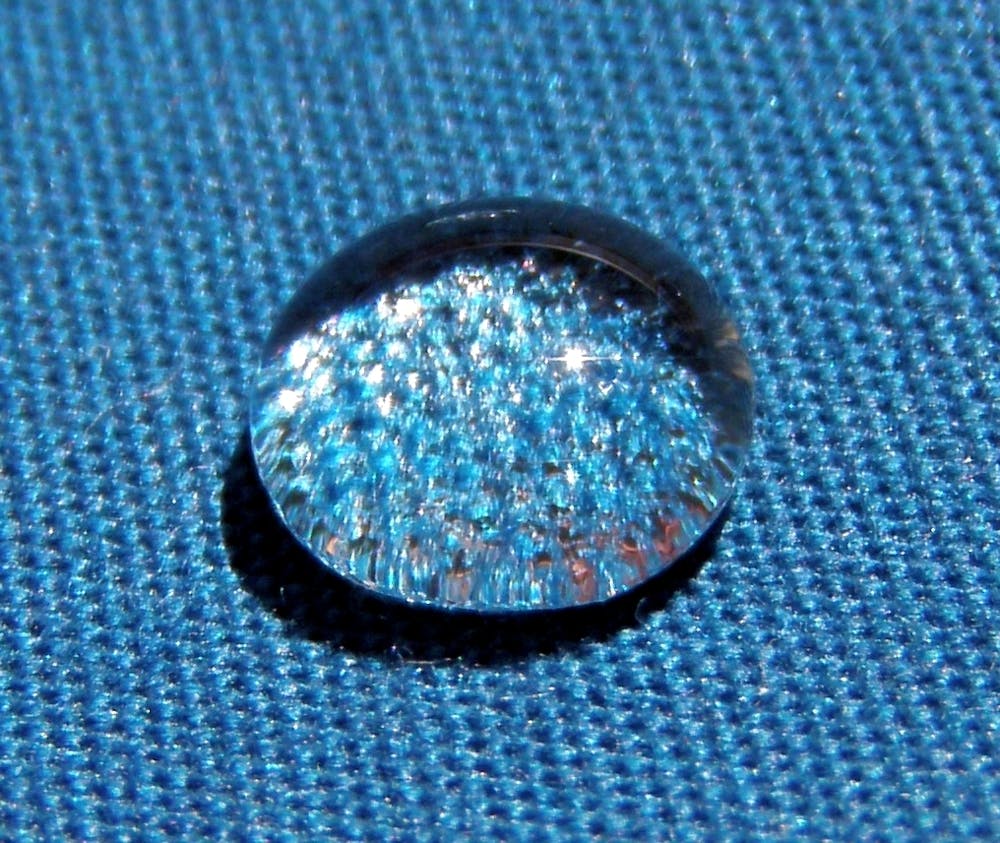
A water droplet sitting on a piece of fabric.
Chemicals used to create water-repellent fabrics and nonstick pans often contain PFAS and leak those chemicals into the environment. Brocken Inaglory/Wikimedia CommonsCC BY-SA

2. How many utilities will need to make changes?

PFAS are harmful even at extremely low levels, and the proposed limits reflect that fact. The allowable concentrations would be comparable to a few grains of salt in an Olympic-size swimming pool. Hundreds of utilities all across the U.S. have levels of PFAS above the proposed limits in their water supplies and would need to make changes to meet these standards. 

While many areas have been tested for PFAS in the past, many systems have not, so health officials don’t know precisely how many water systems would be affected. A recent study used existing data to estimate that about 40% of municipal drinking water supplies may exceed the proposed concentration limits.

3. What can utilities do to meet the guidelines?

There are two major technologies that most utilities consider for removing PFAS from drinking water: activated carbon or ion exchange systems

A membrane treatment system.
Water treatment systems can use activated carbon or ion exchange to remove PFAS from drinking water. Paola Giannoni/E+ via Getty Images

Activated carbon is a charcoal-like substance that PFAS stick to quite well and can be used to remove PFAS from water. In 2006, the town of Oakdale, Minnesota, added an activated carbon treatment step to its water system. Not only did this additional water treatment bring PFAS levels down substantially, there were significant improvements in birth weight and the number of full-term pregnancies in that community after the change. 

Ion exchange systems work by flowing water over charged particles that can remove PFAS. Ion exchange systems are typically even better at lowering PFAS concentrations than activated carbon systems, but they are also more expensive.

Another option available to some cities is simply finding alternative water sources that are less contaminated. While this is a wonderful, low-cost means of lowering contamination, it points to a major disparity in environmental justice; more rural and less well-resourced utilities are unlikely to have this option.

4. Is such a major transition feasible?

By law, the EPA must consider not just human health but also the feasibility of treatment and the potential financial cost when setting maximum contaminant levels in drinking water. While the proposed limits are certainly attainable for many water utilities, the costs will be high.

The federal government has made available billions of dollars in funding for treating water. But some estimates put the total cost of meeting the proposed regulations for the entire country at around US$400 billion – much more than the available funding. Some municipalities may seek financial help for treatment from nearby polluters, while others may raise water rates to cover the costs.

5. What happens next?

The EPA has set a 60-day period for public comment on the proposed regulations, after which it can finalize the guidelines. But many experts expect the EPA to face a number of legal challenges. Time will tell what the final version of the regulations may look like. 

This regulation is intended to keep the U.S. in the enviable position of having some of the highest-quality drinking water in the world. As researchers and health officials learn more about new chemical threats, it is important to ensure that every resident has access to clean and affordable tap water.

While these six PFAS certainly pose threats to health that merit regulation, there are thousands of PFAS that likely have very similar impacts on human health. Rather than playing chemical whack-a-mole by regulating one PFAS at a time, there is a growing consensus among researchers and public health officials that PFAS should be regulated as a class of chemicals.

To see the original post, follow this link: https://theconversation.com/new-pfas-guidelines-a-water-quality-scientist-explains-technology-and-investment-needed-to-get-forever-chemicals-out-of-us-drinking-water-201855


Fines for breaking US pollution laws can vary widely among states – that may violate the Constitution

16 03 2023

The Clean Water Act was meant to keep pollution out of U.S. waters. David McNew/Getty Images

By Jerry Anderson, Dean and Professor of Law, Drake University via The Conversation • Reposted: March 16, 2023

It’s expensive to pollute the water in Colorado. The state’s median fine for companies caught violating the federal Clean Water Act is over US$30,000, and violators can be charged much more. In Montana, however, most violators get barely a slap on the wrist – the median fine there is $300.

Similarly, in Virginia, the typical Clean Water Act violation issued by the state is $9,000, while across the border in North Carolina, the median is around $600.

Even federal penalties vary significantly among regions. In the South (EPA Region 6) the median Clean Water Act penalty issued by the U.S. Environmental Protection Agency regional office is $10,000, while in EPA Region 9 (including California, Nevada, Arizona and Hawaii), the median is over six times as high.

We discovered just how startling the differences are in a new study, published in the Stanford Environmental Law Journal. My colleague Amy Vaughan and I reviewed 10 years of EPA data on penalties issued under the Clean Water Act.

The degree of disparity we found in environmental enforcement is disturbing for many reasons. Persistent lenient penalties can lead to lower compliance rates and, therefore, more pollution. At the extreme, a lax enforcement regime can lead to environmental disasters. Disparate enforcement is also unfair, leaving some companies paying far more than others for the same behavior. Without a level playing field, competitive pressure may lead companies to locate in areas with more lenient enforcement.

There is a relatively simple solution, and another good reason to implement it: These disparities may violate the U.S. Constitution.

Why such big differences?

We think the main reason for the differences is that the EPA has not fulfilled its duty to require robust state enforcement.

Many federal environmental statutes – including the Clean Water Act, the Clean Air Act and toxic substances laws – enable the EPA to delegate enforcement to state agencies. In fact, state agencies undertake the vast majority of enforcement actions of these federal laws.

However, the EPA is supposed to delegate enforcement only to states that are deemed capable of taking on this responsibility, including having the ability to issue permits and conduct inspections. Importantly, the states must have laws authorizing an agency or the courts to impose sufficient penalties on violators.

Water spills out of a pipe into a river.
Federal laws like the Clean Water Act helped end corporate practices of pouring toxic wastewater into rivers, as this paper plant was doing near International Falls, Minn., in 1937. Smith Collection/Gado/Getty Images

Most state delegations occurred long ago, in the 1970s and ‘80s, shortly after Congress passed these major environmental statutes. In 1978, EPA decided that it would require states to have a minimum of $5,000-per-day penalty authority before they would be delegated enforcement power for the Clean Water Act. Forty-five years later, that required minimum is still the same.

In contrast, the Clean Water Act gives the EPA and federal courts much higher penalty authority – it started at $25,000 per day and, because of congressionally mandated annual inflation adjustments, had risen to $56,540 by the end of 2022.

That difference shows up in the fines: We found the average penalty issued by states is about $35,000, while the average penalty issued by the federal EPA is over five times as high at $186,000. The median state penalty is $4,000, while the median federal penalty is almost $30,000. While the EPA tends to be involved in the most serious cases, we believe low state penalties can also be traced to more lenient state penalty provisions.

There is also a wide disparity among state penalty statutes. At one end, Idaho law limits civil penalties to $5,000 per day, while Colorado’s law allows for penalties of up to $54,833 per day.

In some cases, penalty differences might have a legitimate explanation. However, the degree of disparity among statutes and penalties that we found with the Clean Water Act suggests the U.S. doesn’t have uniform federal environmental law. And that can run afoul of the Constitution.

A question of unconstitutional unfairness

The EPA has the power to require states to have more robust penalty provisions, more in line with federal penalties. The EPA also can provide better guidance to the states about how those penalties should be calculated. Without guidance, virtually any penalty could be justified.

As an environmental law expert, I believe the U.S. Constitution requires EPA to take these steps.

A basic tenet of fairness holds that like cases should be treated alike. In federal criminal law, for example, sentencing guidelines help limit the disparity that can result from unlimited judicial discretion.

Unfortunately, environmental law doesn’t have a similar system to provide uniform treatment of pollution violations by government agencies. Extreme penalties, at both the high and low ends, may result.

The U.S. Supreme Court has held that disparate fines can reach a degree of randomness that violates the fairness norms embodied in the due process clause of the Constitution’s 14th Amendment.

In a case in the 1990s, the Supreme Court determined that a $4 million punitive damage award in a complaint involving only $4,000 in actual damages violated the due process clause. The court held that the amount of punitive damages imposed must bear some relationship to the actual harm caused by the conduct. Moreover, the court noted that punitive damages must be reasonable when compared to penalties imposed on others for comparable misconduct.

I believe the same test should apply to environmental penalties. 

Unless we have some uniform system of calculating penalty amounts, the discretion allowed results in vastly different penalties for similar conduct. Our study focused on the Clean Water Act, but the results should trigger more research to determine whether these issues arise in other environmental areas, such as the Clean Air Act or hazardous waste laws.

The comparatively lenient enforcement we discovered in some states is not only unfair, it’s ultimately bad for the environment.

To see the original post, follow this link: https://theconversation.com/fines-for-breaking-us-pollution-laws-can-vary-widely-among-states-that-may-violate-the-constitution-201457


In the War on Climate Change, Many Companies are Picking the Wrong Battles

10 03 2023

By Austin Simms, Dayrize from retailtouchpoints.com • Reposted; March 9, 2023

Concerns over climate change continue to mount, and there is an increasing demand for companies to decrease their environmental impact through whatever means possible. Take CO2 emissions for example. In 2020, 140 of the largest companies stated their intentions to completely eliminate emissions within the next few decades. Since then, many of their initiatives have focused on transportation. It makes the most sense on the surface, as cars and trucks are responsible for almost 20% of emissions in the U.S. alone. CPG (Consumer Packaged Goods) brands that have chosen to focus on the optimization of supply chains or reducing emissions within the “last-mile” of delivery may seem like the most logical, efficient step — but is it?

Many environmental champions also see sustainable packaging as a concrete measure to reduce CO2 or tackle environmental concerns, such as water depletion, due to the large consumption of water by various industries. Brands will often highlight their transition toward more eco-friendly packaging as one of their major initiatives to become more green, with hundreds of major corporations joining the Sustainable Packaging Coalition. Unfortunately, there is reliable evidence that these are not the right targets.

Surprisingly — and according to aggregate, anonymized data derived from over 10,000 products from a number of CPG brands and companies tracked via Dayrize’s environmental impact assessment technology — transportation and packaging are responsible for a relatively negligible amount of CO2 emissions by makers of CPGs and apparel. In fact, creating more sustainable methods for consumer products to be packaged and transported addresses a mere 2% of CO2 emissions. Another surprise revealed by the same data: when it comes to apparel, packaging is far less of a factor in water depletion than the actual product inside the packaging.

Dayrize environmental impact assessment technology makes these calculations by combining the latest technology with the most recent developments in sustainability science. At the core of the software solution are  31 databases — including 14 that are proprietary — that provide rapid, accurate and actionable impact results. The technology was created by a team of 80+ industrial ecologists and sustainability experts over a period of two years to provide the fastest and most accurate impact results available.

The results are generated using five key factors that produce a simple-to-understand Dayrize Score, which is out of 100. The factors include:

  • Circularity: How well an individual product minimizes waste by reusing and recycling resources to create a closed loop system;
  • Climate Impact: How greenhouse gas-intensive the production of the product is;
  • Ecosystem Impact: What the impact of the product is on biodiversity and water depletion;
  • Livelihoods and Well-being: How each product impacts the health and well-being of the people involved in creating it;
  • Purpose: How meaningful a product’s purpose is by looking at the value that it provides, and the potential it has to be an accelerator for good.

The environmental impact score helps companies and consumers gain insights into the environmental impact of virtually all products, including consumer packaged goods and apparel. 

The necessity for environmental impact research is demonstrated in part by our look at the sources of CO2 emissions from consumer products and water depletion in the apparel industry. Even incredibly popular and “common knowledge” solutions about how to address environmental harm meaningfully can often be incorrect in very significant — and possibly damaging — ways.

When it comes to CPGs, it’s crucial that companies keep the following facts in mind:

  • On average, only 1% of emitted carbon is due to packaging, while 1% comes from transportation and 2% can be traced to manufacturing for a typical consumer product.
  • The lion’s share of CO2 emissions come from the materials that are used in products. Up to 96% of the emissions that CPGs are responsible for are from a product’s materials.

CPG companies that want to be truly eco-friendly need to ensure their products are eco-friendly. To reduce carbon emissions, CPGs need to reassess the design of their products and the materials they’re using.

Packaging has a more consequential impact on water depletion when it comes to apparel, but nowhere near the impact of the apparel itself. For every 3.2 gallons of water that packaging depletes, the average garment depletes ten times that: 32 gallons. More eco-conscious packaging can increase an apparel company’s sustainability, but shifting attention to producing more sustainable garments can help reduce the 90% of water that is being used to create the garment.

There is an enormous opportunity to make garments more sustainable. After scoring tens of thousands of pieces of clothing, we found that only 1% of garments utilize materials that are reused. Additionally, only 5% of garments use recycled materials. This is paltry compared to the number of clothes disposed of each year: “The EPA reports that Americans generate 16M tons of textile waste a year, equaling just over 6% of total municipal waste…2.5M tons of clothing are recycled. But over three million tons are incinerated, and a staggering 10M tons get sent to landfills.”

Clearly, there are more than enough materials to re-integrate into apparel, which would help companies mitigate water depletion and other harmful environmental effects of their products.

Many companies may have good intentions, but they need to research how to achieve their goals of creating sustainable products. There are myriad ways to make it seem to the public that sustainability is a priority, but making it a reality requires both the willingness to make some tough choices and a clear understanding of what steps will truly make a difference.


Austin Simms co-founded Dayrize in 2019 and serves as its CEO. After 20+ years spent working in senior commercial positions at major corporations around the world, Simms had a desire to use his skills to address climate change. With a strong commercial background, he believed that empowering corporations was key to make real change. He recognized that the first thing that companies needed to change was access to information to make better decisions, which is why he developed the Dayrize Score tool. Simms believes commerce and sustainability are linked, and business needs to be a major catalyst for addressing climate change.

To see the original post, follow this link: https://www.retailtouchpoints.com/topics/sustainability/in-the-war-on-climate-change-many-companies-are-picking-the-wrong-battles


Which state you live in matters for how well environmental laws protect your health

9 03 2023

Concerns about smog from vehicles that choked cities like Los Angeles helped lead to environmental laws in the 1970s. Image: Bettmann Archive/Getty Images

By Susan Kaplan, Research Assistant Professor of Public Health, University of Illinois at Chicago via The Conversation • Reposted: March 9, 2023

Our child could go to gym class on Monday morning and play soccer on a field that was sprayed over the weekend with 2,4-D, a toxic weedkiller that has been investigated as possibly causing cancer. Alternatively, the school grounds may have been treated with a lower-toxicity weedkiller. Or maybe the grounds were managed with safe, nontoxic products and techniques.

Which of these scenarios applies depends in large part on your state’s laws and regulations today – more so than federal regulations.

For example, Texas requires all school districts to adopt an integrated pest management program for school buildings; IPM prioritizes nonchemical pest control methods and includes some protections regarding spraying of groundsMassachusetts also restricts pesticide use on school grounds. Illinois requires IPM for school buildings only if economically feasible. States also vary greatly in the education and technical assistance they provide to implement these practices.

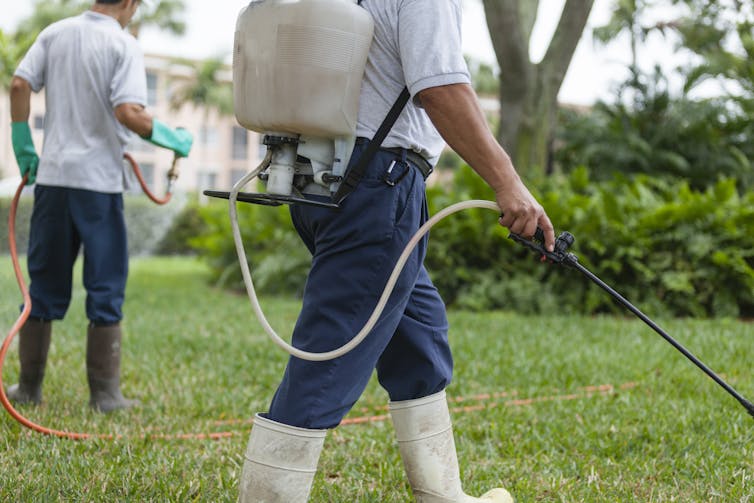
Two men with sprayers connected to hoses walk across a lawn, spraying it. One has a backpack container with liquid inside.
Chemical pesticides can be harmful to human health. Huntstock/Brand X Pictures via Getty Images

Although the U.S. Environmental Protection Agency is involved in some baseline pesticide functions, shortcomings of the main pesticide lawalong with industry influence, can leave vulnerable groups like children inadequately protected from these exposures. 

Analysis of the world, from experts

Get our newsletter

EPA registers products for use based on a finding that they do not cause an “unreasonable” risk but considers economic costs and benefits, an approach that can result in decisions that pose health risks. And required labels may omit ingredients considered trade secrets.

As an environmental health lawyer and professor, I teach, write and think about the pros and cons of one level of government or the other overseeing environmental health – the impact of the natural and human-made environment on human health. Pesticides on school grounds are just one example of the problem of uneven protection from one state to the next.

Congress eased off, states stepped in

State policy choices have become more important for limiting people’s exposure to pollution and toxins as the federal government has increasingly retreated from major environmental health lawmaking.

Many of the country’s major environmental health laws were passed in the 1970s on the momentum of the environmental movement and with bipartisan support that is rarely seen today. 

For example, the Clean Air Act amendments of 1970 required U.S. EPA to regulatea wide range of air pollutants, in some cases based explicitly on protecting human health. They were approved 374-1 in the House and 73-0 by the Senate and signed into law by President Richard M. Nixon. Nixon signed the law that created the Occupational Safety and Health Administration in 1971.

One analyst has written that groups that pressed legislators for environmental protection later splintered into groups advocating for and against environmental laws, reflecting an emerging debate over the appropriate extent of regulation.

At the same time, after the success of many federal environmental health laws, attention turned to problems that are harder for Washington to solve. With state environmental programs growing, some suggested that the U.S. EPA’s role should shift from compelling to catalyzing – from requiring specific pollution-reducing actions to helping states act by providing increased information and help with compliance. Yet this view acknowledged that under this scenario, residents of some states would enjoy stronger environmental health protections than others.

Reflecting this dynamic and the extent of political division in the U.S., even when the federal government does create tougher environmental regulations, they are often reversed by the succeeding administration or challenged in court.

Sometimes, states should make the decisions

In some cases, it makes sense to leave decisions to states. A health department in a western state may focus on protecting vulnerable groups from wildfire smoke, given the growth of blazes in that part of the country. Some states may welcome fracking operations while others prefer to keep them out.

States can also serve as laboratories of innovation, and the experiences of state programs and policies can inform federal actions.

But this regulatory patchwork creates inequities. If you live in one of the dozen-and-a-half states that follow California’s tailpipe emissions standards rather than the less stringent federal standards, you probably benefit from reduced air pollution. 

The same holds for East Coast residents within the confederation of the Regional Greenhouse Gas Initiative, which limits greenhouse gas emissions – and other air pollutants in the process. A recent study that compared RGGI states with neighboring non-RGGI states concluded that data “indicate that RGGI has provided substantial child health benefits,” including a reduction in childhood asthma cases.

Drinking water limits or labeling requirements for PFAS – perfluoroalkyl and polyfluoroalkyl substances – also vary by state. PFAS are found in products from nonstick cookware to some personal care products, and they have been linked with a range of troubling health effects. Because of their toxicity, broad scope of contamination and longevity in the environment, 18 states’ attorneys general are asking for a federal law.

How you can hold lawmakers to account

Environmental health often suffers from a cycle of panic and neglect. People worry about a concern like the chemical alar used on apples, until the next issue erupts. The public can keep up pressure on state and federal decision-makers to consider how the environment affects health in an array of ways:

  • One person can be dismissed as an outlier, so start a group or join other groups that have similar interests.
  • Research the problem and best practices and possible solutions, like program or policy development, education or stepped-up enforcement. Then call, email and send letters to elected representatives and request a meeting to clearly and concisely explain your concerns and ideas.
  • Identify a “champion” – someone in a position to spearhead a change, like a school nurse or facilities manager – and reach out to them.
  • Get the issue into the local news media by writing op-eds and social media posts. Be sure to communicate benefits of the action you’re advocating, like improved school attendance or financial return on investment.
  • Attend public meetings and speak on the issue during the public comment period. Successes at the local level can provide examples for state officials.

To see the original post, follow this link: https://theconversation.com/which-state-you-live-in-matters-for-how-well-environmental-laws-protect-your-health-200393


Regulating ‘forever chemicals’: 3 essential reads on PFAS

7 03 2023

Medical assistant Jennifer Martinez draws blood from Joshua Smith in Newburgh, N.Y., Nov. 3, 2016, to test for PFOS levels. PFOS had been used for years in firefighting foam at the nearby military air base, and was found in the city’s drinking water reservoir at levels exceeding federal guidelines. AP Photo/Mike Groll

By Jennifer Weeks, Senior Environment + Energy Editor, The Conversation • Reposed: March 7, 2023

The U.S. Environmental Protection Agency is preparing to release a draft regulation limiting two fluorinated chemicals, known by the abbreviations PFOAand PFOS, in drinking water. These chemicals are two types of PFAS, a broad class of substances often referred to as “forever chemicals” because they are very persistent in the environment. 

PFAS are widely used in hundreds of products, from nonstick cookware coatings to food packaging, stain- and water-resistant clothing and firefighting foams. Studies show that high levels of PFAS exposure may lead to health effects that include reduced immune system function, increased cholesterol levels and elevated risk of kidney or testicular cancer

Population-based screenings over the past 20 years show that most Americans have been exposed to PFAS and have detectable levels in their blood. The new regulation is designed to protect public health by setting an enforceable maximum standard limiting how much of the two target chemicals can be present in drinking water – one of the main human exposure pathways. 

These three articles from The Conversation’s archives explain growing concerns about the health effects of exposure to PFAS and why many experts support national regulation of these chemicals.

1. Ubiquitous and persistent

PFAS are useful in many types of products because they provide resistance to water, grease and stains, and protect against fire. Studies have found that most products labeled stain- or water-resistant contained PFAS – even if those products are labeled as “nontoxic” or “green.”

“Once people are exposed to PFAS, the chemicals remain in their bodies for a long time – months to years, depending on the specific compound – and they can accumulate over time,” wrote Middlebury College environmental health scholar Kathryn Crawford. A 2021 review of PFAS toxicity studies in humans “concluded with a high degree of certainty that PFAS contribute to thyroid disease, elevated cholesterol, liver damage and kidney and testicular cancer.”

The review also found strong evidence that in utero PFAS exposure increases the chances that babies will be born at low birth weights and have reduced immune responses to vaccines. Other possible effects yet to be confirmed include “inflammatory bowel disease, reduced fertility, breast cancer and an increased likelihood of miscarriage and developing high blood pressure and preeclampsia during pregnancy.”

“Collectively, this is a formidable list of diseases and disorders,” Crawford observed.

2. Why national regulations are needed

Under the Safe Drinking Water Act, the Environmental Protection Agency has the authority to set enforceable national regulations for drinking water contaminants. It also can require state, local and tribal governments, which manage drinking water supplies, to monitor public water systems for the presence of contaminants.

Until now, however, the agency has not set binding standards limiting PFAS exposure, although it has issued nonbinding advisory guidelines. In 2009 the agency established a health advisory level for PFOA in drinking water of 400 parts per trillion. In 2016, it lowered this recommendation to 70 parts per trillion, and in 2022 it reduced this threshold to near-zero

But many scientists have found fault with this approach. EPA’s one-at-a-time approach to assessing potentially harmful chemicals “isn’t working for PFAS, given the sheer number of them and the fact that manufacturers commonly replace toxic substances with ‘regrettable substitutes – similar, lesser-known chemicals that also threaten human health and the environment,” wrote North Carolina State University biologist Carol Kwiatkowski

In 2020 Kwiatkowski and other scientists urged the EPA to manage the entire class of PFAS chemicals as a group, instead of one by one. “We also support an ‘essential uses’ approach that would restrict their production and use only to products that are critical for health and proper functioning of society, such as medical devices and safety equipment. And we have recommended developing safer non-PFAS alternatives,” she wrote.

3. Breaking down PFAS

PFAS chemicals are widely present in water, air, soil and fish around the world. Unlike with some other types of pollutants, there is no natural process that breaks down PFAS once they get into water or soil. Many scientists are working to develop ways of capturing these chemicals from the environment and breaking them down into harmless components.

There are ways to filter PFAS out of water, but that’s just the start. “Once PFAS is captured, then you have to dispose of PFAS-loaded activated carbons, and PFAS still moves around. If you bury contaminated materials in a landfill or elsewhere, PFAS will eventually leach out. That’s why finding ways to destroy it are essential,” wrote Michigan State University chemists A. Daniel Jones and Hui Li

Incineration is the most common technique, they explained, but that typically requires heating the materials to around 1,500 degrees Celsius (2,730 degrees Fahrenheit), which is expensive and requires special incinerators. Various chemical processes offer alternatives, but the approaches that have been developed so far are hard to scale up. And converting PFAS into toxic byproducts is a significant concern.

“If there’s a lesson to be learned, it’s that we need to think through the full life cycle of products. How long do we really need chemicals to last?” Jones and Li wrote.To

To see the original article, follow this link: https://theconversation.com/regulating-forever-chemicals-3-essential-reads-on-pfas-201263


EPA considers tougher regulations on livestock farm pollution

26 01 2023
Hog farmer Mike Patterson’s animals, who have been put on a diet so they take longer to fatten up due to the supply chain disruptions caused by coronavirus disease (COVID-19) outbreaks, at his property in Kenyon, Minnesota, U.S. April 23, 2020. Picture taken April 23, 2020. REUTERS/Nicholas Pfosi

By John Flesher, Associated Press • Reposted: January 26, 2023

The U.S. Environmental Protection Agency says it will study whether to toughen regulation of large livestock farms that release manure and other pollutants into waterways.

EPA has not revised its rules dealing with the nation’s largest animal operations — which hold thousands of hogs, chickens and cattle — since 2008. The agency said in 2021 it planned no changes but announced Friday it had reconsidered in response to an environmental group’s lawsuit.

While not committing to stronger requirements, EPA acknowledged needing more recent data about the extent of the problem — and affordable methods to limit it.

“EPA has decided to gather additional information and conduct a detailed study on these issues in order to be able to make an informed decision as to whether to undertake rulemaking,” the agency said.

Food & Water Watch, whose lawsuit prompted the agency’s reversal, said a new approach was long overdue.

“For decades EPA’s lax rules have allowed for devastating and widespread public health and environmental impacts on vulnerable communities across the country,” Tarah Heinzen, the group’s legal director, said Monday.

Beef, poultry and pork have become more affordable staples in the American diet thanks to industry consolidation and the rise of giant farms. Yet federal and state environmental agencies often lack basic information such as where they’re located, how many animals they’re raising and how they deal with manure.

Runoff of waste and fertilizers from the operations — and from croplands where manure is spread — fouls streams, rivers and lakes. It’s a leading cause of algae blooms that create hazards in many waterways and dead zones in the Gulf of Mexico and Lake Erie.

Under the Clean Water Act, EPA regulates large farms — known as Concentrated Animal Feeding Operations, or CAFOs — covered by federal pollution permits. Federal law requires only those known to discharge waste to obtain permits, although some states make others do so.

EPA’s most recent tally shows 6,266 of the nation’s 21,237 CAFOs have permits.

In its plan, the agency said its rules impose “substantial and detailed requirements” on production areas — barns and feedlots where animals are held, plus manure storage facilities — as well as land where manure and wastewater are spread.

While prohibiting releases to waterways, the rules make exceptions for production area discharges caused by severe rainfall and for stormwater-related runoff from croplands where waste was applied in keeping with plans that manage factors such as timing and amounts.

In deciding whether to revise the rules, EPA said it would consider how well they’re controlling pollution and how changing them would bring improvements.

The agency conceded its data on discharges to waterways is “sparse,” with a preliminary analysis based on reports from only 16 CAFOs. In addition to seeking information from more farms, EPA said it would assess whether discharges are widespread nationally or concentrated in particular states or regions.

It also will look into practices and technologies developed since the rules were last revised, their potential effectiveness at preventing releases, and their cost to farm owners and operators. Under the law, new requirements on farms must be “technologically available and economically achievable.”

Revising water pollution rules typically takes several years, three full-time employees and $1 million per year for contractor help, EPA said. The study will determine whether “the potential environmental benefits of undertaking rulemaking justify devoting the significant resources that are required,” it said.

Livestock groups have said government regulation is strong enough and that voluntary measures such as planting off-season cover crops and buffer strips between croplands and waterways are the best way to curb runoff.

Environmental groups argue regulations should cover more farms, require better construction of manure lagoons to avoid leaks, and outlaw practices such as spreading waste on frozen ground, where it often washes away during rainstorms or thaws.

“We’re not talking about really expensive fixes here,” said Emily Miller, staff attorney with Food & Water Watch. “We need the standards to be stronger so they actually prevent discharges as they’re supposed to do.”

To see the original post, follow this link: https://www.pbs.org/newshour/economy/epa-considers-tougher-regulations-on-livestock-farm-pollution