The Scopes Monkey Trial of the 21st Century?

27 08 2009

A report in The Los Angeles Times highlights how the U.S. Chamber of Commerce wants to put the science of global warming on trial.  

1wm_primates_009

The Chamber is pushing Environmental Protection Agency officials to hold a rare public hearing on the scientific evidence of climate change with the goal of fending off potential emissions regulations.

The article cites EPA officials as calling such a hearing “a waste of time”.  A leading climate scientist said the proposal “brings to mind for me the Salem witch trials”.

At a time when the vast majority of business leaders in the United States recognize the serious impact of climate change and are exploring and implementing innovative new sustainability practices into all facets of their operations, we cannot fathom how the U.S. Chamber can be in denial and rationalize wasting the time and money of its members by pursuing such draconian tactics.  This after the heads of the top science agencies in leading countries have recently written to world leaders that  “the need for urgent action to address climate change is now indisputable.”

Read the Los Angeles Times article.


Study underscores “socially responsible credit gap”.

17 08 2009

DSC_0588“People are willing to pay more for products from socially responsible companies, but almost no companies have any profile as socially responsible.”

PSBA Research

In a study conducted this March, Penn Schoen Berland Associates found that despite significant investments by many major corporations in corporate social responsibility initiatives, Americans have virtually no awareness of who does what, and who does things well.

Some interesting insights from the study first point to the facts that the majority of Americans (despite the recession) want to be associated with socially responsible companies.

  • 75% will pay more for a product from a socially responsible company.
  • 56% say working for a socially responsible company makes a difference.
  • 40% will take a pay cut to work for a socially responsible company.

The study also found that being “honest and trustworthy” was the most important company attribute—ranking higher than “quality” and “value”—regarding who Americans will do business with.

But the most unfortunate (and least surprising) set of findings in this research is how ill equipped Americans are to say what companies are socially responsible.  

  • 70% of those surveyed were unaware of any socially responsible activities of their own employers.
  • There was no correlation between those companies that Americans ranked as being leaders in social responsibility and the actual performance of those companies based on evaluations in the CRO 100. (conducted annually by the Corporate Responsibility Officer Association)

Clearly, this should be a wake up call to the leadership of all companies and those responsible for managing their reputation and brands.  In sum, it suggests there is a huge opportunity to use CSR efforts as a differentiator with an American audience that cares about those issues more than ever before and is placing trust at greater currency than quality and value.  

The call to action is to convert socially responsible practices into branded assets.  But this will require internal corporate silos to be broken down so people responsible for operations, HR and internal communication, PR, marketing branding, advertising, and all other forms of communication are working together around a focused and integrated CSR message.

Read the Corporate Citizenship Study


Coca-Cola introduces PlantBottle.

14 08 2009

6a00d834515f0569e20120a4e64400970b-800wiCoca-Cola has unveiled its new “PlantBottle” to be rolled out later this year with the Dasani brand and in its Vitaminwater portfolio of products in 2010. In a smart move toward sustainable branding, the new bottles and their environmentally responsible composition will feature on-bottle messaging, in-store displays and on-line marketing communications so customers can begin to appreciate they are purchasing a new sustainable technology.

Said Muhtar Kent, Coca-Cola’s CEO, “The “PlantBottle” is a significant development in sustainable packaging innovation. It builds on our legacy of environmental ingenuity and sets the course for us to realize our vision to eventually introduce bottles made with materials that are 100 percent recyclable and renewable.”

We agree – through its sweeping worldwide sustainability plan under the theme “Living Positively” – Coca-Cola is one of the innovators and pioneers of business practices that support overall good corporate citizenship.

A life-cycle analysis conducted by the Imperial College London indicates the “PlantBottle” consisting of 30 percent plant-based materials will reduce carbon emissions by up to 25 percent, in comparison with traditional PET plastic bottles.  The PlantBottle is currently made through an innovative process that turns sugar cane and molasses, a by-product of sugar production, into a key component for PET plastic. 


Kudos To Cub. New LEED-certified grocery store is a shining example of sustainable branding.

12 08 2009

474Cub Foods recently opened a LEED (Leadership in Energy and Environment Design) Gold Certified grocery store in the Phalen neighborhood of St. Paul, Minnesota.

Having visited the store we send big kudos to Cub.  Not only is the store a inventive and creative way of reducing the energy consumption, carbon footprint and reduced impact in construction and daily operation, but it is an excellent example of conveying the vision and possibilities to its customers.

The statitsics related to the store itself are impressive.

  • 44 skylights illuminate 75% of regularly occupied spaces using a solar powered GPS system to track and re-direct sunlight.
  • Parking lot lighting from LED lighting cutting energy consumption by 50 percent.
  • An overall saving of 35% in lighting expense compared to the average Cub store.
  • Landscape irrigation that uses 50% less water.
  • 75% of building construction waste will be recycled.

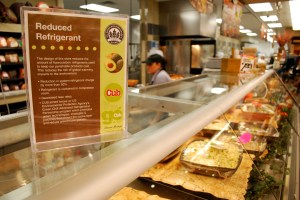
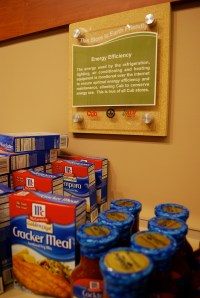
But we love how Cub has used the physical environment of the store itself to provide information about every aspect of how the store is operating in a sustainable way.  The subtle signage is designed to educate Cub customers about the important facets of the store’s operations.  

Messages conveyed include how the store uses reduced refrigerant.
501

Use of natural light to reduce energy consumption.

508

How Cub uses packaging made from only 100% renewable resources.

524

How the overall store operates in a more energy efficient fashion.
494LED refrigerator case lighting to conserve energy.

511

Special parking places reserved for customers driving fuel efficient vehicles.

517

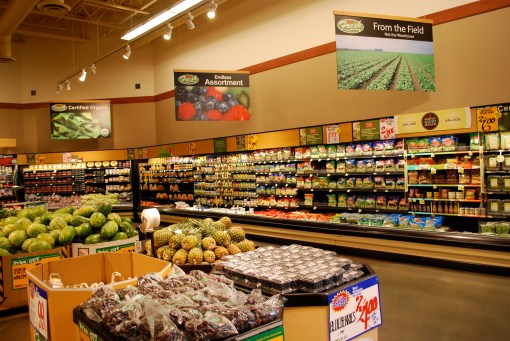
An overall store experience which is designed to be more respectful to nature and healthy for all.
532

In additional to many of the customer facing aspects of the store, the new Cub also features creative, energy saving ideas in all aspects of its operation.  For employees, the Cub facility features men and women’s shower rooms for employees to encourage them to ride the bike to work and worked with the city of St. Paul to create an additional city bus route so their employees can take the bus to and from work versus driving.  The facility also features a white roof to reflect heat to reduce energy consumption and special landscaping to absorb rainfall.

All in all, we encourage everyone to visit this very special new store if you have the chance.  And we send our congratulations to the leadership of SuperValu (the parent of Cub Foods) for their courage and leadership in creating and building what we hope will become the role model for retailers everywhere.

Our thanks to the support of  Cub Foods—and in particular Lee Ann Jorgenson, Manager of Community Relations and Communications—for allowing us to fully understand and share all of what the new Cub store is doing to be respectful to its new home in the Phalen neighborhood. 

(Photos by P.J. Milan.  All rights reserved.)


From Buyer Beware To Seller Beware: IBM’s Study On Corporate Social Responsibility.

12 08 2009

“Three quarters of businesses admit they don’t understand their customer’s corporate social responsibility expectations well.”

 – “Attaining sustainable growth through CSR”,

IBM Institute For Business Value


An interesting study of 250 global business leaders has revealed both the business upside to corporate social responsibility and one of the vulnerabilities – companies who embark on CSR initiatives without a true understanding of the expectations of their customers of those efforts.  The report reveals:

  • 68% of companies are now utilizing CSR as a opportunity and platform for growth.
  • 75% acknowledge the number of advocacy groups collecting and reporting information on their company has increased in the last three years.
  • But only 17% of companies say they really engage and collaborate with their customers regarding CSR activities.

Companies that truly understand the corporate social responsbility expectations of their customers report increased revenues and reduced costs and better differentiated products and services.  They believe they are more effective at improving labor practices, driving sustainability initiatives and aligning philanthropy with business priorities.  They also report having more engaged employees in CSR activities.

Ironically, many companies invest millions of dollars in gaining an understanding customers reactions’ to products and services, but the majority are operating a CSR strategy without insight and collaboration with customers.  The truth is your customer feels entitled to know everything “their brand” is doing.  So we echo IBM’s point of view, today the traditional adage “buyer aware” is now reversed to be “seller beware” — especially if you are unaware of your customers’ expectations regarding your social responsibility practices.

Watch an interview with George Pohle of IBM on the CSR Study


Real World Green: Winning Retailers See Sustainability As Competitive Advantage

11 08 2009

IMG_1165“Make green an integral part of your brand promise, and don’t wait to be pushed into action by eco-savvy consumers.  The store is a great place to begin – there is something every retailer can do today to reduce the amount of energy used.  But there is not “magic bullet” tactic for buildng a “green brand.”

-Real World Green:  The Role of Environmental Savings in Retail

The Retail Industry Leaders Association just issued it 2009 Benchmark Report on environmental sustainability in retail—which demonstrates how quickly retailer attitudes toward green initiatives as both a business economic driver and brand reputation indictaor have moved in the past 12 months, despite the recession.

The survey of nearly 100 retailers across all retail categories and company sizes finds some significant new findings toward sustainability practices.  The analysis divides retailers into “winners” – those retailers who’s revenue performance is besting industry average and “laggards” – those that are obviously falling behind.

The results illuminate that the “winners” of the past year in retail are significant more enlightened and deeply committed to driving sustainability initiatives into their operations and appreciate the benefit it will provide for their brand.  Whether or not their current customers are demanding it.

Some of the interesting factoids from the research impressed us.

  • 55% of retail “winners” see environmentally sound practices as both a “ethical obligation” and “to be seen as an industry leader”.
  • 80% of retail “winners” say that their customers expecting them to act is a key influencer to pursue green initiatives
  • 71% of retailers agree that “marketing our brand as “ecologically-conscious will have a profound impact on our brand image”

To further demonstrate how sustainability is a key topic on the minds of executive leadership of these retail companies: 87% of respondents believe the CEO has the greatest future potential of influencing their company’s leadership on sustainability—followed by the VP Marketing at 64%.  This would support our belief that those executive positions most responsible for overall brand and company reputation and image are going to be driving strategic sustainability initiatives in the future.

Read the Report:  Real-World Green_ The Role of Environmental Savings in Retail


The next level of accountability. Governance for corporate behavior and its impact on the planet.

30 07 2009

Sustainability reporting among corporate issuers is largely still voluntary, it is far from universal, and often inconsistent and incomplete.”

– Social Investment Forum letter to SEC Chairman Mary Schapiro

imagesLast week the 400 member Social Investment Forum called on the Securities and Exchange Commission to establish the mandatory reporting of corporate environmental, social and governance (ESG) or sustainability reporting.  Citing the fact that corporate social and environmental performance can have material impact on portfolio performance, the proposal calls for sustainability performance to be reported on consistent measures and issued in an annual report along with standard financial disclosures.

The letter also pointed out that that similar regulation is being proposed by the United Nations and several individual countries.  While relatively off the radar screens in mass media, this conversation is serious in nature and represents significant steps forward in regulating accountability for corporations on social measures beyond financial data.

Read the letter.


Congratulations to 46664 & Coca-Cola South Africa for Hello!

14 07 2009

Picture 1

Just ran across this moving video that shows an inspiring example of corporate social integration.  In a partnership with the NGO 46664 and using the words and voice of Nelson Mandela, Coca-Cola South Africa is helping raise awareness of the human rights crises that is HIV/Aids in Africa.

Using the iconic power of the Contour bottle, Coca-Cola placed one million empty bottles in random places across the country with a note from Nelson Mandela to further drive for positive living.

46664 International Director Tim Massey said: “The Hello Campaign illustrates the power of partnerships between corporates and charities to realize a common goal — in this case to increase awareness about HIV /Aids. Coca Cola’s generous donation will be used to fund the 46664 outreach activities, while the TV commercial and the outdoor activation will ensure that the 46664 campaign remains highly visible, and that Mr Mandela’s appeal for help is heard by most
South Africans.”

46664 International Director Tim Massey said: “The Hello Campaign illustrates the power of partnerships between corporates and charities to realize a common goal — in this case to increase awareness about HIV /Aids. Coca Cola’s generous donation will be used to fund the 46664 outreach activities, while the TV commercial and the outdoor activation will ensure that the 46664 campaign remains highly visible, and that Mr Mandela’s appeal for help is heard by most South Africans.”

See the Hello video


Wall Street Journal Report: For companies operating in developing countries, it pays to commit to improving social and environmental conditions.

25 06 2009

IMG_1174

“Here’s a lesson many executives have yet to learn: A commitment to improving social and environmental conditions in the developing countries where a company operates is the key to maximizing the profits and growth of those operations.” – Wall Street Journal

Research reported in the Wall Street Journal indicates those companies that make a commitment to sustainable business practices in developing countries enjoy six key competitive advantages.

  • A sterling reputation.
  • Better employees.
  • More efficient production.
  • A smoother relationship with authorities.
  • Better coordination, internally and with suppliers.
  • Suppliers that are more reliable and flexible.

But importantly, not only is operating in a sustainable and responsible fashion key in developing countries, so is making your customers aware of that commitment.  Increasingly consumers are examining companies social and environmental track records before deciding what products they plan to buy.

Read the WSJ Report


Aberdeen Research: Executives Making Sustainability A Top Priority

25 06 2009

“Research demonstrates that leading companies have made a resoundingly strong business case for the adoption and expansion of genuine, sustainability strategies and initiatives. ” – Aberdeen Group

In a newly released survey of more than 1600 business executives in 700 companies worldwide, sustainability is identified as one of the top 5 corporate priorities in 2009.  The promising report highlights several key insights into current trends, including:

  • The sustainability efforts are being championed by C-suite executives.
  • Budgets are being either maintained or increased.
  • The vast majority of companies already have executive leadership in place to oversee sustainability.
  • Top performing organizations are already achieving strong business benefits —from cost reductions to enhanced brand value.
  • Across all sectors and geographies, responsibility framed strategies have grown in importance, despite the economy.

The research highlights our beliefs that many, many companies have embraced sustainability and social responsibility and are beginning to see positive return on investment for such efforts.  But few organizations have taken advantage of the opportunity to turn these business practices into differentiated marketing assets and brand equities.  Alignment of sustainability actions and brand messaging and experience remains a huge opportunity to enhance corporate reputation and turn customers into engaged brand ambassadors.

Read the Aberdeen Group Press Release


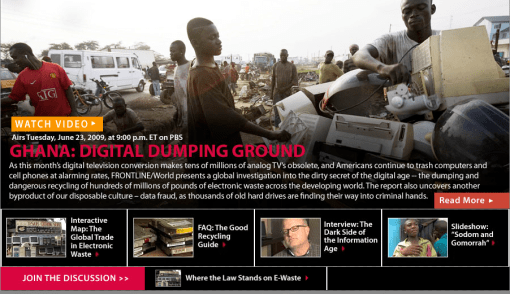
Frontline World On Digital Dumping

24 06 2009

Picture 2

Watch Frontline World’s story on digital dumping

A moving and powerful investigation of what happens to all of those digital devices once they leave your life, even with your good intentions to have them recycled.  Learn how they can not only harm the environment, but encourage exploitative and inhumane working conditions in the developing world and lead to data fraud at the hands of criminals in far away lands.


Good News: Marketers Waking Up To The Value Of Sustainable Branding

24 06 2009

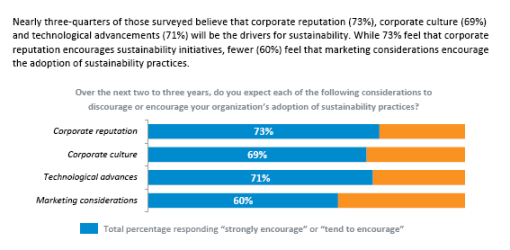
In a very encouraging research survey sponsored by the American Marketing Association and Fleishman Hillard, nearly 60% of marketing and communications professionals believe their organizations will be placing increased emphasis on sustainability issues over the next 2-3 years than in the past.

Read the AMA Fleishman-Hillard Research Study

It is an exciting time to be involved in sustainable branding because more and more companies are recognizing that sustainability can not only be a profitable business practice, but a powerful competitive differentiator.

But in one of the odd contradictions of the survey, while 73% believe corporate reputation will be a driver of adopting sustainability practices, only 60% believe marketing considerations will drive sustainability.  We believe corporate reputation and marketing strategies should be incredibly inter-twined and that communicating and providing ways for people to experience a company’s commitment to sustainability is going to be a brand marketing imperative moving forward.

Picture 1

The truth is that corporate reputation management moving forward requires orchestration of all elements of the organization.  It is critical the internal silos be broken down so corporate social responsibility actions, sustainability initiatives, and brand communication (plus promotion, sponsorship, events, CRM etc) all be choreographed as a part of the overall brand experience.  The customer doesn’t compartmentalize the impressions they take away from a company or a brand so it is important that the organization does not do it either. Now more than ever when it comes to brand reputation management, the right hand and the left hand not only need to know what each are doing—but both hands should be on the wheel!


Trust Matters – The Edelman Trust Barometer’s Scary 2009 Report

23 06 2009


“I’m not upset that you lied to me, I’m upset that from now on I can’t believe you”
 Friedrich Nietzsche quotes

1443_2

I’m not upset that you lied to me, I’m upset that from now on I can’t believe you”  – Friedrich Nietzsche

Kudos to the Edelman Trust Barometer and their 2009 report citing the state of trust worldwide.  It dramatically underscores there is nothing short of a pandemic of lack of trust between people and companies, the media, CEOs, and experts.

Building sustainable brands will require regaining public trust and Edelman’s study reported only 38% of people 35-54 years old in the United States trusted U.S. businesses.  The report also showed that in the past year 77% of 25-to-64 year olds around the world refused to buy a product or service from a distrusted company.  

There is now a huge trust gap to overcome but those companies who aggressively recognize and embrace this new reality will be the ones that emerge from the recession with momentum and a long term competitive advantage.  

But now is the critical time to create and align sustainable and socially responsbile business practices with branding and communication programs to help your company stand apart and be among the winners in this new world where actions resonate and words alone will be ignored.


Coming soon – Ana’s Playground

22 06 2009

Picture 2

Coming soon to a big screen film festival near you soon is a new short film labor of love entitled Ana’s Playground.  You can learn about this moving live action motion picture and the story behind the production at anasplayground.com.

Watch the Ana’s Playground Trailer.

Having been fortunate to have the good fortune of seeing a preview screening, I promise the film will change the way you look at things and in particular, at how you look at children as the victims of armed conflict and war.  The mission of the film is to use the proceeds and the public interest it generates to donate funds and assistance to non-profit organizations committed to assist kids struggling with armed conflict.

Conceived by Minneapolis based Writer/Director Eric Howell, Ana’s Playground has already won the 2006 best film screenplay at the L.A. Short Film Festival.  Eric was joined on the production team by producers Marsha Trainer and Jillian Nodland and a host of talented Twin Cities film makers.  Their passion for this production is evident in a nail biting, edge of your chair cinematic experience with a performance by gifted young actors who will take your breath away.

I’m happy to be able to provide some help to have Ana’s Playground achieve the critical acclaim and broad based audience this amazing film—and the children it is created to serve—richly deserve.  We will soon be seeking enlightened companies and media outlets to be sponsors of Ana’s Playground to join the movement to help children in armed conflict.  Contact us if you are interested in learning more.

Listen to a great interview about Ana’s Playground with its creator and supporters.


Become a fan of The Girl Effect

22 06 2009

picture-10An amazing organization with a mission of helping unleash the power of hundreds of millions of girls in the  developing world.    A major project of the Nike Foundation, the girl effect is already making a difference for girls in challenged countries such as Ethopia and Bangladesh.  A stunning example of driving toward sustainability, the girl effect volunteers help young girls become better educated, run their own business, organize in their communities and look out for her girlfriends.  They deserve all of our support.  experience the girl effect – amazing



Don’t call them consumers.

22 06 2009

Originally I wrote this post at duffypov.com when I was still with Duffy & Partners more than a year ago.  But it feels more right than ever before as all of us and society at large have been forced by the recession to consider exactly what it means to consume.  And where it fits in each person’s values set.


“Consumers are statistics.  Customers are people.”  – Stanley Marcus, Neiman & Marcus

Wikipedia defines a consumer as “a person who uses any product or service. Typically when business people and economists talk of consumers they are talking about person as consumer, an aggregated commodity item with little individuality other than that expressed in the buy/not-buy decision.”

Ok, it’s a new day. The term “consumer” must be purged from any organizational lexicon.  Shame on marketers who insist on putting such an arbitrary generalized term on the people they are trying to attract. As if “consumers” live in some petri dish to be probed, prodded and tested.

The term consumer presumes people are put on this earth solely to buy stuff.  How disrespectful to only think of “consumers” in a way that would suggest what they will do for me economically, not what we can do for them.

We are people.  With laughs and tears, dreams and hopes, and a desire to express our individuality in the context of having positive relationships with others and the world around us.

Consumers?  How about people?  The best brands recognize the difference.  In a world increasingly focused on sustainability, brands that respect people as people first will be the ones that are rewarded with—yes purchases—but importantly loyal customers.