A sustainable future begins at ground level

2 04 2024

The planet contains myriad types of soil and ground cover, each with unique properties and sustainability requirements. (AP Photo/Virginia Mayo)

By Shahid Azam, Professor, Geotechnical and Geoenvironmental Engineering, University of Regina via The Conversation • Reposted: April 2, 2024

In 2015, the United Nations adopted the Sustainable Development Goals (SDGs) as a “call to action” in “global partnership.” By 2023 it appears that our progress has been far from satisfactory in achieving these goals

Setbacks due to natural disasters, rising costs, armed conflicts, and the COVID-19 pandemic have even reversed progress already made on some of the goals.

The UN 2023 report concludes that aspects of sustainability (environmental, economic, and social) should be considered as a whole to bring about meaningful recovery. Science is identified as the vehicle for that change. But it must be “multidisciplinary, equitably and inclusively produced, openly shared, widely trusted and embraced, and ‘socially robust’ – relevant to society.”

The report also shows that progress in other areas of development can negatively impact land — and the life that depends upon it. Furthermore, terrestrial ecosystems are at further risk due to climate change, landslides, earthquakes and environmental pollutants. 

To improve the quality of life for both current and future generations we have to protect, restore and promote sustainable land.

Scientific principles are available

To manage our environment, we need to understand the relationships between atmosphere, soil, and pollutants at local and regional scales — and also across time.

The grounds surface — excluding many manufactured surfaces like concrete — is like a membrane that allows the migration and retention of air, water, contaminants and heat

Every type of human development activity including commodity extraction, building roads and urban facilities, agricultural practices and even the containment of mining and municipal waste is affected by the porous nature of soils.

Soil falls from a mands hand.
A man inspects dry soil, in Nador, northern Morocco, on March 8, 2024. (AP Photo/Mosa’ab Elshamy)

We know that the removal of groundwater results in soil settlement. On the flip side rainfall causes landslides as the excess water pressure breaks down the soil’s structure. Moreover, seasonal weather causes both wet and dry cycles and freeze and thaw cycles which generate repeated soil shifting. 

It is essential that we as scientists and policymakers consider the geology, climate and environment to help predict soil behaviour at a given site. 

Canada has capacity and experience

Canada possesses the second largest landmass on the planet and is home to a wide variety of soils including clay, loess, organic peats, glacial tills, aquifers and even deserts and permafrost. This huge variety of ground conditions presents unique challenges at each location.

Over the decades, engineers have met these challenges through the development of methods to avoid soil failure in major projects with examples ranging from the Downie Slide in British Columbia to the Confederation Bridge linking New Brunswick with Prince Edward Island.

The success of large and lengthy projects is directly the result of the willingness of planners, scientists and policymakers to work across diverse disciplines, accommodate regional experiences, broadly share information and use observation to continually improve. All together, this has generated an extensive body of empirical data.

The logical next step is to develop a scientific framework that can address complex atmosphere-soil-contaminant interactions. Such a context can be applied to almost any situation involving various types of fluids and solid particles. 

Take, for example, the case of tailings storage facilities. These facilities contain waste slurries (residual solids in processed liquids) often for many decades after the mine they originally served has closed. The experiences of dam breaches at Mount Polley, B.C. and Brumadinho, Brazil raise acute public concern over the conventional disposal of mining wastes.

A clear understanding of the interfaces between soil particles and polluted liquids in wet, dry and frozen states will provide a foundation to devise new methods to reduce building projects’ required footprint and risk of failure. Similar specific solutionscan be developed to reduce the impact of deicing salts on roads, fertilizers on farmland and terrestrial oil spills.

Sustainability makes socioeconomic sense

The Canadian Critical Minerals Strategy accelerates the extraction of critical minerals, however, it also requires safer tailings management across all stages from opening to long after the mine closes. 

Likewise, the design of urban infrastructure in light of climate change and the management of agriculture lands is critical to restore societal confidence while ensuring we meet our target of net-zero emissions by 2050. Scientific solutions can enable economic growth and address environmental issues at the same time. 

Applying new methods in the field will need public approval. We will have to work together within our communities to usher in a new era of socially robust science to safeguard our lands. At the same time, we should strive to transfer local experience into knowledge that can combat global challenges.

To see the original post, follow this link: https://theconversation.com/a-sustainable-future-begins-at-ground-level-222943



How Companies Can Achieve Their Sustainability Targets

20 10 2023

Photo: Getty

By Sam Darwish via Forbes • Reposted: October 20, 2022

Did you know that the mobile industry became one of the first sectors in the world to commit to the UN Sustainable Development Goals in 2016, according to GSMA? These 17 goals call for significant action to reduce carbon emissions and promote developments within the renewable energy sector.

Since then, the industry has demonstrated its commitment, as data traffic increases of 31% in 2022 were met with associated electricity increases of just 5% and carbon emissions increases of 2%.

To help keep emissions at bay, in October 2022, my company, IHS Towers, announced our Carbon Reduction Roadmap with the aim to reduce the scope 1 and scope 2 kilowatt-hour (kWh) emissions intensity of our tower portfolio. Our Project Green is the next significant step in that roadmap. It focuses on how we are increasing renewable energy sources on our African sites between now and the end of 2024. Our aim is dual—to reduce our reliance on diesel and generate long-term cost savings.

Here’s what I’ve learned from doing this work so far.

1. Start by setting a target.

If companies are to deliver on their commitments to reduce emissions, they must embrace renewable energy and the sector’s technological developments, and do so with a target in mind. That’s why we set ourselves the aim of reducing emissions by approximately 50% by 2030, and in the immediate term are integrating solar panel and battery storage solutions at off-grid locations, and where possible, connecting to the grid.

Setting targets is a powerful way of holding a business to account. It helps ensure they act on climate change and demonstrate their commitment to implementing strategies that mitigate its effects. That said, while having a target sends a strong, motivating message, it exposes your business to more scrutiny.

So before setting a target, every business leader should ask themselves why? Why are you creating another standard, a benchmark that holds you to account?

Firstly, there are the obvious stakeholder considerations—investors, customers, government programs and even employees. Secondly, carbon reduction can offer long-term capital expenditure savings and new growth opportunities.

Once you have determined that setting a target is the right course of action, you need to refine it against the macro setting. What are the national laws and global requirements applicable to your business? What are your peers doing and how do you benchmark?

My advice is to first consider the why, second the what and third the how. How are you going to set a target that meets your business needs and delivers progress? For the latter, third-party support is essential.

2. Lean on the experts.

Regardless of the sector you operate in, setting an emissions reduction target is always going to be complex. It’s likely going to take longer than anticipated, be more data intensive than expected and require the support of external specialists.

For example, on our emissions journey, we engaged an external environmental consultant to determine the specific level of carbon emissions reduction that was feasible for our business, and the markets in which we operate. We operate in a fast-moving, high-growth sector, and because of our organic growth, this third party helped us determine that an intensity-based target was more appropriate than an absolute emissions target.

Targets need to be realistic. They must both consider business growth and demonstrate a real commitment to carbon reduction.

Working with a climate consultant or other specialist is key; they provide the critical skills to help you navigate the balance between ambition and delivery.

3. Don’t underestimate the importance of internal stakeholders.

In setting our own target, the task’s enormity became quickly clear. Obtaining accurate data is essential. It’s a huge undertaking for any business, particularly large companies that operate across many markets, like mine. It also depends on the data available, e.g., GHG emissions, its quality, and having the right resources. Central to this is buy-in from your leadership team.

Your leadership team needs to be engaged from the get-go—the point at which you start quantifying emissions. Work with your external partner to help educate your leadership team on climate change, the risks and opportunities and principles of effective carbon management. Help them recognize both the environmental and business benefits and champion it as a pillar of your business and culture.

Achieving carbon reduction will require ongoing investment and so their support is critical. Reducing your carbon footprint is a journey that all leaders need to be carried along on. So, in addition to gaining their initial buy-in, communicating progress (however incremental) is vital.

At my company, we are communicating that progress to internal and external stakeholders; for example, we report on things like solar power solutions, generator run-times and decarbonizing our footprint. Yet simultaneously, we have been transparent in the capital expenditure required to hit our goals. By gaining support from our leadership team at the start of our carbon reduction journey, and communicating our progress so far, that additional capex becomes a recognized essential.

In terms of our financials, we expect significant annual savings by 2025 as a direct result of capex deployed. So, while setting this target was a complex, operationally intensive task, the benefits are clear.

4. Remember, climate action enables innovation.

With the roll out of artificial intelligence, virtual reality, IoT and blockchain, there is likely to be more seamless connectivity and the emergence of new business models that transform multiple sectors. By operating responsibly and fostering collaboration, businesses can help shape a more sustainably connected and prosperous future for all.

Reducing our environmental footprints, through a comprehensive carbon reduction strategy, is central to innovation.

Sam Darwish, Chairman and CEO, IHS Towers. To see the original post, follow this link: https://www.forbes.com/sites/forbesbusinesscouncil/2023/10/19/how-companies-can-achieve-their-sustainability-targets/?sh=211223b043b7


Evidence-Based Pathways for Business to Support the SDGs

14 10 2023

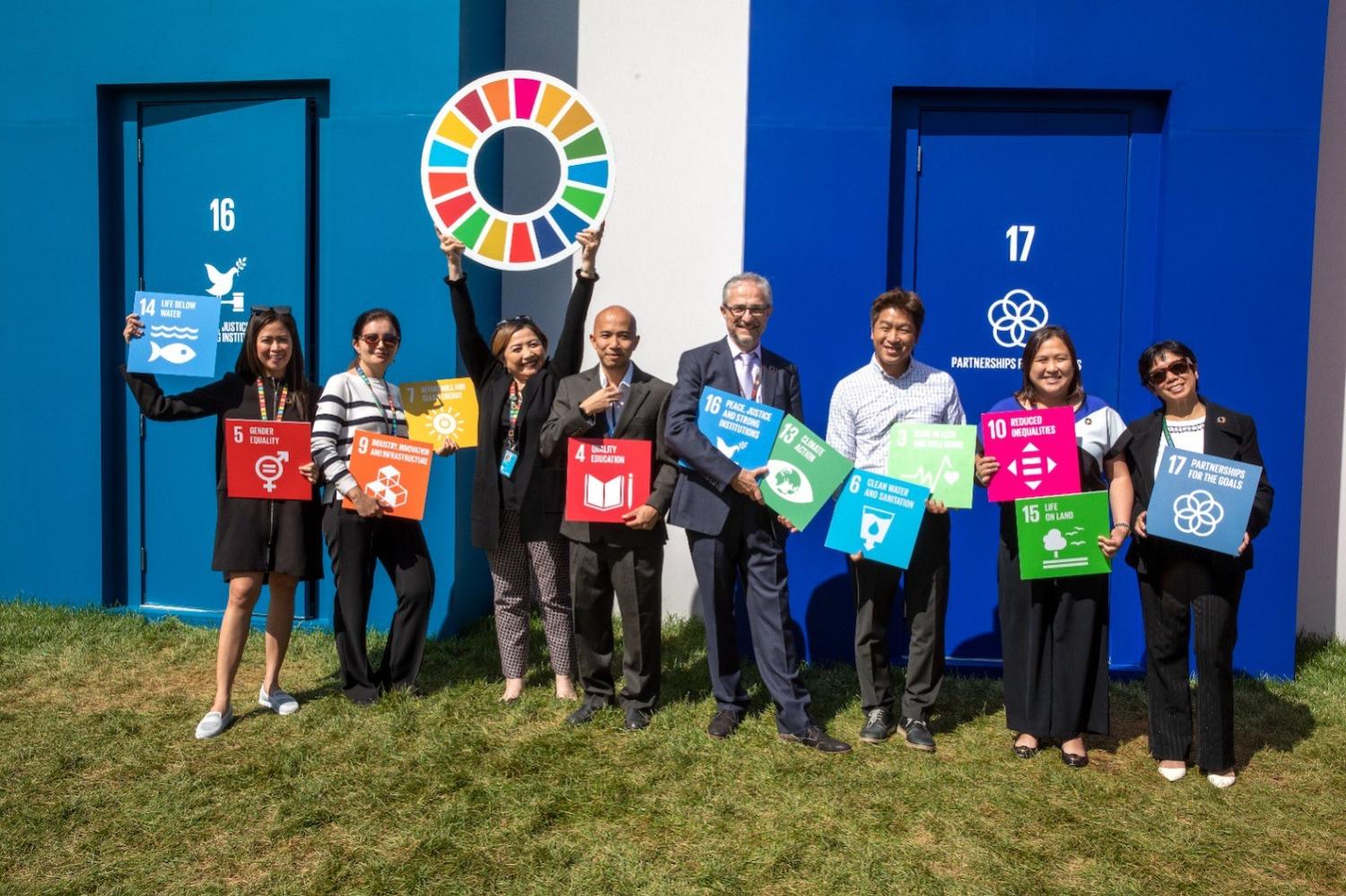
Climate Week attendees strike a pose at the SDG Pavilion in front of the United Nations Headquarters in New York City on September 21, 2023. Image credit: U.N. Partnerships/Pier Paolo Cito via Flickr

By Mary Riddle from Triple Pundit • Reposted: October 14, 2023

As the Sustainable Development Goals (SDGs) reach their midpoint, the world is “woefully off-track” in meeting the targets by the 2030 deadline, the United Nations warned this summer. Only 15 percent of the SGDs are on track, according to the U.N. Global Compact. Progress on 37 percent of the targets has either stagnated or reversed, while efforts on the remaining half are considered weak or insufficient. With seven years left to meet the Global Goals, the U.N. is calling on the private sector to help accelerate implementation.

While business leaders remain confident about the vision for the future underscored in the SDGs, their confidence in meeting the targets by 2030 dwindled from 92 percent in 2022 to 51 percent this year, according to a new report. 

Last month, Accenture partnered with the U.N. Global Compact to publish the Global Private-Sector Stocktake, a first-of-its-kind look at private-sector impact on the SDGs, with tangible action items and resources that companies can consider to drive progress on the road to 2030. The report outlined 10 key pathways for corporations — which include putting existing markets to work for social equity by way of a living wage and addressing gender pay gaps, as well as more transformative moves to integrate the SDGs into corporate finance and promote sustainability leadership in the private sector. 

Sustainable corporate finance 

“There is a lot of momentum around impact accounting, which ensures companies are taking into full account both tangible outcomes like revenues and returns for shareholders, but also the intangible outcomes like indirect carbon emissions,” said Vik Viniak, senior managing director and North America sustainability lead at Accenture.

“For example, Mastercard links incentives for executives and employees to their ESG [environmental, social and governance] objectives, which include gender equity and emissions reductions,” he said. “With Google and Amazon, if you look at their tech businesses like Google Cloud and [Amazon Web Services], they are using green principles to create more energy-efficient computing systems, and that ties into their executive remuneration. In most public companies, your compensation is tied to shareholder value, but it is important to remember that ESG is also directly tied to shareholder value.”

Sustainable corporate finance just makes good business sense. Impact accounting helps corporations establish better decision-making frameworks and can give companies leverage in discussions with their supply chain partners.

“If you are looking at two suppliers in your supply chain and everything else is equal, but one supplier has a better record on emissions, suddenly the decision becomes much easier,” Viniak said. Impact accounting should also be part of a company’s public reports, he said. 

However, he emphasized that sustainable finance is an evolving space. The U.N. Global Compact launched the CFO Coalition last month to put clear definitions and guidelines in place to help companies integrate the SDGs into their corporate financing. Viniak is optimistic about the coalition’s work. “The current state of confusion is causing companies to not take action,” he said. “There is a paralysis. This clarity can help get blood flowing so it can function.” 

Strengthening sustainability leadership for the SDGs

“True sustainability leadership is about holding senior leaders accountable,” Viniak said. “Empower everyone in the organization to take action, but make sure leaders are talking the talk and walking the walk. We need humility and self-realization in organizations. Management can lead by being humble and knowing that they can do more.”

There are clear benefits to corporate support for the SDGs, but it is important for companies to be able to substantiate their claims, show their metrics, and transparently report on their goals, reasoning and progress. “The market has gotten smarter,” Viniak said. “Investors and consumers can identify SDG-washing in companies that can’t support their claims.”

When leaders embrace the SDGs, it can serve to engage the entire workforce, Viniak said. “For leaders, one of the most important incentives for working toward the SDGs is that people are going to get excited,” he told us. “At Accenture, we have a huge, young workforce, and this workforce is asking Accenture what we are doing for the SDGs. Our CEO always says that we need to be our best credential. We have rallied our workforce around the mission of sustainability, and in our global workforce, in every community we are in, our people are making an impact. You can rally your whole organization around the SDGs and give them the tools to measure their impacts, and we can all hold each other accountable.”

The SDG Stocktake is a clarion call for all corporations 

For companies that have yet to examine their impact on the SDGs, Viniak emphasized that it is not too late. “I encourage every company to start the process of understanding specific ESG impacts based on their industry and sector,” he said. “The biggest positive and negative impacts need to inform strategy.” 

Once a corporation clearly understands their ESG impacts, they can evaluate how those impacts could help meet the targets of the SDGs and embed that into their decision-making frameworks.

“You can’t improve what you can’t measure,” Viniak said. “Companies must reflect on their impact on the SDGs. Then, they must set goals, identify how they can continue to accelerate the areas in which they lead, and how they can double down to improve those areas where they might be behind.”

Scaling up new incentive systems is also key to move progress forward. In the Global Private-Sector Stocktake report, business leaders clearly identified the support they need. “There is a huge lack of clarity in terms of goals and measurements,” Viniak explained. “Eighty percent of business leaders claim there are insufficient policy incentives to incorporate ESG considerations, and 84 percent are uncertain about measurements and calculations.” 

Fortunately, the private sector is rapidly innovating to address leadership concerns, with new data management companies and softwares regularly coming to market that address these challenges. “There are now data providers that are helping companies define specific impacts on the SDGs,” Viniak said. “This kind of data could help companies understand their own impact in a measurable way for the first time.”

But for these services to make a difference, companies have to use them. “Companies need to see the value of this and pay for it,” Viniak said. “This data could revolutionize incentives if tied to accounting and taxation in the future. We may be able to crack the data measurement problem soon. While companies are currently not being held accountable in consistent ways, with emerging data tools, they can be and should be.”

Viniak recognizes that the private sector is off track, but he remains optimistic. “Games are won in the second half, not the first,” he said. “Yes, we are trailing. We are behind, but we can win. The private sector is a key player to achieve the SDGs. It is time to step up in the second half to win this game.”

Mary Riddle is a writer and sustainability consultant based in Florence, Italy. As a former farmer and farm educator, she is passionate about regenerative agriculture and sustainable food systems.  to See the original post, follow this link: https://www.triplepundit.com/story/2023/ways-business-support-sdgs/785016


Evidence-Based Pathways for Business to Support the SDGs

9 10 2023

Climate Week attendees strike a pose at the SDG Pavilion in front of the United Nations Headquarters in New York City on September 21, 2023. (Image credit: U.N. Partnerships/Pier Paolo Cito via Flickr)

By Mary Riddle from Triple Pundit • Reposted: October 9, 2023

As the Sustainable Development Goals (SDGs) reach their midpoint, the world is “woefully off-track” in meeting the targets by the 2030 deadline, the United Nations warned this summer. Only 15 percent of the SGDs are on track, according to the U.N. Global Compact. Progress on 37 percent of the targets has either stagnated or reversed, while efforts on the remaining half are considered weak or insufficient. With seven years left to meet the Global Goals, the U.N. is calling on the private sector to help accelerate implementation.

While business leaders remain confident about the vision for the future underscored in the SDGs, their confidence in meeting the targets by 2030 dwindled from 92 percent in 2022 to 51 percent this year, according to a new report. 

Last month, Accenture partnered with the U.N. Global Compact to publish the Global Private-Sector Stocktake, a first-of-its-kind look at private-sector impact on the SDGs, with tangible action items and resources that companies can consider to drive progress on the road to 2030. The report outlined 10 key pathways for corporations — which include putting existing markets to work for social equity by way of a living wage and addressing gender pay gaps, as well as more transformative moves to integrate the SDGs into corporate finance and promote sustainability leadership in the private sector. 

Sustainable corporate finance 

“There is a lot of momentum around impact accounting, which ensures companies are taking into full account both tangible outcomes like revenues and returns for shareholders, but also the intangible outcomes like indirect carbon emissions,” said Vik Viniak, senior managing director and North America sustainability lead at Accenture.

“For example, Mastercard links incentives for executives and employees to their ESG [environmental, social and governance] objectives, which include gender equity and emissions reductions,” he said. “With Google and Amazon, if you look at their tech businesses like Google Cloud and [Amazon Web Services], they are using green principles to create more energy-efficient computing systems, and that ties into their executive remuneration. In most public companies, your compensation is tied to shareholder value, but it is important to remember that ESG is also directly tied to shareholder value.”

Sustainable corporate finance just makes good business sense. Impact accounting helps corporations establish better decision-making frameworks and can give companies leverage in discussions with their supply chain partners.

“If you are looking at two suppliers in your supply chain and everything else is equal, but one supplier has a better record on emissions, suddenly the decision becomes much easier,” Viniak said. Impact accounting should also be part of a company’s public reports, he said. 

However, he emphasized that sustainable finance is an evolving space. The U.N. Global Compact launched the CFO Coalition last month to put clear definitions and guidelines in place to help companies integrate the SDGs into their corporate financing. Viniak is optimistic about the coalition’s work. “The current state of confusion is causing companies to not take action,” he said. “There is a paralysis. This clarity can help get blood flowing so it can function.” 

Strengthening sustainability leadership for the SDGs

“True sustainability leadership is about holding senior leaders accountable,” Viniak said. “Empower everyone in the organization to take action, but make sure leaders are talking the talk and walking the walk. We need humility and self-realization in organizations. Management can lead by being humble and knowing that they can do more.”

There are clear benefits to corporate support for the SDGs, but it is important for companies to be able to substantiate their claims, show their metrics, and transparently report on their goals, reasoning and progress. “The market has gotten smarter,” Viniak said. “Investors and consumers can identify SDG-washing in companies that can’t support their claims.”

When leaders embrace the SDGs, it can serve to engage the entire workforce, Viniak said. “For leaders, one of the most important incentives for working toward the SDGs is that people are going to get excited,” he told us. “At Accenture, we have a huge, young workforce, and this workforce is asking Accenture what we are doing for the SDGs. Our CEO always says that we need to be our best credential. We have rallied our workforce around the mission of sustainability, and in our global workforce, in every community we are in, our people are making an impact. You can rally your whole organization around the SDGs and give them the tools to measure their impacts, and we can all hold each other accountable.”

The SDG Stocktake is a clarion call for all corporations 

For companies that have yet to examine their impact on the SDGs, Viniak emphasized that it is not too late. “I encourage every company to start the process of understanding specific ESG impacts based on their industry and sector,” he said. “The biggest positive and negative impacts need to inform strategy.” 

Once a corporation clearly understands their ESG impacts, they can evaluate how those impacts could help meet the targets of the SDGs and embed that into their decision-making frameworks.

“You can’t improve what you can’t measure,” Viniak said. “Companies must reflect on their impact on the SDGs. Then, they must set goals, identify how they can continue to accelerate the areas in which they lead, and how they can double down to improve those areas where they might be behind.”

Scaling up new incentive systems is also key to move progress forward. In the Global Private-Sector Stocktake report, business leaders clearly identified the support they need. “There is a huge lack of clarity in terms of goals and measurements,” Viniak explained. “Eighty percent of business leaders claim there are insufficient policy incentives to incorporate ESG considerations, and 84 percent are uncertain about measurements and calculations.” 

Fortunately, the private sector is rapidly innovating to address leadership concerns, with new data management companies and softwares regularly coming to market that address these challenges. “There are now data providers that are helping companies define specific impacts on the SDGs,” Viniak said. “This kind of data could help companies understand their own impact in a measurable way for the first time.”

But for these services to make a difference, companies have to use them. “Companies need to see the value of this and pay for it,” Viniak said. “This data could revolutionize incentives if tied to accounting and taxation in the future. We may be able to crack the data measurement problem soon. While companies are currently not being held accountable in consistent ways, with emerging data tools, they can be and should be.”

Viniak recognizes that the private sector is off track, but he remains optimistic. “Games are won in the second half, not the first,” he said. “Yes, we are trailing. We are behind, but we can win. The private sector is a key player to achieve the SDGs. It is time to step up in the second half to win this game.”

To see the original post, follow this link: https://www.triplepundit.com/story/2023/ways-business-support-sdgs/785016


Well behind at halftime: here’s how to get the UN Sustainable Development Goals back on track

21 09 2023

Photo: United Nations

By Cameron Allen, Research Fellow, Monash University and Shirin Malekpour, Associate Professor in Sustainable Development Governance, Monash University via The Conversation • Reposted: September 21, 2023

This week world leaders are gathering at the United Nations (UN) headquarters in New York to review progress against the Sustainable Development Goals. We’re halfway between when the goals were set in 2015 and when they need to be met in 2030.

As authors of a global UN report on the goals, we have a message to share. Currently, the world is not on track to achieve any of the 17 goals. 

There is much at stake. Failing to achieve the goals would mean by the end of the decade, 600 million people will be living in extreme poverty. More than 80 million children and young people will not be in school. Humanity will overshoot the Paris climate agreement’s 1.5℃ “safe” guardrail on average global temperature rise. And, at the current rate, it will take 300 yearsto attain gender equality.

But there is hope. With decisive action, we can shift the dial towards a fairer, more sustainable and prosperous world by 2030.

What does the research say?

The set of 17 universal goals agreed in 2015 to aim to end poverty, improve health and education, and reduce inequality – while tackling climate change and preserving our oceans and forests. Each of the goals are broken down into targets. 

Every four years, the UN Secretary-General appoints an independent group of 15 international scientists to assess progress against these goals and recommend how to move forwards. We were among the authors of the latest Global Sustainable Development Report published late last week.

To provide a snapshot of progress, we reviewed 36 targets. We found only two were on track (on access to mobile networks and internet usage) and 14 showed fair progress. Twelve showed limited or no progress – including around poverty, safe drinking water and ecosystem conservation. 

Worryingly, eight targets were assessed as still going backwards. These included reducing greenhouse-gas emissions and fossil fuel subsidies, preventing species extinction and ensuring sustainable fish stocks.

What is holding us back?

Recent studies have identified feasible and cost-effective globaland national pathways to accelerate progress on the goals. 

Unfortunately, in many developing countries, insufficient financial resources and weak governance hinder progress. In other cases, existing investments in fossil fuels have generated strong resistance from powerful vested interests. Achieving some goals, such as responsible consumption and production, will also require big, unpopular changes in habits and lifestyles, which are very ingrained.

To accelerate progress on the goals, targets must be fully integrated by government and business at all levels into core decision making, budgeting and planning processes. We need to identify and prioritise those areas that lag furthest behind. To be effective, we also need to uncover and address the root causes of inadequate outcomes, which lie in our institutions and governance systems.

Accountability also remains weak. The goals are not legally binding and even though countries have expressed their support, this has often failed to translate into policy and investments. In practice, the targets are often “painted on” to existing strategies without redesigning norms and structures to deliver improved outcomes.

If the world is to accelerate progress on the goals, governments need to play a more active part, by setting targets, stimulating innovation, shaping markets, and regulating business. 

We call on policymakers to develop tailored action plans to accelerate progress on the goals in the remaining years to 2030, including measures to improve accountability. 

Scientists have a major role to play too. As we argued in Nature, scientists can help us redesign institutions, systems and practices. By studying ways to strengthen governance and build momentum for tough but transformative reforms, research can overcome resistance to change, and manage negative side-effects.

What does it mean for Australia?

Australia tends to perform poorly on the goals when compared to our peers in the OECD (Organisation for Economic Co-operation and Development), ranking 40th in the world in 2023. Our best-performing goals include health and education, while progress lags on environmental goals, economic inequality and cost-of-living pressures. 

While some environment agenciesbusinesses and local groupshave embraced the goals, Australia’s poor performance is symptomatic of limited traction and commitment at the centre of government. 

Here, the goals are often seen as an international development issue rather than central to domestic policy efforts. We lack a high-level statement or any strategy or action plan for the goals. There is no lead unit or coordination mechanism in place and no reference to the goals in the federal budget. One promising development, a national Sustainable Development Goal monitoring portal, hasn’t been updated in five years. 

The best performing countries have taken concrete steps to mainstream the targets and ensure accountability:

  • Denmark requires new government bills to be screened and assessed for their impacts on the goals 
  • Finland has taken steps to place sustainable development and people’s wellbeing at the heart of policy and decision making. A sustainable development commission, annual citizens’ panel on sustainable development and national audits provide increased accountability
  • Wales requires public bodies to use sustainable development as a guiding principle reflecting the values and aspirations of the Welsh people.

Australia’s first wellbeing framework is an important step forward. The framework of 50 indicators has considerable overlap with the goals, despite notable exceptions such as the lack of a poverty indicator or any specific targets or benchmarks. 

To see the original post, follow this link: https://theconversation.com/well-behind-at-halftime-heres-how-to-get-the-un-sustainable-development-goals-back-on-track-206677


How the bottled water industry is masking the global water crisis

23 03 2023

Bottled water corporations exploit surface water and aquifers, buy water at a very low cost and sell it for 150 to 1,000 times more than the same unit of municipal tap water. Photo: Shutterstock

By Zeineb Bouhlel, Research Associate, Institute for Water, Environment and Health (UNU-INWEH), United Nations University and Vladimir Smakhtin, Former Director of the Institute for Water, Environment and Health (UNU-INWEH), United Nations University via The conversation • Reposted: March 23, 2023

Bottled water is one of the world’s most popular beverages, and its industry is making the most of it. Since the millennium, the world has advanced significantly towards the goal of safe water for all. In 2020, 74 per cent of humanity had access to safe water. This is 10 per cent more than two decades ago. But that still leaves two billion people without access to safe drinking water

Meanwhile, bottled water corporations exploit surface water and aquifers — typically at very low cost — and sell it for 150 to 1,000 times more than the same unit of municipal tap water. The price is often justified by offering the product as an absolute safe alternative to tap water. But bottled water is not immune to all contamination, considering that it rarely faces the rigorous public health and environmental regulations that public utility tap water does

In our recently published study, which studied 109 countries, it was concluded that the highly profitable and fast-growing bottled water industry is masking the failure of public systems to supply reliable drinking water for all.

The industry can undermine progress of safe-water projects, mostly in low- and middle-income countries, by distracting development efforts and redirecting attention to a less reliable, less affordable option.

Bottled water industry can disrupt SDGs

The fast-growing bottled water industry also impacts the UN’s Sustainable Development Goals (SDG) in many ways. 

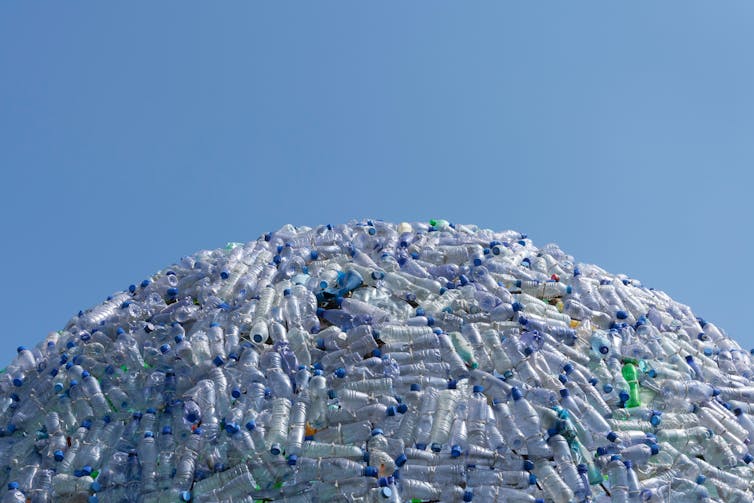
A pile of plastic bottle waste.
The rising sales of global bottled water is contributing to plastic pollution on land and in the oceans. Photo: Shutterstock

The latest UN University report revealed that the annual sales of the global bottled water market is expected to double to US$500 billion worldwide this decade. This can increase stress in water-depleted areas while contributing to plastic pollution on land and in the oceans.

Growing faster than any other in the food category worldwide, the bottled water market is biggest in the Global South, with the Asia-Pacific, Africa and Latin American and Caribbean regions accounting for 60 per cent of all sales.

But no region is on track to achieve universal access to safe water services, which is one of he SDG 2030 targets. In fact, the industry’s greatest impact seems to be its potential to stunt the progress of nations’ goals to provide its residents with equitable access to affordable drinking water.

Impact on vulnerable nations

In the Global North, bottled water is often perceived to be healthier and tastier than tap water. It is, therefore, more a luxury good than a necessity. Meanwhile, in the Global South, it is the lack or absence of reliable public water supply and water management infrastructure that drives bottled water markets. 

Therefore, in many low- and middle-income countries, particularly in the Asia Pacific, rising consumption of bottled water can be seen as a proxy indicator of decades of governments’ failure to deliver on commitments to safe public water systems.

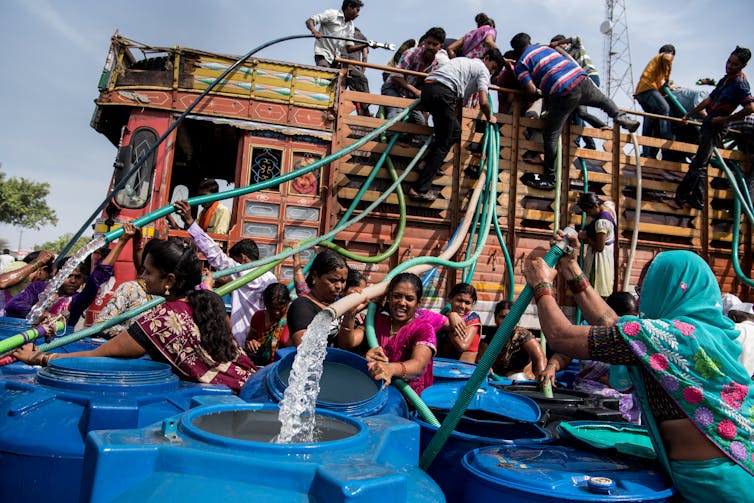
A group of people fill water in their drums from a truck carrying municipal water.
The rising consumption of bottled water in some countries can be seen as a proxy indicator of decades of governments’ failure to deliver on commitments to safe public water systems. Photo: Shutterstock

This further widens the global disparity between the billions of people who lack access to reliable water services and the others that enjoy water as a luxury.

In 2016, the annual financing required to achieve a safe drinking water supply throughout the world was estimated to cost US$114 billion, which amounts to less than half of today’s roughly US$270 billion global annual bottled water sales. 

Regulating the bottled-water industry

Last year, the World Health Organization estimated that the current rate of progress needs to quadruple to meet the SDGs 2030 target. But this is a colossal challenge considering the competing financial priorities and the prevailing business-as-usual attitude in the water sector.

As the bottled water market grows, it is more important than ever to strengthen legislation that regulates the industry and its water quality standards. Such legislation can impact bottled water quality control, groundwater exploitation, land use, plastic waste management, carbon emissions, finance and transparency obligations, to mention a few.

Our report argues that, with global progress toward this target so far off-track, expansion of the bottled water market essentially works against making headway, or at least slows it down, adversely affecting investments and long-term public water infrastructure.

Some high-level initiatives, like an alliance of Global Investors for Sustainable Development, aim to scale up finance for the SDGs, including water-related ones. 

Such initiatives offer the bottled water sector an opportunity to become an active player in this process and help accelerate progress toward reliable water supply, particularly in the Global South.

To see the original post, follow this link: https://theconversation.com/how-the-bottled-water-industry-is-masking-the-global-water-crisis-201756