By Kate Birch from Sustainability Magazine • Reposted: November 25, 2023
State of Climate Action report from World Economic Forum (WEF) and Boston Consulting Group (BCG) says companies need to do much more to meet climate goals.
With COP28 on the horizon, the latest report from the World Economic Forum makes for sobering reading – with fingers being pointed at corporations failing to properly address climate change targets.
Produced in conjunction with Boston Consulting Group (BCG), The State of Climate Action says that a major course correction needs to take place to retain any chance of meeting the 1.5°C target agreed in Paris in 2015.
According to the report, humanity is still far from solving its biggest challenge, following years of insufficient action. It says that global emissions must decrease by 7% per year until 2030 to have any hope of achieving the original goal.
“To better understand what that entails, this paper brings a complementary perspective to the global stocktake initiated by the UN – adding a comprehensive view across nations, corporates, technologies and financing,” says WEF.
“It offers an honest assessment of where climate action is falling short – and what is required to succeed.”
To stay below 1.5C, emissions need to come down by 7% per year, but they are increasing by 1.5%
The report points to four major dimensions where progress is insufficient.
Countries
Although progress has been made, key countries still stretch their ambitions for too long, commit to slow progress this decade, or struggle to implement the plans they have set out.
Only a third of global emissions are covered by a net-zero target for 2050 and only 20% are committed to action this decade.
Technologies
We cannot over-rely on technology for a solution. Technologies currently viable or on the horizon will still only achieve half of the emissions reductions required.
Financing
More than half of climate funding needs are still not being met, with critical gaps in early technologies and infrastructure. The climate funding gap is twice as large in developing economies as developed ones.
Companies
While the number of companies committing to science-based targets has grown considerably, many large corporations – especially those outside Western countries – have not set targets.
If they have, then they are woefully inadequate.
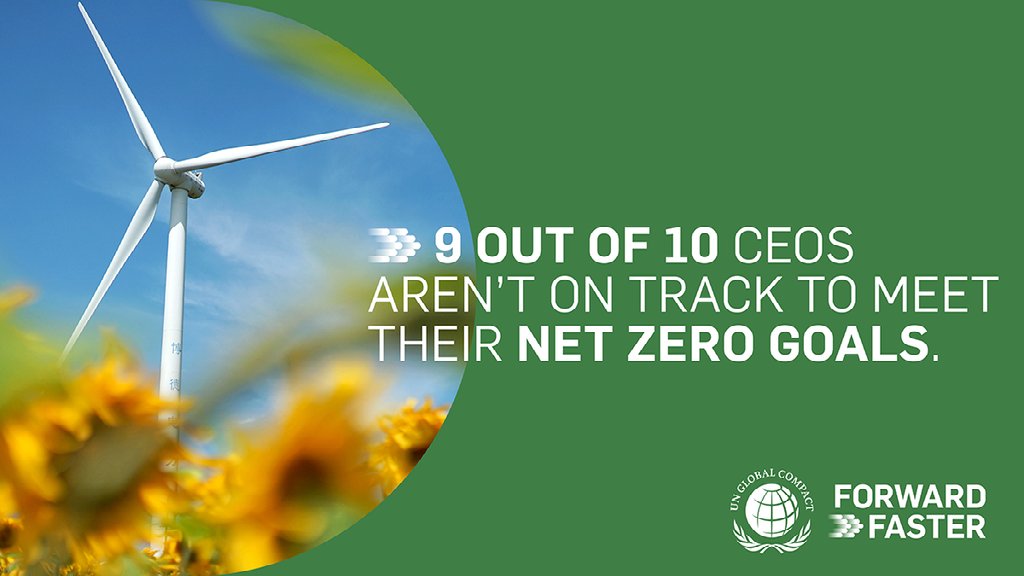
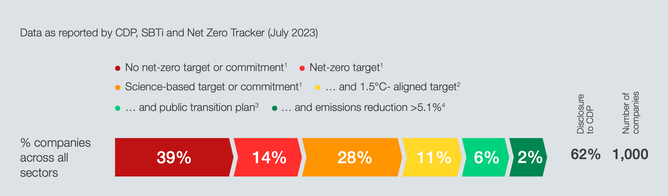
The report says less than 20% of the world’s top 1,000 companies have targets aligned with a 1.5°C pathway – and almost 40% had no net-zero commitment. Based on the Net Zero Tracker, fewer than 10% have comprehensive public transition plans.
Fewer than 20% of the top 1000 companies have set 1.5C science-based targets
In conclusion, WEF says that if the decarbonisation trajectory does not change, adaptation will not be enough to cope. Whether 1.5°C remains an achievable goal or not, every tenth of a degree matters. There is therefore no choice but to dramatically increase mitigation efforts.
From the corporate perspective, management teams and board members have a responsibility, says WEF, to ensure sufficient focus on climate impacts and action. WEF says more companies need to invest in harder solutions that require more financial trade-offs and investments.
By Carol Cone from Triple Pundit • Reposted: September 13, 2023
The term ESG is fine, according to a recent poll of 1,000 Americans. Despite continued polarization related to the acronym, which stands for environmental, social and governance, the majority of Americans believe it’s the best way to describe a company’s approach to improve business, society and the environment. Before we get to the data, though, it’s important to understand why we asked this question in the first place.
How did we get here?
Over the past year, a rising chorus of conservative U.S. voices have claimed that ESG is “woke capitalism,” or corporate virtue signaling about social and environmental concerns which they see as beyond the bounds of business.
The issue drew President Joe Biden’s first presidential veto in March of this year, defending legislation related to ESG investing and bringing the issue into the national spotlight. ESG is facing such a significant backlash that BlackRock CEO Larry Fink, long one of the financial industry’s staunchest proponents for purpose and ESG, doesn’t even want to use the term — though BlackRock’s policies around society, the environment, and business governance remain unchanged.
It’s also important to establish that whatever you call them, sound ESG practices are not new, and are indeed vital to operating a responsible, ethical, and profitable business. As Fortune sustainability reporter Eamon Barrett observed, “major corporations documenting their environmental, social, and governance policies for investor scrutiny is actually a decades-old process.” At its core, ESG is a means to broaden the lens on what constitutes key drivers of business value, accompanied by efforts to measure and report on what matters for individual company operations via standardized reporting frameworks.
Americans say ESG is a-okay
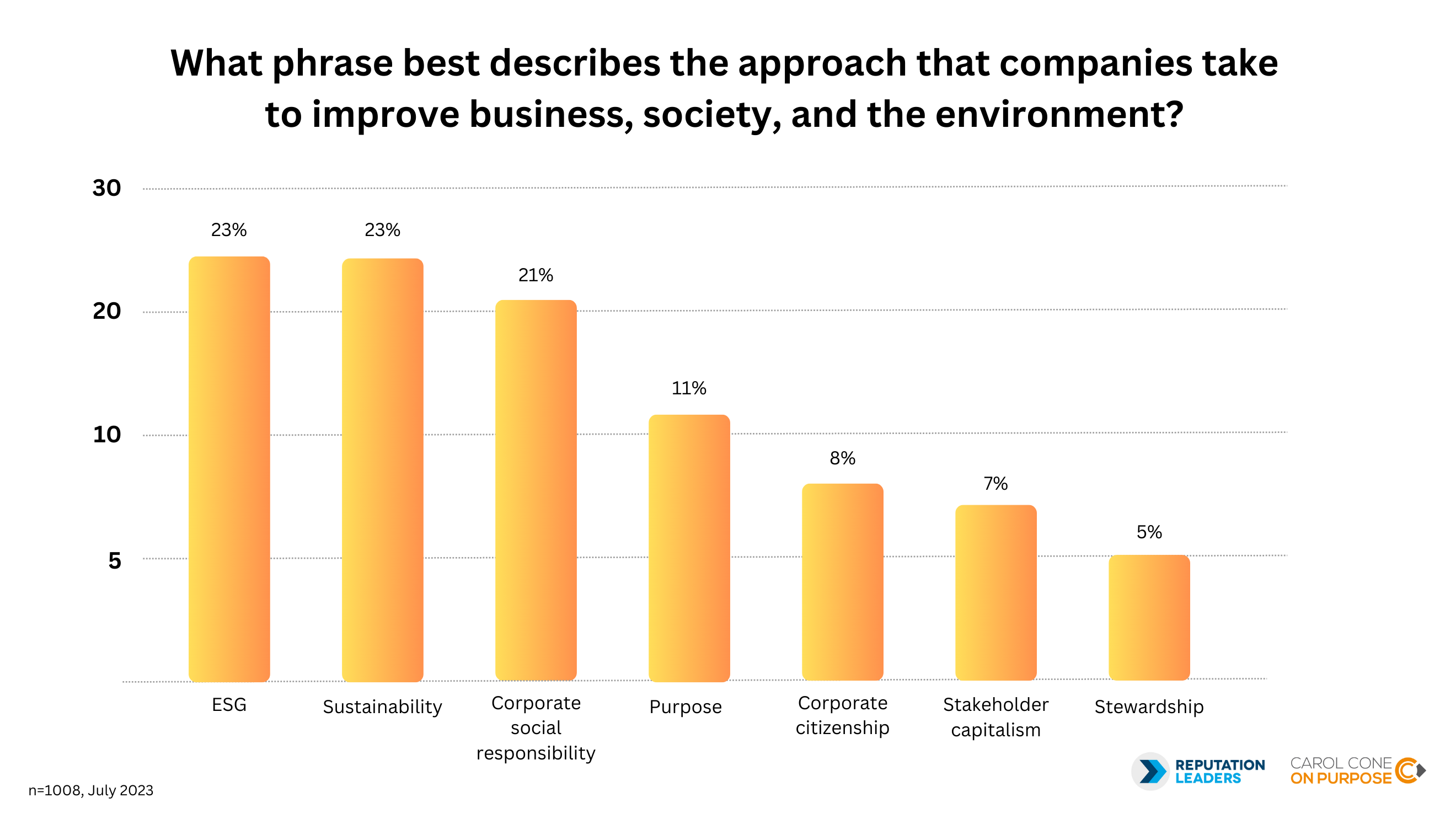
We partnered with Purpose Collaborative member Reputation Leaders, a global research and thought leadership consultancy, to ask Americans what term they feel best describes “the approach companies take to improve business, society and the environment.” ESG and sustainability are tied for the top, at 23 percent each. Corporate social responsibility is second, at 21 percent, followed by purpose (11 percent), corporate citizenship (8 percent), stakeholder capitalism (7 percent) and stewardship (5 percent).
Across demographic groups, ESG and sustainability are the favored terms among men, while women prefer “corporate social responsibility,” a phrase that connotes a sense of obligation. ESG is also the top choice for younger audiences, particularly those aged 25 to 34, while consumers aged 55 to 64, prefer the term “sustainability.” There are regional differences, as well. People living in the Northeast prefer sustainability, while their Southern and Midwestern counterparts prefer ESG.
Reputation Leaders also analyzed the tone of media coverage related to Americans’ top three terms: ESG, CSR and sustainability. CSR garnered the largest share of positive sentiment at 37 percent, with sustainability in second place at 32 percent and ESG trailing at 20 percent. ESG was the only term to have a significant amount (10 percent) of negative sentiment.
What now?
This study can help support companies in exploring the terms they will use to discuss the impact their business has on society. It is important to develop a clear, shared perspective and take a long-term view.
From the United Nations to the World Economic Forum, global leaders are advocating for businesses to embed a net-positive approach into their operating models to accelerate innovation and impact. Increasingly, employees, customers, supply chain partners, and others are asking about the ESG commitments of the companies they work for or with. Business leaders need to have answers and a strong point of view on which issues are most important to their business, and why. Our best advice? Don’t worry about what you call it — stick to your organization’s long-term, strategic commitments to stakeholders, society and the environment.
When it comes to communications, here are three ways to help depolarize the conversation:
Be clear about the goals of ESG. ESG is not about imposing a set of values on business. It provides a framework for companies to assess and optimize their value and impact.
Increase transparency around ESG data and metrics. This will help to ensure that investors and other stakeholders are making informed decisions.
Embrace standardized reporting frameworks. This will make it easier to comparecompanies’ ESG performance — think: the Task Force on Climate-Related Financial Disclosures (TCFD), the Global Reporting Initiative (GRI) or the Sustainability Accounting Standards Board (SASB).
Yes, the polarization will continue, especially as the 2024 presidential election nears. As the world continues to endure climate impacts from extreme heat and flooding to record-breaking wildfires, there also will be greater demand for businesses to address environmental challenges.
Scores of studies suggest that ESG — done right — drives sustainable competitive advantage and can accelerate organizational growth over the long-term. An impressive 80 percent of investors believe that companies with strong ESG practices can generate higher returns and make for better long-term investments, according to research from Morgan Stanley.
By continuing to show a link between ESG issues and the business, we can help to make the debate around ESG more constructive and less polarizing. This will ultimately benefit businesses, investors and society as a whole.
Privatizing space could bring immense benefits to humanity, but is the industry thoughtfully considering the impact of emissions, space debris and employee well-being? By Vartan Badalian via Greenbiz.com • Reposted: August 2, 2023
In 1962, President John F. Kennedy gave one of his most historic speeches as he catapulted the U.S. into the space race against Russia. His words still hold immense passion and foresight today: “We set sail on this new sea because there is new knowledge to be gained and new rights to be won… We choose to go to the moon in this decade and do other things, not because they are easy, but because they are hard.”
In the short time humans have focused on space, we have landed humans on the moon, studied the deepest parts of the galaxy and privatized the industry. Right now, you can even pay as low as $257,000 on SpaceX’s website to ship your cargo to space.
At the same time, however, this great desire for space exploration is driving concern over short-term environmental and social impacts.
The problem with space
The sustainability challenges associated with space exploration and other commercial activities fall into three categories:
The emissions produced from launching spaceships;
The space junk that is quickly increasing and floating in Earth’s orbit; and
Potential harm to known or unknown species, along with human/employee rights concerns.
The space industry is truly different when it comes to measuring or assessing issues such as these, according to Paul Holdredge, director of industrials and transport at consultancy BSR.
“The industry is talking about sustainability, but they’re not yet using the same language that you and I might use,” Holdredge told me. “Many of the ESG rating systems, questionnaires, methods of evaluating companies — they frankly don’t apply to the space industry.”
The launch emissions
Consider the process of sending rockets into orbit. “There are a great number of launches forecasted, and the impact of those emissions in the upper atmosphere from various rocket chemistries is still not well understood,” Holdredge said.
While the percentage of fossil fuels burned by the space industry is 1 percent of what is burned by aviation, the fear among experts is that the emissions impacts of launches on the upper atmosphere and ozone layer are still widely unknown, especially as the frequency of launches increases. Also concerning is the fact that emissions have a tendency to linger longer.
Commercial space companies are driving a $500 billion industry right now, growing about 9 percent per year. That puts the sector on a path for about $1 trillion by 2040, according to Holdredge. This growth will bring an increase in spaceship launches, across both the private and government sectors. In 2022, 180 successful rocket launches happened, 44 more than in 2021. Much of this growth is led by Elon Musk’s company SpaceX, which launched a rocket once every six days on average. That doesn’t account for the impact of launches by two other high-profile private space companies, Blue Origin and Virgin Galactic.
Emissions reductions could come in the form of less carbon-intensive fuel chemistries — but that will take ongoing research and development. Other solutions that could help decarbonize the industry include a carbon nanotube space elevator that stretches into space, allowing for a more cost efficient and less energy intensive way to travel. Almost like a transit system but into space. But as this article points out, by the time we are able to build a space elevator, it might not be necessary given how quickly commercial space exploration is evolving.
Littering in space is the status quo, for now
A big concern beyond emissions is orbital litter. More than 25,000 pieces of space junk and debris larger than 10 centimeters are floating in Earth’s orbit, according to the World Economic Forum.
This junk includes anything from components left behind during launches to decommissioned satellites to other objects and chunks of material caused by asteroids hitting satellites or satellites hitting each other. Over time, this debris builds and floats in orbit, a concept known as the Kessler Syndrome. The fear is that this growing cloud of stuff could pose a danger to launches over time. Last year, SpaceX had to issue a statement amid concern by the National Aeronautics and Space Administration that SpaceX’s Starlink satellites might cause a collision with the International Space Station.
The solution to space waste? Several companies and early-stage startups such as OrbitGuardians and ClearSpace focus on debris retrieval and removal. The work of the Space Sustainability Rating, launched by the World Economic Forum and developed by a group of industry players including the European Space Agency and Massachusetts Institute of Technology, is also a source of potential solutions.
The system offers recommendations for how aerospace companies can improve the long-term sustainability and longevity of their launches and satellite design, as well as address debris mitigation. The rating is based on a four-badge system from bronze, silver, gold and platinum.
Other aspects of sustainability
Aside from environmental factors, Holdredge said companies must increasingly consider the human impacts of space exploration. Among the concerns they’ll need to consider: how to take care of employees working in space; how to feed them; howto care for their waste; how to protect them from radiation; and more. These issues fall under the umbrella of human and employee rights.
As we colonize other planets, what rights must we consider for other potential life — known or unknown?
Human-driven climate change is causing the extinction of species on Earth that we have little knowledge about. We should strive to avoid bringing about the same harm to other planets.
Sustainable supply chains are vital and attainable. Image: Photo by Lenny Kuhne on Unsplash
Sustainability is not an elusive concept that competes with traditional metrics of profitability and efficiency, but one that can be measured and achieved by using what you have more intelligently. By Saar Yoskovitz, Co-Founder and Chief Executive Officer, Augury via the World Economic Forum • Reposted: July 26, 2023
Supply chain disruptions and inventory concerns continue to trouble governments, businesses and consumers worldwide. Even as supply chain bottlenecks begin to clear up, severe sustainability and supply problems remain due to the amount of waste traditionally produced by retail and manufacturing sectors and the increasingly stringent metrics by which they are judged by investors and consumers.
Moreover, with ongoing geopolitical contention in Europe and Asia, inflationary challenges and increased consumer spending, the manufacturing and supply chain industries are under pressure to navigate constant obstacles.
The interconnectedness of the supply chain
To find solutions, we need to look at the interconnectedness of the supply chain. Factories, for example, play a prominent role in mitigating a host of supply-chain problems and can help lower the impact of inflationary pricing by working more efficiently in several ways. Worn down and inefficient machinery, for instance, slows production, causing bottlenecks and wasting energy and materials.
Furthermore, labour costs increase as more people are brought in to address broken machinery and even more money is lost when the factory line pauses production.
Where does sustainability come in?
Often, efficiency and sustainability are seen as competing interests, but what if there was a way that companies can establish both in their manufacturing processes and support supply-chain efficiencies?
A focus on sustainability on the factory floor can reduce waste (most obviously by lowering costs and increasing yields) while alleviating pressures across the supply chain. How so? When fewer materials are needed to create a product, less mining, harvesting and sourcing of these materials is required, thus involving less processing, trucking and warehousing and minimizing potential pain points in other areas of the supply chain.
And, when machines operate efficiently while producing quality goods, there is also a chance of fewer recalls around issues in the manufacturing process. This, in turn, diminishes the inventory volume of goods travelling back through the supply chain, alleviating another host of problems. These benefits compound; improvements in quality issues boost sustainability and customer service scores.
Running manufacturing assets better and more efficiently can help organizations realize their sustainability goals and serve customers better, while easing supply-chain pressures ahead of the holiday bloat.
To do so, we must consider machine and process health through a predictive lens.
Machine health
There are three key components to machine health: mechanical problems, design problems and operational problems. Every industrial leader must understand how the factory level is performing across these three measurements to ensure production runs smoothly.
Monitoring for mechanical problems includes monitoring temperature, vibration and magnetic data to identify changes ahead of complete machine failure.
Design problems come to the forefront when individual machines undergo extra amounts of stress due to an inefficiently designed production facility. By getting ahead of these issues, facilities can avoid unplanned downtime, delays, bottlenecks and inconsistent product quality, tying back to the efficiencies detailed above.
Operational problems come into play with the human element. Even with a perfectly designed machine, people make modifications and unknowingly create additional issues.
Continuously monitoring machine health can curtail unplanned downtime and boost productivity to new heights that will be felt throughout the supply chain. According to the National Institute of Standards and Technology, running assets more efficiently can also save US manufacturers $3.3 billion in waste caused by downtime, reduce energy consumption by 12% to 15% and avoid up to 6,500 workplace accidents annually.
But machine health is only half of the equation for solving industry concerns. Process health offers a look into the interconnected inputs and elements of a full production system and other contributing factors, which, when misaligned, become part of the industry’s sustainability problems.
Process health
Manufacturing and supply chain leaders are aware of profits left on the table, but that does not have to be an accepted standard. There is a critical measurement that can combat inefficiencies and losses. Enter process health.
According to a report by ARC Strategies, there is an estimated $1 trillion lost due to unplanned downtime in the process industries. To bridge the trillion-dollar gap, organizations can unlock productivity by honing their machine health and optimizing production by 40% and improving energy use by up to 30%. Those are significant markers.
Process health helps leadership prevent losses from occurring in the future by analysing data at every step and level of production. It can also identify optimal process settings and establish connections between dynamic and complex variables. It is a no-brainer for industry leaders who want to see significant improvements in quality, throughput, energy and reductions in CO2 emissions and waste.
Big picture vision
The supply chain is a complex structure that is the backbone of our economy. While there may not be a one-size-fits-all solution to address the dilemmas of late, repositioning our understanding of the interconnectedness – starting at the factory floor – can illuminate opportunities that may not have been as apparent.
Continuously monitoring machine and process health can reveal untapped potential. In fact, it is estimated that 10% to 20% of manufacturing capacity is shadow capacity or production capabilities that exist within current manufacturing lines, but are going unused. Embracing shadow capacity has positive implications for onshoring, productivity and efficiency.
As supply chain obstacles continue amid ongoing geopolitical turmoil, fluctuations in consumer spending and a possible recession, it is high time we rethink the relationship between sustainability, manufacturing and the supply chain. Sustainability is no longer an elusive concept that competes with traditional metrics of profitability and efficiency, but one that can be measured and achieved by using what you have far more intelligently.
While it may be tempting to take a ‘wait and see’ approach, more and more companies are developing their own solutions to mitigate this gap internally. Here are four such strategies. By JOANNA BUCZKOWSKA-MCCUMBER via Sustainablebrands.com • Reposted: April 29, 2023
Businesses across industries are under mounting pressure to adopt sustainable practices, reduce their environmental impact, and provide ESG reporting and transparency in their efforts while staying accountable to their commitments. As demand for sustainability grows, so does the need for skilled professionals and workers who can drive and implement strategy and practices effectively across organizations and supply chains. However, most companies do not have the talent with the knowledge, experience and skills to achieve their sustainability goals.
Companies are recognizing that the demand for sustainability talent is outpacing the supply; and the gap is only growing — as sustainability roles expand and new ones get created, a Corporate Sustainability Officer is just not enough. The International Labour Organization suggests that 18 million net new jobs could be created worldwide by net-zero commitments by 2030. Recent research found that 82 percent of sustainability executives believed there were significant skills gaps within their own organization to tackle sustainability requirements. The World Economic Forum has directly linked the lack of qualified talent as being one of the significant barriers to implementing sustainability strategies; while the UN Global Compact has called for direct action to address this skills gap — prompting companies to prioritize and invest in skilling, upskilling and reskilling their teams.
While it may be tempting for companies to take a ‘wait and see’ approach, it won’t bridge this gap fast enough and will have negative effects. More and more companies — includingMicrosoft, Salesforce and Interface — are turning to mitigate this gap internally by developing and implementing their own solutions.
Bridging the sustainability skills gap internally will be fundamental for businesses in reaching their sustainability objectives. Here are four such strategies.
Make sustainability a strategic priority
First and foremost, a strong sustainability strategy sends a clear signal to potential and current employees that a business is committed to sustainability. This can be a major selling point for job seekers who are looking to work for a company that shares their values. By publicly committing to sustainability and investing in the resources needed to achieve sustainability goals, businesses can attract top talent and build a workforce that is passionate about sustainability. But it’s not just about attracting the right talent — a sustainability strategy can help to engage, motivate and develop the skills of existing employees.
Investing in a sustainability strategy can also help businesses to stay ahead of the curve when it comes to trends and regulations. As governments around the world enact more stringent sustainability regulations, businesses that are already taking a proactive approach to sustainability will be better positioned to adapt to these changes. By investing in a sustainability strategy now, businesses can ensure that they have the knowledge, skills, and resources needed to comply with future regulations and stay ahead of their competitors.
Provide training across your organization
They’re perhaps the most obvious on the list, but education and training programs are essential for building the skills and knowledge needed to implement sustainable practices effectively. These programs can take various forms — including workshops, online courses, mentoring programs, internships, etc — and can be customized to specific job functions and levels. They can be developed internally, sourced online or even co-developed with educational institutions.
The trick is ensuring that you are levelling up your current workforce while priming the incoming talent pipeline. That focus then has to consider both an internal and external training lens. Microsoft is an excellent example of how a company can tackle the sustainability skills gap on both sides — focusing on internal training for employees while also building out external learning opportunities through its Sustainability Learning Center.
Integrate sustainability into company culture
Planning and training are key tools in providing knowledge and setting the playing field but incorporating sustainability into corporate culture is what makes sustainability efforts meaningful. In 2021, the World Economic Forumreleased a study that found companies with a strong sustainability culture are more likely to attract and retain employees with the appropriate skills and knowledge — helping to mitigate brain drain.
Building a culture rooted in sustainability entails fostering a culture that prioritizes and values sustainability and encourages employees to develop their sustainability skills regardless of their job responsibilities. Companies can start by creating plans that set sustainability goals and targets, and ensuring those are communicated clearly and in a format that not only engages but enables every employee to feel that they have a role to play in the execution of the plan.
Providing channels where employees can execute sustainability goals while having the agency to develop and recommend new sustainability initiatives, rounded out by volunteering opportunities or employee resource groups, provides a rich internal ecosystem for sustainability to thrive. Acknowledging employees who exhibit leadership and innovation and celebrating teams that achieve sustainability goals is an added strategy to inspire and motivate employees to become champions of sustainability within the organization and sustain an engaged workforce.
Embed sustainability into the employee lifecycle
Companies must prioritize sustainability throughout the employee lifecycle, integrating it into major HR functions. A Harvard Business Review study found that embedding sustainability in the employee lifecycle by incorporating sustainability targets and social impact considerations into the attraction and recruitment processes can improve employee engagement and retention rates. For example, job descriptions, interview questions and selection criteria can emphasize the importance of sustainability skills and experience or even a desire to learn new sustainability skills.
Investing in sustainability initiatives can offer ample opportunities for employees to develop their skills and enhance their knowledge in this critical area. Ensuring that sustainability elements are baked into regular HR functions such as professional development, checks-ins and performance reviews will enable leaders to be aware of specialized skill development and matching employees with new opportunities within the company as they arise.
To remain competitive in the marketplace, companies must adopt proactive measures to address the sustainability skills gap — by investing in making sustainability a priority, training, and embedding it across culture and people functions. Being proactive in bridging this business challenge will only have a net-positive effect on performance across environmental and social factors; but without it, companies will be left behind.
By joining the World Economic Forum’s Global Health Equity Network the company will help drive progress. From Medtronics • Posted: January 20, 2023
From closing health gaps in Kenya with Medtronic LABS, to helping health systems in the U.S. advance access to quality care for underserved patients, Medtronic is committed to advancing health equity. Addressing health equity is critical because more than half the world’s population lacks access to essential healthcare. And the most challenging health issues disproportionately impact marginalized populations. But we recognize that no one solution or organization can achieve health equity alone; strategic partnerships are essential to accelerating this critical work.
To maximize its commitment to health equity, Medtronic is joining the Global Health Equity Network (GHEN). GHEN is a World Economic Forum initiative that brings the private and public sectors together to drive change in health equity – mobilizing CEOs and business leaders to prioritize action in organizational strategy and purpose.
As part of the GHEN agenda, Medtronic has signed the Zero Health Gaps Pledge, which provides 10 areas where committed organizations agree to help drive progress within health equity across their workforce, their companies, and in their communities by 2050.
“At Medtronic, we know implementing people-first technology through access-enabling partnerships can be a profound equalizer, helping expand quality care and advance health equity. Leveraging the unique power and assets of our GHEN colleagues, we’ll maximize our health equity efforts and collaborate to bring quality healthcare to more people,” said Medtronic CEO and Chairman Geoff Martha.
Here are excerpts from three areas within the Zero Health Gaps Pledge, and how Medtronic is bringing them to life:
Pledge: Continually seek to understand how our organization can help address the root causes of health inequities and create a positive health equity impact.
Medtronic LABS develops community-based, tech-enabled solutions with and for underserved patients, reaching over 1M patients to date. An independent nonprofit organization funded by Medtronic, LABS drives system-level transformation to enable scalable, sustainable, last-mile healthcare delivery.
Pledge: Collaborate with communities to identify key health equity needs and identify potential solutions, and to measure impact.
By partnering with local health systems, governments, and NGOs, together we identify gaps in care to build health equity programs. For example, Medtronic established the Health Equity Assistance Program for colon cancer screening to provide GI Genius™ modules to communities with low screening rates or where access to the technology is not currently available.
Pledge: Consistently seek to understand health equity needs across our workforce, consumer base, communities, and ecosystem to make strategic decisions, inclusive of investments, and use insights to inform our organization’s choices from strategy to execution.
Financial stability and wealth are inextricably linked to better health outcomes. Medtronic drives economic opportunity by working with small and diverse-owned suppliers, making $2.7 billion in purchases from small and diverse-owned businesses in FY23. And in partnership with the Medtronic Foundation, the company has established several multi-year, multi-million dollar efforts with groups like Thurgood Marshall Fund and Society for Hispanic Professional Engineers to ensure diverse talent has access and opportunity.






 Eric Block On Responsible Branding
You must be logged in to post a comment.