Reframe your reaction to the new reporting regimen. Here’s how it can benefit you — and your company. By Dylan Siegler, SVP, Sustainability, GreenBiz Group • Reposted: July 11, 2023
At our GreenFin 23 conference last month, disclosure was on the lips of everyone from Rhode Island Sen. Sheldon Whitehouse to Shirley Lu, assistant professor of business administration at Harvard Business School, to Brendan Morrissey, Walmart’s vice president, ESG. But while many speakers at GreenFin proclaimed a reassuring “you got this” from the stage, practitioners in the audience weren’t so sure.
Some of the top worries I heard included:
New compliance structures and frameworks raise the stakes significantly in a field where voluntary (ergo, occasionally squishy) reporting has been the norm. Consequences of not complying with CSRD, for example, will be up to EU member states, and will range from public shaming to cease-and-desist orders to fines.
While simplification and harmonization may happen in the medium term, for now the disparate standards add complexity and uncertainty for disclosers.
Human and technological resources to learn, execute on and adapt to this new paradigm are scarce — and as a result, projects that deliver tangible climate, nature and community benefits will suffer (and so will sustainability staff).
Further, in many companies, these new disclosure rules hit a nerve not because there is anything much to hide, but because they call for cooperation and lock-step alignment in precisely the areas where there is most often dysfunction: Misalignment between sustainability and other key business functions such as finance, legal and risk. Disarray behind the shiny, corporate-comms-approved veneer of the typical annual sustainability or ESG report. Shallow commitments where a deep sustainability strategy with buy-in from the Board on down should be.
That doesn’t even include the many companies without an existing materiality assessment; accounting for GHG emissions in homespun spreadsheets or not yet accounting for them at all; not engaging in third-party verification or attestation of their disclosures; inexperience with Task Force on Climate-related Financial Disclosures reporting; or lacking budget for a consultant or a data platform.
The new disclosure paradigm may force companies to clean up the house the way I do when surprise guests call from down the block to say they’re dropping by — that is, quickly, but not thoroughly.
But the new sustainability reporting rules can be a strategic opportunity, too
An ESG professional I spoke with who didn’t have corporate sign-off to be quoted on the record offered a positive and useful way to reframe that disclosure panic.
In essence, he said, take a page from companies that have reported ESG data en route to an IPO, and make disclosure serve you. Recent studies demonstrate that solid voluntary ESG disclosures of environmental and social issues material to the business (such as emissions, human rights, and supply chain considerations) can help fledgling public companies’ valuations — even if you’re not Allbirds.
I found the redirect inspiring. Rather than a test you cram for, it’s possible to consider disclosure a talent show, and start rehearsing. You typically can’t pick and choose which metrics you respond to, but you can choose what you focus your limited energy and time on in the run-up, and make it count.
Don’t just fill in the blanks. Develop insights you can draw on outside the disclosure context: what’s material, what risks are relevant and what your stakeholders care about. All of these elements will be unique to your business.
Filling in the blanks does, of course, matter. Lean on your voluntary disclosures — if you’ve reported to CDP, you are at least part way there.
Get cozy with Comms, Legal, Finance, Risk, etc., and build a playbook together so none of what you learn is lost. It may be your company’s first rodeo, but it won’t be your last.
This much is clear: Disclosure will bring more attention to your work, especially internally. Focus on what matters, and the result could almost make it worth the pain.
From the Conference Board • Reposted: July 11, 2023
Just 13 percent of executives say sustainability is deeply embedded into their firm’s cultural DNA. Most companies are generally at the early to middle stages of building a sustainability culture, with 49 percent saying it is moderately embedded and 37 percent saying it is slightly embedded.
That is according to a new report by The Conference Board in collaboration with Baker Tilly. The report, Building a Sustainability Culture, is the culmination of a series of Working Group sessions, at which executives from companies in various sectors discussed how to develop and maintain a corporate culture that embraces sustainability.
“To take advantage of the transition to a sustainable economy, companies need to build a sustainability culture that becomes an indelible part of their organization’s character,” said Paul Washington, Executive Director of The Conference Board ESG Center and co-author of the report. “The Building a Sustainability Culture Working Group served as a valuable step in helping leaders equip their workforces with the behaviors, training, resources, and capabilities necessary to meet the unprecedented challenges and opportunities in the areas of corporate governance, sustainability, and citizenship.”
“The findings of our report underscore the need for embedding sustainability into business as usual, in addition to highlighting the distance still left to travel on the journey to a sustainable economy,” said Srinand Yalamanchili, Baker Tilly Director−ESG and sustainability. “Embedding sustainability into culture and business strategy can only be achieved by prioritizing the ‘why’–the positive return on investment and risks of inaction–and taking ownership at both an organizational and individual level.”
The Working Group convened more than 250 executives from 160 companies who met over the span of eight months to focus on how to develop and maintain a culture in which those at the organization think and act with sustainability in mind. The report provides insights into five areas: 1) what is a sustainability culture?; 2) why does it matter?; 3) how do companies build a sustainability culture?; 4) who is responsible?; and 5) how do companies measure success?
Key insights from the report include:
Companies are in the early stages of building sustainability into their culture.
Just 13 percent of executives say sustainability is deeply embedded into their company culture, with 49 percent saying it is moderately embedded and 37 percent saying it is slightly embedded.
Sustainability and cultural change need to be closely linked to the execution of the company’s business strategy.
30 percent of the respondents cite the CEO as best suited to lead the cultural transformation of the organization, followed by 28 percent who cite those responsible for the company’s business strategy and operations.
Both the positive ROI (return on investment) and the negative ROI (risk of inaction) are driving the case for building a sustainability culture.
An initial motivator: Explaining the “Risk of Inaction”—the negative consequences of failing to change.
A constant motivator: Explaining the positive case for how increasing the organization’s focus on sustainability will improve the company’s performance in the marketplace, including the markets for products and services, talent, and capital.
Employees need to feel a sense of ownership when it comes to building a sustainability culture.
75 percent of participants cite a “sense of ownership” as the most important aspect of a sustainability culture, followed by a clear mission, purpose, and values.
Companies may need to move beyond traditional training and compensation to motivate progress.
Only half (50 percent) of participants cite compensation as the most effective way of recognizing and rewarding behavioral change. By contrast, 61 percent cite internal recognition from senior management as the most effective, and 54 percent cite promotions and career opportunities.
About The Conference Board ESG Center
The Conference Board ESG Center serves as a resource, platform, and partner to help Member companies address their priorities in corporate governance, sustainability, and citizenship. ConferenceBoard.org/ESG
Sustainability in furniture manufacturing is based on a symbiotic relationship between manufacturers and consumers, that places responsibility on both sides of the supply and demand equation, says Bisley’s Operations Director, Paul Crutcher.
There’s no doubt that we as furniture manufacturers must lead the way in innovating and developing sustainability in their furniture and interiors solutions for our homes and workspaces. However, for this to be possible there is a necessity for consumers to require it. The marketplace must demand sustainable furniture solutions, otherwise the incentive for manufacturers to enthusiastically pursue a sustainable agenda based on net zero principles will diminish.
Essentially, in the modern commercial world, both suppliers and consumers have a direct role to play in ensuring the implementation of sustainable practices. And each must hold the other to account.
Fortunately the manufacturing sector is now largely beginning to move in a sustainable direction, with ethical firms and organisations clearly stating, publishing and auditing their sustainable credentials and practices.
At Bisley, our commitment to sustainable manufacturing practices, outlined in our ‘Green Book’ is core to our operating philosophy. We often use the phrase that our furniture is ‘made for life’, and while that is true of our products, we also take that ethos into every part of our manufacturing processes and company culture.
We want furniture that lasts a lifetime for our customers; made from the highest quality materials, using the latest innovative technologies and processes with minimum impact on our environment.
And we’re not alone. Across the manufacturing spectrum there are companies truly revolutionising the way they work in pursuit of a net zero agenda.
However, I often worry that while many manufacturers in the furniture sector, in which I operate, are really drilling down on their sustainability agendas, there are those who are not, and it is my belief that many consumers may not know the difference. Especially when you consider that there is rather a lot of ‘green washing’ going on out there.
For example, do consumers know the questions to ask, and the touch points to look for, when trying to identify a sustainably led furniture manufacturer or brand, from one that does little to contribute to our collective net zero agenda?
And on the flip side, are we as a sector articulating our sustainability credentials effectively to consumers, so that their knowledge is broadened? I think in both these areas, there is definite room for improvement.
So what should consumers be looking for when it comes to making conscious purchasing decisions about furniture for their homes and workplaces?
Legitimate and sector specific accreditations
A good place to start with identifying sustainable manufacturers and brands is to look for their industry recognised green certifications. These will no doubt be published on their websites, so if they’re not there, then chances are it’s because they don’t have any – a red flag. And if you’re a manufacturer that isn’t shouting about your green accreditations – it’s time to start. Remember it’s a two way street.
Fair Trade, Global Recycled Standard and Certified B Corporation are all good examples of well known accreditations that are widely recognised as denoting a sustainable company or organisation.
However, best practice certifications vary from sector to sector meaning there is no one size fits all label that clearly proclaims a company to be a sustainability champion, making it tricky for consumers to be confident in their purchasing decisions.
As a British furniture manufacturer Bisley has memberships and accreditations with a wide range of bodies, including the Furniture Industry Sustainability Programme (FISP), which is recognised as the benchmark for sustainable practices in the UK furniture industry. It is widely referenced by procurement teams and furniture specifiers as a key part of an organisations sustainable procurement policies.
The message to consumers here is – do your research. The firms that are working to sustainable standards will let you know about it and have the creds to back it up.
Materials and the circular economy
Historically, the approach to resource consumption has been very much linear (take, make, use, dispose). But things are changing as companies become more and more aware of circular economy principles, especially within the product design phase.
In essence, the circular economy aims to reduce finite natural resource extraction, so basically, our aim is to keep goods in circulation longer, so we don’t have to take more things out of the ground, and at Bisley we encourage the use of materials with a higher recycled and recyclable content.
To help achieve this, alongside general and vital energy efficiency measures within our workspaces and places, at Bisley we have been looking at the products we create from a more macro perspective.
For example, we consider a product’s full lifecycle – from upstream material extraction and processing through to end of product life. Essentially, when you’re looking at that product, you’re not just looking at the product itself. We should also be considering things like – where did those materials come from? And what’s the expected life span of the product? How will this product ultimately be disposed of? All manufactured products need to be considered from a circular economy perspective – both upstream and downstream.
However, from a consumer perspective – what does all of this mean and what kind of things should people be looking for? There are a number of ways to go about identifying companies that operate with a circular economy based ethos, but a few key pointers include:
Being repair friendly: Products will naturally degrade overtime which is when many get replaced. However furniture manufacturers can help slow the turnover process by designing pieces with easy to access/repair modular features with interchangeable spare parts and accessories, such as drawer slides or door hinges, across a wide product portfolio.
Can a product be upgraded/evolved easily?: Firms that can supply add-ons, product spin-offs (e.g – exchangeable doors or new hardware like handles), or refurbishment services can help extend a product’s purpose and lifecycle.
Take back schemes: Some firms offer take back schemes, which means that used and unwanted furniture, and their various component parts, many of which can be recycled, do not end up in landfills.
Packaging
When it comes to packaging there is so much that can be done to operate in a more sustainable way – from managing the packaging that raw materials arrive in at a manufacturing facility, to the packaging in which products are delivered to retailers/consumers – the second of these points being something that consumers are becoming more aware of, and prone to publicly calling out brands that utilise excessive, toxic packaging.
As a result it’s something that most manufacturers are becoming increasingly more savvy about.
From a waste management perspective, at Bisley over the past 12 months, 98% of manufacturing waste was recycled or diverted from landfill. This includes cardboard and plastic wrap waste from input materials and components, which are collected and baled on-site then sold back to our packaging suppliers.
Our approach to the packaging our products leave the factory in is similarly conscious and baked in from the product concept stage and right through the design process, in order to minimise materials and to help maximise space and efficiency during the transportation process.
Similarly many manufacturers are also utilising packaging materials that are made in the UK in order to shorten supply chains, and trialling new, almost infinitely recyclable packaging materials. These are things that consumers will likely be less aware of, so manufacturers and brands should make a point about publishing information about their efforts to improve their packaging processes on their websites. Share positive information.
Paul Crutcher is Operations Director at Bisley, with responsibility for Procurement, Manufacturing and Logistics. Photo: Bisley
Transportation
Despite the trend for the offshoring of production across multiple sectors over the past twenty-five years, many firms who initially embraced the concept are now beginning to swim against the tide and return home, largely led by rises in overseas wages and the time and cost involved in shipping goods great distances, among other factors.
And this is a trend that has been exacerbated by the pandemic. The onset of Covid saw those companies with longer, more complex supply chains scattered across the globe, experience complete production paralysis. And because of this onshoring, or at the very least, nearshoring of organisational supply bases is being activated across numerous sectors, so products are not stranded tens of thousands of miles away, and are near, or close to, their end market in the event of a global catastrophe. It’s a trend that is already in action in the big tech sector, with firms like Apple, Amazon, Samsung and Google moving production out of China in light of geostrategic concerns.
But also economic/supply chain issues aside, sustainability factors are at play here. After all, shipping goods halfway around the world, from their production sites to their end markets, is not a good approach to reducing carbon outputs. Which is why onshoring/near shoring is becoming increasingly more appealing to firms who are looking to deliver on net zero targets.
At Bisley, a company that has always remained true to its ‘Made in Britain’ values and never offshored manufacturing, it’s a trend we welcome. And while we do export to different global territories, our largest market remains the UK, which is why we manufacture here. That and the fact that British manufacturing is a hallmark of excellence.
With this in mind, I would suggest to consumers that have an interest in sustainability – to check where goods are made, and interrogate this rigorously to avoid brand washing. Products made and sold in the UK come with a significantly reduced carbon footprint attached to them than those made in Asia for example. Not to mention a greater likelihood of delivering on circular economy principles – like the availability of spare parts and repairability designed to extend product life cycles – outlined previously.
Smoke rises from a brush fire near Hollywood Hills in Los Angeles in 2007. Hector Mata/AFP via Getty Images
Over the past two decades, a staggering 21.8 million Americans found themselves living within 3 miles (5 kilometers) of a large wildfire. Most of those residents would have had to evacuate, and many would have been exposed to smoke and emotional trauma from the fire. By Mojtaba Sadegh, Associate Professor of Civil Engineering, Boise State University via The Conversation • Reposted: July 9, 2023
Over the past two decades, a staggering 21.8 million Americans found themselves living within 3 miles (5 kilometers) of a large wildfire. Most of those residents would have had to evacuate, and many would have been exposed to smoke and emotional trauma from the fire.
Nearly 600,000 of them were directly exposed to the fire, with their homes inside the wildfire perimeter.
Those statistics reflect how the number of people directly exposed to wildfires more than doubled from 2000 to 2019, my team’s new research shows.
That knowledge has implications for how communities prepare to fight wildfires in the future, how they respond to population growth and whether policy changes such as increasing insurance premiums to reduce losses will be effective. It’s also a reminder of what’s at risk from human activities, such as fireworks on July 4, a day when wildfire ignitions spike.
I am a climate scientist who studies the wildfire-climate relationship and its socioenvironmental impacts. For the new study, colleagues and I analyzed the annual boundaries of more than 15,000 large wildfires across the Lower 48 states and annual population distribution data to estimate the number of people exposed to those fires.
Not every home within a wildfire boundary burns. If you picture wildfire photos taken from a plane, fires generally burn in patches rather than as a wall of flame, and pockets of homes survive.
We found that 80% of the human exposure to wildfires – involving people living within a wildfire boundary from 2000 to 2019 – was in Western states.
California stood out in our analysis. More than 70% of Americans directly exposed to wildfires were in California, but only 15% of the area burned was there.
Hot, dry weather pulls moisture from plants and soil, leaving dry fuel that can easily burn. On a windy day – such as California often sees during its hottest, driest months – a spark, for example from a power line, campfire or lightning, can start a wildfire that quickly spreads.
Recent research published in June 2023 shows that almost all of the increase in California’s burned area in recent decades has been due to anthropogenic climate change – meaning climate change caused by humans.
Our new research looked beyond just the area burned and asked: Where were people exposed to wildfires, and why?
New homes on the edges of cities have been caught in some fires, like the one in Santa Rosa in 2017. But most of the people exposed were in neighborhoods existing well before 2000. George Rose/Getty Images
We found that while the population has grown in the wildland-urban interface, where houses intermingle with forests, shrublands or grasslands, that accounted for only about one-quarter of the increase in the number of humans directly exposed to wildfires across the Lower 48 states from 2000 to 2019.
Three-quarters of that 125% increase in exposure was due to fires’ increasingly encroaching on existing communities. The total burned area increased only 38%, but the locations of intense fires near towns and cities put lives at risk.
The 2018 fire that destroyed Paradise, Calif., began as a small vegetation fire that ignited new fires as the wind blew its embers. NIST
Wildfires in the high mountains in recent decades provide another way to look at the role that rising temperatures play in increasing fire activity.
High mountain forests have few cars, homes and power lines that could spark fires, and humans have historically done little to clear brush there or fight fires that could interfere with natural fire regimes. These regions were long considered too wet and cool to regularly burn. Yet my team’s past research showed fires have been burning there at unprecedented rates in recent years, mainly because of warming and drying trends in the Western U.S.
What can communities do to lower the risk?
Wildfire risk isn’t slowing. Studies have shown that even in conservative scenarios, the amount of area that burns in Western wildfires is projected to grow in the next few decades.
How much these fires grow and how intense they become depends largely on warming trends. Reducing emissions will help slow warming, but the risk is already high. Communities will have to both adapt to more wildfires and take steps to mitigate their impacts.
Developing community-level wildfire response plans, reducing human ignitions of wildfires and improving zoning and building codes can help prevent fires from becoming destructive. Building wildfire shelters in remote communities and ensuring resources are available to the most vulnerable people are also necessary to lessen the adverse societal impacts of wildfires.
A lack of access to safe water — coupled with socioeconomic disparities, aging infrastructure and natural disasters — is accelerating a downward spiral in quality of life for more than 2 million Americans, according to a new Xylem report. By Gary E. Frank from Triple Pundit • Reposted: July 9, 2023
The global water technology company’s analysis looks to raise public awareness of a growing water crisis in the U.S., said Austin Alexander, Xylem’s vice president for sustainability and social impact. It spotlights the increasing challenges rural communities in the United States face because of limited water access and poor water quality.
“Once you have awareness of the issue, then we can start talking about solutions and funding and all those things that can help fill the gap,” Alexander said. “But we really are just in a moment, I think, of many Americans not realizing the extent of the issue in our own backyard.”
A rural water crisis is brewing in our own backyards
More than 46 million Americans, 15 percent of the total U.S. population, live in rural areas, according to the 2020 Census. How they access water, the quality of that water, and if they get water at all is far from certain.
Persistent and serious water quality problems are increasingly common throughout the U.S. In both urban and rural areas, deteriorating water infrastructure and ineffective water treatment facilities can cause contamination in water flowing through the tap. Rural residents who get their water from wells are also at risk, as agricultural runoff, pollutants, and stormwater can seep in and cause contamination. As groundwater levels decline across the country, a growing number of wells are also at risk of running dry.
In addition to the 2 million Americans without access to safe drinking water, millions more might be exposed to contaminated water from wells and small systems that are not regulatedby the Environmental Protection Agency (EPA).
The circumstances for water systems covered by EPA regulations are not much better. From 2016 to 2019, nearly 130 million U.S. residents got their drinking water from systems that violated the federal Safe Water Drinking Act, according to an analysis of 50,000 active community water systems conducted by the Natural Resources Defense Council. Small water systems — those that serve less than 3,300 people in mainly rural communities — were responsible for more than 80 percent of all violations.
What can we do?
Xylem’s report offers a range of recommendations for individuals, businesses, nonprofits and governments looking to address these problems. The actionable steps include increasing investment in water infrastructure and expanding access to financing for rural water systems. Local tax dollars alone are generally not enough for small communities to finance water infrastructure upgrades. While state and federal aid programs exist, they’re often competitive and fall short of what’s needed, experts say. The report calls out awareness-building and public-private partnerships as a means of improving infrastructure in rural communities and filling the existing gaps.
The company also pinpoints smart water technology as having high potential for rural communities. As TriplePundit’s Kate Zerrenner has previously reported, “Having a smart system in place can provide real-time monitoring to respond to emergency situations and, optimally, mitigate damage and enhance emergency response time as well as improve the speed of recovery.” But again, rural communities need funding to put such systems into place.
On that front, Xylem has also taken steps to address the water crisis itself. The company works closely with government officials and advocacy groups, such as the Water Systems Council (WSC), on public policy to solve domestic water challenges.
Along with the WSC, Xylem helped lobby Congress for the 2016 passage of the WIIN Act, which includes provisions to help small and economically disadvantaged communities improve access to safe, reliable water. The company brings water to additional families in need through its Watermark program in partnership with the WSC’s nonprofit arm Water Well Trust.
Xylem also works with the Chris Long Foundation’s Waterboys initiative and the Water Well Trust to bring further awareness to domestic water issues. In 2021, their partnership installed a new well for a family in Bertram, Texas, who lived without running water for nearly four years after their existing well collapsed. The partnership has completed similar projects in Oregon, Virginia, North Carolina, Illinois, Georgia and Missouri.
Public awareness sparks action on the water crisis
The Xylem report examines the American dimensions of a growing global problem that is becoming more acute and disruptive. About 2 billion people on the planet lack access to safe drinking water, and 3.6 billion lack access to safely managed sanitation, according to the World Bank.
“Gaps in access to water supply and sanitation, growing populations, more water-intensive patterns of growth, increasing rainfall variability, and pollution are combining in many places to make water one of the greatest risks to economic progress, poverty eradication and sustainable development,” an overview from the World Bank reads.
Despite these challenges, Alexander is hopeful that increased public awareness of the water crisis could help spark more action to find and implement solutions.
“I don’t think we’ve seen a moment in time where the water crisis has been in the headlines and gaining so much attention as it is today,” she said. “We’re on the precipice of a mindset change among the general public that these issues are real, they’re here and we have to address them.”
As more companies are embracing ESG strategies, we take a look at the top 10 businesses from around the world that are leading by example By Lucy Buchholz from Sustainability magazine • Reposted: July 9, 2023
SG strategies enable businesses to navigate the shifting tides of sustainability. By integrating environmental considerations into their operations, companies can reduce their carbon footprint, conserve resources, and contribute to protecting the planet.
ESG goes beyond just “green” initiatives, extending to the realm of social responsibility, where businesses embrace DEI. By prioritising social impact, companies foster an inclusive work environment, attract top talent, and build strong relationships with stakeholders who seek partnerships with organisations that share their values. Using datasets from Just Capital, we rounded up the top 10 ESG strategies from some of the world’s largest companies leading the way to positive climate action.
Cisco Systems Inc., commonly known as Cisco, has pledged its intentions to achieve net-zero emissions across all categories by 2040. Additionally, the tech giant established an interim objective to attain net-zero emissions for global Scope 1 and Scope 2 emissions by 2025.
In its Purpose report, Cisco emphasised several accomplishments related to ESG initiatives. Notably, the company has made substantial contributions – amounting to US$477m – for community programmes.
As one of the largest telecom providers in the US, Verizon has emerged as a leading company at the forefront of ESG initiatives. The company has announced its commitment to generating renewable energy equivalent to 50% of its annual electricity consumption by 2025, while taking significant steps to address e-waste.
Verizon’s ESG strategy is built upon four pillars: governance, integration, engagement, and reporting. These pillars work together in a dynamic manner, providing a foundation for informed decision-making, genuine engagement, transparent communication and effective governance.
American multinational technology company NVIDIA Corporation is committed to acquiring or producing sufficient renewable energy to offset 100% of its worldwide electricity consumption. The company’s H100 GPUs, built on the cutting-edge Hopper architecture, boast an impressive 26x energy efficiency advantage over CPUs based on inferencing benchmarks. Demonstrating its dedication to environmental sustainability, NVIDIA proudly claims to power the most efficient supercomputer listed on the Green500 ranking for November 2022.
According to Apple Inc’s latest ESG report, the company has successfully avoided 23 million metric tonnes of emissions across all scopes. In its efforts to further reduce carbon emissions, Apple is actively pursuing environmentally-friendly designs – for instance, the transition to the Apple M1 chip in the 13-inch MacBook Pro has resulted in an 8% reduction in the product’s carbon footprint. Approximately 20% of the materials used Apple’s products are made from recycled content, and by 2030, the company aims to be carbon neutral.
As part of its environmental sustainability efforts, PayPal has set a target to achieve net-zero emissions by 2040. The business also recognises that effective management of ESG risks and opportunities is integral to advancing its strategy and generating value for its stakeholders. The company’s ESG strategy reflects its comprehensive approach to these issues across the organisation, categorised into four key dimensions: responsible business practices, social innovation, employees and culture, and environmental sustainability.
The Bank of America has set a goal to achieve net-zero greenhouse gas emissions across its financing activities, operations, and supply chain prior to 2050. Through its Environmental Business Initiative, the bank aims to mobilise and deploy US$1tn by 2030 to expedite the transition towards a sustainable, low-carbon economy. Bank of America is also advancing the sustainability of its operations, having accomplished carbon neutrality and procured 100% renewable electricity in 2019, exceeding their targets a year ahead of schedule.
Salesforce’s ESG initiatives revolve around creating a sustainable, low-carbon future with a carbon-neutral cloud, while striving to be a net-zero greenhouse gas emissions company and working towards achieving 100% renewable energy for global operations.
Salesforce also champions equality through initiatives focused on equal rights, pay, education and opportunity. The company’s pioneering 1-1-1 integrated philanthropy model inspires other companies by leveraging equity, employee time, and products to make a positive impact on communities worldwide.
In 2020, Microsoft unveiled its sustainability commitments, outlining plans for fostering a more sustainable future. By 2030, Microsoft aims to achieve carbon negativity, removing more historical emissions than it has generated since its establishment in 1975.
The tech giant also strives to be water positive by 2030, replenishing more water than it has consumed. Additionally, Microsoft aims to achieve zero waste across their direct waste footprint by 2030, as well as actively working to protect and preserve ecosystems.
Intel Corporation has committed to achieve net-zero GHG across its global operations by 2040, a remarkable feat in an industry known for its emissions. The manufacturing sector in the US alone contributes to approximately 23% of direct carbon emissions, making Intel’s dedication to ESG goals even more noteworthy.
In 2021, Intel demonstrated its progress in energy conservation, saving around 486 million kilowatt hours of electricity compared to the baseline date. Additionally, the company successfully reduced its total GHG emissions by 2% from the previous year.
To further its energy-saving initiatives, Intel has allocated approximately US$300m for investments in energy conservation at its facilities, aiming to achieve a cumulative energy saving of 4bn/kWh.
Intel’s dedication to ESG practices and its significant investments in energy conservation demonstrate its determination to combat climate change and contribute to a more sustainable future.
Google’s parent company, Alphabet, has dedicated the entire net proceeds from its US$5.75bn Sustainability Bond to support environmentally and socially-responsible projects.
In August 2020, Alphabet successfully issued the largest sustainability bond in history. The funds generated from this issuance have been used to finance both new and ongoing initiatives that address critical issues aligned with the company’s mission and long-term value creation goals.
Google’s sustainability strategy revolves around three key pillars, including accelerating the transition to carbon-free energy and a circular economy; empowering individuals and communities through technology; and creating positive impacts for the people and places where Google operates.
By actively focusing on these pillars, Alphabet and Google are committed to having a meaningful impact on global sustainability and promoting positive change for the benefit of society, its employees, and stakeholders.
By Dave Armon via Triplepundit.com • Reposted: July 7, 2023
Amid climate change denial and cries of “go woke, go broke” from the extreme right, at least one large U.S. investment bank has identified bipartisan support for sustainability investments that are likely to yield big returns without political drama.
Modernizing the U.S. power grid, fortifying climate-vulnerable regions, supporting carbon-removal technologies, and eliminating college education as a hiring requirement are economic drivers with support from both Democrats and Republicans, Aniket Shah, global head of ESG and sustainable finance strategy at the global investment banking firm Jefferies, told corporate sustainability executives and bankers at the GreenFin conference in Boston.
“If you work in our field of [environmental, social and governance (ESG)] investing and green finance, you are used to division and pessimism,” Shah said. “But we think there is a bigger story, which is that there are very clear areas of agreement and, therefore, optimism on ESG matters between policymakers, corporates, and civil society of different political persuasions and world views.”
Culture wars are spilling over into brand reputation and consumer buying habits. Bud Light lost billions in revenue in a boycott that began when the formerly top-selling beer sent a customized can to a transgender social media influencer. Target was assailed for selling Pride Month merchandise. Even a brand long associated with Christian conservatives, Chick-fil-A, was criticized for a hire it made years ago to improve diversity, equity and inclusion at the quick-service restaurant chain.
But passage of the Bipartisan Infrastructure Law demonstrates there’s broad agreement from Democrats and Republicans on investments to accelerate and strengthen the economy, said Shah, who teaches at Columbia University in addition to his management role at Jefferies.
“They say the first step in solving any problem is to admit that you have one — and for the energy transition we have a significant problem in the U.S. grid, which is simply outdated for the major renewable buildout that is beginning in this country and underdeveloped in terms of transmission lines needed,” said Shah, citing Lawrence Berkeley National Laboratory data estimating the new grid will be 50 percent larger than today’s, and consisting of 95 percent wind, solar and battery storage.
However, regulatory approval for new renewable power projects now takes more than four years, and transmission projects require six and a half years, Shah said, calling for an overhaul of the U.S. permitting policies.
There is political consensus to invest in climate adaptation, Shah said, pointing to $400 billion in economic damage in red and blue states due to storms, flooding, wildfires and other disasters. In June alone, the largest California property insurer stopped underwriting policies, while rates in Florida rose 50 percent, he said.
“We think technologies ranging from precision agriculture, to construction, to water-desalination, to weather intelligence and more will become increasingly important to the U.S. economy and therefore interesting places for investors to invest,” said Shah, predicting a federal plan for adaptation and resilience will be published by the Joe Biden White House.
Investment in technology to remove carbon from the atmosphere will also receive bipartisan support, Shah claimed.
“To achieve global net-zero goals, we will need to remove approximately 10 gigatons of CO2 per year from the atmosphere by 2050 for every year going forward, a several order of magnitude increase from where we are today,” he said, heralding new industries that are both nature-based and engineered will be scaled up worldwide.
Outside environmental investments, Shah pointed to the tightening U.S. labor market as a significant risk equally impacting conservative and liberal regions. He pointed to Gallup research showing sharply higher support among Democrats and Republicans for labor unions.
Employers are responding, eliminating a college degree as a requirement for a job at select companies and in multiple states including Alaska, Colorado, Maryland and Pennsylvania, Shah said. Other trends to make jobs more appealing include remote work and four-day work weeks for many white-collar roles.
“There is a growing realization that the United States is facing major worker shortfalls for the twin policies of reshoring manufacturing and accelerating decarbonization,” said Shah, citing predictions for 550,000 additional clean energy jobs by 2030, including electricians and construction roles where there are already shortages.
“This is a problem that will need to get solved,” he said. “It’s a problem that exists in states of all political persuasions, and therefore will get solved.”
Dave Armon is the Chief Executive Officer of 3BL Media, which produces the 3BL Forum and ranks the 100 Best Corporate Citizens. A former journalist, Dave spent 20 years in management at PR Newswire, where he was president and COO.
James McGowan’s career journey spans startups, agencies and multinationals, with sustainability at the core. By Shannon Houde from green biz.com • Reposted: July 7, 2023
James McGowan is a sustainability marketing leader who has taken on several of high profile roles in his career so far, working with charities, agencies, startups and multinational corporations, as well as studying for a master’s in sustainability. Currently, he leads marketing at Maeving, a British company that creates electric motorcycles.
Before Maeving, McGowan led marketing at Muddy Trowel, a company that makes gardening more accessible. Prior to that, he spent four years at Unilever — three of them as senior global marketing manager for its $3 billion Persil and Omo business.
I recently connected with McGowan to learn more about his career journey as a sustainability marketing expert. Here he draws from his wealth of experience to share advice on the need to see sustainability more holistically, how to leverage a knowledge of sustainability as a differentiator within marketing and the one piece of advice that helped him level up his career.
Shannon Houde: James, when did you spot the clear crossover between a career in marketing and sustainability?
James McGowan: It was in 2013 when I was working for an agency and I noticed a lot of organizations had a website that seemed to articulate sustainability beautifully, when the reality was that it was greenwashing. It dawned on me that nothing in the world is perfect so why give a false narrative when your sustainability journey could be your marketing campaign? That spurred me to do a master’s in sustainability. And at that point, I was at a crossroads — should I be switching my career into a sustainable lead role, or continue with marketing?
At the time, Unilever was only three years into its Sustainable Living Plan and the sustainability sector was still emerging. It was clear for me to stick with marketing because that’s where my strengths are, but to increasingly bring my understanding of sustainability into that role. Now, everything seems to be about sustainability. There’s no new innovation that can’t be launched from the marketing side that doesn’t meet certain sustainability criteria.
Houde: Is it fair to say that even as a marketer you can’t really do your day job without thinking about sustainability?
McGowan: I think there’s a more holistic side to sustainability. A lot of people jump into the environmental side but there’s a huge social impact to sustainability that people forget about. Some of the initiatives that we were driving while I was at Unilever were around stereotyping, for example. I worked for the laundry brand Persil and not that long ago it would be very common to find only a female in those advertisements. So, I take a fuller view on sustainability covering the social side and the environmental side. Ultimately, we need to serve people. Until we start serving people, we can’t really generate the profits, we need to then protect the planet so seeing sustainability through just an environmental lens is quite limiting.
Houde: Speaking of customers, is the demand push or pull on sustainability, do you think? Are companies pushing out the agenda or are they responding to consumer demand?
McGowan: There is a pull there. But take the example of laundry again. Eco is probably the most sustainable but technically it doesn’t clean as well and it’s slightly more expensive. So the technology is there, but it’s just not affordable, and we’ve got to create new markets for that. But there is certainly a lot of pull. From, say, 2025 to 2030, you’re going to see a huge change in the way that we consume these products, so I feel very confident about big businesses being able to solve these issues. But there’s some work on cost-benefit that needs to be done.
[It’s the same on] infrastructure. We’ve seen hundreds of thousands of pounds worth of investment in waste collection and recycling around the world but there just isn’t that infrastructure. And the question is; who’s going to pay for that? These things unfortunately do take time. And I think that’s part of the role: resilience and patience.
A lot of it comes back to storytelling. I inherited a project that had been attempted five times. So, how do you get a research and development team back on board a project that’s had so many knocks?
Houde: How do you differentiate yourself as a marketer and leverage that sustainability element?
McGowan: I never trained in marketing, but I’ve got a marketing career with a sustainability master’s. So, I think one of the key parts of my role is to be able to speak to people with the science and the technical skills and then translate that back into the marketing piece.
Often there tends to be a bit of a disconnect. Particularly when marketers go and talk to the science teams they don’t feel listened to but, with my sustainability piece, I could actually access the science and bring that back into the role. Within big organizations, it’s the marketer’s job to connect the outside world to the individuals within that organization, and make sure that we are getting everyone’s perspective into key decisions.
I’ve had quite an atypical career. I set up my own business, worked with subject matter experts and been at an agency and a charity. And I think — when applying to Unilever, for example — that was quite unique.
Houde: What would be your one piece of advice to others looking to break into sustainability?
McGowan: I think it’s very easy to get completely caught up in the global issue of sustainability and climate change. I remember being with some friends at a restaurant a couple of years ago and we were talking about the plastic crisis. We asked the waiter to mention in their next team meeting the plastic straws they used and even through a discussion like that you can have a lot of impact without really having to do a lot. In the last few years, I’ve certainly tried to focus on what I can do personally as well as what I can do in my career.
But other than that, keep hustling. There are amazing jobs out there. Even if you start small. Your next move is about laying the foundations for the move after that. So don’t try and solve it all at once.
LinkedIn is just a fantastic tool too. I found every job through the platform and I built a network. It’s a different kind of nepotism. It’s not your parents or your uncle that will get you a job but it’s still the people who you know and that is what LinkedIn is for.
Houde: And similarly, what specific advice has really helped you personally in moving your career to the next level?
McGowan: One of the most valuable exercises I did was looking at my own values, looking at what makes me tick and then translating the skills and traits I have to identify what work I wanted to do. When you think of sustainability, it’s incredibly broad. There’s so much to do and having a very clear purpose about what you want to achieve is really important. You’ve got to find something that you care about, and that makes you tick, because work has to be fun.
A new Forrester report shows how and why to launch an active sustainability strategy. By John Edwards, Technology Journalist & Author from Information Week • Reposted: July 6, 2023
When it comes to creating an environmental sustainability agenda, many firms do little more than announcing vague plans and goals.
A recent Forrester report finds that as many enterprises dawdle, customers and other stakeholders are increasingly demanding authentic and effective environmental sustainability initiatives and strategies that demonstrate an understanding of and commitment to tomorrow amid growing economic and geopolitical uncertainties.
The report also notes that while many enterprise architects and their teams are well positioned to prepare their organizations for the next wave of optimization, transformation, and disruption — having worked on sustainability initiatives for decades — many more enterprises are just beginning their planning.
The challenge facing sustainability planners is that while most enterprises believe sustainability is a good idea, day-to-day operational issues, staffing challenges, and budget cuts can make it hard to prioritize goals. On the bright side, the most successful sustainability initiatives not only lower costs but also improve revenue and enhance margins.
To help tech leaders kick-start their sustainability planning, Forrester distilled hundreds of conversations with CIOs, enterprise architects, and teams, to identify five strategic areas of opportunity and key actions that can be taken to improve their sustainability maturity.
Set goals and add environmental metrics to your strategic plans and budgets.
Implement tools for environmental sustainability measurement and reporting.
Integrate sustainability outcomes into your transformation initiatives.
Evaluate the role of emerging technology in achieving your sustainability goals.
Seize innovation and partnering opportunities to enhance sustainability.
Implementation Basics
Abhijit Sunil, a Forrester senior analyst, says the initiative that repeatedly came up in all conversations, across all regions, was the challenge of implementing the environmental monitoring tools and solutions required for carbon accounting. “In our research we found that the majority of organizations at this time are in a maturity level where they are automating their carbon accounting and trying to create workflows that will enable data collection from across the organization,” he says.
Sunil notes that the need for strong, reliable environmental monitoring tools is reflected in the arrival of solutions from an array of providers, including software specialists, product firms, and even consulting organizations. “We compared some of them in our report on environmental monitoring software tools,” he says.
Environmental technology tools are a prime medium for a wide range of enterprises, Sunil says. “The technology leader has a big role to play in understanding how these tools differ from each other and how they can be plugged into existing systems within an organization,” he states. “For example, how these tools can plug into ERP systems or HR management systems, and how some of these tools may be able to provide insights into data center management and cloud optimization as well.”
Getting Started With Sustainability
Embarking on a new sustainability journey requires a different approach from bringing an IT leader into a strategy that’s already at an advanced maturity level. “Our report emphasized how the tech leader can start playing a role or optimize their role in sustainability,” Sunil says.
The best way to start a sustainability mission is by understanding the contribution of IT to the overall sustainability or carbon footprint of the organization, Sunil says. The next step, he notes, is to identify the most feasible opportunities within the enterprise to make the biggest impact on sustainability.
Leadership Is Critical for Successful Sustainability
Top-down leadership buy-in is essential for a successful sustainability initiative, both within the overall organization as well as the IT stack. “The best way to counter opposition is to have a clear understanding of the ROI of investing into various sustainability levers,” Sunil says.
The report advises IT leaders to challenge their innovation teams to eliminate scope-1 emissions. “As your organization explores new materials and manufacturing processes, examine the data to find opportunities to collaborate with other ecosystem partners,” the report suggests. “Ask your existing innovation facilitators to run dedicated campaigns to collect ideas to improve your environmental sustainability and consider sharing the findings with your strategic partners and long-term suppliers.”
Sunil notes that an organization might monitor, for example, exactly how much money data center energy optimization is conserving along with carbon footprint savings. “This is also how initiatives can be funded — sustainability is often synonymous with optimization and vice versa,” he says. “In many cases, green energy may be cheaper than conventional energy.”
Sunil adds that working directly with vendors and infrastructure suppliers can be extremely helpful for technology leaders planning a sustainability agenda. As the report notes: “Together, you can move faster, identify opportunities, and leverage their ecosystem of partners to help with projects, such as data center and network optimization, automation, and software platforms.”
Well, it seems brands might be onto you and one of the reasons you really find yourself going for “softer colours.”
Research from Psychology and Marketing published in June suggested that colours, and their saturation (a colour’s purity and intensity), influence how eco-friendly we think a product is.
So, the less saturated – more muted – an object is, the more we unconsciously think that it’s more eco-friendly, even if it’s not.
After conducting five experimental studies, researchers suggest consumers link low colour saturation with a product which has a “gentler” impact on the environment.
They explained: “This perception of eco-friendliness, in turn, increases their trust in the product maker’s greenness.”
While the research doesn’t mention greenwashing, this explanation of how consumers perceive colour lends itself to that particular form of advertising.
Greenwashing is a practice where brands and corporations seem to advocate for good environmental policies without putting them in place.
A study from the EU in 2021 found greenwashing is particularly prevalent in online marketing, with many websites making exaggerated, false claims to reel in the eco-conscious among us.
As the research pointed out: “The results reveal that, by fostering perceptions of eco-friendliness and green trust, such colours favourably influence consumers’ behavioural intentions.”
As in, you’re more likely to buy it – and pay a “premium price” for it.
In fact, this does just happen with material possessions. Bright colours in any products are linked to other higher characteristics, like a higher amount of calories and a sharper taste in food, or a larger size or magnitude, in other objects.
Being green is in – even if only wearing it in subtle shades.
“It’s become a status [to be eco-friendly]. Being an environmentally conscious consumer adds to people’s sense of self,” Sigal Segev, associate professor of advertising at Florida international University told the BBC.
The expert said being green (or trying to be) helps alleviate shopping guilt in consumers, explaining: “The guilt is kicking in. People are thinking, ‘this is the least I can do, not only for myself, but also for future generations.’”
Sustainability consultant and author of the Ethical Business Book, Sarah Duncan, told BBC Future that being green helps our conscience.
“These claims make us feel better about our overconsumption, our consumerism. But the reality is that we should all be buying less,” she explained. So, rather than shopping for the latest muted summer palette this summer, perhaps we should all try to stick to the second-hand shops instead?
A one-megawatt solar installation in western Texas. Image: Jonathan Cutrer/Flickr
By Tina Casey from Triple Pundit • Reposted: July 5, 2023
Fossil energy stakeholders continue to insist on the need for new gas power plants, but evidence is emerging that wind and solar power can buffer the electricity grid from heat waves and other extreme weather events. That provides more support for corporations to continue lobbying for more clean energy, both as a means of climate action and a simple bottom-line matter of keeping the lights on.
Clean energy comes through in Texas
Both wind and solar power were lauded as workhorses during an extended heat wave that descended on Texas last month.
“Experts credit the state’s diversity of energy sources for keeping the lights on. The significant increase in solar power generation in recent years has helped meet the growing demand for electricity in Texas, which operates its grid largely independently of the rest of the country,” the Texas Tribune reported on June 28.
“The Texas power grid comfortably met record demand during this week’s heat wave with abundant power supply from wind and solar plants, data from the grid operator showed,” Reuters reported on June 30, noting that the Texas grid added more than 6,300 megawatts of wind and solar along with more than 1,300 megawatts of grid-stabilizing energy storage, just in the past year.
Wind speeds tend to slow during heat waves, and solar panels function less efficiently in hot weather. However, the additional clean energy and storage capacity helped to counterbalance heat-related slowdowns in output.
Grids are vulnerable to extreme weather
The growth of clean energy in Texas made a marked difference in grid stability compared to years past. In February of 2021, for example, a severe winter storm propelled a lethal, widespread blackout In the state. At the time, Texas Gov. Greg Abbott quickly blamed the failure on wind turbines and solar panels. However, a body of follow-up reports identified the chief culprit as frozen conditions among the state’s large roster of unweatherized gas power plants.
The problem was exacerbated when the supply of gas to power plants was disrupted by inadvertent electricity cut-offs when utilities tried to prevent further grid damage.
“At one point during February’s storm, more than half of the state’s natural gas supply was shut down due to power outages, frozen equipment and weather conditions,” the Texas Tribune reported last year.
Though wind and solar did lose some capacity in the storm of 2021, as did all other forms of power generation, that was far outweighed by gas outages. On average, gas power plants supply 42 percent of the state’s electricity, meaning that any system-wide impact on the gas sector will have an outsized effect on the grid.
The problems in Texas were further amplified by its unique grid, which lacks the interconnections that could have enabled it to call upon resources in other states.
Texas leads on clean energy
The case for clean energy was difficult at the beginning of the 21st century when the technology was relatively new and costs were high compared to conventional resources.
Nevertheless, the Texas wind industry was already racing to lead the nation. It was fueled by a major new transmission system that began operating in 2013, as part of the state’s Competitive Renewable Energy Zones (CREZ) initiative. The new CREZ system brought wind power from the sparsely populated western part of the state to high-demand regions in the east.
The new transmission system did not just pop up out of nowhere. It was a joint venture between two corporate giants, comprised of a subsidiary of the Ohio-based energy firm American Electric Power and MidAmerican Energy Holdings, a subsidiary of the Nebraska-based firm Berkshire Hathaway.
New transmission lines are notoriously difficult to build, but the CREZ system progressed relatively quickly after first proposed in 2005. In a 2020 study of the project, Rice University attributed its success to the “influence of wind power inventors and developers on specific legislators and the governor.”
Rice also cited the state’s strong history in energy entrepreneurship, as well as public support for clean energy and lobbying by environmental groups. Similar factors have also propelled growth in the state’s solar industry. Texas is now second only to California in solar capacity.
Texas businesses support clean energy
The power of corporate energy buyers has been on full display across the U.S. since 2015 when business leaders organized in support of former President Barack Obama’s Clean Power Plan during the runup to the 2015 Paris Agreement on climate change.
The Clean Power Plan never took effect, and former President Donald Trump pulled the U.S. out of the Paris Agreement. But U.S. corporations have continued to push the renewable envelope by leveraging their own buying power — including in Texas.
Still, despite growth of wind and solar in Texas, the state’s legislature has turned against clean energy in recent years. A new law intended to thwart ESG (environmental, social and governance) investing took effect in 2021, for example. But hundreds of Texas businesses continue to lobby in support of clean energy.
One group, the Texas Energy Buyers Alliance (TEBA), counts almost 400 companies on its rolls, including some of the largest employers and electricity users in the state. When state lawmakers introduced two burdensome new bills earlier this year, TEBA lobbied against them.
“The Legislature should strengthen our open energy market without discriminating against vital clean energy resources — and without picking winners and losers among the range of technologies Texas needs to power its future,” TEBA advised in a sponsored article posted on the Texas Tribune website.
Climate change affects everyone but in vastly unequal ways. To address this and drive real, sustainable change, businesses must ensure their sustainability strategies do not exacerbate existing inequalities even further. By Isabel Shopley from Sustainable Brands * Reposted: July 5, 2023
When it comes to genuine sustainable development, businesses still have a blind spot. Collectively, we’re failing to address the systemic risk posed by mounting levels of inequality. This is a humanitarian tragedy and a barrier to long-term, meaningful sustainable change.
Addressing inequality — a business imperative
According to calculations by Credit Suisse, 54 percent of the $127.5 trillion in new wealth created between 2012 and 2022 went to the world’s richest 1 percent. And only 0.7 percent went to the four billion people who make up half the global population, predominantly in the Global South.
As the reality and challenge grows starker and harder to ignore, businesses are waking up to the urgent and systemic risk of inequality. It erodes trust in our political and economic system, unravels the social fabric, fuels civil and political unrest and constrains economic growth. In May, a group of more than 30 major corporations convened under the Business Commission to Tackle Inequality (BCTI) to launch a flagship report asserting that growing inequality is bad for business. The report highlights how rising inequality contributes to:
an increasingly volatile business operating environment;
supply chain insecurity;
the erosion of productivity and innovation;
regulatory and compliance risks; and
reputation risk.
It’s no surprise, then, that corporate performance on inequality-related matters is increasingly recognised as an investor priority because it creates ‘systemic risk’ to their entire portfolio. In response to this, a new framework is being developed for financial disclosures for social and inequality-related risks. The aim is to develop a disclosure framework similar to the TCFD and TNFD frameworks for climate and nature.
Inequality and climate change: 2 sides of the same coin
Aside from the business and economic cost and the vast humanitarian consequences, inequality also undermines the world’s ability to address existential global threats such as climate change. As wealthy countries outsource industries and labor to developing nations, emissions are driven up — as these nations have usually not had their industries regulated through global climate policies or modernised to become more sustainable. Additionally, poverty in developing nations often forces communities to put more pressure on the environment — which can lead to unsustainable agricultural practices, deforestation and overexploitation of natural resources.
So, inequality worsens climate change — which simultaneously fuels inequality. For example, poorer countries lack the resources to recover from extreme weather events brought on by climate change. Similarly, access to resources such as clean water, food and adequate housing is reduced as the climate worsens — further exacerbating insecurity and inequality.
Sustainable solutions must incorporate all voices
It’s clear that not everyone will feel the impacts of climate change equally. Many communities will lose more than others, compounding deep-rooted societal and systemic inequalities. Despite this, it’s these very people who will feel the effects of climate change most acutely that are often left out of the conversation when it comes to business solutions. This dangerous discrepancy can limit perspectives on the climate issue and the success and relevance of proposed solutions. It’s crucial we address the needs of those worst affected by climate change and incorporate their voices and knowledge into decision-making.
Doing so will help futureproof organisational strategies, too. To date, businesses haven’t been particularly proactive at including the perspectives of those groups most likely to be negatively impacted by climate change into their conversations and strategies to address it. But they should be. Consideration of their challenges and insights is not only fair — it can also be the difference between success and failure when it comes to setting short- and long-term sustainability priorities.
Rethinking business impact and rightsholders
The introduction of double materiality is set to change this and is driving a monumental shift in the way businesses consider impacts and rightsholders. Double materiality requires organisations to engage with two types of stakeholder: users of information and affected stakeholders, or ‘rightsholders,’ who are or could be affected by the organisation’s activities. To support this shift, companies must assess the significance of an impact according to its severity and likelihood. This methodology draws on established human rights impact-assessment methodologies with an emphasis on the rightsholder.
This is good news from an inequality perspective. By considering the views of rightsholders, a company is much more likely to take on board the opinions of those who face greater levels of inequality.
The way forward
Climate change affects everyone but in vastly unequal ways. To address this and drive real, sustainable change, businesses must ensure their sustainability strategies do not exacerbate existing inequalities even further. This won’t happen overnight; but it starts with a greater understanding of who your rightsholders and affected stakeholders are and how your business’ contribution towards climate change could impact them.
Double materiality and the BCTI’s new framework for financial disclosures on social and inequality-related risks can help with this. Ultimately, both reflect a broader, positive shift towards addressing and disclosing business impacts on sustainability-related issues — not just the impact of those issues on the business. This holistic approach to impact is key to reducing inequalities and creating meaningful sustainable change.
Image credits: Hannah Busing/Unsplash and Krystal Hardy Allen
By Amy Brown from Triple Pundit • Reposted: July 4, 2023
Weight discrimination is a common but under-identified aspect of workplace inequity that is finally getting some attention as organizations look to embrace a wider and more holistic definition of diversity, equity and inclusion (DEI). Addressing the problem isn’t just the right thing to do, experts say — it is a fundamental aspect of social justice.
“Weight discrimination would be any form of offense, harm or oppression at the expense of one’s weight that could be detrimental to an employee’s mental, emotional or physical health,” said Krystal Hardy Allen, founder and CEO of K Allen Consulting and author of “What Goes Unspoken: How School Leaders Address DEI Beyond Race.”
Weight discrimination affects individuals across various industries and occupations. In fact, studies show the majority of employers would prefer not to hire a candidate who ais visibly overweight.
There are significant ramifications to weight discrimination in terms of lower compensation, fewer promotions, denial of health insurance and other aspects of employment. Some employees are required to meet weight requirements in order to qualify for full healthcare coverage, and studies show that overweight people earn less in their lifetimes compared their colleagues.
The mental health consequences of weight discrimination should not be overlooked as they can affect spiritual well-being and the ability to operate while working, Allen said.
“Trauma can occur in a workplace environment from peer to peer or from managers to direct reports and vice versa,” she said. “There’s a very real connection between a feeling of inadequacy or imposter syndrome and the work climate and conditions in which a manager or supervisor, for instance, may not grant you certain opportunities because they don’t feel you are ‘the right face’ for the organization or the brand.”
Weight discrimination should be on the radar of every organization’s DEI strategy as a matter of policy, practice and social justice, she advised. A native of historic Selma, Alabama, Allen grew up in a space where discussion around social justice advocacy and activism was “as normal as learning how to read a map.” For her, weight discrimination fits into that space.
“Any form of harm, injustice or oppression is an injustice,” she said. “And so, any commitment we make to bettering the world for humans is social justice work.”
Krystal Hardy Allen, founder and CEO of K Allen Consulting and author of “What Goes Unspoken: How School Leaders Address DEI Beyond Race.”
EI
While in the U.S., weight discrimination might more commonly affect those who are of a heavier weight, Allen points out that it depends a great deal on context and geography.
“Different countries present different realities for workplace climate and conditions,” she said. “In certain countries, there are body types that tend to be ‘the average’ or what one would consider to be the ‘normative’ body type or weight. It’s not just about being heavier. In some cultural contexts, being too skinny or small can be the target of discrimination, where being more voluptuous is the norm and seen as a sign of being healthy.”
Organizations need to be inclusive of weight discrimination
There are few legal protections specifically targeted at weight discrimination in the U.S. Michigan is the only state with a law making weight a protected category. And discrimination based on weight is banned in only a few cities such as San Francisco, Madison and, most recently, New York City.
Without much legal recourse, the onus is even more so on organizations to ensure this issue is acknowledged and addressed in their DEI strategies, Allen said. The first step is being aware that this type of discrimination exists and that a thoughtful approach is required to solve it.
“It takes a lot of intentionality for organizations, when they make a commitment to diversity, equity and inclusion, that they are not pigeonholing diversity and inclusion to only be about one identity and one lived experience,” she said.
Creating the conditions for change
Once weight discrimination becomes part of an organization’s awareness, it is a matter of creating the right conditions and climate for change. A helpful approach that Allen recommends is liberatory consciousness, a concept developed by thought leader Barbara J. Love.
The framework uses four elements — awareness, analysis, action and accountability/allyship — to change systems of oppression. And it is a way for an organization to be conscious of all forms of oppression before it applies any action, Allen said.
“It could include being mindful even in the process of planning events — for example, an outdoor physical team-bonding activity — and giving everyone an opportunity to raise concerns confidentially if needed, to be as accommodating and thoughtful as possible to every individual who works there,” she said.
For Allen, the bottom line is that “every organization should be open to an intersectional approach or a diverse way of thinking of identity and lived experiences.”
Along with awareness raising, the right policies and practices are critical, she adds. Capacity building and learning opportunities give people the knowledge of what an equitable policy actually is and bring to the forefront any biases they might be operating under.
“A change in practices and policies is vitally important because it pushes the organization to ask if they are being true to what they believe,” Allen said. “And it certainly gives protection to those who are on the receiving end of harmful acts and treatment because it gives them a sense of psychological and emotional safety, that they are cared for, that they do matter, and that the organization is invested in making sure that they are 100 percent part of this team.”
When organizations undertake an analysis, like auditing their practices, they can better understand the experience of their employees, Allen said. “That can be through a survey, focus groups [or] one-on-one interviews, but you have to ascertain and understand the current state before you move to action and develop a real plan to shift your policies, to shift your language and other unconscious forms of bias around weight discrimination.”
The good news is “that we’re incrementally getting better when it comes to this topic,” she said. “I invite all organizations to have more intentionality around weight discrimination as a way to evolve their DEI approach.”
The launch of the inaugural IFRS Sustainability Disclosure Standards by the International Sustainability Standards Board (ISSB) means fashion companies are required to communicate the sustainability risks and opportunities they face over the short, medium, and long term. By Hannah Abdulla from Just Style • Reposted: July 4, 2023
These two standards lay down in practical detail how clothing and textile companies, and those from other sectors, can report how they are impacted by climate change and the environment and how they are preparing to deal with these issues, which can impact their bottom line. Their goal is to help global investors better assess the long-term value of listed companies, with sustainability reports issued alongside standard financial statements.
Together, these inaugural standards and the ISSB’s capacity-building programme aim to help build trust, confidence and much-needed global comparability to the sustainability disclosure landscape.
What are the requirements for apparel and footwear brands and retailers?
They are also required, where they use certified fibres and materials, for example GRS, BCI, GOTS, Cradle to Cradle to name a few, to disclose the percentage of the weight of the certified fibres against the percentage of raw material sourced.
What should fashion businesses know about first set of IFRS standards:
Global disclosure standards: ISSB Standards allow companies and investors to standardise on a single, global baseline of sustainability disclosures for the capital markets, with any additional jurisdictional requirements being built on top of this global baseline.
International support: The ISSB’s work has received strong support from investors, companies, policy makers, market regulators and others from around the world, including the International Organization of Securities Commissions (IOSCO), the Financial Stability Board, the G20 and the G7 Leaders.
Disclosure of decision-useful, material information: Focusing exclusively on capital markets means that ISSB Standards only require information that is material, proportionate and decision-useful to investors. Moreover, by beginning with climate, companies can phase-in their sustainability disclosures.
Building on and consolidating existing initiatives: IFRS S1 and IFRS S2 are built on and consolidate the Task Force on Climate Related Disclosures (TCFD) recommendations, SASB Standards, CDSB Framework, Integrated Reporting Framework and World Economic Forum metrics to streamline sustainability disclosures. Consolidation will help companies to benefit from their investments they’ve already made in sustainability disclosures while reducing the ‘alphabet soup’ of sustainability disclosures.
Reducing duplicative reporting: The baseline approach provides a way to achieve global comparability for financial markets, and allow jurisdictions to further develop additional requirements if needed to meet public policy or broader stakeholder needs. This approach helps to reduce duplicative reporting for companies subject to multiple jurisdictional requirements.
Helping companies communicate worldwide cost-effectively: ISSB Standards have been designed to provide reliable information to investors; helping companies to communicate how they identify and manage the sustainability-related risks and opportunities they face over the short, medium and longer term.
Connections with financial statements: The information required by the ISSB Standards is designed to be provided alongside financial statements as part of the same reporting package. ISSB Standards have been developed to work with any accounting requirements, but they are built on the concepts underpinning IFRS Accounting Standards, already required for use by more than 140 jurisdictions.
Developed through rigorous consultation: ISSB Standards have been developed using the same inclusive, transparent due process used to develop IFRS Accounting Standards – with more than 1,400 responses to the ISSB’s proposals. All ISSB papers, feedback and technical decision-making are available to view online.
Interoperability with broader sustainability reporting: The ISSB’s partnership with the Global Reporting Initiative enables the ISSB to build its requirements to be interoperable with GRI standards, helping to reduce the disclosure burden for companies using both ISSB and GRI Standards for reporting.
A partnership for capacity building: The ISSB’s responsibilities do not stop at standard setting. At COP27, the ISSB announced plans for a capacity building partnership programme, helping to establish the necessary resources for high quality, consistent reporting across developed and emerging economies.
By Denise Lugo Editor, Accounting and Compliance Alert from Thomson Reuters • Reposted: July 4, 2023
As expected, the International Sustainability Standards Board (ISSB) on June 26, 2023, issued two new disclosure standards that aim to interweave the climate and sustainability footprint of businesses into financial reporting.
The standards are the first round of environmental, social and governance (ESG)-related disclosure rules to be developed by the board and are being pushed for global use. Both standards are effective for annual reporting periods beginning on or after Jan. 1, 2024. Earlier application is permitted if both are applied at the same time.
“Our language is an accounting language; it is sustainability translated into an accounting language,” ISSB Chair Emmanuel Faber said in a speech at an IFRS Foundation conference that same day. “So you will find in S1, in particular the general requirements, a huge amount of notions that you’re very familiar with on purpose because we want as much as possible that connection within the general purpose financial reporting with the financial statements and with the valuation,” he said. “We are here to support the needs of the primary users of general purpose financial reports in the amount and the decision that they take on providing resources to entities, companies, bankers investors and others. That’s the reason why we exist and for that we know which language they need to be using and we’re focusing on that.”
Under IFRS S1, General Requirements for Disclosure of Sustainability-related Financial Information, and IFRS S2, Climate-Related Disclosures, businesses must disclose all sustainability-related risks and opportunities that could reasonably be expected to affect their cash flows, access to finance or cost of capital over the short, medium or long term that could reasonably be expected to affect prospects.
S2 is specific to climate-related risks to which the entity is exposed, i.e., climate-related physical risks; climate-related transition risks; and climate-related opportunities available to the entity.
The ISSB’s trustees have stressed that the rules are to be viewed as a global baseline for use worldwide.
“The global baseline approach, supported by the G20 and others, will provide investors with globally comparable sustainability-related disclosures that have the potential to move market prices, without constraining jurisdictions from requiring additional disclosures,” IFRS Foundation Trustee Chair Erkki Liikanen said in a statement. “This will help companies and investors by tackling duplicative reporting.”
Upon issuance, the standards pulled strong support from regulatory and other bodies including the AICPA-CIMA, the Financial Stability Board, and International Organization of Securities Commission (IOSCO).
“IOSCO has been actively involved in the IFRS Foundation’s consideration of whether and how to apply its trusted reputation and internationally renowned global standard-setting process to the topic of sustainability disclosures,” IOSCO Chair Jean-Paul Servais said in a statement. “We commend the leadership of the ISSB for the pace and quality of their work. IOSCO is conducting an independent assessment of the ISSB Standards, with a view to completing this review promptly.”
According to the main tenets of the guidance, both S1 and S2 require business entities to disclose information that will enable investors to understand:
the governance processes, controls and procedures a business entity uses to monitor, manage and oversee sustainability (S1) and climate-related (S2) risks and opportunities;
the entity’s strategy for managing sustainability (S1) and climate-related (S2) risks and opportunities;
the processes the entity uses to identify, assess, prioritize and monitor sustainability (S1) and climate-related (S2) risks and opportunities, including whether and how those processes are integrated into and inform the entity’s overall risk management process; and
the entity’s performance in relation to its sustainability (S1) and climate-related (S2) risks and opportunities, including progress towards any climate-related targets it has set, and any targets it is required to meet by law or regulation.
This article originally appeared in the June 27, 2023 edition of Accounting & Compliance Alert, available on Checkpoint.
The Non-Financial Reporting Directive (NFRD) is a directive established by the European Union, which mandates large companies and select organizations to disclose their environmental, social, and governance (ESG) performance.
Adopted in 2014 and enforced since 2017, the NFRD ensures transparency and accountability in reporting non-financial aspects for these entities.
The NFRD is a significant step forward in the fight for sustainability. It requires companies to disclose information about their ESG performance, which will help investors, consumers, and other stakeholders to make more informed decisions about where to put their money and how to spend their time and resources.
The Non-Financial Reporting Directive covers a wide range of ESG issues, including:
Environmental issues: climate change, pollution, and resource use
Social issues: human rights, labor practices, and diversity
Governance issues: corporate governance, risk management, and ethics
The Non-Financial Reporting Directive requires companies to report on their ESG performance in a way that is:
Consistent: Companies must use the same methods and metrics to report on their ESG performance. This will make it easier for investors and other stakeholders to compare the ESG performance of different companies.
Comparable: Companies must report on their ESG performance in a way that is comparable to other companies in the same industry. This will help investors and other stakeholders to understand how a company’s ESG performance compares to its peers.
Transparent: Companies must provide detailed information about their ESG performance. This will help investors and other stakeholders to understand the risks and opportunities associated with a company’s ESG performance.
The NFRD is a complex directive, and there are still some challenges to its implementation. However, the directive is an important step towards a more sustainable economy.
By requiring companies to disclose information about their ESG performance, the directive will help to increase transparency and accountability, and it will encourage companies to improve their ESG performance.
The Impact of the Non-Financial Reporting Directive
The NFRD has had a significant impact on the way that companies report on their ESG performance. In the years since the NFRD came into force, there has been a significant increase in the number of companies that are reporting on their ESG performance.
This directive has also led to an improvement in the quality of ESG reporting. Companies are now providing more detailed information about their ESG performance, and they are using more consistent and comparable metrics.
The NFRD has also had an impact on the way that investors and other stakeholders make decisions. Investors are now more likely to consider ESG factors when making investment decisions.
Consumers are also more likely to buy products and services from companies that have a good ESG reputation.
The Future of the Non-Financial Reporting Directive
The NFRD is a dynamic directive, and it is likely to be updated in the future. The European Commission is currently working on a new directive, the Corporate Sustainability Reporting Directive (CSRD), which will replace the NFRD.
The CSRD is expected to be more ambitious and it is expected to require companies to report on a wider range of ESG issues.
The CSRD is a significant step forward in the fight for sustainability. It will require companies to disclose more information about their ESG performance, and it will encourage companies to improve their ESG performance. The CSRD is expected to have a positive impact on the environment, society, and the economy.
The Non-Financial Reporting Directive is an important step towards a more sustainable economy. It requires companies to disclose information about their ESG performance, which will help investors, consumers, and other stakeholders to make more informed decisions about where to put their money and how to spend their time and resources.
The NFRD has had a significant impact on the way that companies report on their ESG performance, and it is likely to be updated in the future to become even more ambitious.
The CSRD is a significant step forward in the fight for sustainability, and it is expected to have a positive impact on the environment, society, and the economy.
Novo Wealth in their recent website article for clients noted the rising awareness of responsible and ethical investing and greater client funds being allocated to this prudent form of investment focus.
The increase in consumer demand in ethical companies and brands is seeing a large investment swing to renewable energy, ethical supply chains, medical innovations etc that help society. This is seeing people divesting more than ever before from industries that cause harm including fossil fuels, gambling, and tobacco.
Types of ethical investments include sustainable Investing, across-the-board investment strategy focused on environmental and social sustainability. Socially Responsible Investing.. Green Investing that is also referred to as eco-investing or eco-investment objectives. Impact Investing which is investment strategy to finance solutions to environmental and social problems.
ESG which stands for Environmental, Social, Governance investing which is similar to Impact Investing, but uses a financial-first framework.
Regardless if the client’s values are more aligned with environmental concerns or social equity issues, there are many ways to invest ethically to secure their financial future AND contribute to a better future for all. All that is needed is the right information on ethical companies and funds to get started, which is why Novo Wealth works with people all over Australia who believe financial security and sticking to their values can go hand-in-hand.
Paul Garner, founder of Novo Wealth said, “Our clients ask how they can differentiate between genuine ethical investments and not-so-responsible “green claims” made by others. Unfortunately, just because a fund uses the term ethical, sustainable, green, or responsible in its description, or claims to be fossil fuel free, does not mean this is the case and those interested to learn more about this, and other examples, should make contact.”
Novo Wealth note that there are a few key things an investor can look out for when researching funds to assess how socially responsible and environmentally conscious their offerings are. Does the fund publicly disclose which companies they’re investing in, as many funds will provide a list of their investment holdings, but many will only supply the top ten holdings. It’s difficult to know how responsible the entire portfolio is. This is where working with a financial adviser like Novo Wealth is extremely beneficial, as funds will provide full details of holding to Novo Wealth when requested.
Starting a responsible investment portfolio is much easier with the right help. As a dedicated ethical financial adviser, Novo Wealth can help guide clients ignore the misleading environmental claims and greenwashing jargon and understand how responsible funds may work in conjunction with an overall financial plan.
ESG stands for environmental, social, and governance. It is a framework for evaluating how companies manage their environmental, social, and governance risks and opportunities. ESG investing is the practice of investing in companies that have good ESG performance.
Understanding ESG
ESG encompasses a broad range of factors that evaluate a company’s performance and its impact on society and the environment.
Environmental factors focus on a company’s ecological footprint, including its carbon emissions, resource consumption, and waste management practices.
Social factors assess a company’s treatment of employees, diversity and inclusion policies, community engagement, and supply chain practices.
Governance factors examine a company’s leadership, transparency, board structure, and adherence to ethical business practices.
ESG as a Catalyst for Sustainable Change
ESG considerations are no longer just a checkbox exercise but a catalyst for positive change. Increasingly, consumers, employees, and investors are demanding accountability and transparency from companies.
Businesses that prioritize these factors are better positioned to attract and retain customers, enhance their brand reputation, and foster innovation.
Moreover, integrating this thesis into investment strategies can potentially deliver long-term financial performance, manage risks, and align portfolios with the values of investors.
Driving Responsible Business Practices
ESG considerations compel businesses to adopt responsible practices that benefit society and the environment.
Companies are now integrating sustainability initiatives into their core operations, such as implementing energy-efficient practices, reducing waste, and prioritizing renewable energysources.
Furthermore, it encourages companies to uphold strong labor rights, ensure workplace safety, and promote diversity and inclusion.
These responsible practices not only benefit the communities in which companies operate but also improve employee morale and productivity.
Risk Management and Resilience
ESG factors play a crucial role in identifying and managing risks. By assessing a company’s environmental impact, for example, investors can better understand its exposure to climate change-related risks, such as physical risks (e.g., extreme weather events) and transition risks (e.g., policy changes and market shifts).
Similarly, social factors help identify risks associated with poor labor practices, supply chain disruptions, or reputational damage due to unethical behavior. Integrating ESG into risk management strategies enhances resilience and long-term viability.
Investing for Impact
ESG investing, also known as responsible or impact investing, has gained significant traction. Investors are increasingly allocating capital to companies that align with their values and exhibit strong ESG performance.
This approach allows investors to support businesses that prioritize sustainability, social responsibility, and effective governance while pursuing financial returns.
These focused investment products, such as ESG-themed funds and green bonds, provide opportunities for individuals and institutions to drive positive change through their investment decisions.
The global ESG investment market is expected to reach $53 trillion by 2025.
The Benefits of ESG Investing
There are many benefits to ESG investing, including:
Potential for higher returns: ESG-focused companies tend to be more resilient and have lower risks, which can lead to higher returns for investors.
Reduced risk: ESG investing can help to reduce risk by mitigating environmental, social, and governance risks.
Positive impact: ESG investing can help to create a more sustainable future by investing in companies that are committed to environmental and social responsibility.
More transparency: ESG-focused companies tend to be more transparent, which can give investors more confidence in their investments.
The Challenges of ESG Investing
There are also some challenges to ESG investing, including:
Lack of standardization: There is no single standard for ESG reporting, which can make it difficult to compare companies.
Cost: ESG investments can be more expensive than traditional investments.
Greenwashing: Some companies may engage in greenwashing, which is the practice of making false or misleading claims about their ESG performance.
FAQs
What does ESG stand for?
Environmental, Social, and Governance
What is ESG Investing?
ESG investing, also referred to as sustainable or responsible investing, is a strategy that incorporates environmental, social, and governance factors into investment decisions. It surpasses the boundaries of conventional financial analysis to assess how companies and investments influence the environment, society, and governance practices.
A guest blog on creating ethical and socially responsible supply chains by Emy Kane, managing director of Lonely Whale, and Michael Sadowski, executive director of The Circulate Initiative via Economidst Impact • Reposted:July 1, 2023
An estimated 140m tonnes of plastic have accumulated in the world’s oceans and rivers, with an additional 8m tonnes added each year. Without intervention, this figure is projected to more than triple by 2040, reaching 29m tonnes annually. We are at a critical juncture, and while the challenge ahead may seem daunting, there is enormous potential for corporate decision-makers to seize this global opportunity.
Companies have recognised the severity of plastic pollution and realise that more than 70% of their youngest customer demographic are willing to pay extra for sustainable products. What is now urgently needed to address this problem is collaboration across companies and sectors—to develop ocean-bound-plastic (OBP) supply chains, material-usage scenarios, product designs and socially responsible sourcing practices that help to mitigate pollution and secure the livelihoods of people throughout the value chain.
Embracing the spirit of radical collaboration
Collaboration is vital in developing commercially viable and socially responsible OBP supply chains, as demonstrated by the success of NextWave Plastics. Co-founded by Lonely Whale and Dell Technologies in 2017, NextWave created the first global network of OBP supply chains. At first, rapid impact was hindered by limited access to OBP material and fragmented industry understanding. Thanks in part to the consortium’s leadership, there is now a thriving market for OBP, and brands can readily find OBP material to use in their packaging and products. While there is much more to be done, knowledge-sharing within NextWave will help increase the use of OBP across global supply chains.
Sharing insights is critical to ensuring the long-term sustainability of projects launched today and placing the human element at the centre of business decisions. As we celebrate five years of collaborative work with NextWave, we are increasing our impact under the new leadership of The Circulate Initiative. Together we will expand the diversity of insight around supply-chain maturation and hard-to-recycle plastics that collectively improves the lives of those across the OBP value chain. This global crisis is not just about plastic, but also people.
Building a socially responsible supply chain
Plastic waste management and recycling rely heavily on the informal sector, with informal workers accounting for nearly 60% of plastic recycling globally. They often work in unsafe environments and are at risk of injury and illnesses. Improving the livelihoods of these individuals is essential to developing a robust recycling supply chain. The conditions that lead people to become waste workers can be complex and entwined with structural and systemic issues, especially poverty and gender inequality. Although working conditions can be hazardous, informal waste workers almost never benefit from regulatory protections or other employment-related benefits. As brands and companies make commitments to sustainability and the market for recycled plastic commodities continues to grow, informal waste workers must have a seat at the table.
Understanding these complexities, NextWave members compiled their shared knowledge to create the Framework for Socially Responsible Ocean-Bound Plastic Supply Chains. This comprehensive framework, vetted by external advisors and partner organisations, defined a vital road map for brands and manufacturers to create circular supply chains that provide protections for all workers. Implementation of the framework aims to create supply chains that have both the infrastructure and support necessary to meet demand as well as align with globally approved social and environmental standards.
Securing a future with accountable practices
Today, corporate leadership is leading the way for the future of business and our planet by securing social and environmental benefits for multiple stakeholders, including waste collectors, local communities and recyclers. However, sustained success requires collective action across sectors and competitors. As the United Nations and 175 member states deliberate on an internationally binding treaty on plastic pollution, there is no better time for companies to collaborate with other industry leaders to co-design a future that combats plastic pollution.
A positive company culture provides a foundation for an organization’s beliefs, values and business approach. But this can only be sustained by staying true to the company’s core values. By Christian Yonkers via Sustainable Brands • Reposted: July 1, 2023
British Columbia Lottery Corporation’s (BCLC) social-purpose integration has seen the company shift away from traditional industry models to utilize gambling to “generate win-wins for the greater good.” Integral to this mission is employee experience and the importance of catalyzing social purpose through company culture.
BCLC’s values (integrity, respect and community) reinforce the social purpose, which is the launching point for a positive culture — providing a foundation for building an organization’s beliefs, values and business approach. But this can only be sustained by staying true to the company’s core values.
“We’re trying to create win-wins for the greater good,” said Lisa Fuller, Director of People Development and Operations at BCLC. “But we can’t do that if we’re not holding ourselves accountable to our core values.”
But accountability takes time. That’s why BCLC is creating a common language around its values and how they translate into action. Aligning values and purpose provides a standard of behaviors, expectations and how people keep each other accountable. Company values, Fuller explained, create a common language for BCLC employees — influencing how they show up and how they interact with each other and the world.
Therefore, weaving social purpose into the fabric of employee experience is a foundational way to implement, scale and sustain BCLC’s values throughout the organization.
BCLC looked at the employee lifecycle as a blueprint for building social purpose throughout its verticals, starting with how talent is attracted to the company through hiring and onboarding, daily work, professional development, and offboarding and beyond. From this employee lifecycle, a journey map was created — revealing key areas throughout the employee experience that could help fulfill BCLC’s social purpose:
Social Purpose and Diversity, Inclusion and Belonging (DI&B) commitments included in job postings
Recruitment postings in non-traditional forums to target more diverse candidates
Social-purpose-related discussions included in the interview process and new employee orientation sessions
Social-purpose workshops delivered to BCLC employees
Integrating purpose into leadership and development programs
Deep employee investments and a sense of belonging are elemental to sustaining an organization’s social purpose. What’s more, engaged and happy employees are the best brand ambassadors — both on the job and off the clock.
“We want to make sure we are encouraging employee wellness,” Fuller said. “We’re always looking at what is available in our programs and how we can make that an opportunity to not only benefit our employees, but also really benefit the world and make it a better place.”
Leveraging people and culture to generate win-wins
From procurement to long-term planning, BCLC seeks to make every decision through a social-purpose lens. For example, pension plans adhere to the UN-backed Principles for Responsible Investment; and procurement policies ensure materials are obtained from responsible sources. BCLC recognized that embedding purpose into employee experience was pivotal to driving change through its business operations. Some of the key advancements in this area include:
An employee recognition program allowing employees to donate to select charities
A phased retirement program — giving team members the time to gradually transition out of employment, while effectively supporting succession planning
Expanded opportunities to support employee wellness, such as increased coverage for therapy and other psychological services
“It’s important for the organization to be very clear on asking, ‘Why are we here?’” Fuller explained. “[BCLC] is here to create an exceptional gambling experience while maintaining the health of our players and creating benefit for society.” To achieve this, we focused on embedding social purpose into the employee lifecycle — creating win-wins throughout the employee journey to create a culture rooted in our values.
“As a result, our employees are clear on our social purpose; they believe in it and know it’s the right thing to do.”
Incorporating ESG into business operations, pension plans and Canadian Registered Retirement Savings Plans
Integrating purpose into procurement practices
Advertising recruitment activities in diverse communities
Accommodating varying employee needs — including phased retirement, benefits coverage and professional-development programs
Focusing on fair, equitable and transparent compensation practices
The fact that BCLC, a gambling corporation, can adopt and align its business model around a social purpose illustrates the power that organizations have in shaping culture — both internally and externally. People want to do business with companies that are aligned with their values, Fuller added. They also want to work at such companies, indicating another important benefit of being guided by a social purpose: Employee attraction and retention.
Organizational change requires both top-down and bottom-up approaches. But without sustained leadership buy-in, no amount of effort can embed social purpose into an organization. Without senior leadership commitment, it’s hard to expect buy-in and follow-through within the organization.
“Culture is one of those things that needs to be nurtured and fostered; and all leadership has a role in this,” Fuller said. “So, if we don’t live our values — if we don’t hold people accountable or set clear expectations — it’s hard to create a positive culture. Therefore, it’s very important for leadership to play a role in shaping culture.”
Say “secondhand shopping” and many people latch onto an image of thrift stores for the tightly budgeted or the treasure-hunting consumer, whether the shops are physical or online. However, the resale of goods — particularly clothing, footwear and accessories — encompasses a much broader market that is rising quickly to a powerhouse.
Growth in resale — also known as re-commerce, a name derived from the term reverse commerce — is expected to dwarf the growth of fast fashion in the next few years. This speaks to the trend’s potential to improve sustainability in an industry notorious for being anything but planet-friendly. The National Retail Federation put a white-hot spotlight on resale and sustainability at its January 2023 Big Show in New York City, with one expert’s estimation of the resale market reaching $300 billion by 2031.
Thrift stores and consignment shops still factor into the consumer search for secondhand clothes, footwear and accessories, but both brands with big names and smaller merchants using online platforms like Shopify are bringing resale to unprecedented scale.
The rise of resale: The consumer experience and the retail shift
To learn more about what is driving the rise of resale in fashion retail, TriplePundit spoke with Tasha Reasor, senior vice president of marketing at Loop, a returns management app for brands on the e-commerce site Shopify. She likened the shift to the appeal of factory outlet stores, which initially offered discounts on unsold stock before many companies added product lines exclusively for those shops.
“Think about returns: they can come back damaged, they’re out of season or simply just can’t be resold,” Reasor said. “When we think about re-commerce, you take the ones that can be resold, and you’re opting to save money and not waste the returns. You’re boosting your profit margins while also promoting a sustainable behavior.”
“American Eagle recently opened a resale shop called AE/RE, and they partnered with ThredUp, a company that specializes in reverse commerce,” she said.
American Eagle’s resale shop offers newer items for resale and vintage wear from its past decades. Therefore, the value of re-commerce isn’t a one-way street benefitting business to recoup profits on unsold and returned merchandise. It brings back the thrill of the hunt for bargains on quality-made items, nostalgia or other shopping aesthetics consumers enjoy.
Digital space created a definite need for resale, too. While the ease of shopping online and the rise of social media influencers stimulated purchasing, consumers also heavily leveraged return policies. Retailers and brands then had to look for ways to process those returns, not only as profitably as possible, but also in a way that retained consumer engagement and loyalty.
“Amazon for years has had ‘buy new, buy old, buy used’ optionality,” Reasor said. “We’re seeing re-commerce … bring that to any brand, all brands, giving them the ability, [especially] through companies like Arrive or ThredUp.” While American Eagle works with ThredUp, Eddie Bauer chose Arrive.
For smaller entities like many of the merchants on Shopify — the world through which Reasor and Loop operate in partnership with Arrive — facilitator platforms provide a more level playing field in resale and return management.
Plus, while younger generations have long been fans of both online and secondhand shopping, older consumers are in the mix as well. Geared to the 50 and older crowd, AARP featured new innovations in shopping as its May 2023 Bulletin cover story, specifically mentioning secondhand retail as a smart option for dealing with inflation.
Sustainability: A major force behind resale’s rocketing growth
For those consumers pursuing savings through re-commerce, sustainability may not be at the forefront of their minds, but their secondhand purchases nonetheless contribute to more planet-friendly consumption habits. Still, a growing percentage of consumers do have sustainability in mind when shopping resale.
In its survey of shoppers in September 2021, IBM found that 44 percent of consumers — the largest segment of respondents — chose products and brands based on alignment with their values. In our own survey in December 2022, TriplePundit and our parent company, 3BL Media, learned that over half of respondents were already shopping secondhand, with more intending to do so within six months.
That’s a whopping 70 percent of consumers actively or planning to purchase resale goods. Reasor affirmed the relevance of those numbers to sustainability.
“The environmental impact of re-commerce would be reducing resource consumption,” Reasor said. “When you produce new products, you require significant amounts of resources, including raw materials, energy and water. So, if you are repurposing existing products and you are extending their life, you’re naturally not needing to build and leverage all those materials.”
More than 70 percent of greenhouse gas emissions of the fashion industry come from raw material production and processing, according to research giant McKinsey. Therefore, avoiding product creation from scratch can be a big boost to reducing emissions. Satisfying the customer with resale inventory instead of brand new also saves a sizable investment for companies.
A two-way street of changing behavior: The future of re-commerce and secondhand shopping
As someone who works with the logistics side of sustainability, Reasor noted that companies can use resale to encourage more sustainable behavior by their customers.
“Re-commerce promotes sustainable consumption,” Reasor said. “That starts to change the behavior and the habits of consumers in terms of getting them to think about secondhand being more environmentally friendly and thinking about their own consumption.”
Loop also partners with the app EcoCart, which enables consumers to get education about carbon reductions associated with order and return choices, as well as to actively make a positive contribution to carbon neutrality.
Fast fashion is still growing, albeit at a much lower rate than resale, and it would be naïve to think that resale alone will put it to rest. But brands and merchants have a huge opportunity to influence consumer behavior toward secondhand shopping. Just as sustainability-minded shoppers have steered companies to provide them with environment-friendly options, companies can educate consumers about resale’s value to both the pocketbook and the planet.
Recent reports on the damage caused by fashion’s disposability in Chile and Ghana provide photographic proof of the need for increasing circularity in the industry, to which all forms of secondhand shopping make a contribution. Re-commerce models optimize the ability to scale those contributions.
Consumers have a lot of drivers behind their purchasing choices, and re-commerce speaks to a number of them — affordability, the value of more durable goods, sustainability, shopping experiences and, yes, the desire for style. The “new to me/new to you” mindset and variety behind secondhand can be as satisfying as shopping for never-worn fashion. For some, resale purchases score a bigger buzz.
Given predictions that re-commerce’s growth will be huge over the next several years — and has grown the last few — resale is unlikely to be a short-lived trend. Sustainability has joined price, value, quality and style as an economic force in retail.
Both companies and consumers save money and get the “cool factor” while cooling the planet. That’s too good a bargain to pass up.
Assent’s Solution enables manufacturers to meet imminent EPA “forever chemicals” reporting requirements and mitigate business continuity risk through supply chain engagement. From Assent via Business Wire • Reposted: June 30, 2023
OTTAWA, Ontario–(BUSINESS WIRE)–Assent Inc. (Assent), a leading solutions provider in supply chain sustainability management, is helping manufacturers gain visibility into per- and polyfluoroalkyl substances (PFAS) in their supply chain in a time of significant regulatory change and unprecedented supply chain and market access risk. Today’s launch of Assent’s new solution at the company’s annual Evolve conference will empower manufacturers with a technology-enabled roadmap for managing PFAS risk.
“PFAS regulations are driving an unparalleled risk for companies. Today, we announced a solution enabling manufacturers to immediately engage with their suppliers and address PFAS chemicals in their products — all the way down the part level”Tweet this
Manufacturers can immediately leverage the Assent Supply Chain Sustainability Platform to collect PFAS data insights from supplier networks and take corrective action to reduce or eliminate regulated PFAS from within parts, products or processes. Assent’s regulatory expertsmonitor substances and regulations to create up-to-date risk mitigation programs to comply as required by law while staying ahead of constantly evolving global PFAS liability risks.
“The concerns and pressures around PFAS are real. There has been a shift from looking at things through the lens of compliance, to going beyond that with a proactive risk management strategy,” said Bill Pennington, Vice President of Research, EHS & Risk Management at Verdantix. “Organizations will need to embrace technologies in the market to navigate this new world, and ensure they are resilient to the risks associated with PFAS.”
PFAS are a large family of synthetic compounds commonly used in products and manufacturing processes, desired for the ability to provide water resistance or electrical insulation – characteristics which also prevent the chemicals from breaking down over time. With broad and expansive use since the 1940’s, 97% of Americans now test positive for PFAS in their bodies. Due to an association with serious health risks, governments in the U.S., EU, and around the world are implementing a greater number of controls and restrictions on these chemicals.
The U.S. EPA has an extensive roadmap to address the use of PFAS nationwide, leveraging numerous regulatory instruments such as CERCLA and the Safe Drinking Water Act. One significant new requirement is listed under TSCA Section 8(a)(7). Proposed in June 2021 with the final rule expected in this year, this regulation will obligate companies to report on nearly 1,400 PFAS chemicals, due 12 months after the final rule is published.
“PFAS regulations are driving an unparalleled risk for companies. Today, we announced a solution enabling manufacturers to immediately engage with their suppliers and address PFAS chemicals in their products — all the way down the part level,” said Andrew Waitman, Assent CEO. “The complexity and urgency in the regulatory environment will only increase, and that’s why manufacturers need to act now. Assent will be in lockstep with the urgency of the market so we can deliver the transparency and accountability our customers demand from their supply chains.”
The new solution allows manufacturers to gather extensive supplier data on PFAS substances present in parts and products and align this data with TSCA requirements and other state regulations, including detailed reporting by supplier, content, and regulation.
“Portage Electric Products Inc. (PEPI®) strives to achieve deep sustainability throughout our supply chains and ensure our customers have access to compliance data to reduce operational and product risk. We are committed to ongoing due diligence in our activities, upholding the highest standard of transparency and compliance with regulatory requirements in our operations,” said Assent solution client Ted Monty, Vice President, BSO, Product Engineering and Regulatory Product Compliance at Portage Electric Products. “It is imperative for our company, our supply chain, and our customers to be aware that PFAS are currently in our environment. We recognize the importance of not adding to current levels, and working together with current product compliance regulations to eliminate future concerns, and ensure environments remain sustainable for many generations to come.”
Marketing has a pivotal role to play in driving the significant change required to shift from a linear to a circular economy. By Marie Hattar via Fast Company • Reposted: June 30, 2023
Corporate social responsibility has long been viewed as a unifying organizational principle. These initiatives have successfully helped companies improve their impact on society, local communities, and the environment. However, the magnitude of climate-related problems is pushing environmental concerns to the forefront, with the principles of a circular economy gaining visibility as we understand the need to change how we produce and consume products.
The circular economy is a broad-reaching product lifecycle approach in the CSR space that reflects systemic change rather than a series of initiatives to achieve social, economic, and environmental sustainability. This means creating products that are more durable, reusable, repairable, and recyclable so they remain in circulation as long as possible. In addition, it requires a cultural shift to end the practice of make, buy, and throw away.
CIRCULAR ECONOMY 101
Driven by design, the circular economy involves eliminating waste and pollution, keeping products and materials circulating, and regenerating natural systems. This means designing for long-lasting use, then extending the product life by sharing, leasing, reusing, repairing, and refurbishing, ultimately ending with product and component recycling. This represents a shift in how we produce and consume goods and services.
And if the circular economy gains more traction, it can help slow the pace of rising temperatures. Global adoption remains slow, with less than 9% of economic systems embracing circularity. In addition to the sustainability benefits, there are other business advantages, including creating new revenue streams, cost savings, and reputational gains. By moving to a circular model, organizations can build a more sustainable and profitable entity, helping create a more resilient and responsible future.
Marketing plays a pivotal role in helping push circular economy approaches forward. Brands should champion the principles of less raw material and waste, resulting in fewer emissions. This can help fundamentally change how to promote and position products, and the focus should be on demonstrating evidence of living the values.
So, how can marketing teams help broaden the adoption of the circular economy? Below are some fundamentals to focus on.
PRODUCT REUSE
Patagonia is a prime example of a consumer brand that has long advocated for a more sustainable approach, as reflected by its Worn Wear initiative launched in 2013. The program aims to reduce the environmental impact of Patagonia’s products and ensure that its gear and clothing remain in circulation as long as possible by offering repairs by expert technicians. In addition, it has long demonstrated its commitment to recycling materials in its product range.
Every company, irrespective of industry or target persona, can follow Patagonia’s lead and adopt key principles of the circular economy. By promoting circular attributes of products, brands can differentiate and appeal to customers searching for more sustainable options.
For example, the Keysight Trade-In Program promotes and rewards technology refreshes for customers by offering compelling credits. This trade-in initiative helps keep electronic waste out of landfills, reduces the need for new products, and reuses existing equipment. This program has been highly successful, with 80% of the returned products resold and the remaining 20% recycled. The program is a vital part of our commitment to sustainability, repurposing, and reuse.
TRANSPARENCY = TRUST
Marketing teams should be clear on exactly how their products support the circular economy. Building trust with your audience requires disclosing critical information, including the product’s carbon footprint, reusability, and recyclability. Through campaigns, advertisements, and branding, marketing can show the entire life cycle, highlighting aspects such as designing for circularity, material sourcing, production, usage, and end-of-life management.
SHARING AND SERVICE
The sharing economy is another crucial piece of circularity, as it promotes allocating resources with multiple groups rather than a single entity helping maximize the usage. It can also uncover new revenue streams such as ride-sharing, coworking, peer-to-peer lending, and cloud solutions.
DIGITAL ACCELERATOR
Digital technologies like big data, IoT, and AI can help marketers optimize the circularity of products and materials and create more personalized and efficient experiences. At Keysight, our digital twin technologies allow organizations to evaluate new product designs. The virtual model ensures the solution is fit for purpose before building anything, supporting a more sustainable and efficient way to design and build products.
COST BENEFITS
There are many financial benefits from using recycled materials, minimizing waste, and extending the life of products. In addition, with governments increasingly introducing environmental regulations, organizations can ensure compliance by adopting circularity.
THE FUTURE IS CIRCULAR
Marketing has a pivotal role to play in driving the significant change required to shift from a linear to a circular economy. From demand creation for sustainable products and services to promoting the shift towards a more circular way of doing business, I believe CMOs must champion the cause. As teams embrace circularity, it’s vital to remember that the long-term benefits for the organization and the world far outweigh any short-term difficulty experienced.
And for anyone thinking about ignoring the circular economy, I will remind you of the wise words of Robert Swan: “The greatest threat to our planet is the belief that someone else will save it.”
Marie Hattar is CMO at Keysight Technologies, responsible for brand and global marketing efforts.
This is the second article in a two-part series about brands addressing police violence — click here to read part one.
In 2020, corporations donated billions of dollars to under-served and over-policed communities hoping to correct the deep-rooted systemic injustice that breeds police violence and brutality and underscores every aspect of our country.
It didn’t work.
An estimated 1,096 people were shot and killed by U.S. police last year, according to tracking from the Washington Post. That’s the highest number since the paper began keeping track in 2015 — with a disproportionate number involving Black Americans. U.S. police have killed 436 people since the start of 2023.
Creating a cultural renaissance to reduce police violence
When it comes to a polarizing topic like police violence, brands often prefer to weigh in with solutions-based rhetoric, rather than just restating the problem. So, brands are far more interested in suggesting police reform projects and less interested in publicly condemning police violence.
“Positive action and language always has more staying power,” said Diane Primo, CEO of the Purpose Brand agency. “Gun prevention versus gun violence, think about it like that. That creates lasting impact.”
Primo recommends an approach that’s different from many advocates, calling on brands to work toward creating a cultural renaissance in police forces that have been perceived as having a bias against Black communities.
“The police’s relationship with the community has broken down. A few bad apples have tainted the reputation of the dedicated officers who are committed to serving and protecting the community,” Primo said. “Local governments and the citizens they protect rightfully hold them accountable.”
So, how can brands support police-community engagement? “Continuous retraining and re-engagement with the community continues to be paramount,” Primo said. “Therefore brands should consider supporting and funding training and community engagement programs. Brands should ask police leadership what they need to accelerate their own transformation. I don’t think there’s a police force in this country that isn’t grappling with these issues while facing budgetary constraints.”
Police reform requires additional funding for police departments. If pro-reform Americans don’t want this additional funding to come out of local budgets, then they ought to embrace the concept of brands funding police department reform projects, Primo said.
Still, she understands the skepticism from critics wary of increased investments in police departments, the majority of which already boast hefty budgets. Though public safety across the nation has become inextricably linked to malpractice, corruption and the avoidance of accountability, Primo observed that similar issues are also prevalent in other sectors like healthcare, where a solutions-oriented approach has been effective.
“No one has a problem leaning in and saying, ‘Let me figure out ways to help ensure there is equitable health care,’” Primo said. “We know there are plenty of organizations with the ability to tactically provide solutions — what I’m proposing is not radically different.”
To achieve the police reforms advocates seek, it may be necessary to fund, rather than defund, police departments — just not directly. Diversity, equity and inclusion (DEI) goals, community outreach, de-escalation seminars, and interventions with problematic perspectives are all initiatives that brands can finance for police departments.
“It’s not necessarily pledging money to the police department open-ended. It’s providing restricted funds to accelerate their own internal transformation and engagement with the community,” Primo said. “These funds should be dedicated to rebuilding processes that embrace diversity when hiring, promoting and engaging with the community. This ensures institutional change. This is equivalent to the same internal diversity challenges that corporations and brands face. I would argue that it is brutality of a different sort.”
Cops can take a page out of corporate America’s DEI playbook
Police departments increasingly find themselves tasked with addressing the symptoms of larger societal crises that complicate a police officer’s normal duties. Black-and-white laws cannot accommodate the gray space created by systemic issues like poverty, socioeconomic inequality and community disinvestment.
“The issue of policing is far more complex than many understand, meaning they are really at the center of things that are socially and economically so out of hand. This creates its own set of unique problems,” Primo said. “When you have a community that is not healthy because they can’t get jobs. They don’t have a living wage to support their families. There’s a transportation issue in their community. There’s a healthcare issue in their community. When you’re talking about crossing the ZIP code and having mortality change. That’s going to create a special set of problems.”
These same communities, though, hold the key to unlocking a better model of policing. In communities that harbor strong distrust, fear and skepticism of law enforcement, there lies the potential for a new generation of police officers who are better equipped to navigate the challenges of enforcing the law in an underserved and over-policed community.
Yet in areas where police departments have acted downright antagonistic toward civilians, how are these same departments to recruit from a group of people who have only ever had negative experiences with cops?
Once again, companies have the potential to bridge this gap, Primo said. If brands really want to commit to police reform, they will need to invest in reforming both police personnel, as well as the communities they serve and protect.
“What dollar amount can brands give to support education? What dollar amount can brands give to create a better relationship between the community and the police, and actually fund more positive policing in the community?” Primo asked. “Helping the police figure out how to attract more prospects of color into the police force so they, too, achieve diversity.”
American police officers lost the trust of the people they are supposed to protect. For many young people, trust in police is not eroded — it is non-existent. To win it back, police need to plant the seeds of community engagement. And corporations can help connect these seemingly incompatible camps. This young generation recognizes the power of corporations to enact change and has leveraged brands to act on various topics in the past, including police violence. So, it is not a stretch to suggest activists could again pressure corporations to fund police reform.
“Sticking power really is about how to create positive change — you don’t approach that negatively. And that’s why during the George Floyd protests, people talked positively about, ‘What can I do? What does this mean?’” Primo said. “From a brand perspective, think about the transparency that was created in your own organization with the acceleration of DEI reporting, DEI officers and DEI hiring. The question remains: Will it continue, and what will the impact actually be today and over time?”
For this to work, though, police must commit to reforming their own procedures and perspectives. Brands must commit to putting their money where their mouth is and continue their reform work after the media stops covering it. Activists must acknowledge that abolishing and significantly defunding the police are unrealistic goals — the pursuit of which fails to address, and even exacerbates, the present policing problems.
“We know that whenever there’s a crisis, positive change can come out of it,” Primo said, “There is potential here for positive change, for brands to support the police in very positive ways.”
By Tina Casey from Triple Pundit • Reposted: June 29, 2023
The renewable energy trend crossed partisan boundaries decades ago when red and blue states alike partook in the hydropower boom of the mid-20th century. More recently, some state officials have tried to push the clean power genie back in the bottle by ginning up action against ESG (environmental, social and governance) investing. They have achieved some success, but investors just can’t resist the opportunities offered by new clean technologies.
The anti-ESG movement is mostly hot air
In a new report, the consulting firm Pleiades Strategy tracked 165 bills introduced by Republican lawmakers across 37 states, all aimed at steering government pension fund managers and contracting agencies away from ESG principles. Since the “E” in ESG leans heavily on renewable energy, the main thrust of the legislation is to protect fossil energy stakeholders.
Last week, Pleiades reported that the legislative push has met with significant pushback. “This coordinated legislative effort, commonly referred to as the anti-ESG movement, generated massive backlash from the business community, labor leaders, retirees, and even Republican politicians,” a new report from the firm reads.
Among the 165 bills it identified, only 21 became law. Many were substantively amended to satisfy objections. “Broad escape clauses were added to limit the most draconian prohibitions, which experts have warned legally contravene the basic tenets of fiduciary duty, creating a ‘liability trap,’” the report reads.
Renewable energy is not a new “woke” craze
The Republican-dominated state of South Dakota provides a living example of the extent to which anti-ESG office holders are out of step with business leaders.
Anti-ESG rhetoric is larded with scary talk that warns of a new “woke” threat taking over the country. But there is nothing new about renewable energy in the U.S., and South Dakota is a case in point.
In March, South Dakota Gov. Kristi Noem signed an open letter with 18 other Republican governors, warning that the “proliferation of ESG throughout America is a direct threat” that puts “investment decisions in the hands of the woke mob.”
Nevertheless, South Dakota continues to benefit from the 20th-century hydroelectric program. The U.S. Energy Information Agency (EIA) notes that 3 of the 4 biggest power plants in South Dakota are hydropower facilities that were built more than 60 years ago.
South Dakota’s agriculture industry has also benefited from longstanding federal policies going back to the Energy Policy Act of 1978. South Dakota is currently the fifth-largest producer of bio-ethanol among the 50 states, all from corn.
In addition, South Dakota grabbed onto the wind energy coattails fashioned by Iowa and Texas legislators in the 1990s and early 2000s. Wind contributed more than 50 percent to South Dakota’s grid in 2021, with hydropower coming in second, according to the EIA. Coal and natural gas each contributed less than a tenth.
More wind power for South Dakota
Activity in the South Dakota solar industry has also begun to stir. But much attention remains focused on wind resources, including tribal lands. “Four of the nation’s top five reservations with the greatest wind-powered electricity generation potential are in South Dakota,” the EIA observes.
Transmission bottlenecks have been a roadblock to wind development in South Dakota, as in other states. Back in 2012, several South Dakota Sioux tribes organized to overcome the obstacles by forming the Oceti Sakowin Power Authority — which holds an estimated 60 gigawatts of potential wind capacity on tribal lands. Pending resolution of the transmission bottleneck, an initial tranche of projects is in the planning stages.
Diversification in the renewable energy field
New clean power technologies are also popping up in South Dakota. Much of that activity is focused on renewable natural gas (RNG), sourced from the state’s copious production of livestock manure.
At the start of the year, the Pennsylvania-based holding company UGI Corp. announced an investment of $150 million for two new RNG clusters in South Dakota, drawing from multiple dairy farms. The two projects add to a third cluster previously announced, with an investment of $70 million.
The Michigan company DTE Vantage also opened a massive RNG facility in South Dakota last summer. Another RNG company with a hand in the state is the global firm Biogest — which claims “RNG is the only renewable energy source that can be carbon-negative, as it significantly reduces methane emissions from agricultural operations.”
ESG or not, new green fuel industries are growing
Sustainable aviation fuel is another new industry establishing a footprint in South Dakota. In 2021, the biofuel firm Gevo began laying plans for an aviation biofuel plant that leverages the state’s corn growers as well as its wind industry.
The Gevo facility broke ground last fall. It includes a green hydrogen system, representing still another potential new industry. With an ample supply of both renewable energy and water, South Dakota has all the basic ingredients for a green hydrogen industry that could lead to follow-on opportunities in green ammonia and e-fuels production.
South Dakota businesses want renewable energy
The Joe Biden administration issued a fact sheet last March that drew attention to supportive relationships between renewable energy producers and other businesses in South Dakota. The White House took note of the meat producer Kingsbury and Associates, which is investing in a new $1.1 billion processing facility in Rapid City. Kingsbury says the new plant will rely on renewable energy, including captured biomethane, to achieve bottom-line results in a competitive environment.
Another indicator comes from the solar developer GenPro Energy Solutions. In May, the company received equity growth funding from the in-state financial firm South Dakota Equity Partners and an established South Dakota investor. The partners launched a new GenPro branch that aims to “open doors to South Dakota and other regional energy providers desiring to develop utility-scale solar projects while embracing South Dakota values,” according to GenPro.
Against this backdrop, last week the Washington Post took notice when an unnamed lobbyist for the Greater Sioux Falls Chamber of Commerce “scolded the supporters of anti-ESG legislation.”
Speaking of “woke,” all of this should be a wake-up call for anti-ESG candidates. It may be too late to make a course correction in time for the all-important 2024 election cycle, but 2028 is right around the corner.
This year’s awards recognized a historic number of climate-related campaigns; but as an industry, we continue to talk in circles. By Tom Kolster from Sustainable Brands • Reposted: June 29, 2023
You can’t ignore the world’s biggest advertising festival, Cannes Lions, and its impact. Yet talking about sustainability at an advertising festival as grand as Cannes can still feel like pitching peace at a weapons conference.
Marcel Marcondes, global CMO of AB InBev, opened the festival – he did so, because AB InBev is the first brand in the festival’s history was named Advertiser of the Year for the second year in a row for its successful and effective way of driving growth. He reminded us that, while everyone can make mistakes, his role is to utilize creativity and his partner agencies’ creativity to drive that growth.
The big question is: Can the advertising industry ever grow responsibly? The urgent call for climate action launched ahead of Cannes Lions this year stayed mostly unanswered across both the programming and the conversations. DEI was strongly represented, as it has been for many years — and it is supported by a Glass Lion; yet, climate still doesn’t have an award or even a focused track at the festival. This is a disappointment, as our industry lacks education — as is evident on the reemerged focus on greenwashing. For me, it’s like going back a decade, when greenwashing was first a concern. It’s incredibly sad to see that we keep talking about the same things instead of exploring the tougher topics.
There’s a push to turn sustainability and climate into a black and white topic. It’s the industry’s own fault, with its counterproductive focus on corporate activism — which, for the most part, is virtue signaling. The way forward is to be found in the nuances within the topic of sustainability — and that’s what we need to discuss at Cannes. It should be a meeting of peers, where we’re not afraid to discuss and where we acknowledge it’s ok to disagree. We need honest climate conversations — not yet another sales pitch from a brand that went from talking about the greatest mayonnaise in the world to how great it is at saving the world.
Standout climate-related creative
As big a disappointment as Cannes Lions was across programming and the lack of focus on climate, it’s the first time in its history that we’ve seen that many Grand Prixes and Golds focused on climate. My top pick would be the campaign by theUnited Nations Global Compact’s Brazilian arm that turned Earth into a company, EART4, and took it public on the stock exchange. The work shines a light on the importance of putting a value on our planetary dependency — and how climate change is creating real economic havoc around the world.
It was also great to see the challenges transforming the Global South being tackled in a second Grand Prix. As rising sea levels due to climate change threaten its physical territory, the island country of Tuvalu has been forced to become the “world’s first digital nation.”
The Solar Impulse Foundation, founded by explorer and environmentalist Bertrand Piccard, launched an exciting legislative push in France — “Prêt à Voter” (“ready to vote”). It’s 50 law proposals shared with elected French MPs to help accelerate current regulations for the climate transition; already, three of them have been adopted. Creativity does work!
I also want to share one low-tech idea: Life-Extending Stickers — clever produce stickers created by South African retailer Makro that can help consumers stop wasting fresh fruit and vegetables by educating them on how to use different items at different stages of ripeness. The sticker’s gradient matches the ripeness color of various fruits and vegetables. Along the wheel, text shows you the best way to cook it at each color: Bananas, for example, smoothly transition from green (fry it) to yellow (ice cream) to slightly brown (tempura) to brown (“cupcake”).
Lights, camera, climate action?
There are two types of brands in Cannes. Those that stick to their strategy and despite economic uncertainty push forward on sustainability. And then there are those that think short term and abandon the ‘green’ ship (it’s like pissing in your pants — it will stink at some point).
Let’s embrace failure. I’m not perfect (admittedly, I sometimes unintentionally help companies that greenwash; but on a good day, I believe I’m leaving an impact) and our industry is far from perfect (it’s still an oxymoron to talk about sustainability and advertising). Yet let’s embrace creativity and put marketing and advertising as the lead horse behind responsible and, hopefully one day, sustainable or even regenerative growth. Our climate-changing world is just waiting for us to answer.
Visitors wait to board shuttles at the Temple of Sinawava during Memorial Day Weekend 2022, Zion National Park, Utah, date unspecified | Photo courtesy National Park Service / Jonathan Shafer, St. George News
By Emily Wakild, Cecil D. Andrus Endowed Professor for the Environment and Public Lands, Boise State University via The Conversation • Reposted: June 28, 2023
Outdoor recreation is on track for another record-setting year. In 2022, U.S. national parks logged more than 300 million visits – and that means a lot more people on roads and trails.
For all of their popularity, national parks are just one subset of U.S. public lands. Across the nation, the federal government owns more than 640 million acres (2.6 million square kilometers) of land. Depending on each site’s mission, its uses may include logging, livestock grazing, mining, oil and gas production, wildlife habitat or recreation – often, several of these at once. In contrast, national parks exist solely to protect some of the most important places for public enjoyment.
In my work as a historian and researcher, I’ve explored the history of public land management and the role of national parks in shaping landscapes across the Americas. Many public lands are prime recreational territory and are also becoming increasingly crowded. Finding solutions requires visitors, gateway communities, state agencies and the outdoor industry to collaborate. U.S. public lands are managed for many different purposes by an alphabet soup of federal agencies.
Alternatives to national parks
The U.S. government is our nation’s largest land manager by far. Federal property makes up 28% of surface land area across the 50 states. In Western states like Nevada, the federal footprint can be as large as 80% of the land. That’s largely because much of this land is arid, and lack of water makes farming difficult. Other areas that are mountainous or forested were not initially viewed as valuable when they came under U.S. ownership – but values have changed.
Public lands are more diverse than national parks. Some are scenic; others are just open space. They include all kinds of ecosystems, from forests to grasslands, coastlines, red rock canyons, deserts and ranges covered with sagebrush. They also include battlefields, rivers, trails and monuments. Many are remote, but others are near or within major metropolitan areas.
Many people who love hiking, fishing, backpacking or other outdoor activities know that national parks are crowded, and they often seek other places to enjoy nature, including public lands. That trend intensified during the COVID-19 pandemic, when lockdowns and social distancing protocols motivated people to get outside wherever they could.
The rise of remote work has also fueled a population shift toward smaller Western towns with access to open space and good internet access for videoconferencing. Popular remote work bases like Durango, Colorado, and Bend, Oregon, have become known as “Zoom towns” – a fresh take on the old boomtowns that brought people west in the 19th century.
With these new populations, gateway communities close to popular public lands face critical decisions. Outdoor recreation is a powerful economic engine: In 2021, it contributed an estimated US$454 billion to the nation’s economy – more than auto manufacturing and air transport combined.
But embracing recreational tourism can lead local communities into the amenity trap – the paradox of loving a place to death. Recreation economies that fail to manage growth, or that neglect investments in areas like housing and infrastructure, risk compromising the sense of place that draws visitors. But planning can proactively shape growth to maintain community character and quality of life.
Broadening recreation
People use public lands for many activities beyond a quiet hike in the woods. For instance, the Phoenix District of the federal Bureau of Land Management operates more than 3 million acres across central Arizona for at least 14 different recreational uses, including hiking, fishing, boating, target shooting, rock collecting and riding off-road vehicles.
Not all of these activities are compatible, and many have not traditionally been rigorously managed. For example, target shooters sometimes bring objects like old appliances or furniture to use as improvised targets, then leave behind an unsightly mess. In response, the Phoenix District has designated recreational shooting sites where it provides targets and warns against shooting at objects containing glass or hazardous materials, as well as cactuses.
Shooting at targets that contain glass or hazardous materials can contaminate nearby land. BLM
Skiing also can pose crowding challenges. Many downhill skiing facilities in the West operate on public land with permits from the managing agency – typically, the U.S. Forest Service.
One example, Bogus Basin Mountain Recreation Area is a nonprofit ski slope 16 miles from Boise, Idaho. Demand surges on winter weekends with fresh powder, creating long lift lines and crowded slopes.
The mountain is open for 12 hours a day, and Bogus Basin uses creative pricing structures for lift tickets to spread crowds out. For example, it draws younger skiers with discounted night skiing and retired skiers during the week. As a result, the parking lot only filled up once in the 2022-2023 season.
Local governments can help find ways to balance access with creative crowd management. In Seattle, King County launched Trailhead Direct to provide transit-to-trails services from Seattle to the Cascade Mountains. This approach expands access to the outdoors for city residents and reduces traffic on busy Interstate 90 and crowding in trailhead parking lots.
Other towns have partnered with federal land agencies to maintain trail systems, like the Ridge to Rivers network outside Boise and the River Reach trails near Farmington, New Mexico. This helps the towns provide better nearby outdoor opportunities for residents and attract new businesses whose employees value quality of life. Creating corridors from the “backyard to the backcountry,” as the Bureau of Land Management puts it, can help create vibrant communities.
A less-extractive view of public lands
For many years, Western communities have viewed public lands as places to mine, log and graze sheep and cattle. Tensions between states and the federal government over federal land policy often reflect state resentment over decisions made in Washington, D.C. about local resources.
Now, land managers are seeing a pivot. While federal control will never be welcome in some areas, Western communities increasingly view federal lands as amenities and anchors for immense opportunities, including recreation and economic growth. For example, Idaho is investing $100 million for maintenance and expanded access on state lands, mirroring federal efforts.
As environmental law scholar Robert Keiter has pointed out, the U.S. has a lot of laws governing activities like logging, mining and energy development on public lands, but there’s little legal guidance for recreation. Instead, agencies, courts and presidents are developing what Keiter calls “a common law of outdoor recreation,” bit by bit. By addressing crowding and the environmental impacts of recreation, I believe local communities can help the U.S. move toward better stewardship of our nation’s awe-inspiring public lands.
Now’s the time to take all that effort and integrate it into fun engagement opportunities for both your workforce and your brand’s biggest fans. Here are our seven favorite ideas for doing just that. From Barkley via Sustainablebrands.com • Reposted: June 28, 2023
Say you just received your B Corp certification or published your annual sustainability report — congrats! So much work; such important initiatives, goals and commitments — all of which deserve both applause and audience.
But brace yourself: Your work’s not done — we’re trying to change the world, after all — but the next steps don’t have to be so laborious. Now’s the time to take all that effort and integrate it into fun engagement opportunities for both your workforce and your brand’s biggest fans.
Here are our seven favorite ideas for doing just that, collected through years of promoting and publicizing both our B Corp certification and annual impact reports and those of our clients. Steal wildly; get credit for all you’re doing!
1. Timing is everything.
Pick an intentional launch date for your report that is relevant to your brand. We launched our latest Impact Report on June 1 — coinciding with our annual company-wide volunteer day, Goodworks. We’ve also shared it during an annual creativity festival, where it was received with a theater full of enthusiasm.
Think: What events, occasions or holidays are meaningful to your organization and thematically align with the goals and initiatives you feature in your sustainability report?
2. Win inside to win outside.
Every day, we find new ways to express the importance of operating as a responsible, sustainable, certified B Corporation — but we can’t do it without our employees. That’s why we tap them to star in content we create for presentations, speeches, speaker booths and on social media throughout the year. And we regularly ideate and share tips and tricks to both live and work sustainably: We like to create what we call one-sheeters — a single page of ideas to print on recycled paper (we posted ours in the restrooms!) or display on digital screens — to help employees keep sustainability goals top of mind. Composting at the office increased three-fold with proper signage.
Think: How can you celebrate your wins with your employees to inspire them and share tangible ways they can see themselves in the sustainability work that needs to be done throughout the year? Your people make your progress possible.
3. Lean into your brand’s beloved rituals or icons.
Our company HQ features a retired TWA rocket on the rooftop; so our employees lovingly call themselves ‘rocket people’ — which means yes, astronaut mascots frequently appear at various events throughout the year. This ritual inspired the creative imagery for the reports, social content and print materials we used to announce our B Corp certification to the world. Iconic imagery makes for inspired social sharing from your brand’s true believers.
Think: What rituals, icons or imagery has significant meaning to your employees and brand identity; and how can you use it within both your report (next year) and how you promote it?
4. Bring on the (sustainable) swag.
We think through our impact on our communities through every action we take — from supporting our client’s production needs down to our preferred caterers. And we love opportunities to support local, women-owned and minority-owned businesses. So, when it came time to celebrate our B Corp certification, we sent our employees a box of goodies and Barkley-branded merch to celebrate, sourced from diverse suppliers and fellow B Corp brands: confetti seeds; a reusable tote with the iconic astronaut photo; a copy of our book, The Purpose Advantage; and a bento box for to-go lunches on office days. Thematically on point; extra points for usability.
Think: Can you include your employees on what type of swag they’d be proud to use, wear or celebrate — or even give them a chance to opt out to save waste if they aren’t interested? Then, can you intentionally source these items from diverse, local, minority-owned or B Corp-certified vendors?
5. Share the love and add a hashtag.
At Barkley, our mission is to #addgood to everything we do — a mantra we’ve used so much over the years, we created a hashtag our partners know to use any time client work, a volunteer effort, shareable ideas and especially our sustainability work is mentioned on social media. One of our favorite ways #addgood comes to life? A content series we call “People of Barkley” — a showcase of the diverse perspectives and creative talent who animate our brand. Encourage your employees to use it when speaking about their contributions, and pulling content to include in next year’s report will be easier, too.
Think: How can you encourage your employees to share and promote the good work your brand is doing in a way that feels authentic to both them and your brand?
6. Turn metrics into gratitude + awareness opportunities.
Every year, we feature in our report external partners, clients, vendors, suppliers and other stakeholders that help us achieve our sustainability goals — hopefully, you do, too! We also reach out to these stakeholders post-launch to personally thank them for helping us reach our goals and sharing future plans and expectations for our ongoing partnerships.
Think: How can you mine your ESG metrics and trace them back to individuals and organizations critical to your progress? Then, what type of personalized gesture can you create to share your gratitude and encourage continued collaboration?
7. Start now to build next year’s report.
Once our report is out in the world, we debrief to level-set and re-align on the work ahead. This allows us to analyze what worked, what was hard and where we can improve for next year. A huge discovery for us was realizing that collecting stories, testimonials, case studies, photographs and video year-round makes the following year’s report compilation that much easier — and adds flair and personality to the report itself.
Think: Can you hire or assign an employee resource group to capture and cover events and opportunities that can not only feed next year’s report in terms of stories and content, but can also add value, recognition and encouragement to employees doing this work throughout the year? Are there existing communication channels inside or outside of your organization — like your company’s intranet or LinkedIn — from which you can mine stories for your report year-round?
From employees and external stakeholders to your brand’s biggest fans, the people who believe in your brand are your most valuable resource and a competitive advantage for your business. Intentionally investing in ways to encourage their belief and involvement in your sustainability strategy is key to maximizing momentum toward your goals — and that’s a win-win for everyone.
Sponsored Content / This article is sponsored by Barkley. This article, produced in cooperation with the Sustainable Brands editorial team, has been paid for by one of Sustainable Brands sponsors.
The common narrative of 2020 — and perhaps our collective memory of that tumultuous summer — is that corporations delved neck-deep into conversations of police brutality and a culture of excessive force. But for all the lofty words, the condemnations of violence and commitments to change, most corporations have quietly shifted back to their standard messaging and practices, even as police violence increased.
An estimated 1,096 people were shot and killed by police in 2022, an increase from 1,019 people in 2020, according to real-time tracking from the Washington Post. U.S. police have shot and killed 436 people since the start of the year, according to the database.
Last year marked the highest number of police killings since the paper started keeping track in 2015, with a disproportionate number involving Black Americans. So, what prompted large corporations to go quiet on police reform? Are consumers just not applying the same pressure?
Why have brands grown silent on police violence? Thinking back to what they really said
For starters, a brand can’t become silent on an issue it never explicitly addressed. Most companies that issued statements regarding civil unrest in the summer of 2020 did not address police brutality at all, observed Diane Primo, CEO of the Purpose Brand agency.
“When you actually go back and look really carefully, you don’t find many brands actually using the words ‘police brutality’ or ‘abuse of police power,’” Primo said. “They are purposefully choosing to stay away from those words specifically.”
Corporations flooded the internet with press releases and statements from CEOs weighing in on a violent police culture in need of reform — though most stopped short of explicitly condemning police brutality or police violence.
“This is a really important insight,” Primo said. “Brands give the impression that they talked about police brutality when, in fact, their focus is really on the larger issues in the community. They are focused on the end game, being that Black lives really do matter. If they matter, brands must take responsibility and help address the root cause by providing opportunities that ensure equal education, employment and economic mobility. The brands let the protests represent these issues, while they moved toward action and commitment to the community.”
Though most brands didn’t comment on police violence and brutality, their actions weren’t necessarily performative, nor their statements vapid, Primo said. By and large, corporations focused on issues they could directly control. Some brands focused on increasing their own internal representation in terms of diversity and inclusion, as well as making fresh commitments toward supplier diversity initiatives. Many banks and financial institutions made substantial investments to support community development and promote financial mobility in areas lacking both.
For example, in June 2020, Bank of America announced a $1 billion commitment to health, housing and job training initiatives in historically underserved communities, with a special focus on addressing “economic and racial inequality accelerated by a global pandemic.” Likewise, in 2020 PepsiCo created its Racial Equality Journey (REJ) Initiative, pledging to invest more than $570 million over five years to increase Black and Hispanic representation at the company, while working to dismantle systemic barriers in Black and Hispanic American communities.
Though these investments were in direct response to the Black Lives Matter movement, the vast majority of these funds were not invested in the official Black Lives Matter organization or local Black Lives Matter chapters. Companies like Apple, Walmart and Comcast made similar investments to racial justice and community development, and immediately faced calls for boycotts from their conservative consumers. In response, some brands issued statements emphasizing that they had not donated to the Black Lives Matter organization, but rather invested in causes that support Black communities. While PepsiCo also hit back at false accusations from Fox News that it had donated directly to the organization, Gatorade (a PepsiCo brand) eventually did just that.
Outliers: Brands that spoke up early
Some exceptions included statements from companies like Ben and Jerry’s and Dell that denounced police violence specifically.
Ben & Jerry’s issued what some experts called the strongest and most substantive statement in response to the murder of George Floyd, denouncing white supremacy and demanding broad reforms to address the legacy of slavery and reign in law enforcement.
Michael Dell, CEO of Dell Technologies, similarly focused on the undeniable connections between America’s legacy of slavery and its history of brutally policing Black communities. “From the devastating and disproportionate impacts of COVID-19 to the devastating impacts of police brutality, the long-standing racial injustice in America that began 400 years ago is impossible to ignore,” Dell wrote in a letter shared within the company and later on LinkedIn.
In 2020, protesters were able to pressure corporations to acknowledge the ubiquitous racial injustice that defined the segregation of U.S. communities and the disparate policing of American citizens. Police violence is the core issue that dragged brands into the conversation, whether or not they explicitly addressed it. Yet police violence has increased in the years since these corporations donated billions of dollars to support “community development.”
Goodee is one of the world’s leading curated marketplaces that offers housewares and lifestyle products centred around responsible brands, artisans and items for consumers who want to make a difference with each purchase. Founded in 2017 by Montreal’s Byron and Dexter Peart – the twin brothers, designers and entrepreneurs behind the brand WANT Les Essentiels – their aim was to launch and develop brands that provided “sustainable solutions for modern living.” Goodee has gone on to become a global online platform that combines “good design, good people and good purpose,” with an assortment of products from creators across the globe.
“We’re serial entrepreneurs,” Dexter Peart told us during a recent conversation. “It courses through our veins, and we saw an opportunity. Byron and I have always been proponents of trying to bring deeper, more thoughtful and more considerate stories about things that you may need in your life, and that you really want.” He goes on to say it’s about wanting less and prioritizing the quality of what you do own. “We thought that there were other people out there who wanted to have a deeper connection to the products and the stories around the products that they were bringing into their lives, but we couldn’t find [a platform]. So we decided to build it.”
Design is at the Heart of Goodee
“In our heads, we were going to tell this story about really great people and the impact that they’re making,” said Dexter. He continued, “Ironically, for two design guys, the thing that came at the end was the design. It was almost like we didn’t think about the power of design. We understood the power of human connection and impact, but we didn’t fully appreciate that the design was really the story until before we launched.”
Design became the heart of Goodee and the foundation on which their marketplace was built. Dexter described their approach: “If you put design at the centre of this entire conversation, then the conversation doesn’t live as only an environmental or social conversation. It becomes inspirational through the design, quality, craftsmanship and preservation of craft. But then it also becomes aspirational, because it’s building on the future. It helps us think about how design moves us forward.”
The Beauty of Upcycling
We live in a culture where household items are built to break and be replaced, encouraging consumers to buy even more. When a marketplace like Goodee comes along, it not only provides quality products that are durable and aesthetically pleasing but they’re also made by creators who design with intention. Upcycling and repurposing is a big part of this, like one of Dexter’s favourite brands on the site, ecoBirdy. The best-selling line of furniture takes old children’s toys, separates them by colour, and upcycles them into gorgeous chairs and tables for kids. Dexter had an anecdote about the brand and how it instills this idea of circularity from a young age:
“I’ve got two young girls, now 13 and 10, but when they were a bit younger and they had their ecoBirdy (pieces), I didn’t have to tell them about the concept of circularity; they were living it day to day through design. They were looking at products and understood that these products were something in the past and that they’re going to be something else in the future,” Dexter illustrated. “Design has a really exciting power to be able to translate how hard it is to think about environmental and social impact, and make it easier for people through the things that surround them because there’s beauty in those things. Ultimately, these are the things that we want to last, to carry with us when we move. We’re not going to throw them out because we know there’s a human story, or an environmental story or a design story that lives alongside those products.”
Outdoor Connection
Dexter reminded us that home decor isn’t just about interior spaces. “A lot of our customers have a connection to nature, the outdoors and biophilia. It’s not lost on us that post-pandemic, some of these rituals and ideas of being outside have become more pronounced,” he shared. “We see that when people think about spaces, they’re not just thinking about their internal space. They’re thinking about all of these spaces around them, and when they’re treating their outdoor spaces, they’re just as interested in trying to add a level of personality as they are to their indoor spaces.” He added, “What we try to do is build this level of fluidity, for instance, the Bergs Potter planters that can go out and then come back in as the seasons change. It’s been exciting to think about outdoor [products] in general, because it feels quite natural to the brand. There’s a level of Canadiana in Goodee where the outdoors is always speaking to us.”
The goal for Goodee is to create outdoor tools that are just as aesthetically pleasing as they are functional, so they can be left out for display rather than stowed away in a shed. “People are more immersed in their gardening, and they want tools that are going to be part of that ritual,” Dexter told us.
What’s Next for Goodee?
“One of the things that we found throughout the past couple of years is that businesses have been coming to us as well,” Dexter explained. “Some of the most amazing companies want to work with Goodee. Architects and designers are reaching out to us. Office companies are also reaching out because they’re refitting their office spaces to feel more like home, and the values of the office need to reflect what the people who work there believe in.”
Currently, Goodee has a partnership with Steelcase, the largest office furniture company in the world, to help with decor and stylization, adding thoughtful touches that make the entire office environment more welcoming. “It’s been really exciting for us as we move forward,” said Dexter.
Ultimately, Goodee aims to support consumers as they seek out products that have a positive social and environmental impact. Dexter left us with this final thought: “Byron and I launched this company thinking about the end consumer. The customer wants to make a better choice, but doesn’t really know how to do that, so what if we can create a destination to help them make that choice?”
The GFA Designer Challenges featuring Puma and Collina Strada will be showcased in an interactive exhibition at the Global Fashion Summit: Copenhagen Edition on 27-28 June. Credit: Global Fashion Agenda
From the Global Fashion Summit • Reposted: June 27, 2023
On the eve of Global Fashion Summit, Global Fashion Agenda (GFA) has unveiled global fashion brands PUMA and Collina Strada’s responses to the GFA Designer Challenge 2023. The GFA Designer Challenge, presented by Smiley, is an initiative following exceptional Creative Directors and their sustainable design processes from original idea to final product: matching style and ingenuity with supercharged solutions. Two captivating new videos depicting the journeys of designers from PUMA and Collina Strada have been released today.
Less than one per cent of textile waste is recycled into new fibres suitable for the fashion industry, representing a loss of more than USD 100 billion worth of materials each year1. The bulk of textile waste is disposed of in landfills, downcycled or incinerated. Heiko Desens, Global Creative Director of PUMA, partnered with Nicole McLaughlin, to creatively find solutions to the challenge of reducing waste from the supply chain through upcycling material cut-offs. The challenge ‘Sweep the Factory Floor’ spans McLaughlin’s New York Studio and the PUMA headquarters in Bayern, Germany to show the creatives at work.
Meanwhile, Hillary Taymour, Creative Director of Collina Strada created an alliance with CIRCULOSE® of the award-winning textile recycling company, Renewcell, which offers a new material made by recycling cotton from worn-out clothes and production waste. With at least two-thirds of a brand’s environmental footprint attributed to its choice of raw materials, fabrics such as CIRCULOSE® offer an alternative to high-impact virgin fossil-fuel-based materials. The material was produced by the fabric mill Beste. The video ‘Reimagining the Use of Materials for Bags’ follows Hillary Taymour in New York as she tackles the challenge surrounding materials, bringing in solution-led insights from the CIRCULOSE® team in Sundsvall, Sweden. Taymour uses the innovative material to reimagine a handbag with vibrant prints and colours that would not have been achievable with leather.
This year’s designer challenge is presented by Smiley – the company behind the Smiley brand and the Future Positive Creative Fund which is designed to support and mentor game-changing designers in their creative journey. GFA and Smiley share intentions to drive positive impact through fostering and supporting creative talent.
The GFA Designer Challenges with PUMA and Collina Strada will be showcased at the leading forum of sustainability in fashion, Global Fashion Summit: Copenhagen Edition on 27-28 June in an interactive showcase. Continuing the impact of the GFA Designer Challenge, a third film that follows Julius Juul, Global Creative Director of Scandinavian brand HELIOT EMILTM, will also be released in September 2023.
Federica Marchionni, CEO, Global Fashion Agenda, says: “With the environmental impact of a garment largely determined in its design phase, design decisions have the power to significantly influence resource use, purchasing and usage behaviour. Our GFA Designer Challenge is therefore intended to fuse talented creatives with promising innovations and we are honored to have the support of key partners to make this year’s challenge even more impactful.”
Nicolas Loufrani, Chief Engagement Officer, Smiley, says: “As a licensed brand, we have to find creative ways to engage with our stakeholders and get their support to join our Future Positive initiative. The designer challenge is perfectly in line with our objectives and values, it resonates with the creative leaders we partner with and I was super excited when the team at global fashion agenda proposed us to be part of the project.”
Heiko Desens, Global Creative Director of PUMA Group, says: “Taking part in the GFA designer challenge is a great platform to share our concept ‘sweep the factory floor’ and to receive honest feedback. Most importantly, it’s an opportunity to inspire others to be bold in finding solutions to waste. We’ve found this challenge to be unpredictable, yet invigorating, resulting in unique designs. At PUMA we are constantly striving to do better through collaboration, which is key to pushing the boundaries with innovation. We’re excited to build on what we’ve started with Nicole McLaughlin and look forward to sharing the journey. There’s only one forever, let’s make it better.”
Nicole McLaughlin says: “The designer challenge is important to push the limits of design and share the hardships in a transparent way. There are struggles and challenges, but we learn, apply, and do it better.”
Hillary Taymour, Creative Director of Collina Strada, says: “Through sustainable fashion, we piece together a world where beauty meets responsibility. Each product becomes a testament to our commitment to create a better future for generations to come. I am excited to team up with the GFA to work on such a special project.”
Watch the collaboration between PUMA and Nicole McLaughlin here and Collina Strada and CIRCULOSE®here.
Global Fashion Agenda (2021). Scaling Circularity.
Global Fashion Agenda and Boston Consulting Group (2017). Pulse of the Fashion Industry
The team at North Carolina-based 374Water show off their prized invention. The container behind them may not look like much, but it can eliminate PFAS from up to 1 million gallons of wastewater per day. Image: 374Water
By Phil Covington from Triple Pundit • Reposted: June 26, 2023
PFAS (per- and polyfluoroalkyl substances) are a group of manufactured chemicals that have been produced since the 1940s. While they have myriad useful properties and manifest in a range of products from nonstick surfaces to personal care products, concerns over their use are growing.
PFAS are also known as “forever chemicals,” because they break down very slowly, if at all, in nature. Consequently, they continue to accumulate in greater concentrations in our environment, and by now they’ve even infiltrated our bloodstreams.
TriplePundit recently reported on new innovations aiming to mitigate the proliferation of PFAS by finding safer alternatives to them. But we need to find ways to remove existing PFAS, too.
Though this is notoriously difficult, a North Carolina-based company found a way to eliminate these chemicals, somewhat by accident, in its effort to modernize wastewater treatment. “We got lucky in that we responded to the challenge to re-invent the toilet.” Sunny Viswanathan, VP and head of global sales at 374Water, told TriplePundit.
Meeting that challenge, seeded by a grant from the Bill and Melinda Gates Foundation, focused the team on developing an optimal sanitation system which could be deployed in low-income parts of the world. In that effort, they sought ways to render waste sludges both useful and inert, leading them to consider supercritical water oxidation (SCWO) as a potential solution.
Historically, SCWO was used to destroy persistent environmental damage resulting from chemical warfare, Viswanathan told us. But his team found the technology translated well to wastewater management, while coincidentally dealing with PFAS.
What is supercritical water oxidation?
Water reaches the supercritical stage when both its temperature and pressure are increased to a point where it is no longer a liquid, nor is it a gas. Instead, as Viswanathan described it, “It goes into another ‘phase’ of water.”
Supercritical conditions for water arise at 374 degrees Celsius and a pressure of 218 atmospheres, or over 3,200 PSI (pounds-force per square inch). Once supercritical, water develops some interesting properties which are useful for processing organic waste.
“Water as a liquid can dissolve salts, but it can’t dissolve organic matter,” Viswanathan explained. He used the example of adding pepper to water, which of course won’t dissolve. Why that’s the case has to do with the shape of the water molecule and consequent polarity of water, Viswanathan explained.
A water molecule has a V-shaped structure that includes a single oxygen atom with two hydrogen atoms attached. This structure affords it a positive and negative charge at an atomic level. Because of this, ionic salts can dissolve but, with very few exceptions, most organic matter — like, in this example, pepper — will be unaffected, Viswanathan explained. But the inverse is true under supercritical conditions.
“When you go supercritical, the shape of the water molecule literally changes — which means it loses its polarity and becomes a very good solvent of organic substances and a bad solvent of salts,” Viswanathan said. “Salts will come out of the solution, but now your pepper will disappear. Your poop will disappear.”
And here is the important point. Because PFAS substances are organic, “Your PFAS will disappear,” he said.
In essence, under supercritical conditions, all the organic matter in wastewater — including PFAS — becomes completely dissociated. When air is added to the mix, an exothermic oxidation reaction takes place, completing the process.
“By introducing air, which has 21 percent oxygen, it will go after the carbon and make CO2 [carbon dioxide]. Once it removes carbon from the material, it becomes inorganic and will form salts and water — and energy, as it is an exothermic process,” Viswanathan said.
The last point is important. An exothermic reaction is one which produces heat. 374Water’s AirSCWO system uses the heat produced by the exothermic reaction to perpetuate the process. So long as you continue to put waste sludge in, “the waste is the fuel,” Viswanathan said.
374Water’s AirSCWO reactor units are packaged into 40-foot shipping containers that the company says can neutralize PFAS and other water contaminants in seconds. (Image: 374Water)
Putting the technology in the field to eliminate PFAS
With this simplified and abstract explanation of the science in mind, what does 374Water’s system look like in the field?
The company’s AirSCWO reactor units are packaged into 40-foot shipping containers (see above). The smallest reactor is a single container, while larger configurations would combine two or more. The company has plans for building-based systems, too.
Household or industrial wastewater comes into the container through a pipe at one end, and inside it, the contents of the pipe are pressurized and heated. Some external energy source is needed initially to start the system.
Wastewater sludge coming into the reactor is typically 80 percent water, and it’s the existing water content of the sludge which goes supercritical. Once that happens, all organic matter within gets dissociated and oxidized, which happens quite rapidly. “It takes four to 40 seconds to go from something that is completely toxic to something that is completely benign, clean and useful,” Viswathanan said.
Indeed, it’s useful in various ways. The system’s output is distilled water and useful minerals such as phosphorus which can be processed into fertilizer. Meanwhile, surplus energy from the exothermic reaction has the potential to be captured for electricity generation.
As for the PFAS, these are broken down into carbon, fluorine, hydrogen, oxygen and sulfur. As Viswathanan put it, “Just by exposing PFAS to supercritical conditions, you have actually destroyed them.”
What’s next for this high-potential PFAS solution?
It’s taken 10 years for 374Water to go from concept to commercialization. The company, now traded on the NASDAQ stock exchange, will see the first of its commercial units go into operation in Orange County, California, next month.
Expansion from there will be carefully undertaken, as 374Water plans to start at a scale that is manageable. But the addressable market is substantial.
Each 40-foot reactor can process up to 1 million gallons of wastewater per day. Of the roughly 17,000 wastewater facilities treating household, commercial and some industrial wastewater in the U.S., only 9,000 of these are in the 1-million-gallon range. In theory, in combination with the larger reactors the company has planned, it would have the capacity to service all of these facilities.
That said, scalability relies to a large extent on the right incentives. The state of Maine offers one such example.
Because of PFAS, the state has banned the application of wastewater sludge on the land, an increasingly common practice on U.S. farms. That shift means water treatment plants have to spend up to $200 per ton to send their wet sludge out of state. Since 374Water’s method eliminates PFAS and produces no waste sludge, the system would provide a huge cost avoidance opportunity under these circumstances. Consequently, municipal sanitation providers could see payback on a reactor in as few as three years, Viswathanan said.
As a final point, he emphasized the long-term opportunity this way. “The technologies we are relying on now for waste treatment are nearly 100-year-old, antiquated technologies. We now have a system that is capable of not only treating the waste, but also destroying the recalcitrant waste and taking it out of the ecosystem.”
Wind turbines and solar panels produce energy using free and green sources of power — the sun and wind. Photo: JIA YU/MOMENT/GETTY IMAGES PLUS
Projects that could generate more than 1TW of renewable energy are still waiting to be constructed and connected to the grid in all parts of the world, due to delays in permitting and a lack of investment in grid infrastructure. By Tom Idle from Sustainable Brands • Reposted: June 26, 2023
First, the good news: The amount of clean energy being generated worldwide is at record levels. Capacity increased by almost 10 percent in the last 12 months; and an impressive 83 percent of all new power that came on stream was produced by renewable-energy systems such as wind and solar. While the International Renewable Energy Agency (IRENA) warns that the sector must grow to three times its current level by 2030 if we are to stay on a 1.5° Celsius pathway, the consistent growth shows “the resilience of renewable energy amidst the lingering energy crisis,” says IRENA Director-General Francesco La Camera.
However, new data show that while clean-energy installation continues to soar, a number of barriers remain that are making it hard for many economies to shift fully away from fossil fuels.
REN21’s latest Renewables in Energy Supply module, launched as part of its annual Renewables 2023 Global Status Report, suggests a lack of attention has been paid to energy technologies and carriers beyond wind and solar power. Deficient policies, permit bottlenecks and uneven investment are exacerbating the problem, according to the think tank.
The group has examined the way final energy is distributed among heat, fuel and electricity; geographies and technologies — including bioenergy, geothermal power and heat, heat pumps, hydrogen, hydropower, solar PV, concentrated solar power, solar thermal heat, ocean power and wind power. Right now, the global energy supply base is split between providing heat (49 percent) and fuel (29 percent), with electricity having the lowest share (22 percent). In 2022, the share of renewables across the entire power sector reached 30 percent, largely thanks to favourable long-term policies that have helped to drive down costs. ‘But across all sectors, renewables cover just 12.7 percent of the total energy system — which is a relatively low share in the larger scheme of things,” REN21 Executive Director Rana Adib told Sustainable Brands®.
An exploration of the other energy carriers — fuels and heat, which provide most of the world’s energy — reveals what Adib claims to be “dismal” renewable energy shares of just 3.6 percent and 9.2 percent, respectively.
“It shows that efforts are narrowly focused on transitioning the power supply. Such a limited focus is ultimately slowing the shift to a renewables-based system, delaying efforts to reach the Sustainable Development Goals and maintaining the status quo of energy insecurity,” she adds.
Both the International Energy Agency (IEA) net-zero scenario and IRENA’s 1.5° Celsius scenario suggest that electricity will supply just 50 percent of our total energy by the middle of the century. That’s why it’s crucial more attention is paid to renewable heat and fuels, as well as diversifying renewable-energy technologies, Adib says.
“We cannot continue to neglect the other carriers — renewable heat and fuels — if we are serious about cutting emissions and addressing the climate, energy and poverty crises. It took time, investment and policy attention to expand to 30 percent renewable power. We now need to award heat and fuels similar policy attention to achieve the critical shift we need.”
So, what does that look like? Are there some quick wins from a policy point of view that might help to shift the renewables market? One very quick win would be to address the permitting issues that continue to cause delays, Adib says: “If there’s political will, it can happen. But governments need to stop sending mixed signals on fossil fuels. They continue to subsidize fossil fuels when clearly renewables are the least-cost option; but they are not operating in a level playing field.”
Currently, projects that could generate more than 1 terawatt of renewable energy are still waiting to be constructed and connected to the grid in all parts of the world, due to delays in permitting and a lack of investment in grid infrastructure. “It’s like, you manufacture cars and wait for roads. When we built cars, we did it with confidence that roads will accompany the process. The same thought and action process must apply to renewables,” she asserts.
Proving to governments that there is absolutely the demand for clean energy is crucial — especially at a time when the pro-fossil fuel movement is as strong as ever and getting more difficult to identify, due to the prevalence of greenwashing.
“Right now, there’s a real push for hydrogen. But the reality is that, globally, just 1 percent of the hydrogen produced is produced from renewable energy — all the rest is fossil-fuel-based,” Adib says. “So, this already requires quite of a technical understanding of what is happening. That’s a big risk.
“The energy crisis has shown the importance of security of supply. To shield us from new crises, policymakers must immediately ramp up efforts in all renewable-energy technologies — including hydropower, geothermal, ocean, CSP and bioenergy. If we don’t quickly evolve these alongside solar PV and wind, we will still need to depend on coal, oil and gas, and nuclear for our energy supply well into the future.”
As innovators such as Notpla and B’ZEOS continue to prove, the potential uses for seaweed — including as plastic alternatives that are truly compostable and biodegradable — are endless.By Scarlett Buckley from Sustainable Brands • Reposted: June 26, 2023
Currently, the world produces more than 380 million tonnes of plastic a year, with 42 percent of this used for packaging. And the statistics on that plastic post-use are dismal: Only 9 percent of all plastic ever produced has been recycled, 12 percent has been incinerated and 22 percent has been otherwise mismanaged. Ironically, plastic was created to save the environment — creating a durable alternative to natural materials such as elephant ivory and tortoise shells. But as we well know, it has done the opposite and become one of our largest environmental threats — poisoning the earth, destroying global ecosystems and killing marine life.
But plastic became ubiquitous for a reason; so, finding alternatives that not only boast the advantages and functionality of plastic but don’t persist in the environment has proven no easy feat. With 175 nations vowing to end plastic pollution and the legally binding agreement underway, world leaders are eager to find viable ways to turn off the plastic tap and put an end to our toxic dependence on it.
“Seaweed is revolutionary in every aspect. For us, it is the perfect alternative to plastic; it’s what we use from beginning to end — even the elements that would normally go to waste — to create Notpla’s innovative products that disappear just like fruit,” Paslier told Sustainable Brands®.
Seaweed grows rapidly and abundantly without the need for freshwater or fertilizers; so, it can be cultivated on a large scale without putting any additional strain on natural resources or disrupting the environment.
Notpla’s seaweed-based packaging solutions come in a variety of forms. Notpla Coatinghas many of the same grease- and water-resistant qualities of traditional, plastic barriers that prevent items such as takeaway boxes and hot-beverage cups from being fully recyclable or biodegradable. Takeaway containers utilizing Notpla Coating are already available across eight countries in Europe; and its reach continues to expand, thanks to partnerships with companies such as delivery app Just Eat and UK-based foodservice wholesaler Bidfood.
In addition to the takeaway industry, Notpla’s edible Ooho bubbles are making on-the-go hydration easier; thanks to a partnership with Lucozade, they’ve appeared in vending machines in London gyms and were handed out to runners at two 2019 races — reportedly replacing 38,000 plastic bottles at the Netherlands’ Zevenheuvelenloop and 36,000 at the London Marathon. This year, Ooho bubbles replaced over 20,000 single-use plastic cups at the Gothenburg Half Marathon.
The company has also developed Notpla Paper — made from the fibers and biomass left behind after the gelatinous part of the seaweed is extracted — which is suited to many secondary packaging applications and enables a truly circular way of using the entire seaweed.
“But it is a challenge we are persistently working on — leveraging our story and success to prove that it can be done. And although there remain steps to be taken from both a governmental and end-customer position, we can support in directing and informing our industry and audience on which these are,” Paslier asserts.
“The long-term goal for us is to become a leader in the sustainable packaging industry, to expand our portfolio of truly sustainable ‘Not Plastic’ solutions for packaging and disposables that come from nature and leave no trace behind,” he adds. “By working with the world’s leading consumer brands, we will put seaweed on the map and become a household name. With continued effort in educating people and making it easy to consume more responsibly, we can see a future where Notpla has replaced 1 billion single-use plastics.”
In the meantime, while the company primarily sources its seaweed from Car-Y-Mor, a seaweed farm on the coast of Wales, Notpla is working to support growth of the regenerative seaweed-farming industry throughout the UK and Europe by steadily building partnerships with seaweed farms.
Meanwhile, Norwegian green-tech company B’ZEOS (the name reflects the company’s mission: Be Zero waste, Edible, Ocean-origin, Sustainable) is also using seaweed to develop novel, bio-based materials which it hopes will replace fossil-fuel-based plastic. Its seaweed-packaging pellets can be transformed into a variety of final products, making it compatible with conventional machinery. B’ZEOS says the processes used to make its 100 percent biodegradable and home-compostable material are energy efficient and do not require any toxic chemicals.
As Kela Feller, Communications & Partnerships Manager at B’ZEOS, told SB: “Seaweed is a really versatile crop. It doesn’t require land use or freshwater to grow, it creates habitats for marine life, it sequesters carbon from the atmosphere and absorbs excess nitrates in the water, helping to combat ocean acidification — it’s just a miracle crop!”
B’ZEOS is mainly focusing on food and beverage packaging; but Feller says its products can be suitable for many industries — including electronics, cosmetics and pharma. B’ZEOS is also developing flexible films, paper coatings, thermoformables and injection molding for various packaging applications.
The company says it secures its seaweed from one of the top regenerative seaweed growers in Europe, with operations in France and Norway; and as it scales, it is working to train more suppliers in Canada and Indonesia. B’ZEOS’ business model is based on paid pilots and services; once it enters the market with its final products, the company would like to sell the seaweed pellets directly to converters and packaging manufacturers.
B’ZEOS — which has already had two collaboration periods with Nestlé and has been awarded its first EU grant, PlastiSea — is hoping to be commercial by next year, with an initial focus on food packaging.
This report brings into focus the key sustainability issues and priorities, and the business opportunities they present. From AccountAbiity • Reposted: June 23, 2023
AccountAbility, a trusted global ESG Consulting and Standards firm with a three-decade history in guiding leaders to build better companies, today released the AccountAbility 7 Sustainability Trends 2023 Report. Leveraging the firm’s global consulting, research, and standards experience, the report provides timely data, comprehensive insights, and action-oriented guidance to help organizations across industries and geographies make informed sustainability decisions towards meeting their business objectives.
“Consumers and society, as a whole, are expecting more (and different) from business – in an atmosphere of low trust and high expectations,” comments AccountAbility CEO Sunil (Sunny) A. Misser. “Today, the sustainability agenda is central to business competitiveness. Leaders recognize the financial imperatives of moving to a more sustainable economy and the business potential this presents. With this 7 Sustainability Trends 2023 Report, we enable organizations to navigate the fast-changing ESG landscape and focus on the meaningful trends that are shaping the business agenda.”
The AccountAbility 7 Sustainability Trends 2023 Report provides organizations and businesses with timely and valuable insights into the most pressing environmental, social, and governance issues. In identifying and analyzing these latest trends, challenges, and opportunities in sustainability, the report enables strategic planning, informed decision-making, and effective stakeholder engagement. This report helps organizations align their strategies with evolving sustainability priorities, anticipate future developments, and address risks and opportunities proactively.
Furthermore, the report is designed to enhance investor confidence, supporting sustainability reporting, facilitate knowledge sharing, and promote policy and regulation alignment. The AccountAbility 7 Sustainability Trends 2023 Report is an important tool to help organizations stay at the forefront of these important developments, drive positive change, position themselves as leaders in sustainability, and deliver on their business agenda.
The AccountAbility 7 Sustainability Trends 2023 Report was researched and compiled by the firm’s Global Leadership, Consulting, Research, and Standards teams and benefits from the firm’s extensive work with prominent global organizations across Industries, including Financial Services, Energy & Extractives, Healthcare & Pharmaceuticals, Real Estate, Consumer Packaged Goods, Telecom & Technology, Foundations, Governments, and others, in jurisdictions including the US, UK, EU, Mid-East, and Asia.
The AccountAbility 7 Sustainability Trends 2023 – Highlights
Navigating The Net Zero Landscape: Against an unprecedented volume of net zero commitments, what are the risks for those that fail to act, and the opportunities for transparent leaders?
Stakeholder Activism Is Getting Louder: As businesses face increasing pressure to take a stance and demonstrate actionable progress on a range of ESG issues, how best can leaders balance this with the imperative to maximize shareholder value?
Geopolitics: The New “G” In ESG: In an era of increasingly globalized business operations, how can organizations address the outsized role that the new G (Geopolitics) is playing in the business landscape?
Building an Effective, Future-Focused Board: As demands and expectations shift, how best to equip future-focused Boards to meet the requirements of the evolving business environment?
Next Generation ESG Disclosure and Reporting: A shift from voluntary to mandatory ESG Disclosure is set to heighten attention on corporate sustainability disclosure practices. How will these changes impact ESG Reporting?
The Road to a Sustainable Value Chain: How can the integration of sustainability criteria into supply chains drive organizational shifts towards a more context-aware and competitive value chain?
Nature Based Assets Will Drive Valuations: As nature-based assets are increasingly recognized for their significant impact on valuations, what steps can companies take to achieve nature-based performance goals?
New research quantifies the financial value of sustainability perceptions for hundreds of the world’s biggest brands — and the substantial risks of not living up to them. From Sustainable Brands • Reposted: June 23, 2023
First launched at the World Economic Forum in Davos earlier this year, Brand Finance‘s Sustainability Perceptions Index showed that for many of the world’s most valuable businesses, there can be billions of dollars of financial value to be gained from enhanced ESG action and associated communication.
Now, for the new Sustainability Gap Index, brand-valuation consultancy has recalculated the valuations of each brand by considering its ESG performance, utilizing data from CSRHub. The newly derived values, in conjunction with the Sustainability Perceptions Scores (SPS) disclosed in the new report, expose whether public perceptions align with the actual performance of each brand — and the financial risks associated with any gap.
As Robert Haigh, Strategy & Sustainability Director at Brand Finance, explains in the report:
“Highlighting the link between finance and sustainability is timely and essential; but the message isn’t a new one. However, a sticking point has been that without articulating the case in financial terms, enabling evaluation of business cases and return on investment analysis, it can be difficult to justify the kind of investment that is required to shareholders.
“Brand Finance has sought to solve this challenge. We have quantified the financial value of sustainability perceptions for hundreds of the world’s biggest brands. Our research shows that even for individual businesses, there can be billions of dollars of financial value to be gained from enhanced action and associated communication. Equally, there can be billions at risk from insufficient action that leads to accusations of greenwashing, or even misallocated or excessive investments in sustainability communication that does not cut through. We hope this report is a useful first step in understanding the financial significance of sustainability perceptions to your business, including the value that you may stand to lose!”
Closing the perception gap
As detailed in the report, where a brand’s sustainability performance exceeds that of public perception, there is an opportunity to rapidly generate value by communicating the brand’s genuine commitment to sustainability more effectively. Conversely, where perception exceeds performance, value is at imminent risk — as brands leave themselves open to public backlash and a ‘correction’ of their sustainability perceptions value.
For example, Brand Finance found Amazon to have the highest sustainability perceptions value of any brand — US$19.9 billion. The ecommerce giant may not be perfect; but consumers appear to have confidence that it is committed enough to minimizing its impacts for them to continue to use its services. But if Amazon fails to keep pace with perception through a precautionary approach to improving its sustainability performance, and honest communication about its progress, those billions of dollars of value could be at risk.
Another such brand is Tesla. Known as a pioneer of electric-vehicle, solar and battery technologies, Tesla’s image has clearly carried across into the perceptions held by global consumers. The company has the highest proportion of value underpinned by sustainability perceptions of any brand (26.9 percent) resulting in a Sustainability Perceptions Value of US$17.8 billion. However, the strength of this perception creates its own risk — because whilst Tesla performs well on environmental components of sustainability, it is weaker on governance and measures of social sustainability. Tesla’s weaker CSRHub scores therefore create a value at risk of up to US$4.1 billion — more than any other brand in the table.
Conversely, Microsoft has the highest positive gap value of any brand according to Brand Finance’s research — US$1.5 billion. This reveals that Microsoft’s sustainability performancelargely exceeds its public sustainability perception, thanks to a phenomenon on the flipside of greenwashing known as ‘greenhushing’ — in which brands under-report their sustainability progress or credentials for fear of being accused of greenwashing — which, Brand Finance posits, means there is an opportunity for Microsoft to generate up to US$1.5 billion by speaking more loudly and clearly about its sustainability initiatives and services.
Meanwhile, luxury fashion house Chanel is an example of a brand that has both a (relatively) high Sustainability Perceptions Score (4.88/10) and a high CSRHub score. By engaging with a wide range of stakeholder groups, Chanel can better align its sustainability performance with its sustainability perception through strong, authentic sustainability communication.
Sectors as sustainability drivers
While Brand Finance found that sustainability plays a powerful role in brand perception at the premium end of all sectors, the research also found that it is more likely to act as a differentiator for brands in certain sectors. For instance, the average role of sustainability in driving choice in the luxury auto sector is 22.9 percent (which could partly explain the lasting halo effect for Tesla). It might seem counterintuitive that brands often associated with high fuel consumption are reliant on a reputation for sustainability. However, in luxury auto — where the purchase is discretionary and the brand is publicly expressed — the appeal of sustainability is further enhanced. Other sectors in which sustainability plays a powerful role are soft drinks (13.7 percent), supermarkets (12.6 percent), media (10.1 percent) and personal-care products (10 percent). For soft drinks and supermarkets, the potential impact of the products in question is a lot more tangible for consumers than in many sectors — due to growing understanding of impacts such as plastic pollution, deforestation and other agricultural impacts, or food miles. In cosmetics, many brands have found success marketing attributes including clean and sustainable ingredients; avoidance of animal testing; and ethical supply chain initiatives.
The bottom line is, the time that companies could ignore the tangible financial link between sustainability and brand perception has come and gone — as has the era of greenwash. In the report, IAA Public Policy Council Chair Jeffrey A. Greenbaum offers brands a great starting point for proceeding authentically: “One thing that every advertiser should do is review their marketing with a view toward replacing ambiguous, general environmental benefit claims that could have the capacity to mislead consumers with claims that promote specific environmental benefits that are backed up by proper substantiation.”
By Roya Sabri from Triple Pundit • Reposted: June 23, 2023
For the companies developing consumer products, making the needed progress can seem unattainable in an age when plastic has become a reliable and affordable go-to for packaging. It might even feel like a distraction from other priorities. So, how can consumer goods companies contribute to global goals around reducing plastic waste and pollution?
While many consumer goods companies have made ambitious targets for 2025 and beyond, success on some fronts has proven to be elusive. Progress toward the New Plastics Economy Global Commitment, signed by over 500 organizations, for example, has been a mixed bag. In 2022, the Ellen MacArthur Foundation reported that the use of recycled materials has been improving, but signatories are still using too much virgin plastic and not enough reusable plastic. The overall use of virgin plastic was reported as comparable to 2018 levels when the Commitment was first signed.
Meanwhile, regulatory pressure and consumer demand for change have only increased. More than 60 countries have enacted some form of ban or levy on plastic packaging, according to the U.N. Principles for Responsible Investment initiative. When it comes to purchasing patterns, consumers are also conscious of the packaging they buy. In a 28-country Ipsos survey, 82 percent of respondents said they prefer buying products that have as little plastic packaging as possible.
Research shows the need is urgent: If we don’t reduce waste production, we will more than exceed the boundaries of our planet by 2060. Consumer industries have a major part to play. They represent $35.2 trillion in the global economy, and reducing plastic waste is a crucial focus.
Escaping “pilot purgatory” to reduce plastic waste
Given this business case, Accenture and SAP have built expertise in the circular economy, helping clients reduce waste in product lifecycles. Drawing on this experience, extensive market research and testing, the companies have published a new report, “The Future of Packaging in the Circular Economy: 5 Actions for Long-Term Success,” that gives consumer goods companies insights and tools to build momentum for packaging circularity and achieve long-term success, escaping what the authors call “pilot purgatory.”
Research from the report shows that 66 percent of pledges to go greener on plastic have failed due to companies breaking their own commitments and targets.
Accenture and SAP reviewed corporate communications on 50 circular pilot programs between 2017 and 2023. Of those, only two programs followed up with impact measurement and consistent progress updates. “In short, the overwhelming majority of pilots have not shown progress beyond the initial announcement, with no acknowledgement of cancelled pilots or shared learnings from those projects,” the report reads.
In contrast to the culture of launching pilots that lack the infrastructure to support them to scale, the following five actions help nurture a circular system where initiatives can thrive.
Embrace authenticity and transparency
In business, it’s tough to know how far transparency should go. The important thing is to build a system of data collection and disclosure that expresses credibility to customers and builds trust among stakeholders. This starts with a comprehensive baseline of product packaging and continues by building out tools like digital twins — or virtual models that, in this case, would illustrate what’s happening in the supply chain, as well as how initiatives are progressing.
The public-private Platform for Accelerating the Circular Economy (PACE) established the Circular Economy Indicators Coalition to make disclosure of this information more feasible. By bringing standardization to circular economy metrics, the coalition aims to catalyze more robust and meaningful disclosures that push collective understanding and action forward.
Re-imagine packaging R&D
In calling for innovation, Accenture and SAP recommend first getting down to the basics. A few simple questions about the purpose of the packaging and the product help prune unnecessary elements that would get in the way of circularity.
Then comes design. Changing up materials doesn’t necessarily happen automatically, and it must be done with care. Not every material is truly scalable in an environmentally-friendly and business-sensitive way throughout a package’s lifecycle. Advanced technologies like machine learning can speed up the prototyping and testing process so that it’s easier to find solutions that achieve circular goals while also meeting business needs.
The Consumer Goods Forum, an industry group representing more than 400 companies globally, released its Golden Design Rules for packaging in 2021 to provide further guidance to the sector. The rules range from choosing the proper color to ensure plastic bottles are more easily recyclable, to reducing the use of plastic overwrap, to removing hard-to-recycle plastic resins from packaging. Though the standards are voluntary, companies within the Forum’s Coalition of Action on Plastic Waste have committed to align with them in their packaging design.
Still, packaging that’s more sustainable isn’t necessarily simpler. With “smart” elements like QR codes and digital tags that enable two-way communication, packaging can enhance engagement with customers. And if a circular design sacrifices the glam of shiny and vibrant single-use plastic, tech solutions like augmented reality experiences can expand marketing into new (cost-saving) directions.
Invest in infrastructure and communities
The beauty and complexity of circular economy goals is that they don’t end with production. A circular company has the responsibility to ensure its packaging is properly collected and repurposed at end-of-life. If this involves recycling, for example, there are various stakeholders and community features to engage and support.
The report calls out Danone as one positive example of a multinational company stepping beyond its walls to fulfill circular packaging aspirations. For example, the company helped establish the largest and most advanced PET plastic recycling facility in Indonesia and has invested significantly in recycling technology and infrastructure in North America. These initiatives have been in supplement to the company’s basic efforts at changing its packaging for the better. Today, almost three-quarters of Danone’s plastic packaging is reusable, recyclable or compostable, compared with a baseline of almost two-thirds in 2018.
Grow, reuse and explore circular business models
Here’s another roadblock to overcome. What if a company puts time, effort and money into a circular solution, but consumers don’t buy it? Or maybe the market jumps in an unexpected direction. We’ve already noted the solid and intensifying business case to pursuing circularity, but aligning properly (and securely) with these trends takes intentional efforts.
Accenture and SAP outline steps including user research, testing and learning instead of putting all your eggs in one pilot. Collaborating with other actors along the value chain also allays risks.
Further, reusable packaging offers a uniquely secure opportunity not only for resource efficiency, but also for brand loyalty. As widely reported across news outlets including Time Magazine, success in reuse requires demonstrating proper customer buy-in and low environmental impact over the course of the packaging’s lifecycle.
Collaborate to scale
It’s no accident that we find collaboration at the end of the report. Breaking down silos between companies and organizations is a big ask. Yet the authors write, “Collaboration is one of the critical and necessary components for circular packaging to gain traction.” Consumer goods companies should seek to collaborate with each other before getting to the stage of competition in the market, SAP and Accenture recommend.
Some opportunities include creating “communities of practice” that prioritize forthright communication, where companies can openly share triumphs and challenges in the march toward circularity. It’s through collaboration that companies might also find reusable packaging a more feasible option: They can work together to coordinate investments and establish the necessary relationships and infrastructure.
The bottom line
The most important element to each of these recommendations is work. That’s why Accenture and SAP called them “actions.” They aren’t targets to be made and set aside after a few months. Actually working through the outlined steps takes dedication.
The innovation and honesty required might not be comfortable, but working together can help make the path smoother. “Given the scale of the challenge, time is too short for each consumer goods company to learn the same lessons individually,” the authors write. In the end, finding solutions to wasteful plastic packaging will make companies more compliant to regulations and appealing to customers. Consumer goods companies are uniquely positioned to lead the way.
This article series is sponsored by SAP and Accenture and produced by the TriplePundit editorial team.
Modern third-party risk management requires deep, near-constant monitoring by Matthew Debbag from Corporate Compliance Insights • Reposted: June 22, 2023
Ethical sourcing and due diligence have become crucial components of third-party risk management. But as Creditsafe’s Matthew Debbage explains, many companies still aren’t taking the threat seriously enough.
Despite the increasing focus on compliance and risk management,a recent survey by Creditsafe found that nearly half (42%) of companies would still work with a supplier even if they have been sanctioned or involved in corruption, bribery, fraud, money laundering or forced labor. And it’s not as if this is simply a function of ignorance of the truth: 83% of companies run compliance checks on international suppliers at least once a quarter, indicating that they are either not taking the results seriously or may be ignoring the outcomes.
We expected the respondents in our study to show a stronger commitment to ethical sourcing, but what we discovered was a contradiction between companies’ publicly espoused values and their actions.
This contradiction highlights a significant issue in global supply chain management, and it must change if brands want to restore customer confidence and prevent costly mistakes like lawsuits or fines.
Answering the call for ethical sourcing
Ignoring ethical sourcing and supplier due diligence within your business and with your international suppliers can have severe consequences. A brand’s reputation can be severely damaged, with negative publicity or plummeting stock prices and could be subject to lawsuits, compliance violations and regulatory fines.
There are a number of laws in place to safeguard the U.S. market from unethical businesses. The Uyghur Forced Labor Prevention Act bans imports from China’s Xinjiang region unless companies can prove their goods were not produced using forced labor or child labor. More legislation in this area is possible, as a bipartisan measure, the Slave-Free Business Certification Bill, would require certain large companies to carry out audits on their supply chains to ensure they are free of slave labor.
Beyond compliance violations, another huge risk is the financial and reputational impact. Industry giants like H&M and Nike have encountered consumer boycotts due to their association with suppliers engaging in forced labor.
On the other hand, a prime example of how being a purpose-driven, sustainable company can boost revenue growth and profitability is Patagonia. Regarded as one of the world’s most responsible companies, Patagonia monitors all of its processes, including every step of the manufacturing process, with the goal of minimizing its environmental and social impact. The clothing brand is also a certified B Corporation, having met or exceeded stringent criteria consistently and earning an “outstanding” score in each of the past five years.
Three ways to improve third-party risk management
Here are three ways compliance professionals can enhance third party risk management:
Screening for compliance: By leveraging real-time sanctions databases, global enforcement lists, adverse media coverage and profiles of politically exposed persons (PEPs) and state-owned companies, organizations can proactively identify potential red flags and compliance risks. An automated approach can streamline the screening process and optimizes decision making of potential supplier partnerships.
Mitigating operational disruptions: Timely identification of red flags and potential risks allows organizations to proactively develop contingency plans, ensuring they can swiftly address disruptions, such as factory shutdowns, by swiftly reallocating production orders to alternative suppliers.
Enhancing financial stability: One key aspect of third-party risk management is assessing the financial stability of international suppliers. Such insights are vital, as disruptions in the supplier’s operations, whether due to financial difficulties, political unrest, worker disputes or unforeseen events like pandemics, can severely impact a brand’s ability to fulfill production orders on time.
Matthew Debbage is the CEO of the Americas and Asia for Creditsafe. As a longtime veteran of Creditsafe, he has held various leadership roles including COO of Creditsafe Group and CEO of the Americas and Asia since 2012. Over the past 10 years, he led the expansion of the business in the United States, where he has built a high-performing team, driven impressive revenue growth and worked with thousands of American businesses across various industries.
Environmental, social and corporate governance (ESG) has become a transformative force in the corporate landscape. Embracing ESG principles allows companies to drive sustainable growth while making a positive impact on society. With a well-defined strategy in place, companies can also enhance their reputation, attract top talent and build enduring relationships with key stakeholders.
Moreover, as millennials and Gen Z gain purchasing power, the demand for companies to prioritize ESG is growing. Notably, 75% of millennials reported a willingness to change their buying habits for eco-friendly products, and the majority of Gen Z is willing to spend 10% more on sustainable brands. Additionally, one-third of millennials prioritize investment products considering ESG factors, along with 19% of Gen Z, 16% of Gen X and 2% of baby boomers.
Integrating ESG into business strategies goes beyond buzzwords—it demands accountability and concrete actions aligned with environmental stewardship, social responsibility and ethical governance. As an experienced strategic communications agency, we have successfully guided numerous businesses through effective ESG initiatives. Read on to discover five strategies for seamlessly incorporating ESG initiatives into your brand and showcasing your unwavering commitment to responsible business practices.
1. Understand Your Brand Values
Before implementing any ESG initiatives, it’s important to understand your brand values and how they align with ESG principles. For example, if your brand is focused on sustainability, then incorporating environmentally friendly initiatives makes sense. If your brand is focused on social justice, initiatives promoting diversity, equity and inclusion would be more fitting.
2. Prioritize Initiatives That Align With Your Business
ESG initiatives should be integrated into your overall business strategy and should not be seen as a separate entity. Identify the areas where your business has the most impact and prioritize initiatives that will have the biggest impact in those areas. For example, if you’re a clothing company, reducing your carbon footprint by using sustainable materials or implementing a recycling program would make sense.
3. Be Transparent And Authentic
Consumers can see through inauthentic attempts at ESG initiatives, so it’s important to be transparent about your goals and progress. Communicate openly about the initiatives you’re implementing and the progress you’re making toward your goals. Be honest about areas where you may be struggling or where there’s room for improvement.
4. Engage With Stakeholders
ESG initiatives require buy-in from all stakeholders, including employees, investors and customers. Engage with these groups to get their feedback and input on your initiatives. This will not only help you identify areas where you can improve but will also create a sense of ownership and accountability among stakeholders.
5. Measure And Report On Your Progress
ESG initiatives require ongoing monitoring and measurement to ensure that they’re having the intended impact. Set measurable goals and regularly report on your progress toward those goals. This will not only help you identify areas where you can improve but will also demonstrate your commitment to ESG principles to stakeholders.
How To Develop Your ESG Communications
Here are some ways you can effectively communicate your company’s comprehensive commitment to sustainability, responsible governance and social progress, enhancing your reputation and building trust among stakeholders:
• Emphasizing innovation: Highlight your company’s investment in research and development for sustainable solutions, demonstrating a forward-thinking approach.
• Supply chain transparency: Communicate your suppliers’ social and environmental practices to showcase your commitment to ethical sourcing and responsible partnerships.
• Promoting a sustainable product life cycle: Showcase your efforts to minimize waste, optimize resource efficiency and promote circular economy principles throughout the entire product life cycle.
• Engaging with communities: Amplify your community engagement initiatives, including philanthropy, volunteer programs and partnerships that contribute to social and environmental causes.
• Stakeholder collaboration: Communicate your active engagement with stakeholders. Solicit their feedback and incorporate their perspectives to drive positive change.
The Bottom Line
Remember, ESG isn’t a one-time initiative—it’s an ongoing commitment to embedding these values in your business strategy and operations. By prioritizing ESG initiatives that align with your brand values, engaging with stakeholders, and measuring and reporting on your progress, you can make ESG fit your brand and demonstrate your commitment to creating positive change.
Leeza L. Hoyt, APR, is the president of The Hoyt Organization, Inc., a public relations firm based in the greater Los Angeles area.
91% of parents surveyed are concerned about climate change — a majority say the crisis has even impacted their perspective on having more children. From Sustainable Brands • Reposted: June 21, 2023
HP revealed new global research by Morning Consult that shows how many parents are working to act on climate change — from everyday decisions to long-term family planning.
The study — conducted in May 2023 among just over 5,000 parents in India, Mexico, Singapore, the United Kingdom and United States — found that 91 percent of parents are concerned about the climate crisis, leading to changes that are reshaping their lives and purchasing habits. More than half (53 percent) say it has impacted their perspective on having more children; and 43 percent say they have reconsidered working for a companybased on its commitment to environmental and social issues.
The research also found many parents favor companies that are taking action to address climate change. Nearly two-thirds (64 percent) of parents surveyed say they prefer products that are sustainably sourced and 60 percent say sustainable company practices play a large part in their purchasing habits. That is despite finding that the vast majority of parents (84 percent) acknowledge the rising cost of living; and more than half (57 percent) believe engaging in environmentally friendly practices takes up a lot of time.
“Families, like all our customers, rely on HP to connect them to the things that matter most — be it work, entertainment or loved ones,” said Michele Malejki, Global Head of Social Impact. “It’s one of the reasons parents are top of mind for us. And like every generation before them, today’s parents have their own unique pressures — especially the climate crisis. It’s why we’re going beyond our business impact to make our business better for people and the planet.”
While parents are taking personal action, most also believe key players in the corporate world must act, too. Most parents (51 percent) believe that companies have “a lot” of responsibility in holding themselves accountable on climate action, as opposed to customers (36 percent).
The findings come as HP releases its 22nd annual Sustainable Impact report, which details the company’s progress toward comprehensive and bold environmental and social goals. HP has:
Reduced its absolute carbon footprint by 18 percent since 2019. This brings the company closer to its goal to achieve net-zero carbon emissions by 2040 – end to end.
Reduced single-use plastic packaging by 55 percent compared to 2018.
Counteracted deforestation for 32 percent of all paper used in HP products and services toward goal of 100 percent.
Accelerated digital equity for more than 21 million people on path to 150 million by 2030.
Committed to building a pipeline of diverse talent, with 46 percent of US new hires last year from racial or ethnic minorities.
HP aspires to be the most sustainable and just technology company. In 2021, the company set aggressive Sustainable Impact goals in three areas where the company believes it can make the most difference — Climate Action, Human Rights and Digital Equity. The 2022 report details progress toward all three focus areas — including creating a net-zero carbon value chain, giving back more to forests than it takes, creating a more circular economy, building a culture of equality and empowerment, and accelerating digital equity around the world to enable traditionally excluded communities to thrive in a digital economy.
“Our research correlates to what we see in our business: We are keeping customers, winning new sales and attracting talent because of our Sustainable Impact initiatives and sustainable products,” said James McCall, Chief Sustainability Officer. “If we are serious about changing the trajectory of the climate crisis, industry must go beyond — changing the mindset of ‘do no harm’ to ‘do more good.’”





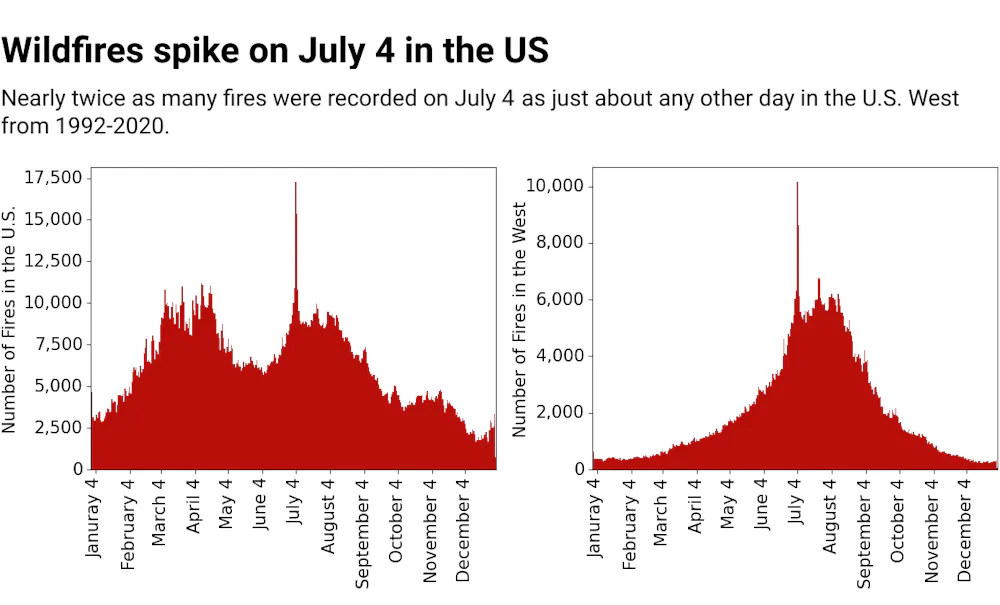








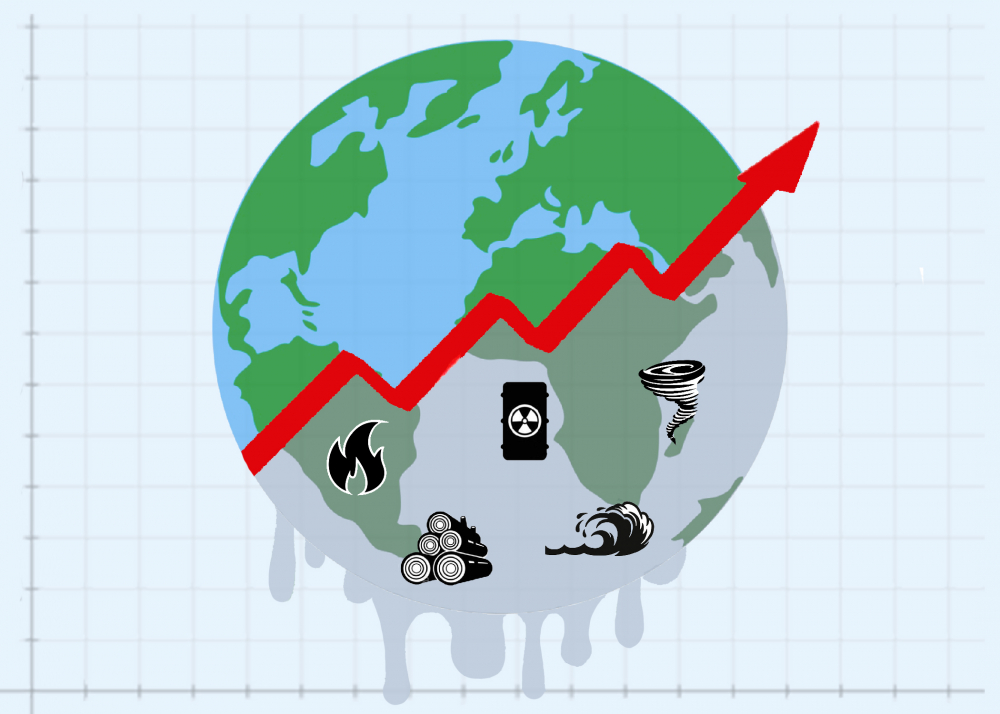







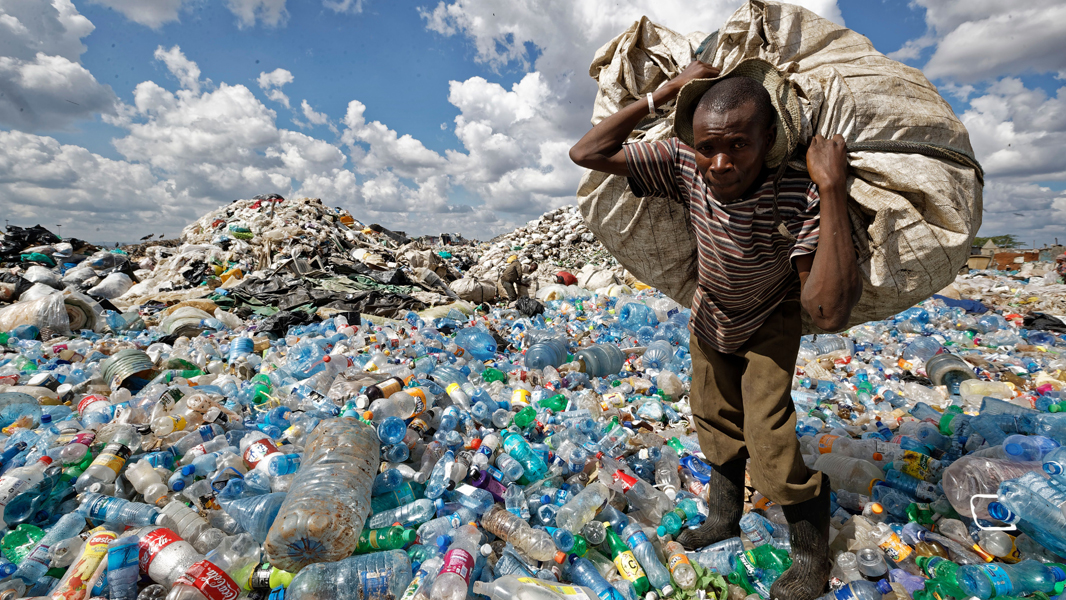











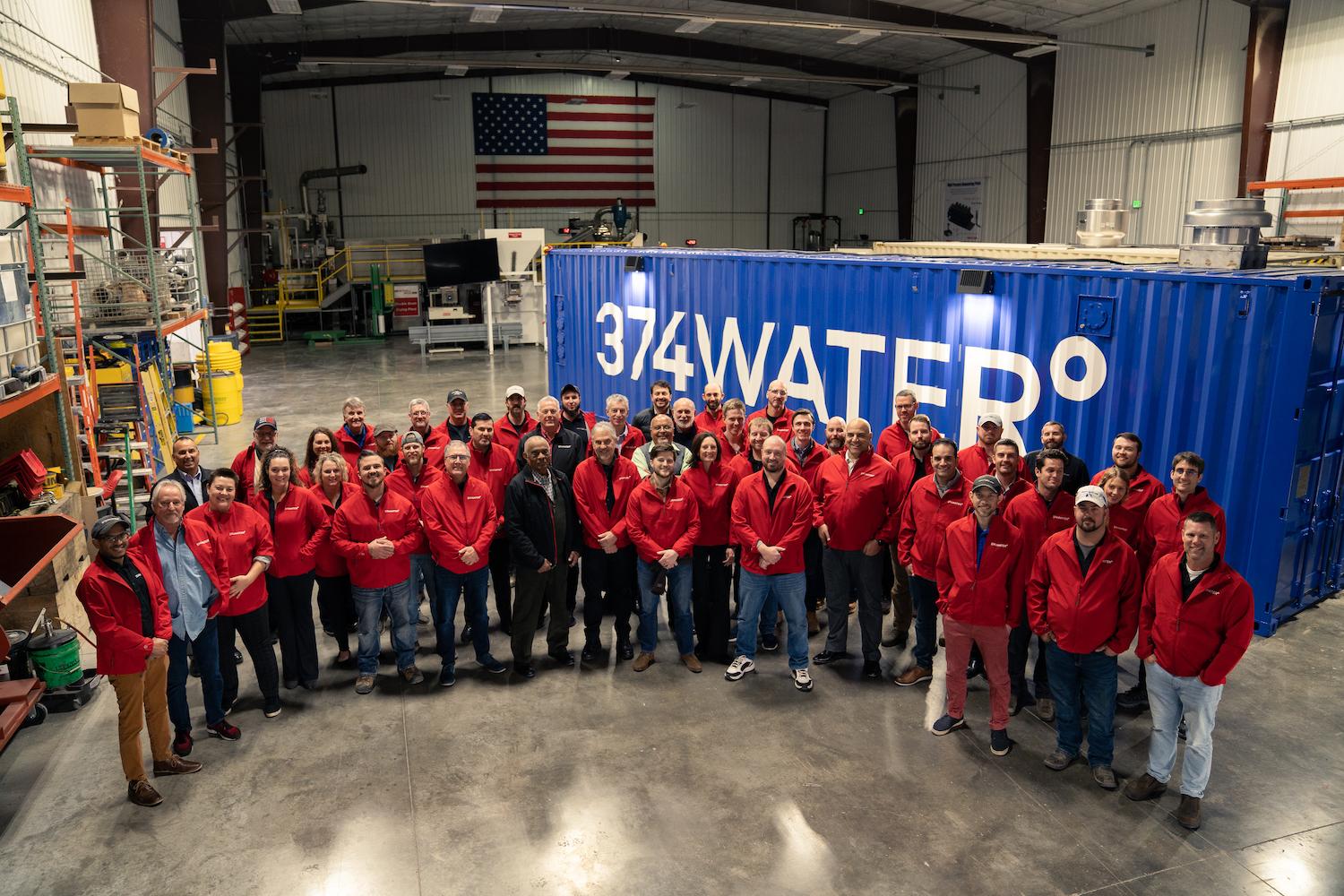
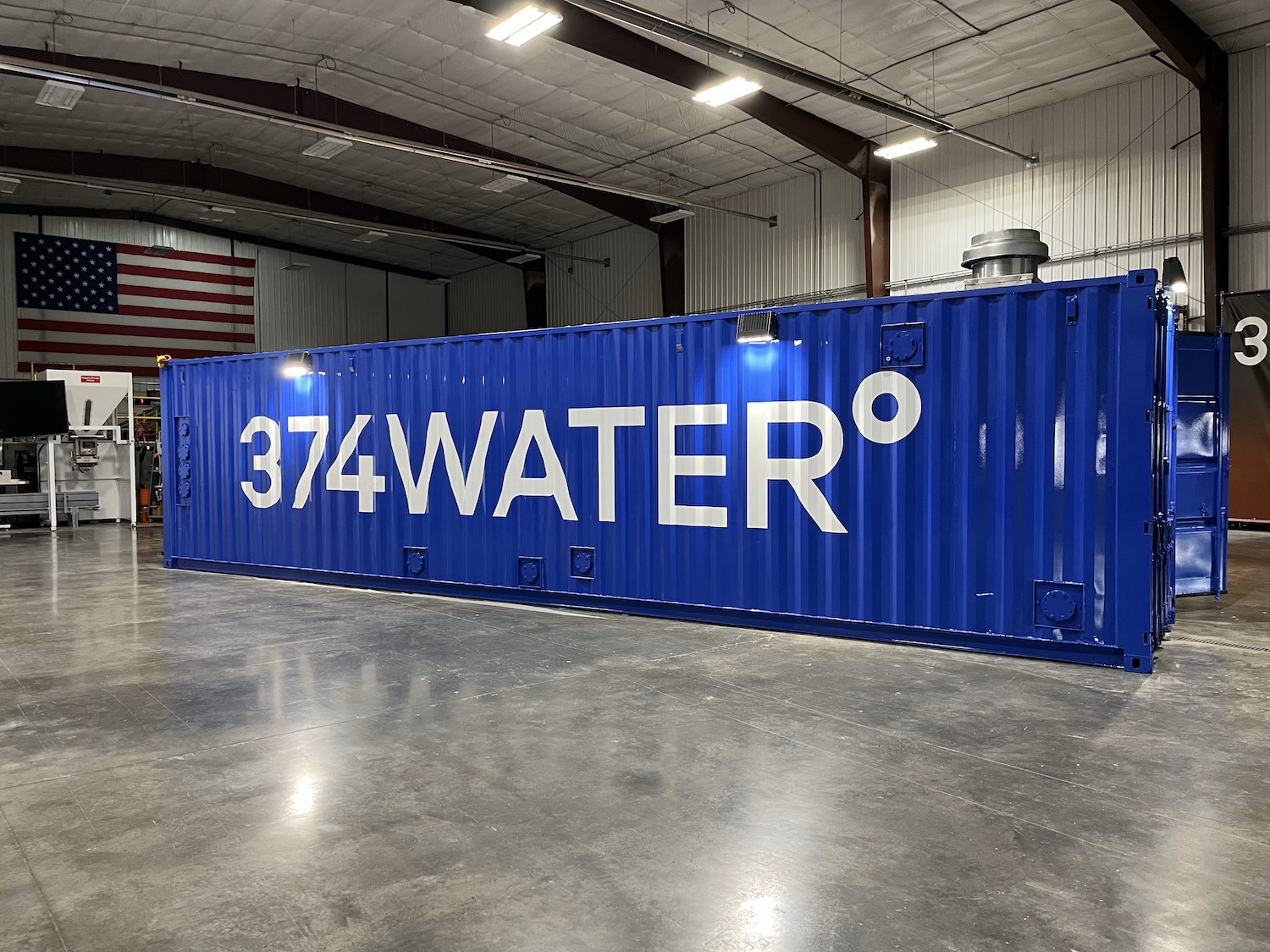
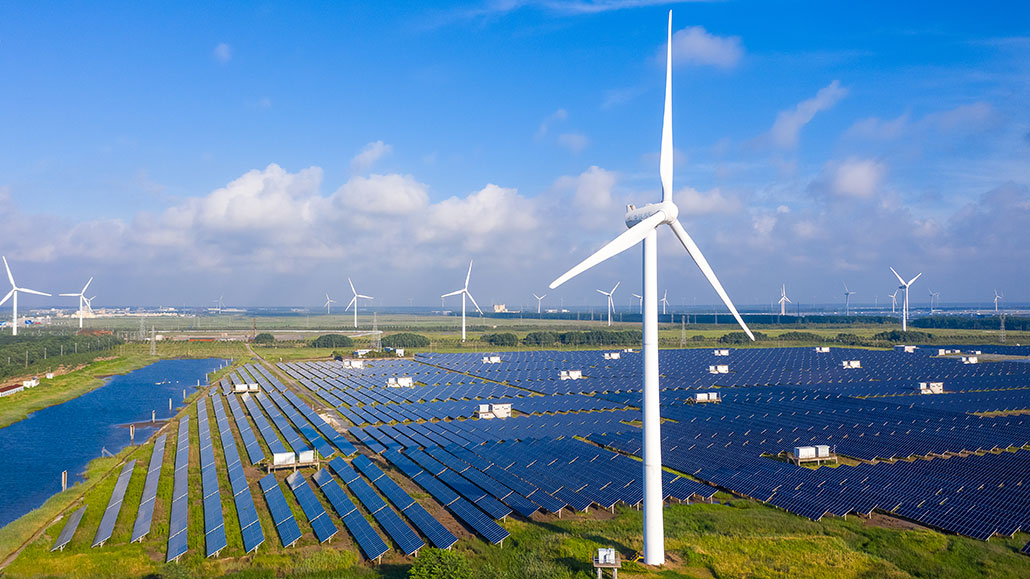
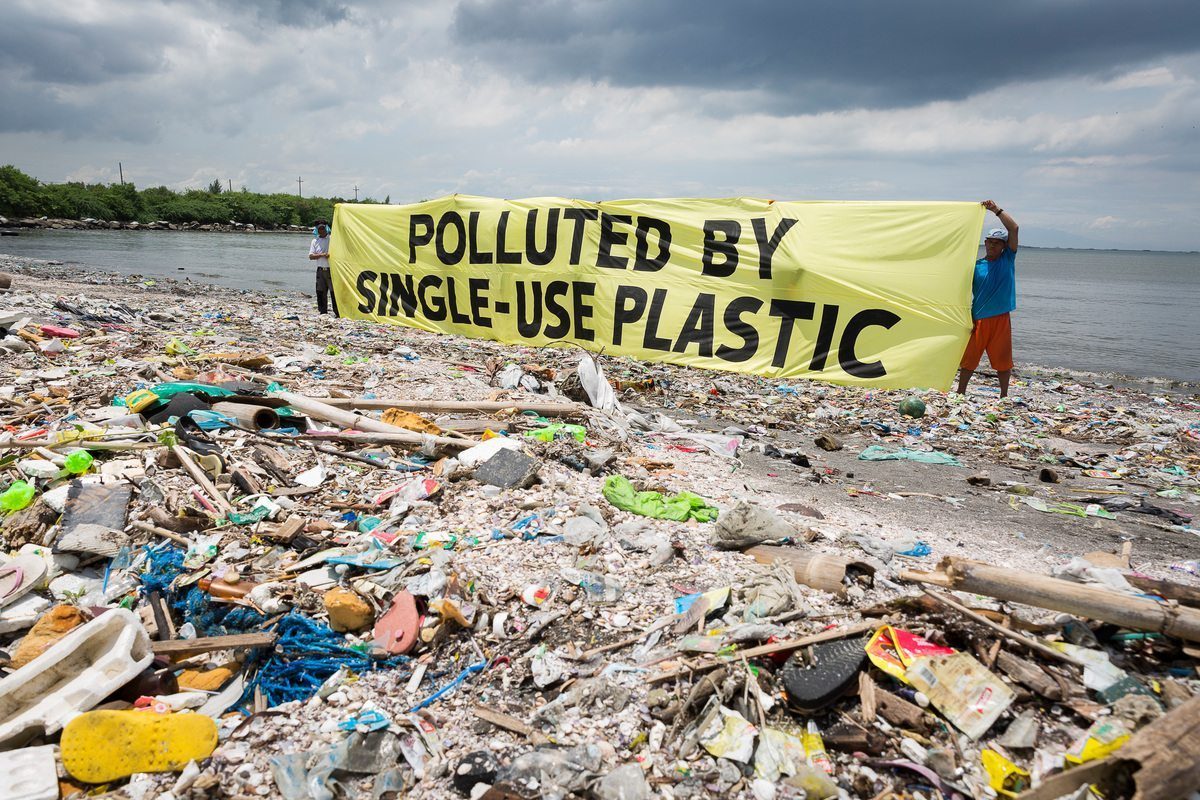
 Image credit:
  Image credit:
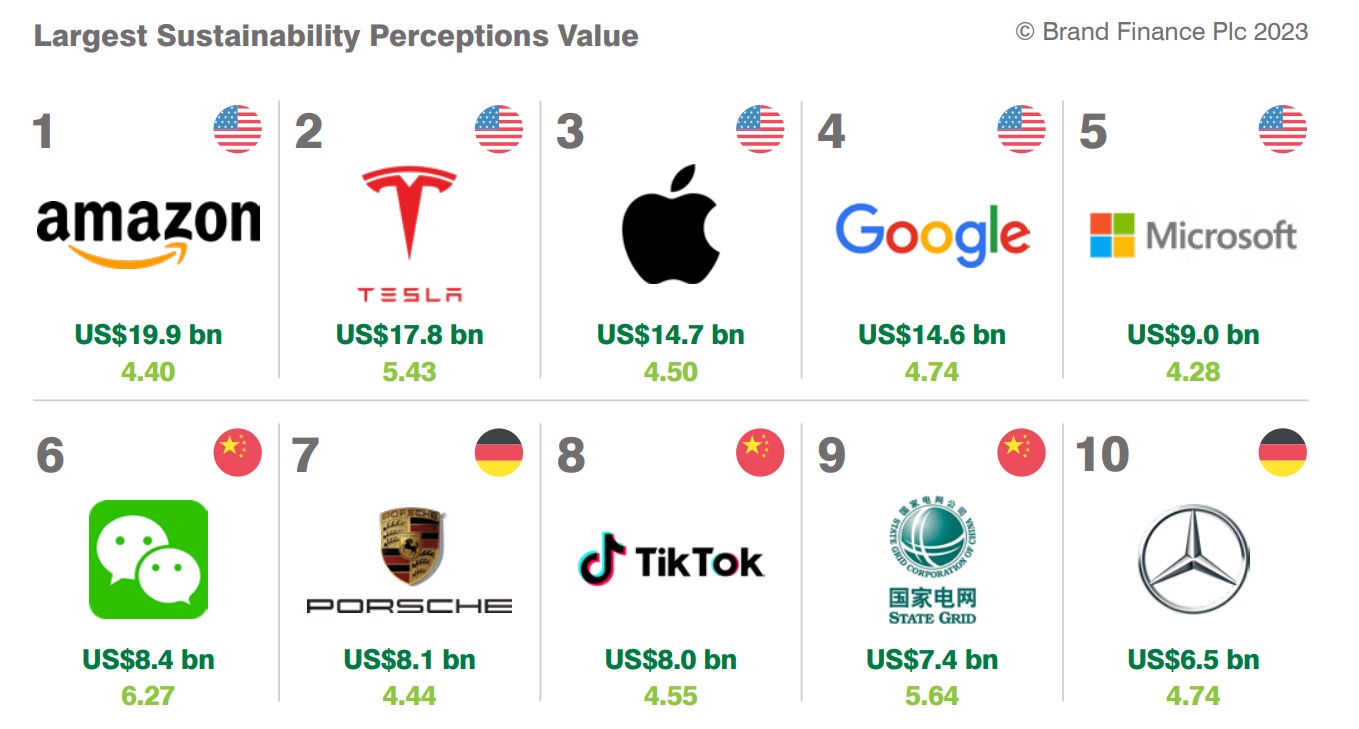
 View larger graphic
  View larger graphic



 Eric Block On Responsible Branding
You must be logged in to post a comment.