Assent’s Solution enables manufacturers to meet imminent EPA “forever chemicals” reporting requirements and mitigate business continuity risk through supply chain engagement. From Assent via Business Wire • Reposted: June 30, 2023
OTTAWA, Ontario–(BUSINESS WIRE)–Assent Inc. (Assent), a leading solutions provider in supply chain sustainability management, is helping manufacturers gain visibility into per- and polyfluoroalkyl substances (PFAS) in their supply chain in a time of significant regulatory change and unprecedented supply chain and market access risk. Today’s launch of Assent’s new solution at the company’s annual Evolve conference will empower manufacturers with a technology-enabled roadmap for managing PFAS risk.
“PFAS regulations are driving an unparalleled risk for companies. Today, we announced a solution enabling manufacturers to immediately engage with their suppliers and address PFAS chemicals in their products — all the way down the part level”Tweet this
Manufacturers can immediately leverage the Assent Supply Chain Sustainability Platform to collect PFAS data insights from supplier networks and take corrective action to reduce or eliminate regulated PFAS from within parts, products or processes. Assent’s regulatory expertsmonitor substances and regulations to create up-to-date risk mitigation programs to comply as required by law while staying ahead of constantly evolving global PFAS liability risks.
“The concerns and pressures around PFAS are real. There has been a shift from looking at things through the lens of compliance, to going beyond that with a proactive risk management strategy,” said Bill Pennington, Vice President of Research, EHS & Risk Management at Verdantix. “Organizations will need to embrace technologies in the market to navigate this new world, and ensure they are resilient to the risks associated with PFAS.”
PFAS are a large family of synthetic compounds commonly used in products and manufacturing processes, desired for the ability to provide water resistance or electrical insulation – characteristics which also prevent the chemicals from breaking down over time. With broad and expansive use since the 1940’s, 97% of Americans now test positive for PFAS in their bodies. Due to an association with serious health risks, governments in the U.S., EU, and around the world are implementing a greater number of controls and restrictions on these chemicals.
The U.S. EPA has an extensive roadmap to address the use of PFAS nationwide, leveraging numerous regulatory instruments such as CERCLA and the Safe Drinking Water Act. One significant new requirement is listed under TSCA Section 8(a)(7). Proposed in June 2021 with the final rule expected in this year, this regulation will obligate companies to report on nearly 1,400 PFAS chemicals, due 12 months after the final rule is published.
“PFAS regulations are driving an unparalleled risk for companies. Today, we announced a solution enabling manufacturers to immediately engage with their suppliers and address PFAS chemicals in their products — all the way down the part level,” said Andrew Waitman, Assent CEO. “The complexity and urgency in the regulatory environment will only increase, and that’s why manufacturers need to act now. Assent will be in lockstep with the urgency of the market so we can deliver the transparency and accountability our customers demand from their supply chains.”
The new solution allows manufacturers to gather extensive supplier data on PFAS substances present in parts and products and align this data with TSCA requirements and other state regulations, including detailed reporting by supplier, content, and regulation.
“Portage Electric Products Inc. (PEPI®) strives to achieve deep sustainability throughout our supply chains and ensure our customers have access to compliance data to reduce operational and product risk. We are committed to ongoing due diligence in our activities, upholding the highest standard of transparency and compliance with regulatory requirements in our operations,” said Assent solution client Ted Monty, Vice President, BSO, Product Engineering and Regulatory Product Compliance at Portage Electric Products. “It is imperative for our company, our supply chain, and our customers to be aware that PFAS are currently in our environment. We recognize the importance of not adding to current levels, and working together with current product compliance regulations to eliminate future concerns, and ensure environments remain sustainable for many generations to come.”
Marketing has a pivotal role to play in driving the significant change required to shift from a linear to a circular economy. By Marie Hattar via Fast Company • Reposted: June 30, 2023
Corporate social responsibility has long been viewed as a unifying organizational principle. These initiatives have successfully helped companies improve their impact on society, local communities, and the environment. However, the magnitude of climate-related problems is pushing environmental concerns to the forefront, with the principles of a circular economy gaining visibility as we understand the need to change how we produce and consume products.
The circular economy is a broad-reaching product lifecycle approach in the CSR space that reflects systemic change rather than a series of initiatives to achieve social, economic, and environmental sustainability. This means creating products that are more durable, reusable, repairable, and recyclable so they remain in circulation as long as possible. In addition, it requires a cultural shift to end the practice of make, buy, and throw away.
CIRCULAR ECONOMY 101
Driven by design, the circular economy involves eliminating waste and pollution, keeping products and materials circulating, and regenerating natural systems. This means designing for long-lasting use, then extending the product life by sharing, leasing, reusing, repairing, and refurbishing, ultimately ending with product and component recycling. This represents a shift in how we produce and consume goods and services.
And if the circular economy gains more traction, it can help slow the pace of rising temperatures. Global adoption remains slow, with less than 9% of economic systems embracing circularity. In addition to the sustainability benefits, there are other business advantages, including creating new revenue streams, cost savings, and reputational gains. By moving to a circular model, organizations can build a more sustainable and profitable entity, helping create a more resilient and responsible future.
Marketing plays a pivotal role in helping push circular economy approaches forward. Brands should champion the principles of less raw material and waste, resulting in fewer emissions. This can help fundamentally change how to promote and position products, and the focus should be on demonstrating evidence of living the values.
So, how can marketing teams help broaden the adoption of the circular economy? Below are some fundamentals to focus on.
PRODUCT REUSE
Patagonia is a prime example of a consumer brand that has long advocated for a more sustainable approach, as reflected by its Worn Wear initiative launched in 2013. The program aims to reduce the environmental impact of Patagonia’s products and ensure that its gear and clothing remain in circulation as long as possible by offering repairs by expert technicians. In addition, it has long demonstrated its commitment to recycling materials in its product range.
Every company, irrespective of industry or target persona, can follow Patagonia’s lead and adopt key principles of the circular economy. By promoting circular attributes of products, brands can differentiate and appeal to customers searching for more sustainable options.
For example, the Keysight Trade-In Program promotes and rewards technology refreshes for customers by offering compelling credits. This trade-in initiative helps keep electronic waste out of landfills, reduces the need for new products, and reuses existing equipment. This program has been highly successful, with 80% of the returned products resold and the remaining 20% recycled. The program is a vital part of our commitment to sustainability, repurposing, and reuse.
TRANSPARENCY = TRUST
Marketing teams should be clear on exactly how their products support the circular economy. Building trust with your audience requires disclosing critical information, including the product’s carbon footprint, reusability, and recyclability. Through campaigns, advertisements, and branding, marketing can show the entire life cycle, highlighting aspects such as designing for circularity, material sourcing, production, usage, and end-of-life management.
SHARING AND SERVICE
The sharing economy is another crucial piece of circularity, as it promotes allocating resources with multiple groups rather than a single entity helping maximize the usage. It can also uncover new revenue streams such as ride-sharing, coworking, peer-to-peer lending, and cloud solutions.
DIGITAL ACCELERATOR
Digital technologies like big data, IoT, and AI can help marketers optimize the circularity of products and materials and create more personalized and efficient experiences. At Keysight, our digital twin technologies allow organizations to evaluate new product designs. The virtual model ensures the solution is fit for purpose before building anything, supporting a more sustainable and efficient way to design and build products.
COST BENEFITS
There are many financial benefits from using recycled materials, minimizing waste, and extending the life of products. In addition, with governments increasingly introducing environmental regulations, organizations can ensure compliance by adopting circularity.
THE FUTURE IS CIRCULAR
Marketing has a pivotal role to play in driving the significant change required to shift from a linear to a circular economy. From demand creation for sustainable products and services to promoting the shift towards a more circular way of doing business, I believe CMOs must champion the cause. As teams embrace circularity, it’s vital to remember that the long-term benefits for the organization and the world far outweigh any short-term difficulty experienced.
And for anyone thinking about ignoring the circular economy, I will remind you of the wise words of Robert Swan: “The greatest threat to our planet is the belief that someone else will save it.”
Marie Hattar is CMO at Keysight Technologies, responsible for brand and global marketing efforts.
This is the second article in a two-part series about brands addressing police violence — click here to read part one.
In 2020, corporations donated billions of dollars to under-served and over-policed communities hoping to correct the deep-rooted systemic injustice that breeds police violence and brutality and underscores every aspect of our country.
It didn’t work.
An estimated 1,096 people were shot and killed by U.S. police last year, according to tracking from the Washington Post. That’s the highest number since the paper began keeping track in 2015 — with a disproportionate number involving Black Americans. U.S. police have killed 436 people since the start of 2023.
Creating a cultural renaissance to reduce police violence
When it comes to a polarizing topic like police violence, brands often prefer to weigh in with solutions-based rhetoric, rather than just restating the problem. So, brands are far more interested in suggesting police reform projects and less interested in publicly condemning police violence.
“Positive action and language always has more staying power,” said Diane Primo, CEO of the Purpose Brand agency. “Gun prevention versus gun violence, think about it like that. That creates lasting impact.”
Primo recommends an approach that’s different from many advocates, calling on brands to work toward creating a cultural renaissance in police forces that have been perceived as having a bias against Black communities.
“The police’s relationship with the community has broken down. A few bad apples have tainted the reputation of the dedicated officers who are committed to serving and protecting the community,” Primo said. “Local governments and the citizens they protect rightfully hold them accountable.”
So, how can brands support police-community engagement? “Continuous retraining and re-engagement with the community continues to be paramount,” Primo said. “Therefore brands should consider supporting and funding training and community engagement programs. Brands should ask police leadership what they need to accelerate their own transformation. I don’t think there’s a police force in this country that isn’t grappling with these issues while facing budgetary constraints.”
Police reform requires additional funding for police departments. If pro-reform Americans don’t want this additional funding to come out of local budgets, then they ought to embrace the concept of brands funding police department reform projects, Primo said.
Still, she understands the skepticism from critics wary of increased investments in police departments, the majority of which already boast hefty budgets. Though public safety across the nation has become inextricably linked to malpractice, corruption and the avoidance of accountability, Primo observed that similar issues are also prevalent in other sectors like healthcare, where a solutions-oriented approach has been effective.
“No one has a problem leaning in and saying, ‘Let me figure out ways to help ensure there is equitable health care,’” Primo said. “We know there are plenty of organizations with the ability to tactically provide solutions — what I’m proposing is not radically different.”
To achieve the police reforms advocates seek, it may be necessary to fund, rather than defund, police departments — just not directly. Diversity, equity and inclusion (DEI) goals, community outreach, de-escalation seminars, and interventions with problematic perspectives are all initiatives that brands can finance for police departments.
“It’s not necessarily pledging money to the police department open-ended. It’s providing restricted funds to accelerate their own internal transformation and engagement with the community,” Primo said. “These funds should be dedicated to rebuilding processes that embrace diversity when hiring, promoting and engaging with the community. This ensures institutional change. This is equivalent to the same internal diversity challenges that corporations and brands face. I would argue that it is brutality of a different sort.”
Cops can take a page out of corporate America’s DEI playbook
Police departments increasingly find themselves tasked with addressing the symptoms of larger societal crises that complicate a police officer’s normal duties. Black-and-white laws cannot accommodate the gray space created by systemic issues like poverty, socioeconomic inequality and community disinvestment.
“The issue of policing is far more complex than many understand, meaning they are really at the center of things that are socially and economically so out of hand. This creates its own set of unique problems,” Primo said. “When you have a community that is not healthy because they can’t get jobs. They don’t have a living wage to support their families. There’s a transportation issue in their community. There’s a healthcare issue in their community. When you’re talking about crossing the ZIP code and having mortality change. That’s going to create a special set of problems.”
These same communities, though, hold the key to unlocking a better model of policing. In communities that harbor strong distrust, fear and skepticism of law enforcement, there lies the potential for a new generation of police officers who are better equipped to navigate the challenges of enforcing the law in an underserved and over-policed community.
Yet in areas where police departments have acted downright antagonistic toward civilians, how are these same departments to recruit from a group of people who have only ever had negative experiences with cops?
Once again, companies have the potential to bridge this gap, Primo said. If brands really want to commit to police reform, they will need to invest in reforming both police personnel, as well as the communities they serve and protect.
“What dollar amount can brands give to support education? What dollar amount can brands give to create a better relationship between the community and the police, and actually fund more positive policing in the community?” Primo asked. “Helping the police figure out how to attract more prospects of color into the police force so they, too, achieve diversity.”
American police officers lost the trust of the people they are supposed to protect. For many young people, trust in police is not eroded — it is non-existent. To win it back, police need to plant the seeds of community engagement. And corporations can help connect these seemingly incompatible camps. This young generation recognizes the power of corporations to enact change and has leveraged brands to act on various topics in the past, including police violence. So, it is not a stretch to suggest activists could again pressure corporations to fund police reform.
“Sticking power really is about how to create positive change — you don’t approach that negatively. And that’s why during the George Floyd protests, people talked positively about, ‘What can I do? What does this mean?’” Primo said. “From a brand perspective, think about the transparency that was created in your own organization with the acceleration of DEI reporting, DEI officers and DEI hiring. The question remains: Will it continue, and what will the impact actually be today and over time?”
For this to work, though, police must commit to reforming their own procedures and perspectives. Brands must commit to putting their money where their mouth is and continue their reform work after the media stops covering it. Activists must acknowledge that abolishing and significantly defunding the police are unrealistic goals — the pursuit of which fails to address, and even exacerbates, the present policing problems.
“We know that whenever there’s a crisis, positive change can come out of it,” Primo said, “There is potential here for positive change, for brands to support the police in very positive ways.”
By Tina Casey from Triple Pundit • Reposted: June 29, 2023
The renewable energy trend crossed partisan boundaries decades ago when red and blue states alike partook in the hydropower boom of the mid-20th century. More recently, some state officials have tried to push the clean power genie back in the bottle by ginning up action against ESG (environmental, social and governance) investing. They have achieved some success, but investors just can’t resist the opportunities offered by new clean technologies.
The anti-ESG movement is mostly hot air
In a new report, the consulting firm Pleiades Strategy tracked 165 bills introduced by Republican lawmakers across 37 states, all aimed at steering government pension fund managers and contracting agencies away from ESG principles. Since the “E” in ESG leans heavily on renewable energy, the main thrust of the legislation is to protect fossil energy stakeholders.
Last week, Pleiades reported that the legislative push has met with significant pushback. “This coordinated legislative effort, commonly referred to as the anti-ESG movement, generated massive backlash from the business community, labor leaders, retirees, and even Republican politicians,” a new report from the firm reads.
Among the 165 bills it identified, only 21 became law. Many were substantively amended to satisfy objections. “Broad escape clauses were added to limit the most draconian prohibitions, which experts have warned legally contravene the basic tenets of fiduciary duty, creating a ‘liability trap,’” the report reads.
Renewable energy is not a new “woke” craze
The Republican-dominated state of South Dakota provides a living example of the extent to which anti-ESG office holders are out of step with business leaders.
Anti-ESG rhetoric is larded with scary talk that warns of a new “woke” threat taking over the country. But there is nothing new about renewable energy in the U.S., and South Dakota is a case in point.
In March, South Dakota Gov. Kristi Noem signed an open letter with 18 other Republican governors, warning that the “proliferation of ESG throughout America is a direct threat” that puts “investment decisions in the hands of the woke mob.”
Nevertheless, South Dakota continues to benefit from the 20th-century hydroelectric program. The U.S. Energy Information Agency (EIA) notes that 3 of the 4 biggest power plants in South Dakota are hydropower facilities that were built more than 60 years ago.
South Dakota’s agriculture industry has also benefited from longstanding federal policies going back to the Energy Policy Act of 1978. South Dakota is currently the fifth-largest producer of bio-ethanol among the 50 states, all from corn.
In addition, South Dakota grabbed onto the wind energy coattails fashioned by Iowa and Texas legislators in the 1990s and early 2000s. Wind contributed more than 50 percent to South Dakota’s grid in 2021, with hydropower coming in second, according to the EIA. Coal and natural gas each contributed less than a tenth.
More wind power for South Dakota
Activity in the South Dakota solar industry has also begun to stir. But much attention remains focused on wind resources, including tribal lands. “Four of the nation’s top five reservations with the greatest wind-powered electricity generation potential are in South Dakota,” the EIA observes.
Transmission bottlenecks have been a roadblock to wind development in South Dakota, as in other states. Back in 2012, several South Dakota Sioux tribes organized to overcome the obstacles by forming the Oceti Sakowin Power Authority — which holds an estimated 60 gigawatts of potential wind capacity on tribal lands. Pending resolution of the transmission bottleneck, an initial tranche of projects is in the planning stages.
Diversification in the renewable energy field
New clean power technologies are also popping up in South Dakota. Much of that activity is focused on renewable natural gas (RNG), sourced from the state’s copious production of livestock manure.
At the start of the year, the Pennsylvania-based holding company UGI Corp. announced an investment of $150 million for two new RNG clusters in South Dakota, drawing from multiple dairy farms. The two projects add to a third cluster previously announced, with an investment of $70 million.
The Michigan company DTE Vantage also opened a massive RNG facility in South Dakota last summer. Another RNG company with a hand in the state is the global firm Biogest — which claims “RNG is the only renewable energy source that can be carbon-negative, as it significantly reduces methane emissions from agricultural operations.”
ESG or not, new green fuel industries are growing
Sustainable aviation fuel is another new industry establishing a footprint in South Dakota. In 2021, the biofuel firm Gevo began laying plans for an aviation biofuel plant that leverages the state’s corn growers as well as its wind industry.
The Gevo facility broke ground last fall. It includes a green hydrogen system, representing still another potential new industry. With an ample supply of both renewable energy and water, South Dakota has all the basic ingredients for a green hydrogen industry that could lead to follow-on opportunities in green ammonia and e-fuels production.
South Dakota businesses want renewable energy
The Joe Biden administration issued a fact sheet last March that drew attention to supportive relationships between renewable energy producers and other businesses in South Dakota. The White House took note of the meat producer Kingsbury and Associates, which is investing in a new $1.1 billion processing facility in Rapid City. Kingsbury says the new plant will rely on renewable energy, including captured biomethane, to achieve bottom-line results in a competitive environment.
Another indicator comes from the solar developer GenPro Energy Solutions. In May, the company received equity growth funding from the in-state financial firm South Dakota Equity Partners and an established South Dakota investor. The partners launched a new GenPro branch that aims to “open doors to South Dakota and other regional energy providers desiring to develop utility-scale solar projects while embracing South Dakota values,” according to GenPro.
Against this backdrop, last week the Washington Post took notice when an unnamed lobbyist for the Greater Sioux Falls Chamber of Commerce “scolded the supporters of anti-ESG legislation.”
Speaking of “woke,” all of this should be a wake-up call for anti-ESG candidates. It may be too late to make a course correction in time for the all-important 2024 election cycle, but 2028 is right around the corner.
This year’s awards recognized a historic number of climate-related campaigns; but as an industry, we continue to talk in circles. By Tom Kolster from Sustainable Brands • Reposted: June 29, 2023
You can’t ignore the world’s biggest advertising festival, Cannes Lions, and its impact. Yet talking about sustainability at an advertising festival as grand as Cannes can still feel like pitching peace at a weapons conference.
Marcel Marcondes, global CMO of AB InBev, opened the festival – he did so, because AB InBev is the first brand in the festival’s history was named Advertiser of the Year for the second year in a row for its successful and effective way of driving growth. He reminded us that, while everyone can make mistakes, his role is to utilize creativity and his partner agencies’ creativity to drive that growth.
The big question is: Can the advertising industry ever grow responsibly? The urgent call for climate action launched ahead of Cannes Lions this year stayed mostly unanswered across both the programming and the conversations. DEI was strongly represented, as it has been for many years — and it is supported by a Glass Lion; yet, climate still doesn’t have an award or even a focused track at the festival. This is a disappointment, as our industry lacks education — as is evident on the reemerged focus on greenwashing. For me, it’s like going back a decade, when greenwashing was first a concern. It’s incredibly sad to see that we keep talking about the same things instead of exploring the tougher topics.
There’s a push to turn sustainability and climate into a black and white topic. It’s the industry’s own fault, with its counterproductive focus on corporate activism — which, for the most part, is virtue signaling. The way forward is to be found in the nuances within the topic of sustainability — and that’s what we need to discuss at Cannes. It should be a meeting of peers, where we’re not afraid to discuss and where we acknowledge it’s ok to disagree. We need honest climate conversations — not yet another sales pitch from a brand that went from talking about the greatest mayonnaise in the world to how great it is at saving the world.
Standout climate-related creative
As big a disappointment as Cannes Lions was across programming and the lack of focus on climate, it’s the first time in its history that we’ve seen that many Grand Prixes and Golds focused on climate. My top pick would be the campaign by theUnited Nations Global Compact’s Brazilian arm that turned Earth into a company, EART4, and took it public on the stock exchange. The work shines a light on the importance of putting a value on our planetary dependency — and how climate change is creating real economic havoc around the world.
It was also great to see the challenges transforming the Global South being tackled in a second Grand Prix. As rising sea levels due to climate change threaten its physical territory, the island country of Tuvalu has been forced to become the “world’s first digital nation.”
The Solar Impulse Foundation, founded by explorer and environmentalist Bertrand Piccard, launched an exciting legislative push in France — “Prêt à Voter” (“ready to vote”). It’s 50 law proposals shared with elected French MPs to help accelerate current regulations for the climate transition; already, three of them have been adopted. Creativity does work!
I also want to share one low-tech idea: Life-Extending Stickers — clever produce stickers created by South African retailer Makro that can help consumers stop wasting fresh fruit and vegetables by educating them on how to use different items at different stages of ripeness. The sticker’s gradient matches the ripeness color of various fruits and vegetables. Along the wheel, text shows you the best way to cook it at each color: Bananas, for example, smoothly transition from green (fry it) to yellow (ice cream) to slightly brown (tempura) to brown (“cupcake”).
Lights, camera, climate action?
There are two types of brands in Cannes. Those that stick to their strategy and despite economic uncertainty push forward on sustainability. And then there are those that think short term and abandon the ‘green’ ship (it’s like pissing in your pants — it will stink at some point).
Let’s embrace failure. I’m not perfect (admittedly, I sometimes unintentionally help companies that greenwash; but on a good day, I believe I’m leaving an impact) and our industry is far from perfect (it’s still an oxymoron to talk about sustainability and advertising). Yet let’s embrace creativity and put marketing and advertising as the lead horse behind responsible and, hopefully one day, sustainable or even regenerative growth. Our climate-changing world is just waiting for us to answer.
Visitors wait to board shuttles at the Temple of Sinawava during Memorial Day Weekend 2022, Zion National Park, Utah, date unspecified | Photo courtesy National Park Service / Jonathan Shafer, St. George News
By Emily Wakild, Cecil D. Andrus Endowed Professor for the Environment and Public Lands, Boise State University via The Conversation • Reposted: June 28, 2023
Outdoor recreation is on track for another record-setting year. In 2022, U.S. national parks logged more than 300 million visits – and that means a lot more people on roads and trails.
For all of their popularity, national parks are just one subset of U.S. public lands. Across the nation, the federal government owns more than 640 million acres (2.6 million square kilometers) of land. Depending on each site’s mission, its uses may include logging, livestock grazing, mining, oil and gas production, wildlife habitat or recreation – often, several of these at once. In contrast, national parks exist solely to protect some of the most important places for public enjoyment.
In my work as a historian and researcher, I’ve explored the history of public land management and the role of national parks in shaping landscapes across the Americas. Many public lands are prime recreational territory and are also becoming increasingly crowded. Finding solutions requires visitors, gateway communities, state agencies and the outdoor industry to collaborate. U.S. public lands are managed for many different purposes by an alphabet soup of federal agencies.
Alternatives to national parks
The U.S. government is our nation’s largest land manager by far. Federal property makes up 28% of surface land area across the 50 states. In Western states like Nevada, the federal footprint can be as large as 80% of the land. That’s largely because much of this land is arid, and lack of water makes farming difficult. Other areas that are mountainous or forested were not initially viewed as valuable when they came under U.S. ownership – but values have changed.
Public lands are more diverse than national parks. Some are scenic; others are just open space. They include all kinds of ecosystems, from forests to grasslands, coastlines, red rock canyons, deserts and ranges covered with sagebrush. They also include battlefields, rivers, trails and monuments. Many are remote, but others are near or within major metropolitan areas.
Many people who love hiking, fishing, backpacking or other outdoor activities know that national parks are crowded, and they often seek other places to enjoy nature, including public lands. That trend intensified during the COVID-19 pandemic, when lockdowns and social distancing protocols motivated people to get outside wherever they could.
The rise of remote work has also fueled a population shift toward smaller Western towns with access to open space and good internet access for videoconferencing. Popular remote work bases like Durango, Colorado, and Bend, Oregon, have become known as “Zoom towns” – a fresh take on the old boomtowns that brought people west in the 19th century.
With these new populations, gateway communities close to popular public lands face critical decisions. Outdoor recreation is a powerful economic engine: In 2021, it contributed an estimated US$454 billion to the nation’s economy – more than auto manufacturing and air transport combined.
But embracing recreational tourism can lead local communities into the amenity trap – the paradox of loving a place to death. Recreation economies that fail to manage growth, or that neglect investments in areas like housing and infrastructure, risk compromising the sense of place that draws visitors. But planning can proactively shape growth to maintain community character and quality of life.
Broadening recreation
People use public lands for many activities beyond a quiet hike in the woods. For instance, the Phoenix District of the federal Bureau of Land Management operates more than 3 million acres across central Arizona for at least 14 different recreational uses, including hiking, fishing, boating, target shooting, rock collecting and riding off-road vehicles.
Not all of these activities are compatible, and many have not traditionally been rigorously managed. For example, target shooters sometimes bring objects like old appliances or furniture to use as improvised targets, then leave behind an unsightly mess. In response, the Phoenix District has designated recreational shooting sites where it provides targets and warns against shooting at objects containing glass or hazardous materials, as well as cactuses.
Shooting at targets that contain glass or hazardous materials can contaminate nearby land. BLM
Skiing also can pose crowding challenges. Many downhill skiing facilities in the West operate on public land with permits from the managing agency – typically, the U.S. Forest Service.
One example, Bogus Basin Mountain Recreation Area is a nonprofit ski slope 16 miles from Boise, Idaho. Demand surges on winter weekends with fresh powder, creating long lift lines and crowded slopes.
The mountain is open for 12 hours a day, and Bogus Basin uses creative pricing structures for lift tickets to spread crowds out. For example, it draws younger skiers with discounted night skiing and retired skiers during the week. As a result, the parking lot only filled up once in the 2022-2023 season.
Local governments can help find ways to balance access with creative crowd management. In Seattle, King County launched Trailhead Direct to provide transit-to-trails services from Seattle to the Cascade Mountains. This approach expands access to the outdoors for city residents and reduces traffic on busy Interstate 90 and crowding in trailhead parking lots.
Other towns have partnered with federal land agencies to maintain trail systems, like the Ridge to Rivers network outside Boise and the River Reach trails near Farmington, New Mexico. This helps the towns provide better nearby outdoor opportunities for residents and attract new businesses whose employees value quality of life. Creating corridors from the “backyard to the backcountry,” as the Bureau of Land Management puts it, can help create vibrant communities.
A less-extractive view of public lands
For many years, Western communities have viewed public lands as places to mine, log and graze sheep and cattle. Tensions between states and the federal government over federal land policy often reflect state resentment over decisions made in Washington, D.C. about local resources.
Now, land managers are seeing a pivot. While federal control will never be welcome in some areas, Western communities increasingly view federal lands as amenities and anchors for immense opportunities, including recreation and economic growth. For example, Idaho is investing $100 million for maintenance and expanded access on state lands, mirroring federal efforts.
As environmental law scholar Robert Keiter has pointed out, the U.S. has a lot of laws governing activities like logging, mining and energy development on public lands, but there’s little legal guidance for recreation. Instead, agencies, courts and presidents are developing what Keiter calls “a common law of outdoor recreation,” bit by bit. By addressing crowding and the environmental impacts of recreation, I believe local communities can help the U.S. move toward better stewardship of our nation’s awe-inspiring public lands.
Now’s the time to take all that effort and integrate it into fun engagement opportunities for both your workforce and your brand’s biggest fans. Here are our seven favorite ideas for doing just that. From Barkley via Sustainablebrands.com • Reposted: June 28, 2023
Say you just received your B Corp certification or published your annual sustainability report — congrats! So much work; such important initiatives, goals and commitments — all of which deserve both applause and audience.
But brace yourself: Your work’s not done — we’re trying to change the world, after all — but the next steps don’t have to be so laborious. Now’s the time to take all that effort and integrate it into fun engagement opportunities for both your workforce and your brand’s biggest fans.
Here are our seven favorite ideas for doing just that, collected through years of promoting and publicizing both our B Corp certification and annual impact reports and those of our clients. Steal wildly; get credit for all you’re doing!
1. Timing is everything.
Pick an intentional launch date for your report that is relevant to your brand. We launched our latest Impact Report on June 1 — coinciding with our annual company-wide volunteer day, Goodworks. We’ve also shared it during an annual creativity festival, where it was received with a theater full of enthusiasm.
Think: What events, occasions or holidays are meaningful to your organization and thematically align with the goals and initiatives you feature in your sustainability report?
2. Win inside to win outside.
Every day, we find new ways to express the importance of operating as a responsible, sustainable, certified B Corporation — but we can’t do it without our employees. That’s why we tap them to star in content we create for presentations, speeches, speaker booths and on social media throughout the year. And we regularly ideate and share tips and tricks to both live and work sustainably: We like to create what we call one-sheeters — a single page of ideas to print on recycled paper (we posted ours in the restrooms!) or display on digital screens — to help employees keep sustainability goals top of mind. Composting at the office increased three-fold with proper signage.
Think: How can you celebrate your wins with your employees to inspire them and share tangible ways they can see themselves in the sustainability work that needs to be done throughout the year? Your people make your progress possible.
3. Lean into your brand’s beloved rituals or icons.
Our company HQ features a retired TWA rocket on the rooftop; so our employees lovingly call themselves ‘rocket people’ — which means yes, astronaut mascots frequently appear at various events throughout the year. This ritual inspired the creative imagery for the reports, social content and print materials we used to announce our B Corp certification to the world. Iconic imagery makes for inspired social sharing from your brand’s true believers.
Think: What rituals, icons or imagery has significant meaning to your employees and brand identity; and how can you use it within both your report (next year) and how you promote it?
4. Bring on the (sustainable) swag.
We think through our impact on our communities through every action we take — from supporting our client’s production needs down to our preferred caterers. And we love opportunities to support local, women-owned and minority-owned businesses. So, when it came time to celebrate our B Corp certification, we sent our employees a box of goodies and Barkley-branded merch to celebrate, sourced from diverse suppliers and fellow B Corp brands: confetti seeds; a reusable tote with the iconic astronaut photo; a copy of our book, The Purpose Advantage; and a bento box for to-go lunches on office days. Thematically on point; extra points for usability.
Think: Can you include your employees on what type of swag they’d be proud to use, wear or celebrate — or even give them a chance to opt out to save waste if they aren’t interested? Then, can you intentionally source these items from diverse, local, minority-owned or B Corp-certified vendors?
5. Share the love and add a hashtag.
At Barkley, our mission is to #addgood to everything we do — a mantra we’ve used so much over the years, we created a hashtag our partners know to use any time client work, a volunteer effort, shareable ideas and especially our sustainability work is mentioned on social media. One of our favorite ways #addgood comes to life? A content series we call “People of Barkley” — a showcase of the diverse perspectives and creative talent who animate our brand. Encourage your employees to use it when speaking about their contributions, and pulling content to include in next year’s report will be easier, too.
Think: How can you encourage your employees to share and promote the good work your brand is doing in a way that feels authentic to both them and your brand?
6. Turn metrics into gratitude + awareness opportunities.
Every year, we feature in our report external partners, clients, vendors, suppliers and other stakeholders that help us achieve our sustainability goals — hopefully, you do, too! We also reach out to these stakeholders post-launch to personally thank them for helping us reach our goals and sharing future plans and expectations for our ongoing partnerships.
Think: How can you mine your ESG metrics and trace them back to individuals and organizations critical to your progress? Then, what type of personalized gesture can you create to share your gratitude and encourage continued collaboration?
7. Start now to build next year’s report.
Once our report is out in the world, we debrief to level-set and re-align on the work ahead. This allows us to analyze what worked, what was hard and where we can improve for next year. A huge discovery for us was realizing that collecting stories, testimonials, case studies, photographs and video year-round makes the following year’s report compilation that much easier — and adds flair and personality to the report itself.
Think: Can you hire or assign an employee resource group to capture and cover events and opportunities that can not only feed next year’s report in terms of stories and content, but can also add value, recognition and encouragement to employees doing this work throughout the year? Are there existing communication channels inside or outside of your organization — like your company’s intranet or LinkedIn — from which you can mine stories for your report year-round?
From employees and external stakeholders to your brand’s biggest fans, the people who believe in your brand are your most valuable resource and a competitive advantage for your business. Intentionally investing in ways to encourage their belief and involvement in your sustainability strategy is key to maximizing momentum toward your goals — and that’s a win-win for everyone.
Sponsored Content / This article is sponsored by Barkley. This article, produced in cooperation with the Sustainable Brands editorial team, has been paid for by one of Sustainable Brands sponsors.
Goodee is one of the world’s leading curated marketplaces that offers housewares and lifestyle products centred around responsible brands, artisans and items for consumers who want to make a difference with each purchase. Founded in 2017 by Montreal’s Byron and Dexter Peart – the twin brothers, designers and entrepreneurs behind the brand WANT Les Essentiels – their aim was to launch and develop brands that provided “sustainable solutions for modern living.” Goodee has gone on to become a global online platform that combines “good design, good people and good purpose,” with an assortment of products from creators across the globe.
“We’re serial entrepreneurs,” Dexter Peart told us during a recent conversation. “It courses through our veins, and we saw an opportunity. Byron and I have always been proponents of trying to bring deeper, more thoughtful and more considerate stories about things that you may need in your life, and that you really want.” He goes on to say it’s about wanting less and prioritizing the quality of what you do own. “We thought that there were other people out there who wanted to have a deeper connection to the products and the stories around the products that they were bringing into their lives, but we couldn’t find [a platform]. So we decided to build it.”
Design is at the Heart of Goodee
“In our heads, we were going to tell this story about really great people and the impact that they’re making,” said Dexter. He continued, “Ironically, for two design guys, the thing that came at the end was the design. It was almost like we didn’t think about the power of design. We understood the power of human connection and impact, but we didn’t fully appreciate that the design was really the story until before we launched.”
Design became the heart of Goodee and the foundation on which their marketplace was built. Dexter described their approach: “If you put design at the centre of this entire conversation, then the conversation doesn’t live as only an environmental or social conversation. It becomes inspirational through the design, quality, craftsmanship and preservation of craft. But then it also becomes aspirational, because it’s building on the future. It helps us think about how design moves us forward.”
The Beauty of Upcycling
We live in a culture where household items are built to break and be replaced, encouraging consumers to buy even more. When a marketplace like Goodee comes along, it not only provides quality products that are durable and aesthetically pleasing but they’re also made by creators who design with intention. Upcycling and repurposing is a big part of this, like one of Dexter’s favourite brands on the site, ecoBirdy. The best-selling line of furniture takes old children’s toys, separates them by colour, and upcycles them into gorgeous chairs and tables for kids. Dexter had an anecdote about the brand and how it instills this idea of circularity from a young age:
“I’ve got two young girls, now 13 and 10, but when they were a bit younger and they had their ecoBirdy (pieces), I didn’t have to tell them about the concept of circularity; they were living it day to day through design. They were looking at products and understood that these products were something in the past and that they’re going to be something else in the future,” Dexter illustrated. “Design has a really exciting power to be able to translate how hard it is to think about environmental and social impact, and make it easier for people through the things that surround them because there’s beauty in those things. Ultimately, these are the things that we want to last, to carry with us when we move. We’re not going to throw them out because we know there’s a human story, or an environmental story or a design story that lives alongside those products.”
Outdoor Connection
Dexter reminded us that home decor isn’t just about interior spaces. “A lot of our customers have a connection to nature, the outdoors and biophilia. It’s not lost on us that post-pandemic, some of these rituals and ideas of being outside have become more pronounced,” he shared. “We see that when people think about spaces, they’re not just thinking about their internal space. They’re thinking about all of these spaces around them, and when they’re treating their outdoor spaces, they’re just as interested in trying to add a level of personality as they are to their indoor spaces.” He added, “What we try to do is build this level of fluidity, for instance, the Bergs Potter planters that can go out and then come back in as the seasons change. It’s been exciting to think about outdoor [products] in general, because it feels quite natural to the brand. There’s a level of Canadiana in Goodee where the outdoors is always speaking to us.”
The goal for Goodee is to create outdoor tools that are just as aesthetically pleasing as they are functional, so they can be left out for display rather than stowed away in a shed. “People are more immersed in their gardening, and they want tools that are going to be part of that ritual,” Dexter told us.
What’s Next for Goodee?
“One of the things that we found throughout the past couple of years is that businesses have been coming to us as well,” Dexter explained. “Some of the most amazing companies want to work with Goodee. Architects and designers are reaching out to us. Office companies are also reaching out because they’re refitting their office spaces to feel more like home, and the values of the office need to reflect what the people who work there believe in.”
Currently, Goodee has a partnership with Steelcase, the largest office furniture company in the world, to help with decor and stylization, adding thoughtful touches that make the entire office environment more welcoming. “It’s been really exciting for us as we move forward,” said Dexter.
Ultimately, Goodee aims to support consumers as they seek out products that have a positive social and environmental impact. Dexter left us with this final thought: “Byron and I launched this company thinking about the end consumer. The customer wants to make a better choice, but doesn’t really know how to do that, so what if we can create a destination to help them make that choice?”
The GFA Designer Challenges featuring Puma and Collina Strada will be showcased in an interactive exhibition at the Global Fashion Summit: Copenhagen Edition on 27-28 June. Credit: Global Fashion Agenda
From the Global Fashion Summit • Reposted: June 27, 2023
On the eve of Global Fashion Summit, Global Fashion Agenda (GFA) has unveiled global fashion brands PUMA and Collina Strada’s responses to the GFA Designer Challenge 2023. The GFA Designer Challenge, presented by Smiley, is an initiative following exceptional Creative Directors and their sustainable design processes from original idea to final product: matching style and ingenuity with supercharged solutions. Two captivating new videos depicting the journeys of designers from PUMA and Collina Strada have been released today.
Less than one per cent of textile waste is recycled into new fibres suitable for the fashion industry, representing a loss of more than USD 100 billion worth of materials each year1. The bulk of textile waste is disposed of in landfills, downcycled or incinerated. Heiko Desens, Global Creative Director of PUMA, partnered with Nicole McLaughlin, to creatively find solutions to the challenge of reducing waste from the supply chain through upcycling material cut-offs. The challenge ‘Sweep the Factory Floor’ spans McLaughlin’s New York Studio and the PUMA headquarters in Bayern, Germany to show the creatives at work.
Meanwhile, Hillary Taymour, Creative Director of Collina Strada created an alliance with CIRCULOSE® of the award-winning textile recycling company, Renewcell, which offers a new material made by recycling cotton from worn-out clothes and production waste. With at least two-thirds of a brand’s environmental footprint attributed to its choice of raw materials, fabrics such as CIRCULOSE® offer an alternative to high-impact virgin fossil-fuel-based materials. The material was produced by the fabric mill Beste. The video ‘Reimagining the Use of Materials for Bags’ follows Hillary Taymour in New York as she tackles the challenge surrounding materials, bringing in solution-led insights from the CIRCULOSE® team in Sundsvall, Sweden. Taymour uses the innovative material to reimagine a handbag with vibrant prints and colours that would not have been achievable with leather.
This year’s designer challenge is presented by Smiley – the company behind the Smiley brand and the Future Positive Creative Fund which is designed to support and mentor game-changing designers in their creative journey. GFA and Smiley share intentions to drive positive impact through fostering and supporting creative talent.
The GFA Designer Challenges with PUMA and Collina Strada will be showcased at the leading forum of sustainability in fashion, Global Fashion Summit: Copenhagen Edition on 27-28 June in an interactive showcase. Continuing the impact of the GFA Designer Challenge, a third film that follows Julius Juul, Global Creative Director of Scandinavian brand HELIOT EMILTM, will also be released in September 2023.
Federica Marchionni, CEO, Global Fashion Agenda, says: “With the environmental impact of a garment largely determined in its design phase, design decisions have the power to significantly influence resource use, purchasing and usage behaviour. Our GFA Designer Challenge is therefore intended to fuse talented creatives with promising innovations and we are honored to have the support of key partners to make this year’s challenge even more impactful.”
Nicolas Loufrani, Chief Engagement Officer, Smiley, says: “As a licensed brand, we have to find creative ways to engage with our stakeholders and get their support to join our Future Positive initiative. The designer challenge is perfectly in line with our objectives and values, it resonates with the creative leaders we partner with and I was super excited when the team at global fashion agenda proposed us to be part of the project.”
Heiko Desens, Global Creative Director of PUMA Group, says: “Taking part in the GFA designer challenge is a great platform to share our concept ‘sweep the factory floor’ and to receive honest feedback. Most importantly, it’s an opportunity to inspire others to be bold in finding solutions to waste. We’ve found this challenge to be unpredictable, yet invigorating, resulting in unique designs. At PUMA we are constantly striving to do better through collaboration, which is key to pushing the boundaries with innovation. We’re excited to build on what we’ve started with Nicole McLaughlin and look forward to sharing the journey. There’s only one forever, let’s make it better.”
Nicole McLaughlin says: “The designer challenge is important to push the limits of design and share the hardships in a transparent way. There are struggles and challenges, but we learn, apply, and do it better.”
Hillary Taymour, Creative Director of Collina Strada, says: “Through sustainable fashion, we piece together a world where beauty meets responsibility. Each product becomes a testament to our commitment to create a better future for generations to come. I am excited to team up with the GFA to work on such a special project.”
Watch the collaboration between PUMA and Nicole McLaughlin here and Collina Strada and CIRCULOSE®here.
Global Fashion Agenda (2021). Scaling Circularity.
Global Fashion Agenda and Boston Consulting Group (2017). Pulse of the Fashion Industry
The team at North Carolina-based 374Water show off their prized invention. The container behind them may not look like much, but it can eliminate PFAS from up to 1 million gallons of wastewater per day. Image: 374Water
By Phil Covington from Triple Pundit • Reposted: June 26, 2023
PFAS (per- and polyfluoroalkyl substances) are a group of manufactured chemicals that have been produced since the 1940s. While they have myriad useful properties and manifest in a range of products from nonstick surfaces to personal care products, concerns over their use are growing.
PFAS are also known as “forever chemicals,” because they break down very slowly, if at all, in nature. Consequently, they continue to accumulate in greater concentrations in our environment, and by now they’ve even infiltrated our bloodstreams.
TriplePundit recently reported on new innovations aiming to mitigate the proliferation of PFAS by finding safer alternatives to them. But we need to find ways to remove existing PFAS, too.
Though this is notoriously difficult, a North Carolina-based company found a way to eliminate these chemicals, somewhat by accident, in its effort to modernize wastewater treatment. “We got lucky in that we responded to the challenge to re-invent the toilet.” Sunny Viswanathan, VP and head of global sales at 374Water, told TriplePundit.
Meeting that challenge, seeded by a grant from the Bill and Melinda Gates Foundation, focused the team on developing an optimal sanitation system which could be deployed in low-income parts of the world. In that effort, they sought ways to render waste sludges both useful and inert, leading them to consider supercritical water oxidation (SCWO) as a potential solution.
Historically, SCWO was used to destroy persistent environmental damage resulting from chemical warfare, Viswanathan told us. But his team found the technology translated well to wastewater management, while coincidentally dealing with PFAS.
What is supercritical water oxidation?
Water reaches the supercritical stage when both its temperature and pressure are increased to a point where it is no longer a liquid, nor is it a gas. Instead, as Viswanathan described it, “It goes into another ‘phase’ of water.”
Supercritical conditions for water arise at 374 degrees Celsius and a pressure of 218 atmospheres, or over 3,200 PSI (pounds-force per square inch). Once supercritical, water develops some interesting properties which are useful for processing organic waste.
“Water as a liquid can dissolve salts, but it can’t dissolve organic matter,” Viswanathan explained. He used the example of adding pepper to water, which of course won’t dissolve. Why that’s the case has to do with the shape of the water molecule and consequent polarity of water, Viswanathan explained.
A water molecule has a V-shaped structure that includes a single oxygen atom with two hydrogen atoms attached. This structure affords it a positive and negative charge at an atomic level. Because of this, ionic salts can dissolve but, with very few exceptions, most organic matter — like, in this example, pepper — will be unaffected, Viswanathan explained. But the inverse is true under supercritical conditions.
“When you go supercritical, the shape of the water molecule literally changes — which means it loses its polarity and becomes a very good solvent of organic substances and a bad solvent of salts,” Viswanathan said. “Salts will come out of the solution, but now your pepper will disappear. Your poop will disappear.”
And here is the important point. Because PFAS substances are organic, “Your PFAS will disappear,” he said.
In essence, under supercritical conditions, all the organic matter in wastewater — including PFAS — becomes completely dissociated. When air is added to the mix, an exothermic oxidation reaction takes place, completing the process.
“By introducing air, which has 21 percent oxygen, it will go after the carbon and make CO2 [carbon dioxide]. Once it removes carbon from the material, it becomes inorganic and will form salts and water — and energy, as it is an exothermic process,” Viswanathan said.
The last point is important. An exothermic reaction is one which produces heat. 374Water’s AirSCWO system uses the heat produced by the exothermic reaction to perpetuate the process. So long as you continue to put waste sludge in, “the waste is the fuel,” Viswanathan said.
374Water’s AirSCWO reactor units are packaged into 40-foot shipping containers that the company says can neutralize PFAS and other water contaminants in seconds. (Image: 374Water)
Putting the technology in the field to eliminate PFAS
With this simplified and abstract explanation of the science in mind, what does 374Water’s system look like in the field?
The company’s AirSCWO reactor units are packaged into 40-foot shipping containers (see above). The smallest reactor is a single container, while larger configurations would combine two or more. The company has plans for building-based systems, too.
Household or industrial wastewater comes into the container through a pipe at one end, and inside it, the contents of the pipe are pressurized and heated. Some external energy source is needed initially to start the system.
Wastewater sludge coming into the reactor is typically 80 percent water, and it’s the existing water content of the sludge which goes supercritical. Once that happens, all organic matter within gets dissociated and oxidized, which happens quite rapidly. “It takes four to 40 seconds to go from something that is completely toxic to something that is completely benign, clean and useful,” Viswathanan said.
Indeed, it’s useful in various ways. The system’s output is distilled water and useful minerals such as phosphorus which can be processed into fertilizer. Meanwhile, surplus energy from the exothermic reaction has the potential to be captured for electricity generation.
As for the PFAS, these are broken down into carbon, fluorine, hydrogen, oxygen and sulfur. As Viswathanan put it, “Just by exposing PFAS to supercritical conditions, you have actually destroyed them.”
What’s next for this high-potential PFAS solution?
It’s taken 10 years for 374Water to go from concept to commercialization. The company, now traded on the NASDAQ stock exchange, will see the first of its commercial units go into operation in Orange County, California, next month.
Expansion from there will be carefully undertaken, as 374Water plans to start at a scale that is manageable. But the addressable market is substantial.
Each 40-foot reactor can process up to 1 million gallons of wastewater per day. Of the roughly 17,000 wastewater facilities treating household, commercial and some industrial wastewater in the U.S., only 9,000 of these are in the 1-million-gallon range. In theory, in combination with the larger reactors the company has planned, it would have the capacity to service all of these facilities.
That said, scalability relies to a large extent on the right incentives. The state of Maine offers one such example.
Because of PFAS, the state has banned the application of wastewater sludge on the land, an increasingly common practice on U.S. farms. That shift means water treatment plants have to spend up to $200 per ton to send their wet sludge out of state. Since 374Water’s method eliminates PFAS and produces no waste sludge, the system would provide a huge cost avoidance opportunity under these circumstances. Consequently, municipal sanitation providers could see payback on a reactor in as few as three years, Viswathanan said.
As a final point, he emphasized the long-term opportunity this way. “The technologies we are relying on now for waste treatment are nearly 100-year-old, antiquated technologies. We now have a system that is capable of not only treating the waste, but also destroying the recalcitrant waste and taking it out of the ecosystem.”
This report brings into focus the key sustainability issues and priorities, and the business opportunities they present. From AccountAbiity • Reposted: June 23, 2023
AccountAbility, a trusted global ESG Consulting and Standards firm with a three-decade history in guiding leaders to build better companies, today released the AccountAbility 7 Sustainability Trends 2023 Report. Leveraging the firm’s global consulting, research, and standards experience, the report provides timely data, comprehensive insights, and action-oriented guidance to help organizations across industries and geographies make informed sustainability decisions towards meeting their business objectives.
“Consumers and society, as a whole, are expecting more (and different) from business – in an atmosphere of low trust and high expectations,” comments AccountAbility CEO Sunil (Sunny) A. Misser. “Today, the sustainability agenda is central to business competitiveness. Leaders recognize the financial imperatives of moving to a more sustainable economy and the business potential this presents. With this 7 Sustainability Trends 2023 Report, we enable organizations to navigate the fast-changing ESG landscape and focus on the meaningful trends that are shaping the business agenda.”
The AccountAbility 7 Sustainability Trends 2023 Report provides organizations and businesses with timely and valuable insights into the most pressing environmental, social, and governance issues. In identifying and analyzing these latest trends, challenges, and opportunities in sustainability, the report enables strategic planning, informed decision-making, and effective stakeholder engagement. This report helps organizations align their strategies with evolving sustainability priorities, anticipate future developments, and address risks and opportunities proactively.
Furthermore, the report is designed to enhance investor confidence, supporting sustainability reporting, facilitate knowledge sharing, and promote policy and regulation alignment. The AccountAbility 7 Sustainability Trends 2023 Report is an important tool to help organizations stay at the forefront of these important developments, drive positive change, position themselves as leaders in sustainability, and deliver on their business agenda.
The AccountAbility 7 Sustainability Trends 2023 Report was researched and compiled by the firm’s Global Leadership, Consulting, Research, and Standards teams and benefits from the firm’s extensive work with prominent global organizations across Industries, including Financial Services, Energy & Extractives, Healthcare & Pharmaceuticals, Real Estate, Consumer Packaged Goods, Telecom & Technology, Foundations, Governments, and others, in jurisdictions including the US, UK, EU, Mid-East, and Asia.
The AccountAbility 7 Sustainability Trends 2023 – Highlights
Navigating The Net Zero Landscape: Against an unprecedented volume of net zero commitments, what are the risks for those that fail to act, and the opportunities for transparent leaders?
Stakeholder Activism Is Getting Louder: As businesses face increasing pressure to take a stance and demonstrate actionable progress on a range of ESG issues, how best can leaders balance this with the imperative to maximize shareholder value?
Geopolitics: The New “G” In ESG: In an era of increasingly globalized business operations, how can organizations address the outsized role that the new G (Geopolitics) is playing in the business landscape?
Building an Effective, Future-Focused Board: As demands and expectations shift, how best to equip future-focused Boards to meet the requirements of the evolving business environment?
Next Generation ESG Disclosure and Reporting: A shift from voluntary to mandatory ESG Disclosure is set to heighten attention on corporate sustainability disclosure practices. How will these changes impact ESG Reporting?
The Road to a Sustainable Value Chain: How can the integration of sustainability criteria into supply chains drive organizational shifts towards a more context-aware and competitive value chain?
Nature Based Assets Will Drive Valuations: As nature-based assets are increasingly recognized for their significant impact on valuations, what steps can companies take to achieve nature-based performance goals?
New research quantifies the financial value of sustainability perceptions for hundreds of the world’s biggest brands — and the substantial risks of not living up to them. From Sustainable Brands • Reposted: June 23, 2023
First launched at the World Economic Forum in Davos earlier this year, Brand Finance‘s Sustainability Perceptions Index showed that for many of the world’s most valuable businesses, there can be billions of dollars of financial value to be gained from enhanced ESG action and associated communication.
Now, for the new Sustainability Gap Index, brand-valuation consultancy has recalculated the valuations of each brand by considering its ESG performance, utilizing data from CSRHub. The newly derived values, in conjunction with the Sustainability Perceptions Scores (SPS) disclosed in the new report, expose whether public perceptions align with the actual performance of each brand — and the financial risks associated with any gap.
As Robert Haigh, Strategy & Sustainability Director at Brand Finance, explains in the report:
“Highlighting the link between finance and sustainability is timely and essential; but the message isn’t a new one. However, a sticking point has been that without articulating the case in financial terms, enabling evaluation of business cases and return on investment analysis, it can be difficult to justify the kind of investment that is required to shareholders.
“Brand Finance has sought to solve this challenge. We have quantified the financial value of sustainability perceptions for hundreds of the world’s biggest brands. Our research shows that even for individual businesses, there can be billions of dollars of financial value to be gained from enhanced action and associated communication. Equally, there can be billions at risk from insufficient action that leads to accusations of greenwashing, or even misallocated or excessive investments in sustainability communication that does not cut through. We hope this report is a useful first step in understanding the financial significance of sustainability perceptions to your business, including the value that you may stand to lose!”
Closing the perception gap
As detailed in the report, where a brand’s sustainability performance exceeds that of public perception, there is an opportunity to rapidly generate value by communicating the brand’s genuine commitment to sustainability more effectively. Conversely, where perception exceeds performance, value is at imminent risk — as brands leave themselves open to public backlash and a ‘correction’ of their sustainability perceptions value.
For example, Brand Finance found Amazon to have the highest sustainability perceptions value of any brand — US$19.9 billion. The ecommerce giant may not be perfect; but consumers appear to have confidence that it is committed enough to minimizing its impacts for them to continue to use its services. But if Amazon fails to keep pace with perception through a precautionary approach to improving its sustainability performance, and honest communication about its progress, those billions of dollars of value could be at risk.
Another such brand is Tesla. Known as a pioneer of electric-vehicle, solar and battery technologies, Tesla’s image has clearly carried across into the perceptions held by global consumers. The company has the highest proportion of value underpinned by sustainability perceptions of any brand (26.9 percent) resulting in a Sustainability Perceptions Value of US$17.8 billion. However, the strength of this perception creates its own risk — because whilst Tesla performs well on environmental components of sustainability, it is weaker on governance and measures of social sustainability. Tesla’s weaker CSRHub scores therefore create a value at risk of up to US$4.1 billion — more than any other brand in the table.
Conversely, Microsoft has the highest positive gap value of any brand according to Brand Finance’s research — US$1.5 billion. This reveals that Microsoft’s sustainability performancelargely exceeds its public sustainability perception, thanks to a phenomenon on the flipside of greenwashing known as ‘greenhushing’ — in which brands under-report their sustainability progress or credentials for fear of being accused of greenwashing — which, Brand Finance posits, means there is an opportunity for Microsoft to generate up to US$1.5 billion by speaking more loudly and clearly about its sustainability initiatives and services.
Meanwhile, luxury fashion house Chanel is an example of a brand that has both a (relatively) high Sustainability Perceptions Score (4.88/10) and a high CSRHub score. By engaging with a wide range of stakeholder groups, Chanel can better align its sustainability performance with its sustainability perception through strong, authentic sustainability communication.
Sectors as sustainability drivers
While Brand Finance found that sustainability plays a powerful role in brand perception at the premium end of all sectors, the research also found that it is more likely to act as a differentiator for brands in certain sectors. For instance, the average role of sustainability in driving choice in the luxury auto sector is 22.9 percent (which could partly explain the lasting halo effect for Tesla). It might seem counterintuitive that brands often associated with high fuel consumption are reliant on a reputation for sustainability. However, in luxury auto — where the purchase is discretionary and the brand is publicly expressed — the appeal of sustainability is further enhanced. Other sectors in which sustainability plays a powerful role are soft drinks (13.7 percent), supermarkets (12.6 percent), media (10.1 percent) and personal-care products (10 percent). For soft drinks and supermarkets, the potential impact of the products in question is a lot more tangible for consumers than in many sectors — due to growing understanding of impacts such as plastic pollution, deforestation and other agricultural impacts, or food miles. In cosmetics, many brands have found success marketing attributes including clean and sustainable ingredients; avoidance of animal testing; and ethical supply chain initiatives.
The bottom line is, the time that companies could ignore the tangible financial link between sustainability and brand perception has come and gone — as has the era of greenwash. In the report, IAA Public Policy Council Chair Jeffrey A. Greenbaum offers brands a great starting point for proceeding authentically: “One thing that every advertiser should do is review their marketing with a view toward replacing ambiguous, general environmental benefit claims that could have the capacity to mislead consumers with claims that promote specific environmental benefits that are backed up by proper substantiation.”
By Roya Sabri from Triple Pundit • Reposted: June 23, 2023
For the companies developing consumer products, making the needed progress can seem unattainable in an age when plastic has become a reliable and affordable go-to for packaging. It might even feel like a distraction from other priorities. So, how can consumer goods companies contribute to global goals around reducing plastic waste and pollution?
While many consumer goods companies have made ambitious targets for 2025 and beyond, success on some fronts has proven to be elusive. Progress toward the New Plastics Economy Global Commitment, signed by over 500 organizations, for example, has been a mixed bag. In 2022, the Ellen MacArthur Foundation reported that the use of recycled materials has been improving, but signatories are still using too much virgin plastic and not enough reusable plastic. The overall use of virgin plastic was reported as comparable to 2018 levels when the Commitment was first signed.
Meanwhile, regulatory pressure and consumer demand for change have only increased. More than 60 countries have enacted some form of ban or levy on plastic packaging, according to the U.N. Principles for Responsible Investment initiative. When it comes to purchasing patterns, consumers are also conscious of the packaging they buy. In a 28-country Ipsos survey, 82 percent of respondents said they prefer buying products that have as little plastic packaging as possible.
Research shows the need is urgent: If we don’t reduce waste production, we will more than exceed the boundaries of our planet by 2060. Consumer industries have a major part to play. They represent $35.2 trillion in the global economy, and reducing plastic waste is a crucial focus.
Escaping “pilot purgatory” to reduce plastic waste
Given this business case, Accenture and SAP have built expertise in the circular economy, helping clients reduce waste in product lifecycles. Drawing on this experience, extensive market research and testing, the companies have published a new report, “The Future of Packaging in the Circular Economy: 5 Actions for Long-Term Success,” that gives consumer goods companies insights and tools to build momentum for packaging circularity and achieve long-term success, escaping what the authors call “pilot purgatory.”
Research from the report shows that 66 percent of pledges to go greener on plastic have failed due to companies breaking their own commitments and targets.
Accenture and SAP reviewed corporate communications on 50 circular pilot programs between 2017 and 2023. Of those, only two programs followed up with impact measurement and consistent progress updates. “In short, the overwhelming majority of pilots have not shown progress beyond the initial announcement, with no acknowledgement of cancelled pilots or shared learnings from those projects,” the report reads.
In contrast to the culture of launching pilots that lack the infrastructure to support them to scale, the following five actions help nurture a circular system where initiatives can thrive.
Embrace authenticity and transparency
In business, it’s tough to know how far transparency should go. The important thing is to build a system of data collection and disclosure that expresses credibility to customers and builds trust among stakeholders. This starts with a comprehensive baseline of product packaging and continues by building out tools like digital twins — or virtual models that, in this case, would illustrate what’s happening in the supply chain, as well as how initiatives are progressing.
The public-private Platform for Accelerating the Circular Economy (PACE) established the Circular Economy Indicators Coalition to make disclosure of this information more feasible. By bringing standardization to circular economy metrics, the coalition aims to catalyze more robust and meaningful disclosures that push collective understanding and action forward.
Re-imagine packaging R&D
In calling for innovation, Accenture and SAP recommend first getting down to the basics. A few simple questions about the purpose of the packaging and the product help prune unnecessary elements that would get in the way of circularity.
Then comes design. Changing up materials doesn’t necessarily happen automatically, and it must be done with care. Not every material is truly scalable in an environmentally-friendly and business-sensitive way throughout a package’s lifecycle. Advanced technologies like machine learning can speed up the prototyping and testing process so that it’s easier to find solutions that achieve circular goals while also meeting business needs.
The Consumer Goods Forum, an industry group representing more than 400 companies globally, released its Golden Design Rules for packaging in 2021 to provide further guidance to the sector. The rules range from choosing the proper color to ensure plastic bottles are more easily recyclable, to reducing the use of plastic overwrap, to removing hard-to-recycle plastic resins from packaging. Though the standards are voluntary, companies within the Forum’s Coalition of Action on Plastic Waste have committed to align with them in their packaging design.
Still, packaging that’s more sustainable isn’t necessarily simpler. With “smart” elements like QR codes and digital tags that enable two-way communication, packaging can enhance engagement with customers. And if a circular design sacrifices the glam of shiny and vibrant single-use plastic, tech solutions like augmented reality experiences can expand marketing into new (cost-saving) directions.
Invest in infrastructure and communities
The beauty and complexity of circular economy goals is that they don’t end with production. A circular company has the responsibility to ensure its packaging is properly collected and repurposed at end-of-life. If this involves recycling, for example, there are various stakeholders and community features to engage and support.
The report calls out Danone as one positive example of a multinational company stepping beyond its walls to fulfill circular packaging aspirations. For example, the company helped establish the largest and most advanced PET plastic recycling facility in Indonesia and has invested significantly in recycling technology and infrastructure in North America. These initiatives have been in supplement to the company’s basic efforts at changing its packaging for the better. Today, almost three-quarters of Danone’s plastic packaging is reusable, recyclable or compostable, compared with a baseline of almost two-thirds in 2018.
Grow, reuse and explore circular business models
Here’s another roadblock to overcome. What if a company puts time, effort and money into a circular solution, but consumers don’t buy it? Or maybe the market jumps in an unexpected direction. We’ve already noted the solid and intensifying business case to pursuing circularity, but aligning properly (and securely) with these trends takes intentional efforts.
Accenture and SAP outline steps including user research, testing and learning instead of putting all your eggs in one pilot. Collaborating with other actors along the value chain also allays risks.
Further, reusable packaging offers a uniquely secure opportunity not only for resource efficiency, but also for brand loyalty. As widely reported across news outlets including Time Magazine, success in reuse requires demonstrating proper customer buy-in and low environmental impact over the course of the packaging’s lifecycle.
Collaborate to scale
It’s no accident that we find collaboration at the end of the report. Breaking down silos between companies and organizations is a big ask. Yet the authors write, “Collaboration is one of the critical and necessary components for circular packaging to gain traction.” Consumer goods companies should seek to collaborate with each other before getting to the stage of competition in the market, SAP and Accenture recommend.
Some opportunities include creating “communities of practice” that prioritize forthright communication, where companies can openly share triumphs and challenges in the march toward circularity. It’s through collaboration that companies might also find reusable packaging a more feasible option: They can work together to coordinate investments and establish the necessary relationships and infrastructure.
The bottom line
The most important element to each of these recommendations is work. That’s why Accenture and SAP called them “actions.” They aren’t targets to be made and set aside after a few months. Actually working through the outlined steps takes dedication.
The innovation and honesty required might not be comfortable, but working together can help make the path smoother. “Given the scale of the challenge, time is too short for each consumer goods company to learn the same lessons individually,” the authors write. In the end, finding solutions to wasteful plastic packaging will make companies more compliant to regulations and appealing to customers. Consumer goods companies are uniquely positioned to lead the way.
This article series is sponsored by SAP and Accenture and produced by the TriplePundit editorial team.
Modern third-party risk management requires deep, near-constant monitoring by Matthew Debbag from Corporate Compliance Insights • Reposted: June 22, 2023
Ethical sourcing and due diligence have become crucial components of third-party risk management. But as Creditsafe’s Matthew Debbage explains, many companies still aren’t taking the threat seriously enough.
Despite the increasing focus on compliance and risk management,a recent survey by Creditsafe found that nearly half (42%) of companies would still work with a supplier even if they have been sanctioned or involved in corruption, bribery, fraud, money laundering or forced labor. And it’s not as if this is simply a function of ignorance of the truth: 83% of companies run compliance checks on international suppliers at least once a quarter, indicating that they are either not taking the results seriously or may be ignoring the outcomes.
We expected the respondents in our study to show a stronger commitment to ethical sourcing, but what we discovered was a contradiction between companies’ publicly espoused values and their actions.
This contradiction highlights a significant issue in global supply chain management, and it must change if brands want to restore customer confidence and prevent costly mistakes like lawsuits or fines.
Answering the call for ethical sourcing
Ignoring ethical sourcing and supplier due diligence within your business and with your international suppliers can have severe consequences. A brand’s reputation can be severely damaged, with negative publicity or plummeting stock prices and could be subject to lawsuits, compliance violations and regulatory fines.
There are a number of laws in place to safeguard the U.S. market from unethical businesses. The Uyghur Forced Labor Prevention Act bans imports from China’s Xinjiang region unless companies can prove their goods were not produced using forced labor or child labor. More legislation in this area is possible, as a bipartisan measure, the Slave-Free Business Certification Bill, would require certain large companies to carry out audits on their supply chains to ensure they are free of slave labor.
Beyond compliance violations, another huge risk is the financial and reputational impact. Industry giants like H&M and Nike have encountered consumer boycotts due to their association with suppliers engaging in forced labor.
On the other hand, a prime example of how being a purpose-driven, sustainable company can boost revenue growth and profitability is Patagonia. Regarded as one of the world’s most responsible companies, Patagonia monitors all of its processes, including every step of the manufacturing process, with the goal of minimizing its environmental and social impact. The clothing brand is also a certified B Corporation, having met or exceeded stringent criteria consistently and earning an “outstanding” score in each of the past five years.
Three ways to improve third-party risk management
Here are three ways compliance professionals can enhance third party risk management:
Screening for compliance: By leveraging real-time sanctions databases, global enforcement lists, adverse media coverage and profiles of politically exposed persons (PEPs) and state-owned companies, organizations can proactively identify potential red flags and compliance risks. An automated approach can streamline the screening process and optimizes decision making of potential supplier partnerships.
Mitigating operational disruptions: Timely identification of red flags and potential risks allows organizations to proactively develop contingency plans, ensuring they can swiftly address disruptions, such as factory shutdowns, by swiftly reallocating production orders to alternative suppliers.
Enhancing financial stability: One key aspect of third-party risk management is assessing the financial stability of international suppliers. Such insights are vital, as disruptions in the supplier’s operations, whether due to financial difficulties, political unrest, worker disputes or unforeseen events like pandemics, can severely impact a brand’s ability to fulfill production orders on time.
Matthew Debbage is the CEO of the Americas and Asia for Creditsafe. As a longtime veteran of Creditsafe, he has held various leadership roles including COO of Creditsafe Group and CEO of the Americas and Asia since 2012. Over the past 10 years, he led the expansion of the business in the United States, where he has built a high-performing team, driven impressive revenue growth and worked with thousands of American businesses across various industries.
Environmental, social and corporate governance (ESG) has become a transformative force in the corporate landscape. Embracing ESG principles allows companies to drive sustainable growth while making a positive impact on society. With a well-defined strategy in place, companies can also enhance their reputation, attract top talent and build enduring relationships with key stakeholders.
Moreover, as millennials and Gen Z gain purchasing power, the demand for companies to prioritize ESG is growing. Notably, 75% of millennials reported a willingness to change their buying habits for eco-friendly products, and the majority of Gen Z is willing to spend 10% more on sustainable brands. Additionally, one-third of millennials prioritize investment products considering ESG factors, along with 19% of Gen Z, 16% of Gen X and 2% of baby boomers.
Integrating ESG into business strategies goes beyond buzzwords—it demands accountability and concrete actions aligned with environmental stewardship, social responsibility and ethical governance. As an experienced strategic communications agency, we have successfully guided numerous businesses through effective ESG initiatives. Read on to discover five strategies for seamlessly incorporating ESG initiatives into your brand and showcasing your unwavering commitment to responsible business practices.
1. Understand Your Brand Values
Before implementing any ESG initiatives, it’s important to understand your brand values and how they align with ESG principles. For example, if your brand is focused on sustainability, then incorporating environmentally friendly initiatives makes sense. If your brand is focused on social justice, initiatives promoting diversity, equity and inclusion would be more fitting.
2. Prioritize Initiatives That Align With Your Business
ESG initiatives should be integrated into your overall business strategy and should not be seen as a separate entity. Identify the areas where your business has the most impact and prioritize initiatives that will have the biggest impact in those areas. For example, if you’re a clothing company, reducing your carbon footprint by using sustainable materials or implementing a recycling program would make sense.
3. Be Transparent And Authentic
Consumers can see through inauthentic attempts at ESG initiatives, so it’s important to be transparent about your goals and progress. Communicate openly about the initiatives you’re implementing and the progress you’re making toward your goals. Be honest about areas where you may be struggling or where there’s room for improvement.
4. Engage With Stakeholders
ESG initiatives require buy-in from all stakeholders, including employees, investors and customers. Engage with these groups to get their feedback and input on your initiatives. This will not only help you identify areas where you can improve but will also create a sense of ownership and accountability among stakeholders.
5. Measure And Report On Your Progress
ESG initiatives require ongoing monitoring and measurement to ensure that they’re having the intended impact. Set measurable goals and regularly report on your progress toward those goals. This will not only help you identify areas where you can improve but will also demonstrate your commitment to ESG principles to stakeholders.
How To Develop Your ESG Communications
Here are some ways you can effectively communicate your company’s comprehensive commitment to sustainability, responsible governance and social progress, enhancing your reputation and building trust among stakeholders:
• Emphasizing innovation: Highlight your company’s investment in research and development for sustainable solutions, demonstrating a forward-thinking approach.
• Supply chain transparency: Communicate your suppliers’ social and environmental practices to showcase your commitment to ethical sourcing and responsible partnerships.
• Promoting a sustainable product life cycle: Showcase your efforts to minimize waste, optimize resource efficiency and promote circular economy principles throughout the entire product life cycle.
• Engaging with communities: Amplify your community engagement initiatives, including philanthropy, volunteer programs and partnerships that contribute to social and environmental causes.
• Stakeholder collaboration: Communicate your active engagement with stakeholders. Solicit their feedback and incorporate their perspectives to drive positive change.
The Bottom Line
Remember, ESG isn’t a one-time initiative—it’s an ongoing commitment to embedding these values in your business strategy and operations. By prioritizing ESG initiatives that align with your brand values, engaging with stakeholders, and measuring and reporting on your progress, you can make ESG fit your brand and demonstrate your commitment to creating positive change.
Leeza L. Hoyt, APR, is the president of The Hoyt Organization, Inc., a public relations firm based in the greater Los Angeles area.
91% of parents surveyed are concerned about climate change — a majority say the crisis has even impacted their perspective on having more children. From Sustainable Brands • Reposted: June 21, 2023
HP revealed new global research by Morning Consult that shows how many parents are working to act on climate change — from everyday decisions to long-term family planning.
The study — conducted in May 2023 among just over 5,000 parents in India, Mexico, Singapore, the United Kingdom and United States — found that 91 percent of parents are concerned about the climate crisis, leading to changes that are reshaping their lives and purchasing habits. More than half (53 percent) say it has impacted their perspective on having more children; and 43 percent say they have reconsidered working for a companybased on its commitment to environmental and social issues.
The research also found many parents favor companies that are taking action to address climate change. Nearly two-thirds (64 percent) of parents surveyed say they prefer products that are sustainably sourced and 60 percent say sustainable company practices play a large part in their purchasing habits. That is despite finding that the vast majority of parents (84 percent) acknowledge the rising cost of living; and more than half (57 percent) believe engaging in environmentally friendly practices takes up a lot of time.
“Families, like all our customers, rely on HP to connect them to the things that matter most — be it work, entertainment or loved ones,” said Michele Malejki, Global Head of Social Impact. “It’s one of the reasons parents are top of mind for us. And like every generation before them, today’s parents have their own unique pressures — especially the climate crisis. It’s why we’re going beyond our business impact to make our business better for people and the planet.”
While parents are taking personal action, most also believe key players in the corporate world must act, too. Most parents (51 percent) believe that companies have “a lot” of responsibility in holding themselves accountable on climate action, as opposed to customers (36 percent).
The findings come as HP releases its 22nd annual Sustainable Impact report, which details the company’s progress toward comprehensive and bold environmental and social goals. HP has:
Reduced its absolute carbon footprint by 18 percent since 2019. This brings the company closer to its goal to achieve net-zero carbon emissions by 2040 – end to end.
Reduced single-use plastic packaging by 55 percent compared to 2018.
Counteracted deforestation for 32 percent of all paper used in HP products and services toward goal of 100 percent.
Accelerated digital equity for more than 21 million people on path to 150 million by 2030.
Committed to building a pipeline of diverse talent, with 46 percent of US new hires last year from racial or ethnic minorities.
HP aspires to be the most sustainable and just technology company. In 2021, the company set aggressive Sustainable Impact goals in three areas where the company believes it can make the most difference — Climate Action, Human Rights and Digital Equity. The 2022 report details progress toward all three focus areas — including creating a net-zero carbon value chain, giving back more to forests than it takes, creating a more circular economy, building a culture of equality and empowerment, and accelerating digital equity around the world to enable traditionally excluded communities to thrive in a digital economy.
“Our research correlates to what we see in our business: We are keeping customers, winning new sales and attracting talent because of our Sustainable Impact initiatives and sustainable products,” said James McCall, Chief Sustainability Officer. “If we are serious about changing the trajectory of the climate crisis, industry must go beyond — changing the mindset of ‘do no harm’ to ‘do more good.’”
An orange hue tints New York City on June 7 as smoke from more than 100 wildfires across Quebec, Canada, filters south. Wildfire seasons are starting earlier, lasting longer and causing more damage due to climate change, scientists say. (Image: Metropolitan Transportation Authority/Flickr)
By Mary Riddle from Triple Pundit • Reposted: June 21, 2023
The annual Non-Disclosure Campaign engages investors to directly request climate disclosures from top companies responsible for high levels of greenhouse gas emissions.
Organized by the nonprofit CDP (formerly the Carbon Disclosure Project), this year’s campaign includes nearly 300 global financial institutions with almost $29 trillion in assets under management. They’re calling for disclosure from over 1,600 high-impact companies — including Saudi Aramco, ExxonMobil, Tesla, Chevron, Caterpillar and Volvo. Together, these companies emit nearly the same amount of greenhouse gases as the United Kingdom, European Union and Canada combined, according to CDP. And they’ve all failed to respond to the nonprofit’s climate disclosure requests.
So, why are climate disclosures important, and how can investors and other stakeholders put the pressure on more companies to disclose? We sat down with Sebastian O’Connor, an associate director at CDP whose team has conducted the Non-Disclosure Campaign since 2017, to learn more.
Why are environmental and climate disclosures important?
“The theory of change behind CDP is quite simply what gets measured gets managed,” O’Connor said. “The end goal of all of our work on climate change is to get emissions down to zero. To get to that point, you need a target that is feasible but ambitious. And to get a target, you need to know where you start.”
While climate disclosures are the most common kind of disclosure reported to CDP, many companies also disclose their water and forest impacts, O’Connor said. “It is more than climate. The whole aspect of nature should be disclosed against — climate and nature are interlinked.”
Corporate climate disclosures encompass business activities that produce emissions, including in the company value chain. Because the world still lacks a global standardized reporting framework, CDP is one of the recognized industry leaders in evaluating climate and nature impacts.
“CDP is the best avenue for standardized, comparable disclosures that can be assessed and graded to see how well a company is doing,” O’Connor said. “We need to know how corporations are impacting the environment in order to create a sustainable economy.”
Why do companies fail to disclose?
Corporations give various reasons for refusing to disclose their climate, water or other nature-related impacts. Some companies cite the time and resources it takes to complete a CDP questionnaire, while others choose to publish their own sustainability reports instead of going through third parties. But self-published reports can be bias, O’Connor said.
“The devil is truly in the details, as companies can decide what to omit and what to publish,” he told us. “Will companies put out anything that goes against the narrative of them always making progress?”
CDP also allows the public to compare companies against others in their peer group in a standardized way that is assessed by an independent third party.
Putting on the pressure
O’Connor thinks chronic non-disclosing companies might not be getting enough pressure from regulators and their investors, but this is changing. “There is clear pressure from regulatory regimes in every part of the world,” he said. “Regulators are paying attention because climate and nature impact the financial security of the world economy. This year, our Non-Disclosure Campaign got 288 signatories to sign on, a quadruple increase from 2017.”
Supporters of this year’s campaign included investors, asset managers, asset owners, insurance companies and other financial institutions. The nonprofit typically sees success because of the direct, simple nature of the requests, O’Connor said.
“CDP acts as an effective bridge between financial institutions and the corporate world,” he said. “We facilitate meetings that often revolve around companies giving their reasons for not disclosing. Then, investors are able to show the benefits to disclosing. When this happens, we have a high rate of previously non-disclosing companies disclosing the following year.”
As governments around the world move toward standardized reporting frameworks, CDP is working to ensure that the regulations are rigorous and ambitious, O’Connor said.
“CDP came into play 20 years ago because regulation did not exist,” he explained. “We formed the foundation of the ESG [environmental, social and governance] universe that we see today.” While regulated disclosures are a welcome change, “we can also influence these regulations to make sure they do not just go to the lowest common denominator,” he said.
“It is about more than just disclosure. We want to help guide companies through every step that leads them to being truly sustainable.”
By Howie Griffiths from goodmenproject.org • Reposted: June 20, 2023
In an era marked by environmental concerns and a growing focus on social responsibility, individuals hold immense power to drive positive change through their everyday choices. By embracing ESG (Environmental, Social, and Governance) initiatives, we can help create a more sustainable future.
This article explores the ways in which individuals can make a meaningful impact by adopting eco-conscious purchasing habits, practicing responsible consumption, and supporting socially responsible companies. Through ESG learning and taking conscious actions, we can collectively create a world that prioritizes sustainability and addresses pressing global challenges.
The Power of Eco-Conscious Purchasing
One of the most impactful ways individuals can contribute to a sustainable future is through eco-conscious purchasing. By carefully considering the ethics and environmental impact of the products we buy, we can support companies that prioritize sustainable practices and reduce our ecological footprint. ESG courses play a vital role in helping individuals understand the importance of sustainable consumption and make informed choices.
Firstly, consider the materials and production processes involved in the products you purchase. Opt for goods made from sustainable materials, such as organic cotton or recycled plastics, which minimize the depletion of natural resources and reduce waste.
Secondly, look for products that are ethically sourced and produced. This includes supporting fair trade organizations that ensure workers receive fair wages and operate in safe conditions. By choosing products that prioritize social responsibility, you contribute to the well-being of communities worldwide.
Furthermore, consider the longevity and durability of the products. Investing in high-quality items that last longer reduces the need for frequent replacements and helps combat the issue of excessive consumption.
Practicing Responsible Consumption
Responsible consumption involves adopting mindful habits that minimize waste and prioritize sustainability. ESG learning equips individuals with knowledge of responsible consumption practices and empowers them to make conscious decisions.
One key aspect of responsible consumption is reducing single-use items. Start by reducing single-use items in your daily life. Replace disposable products with reusable alternatives, such as plastic cutlery and water bottles. By doing this, we greatly limit the quantity of trash that pollutes our oceans or ends up in landfills.
Another important consideration is food choices. Opting for locally sourced, organic, and sustainably produced food not only supports local farmers but also reduces the environmental impact associated with intensive farming practices and long-distance transportation.
In addition, minimizing food waste is crucial. Planning meals, storing leftovers properly, and composting organic waste can all contribute to reducing the amount of food that ends up in landfills, where it produces harmful greenhouse gases. Shop mindfully to avoid overbuying and throwing away excess food. Additionally, consider composting organic waste to minimize its impact on the environment.
Supporting Socially Responsible Companies
Supporting companies prioritizing social responsibility is a powerful way to make a positive impact. ESG learning equips individuals with the knowledge to identify and support businesses that align with their values.
Research companies and brands to ensure they operate ethically and are committed to sustainable practices. Look for certifications such as B Corp, which guarantee a company’s commitment to social and environmental standards.
Support businesses that actively contribute to social causes and community development. Some companies and businesses donate a portion of their profits to charitable organizations or engage in volunteer initiatives. By purchasing from these companies, individuals can support initiatives that make a tangible difference in society.
Additionally, consider a company’s approach to diversity and inclusion. Support companies that value diversity and actively promote an inclusive work culture. By doing so, you help foster equal opportunities and create a more equitable society.
Conclusion
Individuals possess the power to shape a more sustainable future through their everyday choices. We can collectively make a tremendous impact by embracing ESG initiatives, such as eco-conscious purchasing, responsible consumption, and supporting socially responsible companies. ESG learning empowers individuals to make informed decisions and uphold ethical standards. Our choices, no matter how insignificant they are, can create a ripple effect and inspire others to join in our efforts. We can build a future by prioritizing environmental preservation, social responsibility, and long-term sustainability.
A first-of-its-kind diagnostic tool is helping companies ensure their purpose supports outcomes including talent attraction and retention, employee engagement, and performance. From Carol Cone via Sustainablebrands.com • Reposted: June 17, 2023
If you spend any time on social media, you’ve probably seen the memes about companies offering their burned-out workers a pizza party. The employees feign joy — as if a few free slices and sodas will make up for long hours, muddled communication, disengaged leadership or having to commute to the office. What employees really want is good compensation; and then, work-life balance. And they also want to feel a sense of purpose at work — whether that’s a personal purpose or being able to say they work for a company that makes the world a better place.
This should come as no surprise to any C-suite or HR leader attuned to the latest research on corporate purpose. Only 7 percent ofFortune500 CEOs today believe their companies should “mainly focus on making profits and not be distracted by social goals.” Over the past several years, scores of companies have invested heavily in developing and activating a purpose beyond profits. We’ve proudly helped companies ranging from Campbell Soup Company to Quest Diagnostics do just that. Any wise investment needs to be measured and adjusted over time, though; and until recently, there has been no quantifiable way to measure the impact of purpose on a company’s workforce.
Meet EPiQ, or Employee Purpose iQ. We developed this diagnostic tool with our partners at The Harris Poll after releasing our Purpose Under Pressure report last year. From that research, we learned that 90 percent of employees say purpose helps them feel like they’re in the right place during turbulent times; and 84 percent said they will only work at a purpose-driven company. Purpose Under Pressure also showed that purpose is often implemented inconsistently and not deployed in key functional areas. EPiQ helps organizations identify such gaps, while illuminating areas of strength to build upon to ultimately ensure purpose produces returns across the enterprise.
To lay the groundwork for EPiQ — and set a foundation for companies to benchmark against — the Harris Poll team conducted The Harris Poll/Cone Employee Purpose Engagement Survey. We learned that 68 percent of US employees believe it is not enough for companies to just provide quality products and services; they have a responsibility to have a positive impact on society — including employees, customers, communities and the environment. Yet, of the 1,500 respondents, just half believe their employers care about anything more than making a profit.
This research highlights gaps in how employees experience their employers’ purpose initiatives, which should send a strong signal to business leaders that they are losing considerable value by not fully optimizing their purpose. For example, companies whose employees feel “a sense of purpose at work and believe their leaders set clear direction” outperform the stock market by nearly 7 percent, according to Great Place to Work. Further, purpose-driven companies see retention rates 40 percent higher than other companies, according to Deloitte.
EPiQ’s outputs include a detailed dashboard displaying where purpose is performing or falling short. Based on each company’s own segmentation, the dashboard can examine purpose by factors such as role, generation, hybrid/remote status, geography and more. Normative data shows companies how they perform compared to competitors or peers, as well as other industries. All this is delivered in a brief, C-suite-ready presentation, supplemented by high-level recommendations based on our team’s decades of experience in developing, activating and evolving purpose, ESG and employee initiatives.
Ultimately, EPiQ helps companies understand the impact of their investments in purpose related to leadership trust, talent attraction and retention, belonging, performance and influence on decision-making. With this critical baseline, HR and people leaders can understand opportunities for deeper education and behavior change. Wisely evolving purpose to meet the needs of employees can make employees happier, more engaged, and boost performance — all without a single slice of pizza.
Danish grocery giant Coop’s impactful partnership with Krukow Behavioral Design yielded insights for any retailer looking to enlist its customers’ help in reducing food-related carbon emissions.By Jeremy Osborn from Sustainablebrands.com • Reposted: June 16, 2023
Coop is a 1000+-store, member-owned grocery retailer founded and headquartered in Denmark. The popular national food chain has more than 2 million members (almost 1 in 2 Danes above the age of 18 are members!) and thousands of global suppliers, and provides in-store grocery experiences to more than 5 million customers every week. As such, it is uniquely positioned in Denmark to influence sustainable food-shopping behaviors as well as grocery supply chains worldwide.
The retailer is also hard at work addressing climate change — with an ambitious target of garnering 50 percent of its Scope 3 emissions reductions linked to the manufacturing of food via customer behavior change.
In May 2022, the company launched its “Climate Lab” — an initiative for testing innovative approaches to reducing emissions. The initiative was designed in phases, with the first phase being undertaken by Coop independently and the second in partnership with global behavioral science and nudge design experts Krukow Behavioral Design.
As Krukow founder and CEO Sille Krukow and Coop’s Head of Climate, Jonas Engberg, recently shared at SB Brand-Led Culture Change, the first phase of the initiative was a single-store experiment that, amongst other initiatives, involved a total rebranding of the store and introduction of a new core visual identity — as well as labeling 2,200 of the most climate-friendly products in the store to show customers the “most impactful” climate choice across a number of popular product categories. The idea was that presenting “choice-edited” options to customers would empower them to make more climate-friendly choices while shopping.
A brand guide to driving sustainable consumer behavior change
Download SB’s new, free guide to learn how your company can create an advantage in the marketplace through sustainable and innovative solutions that influence consumer behavior. The guide features case studies, a list of other helpful resources, and five actionable steps that brands and marketing teams can take to drive sustainable behavior change at scale.
While this initial experiment produced positive results, the Coop team learned that it needed a more holistic approach to behavior change — which led to the partnership with Krukow. This second phase — built on learning from the initial phase and expertise from Krukow — included store-wide interventions built on strengthening the single, visual vocabulary including vibrant, visual cues and many small, subtle nudges to guide customers towards more climate-friendly shopping choices and an overall climate-friendlier store visit.
“If you ask customers what they want, they will tell you they need better information in order to make better choices. But what they really need is for their environment to guide them towards these better choices holistically. Information is part of this, but it’s not enough on its own,” Krukow told Sustainable Brands®.
In phase two, the group created a “climate journey” through the store that guided and encouraged shoppers to purchase “more green and less red meat;” and with numerous small nudges towards climate-friendlier choices, Coop achieved a remarkable 14 percent reduction in the overall climate impact of shopping choices across all categories in a mere six months, as well as a 67 percent reduction in food waste. Remarkably, customer surveys showed a massive increase in awareness — from 7 percent to 65 percent of customers saying they felt they were being effectively guided to climate-friendly food choices.
Additionally, store data showed that the results did not skew to one demographic and that by creating a program that was, in Krukow’s words, “designed for the human brain” rather than for a specific demographic or target market, the interventions were effective in changing behavior across the board.
Coop found as well that its average shopper basket contains “less meat” on average than other stores.
A scalable success story
With a huge success in one store under their belt, Krukow and Engberg are now planning to scale their interventions to more stores. The phase-two program included 94 different, designed behavioral interventions; and the next step, according to Engberg, is to bring these to more stores.
“Scaling is not a huge cultural challenge for us, because 74 percent of customers have told us they wish to have more guidance towards climate-friendly shopping choices,” Engberg told SB. “And because we’ve shown in this initial pilot that encouraging climate-friendly food choices actually improves the bottom line, there is minimal resistance in the business.
“Staff at the store have been incredibly enthusiastic and have been essential co-creators and co-designers, as well,” he added. “They have the knowledge and the expertise of what works and doesn’t, and what customers want, in their individual stores. And we have a responsibility to make sure they can speak confidently to the initiative when customers ask questions like, for example, ‘why are bananas and avocados a climate-friendly choice? Don’t they have to travel very far?’”
Krukow agreed and emphasized the importance of holistic approaches:
“We’ve shown the power of using a holistic, in-store approach — leveraging employee expertise; and centered on the overall shopping experience that includes labeling, point-of-sale interventions, unified signage design and store layout. We’re excited to see Coop scale these successes across their operations.”
By designing these innovative behavior-led strategies, Coop has successfully engaged customers, improved its brand capital, reduced climate impact across all scopes, and increased profitability. The scalability of this initiative also provides a framework for other retailers to adopt — creating another opportunity to easily enlist consumers’ help to achieve company climate and sustainability goals.
70% of consumers prefer eco-friendly brands as 64% of brands say they have an environmental responsibility program. From Optimove • Reposted: June 16, 2023
Two recent surveys conducted by Optimove shed light on consumer sentiments towards eco-friendly and sustainable brands. Out of 400 consumers surveyed, a significant 70% expressed the importance of buying from environmentally responsible companies. Notably, 38% of respondents said being environmentally responsible was “very important” to a purchase decision.
In line with consumer expectations, the survey also highlighted the efforts of B2C marketers. Among 233 senior executives, sixty-four percent (64%) acknowledged having an environmental responsibility program. Additionally, 62% of respondents reported actively promoting their company’s environmental initiatives in marketing campaigns.
Conducted in the first half of 2023, the Optimove B2C and Consumer surveys serve as a valuable resource for understanding the evolving landscape of consumer preferences and brand actions. Optimove is a Customer-Led Marketing platform used by hundreds of leading global consumer brands.
Optimove reported it observed at the 2023 CRMC Show on June 7-9 in Chicago that leading retailers are increasingly focused on representing themselves as sustainable and diverse to resonate with their customers.
Pini Yakuel, CEO of Optimove, said, “Today, being environmentally responsible is table stakes for companies. What truly matters is a brand’s ability to engage with each customer on a personal level. While 70% of consumers expect companies to prioritize the environment, 38% of consumers place high importance on this issue. This makes it crucial for brands to effectively communicate their commitment to environmental concerns to those individuals who deeply care. Companies need to infer from their consumer’s data which messages align with individual priorities to meet and exceed customer expectations.”
Yakuel added that meeting the expectations of environmentally conscious consumers is not only necessary but a fundamental aspect of effective customer communication.
About the surveys: The Optimove 2023 Survey of B2C Marketers queried 221 senior level marketing executives in the second quarter of 2022. The survey was designed by Optimove and fielded by Survey Monkey. Respondents included executives at companies with the following retail models: digital-first multi-brand, wholesale manufacturers, traditional multi-brands, digital-first direct to consumer, and traditional direct to consumer retailers with brick-and mortar outlets. Respondents included CEOs, CMOs and SVPs of marketing.
The Optimove Consumer Survey queried 400 U.S. citizens in March 2023. Respondents were 18-plus, 49% male/51% female (no respondents were non-binary or declined to answer), and household incomes were $75,000-plus.
Two legal scholars explain what the National Environmental Policy Act does and doesn’t do. By J.B. Ruhl,Professor of Law, Director, Program on Law and Innovation, and Co-director, Energy, Environment and Land Use Program, Vanderbilt University and James SalzmanProfessor of Environmental Law, University of California, Los Angeles via The Conversation • Reposted: June 15, 2023
The National Environmental Policy Act, enacted in 1970, is widely viewed as a keystone U.S. environmental law. For any major federal action that affects the environment, such as building an interstate highway or licensing a nuclear power plant, NEPA requires relevant agencies to analyze environmental impacts, consider reasonable alternatives and accept public input. It also allows citizens to sue if they believe government has not complied.
Critics argue that NEPA reviews delay projects and drive up costs. In May 2023 negotiations over raising the federal debt ceiling, President Joe Biden agreed to certain changes to NEPA reviews, which both the White House and congressional Republicans said would streamline permitting for infrastructure projects. Legal scholars J.B. Ruhl and James Salzman explain these changes and what they mean for protecting the environment and expanding clean energy production.
What kinds of projects typically require NEPA reviews?
The statutory text of NEPA is quite sparse and open-ended. When people speak of what NEPA requires, they really are talking about how the White House Council on Environmental Quality, or CEQ, federal agencies and the courts have implemented the law over the past 50 years.
The simple requirement is for agencies to create a detailed statement on the impacts of any major federal action that significantly affects the environment. A whole body of law and policy creates filters that sort projects into different NEPA buckets.
First, only projects that will be carried out, funded or authorized by a federal agency are subject to NEPA. That’s a pretty big universe, but it also excludes a lot. For example, a wind farm built on private land by a private utility might not require any federal funding or approval. That means it wouldn’t be subject to NEPA.
If a project is subject to NEPA, the federal agency that has primary oversight assesses its impacts to decide how much analysis is needed. Many agencies use a classification known as categorical exclusions to winnow out minor actions that they know have no significant impacts, either individually or cumulatively. For example, the Interior Department categorically excludes planned burns to clear brush on areas smaller than 4,500 acres.
If the expected impacts are more extensive, but it’s not clear by how much, the agency can prepare an environmental assessment. If that assessment finds the impacts to the human environment will not be significant, that’s the end of the NEPA process.
If the impacts are significant, the agency will prepare a full-blown environmental impact statement, or EIS, which is a far more intensive process. CEQ guidelines establish an elaborate template of topics agencies must evaluate, and the public has opportunities to comment on a draft version.
A CEQ review of EISs prepared by all federal agencies from 2010 through 2018 found that, on average, it took about four and a half years to issue an EIS, not including added time if someone sued. The lengths of these reviews ranged widely but averaged 575 pages.
If an agency conducts lots of the same actions under a particular program, such as timber leasing on federal land, it might conduct a high-level programmatic EIS to cover the large-scale issues and then follow up with individual NEPA analyses for specific projects.
Decisions not to issue an EIS can be challenged in court. So can the EIS itself if critics believe that it’s inadequate.
What are NEPA critics’ central arguments?
Critiques of NEPA come from many different interests. The law mainly affects land development, industry and resource extraction activities such as logging, mining and drilling for oil and gas, particularly on federal public lands.
NEPA requires an impact assessment, but it doesn’t prescribe any particular outcome. Still, it unquestionably can add substantial time and cost to any significant project. If a project is controversial, interested parties can submit public comments that get their views on the record. If opponents aren’t happy with the final EIS, they can sue the agency responsible for the decision in federal court.
Between agency review and litigation, NEPA can add many years to a project’s development timeline before it is “shovel ready.” For example, it takes roughly four to seven years to complete environmental reviews for prescribed burns that the U.S. Forest Service carries out to reduce wildfire risks.
Supporters argue that NEPA reviews have avoided many bad decisions. In our view, the NEPA process is an important feature of the country’s stewardship of its natural resources. But we also share the growing concern that it can be used to delay building renewable energy infrastructure that the U.S. urgently needs to mitigate climate change.
Did the debt ceiling agreement significantly change the NEPA process?
Many of the changes are little more than tweaks. Others codify long-standing practices based on how the Council on Environmental Quality, agencies and courts implement the law.
One notable change is requiring a single lead agency and a single environmental impact statement for projects, even when those projects require multiple agency approvals. There also are some new time and page limits. For example, environmental impact statements will be required to be completed within two years and be no more that 150 pages long for most projects, and 300 pages for the most complex projects.
There also are some changes to definitions, such as what constitutes a “major federal action,” that narrow NEPA’s scope to some degree, although it will take time to sort out their meaning. Overall, we do not see these changes as a major overhaul of NEPA.
The U.S. Army Corps of Engineers places crushed shells in Maryland’s Tred Avon River as part of efforts to restore the Chesapeake Bay’s historic oyster reefs. After a 2009 NEPA review spotlighted risks associated with the proposed use of disease-resistant imported Chinese oysters, native oysters were used instead. Sean Fritzges, U.S. Army/Flickr
Will the changes speed up work on clean energy systems?
Maybe, but not nearly as much as needed. First, NEPA applies to projects that need federal funding or approval, such as under the Endangered Species Act. Getting that money or agency green light can also involve delays and litigation independent of the NEPA review.
Second, many state and local laws can affect large renewable energy projects, and those statutes can also be used to slow projects down. The bottom line is that to move the needle, politicians will have to do more to reform the project review process.
All of these involve incredibly complex permitting processes, and tweaking NEPA won’t change that. Other hot-button issues – including federal preemption of state and local laws, impacts on Native American cultural lands, and environmental justice – will make further permitting reforms politically difficult.
Even this first small measure was hotly contested, and happened now only because it was tied to the debt limit legislation. As the inclusion of federal approval for the Mountain Valley gas pipeline in the debt ceiling agreement shows, in politics you need a quid in exchange for a quo. We expect to see a lot more deal-making if Congress takes permitting reform seriously.
Demonstrators at the 2020 March for Science in New York City. (Image: Chris Boese/Unsplash)
By Amy Brown from Triple Pundit • Reposted: June 13, 2023
With growing evidence that nearly all companies will miss their net-zero targets unless they double emissions-reduction rates, some companies are biting the bullet and revising their targets. But that’s not necessarily a bad thing, as long as the new goals are backed by action.
These companies are not outliers. More than 60 percent of the companies surveyed in a 2022 Accenture report have set targets far into the future or have no clear target date.
Coming clean on out-of-reach net-zero targets is a likely situation for many more companies as they get closer to 2030 or 2040 milestones on reducing their greenhouse gas emissions in line with global agreements to limit climate change. There are many reasons why companies might revise their targets — for example, a mismatch of ambition with the reality on the ground and slower-than-expected progress, or more accurate carbon accounting.
Ultimately, net-zero targets are only as good as their implementation plans.
Investors want transparency
The good news is that more companies are aiming for net-zero, even if they haven’t discovered the best path to get there. “Net-zero commitments now cover one-fifth of the world’s largest corporations and 68 percent of global GDP, compared to 16 percent in 2019,” according to the World Resources Institute.
Setting net-zero targets can be tricky, as Crocs and other companies have discovered. There is no standardized approach for setting a net-zero target, leading to a lack of transparency on the scope and boundary of the targets and how organizations will reach them. From that perspective, companies owning up to a target that can’t be met isn’t necessarily a bad thing.
“Many companies, even some of the leaders, are seeing gaps between where they can go with current strategies and initiatives and where they need to get to,” Meryl Richards, director of food and forest at the sustainability nonprofit Ceres, told TriplePundit.
Some companies have opted to set ambitious targets and figure out how to meet them as they go, while others prefer to know exactly how they will get there before making a commitment, Richards said. “I don’t think one is necessarily more valid than the other. We need companies that are comfortable getting out in front and being leaders and setting the standard and encourage that ambition.”
Given the need for ambition in the short term, she doesn’t think it’s a terrible thing for companies to adjust course as they go — as long as they stay on track to limit global warming to 1.5 degrees Celsius. “What investors are looking for is transparency around why a company had to adjust its net-zero strategy,” she said.
What would cause concern is if a company had to continually readjust its targets because it was experiencing growth. “That’s where the forward-looking strategy is really needed to plan how you’re going to integrate your emissions reduction strategy with that growth,” she explained.
Why companies need a climate transition action plan
All of this trial and error is why investors want to see climate transition action plans, Richards said. “What investors are looking for [are] ambitious, science-based targets for companies to reduce their own emissions and an action-oriented plan for how to get there.”
Climate transition action plans, also known as transition plans, clearly define how companies will take action in the near-term to meet the long-term goals necessary to limit global warming. In 2022, Ceres, the We Mean Business Coalition, CDP, the Environmental Defense Fund and Ramboll Consulting created a framework to help companies create and implement these transition plans.
Defining a clear path forward with transition planning can help to avoid a “scenario as we had with 2020 deforestation targets, where a number of companies committed to zero deforestation by 2020 and none of them met that goal because they didn’t have implementation plans,” Richards said. “It was a target with no plan behind it.”
Yet a recent Ceres study indicates those lessons are not yet being applied to net-zero targets. In a March assessment of 50 large food companies, Ceres found only 27 had plans in place to reduce their Scope 3, or value chain, emissions. None of them hit all the marks for climate transition planning in their disclosures, according to the analysis.
How to ensure real net-zero progress
Along with setting science-based targets, companies need to integrate their climate strategy across every aspect of their operations to ensure realistic progress toward those targets, Richards said.
“For example, when we get on a call with a company to discuss a climate transition action plan, and they’ve got representation from procurement, [research and development] and sustainability, we know they’re serious about it,” she said. “The leading companies are getting granular about their sources of emissions,” and they’re transparent about gaps and how they will bridge them.
“Along the way, companies also discover opportunities like meeting consumer preferences for lower-emissions products,” she said. “Having the right plan in place is what will help companies avoid 2029 backpedaling.”
The complex issues facing business and society demand complex and collaborative solutions; disconnected, myopic management techniques are no longer effective.
Brands are adapting to a rapidly changing market in which customer demand for sustainable products and services continues to grow. In order to remain competitive, they must prioritize innovation while simultaneously juggling the multitude of tasks required to make it happen. Companies of all sizes are finding new ways to stay relevant in this ever-evolving landscape, and working hard to innovate and create sustainable solutions that will remain attractive to customers in the near and long term. It can be a difficult balancing act, but one that more and more companies are successfully managing.
Sustainable Brands (SB) Socio-Cultural Trends Research™ reveals that 70 percent of US consumers are looking for companies to provide sustainable products or services that will help them to live more sustainable lifestyles. Further, 78 percent say they will support companies that act sustainably by purchasing its products or services; and 73 percent report that, all else being equal, they would switch brands if a competitor offered a more sustainable version of the same product. The market is rewarding businesses that are acting on social and environmental challenges while simultaneously building brand trust in the process. It is imperative for today’s leading brands to implement industry tools that allow them to seamlessly embed sustainability across its organization.
As a health and wellness company, The Clorox Company recognizes the potential of its diverse portfolio of brands to touch people’s lives throughout every part of their day. Through its Sustainability Center, the company launched its 2030 strategy with the ambition to have every brand within its portfolio play a part in creating a more inclusive and sustainable world. To achieve these goals, Clorox needed to find a way to align its brand teams across the enterprise and engage consumers in storytelling strategies that would unlock higher brand performance and value.
To establish its baseline and create a common language, the company applied the SB Brand Transformation Roadmap® (SB Roadmap) at the brand level across the enterprise. The self-assessment revealed best practices and gaps across the SB Five Pillars of Brand Sustainability™ while also offering tangible targets to prioritize on its journey to becoming a sustainable enterprise. This tool allowed each of the brands to benchmark its current operational progress and then determine the actions each brand needed to take to advance its individual aspirations. Clorox says giving the technical teams the ability to own their individual Life Cycle Analysis (LCA) process was a huge win for garnering buy-in across the teams.
The process revealed that the Governance pillar was something that needed to be centrally managed, where subject-matter experts have the ability to standardize their overarching enterprise goals and business practices. The SB Roadmap process also motivated Clorox to identify specific emotional, functional and societal values to prioritize in its product development and marketing communications to take its brand influence with consumers and other stakeholders to the next level and beyond — including representation in public-policy positions and driving systemic change throughout the industry.
Implementing the SB Roadmap across the enterprise enabled The Clorox Company to:
Create cross-functional alignment on individual brand baselines and aspirations within the SB Roadmap framework
Streamline its process on how to benchmark and achieve its sustainability goals
Elevate the role and priority of sustainability messaging through both responsible ingredient sourcing and sustainable packaging choices
Receive increased earned media coverage for individual brands
“What we love about the SB Brand Transformation Roadmap® is it’s a self-assessment tool that helps a leadership team in our business units understand where the brand is on the journey and break down the steps to get from here to where they aspire to be.”
— Eric Schwartz, Chief Marketing Officer, The Clorox Company
Clorox’s central team has hosted 13 internal workshops to introduce the SB Roadmap into its business processes and to embed it into its annual strategic sustainability planning for every business unit across the portfolio. Through this transformative process, Clorox has fostered a culture of sustainability across its enterprise — allowing the teams to take a whole-systems approach to product design and innovation with an understanding of how they each contribute to the larger mission of the company.
In order to thrive in an increasingly challenged world, brands must quickly adjust their strategies away from the traditional ‘business as usual’ approach. Complex issues demand complex and collaborative solutions; disconnected, myopic management techniques are no longer effective.
The current narrative on climate action puts the world in a bind. On one side, present-day action is considered inadequate to achieve the global warming limit of 1.5 degrees Celsius determined by the U.N. On the other side, there is increasing debate over whether that limit is even attainable.
This narrative is dubbed the “doom loop” in a recent report from the U.K.-based think tanks Chatham House and the Institute for Public Policy Research (IPPR). In the doom loop, the focus on crisis consequences and failure to reach targets takes away from the focus required to implement solutions.
In order to move forward, the narrative needs to quickly change to one that encourages action. TriplePundit spoke with Saskia Feast, managing director of global client solutions at Climate Impact Partners, about how collective private-sector action can help to catalyze that change — starting with Fortune Global 500 companies.
We don’t need large investments to create change
Fortune Global 500 companies made more than $2.2 trillion in annual profits over the last three years, according to a recent report by Climate Impact Partners. Investing only 1.5 percent of that — about $33.5 billion — to fund carbon reduction projects like forest conservation, reforestation and micro-renewables would be a massive step toward achieving the transformational change required to hit global climate action targets.
On average, each Global 500 company made $6.7 billion over the last year, according to the report. Committing 1.5 percent of those profits ($100 million) could cut 7.8 million tons of carbon emissions, plant 60,000 trees and protect 120,000 hectares of forest. If every company in the index did the same each year, it would amount to more than 2.6 billion tons in carbon reductions — even more than what scientists say is necessary to cap global temperature rise below 2 degrees Celsius.
To put this corporate expense into perspective, on average the world’s largest companies spend 12 percent of their annual profits on research and development, 27 percent on sales and administrative expenses, 8.7 percent on marketing and 8.2 percent on information technology, according to the report.
Offsets or no offsets?
For more than 20 years, Climate Impact Partners has worked with businesses to support over 600 carbon removal and reduction projects in 56 countries. But its work faces criticism around carbon offsets.
“There is a lot of criticism of the companies who are taking action around offsetting carbon emissions and this idea that it is greenwashing,” Feast said. “By not criticizing the companies that are not taking action, those companies are feeling safer.”
Saskia Feast, managing director of global client solutions at Climate Impact Partners. Photo courtesy of Climate Impact Partners.
Inaction on climate change could cost the global economy $178 trillion over the next 50 years, or a 7.6 percent cut to global gross domestic product (GDP) in the year 2070 alone, according to a recent report from the Deloitte Center for Sustainable Progress.
Carbon offsetting is a long-debated method for companies and other large emitters to get involved. Supporters claim it is effective in reducing greenhouse gas emissions while conserving natural resources in sectors like transportation, energy and agriculture.
Some critics dismiss the practice as a flawed system that has negligible impact on reducing emissions. They argue offsets are generated by projects that enable polluting industries to continue their harmful practices.
When a company first starts its carbon-neutral journey, it might need to offset a higher proportion of emissions, Feast said. But putting a price on it forces emission reductions over time.
“Once you start putting a price on carbon, you start measuring it and looking for strategic ways to reduce it,” she said. “That helps you drive the internal reduction strategy or the adoption of renewable energy within your organization. The role of the offsetting market is just to help transition us to the low-carbon economy.”
The number of companies using, or planning to use, an internal carbon price increased by 80 percent over just five years, according to a 2021 report by the environmental disclosure management nonprofit CDP.
The return on sustainability investments
Today, financial success and sustainable practices are increasingly tied to each other. “The business of sustainability reporting has improved dramatically over the last 20 years,” Feast said. “What we’re seeing now is companies including those metrics in their annual reports, like a carbon footprint or water use risk. So, the metrics are merging, which is a great development in the market. We’re seeing sustainability leaders, who are our clients, now working directly with investor relations, their CFO and financial teams.”
The business case is stronger than before as company sustainability measures impact reputation, market value, and overall ability to attract and retain employees. And now there are many carbon footprint and ESG measurement tools that enable business leaders to truly consider how their operations impact people and the planet.
Smaller companies can fight climate change, too
Investing in carbon reduction and removal is for every company — small, medium or large. Smaller companies that want to act don’t need a grand plan, Feast said. They can start making decisions in incremental steps like measuring their footprint, supporting renewable energy, making climate-friendly products, and discussing the price of carbon on their business.
“We want to encourage companies to take action,” she said.”Get out there, start taking your steps and maybe one day run a marathon.”
COP28 Global Stocktake: Tracking progress to 1.5 degrees Celsius
As the baton moves from climate technicians to politicians at the COP28 Global Stocktake, which is also commented on with skepticism, policies driving increased financing of climate action could make a significant impact.
Emerging markets and developing economies must collectively invest at least $1 trillion in energy infrastructure by 2030 and $3 trillion to $6 trillion per year across all sectors by 2050 to mitigate climate change by substantially reducing greenhouse gas emissions, according to the International Monetary Fund.
An additional $140 billion to $300 billion a year is needed by 2030 to adapt to the environmental consequences of climate change, such as rising sea levels and intensifying droughts. This could skyrocket to between $520 billion and $1.75 trillion annually after 2050 depending on how effective climate mitigation measures are.
“One of the most important things is to move away from talking about climate financing — and actually doing the financing,” Feast said. “The more money we can put to finance these projects, the more we will be reducing emissions going forward.”
Creatives for Climate’s ‘secret agents of change’ will be prowling the festival calling on individuals, agencies and brands to tackle greenwashing at the source. From Creatives for Climate • Reposted: June 7, 2029
At this year’s Cannes Lions Festival of Creativity (19th-23rd June), NGO Creatives for Climate will launch a new tool aimed at building a collective of change agents united in its mission to tackle greenwashing at the source.
Creatives for Climate ‘secret agents’ will be roaming the festival with the organization’s Greenwash Watch toolkit — interrupting the rosé-fueled conversations and business-as-usual meetings to firmly center the conversation on climate action within advertising.
The tool in question, the Greenwash Swatch, is based on a framework created by think tank Planet Tracker that identifies an increasingly complex greenwashing landscape — including new trends such as greencrowding, greenrinsing, and greenshifting.
Formatted into a handy paint swatch booklet that fits into handbags and pockets, the toolkit is designed to be a reference for attendees to identify examples of greenwashing at any moment — providing a simple and provocative way to fuel conversations about brand accountability. For the second year in a row, the #greenwashwatch will hijack conversation at Cannes Lions and online, and create a counternarrative from ordinary people back to brands — subverting power and driving conversation far and wide.
“Creativity for good means nothing if we do not rise as an industry to tackle creativity for bad,” says Creatives for Climate Initiator and Chairwoman Lucy von Sturmer. “Standing against greenwashing is standing against tactics of delay and increasingly illegal brand behavior. Unfortunately, as more agencies and brands jump on the ‘green wagon,’ we expect to see a tonne of criminal behavior on the Croisette this year.”
During the festival, to gather momentum and recruit more agents to join, Creatives for Climate is partnering with Clean Creatives to launch the Change Agent Happy Hour — Tuesday 20th June from 19:00-20:30 — where it will be issuing an additional 100 toolkits to attendees to inspire collective action within their professional organizations and across their broader networks.
Creatives for Climate has also partnered with the Clean Creatives Climate Summit at the Embassy of Dutch Creativity and will be hosting a panel titled “Tackling the climate crisis is tackling the talent crisis” on Tuesday 20th June. This panel will feature a broad range of actors from across the industry – brand representatives, agency leaders as well as grassroots activists and entrepreneurs on the ground, exploring questions such as:
Can solving the climate crisis solve the talent crisis?
Can upskilling for climate build better agencies and brands?
This year’s action at Cannes builds on the release of the Creatives for Climate’s landmark Greenwash Watch Course, launched at Cannes in 2022. The training is a cross-industry effort created in collaboration with industry experts such as professor Gill Wilson and Patagonia Head of Studio Alex Weller to rapidly scale the industry’s ability to challenge briefs, identify greenwashing and deliver projects with real impact.
The Greenwash Watch agents will reward those that use the Greenwash Swatch tool online during Cannes Lions week with free access to the Greenwash Watch training program. The aim is to bridge the gap between advertising and action — recruiting attendees and their businesses to become greenwashing ‘secret agents of change.’
Check out the many ways that sustainability can introduce opportunities to your business. By Stephen P. Ashkin from cmmonline.com • Reposted: June 6, 2023
Salespeople are often taught to see a customer’s or prospect’s problem as an opportunity, because solving the problem can lead to business growth. The professional cleaning industry can apply a similar attitude when considering problems related to sustainability.
Industry problems can be overwhelming, especially when considering that the global cleaning industry is composed of thousands of companies, including service providers, in-house cleaning operations, manufacturers, and distributors; tens of thousands of buildings, offices, and warehouses; hundreds of thousands of cars, service vehicles, and delivery trucks; and more than 100 million workers worldwide. However, by embracing sustainable practices in their own operations, investing in new technologies, and engaging with customers and building occupants to promote a more sustainable future, all facets of the industry can take full advantage of the opportunities sustainability presents.
Reap the benefits of reduction and conservation
One of the biggest sustainability opportunities is the ability to reduce waste and conserve resources. The industry can significantly reduce its environmental impact in several ways, such as utilizing green cleaning products and energy efficient equipment, reducing water usage, cleaning with cold water, turning off lights when leaving a room, and driving more fuel-efficient vehicles. These practices not only help reduce the amount of waste generated and conserve resources, but also save money on energy and water.
Seize opportunities for education
The industry can seize opportunities to educate others on sustainability and engage with them regarding its importance. By sharing information about sustainable practices and highlighting their benefits, the industry can help raise awareness and promote change. The industry can also work with customers and stakeholders to identify new opportunities for improvement and develop innovative solutions to sustainability challenges.
Create a path for others to follow
Perhaps the best way to educate is to lead by example. By embracing sustainable practices and demonstrating a commitment to reduce its environmental footprint, the industry can inspire others to do the same. These commitments include tracking one’s own use of energy, fuels, and water. These actions not only inspire others, but have a significant impact on the environment and can help promote a more sustainable future for the planet.
Stephen P. Ashkin is president of The Ashkin Group, a consulting firm specializing in green cleaning and sustainability. He can be reached at steve@ashkingroup.com.
In a world where climate change is increasingly apparent, we all encounter people who are changing their behavior to help protect the environment: People who cycle to work to avoid consuming fuel, carry their own cutlery to avoid using disposable plastic forks, or hang onto their recyclable waste, bypassing trash cans until they can find a proper place to recycle it.
These people have two things in common: On the one hand, they are concerned enough about the environment to change their everyday habits. On the other hand, on the surface this behavior change does not include buying products that are branded as environmentally friendly. Because their current route to sustainable living focuses on cutting down their consumption (of fuel, plastic, home energy, and the like), they are not making the connection between sustainability and the products they need to buy.
We call this group “Conscious Nonconsumers,” and they now represent about 32% of all U.S. consumers, according to recent Bain research. They have become something of a holy grail for large brands searching for new sources of growth.
There’s no question that consumers are becoming more concerned about environmental issues, if only because they are hitting people at home. A recent Pew Research poll found that 71% of Americans have experienced an extreme weather event in their community within the past year. Coming face-to-face with climate change has now led 52% of Americans to say they are “extremely or very concerned” about the impact of climate change, according to Bain Consumer Lab’s study of nearly 4,000 U.S. consumers in 2022 and confirmed with a follow-up survey of 1,000 consumers in 2023.
This rising interest in environmental issues has paved the way for a potential $365 billion market for “Conscious Nonconsumers” (on top of the $278 billion market for “Conscious Consumers”), according to Bain research, if companies remove barriers that are inhibiting purchases. It’s a market that spans everything from products with reduced packaging to shampoo requiring less water.
Fully capturing this opportunity, however, will be a challenge for consumer goods companies because consumers’ growing concerns are not uniformly reflected in their purchasing behavior. There is an undeniable “say-do” gap between what consumers say they want and what they are actually putting in their baskets. Yet the rewards for narrowing this gap are huge. When consumers try and like a sustainable product, they are more likely to become vocal advocates. For example, 44% of those recommending environmental, social, and governance (ESG) products are superpromoters, meaning they recommend the product to more than 10 people, compared with just 22% of people who recommend for any other reason, based on our research.
To understand the landscape and biggest opportunities for consumer goods companies and retailers, Bain’s recent survey of U.S. consumers looked at such factors as their concern about climate change and the number of lifestyle changes made for sustainability reasons. Our research enabled us to identify five well-defined segments, all of which span age and income levels:
Climate change deniers: These consumers don’t believe that the climate is changing. As such, they do not engage with ESG and do not intend to. They make up about 4% of the U.S. consumers.
Consumers of habit: These consumers tend to simplify their lives by buying products they know and love. They are not actively concerned about climate change, so sustainability is not on their minds when shopping. They make up about 30% of the U.S. consumers.
Curious consumers: These consumers buy eco-friendly products due to a curiosity about these products, which are often branded as premium. They are not actively concerned about the environment, but they like to try new premium products. They make up about 11% of the U.S. consumers.
Conscious nonconsumers: These are people who are actively concerned about climate change and have several environmentally friendly lifestyle habits, but do not buy eco-friendly-branded products. They make up about 32% of the U.S. consumers — the largest group.
Conscious consumers: These consumers are actively concerned about the planet and consider a product’s environmental credentials when shopping, as they see this as a route to more sustainable living. They make up about 24% of the U.S. consumers.
It is the Conscious Nonconsumers — a large group that has flown under the radar of many consumer products companies and retailers — who offer a large, untapped opportunity. We focused much of our follow-up research on this segment, attempting to discover what’s keeping them from buying and what consumer goods companies and retailers can do to capture this market.
There is no single demographic profile of the Conscious Nonconsumer. They span ages as well as income and education levels. They’re as likely to live in urban areas as small towns. What most have in common is a desire to match their current lifestyle changes — lowering thermostats, cycling to work, and obsessively recycling, for example. We also see that while many Conscious Nonconsumers are opting out of trying to shop sustainably, they do have positive intentions. An impressive 71% of Conscious Nonconsumers say they would pay more for sustainable products, in theory, if there is a direct benefit, if it doesn’t compromise other factors, and if they believe it is really better for the planet, employees, or suppliers. Among our survey respondents, 44% of Conscious Nonconsumers aspire to increase spending on such brands in the next three years.
Barriers to buying
But since Conscious Nonconsumers are not currently buying sustainable products, as part of our study, we asked additional questions to understand the barriers.
The first barrier — and probably the one most difficult to overcome — is that these consumers are not actively thinking about sustainability when they are shopping. This barrier, reported by 34% of Conscious Nonconsumers, highlights how this segment thinks about sustainability. They focus on reducing their consumption of fuel, home energy, and the like, with less concern about the products they buy.
The second barrier is one faced by Conscious Nonconsumers who are thinking about sustainability when shopping: 37% percent say there are difficult trade-offs preventing them from making informed purchasing decisions. They have trouble understanding and comparing the carbon footprint of competing products, for example, and often start with only a vague understanding of what makes a product sustainable or not. We saw this knowledge gap come to life when we asked consumers across segments to determine which of two items had a lower carbon footprint. On average, 75% of respondents in all consumer categories did not know or were incorrect in their answer. For example, only 11% correctly answered that single-use plastic bags have a lower carbon footprint than single-use cotton bags. Only 22% correctly answered that inorganic vegetables have a lower carbon footprint than organic meat. This knowledge gap is a barrier to making the right choices in sustainable purchases.
The final barriers to purchasing are tangible. Price was cited as an obstacle to purchasing by 34% of Conscious Nonconsumers; those higher prices mean that consumers need to work harder to justify purchasing. Another issue: It often is harder to find sustainable products. For example, consumers may need to go to a specialized store or a different department within a regular supermarket to find a wider range of sustainable goods.
How to reach Conscious Nonconsumers
Brands and retailers can acknowledge their own accountability in the say-do gap and take immediate action to remove barriers that consumers and shoppers face. In our 2022 survey, half of U.S. consumers believe brands and retailers are responsible for helping consumers shop sustainably — compared with 19% who feel it’s the government’s responsibility, for example. There are three basic actions for brands and retailers:
Simplify decision-making for consumers.
Brands can help boost awareness and close the knowledge gap by highlighting specific, measurable ESG features that educate consumers while guiding choice. Beauty company Natura clearly spells out the specific, positive effects of its fair-trade practices with communities in Brazil’s Amazon rainforest. On its website, it reports: “By buying Natura EKOS products you are helping to improve the income of 2,000 families in these Brazilian farming communities — a total of almost 8,500 people. And it is also thanks to Natura EKOS products and the work of these communities that 1.8 million hectares of forest have been conserved for sustainable resource use and a better future for generations to come.” Natura EKOS product packaging uses clear terms (such as vegan, Amazon rainforest ingredients, fair trade, and rainforest conservation), and quantifies the products’ benefits, such as the fact that purchasing refillable products results in a 25% reduction in plastic for EKOS products. It consciously avoids confusing consumers with multiple ESG symbols.
For retailers, simplifying consumer decisions means making sustainable products part of consumers’ purchase journey. That could involve helping consumers easily identify sustainable products. For example, Walmart offers an online collection of products by companies the retailer classifies as “Sustainability Leaders” and uses a “Great for You” icon to help consumers identify healthier food options on the shelf. Retailers can also benefit by making sustainable products more available at the moment when consumers are making their purchasing decision by keeping them on the same shelf as everything else.
Integrate ESG into existing reasons to choose.
Consumers already balance competing priorities of quality, price, health, and convenience. Adding a new ESG dimension creates additional complexity that may force consumers not to choose sustainable options. The most effective companies weave ESG into those existing considerations. For example, insurgents have proven that ESG can make a product more convenient to purchase (via plastic-free automated subscriptions like Smol), more affordable (via durable, reusable products like UpCircle’s makeup removal cotton pads), and simpler (via multibenefit and multifunctional products like Care Natural Beauty). Incumbent brands must follow their lead. Retailers can accelerate sustainability adoption by reinforcing the positive side of the cost-benefit equation through incentives. Iceland, for example, offers “reverse” vending machines where PET bottles are returned in exchange for store credit.
Evolve existing brands.
Our research found that Conscious Nonconsumers are likely to value same-but-better versionsof products they love as long as they do not come with a significantly higher price tag. There are two fundamental approaches brands take: innovating on packaging design and adapting product formats or ingredients. As an example of the former, consider Unilever’s TRESemmé brand, with shampoo bottles made of 100% recycled and recyclable plastic. For its part, retailer Sainsbury’s sells meat and chicken in trayless packaging and has eliminated single-use plastic across its own-brand dip pots. As an example of adapting ingredients, Mustela introduced plant-based baby towels as a plastic-free version of its original baby towel.
Converting Conscious Nonconsumers is a matter of providing viable and easy-to-find options — and making the value proposition clear. And with value-for-money a critical consideration for this segment, the brands and retailers that make the biggest inroads will be those that can also make their sustainable products affordable. For most companies, that requires balancing the delivery of sustainable products with cost savings. It’s a tricky balance, but one that will help companies achieve profitable growth by convincing consumers that, in addition to recycling, biking to work, and lowering the heat, they can change their buying habits, too.
Reusable grocery bags for sale at Whole Foods. David McNew via Getty Images
The majority of a company’s emissions stems from their suppliers. Here’s how to work with them toward a greener future. By Praveen Kumar Soni from supplychaindive.com • Reposted: June 5, 2023
With sustainability priorities becoming one of the biggest components of a company’s reputation, they can often be the competitive edge needed to become the brand of the choice.
Procurement plays a pivotal role in ensuring sustainability goals become reality, especially since a business’ environmental footprint is largely tied to their suppliers. But cost pressures and other risks can make it difficult for many teams to know where to start.
Below are five key steps to drive sustainability:
1. Make sustainable procurement compulsory
For existing products, it may take time to switch to sustainable options based on feasibility and cost impact. However, wherever possible and for any new product, make it mandatory to go for green options. It’ll help to steadily progress forward on the sustainability journey.
When green materials are harder to find, seek out partnerships with companies that are working toward new solutions. For instance, L’Oréalrecently partnered with biotechnology platform Geno to develop sustainable alternatives to ingredients.
2. Develop supplier sustainability scorecard
Management visionary Peter Drucker once said: “What gets measured gets improved.”
Procurement folks should take this to heart in all matters, including sustainability. Develop a dashboard to measure Scope 1, 2 & 3 emissionsto inform future decisions.
Additionally, organizations can start recognizing and rewarding the suppliers on an annual basis for their sustainability efforts to keep them motivated.
3. Share experiences and learn from others
Sustainability is an evolving field and procurement may not have all the answers. Meaningful engagement with suppliers or other industry experts can help you to find a fix for your problem.
For instance, I once noticed that my carton supplier had switched from plastic shrink wraps to reusable belts for pallet storage. I shared this practice with our manufacturing teams and it helped us, too, cut down on plastic.
Being connected to external world, procurement people can bring in lot of value through learning and sharing.
4. Invest in technology
Technology can help fine tune the processes and help make decisions around sustainability.
For instance, the use of digital twin technology in our manufacturing setup helped us to optimize the consumption of energy and water, leading to positive impact in sustainability KPIs.
Similarly, AI has the ability to assess millions of data sources and come up with the recommendations for sustainability alternatives. Procurement should invest in technology to get the benefit at scale.
A 3M manufacturing facility in Cottage Grove, Minnesota, in 2018. Photo: Daniel Acker/Bloomberg via Getty Images.
By Jacob Knutson from axis.com • Reposted: June 5, 2023
Major chemical producers have agreed to pay billions of dollars to settle claims from U.S. water providers over toxic “forever chemicals” pollution.
Why it matters: The settlements are a significant step forward in the effort to reduce potentially dangerous chemicals in water systems across the country.
The health effects of the chemicals are still being studied, but exposure to certain levels of PFAS has been linked to adverse health effects in humans and animals, including increased risk of kidney or testicular cancer.
Driving the news: Chemours, DuPont and Corteva said Friday they reached a $1.19 billion settlement with water providers around the country.
The water providers had alleged that the companies were responsible for environmental pollution from firefighting foams they manufactured that contained PFAS.
Though the companies denied the allegations, the settlement would resolve hundreds of lawsuits against them that were consolidated in the federal district court for South Carolina, which must finalize the settlement for it to take effect.
What they’re saying: John O’Connell, the board president of the National Rural Water Association, said in a statement that the settlement “is the beginning of helping our utility members in the fight against PFAS.”
The group works with 50 state associations representing more than 31,000 water and wastewater utility systems, and helped filed a lawsuit on behalf of its members.
Yes, but: Not included in the settlements are systems operated by states and the U.S. government, some smaller drinking water systems, and systems in the lower Cape Fear River Basin of North Carolina, which has been plagued by high levels of PFAS.
How it works: The durable synthetic chemicals, which resist degradation by repelling oil and water and withstanding high temperatures, have been used in hundreds of nonstick, water- and oil-repellent, and fire-resistant products.
If the chemicals enter the environment through production or waste streams, they can resist breaking down for hundreds of years while contaminating water sources and bioaccumulating in fish, wildlife, livestock, and people.
Research has shown that reducing levels of PFAS in drinking water or switching to other water distributors will likely require municipalities to invest millions of dollars into new infrastructure and incur ongoing maintenance costs.
For example, officials in Cape Fear allocated $46 million and a recurring annual operating cost of $2.9 million to upgrade a treatment plant designed to filter PFAS from drinking water.
Meanwhile, 3M — a major PFAS producer — has also reached a tentative settlement worth at least $10 billion with water providers, Bloomberg reported Friday.
News of a potential settlement came just days before the company’s first federal trial over PFAS pollution claims.
Facing extensive PFAS litigation — including a lawsuit from the Dutch government — 3M announced in December 2022 that it would stop manufacturing and using the chemicals by the end of 2025
By Mary Mazzoni from Triple Pundit • Reposted: June 2, 2023
We hear it time and time again: People aren’t ready, willing or interested in changing their lifestyles for the sake of sustainability. They’re too busy, too broke or too ambivalent to think about how their choices impact the world around them. And until they change their tune, there’s nothing brands can do about it — except sell them more stuff.
This prevailing narrative has been around for decades, but data continues to show that it isn’t representative of how people really feel. The public is increasingly aware of the environmental and social challenges we face — from climate change to wealth inequality — and they want to be part of the solution.
Over half of Americans say they’ve already made lifestyle changes like shopping secondhand, purchasing products in reusable or refillable packaging, and buying less overall in order to reduce their impact on people and the planet, according to a December survey conducted by TriplePundit and our parent company, 3BL Media, in partnership with the research technology firm Glow.
Let’s break down what U.S. consumers are really saying about sustainability, how it factors into their own lives, and how brands can respond differently than they have in the past.
Americans rank climate change and economic inequality among the top three challenges facing society today, only behind their anxiety about keeping food on the table. Download the report to learn more.
People are willing to change their behavior for the sake of sustainability
Shopping secondhand. Purchasing products made from, or packaged in, recycled materials. Choosing items in reusable or refillable containers. Shopping in the grocery bulk aisle to avoid packaging altogether. Some would have us believe these lifestyle shifts are too expensive or too cumbersome for Americans. But more than 60 percent of respondents to our survey said they’re already making these changes or intend to do so within the next six months.
Of course the say/do gap — which refers to the difference between what people say in surveys and what they actually do in their daly lives — is always a factor. Even so, the interest in these lifestyle changes is significant and runs counter to preconceived notions that consumers don’t really want — or aren’t really ready — to change their lifestyles for sustainability reasons.
People even expressed interest in behaviors that are commonplace in other countries but often dismissed as something that could “never work” in the U.S. For example, over half of respondents said they would be willing to take packaging like bottles back to a store for wash and refill.
More than 60 percent of U.S. consumers are willing to adopt lifestyle changes like shopping secondhand, opting for the bulk aisle, or choosing items in reusable or refillable packaging. Download the report to learn more.
Our findings support existing research on general readiness for behavior change: In another 2022 survey, for example, half of responding U.S. adults said they’re willing to accept 95 percent of the changes needed to avert the climate crisis and restore ecosystems. The survey also revealed the extent of climate anxiety among the public, with 1 out of 4 respondents worried they may have to give up long-term goals like starting a family.
When it comes to packaging in particular, our findings indicate that 75 percent of U.S. consumers are willing to choose reusable alternatives — echoing 2022 polling from Trivium Packaging which found the same. The trade publication Packaging World recently declared reusable and refillable packaging to be a “global opportunity,” with sales forecast to grow by 4.9 percent annually to $53.4 billion by 2027.
How brands can respond to shifting consumer preferences
Many advocates point to the calls for consumer behavior change as merely a delay tactic from large companies: If the narrative keeps people focused on their own behaviors — analyzing everything from cup preferences to clothing choice — they won’t have energy left to push for a shift in corporate practices or government regulations.
In the past, this may have been true, with consumers and brands pitted against each other in a cyclical blame-game while the poor get poorer and global temperatures rise. But findings like these indicate we’ve reached a critical moment when ideologies can align, and brands can show up as partners for consumers looking to play a role in the future they want to see.
Leveraging our nearly two decades of experience in communicating about sustainability, TriplePundit and 3BL Media’s Consumer Insights and Sustainability Benchmark report includes key action items for businesses looking to respond to consumer sentiment in a positive way.
“Understanding people’s uncertainties and anxieties about the future, and what they want to see from business, gives companies the opportunity to communicate and present themselves as part of the solution that consumers are looking for,” the report reads. “The next piece of the puzzle is to figure out how businesses can tailor their communications to appeal to consumer interests and bring them on board their journey to a more sustainable world.”
In particular, we highlight how brands can adopt a more meaningful role of partner and educator — rather than simply another purveyor of goods and services. “Since consumers want to be part of the solution, help them do that by sharing actionable information,” the report reads. “It may be as simple as telling them how to make your product last longer or how to lower their personal carbon footprint with a checklist on your website. You can celebrate your company’s successes by applauding theirs.”
A fire burns in a in Porto Velho, Brazil, 09 September 2019. Photo Credit: FERNANDO BIZERRA JR [Fernando Bizerra Jr (EPA-EFE)]
If businesses are to take corporate sustainability seriously, they will need to add relevant sustainability expertise to their boards, argue Nicolas Sauviat and Sanjini Jain.By Nicolas Sauviat and Sanjini Jain from euractiv.com • Reposted: June 2, 2023
On 1 June, the European Parliament is due to take a plenary vote on a Corporate Sustainability Due Diligence Directive (CSDDD), legislation which aims to foster sustainable and responsible corporate behaviour throughout global value chains. If it’s formally adopted, it will require companies to identify – and, where necessary, prevent, end or mitigate – the adverse impacts of their activities on human rights, in terms of issues like child labour and worker exploitation, as well as the environment, for problems like pollution and biodiversity loss.
The Kunming-Montreal Global Biodiversity Framework (GBF) was heralded internationally as the ‘Paris moment’ for nature to lead the world towards a more harmonious relationship between nature, people and the economy. If we have any hope of living up to this moment and fulfilling the Sustainable Development Goals (SDGs) – the blueprint for how we achieve a better, fairer and greener world in the short time left – the private sector must take responsibility for its actions.
One key issue in this vote up for debate is whether now is the time to challenge boardroom’s traditional focus on generating wealth for its shareholders, and to reorientate their focus to provide value for all its stakeholders.
With scientists projecting that the crucial 1.5°C global average temperature threshold will be temporarily breached in just five years, we are running out of time to change direction. But do boards have the needed skills and expertise are required to meet this challenge, and should legislation be used to accelerate their action?
This could be a crucial moment to close the corporate accountability gap on sustainability. As things stand, business action remains largely voluntary. And yet, we cannot keep this planet viable for life without the private sector.
At the World Benchmarking Alliance (WBA), we assess corporate progress against the SDGs. From our experience we know that company boards are key to action on sustainability. Only by ensuring that they have the right knowledge and expertise can the accountability gap be closed, and progress made.
As things stand, most big companies have set sustainability targets. Many have pledged to a net-zero carbon objective. However, very few actually provide the necessary details on how they will go about accomplishing these ambitions. The data reported by businesses often lacks substance. Knowingly or not, many companies oversell their sustainability credentials.
A major reason for this is a skill and knowledge gap, especially within companies’ top executive forces. This impacts the boardroom’s understanding and subsequent ability to address Environmental, Social and Governance (ESG) risks. Indeed, a recent survey by the professional services experts at PwC found that only 27% of boards fully understand ESG risks.
Our own research delivered even worse findings. Assessing corporate progress on protecting the natural world, WBA’s Nature Benchmark examined the governance structures of 400 of the world’s largest companies. It looked into whether they have accountability systems in place for achieving their sustainable development goals – including governance bodies with the right expertise to understand the material pressures on nature created by their business activities.
While nearly 70% of companies assigned responsibility for their sustainability strategy to their board, just 2% of boards possessed the relevant sustainability expertise. This stark discrepancy highlights the fact that boards are accepting their sustainability responsibility without a clear understanding of what it actually entails.
Boards must rapidly adapt to their new sustainability role, lest they become an obstacle to their companies’ futures. In this context, we desperately need corporate board members with CVs beyond banking and accounting. Specialist scientific committees can also help provide boards with credible information.
Businesses should ensure that boards have the expertise to tackle their most relevant sustainability topics. This could be done by demonstrating that they have undertaken training by a certified organisation. Alternatively, they could have board members with previous experience in specialist organisations, like consulting firms or NGOs, or have authored academic studies.
As we hurtle towards irreversible environmental tipping points, we hope that European legislators pass the CSDDD with a legal mandate for boards to have a duty to oversee and sign off on their due diligence policies. This mandate should be accompanied by further guidance to ensure boards demonstrate relevant ESG expertise. That’s how to close the corporate accountability gap on sustainability and drive action.
Now is the time for boardrooms to shift from their traditional focus on generating wealth for their shareholders towards generating value for all stakeholders. After all, no company will profit from an uninhabitable planet.
Nicolas Sauviat and Sanjini Jain are researchers at the World Benchmarking Alliance (WBA).
B Corp certification has become the gold standard of sustainability – we explore whether it’s a valuable credential or a glorified greenwashing tool. By Lucy Buchholz from Sustainability Magazine • Reposted: June 1, 2023
Sustainability has become a somewhat murky term. With businesses fighting it out to be the biggest, the richest and, nowadays, of course, the greenest, it can be hard to know which ones should actually be trusted.
Luckily, the business world has B Corp certifications, which puts businesses to the test to ensure their credentials have been earned honestly, rather than being artificially dyed green.
What is a B Corp?
B Corporations, informally known as B Corps, are businesses or organisations that have voluntarily met the highest standards for social and environmental performance; in other words, they’re doing everything they possibly can to create a better future for people and the planet.
To more accurately define them, B Lab – the nonprofit behind B Corps – explains: “Certified B Corporations are businesses that meet the highest standards of verified social and environmental performance, public transparency, and legal accountability to balance profit and purpose. B Corps are accelerating a global culture shift to redefine success in business and build a more inclusive, sustainable economy.”
So, in other words, B Corp Certification is for businesses what Fair Trade is for products and goods.
What to expect from the process
It’s not easy to become a B Corp.
Certification is holistic, meaning it’s not exclusively focused on a single social or environmental issue, so businesses have to achieve rigorous standards that require engagement from every aspect of a company. And these standards don’t just relate to the businesses themselves, but to every company or organisation affiliated within the value and supply chain
Yvonne Filler, Marketing Manager at Good Innovation – a certified B Corp – shares that B Corp certification is a way to hold businesses accountable for their actions and statements. As a Social Impact Innovation Consultancy, Good Innovation finds creative, cutting-edge solutions to the world’s most difficult social problems by helping organisations that want to make a difference do it smarter, faster and, crucially, with greater impact.
“Becoming a B Corp is a fairly long process, with around 150 questions requiring lots of data – but it wouldn’t be a quality standard without it,” Yvonne shares. “You need a certain score to pass and be certified. Your score will then be published on the B Corp website, but there’s no ranking system.”
To become a certified B Corp, businesses must abide by stringent requirements, including completing a comprehensive assessment, which then must be verified by founding company B Lab. Any controversial operations must be disclosed to B Lab, and businesses must commit to the transparent public disclosure of their performance.
“It’s easier to apply for B Corp certification when your company is smaller or just starting out, because you can see all the areas upon which you need to focus,” says Heidi Schoeneck, Co-Founder and Chief Creative Officer of Grounded. “This is largely because it can be costly and time consuming to ensure all ground is covered correctly.”
Yvonne supports this idea, stating that larger businesses will be required to provide more data. “For us, the process is really beneficial. It’s required us to hold ourselves accountable for our actions,” Yvonne adds.
Is B Corp right for your business?
Those considering applying for B Corp certification will most likely have sustainability and environmental impact at the forefront of their business model. But how can a business owner or CEO be sure that it’s the right step for them?
“Applying for B Corp certification can be costly and time consuming,” Laura Harnett, founder of sustainable cleaning tool brand Seep, explains. “But for business owners contemplating whether or not to make the commitment, I would urge them to consider why they want to achieve it and what they want to gain. Fundamentally, are you a business for good? Can your business improve the current situation with the climate or social inequality, for example?
“If you believe that your business does play these roles, the B Corp certification is a really great structure to guide you through that process. As a founder or CEO, you may not have the time to come up with your own framework, but with B Corp, it’s already been done for you and it’s constantly evolving to keep you on top of the game.”
“We thought we were a shoo-in to become a B Corp because we had built our whole business around sustainability,” Heidi says. “But once you get into the criteria, you see how much more can be done. It’s something you have to check in with every few months to make sure you’re on top of everything.”
Abiding by sustainability rules has become akin to a box-ticking exercise for many companies. As consumers have become increasingly concerned about the impact their purchases have on the environment – with 75% of US consumers reporting it’s a priority for them – more businesses are pledging eco-friendly standards, only to fall spectacularly short. In fact, 42% of companies have been said to exaggerate sustainability claims, according to research from The European Commission.
B Corps are, therefore, an avenue that businesses can venture down to prove they’re living up to their claims. But the crucial question surrounds whether B Corp really is the gold standard it’s claimed to be?
“As so many companies greenwash, it can be hard to know which ones are genuinely prioritising positive change,” Laura says. “B Corp certifications hold companies and founders to a standard that they need to adhere to across five key areas: environment, governance, people, communities, and customers. I’ve found that, as a business owner, B Corp has made me think more deeply about the decisions I am making and the impact Seep is having on society.”
Reaching B Corp status will therefore help to eradicate greenwashing, with Heidi stating there’s “no room for it” in the B Corp community. She continues to state that, although the certifications have sparked debate as to whether the growing number of companies achieving the status weakens its validity, Heidi believes that more companies should strive to reach the criteria.
“There has been some talk about whether the number of businesses joining the B Corp community dilutes the message; I think the more the merrier. It’s a great achievement to meet the 80-point benchmark, and we need more businesses to commit to making an impact.”
Good Innovation’s Yvonne supports this idea, suggesting that this is often where B Corps are “misunderstood”. “Some people might say the number of companies becoming a B Corp is weakening its impact,” Yvonne explains, “but if you look at it in terms of what it was set up to do, then more certified members can only be a good thing.”
For companies that go above and beyond, B Corp awards the ‘Best for the World B Corp’ status to the top 5% of B Corps. Seep was one business that achieved this status last year for their environmental impact.
“As a founder, you can easily beat yourself up thinking you’re not doing enough,” Laura says. “Although there’s a lot of discussion around B Corps, I truly believe that it is the most robust system to demonstrate that a company is sustainable.”
Sustainability, social impact and ethical business practices – this is an era where responsible brand representation dominates the conversation in the corporate terrain. With ethical consumers on one side and purpose-driven investors on another, organisations find themselves in a heightened realm of accountability like never before. But, how do organisations effectively communicate their environmental, social, and governmental (ESG) efforts to the world?
ESG is increasingly becoming a critical aspect of business strategy and reputation management. The convergence of PR and ESG offers organisations the opportunity to shape their reputation and secure a competitive edge, while also navigating the evolving expectations of stakeholders. According to a study by PwC, almost half of investors surveyed expressed willingness to divest from companies that aren’t taking sufficient action on ESG issues. This underscores the importance of understanding and tracking ESG initiatives, and integrating ESG concerns into PR strategies. Identifying key ESG metrics for your brand is the first step toward unlocking what lies at the intersection of responsible communication, sustainable practices and measurable impact.
Why should brands care about ESG?
In today’s business landscape, it is indispensable that brands pay close attention to ESG. These three critical components are significantly important for companies seeking to build a sustainable and successful brand. Each component is uniquely important for brands to take into their business considerations.
Firstly, the environmental component of ESG allows brands to showcase their commitment to sustainability and reduce their negative impact on the environment and helps brands differentiate themselves from each other and attract a growing market segment that prioritises sustainability. By actively addressing issues like climate change, waste management, and energy efficiency, companies can improve their reputation and appeal to environmentally conscious consumers and investors. Brands have different metrics at their disposal to measure the social aspect, such as tracking industry keywords and monitoring ESG developments in their industry to stay informed and establish thought leadership.
Incorporating ESG considerations into PR strategies is indispensable in the process of establishing a brand as responsible, credible and trustworthy.
Secondly, the social component of ESG allows brands to emphasise their dedication to social responsibility and ethical practices. By focusing on aspects such as diversity and equality, fair labour practices, and data protection, companies can foster a positive image and attract socially conscious consumers and investors.
Today’s consumers, especially millennials and Gen Z, are especially aware of their consumption patterns. In fact, they actively seek out brands that align with their values, thus demonstrating a genuine commitment to social responsibility can create a competitive advantage and foster long-term customer loyalty. A metric to measure this component is by monitoring consumer sentiments. Tracking customer sentiment allows brands to communicate ESG initiatives effectively, identify negative sentiment, and rectify concerns promptly, as timely responses shape positive public perception and maintain appeal to investors, stakeholders, and customers.
Thirdly, the governance component of ESG is crucial for brands as it demonstrates a commitment to ethical decision-making and transparency. By addressing issues like board composition, political contributions, stakeholder-focused business operations, and lobbying efforts, companies can build trust and credibility with stakeholders. Strong governance practices not only helps mitigate risks and potential legal or reputational issues, but also safeguards a company’s long-term success. Especially, investors prioritise companies with reliable governance structures as they signify stability, accountability, and responsible management.
Examples of potential metrics to use for measuring brand’s activity include looking at share of voice (SOV). By monitoring SOV, brands can compare PR efforts with ESG competitors, assess visibility against industry peers, and prioritise ESG initiatives based on stakeholder perception and expectations. Another avenue is by tracking brand and CEO mentions, staying on top of the discussion and addressing negative feedback promptly for improvement. Responsiveness fosters trust and loyalty, while positive mentions reinforce brand reputation.
Ultimately, integrating ESG considerations into brand strategies is paramount in today’s business landscape. By prioritising environmental sustainability, social responsibility, and ethical governance structures, brands can bolster their reputation, attract socially conscious consumers and investors, differentiate themselves from competitors, and mitigate risks. Nowadays, ESG is no longer merely a passing trend; it is a fundamental aspect of building a sustainable and successful brand in the modern business landscape. The metrics introduced above are possible measurement tools to analyse a brands performance in terms of ESG. These metrics are not mutually exclusive and can be used across all three components.
Broad vision, tailored approach
While it’s important to be mindful of the bigger picture, it’s equally important to tailor your approach to ESG according to the regional nuances applicable to your organisation. For instance, in the wake of new laws surrounding GDPR, third-party cookies and heightened awareness of data privacy, companies operating in Americas and European regions should be diligent about demonstrating their compliance and dedication to safeguarding customer’s privacy.
Another example of how ESG can inform PR strategies would be to look at how, in Asian countries, particularly China, pollution has emerged as a matter of concern both locally and globally. With this in consideration, enterprising businesses wanting to expand to Western markets could mindfully leverage their PR endeavours to demonstrate their commitment to minimising air pollution. This is a great way of showcasing prudence and conscious effort, which in turn helps gain respect from consumers and investors alike.
In closing, the importance of holistically understanding ESG and identifying the right metrics cannot be emphasised enough. Incorporating ESG considerations into PR strategies is indispensable in the process of establishing a brand as responsible, credible and trustworthy. Not only does this approach appeal to socially conscious consumers and investors who prioritise sustainability, ethical practices and social impact but a strong ESG proposition also enables organisations to tap new markets and expand in existing markets.
Read more about ESG measurement and how Meltwater can help your organisation with earning consumer trust through ESG PR in our Guide To Modern PR.
By Peter Evans, Chief Strategy Officer, McFadyen Digital; Co-Chair, MIT Platform Strategy Summit and Faculty, Fast Future Executive via Forbes • Reposted: May 31, 2023
The world is grappling with a sustainability crisis, but the emerging circular economy shows promise as a solution. Circular platforms, which combine digital marketplaces with circular models of production and consumption, can play a vital role in increasing the reuse, repair and recycling of valuable resources.
To date, platform marketplaces have largely supported linear consumption, with products and packaging becoming waste after use. Through the examples below, I hope to show how businesses can use circular platforms in consumer and B2B markets to help reduce waste, improve material security and drive innovation.
Consumer-Oriented Circular Platforms
There are several circular platforms emerging that are facilitating the sharing, leasing, repairing, refurbishing and recycling in consumer markets. The following are some lessons I think we can learn from them.
Building Community
One benefit of using a circular platform is the ability to build community. As an example, Poshmark, a popular online marketplace that connects users to buy and sell things like used clothing and beauty products, has a social media-like interface that helps foster a sense of community among its users. Including a community aspect in your platform can enhance the overall user experience, increase user loyalty and boost the visibility of users’ listings. Look for ways that users can connect with each other, share inspiration and receive feedback.
Giving Assurance
Platforms can also help provide quality assurance. Backmarket is an online marketplace for refurbished electronics that ensures the quality of products sold through its marketplace through rigorous testing and certification processes. This gives buyers confidence in the reliability and performance of refurbished electronics, overcoming concerns associated with second-hand purchases.
Providing Affordability
Too Good To Go offers a platform to purchase surplus food from local restaurants and grocery stores, reducing food waste and enhancing affordability. Any way that you can find to increase accessibility to sustainable options is a smart move in this economy.
Enabling B2B Transactions For The Circular Economy
Circular platforms also facilitate circular transactions between businesses. Like their consumer-facing counterparts, platforms in the B2B marketplace can showcase benefits.
Obtaining Data
One main thing you can take advantage of with platforms is the ability to gather otherwise hard-to-obtain data. For example, Scrap Monster connects buyers and sellers in the scrap metal trading industry and is able to provide unique data for scrap metal pricing that cannot be found elsewhere.
Enhance Discovery
Often the “waste” from one industry can be a valuable input into another industry. Platforms can provide discovery engines that help procurement teams in one industry find useful used materials from another industry. Rheaply, which enables buying and selling of construction waste, recently expanded to play this discovery role when it acquired Materials Marketplace and its network of 2,600 partners.
Allow Cross-Broder Transactions
Rebound Plastic Exchange is a trading platform for recycled plastic and is just one example of how you can significantly reduce friction associated with cross-border transactions. To illustrate, Rebound Plastic Exchange provides standardized processes and procedures for listing, communication, pricing and compliance with complex international rules governing the moment of waste materials. When it comes to complex processes like this, customers appreciate a platform that can streamline and simplify.
The Overall Power of Platforms
One of the strengths of platform business models is their ability to scale rapidly. As they facilitate user interactions, they can quickly grow to reach a large audience, creating a positive feedback loop where more users attract more users, leading to exponential growth.
You can also use platforms to leverage discovery engines to reach a wider audience. Discovery engines help users find new content and products, which can attract more visitors to the platform. Using data and algorithms can personalize recommendations to individual users based on their interests and behavior.
Circular platforms, specifically, can aid in responding to the growth of extended producer responsibility (EPR) laws. These laws assign responsibility for managing a product’s end-of-life environmental impacts to manufacturers or brand owners, reducing the burden on taxpayers. By joining a marketplace, industries can improve recycling rates, reduce resource consumption and prevent pollution.
Emerging Opportunities
In addition to participating in existing circular marketplaces, I see new emerging opportunities to establish circular markets. One area is around battery recycling. The shift to electric vehicles is creating significant demand for the materials for EV battery production. Ideally, circular platforms can orchestrate the collection and recycling of batteries, thereby reducing the pressure to expand mining capacity.
Another example involves recycling plastics used in the construction of new cars. BMW is already using recycled fishing nets to make headliners and floor mats for a few of their other models. Imagine if a marketplace was established in which all car manufacturers participated in a used plastics exchange. Given the size of the automotive sector, such a marketplace would create significant demand for waste plastics that are increasingly choking landfills and the world’s oceans.
Challenges
Creating and growing circular marketplaces is not without challenges. Like traditional platforms, circular platforms also must overcome the classic “chicken and egg” dilemma of attracting enough supply and demand to secure sufficient transactions.
Circular marketplaces often meet resistance as they can require changes to traditional procurement and supply chain management. Companies may need to rework business processes and align incentives with various stakeholders to create a closed-loop system.
Other barriers to acknowledge include the need for trust to ensure the quality and reliability of recycled materials. This requires things like testing and digital twin technology to capture, store and update critical information. Like other marketplaces, circular platforms must also ensure timely delivery, manage inventory and handle returns and refunds, which can all be complex, time-consuming and resource intensive.
Circular platforms offer a promising path toward a sustainable future by enhancing material security, reducing waste and driving innovation. While the transition to a fully circular economy may take time, I believe significant progress can be made by adopting circular platforms. These platforms can help incentivize companies to design products that are more durable, repairable and recyclable. By shifting from a linear “take-make-dispose” economy to circular models of production and consumption, we can pave the way for a more sustainable world.
What does it really mean to be a responsible marketer, and why is it important?
When you think about responsible marketing, concepts like corporate social responsibility (CSR), sustainability, cause-related marketing, inclusive marketing and many others might come to mind. But what does it really mean to be a responsible marketer, and why is it important?
We sat down with Lisa Loftis, Principal Product Marketing Manager at SAS, and presenter at Simpler Media Group’s CMSWire Connect conference, to learn more.
“I’m very proud to work for SAS because of what they’re doing in responsible marketing,” said Loftis. “For example, through our Data for Good program, we’ve committed to using data and analytics to solve humanitarian issues around poverty, health, human rights, education and the environment. We make our software available through a crowdsourcing app to help do this. Not only do we focus on how you can use AI to improve business, but also how you can use it to improve society.”
SAS is an analytics and marketing software and solutions provider based in Cary, NC, and a sponsor of the CMSWire Connect conference, held May 10-12, 2023. During the conference, Loftis presented the session, “CDP – Mr. Irrelevant or the G.O.A.T.” and hosted a roundtable discussion on responsible marketing. Here, she shares with us some of her insights around responsible marketing, including what it means, the benefits for both companies and society, and tips for implementing these practices in your own organization.
What Is Responsible Marketing?
CMSWire: From using AI responsibly to engaging in sustainable business practices, responsible marketing covers a lot of ground. What does responsible marketing mean to you?
Lisa Loftis: At SAS, we have a framework to talk about responsible marketing. Because it means a lot of things, we break it up into two categories. The first is responsible use of customer data and technology, which includes legal and ethical compliance, balancing personalization and privacy, and protecting vulnerable audiences. The second is the responsible use of resources such as optimizing marketing assets, measuring marketing value, and promoting corporate social responsibility. So, it’s a broad definition.
CMSWire: How is responsible marketing related to sustainable marketing and corporate social responsibility?
Loftis: There are two aspects to think about here. The first is using marketing’s platform to communicate that a brand’s business model is focused on acting responsibly to society. This includes economic responsibility (using funds and budgets responsibly, which is a big issue today), social responsibility (DEI: diversity, equity and inclusion) and environmental responsibility (the sustainability component). When communicated effectively, these help you develop a positive brand image, among other things.
The other important aspect is safeguarding vulnerable audiences and ensuring that your AI models are free from bias. For SAS, this is one of the most important tenets of responsible marketing. This ensures you have policies, criteria and governance in place across marketing activities to protect those with vulnerabilities based on age, gender, race, socioeconomic status, or some other characteristic. It could mean avoiding engagement with them — such as not marketing cigarettes or vapes to children — or making sure that marketing doesn’t incorporate bias that excludes audiences. For example, some social media platforms are under regulatory fire for using analytics and AI to build advertising audiences for jobs that leave out certain groups of people.
Why and How to Practice Responsible Marketing
CMSWire: What are the biggest benefits organizations realize from practicing responsible marketing?
Loftis: In addition to pure brand image, you can create competitive differentiation through data, with the right balance of privacy and personalization. In a world where customers can switch allegiances and loyalties very easily, communicating that customer data is used in a transparent manner creates trust and loyalty, which is a long-term benefit. According to a study we did with the CEO Council — Cracking Tomorrow’s CX Code — about 80% of consumers surveyed said they would provide personal data to a brand if they felt like they were getting something of value in return — even though most of them felt like they didn’t have control over their data. So, that exchange is critical, especially considering the deprecation of third-party data and the need to focus on first-party data. And it’s a huge differentiator. On the other side, if you’re optimizing your marketing resources, you can make better, more agile business decisions that help you speed time to market.
CMSWire: What are some of the major challenges for organizations that want to engage in responsible marketing practices, and how can these be overcome?
Loftis: I think the biggest challenge is prioritizing what they need to focus on. This means identifying what responsible marketing means to the organization first. It’s an organizational transformation that requires not only marketing, but legal, product development and human resources. You need an end-to-end corporate look at roles and responsibilities to do this.
Top Tips to Get Started
CMSWire: With increasing expectations around the impact organizations can have on society and the environment—as well as pending regulations—can businesses be successful if they don’t practice responsible marketing?
Loftis: Personally, I think that responsible marketing practices are going to become table stakes — if they’re not already — for three reasons. First, optimizing resources, providing value and empowering people is really Business School 101. We’ve labeled it responsible marketing, and it is, but that’s what they teach you in terms of how to run a company effectively and efficiently. Next, are privacy practices and transparency—these are non-negotiable. Finally, sustainability and DEI are no-brainers, if for no other reason that our employees and colleagues are human beings and deserve to be treated as such.
CMSWire: What are your top recommendations for organizations looking to adopt responsible marketing practices?
Loftis: This is a hard question to answer because things are moving so quickly. The more widely technology gets rolled out and the faster it gets rolled out, the more important it is to have that governance framework in place that we talked about earlier. This will help you better anticipate any issues that might come up and deal with them appropriately. On the other hand, if technology is rolled out and governed in the right way, there’s potential to do tremendous good. We’re already seeing this in programs like Data for Good, and with marketing organizations using technology like generative AI to promote creativity, expand their horizons and bring in additional points of view.
These days, business leaders are thinking about a lot more than generating revenue. They gauge success not only by profits but also by the culture within their business and its impact on the community.
This is where topics like inclusivity and sustainability take precedence. For many companies, inclusivity is about ensuring opportunity and empowerment are accessible to all employees. Meanwhile, sustainability efforts help ensure that what enables everyone to live well and succeed lasts for the long haul.
“Inclusivity and sustainability must be prioritized together when we want to create and sustain change for our employees, customers, and communities,” explains Kristy Lilas, Vice President of Diversity, Inclusion, and Belonging at GoDaddy, the company that helps entrepreneurs thrive.
GoDaddy recently released its 2022 Sustainability Report, highlighting the progress the company made toward inclusivity, sustainability, and much more.
“Organizations have a responsibility to make their employees feel empowered and supported, which is not only paramount to creating an inclusive culture, but also a necessary ingredient to drive innovation and develop the best products and services for customers,” Lilas says. “For these reasons, at GoDaddy, we prioritize inclusivity and sustainability together as they are both at the core of our mission to make opportunity more inclusive for all, no matter a person’s identity, background or circumstance.”
Here are the three business pillars GoDaddy identified as most critical to creating an inclusive, sustainable future—and tips for how you can do the same at your organization or business.
1. Customers
GoDaddy aims to do more than just offer domain registry, website hosting, and commerce solutions. It positions itself as a company that “empowers entrepreneurs everywhere, making opportunity more inclusive for all.” In its 2022 Sustainability Report, GoDaddy says it believes that “inclusive entrepreneurship helps fuel local economies globally, increases generational wealth, decreases wealth gaps, and ultimately improves lives.”
Prioritizing inclusive entrepreneurship for GoDaddy means providing equitable resources that support and empower everyone, including entrepreneurs in and from underserved communities. Through its social impact program, Empower by GoDaddy, the company offers in-person and virtual educational workshops, technology tools, mentorship opportunities, and peer networks to thousands of small- and micro-business owners across the U.S., Europe, and Canada. In 2022, GoDaddy provided more than 9,700 learning engagements for entrepreneurs around the world through Empower by GoDaddy.
What you can do: Kami Hoskins, Director of Legal Operations and Training and Head of Corporate Sustainability & Environment, Social, and Governance (ESG) at GoDaddy, recommends that businesses engage customers directly to find out what they need to succeed and offer meaningful solutions. For instance, GoDaddy launched Venture Forward, a multi-year research initiative that quantifies the impact of more than 20 million online U.S. microbusinesses on their local economies. Venture Forward research indicates that for every one microbusiness per 100 people in a community, two new jobs are created (not including the business owner). Further, for every additional microbusiness founded, the median household income in the immediate area rises $195 over a one-year period. GoDaddy uses insights like these to better serve its customers, including Empower by GoDaddy participants.
“When designing and building your offerings, it is particularly important to engage customers who are underserved and underrepresented,” Hoskins says. “Otherwise, they may not be adequately supported, and you may miss valuable opportunities.”
2. Employees
“Authentically serving a diverse customer base starts with cultivating a diverse, inclusive, and equitable workforce,” GoDaddy says in its 2022 Sustainability Report. To do this, the company says it made a deliberate effort to recognize and reduce unconscious bias in its recruitment and employee practices and systems, including performance reviews and promotions.
Last year, GoDaddy said it achieved gender pay parity (global) for the eighth year in a row and ethnicity (in the U.S.) pay parity for the sixth year in a row. These findings were also included in the release of GoDaddy’s 2022 Diversity and Pay Parity Annual Report.
GoDaddy additionally says that its employee resource groups (ERGs) play a critical part in fostering its culture of inclusivity. These are employee-led groups formed around common missions, identities, affinities, or interests. ERGs provide a space for employees to develop relationships, support professional development, engage in corporate projects and programs, learn from each other, and participate in fun activities, the company says.
What you can do: To get a fresh perspective and truly understand where your business can improve workplace culture, Lilas recommends partnering with and learning from a research-driven third party.
Through a partnership with Stanford University’s VMware Women’s Leadership Innovation Lab, GoDaddy learned in detail how traditional performance evaluations “often contain biases that hold women to a higher behavioral standard than men,” Lilas says. “This led to us creating processes to remove ambiguity from both recruitment practices and performance reviews and ensuring that we assess both the work that people complete and how they complete it in alignment with our inclusive values. It also includes focusing on action and outcomes as opposed to style and personality, ensuring consistency in feedback, and requiring equal evaluation time.”
3. Operations
How can we ensure the longevity of our business in the face of dynamic and shifting forces like climate change and social change?
That’s the question GoDaddy’s leadership team asks itself when setting its operational objectives and standards. The company takes a multi-pronged approach to accomplish goals related to corporate governance, social impact, and the environment.
“We know that global organizations like GoDaddy have a responsibility to protect the environment for future generations,” Hoskins says. “For this reason, we’re proud to have reduced GoDaddy’s scope 1 and 2 emissions by 35% from a 2019 baseline. To achieve this result, we focused on decreasing the impact of our data center operations, as well as our workspaces, on the environment.”
In 2022, the company also reduced its active global real estate footprint by approximately 105,000 square feet, thanks in part to a hybrid work model with reduced office requirements, according to the report.
What you can do: To achieve big environmental, social, and corporate goals, leadership needs a clear strategy, focused intention, and a plan for prioritization, Hoskins says. “This requires dialog and education among stakeholders across diverse aspects of the business,” she says.
“I like to think that everyday consumers want to do business with companies they believe in and that are making a positive impact on the world,” Hoskins adds. “We hope that part of the reason why our customers continue to come back to us and build businesses with us is because of our relentless commitment to sustainability and inclusivity.”
The ‘a-ha’ moments continued this week at Brand-Led Culture Change — where we heard how more brands, NGOs, retailers and more are nudging more sustainable purchasing decisions, measuring the efficacy of social-impact programs and pursuing partnerships that create shared value for both brands and communities.
How Walmart collaborates for sustainable innovation
Another Monday morning workshop kicked off with moderator Solitaire Townsend, co-founder of Futerra, asking attendees to reflect on which sustainable behavior they can begin implementing into their daily lives. Addressed as ‘eco sins’ stakeholders can confront to live more sustainably, the room went around and shared key examples from SB’s 9 Sustainable Behaviors that resonate across many stakeholders — including preventing food waste, switching to more renewable energy, and purchasing sustainably made consumer goods. Attendees quickly realized that while we all wish to live up to our values and stay committed to them, outside factors can often get in the way of this commitment — hence, the pesky intention-action gap when it comes to adoption of more sustainable behaviors.
The session then proceeded with insights from professionals across Walmart’s Marketing and Sustainability departments — Christopher Kreutzner (Senior Counsel of Sustainability & ESG), Marco Reyes (Senior Director of Sustainability), and Courtney Killingsworth(Marketing Planning & Strategy, Brand & Reputation). The three panelists shared how they work together across departments to ensure that business goals can be met while prioritizing people and planet.
For example, Reyes uses his subject matter expertise to identify where Walmart can make an impact and scale that impact across the value chain. Killingsworth uses her influence to advocate for the voice of the customer; and Kreutzner ensures that Walmart mitigates risk while being able to achieve its sustainability targets. More and more consumers report wanting to make sustainable choices in their purchasing habits, and Walmart can show them where to start. Recently, Walmart launched its Built for Better initiative — a collaboration across functional teams that allows customers to add three criteria to their purchase decisions: For you, For communities, For the planet.
The panelists highlighted the cost of inaction and how crucial it is to understand different perspectives to create buy-in amidst competing priorities. Reyes admitted that nobody has all the answers, for the solution is not binary; he pointed out that friction between goals is good as it sharpens each other with the right set of values. He went on to say we are all making each other sharper towards a common goal.
Workshop attendees then engaged in a speed round of making a pitch on sustainable behavior — encompassing the behavior itself, three barriers that may be in the way, and three benefits that will overcome these barriers. Pitches included examples from solar energyand sustainable packaging to prompting more thoughtful consumption by embedding nature images inside snack wrappers.
The session concluded with all three panelists highlighting the importance of everyone in an organization being able to be part of solutions. The Walmart team said the retailer aims to include everyone in the conversation, from all lived experiences; and through their collaboration on sustainability goals, hopes to become an example of how to effectively do so.
Elevating the ‘S’ in ESG: Building culture, measuring impact and how to get things done
Today’s brands are expected to be authentic and transparent, and must find ways to manifest these as KPIs to achieve business goals. A Monday afternoon panel discussed the challenges in successfully executing against social social-impact goals and highlighted what brands can do now to build internal buy-in, shape more impactful social initiatives, and measure the value for the company and external stakeholders.
Michelle Waring, Steward for Sustainability and Everyday Good at Tom’s of Maine, said the company approaches ‘S’ by grounding it in transparency and commitment. The company has recently looked at its role as a heritage environmental brand that was founded as a business for good. 50 years later, the space has changed: Now, putting people at the center is key to an effective sustainability strategy, and is necessary to transition environmentalism away from a predominantly white-centric pursuit to one that engages the most vulnerable and efficacious stakeholders — such as BIPOC communities, frontline and fenceline communities, etc.
Kevin Wilhelm of Point B pointed out that the sentiment behind movements such as Black Lives Matter, Me Too, etc have always existed; but recent highly publicized events have spurred brands to make grandiose statements. Three years later, though, most brands haven’t followed through — and consumers have noticed. They are demanding follow-through, and transformative brands are serving it up by evolving traditional “S” approaches (philanthropic initiatives, etc) to tying social-impact outcomes to the success of the brand.
Spoiler alert: This is good for business, because consumers reward companies that walk their talk on these issues.
“As you start expanding and adding in other social components and bringing in environmental components and climate justice, all of a sudden you’ll have new opportunities and new solutions,” Wilhelm said. “So, we can flip it from ‘I don’t know how I’m going to do that’ to ‘look at this amazing opportunity.’”
Empower Co as taken a whole new approach to climate action by rewarding women for their contributions. In trying to solve the climate crisis, “what I find is that one of the most important cogs in the wheel is the ‘S’ part, the social impact part — particularly, that of women,” said Rachel Vestergaard, CEO and founder of Empower Co — whose W+ Standard is the first globally recognized framework and metric for measuring and monetizing women’s empowerment.
Empower Co looks at empowerment as an ecosystem: Women are empowered when they have the tools, resources, access and agency to make their own choices. This ecosystem invites corporations, governments and investors to support womens’ work and recognize its value. And that value, said Vestergaard, will pay its own way.
“What you’ll notice here is that there’s no philanthropy. We don’t need donations; we need you to value the contributions of women” and understand the myriad positive ripple effects that result from working to level the playing field for women around the world.
The panelists agreed that finding tangible ways to value the contributions of all that fall under “S” will pay for itself in both the short and near term.
Shaping responsible consumption in a shifting landscape
Today’s savvier consumers expect transparency from brands. At the same time, brands are balancing complex global supply chains, where clarity on the origins and footprint of raw materials can become clouded. On Tuesday morning, Herbal Essences shared how is is evolving decades of hair care leadership amidst shifting consumer and business landscapes. Joining the session was Herbal Essences’ partner, Kew Royal Botanic Gardens — a global plant-science institution committed to protecting biodiversity.
As consumer expectations have evolved, their tolerance for tradeoffs has decreased — ex: they increasingly have high expectations for clean, responsible ingredients.
“As we evolve, the importance of ingredients will continue to be front and center,” said John Scarchilli, Director of Brand and Scientific Communications at Procter & Gamble, parent company of Herbal Essences.
Kew has been working for 20 years to develop quality plant essences and verify their origin and that the material will support its intended use. They also ensure they’re responsibly derived — that transparency and chain of custody are maintained from plant to bottle.
As more and more key plant ingredients become threatened, ensuring these essential inputs continue to thrive becomes a central business model.
“In the effort to do that, we’re increasing the use of biodiversity,” explained Monique Simmonds OBE, BSc, PhD, Deputy Director of Science at Kew. “If we can have a greater diversity of plants being used in products like Herbal Essences, that can support the local communities that are looking after those [plants and habitat].”
This in turn prevents biodiverse lands from being deforested to make way for ranching or farming while still providing a source of income for people stewarding the land. Simmonds foresees an increase in diversification of plants used in consumer products — and with it, deeper partnerships with governments, growers and other partners to help protect biodiversity.
“Ingredients are going to continue to be front and center,” Scarchilli said. “Where they’re from, what they’re for, and how they’re sourced responsibly is moving to protect biodiversity all over the world.”
And no one brand or company can achieve this alone — which is where partnerships such as Herbal Essences-Kew’s come in.
“These programs work because they create value for all partners,” Scarchilli said. “Investing back into those communities helps to sustain the supply.”
In another Tuesday morning session, Jose Gorbea — Global Head of Brands and Sustainability Innovation at HP Graphic Arts — detailed HP’s partnerships with German label-maker LABEL!STEN and climate-action platform One Tribe to advance digital printing practices that not only reduce the environmental impacts associated with conventional printing but also create shared value.
For HP’s part, Gorbea described how the company is now using water-based inks that contain no hazardous air pollutants and meet stringent requirements for human health and the environment, and how the company’s corrugated packaging has now achieved Ecologo Certification.
LABEL!STEN CEO Frank Plechschmidt explained how personalization of product packaging — such as printing the faces of a brand’s supply-chain partners (for example, the farmers who grow your coffee) directly onto packaging — helps customers make an emotional connection to the people producing their product, while seeing how their purchasing choices can have a direct positive impact on the lives of farmers in the supply chain. Plechschmidt detailed a collaboration with HP in which they digitally printed coffee farmers’ faces on packaging for an Australian brand with local suppliers — the products with people’s pictures far outsold other versions of the packaging.
One Tribe CEO Ric Porteus then explained how his company of “nature fanatics” is building a set of tools and restoration projects that allow companies including HP, and their employees, to take direct action to help regenerate ecosystems. Their projects are created through partnerships with local indigenous tribes throughout the world and are typically focused on helping companies offset their Scope 3 emissions while restoring critical biodiversity.
Corporations are more likely to embrace sustainability when it benefits the bottom line. That isn’t surprising considering they are ultimately in business to make a profit. For many, purpose may very well come in second — if at all. Still, there’s more than one way to encourage businesses to do better by people and the planet.
TriplePundit spoke with Dr. Steven Cohen, a professor of public affairs at Columbia University and author of the new book “Environmentally Sustainable Growth,” about how the profit motive can catalyze the desired effect where shame and guilt have failed.
Incentivizing sustainability can be easier than it sounds
The best way to make corporations behave is by creating an environment in which doing so will help them make more money, Cohen argues. “In some cases, you don’t have to do anything other than educate people and say, you know, this will be a profitable item,” he told TriplePundit.
Cohen advocates for a carrot instead of a stick approach. He’s hopeful that making good behavior profitable will hasten more wide-sweeping changes at the business level than punishing or charging companies for the negative impacts they have. And he’s not alone in that opinion.
“Sustainability is on the cusp of an evolutionary leap,” Georgia Makridou of the ESCP (École Supérieure de Commerce de Paris) Business School wrote in an impact paper on the challenges confronting sustainable energy companies and their resulting tactics. “Sustainable companies are becoming the new norm as those that have a well-rounded approach to sustainability can see wide-ranging growth opportunities.”
Further, employees want to work for companies that align with their values. “If I’m in a business that requires talented engineers, talented designers and and so forth, to attract those people, I have to be a company they want to work for,” Cohen said. “That’s also incentivizing companies to start behaving this way: If you want to attract the best brains out there, then companies are under internal pressure to behave and to start focusing on their energy use and their waste and pollution.”
Dr. Steven Cohen unpacks practical steps to push sustainable business forward in his new book “Environmentally Sustainable Growth: A Pragmatic Approach,” out this month from Columbia University Press. Image provided.
Major companies reap cost savings through sustainability, while creating measurable impact that matters
Cohen gave examples of major multinational companies that moved toward sustainable practices because they foresaw a financial benefit. For example, “Walmart discovered they have a lot of flat roofs,” he said. All that space adds up vast solar energy potential — and Walmart and its big-box competitor, Target, are on the job.
Together, they’re the top two business installers of onsite solar. “In their case, you don’t have to do anything. They just had to internally figure out this was going to help them make money,” Cohen said. If fully harnessed, Walmart’s available roof space at stores across the country could produce enough solar energy to power more than 842,000 homes, according to the nonprofit Environment America.
This month Walmart also teased new plans to roll out electric vehicle charging stations at thousands of stores across the U.S. The move will help bring in shoppers, while making EV charging more accessible to millions of people in towns large and small.
One of the country’s top agricultural producers, Land O’Lakes, also cut its footprint through cost reduction measures. The company uses satellite telemetry, artificial intelligence, and robotics to ensure it doesn’t waste inputs like water, pesticides and fertilizer — using only what’s needed and none of what’s not. “They’ve now created a much more efficient form of agriculture, which also just so happens to cost less and pollute less,” Cohen said.
Apple’s engagement in sustainability came out of a need to satisfy its customer base. “[Young people] started to make the demand that Apple reduce the pollution [associated with] their products, and Apple has done that dramatically over the last 10 years,” Cohen said. He cited the company’s buyback program and the fact that it hired a former Environmental Protection Agency administrator to manage its environmental endeavors as examples. “It’s not required by the government, but in order to meet their market, they have to do that,” he said.
Incentives and regulations work. Shame and guilt doesn’t, this expert says.
That’s not to say there isn’t room for regulations — there still needs to be rules of the road. The key is a good balance between government regulations and the incentives provided by an improved profit margin, Cohen said.
“What doesn’t work is trying to shame people, to shame companies,” he argued. “People want to live their lives, and companies want to make money. I think that green principles are most effective when they line up with the self interest of people and of corporations. And when that happens, you see a lot of activity.”
As for how to shift from a scapegoating and punishment approach to one that focuses on financial rewards: “Instead of thinking about the company as an enemy, you think about the company as a partner,” Cohen said. “And the only way they’re going to be a partner is if they see they’re gonna make money out of it.”
Jean Pierre Azañedo, CEO and co-founder of CoreZero, share the importance of achieving a sustainable food value chain. By Jean Pierre Azañedo from Sustainability Magazine • Reposted: May 29, 2023
The journey from farm to table is characterised by loss and waste – from overproduction to accidental damage and unmet quality standards – these are just some of the “opportunities” for waste that are encountered amid the farm-to-table process. In fact,almost 40% of the food in the United States is wasted.
Not only does food waste cause greenhouse gas emissions and environmental damage, but it also exacerbates food insecurity in many communities. Like a vicious cycle, food waste accounts for 10% of total global emissions, yet, at the same time, the climate crisis is one of the main factors exacerbating food insecurity.
Since methane, a greenhouse gas that is 80 times more potent than carbon dioxide over twenty years, is released into the atmosphere when food ends up in landfills, it’s safe to say that minimising food loss across the supply chain should be treated as a priority, not as an option.
Food waste across the supply chain
Besides the release of greenhouse gasses, when food goes to waste, so do all the resources that were utilised for its production, processing, transportation, preparation, and storage. Food waste in the United States, for example, results in the loss of water and energy equivalent to building more than 50 million homes.
Consequently, it’s important to not only acknowledge the environmental effects of food waste but also to assess where food is specifically wasted and lost in the supply chain.
For starters, while discussions about food waste usually refer to the household and retail sections, more than 15% of food is dissipated before leaving the farm. As an example, due to price volatility, farmers may not end up moving products into the market since the food prices may be lower than the costs of processing and shipping. From damaged crops due to environmental and biological factors to products that do not meet cosmetic market standards, these are a few of the reasons that lead to food loss and waste during the production stage.
Then, in the handling and storage stage,food waste and loss can occur due to numerous different factors, but it mainly boils down to improper handling and storage. In the case of vegetables, loss predominantly happens because of spillage and degradation during loading and unloading and improper transportation and storage. Then, when it comes to meat products, loss often occurs due to condemnation in the slaughterhouse while, for fish, spillage takes place during the icing, storing, and packing processes. Despite high-income countries having adequate storage facilities in the supply chain, food loss still happens during the storage stage due to technical malfunctions, overstocking, or inadequate temperature.
While some inevitable losses happen during the processing and packaging stage such as the loss of milk during the processing of yoghurt, most of the losses in this stage of the supply chain occur due to technical problems. Similarly, packaging materials can contribute to food loss if they are not designed to preserve the freshness of the products.
Subsequently, in the transportation and distribution stage, food is lost, as the name implies, amid its transportation. In developing countries, for example, products may not meet cosmetic standards since they acquire bumps and bruises along the journey. Then, if food is delivered after its prime freshness window, it gets rejected in most cases. In Japan, for example, “the rule of one-third” entails that food and beverages must be delivered within one-third of their shelf life.
Finally, in the consumption stage, food is either wasted or lost in households or other food service establishments. In truth, the largest amount of food waste occurs in households, with 76 billion pounds of food being wasted annually per person in the United States. Moreover, the food wasted at this stage also has the largest resource footprint in the supply chain because of the resources utilised for its transportation, storage, and cooking.
A sustainable food value chain
While acknowledging the effects of food waste as well as its causes is crucial, in order to move forward, innovation is necessary. In fact, according to ReFED’s 2030 roadmap, the United States could reduce food waste by 45mn tonnes a year, cut GHG emissions by 75 million metric tons, and save food equivalent to four billion meals for those in need with the right policy changes and investments.
Since food waste has both societal and environmental effects, a sustainable food value chain should produce and distribute food in a way that is environmentally, socially, and economically sustainable. Essentially, this means that the food chain should function in such a way that it has minimal impact on the environment while ensuring that people have access to nutritious food and supporting the livelihoods of farmers and other food system employees.
A sustainable food value chain presupposes that all resources are used efficiently and sustainably and that waste is minimised. For instance, the food that is wasted during the production stage could be used to produce biogas or fertiliser through anaerobic digestion. Similarly, the ‘ugly’ food that doesn’t meet cosmetic standards could be kept out of landfills by being upcycled. That being said, for this transition to be resilient and sustainable, change needs to happen across the entire food chain.
For instance, in the production stage, food loss could be minimised through precision agriculture and improved agricultural practices such as crop rotation. However, precision agriculture technology will only work with education regarding sustainable agricultural practices and technologies. Alternatively, ‘waste’ can be repurposed by identifying alternative markets that might be interested in ‘imperfect’ products. Similarly, since the vegetables and fruits that do not meet cosmetic standards are still nutritious, they could be donated to food-insecure communities.
On the other side of the food chain, awareness is key to reducing food waste at the consumption stage. The problem of food waste boils down, especially in developed countries, to cultural expectations and preconceptions regarding food and its transition to ‘waste’. From shopping locally and more responsibly to using leftovers and composting food scraps, these are just a few examples of how food waste can be reduced at the household level.
Food waste minimisation: a necessity
From consumers composting food scraps and restaurants collaborating with food banks to edible by-products being developed into ingredients and local food distribution being promoted, a sustainable food value chain is achievable through collaboration.
However, food waste and loss need to be halved per person for the 2030 SDGs to be met, hence these tweaks in the food supply chain need to be treated as priorities instead of options. Since the effects of food waste are visible not only from an environmental perspective but also from an economic and societal one, an equitable and sustainable food system should result in improved food security and economic savings in addition to lowering greenhouse gas emissions and enhancing biodiversity.
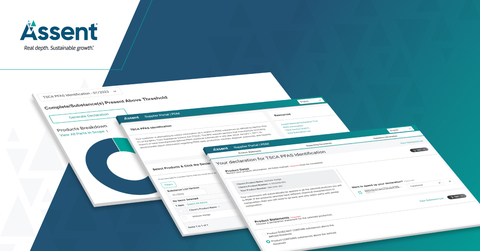

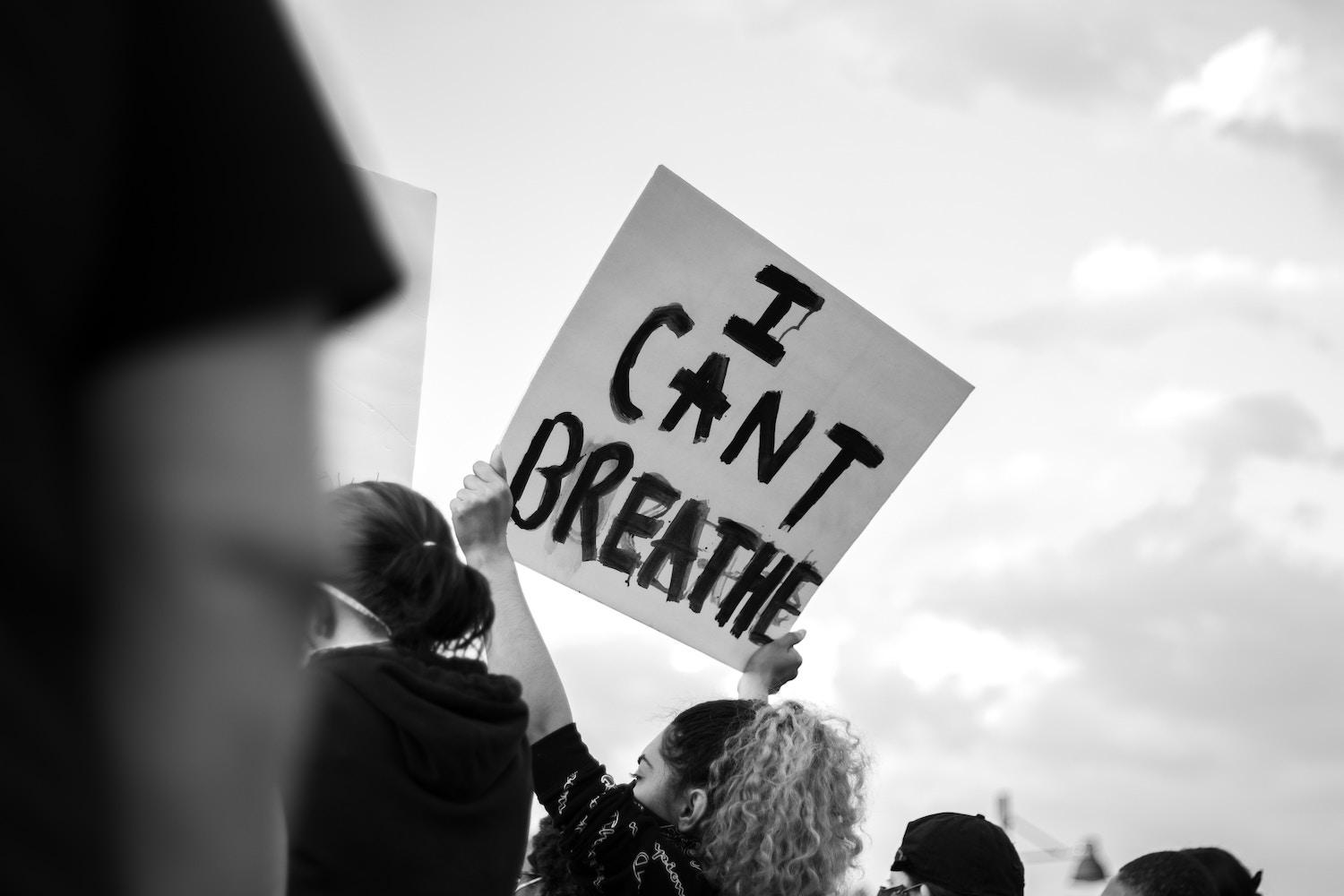

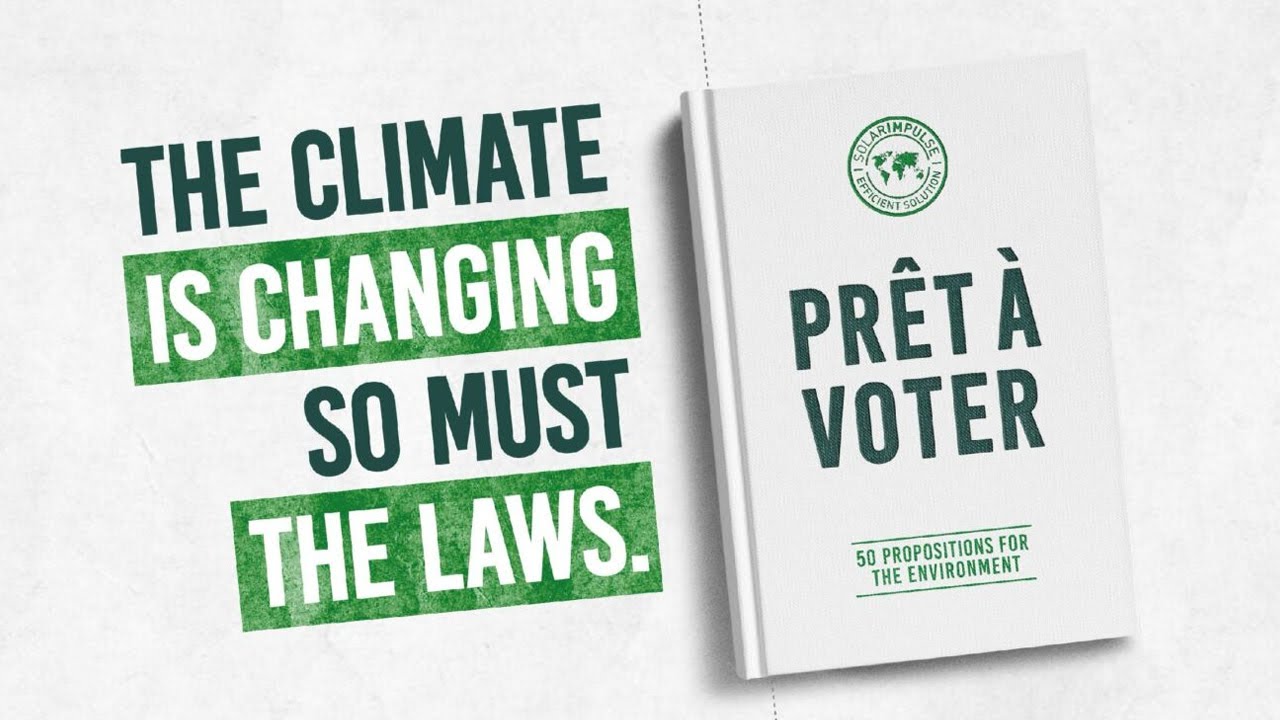


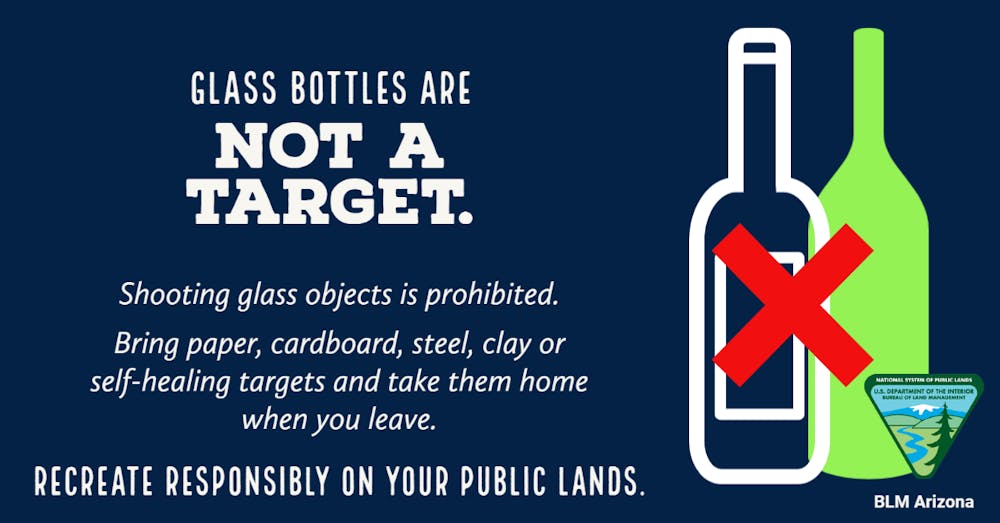



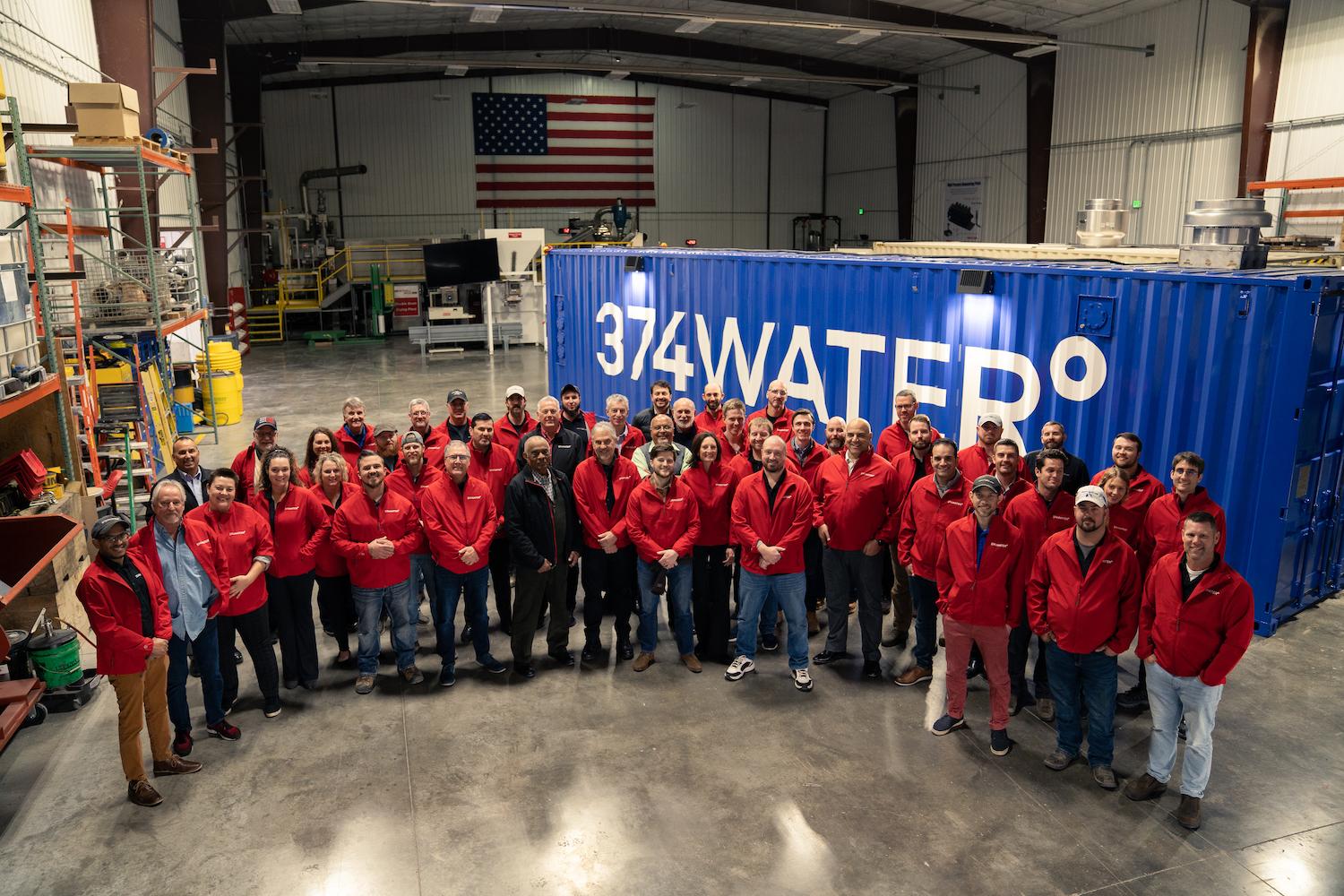
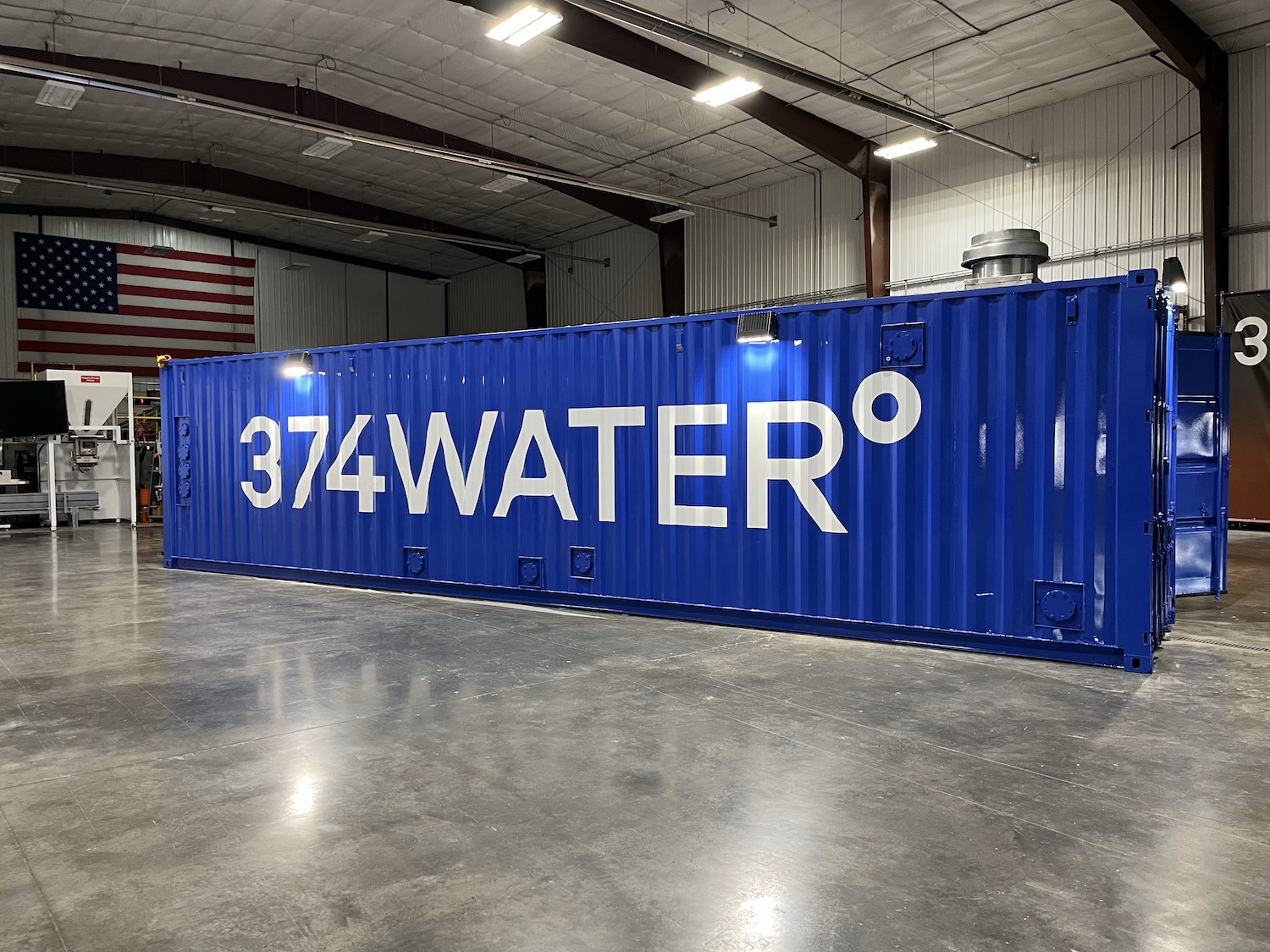

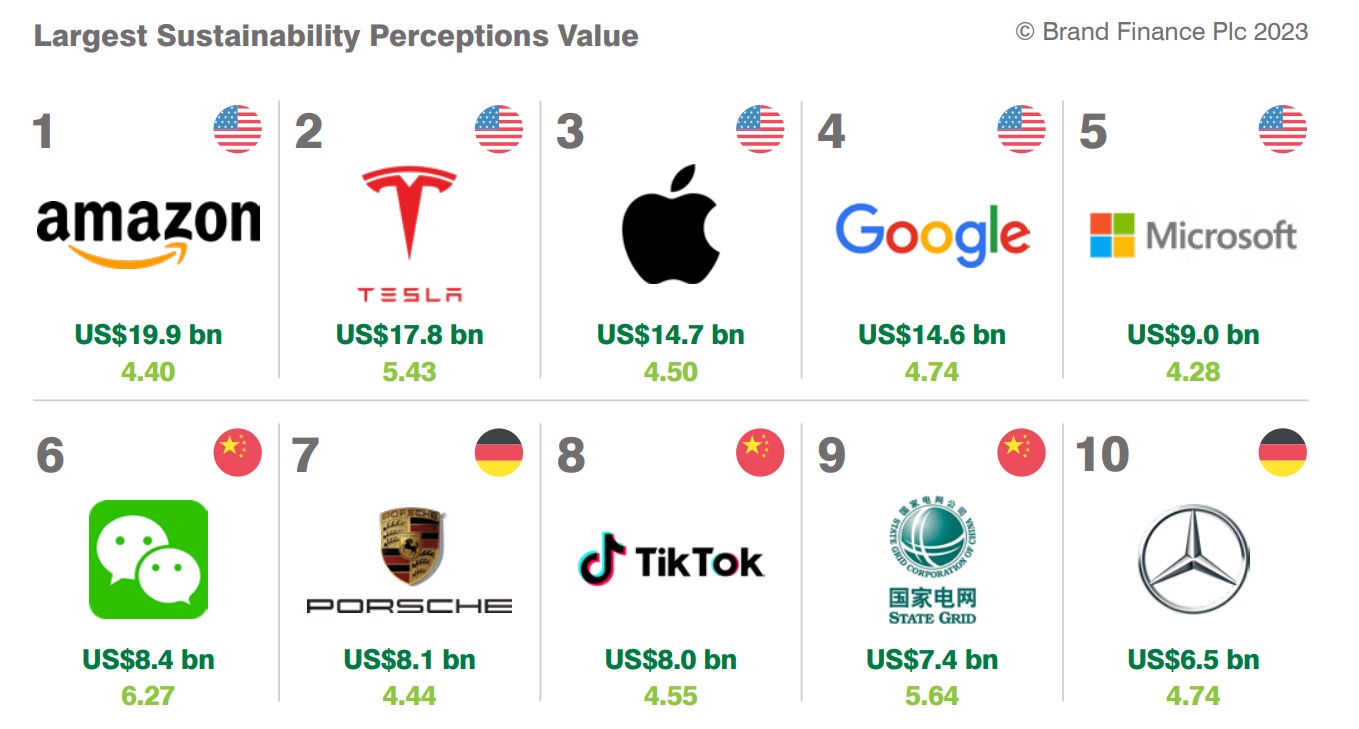
 View larger graphic
  View larger graphic








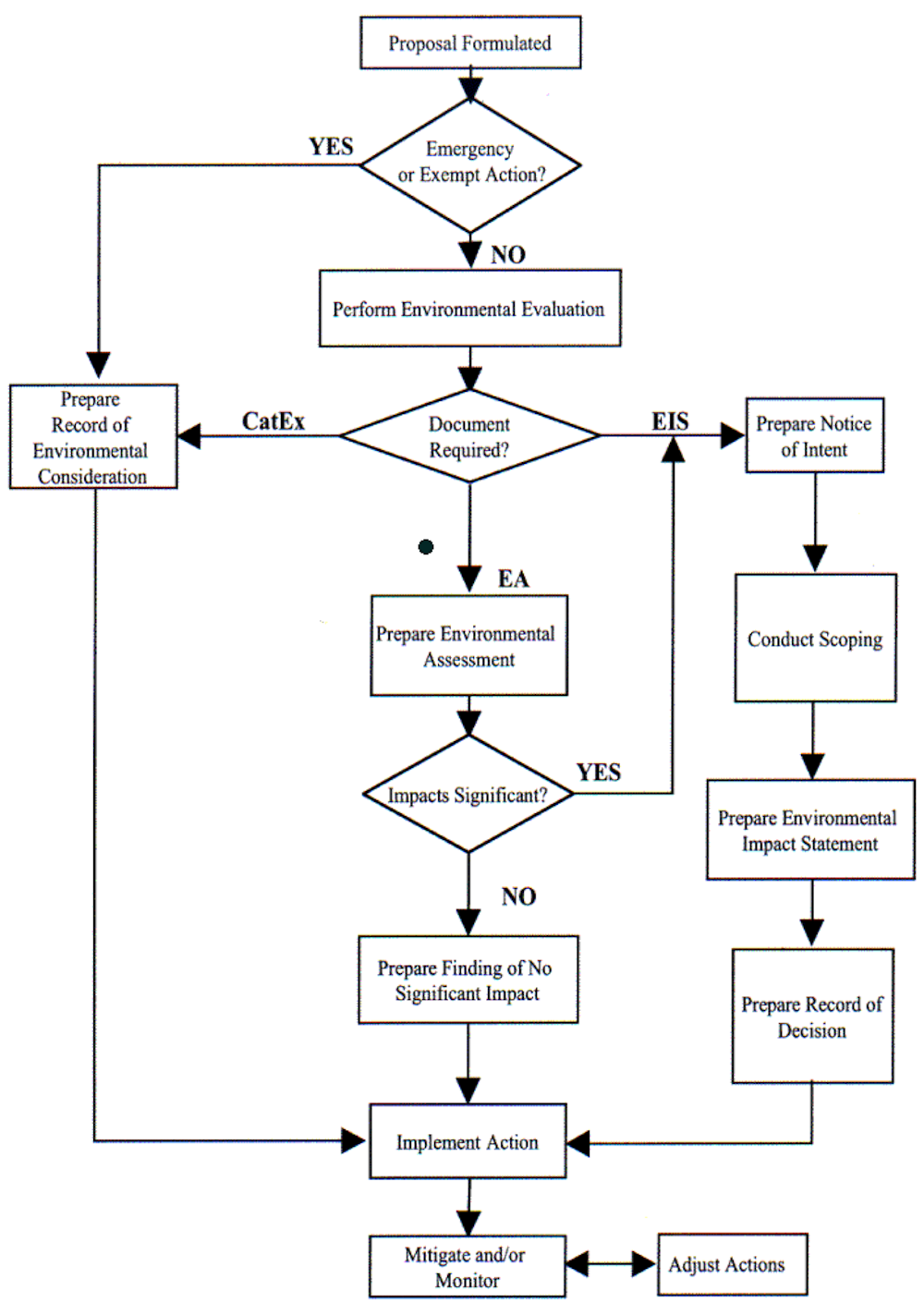

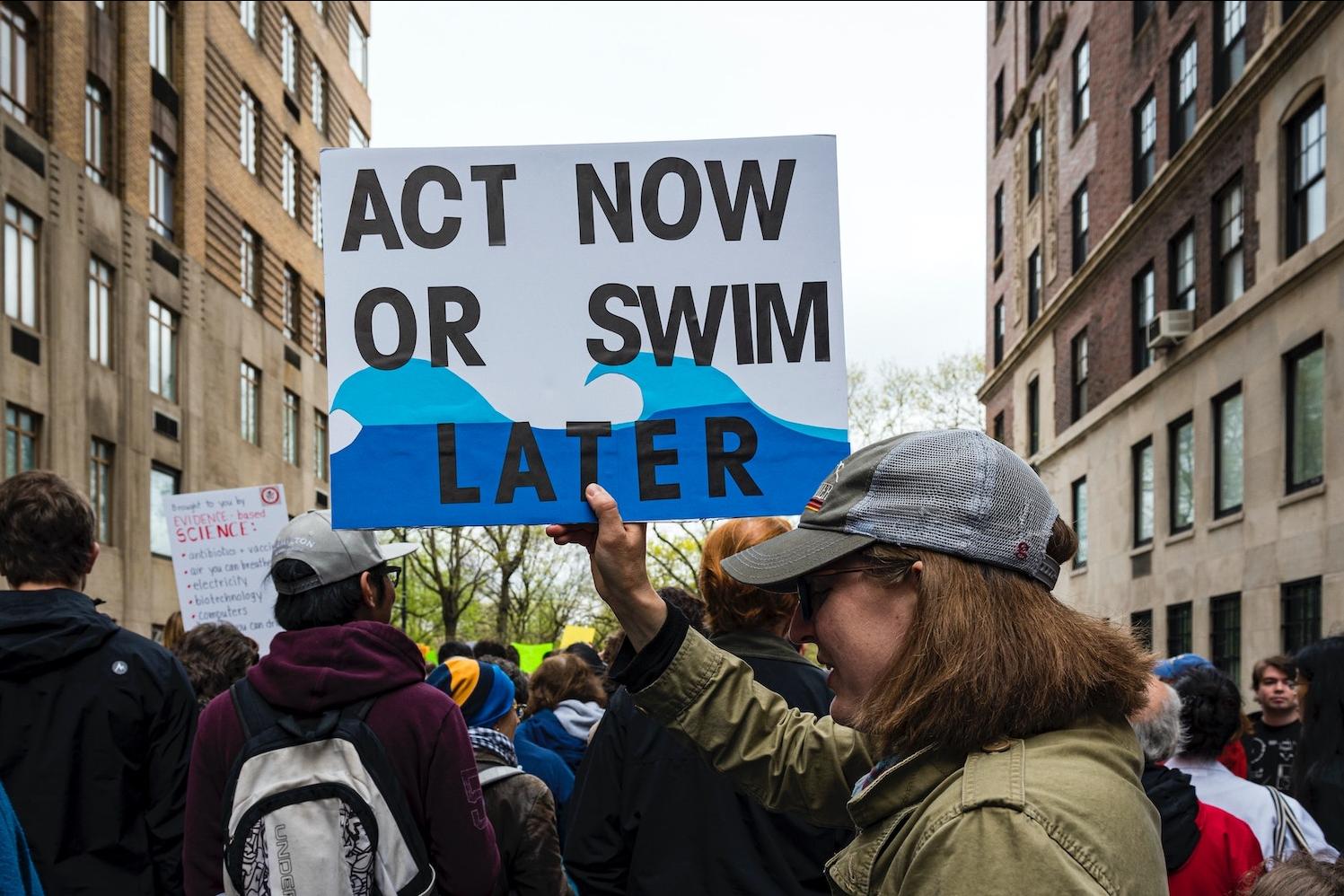






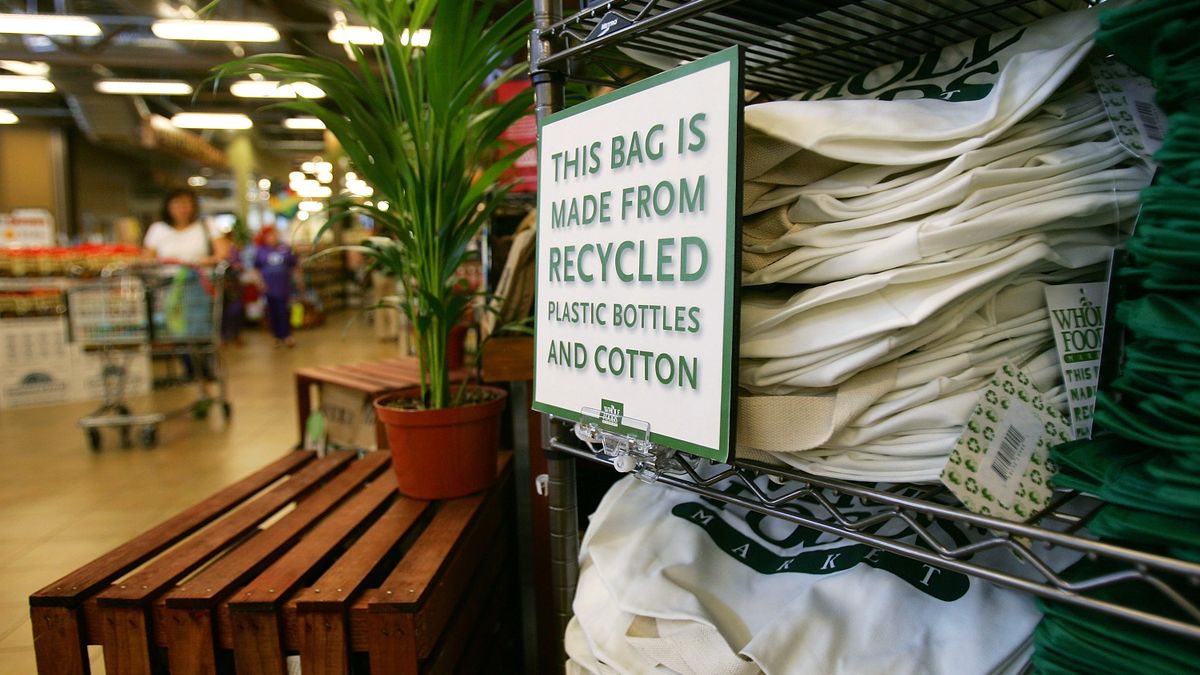
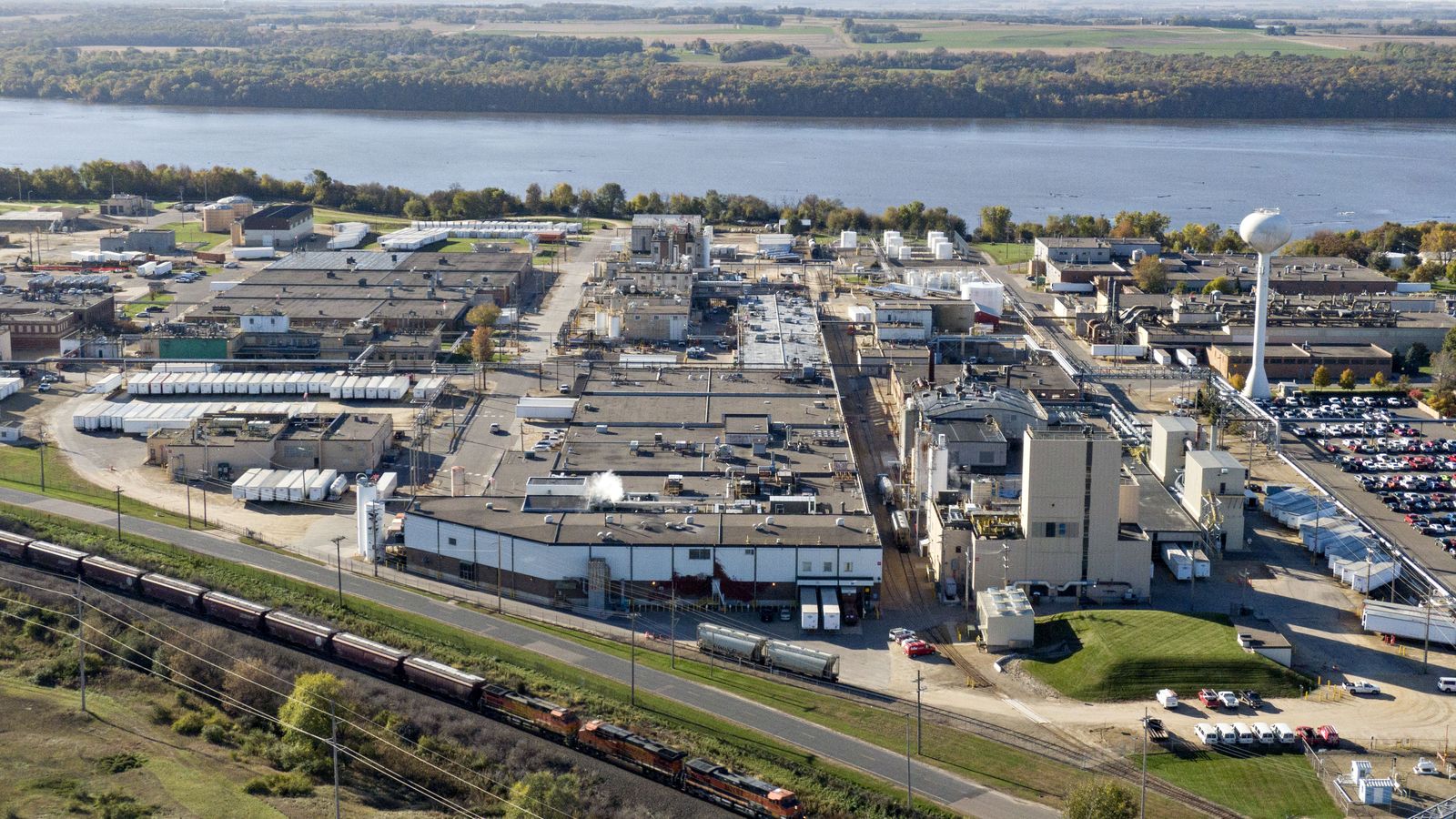

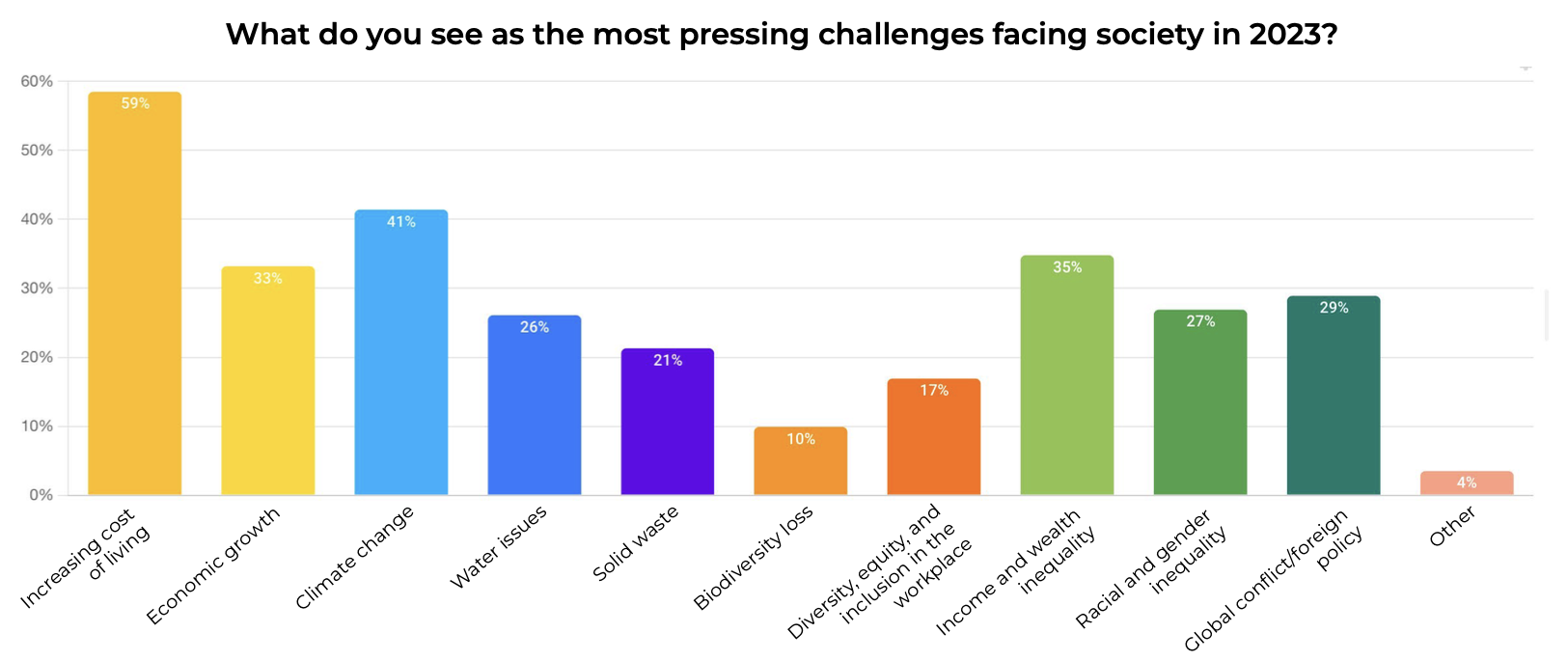
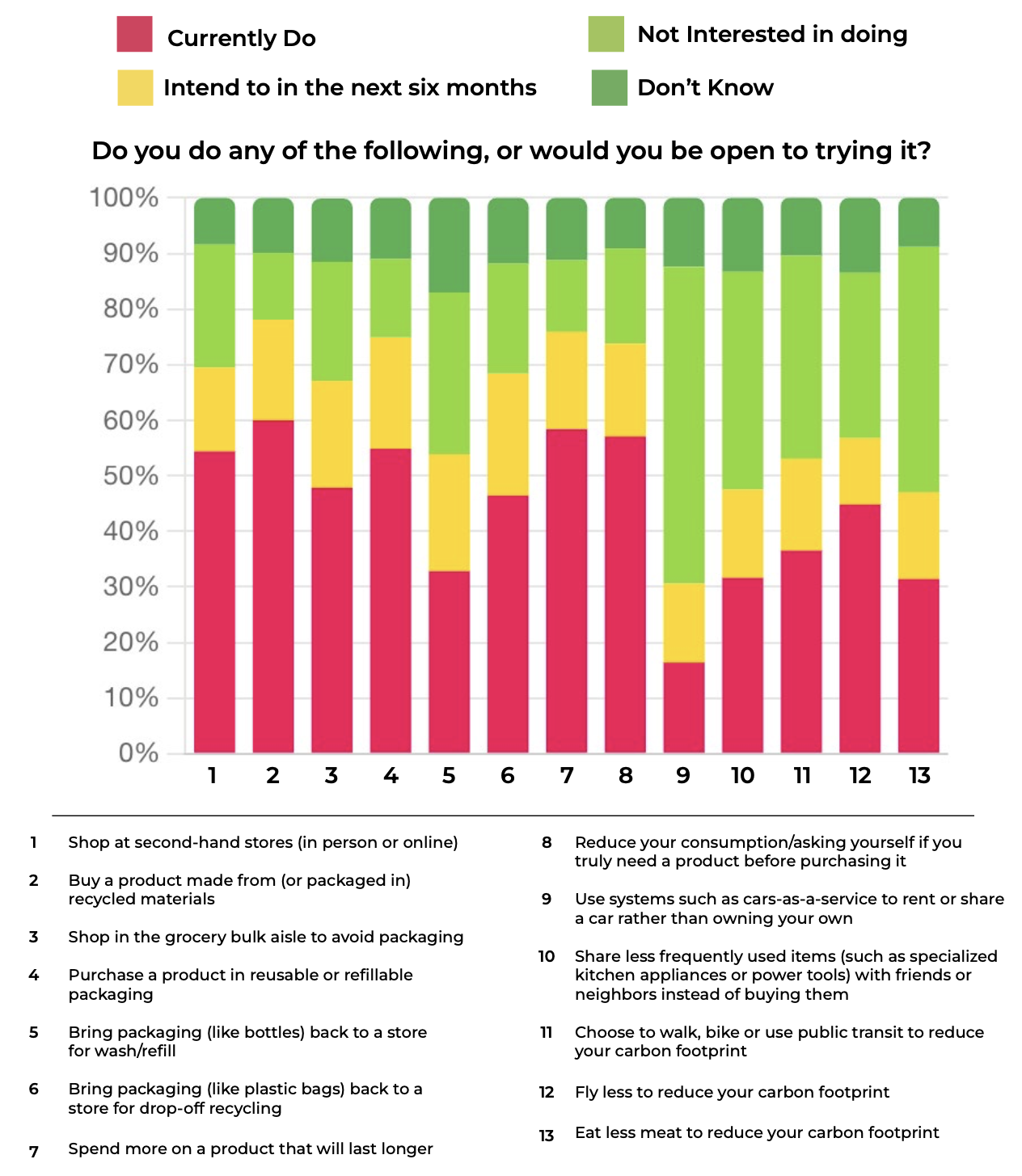
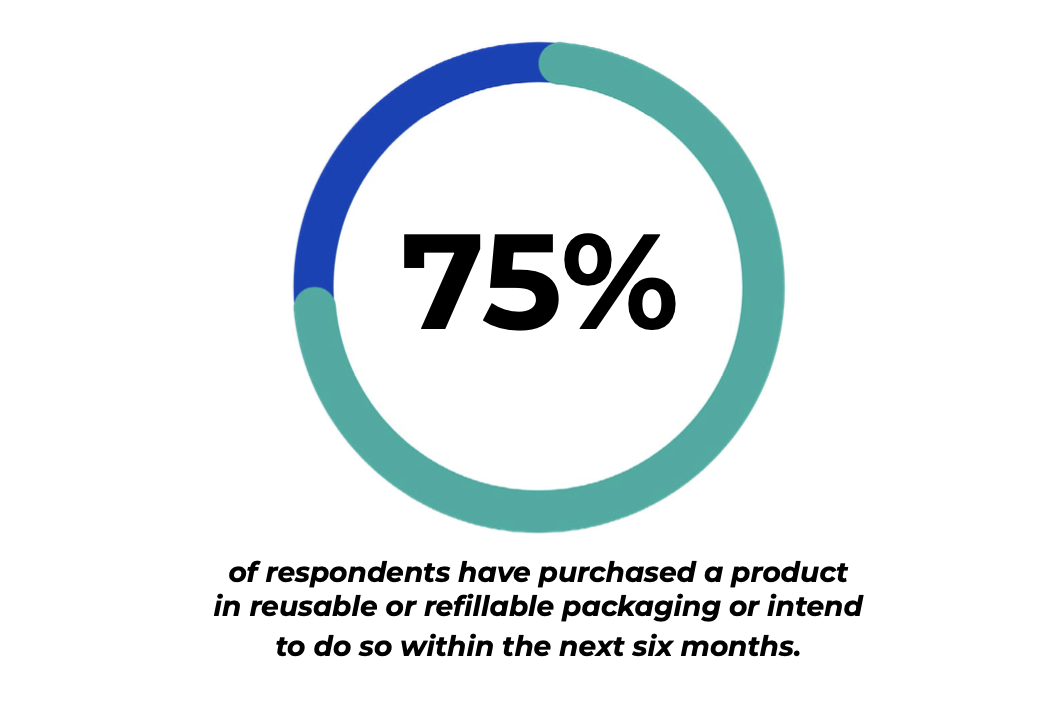







 Image credit:
  Image credit:
  Image credit:
  Image credit:

 Eric Block On Responsible Branding
You must be logged in to post a comment.