From the Conference Board • Reposted: July 11, 2023
Just 13 percent of executives say sustainability is deeply embedded into their firm’s cultural DNA. Most companies are generally at the early to middle stages of building a sustainability culture, with 49 percent saying it is moderately embedded and 37 percent saying it is slightly embedded.
That is according to a new report by The Conference Board in collaboration with Baker Tilly. The report, Building a Sustainability Culture, is the culmination of a series of Working Group sessions, at which executives from companies in various sectors discussed how to develop and maintain a corporate culture that embraces sustainability.
“To take advantage of the transition to a sustainable economy, companies need to build a sustainability culture that becomes an indelible part of their organization’s character,” said Paul Washington, Executive Director of The Conference Board ESG Center and co-author of the report. “The Building a Sustainability Culture Working Group served as a valuable step in helping leaders equip their workforces with the behaviors, training, resources, and capabilities necessary to meet the unprecedented challenges and opportunities in the areas of corporate governance, sustainability, and citizenship.”
“The findings of our report underscore the need for embedding sustainability into business as usual, in addition to highlighting the distance still left to travel on the journey to a sustainable economy,” said Srinand Yalamanchili, Baker Tilly Director−ESG and sustainability. “Embedding sustainability into culture and business strategy can only be achieved by prioritizing the ‘why’–the positive return on investment and risks of inaction–and taking ownership at both an organizational and individual level.”
The Working Group convened more than 250 executives from 160 companies who met over the span of eight months to focus on how to develop and maintain a culture in which those at the organization think and act with sustainability in mind. The report provides insights into five areas: 1) what is a sustainability culture?; 2) why does it matter?; 3) how do companies build a sustainability culture?; 4) who is responsible?; and 5) how do companies measure success?
Key insights from the report include:
Companies are in the early stages of building sustainability into their culture.
Just 13 percent of executives say sustainability is deeply embedded into their company culture, with 49 percent saying it is moderately embedded and 37 percent saying it is slightly embedded.
Sustainability and cultural change need to be closely linked to the execution of the company’s business strategy.
30 percent of the respondents cite the CEO as best suited to lead the cultural transformation of the organization, followed by 28 percent who cite those responsible for the company’s business strategy and operations.
Both the positive ROI (return on investment) and the negative ROI (risk of inaction) are driving the case for building a sustainability culture.
An initial motivator: Explaining the “Risk of Inaction”—the negative consequences of failing to change.
A constant motivator: Explaining the positive case for how increasing the organization’s focus on sustainability will improve the company’s performance in the marketplace, including the markets for products and services, talent, and capital.
Employees need to feel a sense of ownership when it comes to building a sustainability culture.
75 percent of participants cite a “sense of ownership” as the most important aspect of a sustainability culture, followed by a clear mission, purpose, and values.
Companies may need to move beyond traditional training and compensation to motivate progress.
Only half (50 percent) of participants cite compensation as the most effective way of recognizing and rewarding behavioral change. By contrast, 61 percent cite internal recognition from senior management as the most effective, and 54 percent cite promotions and career opportunities.
About The Conference Board ESG Center
The Conference Board ESG Center serves as a resource, platform, and partner to help Member companies address their priorities in corporate governance, sustainability, and citizenship. ConferenceBoard.org/ESG
Smoke rises from a brush fire near Hollywood Hills in Los Angeles in 2007. Hector Mata/AFP via Getty Images
Over the past two decades, a staggering 21.8 million Americans found themselves living within 3 miles (5 kilometers) of a large wildfire. Most of those residents would have had to evacuate, and many would have been exposed to smoke and emotional trauma from the fire. By Mojtaba Sadegh, Associate Professor of Civil Engineering, Boise State University via The Conversation • Reposted: July 9, 2023
Over the past two decades, a staggering 21.8 million Americans found themselves living within 3 miles (5 kilometers) of a large wildfire. Most of those residents would have had to evacuate, and many would have been exposed to smoke and emotional trauma from the fire.
Nearly 600,000 of them were directly exposed to the fire, with their homes inside the wildfire perimeter.
Those statistics reflect how the number of people directly exposed to wildfires more than doubled from 2000 to 2019, my team’s new research shows.
That knowledge has implications for how communities prepare to fight wildfires in the future, how they respond to population growth and whether policy changes such as increasing insurance premiums to reduce losses will be effective. It’s also a reminder of what’s at risk from human activities, such as fireworks on July 4, a day when wildfire ignitions spike.
I am a climate scientist who studies the wildfire-climate relationship and its socioenvironmental impacts. For the new study, colleagues and I analyzed the annual boundaries of more than 15,000 large wildfires across the Lower 48 states and annual population distribution data to estimate the number of people exposed to those fires.
Not every home within a wildfire boundary burns. If you picture wildfire photos taken from a plane, fires generally burn in patches rather than as a wall of flame, and pockets of homes survive.
We found that 80% of the human exposure to wildfires – involving people living within a wildfire boundary from 2000 to 2019 – was in Western states.
California stood out in our analysis. More than 70% of Americans directly exposed to wildfires were in California, but only 15% of the area burned was there.
Hot, dry weather pulls moisture from plants and soil, leaving dry fuel that can easily burn. On a windy day – such as California often sees during its hottest, driest months – a spark, for example from a power line, campfire or lightning, can start a wildfire that quickly spreads.
Recent research published in June 2023 shows that almost all of the increase in California’s burned area in recent decades has been due to anthropogenic climate change – meaning climate change caused by humans.
Our new research looked beyond just the area burned and asked: Where were people exposed to wildfires, and why?
New homes on the edges of cities have been caught in some fires, like the one in Santa Rosa in 2017. But most of the people exposed were in neighborhoods existing well before 2000. George Rose/Getty Images
We found that while the population has grown in the wildland-urban interface, where houses intermingle with forests, shrublands or grasslands, that accounted for only about one-quarter of the increase in the number of humans directly exposed to wildfires across the Lower 48 states from 2000 to 2019.
Three-quarters of that 125% increase in exposure was due to fires’ increasingly encroaching on existing communities. The total burned area increased only 38%, but the locations of intense fires near towns and cities put lives at risk.
The 2018 fire that destroyed Paradise, Calif., began as a small vegetation fire that ignited new fires as the wind blew its embers. NIST
Wildfires in the high mountains in recent decades provide another way to look at the role that rising temperatures play in increasing fire activity.
High mountain forests have few cars, homes and power lines that could spark fires, and humans have historically done little to clear brush there or fight fires that could interfere with natural fire regimes. These regions were long considered too wet and cool to regularly burn. Yet my team’s past research showed fires have been burning there at unprecedented rates in recent years, mainly because of warming and drying trends in the Western U.S.
What can communities do to lower the risk?
Wildfire risk isn’t slowing. Studies have shown that even in conservative scenarios, the amount of area that burns in Western wildfires is projected to grow in the next few decades.
How much these fires grow and how intense they become depends largely on warming trends. Reducing emissions will help slow warming, but the risk is already high. Communities will have to both adapt to more wildfires and take steps to mitigate their impacts.
Developing community-level wildfire response plans, reducing human ignitions of wildfires and improving zoning and building codes can help prevent fires from becoming destructive. Building wildfire shelters in remote communities and ensuring resources are available to the most vulnerable people are also necessary to lessen the adverse societal impacts of wildfires.
A lack of access to safe water — coupled with socioeconomic disparities, aging infrastructure and natural disasters — is accelerating a downward spiral in quality of life for more than 2 million Americans, according to a new Xylem report. By Gary E. Frank from Triple Pundit • Reposted: July 9, 2023
The global water technology company’s analysis looks to raise public awareness of a growing water crisis in the U.S., said Austin Alexander, Xylem’s vice president for sustainability and social impact. It spotlights the increasing challenges rural communities in the United States face because of limited water access and poor water quality.
“Once you have awareness of the issue, then we can start talking about solutions and funding and all those things that can help fill the gap,” Alexander said. “But we really are just in a moment, I think, of many Americans not realizing the extent of the issue in our own backyard.”
A rural water crisis is brewing in our own backyards
More than 46 million Americans, 15 percent of the total U.S. population, live in rural areas, according to the 2020 Census. How they access water, the quality of that water, and if they get water at all is far from certain.
Persistent and serious water quality problems are increasingly common throughout the U.S. In both urban and rural areas, deteriorating water infrastructure and ineffective water treatment facilities can cause contamination in water flowing through the tap. Rural residents who get their water from wells are also at risk, as agricultural runoff, pollutants, and stormwater can seep in and cause contamination. As groundwater levels decline across the country, a growing number of wells are also at risk of running dry.
In addition to the 2 million Americans without access to safe drinking water, millions more might be exposed to contaminated water from wells and small systems that are not regulatedby the Environmental Protection Agency (EPA).
The circumstances for water systems covered by EPA regulations are not much better. From 2016 to 2019, nearly 130 million U.S. residents got their drinking water from systems that violated the federal Safe Water Drinking Act, according to an analysis of 50,000 active community water systems conducted by the Natural Resources Defense Council. Small water systems — those that serve less than 3,300 people in mainly rural communities — were responsible for more than 80 percent of all violations.
What can we do?
Xylem’s report offers a range of recommendations for individuals, businesses, nonprofits and governments looking to address these problems. The actionable steps include increasing investment in water infrastructure and expanding access to financing for rural water systems. Local tax dollars alone are generally not enough for small communities to finance water infrastructure upgrades. While state and federal aid programs exist, they’re often competitive and fall short of what’s needed, experts say. The report calls out awareness-building and public-private partnerships as a means of improving infrastructure in rural communities and filling the existing gaps.
The company also pinpoints smart water technology as having high potential for rural communities. As TriplePundit’s Kate Zerrenner has previously reported, “Having a smart system in place can provide real-time monitoring to respond to emergency situations and, optimally, mitigate damage and enhance emergency response time as well as improve the speed of recovery.” But again, rural communities need funding to put such systems into place.
On that front, Xylem has also taken steps to address the water crisis itself. The company works closely with government officials and advocacy groups, such as the Water Systems Council (WSC), on public policy to solve domestic water challenges.
Along with the WSC, Xylem helped lobby Congress for the 2016 passage of the WIIN Act, which includes provisions to help small and economically disadvantaged communities improve access to safe, reliable water. The company brings water to additional families in need through its Watermark program in partnership with the WSC’s nonprofit arm Water Well Trust.
Xylem also works with the Chris Long Foundation’s Waterboys initiative and the Water Well Trust to bring further awareness to domestic water issues. In 2021, their partnership installed a new well for a family in Bertram, Texas, who lived without running water for nearly four years after their existing well collapsed. The partnership has completed similar projects in Oregon, Virginia, North Carolina, Illinois, Georgia and Missouri.
Public awareness sparks action on the water crisis
The Xylem report examines the American dimensions of a growing global problem that is becoming more acute and disruptive. About 2 billion people on the planet lack access to safe drinking water, and 3.6 billion lack access to safely managed sanitation, according to the World Bank.
“Gaps in access to water supply and sanitation, growing populations, more water-intensive patterns of growth, increasing rainfall variability, and pollution are combining in many places to make water one of the greatest risks to economic progress, poverty eradication and sustainable development,” an overview from the World Bank reads.
Despite these challenges, Alexander is hopeful that increased public awareness of the water crisis could help spark more action to find and implement solutions.
“I don’t think we’ve seen a moment in time where the water crisis has been in the headlines and gaining so much attention as it is today,” she said. “We’re on the precipice of a mindset change among the general public that these issues are real, they’re here and we have to address them.”
James McGowan’s career journey spans startups, agencies and multinationals, with sustainability at the core. By Shannon Houde from green biz.com • Reposted: July 7, 2023
James McGowan is a sustainability marketing leader who has taken on several of high profile roles in his career so far, working with charities, agencies, startups and multinational corporations, as well as studying for a master’s in sustainability. Currently, he leads marketing at Maeving, a British company that creates electric motorcycles.
Before Maeving, McGowan led marketing at Muddy Trowel, a company that makes gardening more accessible. Prior to that, he spent four years at Unilever — three of them as senior global marketing manager for its $3 billion Persil and Omo business.
I recently connected with McGowan to learn more about his career journey as a sustainability marketing expert. Here he draws from his wealth of experience to share advice on the need to see sustainability more holistically, how to leverage a knowledge of sustainability as a differentiator within marketing and the one piece of advice that helped him level up his career.
Shannon Houde: James, when did you spot the clear crossover between a career in marketing and sustainability?
James McGowan: It was in 2013 when I was working for an agency and I noticed a lot of organizations had a website that seemed to articulate sustainability beautifully, when the reality was that it was greenwashing. It dawned on me that nothing in the world is perfect so why give a false narrative when your sustainability journey could be your marketing campaign? That spurred me to do a master’s in sustainability. And at that point, I was at a crossroads — should I be switching my career into a sustainable lead role, or continue with marketing?
At the time, Unilever was only three years into its Sustainable Living Plan and the sustainability sector was still emerging. It was clear for me to stick with marketing because that’s where my strengths are, but to increasingly bring my understanding of sustainability into that role. Now, everything seems to be about sustainability. There’s no new innovation that can’t be launched from the marketing side that doesn’t meet certain sustainability criteria.
Houde: Is it fair to say that even as a marketer you can’t really do your day job without thinking about sustainability?
McGowan: I think there’s a more holistic side to sustainability. A lot of people jump into the environmental side but there’s a huge social impact to sustainability that people forget about. Some of the initiatives that we were driving while I was at Unilever were around stereotyping, for example. I worked for the laundry brand Persil and not that long ago it would be very common to find only a female in those advertisements. So, I take a fuller view on sustainability covering the social side and the environmental side. Ultimately, we need to serve people. Until we start serving people, we can’t really generate the profits, we need to then protect the planet so seeing sustainability through just an environmental lens is quite limiting.
Houde: Speaking of customers, is the demand push or pull on sustainability, do you think? Are companies pushing out the agenda or are they responding to consumer demand?
McGowan: There is a pull there. But take the example of laundry again. Eco is probably the most sustainable but technically it doesn’t clean as well and it’s slightly more expensive. So the technology is there, but it’s just not affordable, and we’ve got to create new markets for that. But there is certainly a lot of pull. From, say, 2025 to 2030, you’re going to see a huge change in the way that we consume these products, so I feel very confident about big businesses being able to solve these issues. But there’s some work on cost-benefit that needs to be done.
[It’s the same on] infrastructure. We’ve seen hundreds of thousands of pounds worth of investment in waste collection and recycling around the world but there just isn’t that infrastructure. And the question is; who’s going to pay for that? These things unfortunately do take time. And I think that’s part of the role: resilience and patience.
A lot of it comes back to storytelling. I inherited a project that had been attempted five times. So, how do you get a research and development team back on board a project that’s had so many knocks?
Houde: How do you differentiate yourself as a marketer and leverage that sustainability element?
McGowan: I never trained in marketing, but I’ve got a marketing career with a sustainability master’s. So, I think one of the key parts of my role is to be able to speak to people with the science and the technical skills and then translate that back into the marketing piece.
Often there tends to be a bit of a disconnect. Particularly when marketers go and talk to the science teams they don’t feel listened to but, with my sustainability piece, I could actually access the science and bring that back into the role. Within big organizations, it’s the marketer’s job to connect the outside world to the individuals within that organization, and make sure that we are getting everyone’s perspective into key decisions.
I’ve had quite an atypical career. I set up my own business, worked with subject matter experts and been at an agency and a charity. And I think — when applying to Unilever, for example — that was quite unique.
Houde: What would be your one piece of advice to others looking to break into sustainability?
McGowan: I think it’s very easy to get completely caught up in the global issue of sustainability and climate change. I remember being with some friends at a restaurant a couple of years ago and we were talking about the plastic crisis. We asked the waiter to mention in their next team meeting the plastic straws they used and even through a discussion like that you can have a lot of impact without really having to do a lot. In the last few years, I’ve certainly tried to focus on what I can do personally as well as what I can do in my career.
But other than that, keep hustling. There are amazing jobs out there. Even if you start small. Your next move is about laying the foundations for the move after that. So don’t try and solve it all at once.
LinkedIn is just a fantastic tool too. I found every job through the platform and I built a network. It’s a different kind of nepotism. It’s not your parents or your uncle that will get you a job but it’s still the people who you know and that is what LinkedIn is for.
Houde: And similarly, what specific advice has really helped you personally in moving your career to the next level?
McGowan: One of the most valuable exercises I did was looking at my own values, looking at what makes me tick and then translating the skills and traits I have to identify what work I wanted to do. When you think of sustainability, it’s incredibly broad. There’s so much to do and having a very clear purpose about what you want to achieve is really important. You’ve got to find something that you care about, and that makes you tick, because work has to be fun.
Climate change affects everyone but in vastly unequal ways. To address this and drive real, sustainable change, businesses must ensure their sustainability strategies do not exacerbate existing inequalities even further. By Isabel Shopley from Sustainable Brands * Reposted: July 5, 2023
When it comes to genuine sustainable development, businesses still have a blind spot. Collectively, we’re failing to address the systemic risk posed by mounting levels of inequality. This is a humanitarian tragedy and a barrier to long-term, meaningful sustainable change.
Addressing inequality — a business imperative
According to calculations by Credit Suisse, 54 percent of the $127.5 trillion in new wealth created between 2012 and 2022 went to the world’s richest 1 percent. And only 0.7 percent went to the four billion people who make up half the global population, predominantly in the Global South.
As the reality and challenge grows starker and harder to ignore, businesses are waking up to the urgent and systemic risk of inequality. It erodes trust in our political and economic system, unravels the social fabric, fuels civil and political unrest and constrains economic growth. In May, a group of more than 30 major corporations convened under the Business Commission to Tackle Inequality (BCTI) to launch a flagship report asserting that growing inequality is bad for business. The report highlights how rising inequality contributes to:
an increasingly volatile business operating environment;
supply chain insecurity;
the erosion of productivity and innovation;
regulatory and compliance risks; and
reputation risk.
It’s no surprise, then, that corporate performance on inequality-related matters is increasingly recognised as an investor priority because it creates ‘systemic risk’ to their entire portfolio. In response to this, a new framework is being developed for financial disclosures for social and inequality-related risks. The aim is to develop a disclosure framework similar to the TCFD and TNFD frameworks for climate and nature.
Inequality and climate change: 2 sides of the same coin
Aside from the business and economic cost and the vast humanitarian consequences, inequality also undermines the world’s ability to address existential global threats such as climate change. As wealthy countries outsource industries and labor to developing nations, emissions are driven up — as these nations have usually not had their industries regulated through global climate policies or modernised to become more sustainable. Additionally, poverty in developing nations often forces communities to put more pressure on the environment — which can lead to unsustainable agricultural practices, deforestation and overexploitation of natural resources.
So, inequality worsens climate change — which simultaneously fuels inequality. For example, poorer countries lack the resources to recover from extreme weather events brought on by climate change. Similarly, access to resources such as clean water, food and adequate housing is reduced as the climate worsens — further exacerbating insecurity and inequality.
Sustainable solutions must incorporate all voices
It’s clear that not everyone will feel the impacts of climate change equally. Many communities will lose more than others, compounding deep-rooted societal and systemic inequalities. Despite this, it’s these very people who will feel the effects of climate change most acutely that are often left out of the conversation when it comes to business solutions. This dangerous discrepancy can limit perspectives on the climate issue and the success and relevance of proposed solutions. It’s crucial we address the needs of those worst affected by climate change and incorporate their voices and knowledge into decision-making.
Doing so will help futureproof organisational strategies, too. To date, businesses haven’t been particularly proactive at including the perspectives of those groups most likely to be negatively impacted by climate change into their conversations and strategies to address it. But they should be. Consideration of their challenges and insights is not only fair — it can also be the difference between success and failure when it comes to setting short- and long-term sustainability priorities.
Rethinking business impact and rightsholders
The introduction of double materiality is set to change this and is driving a monumental shift in the way businesses consider impacts and rightsholders. Double materiality requires organisations to engage with two types of stakeholder: users of information and affected stakeholders, or ‘rightsholders,’ who are or could be affected by the organisation’s activities. To support this shift, companies must assess the significance of an impact according to its severity and likelihood. This methodology draws on established human rights impact-assessment methodologies with an emphasis on the rightsholder.
This is good news from an inequality perspective. By considering the views of rightsholders, a company is much more likely to take on board the opinions of those who face greater levels of inequality.
The way forward
Climate change affects everyone but in vastly unequal ways. To address this and drive real, sustainable change, businesses must ensure their sustainability strategies do not exacerbate existing inequalities even further. This won’t happen overnight; but it starts with a greater understanding of who your rightsholders and affected stakeholders are and how your business’ contribution towards climate change could impact them.
Double materiality and the BCTI’s new framework for financial disclosures on social and inequality-related risks can help with this. Ultimately, both reflect a broader, positive shift towards addressing and disclosing business impacts on sustainability-related issues — not just the impact of those issues on the business. This holistic approach to impact is key to reducing inequalities and creating meaningful sustainable change.
Image credits: Hannah Busing/Unsplash and Krystal Hardy Allen
By Amy Brown from Triple Pundit • Reposted: July 4, 2023
Weight discrimination is a common but under-identified aspect of workplace inequity that is finally getting some attention as organizations look to embrace a wider and more holistic definition of diversity, equity and inclusion (DEI). Addressing the problem isn’t just the right thing to do, experts say — it is a fundamental aspect of social justice.
“Weight discrimination would be any form of offense, harm or oppression at the expense of one’s weight that could be detrimental to an employee’s mental, emotional or physical health,” said Krystal Hardy Allen, founder and CEO of K Allen Consulting and author of “What Goes Unspoken: How School Leaders Address DEI Beyond Race.”
Weight discrimination affects individuals across various industries and occupations. In fact, studies show the majority of employers would prefer not to hire a candidate who ais visibly overweight.
There are significant ramifications to weight discrimination in terms of lower compensation, fewer promotions, denial of health insurance and other aspects of employment. Some employees are required to meet weight requirements in order to qualify for full healthcare coverage, and studies show that overweight people earn less in their lifetimes compared their colleagues.
The mental health consequences of weight discrimination should not be overlooked as they can affect spiritual well-being and the ability to operate while working, Allen said.
“Trauma can occur in a workplace environment from peer to peer or from managers to direct reports and vice versa,” she said. “There’s a very real connection between a feeling of inadequacy or imposter syndrome and the work climate and conditions in which a manager or supervisor, for instance, may not grant you certain opportunities because they don’t feel you are ‘the right face’ for the organization or the brand.”
Weight discrimination should be on the radar of every organization’s DEI strategy as a matter of policy, practice and social justice, she advised. A native of historic Selma, Alabama, Allen grew up in a space where discussion around social justice advocacy and activism was “as normal as learning how to read a map.” For her, weight discrimination fits into that space.
“Any form of harm, injustice or oppression is an injustice,” she said. “And so, any commitment we make to bettering the world for humans is social justice work.”
Krystal Hardy Allen, founder and CEO of K Allen Consulting and author of “What Goes Unspoken: How School Leaders Address DEI Beyond Race.”
EI
While in the U.S., weight discrimination might more commonly affect those who are of a heavier weight, Allen points out that it depends a great deal on context and geography.
“Different countries present different realities for workplace climate and conditions,” she said. “In certain countries, there are body types that tend to be ‘the average’ or what one would consider to be the ‘normative’ body type or weight. It’s not just about being heavier. In some cultural contexts, being too skinny or small can be the target of discrimination, where being more voluptuous is the norm and seen as a sign of being healthy.”
Organizations need to be inclusive of weight discrimination
There are few legal protections specifically targeted at weight discrimination in the U.S. Michigan is the only state with a law making weight a protected category. And discrimination based on weight is banned in only a few cities such as San Francisco, Madison and, most recently, New York City.
Without much legal recourse, the onus is even more so on organizations to ensure this issue is acknowledged and addressed in their DEI strategies, Allen said. The first step is being aware that this type of discrimination exists and that a thoughtful approach is required to solve it.
“It takes a lot of intentionality for organizations, when they make a commitment to diversity, equity and inclusion, that they are not pigeonholing diversity and inclusion to only be about one identity and one lived experience,” she said.
Creating the conditions for change
Once weight discrimination becomes part of an organization’s awareness, it is a matter of creating the right conditions and climate for change. A helpful approach that Allen recommends is liberatory consciousness, a concept developed by thought leader Barbara J. Love.
The framework uses four elements — awareness, analysis, action and accountability/allyship — to change systems of oppression. And it is a way for an organization to be conscious of all forms of oppression before it applies any action, Allen said.
“It could include being mindful even in the process of planning events — for example, an outdoor physical team-bonding activity — and giving everyone an opportunity to raise concerns confidentially if needed, to be as accommodating and thoughtful as possible to every individual who works there,” she said.
For Allen, the bottom line is that “every organization should be open to an intersectional approach or a diverse way of thinking of identity and lived experiences.”
Along with awareness raising, the right policies and practices are critical, she adds. Capacity building and learning opportunities give people the knowledge of what an equitable policy actually is and bring to the forefront any biases they might be operating under.
“A change in practices and policies is vitally important because it pushes the organization to ask if they are being true to what they believe,” Allen said. “And it certainly gives protection to those who are on the receiving end of harmful acts and treatment because it gives them a sense of psychological and emotional safety, that they are cared for, that they do matter, and that the organization is invested in making sure that they are 100 percent part of this team.”
When organizations undertake an analysis, like auditing their practices, they can better understand the experience of their employees, Allen said. “That can be through a survey, focus groups [or] one-on-one interviews, but you have to ascertain and understand the current state before you move to action and develop a real plan to shift your policies, to shift your language and other unconscious forms of bias around weight discrimination.”
The good news is “that we’re incrementally getting better when it comes to this topic,” she said. “I invite all organizations to have more intentionality around weight discrimination as a way to evolve their DEI approach.”
The Non-Financial Reporting Directive (NFRD) is a directive established by the European Union, which mandates large companies and select organizations to disclose their environmental, social, and governance (ESG) performance.
Adopted in 2014 and enforced since 2017, the NFRD ensures transparency and accountability in reporting non-financial aspects for these entities.
The NFRD is a significant step forward in the fight for sustainability. It requires companies to disclose information about their ESG performance, which will help investors, consumers, and other stakeholders to make more informed decisions about where to put their money and how to spend their time and resources.
The Non-Financial Reporting Directive covers a wide range of ESG issues, including:
Environmental issues: climate change, pollution, and resource use
Social issues: human rights, labor practices, and diversity
Governance issues: corporate governance, risk management, and ethics
The Non-Financial Reporting Directive requires companies to report on their ESG performance in a way that is:
Consistent: Companies must use the same methods and metrics to report on their ESG performance. This will make it easier for investors and other stakeholders to compare the ESG performance of different companies.
Comparable: Companies must report on their ESG performance in a way that is comparable to other companies in the same industry. This will help investors and other stakeholders to understand how a company’s ESG performance compares to its peers.
Transparent: Companies must provide detailed information about their ESG performance. This will help investors and other stakeholders to understand the risks and opportunities associated with a company’s ESG performance.
The NFRD is a complex directive, and there are still some challenges to its implementation. However, the directive is an important step towards a more sustainable economy.
By requiring companies to disclose information about their ESG performance, the directive will help to increase transparency and accountability, and it will encourage companies to improve their ESG performance.
The Impact of the Non-Financial Reporting Directive
The NFRD has had a significant impact on the way that companies report on their ESG performance. In the years since the NFRD came into force, there has been a significant increase in the number of companies that are reporting on their ESG performance.
This directive has also led to an improvement in the quality of ESG reporting. Companies are now providing more detailed information about their ESG performance, and they are using more consistent and comparable metrics.
The NFRD has also had an impact on the way that investors and other stakeholders make decisions. Investors are now more likely to consider ESG factors when making investment decisions.
Consumers are also more likely to buy products and services from companies that have a good ESG reputation.
The Future of the Non-Financial Reporting Directive
The NFRD is a dynamic directive, and it is likely to be updated in the future. The European Commission is currently working on a new directive, the Corporate Sustainability Reporting Directive (CSRD), which will replace the NFRD.
The CSRD is expected to be more ambitious and it is expected to require companies to report on a wider range of ESG issues.
The CSRD is a significant step forward in the fight for sustainability. It will require companies to disclose more information about their ESG performance, and it will encourage companies to improve their ESG performance. The CSRD is expected to have a positive impact on the environment, society, and the economy.
The Non-Financial Reporting Directive is an important step towards a more sustainable economy. It requires companies to disclose information about their ESG performance, which will help investors, consumers, and other stakeholders to make more informed decisions about where to put their money and how to spend their time and resources.
The NFRD has had a significant impact on the way that companies report on their ESG performance, and it is likely to be updated in the future to become even more ambitious.
The CSRD is a significant step forward in the fight for sustainability, and it is expected to have a positive impact on the environment, society, and the economy.
Marketing has a pivotal role to play in driving the significant change required to shift from a linear to a circular economy. By Marie Hattar via Fast Company • Reposted: June 30, 2023
Corporate social responsibility has long been viewed as a unifying organizational principle. These initiatives have successfully helped companies improve their impact on society, local communities, and the environment. However, the magnitude of climate-related problems is pushing environmental concerns to the forefront, with the principles of a circular economy gaining visibility as we understand the need to change how we produce and consume products.
The circular economy is a broad-reaching product lifecycle approach in the CSR space that reflects systemic change rather than a series of initiatives to achieve social, economic, and environmental sustainability. This means creating products that are more durable, reusable, repairable, and recyclable so they remain in circulation as long as possible. In addition, it requires a cultural shift to end the practice of make, buy, and throw away.
CIRCULAR ECONOMY 101
Driven by design, the circular economy involves eliminating waste and pollution, keeping products and materials circulating, and regenerating natural systems. This means designing for long-lasting use, then extending the product life by sharing, leasing, reusing, repairing, and refurbishing, ultimately ending with product and component recycling. This represents a shift in how we produce and consume goods and services.
And if the circular economy gains more traction, it can help slow the pace of rising temperatures. Global adoption remains slow, with less than 9% of economic systems embracing circularity. In addition to the sustainability benefits, there are other business advantages, including creating new revenue streams, cost savings, and reputational gains. By moving to a circular model, organizations can build a more sustainable and profitable entity, helping create a more resilient and responsible future.
Marketing plays a pivotal role in helping push circular economy approaches forward. Brands should champion the principles of less raw material and waste, resulting in fewer emissions. This can help fundamentally change how to promote and position products, and the focus should be on demonstrating evidence of living the values.
So, how can marketing teams help broaden the adoption of the circular economy? Below are some fundamentals to focus on.
PRODUCT REUSE
Patagonia is a prime example of a consumer brand that has long advocated for a more sustainable approach, as reflected by its Worn Wear initiative launched in 2013. The program aims to reduce the environmental impact of Patagonia’s products and ensure that its gear and clothing remain in circulation as long as possible by offering repairs by expert technicians. In addition, it has long demonstrated its commitment to recycling materials in its product range.
Every company, irrespective of industry or target persona, can follow Patagonia’s lead and adopt key principles of the circular economy. By promoting circular attributes of products, brands can differentiate and appeal to customers searching for more sustainable options.
For example, the Keysight Trade-In Program promotes and rewards technology refreshes for customers by offering compelling credits. This trade-in initiative helps keep electronic waste out of landfills, reduces the need for new products, and reuses existing equipment. This program has been highly successful, with 80% of the returned products resold and the remaining 20% recycled. The program is a vital part of our commitment to sustainability, repurposing, and reuse.
TRANSPARENCY = TRUST
Marketing teams should be clear on exactly how their products support the circular economy. Building trust with your audience requires disclosing critical information, including the product’s carbon footprint, reusability, and recyclability. Through campaigns, advertisements, and branding, marketing can show the entire life cycle, highlighting aspects such as designing for circularity, material sourcing, production, usage, and end-of-life management.
SHARING AND SERVICE
The sharing economy is another crucial piece of circularity, as it promotes allocating resources with multiple groups rather than a single entity helping maximize the usage. It can also uncover new revenue streams such as ride-sharing, coworking, peer-to-peer lending, and cloud solutions.
DIGITAL ACCELERATOR
Digital technologies like big data, IoT, and AI can help marketers optimize the circularity of products and materials and create more personalized and efficient experiences. At Keysight, our digital twin technologies allow organizations to evaluate new product designs. The virtual model ensures the solution is fit for purpose before building anything, supporting a more sustainable and efficient way to design and build products.
COST BENEFITS
There are many financial benefits from using recycled materials, minimizing waste, and extending the life of products. In addition, with governments increasingly introducing environmental regulations, organizations can ensure compliance by adopting circularity.
THE FUTURE IS CIRCULAR
Marketing has a pivotal role to play in driving the significant change required to shift from a linear to a circular economy. From demand creation for sustainable products and services to promoting the shift towards a more circular way of doing business, I believe CMOs must champion the cause. As teams embrace circularity, it’s vital to remember that the long-term benefits for the organization and the world far outweigh any short-term difficulty experienced.
And for anyone thinking about ignoring the circular economy, I will remind you of the wise words of Robert Swan: “The greatest threat to our planet is the belief that someone else will save it.”
Marie Hattar is CMO at Keysight Technologies, responsible for brand and global marketing efforts.
This is the second article in a two-part series about brands addressing police violence — click here to read part one.
In 2020, corporations donated billions of dollars to under-served and over-policed communities hoping to correct the deep-rooted systemic injustice that breeds police violence and brutality and underscores every aspect of our country.
It didn’t work.
An estimated 1,096 people were shot and killed by U.S. police last year, according to tracking from the Washington Post. That’s the highest number since the paper began keeping track in 2015 — with a disproportionate number involving Black Americans. U.S. police have killed 436 people since the start of 2023.
Creating a cultural renaissance to reduce police violence
When it comes to a polarizing topic like police violence, brands often prefer to weigh in with solutions-based rhetoric, rather than just restating the problem. So, brands are far more interested in suggesting police reform projects and less interested in publicly condemning police violence.
“Positive action and language always has more staying power,” said Diane Primo, CEO of the Purpose Brand agency. “Gun prevention versus gun violence, think about it like that. That creates lasting impact.”
Primo recommends an approach that’s different from many advocates, calling on brands to work toward creating a cultural renaissance in police forces that have been perceived as having a bias against Black communities.
“The police’s relationship with the community has broken down. A few bad apples have tainted the reputation of the dedicated officers who are committed to serving and protecting the community,” Primo said. “Local governments and the citizens they protect rightfully hold them accountable.”
So, how can brands support police-community engagement? “Continuous retraining and re-engagement with the community continues to be paramount,” Primo said. “Therefore brands should consider supporting and funding training and community engagement programs. Brands should ask police leadership what they need to accelerate their own transformation. I don’t think there’s a police force in this country that isn’t grappling with these issues while facing budgetary constraints.”
Police reform requires additional funding for police departments. If pro-reform Americans don’t want this additional funding to come out of local budgets, then they ought to embrace the concept of brands funding police department reform projects, Primo said.
Still, she understands the skepticism from critics wary of increased investments in police departments, the majority of which already boast hefty budgets. Though public safety across the nation has become inextricably linked to malpractice, corruption and the avoidance of accountability, Primo observed that similar issues are also prevalent in other sectors like healthcare, where a solutions-oriented approach has been effective.
“No one has a problem leaning in and saying, ‘Let me figure out ways to help ensure there is equitable health care,’” Primo said. “We know there are plenty of organizations with the ability to tactically provide solutions — what I’m proposing is not radically different.”
To achieve the police reforms advocates seek, it may be necessary to fund, rather than defund, police departments — just not directly. Diversity, equity and inclusion (DEI) goals, community outreach, de-escalation seminars, and interventions with problematic perspectives are all initiatives that brands can finance for police departments.
“It’s not necessarily pledging money to the police department open-ended. It’s providing restricted funds to accelerate their own internal transformation and engagement with the community,” Primo said. “These funds should be dedicated to rebuilding processes that embrace diversity when hiring, promoting and engaging with the community. This ensures institutional change. This is equivalent to the same internal diversity challenges that corporations and brands face. I would argue that it is brutality of a different sort.”
Cops can take a page out of corporate America’s DEI playbook
Police departments increasingly find themselves tasked with addressing the symptoms of larger societal crises that complicate a police officer’s normal duties. Black-and-white laws cannot accommodate the gray space created by systemic issues like poverty, socioeconomic inequality and community disinvestment.
“The issue of policing is far more complex than many understand, meaning they are really at the center of things that are socially and economically so out of hand. This creates its own set of unique problems,” Primo said. “When you have a community that is not healthy because they can’t get jobs. They don’t have a living wage to support their families. There’s a transportation issue in their community. There’s a healthcare issue in their community. When you’re talking about crossing the ZIP code and having mortality change. That’s going to create a special set of problems.”
These same communities, though, hold the key to unlocking a better model of policing. In communities that harbor strong distrust, fear and skepticism of law enforcement, there lies the potential for a new generation of police officers who are better equipped to navigate the challenges of enforcing the law in an underserved and over-policed community.
Yet in areas where police departments have acted downright antagonistic toward civilians, how are these same departments to recruit from a group of people who have only ever had negative experiences with cops?
Once again, companies have the potential to bridge this gap, Primo said. If brands really want to commit to police reform, they will need to invest in reforming both police personnel, as well as the communities they serve and protect.
“What dollar amount can brands give to support education? What dollar amount can brands give to create a better relationship between the community and the police, and actually fund more positive policing in the community?” Primo asked. “Helping the police figure out how to attract more prospects of color into the police force so they, too, achieve diversity.”
American police officers lost the trust of the people they are supposed to protect. For many young people, trust in police is not eroded — it is non-existent. To win it back, police need to plant the seeds of community engagement. And corporations can help connect these seemingly incompatible camps. This young generation recognizes the power of corporations to enact change and has leveraged brands to act on various topics in the past, including police violence. So, it is not a stretch to suggest activists could again pressure corporations to fund police reform.
“Sticking power really is about how to create positive change — you don’t approach that negatively. And that’s why during the George Floyd protests, people talked positively about, ‘What can I do? What does this mean?’” Primo said. “From a brand perspective, think about the transparency that was created in your own organization with the acceleration of DEI reporting, DEI officers and DEI hiring. The question remains: Will it continue, and what will the impact actually be today and over time?”
For this to work, though, police must commit to reforming their own procedures and perspectives. Brands must commit to putting their money where their mouth is and continue their reform work after the media stops covering it. Activists must acknowledge that abolishing and significantly defunding the police are unrealistic goals — the pursuit of which fails to address, and even exacerbates, the present policing problems.
“We know that whenever there’s a crisis, positive change can come out of it,” Primo said, “There is potential here for positive change, for brands to support the police in very positive ways.”
By Tina Casey from Triple Pundit • Reposted: June 29, 2023
The renewable energy trend crossed partisan boundaries decades ago when red and blue states alike partook in the hydropower boom of the mid-20th century. More recently, some state officials have tried to push the clean power genie back in the bottle by ginning up action against ESG (environmental, social and governance) investing. They have achieved some success, but investors just can’t resist the opportunities offered by new clean technologies.
The anti-ESG movement is mostly hot air
In a new report, the consulting firm Pleiades Strategy tracked 165 bills introduced by Republican lawmakers across 37 states, all aimed at steering government pension fund managers and contracting agencies away from ESG principles. Since the “E” in ESG leans heavily on renewable energy, the main thrust of the legislation is to protect fossil energy stakeholders.
Last week, Pleiades reported that the legislative push has met with significant pushback. “This coordinated legislative effort, commonly referred to as the anti-ESG movement, generated massive backlash from the business community, labor leaders, retirees, and even Republican politicians,” a new report from the firm reads.
Among the 165 bills it identified, only 21 became law. Many were substantively amended to satisfy objections. “Broad escape clauses were added to limit the most draconian prohibitions, which experts have warned legally contravene the basic tenets of fiduciary duty, creating a ‘liability trap,’” the report reads.
Renewable energy is not a new “woke” craze
The Republican-dominated state of South Dakota provides a living example of the extent to which anti-ESG office holders are out of step with business leaders.
Anti-ESG rhetoric is larded with scary talk that warns of a new “woke” threat taking over the country. But there is nothing new about renewable energy in the U.S., and South Dakota is a case in point.
In March, South Dakota Gov. Kristi Noem signed an open letter with 18 other Republican governors, warning that the “proliferation of ESG throughout America is a direct threat” that puts “investment decisions in the hands of the woke mob.”
Nevertheless, South Dakota continues to benefit from the 20th-century hydroelectric program. The U.S. Energy Information Agency (EIA) notes that 3 of the 4 biggest power plants in South Dakota are hydropower facilities that were built more than 60 years ago.
South Dakota’s agriculture industry has also benefited from longstanding federal policies going back to the Energy Policy Act of 1978. South Dakota is currently the fifth-largest producer of bio-ethanol among the 50 states, all from corn.
In addition, South Dakota grabbed onto the wind energy coattails fashioned by Iowa and Texas legislators in the 1990s and early 2000s. Wind contributed more than 50 percent to South Dakota’s grid in 2021, with hydropower coming in second, according to the EIA. Coal and natural gas each contributed less than a tenth.
More wind power for South Dakota
Activity in the South Dakota solar industry has also begun to stir. But much attention remains focused on wind resources, including tribal lands. “Four of the nation’s top five reservations with the greatest wind-powered electricity generation potential are in South Dakota,” the EIA observes.
Transmission bottlenecks have been a roadblock to wind development in South Dakota, as in other states. Back in 2012, several South Dakota Sioux tribes organized to overcome the obstacles by forming the Oceti Sakowin Power Authority — which holds an estimated 60 gigawatts of potential wind capacity on tribal lands. Pending resolution of the transmission bottleneck, an initial tranche of projects is in the planning stages.
Diversification in the renewable energy field
New clean power technologies are also popping up in South Dakota. Much of that activity is focused on renewable natural gas (RNG), sourced from the state’s copious production of livestock manure.
At the start of the year, the Pennsylvania-based holding company UGI Corp. announced an investment of $150 million for two new RNG clusters in South Dakota, drawing from multiple dairy farms. The two projects add to a third cluster previously announced, with an investment of $70 million.
The Michigan company DTE Vantage also opened a massive RNG facility in South Dakota last summer. Another RNG company with a hand in the state is the global firm Biogest — which claims “RNG is the only renewable energy source that can be carbon-negative, as it significantly reduces methane emissions from agricultural operations.”
ESG or not, new green fuel industries are growing
Sustainable aviation fuel is another new industry establishing a footprint in South Dakota. In 2021, the biofuel firm Gevo began laying plans for an aviation biofuel plant that leverages the state’s corn growers as well as its wind industry.
The Gevo facility broke ground last fall. It includes a green hydrogen system, representing still another potential new industry. With an ample supply of both renewable energy and water, South Dakota has all the basic ingredients for a green hydrogen industry that could lead to follow-on opportunities in green ammonia and e-fuels production.
South Dakota businesses want renewable energy
The Joe Biden administration issued a fact sheet last March that drew attention to supportive relationships between renewable energy producers and other businesses in South Dakota. The White House took note of the meat producer Kingsbury and Associates, which is investing in a new $1.1 billion processing facility in Rapid City. Kingsbury says the new plant will rely on renewable energy, including captured biomethane, to achieve bottom-line results in a competitive environment.
Another indicator comes from the solar developer GenPro Energy Solutions. In May, the company received equity growth funding from the in-state financial firm South Dakota Equity Partners and an established South Dakota investor. The partners launched a new GenPro branch that aims to “open doors to South Dakota and other regional energy providers desiring to develop utility-scale solar projects while embracing South Dakota values,” according to GenPro.
Against this backdrop, last week the Washington Post took notice when an unnamed lobbyist for the Greater Sioux Falls Chamber of Commerce “scolded the supporters of anti-ESG legislation.”
Speaking of “woke,” all of this should be a wake-up call for anti-ESG candidates. It may be too late to make a course correction in time for the all-important 2024 election cycle, but 2028 is right around the corner.
Now’s the time to take all that effort and integrate it into fun engagement opportunities for both your workforce and your brand’s biggest fans. Here are our seven favorite ideas for doing just that. From Barkley via Sustainablebrands.com • Reposted: June 28, 2023
Say you just received your B Corp certification or published your annual sustainability report — congrats! So much work; such important initiatives, goals and commitments — all of which deserve both applause and audience.
But brace yourself: Your work’s not done — we’re trying to change the world, after all — but the next steps don’t have to be so laborious. Now’s the time to take all that effort and integrate it into fun engagement opportunities for both your workforce and your brand’s biggest fans.
Here are our seven favorite ideas for doing just that, collected through years of promoting and publicizing both our B Corp certification and annual impact reports and those of our clients. Steal wildly; get credit for all you’re doing!
1. Timing is everything.
Pick an intentional launch date for your report that is relevant to your brand. We launched our latest Impact Report on June 1 — coinciding with our annual company-wide volunteer day, Goodworks. We’ve also shared it during an annual creativity festival, where it was received with a theater full of enthusiasm.
Think: What events, occasions or holidays are meaningful to your organization and thematically align with the goals and initiatives you feature in your sustainability report?
2. Win inside to win outside.
Every day, we find new ways to express the importance of operating as a responsible, sustainable, certified B Corporation — but we can’t do it without our employees. That’s why we tap them to star in content we create for presentations, speeches, speaker booths and on social media throughout the year. And we regularly ideate and share tips and tricks to both live and work sustainably: We like to create what we call one-sheeters — a single page of ideas to print on recycled paper (we posted ours in the restrooms!) or display on digital screens — to help employees keep sustainability goals top of mind. Composting at the office increased three-fold with proper signage.
Think: How can you celebrate your wins with your employees to inspire them and share tangible ways they can see themselves in the sustainability work that needs to be done throughout the year? Your people make your progress possible.
3. Lean into your brand’s beloved rituals or icons.
Our company HQ features a retired TWA rocket on the rooftop; so our employees lovingly call themselves ‘rocket people’ — which means yes, astronaut mascots frequently appear at various events throughout the year. This ritual inspired the creative imagery for the reports, social content and print materials we used to announce our B Corp certification to the world. Iconic imagery makes for inspired social sharing from your brand’s true believers.
Think: What rituals, icons or imagery has significant meaning to your employees and brand identity; and how can you use it within both your report (next year) and how you promote it?
4. Bring on the (sustainable) swag.
We think through our impact on our communities through every action we take — from supporting our client’s production needs down to our preferred caterers. And we love opportunities to support local, women-owned and minority-owned businesses. So, when it came time to celebrate our B Corp certification, we sent our employees a box of goodies and Barkley-branded merch to celebrate, sourced from diverse suppliers and fellow B Corp brands: confetti seeds; a reusable tote with the iconic astronaut photo; a copy of our book, The Purpose Advantage; and a bento box for to-go lunches on office days. Thematically on point; extra points for usability.
Think: Can you include your employees on what type of swag they’d be proud to use, wear or celebrate — or even give them a chance to opt out to save waste if they aren’t interested? Then, can you intentionally source these items from diverse, local, minority-owned or B Corp-certified vendors?
5. Share the love and add a hashtag.
At Barkley, our mission is to #addgood to everything we do — a mantra we’ve used so much over the years, we created a hashtag our partners know to use any time client work, a volunteer effort, shareable ideas and especially our sustainability work is mentioned on social media. One of our favorite ways #addgood comes to life? A content series we call “People of Barkley” — a showcase of the diverse perspectives and creative talent who animate our brand. Encourage your employees to use it when speaking about their contributions, and pulling content to include in next year’s report will be easier, too.
Think: How can you encourage your employees to share and promote the good work your brand is doing in a way that feels authentic to both them and your brand?
6. Turn metrics into gratitude + awareness opportunities.
Every year, we feature in our report external partners, clients, vendors, suppliers and other stakeholders that help us achieve our sustainability goals — hopefully, you do, too! We also reach out to these stakeholders post-launch to personally thank them for helping us reach our goals and sharing future plans and expectations for our ongoing partnerships.
Think: How can you mine your ESG metrics and trace them back to individuals and organizations critical to your progress? Then, what type of personalized gesture can you create to share your gratitude and encourage continued collaboration?
7. Start now to build next year’s report.
Once our report is out in the world, we debrief to level-set and re-align on the work ahead. This allows us to analyze what worked, what was hard and where we can improve for next year. A huge discovery for us was realizing that collecting stories, testimonials, case studies, photographs and video year-round makes the following year’s report compilation that much easier — and adds flair and personality to the report itself.
Think: Can you hire or assign an employee resource group to capture and cover events and opportunities that can not only feed next year’s report in terms of stories and content, but can also add value, recognition and encouragement to employees doing this work throughout the year? Are there existing communication channels inside or outside of your organization — like your company’s intranet or LinkedIn — from which you can mine stories for your report year-round?
From employees and external stakeholders to your brand’s biggest fans, the people who believe in your brand are your most valuable resource and a competitive advantage for your business. Intentionally investing in ways to encourage their belief and involvement in your sustainability strategy is key to maximizing momentum toward your goals — and that’s a win-win for everyone.
Sponsored Content / This article is sponsored by Barkley. This article, produced in cooperation with the Sustainable Brands editorial team, has been paid for by one of Sustainable Brands sponsors.
The GFA Designer Challenges featuring Puma and Collina Strada will be showcased in an interactive exhibition at the Global Fashion Summit: Copenhagen Edition on 27-28 June. Credit: Global Fashion Agenda
From the Global Fashion Summit • Reposted: June 27, 2023
On the eve of Global Fashion Summit, Global Fashion Agenda (GFA) has unveiled global fashion brands PUMA and Collina Strada’s responses to the GFA Designer Challenge 2023. The GFA Designer Challenge, presented by Smiley, is an initiative following exceptional Creative Directors and their sustainable design processes from original idea to final product: matching style and ingenuity with supercharged solutions. Two captivating new videos depicting the journeys of designers from PUMA and Collina Strada have been released today.
Less than one per cent of textile waste is recycled into new fibres suitable for the fashion industry, representing a loss of more than USD 100 billion worth of materials each year1. The bulk of textile waste is disposed of in landfills, downcycled or incinerated. Heiko Desens, Global Creative Director of PUMA, partnered with Nicole McLaughlin, to creatively find solutions to the challenge of reducing waste from the supply chain through upcycling material cut-offs. The challenge ‘Sweep the Factory Floor’ spans McLaughlin’s New York Studio and the PUMA headquarters in Bayern, Germany to show the creatives at work.
Meanwhile, Hillary Taymour, Creative Director of Collina Strada created an alliance with CIRCULOSE® of the award-winning textile recycling company, Renewcell, which offers a new material made by recycling cotton from worn-out clothes and production waste. With at least two-thirds of a brand’s environmental footprint attributed to its choice of raw materials, fabrics such as CIRCULOSE® offer an alternative to high-impact virgin fossil-fuel-based materials. The material was produced by the fabric mill Beste. The video ‘Reimagining the Use of Materials for Bags’ follows Hillary Taymour in New York as she tackles the challenge surrounding materials, bringing in solution-led insights from the CIRCULOSE® team in Sundsvall, Sweden. Taymour uses the innovative material to reimagine a handbag with vibrant prints and colours that would not have been achievable with leather.
This year’s designer challenge is presented by Smiley – the company behind the Smiley brand and the Future Positive Creative Fund which is designed to support and mentor game-changing designers in their creative journey. GFA and Smiley share intentions to drive positive impact through fostering and supporting creative talent.
The GFA Designer Challenges with PUMA and Collina Strada will be showcased at the leading forum of sustainability in fashion, Global Fashion Summit: Copenhagen Edition on 27-28 June in an interactive showcase. Continuing the impact of the GFA Designer Challenge, a third film that follows Julius Juul, Global Creative Director of Scandinavian brand HELIOT EMILTM, will also be released in September 2023.
Federica Marchionni, CEO, Global Fashion Agenda, says: “With the environmental impact of a garment largely determined in its design phase, design decisions have the power to significantly influence resource use, purchasing and usage behaviour. Our GFA Designer Challenge is therefore intended to fuse talented creatives with promising innovations and we are honored to have the support of key partners to make this year’s challenge even more impactful.”
Nicolas Loufrani, Chief Engagement Officer, Smiley, says: “As a licensed brand, we have to find creative ways to engage with our stakeholders and get their support to join our Future Positive initiative. The designer challenge is perfectly in line with our objectives and values, it resonates with the creative leaders we partner with and I was super excited when the team at global fashion agenda proposed us to be part of the project.”
Heiko Desens, Global Creative Director of PUMA Group, says: “Taking part in the GFA designer challenge is a great platform to share our concept ‘sweep the factory floor’ and to receive honest feedback. Most importantly, it’s an opportunity to inspire others to be bold in finding solutions to waste. We’ve found this challenge to be unpredictable, yet invigorating, resulting in unique designs. At PUMA we are constantly striving to do better through collaboration, which is key to pushing the boundaries with innovation. We’re excited to build on what we’ve started with Nicole McLaughlin and look forward to sharing the journey. There’s only one forever, let’s make it better.”
Nicole McLaughlin says: “The designer challenge is important to push the limits of design and share the hardships in a transparent way. There are struggles and challenges, but we learn, apply, and do it better.”
Hillary Taymour, Creative Director of Collina Strada, says: “Through sustainable fashion, we piece together a world where beauty meets responsibility. Each product becomes a testament to our commitment to create a better future for generations to come. I am excited to team up with the GFA to work on such a special project.”
Watch the collaboration between PUMA and Nicole McLaughlin here and Collina Strada and CIRCULOSE®here.
Global Fashion Agenda (2021). Scaling Circularity.
Global Fashion Agenda and Boston Consulting Group (2017). Pulse of the Fashion Industry
70% of consumers prefer eco-friendly brands as 64% of brands say they have an environmental responsibility program. From Optimove • Reposted: June 16, 2023
Two recent surveys conducted by Optimove shed light on consumer sentiments towards eco-friendly and sustainable brands. Out of 400 consumers surveyed, a significant 70% expressed the importance of buying from environmentally responsible companies. Notably, 38% of respondents said being environmentally responsible was “very important” to a purchase decision.
In line with consumer expectations, the survey also highlighted the efforts of B2C marketers. Among 233 senior executives, sixty-four percent (64%) acknowledged having an environmental responsibility program. Additionally, 62% of respondents reported actively promoting their company’s environmental initiatives in marketing campaigns.
Conducted in the first half of 2023, the Optimove B2C and Consumer surveys serve as a valuable resource for understanding the evolving landscape of consumer preferences and brand actions. Optimove is a Customer-Led Marketing platform used by hundreds of leading global consumer brands.
Optimove reported it observed at the 2023 CRMC Show on June 7-9 in Chicago that leading retailers are increasingly focused on representing themselves as sustainable and diverse to resonate with their customers.
Pini Yakuel, CEO of Optimove, said, “Today, being environmentally responsible is table stakes for companies. What truly matters is a brand’s ability to engage with each customer on a personal level. While 70% of consumers expect companies to prioritize the environment, 38% of consumers place high importance on this issue. This makes it crucial for brands to effectively communicate their commitment to environmental concerns to those individuals who deeply care. Companies need to infer from their consumer’s data which messages align with individual priorities to meet and exceed customer expectations.”
Yakuel added that meeting the expectations of environmentally conscious consumers is not only necessary but a fundamental aspect of effective customer communication.
About the surveys: The Optimove 2023 Survey of B2C Marketers queried 221 senior level marketing executives in the second quarter of 2022. The survey was designed by Optimove and fielded by Survey Monkey. Respondents included executives at companies with the following retail models: digital-first multi-brand, wholesale manufacturers, traditional multi-brands, digital-first direct to consumer, and traditional direct to consumer retailers with brick-and mortar outlets. Respondents included CEOs, CMOs and SVPs of marketing.
The Optimove Consumer Survey queried 400 U.S. citizens in March 2023. Respondents were 18-plus, 49% male/51% female (no respondents were non-binary or declined to answer), and household incomes were $75,000-plus.
What does it really mean to be a responsible marketer, and why is it important?
When you think about responsible marketing, concepts like corporate social responsibility (CSR), sustainability, cause-related marketing, inclusive marketing and many others might come to mind. But what does it really mean to be a responsible marketer, and why is it important?
We sat down with Lisa Loftis, Principal Product Marketing Manager at SAS, and presenter at Simpler Media Group’s CMSWire Connect conference, to learn more.
“I’m very proud to work for SAS because of what they’re doing in responsible marketing,” said Loftis. “For example, through our Data for Good program, we’ve committed to using data and analytics to solve humanitarian issues around poverty, health, human rights, education and the environment. We make our software available through a crowdsourcing app to help do this. Not only do we focus on how you can use AI to improve business, but also how you can use it to improve society.”
SAS is an analytics and marketing software and solutions provider based in Cary, NC, and a sponsor of the CMSWire Connect conference, held May 10-12, 2023. During the conference, Loftis presented the session, “CDP – Mr. Irrelevant or the G.O.A.T.” and hosted a roundtable discussion on responsible marketing. Here, she shares with us some of her insights around responsible marketing, including what it means, the benefits for both companies and society, and tips for implementing these practices in your own organization.
What Is Responsible Marketing?
CMSWire: From using AI responsibly to engaging in sustainable business practices, responsible marketing covers a lot of ground. What does responsible marketing mean to you?
Lisa Loftis: At SAS, we have a framework to talk about responsible marketing. Because it means a lot of things, we break it up into two categories. The first is responsible use of customer data and technology, which includes legal and ethical compliance, balancing personalization and privacy, and protecting vulnerable audiences. The second is the responsible use of resources such as optimizing marketing assets, measuring marketing value, and promoting corporate social responsibility. So, it’s a broad definition.
CMSWire: How is responsible marketing related to sustainable marketing and corporate social responsibility?
Loftis: There are two aspects to think about here. The first is using marketing’s platform to communicate that a brand’s business model is focused on acting responsibly to society. This includes economic responsibility (using funds and budgets responsibly, which is a big issue today), social responsibility (DEI: diversity, equity and inclusion) and environmental responsibility (the sustainability component). When communicated effectively, these help you develop a positive brand image, among other things.
The other important aspect is safeguarding vulnerable audiences and ensuring that your AI models are free from bias. For SAS, this is one of the most important tenets of responsible marketing. This ensures you have policies, criteria and governance in place across marketing activities to protect those with vulnerabilities based on age, gender, race, socioeconomic status, or some other characteristic. It could mean avoiding engagement with them — such as not marketing cigarettes or vapes to children — or making sure that marketing doesn’t incorporate bias that excludes audiences. For example, some social media platforms are under regulatory fire for using analytics and AI to build advertising audiences for jobs that leave out certain groups of people.
Why and How to Practice Responsible Marketing
CMSWire: What are the biggest benefits organizations realize from practicing responsible marketing?
Loftis: In addition to pure brand image, you can create competitive differentiation through data, with the right balance of privacy and personalization. In a world where customers can switch allegiances and loyalties very easily, communicating that customer data is used in a transparent manner creates trust and loyalty, which is a long-term benefit. According to a study we did with the CEO Council — Cracking Tomorrow’s CX Code — about 80% of consumers surveyed said they would provide personal data to a brand if they felt like they were getting something of value in return — even though most of them felt like they didn’t have control over their data. So, that exchange is critical, especially considering the deprecation of third-party data and the need to focus on first-party data. And it’s a huge differentiator. On the other side, if you’re optimizing your marketing resources, you can make better, more agile business decisions that help you speed time to market.
CMSWire: What are some of the major challenges for organizations that want to engage in responsible marketing practices, and how can these be overcome?
Loftis: I think the biggest challenge is prioritizing what they need to focus on. This means identifying what responsible marketing means to the organization first. It’s an organizational transformation that requires not only marketing, but legal, product development and human resources. You need an end-to-end corporate look at roles and responsibilities to do this.
Top Tips to Get Started
CMSWire: With increasing expectations around the impact organizations can have on society and the environment—as well as pending regulations—can businesses be successful if they don’t practice responsible marketing?
Loftis: Personally, I think that responsible marketing practices are going to become table stakes — if they’re not already — for three reasons. First, optimizing resources, providing value and empowering people is really Business School 101. We’ve labeled it responsible marketing, and it is, but that’s what they teach you in terms of how to run a company effectively and efficiently. Next, are privacy practices and transparency—these are non-negotiable. Finally, sustainability and DEI are no-brainers, if for no other reason that our employees and colleagues are human beings and deserve to be treated as such.
CMSWire: What are your top recommendations for organizations looking to adopt responsible marketing practices?
Loftis: This is a hard question to answer because things are moving so quickly. The more widely technology gets rolled out and the faster it gets rolled out, the more important it is to have that governance framework in place that we talked about earlier. This will help you better anticipate any issues that might come up and deal with them appropriately. On the other hand, if technology is rolled out and governed in the right way, there’s potential to do tremendous good. We’re already seeing this in programs like Data for Good, and with marketing organizations using technology like generative AI to promote creativity, expand their horizons and bring in additional points of view.
Let’s Change The Way We Shop’ sign outside Selfridges on Oxford Street. Photo: GETTY
By Clara Ludmir, Contributor via Forbes • Reposted May 5, 2023
With shoppers becoming increasingly mindful of their consumption choices, businesses are facing heightened scrutiny and pressure to meet new sustainability standards and adapt to evolving shopping habits. This is driving retailers to rethink their business models to make circularity part of their mindset and operations. So, how are retailers that weren’t born with sustainability at the core of their business concretely adapting to the circular momentum?
From Linear To Circular Business Models
Certain brands and retailers are paving the way for impactful mindset and operational shifts needed to truly put sustainability at the heart of their agenda. Luxury department store Selfridges developed a vision to reinvent retail through its ‘Project Earth’ initiative, built on three pillars: transitioning to sustainable materials, investing in new shopping models, and challenging the mindsets of its partners, teams and customers. In addition to aiming for net-zero carbon emissions by 2040, the retailer made a bold commitment: by 2030, 45% of transactions within the business will come from circular products and services.
Selfridges considers a transaction to be circular when it comes from a resale, rental, refill, repair or recycled product. This target is backed by continuous efforts and initiatives designed to accompany this ambitious strategic objective, such as the definition of specific targets to deliver a material transformation roadmap, new repair and rental services and in-store experiences to shift customer attitude towards circular shopping and consumption.
Rethinking The Product Life Cycle To Develop A Closed-loop System
Fashion brand Coach has also recently demonstrated its intent to take the circular momentum seriously through the launch of Coachtopia. Developed as a collaborative lab for innovation focused on circular craft, the launch marks a significant milestone for the company. Speaking to FashionNetwork.com at the label’s Regent Street flagship, Joon Silverstein, Coach’s SVP of Global Marketing and Sustainability and Head of Coachtopia, considers that this line is “rethinking the product life cycle from end to end. Creating beautiful new things from waste, designing to re-make at scale and ultimately working towards a closed loop system.” This approach is focused on producing items designed to have multiple lives, implying that they are created with the intent to be easily disassembled and repurposed into another product in the future.
In addition to embracing an innovative approach to designing products made from waste and meant to be recycled and repurposed, Coachtopia leveraged insights from a beta community of GenZ individuals to inspire and be inspired by a demographic that is more actively invested in climate change and the environment. “We believe very strongly that it’s important to create it not for these consumers but with them,” Silverstein told FashionNetwork.com, allowing this initiative to give a voice and platform to creatives and climate advocates excited to participate in disrupting fashion for the better.
The sub-brand offers a line of bags, wallets and ready-to-wear items that are available in Selfridges, Coach stores across North America and the brand’s US and UK sites.
In-Store Resale Offering Is Expanding
The second-hand apparel market is experiencing continuous growth, with sales expected to reach $350 billion by 2037 based on a report from resale platform thredUp. In the United States, 1 in 3 apparel items bought by women in 2022 was second-hand, with Millenials and GenZ responsible for more than half of the revenue. As a response to this growing demand, a number of retailers are designing in-store spaces dedicated to second-hand shopping through the launch of pop-ups, corners and own-brand initiatives.
(RE)STORE space in Galeries Lafayette HaussmannGALERIES LAFAYETTE
In Paris, leading department stores have all started to welcome circularity through dedicated store spaces and offerings. For instance, the Galeries Lafayette Haussmann launched in 2021 a (RE)STORE space of 500 square meters dedicated to second-hand players and sustainable brands. In addition to hosting Monogram, a French luxury second-hand e-tailer, the space features a number of popular online resale shops as well as sustainable brands designing clothing or products made exclusively from offcuts and recycled materials.
Brands with a large retail footprint are evolving to embed circularity in their commercial model. For example, French baby and children’s clothing brand Petit Bateau is making space in its stores for second-hand clothing with the launch of its resale program, allowing customers to both purchase or sell second-hand items in-store. So far, around 20 stores in France are participating in the initiative, with a roll-out to other European countries and Japan expected in the next year. Petit Bateau aims to be the most durable brand in this segment, with products designed to be re-worn by multiple kids, thus almost naturally expected to embrace circularity. While today, only 1% of products sold come from this program, the brand’s CEO Guillaume Darrousez shared on French TV channel BFMTV that by 2030, 1 in 3 transactions will come from the circular economy, either through second-hand or rental products.
Adopting Circularity Is Key To Customer Acquisition And Retention
As of today, retailers are for the most part engaging in the circular momentum as a means to acquire and retain shoppers, rather than to grow profits. In fact, most brands launching their resale platform via a dedicated website struggle to make it a profitable endeavour. Luxury resale platform The RealReal has yet to find an attractive economic model, reporting a net loss of $196 million in 2022 and the closure of various retail locations, which highlights the sector’s struggle to make second-hand retail a scaleable and profitable business.
However, while retailers might not drive significant revenue from recycle, repair or resale initiatives just yet, these allow them to attract a new audience: as mentioned in thredUp’s 2023 resale report, 60% of the resale market’s growth will be attributed to new shoppers, stressing the rising interest for second-hand offerings. Considering the expected size of the resale market and growing pressure on brands to become more accountable and conscious of climate change, retailers are expected to get on board and adopt circularity on a bigger scale in the next five years.
By then, we might have the answer to the following question: will circularity – whether through recycling and reusing materials to produce new items or launching an in-house resale program – ever be scaleable and profitable? Or will it just represent a fraction of brands’ industrial and commercial operations while enabling them to showcase sustainable commitments?
Tourists try to stay dry in a flooded St Mark’s Square in Venice, Italy, in 2018. Flooding in the region has only intensified in recent years. Image credit: Jonathan Ford/Unsplash
By Joyce Coffee from Triplepundit.com • Reposted: May 2, 2023
It has become de rigueur for companies eager to reduce their climate-related disaster risks to sign up with groups that focus on assisting corporate clients with their climate change challenges.
The Science Based Targets initiative (SBTi), for one, helps the private sector set science-based emissions reduction targets. It’s a partnership between CDP, the United Nations Global Compact, the World Resources Institute and the World Wide Fund for Nature (WWF). Another, the Task Force on Climate-Related Financial Disclosures, offers guidelines for how companies can report their exposure to physical climate-related risks, among other things.
The assistance these groups provide is timely. The U.S. Securities and Exchange Commission (SEC), which protects investors and regulates publicly-held companies’ disclosures, is considering rules to require public companies to provide climate risk-related financial data. And most (if not all) U.N. agencies and other international climate change-related programs recognize the need to address disaster risks and other forms of climate risk worldwide.
But do these groups follow climate science? That question arose last month when a distinguished engineer openly questioned climate science in a presentation to the U.N. Disaster Risk Reduction Private Sector Alliance for Disaster Resilient Societies (ARISE) and its growing membership of U.S. corporate leaders. “We don’t know if climate change is happening now, and we don’t know if it will happen in the future,” he contended.
Peruse any legitimate climate source, and it’s nigh impossible to question climate science, whether our planet is warming and the effects of greenhouse gas emissions. The U.N. has a growing set of resources, among them:
Race to Resilience, a global campaign that convenes non-government actors to build climate resilience in vulnerable communities.
U.N. Environment Program (UNEP) online course on Nature-based Solutions for Disaster and Climate Resilience, which has extended nature-based solutions certificates to more than 60,000 leaders worldwide.
Annual agreements from the U.N. Conference of the Parties, of which the Paris Climate Agreement is the best known
As the U.N. plainly asserts: “It is unequivocal that human influence has warmed the atmosphere, ocean and land. Widespread and rapid changes in the atmosphere, ocean, cryosphere and biosphere have occurred.”
ARISE, whose U.S. arm I co-chair, follows the Sendai Framework for Disaster Risk Reduction. The latest documents of the Framework — the 2015 U.N.-adopted document that calls for assessing and reporting progress on disaster-reduction plans — emphasize that disaster risks “are growing at an unprecedented rate globally, inflicting damage across sectors and vital systems for human societies and economies.”
It also maintains: “We are living outside the boundaries of what our planet can sustain, to the detriment of future generations. Radical shifts are needed to change course toward a more sustainable and risk-informed pathway, as the world is facing a projected 40 percent increase in disasters during the lifetime of the Sendai Framework to 2030.”
The Framework cites climate change on over half of its 140 pages, and the No. 1 commitment of the U.N. Plan of Action on Disaster Risk Reduction for Resilience is to take a risk-informed approach.
We must also heed another distinguished engineer, U.N. Secretary General António Guterres, who earned a degree in the field from the Instituto Superior Técnico in Portugal back in 1949. “Greenhouse gas emissions keep growing, global temperatures keep rising, and our planet is fast approaching tipping points that will make climate chaos irreversible,” he told CNBC last year. “We are on a highway to climate hell with our foot still on the accelerator.”
And we must promote companies looking to the SBTi and others for assistance in mitigating disaster risks. Onward with this important work!
Joyce Coffee, LEED AP, is founder and President of Climate Resilience Consulting. She is an accomplished organizational strategist and visionary leader with over 25 years of domestic and international experience in the corporate, government and non-profit sectors implementing resilience and sustainability strategies, management systems, performance measurement, partnerships, benchmarking and reporting.
Porcelain surfacing adds wellness and sustainability to a new construction or remodeling project. Photo: FONDOVALLE/CERAMICS OF ITALY MEMBER COMPANY
By Jamie Gold, Contributor via Forbes • Reposted: April 19, 2023
Earth Day will be celebrated this year on Saturday, and it brings some good news for environmental advocates: Homeowners are starting to prioritize sustainability in their new construction and renovation projects, as observed in the latest American Society of Interior Designers report, published in February.
For many years, this aspiration frequently gave way to budget constraints, as so many of the products that supported the goal of a healthier planet cost more for purchasers weighing many competing project needs. Perhaps because of more mainstream media coverage, more natural disasters linked to climate change, or a growing number of Millennial homeowners, “Consumers are placing increasing emphasis on sustainability as a value guiding their purchasing choices, with increasing numbers of consumers saying they are willing to pay a purchase premium for sustainability,” the ASID report noted.
This has positive ramifications not just for the planet, but for the well-being of the people who live in these improved homes. “Sustainability and wellness are very closely linked,” commented New York-based interior designer Isfira Jensen in the Interior Design Community Facebook group. “Things that are harmful for people are, in most cases, just as harmful for the living organisms in the ecosystem. The reverse happens to also be true,” she noted. These are some of the major areas where the two converge.
Sustainable Materials
Cork floors are sustainable and don’t off-gas dangerous chemicals, improving a home’s wellness … [+]PHOTO COURTESY OF TORLYS SMART FLOORS, WWW.TORLYS.COM // NEW KITCHEN IDEAS THAT WORK (TAUNTON PRESS)
“The use of eco-friendly and high-efficiency products not only helps reduce our impact on the environment, but also improves things like indoor air quality through the reduction of constant exposure to toxins (materials containing chemical byproducts and formaldehyde),” Jensen explained in her remarks.
Many designers educate their residential clients on these products and avoid specifying them whenever they can. “While we craft our clients’ interiors based on their needs and lifestyle, we systemically prescribe healthy materials and sustainably conceived products. From paint, to flooring, to work surfaces, to furniture, to appliances, every aspect of a design project is conceived to promote a healthier way of living without compromising on the functionality and practicality of the space,” commented Chicago based interior designer Dijana Savic-Jambertin Facebook’s Wellness Designed group for professionals.
Her team favors ethically sourced ceramic or porcelain and FSC certified wood flooring over the widely popular luxury vinyl tile (LVT), given that material’s vinyl chloride composition, which can be hazardous to workers and, potentially, to homeowners, Savic-Jambert noted. (Some of this risk is associated with another component, phthalates, which the industry has worked to reduce with more phthalate-free LVT offerings.)
Charmain Bibby of British Columbia shared a preference for sustainable cork flooring, which is also a wellness material that is soft underfoot and allergen-free. The designer noted on her blog, “Cork is also a great insulator and in our previous home we chose to have cork under our carpets because of its super insulating properties.” That can potentially help with heat loss and energy bill savings.
Fabrics can also off-gas, which is the occurrence of chemicals used to manufacture the material leaching into the air. Sometimes this only happens in the first days or weeks of the product being installed and ventilating the space during that interval addresses the issue. Some fabrics, carpets and other textiles can off-gas for months or years, putting the household that chose it – and future buyers of that home – at risk. “There are some beautiful fabrics out there that are sustainable and low or No VOCs. And the colors are great for clients’ mental health and energy. I love combining the two!” declared Wilmington, North Carolina-based designer Andrea Morris in Wellness Designed.
Induction Cooking Technology
Induction cooktops are not only more sustainable, safer and healthier than gas, they’re also faster … Photo: [+]GE PROFILE
Another indoor air quality concern is gas cooking surfaces. “I have noticed an increased interest in induction cooktops over natural gas ranges,” observed Ontario, Canada-based Coralee Monaghan in the same group. “This may be related to the recent media attention surrounding gas ranges and the possible link to negative health concerns and poor indoor air quality,” she added. As noted in an earlier Forbes.com article, induction has numerous wellness benefits.
Tanya Kortum Shively, a Scottsdale, Arizona-based designer and IDC Facebook group member, commented in that group, “Induction cooktops are really becoming popular now because they are so efficient, great to cook with, and do not have the danger of natural gas fumes.”
Much of the media coverage surrounding the health and environmental risks of gas cooking has focused on bans and political clashes, rather than the many benefits of induction technology, which homeowners often embrace once they’ve learned about them.
Lighting Technology
Energy-efficient LEDs can be used in circadian lighting systems that support better sleep patterns. PHOTO COURTESY OF SERVICE TECH, INC. / CEDIA MEMBER COMPANY // WELLNESS BY DESIGN (SIMON & SCHUSTER, 2020) (C) J. GOLD
California has been one of the leaders in imposing strict energy-saving lighting standards in its regulations, and this has spurred widespread adoption of light emitting diode (LED) replacements. This, in turn, has spurred dramatic price reductions and technological advancement in LED offerings.
LEDs now regularly lead designer preferences for their ability to support better sleep with circadian technology, provide better pathway and in-drawer lighting for increased safety and accessibility, generate more light with less energy, and provide greatly-improved dimmability compared to early releases. Bibby noted in her design blog, “Did you know that LED bulbs use at least 75 percent less energy than incandescent bulbs, and last 25 times longer?” The U.S. Department of Energy backs up this extraordinary figure.
Last Words
Smart bulbs can reduce energy usage and enhance sleep and mood. Photo: GETTY
Just as regulations made LEDs more affordable and spurred technological advancement, regulations around residential gas lines promise to do the same for induction cooking, heat pumps and other safer, healthier, more sustainable alternatives.
You can do well by the planet and the people and pets in your household — and with new government incentives, product advancements and more demand lowering prices — you may preserve your fiscal health too!
By Amudalat Ajasa from The Washington Post • Reposted: April 10, 2023
Solar cell panels set up on the West Campus of Arizona State University in Phoenix, Arizona.
Climate change is on the minds of many in the Class of 2027, and could be a critical factor in how current high-schoolers make their final college choices in the coming weeks. For many prospective students, climate change is an existential threat. So colleges and universities across the country are seeking and finding innovative ways to curb their emissions and become more environmentally sustainable.
A total of 413 schools, or about 10 percent of U.S. higher education institutions — where about 30 percent of full-time U.S. college students are enrolled — have signed a climate pledge from Second Nature, an organization committed to accelerating climate action through these institutions. By signing, schools vow to achieve carbon neutrality as soon as they can, according to Tim Carter, the organization’s president.
Some large institutions have been at the forefront of efforts toward sustainability, but the push is growing as colleges of all sizes join the fight. Many are also adopting solutions specific to their local community or environment.
Ohio University turns scraps to soil
Ever wondered what happens to all the uneaten food in dining halls? Where does your food go after it’s carried away on conveyor belts?
The answer is grim. Most food waste generated in college dining halls ends up in the trash and then a landfill. Food waste overall is the single most common material dumped in landfills and incinerated in the United States, according to the Environmental Protection Agency.
But at Ohio University, the kitchen is just the beginning of your leftover food’s journey.
After students leave the dining hall, trained staff separate food left on serving trays. Nearly five tons of food waste per day is collected from dining halls around campus and brought to OU’s $2 million composting plant.
The plant, which opened in 2009, features a rooftop solar array that provides about 75 percent of the system’s energy, according to Steve Mack, the university’s director of facilities management. Its rainwater harvesting system provides all the water used at the facility.
By 2012, the university was composting nearly 100 percent of its dining hall waste.
“It’s the right thing to do; food waste going towards composting is much better than going to a landfill,” Mack said. “We’ve taken what was a waste stream and turned it into a resource.”
The campus has one of the most efficient university food services in the country, despite the unique challenges posed by the all-you-care-to-eat facilities. About 99 percent of campus food waste is post-consumer — left over from trays — while pre-consumer food waste from the preparation process makes up less than 1 percent.
The school uses an in-vessel compost systemthat combines organic waste — including meat, dairy and landscape waste — with bulking agents in which naturally occurring microorganisms break down material. It’s the largest known in-vessel system at any college or university in the nation. The material is then trapped in an enclosed environment where temperatures, moisture levels and airflow are monitored for two weeks. Once removed from the in-vessel system, the compost is placed in narrow piles outside for three to four months.
Food scraps are turned into nutrient-rich soil, which is used for landscaping andfilling in intramural athletic fields. The soil has also been shared with the local school district.
All told, the university compostsabout 612 tons of waste a year. That’s equivalent to the weight of about 102 full-grown male elephants, according to the university.
Composting saves the university $14,000 each year in landfill fees and $22,000 in annual fertilizer costs, said Sam Crowl, associate director of sustainability at Ohio University.
Ball State University fires up a greener system for heating
When engineers tell you that you can’t replace a university’s 70-year-old heating system with the largest geothermal plant in the country, you’d probably heed their warning.
But Jim Lowe didn’t.
“For an engineer, it’s a once-in-a-lifetime opportunity to build a system that’s beneficial to the environment and efficient for use of energy around campus,” said Lowe, who is associate vice president for facilities planning and management at Indiana’s Ball State University.
Lowe wanted to replace the coal-fired boiler heating system, which burns coal to create steam and heat, with a geothermal power plant — which draws heat from the earth and turns it into hot water, which, in turn, is used to heat buildings.
In 2009, BSU began the daunting task — and Lowe’s team had to start from scratch.
The team building the system drilled approximately 3,600 holes that were 500 feet deep under sporting fields and parking lots, digging up streets and sidewalks to place nearly 5.3 million feet of piping.
It took eight years, but the school said the process caused very little disruption to students’ day-to-day activities. Now the largest geothermal system in the country runs hidden under the school and provides heat and cooling to “50-plus major buildings” on campus, Lowe said.
Completed in 2017, the $83 million project has cut BSU’s carbon footprint in half — helping the school get halfway to its goal of becoming carbon neutral. Lowe estimates that BSU now saves $3 million in energy costs each year.
BSU’s project has inspired nearly 65 higher education institutions to start building their own geothermal plants.
Colleges and universities “have a responsibility to protect our environment and pay it forward for future generations,” Lowe said.
University of Iowa uses resources from its backyard
Most people who stumble across the inedible outer cover of an oat grain think nothing of it, but the Quaker Oats production facility in Cedar Rapids, Iowa, looked at piles of leftover oat hulls and saw a potential energy source. The company asked the nearby University of Iowa for help. And the school jumped in.
The University of Iowa became a green-energy champion by harvesting biomass energy using resources in its backyard — the oats facility is just 25 miles away. Biomass energy is generated by burning living or once-living organisms to create heat or electricity: Think of wood, corn or soy.
Oat hulls were once a treat for farm animals, but UI began buying the crop two decades ago. Now, the university buys nearly 40,000 tons of oat hulls each year from the Quaker Oats facility, reducing its reliance on coal.
“It’s hard for anybody to find much fault in what we’re doing because it’s good on cost, it’s good for the environment, it’s good for local businesses. It’s a good thing all around,” said Ben Fish, director of utility operations at UI.
Oat hulls aren’t the only thing UI is burning to make energy.
In 2015, UI began planting and harvesting acres of a billowing, bamboo-like grass that grows up to 12 feet high. The miscanthus grass is chopped, collected and combined with renewables and non-recyclables, like the waxy backing of labels and paper, to mimic coal when burned. The university partners with a Wisconsin-based energy company that uses the grass as a primary ingredient to create renewable energy pellets. The university also contracted with farmers within a 70-mile radius to plant the grass and expand their acreage.
Months into the worldwide pandemic, the empty university exceeded its goal of 40 percent renewable energy by 2020.
UI is making strides toward a new goal: going coal-free by 2025. Fish thinks it is “absolutely attainable.”He also said oat hulls will continue to be the “foundation” of UI’s future carbon reduction planning.
In January, the EPA ranked the school No. 2 on its list of top college and university green-power users — surpassed only by the University of California system. The 1,900-acre campus gets 84 percent of its energy from green power.
“All colleges and universities are trying to reduce their carbon impact, and we all just have a different way of doing it,” Fish said. “We’ve been able to make use of what’s around us.”
University of Minnesota at Morris moves with the wind
The University of Minnesota at Morris sits in a rural part of the state, surrounded by prairie and forest areas. The small liberal arts college with fewer than 1,300 students is about 2½ hours west of Minneapolis.
The school “in the middle of everywhere” uses a localized hybrid approach to renewable energy. Wind turbines, a biomass gasification facility and a solar array generate about 70 percent of the electricity used on campus daily. Annually, the school produces more electricity than it needs.
Two 230-feet-high wind turbines with 135-foot blades tower over the university. The turbines generate 10 million kilowatts of electricity per year, but the university uses only about 5 million kilowatts. The surplus power is exported to provide renewable energy to Morris, a city with a population of about 5,000.
The two turbines supply more than 60 percent of the annual electricity used on campus. The university achieved carbon neutrality in electricity for the first time in 2020 in large part thanks to those turbines, said Troy Goodnough, the school’s sustainability director. There are many instances when all the university’s electricity comes from wind turbines, which can generate electricity with wind speeds as low as 7.8 mph and as high as 29 mph.
UMN Morris was the first public university in the country to have the large-scale wind turbines constructed, according to university officials.
“What we try to do is be on the front edge of showing what a model of rural sustainability looks like,” Goodnough said.
Additional renewable energy comes from 636 individual solar panels and agrivoltaic solar farms. Agrivoltaic farming combines solar energy generation and agriculture.
Next to campus, cows graze the land and crops flourish in a field shared by an array of eight-foot-high solar panels. The 240-kilowatt agrivoltaic array is expected to generate more than 300,000 kilowatt-hours each year.
Arizona State University proves big schools can make big changes, too
Achieving carbon neutrality tends to be less daunting for smaller colleges and universities because they emit lower emissions compared with larger ones. Larger technical universities have nearly 10 times as many students and produce roughly four times the carbon emissions per student compared with smaller schools, according to an MIT study.
But those odds didn’t deter Arizona State University, with a total campus enrollment of more than 75,000 students, from pledging to reach zero greenhouse gas emissions by 2025. It’s a goal the school crushed six years early.
“We decided to move the goal six years early in recognition of the worsening climate crisis,” said Marc Campbell, executive director of sustainability at ASU.
Between 2007 and 2017, the university increased energy efficiency in new building construction by using regenerative and sustainable materials, installing efficient cooling and heating systems, and maximizing natural light sources and shielding, Campbell said. Older buildings were retrofitted with efficient light fixtures, water-conserving shower heads and updated cooling systems.
The university built 90 on-site solar installations, which provide enough green energy to power an estimated 18,000 homes at once, according to Campbell. ASU also partnered with the Arizona Public Service, the state’s largest electric utility, on a solar farm that generates about 65,000 megawatt-hours per year of green electricity.
The school’s emissions decreased, and it reduced its carbon footprint by more than 30 percent.
By 2018, ASU was on the brink of fulfilling its pledge and began purchasing carbon offsets to meet its goal early. Carbon offsets are investments in projects that reduce or work toward the removal of CO2 emissions from the atmosphere.
The university became carbon neutral in scope 1 emissions, or emissions over which it has direct control, and scope 2 emissions, or indirect emissions, including from energy purchased by the university.
“Sustainability is now really in the DNA of ASU,” Campbell said. ASU’s School of Sustainability was the first of its kind when it opened in 2006, according to the university.
ASU has become a sustainability model for larger institutions despite increasing the size of its campus by 40 percent and increasing on-campus enrollment by 35 percent since 2007.
In January, the EPA ranked ASU No. 3 on its list of top college and university green-power users, right behind the University of California system and the University of Iowa. ASU gets 77 percent of its electricity from green energy.
ASU’s next sustainability goal: to be completely carbon neutral, including transportation-related emissions, by 2035. “It is attainable, but we still need to think through what the full road map looks like to get us there,” Campbell said.
With increased expectations to assume the role of climate controller in business, how should CFOs go about measuring the success of their organization’s environmental policies? By KIRSTY GODFREY-BILLY from sustainable brands.com • RepostedL April 6, 2023
The changing role of the Chief Financial Officer has been widely discussed in recent years. CFOs today must be prepared to respond to growing interest from stakeholders in their company’s sustainability practices and are increasingly becoming some of the most important drivers of sustainability initiatives across every industry. So, let’s look at why.
In the face of climate change, transparency is becoming non-negotiable in modern business. CFOs have always handled financial and business reporting; so, we are a natural fit for to take on sustainability reporting. It’s not a question of whether CFOs will assume this new responsibility — but rather, when. Robust, data-driven reporting is key to building and maintaining trust with customers, partners, investors and employees; and this is something we need to deliver on now.
This shift in public sentiment and expectation shouldn’t come as a surprise. As we witness the climate changing around us, the average consumer expects the brands they support to be proactive and communicative about their environmental impact and how they will reduce it. In fact, a recent PwC study found that 83 percent of consumers think companies should be actively shaping ESG practices. The benefits flow internally, too — in a recent study from the European Investment Bank, three-quarters of young employees surveyed say the climate impact of prospective employers is an important consideration when job hunting.
With increased expectations to assume the role of climate controller in business, how exactly should a CFO go about measuring the success of their organization’s environmental policies?
3 KEY INSIGHTS TO SUPPORT CARBON-LABELING AMBITIONS
The SB Socio-Cultural Trends Research, conducted in partnership with Ipsos, tracks the changing drivers and behaviors of consumers around the intersection of brands and sustainable living. Our latest report explores how brands can maximize the impact of their sustainability efforts by approaching carbon-label strategies through the lens of consumer perceptions — learn more in SB’s Q4 Pulse highlights report.
As you can imagine, this is not a one-size-fits-all process. Every company and every leadership team has a unique purpose and set of values; and no two industries are necessarily impacting the environment in the same way. As a starting point, your climate strategy must be closely linked to your company strategy and purpose. Whether an agriculture company has pledged to eliminate pesticide usage or a financial institution is decarbonizing its lending portfolio, their respective CFOs should ensure clear performance targets are established and a company-wide plan is in place so meaningful progress can be delivered and reported on.
Externally, it might be assumed that because tech businesses aren’t typically considered among the biggest greenhouse gas emitters, we don’t face as much pressure to reduce and report our emissions. However, every business has a role to play in supporting the transition to a net-zero economy. The tech industry is still accountable — researchers from Lancaster Universityestimate that tech companies could contribute 2.1-3.9 percent of global greenhouse gas emissions.
This is why — in conjunction with a company’s sustainability experts and leaders across the business — tech CFOs should work to integrate their company’s environmental practices with their everyday compliance and tracking systems. From there, the idea of publishing their progress is much less daunting come reporting season. Whether they decide to mesh their financial and sustainability reporting into a single document such as an Annual Report or publish them separately, their sustainability practices and performance should be clear for all to see.
In an effort to introduce more transparency around our environmental impact at Xero, we’ve shared our plans to work towards net-zero emissions and set clear emissions-reduction targets — which we will share in our Annual Reports, in line with climate science. We are looking to reduce our carbon emissions right across the business — from reducing various contributors such as energy used in office spaces to indirect emissions in our value chain from cloud hosting, business travel, corporate catering and IT equipment.
Thankfully, many organizations and standards bodies exist to provide direction for companies looking to improve their sustainability performance and reporting. For example, the Task Force on Climate-related Financial Disclosures and the UN Global Compact CFO Taskforce are encouraging and supporting companies to integrate sustainable practices into all aspects of their business and report on performance. The International Financial Reporting Standards (IFRS) is also developing standards for climate accounting that are due to be released in 2023.
The most important thing to remember in all of this is to approach climate action genuinely and with commitment. Publicly reporting your sustainability performance has become as critical as reporting financial performance. Not only is it the right thing to do; it also gives leaders a broader picture of organizational performance and will support the long-term success and sustainability of every business.
By Mary Riddle from triple pundit.com • Reposted: April 6, 2023
U.S. President Joe Biden used the first veto of his presidency last week. The reason? ESG investing. On March 27, President Biden moved to reject a bill, approved by the House and Senate, that sought to overturn a new Department of Labor rule allowing U.S. retirement fund managers to take environmental, social, and governance (ESG) considerations into account in their investment decisions.
The latest chapter in an ongoing political battle over ESG in the U.S., Biden’s veto came just a few days after more than 270 companies and investors signed an open letter pushing back against anti-ESG policies.
In the letter, investors and companies emphasized the need to consider all financial risks and opportunities — including those associated with the climate crisis — in order to make smart investments. Calling their movement Freedom to Invest, these capital market leaders urged federal and state policymakers to protect their freedom to invest responsibly, noting they must be free to consider all material financial risks and opportunities in order to plan for the long-term.
“Managing risk and opportunities is our job as investors,” said Anne Simpson, global head of sustainability for Franklin Templeton, one of the letter’s signatories, in a statement. “Our duty and our loyalty are with the people who entrust us with their money. If we don’t pay attention to the accelerating frequency of severe weather disasters and the hundreds of billions of dollars they cause, nor to scientists’ forecasts for severe risk of more of that, and to entrepreneurial companies’ innovations for solving the resulting market needs, then we are not fulfilling our fiduciary duty.” The leaders noted that ESG considerations are not political nor ideological, but rather prudent risk management and investment considerations.
The skyrocketing price tag of anti-ESG policies
Anti-ESG legislation in a number of states is poised to cost taxpayers and retirees billions. State legislatures have been forced to roll back bills that sought to limit ESG investing practices, citing financial harm to state pension funds. Texas and Florida are continuing to push for anti-ESG legislation, even as Texas’ anti-ESG policies have already cost the state millions. Pension funds in the state are warning the legislature that the most recent round of anti-ESG proposals could cost retirees in Texas $6 billion over the next 10 years.
ESG is good for business
Climate change, social injustices, and environmental catastrophes all threaten workforces, supply chains, global markets and long-term economic growth. At the same time, “strong climate action will bring tens of trillions of dollars in additional value to the global economy along with millions of new jobs in the coming decades,” the financial leaders wrote in their letter.
Their claims are backed up by strong evidence. One recent study, for example, showed that companies with robust ESG programs saw a 9.7 percent revenue boost between 2019 and 2022, compared with a 4.5 percent boost for companies without ESG programs. The same study showed that 84 percent of companies that embrace ESG principles find it easier to attract investors and raise funds.
The group of Freedom to Invest signatories highlighted the business case for ESG in their letter, writing: “Our consideration of material environmental, social, and governance (ESG) factors is not political or ideological. Incorporating these issues into financial decision-making represents good corporate governance, prudent risk management, and smart investment practice consistent with fiduciary duty. We factor financially material considerations, including the impacts of climate change, into our standard investment and risk management decisions, in order to protect our operations and our investments.”
Even as ESG investing is facing backlash among some policymakers, ESG investing principles are growing in popularity. Almost $8.5 trillion in assets are currently managed by ESG-friendly investors, which is about an eighth of all total assets under management globally, and demand for sustainable funds is higher than for those that do not include ESG considerations.
By Tom Ryan from retailwire.com • Reposted: April 5, 2023
A new study finds over 57 percent of U.S. consumers cannot name a brand that is making a difference when it comes to either the environment or diversity.
Slightly fewer, 54 percent, could not name a brand that gave back to the community, according to GfK’s first “Purpose Impact Monitor” study.
The study found that three-quarters of generic ads captured the attention of consumers. The proportion dropped to two-thirds for cause-focused ads.
“The truth today is that purpose-driven efforts and campaigns have become commonplace – even mundane,” said Eric Villain, client solutions director for Marketing Effectiveness at GfK, in a statement. “If a brand were to completely shun causes, that would likely be noticed; but supporting them is not a differentiator anymore. This means marketers and brands need to work harder – in keeping with their brand essence and the category – to really make an impression with their purpose efforts.”
Recent research from CivicScience found 73 percent of U.S. adults agree that a company’s “social consciousness and overall kindness” is either “very important” (29 percent) or “somewhat important” (44 percent) when choosing where to shop and what to buy.
The importance peaked in 2020 during the Black Lives Matter protests and the presidential election. Sentiment “softened over the past year, likely as price sensitivity and economic concerns grew.”
The socially responsible marketing consultancy Good.Must.Grow’s “Tenth Annual Conscious Consumer Spending Index” found the momentum for conscious consumerism and charitable giving surged to a record high of 51 on a scale of 100 in 2021 as the pandemic “reenergized the pursuit of purpose.” It eased to 49 in 2022.
The decline in 2022 was attributed to inflation as 46 percent of Americans said the cost of socially responsible goods and services prevented them from buying more.
“I believe this year’s data demonstrates several things, one of which is the tension involved with following through on good intentions in the face of economic pressures,” said Heath Shackleford, founder of Good.Must.Grow. “Those of us working for the growth of socially responsible brands must continue to prioritize competitive pricing.”
By Robert Lempert, Professor of Policy Analysis, Pardee RAND Graduate School and Elisabeth Gilmore, Associate Professor of Climate Change, Technology and Policy, Carleton University via The Conversation * Reposted: March 21, 2023
The latest reports from the Intergovernmental Panel on Climate Change, including the synthesis report released March 20, 2023, discuss changes ahead, but they also describe how existing solutions can reduce greenhouse gas emissions and help people adjust to impacts of climate change that can’t be avoided.
The problem is that these solutions aren’t being deployed fast enough. In addition to pushback from industries, people’s fear of change has helped maintain the status quo.
To slow climate change and adapt to the damage already underway, the world will have to shift how it generates and uses energy, transports people and goods, designs buildings and grows food. That starts with embracing innovation and change.
Fear of change can lead to worsening change
From the industrial revolution to the rise of social media, societies have undergone fundamental changes in how people live and understand their place in the world.
Some transformations are widely regarded as bad, including many of those connected to climate change. For example, about half the world’s coral reef ecosystems have died because of increasing heat and acidity in the oceans. Island nations like Kiribati and coastal communities, including in Louisiana and Alaska, are losing land into rising seas.Residents of the Pacific island nation of Kiribati describe the changes they’re experiencing as sea level rises.
Other transformations have had both good and bad effects. The industrial revolution vastly raised standards of living for many people, but it spawned inequality, social disruption and environmental destruction.
People often resist transformation because their fear of losing what they have is more powerful than knowing they might gain something better. Wanting to retain things as they are – known as status quo bias – explains all sorts of individual decisions, from sticking with incumbent politicians to not enrolling in retirement or health plans even when the alternatives may be rationally better.
This effect may be even more pronounced for larger changes. In the past, delaying inevitable change has led to transformations that are unnecessarily harsh, such as the collapse of some 13th-century civilizations in what is now the U.S. Southwest. As more people experience the harms of climate change firsthand, they may begin to realize that transformation is inevitable and embrace new solutions.
A mix of good and bad
The IPCC reports make clear that the future inevitably involves more and larger climate-related transformations. The question is what the mix of good and bad will be in those transformations.
If countries allow greenhouse gas emissions to continue at a high rate and communities adapt only incrementally to the resulting climate change, the transformations will be mostly forced and mostly bad.
For example, a riverside town might raise its levees as spring flooding worsens. At some point, as the scale of flooding increases, such adaptation hits its limits. The levees necessary to hold back the water may become too expensive or so intrusive that they undermine any benefit of living near the river. The community may wither away.
Riverside communities often scramble to raise levees during floods, like this one in Louisiana. Photo: Scott Olson/Getty Images
The riverside community could also take a more deliberate and anticipatory approach to transformation. It might shift to higher ground, turn its riverfront into parkland while developing affordable housing for people who are displaced by the project, and collaborate with upstream communities to expand landscapes that capture floodwaters. Simultaneously, the community can shift to renewable energy and electrified transportation to help slow global warming.
Optimism resides in deliberate action
The IPCC reports include numerous examples that can help steer such positive transformation.
For example, renewable energy is now generally less expensive than fossil fuels, so a shift to clean energy can often save money. Communities can also be redesigned to better survive natural hazards through steps such as maintaining natural wildfire breaks and building homes to be less susceptible to burning.
Costs are falling for key forms of renewable energy and electric vehicle batteries. IPCC sixth assessment report
No one group can enact these changes alone. Everyone must be involved, including governments that can mandate and incentivize changes, businesses that often control decisions about greenhouse gas emissions, and citizens who can turn up the pressure on both.
By Daniel P. Aldrich, Professor of Political Science, Public Policy and Urban Affairs and Director, Security and Resilience Program, Northeastern University and Yunus Emre Tapan, Ph.D. Student in Political Science, Northeastern University via The Conversation * Reposted: March 19, 2023
Survivors of big disasters like these earthquakes – among the worst in the region’s history – certainly need food, water, medications, blankets and other goods. But they also need psychological first aid – that is, immediate mental health counseling along with support that strengthens their connections with their friends, relatives and decision-makers.
But often in the rush to keep survivors fed, warm and housed, we’ve observed that the flow of support that focuses on meeting their psychological needs falls short of what’s needed.
Emergency response underway
The Turkish government agency responsible for disaster management – the AFAD – focuses strongly on the delivery of tents, medical care and physical aid. And the few nongovernmental organizations providing mental health care, such as the Maya Foundation and Turkish Psychological Association, have received less than 10% of the donations channeled through the Turkey Earthquake Relief Fund.
Many international aid groups, private companies and NGOs have launched campaigns to support search and rescue operations and response and recovery through disaster diplomacy. The United Nations invited its member states to raise US$1 billion to support aid operations. The U.S. is providing more than $100 million in aid.
All this assistance is funding emergency response efforts and humanitarian aid that largely consists of food, medicine and shelter in the area.
Research conducted after a wide variety of catastrophes has shown that mental health problems become more common after these events. Many survivors experience anxiety, depression and post-traumatic stress disorder because of everything they have been through.
One reason for this is that disasters can cut people off from their routines and sever access to the sources of emotional support they previously relied on. Often moved to emergency shelters, and away from their doctors, neighbors and friends, survivors – especially those without strong networks – regularly experience poor mental health.
Further, when there are many casualties after major disasters of any kind, families may have lost loved ones and still not have a gravesite at which they can mourn. Within seven weeks of Hurricane Katrina in 2005, for example, nearly half of the residents of New Orleans surveyed by the Centers for Disease Control and Prevention had PTSD symptoms.
An important lesson we’ve drawn from researching what occurs after disasters is that robust social networks can soften some of the blows from these shocks. Even after someone loses a home and a sense of normalcy, staying in close touch with family and friends can minimize some of the sense of loss.
People who are pushed out of their routines but manage to remain connected to their neighbors – who are often going through the same ordeal – tend to have lower levels of PTSD and anxiety. Their friends and relatives can provide emotional support, help them stay informed, and encourage the use of mental health treatment and outside help when it’s needed.
One of us participated in a research team that surveyed nearly 600 residents of a town located near the Fukushima Daiichi power plant after the nuclear meltdowns in March 2011. More than one-fourth of these survivors of the catastrophe had PTSD symptoms. Those with strong social networks, however, generally had fewer mental health problems than other survivors with weaker connections to their friends and loved ones.
In our view, relief organizations that operate in Turkey and Syria and government aid agencies need to focus and spend more on mental health priorities. Here are four good ways to accomplish this:
Include psychologists, therapists, social workers and other mental health professionals in the mix of aid workers who arrive immediately after disasters to begin group and individual therapy.
Get as many public spaces, such as cafes, libraries and other gathering spots as possible, up and running again. Even virtual get-togethers using Zoom or similar software can help maintain connections with displaced friends and loved ones – as long as survivors have working cellphone service, at a minimum.
Disaster recovery efforts should make communications technology a high priority. In addition to spending on food, tents, blankets, cots and medical supplies, we recommend that basic disaster aid should include access to free phone calls and Wi-Fi so that people whose lives have been upended can stay in contact with far-flung friends and loved ones.
Given the likelihood of more large-scale disasters in the future, we believe that it’s essential that relief efforts emphasize work that will strengthen the mental health and social networks of survivors.
By MARY RIDDLE FROM TRIPLEPUNDIT.COM • Reposted: March 18, 2023
We know shoppers are increasingly interested in more sustainable products, and new research indicates many are ready to leave their standby brands behind. Half of all U.S. consumers, including 70 percent of millennials, have changed food and grocery brands based on environmental, social and governance (ESG) considerations, according to new polling.
For its latest sustainability benchmark report, the research technology company Glow surveyed 33,000 U.S. adults to get their take on the ESG performance of more than 150 food and grocery brands. Across the board, consumers report changing their spending habits to better align with their personal values — and forward-looking brands are reaping the benefits. Almost 90 percent of respondents believe it’s important for businesses to be environmentally and socially responsible, and two-thirds said they’re willing to pay more for products that support vulnerable groups and communities.
“It is vitally important for companies to contribute to supporting society and the planet. And there is a growing body of evidence that doing so is more than the right thing to do, it is good for business,” said Julia Collins, CEO of Planet FWD, a carbon management platform for consumer brands, in a statement. “This report provides further evidence … that those who are leading in consumers’ minds are already reaping the commercial benefits and are best placed for future success.” Indeed, 8 in 10 respondents said they feel more loyalty to purpose-driven brands.
ESG performance is correlated with revenue growth
Glow also found a positive correlation between ESG performance and revenue growth. Even in a troubled economy with a cost-of-living crisis, environmentally- and socially-responsible companies are seeing the economic benefits of standing for their values: 20 percent of consumers rank sustainability in their top three considerations when shopping at the grocery store, and 10 percent of millennials said sustainability is the single most important factor when making a purchase.
Additionally, while 70 percent of consumers are actively switching food and grocery brands to save money, many consider sustainability a key reason not to do so, particularly among younger shoppers.
“Now more than ever, if brands want to retain and win consumers, they must stand for something,” Mike Johnston, managing director of data products at Glow, said in a statement. “All consumers are looking for ways to save money. They will need a compelling reason why they shouldn’t walk away from your brand for a cheaper alternative. Along with quality, sustainability is a key barrier to change, especially for millennials.”
It’s worth noting that what consumers view as “sustainable” will vary based on the product. Consumers report that plastic and waste issues are of greater importance in the household goods department, for example, while health and wellbeing is a top concern for consumers when choosing beverages and beauty products.
Still, across all categories, products with ESG-related claims on their packaging grew an average 1.7 percent faster than those without. Labels and messaging associated with regenerative agriculture, plastic-free products, cruelty-free operations, water footprint, and renewable energy caught consumers’ attention the most.
Consumer expectations are high
U.S. consumers widely perceived the food and grocery industry as a leader in corporate sustainability, Glow’s data revealed, but the industry still faces significant barriers to meeting consumer expectations in a few key areas. For example, almost a third of responding consumers are dissatisfied with the industry’s efforts to reduce emissions, mitigate climate change, protect wildlife and ensure the welfare of suppliers.
While being misaligned with consumer expectations is never ideal for a company or sector, this gap presents an opportunity for brands to re-engage with this growing segment of consumers and stakeholders. By aligning ESG priorities with consumer expectations, companies can take advantage of a growth opportunity, while reducing risk and improving impacts on the environment.
“There’s a role of education here that’s critical for businesses,” Tim Clover, founder and CEO of Glow, told TriplePundit. “Consumers really want to understand the issues in more detail, to understand some of the science and the lengths to which companies are going to solve these problems. Companies that are brave enough to go and take the time to explain the depth of these issues and educate the market, they’re leading. They’re winning.”
By Mary Mazzoni from triplepundit.com • Reposted: March 17, 2021
Despite increased attention on the issue — and the rollout of piecemeal reform policies in some cities — data indicates that police violence in the U.S. is actually getting worse.
The Washington Post’s real-time database has recorded more fatal police shootings every year since it launched in 2015, with 2022 being the deadliest to date. Communities of color, particularly Black communities, continue to be disproportionately affected. Already this year, U.S. police have shot and killed 195 people, according to the database. Many, including the killings of Tyre Nichols, Keenan Anderson, Anthony Lowe Jr. and Manuel “Tortuguita” Terán, were highly publicized. Yet most of the brands that proclaimed to “stand with” Black communities following the murder of George Floyd in 2020 were largely nowhere to be seen.
So, why have brands gone silent on the issue of police violence, and how can they do better? TriplePundit connected with leaders in sustainability and diversity, equity and inclusion (DEI) to get a better understanding.
But by and large, many of these initially outspoken brands have failed to follow through. “It’s easy for everyone to jump on the bandwagon,” Emerald-Jane “EJ” Hunter, founder of the DEI-focused integrated marketing firm myWHY Agency, said of corporate stands in favor of racial equity. “But it’s hard work and often calls for financial investment for companies to actually do the work, and do it well.”
Particularly during uncertain economic times, programming that is viewed as “nice-to-have” or unrelated to the business is always at risk of being cut. And unfortunately too many brands still view their racial equity work this way.
“Many brands aren’t willing to part with the investment so take the lazy route by making a statement and claims and hope, just like many things, followers and consumers will forget over time what they said they would do,” Hunter told us. “The commitment simply isn’t there to do what it takes to make the shift and change, and therein lies the problem: Until companies make the investment and give it the time that it takes, we’ll never see change.”
The benefits of going bold: How can leaders convince their bosses it’s worth the risk?
“The issue of police violence has also become so politically charged, it’s safer for brands to not go ‘too hard’ on this stance for fear of being cancelled,” Hunter said. While brands may be more keen to back off given the “anti-woke” political climate, consumer expectations — particularly among younger demographics — are only growing.
“Remaining quiet when police brutality continues to disproportionately impact communities of color is no longer an option,” said Alix Lebec, founder and CEO of Lebec Consulting, which specializes in environmental, social and governance (ESG) issues and impact investing. “Eighty-two percent of millennial consumers expect corporations to align with their social and environmental values — and to stand up for key societal issues in real time.”
Although it may seem safer to stay silent, brands that go bold — and back it up — stand to see real benefits. “Ben & Jerry’s is one of the best examples of a company and brand that immediately spoke up after George Floyd’s murder caused by inhumane police brutality in an authentic manner,” Lebec said. “From its voice, consumer products, donations and stance on public policy, Ben & Jerry’s took action. This is a brand that leads with empathy and purpose.”
Still, what’s a leader to do if their company remains hesitant? “One thing a business leader can tell their boss when they receive pushback is to look at the generations to follow and what matters to them. If their company wants to be around for years to come, they’ll soon be challenged by Gen Z and millennials for whom why businesses exist matters more than what they do,” Hunter said. “You won’t exist for much longer without aligning with a cause or issue or a why that goes beyond dollars and cents.”
“It doesn’t have to be specifically police brutality,” she added, “but should that be the cause, then it’s worth knowing that advocacy work equals longevity for a brand. It also takes time to become the likes of Ben & Jerry’s, so start now, be intentional, and practice what you preach internally and externally.”
Ready to take action to curb police violence and promote equity? Here’s how to start
Hunter highly recommends connecting with outside experts or enlisting an agency to help you get better about acting and communicating around issues like police violence and equity more broadly.
“This isn’t the time to risk making mistakes with a DIY approach. You’re in this boat because if you had known better, you would’ve done better,” she told us. “Nothing is worse than getting it wrong. Let the experts guide you so you do it right.”
For most brands, the first step in “getting it right” will start internally, with building inclusivity in operations, hiring and promotion practices, and supply chains. “It begins at home, so ensure you’re all squared away internally before making external statements that become void of truth once you’re called out on your internal practices,” Hunter advised.
Lebec agreed. “In addition to speaking up, companies need to truly live the values they espouse,” she said. “This includes engaging in catalytic and trust-based philanthropy, impact investing and public-private partnership, supporting public policies that value equality and sustainability, and showing up for local communities.”
If brand leadership has money to invest, the way they choose to do it also makes a big difference — both in terms of maximizing impact and supporting changemakers of color who are often overlooked. “Donate and invest in local, minority-owned businesses and nonprofitsthat have a strong track record with local communities, are typically underfunded, and have the potential to create more thriving local economies,” Lebec told us.
“Corporations can also leverage their philanthropy in ways that will attract other forms of financing to the table — such as impact investment capital — and financially support organizations that are really making a difference here in the U.S. and across developing and emerging markets,” she said. “Investing directly from corporate balance sheets, for instance, could unlock billions to trillion dollars of capital for economic and social equality.”
Don’t have money? Lend your voice. “Support public policies that are leveling the playing field for underrepresented business owners and entrepreneurs and are pro-equality and sustainability,” she advised.
However they do it, brands would be wise to recognize the urgency of getting started. “In 2023, companies need to be vulnerable, action-oriented, timely, creative and authentic — or risk losing relevancy and loyalty,” Lebec said.
The Stakeholder Model of Purpose. Graphic: CONSPIRACY OF LOVE
The Stakeholder Model Of Purpose: How Cause Marketing, CSR, Sustainability, DEI And ESG Can Operate Harmoniously In This New Age Of Purpose. By Afdhel Aziz, Contributor, Co-Founder, Conspiracy Of Love, And Good Is The New Cool via Forbes. Reposted: March 16, 2023
One of the biggest questions in the global movement of business as a force for good is how the different disciplines of CSR, ESG, sustainability, cause marketing, and diversity and inclusion all fit with the idea of Purpose.
I propose this simple model to show how they can all work in harmony.
Purpose is the Next Digital
A good analogy to start with comes from the quote ‘Purpose is the next Digital’ by Max Lenderman. In the same way that businesses had to transform themselves in every aspect (from the supply chains to their marketing) with the arrival of digital technology, the same evolution is happening with the advent of Purpose.
We see the emergence of the term ‘Purpose’ – the overarching umbrella term now increasingly being used to describe the idea of business as a force for good – in much the same way as we see the term ‘Digital.’ Just as ‘Digital’ now covers a myriad of different channels and technologies (from CRM, to supply chain management, to social media), so too does Purpose now encompass a wide range of different disciplines that preceded it (like CSR, ESG, DEI, etc).
Moving from Shareholder to Stakeholder Capitalism
The evolution of business we are seeing has also often been described as a move away from purely Shareholder-driven capitalism (where only the needs of investors were taken into account) towards a more Stakeholder-driven model (where the needs of multiple stakeholders including employees, consumers, investors, communities and the planet are also considered).
As such, mapping different manifestations of Purpose against these stakeholder groups provides a simple way to understand how they can all work in harmony, towards the higher order purpose.
Purpose at the core: The higher order reason for a company’s existence that inspires action to profitably solve the problems of the world. This exists as the core organizing principle of a truly Purpose-driven company, acting as a North Star around which to align all of the following.
Diversity, Equity and Inclusivity (DEI) is an Employee-focused manifestation of Purpose, ensuring that there are systems and processes in place in order to ensure a culture of belonging and opportunity, regardless of gender, ethnicity, sexuality, disability or neurodiversity. Inclusion should be baked into every aspect of the employee experience from recruitment to retention to Governance. If done right, it can not only lead to employee motivation and engagement but also innovation that leads to inclusive growth, through identifying new opportunities that less diverse cultures cannot envision.
Of course, DEI is only one manifestation of Purpose as it pertains to employees: there are so many more avenues (from inspiring personal purpose, to volunteering, giving, innovation and more generally, building it into the talent value proposition (TVP) and activating it at every stage from recruitment to onboarding to retention and career planning.
Cause marketing (or Purpose-driven marketing) is the legacy term for the manifestation of Purpose towards Consumers. This has now blossomed into many forms beyond its original basic models of the past.
This could take the form of initiatives that engage consumers via simply buying the product (eg TOM’s famous 1 for 1 model or Product (Red) which helped raise money for HIV/AIDS prevention.
At retail, this could manifest in a portion of revenue from products going to good causes (for instance, see Chips Ahoy raising money for the Boys and Girls Clubs of America).
Or indeed in digital or physical activations (for instance, Airbnb’s Open Homes initiative which invited hosts to donate their homes to refugees and victims of natural disasters).
Corporate Social Responsibility (or CSR) is the manifestation of Purpose towards the Communities a company serves – whether they be geographically contextual (like helping communities in the cities the company is based in) or issue focused (like The North Face funding non-profits that help make the outdoors more diverse via their Explore Fund grant).
This has always been a form of corporate philanthropy that a company has practiced in a more ‘defensive’ mode to deflect criticism of them not being a good corporate citizen. But in recent years, progressive companies have seen the benefit of treating CSR in a more enlightened way. By representing the voice of community to the company, and building deep relationships with non-profits and other partners, it can become a vital force helping drive authenticity, innovation and growth.
Sustainability is the manifestation of Purpose towards the Planet, pertaining to everything from how a company utilizes resources efficiently (like reducing their carbon footprint, stripping plastic out of their supply chain or managing waste) to how it obtains the resources (eg agricultural or mineral) with an ethical supply chain that is respectful not only to the Earth but the people who help them obtain it (eg farmers)
ESG (Environmental, Social, Governance) is the manifestation of all of the above in a codified way towards Investors and Shareholders, in a transparent and measurable way, in a way that allows for comparison between companies. Despite attempts to politicize and demonize it, when done correctly it can become a useful tool to help articulate Commitments the company is making in service of environmental and social goals (people and planet) in an accountable and tangible way.
The key to success in this new world of Purpose is orchestration. When all these disparate disciplines are re-aligned around a powerful and inspiring Purpose, the effect is so much stronger than if they were focused on a myriad of different objectives and issues. They become parts of an orchestra playing a harmonious single theme rather than instruments operating on a discordant solo basis.
By Kristen Philipkoski, Contributor from Forbes.com • Reposted: March 13, 2023
Eco-conscious fashion is on the rise, but one of the most environmentally damaging industry practices—overproduction—is still common.
Fashion brands routinely produce up to 40% more clothing than they think they’ll ever sell, according to severalreports. Clothing companies hope overzealous consumers will surprise them and buy more than forecasts predict. But, as frenzied as shoppers can get, they never buy all the goods manufactured.
As a result, many designers destroy extra merchandise to prevent it from winding up on the racks of off-price retailers and potentially devaluing the brand. Burberry was outed for burning $37.8 million in clothing in 2018. Chanel, Louis Vuitton, and Coach have also been caught in the act.
A new online marketplace called Otrium is providing a safe space for designers to sell their extra, previous-season merchandise at up to 70% off without diluting brand identity. With more than 400 brands already signed on, it’s the responsible shopper’s best kept secret—but it may not be that way for long.
“Every person I tell about this is like ‘how have I not heard of this before?’ This is the year we plan to make that no longer the case,” Otrium’s president and COO Zuhairah Scott Washington said during a recent press call.
Otrium was founded in 2015 by Milan Daniels and Max Klijnstra in Amsterdam and launched it’s American presence in 2021. Business in the states is quickly ramping up, with new brands consistently signing on—Closed and Rosie Assoulinebeing two of their most recent additions. In 2022, Otrium featured more than 5 million products, grew revenue by 1,000% year over year, and grew new members by 500%.
Its growth is thanks to its coveted designers and great prices, certainly, but also because of the unique business to business solutions it offers brands. The company prides itself on giving its partners access to tools that allow them to control their merchandizing, creating less of a warehouse feel and more of a luxury experience.
Brands can also track customer behavior and sales in real time.
“Partners are floored by the level of detail and data that they get about their businesses on our platform,” Washington said. “We really want them to see Otrium as their outlet and another channel for them… to help make better decisions about replenishing on our platform or even reproductions from their own core line of clothing.”
Otrium hosts both mass brands like Diane von Furstenburg and Tommy Hilfiger alongside higher-end (in the Designer Edit section) and cultish ones: Farm Rio is viral on Instagram, Reiss and Belstaff products are hard to find in the states, and Daily Paper is an edgy, inclusive favorite of the avant-fashion set, just to name a few examples.
This is not an entirely new concept—brands like Bluefly, Gilt, and RueLaLa pioneered the concept of selling past-season designer goods at lower prices—and all of those brands struggled to become profitable, eventually pursuing acquisitions in the early 2000s.
But Otrium hopes to differentiate its business by focusing on the sustainability angle and becoming a go-to for both brands and consumers who want to make more conscious consumption decisions.
Otrium also facilitates discovery across brands and hopes to guide customers to current-season, full-price products.
“We connect our consumers to a curated selection of brands they either already know and love, or brands they can discover with a great incentive to try them at a discount,” Mariah Celestine, Otrium’s U.S. General Manager said in an emailed comment. “This ease of discovery may also lead customers to pay full price for a brand’s regular collections, thereby preventing additional fashion waste and furthering our purpose.”
Celestine added that 60% of Otrium customers have tried a brand they’ve never heard of just because it’s on sale.
Fast Company recently named Otrium one of the most innovative companies of 2023 in the fashion and apparel category, “For convincing luxury brands to sell, rather than burn, last season’s merchandise.”
Industry experts say innovation is key to solving fashion’s pollution problem.
“Fashion has always been a hotbed for innovation, as well as a catalyst for social change; it’s time to leverage the industry’s creative energy to design better business models—ones that operate within the means of the planet rather than a take-make-waste approach,” wrote Angela Adams, a senior sustainability consultant at Quantis in 2021. “These could include rental, resale and repair schemes; pre-order models of production, print on demand and a departure from the traditional seasonal cycle; and a greater emphasis on product quality and durability, which is often compromised to fuel the industry’s unsustainable business model.”
Otrium’s tagline states that it wants to ensure “every piece of clothing that’s made is worn.” It’s a lofty goal, considering the literal mountains of unwanted clothing clogging African beaches, and considering Otrium does not partner with the fast fashion brands responsible for much of that detritus.
Otrium’s “code of conduct” requires partners commit to several environmental, social and government factors including fur-free garments, prohibiting human trafficking, child labor, slavery, discrimination in all forms as well as abiding by laws and regulations.
“Our aim is two-fold: to empower brands to improve their environmental impact and connect them to a base of conscious shoppers, and to help consumers build a timeless wardrobe of quality pieces that can be worn again and again, thus reducing the reliance on a ‘trend-driven’ consumption cycle,” Washington said. “This is not what fast fashion companies are known for.”
Shunning fast fashion just might be the way to go. A “total abandonment of the fast-fashion model, linked to a decline in overproduction and overconsumption, and a corresponding decrease in material,” is essential for reducing environmental damage, according to a 2020 paper published in Nature Reviews Earth & Environment.
Other experts say even small changes can make a big difference when it comes to the enormous problem or overproduction.
Washington hopes that by helping consumers see fashion as a creative expression instead of a cycle of trend-driven consumption, they can be a catalyst for real change in the fashion industry.
“Fashion is the largest art form in the world,” she said. “And we’re really excited about providing an opportunity that allows individuals to determine their own style—not just take what people say is the hottest today but really giving them a sustainable alternative to find items that speak to them and their own personal style.”
Corporate Social Impact Winners Will Be Revealed At The May 2023 Engage For Good Conference in Atlanta, GA. From Engage for Good • February 16, 2023
In the spirit of Valentine’s Day, Engage for Good celebrates companies and causes that truly ‘get it’ – companies with heart – with the announcement of this year’s Halo Award finalists.
Now in its 21st year, the Halo Awards are North America’s highest honor for corporate social impact initiatives that showcase outstanding consumer and/or employee engagement efforts.
“At a time of such societal and political division and countless natural and manmade calamities, it is refreshing to see so many companies and causes partnering to build a better world,” said Engage for Good President David Hessekiel. “The Halo Awards is once again a celebration of outstanding efforts to sustainably create positive corporate social impact.”
Thirty-six campaigns were announced today as finalists in nine Halo Award categories. Gold and Silver Halo Award winners will be announced in each category at the Engage for Good Conference in Atlanta on May 17. Please join us in congratulating these finalists:
Consumer-Activated Corporate Donation Bounty #PicksItUp – Bounty & Best Friends Animal Society Bringing Communities Together In Nature – Sun Outdoors & National Park Foundation Chance & Friends Holiday Philanthropic Collection – PetSmart & PetSmart Charities Iced Coffee Day – Dunkin & Dunkin’ Joy In Childhood Foundation
Consumer Donation 2022 Macy’s Holiday Campaign – Macy’s & Big Brothers Big Sisters Of America Integrated Partnership To Drive Point-Of-Sale Donations – JOANN & Susan G. Komen Pin Pad Donation – PetSmart & PetSmart Charities Wendy’s Frosty Treats Warm Hearts – The Wendy’s Company & The Dave Thomas Foundation For Adoption
Education John Hancock MLK Scholars Program – John Hancock STEM Careers All YEAR – General Motors & First Book Subaru Loves Learning – Subaru Of America & AdoptAClassroom.org Teacher Academy: Transforming STEM Professional Development To Spark Teachers’ Knowledge, Self-Efficacy, And Practice – Samsung Electronics America & MindSpark Learning
Emergency/Crisis Initiative UPS Global Vaccine Equity Initiative – UPS Moves That Matter – Total Quality Logistics PayPal’s Response To The Humanitarian Crisis In Ukraine – PayPal & Multiple Nonprofits Stand With Ukraine All-for-Charity Initiative – Humble Bundle, Razom For Ukraine, International Rescue Committee, International Medical Corps & Direct Relief
Employee Engagement Clayton Impact: Team Member Volunteer Program – Clayton Coast 2 Coast 4 Cancer – Bristol-Myers Squibb & V Foundation For Cancer Research Employee Empowerment Thru Volunteering – FedEx & Operation Warm Using Tech For Good: How Northwestern Mutual Leverages The Passions Of Its Employees To Make A Positive Impact In Their Communities Through STEM-based Projects – Northwestern Mutual
Health (Physical or Mental Health) Advancing Equity In Maternal Health – Elevance Health, Creating Healthier Communities, March Of Dimes & 23 Local Nonprofit Organizations Bloom: Growing Kids Mental Well-Being – Nationwide, Nationwide Children’s Hospital & On Our Sleeves iHeart National Recovery Month – iHeart & The Voices Project Mosquitoes Don’t Deserve a Drop – Orkin & American Red Cross
JEDI (Justice, Equity, Diversity And/Or Inclusion) Fast Break For Small Business – LegalZoom & Accion Opportunity Fund Leveling The Playing Field: Engaging Fans And Players For Financial Equity And Inclusion – U.S. Women’s National Team Players Association & Kiva Microfunds Nespresso x Ali Forney Center – Nespresso USA x Accompany Creative & The Ali Forney Center Justice For Change – Relativity
Social Impact Video Peace Builders – Microsoft & Nobel Peace Center Styles Of Pride Initiative – Macy’s & The Trevor Project Teen Tech Center “Mentor Moments” – Best Buy & Best Buy Foundation The Big Wait PSA – Arby’s & Big Brothers Big Sisters of America
Social Service #MomsUnite4Milk To Support Families Impacted By The Formula & Human Milk Shortages – Medela Lowe’s Hometowns – Lowe’s & Points of Light HelloFresh Meals With Meaning Program – HelloFresh & Partners Project DASH – DoorDash
About Engage for Good Engage for Good is a professional development organization that helps social impact leaders at businesses and nonprofits access the resources and community they need in order to build a better world and the bottom line. While best known for its annual conference and the Halo Awards, Engage for Good provides year-round resources, trainings and events to help corporate social impact professionals advance their careers, campaigns and organizations. Learn more at http://www.engageforgood.com/.
By Amy Brown from Triple Pundit • February 15, 2023
It’s odd to think that people are nostalgic for the earlier days of COVID-19, but a new Gallup poll shows that workers miss the increased flexibility and empathy employers adopted at the start of the pandemic. Nearly 75 percent of global employees now say they are either not engaged or actively disengaged at work. Why? It seems workers feel they are once again being treated like cogs in the machine, rather than human beings.
“The world is closer to colonizing Mars than it is to fixing the world’s broken workplaces,” Gallup’s annual State of the Global Workplace Report put it bluntly, noting that employee engagement has reached its lowest level since 2015.
In addition, stress levels among professionals worldwide are at “an all-time high.” Gallup found that 59 percent and 56 percent of disengaged employees report experiencing stress and worry frequently at work.
Employers are missing the boat on engagement
What gives? Unfair treatment at work topped the list as the leading cause of employee disengagement, Gallup found, with an unmanageable workload, unclear communication from managers, lack of manager support, and unreasonable time pressures close behind.
The report found the engagement elements with the most marked declines since the onset of the COVID-19 pandemic were:
Clarity of expectations
Connection to the mission or purpose of the company
Opportunities to learn and grow
Opportunities to do what employees do best
Feeling cared about at work
About 32 percent of the 67,000 full- and part-time employees surveyed were engaged in their work in 2022, while 18 percent were actively disengaged. Active disengagement has risen each year since 2020. The remaining respondents — 50 percent — were neither engaged nor actively disengaged. In the U.S. in particular, the latest data shows the lowest ratio of engaged-to-actively disengaged employees since 2013.
This is not just a U.S. phenomenon. Fewer than 2 in 10 European employees feel engaged at work — lower than any part of the world.
Millennials and Gen Z employees are even more disengaged
The trend of disengagement and job-hopping is even more pronounced among Generation Z and young millennials. This reporter did her own survey close to home: My millennial daughter, Marielle Velander, 30, has worked for several years in the tech industry, and she had a definite view on the Gallup findings.
“In today’s fast-paced tech scene, it seems like new titles and functions are being invented all the time, without clear job descriptions,” she said. “This was the case with my role of product operations, a new type of role that had me reshuffled in multiple organizations amid a context of ‘organizational change’ or ‘strategy definition.’ This constant reshuffling has left me and many former colleagues disengaged and unclear about how we provide value to the organization. I kept wondering why executives did not understand the revenue-generating aspects of my role.”
Her advice for business leaders looking to do things differently? “Companies should do a better job of managing change fatigue and providing clear job descriptions. They should also be more open to investing in innovative new roles, like product operations, and give these new roles a chance to show their value before folding [them] into yet another radical strategy change.”
No matter the generation, contented employees find their work rewarding and meaningful — and that happens when leaders prioritize employee well-being and engagement, Gallup found.
“Managers need to be better listeners, coaches and collaborators,” researchers recommended in the Gallup report. “Great managers help colleagues learn and grow, recognize their colleagues for doing great work, and make them truly feel cared about. In environments like this, workers thrive.”
Other recent research indicates the problem doesn’t lie in the trend toward more remote work, either. Some 52 percent of workers recently told the Conference Board that having a caring and empathetic leader is more important now than before the pandemic. Whether they work in an office, at home or a hybrid of both has no impact on that view, or their level of engagement, according to the survey.
There is plenty of evidence that engaged workers are a smart investment for employers. Some studies have found that engaged employees outperform their peers that are not engaged. Overall, companies with high employee engagement are 21 percent more profitable.
The risk of not taking action to engage your employees is losing talent — especially young talent — altogether. Marielle has taken a year-long break from her tech career to travel the world. As she described it: “I’m trying to realign with my purpose after feeling like I lost my agency over my career.” It would seem she is not alone.
In recent years, and especially with the rise in popularity of “ESG” (environment, social and corporate governance) focused investing, “corporate responsibility” has become a phrase many companies are happy to use in their advertising. There is no set definition but generally it is used as shorthand for “Our company is not a soulless machine designed to do absolutely anything–no matter how destructive, reckless or dishonest–in pursuit of a buck.” In any given case, it can be hard to tell whether such a statement means a corporation really tries to treat its customers, employees and planet decently or is just public relations blather. Talking the talk is easy, but walking the walk is hard.
To highlight those corporations that are actually serious about trying to be good guys, Newsweek has partnered with global research and data firm Statista for our fourth annual list of America’s Most Responsible Companies. This year our list includes 500 of the U.S’s largest public corporations. They vary dramatically by size and by industry. We found the largest number of responsible companies (55) in the materials and chemicals business; the fewest (12) in hotels, dining and leisure. Our overall number one this year is the computer hardware giant HP.
We are proud to present this year’s ranking and to honor companies that actually mean it when they say they are serious about being good corporate citizens.
THE RANKING AMERICA’S MOST RESPONSIBLE Companies 2023 focuses on a holistic view of corporate responsibility that considers all three pillars of ESG: environment, social and corporate governance. In total, 500 companies were identified as America’s Most Responsible Companies.The initial analysis focused on the top 2000 public companies by revenue and banks and insurance companies with total assets exceeding $50 billion.
The analysis is based on two metrics: 1. Quantitative data from KPI (key performance indicator) research: More than 30 KPIs from the three areas of CSR (corporate social responsibility) were considered for the ranking. 2. The CSR reputation of each company from an extensive survey of 13,000 U.S. residents: Respondents were asked to select companies familiar to them and then to evaluate the company’s CSR performance in general and in the three sub-dimensions: social, environmental and governance.
he selection of the companies and the definition of the evaluation criteria were carried out according to independent journalistic criteria of Newsweek and Statista. The evaluation was carried out by the statistics and market research company Statista. Newsweek and Statista make no claim to the completeness of the companies examined. The ranking is composed exclusively of U.S. companies that are eligible regarding the criteria described here. A position in the ranking is a positive recognition based on research of publicly available data sources at the time, the information provided in the validation survey and an extensive survey of U.S. residents. The ranking is the result of an elaborate process which, due to the interval of data-collection and analysis, is a reflection of official ESG data from 2020 or 2021. Furthermore, events following November 3, 2022 were not a subject of this survey. As such, the results of this ranking should not be used as the sole source of information for future deliberations. The information provided in this ranking should be considered in conjunction with other available information. The quality of companies that are not included in the ranking is not disputed. For a complete methodology see newsweek.com/amrc-2023
ewsweek and Statista make no claim to the completeness of the companies examined. The ranking is composed exclusively of U.S. companies that are eligible regarding the criteria described here. A position in the ranking is a positive recognition based on research of publicly available data sources at the time, the information provided in the validation survey and an extensive survey of U.S. residents. The ranking is the result of an elaborate process which, due to the interval of data-collection and analysis, is a reflection of official ESG data from 2020 or 2021. Furthermore, events following November 3, 2022 were not a subject of this survey. As such, the results of this ranking should not be used as the sole source of information for future deliberations. The information provided in this ranking should be considered in conjunction with other available information. The quality of companies that are not included in the ranking is not disputed. For a complete methodology see newsweek.com/amrc-2023
Three-quarters (76%) of Millennials consider a company’s social and environmental commitments when deciding where to work and nearly two-thirds (64%) won’t take a job if a potential employer doesn’t have strong corporate social responsibility (CSR) practices, according to the 2016 Cone Communications Millennial Employee Engagement Study.
The study reveals that meaningful engagement around CSR is a business – and bottom line – imperative, impacting a company’s ability to appeal to, retain and inspire Millennial talent. More than any other generation, Millennials see a company’s commitment to responsible business practices as a key factor to their employment decisions:
75% say they would take a pay cut to work for a responsible company (vs. 55% U.S. average)
83% would be more loyal to a company that helps them contribute to social and environmental issues (vs. 70% U.S. average)
88% say their job is more ful lling when they are provided opportunities to make a positive impact on social and environmental issues (vs. 74% U.S. average)
76% consider a company’s social and environmental commitments when deciding where to work (vs. 58% U.S. average)
64% won’t take a job from a company that doesn’t have strong CSR practices (vs. 51% U.S. average)“Millennials will soon make up 50 percent of the workforce and companies will have to radically evolve their value proposition to attract and retain this socially conscious group,” says Alison DaSilva, executive vice president, CSR Research & Insights, Cone Communications. “Integrating a deeper sense of purpose and responsibility into the work experience will have a clear bottom line return for companies.”
Cone will allow you to download the report here if you register.
The 2016 Cause Marketing Halo Awards announced its 42 finalists of programs designed to yield both social and financial dividends. The Gold and Service winners in each of ten categories will be announced at the at the 2016 Cause Marketing Forum Annual Conference in Chicago June 1-2, 2016.
More than 100 entries were received in the Cause Marketing Forum’s competition for North American programs designed to yield social and financial dividends.
Programs named finalists in multiple categories include
Bank of America’s “Pass the Flame” campaign with Special Olympics promoting inclusion of people with intellectual disabilities in sports and in life;
‘Think it Up’ Staples/DonorsChoose.org partnership supporting student-powered, teacher-led projects in classrooms across the country;
‘Gateways and Getaways’, a bird- and flight-centric education program for New York families from JetBlue and the Wildlife Conservation Society;
‘Dementia-Friendly Massachusetts’ which Senior Living Residences developed to help people better understand the challenges of living with dementia;
‘#Unlimited’ a tween-targeted back to school program from Old Navy and Boys & Girls Clubs of America to support summer programming for kids.
The Halo Awards will highlight many of the most innovative programs that companies and causes took at the intersection of profit and purpose last year. Some examples include:
A video game marathon that raised funds to put veterans back to work.
An app that helps autistic children make social and emotional connections.
Canvas shoes turned into artwork to support high school arts programs.
“Thumb Socks” that help persuade teens from texting and
With the proliferation of cause campaigns reaching consumers each day, the Cause Marketing Halo Awards are designed to bring clarity, innovation and best practices to light.
About the Cause Marketing Forum
Now in their fourteenth year, the Cause Marketing Halo Awards are North America’s highest honor in the field of cause marketing. They are presented to US and Canadian companies by the Cause Marketing Forum, a company dedicated to providing business and nonprofit executives with the practical information and connections they need to succeed.
96 percent of Americans believe it is important for companies to ensure their employees behave ethically but only 10 percent have trust and confidence in major companies to do what is right.
Pharmaceuticals and health insurance were viewed to be the least trustworthy industries. The most trustworthy were thought to be manufacturing, technology and large retailing.
Princeton Survey Research Associates International’s 2015 Public Affairs Pulse survey polled 1,600 Americans on their attitudes about corporate behavior, big business and small business, the trustworthiness of companies and industries, levels of regulation, and lobbying and politics. The study found the vast majority of the public expects the business sector to think beyond profits and be valuable components of society.
Other interesting findings include:
More than nine in 10 Americans say businesses need to protect the environment, including 76 percent who feel it is very important that businesses limit their environmental damage.
88 percent believe companies should contribute to charities
85 percent believe they should take a leadership role in helping society in ways that go beyond their business operations
39 percent believe it is very important that businesses take more responsibility in helping the government solve problems.
How can companies communicate what they’re doing for these causes? Social media is reportedly the best way that companies can communicate what they are doing for social causes, with 45 percent calling it very effective and 38 percent calling it somewhat effective. Not surprisingly, those under 50 years old were more strongly in favor of social media communication than those over 50.
Only 15 percent say social media has a significant influence on their opinions, while almost 40 percent say it does not influence their opinion at all. Personal experiences as a customer or employee of a major company were the top factors influencing people’s opinions of a business.
Access more of the Princeton Survey here. http://pac.org/pulse/
A new survey suggests U.S. consumers are largely unaware of the severity of global resource scarcity, but their choice of packaging would be impacted if they had readily available information on how renewable materials mitigate climate change.
Tetra Pak and the Global Footprint Network conducted a survey of 1,000 U.S. consumers about their grocery spending habits. An overwhelming 86 percent agreed that if they knew the use of renewable packaging contributed to reducing carbon emissions, it would impact their choice of packaging. Women were particularly motivated to choose renewable packaging options based on this knowledge: 90 percent of females said they would modify their purchasing habits while 77 percent of men did.
According to TetraPak, consumers indicated that they are ready to be held as accountable as government and industry for climate change, and they are ready to support actions to mitigate its harmful effects. While 81 percent of respondents said that no one group is responsible for addressing natural resource constraints, the majority also believes that no single group is doing enough.
“Our survey confirms our belief that with information and education, consumers will respond favorably to the need to pay closer attention to resource challenges and change their individual actions, including making more environmentally responsible decisions around packaging,” said Elizabeth Comere, Director of Environment & Government Affairs for Tetra Pak US and Canada.
The survey also asked respondents about specific actions they would be willing to take to conserve natural resources. The top three responses were:
buying local grown food as much as possible (75 percent)
only buying as much food as a household was going to consume (72 percent)
seeking out food or beverage products that come in renewable packaging (69 percent).
Daily purchasing choices can make a difference, said Mathis Wackernagel, president and co-founder of Global Footprint Network.
“How we meet our basic needs — including food — is a powerful way to shape sustainability. Eating food from local sources and less emphasis on animal-based diets can lower the Ecological Footprint,” he said. “When we buy packaged foods, opting for packaging made from renewable materials also contributes to a lower Ecological Footprint.”
These findings coincide with Earth Overshoot Day, an indicator of when humanity has used up nature’s ‘budget’ for the entire year. Global Footprint Network announced Wednesdaythat we have overshot faster than ever: Overshoot Day moved from early October in 2000 to August 13th this year.
Finnish dairy producer, Valio, has become the first company in the world to sell products to consumers in Tetra Pak’s carton packaging made entirely from plant-based materials.
Valio is piloting the Tetra Rex Bio-based packaging for its lactose free semi-skimmed milk drink in retail outlets across Finland until mid-March, and will then use feedback from consumers to decide whether to adopt the cartons more broadly across its chilled product range. Charles Brand, executive vice president of product management & commercial operations for Tetra Pak said: “To finally see fully renewable packages on shop shelves is a fantastic feeling … and bears testimony to the focused efforts of the many customers, suppliers and Tetra Pak employees involved in making this a reality. We have been gradually increasing the use of renewable materials in our packages over the years and that work will continue, as we look for ways to extend the fully-renewable concept to other parts of our portfolio without compromising safety, quality or functionality.”
The cartons are manufactured from a combination of plastics derived from plants and paperboard. It is claimed to be a world first and, says Tetra Pak, is a milestone in its commitment to drive ever-stronger environmental performance across all parts of its portfolio and operations. The low density polyethylene used to create the laminate film for the packaging material and the neck of the opening, together with the high density polyethylene used for the cap, are all derived from sugar cane. These plastics, like the Forest Stewardship Council (FSCTM) certified paperboard, are traceable to their origins. The Tetra Rex fully renewable package can be identified by the words “Bio-based” printed on the gable of the package.
Elli Siltala, marketing director at Valio said: “Valio is committed to increasing the share of renewable resources in its packaging material. We share a common vision of innovation and environmental responsibility with Tetra Pak and we are proud to be the first in the world to make our products available in a fully renewable carton package.” The milk drink will be available in one-litre capacity Tetra Rex Bio-based packages, with a cap made of sugarcane and will use Tetra Pak filling machine.
Timberland’s partnership with Omni United will create co-branded automotive tires specifically designed to be recycled into footwear outsoles when their road journey is complete.
According to a joint press announcement, Timberland and Omni United first conceived this partnership three years ago, when sustainability leaders from both brands came together to address a longstanding shared concern. The tire and footwear industries are two of the largest users of virgin rubber. The majority of tires on the market today have a limited life span; ecologically-sound disposal at the end of that life span presents yet another challenge.
In a statement, Stewart Whitney, president of Timberland said, “Our partnership with Omni United marks a new day for the tire and footwear industries. An outdoor lifestyle brand and an automotive industry leader may, at first blush, seem unlikely partners – yet our shared values have given birth to tires that express a lifestyle, deliver performance and safety, and prove that sustainability can be so much more than a theory. It’s this kind of cross-industry collaboration that’s fueling real change and innovation in the marketplace.”
G.S. Sareen, president and CEO of Omni United said, “Omni United and Timberland are taking an entirely different view of sustainability by designing Timberland Tires for a second life from the outset. That is one of the reasons why establishing a take-back and recycling program before the first tire is sold – and choosing an appropriate rubber formulation for recycling the tires into footwear – is so critical. Our intent is to capture every worn Timberland Tire and recycle it for a second life, so none is used as fuel or ends up in a landfill.”
To bring the tire-to-shoe continuum to life, Timberland and Omni United have established an industry-first tire return/chain of custody process, to ensure the tires go directly to dedicated North American recycling facilities to begin their path toward a second life as part of a Timberland® product. Key steps include:
Tire retailers will set aside used Timberland Tires for recycling after consumers purchase new tires to replace their worn out tires.
Omni United is partnering with Liberty Tire Recycling and its network of tire collection and recycling firms to sort and segregate the Timberland Tires at the companies’ facilities.
The used tires will be shipped to a North American tire recycling facility where they will be recycled into crumb rubber.
The crumb rubber will be processed further into sheet rubber for shipment to Timberland outsole manufacturers.
The rubber will be mixed into a Timberland-approved compound for outsoles that will ultimately be incorporated into Timberland® boots and shoes. This blended compound will meet the company’s exacting standards for quality and performance, as well as its stringent compliance standards.
Timberland Tires will be sold initially in the United States at leading national and regional tire retailers, as well as online through a state-of-the-art e-commerce platform.
New research released in London this week points to the effectiveness of cause driven social campaigns activated by brands – showing superior business results than traditional brand communication stories, especially in social media.
In the report, Seriously Social by marketing consultant Peter Field, research indicates that not only were cause-driven campaigns better at delivering business effects — they also generated greater numbers of brand effects once the non-profits were removed from the equation.
Field analysed case studies from the Warc Prize for Social Strategy – a global competition for examples of social ideas that drive business results – defined social strategy as any activity designed to generate participation, conversation, sharing or advocacy.
“Cause-driven campaigns are more strongly associated with business effects,” Field stated, a finding that became even clearer when stripping non-profit campaigns out of the calculation.
Field was able to compare the impact of campaigns that associated a brand with a good cause, with the impact of those that built a story around a brand.
He found that media usage for cause-driven campaigns was more strongly focused on online, WOM/earned media and traditional advertising channels (excluding TV). Brand story campaigns, in contrast, made wider use of media channels and, as they were more likely to be short-term campaigns, included much more activation.
These patterns had an impact on subsequent effectiveness. The business effectiveness of cause driven-campaigns was found to increase markedly over time, whereas that of brand story campaigns did not.
“Again, this is a reflection of the short-term outlook of the latter group,” Field said, who suggested that conclusions about effectiveness drawn over a period of less than six months would underplay the true strength of cause-driven campaigns.
In a series of short films debuting this week for Conservation International, Hollywood celebrities and advertising legend Lee Clow of TWBA Media Arts Lab lend a hand to raise awareness of the importance of protecting, preserving and nurturing the environment – for the good of mankind.
Narrated by various leading actors including Julia Roberts, Harrison Ford, Robert Redford, Ed Norton, Robert Redford, Penelope Cruz, Kevin Spacey, and Ian Somerhalder, each film highlights some aspect of the natural world and represents its point of view about the relationship with humanity.
Ford serves on the Conservation International Board of Directors and has been involved with the non-profit for twenty years. He called on his celebrity friends to lend their voices to this important campaign.
In commenting on the campaign, Clow told Fast Company’s Co-Create: “Like so many things right now in our culture and politics, everything seems so polarized that the two extreme ends are the loudest and everyone else in the middle is getting tired and sick of nobody being able to solve anything. That was the hope for this is to be a balanced message that everyone could get on board with.”
The films include the #NatureIsSpeaking hashtag the CI team is encouraging social media discussion with Twitter handles for each of the films’ subjects (@MotherNature_CI, @Ocean_CI, @Rainforest_CI, @Soil_CI, @Water_CI, @Redwood_CI, @CoralReef_CI).
HP, sponsor of the #NatureIsSpeaking hashtag will donate $1 to Conservation International, for every social media mention, up to $1 million.
55% of global respondents in Nielsen’s corporate social responsibility survey were willing to pay extra for products and services from companies committed to positive social and environmental impact—an increase from 45% in 2011. However, people living in North America lag the global average, with only 42% saying they would be willing to pay extra – a 7% increase from three years ago.
As continued impactful climate change events and social consciousness raises people’s concern about companies’ impact on society, the importance of brand’s corporate responsibility reputations will continue to rise. Brands which act responsibly and communicate those actions effectively will increasingly be the ones rewarded by consumers.
“In some cases, companies have substantially accelerated and broadened their sustainability efforts. These companies are providing real leadership and demonstrating that sustainability isn’t a luxury, but rather an essential strategy for building long-term shareholder value.”
In a new research tracking the progress of more than 600 corporations worldwide on broad ranging sustainability measures, Ceres and Sustainalytics are reporting that scientific and economic realities have shifted substantially from just a decade ago challenging companies to innovate and transform.
These are new leadership challenges that rise to the top at companies and demand the attention of top-level executives and Boards of Directors. Among the findings of the report.
Boards of Directors are not taking enough responsibility for overseeing sustainability efforts. Thirty-two percent (198) of the 613 companies’ boards of directors formally oversee sustainability performance—up from 28 percent in 2012.
A growing number of companies are incorporating sustainability performance into executive compensation packages. Twenty-four percent of companies (146) link executive compensation to sustainability performance—up from 15 percent in 2012. Yet only 3 percent (19 companies) link executive compensation to voluntary sustainability performance targets, such as greenhouse gas (GHG) emissions reductions.
Companies are increasingly engaging investors on sustainability issues. Fifty-two percent (319 companies) are engaging investors on sustainability issues, up from 40 percent in 2012. The three percent (20 companies) in Tier 1 are using multiple tactics to engage investors including the integration of sustainability information into mainstream investor communications, highlighting sustainability performance and innovations at annual meetings, and directly engaging with shareholders on sustainability topics.
Stakeholders are not consistently involved in the sustainability planning process. Only 36 percent of companies (219)—up from 29 percent in 2012—are disclosing information on how they formally engage stakeholders on sustainability issues. The seven percent (45 companies) in Tier 1 engage stakeholders in the materiality assessment process and disclose the insights gained from stakeholders.
More companies are actively engaging employees on sustainability issues. Forty percent (248 companies) have some programs in place to engage employees on sustainability issues—an increase from 30 percent in 2012. The six percent (37 companies) in Tier 1 go further by systematically embedding sustainability into company-wide employee engagement.
Companies are not doing enough to address water risks, especially in stressed regions. Of the 103 water-intensive companies evaluated, 50 percent assess water-related business risks, a slight decline from the 55 percent in 2012. Only 26 percent (27 of 103 companies) are prioritizing efforts in water stressed regions.
Additional innovation is needed to drive sustainable products and services. Of the 419 companies evaluated for this expectation, 14 percent (57 companies) have formal programs to invest in and promote sustainability products and services, compared to 10 percent in 2012.
About the report partners:
Ceres is a non-profit organization advocating for sustainability leadership. We mobilize a powerful network of investors, companies and public interest groups to accelerate and expand the adoption of sustainable business practices and solutions to build a healthy global economy.
Sustainalytics is an award-winning provider of environmental, social, and governance research and analysis. We support investors around the world with the development and implementation of responsible investment strategies. Sustainalytics also partners with institutional investors that integrate ESG information and assessments into their investment decisions.



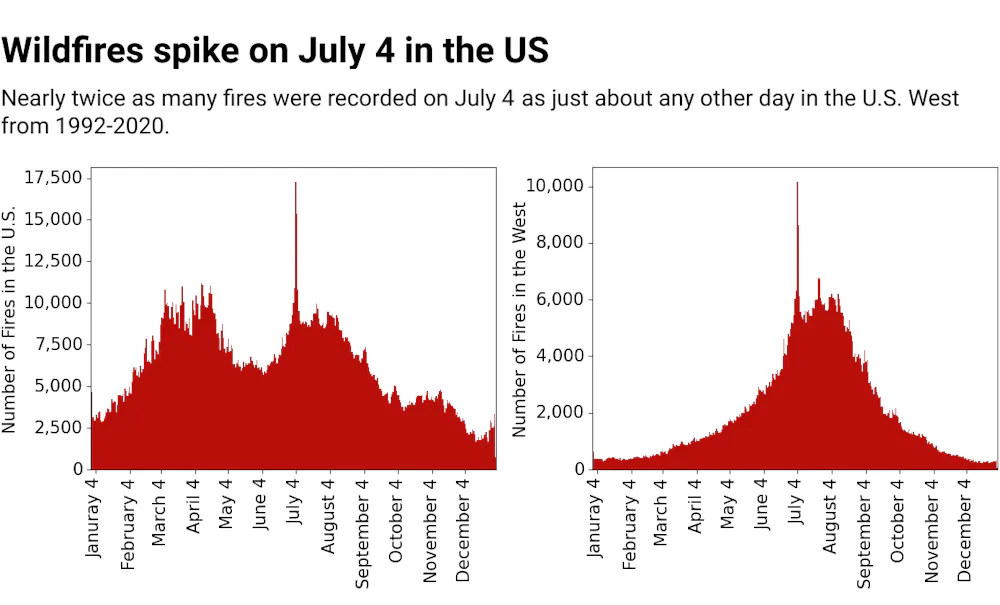
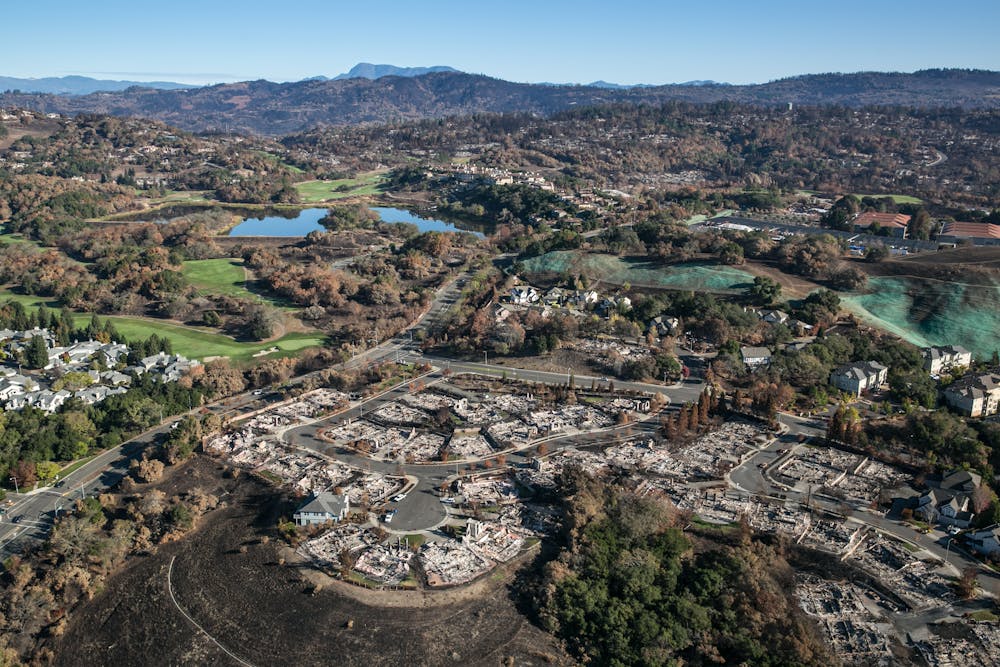
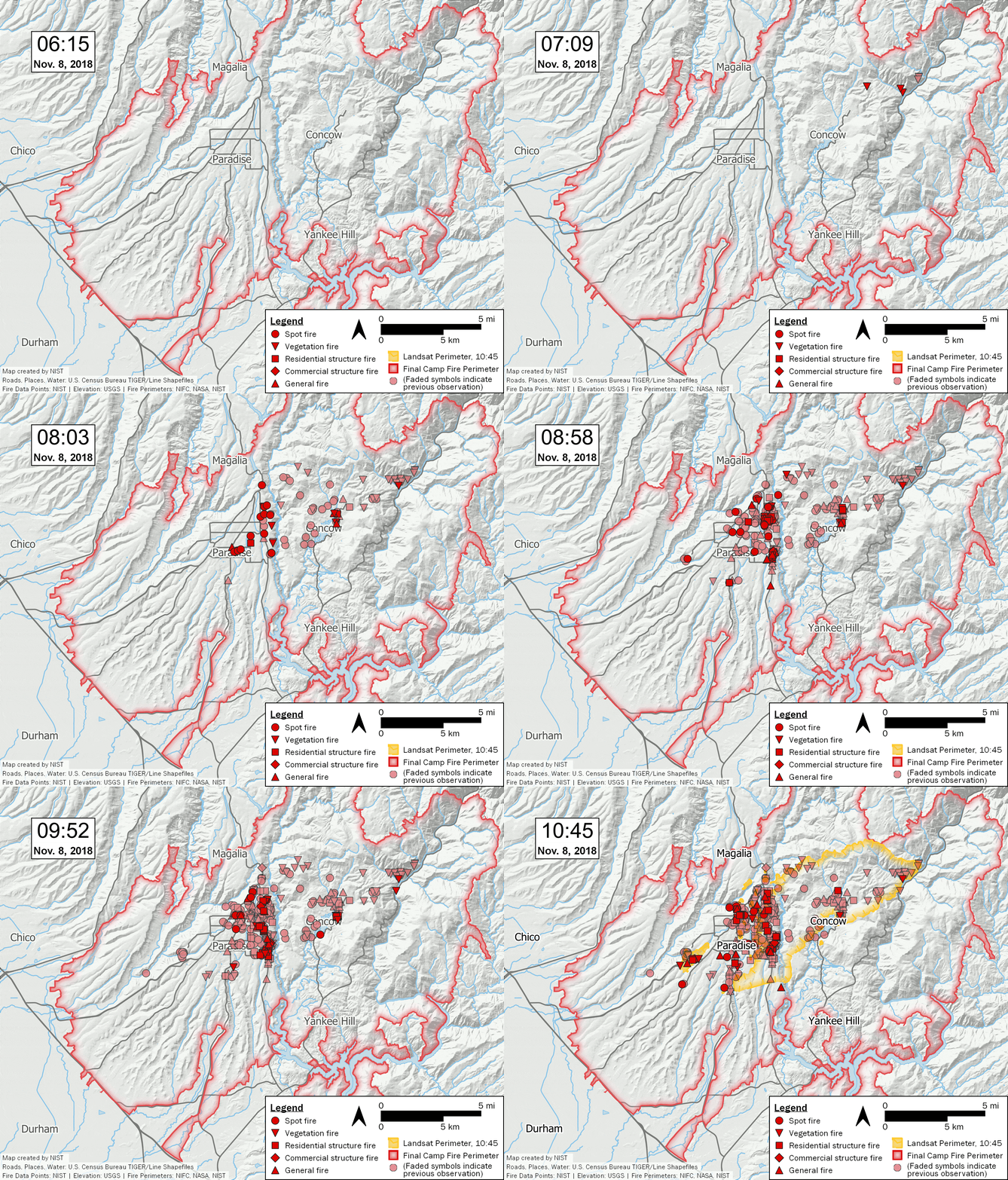





















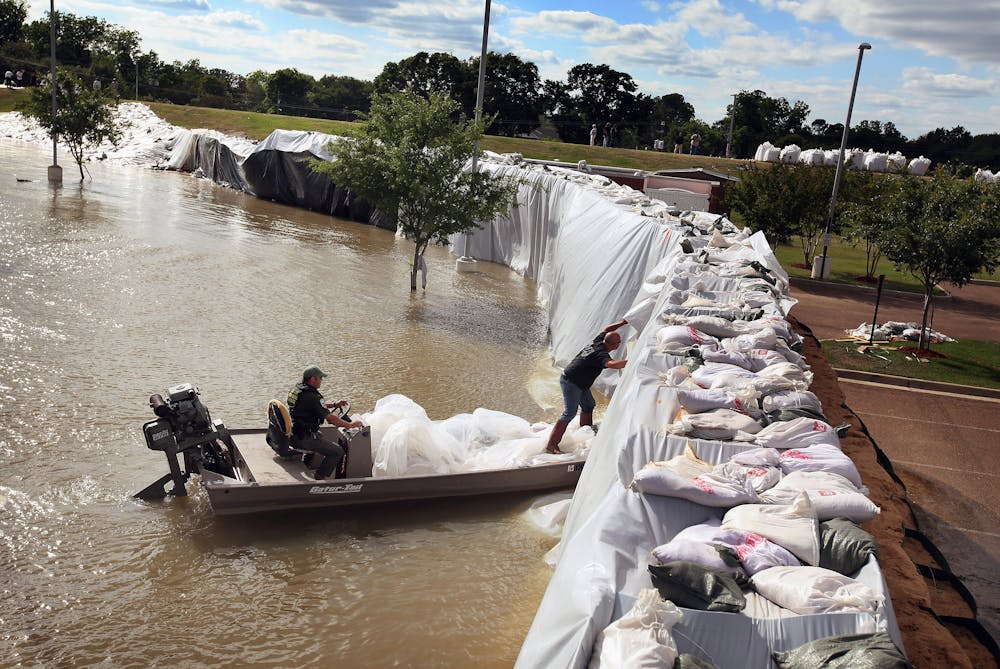
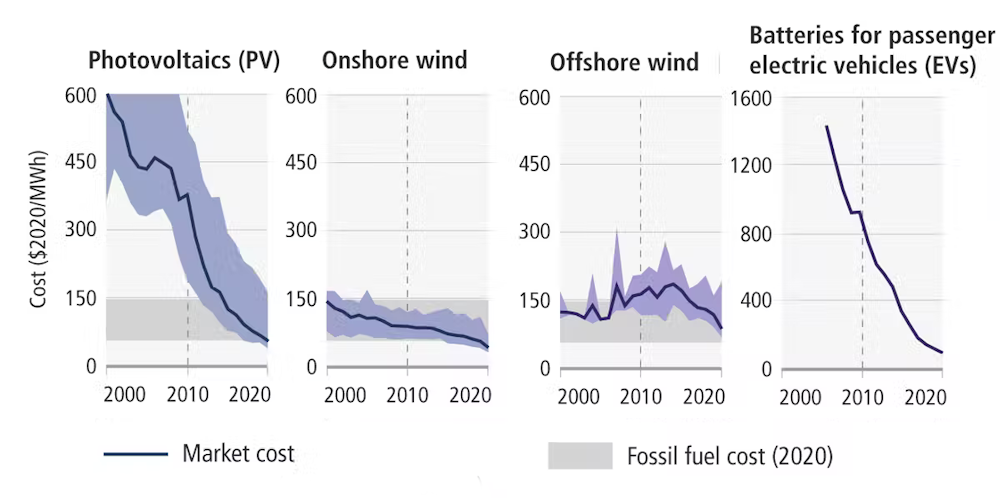















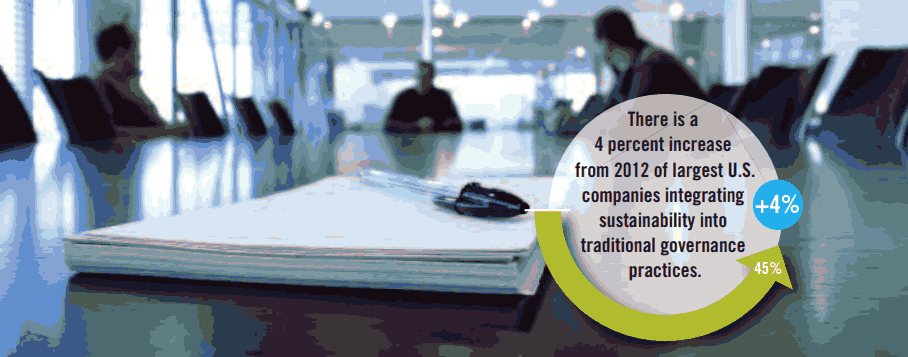


 Eric Block On Responsible Branding
You must be logged in to post a comment.