
A survey of more than 18,500 people across 24 countries has revealed that concern over climate change is eclipsed by other environmental concerns such as energy security and waste disposal.
Global warming was voted a top priority in just four of the nations polled – South Korea, India, Japan and Mexico.
Energy security is the leading environmental issue for Britons, over and above climate change, according to the new international Ipsos poll of working age adults.
Half of Britons (50%) feel that future energy supplies and sources is one of the most important environmental issues facing the nation. Other leading issues are waste management (48%); overpopulation (41%).
Only a quarter of Britons (25%) believe climate change is their leading environmental concern.
Of the 24 nations polled across the globe, Britain is in the bottom third in terms of prioritising climate change. Lower placed nations include South Africa (23%), China (21%), Poland (19%) and Russia (9%).
In contrast the UK is in the top three nations most concerned about energy security, behind Sweden (58%) and Germany (56%).
Ipsos MORI’s Head of Environment Research, Edward Langley, said: “The public are cautious about climate change. They feel there is a lack of consensus on whether it is man-made and the degree to which it will impact their lives.
“In contrast, our dependency on fossil fuels is a more immediate and tangible risk that they can get their heads around, and one where they see an obvious need to take action to maintain living standards.”
The survey was conducted last month in 24 countries around the world via the Ipsos Online Panel system. The countries included Argentina, Australia, Belgium, Brazil, Canada, China, France, Great Britain, Germany, Hungary, India, Indonesia, Italy, Japan, Mexico, Poland, Russia, Saudi Arabia, South Africa, South Korea, Spain, Sweden, Turkey and the United States of America. The international sample included 18,675 adults. Those interviewed were aged 18-64 in the US and Canada, and 16-64 in all other countries.
According to Ipsos MORI, the survey results reveal a number of potential implications for environmental campaigners. Firstly, it is important for the public to realise that the science community is in broad agreement that man-made climate change is happening, and to link the impacts with risks the public care about, that is, economic prosperity and that of future generations.
Secondly, campaigners need to consider the degree to which energy security can be used as a hook to encourage participation in sustainable behaviours.
Looking further afield, campaigners may also consider why other nationalities are more likely to feel Climate Change is a key environmental issue. For example, Japan (48%), Canada (40%), Spain (40%) and Germany (38%) are much more likely to say climate change is a key issue for them. Are there lessons which can be learnt in terms of how the public have been engaged there?
Reposted from Clickgreen.org.uk





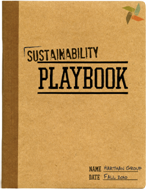









 A new survey by Time magazine was highlighted in a recent article written by Richard Stengel: “For American Consumers, A Responsibility Revolution.” Could this new halo many are happy to be wearing represent some of the most compelling signs of “the new normal”?
 “Now is the time for decision-making. We must seal a deal in Copenhagen for a global, equitable and comprehensive deal for the future of humanity and the future of Planet Earth.”


 Coca-Cola has unveiled its new “PlantBottle” to be rolled out later this year with the Dasani brand and in its Vitaminwater portfolio of products in 2010. In a smart move toward sustainable branding, the new bottles and their environmentally responsible composition will feature on-bottle messaging, in-store displays and on-line marketing communications so customers can begin to appreciate they are purchasing a new sustainable technology.
 Cub Foods recently opened a LEED (Leadership in Energy and Environment Design) Gold Certified grocery store in the Phalen neighborhood of St. Paul, Minnesota.


 LED refrigerator case lighting to conserve energy.


 “Make green an integral part of your brand promise, and don’t wait to be pushed into action by eco-savvy consumers. The store is a great place to begin – there is something every retailer can do today to reduce the amount of energy used. But there is not “magic bullet” tactic for buildng a “green brand.”
 Last week the 400 member Social Investment Forum called on the Securities and Exchange Commission to establish the mandatory reporting of corporate environmental, social and governance (ESG) or sustainability reporting. Citing the fact that corporate social and environmental performance can have material impact on portfolio performance, the proposal calls for sustainability performance to be reported on consistent measures and issued in an annual report along with standard financial disclosures.
 Eric Block On Responsible Branding
You must be logged in to post a comment.