Sustainability is a two way street – tasking consumers with more responsibility

11 07 2023

Photo: Bisley

By The Manufacturer • Reposted: July 11, 2023

Sustainability in furniture manufacturing is based on a symbiotic relationship between manufacturers and consumers, that places responsibility on both sides of the supply and demand equation, says Bisley’s Operations Director, Paul Crutcher.

There’s no doubt that we as furniture manufacturers must lead the way in innovating and developing sustainability in their furniture and interiors solutions for our homes and workspaces. However, for this to be possible there is a necessity for consumers to require it. The marketplace must demand sustainable furniture solutions, otherwise the incentive for manufacturers to enthusiastically pursue a sustainable agenda based on net zero principles will diminish.

Essentially, in the modern commercial world, both suppliers and consumers have a direct role to play in ensuring the implementation of sustainable practices. And each must hold the other to account.

Fortunately the manufacturing sector is now largely beginning to move in a sustainable direction, with ethical firms and organisations clearly stating, publishing and auditing their sustainable credentials and practices.

At Bisley, our commitment to sustainable manufacturing practices, outlined in our ‘Green Book’ is core to our operating philosophy. We often use the phrase that our furniture is ‘made for life’, and while that is true of our products, we also take that ethos into every part of our manufacturing processes and company culture.

We want furniture that lasts a lifetime for our customers; made from the highest quality materials, using the latest innovative technologies and processes with minimum impact on our environment.

And we’re not alone. Across the manufacturing spectrum there are companies truly revolutionising the way they work in pursuit of a net zero agenda.

However, I often worry that while many manufacturers in the furniture sector, in which I operate, are really drilling down on their sustainability agendas, there are those who are not, and it is my belief that many consumers may not know the difference. Especially when you consider that there is rather a lot of ‘green washing’ going on out there.

For example, do consumers know the questions to ask, and the touch points to look for, when trying to identify a sustainably led furniture manufacturer or brand, from one that does little to contribute to our collective net zero agenda?

And on the flip side, are we as a sector articulating our sustainability credentials effectively to consumers, so that their knowledge is broadened? I think in both these areas, there is definite room for improvement.

So what should consumers be looking for when it comes to making conscious purchasing decisions about furniture for their homes and workplaces?

Legitimate and sector specific accreditations

A good place to start with identifying sustainable manufacturers and brands is to look for their industry recognised green certifications. These will no doubt be published on their websites, so if they’re not there, then chances are it’s because they don’t have any – a red flag. And if you’re a manufacturer that isn’t shouting about your green accreditations – it’s time to start. Remember it’s a two way street.

Fair Trade, Global Recycled Standard and Certified B Corporation are all good examples of well known accreditations that are widely recognised as denoting a sustainable company or organisation.

However, best practice certifications vary from sector to sector meaning there is no one size fits all label that clearly proclaims a company to be a sustainability champion, making it tricky for consumers to be confident in their purchasing decisions.

As a British furniture manufacturer Bisley has memberships and accreditations with a wide range of bodies, including the Furniture Industry Sustainability Programme (FISP), which is recognised as the benchmark for sustainable practices in the UK furniture industry. It is widely referenced by procurement teams and furniture specifiers as a key part of an organisations sustainable procurement policies.

The message to consumers here is – do your research. The firms that are working to sustainable standards will let you know about it and have the creds to back it up.

Materials and the circular economy

Historically, the approach to resource consumption has been very much linear (take, make, use, dispose). But things are changing as companies become more and more aware of circular economy principles, especially within the product design phase.

In essence, the circular economy aims to reduce finite natural resource extraction, so basically, our aim is to keep goods in circulation longer, so we don’t have to take more things out of the ground, and at Bisley we encourage the use of materials with a higher recycled and recyclable content.

To help achieve this, alongside general and vital energy efficiency measures within our workspaces and places, at Bisley we have been looking at the products we create from a more macro perspective.

For example, we consider a product’s full lifecycle – from upstream material extraction and processing through to end of product life. Essentially, when you’re looking at that product, you’re not just looking at the product itself.  We should also be considering things like – where did those materials come from? And what’s the expected life span of the product? How will this product ultimately be disposed of? All manufactured products need to be considered from a circular economy perspective – both upstream and downstream.

However, from a consumer perspective – what does all of this mean and what kind of things should people be looking for? There are a number of ways to go about identifying companies that operate with a circular economy based ethos, but a few key pointers include:

  • Being repair friendly: Products will naturally degrade overtime which is when many get replaced. However furniture manufacturers can help slow the turnover process by designing pieces with easy to access/repair modular features with interchangeable spare parts and accessories, such as drawer slides or door hinges, across a wide product portfolio.
  • Can a product be upgraded/evolved easily?: Firms that can supply add-ons, product spin-offs (e.g – exchangeable doors or new hardware like handles), or refurbishment services can help extend a product’s purpose and lifecycle.
  • Take back schemes: Some firms offer take back schemes, which means that used and unwanted furniture, and their various component parts, many of which can be recycled, do not end up in landfills.
Packaging

When it comes to packaging there is so much that can be done to operate in a more sustainable way – from managing the packaging that raw materials arrive in at a manufacturing facility, to the packaging in which products are delivered to retailers/consumers – the second of these points being something that consumers are becoming more aware of, and prone to publicly calling out brands that utilise excessive, toxic packaging.

As a result it’s something that most manufacturers are becoming increasingly more savvy about.

From a waste management perspective, at Bisley over the past 12 months, 98% of manufacturing waste was recycled or diverted from landfill. This includes cardboard and plastic wrap waste from input materials and components, which are collected and baled on-site then sold back to our packaging suppliers.

Our approach to the packaging our products leave the factory in is similarly conscious and baked in from the product concept stage and right through the design process, in order to minimise materials and to help maximise space and efficiency during the transportation process.

Similarly many manufacturers are also utilising packaging materials that are made in the UK in order to shorten supply chains, and trialling new, almost infinitely recyclable packaging materials. These are things that consumers will likely be less aware of, so manufacturers and brands should make a point about publishing information about their efforts to improve their packaging processes on their websites. Share positive information.


Paul Crutcher
Paul Crutcher is Operations Director at Bisley, with responsibility for Procurement, Manufacturing and Logistics. Photo: Bisley
Transportation

Despite the trend for the offshoring of production across multiple sectors over the past twenty-five years, many firms who initially embraced the concept are now beginning to swim against the tide and return home, largely led by rises in overseas wages and the time and cost involved in shipping goods great distances, among other factors.

And this is a trend that has been exacerbated by the pandemic. The onset of Covid saw those companies with longer, more complex supply chains scattered across the globe, experience complete production paralysis. And because of this onshoring, or at the very least, nearshoring of organisational supply bases is being activated across numerous sectors, so products are not stranded tens of thousands of miles away, and are near, or close to, their end market in the event of a global catastrophe. It’s a trend that is already in action in the big tech sector, with firms like Apple, Amazon, Samsung and Google moving production out of China in light of geostrategic concerns.

But also economic/supply chain issues aside, sustainability factors are at play here. After all, shipping goods halfway around the world, from their production sites to their end markets, is not a good approach to reducing carbon outputs. Which is why onshoring/near shoring is becoming increasingly more appealing to firms who are looking to deliver on net zero targets.

At Bisley, a company that has always remained true to its ‘Made in Britain’ values and never offshored manufacturing, it’s a trend we welcome. And while we do export to different global territories, our largest market remains the UK, which is why we manufacture here. That and the fact that British manufacturing is a hallmark of excellence.

With this in mind, I would suggest to consumers that have an interest in sustainability – to check where goods are made, and interrogate this rigorously to avoid brand washing. Products made and sold in the UK come with a significantly reduced carbon footprint attached to them than those made in Asia for example. Not to mention a greater likelihood of delivering on circular economy principles – like the availability of spare parts and repairability designed to extend product life cycles – outlined previously.

To see the original post, follow this link: https://www.themanufacturer.com/articles/sustainability-is-a-two-way-street-tasking-consumers-with-more-responsibility/



Smoke rises from a brush fire near Hollywood Hills in Los Angeles in 2007. 

9 07 2023
Smoke rises from a brush fire near Hollywood Hills in Los Angeles in 2007. Hector Mata/AFP via Getty Images
Over the past two decades, a staggering 21.8 million Americans found themselves living within 3 miles (5 kilometers) of a large wildfire. Most of those residents would have had to evacuate, and many would have been exposed to smoke and emotional trauma from the fire. By Mojtaba Sadegh, Associate Professor of Civil Engineering, Boise State University via The Conversation • Reposted: July 9, 2023

Over the past two decades, a staggering 21.8 million Americans found themselves living within 3 miles (5 kilometers) of a large wildfire. Most of those residents would have had to evacuate, and many would have been exposed to smoke and emotional trauma from the fire.

Nearly 600,000 of them were directly exposed to the fire, with their homes inside the wildfire perimeter. 

Those statistics reflect how the number of people directly exposed to wildfires more than doubled from 2000 to 2019, my team’s new research shows. 

But while commentators often blame the rising risk on homebuilders pushing deeper into the wildland areas, we found that the population growth in these high-risk areas explained only a small part of the increase in the number of people who were exposed to wildfires.

Those statistics reflect how the number of people directly exposed to wildfires more than doubled from 2000 to 2019, my team’s new research shows. 

But while commentators often blame the rising risk on homebuilders pushing deeper into the wildland areas, we found that the population growth in these high-risk areas explained only a small part of the increase in the number of people who were exposed to wildfires.

nstead, three-quarters of this trend was driven by intense fires growing out of control and encroaching on existing communities.

An aerial view of a community of small, closely built houses, with half the homes in the photo burned.
A wildfire in 2017 destroyed more than 3,000 homes in Santa Rosa, Calif., a city of over 180,000 people. Marcus Yam / Los Angeles Times via Getty Images

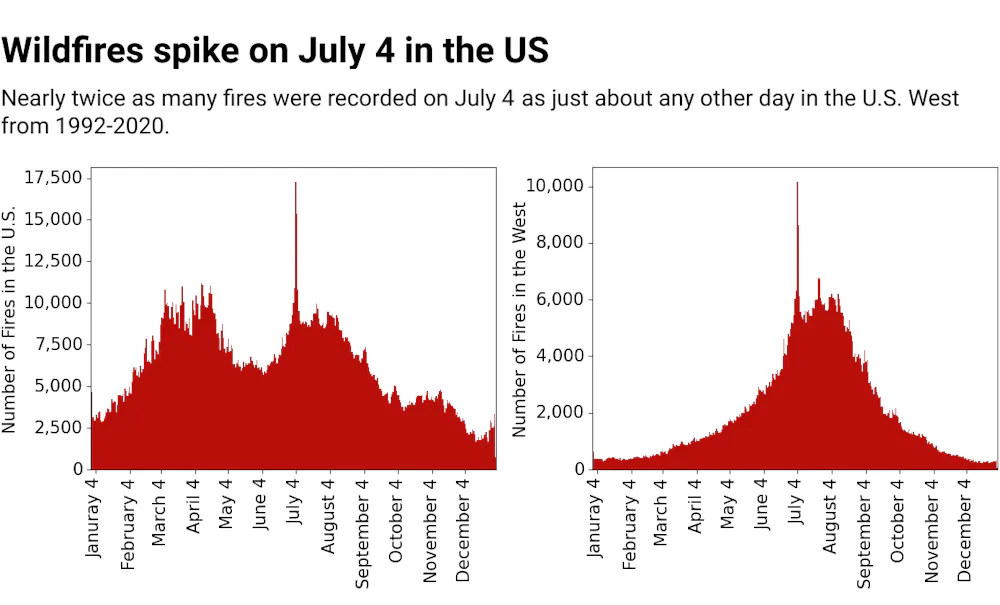
That knowledge has implications for how communities prepare to fight wildfires in the future, how they respond to population growth and whether policy changes such as increasing insurance premiums to reduce losses will be effective. It’s also a reminder of what’s at risk from human activities, such as fireworks on July 4, a day when wildfire ignitions spike

Two charts show wildfire counts by day of the year over 20 years. July 4 stands out as a clear spike, both looking at fires US-wide and just in the US West.
Mojtaba Sadegh, CC BY-ND

Where wildfire exposure was highest

I am a climate scientist who studies the wildfire-climate relationship and its socioenvironmental impacts. For the new study, colleagues and I analyzed the annual boundaries of more than 15,000 large wildfires across the Lower 48 states and annual population distribution data to estimate the number of people exposed to those fires.

Not every home within a wildfire boundary burns. If you picture wildfire photos taken from a plane, fires generally burn in patches rather than as a wall of flame, and pockets of homes survive.

We found that 80% of the human exposure to wildfires – involving people living within a wildfire boundary from 2000 to 2019 – was in Western states. 

California stood out in our analysis. More than 70% of Americans directly exposed to wildfires were in California, but only 15% of the area burned was there. 

https://datawrapper.dwcdn.net/K1mPs/2/

What climate change has to do with wildfires

Hot, dry weather pulls moisture from plants and soil, leaving dry fuel that can easily burn. On a windy day – such as California often sees during its hottest, driest months – a spark, for example from a power line, campfire or lightning, can start a wildfire that quickly spreads.

Recent research published in June 2023 shows that almost all of the increase in California’s burned area in recent decades has been due to anthropogenic climate change – meaning climate change caused by humans.

Our new research looked beyond just the area burned and asked: Where were people exposed to wildfires, and why?

A landscape view across a neighborhood with gold courses, lakes and hills in the background. In the foreground is burned cul de sac that appears to be at the edge of the city.
New homes on the edges of cities have been caught in some fires, like the one in Santa Rosa in 2017. But most of the people exposed were in neighborhoods existing well before 2000. George Rose/Getty Images

We found that while the population has grown in the wildland-urban interface, where houses intermingle with forests, shrublands or grasslands, that accounted for only about one-quarter of the increase in the number of humans directly exposed to wildfires across the Lower 48 states from 2000 to 2019.

Three-quarters of that 125% increase in exposure was due to fires’ increasingly encroaching on existing communities. The total burned area increased only 38%, but the locations of intense fires near towns and cities put lives at risk.

In California, which was in drought during much of that period, several wildfire catastrophes hit communities that had existed long before 2000. Almost all these catastrophes occurred during dry, hot, windy conditions that have become increasingly frequent because of climate change.

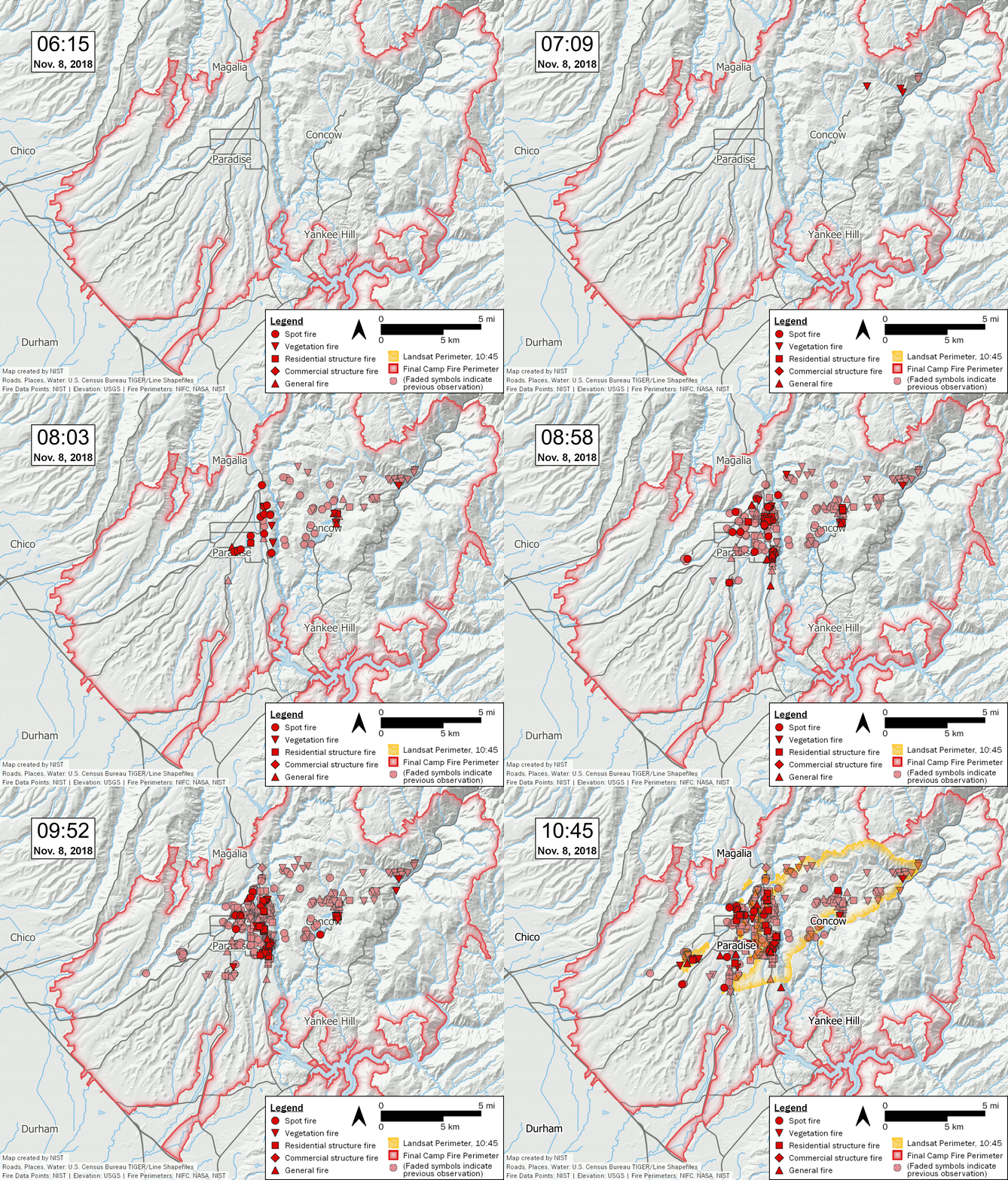
The 2018 fire that destroyed Paradise, Calif., began as a small vegetation fire that ignited new fires as the wind blew its embers. NIST

Wildfires in the high mountains in recent decades provide another way to look at the role that rising temperatures play in increasing fire activity.

High mountain forests have few cars, homes and power lines that could spark fires, and humans have historically done little to clear brush there or fight fires that could interfere with natural fire regimes. These regions were long considered too wet and cool to regularly burn. Yet my team’s past research showed fires have been burning there at unprecedented rates in recent years, mainly because of warming and drying trends in the Western U.S.

What can communities do to lower the risk?

Wildfire risk isn’t slowing. Studies have shown that even in conservative scenarios, the amount of area that burns in Western wildfires is projected to grow in the next few decades.

How much these fires grow and how intense they become depends largely on warming trends. Reducing emissions will help slow warming, but the risk is already high. Communities will have to both adapt to more wildfires and take steps to mitigate their impacts.

Developing community-level wildfire response plans, reducing human ignitions of wildfires and improving zoning and building codes can help prevent fires from becoming destructive. Building wildfire shelters in remote communities and ensuring resources are available to the most vulnerable people are also necessary to lessen the adverse societal impacts of wildfires.

To see the original post, follow this link: https://theconversation.com/human-exposure-to-wildfires-has-more-than-doubled-in-two-decades-who-is-at-risk-might-surprise-you-207903


Red and Blue States Are Hit Equally By Climate, Labor Woes, Says Investment Banker

7 07 2023

Image credit: Courtney Hedger/Unsplash

By Dave Armon via Triplepundit.com • Reposted: July 7, 2023

Amid climate change denial and cries of “go woke, go broke” from the extreme right, at least one large U.S. investment bank has identified bipartisan support for sustainability investments that are likely to yield big returns without political drama. 

Modernizing the U.S. power grid, fortifying climate-vulnerable regions, supporting carbon-removal technologies, and eliminating college education as a hiring requirement are economic drivers with support from both Democrats and Republicans, Aniket Shah, global head of ESG and sustainable finance strategy at the global investment banking firm Jefferies, told corporate sustainability executives and bankers at the GreenFin conference in Boston.

“If you work in our field of [environmental, social and governance (ESG)] investing and green finance, you are used to division and pessimism,” Shah said. “But we think there is a bigger story, which is that there are very clear areas of agreement and, therefore, optimism on ESG matters between policymakers, corporates, and civil society of different political persuasions and world views.”

In the run-up to the 2024 presidential election, laws prohibiting the use of ESG factors in managing investments have been passed in 15 states, with additional legislation coming, according to BloombergNEF

Culture wars are spilling over into brand reputation and consumer buying habits. Bud Light lost billions in revenue in a boycott that began when the formerly top-selling beer sent a customized can to a transgender social media influencer. Target was assailed for selling Pride Month merchandise. Even a brand long associated with Christian conservatives, Chick-fil-A, was criticized for a hire it made years ago to improve diversity, equity and inclusion at the quick-service restaurant chain.

But passage of the Bipartisan Infrastructure Law demonstrates there’s broad agreement from Democrats and Republicans on investments to accelerate and strengthen the economy, said Shah, who teaches at Columbia University in addition to his management role at Jefferies. 

“They say the first step in solving any problem is to admit that you have one — and for the energy transition we have a significant problem in the U.S. grid, which is simply outdated for the major renewable buildout that is beginning in this country and underdeveloped in terms of transmission lines needed,” said Shah, citing Lawrence Berkeley National Laboratory data estimating the new grid will be 50 percent larger than today’s, and consisting of 95 percent wind, solar and battery storage.

However, regulatory approval for new renewable power projects now takes more than four years, and transmission projects require six and a half years, Shah said, calling for an overhaul of the U.S. permitting policies. 

There is political consensus to invest in climate adaptation, Shah said, pointing to $400 billion in economic damage in red and blue states due to storms, flooding, wildfires and other disasters. In June alone, the largest California property insurer stopped underwriting policies, while rates in Florida rose 50 percent, he said.

“We think technologies ranging from precision agriculture, to construction, to water-desalination, to weather intelligence and more will become increasingly important to the U.S. economy and therefore interesting places for investors to invest,” said Shah, predicting a federal plan for adaptation and resilience will be published by the Joe Biden White House.

Investment in technology to remove carbon from the atmosphere will also receive bipartisan support, Shah claimed.

“To achieve global net-zero goals, we will need to remove approximately 10 gigatons of CO2 per year from the atmosphere by 2050 for every year going forward, a several order of magnitude increase from where we are today,” he said, heralding new industries that are both nature-based and engineered will be scaled up worldwide. 

Outside environmental investments, Shah pointed to the tightening U.S. labor market as a significant risk equally impacting conservative and liberal regions. He pointed to Gallup research showing sharply higher support among Democrats and Republicans for labor unions. 

Employers are responding, eliminating a college degree as a requirement for a job at select companies and in multiple states including Alaska, Colorado, Maryland and Pennsylvania, Shah said. Other trends to make jobs more appealing include remote work and four-day work weeks for many white-collar roles. 

“There is a growing realization that the United States is facing major worker shortfalls for the twin policies of reshoring manufacturing and accelerating decarbonization,” said Shah, citing predictions for 550,000 additional clean energy jobs by 2030, including electricians and construction roles where there are already shortages. 

“This is a problem that will need to get solved,” he said. “It’s a problem that exists in states of all political persuasions, and therefore will get solved.”

Dave Armon is the Chief Executive Officer of 3BL Media, which produces the 3BL Forum and ranks the 100 Best Corporate Citizens. A former journalist, Dave spent 20 years in management at PR Newswire, where he was president and COO.  

To see the original post, follow this link: https://www.triplepundit.com/story/2023/bipartisan-support-sustainability/778286


How marketers can craft a career in sustainability

7 07 2023

Photo: Courtesy of James McGowan

James McGowan’s career journey spans startups, agencies and multinationals, with sustainability at the core. By Shannon Houde from green biz.com • Reposted: July 7, 2023

James McGowan is a sustainability marketing leader who has taken on several of high profile roles in his career so far, working with charities, agencies, startups and multinational corporations, as well as studying for a master’s in sustainability. Currently, he leads marketing at Maeving, a British company that creates electric motorcycles.

Before Maeving, McGowan led marketing at Muddy Trowel, a company that makes gardening more accessible. Prior to that, he spent four years at Unilever — three of them as senior global marketing manager for its $3 billion Persil and Omo business. 

I recently connected with McGowan to learn more about his career journey as a sustainability marketing expert. Here he draws from his wealth of experience to share advice on the need to see sustainability more holistically, how to leverage a knowledge of sustainability as a differentiator within marketing and the one piece of advice that helped him level up his career. 

Shannon Houde: James, when did you spot the clear crossover between a career in marketing and sustainability? 

James McGowan: It was in 2013 when I was working for an agency and I noticed a lot of organizations had a website that seemed to articulate sustainability beautifully, when the reality was that it was greenwashing. It dawned on me that nothing in the world is perfect so why give a false narrative when your sustainability journey could be your marketing campaign? That spurred me to do a master’s in sustainability. And at that point, I was at a crossroads — should I be switching my career into a sustainable lead role, or continue with marketing? 

At the time, Unilever was only three years into its Sustainable Living Plan and the sustainability sector was still emerging. It was clear for me to stick with marketing because that’s where my strengths are, but to increasingly bring my understanding of sustainability into that role. Now, everything seems to be about sustainability. There’s no new innovation that can’t be launched from the marketing side that doesn’t meet certain sustainability criteria. 

Houde: Is it fair to say that even as a marketer you can’t really do your day job without thinking about sustainability? 

McGowan: I think there’s a more holistic side to sustainability. A lot of people jump into the environmental side but there’s a huge social impact to sustainability that people forget about. Some of the initiatives that we were driving while I was at Unilever were around stereotyping, for example. I worked for the laundry brand Persil and not that long ago it would be very common to find only a female in those advertisements. So, I take a fuller view on sustainability covering the social side and the environmental side. Ultimately, we need to serve people. Until we start serving people, we can’t really generate the profits, we need to then protect the planet so seeing sustainability through just an environmental lens is quite limiting. 

Houde: Speaking of customers, is the demand push or pull on sustainability, do you think? Are companies pushing out the agenda or are they responding to consumer demand?  

McGowan: There is a pull there. But take the example of laundry again. Eco is probably the most sustainable but technically it doesn’t clean as well and it’s slightly more expensive. So the technology is there, but it’s just not affordable, and we’ve got to create new markets for that. But there is certainly a lot of pull. From, say, 2025 to 2030, you’re going to see a huge change in the way that we consume these products, so I feel very confident about big businesses being able to solve these issues. But there’s some work on cost-benefit that needs to be done. 

[It’s the same on] infrastructure. We’ve seen hundreds of thousands of pounds worth of investment in waste collection and recycling around the world but there just isn’t that infrastructure. And the question is; who’s going to pay for that? These things unfortunately do take time. And I think that’s part of the role: resilience and patience. 

A lot of it comes back to storytelling. I inherited a project that had been attempted five times. So, how do you get a research and development team back on board a project that’s had so many knocks? 

Houde: How do you differentiate yourself as a marketer and leverage that sustainability element? 

McGowan: I never trained in marketing, but I’ve got a marketing career with a sustainability master’s. So, I think one of the key parts of my role is to be able to speak to people with the science and the technical skills and then translate that back into the marketing piece. 

Often there tends to be a bit of a disconnect. Particularly when marketers go and talk to the science teams they don’t feel listened to but, with my sustainability piece, I could actually access the science and bring that back into the role. Within big organizations, it’s the marketer’s job to connect the outside world to the individuals within that organization, and make sure that we are getting everyone’s perspective into key decisions.

I’ve had quite an atypical career. I set up my own business, worked with subject matter experts and been at an agency and a charity. And I think — when applying to Unilever, for example — that was quite unique. 

Houde: What would be your one piece of advice to others looking to break into sustainability? 

McGowan: I think it’s very easy to get completely caught up in the global issue of sustainability and climate change. I remember being with some friends at a restaurant a couple of years ago and we were talking about the plastic crisis. We asked the waiter to mention in their next team meeting the plastic straws they used and even through a discussion like that you can have a lot of impact without really having to do a lot. In the last few years, I’ve certainly tried to focus on what I can do personally as well as what I can do in my career.

But other than that, keep hustling. There are amazing jobs out there. Even if you start small. Your next move is about laying the foundations for the move after that. So don’t try and solve it all at once. 

LinkedIn is just a fantastic tool too. I found every job through the platform and I built a network. It’s a different kind of nepotism. It’s not your parents or your uncle that will get you a job but it’s still the people who you know and that is what LinkedIn is for. 

Houde: And similarly, what specific advice has really helped you personally in moving your career to the next level? 

McGowan: One of the most valuable exercises I did was looking at my own values, looking at what makes me tick and then translating the skills and traits I have to identify what work I wanted to do. When you think of sustainability, it’s incredibly broad. There’s so much to do and having a very clear purpose about what you want to achieve is really important. You’ve got to find something that you care about, and that makes you tick, because work has to be fun.

To see the original post, follow this link: https://www.greenbiz.com/article/how-marketers-can-craft-career-sustainability


5 Actions to Kick-Start Your Environmental Sustainability Agenda

6 07 2023

Credit: ZoonarGmbH via Alamy Stock

A new Forrester report shows how and why to launch an active sustainability strategy. By John Edwards, Technology Journalist & Author from Information Week • Reposted: July 6, 2023

When it comes to creating an environmental sustainability agenda, many firms do little more than announcing vague plans and goals.

A recent Forrester report finds that as many enterprises dawdle, customers and other stakeholders are increasingly demanding authentic and effective environmental sustainability initiatives and strategies that demonstrate an understanding of and commitment to tomorrow amid growing economic and geopolitical uncertainties.

The report also notes that while many enterprise architects and their teams are well positioned to prepare their organizations for the next wave of optimization, transformation, and disruption — having worked on sustainability initiatives for decades — many more enterprises are just beginning their planning.

The challenge facing sustainability planners is that while most enterprises believe sustainability is a good idea, day-to-day operational issues, staffing challenges, and budget cuts can make it hard to prioritize goals. On the bright side, the most successful sustainability initiatives not only lower costs but also improve revenue and enhance margins.

To help tech leaders kick-start their sustainability planning, Forrester distilled hundreds of conversations with CIOs, enterprise architects, and teams, to identify five strategic areas of opportunity and key actions that can be taken to improve their sustainability maturity.

  1. Set goals and add environmental metrics to your strategic plans and budgets.
  2. Implement tools for environmental sustainability measurement and reporting.
  3. Integrate sustainability outcomes into your transformation initiatives.
  4. Evaluate the role of emerging technology in achieving your sustainability goals.
  5. Seize innovation and partnering opportunities to enhance sustainability.

Implementation Basics

Abhijit Sunil, a Forrester senior analyst, says the initiative that repeatedly came up in all conversations, across all regions, was the challenge of implementing the environmental monitoring tools and solutions required for carbon accounting. “In our research we found that the majority of organizations at this time are in a maturity level where they are automating their carbon accounting and trying to create workflows that will enable data collection from across the organization,” he says.

Sunil notes that the need for strong, reliable environmental monitoring tools is reflected in the arrival of solutions from an array of providers, including software specialists, product firms, and even consulting organizations. “We compared some of them in our report on environmental monitoring software tools,” he says.

Environmental technology tools are a prime medium for a wide range of enterprises, Sunil says. “The technology leader has a big role to play in understanding how these tools differ from each other and how they can be plugged into existing systems within an organization,” he states. “For example, how these tools can plug into ERP systems or HR management systems, and how some of these tools may be able to provide insights into data center management and cloud optimization as well.”

Getting Started With Sustainability

Embarking on a new sustainability journey requires a different approach from bringing an IT leader into a strategy that’s already at an advanced maturity level. “Our report emphasized how the tech leader can start playing a role or optimize their role in sustainability,” Sunil says.

The best way to start a sustainability mission is by understanding the contribution of IT to the overall sustainability or carbon footprint of the organization, Sunil says. The next step, he notes, is to identify the most feasible opportunities within the enterprise to make the biggest impact on sustainability.

Leadership Is Critical for Successful Sustainability

Top-down leadership buy-in is essential for a successful sustainability initiative, both within the overall organization as well as the IT stack. “The best way to counter opposition is to have a clear understanding of the ROI of investing into various sustainability levers,” Sunil says.

The report advises IT leaders to challenge their innovation teams to eliminate scope-1 emissions. “As your organization explores new materials and manufacturing processes, examine the data to find opportunities to collaborate with other ecosystem partners,” the report suggests. “Ask your existing innovation facilitators to run dedicated campaigns to collect ideas to improve your environmental sustainability and consider sharing the findings with your strategic partners and long-term suppliers.”

Sunil notes that an organization might monitor, for example, exactly how much money data center energy optimization is conserving along with carbon footprint savings. “This is also how initiatives can be funded — sustainability is often synonymous with optimization and vice versa,” he says. “In many cases, green energy may be cheaper than conventional energy.”

Sunil adds that working directly with vendors and infrastructure suppliers can be extremely helpful for technology leaders planning a sustainability agenda. As the report notes: “Together, you can move faster, identify opportunities, and leverage their ecosystem of partners to help with projects, such as data center and network optimization, automation, and software platforms.”

To see the original post, follow this link: https://www.informationweek.com/sustainability/5-actions-to-kick-start-your-environmental-sustainability-agenda#


Oh Good – Brands Have Found Another Sneaky Way To Greenwash

6 07 2023

ULIIA BURMISTROVA VIA GETTY IMAGES

If you prefer buying bags and clothes in “softer colours” we’ve got bad news. By Kate Nicholson from Huffington Post/U.K. • Reposted: July 6, 2023

Are you leaning into a more muted palette recently?

A fan of the beige trend, or just trying to go for a more subtle look?

Well, it seems brands might be onto you and one of the reasons you really find yourself going for “softer colours.”

Research from Psychology and Marketing published in June suggested that colours, and their saturation (a colour’s purity and intensity), influence how eco-friendly we think a product is.

So, the less saturated – more muted – an object is, the more we unconsciously think that it’s more eco-friendly, even if it’s not.

After conducting five experimental studies, researchers suggest consumers link low colour saturation with a product which has a “gentler” impact on the environment.

They explained: “This perception of eco-friendliness, in turn, increases their trust in the product maker’s greenness.”

While the research doesn’t mention greenwashing, this explanation of how consumers perceive colour lends itself to that particular form of advertising.

Greenwashing is a practice where brands and corporations seem to advocate for good environmental policies without putting them in place.

A study from the EU in 2021 found greenwashing is particularly prevalent in online marketing, with many websites making exaggerated, false claims to reel in the eco-conscious among us.

What with the climate crisis being on our doorsteps right now – the world had its hottest day ever on record on Monday, July 3 – who isn’t keen to shop green at the moment?

As the research pointed out: “The results reveal that, by fostering perceptions of eco-friendliness and green trust, such colours favourably influence consumers’ behavioural intentions.”

As in, you’re more likely to buy it – and pay a “premium price” for it.

In fact, this does just happen with material possessions. Bright colours in any products are linked to other higher characteristics, like a higher amount of calories and a sharper taste in food, or a larger size or magnitude, in other objects.

In 2017, a Unilever market research survey of 20,000 people in five countries found a third of consumers choose to buy from companies they think are doing social or environmental good.

Being green is in – even if only wearing it in subtle shades.

“It’s become a status [to be eco-friendly]. Being an environmentally conscious consumer adds to people’s sense of self,” Sigal Segev, associate professor of advertising at Florida international University told the BBC.

The expert said being green (or trying to be) helps alleviate shopping guilt in consumers, explaining: “The guilt is kicking in. People are thinking, ‘this is the least I can do, not only for myself, but also for future generations.’”

Sustainability consultant and author of the Ethical Business Book, Sarah Duncan, told BBC Future that being green helps our conscience.

“These claims make us feel better about our overconsumption, our consumerism. But the reality is that we should all be buying less,” she explained. So, rather than shopping for the latest muted summer palette this summer, perhaps we should all try to stick to the second-hand shops instead?

To see the original post, follow this link: https://www.huffingtonpost.co.uk/entry/brands-greenwash-with-muted-tones_uk_64a58380e4b0035bc5ca4e92


Corporate Clean Energy Buyers Are Saving the Grid

5 07 2023

A one-megawatt solar installation in western Texas. Image: Jonathan Cutrer/Flickr

By Tina Casey from Triple Pundit • Reposted: July 5, 2023

Fossil energy stakeholders continue to insist on the need for new gas power plants, but evidence is emerging that wind and solar power can buffer the electricity grid from heat waves and other extreme weather events. That provides more support for corporations to continue lobbying for more clean energy, both as a means of climate action and a simple bottom-line matter of keeping the lights on.

Clean energy comes through in Texas 

Both wind and solar power were lauded as workhorses during an extended heat wave that descended on Texas last month.

“Experts credit the state’s diversity of energy sources for keeping the lights on. The significant increase in solar power generation in recent years has helped meet the growing demand for electricity in Texas, which operates its grid largely independently of the rest of the country,” the Texas Tribune reported on June 28.

“The Texas power grid comfortably met record demand during this week’s heat wave with abundant power supply from wind and solar plants, data from the grid operator showed,” Reuters reported on June 30, noting that the Texas grid added more than 6,300 megawatts of wind and solar along with more than 1,300 megawatts of grid-stabilizing energy storage, just in the past year. 

Wind speeds tend to slow during heat waves, and solar panels function less efficiently in hot weather. However, the additional clean energy and storage capacity helped to counterbalance heat-related slowdowns in output.

Grids are vulnerable to extreme weather 

The growth of clean energy in Texas made a marked difference in grid stability compared to years past. In February of 2021, for example, a severe winter storm propelled a lethal, widespread blackout In the state. At the time, Texas Gov. Greg Abbott quickly blamed the failure on wind turbines and solar panels. However, a body of follow-up reports identified the chief culprit as frozen conditions among the state’s large roster of unweatherized gas power plants.

The problem was exacerbated when the supply of gas to power plants was disrupted by inadvertent electricity cut-offs when utilities tried to prevent further grid damage.

“At one point during February’s storm, more than half of the state’s natural gas supply was shut down due to power outages, frozen equipment and weather conditions,” the Texas Tribune reported last year.

Though wind and solar did lose some capacity in the storm of 2021, as did all other forms of power generation, that was far outweighed by gas outages. On average, gas power plants supply 42 percent of the state’s electricity, meaning that any system-wide impact on the gas sector will have an outsized effect on the grid.

The problems in Texas were further amplified by its unique grid, which lacks the interconnections that could have enabled it to call upon resources in other states.

Texas leads on clean energy

The case for clean energy was difficult at the beginning of the 21st century when the technology was relatively new and costs were high compared to conventional resources.

Nevertheless, the Texas wind industry was already racing to lead the nation. It was fueled by a major new transmission system that began operating in 2013, as part of the state’s Competitive Renewable Energy Zones (CREZ) initiative. The new CREZ system brought wind power from the sparsely populated western part of the state to high-demand regions in the east.

The new transmission system did not just pop up out of nowhere. It was a joint venture between two corporate giants, comprised of a subsidiary of the Ohio-based energy firm American Electric Power and MidAmerican Energy Holdings, a subsidiary of the Nebraska-based firm Berkshire Hathaway.

New transmission lines are notoriously difficult to build, but the CREZ system progressed relatively quickly after first proposed in 2005. In a 2020 study of the project, Rice University attributed its success to the “influence of wind power inventors and developers on specific legislators and the governor.” 

Rice also cited the state’s strong history in energy entrepreneurship, as well as public support for clean energy and lobbying by environmental groups. Similar factors have also propelled growth in the state’s solar industry. Texas is now second only to California in solar capacity.

Texas businesses support clean energy

The power of corporate energy buyers has been on full display across the U.S. since 2015 when business leaders organized in support of former President Barack Obama’s Clean Power Plan during the runup to the 2015 Paris Agreement on climate change.

The Clean Power Plan never took effect, and former President Donald Trump pulled the U.S. out of the Paris Agreement. But U.S. corporations have continued to push the renewable envelope by leveraging their own buying power — including in Texas.

Still, despite growth of wind and solar in Texas, the state’s legislature has turned against clean energy in recent years. A new law intended to thwart ESG (environmental, social and governance) investing took effect in 2021, for example. But hundreds of Texas businesses continue to lobby in support of clean energy.

One group, the Texas Energy Buyers Alliance (TEBA), counts almost 400 companies on its rolls, including some of the largest employers and electricity users in the state. When state lawmakers introduced two burdensome new bills earlier this year, TEBA lobbied against them.

“The Legislature should strengthen our open energy market without discriminating against vital clean energy resources — and without picking winners and losers among the range of technologies Texas needs to power its future,” TEBA advised in a sponsored article posted on the Texas Tribune website.

To see the original post, follow this link: https://www.triplepundit.com/story/2023/clean-energy-grid-stability-texas/778141


Inequality: The Sustainable Business Blind Spot

5 07 2023

Graphic: Maddy Mitchell / Gavel Media

Climate change affects everyone but in vastly unequal ways. To address this and drive real, sustainable change, businesses must ensure their sustainability strategies do not exacerbate existing inequalities even further. By Isabel Shopley from Sustainable Brands * Reposted: July 5, 2023

When it comes to genuine sustainable development, businesses still have a blind spot. Collectively, we’re failing to address the systemic risk posed by mounting levels of inequality. This is a humanitarian tragedy and a barrier to long-term, meaningful sustainable change.

Addressing inequality — a business imperative

According to calculations by Credit Suisse, 54 percent of the $127.5 trillion in new wealth created between 2012 and 2022 went to the world’s richest 1 percent. And only 0.7 percent went to the four billion people who make up half the global population, predominantly in the Global South.

As the reality and challenge grows starker and harder to ignore, businesses are waking up to the urgent and systemic risk of inequality. It erodes trust in our political and economic system, unravels the social fabric, fuels civil and political unrest and constrains economic growth. In May, a group of more than 30 major corporations convened under the Business Commission to Tackle Inequality (BCTI) to launch a flagship report asserting that growing inequality is bad for business. The report highlights how rising inequality contributes to:

  • an increasingly volatile business operating environment;
  • supply chain insecurity;
  • the erosion of productivity and innovation;
  • regulatory and compliance risks; and
  • reputation risk.

It’s no surprise, then, that corporate performance on inequality-related matters is increasingly recognised as an investor priority because it creates ‘systemic risk’ to their entire portfolio. In response to this, a new framework is being developed for financial disclosures for social and inequality-related risks. The aim is to develop a disclosure framework similar to the TCFD and TNFD frameworks for climate and nature.

Inequality and climate change: 2 sides of the same coin

Aside from the business and economic cost and the vast humanitarian consequences, inequality also undermines the world’s ability to address existential global threats such as climate change. As wealthy countries outsource industries and labor to developing nations, emissions are driven up — as these nations have usually not had their industries regulated through global climate policies or modernised to become more sustainable. Additionally, poverty in developing nations often forces communities to put more pressure on the environment — which can lead to unsustainable agricultural practices, deforestation and overexploitation of natural resources.

So, inequality worsens climate change — which simultaneously fuels inequality. For example, poorer countries lack the resources to recover from extreme weather events brought on by climate change. Similarly, access to resources such as clean water, food and adequate housing is reduced as the climate worsens — further exacerbating insecurity and inequality.

Sustainable solutions must incorporate all voices

It’s clear that not everyone will feel the impacts of climate change equally. Many communities will lose more than others, compounding deep-rooted societal and systemic inequalities. Despite this, it’s these very people who will feel the effects of climate change most acutely that are often left out of the conversation when it comes to business solutions. This dangerous discrepancy can limit perspectives on the climate issue and the success and relevance of proposed solutions. It’s crucial we address the needs of those worst affected by climate change and incorporate their voices and knowledge into decision-making.

Doing so will help futureproof organisational strategies, too. To date, businesses haven’t been particularly proactive at including the perspectives of those groups most likely to be negatively impacted by climate change into their conversations and strategies to address it. But they should be. Consideration of their challenges and insights is not only fair — it can also be the difference between success and failure when it comes to setting short- and long-term sustainability priorities.

Rethinking business impact and rightsholders

The introduction of double materiality is set to change this and is driving a monumental shift in the way businesses consider impacts and rightsholders. Double materiality requires organisations to engage with two types of stakeholder: users of information and affected stakeholders, or ‘rightsholders,’ who are or could be affected by the organisation’s activities. To support this shift, companies must assess the significance of an impact according to its severity and likelihood. This methodology draws on established human rights impact-assessment methodologies with an emphasis on the rightsholder.

This is good news from an inequality perspective. By considering the views of rightsholders, a company is much more likely to take on board the opinions of those who face greater levels of inequality.

The way forward

Climate change affects everyone but in vastly unequal ways. To address this and drive real, sustainable change, businesses must ensure their sustainability strategies do not exacerbate existing inequalities even further. This won’t happen overnight; but it starts with a greater understanding of who your rightsholders and affected stakeholders are and how your business’ contribution towards climate change could impact them.

Double materiality and the BCTI’s new framework for financial disclosures on social and inequality-related risks can help with this. Ultimately, both reflect a broader, positive shift towards addressing and disclosing business impacts on sustainability-related issues — not just the impact of those issues on the business. This holistic approach to impact is key to reducing inequalities and creating meaningful sustainable change.

To see the original post, follow this link: https://sustainablebrands.com/read/finance-investment/inequality-sustainable-business-blind-spot


International ESG Rulemaker Publishes New Climate and Sustainability Disclosure Rules

4 07 2023

Photo: Greenomy

By Denise Lugo  Editor, Accounting and Compliance Alert from Thomson Reuters • Reposted: July 4, 2023

As expected, the International Sustainability Standards Board (ISSB) on June 26, 2023, issued two new disclosure standards that aim to interweave the climate and sustainability footprint of businesses into financial reporting.

The standards are the first round of environmental, social and governance (ESG)-related disclosure rules to be developed by the board and are being pushed for global use. Both standards are effective for annual reporting periods beginning on or after Jan. 1, 2024. Earlier application is permitted if both are applied at the same time.

“Our language is an accounting language; it is sustainability translated into an accounting language,” ISSB Chair Emmanuel Faber said in a speech at an IFRS Foundation conference that same day. “So you will find in S1, in particular the general requirements, a huge amount of notions that you’re very familiar with on purpose because we want as much as possible that connection within the general purpose financial reporting with the financial statements and with the valuation,” he said. “We are here to support the needs of the primary users of general purpose financial reports in the amount and the decision that they take on providing resources to entities, companies, bankers investors and others. That’s the reason why we exist and for that we know which language they need to be using and we’re focusing on that.”

Under IFRS S1, General Requirements for Disclosure of Sustainability-related Financial Information, and IFRS S2, Climate-Related Disclosures, businesses must disclose all sustainability-related risks and opportunities that could reasonably be expected to affect their cash flows, access to finance or cost of capital over the short, medium or long term that could reasonably be expected to affect prospects.

S2 is specific to climate-related risks to which the entity is exposed, i.e., climate-related physical risks; climate-related transition risks; and climate-related opportunities available to the entity.

The ISSB’s trustees have stressed that the rules are to be viewed as a global baseline for use worldwide.

“The global baseline approach, supported by the G20 and others, will provide investors with globally comparable sustainability-related disclosures that have the potential to move market prices, without constraining jurisdictions from requiring additional disclosures,” IFRS Foundation Trustee Chair Erkki Liikanen said in a statement. “This will help companies and investors by tackling duplicative reporting.”

Upon issuance, the standards pulled strong support from regulatory and other bodies including the AICPA-CIMA, the Financial Stability Board, and International Organization of Securities Commission (IOSCO).

“IOSCO has been actively involved in the IFRS Foundation’s consideration of whether and how to apply its trusted reputation and internationally renowned global standard-setting process to the topic of sustainability disclosures,” IOSCO Chair Jean-Paul Servais said in a statement. “We commend the leadership of the ISSB for the pace and quality of their work. IOSCO is conducting an independent assessment of the ISSB Standards, with a view to completing this review promptly.”

According to the main tenets of the guidance, both S1 and S2 require business entities to disclose information that will enable investors to understand:

  • the governance processes, controls and procedures a business entity uses to monitor, manage and oversee sustainability (S1) and climate-related (S2) risks and opportunities;
  • the entity’s strategy for managing sustainability (S1) and climate-related (S2) risks and opportunities;
  • the processes the entity uses to identify, assess, prioritize and monitor sustainability (S1) and climate-related (S2) risks and opportunities, including whether and how those processes are integrated into and inform the entity’s overall risk management process; and
  • the entity’s performance in relation to its sustainability (S1) and climate-related (S2) risks and opportunities, including progress towards any climate-related targets it has set, and any targets it is required to meet by law or regulation.

This article originally appeared in the June 27, 2023 edition of Accounting & Compliance Alert, available on Checkpoint.

To see the original post, follow this link: https://tax.thomsonreuters.com/news/international-esg-rulemaker-publishes-new-climate-and-sustainability-disclosure-rules/


Secondhand is on Track to Take First Place in Retail

30 06 2023

Image credit: cottonbro studio/Pexels

By Terry E. Cohen via Triple pundit • Reposted: June 30, 2023

Say “secondhand shopping” and many people latch onto an image of thrift stores for the tightly budgeted or the treasure-hunting consumer, whether the shops are physical or online. However, the resale of goods — particularly clothing, footwear and accessories — encompasses a much broader market that is rising quickly to a powerhouse.

Growth in resale — also known as re-commerce, a name derived from the term reverse commerce — is expected to dwarf the growth of fast fashion in the next few years. This speaks to the trend’s potential to improve sustainability in an industry notorious for being anything but planet-friendly. The National Retail Federation put a white-hot spotlight on resale and sustainability at its January 2023 Big Show in New York City, with one expert’s estimation of the resale market reaching $300 billion by 2031.

Thrift stores and consignment shops still factor into the consumer search for secondhand clothes, footwear and accessories, but both brands with big names and smaller merchants using online platforms like Shopify are bringing resale to unprecedented scale.

What’s driving re-commerce’s accelerating positive trajectory?

The rise of resale: The consumer experience and the retail shift

To learn more about what is driving the rise of resale in fashion retail, TriplePundit spoke with Tasha Reasor, senior vice president of marketing at Loop, a returns management app for brands on the e-commerce site Shopify. She likened the shift to the appeal of factory outlet stores, which initially offered discounts on unsold stock before many companies added product lines exclusively for those shops.

“Think about returns: they can come back damaged, they’re out of season or simply just can’t be resold,” Reasor said. “When we think about re-commerce, you take the ones that can be resold, and you’re opting to save money and not waste the returns. You’re boosting your profit margins while also promoting a sustainable behavior.”

“American Eagle recently opened a resale shop called AE/RE, and they partnered with ThredUp, a company that specializes in reverse commerce,” she said.

American Eagle’s resale shop offers newer items for resale and vintage wear from its past decades. Therefore, the value of re-commerce isn’t a one-way street benefitting business to recoup profits on unsold and returned merchandise. It brings back the thrill of the hunt for bargains on quality-made items, nostalgia or other shopping aesthetics consumers enjoy.

Digital space created a definite need for resale, too. While the ease of shopping online and the rise of social media influencers stimulated purchasing, consumers also heavily leveraged return policies. Retailers and brands then had to look for ways to process those returns, not only as profitably as possible, but also in a way that retained consumer engagement and loyalty.

“Amazon for years has had ‘buy new, buy old, buy used’ optionality,” Reasor said. “We’re seeing re-commerce … bring that to any brand, all brands, giving them the ability, [especially] through companies like Arrive or ThredUp.” While American Eagle works with ThredUp, Eddie Bauer chose Arrive.

For smaller entities like many of the merchants on Shopify — the world through which Reasor and Loop operate in partnership with Arrive — facilitator platforms provide a more level playing field in resale and return management. 

Plus, while younger generations have long been fans of both online and secondhand shopping, older consumers are in the mix as well. Geared to the 50 and older crowd, AARP featured new innovations in shopping as its May 2023 Bulletin cover story, specifically mentioning secondhand retail as a smart option for dealing with inflation.

Sustainability: A major force behind resale’s rocketing growth

For those consumers pursuing savings through re-commerce, sustainability may not be at the forefront of their minds, but their secondhand purchases nonetheless contribute to more planet-friendly consumption habits. Still, a growing percentage of consumers do have sustainability in mind when shopping resale.

In its survey of shoppers in September 2021, IBM found that 44 percent of consumers — the largest segment of respondents — chose products and brands based on alignment with their values. In our own survey in December 2022, TriplePundit and our parent company, 3BL Media, learned that over half of respondents were already shopping secondhand, with more intending to do so within six months.

That’s a whopping 70 percent of consumers actively or planning to purchase resale goods. Reasor affirmed the relevance of those numbers to sustainability.

“The environmental impact of re-commerce would be reducing resource consumption,” Reasor said. “When you produce new products, you require significant amounts of resources, including raw materials, energy and water. So, if you are repurposing existing products and you are extending their life, you’re naturally not needing to build and leverage all those materials.”

More than 70 percent of greenhouse gas emissions of the fashion industry come from raw material production and processing, according to research giant McKinsey. Therefore, avoiding product creation from scratch can be a big boost to reducing emissions. Satisfying the customer with resale inventory instead of brand new also saves a sizable investment for companies.

A two-way street of changing behavior: The future of re-commerce and secondhand shopping

As someone who works with the logistics side of sustainability, Reasor noted that companies can use resale to encourage more sustainable behavior by their customers.

“Re-commerce promotes sustainable consumption,” Reasor said. “That starts to change the behavior and the habits of consumers in terms of getting them to think about secondhand being more environmentally friendly and thinking about their own consumption.” 

Loop also partners with the app EcoCart, which enables consumers to get education about carbon reductions associated with order and return choices, as well as to actively make a positive contribution to carbon neutrality.
 
Fast fashion is still growing, albeit at a much lower rate than resale, and it would be naïve to think that resale alone will put it to rest. But brands and merchants have a huge opportunity to influence consumer behavior toward secondhand shopping. Just as sustainability-minded shoppers have steered companies to provide them with environment-friendly options, companies can educate consumers about resale’s value to both the pocketbook and the planet.

Recent reports on the damage caused by fashion’s disposability in Chile and Ghana provide photographic proof of the need for increasing circularity in the industry, to which all forms of secondhand shopping make a contribution. Re-commerce models optimize the ability to scale those contributions.

Consumers have a lot of drivers behind their purchasing choices, and re-commerce speaks to a number of them — affordability, the value of more durable goods, sustainability, shopping experiences and, yes, the desire for style. The “new to me/new to you” mindset and variety behind secondhand can be as satisfying as shopping for never-worn fashion. For some, resale purchases score a bigger buzz.

Given predictions that re-commerce’s growth will be huge over the next several years — and has grown the last few — resale is unlikely to be a short-lived trend. Sustainability has joined price, value, quality and style as an economic force in retail.

Both companies and consumers save money and get the “cool factor” while cooling the planet. That’s too good a bargain to pass up.

To see the original post, follow this link: https://www.triplepundit.com/story/2023/secondhand-shopping-growing-fast/777816


This New Spin on Decades-Old Technology Can Eliminate PFAS from Wastewater

26 06 2023

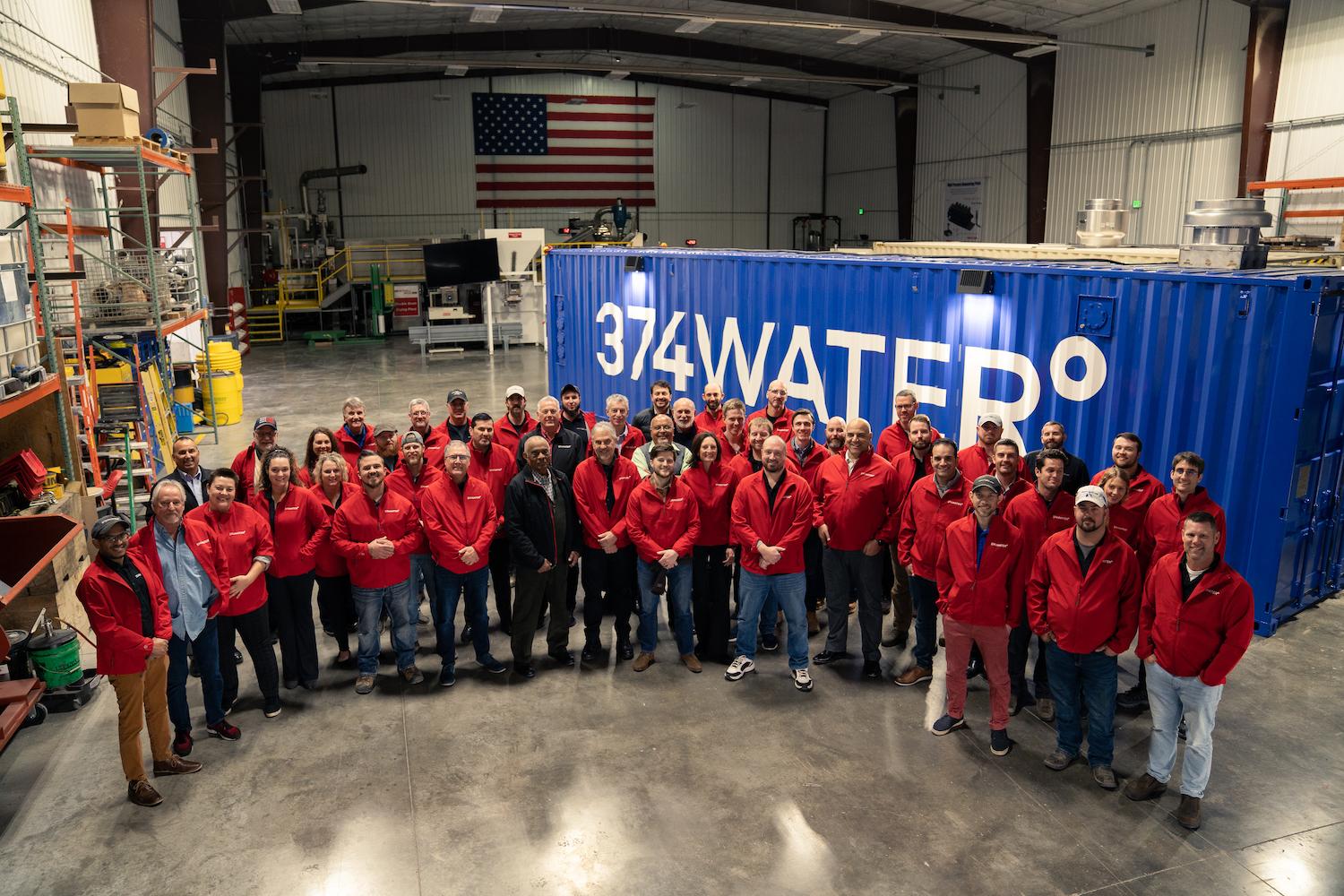
The team at North Carolina-based 374Water show off their prized invention. The container behind them may not look like much, but it can eliminate PFAS from up to 1 million gallons of wastewater per day. Image: 374Water

By Phil Covington from Triple Pundit • Reposted: June 26, 2023

PFAS (per- and polyfluoroalkyl substances) are a group of manufactured chemicals that have been produced since the 1940s. While they have myriad useful properties and manifest in a range of products from nonstick surfaces to personal care products, concerns over their use are growing. 

Current scientific research suggests exposure to PFAS may lead to a range of adverse health outcomes, including certain types of cancer, according to the U.S. Environmental Protection Agency.

PFAS are also known as “forever chemicals,” because they break down very slowly, if at all, in nature. Consequently, they continue to accumulate in greater concentrations in our environment, and by now they’ve even infiltrated our bloodstreams.

TriplePundit recently reported on new innovations aiming to mitigate the proliferation of PFAS by finding safer alternatives to them. But we need to find ways to remove existing PFAS, too. 

Though this is notoriously difficult, a North Carolina-based company found a way to eliminate these chemicals, somewhat by accident, in its effort to modernize wastewater treatment. “We got lucky in that we responded to the challenge to re-invent the toilet.” Sunny Viswanathan, VP and head of global sales at 374Water, told TriplePundit. 

Meeting that challenge, seeded by a grant from the Bill and Melinda Gates Foundation, focused the team on developing an optimal sanitation system which could be deployed in low-income parts of the world. In that effort, they sought ways to render waste sludges both useful and inert, leading them to consider supercritical water oxidation (SCWO) as a potential solution. 

Historically, SCWO was used to destroy persistent environmental damage resulting from chemical warfare, Viswanathan told us. But his team found the technology translated well to wastewater management, while coincidentally dealing with PFAS. 

What is supercritical water oxidation?

Water reaches the supercritical stage when both its temperature and pressure are increased to a point where it is no longer a liquid, nor is it a gas. Instead, as Viswanathan described it, “It goes into another ‘phase’ of water.”

Supercritical conditions for water arise at 374 degrees Celsius and a pressure of 218 atmospheres, or over 3,200 PSI (pounds-force per square inch). Once supercritical, water develops some interesting properties which are useful for processing organic waste. 

“Water as a liquid can dissolve salts, but it can’t dissolve organic matter,” Viswanathan explained. He used the example of adding pepper to water, which of course won’t dissolve. Why that’s the case has to do with the shape of the water molecule and consequent polarity of water, Viswanathan explained.

A water molecule has a V-shaped structure that includes a single oxygen atom with two hydrogen atoms attached. This structure affords it a positive and negative charge at an atomic level. Because of this, ionic salts can dissolve but, with very few exceptions, most organic matter — like, in this example, pepper — will be unaffected, Viswanathan explained. But the inverse is true under supercritical conditions.

“When you go supercritical, the shape of the water molecule literally changes — which means it loses its polarity and becomes a very good solvent of organic substances and a bad solvent of salts,” Viswanathan said. “Salts will come out of the solution, but now your pepper will disappear. Your poop will disappear.”

And here is the important point. Because PFAS substances are organic, “Your PFAS will disappear,” he said. 
 
In essence, under supercritical conditions, all the organic matter in wastewater — including PFAS — becomes completely dissociated. When air is added to the mix, an exothermic oxidation reaction takes place, completing the process.

“By introducing air, which has 21 percent oxygen, it will go after the carbon and make CO2 [carbon dioxide]. Once it removes carbon from the material, it becomes inorganic and will form salts and water — and energy, as it is an exothermic process,” Viswanathan said.

The last point is important. An exothermic reaction is one which produces heat. 374Water’s AirSCWO system uses the heat produced by the exothermic reaction to perpetuate the process. So long as you continue to put waste sludge in, “the waste is the fuel,” Viswanathan said. 

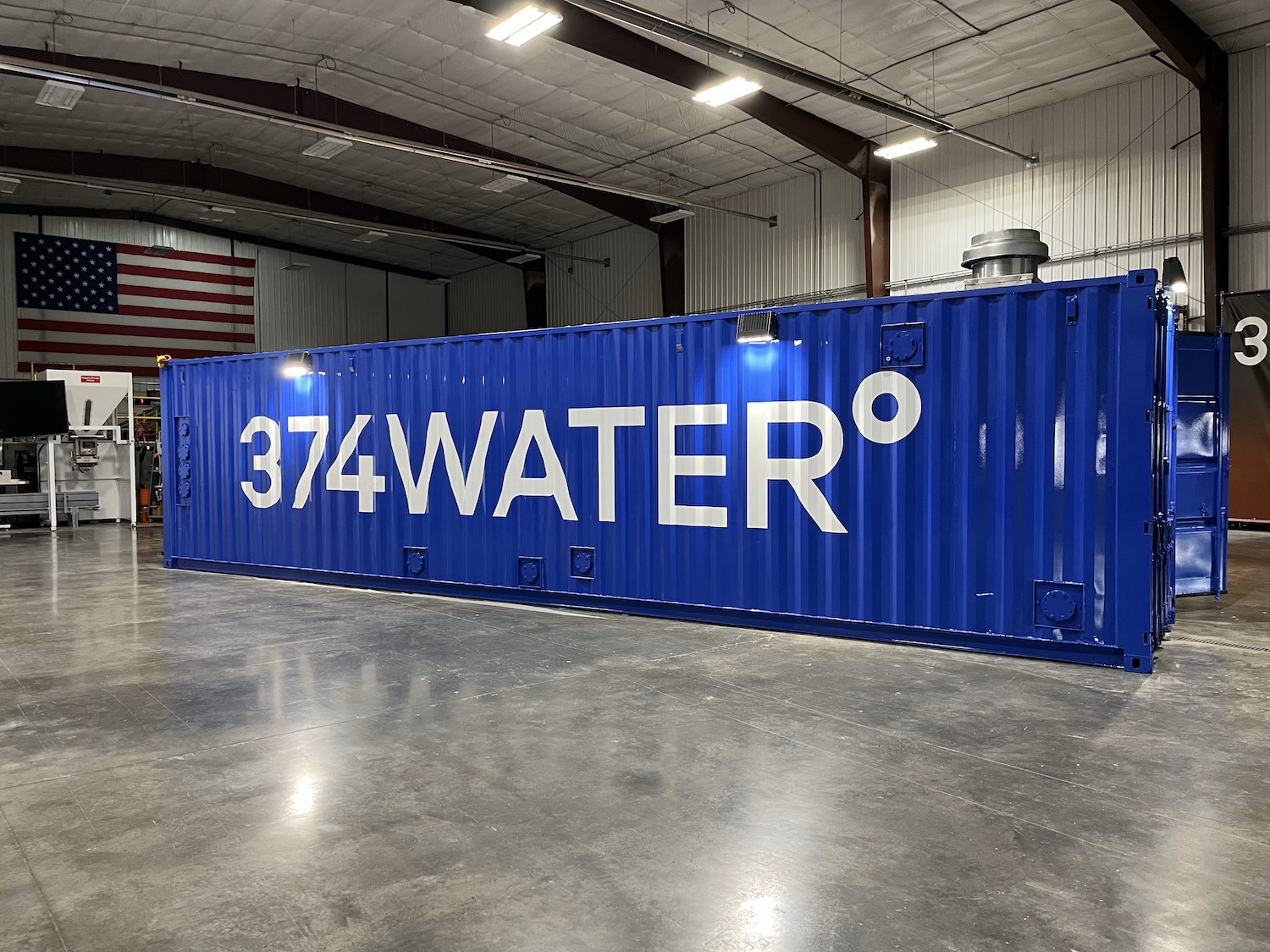
374Water container that can eliminate PFAS from water
374Water’s AirSCWO reactor units are packaged into 40-foot shipping containers that the company says can neutralize PFAS and other water contaminants in seconds. (Image: 374Water)

Putting the technology in the field to eliminate PFAS

With this simplified and abstract explanation of the science in mind, what does 374Water’s system look like in the field?

The company’s AirSCWO reactor units are packaged into 40-foot shipping containers (see above). The smallest reactor is a single container, while larger configurations would combine two or more. The company has plans for building-based systems, too.

Household or industrial wastewater comes into the container through a pipe at one end, and inside it, the contents of the pipe are pressurized and heated. Some external energy source is needed initially to start the system.

Wastewater sludge coming into the reactor is typically 80 percent water, and it’s the existing water content of the sludge which goes supercritical. Once that happens, all organic matter within gets dissociated and oxidized, which happens quite rapidly. “It takes four to 40 seconds to go from something that is completely toxic to something that is completely benign, clean and useful,” Viswathanan said.

Indeed, it’s useful in various ways. The system’s output is distilled water and useful minerals such as phosphorus which can be processed into fertilizer. Meanwhile, surplus energy from the exothermic reaction has the potential to be captured for electricity generation.

As for the PFAS, these are broken down into carbon, fluorine, hydrogen, oxygen and sulfur. As Viswathanan put it, “Just by exposing PFAS to supercritical conditions, you have actually destroyed them.”

What’s next for this high-potential PFAS solution?

It’s taken 10 years for 374Water to go from concept to commercialization. The company, now traded on the NASDAQ stock exchange, will see the first of its commercial units go into operation in Orange County, California, next month. 
 
Expansion from there will be carefully undertaken, as 374Water plans to start at a scale that is manageable. But the addressable market is substantial.

Each 40-foot reactor can process up to 1 million gallons of wastewater per day. Of the roughly 17,000 wastewater facilities treating household, commercial and some industrial wastewater in the U.S., only 9,000 of these are in the 1-million-gallon range. In theory, in combination with the larger reactors the company has planned, it would have the capacity to service all of these facilities.

That said, scalability relies to a large extent on the right incentives. The state of Maine offers one such example. 

Because of PFAS, the state has banned the application of wastewater sludge on the land, an increasingly common practice on U.S. farms. That shift means water treatment plants have to spend up to $200 per ton to send their wet sludge out of state. Since 374Water’s method eliminates PFAS and produces no waste sludge, the system would provide a huge cost avoidance opportunity under these circumstances. Consequently, municipal sanitation providers could see payback on a reactor in as few as three years, Viswathanan said. 

As a final point, he emphasized the long-term opportunity this way. “The technologies we are relying on now for waste treatment are nearly 100-year-old, antiquated technologies. We now have a system that is capable of not only treating the waste, but also destroying the recalcitrant waste and taking it out of the ecosystem.”

To see the original post, follow this link: https://www.triplepundit.com/story/2023/technology-eliminate-pfas-wastewater/777446


AccountAbility 7 Sustainability Trends 2023 Report – Shaping the Global Business Agenda

23 06 2023

This report brings into focus the key sustainability issues and priorities, and the business opportunities they present. From AccountAbiity • Reposted: June 23, 2023

AccountAbility, a trusted global ESG Consulting and Standards firm with a three-decade history in guiding leaders to build better companies, today released the AccountAbility 7 Sustainability Trends 2023 Report. Leveraging the firm’s global consulting, research, and standards experience, the report provides timely data, comprehensive insights, and action-oriented guidance to help organizations across industries and geographies make informed sustainability decisions towards meeting their business objectives.

Consumers and society, as a whole, are expecting more (and different) from business – in an atmosphere of low trust and high expectations,” comments AccountAbility CEO Sunil (Sunny) A. Misser“Today, the sustainability agenda is central to business competitiveness. Leaders recognize the financial imperatives of moving to a more sustainable economy and the business potential this presents. With this 7 Sustainability Trends 2023 Report, we enable organizations to navigate the fast-changing ESG landscape and focus on the meaningful trends that are shaping the business agenda.”

The AccountAbility 7 Sustainability Trends 2023 Report provides organizations and businesses with timely and valuable insights into the most pressing environmental, social, and governance issues. In identifying and analyzing these latest trends, challenges, and opportunities in sustainability, the report enables strategic planning, informed decision-making, and effective stakeholder engagement. This report helps organizations align their strategies with evolving sustainability priorities, anticipate future developments, and address risks and opportunities proactively.

Furthermore, the report is designed to enhance investor confidence, supporting sustainability reporting, facilitate knowledge sharing, and promote policy and regulation alignment. The AccountAbility 7 Sustainability Trends 2023 Report is an important tool to help organizations stay at the forefront of these important developments, drive positive change, position themselves as leaders in sustainability, and deliver on their business agenda.

The AccountAbility 7 Sustainability Trends 2023 Report was researched and compiled by the firm’s Global Leadership, Consulting, Research, and Standards teams and benefits from the firm’s extensive work with prominent global organizations across Industries, including Financial Services, Energy & Extractives, Healthcare & Pharmaceuticals, Real Estate, Consumer Packaged Goods, Telecom & Technology, Foundations, Governments, and others, in jurisdictions including the US, UK, EU, Mid-East, and Asia.

The AccountAbility 7 Sustainability Trends 2023 – Highlights

  1. Navigating The Net Zero Landscape: Against an unprecedented volume of net zero commitments, what are the risks for those that fail to act, and the opportunities for transparent leaders?
  2. Stakeholder Activism Is Getting Louder: As businesses face increasing pressure to take a stance and demonstrate actionable progress on a range of ESG issues, how best can leaders balance this with the imperative to maximize shareholder value?
  3. Geopolitics: The New “G” In ESG: In an era of increasingly globalized business operations, how can organizations address the outsized role that the new G (Geopolitics) is playing in the business landscape?
  4. Building an Effective, Future-Focused Board: As demands and expectations shift, how best to equip future-focused Boards to meet the requirements of the evolving business environment?
  5. Next Generation ESG Disclosure and Reporting: A shift from voluntary to mandatory ESG Disclosure is set to heighten attention on corporate sustainability disclosure practices. How will these changes impact ESG Reporting?
  6. The Road to a Sustainable Value Chain: How can the integration of sustainability criteria into supply chains drive organizational shifts towards a more context-aware and competitive value chain?
  7. Nature Based Assets Will Drive Valuations: As nature-based assets are increasingly recognized for their significant impact on valuations, what steps can companies take to achieve nature-based performance goals?

To download the Report, visit: AccountAbility 7 Sustainability Trends 2023 Report

To see the original post, follow this link: https://www.csrwire.com/press_releases/777271-accountability-7-sustainability-trends-2023-report-shaping-global-business


How Consumer Goods Companies Can Turn the Tide on Plastic Waste

23 06 2023

Image credit: Polina Tankilevitch/Pexels

By Roya Sabri from Triple Pundit • Reposted: June 23, 2023

For the companies developing consumer products, making the needed progress can seem unattainable in an age when plastic has become a reliable and affordable go-to for packaging. It might even feel like a distraction from other priorities. So, how can consumer goods companies contribute to global goals around reducing plastic waste and pollution?

While many consumer goods companies have made ambitious targets for 2025 and beyond, success on some fronts has proven to be elusive. Progress toward the New Plastics Economy Global Commitment, signed by over 500 organizations, for example, has been a mixed bag. In 2022, the Ellen MacArthur Foundation reported that the use of recycled materials has been improving, but signatories are still using too much virgin plastic and not enough reusable plastic. The overall use of virgin plastic was reported as comparable to 2018 levels when the Commitment was first signed. 

Meanwhile, regulatory pressure and consumer demand for change have only increased. More than 60 countries have enacted some form of ban or levy on plastic packaging, according to the U.N. Principles for Responsible Investment initiative. When it comes to purchasing patterns, consumers are also conscious of the packaging they buy. In a 28-country Ipsos survey, 82 percent of respondents said they prefer buying products that have as little plastic packaging as possible.

Research shows the need is urgent: If we don’t reduce waste production, we will more than exceed the boundaries of our planet by 2060. Consumer industries have a major part to play. They represent $35.2 trillion in the global economy, and reducing plastic waste is a crucial focus.

Escaping “pilot purgatory” to reduce plastic waste

Given this business case, Accenture and SAP have built expertise in the circular economy, helping clients reduce waste in product lifecycles. Drawing on this experience, extensive market research and testing, the companies have published a new report, “The Future of Packaging in the Circular Economy: 5 Actions for Long-Term Success,” that gives consumer goods companies insights and tools to build momentum for packaging circularity and achieve long-term success, escaping what the authors call “pilot purgatory.”


Research from the report shows that 66 percent of pledges to go greener on plastic have failed due to companies breaking their own commitments and targets.

Accenture and SAP reviewed corporate communications on 50 circular pilot programs between 2017 and 2023. Of those, only two programs followed up with impact measurement and consistent progress updates. “In short, the overwhelming majority of pilots have not shown progress beyond the initial announcement, with no acknowledgement of cancelled pilots or shared learnings from those projects,” the report reads.

In contrast to the culture of launching pilots that lack the infrastructure to support them to scale, the following five actions help nurture a circular system where initiatives can thrive. 

Embrace authenticity and transparency

In business, it’s tough to know how far transparency should go. The important thing is to build a system of data collection and disclosure that expresses credibility to customers and builds trust among stakeholders. This starts with a comprehensive baseline of product packaging and continues by building out tools like digital twins — or virtual models that, in this case, would illustrate what’s happening in the supply chain, as well as how initiatives are progressing. 

The public-private Platform for Accelerating the Circular Economy (PACE) established the Circular Economy Indicators Coalition to make disclosure of this information more feasible. By bringing standardization to circular economy metrics, the coalition aims to catalyze more robust and meaningful disclosures that push collective understanding and action forward.

Re-imagine packaging R&D

In calling for innovation, Accenture and SAP recommend first getting down to the basics. A few simple questions about the purpose of the packaging and the product help prune unnecessary elements that would get in the way of circularity. 

Then comes design. Changing up materials doesn’t necessarily happen automatically, and it must be done with care. Not every material is truly scalable in an environmentally-friendly and business-sensitive way throughout a package’s lifecycle. Advanced technologies like machine learning can speed up the prototyping and testing process so that it’s easier to find solutions that achieve circular goals while also meeting business needs. 

The Consumer Goods Forum, an industry group representing more than 400 companies globally, released its Golden Design Rules for packaging in 2021 to provide further guidance to the sector. The rules range from choosing the proper color to ensure plastic bottles are more easily recyclable, to reducing the use of plastic overwrap, to removing hard-to-recycle plastic resins from packaging. Though the standards are voluntary, companies within the Forum’s Coalition of Action on Plastic Waste have committed to align with them in their packaging design.

Still, packaging that’s more sustainable isn’t necessarily simpler. With “smart” elements like QR codes and digital tags that enable two-way communication, packaging can enhance engagement with customers. And if a circular design sacrifices the glam of shiny and vibrant single-use plastic, tech solutions like augmented reality experiences can expand marketing into new (cost-saving) directions.

Invest in infrastructure and communities

The beauty and complexity of circular economy goals is that they don’t end with production. A circular company has the responsibility to ensure its packaging is properly collected and repurposed at end-of-life. If this involves recycling, for example, there are various stakeholders and community features to engage and support. 

The report calls out Danone as one positive example of a multinational company stepping beyond its walls to fulfill circular packaging aspirations. For example, the company helped establish the largest and most advanced PET plastic recycling facility in Indonesia and has invested significantly in recycling technology and infrastructure in North America. These initiatives have been in supplement to the company’s basic efforts at changing its packaging for the better. Today, almost three-quarters of Danone’s plastic packaging is reusable, recyclable or compostable, compared with a baseline of almost two-thirds in 2018. 

Grow, reuse and explore circular business models

Here’s another roadblock to overcome. What if a company puts time, effort and money into a circular solution, but consumers don’t buy it? Or maybe the market jumps in an unexpected direction. We’ve already noted the solid and intensifying business case to pursuing circularity, but aligning properly (and securely) with these trends takes intentional efforts. 

Accenture and SAP outline steps including user research, testing and learning instead of putting all your eggs in one pilot. Collaborating with other actors along the value chain also allays risks. 

Further, reusable packaging offers a uniquely secure opportunity not only for resource efficiency, but also for brand loyalty. As widely reported across news outlets including Time Magazine, success in reuse requires demonstrating proper customer buy-in and low environmental impact over the course of the packaging’s lifecycle. 

Collaborate to scale

It’s no accident that we find collaboration at the end of the report. Breaking down silos between companies and organizations is a big ask. Yet the authors write, “Collaboration is one of the critical and necessary components for circular packaging to gain traction.” Consumer goods companies should seek to collaborate with each other before getting to the stage of competition in the market, SAP and Accenture recommend. 

Some opportunities include creating “communities of practice” that prioritize forthright communication, where companies can openly share triumphs and challenges in the march toward circularity. It’s through collaboration that companies might also find reusable packaging a more feasible option: They can work together to coordinate investments and establish the necessary relationships and infrastructure. 

The bottom line

The most important element to each of these recommendations is work. That’s why Accenture and SAP called them “actions.” They aren’t targets to be made and set aside after a few months. Actually working through the outlined steps takes dedication. 

The innovation and honesty required might not be comfortable, but working together can help make the path smoother. “Given the scale of the challenge, time is too short for each consumer goods company to learn the same lessons individually,” the authors write. 
In the end, finding solutions to wasteful plastic packaging will make companies more compliant to regulations and appealing to customers. Consumer goods companies are uniquely positioned to lead the way. 

This article series is sponsored by SAP and Accenture and produced by the TriplePundit editorial team.

To see the original post, follow this link: https://www.triplepundit.com/story/2023/consumer-goods-companies-plastic-waste/777296


Why Are Corporate Climate Disclosures Important, and How Can Investors Put the Pressure On?

21 06 2023

An orange hue tints New York City on June 7 as smoke from more than 100 wildfires across Quebec, Canada, filters south. Wildfire seasons are starting earlier, lasting longer and causing more damage due to climate change, scientists say. (Image: Metropolitan Transportation Authority/Flickr)

By Mary Riddle from Triple Pundit • Reposted: June 21, 2023

The annual Non-Disclosure Campaign engages investors to directly request climate disclosures from top companies responsible for high levels of greenhouse gas emissions.

Organized by the nonprofit CDP (formerly the Carbon Disclosure Project), this year’s campaign includes nearly 300 global financial institutions with almost $29 trillion in assets under management. They’re calling for disclosure from over 1,600 high-impact companies — including Saudi Aramco, ExxonMobil, Tesla, Chevron, Caterpillar and Volvo. Together, these companies emit nearly the same amount of greenhouse gases as the United Kingdom, European Union and Canada combined, according to CDP. And they’ve all failed to respond to the nonprofit’s climate disclosure requests.

So, why are climate disclosures important, and how can investors and other stakeholders put the pressure on more companies to disclose? We sat down with Sebastian O’Connor, an associate director at CDP whose team has conducted the Non-Disclosure Campaign since 2017, to learn more. 

Why are environmental and climate disclosures important? 

“The theory of change behind CDP is quite simply what gets measured gets managed,” O’Connor said. “The end goal of all of our work on climate change is to get emissions down to zero. To get to that point, you need a target that is feasible but ambitious. And to get a target, you need to know where you start.” 

While climate disclosures are the most common kind of disclosure reported to CDP, many companies also disclose their water and forest impacts, O’Connor said. “It is more than climate. The whole aspect of nature should be disclosed against — climate and nature are interlinked.”

Corporate climate disclosures encompass business activities that produce emissions, including in the company value chain. Because the world still lacks a global standardized reporting framework, CDP is one of the recognized industry leaders in evaluating climate and nature impacts. 

“CDP is the best avenue for standardized, comparable disclosures that can be assessed and graded to see how well a company is doing,” O’Connor said. “We need to know how corporations are impacting the environment in order to create a sustainable economy.”

Why do companies fail to disclose? 

Corporations give various reasons for refusing to disclose their climate, water or other nature-related impacts. Some companies cite the time and resources it takes to complete a CDP questionnaire, while others choose to publish their own sustainability reports instead of going through third parties. But self-published reports can be bias, O’Connor said. 

“The devil is truly in the details, as companies can decide what to omit and what to publish,” he told us. “Will companies put out anything that goes against the narrative of them always making progress?” 

CDP also allows the public to compare companies against others in their peer group in a standardized way that is assessed by an independent third party.

Putting on the pressure

O’Connor thinks chronic non-disclosing companies might not be getting enough pressure from regulators and their investors, but this is changing. “There is clear pressure from regulatory regimes in every part of the world,” he said. “Regulators are paying attention because climate and nature impact the financial security of the world economy. This year, our Non-Disclosure Campaign got 288 signatories to sign on, a quadruple increase from 2017.”

Supporters of this year’s campaign included investors, asset managers, asset owners, insurance companies and other financial institutions. The nonprofit typically sees success because of the direct, simple nature of the requests, O’Connor said. 

“CDP acts as an effective bridge between financial institutions and the corporate world,” he said. “We facilitate meetings that often revolve around companies giving their reasons for not disclosing. Then, investors are able to show the benefits to disclosing. When this happens, we have a high rate of previously non-disclosing companies disclosing the following year.”

As governments around the world move toward standardized reporting frameworks, CDP is working to ensure that the regulations are rigorous and ambitious, O’Connor said.

“CDP came into play 20 years ago because regulation did not exist,” he explained. “We formed the foundation of the ESG [environmental, social and governance] universe that we see today.” While regulated disclosures are a welcome change, “we can also influence these regulations to make sure they do not just go to the lowest common denominator,” he said. 

“It is about more than just disclosure. We want to help guide companies through every step that leads them to being truly sustainable.” 

To see the original post, follow this link: https://www.triplepundit.com/story/2023/corporate-climate-disclosures/777106


How to Design In-Store Experiences to Guide Shoppers Toward Climate-Friendlier Food Choices

16 06 2023

Image: Coop

Danish grocery giant Coop’s impactful partnership with Krukow Behavioral Design yielded insights for any retailer looking to enlist its customers’ help in reducing food-related carbon emissions.By Jeremy Osborn from Sustainablebrands.com • Reposted: June 16, 2023

Coop is a 1000+-store, member-owned grocery retailer founded and headquartered in Denmark. The popular national food chain has more than 2 million members (almost 1 in 2 Danes above the age of 18 are members!) and thousands of global suppliers, and provides in-store grocery experiences to more than 5 million customers every week. As such, it is uniquely positioned in Denmark to influence sustainable food-shopping behaviors as well as grocery supply chains worldwide.

The retailer is also hard at work addressing climate change — with an ambitious target of garnering 50 percent of its Scope 3 emissions reductions linked to the manufacturing of food via customer behavior change.

In May 2022, the company launched its “Climate Lab” — an initiative for testing innovative approaches to reducing emissions. The initiative was designed in phases, with the first phase being undertaken by Coop independently and the second in partnership with global behavioral science and nudge design experts Krukow Behavioral Design.

As Krukow founder and CEO Sille Krukow and Coop’s Head of Climate, Jonas Engbergrecently shared at SB Brand-Led Culture Change, the first phase of the initiative was a single-store experiment that, amongst other initiatives, involved a total rebranding of the store and introduction of a new core visual identity — as well as labeling 2,200 of the most climate-friendly products in the store to show customers the “most impactful” climate choice across a number of popular product categories. The idea was that presenting “choice-edited” options to customers would empower them to make more climate-friendly choices while shopping.

A brand guide to driving sustainable consumer behavior change

Download SB’s new, free guide to learn how your company can create an advantage in the marketplace through sustainable and innovative solutions that influence consumer behavior. The guide features case studies, a list of other helpful resources, and five actionable steps that brands and marketing teams can take to drive sustainable behavior change at scale.

While this initial experiment produced positive results, the Coop team learned that it needed a more holistic approach to behavior change — which led to the partnership with Krukow. This second phase — built on learning from the initial phase and expertise from Krukow — included store-wide interventions built on strengthening the single, visual vocabulary including vibrant, visual cues and many small, subtle nudges to guide customers towards more climate-friendly shopping choices and an overall climate-friendlier store visit.

“If you ask customers what they want, they will tell you they need better information in order to make better choices. But what they really need is for their environment to guide them towards these better choices holistically. Information is part of this, but it’s not enough on its own,” Krukow told Sustainable Brands®.

In phase two, the group created a “climate journey” through the store that guided and encouraged shoppers to purchase “more green and less red meat;” and with numerous small nudges towards climate-friendlier choices, Coop achieved a remarkable 14 percent reduction in the overall climate impact of shopping choices across all categories in a mere six months, as well as a 67 percent reduction in food waste. Remarkably, customer surveys showed a massive increase in awareness — from 7 percent to 65 percent of customers saying they felt they were being effectively guided to climate-friendly food choices.

Additionally, store data showed that the results did not skew to one demographic and that by creating a program that was, in Krukow’s words, “designed for the human brain” rather than for a specific demographic or target market, the interventions were effective in changing behavior across the board.

Coop found as well that its average shopper basket contains “less meat” on average than other stores.

A scalable success story

With a huge success in one store under their belt, Krukow and Engberg are now planning to scale their interventions to more stores. The phase-two program included 94 different, designed behavioral interventions; and the next step, according to Engberg, is to bring these to more stores.

“Scaling is not a huge cultural challenge for us, because 74 percent of customers have told us they wish to have more guidance towards climate-friendly shopping choices,” Engberg told SB. “And because we’ve shown in this initial pilot that encouraging climate-friendly food choices actually improves the bottom line, there is minimal resistance in the business.

“Staff at the store have been incredibly enthusiastic and have been essential co-creators and co-designers, as well,” he added. “They have the knowledge and the expertise of what works and doesn’t, and what customers want, in their individual stores. And we have a responsibility to make sure they can speak confidently to the initiative when customers ask questions like, for example, ‘why are bananas and avocados a climate-friendly choice? Don’t they have to travel very far?’

Krukow agreed and emphasized the importance of holistic approaches:

“We’ve shown the power of using a holistic, in-store approach — leveraging employee expertise; and centered on the overall shopping experience that includes labeling, point-of-sale interventions, unified signage design and store layout. We’re excited to see Coop scale these successes across their operations.”

By designing these innovative behavior-led strategies, Coop has successfully engaged customers, improved its brand capital, reduced climate impact across all scopes, and increased profitability. The scalability of this initiative also provides a framework for other retailers to adopt — creating another opportunity to easily enlist consumers’ help to achieve company climate and sustainability goals.

To see the original post, follow this link: https://sustainablebrands.com/read/behavior-change/in-store-experiences-guide-shoppers-climate-friendlier-food


Almost 40% of consumers say it is “very important” to buy from eco-friendly or sustainable brands

16 06 2023

Photo: Optimove

70% of consumers prefer eco-friendly brands as 64% of brands say they have an environmental responsibility program. From Optimove • Reposted: June 16, 2023

Two recent surveys conducted by Optimove shed light on consumer sentiments towards eco-friendly and sustainable brands. Out of 400 consumers surveyed, a significant 70% expressed the importance of buying from environmentally responsible companies. Notably, 38% of respondents said being environmentally responsible was “very important” to a purchase decision.

In line with consumer expectations, the survey also highlighted the efforts of B2C marketers. Among 233 senior executives, sixty-four percent (64%) acknowledged having an environmental responsibility program. Additionally, 62% of respondents reported actively promoting their company’s environmental initiatives in marketing campaigns.

Conducted in the first half of 2023, the Optimove B2C and Consumer surveys serve as a valuable resource for understanding the evolving landscape of consumer preferences and brand actions. Optimove is a Customer-Led Marketing platform used by hundreds of leading global consumer brands.

Optimove reported it observed at the 2023 CRMC Show on June 7-9 in Chicago that leading retailers are increasingly focused on representing themselves as sustainable and diverse to resonate with their customers.

Pini Yakuel, CEO of Optimove, said, “Today, being environmentally responsible is table stakes for companies. What truly matters is a brand’s ability to engage with each customer on a personal level. While 70% of consumers expect companies to prioritize the environment, 38% of consumers place high importance on this issue. This makes it crucial for brands to effectively communicate their commitment to environmental concerns to those individuals who deeply care. Companies need to infer from their consumer’s data which messages align with individual priorities to meet and exceed customer expectations.”

Yakuel added that meeting the expectations of environmentally conscious consumers is not only necessary but a fundamental aspect of effective customer communication.

About the surveys:
The Optimove 2023 Survey of B2C Marketers queried 221 senior level marketing executives in the second quarter of 2022. The survey was designed by Optimove and fielded by Survey Monkey. Respondents included executives at companies with the following retail models: digital-first multi-brand, wholesale manufacturers, traditional multi-brands, digital-first direct to consumer, and traditional direct to consumer retailers with brick-and mortar outlets. Respondents included CEOs, CMOs and SVPs of marketing.

The Optimove Consumer Survey queried 400 U.S. citizens in March 2023. Respondents were 18-plus, 49% male/51% female (no respondents were non-binary or declined to answer), and household incomes were $75,000-plus.

To see the original post, follow this link: https://www.prnewswire.com/news-releases/optimove-surveys-70-of-consumers-prefer-eco-friendly-brands-as-64-of-brands-say-they-have-an-environmental-responsibility-program-301851861.html


Sustainability Leaders Warn Lack of Climate Talent at All Levels Could Stall Net-Zero Progress

13 06 2023

IMAGE: ALENA DARMEL

35% of global sustainability leaders report difficulty hiring talent and upskilling execs with climate-change skills as a barrier to making faster progress on climate-action strategies. From Sustainable Brands • Reposted: June 13, 2023

Sustainability leaders at some of the world’s largest companies have warned that the scarcity of talent trained around the challenges of climate change at both operations and board level will be one of the largest barriers to achieving their net-zero targets, according to recent research from EY.

EY surveyed 506 global Chief Sustainability Officers or equivalents from businesses with at least $1 billion in annual revenues and analyzed the action companies are taking to address climate change.

When asked to name the biggest obstacles to achieving net-zero carbon emissions by 2050, more than a third (35 percent) of all companies surveyed say difficulty retaining or upskilling talent on climate change is a top internal barrier to doing more on climate change; and 28 percent say difficulty hiring talent with climate change skills is a key external barrier. Similarly, 31 percent believe that a lack of climate-change expertise at board and senior-management level is a ‘top three’ internal barrier preventing their organization from prioritizing and actioning their net-zero strategy.

Yet it does not appear to be a priority area for investment. Only 23 percent of survey respondents list human resources and talent as one of their top three climate investments (though the percentage rose to 50 percent in the UK); and just 27 percent have completed plans to hire or upskill talent to acquire climate change expertise.

“As our economy transitions towards net zero, demand for employees with sustainability expertise will only rise across industries — from engineers with the skillset to decarbonize heat, power and transport; to financial-services personnel who understand how to accurately assess and price risk for new forms of environmental assets,” says Rob Doepel, EY UK&I’s Managing Partner for Sustainability. “However, businesses are also recognizing that environmental expertise at a leadership level could make the difference to whether their company thrives or flounders in the new green economy. While many remain confident in reaching their targets, there is an underlying concern that a lack of sustainability expertise, particularly at a leadership level, could stall business net-zero ambitions.”

As EY points out, this presents a significant opportunity for companies to accelerate transformation from within. As organizations work to embed sustainability across all functions (for more on this front, Transform to Net Zero‘s new guides can be a great starting point), they will need education, capacity-building and knowledge-sharing; and a tailored strategy for developing the skillsets they need. EY cites AB InBev as an example: The brewing giant has reportedly begun building climate analytics and data-science capabilities internally to support its climate actions; it views social- and behavioral-science capabilities as the key to engaging suppliersconsumersemployees and communities more deeply on climate in the future; and the company continues to build a “team of teams” with training in the foundations of climate and sustainability.

Equipping a climate-smart workforce

As Business Insider reported in 2021, demand from both students and employershas led business schools in the US, Canada, and Europe to expand core courses and flagship MBA programs to better include the issue of sustainability. But as the Financial Times pointed out in 2022, despite the increased attention and demand for graduates who understand and are equipped to help businesses tackle climate-related challenges, academia is still catching up — schools are still working out how to define and prioritize the disparate skills and values associated with sustainability- and climate-related work; how to integrate them into teaching, research and operations; and the extent to which a failure to do so will undermine the future of business education.

Though climate change and the work urgently needed to address it remain divisive issueshere in the US, young people recognize that climate change is going to shape their futures — and they need climate education in order to develop the skills to do anything about it. Thankfully, more and more intrepid educators are working to ensure the next generation of consumers, workers and business leaders begins understanding climate change and all its risks from an early age.

To see the original post, follow this link: https://sustainablebrands.com/read/organizational-change/lack-climate-talent-could-stall-net-zero-progress


1.5 Percent of Corporate Profits Can Transform the Fight Against Climate Change

8 06 2023

Image credit: Mika Baumeister/Unsplash

By Abha Malpani Naismith from Triple Pundit • Reposted: June 8, 2023

The current narrative on climate action puts the world in a bind. On one side, present-day action is considered inadequate to achieve the global warming limit of 1.5 degrees Celsius determined by the U.N. On the other side, there is increasing debate over whether that limit is even attainable.

This narrative is dubbed the “doom loop” in a recent report from the U.K.-based think tanks Chatham House and the Institute for Public Policy Research (IPPR). In the doom loop, the focus on crisis consequences and failure to reach targets takes away from the focus required to implement solutions.

In order to move forward, the narrative needs to quickly change to one that encourages action. TriplePundit spoke with Saskia Feast, managing director of global client solutions at Climate Impact Partners, about how collective private-sector action can help to catalyze that change — starting with Fortune Global 500 companies. 

We don’t need large investments to create change 

Fortune Global 500 companies made more than $2.2 trillion in annual profits over the last three years, according to a recent report by Climate Impact Partners. Investing only 1.5 percent of that — about $33.5 billion — to fund carbon reduction projects like forest conservation, reforestation and micro-renewables would be a massive step toward achieving the transformational change required to hit global climate action targets.

On average, each Global 500 company made $6.7 billion over the last year, according to the report. Committing 1.5 percent of those profits ($100 million) could cut 7.8 million tons of carbon emissions, plant 60,000 trees and protect 120,000 hectares of forest. If every company in the index did the same each year, it would amount to more than 2.6 billion tons in carbon reductions — even more than what scientists say is necessary to cap global temperature rise below 2 degrees Celsius. 

To put this corporate expense into perspective, on average the world’s largest companies spend 12 percent of their annual profits on research and development, 27 percent on sales and administrative expenses, 8.7 percent on marketing and 8.2 percent on information technology, according to the report. 

Offsets or no offsets?

For more than 20 years, Climate Impact Partners has worked with businesses to support over 600 carbon removal and reduction projects in 56 countries. But its work faces criticism around carbon offsets. 

“There is a lot of criticism of the companies who are taking action around offsetting carbon emissions and this idea that it is greenwashing,” Feast said. “By not criticizing the companies that are not taking action, those companies are feeling safer.” 

Saskia Feast, the managing director of global client solutions at Climate Impact Partners.
Saskia Feast, managing director of global client solutions at Climate Impact Partners. Photo courtesy of Climate Impact Partners.

Inaction on climate change could cost the global economy $178 trillion over the next 50 years, or a 7.6 percent cut to global gross domestic product (GDP) in the year 2070 alone, according to a recent report from the Deloitte Center for Sustainable Progress. 

Carbon offsetting is a long-debated method for companies and other large emitters to get involved. Supporters claim it is effective in reducing greenhouse gas emissions while conserving natural resources in sectors like transportation, energy and agriculture.

Some critics dismiss the practice as a flawed system that has negligible impact on reducing emissions. They argue offsets are generated by projects that enable polluting industries to continue their harmful practices. 

When a company first starts its carbon-neutral journey, it might need to offset a higher proportion of emissions, Feast said. But putting a price on it forces emission reductions over time. 

“Once you start putting a price on carbon, you start measuring it and looking for strategic ways to reduce it,” she said. “That helps you drive the internal reduction strategy or the adoption of renewable energy within your organization. The role of the offsetting market is just to help transition us to the low-carbon economy.”

The number of companies using, or planning to use, an internal carbon price increased by 80 percent over just five years, according to a 2021 report by the environmental disclosure management nonprofit CDP. 

The return on sustainability investments

Today, financial success and sustainable practices are increasingly tied to each other. “The business of sustainability reporting has improved dramatically over the last 20 years,” Feast said. “What we’re seeing now is companies including those metrics in their annual reports, like a carbon footprint or water use risk. So, the metrics are merging, which is a great development in the market. We’re seeing sustainability leaders, who are our clients, now working directly with investor relations, their CFO and financial teams.” 

The business case is stronger than before as company sustainability measures impact reputation, market value, and overall ability to attract and retain employees. And now there are many carbon footprint and ESG measurement tools that enable business leaders to truly consider how their operations impact people and the planet. 

Smaller companies can fight climate change, too

Investing in carbon reduction and removal is for every company — small, medium or large. Smaller companies that want to act don’t need a grand plan, Feast said. They can start making decisions in incremental steps like measuring their footprint, supporting renewable energy, making climate-friendly products, and discussing the price of carbon on their business.  

“We want to encourage companies to take action,” she said.”Get out there, start taking your steps and maybe one day run a marathon.”

COP28 Global Stocktake: Tracking progress to 1.5 degrees Celsius

As the baton moves from climate technicians to politicians at the COP28 Global Stocktake, which is also commented on with skepticism, policies driving increased financing of climate action could make a significant impact.

Emerging markets and developing economies must collectively invest at least $1 trillion in energy infrastructure by 2030 and $3 trillion to $6 trillion per year across all sectors by 2050 to mitigate climate change by substantially reducing greenhouse gas emissions, according to the International Monetary Fund.

An additional $140 billion to $300 billion a year is needed by 2030 to adapt to the environmental consequences of climate change, such as rising sea levels and intensifying droughts. This could skyrocket to between $520 billion and $1.75 trillion annually after 2050 depending on how effective climate mitigation measures are.

“One of the most important things is to move away from talking about climate financing — and actually doing the financing,” Feast said. “The more money we can put to finance these projects, the more we will be reducing emissions going forward.”

To see the original post, follow this link: https://www.triplepundit.com/story/2023/corporate-profits-climate-change/775241


5 ways to drive sustainability in procurement

5 06 2023

Reusable grocery bags for sale at Whole Foods. David McNew via Getty Images

The majority of a company’s emissions stems from their suppliers. Here’s how to work with them toward a greener future. By Praveen Kumar Soni from supplychaindive.com • Reposted: June 5, 2023

With sustainability priorities becoming one of the biggest components of a company’s reputation, they can often be the competitive edge needed to become the brand of the choice.

Procurement plays a pivotal role in ensuring sustainability goals become reality, especially since a business’ environmental footprint is largely tied to their suppliers. But cost pressures and other risks can make it difficult for many teams to know where to start.

Below are five key steps to drive sustainability:

1. Make sustainable procurement compulsory

For existing products, it may take time to switch to sustainable options based on feasibility and cost impact. However, wherever possible and for any new product, make it mandatory to go for green options. It’ll help to steadily progress forward on the sustainability journey.

When green materials are harder to find, seek out partnerships with companies that are working toward new solutions. For instance, L’Oréalrecently partnered with biotechnology platform Geno to develop sustainable alternatives to ingredients.

2. Develop supplier sustainability scorecard

Management visionary Peter Drucker once said: “What gets measured gets improved.”

Procurement folks should take this to heart in all matters, including sustainability. Develop a dashboard to measure Scope 1, 2 & 3 emissionsto inform future decisions.

Additionally, organizations can start recognizing and rewarding the suppliers on an annual basis for their sustainability efforts to keep them motivated.

3. Share experiences and learn from others

Sustainability is an evolving field and procurement may not have all the answers. Meaningful engagement with suppliers or other industry experts can help you to find a fix for your problem.

For instance, I once noticed that my carton supplier had switched from plastic shrink wraps to reusable belts for pallet storage. I shared this practice with our manufacturing teams and it helped us, too, cut down on plastic.

Being connected to external world, procurement people can bring in lot of value through learning and sharing.

4. Invest in technology

Technology can help fine tune the processes and help make decisions around sustainability.

For instance, the use of digital twin technology in our manufacturing setup helped us to optimize the consumption of energy and water, leading to positive impact in sustainability KPIs.

Similarly, AI has the ability to assess millions of data sources and come up with the recommendations for sustainability alternatives. Procurement should invest in technology to get the benefit at scale.

To see the original post, follow this link: https://www.supplychaindive.com/news/5-ways-to-drive-sustainability-in-procurement/651357/


Americans Are Ready to Change Their Behavior for the Sake of Sustainability: Are Brands Willing to Help?

2 06 2023

Image credit: Bluewater Sweden/Unsplash

By Mary Mazzoni from Triple Pundit • Reposted: June 2, 2023

We hear it time and time again: People aren’t ready, willing or interested in changing their lifestyles for the sake of sustainability. They’re too busy, too broke or too ambivalent to think about how their choices impact the world around them. And until they change their tune, there’s nothing brands can do about it — except sell them more stuff. 

This prevailing narrative has been around for decades, but data continues to show that it isn’t representative of how people really feel. The public is increasingly aware of the environmental and social challenges we face — from climate change to wealth inequality — and they want to be part of the solution. 

Over half of Americans say they’ve already made lifestyle changes like shopping secondhand, purchasing products in reusable or refillable packaging, and buying less overall in order to reduce their impact on people and the planet, according to a December survey conducted by TriplePundit and our parent company, 3BL Media, in partnership with the research technology firm Glow. 

Let’s break down what U.S. consumers are really saying about sustainability, how it factors into their own lives, and how brands can respond differently than they have in the past. 

what people view as the most pressing challenges facing society - survey findings
Americans rank climate change and economic inequality among the top three challenges facing society today, only behind their anxiety about keeping food on the table. Download the report to learn more.

People are willing to change their behavior for the sake of sustainability 

Shopping secondhand. Purchasing products made from, or packaged in, recycled materials. Choosing items in reusable or refillable containers. Shopping in the grocery bulk aisle to avoid packaging altogether. Some would have us believe these lifestyle shifts are too expensive or too cumbersome for Americans. But more than 60 percent of respondents to our survey said they’re already making these changes or intend to do so within the next six months. 

Of course the say/do gap — which refers to the difference between what people say in surveys and what they actually do in their daly lives — is always a factor. Even so, the interest in these lifestyle changes is significant and runs counter to preconceived notions that consumers don’t really want — or aren’t really ready — to change their lifestyles for sustainability reasons. 

People even expressed interest in behaviors that are commonplace in other countries but often dismissed as something that could “never work” in the U.S. For example, over half of respondents said they would be willing to take packaging like bottles back to a store for wash and refill.

people are willing to change their behaviors for sustainability - survey findings
More than 60 percent of U.S. consumers are willing to adopt lifestyle changes like shopping secondhand, opting for the bulk aisle, or choosing items in reusable or refillable packaging. Download the report to learn more

Our findings support existing research on general readiness for behavior change: In another 2022 survey, for example, half of responding U.S. adults said they’re willing to accept 95 percent of the changes needed to avert the climate crisis and restore ecosystems. The survey also revealed the extent of climate anxiety among the public, with 1 out of 4 respondents worried they may have to give up long-term goals like starting a family. 

When it comes to packaging in particular, our findings indicate that 75 percent of U.S. consumers are willing to choose reusable alternatives — echoing 2022 polling from Trivium Packaging which found the same. The trade publication Packaging World recently declared reusable and refillable packaging to be a “global opportunity,” with sales forecast to grow by 4.9 percent annually to $53.4 billion by 2027.

75 percent of people have purchased a product in refillable packaging or would be willing to do so - sustainability survey findings
Download the report to learn more

How brands can respond to shifting consumer preferences

Many advocates point to the calls for consumer behavior change as merely a delay tactic from large companies: If the narrative keeps people focused on their own behaviors — analyzing everything from cup preferences to clothing choice — they won’t have energy left to push for a shift in corporate practices or government regulations.

In the past, this may have been true, with consumers and brands pitted against each other in a cyclical blame-game while the poor get poorer and global temperatures rise. But findings like these indicate we’ve reached a critical moment when ideologies can align, and brands can show up as partners for consumers looking to play a role in the future they want to see. 

Leveraging our nearly two decades of experience in communicating about sustainability, TriplePundit and 3BL Media’s Consumer Insights and Sustainability Benchmark report includes key action items for businesses looking to respond to consumer sentiment in a positive way. 

“Understanding people’s uncertainties and anxieties about the future, and what they want to see from business, gives companies the opportunity to communicate and present themselves as part of the solution that consumers are looking for,” the report reads. “The next piece of the puzzle is to figure out how businesses can tailor their communications to appeal to consumer interests and bring them on board their journey to a more sustainable world.” 

In particular, we highlight how brands can adopt a more meaningful role of partner and educator — rather than simply another purveyor of goods and services. “Since consumers want to be part of the solution, help them do that by sharing actionable information,” the report reads. “It may be as simple as telling them how to make your product last longer or how to lower their personal carbon footprint with a checklist on your website. You can celebrate your company’s successes by applauding theirs.”

For more insight on how brands can — and should — respond to shifting consumer attitudes about sustainability, check out prior reporting on TriplePundit or download the report here

To see the original post, follow this link: https://www.triplepundit.com/story/2023/consumer-behaviors-sustainability/775591


How to close the corporate accountability gap on sustainability

2 06 2023

A fire burns in a in Porto Velho, Brazil, 09 September 2019. Photo Credit: FERNANDO BIZERRA JR [Fernando Bizerra Jr (EPA-EFE)]

If businesses are to take corporate sustainability seriously, they will need to add relevant sustainability expertise to their boards, argue Nicolas Sauviat and Sanjini Jain. By Nicolas Sauviat and Sanjini Jain from euractiv.com • Reposted: June 2, 2023

On 1 June, the European Parliament is due to take a plenary vote on a Corporate Sustainability Due Diligence Directive (CSDDD), legislation which aims to foster sustainable and responsible corporate behaviour throughout global value chains. If it’s formally adopted, it will require companies to identify – and, where necessary, prevent, end or mitigate – the adverse impacts of their activities on human rights, in terms of issues like child labour and worker exploitation, as well as the environment, for problems like pollution and biodiversity loss.

The Kunming-Montreal Global Biodiversity Framework (GBF) was heralded internationally as the ‘Paris moment’ for nature to lead the world towards a more harmonious relationship between nature, people and the economy.  If we have any hope of living up to this moment and fulfilling the Sustainable Development Goals (SDGs) – the blueprint for how we achieve a better, fairer and greener world in the short time left – the private sector must take responsibility for its actions.

One key issue in this vote up for debate is whether now is the time to challenge boardroom’s traditional focus on generating wealth for its shareholders, and to reorientate their focus to provide value for all its stakeholders.

With scientists projecting that the crucial 1.5°C global average temperature threshold will be temporarily breached in just five years, we are running out of time to change direction. But do boards have the needed skills and expertise are required to meet this challenge, and should legislation be used to accelerate their action?

This could be a crucial moment to close the corporate accountability gap on sustainability. As things stand, business action remains largely voluntary. And yet, we cannot keep this planet viable for life without the private sector.

At the World Benchmarking Alliance (WBA), we assess corporate progress against the SDGs. From our experience we know that company boards are key to action on sustainability. Only by ensuring that they have the right knowledge and expertise can the accountability gap be closed, and progress made.

As things stand, most big companies have set sustainability targets. Many have pledged to a net-zero carbon objective. However, very few actually provide the necessary details on how they will go about accomplishing these ambitions. The data reported by businesses often lacks substance. Knowingly or not, many companies oversell their sustainability credentials.

A major reason for this is a skill and knowledge gap, especially within companies’ top executive forces. This impacts the boardroom’s understanding and subsequent ability to address Environmental, Social and Governance (ESG) risks. Indeed, a recent survey by the professional services experts at PwC found that only 27% of boards fully understand ESG risks.

Our own research delivered even worse findings. Assessing corporate progress on protecting the natural world, WBA’s Nature Benchmark examined the governance structures of 400 of the world’s largest companies. It looked into whether they have accountability systems in place for achieving their sustainable development goals – including governance bodies with the right expertise to understand the material pressures on nature created by their business activities.

While nearly 70% of companies assigned responsibility for their sustainability strategy to their board, just 2% of boards possessed the relevant sustainability expertise. This stark discrepancy highlights the fact that boards are accepting their sustainability responsibility without a clear understanding of what it actually entails.

Boards must rapidly adapt to their new sustainability role, lest they become an obstacle to their companies’ futures. In this context, we desperately need corporate board members with CVs beyond banking and accounting. Specialist scientific committees can also help provide boards with credible information.

Businesses should ensure that boards have the expertise to tackle their most relevant sustainability topics. This could be done by demonstrating that they have undertaken training by a certified organisation. Alternatively, they could have board members with previous experience in specialist organisations, like consulting firms or NGOs, or have authored academic studies.

As we hurtle towards irreversible environmental tipping points, we hope that European legislators pass the CSDDD with a legal mandate for boards to have a duty to oversee and sign off on their due diligence policies. This mandate should be accompanied by further guidance to ensure boards demonstrate relevant ESG expertise. That’s how to close the corporate accountability gap on sustainability and drive action.

Now is the time for boardrooms to shift from their traditional focus on generating wealth for their shareholders towards generating value for all stakeholders. After all, no company will profit from an uninhabitable planet.

Nicolas Sauviat and Sanjini Jain are researchers at the World Benchmarking Alliance (WBA).

To see the original post, follow this link: https://www.euractiv.com/section/economy-jobs/opinion/how-to-close-the-corporate-accountability-gap-on-sustainability/


B Corp: Are they really the gold standard of sustainability?

1 06 2023

Graphic: Seismic Change

B Corp certification has become the gold standard of sustainability – we explore whether it’s a valuable credential or a glorified greenwashing tool. By Lucy Buchholz from Sustainability Magazine • Reposted: June 1, 2023

Sustainability has become a somewhat murky term. With businesses fighting it out to be the biggest, the richest and, nowadays, of course, the greenest, it can be hard to know which ones should actually be trusted. 

Luckily, the business world has B Corp certifications, which puts businesses to the test to ensure their credentials have been earned honestly, rather than being artificially dyed green. 

What is a B Corp?

B Corporations, informally known as B Corps, are businesses or organisations that have voluntarily met the highest standards for social and environmental performance; in other words, they’re doing everything they possibly can to create a better future for people and the planet. 

To more accurately define them, B Lab – the nonprofit behind B Corps – explains: “Certified B Corporations are businesses that meet the highest standards of verified social and environmental performance, public transparency, and legal accountability to balance profit and purpose. B Corps are accelerating a global culture shift to redefine success in business and build a more inclusive, sustainable economy.”

So, in other words, B Corp Certification is for businesses what Fair Trade is for products and goods. 

What to expect from the process

It’s not easy to become a B Corp. 

Certification is holistic, meaning it’s not exclusively focused on a single social or environmental issue, so businesses have to achieve rigorous standards that require engagement from every aspect of a company. And these standards don’t just relate to the businesses themselves, but to every company or organisation affiliated within the value and supply chain

Yvonne Filler, Marketing Manager at Good Innovation – a certified B Corp – shares that B Corp certification is a way to hold businesses accountable for their actions and statements. As a Social Impact Innovation Consultancy, Good Innovation finds creative, cutting-edge solutions to the world’s most difficult social problems by helping organisations that want to make a difference do it smarter, faster and, crucially, with greater impact.

“Becoming a B Corp is a fairly long process, with around 150 questions requiring lots of data – but it wouldn’t be a quality standard without it,” Yvonne shares. “You need a certain score to pass and be certified. Your score will then be published on the B Corp website, but there’s no ranking system.”

To become a certified B Corp, businesses must abide by stringent requirements, including completing a comprehensive assessment, which then must be verified by founding company B Lab. Any controversial operations must be disclosed to B Lab, and businesses must commit to the transparent public disclosure of their performance.

“It’s easier to apply for B Corp certification when your company is smaller or just starting out, because you can see all the areas upon which you need to focus,” says Heidi Schoeneck, Co-Founder and Chief Creative Officer of Grounded. “This is largely because it can be costly and time consuming to ensure all ground is covered correctly.”

Yvonne supports this idea, stating that larger businesses will be required to provide more data. “For us, the process is really beneficial. It’s required us to hold ourselves accountable for our actions,” Yvonne adds.

Is B Corp right for your business?

Those considering applying for B Corp certification will most likely have sustainability and environmental impact at the forefront of their business model. But how can a business owner or CEO be sure that it’s the right step for them?

“Applying for B Corp certification can be costly and time consuming,” Laura Harnett, founder of sustainable cleaning tool brand Seep, explains. “But for business owners contemplating whether or not to make the commitment, I would urge them to consider why they want to achieve it and what they want to gain. Fundamentally, are you a business for good? Can your business improve the current situation with the climate or social inequality, for example? 

“If you believe that your business does play these roles, the B Corp certification is a really great structure to guide you through that process. As a founder or CEO, you may not have the time to come up with your own framework, but with B Corp, it’s already been done for you and it’s constantly evolving to keep you on top of the game.” 

“We thought we were a shoo-in to become a B Corp because we had built our whole business around sustainability,” Heidi says. “But once you get into the criteria, you see how much more can be done. It’s something you have to check in with every few months to make sure you’re on top of everything.”

Abiding by sustainability rules has become akin to a box-ticking exercise for many companies. As consumers have become increasingly concerned about the impact their purchases have on the environment – with 75% of US consumers reporting it’s a priority for them – more businesses are pledging eco-friendly standards, only to fall spectacularly short. In fact, 42% of companies have been said to exaggerate sustainability claims, according to research from The European Commission.

B Corps are, therefore, an avenue that businesses can venture down to prove they’re living up to their claims. But the crucial question surrounds whether B Corp really is the gold standard it’s claimed to be?

“As so many companies greenwash, it can be hard to know which ones are genuinely prioritising positive change,” Laura says. “B Corp certifications hold companies and founders to a standard that they need to adhere to across five key areas: environment, governance, people, communities, and customers. I’ve found that, as a business owner, B Corp has made me think more deeply about the decisions I am making and the impact Seep is having on society.” 

Reaching B Corp status will therefore help to eradicate greenwashing, with Heidi stating there’s “no room for it” in the B Corp community. She continues to state that, although the certifications have sparked debate as to whether the growing number of companies achieving the status weakens its validity, Heidi believes that more companies should strive to reach the criteria. 

“There has been some talk about whether the number of businesses joining the B Corp community dilutes the message; I think the more the merrier. It’s a great achievement to meet the 80-point benchmark, and we need more businesses to commit to making an impact.”

Good Innovation’s Yvonne supports this idea, suggesting that this is often where B Corps are “misunderstood”. “Some people might say the number of companies becoming a B Corp is weakening its impact,” Yvonne explains, “but if you look at it in terms of what it was set up to do, then more certified members can only be a good thing.”

For companies that go above and beyond, B Corp awards the ‘Best for the World B Corp’ status to the top 5% of B Corps. Seep was one business that achieved this status last year for their environmental impact. 

“As a founder, you can easily beat yourself up thinking you’re not doing enough,” Laura says. “Although there’s a lot of discussion around B Corps, I truly believe that it is the most robust system to demonstrate that a company is sustainable.”

To see the original post, follow this link: https://sustainabilitymag.com/esg/b-corp-are-they-really-the-gold-standard-of-sustainability


Circular Platforms: Unlocking Sustainability And Material Security

31 05 2023

Photo: Getty Images

By Peter Evans, Chief Strategy Officer, McFadyen Digital; Co-Chair, MIT Platform Strategy Summit and Faculty, Fast Future Executive via Forbes • Reposted: May 31, 2023

The world is grappling with a sustainability crisis, but the emerging circular economy shows promise as a solution. Circular platforms, which combine digital marketplaces with circular models of production and consumption, can play a vital role in increasing the reuse, repair and recycling of valuable resources.

To date, platform marketplaces have largely supported linear consumption, with products and packaging becoming waste after use. Through the examples below, I hope to show how businesses can use circular platforms in consumer and B2B markets to help reduce waste, improve material security and drive innovation.

Consumer-Oriented Circular Platforms

There are several circular platforms emerging that are facilitating the sharing, leasing, repairing, refurbishing and recycling in consumer markets. The following are some lessons I think we can learn from them.

Building Community

One benefit of using a circular platform is the ability to build community. As an example, Poshmark, a popular online marketplace that connects users to buy and sell things like used clothing and beauty products, has a social media-like interface that helps foster a sense of community among its users. Including a community aspect in your platform can enhance the overall user experience, increase user loyalty and boost the visibility of users’ listings. Look for ways that users can connect with each other, share inspiration and receive feedback.

Giving Assurance

Platforms can also help provide quality assurance. Backmarket is an online marketplace for refurbished electronics that ensures the quality of products sold through its marketplace through rigorous testing and certification processes. This gives buyers confidence in the reliability and performance of refurbished electronics, overcoming concerns associated with second-hand purchases.

Providing Affordability

Too Good To Go offers a platform to purchase surplus food from local restaurants and grocery stores, reducing food waste and enhancing affordability. Any way that you can find to increase accessibility to sustainable options is a smart move in this economy.

Enabling B2B Transactions For The Circular Economy

Circular platforms also facilitate circular transactions between businesses. Like their consumer-facing counterparts, platforms in the B2B marketplace can showcase benefits.

Obtaining Data

One main thing you can take advantage of with platforms is the ability to gather otherwise hard-to-obtain data. For example, Scrap Monster connects buyers and sellers in the scrap metal trading industry and is able to provide unique data for scrap metal pricing that cannot be found elsewhere.

Enhance Discovery

Often the “waste” from one industry can be a valuable input into another industry. Platforms can provide discovery engines that help procurement teams in one industry find useful used materials from another industry. Rheaply, which enables buying and selling of construction waste, recently expanded to play this discovery role when it acquired Materials Marketplace and its network of 2,600 partners.

Allow Cross-Broder Transactions

Rebound Plastic Exchange is a trading platform for recycled plastic and is just one example of how you can significantly reduce friction associated with cross-border transactions. To illustrate, Rebound Plastic Exchange provides standardized processes and procedures for listing, communication, pricing and compliance with complex international rules governing the moment of waste materials. When it comes to complex processes like this, customers appreciate a platform that can streamline and simplify.

The Overall Power of Platforms

One of the strengths of platform business models is their ability to scale rapidly. As they facilitate user interactions, they can quickly grow to reach a large audience, creating a positive feedback loop where more users attract more users, leading to exponential growth.

You can also use platforms to leverage discovery engines to reach a wider audience. Discovery engines help users find new content and products, which can attract more visitors to the platform. Using data and algorithms can personalize recommendations to individual users based on their interests and behavior.

Circular platforms, specifically, can aid in responding to the growth of extended producer responsibility (EPR) laws. These laws assign responsibility for managing a product’s end-of-life environmental impacts to manufacturers or brand owners, reducing the burden on taxpayers. By joining a marketplace, industries can improve recycling rates, reduce resource consumption and prevent pollution.

Emerging Opportunities

In addition to participating in existing circular marketplaces, I see new emerging opportunities to establish circular markets. One area is around battery recycling. The shift to electric vehicles is creating significant demand for the materials for EV battery production. Ideally, circular platforms can orchestrate the collection and recycling of batteries, thereby reducing the pressure to expand mining capacity.

Another example involves recycling plastics used in the construction of new cars. BMW is already using recycled fishing nets to make headliners and floor mats for a few of their other models. Imagine if a marketplace was established in which all car manufacturers participated in a used plastics exchange. Given the size of the automotive sector, such a marketplace would create significant demand for waste plastics that are increasingly choking landfills and the world’s oceans.

Challenges

Creating and growing circular marketplaces is not without challenges. Like traditional platforms, circular platforms also must overcome the classic “chicken and egg” dilemma of attracting enough supply and demand to secure sufficient transactions.

Circular marketplaces often meet resistance as they can require changes to traditional procurement and supply chain management. Companies may need to rework business processes and align incentives with various stakeholders to create a closed-loop system.

Other barriers to acknowledge include the need for trust to ensure the quality and reliability of recycled materials. This requires things like testing and digital twin technology to capture, store and update critical information. Like other marketplaces, circular platforms must also ensure timely delivery, manage inventory and handle returns and refunds, which can all be complex, time-consuming and resource intensive.

Circular platforms offer a promising path toward a sustainable future by enhancing material security, reducing waste and driving innovation. While the transition to a fully circular economy may take time, I believe significant progress can be made by adopting circular platforms. These platforms can help incentivize companies to design products that are more durable, repairable and recyclable. By shifting from a linear “take-make-dispose” economy to circular models of production and consumption, we can pave the way for a more sustainable world.

To see the original post, follow this link: https://www.forbes.com/sites/forbesbusinesscouncil/2023/05/30/circular-platforms-unlocking-sustainability-and-material-security/?sh=6fbd4c766d01


The Carrot or the Stick: Which Inspires Business to Be More Sustainable?

30 05 2023

Image credit: THIS IS ZUN/Pexels

By Riya Anne Polcastro from Triple Pundit • Reposted: May 30, 2023

Corporations are more likely to embrace sustainability when it benefits the bottom line. That isn’t surprising considering they are ultimately in business to make a profit. For many, purpose may very well come in second — if at all. Still, there’s more than one way to encourage businesses to do better by people and the planet.

TriplePundit spoke with Dr. Steven Cohen, a professor of public affairs at Columbia University and author of the new book “Environmentally Sustainable Growth,” about how the profit motive can catalyze the desired effect where shame and guilt have failed.

Incentivizing sustainability can be easier than it sounds

The best way to make corporations behave is by creating an environment in which doing so will help them make more money, Cohen argues. “In some cases, you don’t have to do anything other than educate people and say, you know, this will be a profitable item,” he told TriplePundit. 

Cohen advocates for a carrot instead of a stick approach. He’s hopeful that making good behavior profitable will hasten more wide-sweeping changes at the business level than punishing or charging companies for the negative impacts they have. And he’s not alone in that opinion. 

“Sustainability is on the cusp of an evolutionary leap,” Georgia Makridou of the ESCP (École Supérieure de Commerce de Paris) Business School wrote in an impact paper on the challenges confronting sustainable energy companies and their resulting tactics. “Sustainable companies are becoming the new norm as those that have a well-rounded approach to sustainability can see wide-ranging growth opportunities.”

That’s because many business leaders now see that sustainable practices can actually lower their operating costs in the long run — and that naturally leads to increased profits, Cohen explained. Additionally, doing the right thing resonates with consumers — especially those in younger generations — and promotes brand loyalty over time.

Further, employees want to work for companies that align with their values. “If I’m in a business that requires talented engineers, talented designers and and so forth, to attract those people, I have to be a company they want to work for,” Cohen said. “That’s also incentivizing companies to start behaving this way: If you want to attract the best brains out there, then companies are under internal pressure to behave and to start focusing on their energy use and their waste and pollution.”

Environmentally Sustainable Growth - book cover - book on corporate sustainability
Dr. Steven Cohen unpacks practical steps to push sustainable business forward in his new book “Environmentally Sustainable Growth: A Pragmatic Approach,” out this month from Columbia University Press. Image provided.

Major companies reap cost savings through sustainability, while creating measurable impact that matters

Cohen gave examples of major multinational companies that moved toward sustainable practices because they foresaw a financial benefit. For example, “Walmart discovered they have a lot of flat roofs,” he said. All that space adds up vast solar energy potential — and Walmart and its big-box competitor, Target, are on the job.

Together, they’re the top two business installers of onsite solar. “In their case, you don’t have to do anything. They just had to internally figure out this was going to help them make money,” Cohen said. If fully harnessed, Walmart’s available roof space at stores across the country could produce enough solar energy to power more than 842,000 homes, according to the nonprofit Environment America. 

This month Walmart also teased new plans to roll out electric vehicle charging stations at thousands of stores across the U.S. The move will help bring in shoppers, while making EV charging more accessible to millions of people in towns large and small. 

One of the country’s top agricultural producers, Land O’Lakes, also cut its footprint through cost reduction measures. The company uses satellite telemetry, artificial intelligence, and robotics to ensure it doesn’t waste inputs like water, pesticides and fertilizer — using only what’s needed and none of what’s not. “They’ve now created a much more efficient form of agriculture, which also just so happens to cost less and pollute less,” Cohen said. 

Apple’s engagement in sustainability came out of a need to satisfy its customer base. “[Young people] started to make the demand that Apple reduce the pollution [associated with] their products, and Apple has done that dramatically over the last 10 years,” Cohen said. He cited the company’s buyback program and the fact that it hired a former Environmental Protection Agency administrator to manage its environmental endeavors as examples. “It’s not required by the government, but in order to meet their market, they have to do that,” he said. 

Incentives and regulations work. Shame and guilt doesn’t, this expert says.

That’s not to say there isn’t room for regulations — there still needs to be rules of the road. The key is a good balance between government regulations and the incentives provided by an improved profit margin, Cohen said.

“What doesn’t work is trying to shame people, to shame companies,” he argued. “People want to live their lives, and companies want to make money. I think that green principles are most effective when they line up with the self interest of people and of corporations. And when that happens, you see a lot of activity.”

As for how to shift from a scapegoating and punishment approach to one that focuses on financial rewards: “Instead of thinking about the company as an enemy, you think about the company as a partner,” Cohen said. “And the only way they’re going to be a partner is if they see they’re gonna make money out of it.” 

To see the original post, follow this link: https://www.triplepundit.com/story/2023/corporate-sustainability-carrot-stick/775116


The journey from harvest to table: Cutting out food waste

29 05 2023

Photo: Getty Images

Jean Pierre Azañedo, CEO and co-founder of CoreZero, share the importance of achieving a sustainable food value chain. By Jean Pierre Azañedo from Sustainability Magazine • Reposted: May 29, 2023

The journey from farm to table is characterised by loss and waste – from overproduction to accidental damage and unmet quality standards – these are just some of the “opportunities” for waste that are encountered amid the farm-to-table process. In fact, almost 40% of the food in the United States is wasted. 

Not only does food waste cause greenhouse gas emissions and environmental damage, but it also exacerbates food insecurity in many communities. Like a vicious cycle, food waste accounts for 10% of total global emissions, yet, at the same time, the climate crisis is one of the main factors exacerbating food insecurity.

Since methane, a greenhouse gas that is 80 times more potent than carbon dioxide over twenty years, is released into the atmosphere when food ends up in landfills, it’s safe to say that minimising food loss across the supply chain should be treated as a priority, not as an option. 

Food waste across the supply chain

Besides the release of greenhouse gasses, when food goes to waste, so do all the resources that were utilised for its production, processing, transportation, preparation, and storage. Food waste in the United States, for example, results in the loss of water and energy equivalent to building more than 50 million homes

Consequently, it’s important to not only acknowledge the environmental effects of food waste but also to assess where food is specifically wasted and lost in the supply chain. 

For starters, while discussions about food waste usually refer to the household and retail sections, more than 15% of food is dissipated before leaving the farm. As an example, due to price volatility, farmers may not end up moving products into the market since the food prices may be lower than the costs of processing and shipping. From damaged crops due to environmental and biological factors to products that do not meet cosmetic market standards, these are a few of the reasons that lead to food loss and waste during the production stage.

Then, in the handling and storage stage, food waste and loss can occur due to numerous different factors, but it mainly boils down to improper handling and storage. In the case of vegetables, loss predominantly happens because of spillage and degradation during loading and unloading and improper transportation and storage. Then, when it comes to meat products, loss often occurs due to condemnation in the slaughterhouse while, for fish, spillage takes place during the icing, storing, and packing processes. Despite high-income countries having adequate storage facilities in the supply chain, food loss still happens during the storage stage due to technical malfunctions, overstocking, or inadequate temperature.

While some inevitable losses happen during the processing and packaging stage such as the loss of milk during the processing of yoghurt, most of the losses in this stage of the supply chain occur due to technical problems. Similarly, packaging materials can contribute to food loss if they are not designed to preserve the freshness of the products. 

Subsequently, in the transportation and distribution stage, food is lost, as the name implies, amid its transportation. In developing countries, for example, products may not meet cosmetic standards since they acquire bumps and bruises along the journey. Then, if food is delivered after its prime freshness window, it gets rejected in most cases. In Japan, for example, “the rule of one-third” entails that food and beverages must be delivered within one-third of their shelf life.

Finally, in the consumption stage, food is either wasted or lost in households or other food service establishments. In truth, the largest amount of food waste occurs in households, with 76 billion pounds of food being wasted annually per person in the United States. Moreover, the food wasted at this stage also has the largest resource footprint in the supply chain because of the resources utilised for its transportation, storage, and cooking.

A sustainable food value chain

While acknowledging the effects of food waste as well as its causes is crucial, in order to move forward, innovation is necessary. In fact, according to ReFED’s 2030 roadmap, the United States could reduce food waste by 45mn tonnes a year, cut GHG emissions by 75 million metric tons, and save food equivalent to four billion meals for those in need with the right policy changes and investments.

Since food waste has both societal and environmental effects, a sustainable food value chain should produce and distribute food in a way that is environmentally, socially, and economically sustainable. Essentially, this means that the food chain should function in such a way that it has minimal impact on the environment while ensuring that people have access to nutritious food and supporting the livelihoods of farmers and other food system employees. 

A sustainable food value chain presupposes that all resources are used efficiently and sustainably and that waste is minimised. For instance, the food that is wasted during the production stage could be used to produce biogas or fertiliser through anaerobic digestion. Similarly, the ‘ugly’ food that doesn’t meet cosmetic standards could be kept out of landfills by being upcycled. That being said, for this transition to be resilient and sustainable, change needs to happen across the entire food chain.

For instance, in the production stage, food loss could be minimised through precision agriculture and improved agricultural practices such as crop rotation. However, precision agriculture technology will only work with education regarding sustainable agricultural practices and technologies. Alternatively, ‘waste’ can be repurposed by identifying alternative markets that might be interested in ‘imperfect’ products. Similarly, since the vegetables and fruits that do not meet cosmetic standards are still nutritious, they could be donated to food-insecure communities. 

On the other side of the food chain, awareness is key to reducing food waste at the consumption stage. The problem of food waste boils down, especially in developed countries, to cultural expectations and preconceptions regarding food and its transition to ‘waste’. From shopping locally and more responsibly to using leftovers and composting food scraps, these are just a few examples of how food waste can be reduced at the household level. 

Food waste minimisation: a necessity

From consumers composting food scraps and restaurants collaborating with food banks to edible by-products being developed into ingredients and local food distribution being promoted, a sustainable food value chain is achievable through collaboration.

However, food waste and loss need to be halved per person for the 2030 SDGs to be met, hence these tweaks in the food supply chain need to be treated as priorities instead of options. Since the effects of food waste are visible not only from an environmental perspective but also from an economic and societal one, an equitable and sustainable food system should result in improved food security and economic savings in addition to lowering greenhouse gas emissions and enhancing biodiversity.

To see the original post, follow this link: https://sustainabilitymag.com/articles/the-journey-from-harvest-to-table-cutting-out-food-waste


Sustainability remains a key driver for consumers

29 05 2023

Over three-quarters of consumers responding to The Packer’s 2023 Sustainability Insights survey considered sustainability a priority when making purchasing decisions. Photo: billtster, Adobe Stock; Design: Wayne Hardy

By Kristin Leigh Lore from thepacker.com • Reposted: May 29, 2023

While over three-quarters of consumers consider sustainability a priority when making purchasing decisions, what the term sustainability signifies to a particular shopper — from food waste to carbon emissions — depends on many factors, such as age, according to The Packer’s 2023 Sustainability Insights survey.

Added to this, what consumers mean when they use the term sustainability varies widely. Top themes remain consistent from 2022’s survey responses and evoke words associated with the environment, recycling and long-lasting traits.

Despite multiple meanings, in 2023 consumers indicated they are shifting sustainable priorities down a notch, according to survey responses.

Consumers in the 2023 survey viewed sustainability as less important in shaping their buying decisions, compared with 2022. This year’s survey revealed a 9-percentage-point decrease in consumers reporting that sustainability was a “primary priority,” and responses that said sustainability was “not a priority” rose 4 percentage points compared with 2022 responses.   

And while climate change is still rated as important overall by consumers, when asked how important addressing climate change is to their overall sustainability priorities, consumers reporting that it is “extremely important” fell by 12 percentage points.

The link between climate change and sustainability remains a close bond, however. Consumers that place a high value in sustainability are more likely to rate climate change as a key concern.

WHO STEERS THE DEMAND FOR SUSTAINABLE PRODUCTS?

Given the choice between farmers, policymakers, food retailers and consumers, 60% of consumers surveyed still believe that they drive demand for sustainably produced goods, up 8 percentage points from 2022.

Climate change remains the No. 1 reason consumers seek out sustainable products, but responses indicating this is a top motivation dropped from 35% in 2022 to 30% in the 2023 survey.

Other reasons consumers cited as driving purchase decisions of sustainable goods included:

  • Reducing carbon footprint.
  • Reducing food waste.
  • Improving human health.

To see the original post, follow this link: https://www.thepacker.com/news/sustainability/sustainability-remains-key-driver-consumers


Sustainability is moving up the agenda for business schools.

23 05 2023

Educators are looking at ways to tackle the ambiguity that exists around definitions and measurement. By Aruni Sunil from Sifted.com * Reposted: May 23, 2023

Researching and teaching sustainability is high on business schools’ strategic agendas. At the same time, startups are struggling with measurement, reporting, definitions, action and strategy — and the path to net zero.

We looked into how sustainability is currently taught at business schools, how it’s changing and what it should grow into so that Europe’s startups can achieve their sustainability goals.

Founders want more

For Laurence Lehmann-Ortega, professor of strategy and business policy at HEC Paris, companies struggle to measure environmental and social aspects because there’s a lack of standardisation. 

“In finance, we’ve been building the standards for the past 70 years or so,” she says. “So there are no clear standards to measure ESG and I’m not sure we’ll get to very clear standards in the near future — the only common metric we’ve got now is measuring carbon emissions.”

It can be reductionist to measure just carbon emissions — metrics should be more industry and product-specific. For example, if your product is going to have a big impact on biodiversity because it’s in the agricultural space, it’s crucial to think about biodiversity first instead of carbon and the associated human rights challenges around agricultural commodities.

The only common metric we’ve got now is measuring carbon emissions That’s where business schools could come in. 

For Prateek Mahalwar, founder of Bioweg — a startup producing bio-based ingredients to replace microplastics in personal care and food products — sustainability should be taught at business schools with one part focusing on what sustainability means in the broadest sense, and the second part focusing on quantification. 

He says that discussing case studies tackling different aspects of sustainability such as energy or the use of raw materials is key for students to understand how sustainability works in the real world of business. It’s especially important to understand how startups can adhere to the new laws and regulations around sustainability such as the plastic packaging regulation, he adds.

Bioweg had MBA students working with its team through the Creative Destruction Lab (CDL), a programme at HEC Paris that allows management students to work directly with companies, helping them develop financial models, evaluate potential markets and fine-tune their strategies.

“It’s a win-win — for the startup as well as for the student, not only in terms of exchanging knowledge or doing something practical, but also from the angle that there is a possibility for startup founders to hire them or get into the ESOP pool,” Mahalwar says.

A to ESG 

As well as experiential learning through programmes like CDL, HEC Paris teaches sustainability as part of its strategy and entrepreneurship programmes.

Lehmann-Ortega says that there are two ways that sustainability is taught as part of strategy in theory. The first is how a business can adapt and rethink their business model to be more sustainable, and the second is advanced strategy which is about being “more proactive and coming up with a new business model”.

She says that there’s also differences in how different subjects address the topic of sustainability. “For an accounting professor, it’s about how carbon emissions can be measured and measuring the environmental and social impact of the organisation; for finance professors, it’s about how to finance it; and for marketing, it’s about how to educate your customer to think about it.”

Other business schools are also encouraging students to take part in environmentally and socially relevant initiatives. 

For example, during the first year of their MBA at the University of Pretoria’s Gordon Institute of Business Science (GIBS) in South Africa, students are required to work with local non-profit organisations on community projects that tackle social problems.

A shift in mindset

Fabien Koutchekian was part of the CDL programme and is the cofounder of Genomines, a biotech that enhances the natural ability of plants to absorb metals. For him, teaching sustainability is primarily about tackling misinformation in the sector and for entrepreneurs to be more involved in the space of regulations and policy making. 

“There’s this mentality now that we are doomed and nothing will save us from what the previous generation has done to the environment. But I don’t believe this — we have to fight, we have to create startups, create innovation and change the regulatory environment, to spur innovation and research in the field,” he says.

For Lehmann-Ortega, sustainability is here to stay in business schools. 

“We don’t need standalone courses about sustainability — this doesn’t make any sense anymore. Every single course should have it — it’s about how you adapt the curriculum to the current shift that’s going on in the world,” she says.

“This reminds me of what happened 10 to 15 years ago with the shift to digital. We all had to integrate classes about digital marketing and so on, and now you can’t teach marketing anymore without digital.”

Mahalwar agrees, adding that sustainability isn’t dismissed as a passing fad anymore — it’s part of the core business in both startups and corporates. “Companies are paying attention to whole supply chains and committing at every level to look into carbon emissions, ESG goals and so on. 

“This creates a need for future hires to have knowledge in that area, and not only people who go into businesses with impact at their core, but also in other areas such as finance, strategy, product and procurement.”

At any given time, there are about a million green startups exploring new energy solutions. As of 2023, there are also at least 13k large and medium-sized companies in Europe transitioning towards more sustainable operations. 

This has to come from students, because they are the future of politics, the future of innovation and the future leaders

“There hasn’t been a single moment in the history of mankind where there were so many brains solving the same issue at the same time. It needs to keep going and we need to put in the work to find solutions,” says Koutchekian.

“More capital is needed and politicians have to create policies that stimulate the economy along with taxing polluting activity and so on — and this has to come from students, because they are the future of politics, the future of innovation and the future leaders.”

To see the original post, follow this link: https://sifted.eu/articles/sustainability-business-schools-brnd


Sustainability and Employee Wellness: The Hidden Connection

23 05 2023

By Corporate Wellness Magazine * Reposted: May 23, 2023

In recent years, sustainability has become a hot topic in the corporate world, as businesses recognize the importance of minimizing their environmental impact. However, there is a hidden connection between sustainability and employee wellness that often goes unnoticed. By adopting sustainable practices, companies can positively influence the physical and mental well-being of their employees. In this article, we will delve into the various ways in which sustainability and employee wellness intersect, emphasizing the benefits that arise from aligning these two vital aspects of corporate culture.

Creating a Healthier Work Environment:

Sustainable initiatives such as improving indoor air quality, optimizing lighting, and implementing ergonomic workstations contribute to a healthier work environment. Studies have shown that these factors directly impact employee well-being, leading to increased job satisfaction, productivity, and reduced absenteeism. When employees are provided with clean air, adequate lighting, and ergonomic workstations, they experience fewer health issues such as eye strain, respiratory problems, and musculoskeletal disorders. By prioritizing sustainability, organizations demonstrate their commitment to providing a conducive workplace that enhances both physical and mental health.

Encouraging Active Transportation:

Promoting sustainable commuting options such as walking, cycling, or carpooling not only reduces carbon emissions but also encourages employees to engage in regular physical activity. Active transportation is known to improve cardiovascular health, lower stress levels, and boost overall fitness. By integrating sustainable transportation programs, companies can facilitate employee wellness while reducing their environmental footprint. Implementing bike-friendly facilities, offering incentives for carpooling, or providing shower facilities for employees who walk or cycle to work can contribute to a healthier workforce.

Access to Nature:

Sustainable workplaces often incorporate elements of nature, such as green spaces, rooftop gardens, or indoor plants. These features not only enhance aesthetics but also provide numerous mental health benefits. Exposure to nature has been linked to reduced stress, improved mood, increased creativity, and enhanced cognitive function. By incorporating sustainable design elements that bring nature into the workplace, organizations can create a more calming and nurturing environment for their employees. Additionally, employees can be encouraged to take breaks in outdoor areas or engage in nature-inspired activities to further promote their well-being.

Stress Reduction and Mindfulness:

Sustainability efforts often align with practices that promote stress reduction and mindfulness. Initiatives such as encouraging breaks, providing meditation spaces, or offering wellness programs help employees manage stress and improve mental well-being. The corporate world is often fast-paced and demanding, leading to high levels of stress and burnout. Sustainable companies understand the importance of addressing the holistic needs of their workforce, recognizing that employee wellness is key to long-term success. By incorporating mindfulness practices, such as meditation or yoga sessions, into the workday, companies can provide employees with tools to reduce stress, improve focus, and enhance overall well-being.

Engaging employees in sustainability initiatives can foster a sense of purpose and pride within the organization. When employees feel that their work contributes to a greater cause, it boosts their overall job satisfaction and motivation. Sustainability projects provide employees with an opportunity to make a positive impact on the environment and society, creating a sense of fulfillment beyond their everyday tasks. By involving employees in sustainability projects, companies can enhance their well-being by nurturing a sense of community, empowerment, and fulfillment.

Collaboration and Team Building:

Sustainability often requires cross-departmental collaboration and teamwork. Initiatives such as waste reduction, recycling programs, or energy-saving campaigns encourage employees to work together towards a common goal. These collaborative efforts not only promote a positive work culture but also strengthen team dynamics and relationships. Through sustainability practices, companies can create a supportive and cohesive work environment, fostering employee wellness through meaningful connections. When employees come together to achieve sustainability goals, they build trust, communication, and a shared sense of purpose. Team members learn to rely on each other’s strengths, fostering a collaborative spirit that extends beyond sustainability initiatives and positively impacts overall productivity.

Employee Recognition and Rewards:

Sustainable practices provide an opportunity for organizations to recognize and reward employees who actively contribute to sustainability efforts. By acknowledging their efforts, companies reinforce the value of employee engagement and foster a culture of appreciation. Recognizing employees’ contributions to sustainability not only boosts morale but also reinforces the connection between individual well-being and the organization’s mission. It encourages employees to continue their sustainable efforts, ultimately enhancing their overall wellness.

Educational and Skill Development Opportunities:

Incorporating sustainability into the workplace often requires learning new skills and staying updated on industry best practices. By offering educational opportunities and skill development programs related to sustainability, companies empower employees to enhance their professional growth and well-being. These programs can include workshops, webinars, or certifications that provide employees with the knowledge and tools to actively contribute to sustainability initiatives. Investing in employee development not only benefits the individual but also strengthens the organization as a whole.

Corporate Social Responsibility and Employee Pride:

Corporate social responsibility (CSR) initiatives often intersect with sustainability practices. When companies engage in socially responsible activities, such as community service or charitable partnerships, it fosters a sense of pride among employees. Employees who are proud of their organization’s commitment to sustainability and social responsibility experience higher job satisfaction and overall well-being. By aligning sustainability with CSR efforts, companies create a positive impact on both the environment and their workforce.

Work-Life Balance and Flexibility:

Sustainability initiatives can also contribute to improving work-life balance and flexibility for employees. Implementing measures like flexible work hours, remote work options, or compressed work weeks reduces commuting time and allows employees to better manage their personal responsibilities. This flexibility enables employees to achieve a healthier work-life balance, resulting in reduced stress levels and improved overall well-being.

Wellness Challenges and Competitions:

Sustainability and employee wellness can be further integrated through wellness challenges and competitions that focus on sustainable practices. For example, companies can organize competitions to encourage employees to reduce waste, conserve energy, or adopt sustainable lifestyle habits. These challenges not only promote sustainability but also foster a sense of camaraderie and friendly competition among employees. The combination of wellness and sustainability goals enhances employee engagement, boosts morale, and promotes a culture of well-being.

The hidden connection between sustainability and employee wellness is a powerful force that can transform the workplace and the lives of individuals. By adopting sustainable practices, organizations create healthier work environments, encourage physical activity, provide access to nature, reduce stress, and foster a sense of purpose and pride among employees. The positive impacts ripple beyond the workplace, contributing to the overall well-being of employees and society as a whole.

To further explore the importance of mental health in the workplace, we invite you to submit your inquiries through our contact form at https://www.corporatewellnessmagazine.com/contact-mental-health. Our team of experts is here to provide valuable insights and support. Together, let us embrace sustainability and employee wellness for a brighter, healthier future.

‍To see the original post, follow this link: https://www.corporatewellnessmagazine.com/article/sustainability-and-employee-wellness-the-hidden-connection


Sustainability is a trend that’s here to stay, expert tells Restaurant Association Show

23 05 2023

Alex Nicolaou, the Coca-Cola Co.’s senior manager for sustainability customer strategy. Photo: Ron Ruggless

Alex Nicolaou of Coca-Cola offers ideas for tapping into the growing consumer demand for restaurant commitments. By Ron Ruggless from Nation’s Restaurant News * Reposted: May 23, 2023

Sustainability is a restaurant trend that restaurant operators can capitalize on, an expert told a packed crowd at the National Restaurant Association Show in Chicago on Saturday.

“It’s a trend that’s here to stay,” said Alex Nicolaou, the Coca-Cola Co.’s senior manager for sustainability customer strategy, on Saturday at an educational session entitled “Driving Growth with Sustainability.”

About 62% of U.S. consumers surveyed in 2022 said they would reward restaurants that showed a sustainability commitment, Nicolaou said.

In addition, the restaurant operator commitment has grown, he said. In 2019, for example, 58% of operators said sustainability activities were necessary to remain competitive in foodservice. In 2022, that number had grown to 65%, Nicolaou said.

However, he added, “Sustainability can’t be just a marketing slogan. It has to be lived.”

Nicolaou suggested restaurant operators partner with trusted organizations such as the Clean Conservency, the National Park Service or Shoreline Cleanup to give their sustainability programs legitimacy.

“Customers are looking for optimism,” he said. “There is so much lack of trust in this space.”

To see the original post, follow this link: https://www.nrn.com/operations/sustainability-trend-s-here-stay-expert-tells-nra-show


By the Community, For the Community: New Startup Accelerator Backs Locally-Led Climate Solutions

20 05 2023

Young people rally in front of the California statehouse in support of climate justice at a Fridays for Future demonstration on April 21, 2023. Image: Lynn Friedman/Flickr

By Mary Mazzzoni from triplepundit.com • Reposted: May 20, 2023

Investing in viable solutions to social and environmental problems can turn a profit — and the most lucrative ideas may not come from where you’d expect. That’s the philosophy behind Village Capital. The nonprofit launched in 2009 under the tagline “democratizing entrepreneurship.” Though it’s based in Washington, D.C., its founding mission centers on identifying and supporting innovators outside the big coastal cities that receive the lion’s share of venture funding. 

Over the past 14 years, Village Capital has supported nearly 1,000 such startups through 45 U.S.-based accelerator programs — which provide funding and mentoring to entrepreneurs with smart ideas to solve big problems. 

One of its most recent accelerators squares in on the crucial issue of climate justice, with a call for innovators on the front lines of climate change to submit locally-driven solutions for backing from Village Capital. 

What is climate justice? 

For the uninitiated, climate justice refers to the imbalanced nature of the real-world impacts caused by climate change: Those who fare the worst amidst natural disasters and sea-level rise tend to be poor and underserved, and as such have contributed least to the greenhouse gas emissions that cause climate change. For context, a billionaire will produce a million times moregreenhouse gas emissions in their lifetime than the average person, according to research from Oxfam. 

The related cause of environmental justice refers not only to the impacts of climate change, but also the sources of climate-inducing pollution — and where they’re located. In the U.S. in particular, years of segregation has created a situation in which communities of color are far more likely to be in the direct vicinity of polluting sites like oil refineries and chemical plants. A bombshell 2021 study from the U.S. Environmental Protection Agency found that people of color are exposed to far higher levels of air pollution during their lifetimes than white people, regardless of income level. 

Again, people living in communities that have faced chronic disinvestment for decades are more likely to be poor, and as such consume far fewer of the goods and services that these polluting industries provide. Yet they’re still saddled with the impact, whether that’s long-term air pollution exposure that can lead to preventable illness, or catastrophic events like leaks and explosions

Impacted communities have sounded the alarm about environmental and climate justice for decades, but the issues are only more recently gaining attention on the global stage. A global loss and damage fund to help developing countries cope with the impacts of climate change was finally pushed across the finish line at the COP27 climate talks in 2022, although it will be years before it’s up and running. U.S. President Joe Biden has also made justice a central pillar of his climate plan, with billions in new investments going toward efforts to reduce emissions and pollution in underserved communities. 

Still, government investments have by no means reached the scale of the challenge — making private-sector interventions like Village Capital’s accelerator essential to creating the widespread changes needed to cut the problem down to size. 

young demonstrator shows her support for climate justice
A young demonstrator shows her support for climate justice. Image: Oxfam International/Flickr

Inside Village Capital’s climate justice accelerator 

Announced last month, Village Capital’s accelerator is seeking early-stage startups that support immigrants, refugees and communities of color on the front lines of climate change in the U.S. In partnership with the WES Mariam Assefa Fund, Village Capital will provide grants and coaching to 10 to 12 startups with promising solutions that help their communities prepare for and adapt to climate impacts. The accelerator is fairly industry-agnostic, with startups across the climate tech, financial tech and property tech spaces encouraged to apply. 

“We are looking for impact-driven startups that are solving critical challenges for people and communities who are disproportionately impacted by climate change,” Elizabeth Nguyen, economic opportunity practice lead for Village Capital, told TriplePundit. “We’ve been very intentional about identifying the solution types, which thematically fall into: disaster preparedness, public action and civic response, resilient housing and cities, and overall support for immigrants and refugees. Each one of these solution types prioritizes supporting people and communities and enables them the ability to respond to the impact of climate change.” 

Along with grant funding, the selected entrepreneurs will receive invaluable training on how to further scale their businesses and attract investors, including help with a development plan to chart the course for growth. Through Village Capital’s unique peer-selected investment model, the cohort of entrepreneurs will decide which two climate justice solutions will be eligible to receive an additional $100,000 in investments from WES Mariam Assefa, Nguyen said. 

“This investment, especially at an early stage, has the potential to change the trajectory of a company, considering many immigrant and refugee founders often don’t have strong social networks or support systems that founders who may have been born in the U.S. have,” she explained. “We also can’t stress enough how important social capital, mentorship, and connections are to early-stage companies. Village Capital provides not just training and financial support, but introductions to relevant mentors who are in the refugee and immigrant space and climate tech space. Our support enables our founders to walk away with tangible ways to speak to investors.” 

Championing locally-driven solutions to climate challenges

Importantly, Village Capital aims to support locally-led solutions driven by the people and organizations that experience climate impacts in their communities firsthand. 

“We’ve seen time and again that top-down solutions will not be sustainable or effective because they don’t have a full understanding of the needs in a community,” Nguyen said. “Locally-led startups also ensure that the solutions elevate the communities collectively so they are not left behind in the wave of innovation, a challenge that has unfortunately already been reflected in the history of climate tech solutions.” 

The company’s accelerator model is proven to work, with over 150 accelerators supporting more than 1,400 startups globally. Entrepreneurs graduating from Village Capital accelerators raised three times more capital and earned 2.3 times more revenue compared to a control group, according to an impact study commissioned by the company. 

The company’s separate venture capital fund, VilCap Investments, has invested in over 100 peer-selected startups from across these accelerators — again, with a focus on founders who are often overlooked. Nearly half (46 percent) of startups in the fund are led by women, and 30 percent are led by people of color. A stunning 80 percent are based in states outside New York, California and Massachusetts, which together receive about half of all global VC funding, according to Village Capital

“By catalyzing locally-led startups and strengthening the ecosystem for these entrepreneurs to succeed, we can create the biggest and most sustainable impact, one that improves and increases services and resources for the communities who need it the most,” Nguyen said.  

Applications for the accelerator close on May 25, 2023. Full details and eligibility criteria can be found here.

To see the original post, follow this link: https://www.triplepundit.com/story/2023/startup-accelerator-climate-justice/774526


Why sustainability improves recruitment, retention

17 05 2023

Many workers consider environmental sustainability practices when deciding whether to stay, or accept a job with, a company. Image: ADP

Publicizing sustainability efforts can help a company with employee recruitment. Learn how sustainability is also affecting retention, as well as some best practices for HR leaders. By David Beck via tech target.com • Reposted: May 17, 2023

As the talent marketplace remains competitive, a company’s stance on social issues, such as the environment and climate change, can help attract talent or potentially drive it away. HR leaders must encourage companies to publicize their environmental, social and governance practices so they can hire the candidates they want and keep them as employees.

Over 70% of workers and those looking for work are drawn to environmentally sustainable employers, according to the 2021 study “Sustainability at a turning point” by the IBM Institute for Business Value. In addition, more than two-thirds of respondents said they are more likely to seek out and take jobs with environmentally and socially responsible organizations, and almost half surveyed would take a lower salary to do so, according to the IBM study. A company’s sustainability record can make a major difference in its talent search and employee retention.

Here’s more about environmental, social and governance initiatives, as well as some steps HR leaders can take to get the word out about their organization’s ESG efforts.

What is sustainability?

For the most part, when job candidates inquire about a company’s environmental sustainability record, they are referring to the organization’s environmentally related business practices, such as carbon footprint and energy use. Social issues, like diversity, equity and inclusion programs and labor practices, are also part of ESG.

Companies are facing more pressure from the government and from consumers to make their business practices more sustainable. Customers have increasingly expressed interest in supporting companies with what they view as positive ESG practices, with 55% of respondents saying company sustainability is “very or extremely important” when they’re making purchasing decisions, according to the IBM study.

Meanwhile, the U.S. Securities and Exchange Commission proposed a rule last year that would require public companies to share climate risk and greenhouse gas emissions, among other information, though the rule may be delayed until later this year.

Why companies should care about sustainability

Many company executives believe their recruitment will be positively affected by increased ESG reporting.

Fifty-two percent of respondents ranked talent attraction and retention as one of the most likely beneficial outcomes of enhanced ESG reporting, according to a 2022 Deloitte study, “Sustainability action report: Survey findings on ESG disclosure and preparedness.”

In addition, a positive sustainability record can potentially help with the perennial challenge of employee retention as well. ESG high performers also have high employee satisfaction, according to the 2023 study “Do ESG Efforts Create Value?” by Bain & Company and EcoVadis.

How HR can use sustainability to improve recruitment, retention

Job applicants may not be aware of a company’s ESG efforts, so HR leaders must take the lead in communicating them to the public.

HR staff can develop blog posts for the company website about the organization’s sustainability efforts. HR staff can also create initiatives within the company, like sponsoring a community composting program, and publicize those initiatives so potential job applicants will be aware of them.

If company leaders are weighing whether to take on sustainability initiatives, HR leaders can share the talent-related benefits of adapting an ESG-driven corporate culture.

HR leaders should also make sure company leaders are aware that partners’ sustainability practices are an emerging area of contention. Job candidates may object if the company works with vendors or other partners who are seen as negatively affecting the environment.

However, HR executives must also remain alert to the danger of greenwashing. Greenwashing is information that provides a misleading impression that a company’s processes, policies or investments are environmentally sound.

A company’s attempts to attract recruits can backfire if the public believes the company is practicing greenwashing. HR leaders must make sure HR staff or others working on recruitment efforts aren’t exaggerating the company’s sustainability practices in an attempt to win over job candidates.

To see the original post, follow this link: https://www.techtarget.com/searchhrsoftware/tip/Why-sustainability-improves-recruitment-retention


ESG investment funds unlikely to comply with sustainable investing rules

16 05 2023

A lack of standardised regulatory regimes for non-financial disclosures and the naming of environmental, social, and governance (ESG) funds across the US, UK and Europe will mean that a lot of self-proclaimed “sustainable” funds will be unable to comply with proposed legislation. From edie.net • Reposted: May 16, 2023

Analysis of more than 18,000 investment funds across Europe has found that less than 4% would be able to comply with naming laws for ESG funds across key markets.

The research, from technology platform Clarity AI, found that many would have to rename their ESG funds if they wanted to sell across the UK, US and Europe, all of which have different definitions and naming laws for non-financial disclosures and sustainability funds.

“When looking at funds with all three investment fund regimes – the US’, UK’s, and EU’s – we found that over 95% of funds with the word ‘sustainable’, or similar term, would require renaming or restructuring in order to be sold across all three markets,” Clarity AI’s head of product research and innovation Patricia Pina.

“This is not only an added cost in terms of compliance, but also underscores how different actors – in this case regulators – are interpreting the meaning of core concepts like ESG and sustainability.”

In November 2022 the European Securities and Markets Authority (ESMA) ran a consultation to place minimum thresholds on Article 8 – which is for “light green” funds that use ESG-related terms in their names. ESMA proposed that these funds would need to ensure that 100% of the assets in each portfolio adhered to minimum safeguard thresholds that were aligned with the Paris Agreement.

It also suggested that 80% of the assets it invests in are used to meet the ESG-related characteristics that it promotes. Additionally, 50% of the assets would need to be defined as sustainable under the Sustainable Finance Disclosure Regulation (SFDR).

Clarity AI’s research found that only 20% of Article 8 funds using the term “sustainable” had current plans to comply with the recommendations of the consultation. The research suggests that the recommendations from the consultation would not closely align with investing proposals in the UK or US.

ESG down the agenda

Earlier this year, separate research found that investing in sustainable assets is less important to them now than it was in 2019.

The poll was conducted by British law firm Michelmores, covering 1,500 people in the UK with a minimum of £25,000 of investable assets each. 23% of respondents said they found investing in sustainable assets less important than they did in 2019, with the cost-of-living crisis cited as the key reason for this decrease in importance.

Research from EY found that the total amount of assets under management covered by specific ESG funds reached $2.7trn in 2021, marking a 53% year-on-year increase. But as the movement’s support grows, the perception that ESG is ineffective is also becoming more widespread.

EY acknowledges that many companies, ratings agencies and investors are using different definitions of ESG and different methodologies to assess performance across each of the three pillars. Some of these methodologies are based on historic data, some on future predictions. Some assign more importance to issues that are less material to a particular sector or project than those which materiality assessments have proven to be key. Some assign more weight to the ‘E’ and/or the ‘S’ than the ‘G’.

These discrepancies have led to rating agencies assigning scores that have caused controversy. Many of these controversies are now making mainstream news. For example, MSCI and Sustainalytics both provided high ratings to care home operator Opera Group, which this year was accused of mistreating residents and faced insider trading allegations. To give another example, in 2020, fast fashion retailer Boohoo was revealed to have the backing of 20 ESG-focused funds, despite persistent and credible allegations of supply chain workers being paid illegally low wages.

To see the original post, follow this link: https://www.edie.net/esg-investment-funds-unlikely-to-comply-with-sustainable-investing-rules/


The target audience for sustainability ads is exactly who you think

12 05 2023

By Jordan Wollman via Politico • Reposted; May 12, 2023

SURVEY SAYS — The data is pretty clear-cut on who brands should target for sustainability-related marketing campaigns: It’s younger urban women.

A new predictive model from BlueLabs Analytics shared first with POLITICO scores American adults on their likelihood of making purchasing choices based on sustainability.

Perhaps the topline takeaway isn’t too surprising. But BlueLabs, a Washington-based data science service, found some other interesting data points that could be useful for brands looking to figure out who might be persuadable.

For one, the gaps based on gender, age and location were stark. Women were 19 percent more likely than men to say they’d made purchases based on sustainability, people aged 18 to 29 were 23 percent more likely to be sustainability consumers and people living in urban areas were 25 percent more likely.

White people were the racial demographic least likely to be sustainability consumers, with Asian Americans and Pacific Islanders the most likely.

A chart showing gender disparities.

A “sustainability consumer” is described as someone who responded to BlueLabs’ February survey of 1,800 American adults and said that in the last two weeks they had purchased a product or service because it was the environmentally friendly choice. BlueLabs then applied a model based on the survey to the country’s nearly 200 million adults to identify those most likely to make purchasing decisions on that basis.

The model showed that people in communities of color were more eager to make purchasing decisions based on sustainability compared with white people, said Meagan Knowlton, director of sustainability practice at BlueLabs. Knowlton clarified that the model doesn’t address whether a person actually made the environmentally friendly choice, but rather focuses on the individual’s perception of whether they actively made a sustainable purchase.

“It was the communities of color that were really exciting to us,” Knowlton said. “We think that this is an area that brands should really move forward exploring when designing or advertising products.”

The model identified 38 million Americans who rank within the top 20 percent of sustainability consumer scores — and in general, they’re more easily reached by digital and social media than cable TV or radio. Of those, 77 percent are women, with 37 percent being single women. About one-fifth are people aged 50 to 64.

BlueLabs conducted the research and compiled the report, and no brands paid for it, Knowlton said.

To see the original post, follow this link: https://www.politico.com/newsletters/the-long-game/2023/05/11/the-target-audience-for-sustainability-ads-is-exactly-who-you-think-00096406


Green Bonds are Ready For a Comeback

11 05 2023

Image credit: Akil Mazumder/Pexels

By Tina Casey via triplepundit.com • Reposted: May 11, 2023

The bond market sneezed in 2022, and green bonds caught the same cold. Fortunately, according to some analysts, green bonds are in the position to rebound this year. In the case of municipal green bonds, that provides new opportunities for cities to make climate-resilient investments in their future, and corporate citizens are among those to reap the benefits.

What are green bonds?

Assets in global sustainable and green bonds reached $516 billion at the end of 2022, an elevenfold increase over the past decade, according to a recent analysis from Morningstar. Verizon, one of the largest corporate green bond issuers in the U.S., made headlines this weekwith its fifth billion-dollar green bond since 2019. 

So, what are green bonds anyway, and why do they matter in the world of finance? As with any bond, green bonds are issued by companies and governments as a way to raise money. Investors purchase the bond, and they’re paid back later with interest. But in the case of green and sustainability-linked bonds, the funds are specifically earmarked for projects that positively benefit people and the environment. 

As Fidelity described in a 2021 white paper, green bonds reflect a broader focus on socially and environmentally beneficial goals among U.S. investors. “This trend toward sustainability, commonly demonstrated through reusable bags, hybrid cars and renewable energy sources, has also gained popularity in the municipal bond market through the issuance of green bonds,” the white paper reads. “Municipal green bonds, issued by state and local governments to fund environmentally beneficial capital projects, are not currently a large percentage of total municipal bond issuance, but have recently gained significant traction.”

The municipal green bond trend is relatively new. Massachusetts kickstarted the movement in 2013, and green bonds are still a small part of the overall municipal market, which totaled $470 billion in 2020. Municipal green bond issuance tripled over a rolling five year-period ending in 2020, with an impressive 40 percent jump between the final two years to reach a then-record of $14 billion, according to Fidelity’s analysis. 

Despite the strong showing, Fidelity emphasized that green bonds are a new phenomenon. “[It] is too soon to determine if there will be a consistent cost advantage” for issuers, investors or municipalities over the long run, Fidelity found, though the firm did make note of “the intangible environmentally friendly purpose for which the bonds are issued has its own intrinsic value.”

A comeback for green bonds

Fidelity’s outlook was prescient. In February of last year, S&P Global explored the possibility of a jump to $60 billion for municipal green bonds in 2022. However, when the dust settled after a tumultuous economic year, a mixed picture emerged for bond markets overall.

“Up until 2022, green bond funds experienced a relatively sanguine period of positive returns and low volatility compared with conventional bond products,” Morningstar wrote. “That relationship flipped, however, last year, as green bond funds experienced steeper losses and higher volatility in 2022.”

Still, the picture for green bonds was more rosy than the overall bond market, which took a beating amidst economic uncertainty last year. “Net inflows into global sustainable bond funds slowed down in 2022 but remained positive, while traditional bond funds experienced massive outflows in the challenging market environment,” Morningstar found. 

Further, it appears that a rebound is taking shape. In January of this year, S&P Global took another look at the global situation for corporate green bond issuance. Although issuance dropped steeply from 2021 to 2022, S&P described the context of a broader slowdown in bond issuance overall, driven by “volatile markets, inflation, rising interest rates and geopolitical uncertainty.”

S&P painted a more optimistic picture for 2023, based largely on supportive policies in China and the U.S., where the new federal climate and energy legislation promoted by President Joe Biden provides for $386 billion in spending over the next 10 years and a $265 billion increase in tax incentives.

S&P also cited Charlotte Edwards, a head of environmental, social and governance (ESG) research at Barclays, who expects growth in corporate green bond issuance to increase 30 percent this year, rebounding to 2021 levels.

A new threat for municipal green bonds

Here in the U.S., the renewed activity in the municipal green bond area could be hampered by partisan Republican policies designed to thwart ESG investment under the umbrella of the “woke capitalism” canard.

For example, last week in Florida, Republican Gov. Ron DeSantis signed anti-ESG legislation that prohibits some ESG bond sales outright and prevents state office holders from considering ESG goals.

In addition to raising potential legal liabilities for financial officers, Reuters took note of how the new law could negatively impact municipal bonds. “Lawyers and credit analysts said the new law could deny municipalities access to large pools of ESG-mandated capital,” Isla Binnie and Ross Kerber of Reuters reported, citing Thomas Torgerson, co-head of global sovereign ratings at DBRS Morningstar.

Those concerns are well founded. In Texas, the city of Anna lost more than $277,000 on a bond sale last year after Republican Gov. Greg Abbott signed anti-ESG legislation into law. The loss was attributed to a drop in competition following the new law, which precluded the highest bidder.

Based on a Wharton analysis of the Texas law, the firm Econsult Solutions, Inc. anticipates millions more in losses for other states considering anti-ESG legislation, including Kentucky, Louisiana, Missouri, Oklahoma and West Virginia as well as Florida.

Signs municipal green bonds are ready to turn the corner 

Municipalities in states that are free of partisan interference can expect to fare better, along with their taxpayers, residents and businesses.

For example, the city of Turlock, California, has gained a significant new corporate citizen thanks to a $63 million municipal green bond issued by the California Public Finance Authority. The company in question is Divert, Inc., which describes itself as “an impact technology company on a mission to Protect the Value of Food.”

In April, Divert broke ground on its new facility in Turlock, which will convert food waste into carbon-negative renewable energy. In addition to helping California meet its climate goals, the new facility will create new jobs in Turlock and help the company’s retail and food industry clients improve their sustainability profiles by cutting down on food waste.

Divert clients can also anticipate bottom-line benefits from data collected through the waste-to-energy operation. The overall plan also encompasses a food donation program, helping to reduce food waste at the starting point.

Another example involves community choice aggregation, which is the means by which municipalities can join forces to lobby their utility for more clean energy. 

Only a handful of states have aggregation laws on the books, and one of them is California. Earlier this year, the California Community Choice Financing Authority issued municipal green bonds totaling almost $1 billion to the state’s largest community choice aggregator, Clean Power Alliance. The Alliance projects its renewable energy costs to decrease by an average of $8.3 million per year over the initial eight-year period of the bonds. The savings will be passed along to ratepayers.

It’s unfortunate that businesses and residents in some Republican-led states will have to pass on opportunities like these, but that is a problem that corporate leaders can — and should — take up with their elected representatives.

To see the original post, follow this link: https://www.triplepundit.com/story/2023/green-bonds-comeback/773906


3 challenges for making global sustainability strategies local

7 05 2023

Image via Shutterstock/Toria

They say “all politics are local.” So are effective sustainability strategies. By Danielle Allen, Sustainability Consultant, Salterbaxter via green biz.com • Reposted: May 7, 2023

Translating global corporate sustainability ambitions into local market strategies is necessary for accelerating progress — although it’s no simple task. 

Companies of different sizes and cultures face similar challenges and questions around how to meet the needs of local markets while moving globally in a unified direction — and managing a broader strategy rollout across markets at different stages of maturity. Just as sustainability teams see the brand and business opportunities of localizing sustainability, so do local market activist employees and communicators.

And yet, most companies aren’t communicating how their global strategies will play out locally — in their reporting or other channels. Beyond the occasional case study showing how an aspect of their sustainability pillars has been implemented at the local level, companies aren’t telling complete, data-driven stories.

As companies look to localize global sustainability strategies, there are three challenges they must address. 

1. Global sustainability strategies show the ‘big picture’ at the expense of the ‘true picture’

Global sustainability strategies must be broad and high level enough to account for all the differences of the diverse markets they cover. Global strategy is, in essence, a company average. 

But averages can deflect focus and investment from the solutions and regions that need it most — and where the greatest impact can be made. 

There can also be an inherent bias leading to a focus on the most pressing social and environmental issues of where the corporate headquarters is located. At Davos, many leaders acknowledged that a “one strategy fits all” global corporate approach will not drive innovation and deliver meaningful progress, and a regional picture of impact and action is needed. While global sustainability ambitions are important, sustainability leaders must understand that their location and the maturity of that market can influence the scale and type of ambitions being set and not adequately consider other local markets.

There’s been increased awareness and interest from local markets wanting to understand how they can take their company’s global sustainability goals and strategy and make them relevant to local stakeholders. One Australian food and drink business conducted a local materiality assessment that used global issues as a basis for stakeholder engagement. It enabled them to go deeper into the high-level company wide topics and understand how the specific topics translated to the local market. By understanding which aspects to dial up or down and what sub-topics were most material to the market, they were able to interpret their global strategy in a way that resonated with local understanding and needs. This local market information could then be used by global teams to prioritize resources and efforts.

2.  Local regulations are becoming global requirements

A market’s specific regulatory environment is a major factor in the necessary approach to sustainability. What’s bold and ambitious in one market may be mere compliance in another. 

Local regulations are becoming global requirements and impacting markets beyond a single local market. In January, the Germany supply chain act came into force, which requires suppliers for German companies to comply with new requirements related to human rights and environmental risks and violations. As the European Union prepares for its own supply chain regulations, global corporate teams need to be able to understand the cross-market implications and take appropriate action.

While global sustainability ambitions are important, sustainability leaders must understand that their location and the maturity of that market can influence the scale and type of ambitions being set and not adequately consider other local markets.

When setting global ambition levels, corporate teams should engage with local markets to understand the implications of global ambitions in those markets, including how the global strategy will be implemented in each market. Considering, and answering these questions, supports prioritization and implementation plans at a global and local level. Some questions to ask include:

  • Will each market be expected to deliver against the global targets equally? 
  • Will there be a minimum standard that all markets need to meet but where some markets will be hero markets?
  • Are markets able to adapt the strategy depending on their regulatory or cultural context? 
  • To what extent can global teams support local markets to set and deliver sustainability strategies through financial and resource support?
3. Top-down sustainability strategies fail to translate at the local level

The idea that global and local perspectives conflict is quickly going out of fashion. The very concept of “local” isn’t easily defined by country or city. Sometimes different countries can share more similarities than two cities in the same country. 

When working with a global strategy at a local level, common frustrations are around the slow responsiveness of global teams, the reluctance of ambition and the centralization of sustainability resources. An approach that allows markets to retain flexibility and freedom to set their own goals while having overarching, thematic goals has been a more promising approach allowing markets to adopt a matrix approach rather than relying on top-down pressure.

Thinking three-dimensionally allows one market to look horizontally for support in similar markets. Companies have found that other markets with similar politico-cultural makeup often have learnings that are invaluable in understanding how to set a localized strategy and the allies aren’t always the ones that are geographically closest. The Australian businesses found more similarities within the Canadian market than they did with closer neighbors. 

When sustainability teams are lean and global strategies rely on a law of averages, harnessing learnings from similar markets can be extremely valuable.

To succeed, companies must design bold strategies that are agile and adaptive. 

These must be built on incremental roadmaps and supported by strong internal and external governance models, which are based on constant feedback loops across the company ecosystem. This will ensure global and local teams have the flexibility to respond to internal and external priorities, can create relevant and actional narratives that go beyond averages and set a clear direction so that everyone, regardless of location, can get behind them and be a part of delivering progress.

To see the original post, follow this link: https://www.greenbiz.com/article/3-challenges-making-global-sustainability-strategies-local


How Retailers Are Embracing Sustainability With Circular Initiatives

5 05 2023

Let’s Change The Way We Shop’ sign outside Selfridges on Oxford Street. Photo: GETTY

By Clara Ludmir, Contributor via Forbes • Reposted May 5, 2023

With shoppers becoming increasingly mindful of their consumption choices, businesses are facing heightened scrutiny and pressure to meet new sustainability standards and adapt to evolving shopping habits. This is driving retailers to rethink their business models to make circularity part of their mindset and operations. So, how are retailers that weren’t born with sustainability at the core of their business concretely adapting to the circular momentum?

From Linear To Circular Business Models

Certain brands and retailers are paving the way for impactful mindset and operational shifts needed to truly put sustainability at the heart of their agenda. Luxury department store Selfridges developed a vision to reinvent retail through its ‘Project Earth’ initiative, built on three pillars: transitioning to sustainable materials, investing in new shopping models, and challenging the mindsets of its partners, teams and customers. In addition to aiming for net-zero carbon emissions by 2040, the retailer made a bold commitment: by 2030, 45% of transactions within the business will come from circular products and services.

Selfridges considers a transaction to be circular when it comes from a resale, rental, refill, repair or recycled product. This target is backed by continuous efforts and initiatives designed to accompany this ambitious strategic objective, such as the definition of specific targets to deliver a material transformation roadmap, new repair and rental services and in-store experiences to shift customer attitude towards circular shopping and consumption.

Rethinking The Product Life Cycle To Develop A Closed-loop System

Fashion brand Coach has also recently demonstrated its intent to take the circular momentum seriously through the launch of Coachtopia. Developed as a collaborative lab for innovation focused on circular craft, the launch marks a significant milestone for the company. Speaking to FashionNetwork.com at the label’s Regent Street flagship, Joon Silverstein, Coach’s SVP of Global Marketing and Sustainability and Head of Coachtopia, considers that this line is “rethinking the product life cycle from end to end. Creating beautiful new things from waste, designing to re-make at scale and ultimately working towards a closed loop system.” This approach is focused on producing items designed to have multiple lives, implying that they are created with the intent to be easily disassembled and repurposed into another product in the future.

In addition to embracing an innovative approach to designing products made from waste and meant to be recycled and repurposed, Coachtopia leveraged insights from a beta community of GenZ individuals to inspire and be inspired by a demographic that is more actively invested in climate change and the environment. “We believe very strongly that it’s important to create it not for these consumers but with them,” Silverstein told FashionNetwork.com, allowing this initiative to give a voice and platform to creatives and climate advocates excited to participate in disrupting fashion for the better.

The sub-brand offers a line of bags, wallets and ready-to-wear items that are available in Selfridges, Coach stores across North America and the brand’s US and UK sites.

In-Store Resale Offering Is Expanding

The second-hand apparel market is experiencing continuous growth, with sales expected to reach $350 billion by 2037 based on a report from resale platform thredUp. In the United States, 1 in 3 apparel items bought by women in 2022 was second-hand, with Millenials and GenZ responsible for more than half of the revenue. As a response to this growing demand, a number of retailers are designing in-store spaces dedicated to second-hand shopping through the launch of pop-ups, corners and own-brand initiatives.

Galeries Lafayette Paris
(RE)STORE space in Galeries Lafayette HaussmannGALERIES LAFAYETTE

In Paris, leading department stores have all started to welcome circularity through dedicated store spaces and offerings. For instance, the Galeries Lafayette Haussmann launched in 2021 a (RE)STORE space of 500 square meters dedicated to second-hand players and sustainable brands. In addition to hosting Monogram, a French luxury second-hand e-tailer, the space features a number of popular online resale shops as well as sustainable brands designing clothing or products made exclusively from offcuts and recycled materials.

Brands with a large retail footprint are evolving to embed circularity in their commercial model. For example, French baby and children’s clothing brand Petit Bateau is making space in its stores for second-hand clothing with the launch of its resale program, allowing customers to both purchase or sell second-hand items in-store. So far, around 20 stores in France are participating in the initiative, with a roll-out to other European countries and Japan expected in the next year. Petit Bateau aims to be the most durable brand in this segment, with products designed to be re-worn by multiple kids, thus almost naturally expected to embrace circularity. While today, only 1% of products sold come from this program, the brand’s CEO Guillaume Darrousez shared on French TV channel BFMTV that by 2030, 1 in 3 transactions will come from the circular economy, either through second-hand or rental products.

Adopting Circularity Is Key To Customer Acquisition And Retention

As of today, retailers are for the most part engaging in the circular momentum as a means to acquire and retain shoppers, rather than to grow profits. In fact, most brands launching their resale platform via a dedicated website struggle to make it a profitable endeavour. Luxury resale platform The RealReal has yet to find an attractive economic model, reporting a net loss of $196 million in 2022 and the closure of various retail locations, which highlights the sector’s struggle to make second-hand retail a scaleable and profitable business.

However, while retailers might not drive significant revenue from recycle, repair or resale initiatives just yet, these allow them to attract a new audience: as mentioned in thredUp’s 2023 resale report, 60% of the resale market’s growth will be attributed to new shoppers, stressing the rising interest for second-hand offerings. Considering the expected size of the resale market and growing pressure on brands to become more accountable and conscious of climate change, retailers are expected to get on board and adopt circularity on a bigger scale in the next five years.

By then, we might have the answer to the following question: will circularity – whether through recycling and reusing materials to produce new items or launching an in-house resale program – ever be scaleable and profitable? Or will it just represent a fraction of brands’ industrial and commercial operations while enabling them to showcase sustainable commitments?

To see the original post, follow this link: https://www.forbes.com/sites/claraludmir/2023/05/04/how-retailers-are-embracing-sustainability-with-circular-initiatives/?sh=189db1a83288


Bridging the Sustainability Trust Gap in a Climate-Challenged World

3 05 2023

Image: Getty

Despite growing corporate efforts to drive sustainable change and climate action, there’s an underlying issue: a lack of consumer trust towards companies’ claims on this front. By Dr. Rebecca Swift, Global Head of Creative Insights at Getty Images from Sustainable Brands • Reposted: May 3, 2023

Around the world, major environmental events and extreme weather conditions have pushed climate change to top of mind for people worldwide. According to iStock and Getty ImagesVisualGPS research, “climate change” ranks top of the list of concerns for individuals across the globe — higher than inflation, the energy crises, or issues surrounding world peace.

However, there is still a general sense of ambiguity on who is accountable for driving forward actions to combat climate risks — is it the government? Big businesses? Or are individuals most responsible? Our insights tell us people globally believe it is a shared responsibility; yet each actor’s expectations seem to be first on others, rather than on themselves.

Historically, across different industries, ad campaigns have promoted the idea of individual responsibility. We are used to seeing visuals highlighting individual sustainable practices — from recycling to biking to using reusable shopping bags. All of these concepts, mostly driven by brands and policies, reinforce the idea that sustainability is an individual responsibility.

On the other hand, as VisualGPS found, individuals believe that government is the primary agent responsible for dealing with sustainability efforts and environmental concerns related to global climate change; and that businesses are as responsible as individuals for protecting the planet and enacting sustainable practices.

Since the first UN Climate Change Conference held in 1995, people have been able to follow some countries’ governments’ progress in dealing with climate change issues, while also seeing how corporate philanthropy evolved into impactful CSR programs. Today, 7 out of 10 individuals around the globe believe they have made a lot of progress toward living a more environmentally sustainable life, VisualGPS found.

Nonetheless, despite all involved agents taking part in making a change — denoting a high level of climate awareness — there’s an underlying issue yet to be solved: VisualGPS also revealed a lack of consumer trust towards companies’ claims on this front. More than 80 percent of consumers believe products are made to seem environmentally friendlier than they are, followed by distrust of products that are labeled ”environmentally friendly” as a marketing ploy; and they believe companies claim they abide by ESG (Environmental, social, and governance) standards but do not show enough evidence for it.

The 2023 Edelman Trust Barometer reported an average five-to-one margin of respondents who want businesses to play a bigger, not smaller, role in addressing climate change. The same research found respondents have low trust in the government; in contrast, businesses continue to gain trust around the world and are the sole institution seen as competent and ethical — showing companies are uniquely positioned to bridge the sustainability trust gap, fill the void left by governments, and showcase the invaluable role they play in addressing climate change.

When it comes to deciding which company to use or buy from, 84 percent of people believe it is important that a company uses sustainable business practices and extends these to their products; yet more than half claim it’s too much work to research what brands are actively doing to mitigate climate risks. Knowing most consumers make purchase decisions based on visual content — and also expect brands to take a public stand and drive real action on social and environmental issues — companies and brands can lean on better visuals to tell their sustainability story and make their efforts known to engage with consumers.

Regularly, visuals related to environmentalism and sustainability rely on familiar visual clichés— think, the lone polar bear or hands cupping a sapling — unimaginatively used to convey environmental issues. Many brands also focus on conceptual images and videos that are too abstract to stand out or resonate in a crowded visual landscape. Instead, businesses could focus on large-scale (often policy-backed) visuals — such as actions in the realm of infrastructure, renewable energy, agriculture, water conservation, or management of green spaces — imagery representing topics and initiatives that could transcend the barrier of practices often seen as greenwashing.

As the climate crisis accelerates, consumers are becoming more knowledgeable about what is sustainable; how our decisions, products and policies impact the environment; who is responsible — and whether or not they trust corporate and government sustainability claims. In turn, businesses should look to visual images and messaging that rise to the occasion.

To see the original post, follow this link: https://sustainablebrands.com/read/marketing-and-comms/bridging-sustainability-trust-gap-climate-challenged-world


Ethical Marketing: 4 Values All Brands Should Strive For

3 05 2023

Photo: Getty Images

By Jeff Bradfor, PR pro, president of Dalton Agency’s Nashville office, author of “The Joy of Propaganda: The How and Why of Public Relations and Marketing.” via Forbes • Reposted: May 3, 2023

Today, consumers demand that companies not only offer quality products and services but also behave ethically in their marketing practices. Ethical behavior is a critical aspect of building long-term relationships with consumers.

In this article, I will list what I believe are the fundamental, perennial philosophical values that guide ethical marketing—values that have guided the work of our PR agency for the past 23 years—and describe how brands have implemented them in their strategies.

Honesty

Honesty means telling the truth, being transparent and avoiding deception. In the past, many companies have used deceptive tactics in their marketing practices to gain a competitive advantage. However, with the rise of social media and other digital channels, such tactics are easily exposed and can damage a brand’s reputation.

An example of deception is Volkswagen’s diesel emissions scandal. The company admitted to using software that could detect when its cars were being tested for emissions and then adjust the performance to pass the test. However, in real-world driving conditions, the cars emitted up to 40 times the legal limit of nitrogen oxide. The company faced massive backlash, with many consumers feeling betrayed and questioning the brand’s ethics.

On the positive side, Tylenol dramatically demonstrated how to honestly and openly respond to a crisis during the infamous Tylenol tampering incident in 1982, in which several people died after taking Tylenol laced with potassium cyanide. The company quickly and completely shared information about the incident and took a huge financial hit by removing and destroying all products on the market at the time. Not only did Tylenol’s honesty save lives, but it also saved the company’s reputation. Within a year of the incident, sales of Tylenol had rebounded to pre-incident levels—and the company was widely praised for its ethical response to a tragedy that cost it over $100 million.

Respect For Individual Rights

This includes respecting privacy, data protection and avoiding discrimination. Consumers have the right to control their personal data and decide how it is used by companies. Brands must ensure they are transparent about their data collection and usage practices and obtain explicit consent from consumers.

A recent example of this is the General Data Protection Regulation (GDPR) in the European Union. Brands that prioritize individual rights and respect consumer privacy are more likely to build trust and loyalty with consumers.

Respect For Human Dignity

Brands must recognize the inherent worth and value of each person and treat them accordingly. In marketing, respect for human dignity means avoiding tactics that exploit or manipulate consumers, such as intentional deception.

For instance, while influencer marketing can be an effective way for businesses to reach new audiences, some influencers have been criticized for promoting products that they do not actually use or endorse, or for promoting products that may be harmful or unethical. This lack of authenticity and transparency can be seen as a violation of respect for human dignity.

Responsibility

Marketers have a responsibility to ensure that their marketing efforts do not harm people or society. They should also be responsible for ensuring that their products or services are safe and reliable.

For example, in 2019, a well-known vaping brand was criticized for its marketing practices, which contributed to the rise of teenage vaping. The company had used colorful packaging and social media influencers to target young people, despite knowing that its products were highly addictive and harmful. The company’s marketing practices had undermined the common good and contributed to a public health crisis.

Another example of irresponsibility is the issue of greenwashing, the practice of making false or misleading claims about the environmental benefits of a product or service. It has become a significant problem, as consumers are becoming more aware of environmental issues and are looking for sustainable products. Companies are being urged to be more transparent about their environmental practices and ensure that their marketing efforts are responsible.

Conclusion

Ethical marketing is critical for building trust and long-term relationships with consumers. Brands that prioritize honesty, responsibility and respect for individual rights and human dignity will not only meet consumer expectations but also set themselves apart from their competitors. By implementing these values in their marketing strategies, brands can create a positive impact on society while also driving business success.

To see the original post, follow this link: https://www.forbes.com/sites/forbesagencycouncil/2023/05/02/ethical-marketing-4-values-all-brands-should-strive-for/?sh=199547681f79


The Climate Science Behind Managing Disaster Risk

2 05 2023

Tourists try to stay dry in a flooded St Mark’s Square in Venice, Italy, in 2018. Flooding in the region has only intensified in recent years. Image credit: Jonathan Ford/Unsplash

By Joyce Coffee from Triplepundit.com • Reposted: May 2, 2023

It has become de rigueur for companies eager to reduce their climate-related disaster risks to sign up with groups that focus on assisting corporate clients with their climate change challenges. 

The Science Based Targets initiative (SBTi), for one, helps the private sector set science-based emissions reduction targets. It’s a partnership between CDP, the United Nations Global Compact, the World Resources Institute and the World Wide Fund for Nature (WWF). Another, the Task Force on Climate-Related Financial Disclosures, offers guidelines for how companies can report their exposure to physical climate-related risks, among other things.

The assistance these groups provide is timely. The U.S. Securities and Exchange Commission (SEC), which protects investors and regulates publicly-held companies’ disclosures, is considering rules to require public companies to provide climate risk-related financial data. And most (if not all) U.N. agencies and other international climate change-related programs recognize the need to address disaster risks and other forms of climate risk worldwide. 

But do these groups follow climate science? That question arose last month when a distinguished engineer openly questioned climate science in a presentation to the U.N. Disaster Risk Reduction Private Sector Alliance for Disaster Resilient Societies (ARISE) and its growing membership of U.S. corporate leaders. “We don’t know if climate change is happening now, and we don’t know if it will happen in the future,” he contended.

Peruse any legitimate climate source, and it’s nigh impossible to question climate science, whether our planet is warming and the effects of greenhouse gas emissions. The U.N. has a growing set of resources, among them:

As the U.N. plainly asserts: “It is unequivocal that human influence has warmed the atmosphere, ocean and land. Widespread and rapid changes in the atmosphere, ocean, cryosphere and biosphere have occurred.” 

ARISE, whose U.S. arm I co-chair, follows the Sendai Framework for Disaster Risk Reduction. The latest documents of the Framework — the 2015 U.N.-adopted document that calls for assessing and reporting progress on disaster-reduction plans — emphasize that disaster risks “are growing at an unprecedented rate globally, inflicting damage across sectors and vital systems for human societies and economies.”

It also maintains: “We are living outside the boundaries of what our planet can sustain, to the detriment of future generations. Radical shifts are needed to change course toward a more sustainable and risk-informed pathway, as the world is facing a projected 40 percent increase in disasters during the lifetime of the Sendai Framework to 2030.” 

The Framework cites climate change on over half of its 140 pages, and the No. 1 commitment of the U.N. Plan of Action on Disaster Risk Reduction for Resilience is to take a risk-informed approach. 

We must also heed another distinguished engineer, U.N. Secretary General António Guterres, who earned a degree in the field from the Instituto Superior Técnico in Portugal back in 1949. “Greenhouse gas emissions keep growing, global temperatures keep rising, and our planet is fast approaching tipping points that will make climate chaos irreversible,” he told CNBC last year. “We are on a highway to climate hell with our foot still on the accelerator.” 

And we must promote companies looking to the SBTi and others for assistance in mitigating disaster risks.  Onward with this important work!

Joyce Coffee headshot

Joyce Coffee, LEED AP, is founder and President of Climate Resilience Consulting. She is an accomplished organizational strategist and visionary leader with over 25 years of domestic and international experience in the corporate, government and non-profit sectors implementing resilience and sustainability strategies, management systems, performance measurement, partnerships, benchmarking and reporting.

To see the original post, follow this link: https://www.triplepundit.com/story/2023/disaster-risks-climate-science/773221


Smart tech can boost business sustainability in 6 key areas

2 05 2023

Photo: Getty Images

Graham Rihn, Founder & CEO of RoadRunner Recycling, discusses how smart technology can boost a business’s sustainability credentials in six key areas. By Graham Rihn from Sustainability Magazine • Reposted: May 2, 2023

More and more, business leaders are identifying that sustainability initiatives are not only beneficial for climate change, but can also have positive impacts on a company’s bottom line, when executed effectively. 

Resultantly, companies are investing in smart technology like AI, machine learning, and blockchain to help accelerate and streamline sustainability efforts, operate more efficiently and drive shareholder value.

While businesses, especially those with large national or global footprints, often face the challenge of scalability when it comes to implementing sustainability action plans across a variety of locations, a recent PriceWaterhouseCooper study found that more than 70% of sustainable goals could be accelerated through technology adoption.

New technologies can step into this arena to help businesses overcome these challenges among others. Here are six areas of sustainability businesses can improve with the help of tools such as AI, machine learning, and blockchain development. 

Energy Efficiency

Businesses can optimise energy efficiency through data analysis, and, in turn, identify opportunities for reduced energy consumption and potentially lower bills. For example, connected sensor technology can adjust lighting and air conditioning to occupancy levels. Fewer people in the office can equate to less energy usage. Industrial manufacturing company, Siemens, uses machine learning to optimise data center energy consumption. In the process, the company cut energy costs by 10% and carbon emissions by 16%. 

Renewable Energy

A major challenge for businesses involving climate change is sourcing energy that does not come from burning fossil fuels. In 2019, burning fossil fuels accounted for 74% of U.S. greenhouse gas emissions. 

Businesses that choose renewable energy sources can use AI to increase efficiency and reduce their carbon footprint. Google installed a 1.6 MW solar array at its company headquarters as part of its plan to wholly utilise carbon-free energy by 2030. They use AI to maximise the use of that clean energy across data centers, shifting energy-intensive processes to the times of day when the most electricity is available. 

Investing in renewables, committing to optimising green energy production, and employing technology to optimise usage can yield dividends in terms of climate change.

Sustainable Supply Chain

Supply chain transparency is essential for building a sustainable business and negating climate change, but tracing a product’s journey is no easy task. Blockchain technology can step in to help a business ensure sustainable sourcing methods are utilised for raw materials. Walmart recently partnered with IBM to implement a blockchain based supply chain tracking system to follow products and materials.

Before applying technology to the supply chain, it took a team more than six days to find the source of a package of mangoes being sold at a store location. Working with IBM, that team could eventually trace each package in less than three seconds. Sustainable sourcing can help businesses reduce emissions, better manage climate risks, and even streamline operations.

Sustainable Product Design

Analysing product performance data can be accomplished through AI algorithms that optimise product design for energy efficiency and recyclability. 

As of 2010, Nike employed AI and machine learning to design a sustainable running shoe made with recyclable materials that maintained their standards of durability and athletic performance. The carbon footprint of the product was reduced by 30%

Applying technology to product design can mean reductions in energy usage and carbon emissions for businesses.

Waste and Recycling Management

Sustainability measures are not only important at a product’s creation, but also when it reaches the end of its usable life. Waste accounts for an estimated 20% of methane emissions across the world. 

Today, new technologies can analyse waste generation to identify areas in which organisations can reduce waste output. Waste metering technology is able to monitor the types and volumes of waste being generated to optimise service. It can also identify areas for increased recycling or waste elimination. 

One example, the city of Amsterdam implemented an AI-based application in 2021 that can detect garbage and recycling on the street. It automatically maps the area and once the material is identified by the AI in real time, the information is shared with the city’s waste management department to clean up. The application is able to quickly solve waste disposal issues in Amsterdam at scale.

ESG Reporting

Embracing technologies that aid in implementing sustainable changes to businesses can also enable better, more accurate ESG reporting. Disclosing this type of information could soon become a requirement with potential new SEC Scope 3 emissions reporting rules coming in 2023 and technology adoption can help businesses be well-prepared.

Many businesses find that with the use of AI and sensor technology that data quality is improved, reporting processes can be automated, the technology can identify risks and opportunities, and they are better able to forecast future trends. 

Microsoft uses AI-based carbon management software and Internet of Things for its AI for Earth programme. It can measure, manage, and find ways to reduce an organisation’s carbon footprint. That can be an attractive metric to investors measuring a company by its ESG score. Cutting emissions usually means a reduction in energy use which often translates to lower costs. Using AI for data collection and predictive analytics can provide a powerful avenue to find new methods of driving sustainability solutions. 

Why apply technology to sustainability

Implementing these tools as part of a holistic sustainability program allows companies to find solutions that fit their needs and sets your business up for success in both the short- and long-term. 

Smart technologies can help us accelerate the road to a more sustainable future, and the time to start is now. Implementing this technology now prepares your business for a future in which sustainability will have a bigger impact on the bottom line. 

In fact, more than 74% of institutional investors said they would divest from companies with a poor environmental track record. 

AI, machine learning, and blockchain technology can push businesses to achieve goals such as Zero Waste and carbon neutrality, while preparing you for the expectations of tomorrow, today. 

To see the original post, follow this link: https://sustainabilitymag.com/articles/smart-tech-boosts-business-sustainability-in-6-key-areas