More Mo for Ana’s Playground

1 10 2009

Picture 1

After last week’s premiere at the Calgary International Film Festival, the momentum and excitement over the debut of the short film Ana’s Playground continues.

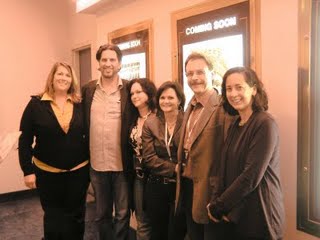
The film making team attended the premiere and are pictured here in front of the Ana’s Playground poster at the CIFF.

20021231-P1010003-6

One member of the Calgary audience wrote:

“The film which had the audience on the edge of their seat with looks of fear frozen between each gunshot was Ana’s Playground.  There was no dialogue, but there didn’t need to be. Ana’s Playground told the story of children caught in the middle of war with brilliant shots, a terrifying soundtrack and a mysterious, unidentified gunman.”

You can watch an on-line interview with Ana’s Playground writer/director Eric Howell here.

Ana’s Playground was the darling of the inaugural Norwich Film Festival in the United Kingdom winning both Best Short Film and Best of the Fest honors late last month.

Read about the Norwich Festival response


Abandon Ship! Follow-up on U.S. Chamber…

1 10 2009

Pendleton_Sinking_Ship

The momentum of disengagement from the U.S. Chamber of Commerce based on their draconian position denying climate change continues. The chamber in recent weeks has challenged a federal Environmental Protection Act finding that greenhouse gases can be regulated by the Clean Air Act.

Nike announced Wednesday that it has resigned from the Board of Directors of the Chamber.  In a statement, Nike said “we fundamentally disagree with the U.S. Chamber of Commerce on the issue of climate change and their recent action challenging the EPA is inconsistent with our view that climate change is an issue in need of urgent action.”

Nike joins PG&E Corporation, PNM Resources and Exelon Corporation— all of whom have left the Chamber in the past week based on the Chamber’s position denying climate change.  Speculation continues that Chamber President Thomas Donohue will be forced to resign based on the defection of member companies and allegations of conflict of interest based on his board position at Union Pacific Railway, a company fighting climate change legislation in part based on the large amount of revenues they receive from the shipment of coal.


A responsibility revolution?

21 09 2009

Picture 1A new survey by Time magazine was highlighted in a recent article written by Richard Stengel: “For American Consumers, A Responsibility Revolution.”  Could this new halo many are happy to be wearing represent some of the most compelling signs of “the new normal”?

The research indicated:

  • 82% of people consciously supported local or neighborhood businesses
  • 40% of people said they purchased a product in 2009 because they liked the political or social values of the company that produced it.
  • 60% of Americans have bought organic products since January
  • 78% of those polled said they would be willing to pay $2,000 more for a car that gets 35 m.p.g. than for a similar one that gets only 25 m.p.g

As the article says, “That’s evidence of a changing mind-set, a new kind of social contract among consumers, business and government. We are seeing the rise of the citizen consumer — and the beginnings of a responsibility revolution.”

Once again, the Time survey adds to the rapidly growing amount of data that indicate we have reached the tipping point where values based marketing and sustainable branding are beginning to rise in importance with customers from all walks of life. Companies who recognize this and infuse sustainable branding into their total customer experience will inevitably be among the winners in the age of accountability.

Read the Time magazine article


Coca-Cola introduces PlantBottle.

14 08 2009

6a00d834515f0569e20120a4e64400970b-800wiCoca-Cola has unveiled its new “PlantBottle” to be rolled out later this year with the Dasani brand and in its Vitaminwater portfolio of products in 2010. In a smart move toward sustainable branding, the new bottles and their environmentally responsible composition will feature on-bottle messaging, in-store displays and on-line marketing communications so customers can begin to appreciate they are purchasing a new sustainable technology.

Said Muhtar Kent, Coca-Cola’s CEO, “The “PlantBottle” is a significant development in sustainable packaging innovation. It builds on our legacy of environmental ingenuity and sets the course for us to realize our vision to eventually introduce bottles made with materials that are 100 percent recyclable and renewable.”

We agree – through its sweeping worldwide sustainability plan under the theme “Living Positively” – Coca-Cola is one of the innovators and pioneers of business practices that support overall good corporate citizenship.

A life-cycle analysis conducted by the Imperial College London indicates the “PlantBottle” consisting of 30 percent plant-based materials will reduce carbon emissions by up to 25 percent, in comparison with traditional PET plastic bottles.  The PlantBottle is currently made through an innovative process that turns sugar cane and molasses, a by-product of sugar production, into a key component for PET plastic. 


Kudos To Cub. New LEED-certified grocery store is a shining example of sustainable branding.

12 08 2009

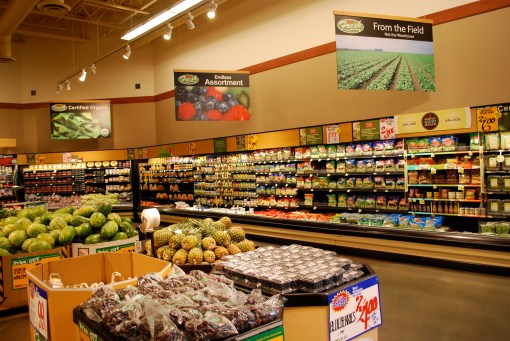
474Cub Foods recently opened a LEED (Leadership in Energy and Environment Design) Gold Certified grocery store in the Phalen neighborhood of St. Paul, Minnesota.

Having visited the store we send big kudos to Cub.  Not only is the store a inventive and creative way of reducing the energy consumption, carbon footprint and reduced impact in construction and daily operation, but it is an excellent example of conveying the vision and possibilities to its customers.

The statitsics related to the store itself are impressive.

  • 44 skylights illuminate 75% of regularly occupied spaces using a solar powered GPS system to track and re-direct sunlight.
  • Parking lot lighting from LED lighting cutting energy consumption by 50 percent.
  • An overall saving of 35% in lighting expense compared to the average Cub store.
  • Landscape irrigation that uses 50% less water.
  • 75% of building construction waste will be recycled.

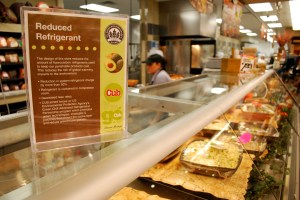
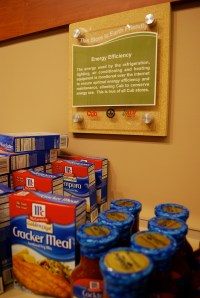
But we love how Cub has used the physical environment of the store itself to provide information about every aspect of how the store is operating in a sustainable way.  The subtle signage is designed to educate Cub customers about the important facets of the store’s operations.  

Messages conveyed include how the store uses reduced refrigerant.

501

Use of natural light to reduce energy consumption.

508

How Cub uses packaging made from only 100% renewable resources.

524

How the overall store operates in a more energy efficient fashion.

494LED refrigerator case lighting to conserve energy.

511

Special parking places reserved for customers driving fuel efficient vehicles.

517

An overall store experience which is designed to be more respectful to nature and healthy for all.

532

In additional to many of the customer facing aspects of the store, the new Cub also features creative, energy saving ideas in all aspects of its operation.  For employees, the Cub facility features men and women’s shower rooms for employees to encourage them to ride the bike to work and worked with the city of St. Paul to create an additional city bus route so their employees can take the bus to and from work versus driving.  The facility also features a white roof to reflect heat to reduce energy consumption and special landscaping to absorb rainfall.

All in all, we encourage everyone to visit this very special new store if you have the chance.  And we send our congratulations to the leadership of SuperValu (the parent of Cub Foods) for their courage and leadership in creating and building what we hope will become the role model for retailers everywhere.

Our thanks to the support of  Cub Foods—and in particular Lee Ann Jorgenson, Manager of Community Relations and Communications—for allowing us to fully understand and share all of what the new Cub store is doing to be respectful to its new home in the Phalen neighborhood. 

(Photos by P.J. Milan.  All rights reserved.)


Real World Green: Winning Retailers See Sustainability As Competitive Advantage

11 08 2009

IMG_1165“Make green an integral part of your brand promise, and don’t wait to be pushed into action by eco-savvy consumers.  The store is a great place to begin – there is something every retailer can do today to reduce the amount of energy used.  But there is not “magic bullet” tactic for buildng a “green brand.”

-Real World Green:  The Role of Environmental Savings in Retail

The Retail Industry Leaders Association just issued it 2009 Benchmark Report on environmental sustainability in retail—which demonstrates how quickly retailer attitudes toward green initiatives as both a business economic driver and brand reputation indictaor have moved in the past 12 months, despite the recession.

The survey of nearly 100 retailers across all retail categories and company sizes finds some significant new findings toward sustainability practices.  The analysis divides retailers into “winners” – those retailers who’s revenue performance is besting industry average and “laggards” – those that are obviously falling behind.

The results illuminate that the “winners” of the past year in retail are significant more enlightened and deeply committed to driving sustainability initiatives into their operations and appreciate the benefit it will provide for their brand.  Whether or not their current customers are demanding it.

Some of the interesting factoids from the research impressed us.

  • 55% of retail “winners” see environmentally sound practices as both a “ethical obligation” and “to be seen as an industry leader”.
  • 80% of retail “winners” say that their customers expecting them to act is a key influencer to pursue green initiatives
  • 71% of retailers agree that “marketing our brand as “ecologically-conscious will have a profound impact on our brand image”

To further demonstrate how sustainability is a key topic on the minds of executive leadership of these retail companies: 87% of respondents believe the CEO has the greatest future potential of influencing their company’s leadership on sustainability—followed by the VP Marketing at 64%.  This would support our belief that those executive positions most responsible for overall brand and company reputation and image are going to be driving strategic sustainability initiatives in the future.

Read the Report:  Real-World Green_ The Role of Environmental Savings in Retail


The next level of accountability. Governance for corporate behavior and its impact on the planet.

30 07 2009

Sustainability reporting among corporate issuers is largely still voluntary, it is far from universal, and often inconsistent and incomplete.”

– Social Investment Forum letter to SEC Chairman Mary Schapiro

imagesLast week the 400 member Social Investment Forum called on the Securities and Exchange Commission to establish the mandatory reporting of corporate environmental, social and governance (ESG) or sustainability reporting.  Citing the fact that corporate social and environmental performance can have material impact on portfolio performance, the proposal calls for sustainability performance to be reported on consistent measures and issued in an annual report along with standard financial disclosures.

The letter also pointed out that that similar regulation is being proposed by the United Nations and several individual countries.  While relatively off the radar screens in mass media, this conversation is serious in nature and represents significant steps forward in regulating accountability for corporations on social measures beyond financial data.

Read the letter.


What if my customers say they don’t care?

21 07 2009

  Whatever you can do or dream you can, begin it. Boldness has genius, power and magic in it.”  

                             – Johann Wolfgang von Goethe


“What if my customers say they don’t care?”  

This may be the number one question many companies are wrestling with regarding social responsibility and sustainability strategies.  And is central to the debate of whether it is possible to achive brand differentiation by infusing sustainable practices into messages directed to customers.

It is easy to appreciate how many companies over the past couple of decades have made significant investments to “stay close” to their customers. Brand attribute ratings.  Research departments rebranded as “consumer insights” groups. Tracking studies. Endless focus groups and telephone and on-line surveys.  Trend analysis and more.  Information is good and many sound business strategy decisions have been based on input on the wants and needs of the customer.  But too much information can also lead to an unhealthy paralysis.

So when the research points to data saying that customers don’t care about sustainability—corporate leaders have decisions to make.  This is especially true when we are still buffeted by an uncertain economic climate when many people are struggling financially and not in the position to make the sophie’s choice between being able to afford something they need vs. an alternative that may offer a higher degree of sustainability.  We acknowledge the cold reality that the economy may be holding back customers’ demanding sustainable behaviors, but beware the “sling shot effect” of how quickly this could change when the economic pressures ease.

This is the inflection point that is the very essence of what it means to be socially responsible.  Our way of thinking is that if you can achieve more responsible and sustainable practices (and we acknowledge the practices are not sustainable unless they are profit neutral), you have a moral obligation to do it whether or not your customer says they care.  And we further believe it is a social responsiblity to communicate what you are doing in an effort to educate and inspire your customers to not only appreciate what you are doing, but show them how they should alter their own behaviors for everyone’s benefit.

The next level of consumer insights then is to get deeper into the potential of the responsible and healthy relationship between a company and its customers. True innovation, creativity and positive social change rarely relies on permission.  It insists on the courage to do what is right and transformative and then to communicate the benefits of the innovation to the audience.

I draw the analogy to our society’s history of struggling with the knowledge that smoking tobacco has devasting health consequences.  After the Surgeon General first informed the public of the health hazards of smoking in 1964, it took decades to achieve the broad based awareness, acceptance and change of behaviors (in part because of the addictive nature of the habit).  But “responsible steps” were taken: public service campaigns, packaging warning labels, bans of advertising, bans of sale to minors, bans in public venues, legal action and consequently—millions of smokers quit and millions of non-smokers never started.  Today, some people still make the choice to smoke and to ignore the health consequences, but they are certainly aware of them.  And there is a social stigma that deeply influences healthy behavior for individuals as well as society at large.  None of this would have happened without leaders who were willing to stand up and embrace change as the right thing to do.

Fast forward to today. Even if your customers say they don’t care about sustainability, it is your responsibility to drive to achieve necessary sustainable behaviors into your organization because of your knowledge that it is the right thing to do whether or not your customer will applaud you for it.  The health and social consequences of NOT doing this is no less dramatic than pretending smoking is good for you.  And because it is the right thing to do, it is also imporant to inform your customer of what you are doing and why.  Public education is also a social responsibility.

Imagine if all the tools of today’s instantaneous communication – the internet, digital media, global connectivity, social networks – were available in 1964 when the public first learned about the dangers of smoking tobacco. How much more quickly would have behavior change been accelerated? How many millions of lives might have been improved?  How much suffering might have been avoided?  

We call on all companies to use all the tools and innovation at their disposal to drive sustainable change and communicate the efforts to their customers. Persuade your customers to care, persuade them to take care of themselves and their community.  This is how we will achieve necessary change when the clock is ticking.

There are many examples:  we are inspired by companies like Wal-mart, Tesco and Kingfisher who are driving meaningful sustainable behaviors into their organizations and then boldly yet honestly communicating what they are doing to their customers and how they should get involved.  Don’t wait for permission.


Play to Stop Europe For Climate

15 07 2009

Picture 1

We love the work MTV Europe is doing in partnership with the European Union announced today, kicking off a six month campaign to raise awareness and action among young people in Europe regarding climate change leading up to the Climate Conference in Copenhagen in December.  Stunningly, research from Europe indicates only a little more than half of people aged 15-24 have taken action to fight climate change, the lowest proportion of any age group.  The campaign is designed to give a voice to the age group to be most affected by climate change.  

“Events like this are vital, because young people are a tremendously important pressure group. They will be most affected by climate change — so their voices are the most important,” Environment Commissioner Stavros Dimas said in a statement.

Moby will perform in Stockholm on August 20, with other artists taking to the stage in Budapest and Copenhagen in the coming months. Each concert will take place alongside a major climate change event in the respective cities.

The six-month campaign, to be held in the run-up to international climate talks in Copenhagen in December, will run in 11 EU countries and include TV spots, webcasts and games. MTV will provide editorial content on tackling climate change.

Watch the hilarious MTV Play to Stop Promo


“Events like this are vital, because young people are a tremendously important pressure group. They will be most affected by climate change — so their voices are the most important,” Environment Commissioner Stavros Dimas said in a statement.
Moby will perform in Stockholm on August 20, with other artists taking to the stage in Budapest and Copenhagen in the coming months. Each concert will take place alongside a major climate change event in the respective cities.
The six-month campaign, to be held in the run-up to international climate talks in Copenhagen in December, will run in 11 EU countries and include TV spots, webcasts and games. MTV will provide editorial content on tackling climate change.


Congratulations to 46664 & Coca-Cola South Africa for Hello!

14 07 2009

Picture 1

Just ran across this moving video that shows an inspiring example of corporate social integration.  In a partnership with the NGO 46664 and using the words and voice of Nelson Mandela, Coca-Cola South Africa is helping raise awareness of the human rights crises that is HIV/Aids in Africa.

Using the iconic power of the Contour bottle, Coca-Cola placed one million empty bottles in random places across the country with a note from Nelson Mandela to further drive for positive living.

46664 International Director Tim Massey said: “The Hello Campaign illustrates the power of partnerships between corporates and charities to realize a common goal — in this case to increase awareness about HIV /Aids. Coca Cola’s generous donation will be used to fund the 46664 outreach activities, while the TV commercial and the outdoor activation will ensure that the 46664 campaign remains highly visible, and that Mr Mandela’s appeal for help is heard by most
South Africans.”

46664 International Director Tim Massey said: “The Hello Campaign illustrates the power of partnerships between corporates and charities to realize a common goal — in this case to increase awareness about HIV /Aids. Coca Cola’s generous donation will be used to fund the 46664 outreach activities, while the TV commercial and the outdoor activation will ensure that the 46664 campaign remains highly visible, and that Mr Mandela’s appeal for help is heard by most South Africans.”

See the Hello video


Trust Gap: A New Landmark Study

25 06 2009

“Actions speak louder than words.  If the public believes that an organization’s first priority is profit maximization, it will be difficult, if not impossible, to build public trust.” – Business Roundtable Institute for Corporate Ethics, Arthur Page Society

A landmark special report was issued today that underscores the deep loss of trust between the public and business.

Read the report 

The topline strategic recommendations provide guidelines to business leaders on the requirements to gain renewed trust with the public.  At is essence, we believe all of these strategies can be summed up as “the golden rule:  treat others as you would like to be treated”.  A timeless axiom that seems to have been forgotten by the leadership of many companies recently.  Hopefully this report will help companies get back to the fundamentals of having a trusting relationship with the public.


Wall Street Journal Report: For companies operating in developing countries, it pays to commit to improving social and environmental conditions.

25 06 2009

IMG_1174

“Here’s a lesson many executives have yet to learn: A commitment to improving social and environmental conditions in the developing countries where a company operates is the key to maximizing the profits and growth of those operations.” – Wall Street Journal

Research reported in the Wall Street Journal indicates those companies that make a commitment to sustainable business practices in developing countries enjoy six key competitive advantages.

  • A sterling reputation.
  • Better employees.
  • More efficient production.
  • A smoother relationship with authorities.
  • Better coordination, internally and with suppliers.
  • Suppliers that are more reliable and flexible.

But importantly, not only is operating in a sustainable and responsible fashion key in developing countries, so is making your customers aware of that commitment.  Increasingly consumers are examining companies social and environmental track records before deciding what products they plan to buy.

Read the WSJ Report


Aberdeen Research: Executives Making Sustainability A Top Priority

25 06 2009

“Research demonstrates that leading companies have made a resoundingly strong business case for the adoption and expansion of genuine, sustainability strategies and initiatives. ” – Aberdeen Group

In a newly released survey of more than 1600 business executives in 700 companies worldwide, sustainability is identified as one of the top 5 corporate priorities in 2009.  The promising report highlights several key insights into current trends, including:

  • The sustainability efforts are being championed by C-suite executives.
  • Budgets are being either maintained or increased.
  • The vast majority of companies already have executive leadership in place to oversee sustainability.
  • Top performing organizations are already achieving strong business benefits —from cost reductions to enhanced brand value.
  • Across all sectors and geographies, responsibility framed strategies have grown in importance, despite the economy.

The research highlights our beliefs that many, many companies have embraced sustainability and social responsibility and are beginning to see positive return on investment for such efforts.  But few organizations have taken advantage of the opportunity to turn these business practices into differentiated marketing assets and brand equities.  Alignment of sustainability actions and brand messaging and experience remains a huge opportunity to enhance corporate reputation and turn customers into engaged brand ambassadors.

Read the Aberdeen Group Press Release


Frontline World On Digital Dumping

24 06 2009

Picture 2

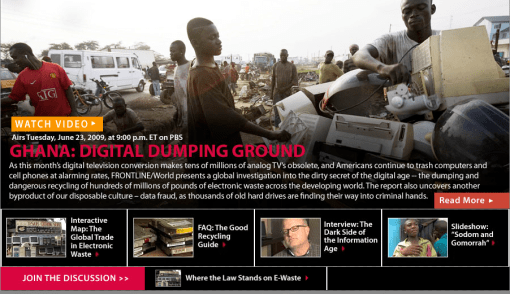
Watch Frontline World’s story on digital dumping

A moving and powerful investigation of what happens to all of those digital devices once they leave your life, even with your good intentions to have them recycled.  Learn how they can not only harm the environment, but encourage exploitative and inhumane working conditions in the developing world and lead to data fraud at the hands of criminals in far away lands.


Good News: Marketers Waking Up To The Value Of Sustainable Branding

24 06 2009

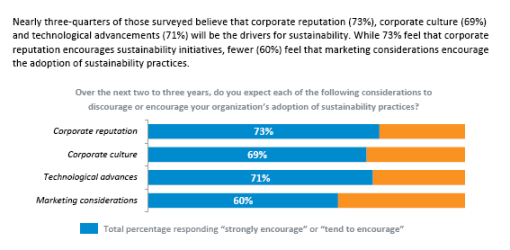
In a very encouraging research survey sponsored by the American Marketing Association and Fleishman Hillard, nearly 60% of marketing and communications professionals believe their organizations will be placing increased emphasis on sustainability issues over the next 2-3 years than in the past.

Read the AMA Fleishman-Hillard Research Study

It is an exciting time to be involved in sustainable branding because more and more companies are recognizing that sustainability can not only be a profitable business practice, but a powerful competitive differentiator.

But in one of the odd contradictions of the survey, while 73% believe corporate reputation will be a driver of adopting sustainability practices, only 60% believe marketing considerations will drive sustainability.  We believe corporate reputation and marketing strategies should be incredibly inter-twined and that communicating and providing ways for people to experience a company’s commitment to sustainability is going to be a brand marketing imperative moving forward.

Picture 1

The truth is that corporate reputation management moving forward requires orchestration of all elements of the organization.  It is critical the internal silos be broken down so corporate social responsibility actions, sustainability initiatives, and brand communication (plus promotion, sponsorship, events, CRM etc) all be choreographed as a part of the overall brand experience.  The customer doesn’t compartmentalize the impressions they take away from a company or a brand so it is important that the organization does not do it either. Now more than ever when it comes to brand reputation management, the right hand and the left hand not only need to know what each are doing—but both hands should be on the wheel!


Trust Matters – The Edelman Trust Barometer’s Scary 2009 Report

23 06 2009


“I’m not upset that you lied to me, I’m upset that from now on I can’t believe you”
 Friedrich Nietzsche quotes

1443_2

I’m not upset that you lied to me, I’m upset that from now on I can’t believe you”  – Friedrich Nietzsche

Kudos to the Edelman Trust Barometer and their 2009 report citing the state of trust worldwide.  It dramatically underscores there is nothing short of a pandemic of lack of trust between people and companies, the media, CEOs, and experts.

Building sustainable brands will require regaining public trust and Edelman’s study reported only 38% of people 35-54 years old in the United States trusted U.S. businesses.  The report also showed that in the past year 77% of 25-to-64 year olds around the world refused to buy a product or service from a distrusted company.  

There is now a huge trust gap to overcome but those companies who aggressively recognize and embrace this new reality will be the ones that emerge from the recession with momentum and a long term competitive advantage.  

But now is the critical time to create and align sustainable and socially responsbile business practices with branding and communication programs to help your company stand apart and be among the winners in this new world where actions resonate and words alone will be ignored.