Blue Streak

1 02 2023

Photo: © Jennifer Adler

A trailblazing approach to marine conservation piloted in Seychelles finds new success in Belize. 

By Julian Smith, Freelance Writer from the Nature Conservatory • Reposted: February 1, 2023

Scuba-diving the kaleidoscopic reefs of the Hol Chan Marine Reserve, just a 15-minute plane hop from Belize City, is like swimming into an Oscar-worthy underwater nature documentary. Sea turtles and spotted eagle rays soar past silently, while rainbow parrotfish munch algae off branches of healthy coral. A 3-foot nurse shark circles close by, while at the bottom of a small canyon—Hol Chan means “little channel” in Mayan—two male coral crabs face off like gladiators.

Hol Chan is the shining star of Belize’s myriad marine wonders and one of its busiest tourism destinations, but it’s just a small part of the longest barrier reef in the Western Hemisphere. Studded with hundreds of offshore atolls and cayes, Belize’s 240-mile coastline is home to more than 500 kinds of fish and three species of threatened sea turtle. Along the shore, mangrove forests, lagoons and estuaries shelter West Indian manatees and American crocodiles.

A scuba diver swims alongside Belize's barrier reef.
DEEP DIVE Belize’s 185-mile barrier reef is second in size only to Australia’s Great Barrier Reef and features world-class dive sites like Mermaid’s Lair (pictured here) off of Ambergris Caye. Photo: © Jennifer Adler

Although a portion of the barrier reef was designated a UNESCO World Heritage Site in 1996, the entire reef is vulnerable to the effects of climate change, and most of it is also under increased pressure from overfishing and nearby development. By 2020, Belize’s public debt had reached $1.5 billion—larger than the country’s GDP—making it difficult to set aside money for environmental protection.

COVID-19 only made things worse. Visitation to Hol Chan has dropped drastically since 2019. Since entry fees cover most of the parks’ operations, the ranger staff is down from 15 to 11 (at one point last year there were only five). Before the pandemic, the park’s marine treasures were guarded around the clock; now, rangers are available only from 5 a.m. to 8 p.m.

Belize needed a solution that would preserve its natural capital and jump-start the industries that depend on it. The government looked to a financial transaction piloted by The Nature Conservancy in the Indian Ocean just a few years before. If that revolutionary model of marine conservation could find purchase on Belize’s Caribbean shores, it would restructure the country’s debt, freeing up tens of millions of dollars to protect its coastal and offshore resources—a transformative prospect for a country where nearly 50% of the population relies on the ocean for food and jobs.
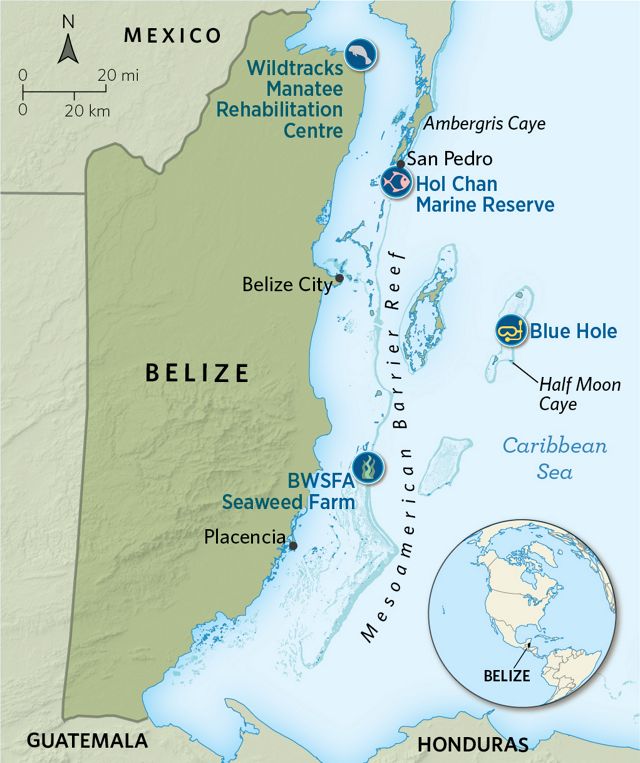
A map of Belize shows offshore conservation projects.
CARIBBEAN COUNTRY Located on the northeastern coast of Central America, Belize is buffered by hundreds of low-lying islands known as cayes and the massive Mesoamerican Barrier Reef. Graphic: © Mapping Specialists

The Nature Conservancy closed its first debt-for-ocean transaction in 2016 with the Republic of Seychelles, a far-flung island nation 1,000 miles off the east coast of Africa. The Conservancy created a financial mechanism, which would later become the underpinning of its Blue Bonds for Ocean Conservation program, to help Seychelles secure long-term funding for marine conservation. The Conservancy worked with the country and its creditors to help lower the financing rate for part of the nation’s debt, and helped find international grants to further support the transaction.

In exchange, the country committed to protect at least 30% of its marine territory and devotes part of its annual debt-payment savings toward conservation management.
It’s like a bank agreeing to refinance a home if the owner promises to put the savings toward improvements—just on a country-sized scale.

A purple gorgonian in Mermaid's Lair off of Ambergris Caye.
UNDERWATER GARDEN Marine biodiversity such as fused staghorn coral and purple gorgonians (pictured here at Laughing Bird Caye) draw hundreds of thousands of tourists to Belize each year. Photo: © Jennifer Adler

In the Seychelles, the program has been a resounding success. The $22 million debt restructuring has generated up to $430,000 per year for marine conservation and climate change adaptation. In less than five years, the country has been able to manage and protect more than 150,000 square miles of ocean, an area larger than Germany. The country has applied a wide scale of restrictions to these waters, including new marine preserves, dive-only sites, no-fishing zones and areas that are only open to community-level fishing.

Belize was a natural choice for the next Blue Bond, says Julie Robinson, program director for TNC in Belize, who spent much of her childhood in the town of San Pedro on Ambergris Caye, the gateway to Hol Chan. “As far back as I can remember, I was in the water exploring the seagrass beds, reefs and mangroves,” she says. “I was 6 years old when I decided I wanted to dedicate my life to protecting marine life.”

SEAWEED FARM

Mariko Wallen works with seaweed growing along a rope underwater.
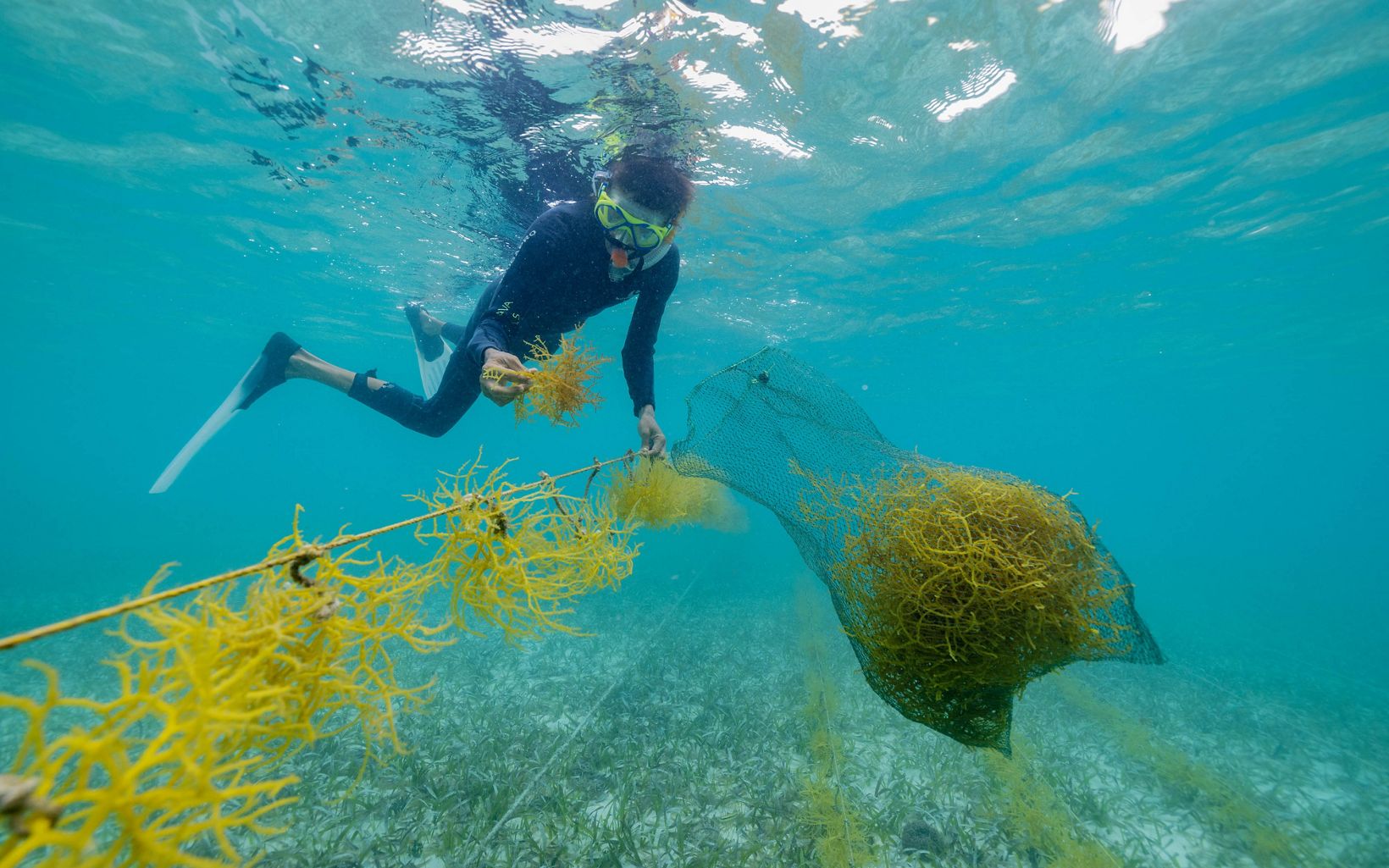
GREEN THUMB Mariko Wallen, founder of the Belize Women’s Seaweed Farmer’s Association, tends to seaweed on a farm 18 miles off the coast of Plancencia. Photo: © Jennifer Adler
Haley Cattouse dives to work on the seaweed farm.
GARDEN OF LIFE Haley Cattouse tends to a sustainable seaweed farm which not only provides economic opportunities for local women but also creates habitats and nurseries for marine species. Photo: © Jennifer Adler
Mariko Wallen dives with seaweed in a net.
BAG IT UP Mariko Wallen harvests a tangle of seaweed from a long cord. Belizeans use this type of seaweed in cooking and as an ingredient in punches and smoothies. Photo: © Jennifer Adler
Mariko Wallen works with seaweed growing along a rope underwater.
Haley Cattouse dives to work on the seaweed farm.
Mariko Wallen dives with seaweed in a net.

Such feelings are common among citizens of Belize. “We have a very strong connection to nature,” says Robinson. “We are proud of our country; everyone calls it ‘The Jewel.’”

Innovating strategies to conserve its dazzling terrestrial and aquatic biodiversity is nothing new for Belize. It was the first country in Central America to designate a Marine Protected Area, with the creation of Half Moon Caye Natural Monument in 1982. It was also the first to sign a subsidized “debt-for-nature” swap, an agreement finalized in 2001 that canceled $8.5 million in outstanding loans and protected 23,000 acres of its tropical rainforests.

A dense field of staghorn coral is just under the water.
CORAL COMEBACK Staghorn corals grow thick at a dive site near Laughing Bird Caye. The nonprofit organization Fragments of Hope has planted almost 90,000 corals here since 2006. Photo: © Jennifer Adler

Taking Belize’s ocean conservation to scale was the next step, says Robinson. Nearly half of the country’s population lives in coastal communities, which rely on marine ecosystems for income, food and flood protection. Tourism accounts for 40% of the country’s economy, and a quarter of that is estimated to depend on coral reefs alone. Yet the annual budget to enforce environmental laws and expand protected areas has been less than $1 million.

To bolster the national economy and address that funding gap at the same time, the Belize government began initial discussions with TNC around a debt restructure for marine conservation in 2010. The road wasn’t easy, negotiations stalled, and the model was taken to the Seychelles instead, but a decade later, with Robinson at the helm, talks resumed in earnest. Finally, in November 2021, the Conservancy, along with global investment bank Credit Suisse and the U.S. International Development Finance Corporation, helped restructure $553 million of the country’s debt—ultimately reducing the principal by $250 million in the process. Over the next 20 years, as Belize pays down its new, more favorably termed loan, the savings are expected to generate $180 million to support in-country marine conservation. An endowment established through the transaction is designed to finance marine protection after the loan is repaid.

Elkhorn coral under bright blue water.
MARINE MAJESTY Elkhorn coral grows at Lighthouse Reef Atoll in Belize. Photo: © Shireen Rahimi

Along with the large-scale policy changes, the Blue Bond will also make more money available on the ground to support community ventures that promote Belize’s marine economy. One model for what these projects might look like floats just under the surface of the water, 18 miles offshore from the beach town of Placencia. Seven square wooden frames, 50 feet on a side, are attached by cables to the shallow sandy bottom. Long cords strung across the frames are lined with tangles of Eucheuma isiforme, a type of seaweed Belizeans use in cooking and as an ingredient in punches and smoothies. This sustainable seaweed farm is run by the Belize Women’s Seaweed Farmers Association (BWSFA), a nonprofit founded in 2019.

“We were looking for supplementary livelihoods because we can’t depend on fisheries or tourism anymore, because of climate change and depleted fish stocks,” BWSFA President Mariko Wallen says. “We decided to find a way to empower ourselves.”

The Conservancy helped the group set up a seaweed farming course and used satellite imagery to determine the best places for the farms, which also provide habitat for ecologically important and commercially valuable species like snapper, spiny lobsters and conch.

Wallen hopes the BWSFA can benefit directly from the Blue Bond by accessing funding to expand the farms, open a business arm for marketing and develop products like lotions, conditioners, soaps and cosmetics that could one day be sold abroad.

We are proud of our country; everyone calls it ‘The Jewel.’

Some citizens, like Wallen, will see the Blue Bond as a boon for their ocean-based livelihood, but 18 months of confidentiality around the deal—to avoid driving up the price of the Blue Bond before an agreement was struck—mean that there is some public relations work to be done to convince others. “We need to be able to show people how they directly benefit from it,” says Robinson. To address possible concerns that the deal will make more of the ocean off-limits to Belizeans, TNC is getting the word out by holding information sessions, producing educational videos and hiring new staff dedicated to engaging with stakeholders.

Community input is a large part of how the government will determine the types of protections that will be put into place. The goal is not to cut communities off from marine resources that they need for food or tourism, but to ensure enough areas are protected to make the entire system more sustainable. 

The Blue Bond shows that it’s possible to balance economic development and conservation in a way that benefits everyone, Briceño says. “We have a responsibility to the planet and future generations to try to conserve as much as we can. That’s why this is so exciting: we can show that conservation is good business and that it can have a direct impact on the people most affected by climate change.”

To see the original post, follow this link: https://www.nature.org/en-us/magazine/magazine-articles/belize-blue-bonds/


U.S. Climate Targets Are Within Reach, But Overconsumption Still Matters

31 01 2023

Image credit: Alexandru Boicu/Unsplash

By Riya Anne Polcastro from TriplePundit.com • Reposted: January 31, 2023

There’s good news on the viability of President Joe Biden’s climate agenda, with a new report detailing how the U.S. could potentially come within reach of his 2030 objective to power 80 percent of the nation’s electrical grid with clean energy. Doing so would also meet U.S. targets to halve carbon emissions by 2030, using a 2005 baseline, and further reduce them to 77 percent below 2005 levels by 2035, according to the report from the Natural Resources Defense Council (NRDC) and Evergreen Action.

Time is of the essence, however. And not just because of any impending climate tipping points. The current administration isn’t guaranteed a second term. And, as the Washington Post’s Maxine Joselow pointed out last week, an incoming Republican president would likely reverse any last-minute changes. Ironically, rushing the conversion may also be the best way to end partisanship over the issue as long-term savings become apparent to businesses and consumers alike.

“President Biden committed to the most ambitious set of climate goals in American history,” Charles Harper, power sector policy lead at Evergreen Action, said in a statement. “Important progress has been made, but President Biden must take bold action this year in order to deliver on those commitments. By ramping up its work to transition the U.S. economy toward 100 percent clean energy, the Biden administration and state leaders can reduce toxic pollution, cut energy costs, create good jobs, and advance environmental justice. Let’s get to work.”

The report lists necessary measures which, based on modeling, could result in meeting the climate goals set out in the president’s Inflation Reduction Act (IRA) if they are implemented immediately. Researchers say setting new and stringent rules through the Environmental Protection Agency and the Clean Air Act, as well as the Federal Energy Regulatory Commission (FERC), will be paramount. Other necessary courses of action include making the most of the IRA’s grant programs and tax credits, and promoting stronger state standards on emissions to match federal targets.

“We don’t need magic bullets or new technologies,” Manish Bapna, NRDC president and CEO, explained in a statement. “We already have the tools — and now we have a roadmap. If the Biden administration, Congress, and state leaders follow it, we will build the better future we all deserve. There is no time for half measures or delay.”

The report does not call for an end to new power plants that generate electricity from fossil fuels, but it does recommend that rule changes and emission standards be applied to existing gas and coal facilities as well. The transition away from fossil fuels is thus presented as more of a carrot than a stick situation — with funds from the IRA needed to encourage the expansion of renewables, as opposed to attempting to eliminate the construction of new fossil fuel-based plants. 

The increasing availability and cheaper cost of renewable energy benefits not just consumers, but also the U.S. manufacturers and businesses that rely on all possible savings to remain competitive. The more that can be done to encourage the grid transition to renewables, the cheaper power will be for everyone. In time, then, partisan opposition to renewable energy should wane.

However, it’s important to remember that no type of consumption comes without consequences. Resources must still be extracted to build batteries, solar panels, wind turbines, etcetera in order to power the clean energy revolution. As such, we must be more careful not to create a whole new environmental disaster in the process of slowing the climate crisis.

People in the U.S. use four times as much energy as the worldwide average. Cheaper power runs the risk of increasing total consumption, as seen with the connection between gasoline prices and driving habits. With the impending robotization of multiple industries, increased power usage could be dramatically compounded and raise emissions above current modeling. Therefore, it is imperative that people in the U.S. look to reduce their consumption, in addition to cleaning up the grid. 

Many Americans are already willing to adjust their lifestyles to combat climate change, but they need the tools to successfully lower their carbon footprints. Clean power is a big part of this, but so is a public transportation infrastructure that moves us away from the personal passenger vehicle — electric or not — as the primary mode of transportation.

Likewise, the backlash against remote work doesn’t just dismiss employee needs, but it also ignores the environmental benefits of fewer commutes and climate-controlled office buildings. By looking at the bigger picture, perhaps we will begin to understand that our planet does not have unlimited resources. No matter how we power things, we cannot do so from a thought process of ever expanding abundance with zero consequences. 

To see the original post, follow this link: https://www.triplepundit.com/story/2023/us-climate-targets-overconsumption/765046


How supermarket freezers are heating the planet, and how they could change

30 01 2023

Grocery chains under pressure to switch from HFCs to natural refrigerants to curb climate change

Supermarket fridges and freezers leak powerful greenhouse gases called HFCs. Switching to ‘natural refrigerants’ such as CO2 could make a difference in cutting emissions. Photo: Terry Chea/AP

By Emily Chung · CBC News · Posted: January 29, 2023

Climate-conscious shoppers may buy local food and try to cut packaging waste, but those efforts could be negated by potent greenhouse gases leaking from supermarket fridges.

Refrigerants called hydrofluorocarbons or HFCs are widely used to keep food cold or frozen at grocery stores and during transport. (They’re also used for other refrigeration applications, like ice rinks and air conditioners).

They were originally brought in to replace ozone-depleting refrigerants called chlorofluorocarbons (CFCs), which were banned in a landmark 1987 agreement called the Montreal Protocol, in order to save the Earth’s protective ozone layer.

But HFCs are themselves powerful greenhouse gases.

Typically, each tonne of HFCs can trap as much heat in the atmosphere as 1,400 to 4,000 tonnes of carbon dioxide over 100 years, depending on the type of HFC.

Here’s a look at why that’s happening, what the solutions are, and how ordinary shoppers could make a difference.

How do HFCs get from supermarkets into the atmosphere?

Supermarket fridges aren’t like your fridge at home, which typically contains less than 200 grams of refrigerant. And it’s in a sealed unit that’s unlikely to leak, says Morgan Smith, spokesperson for the North American Sustainable Refrigeration Council.

Her non-profit group has partnered with industry to help enable the transition from HFCs to more climate-friendly refrigerants because the complexity of their systems make them prone to leaking significant amounts of HFCs. 

Beneath and behind the cases of vegetables, dairy and frozen foods at a typical supermarket are kilometres of piping with thousands of valves, containing literally a tonne of refrigerant. 

“It’s so large and so complex, with so many different points of connection that those systems are inherently leaky, and so they leak about 25 per cent of their refrigerant charge every year,” said Smith.

That’s something another non-profit group called the Environmental Investigation Agency has captured on video using infrared cameras and HFC detectors in U.S. grocery stores. It also measured levels of HFCs in the store using chemical detectors.

Numbers representing refrigerant concentrations appear on digital screens of three detection meters, along with the names of the refrigerants.
Three chemical detectors show readings of HFCs at a Gristedes grocery store in New York during a survey by the Environmental Investigation Agency and 350NYC in 2022. Photo: Environmental Investigation Agency

It detected leaks at 55 per cent of the dozens of U.S. stores where it took measurements. On average, it found a single supermarket emits 875 pounds (400 kilograms) of HFCs a year, equivalent to carbon emissions from 300 cars. In the U.S. alone, it calculated supermarket HFC leaks cause as much global warming as burning 22 million tonnes of coal. 

How big a deal are these emissions really?

HFCs are such a big problem for climate change that Canada and 196 other countries have signed an international agreement, the Kigali Amendment to the Montreal Protocol, to reduce HFC consumption 85 per cent by 2036, relative to 2011 to 2013.

Shelie Miller, a professor who studies the environmental impact of the food system at the University of Michigan, says emissions from refrigerants may be relatively small compared to the food system emissions overall and major categories such as food waste.

“But that’s also just because the food system has such a big impact,” she said. 

On the other hand, targeting HFCs in supermarkets can be very effective at curbing emissions.

“You can make fairly small changes and have a relatively large impact just because the chemicals themselves that we’re using right now have such large global warming potentials,” Miller said.

While potent, HFCs are short-lived greenhouse gases, said Miller, lasting no more than 30 years in the atmosphere, compared to hundreds of years for CO2. Since a typical refrigeration system lasts about 30 years, decisions made now about what refrigerant to use can affect global emissions for decades.

“We need to be thinking about the sources and the hubs of where emissions are happening. And so our grocery stores are a great way to target our overall food system and reduce emissions.”

What can be used for refrigeration in place of HFCs?

The main alternatives are called “natural” refrigerants because they are all chemicals found in nature. They include:

  • CO2.
  • Ammonia.
  • Propane.

While CO2 is a greenhouse gas, its global warming potential is so much lower than that of HFCs. And propane, while it’s a fossil fuel, is not burned when used in refrigeration. In fact, all three of these chemicals are considered refrigerants with ultra-low global warming potential.

How are Canadian supermarkets progressing at switching away from HFCs?

According to Shecco, a market research firm focused on sustainable technologies, there were 340 commercial CO2 refrigeration installations in Canada as of May 2020. That was far fewer than Japan, with 6,500 and Europe with 29,000, and growing more slowly than every other region in the world listed, including the U.S., Australia and New Zealand.

However, Jeffrey Gingras, president of Evapco LMP, a Laval, Que.-based company that makes CO2 refrigeration systems, said he’s seen an exponential growth in installations in the past three years, and did a record 125 installations in supermarkets, about half of them in Canada, in 2022.

The Environmental Investigation Agency has been building a global map of refrigerants used in supermarkets since it launched its Climate-Friendly Supermarkets project in 2019.

Two Canadian community groups, Drawdown Toronto and Drawdown B.C., have helped coordinate submissions to the map in their regions, and have added about 250 stores to the map. (Note: I volunteered for Drawdown Toronto while on leave from CBC News and added one store. You can read more about that in our What On Earth newsletter.)

A label inside a refrigerator shows information such as the type of refrigerant.
This is a refrigerator label from the inside of a supermarket fridge, showing the type of refrigerant used. In this case, it’s an HFC called R404A, with a global warming potential close to 4,000 times that of CO2. Image: Emily Chung/CBC News

That was enough for the EIA to issue its first ever scorecard on Canadian supermarkets last fall. It reported on the five largest food retailers in Canada: Costco, Loblaws, Metro, Sobeys and Walmart.

The best-performing was Sobeys, which had the highest percentage of stores using ultra-low global warming potential refrigerants (nine per cent), was the only listed company that publicly reports its refrigerant leak rate (seven per cent) and has committed to transition to climate-friendly refrigerants for all new stores and renovation projects starting in 2024.

Some stores have also reported taking their own actions on HFCs, including Loblaws, which ranked third in the report and told CBC News that it has cut its greenhouse gas emissions by 30 per cent “in a large part” because of its strategy to reduce refrigerant leaks: using less refrigerant, detecting leaks early and reducing the emissions intensity of the refrigerants it uses.

Walmart Canada, which came fourth in the report, told CBC News in an email that it is installing natural refrigerants in all new stores and during major remodels with new grocery departments, and will switch all stores running on HFC refrigerants to more environmentally friendly options. It did not give a timeline, but said its global operations are aiming for zero emissions by 2040.

The other companies did not respond to CBC’s requests for comment.

EIA’s global map does show very few green dots in Canada compared to the U.S. and Europe. Avipsa Mahapatra, the group’s climate campaign lead, said that may be because no Canadian supermarket chains have not submitted their own data, unlike in other countries, and there isn’t much information.

“I actually have a hunch that Canada is not very far behind,” she said.

A map of North America showing red, orange and green dots representing grocery stores with different refrigerants
Ordinary shoppers can add local grocery stores to the Environmental Investigation Agency’s map of supermarket refrigerants. (Environmental Investigation Agency)

Why aren’t HFCs getting ditched faster?

Morgan Smith of the North American Sustainable Refrigeration Council said making the switch to natural refrigerants isn’t easy. They may require different training and equipment: ammonia is toxic, propane is flammable, and CO2 operates under very high pressures.

Smith said CO2 tends to be the natural refrigerant of choice for most supermarkets because it’s non-toxic and its systems work a lot like HFC systems.The high pressures mean it does need different piping and different valves, so a system can take months to build, and can’t just be swapped out overnight like parts of the existing system when it needs repairs.

It’s easiest if you have the space to build a new system alongside while the old system is still running, Smith said. Otherwise, you might have to shut down the store during the retrofit, which is difficult for both customers and the store operator.

For smaller stores, one option is to switch to individual fridges similar to your home fridge, with propane refrigerant in a sealed unit, Smith said.

A woman pushes a shopping cart between dairy fridges and freezer cases in a supermarket.
Experts say it’s not easy to convert an existing HFC refrigeration system to natural refrigerants, as they often require different equipment such as valves and piping. Photo: CBC / Radio-Canada

Michael Zabaneh of the Retail Council of Canada said refrigerant projects are quite expensive for supermarkets.

“They can be challenging and that’s probably the biggest barrier, the need to pay for higher capital costs to either upgrade the equipment so that it can handle natural refrigerants, or buy new equipment.”

However, he said most large grocery chains are aware of the problems with HFCs and customer and investor pressure to reduce greenhouse gas emissions, and are taking action.

The Environmental Investigation Agency’s Mahapatra acknowledged that retrofitting older stores is expensive and challenging. However, she says grocery chains should be making all new stores use natural refrigerants.

“There is no excuse for any supermarket today to build a new store that still contains HFCs. That is just simply foolish,” she said, noting that international agreements to phase out HFCs will eventually force companies to change the systems anyway.

What is the government doing about this?

The federal government will start to offer carbon offset credits for projects that cut refrigerant emissions, including those in supermarkets. Environment and Climate Change Canada told CBC News in an email that they’ll go into effect “in the next few months.” Once that happens, companies will be able to apply to get credits for projects that started as far back as January 1, 2017. 

Federal regulations have also been brought in to comply with the Kigali Amendment, the international agreement on HFCs that went into effect in 2018, with reduction targets starting in 2019.

The regulations will start to ban the manufacture and import of certain equipment containing HFCs with a global warming potential above a specific limit.

Gingras said the Quebec government did offer incentives for a period of time starting 2014 that made natural refrigerant systems competitive with HFCs, and those did lead to a widespread conversion of supermarkets in the province. However, he hasn’t heard of anything similar in other provinces.

Is there a role for ordinary shoppers?

Avipsa Mahapatra says grocery store customers can make a difference by adding their local stores to the climate-friendly supermarket map, being more aware and putting pressure on grocery store chains, especially when it comes to new supermarkets. 

“So if it’s a new store that is being built in your community, it is our job as … residents of that community, to make sure that it is not an HFC store.”

Morgan Smith at the North American Sustainable Refrigeration Council also thinks the public can make a difference: “The more people that are aware of this top

To see the original story, follow this link: https://www.cbc.ca/news/science/hfc-climate-supermarkets-1.6726627


Carbon Markets Are Far From Perfect, But Businesses Say They’re Essential

28 01 2023

Image credit: aiokr chen/Unsplash

By Mary Riddle from Triple Pundit • Reposted: January 28, 2023

Over 90 percent of business leaders are prioritizing long-term decarbonization — and 89 percent believe carbon markets will play a key role, according to a recent survey of 500 sustainability managers conducted by Conservation International and the We Mean Business Coalition. 

A third of the business leaders surveyed are already investing in a voluntary carbon market, while over half are considering carbon credits as an option for the future.

Carbon markets come under criticism…

Carbon markets allow carbon-emitting companies and individuals to offset their greenhouse gas emissions through the purchase of carbon credits. These credits are meant to be tied to certified emissions reductions from projects designed to reduce, or in some cases remove, greenhouse gases from the atmosphere. Credits are often from renewable energy projects, such as wind and solar installations, and nature-based solutions like reforestation and land restoration.

Carbon markets and credits have come under intense scrutiny in recent years due to lack of oversight and regulation. Companies and governments have been accused of greenwashing, as certain entities created fraudulent carbon credit programs that accepted payment, but never implemented carbon reduction projects. Other critics maintain that the carbon market allows companies to continue emitting greenhouse gases instead of finding methods to avoid emissions in the first place. 

recent investigation from the Guardian, Die Zeit and SourceMaterial found that more than 90 percent of rainforest carbon offset credits from a leading provider are likely to be “phantom credits” that do not represent actual greenhouse gas reductions, adding more fuel to the skepticism.

… But business leaders seem to still believe 

Net-zero targets represent more than 90 percent of global GDP, and the vast majority of business leaders believe that carbon credits are a critical piece in the global decarbonization puzzle.

Over 80 percent of the business leaders surveyed by Conservation International and We Mean Business say they would like to accelerate their decarbonization plans beyond credits or offsets. They claimed to face barriers such as budgetary constraints, technological limitations, lack of collaboration, concerns about greenwashing, lack of transparency and regulation in the carbon market, and the quality of carbon credits available, which held them back.

To overcome some of the roadblocks and confusion around carbon credits, businesses are increasingly relying on carbon credit ratings agencies such as the Integrity Council for the Voluntary Carbon Market and the Voluntary Carbon Market Initiative. Carbon ratings agencies help ensure the integrity of the carbon market through robust oversight, as well as stewarding a consistent taxonomy for businesses making carbon reduction claims.

“Without a transparent, high-integrity voluntary carbon market that functions at scale, we won’t stay within 1.5 degrees [Celsius],” Annette Nazareth, chair of the Integrity Council for the Voluntary Carbon Market, said in a statement. “Companies’ priority must be to decarbonize their own value chains. High-integrity carbon credits allow them to go further, accelerating climate mitigation beyond their value chain by providing finance to critical climate mitigation activities that do not otherwise meet the risk and return expectations of investors. We need to find a way to make it easy for investors to recognize and price a high-integrity carbon credit no matter which program issued it, what kind of credit it is, whether it is based on a removal or reduction, a nature-based solution, or an emerging technology.”

Tackling challenges in the carbon market is urgent to the activation of climate finance. Another recent report from the We Mean Business Coalition found that if the world’s top 1,700 emitting companies purchased carbon credits for just 10 percent of their emissions, more than $1 trillion would be activated for climate finance by 2030.

“Climate change is the greatest test of collective action in human history, and a crisis of that scale demands an all-hands-on-deck, all-of-the- above strategy,” Dr. M. Sanjayan, CEO of Conservation International, added in a statement. “Carbon credits are [a] proven tool for immediately reducing emissions, while also pursuing longer-term decarbonization ambitions. And though it isn’t always reflected in the headlines, this study affirms that private-sector buyers are indeed gravitating toward high-quality credits, placing a premium on transparency and accountability.”

The challenges to decarbonization are myriad, and the carbon marketplace is not yet ideal. However, many business leaders still feel a functional, scalable carbon credit system could accelerate the reduction of carbon emissions, perhaps just in time. 

To see the original post, follow this link: https://www.triplepundit.com/story/2023/carbon-markets-authenticity-trust/764921


We need native seeds in order to respond to climate change, but there aren’t enough

28 01 2023
Seeds are seen as students at Eucalyptus Elementary School learn to plant a vegetable garden in preparation for Plant a Seed Day in Hawthorne, California on March 13, 2019. Photo: DAVID MCNEW/AFP via Getty Images)

By Kaitlyn Radde from National Public Radio News • January 27, 2023

In the wake of wildfires, floods and droughts, restoring damaged landscapes and habitats requires native seeds. The U.S. doesn’t have enough, according to a report released Thursday.

”Time is of the essence to bank the seeds and the genetic diversity our lands hold,” the National Academies of Sciences, Engineering and Medicine (NASEM) report said.

As climate change worsens extreme weather events, the damage left behind by those events will become more severe. That, in turn, will create greater need for native seeds — which have adapted to their local environments over the course of thousands of years — for restoration efforts.

But the report found that the country’s supply of native seeds is already insufficient to meet the needs of agencies like the U.S. Forest Service and the Bureau of Land Management (BLM), which is the largest purchaser of native seeds and which commissioned the study in 2020. That lack of supply presents high barriers to restoration efforts now and into the future.

”The federal land-management agencies are not prepared to provide the native seed necessary to respond to the increasing frequency and severity of wildfire and impacts of climate change,” the report concluded. Changing that will require ”expanded, proactive effort” including regional and national coordination, it said.

In a statement, BLM said federal agencies and partners have been working to increase the native seed supply for many years. The bureau said it is reviewing the report’s findings.

The report’s recommendations ”represent an important opportunity for us to make our collective efforts more effective,” BLM Director Tracy Stone-Manning said.

While native plants are the best for habitat restoration, the lack of supply means restoration efforts often use non-native substitutes. They’re less expensive and easier to come by, but they aren’t locally adapted.

”Without native plants, especially their seeds, we do not have the ability to restore functional ecosystems after natural disasters and mitigate the effects of climate change,” BLM said.

Some private companies produce native seeds, but that requires specialized knowledge and equipment. On top of that, they often lack starter seed, and demand is inconsistent — agencies make purchases in response to emergencies with timelines companies say are unrealistic. Proactively restoring public lands could help reduce this uncertainty and strain, the report recommends.

In order to sufficiently increase the supply of seeds, the report concluded that BLM also needs to upscale its Seed Warehouse System, which ”would soon be inadequate in terms of physical climate-controlled capacity, staff, and expertise.” There are currently two major warehouses with a combined capacity of 2.6 million pounds, with limited cold storage space.

To see the original post, follow this link: https://www.mprnews.org/story/2023/01/27/npr-native-seed-supply-climate-change-land-restoration


New Taxonomy Released to Combat Greenwashing in Investments

27 01 2023

Image credit: Alexander Tsang/Unsplash

By Mary Riddle from Triple Pundit. Posted: January 27, 2023

Investors, insurers, and financial institutions in the EU have a new method for assessing the sustainability of their investments. Last week, the Observatory Against Greenwashing launched its independent Science-Based Taxonomy, in direct response to the EU Taxonomy system that some say is ineffective. 

The EU Taxonomy is a classification system that claims to give investors, businesses, and financial institutions a common language for identifying the degree to which a specific investment, financial product, or economic activity can be considered sustainable.

However, critics have said the draft guidance is not sufficiently science-based and certain aspects, such as classifying gas-fired power, tree-burning, logging and nuclear energy as sustainable, could do more harm than good.

To create a more sustainable system for classifying investments, a coalition of experts and NGOs including WWF, BirdLife International, and Transport and Environment, formed the Observatory Against Greenwashing (OAG). The group aims to improve on the EU Taxonomy and provide investors with better, science-based guidance on the sustainability of their investments. 

What is the independent Science-Based Taxonomy?

The independent Science-Based Taxonomy is based on the EU Taxonomy, but it only keeps the portions of the text that researchers found to be environmentally sound. It also makes more robust criteria for the parts of the EU Taxonomy that the OAG deemed unscientific or harmful to the environment.

“The EU Taxonomy was originally designed to eliminate greenwashing but instead has become another tool to deceive consumers,” Vedran Kordić, EU Taxonomy coordinator from WWF Adria, said in a statement. “The science-based Taxonomy wants to succeed where the original Taxonomy failed: It will create rigorous criteria which financial institutions can use to properly assess what is green and what is not.” According to the OAG, 1 in 3 activities deemed sustainable in the EU Taxonomy actually cause planetary harm. 

The EU Taxonomy was established in 2018 with a mission to inject capital into projects that would help the EU meet objectives laid out in its Green New Deal, including carbon neutrality by 2050. But critics argue the EU Taxonomy is disingenuous and fundamentally flawed due to the inclusion of natural gas and nuclear energy sources on its list of sustainable investment options.

“This isn’t good enough. We need a better taxonomy, one based on science,” said Luca Bonaccorsi, sustainable finance director at Transport and Environment, a coalition of European NGOs working on transportation issues, in a statement. “Now the investor community has it.”

ESG regulations are expanding in the EU and beyond

While controversy continues to surround ESG regulation for financial products in the EU Taxonomy, the EU Commission is calling for an increase in regulation of other consumer goods and services in an attempt to respond to claims of bogus greenwashing. The EU has drafted a legal proposal that would require companies to provide scientific evidence to justify sustainability claims such as “carbon neutral” or “contains recycled materials.” The draft rule also calls on EU countries to develop systems for evaluating the environmental claims of companies, including issuing penalties for businesses that do not comply. 

The expansion of ESG (environmental, social and governance) regulation is not limited to Europe. In the United States, the Inflation Reduction Act is expected to channel over $400 billion into clean tech companies over the next 10 years. Additionally, the U.S. Securities and Exchange Commission is expected to finally issue its climate disclosure regulations in April, several months later than planned. The new SEC rules, if issued, would require companies to make disclosures surrounding their climate-related risks, as well as their greenhouse gas emissions and those of their supply chains. 


Feds slap 20-year mining ban on land near Boundary Waters

27 01 2023

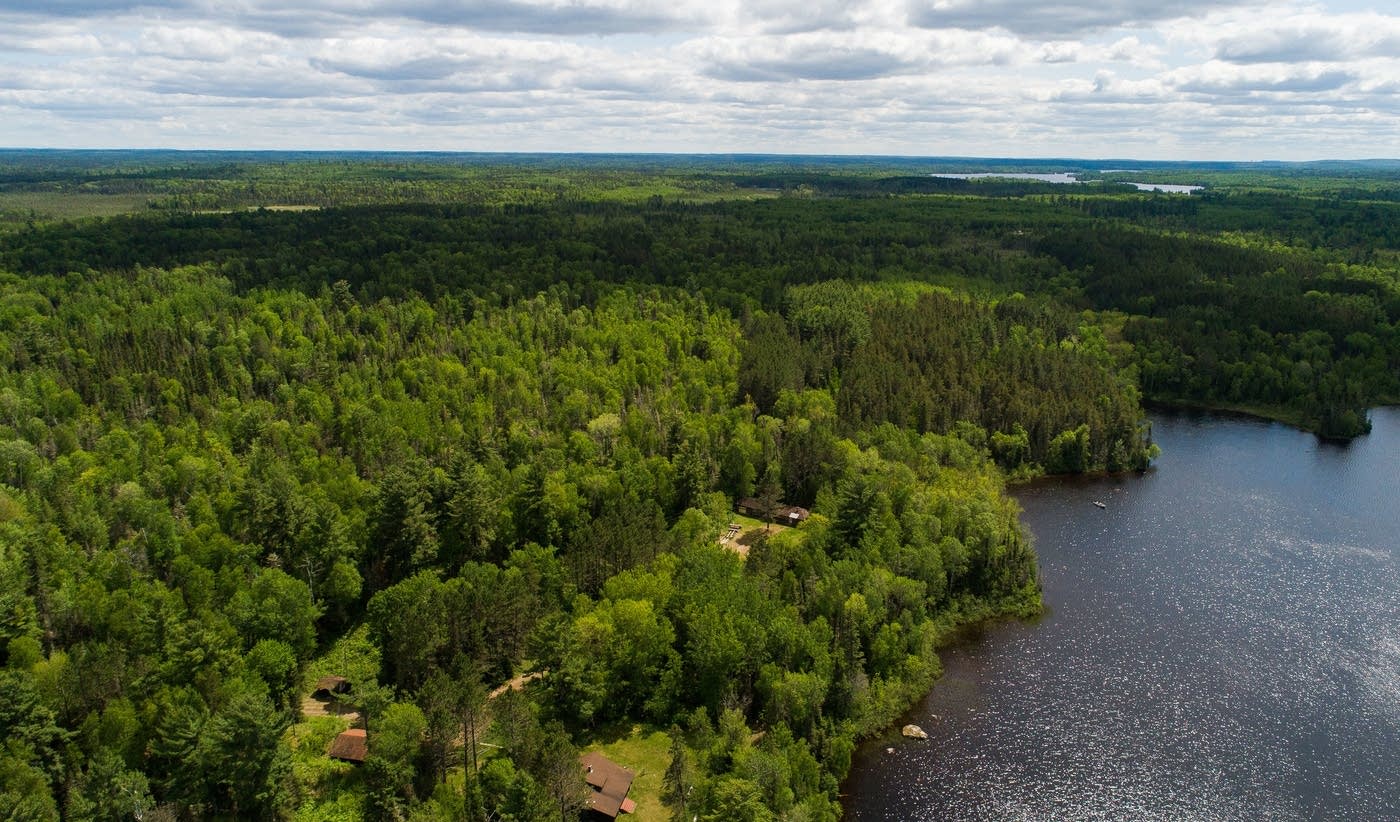
The Kawishiwi River (right) flows Wednesday, in June 2019 near Ely, Minn. Twin Metals planned to setup its mining operations to the left of the river, but a 20-year ban Thursday on new mining projects in the area deals a huge blow to the proposal. Photo: Derek Montgomery for MPR News 2019

By Dan Kraker from Minnesota Public Radio News • Posted: January 27, 2023

The U.S. Department of the Interior issued a 20-year mining moratorium Thursday on 225,000 acres of federal land near the Boundary Waters, dealing a further blow to the proposed Twin Metals mine near Ely, Minn. and other potential mines for copper, nickel and precious metals within the watershed of the canoe wilderness area.

The decision is the latest milestone in a long and contentious tug of war over mining near the popular wilderness area that has spanned more than six years and three presidential administrations.

President Obama first proposed withdrawing federal land from future mineral exploration and leasing within the watershed of the Boundary Waters near the end of his second term in 2016. The Trump administration then stopped the environmental review of that proposal, before it was restarted under the Biden administration in 2021.

The decision announced Monday followed more than a year of analysis by the Bureau of Land Management and U.S. Forest Service of the potential environmental and cultural impacts of mining in the region upstream from the Boundary Waters, and the review of 225,000 public comments.

“Protecting a place like Boundary Waters is key to supporting the health of the watershed and its surrounding wildlife, upholding our Tribal trust and treaty responsibilities, and boosting the local recreation economy,” said Secretary of the Interior Deb Haaland in announcing her decision.

“With an eye toward protecting this special place for future generations, I have made this decision using the best-available science and extensive public input.”

Duluth Complex

The decision limits the mining of a significant portion of the Duluth Complex, one of the largest undeveloped deposits of copper, nickel, cobalt and other platinum-group metals in the world.

Those metals are critical for the manufacturing of electric vehicle batteries, solar panels, wind turbines and other technologies crucial to the transition to a carbon-free economy.

Industry proponents argue that modern mining in Minnesota would be conducted with stronger environmental and human rights protections than in many other parts of the world. They further contend the projects would bring major economic benefits and high-paying jobs to the northeastern corner of the state.

Proponents further argue mining companies should be allowed to submit their specific mining plans to state and federal officials for review — they say that’s the only way to predict whether they can protect the environment.

“This action begs the question: why doesn’t the government have confidence in its own agencies’ ability to review proposed specific projects?” asked David Chura, chair of the business and labor group Jobs for Minnesotans. 

Julie Lucas, executive director of the industry group Mining Minnesota, said the decision will make it more difficult to achieve President Biden’s climate goals. She said it will also limit the role the state can play in powering a transition to 100 percent carbon-free energy — something the state legislature is considering requiring by 2040. 

“We should be prioritizing the safe and responsible development of these minerals, not putting them in a lockbox to ensure they can’t be used,” Lucas said. 

An Interior Department official speaking on background said the Biden administration is committed to developing a strong domestic mineral supply chain, and supports responsible mining to develop those critical minerals.

“But we have to do so in a responsible manner,” the official said. “That includes balancing our commitment to ensure we protect some of our country’s most spectacular outdoor places for future generations. The Boundary Waters and its surrounding watersheds are one of those places.”

Mining impacts

While iron ore mining has a rich history in the state, mining for copper, nickel and precious metals has never been done before in Minnesota, and carries with it the risk for acid mine drainage and other severe water pollution.

Environmental groups have argued that risk is incompatible with the Boundary Waters — a fragile, million acre wilderness of interconnected lakes and rivers that hosts more than 150,000 visitors a year from around the world, and supports a thriving tourism and recreation-based economy.

As part of its analysis of the mineral withdrawal, the U.S. Forest Service looked at 20 other copper-nickel mines across the U.S. and Canada, and found all resulted in some level of environmental degradation, and that the environmental reviews of those projects frequently underestimated their eventual impacts.

“Our request for this withdrawal was based on concern for irreparable harm to this watershed,” said a Department of Agriculture official speaking on background.

“During the last decade or more numerous examples of environmental harm resulting from mining and sulfide mineral deposits have occurred. Although contamination containment strategies exist, the prospect of their failure as evidenced by harmful releases elsewhere, demonstrates the risk of irreparable harm to the Rainy River watershed, tribal treaty rights and the wilderness values in the Boundary Waters Canoe Area wilderness.”

Becky Rom, National Chair of the Campaign to Save the Boundary Waters, called the withdrawal the most significant land conservation measure in Minnesota in 45 years, since Congress passed a law in 1978 that expanded the Boundary Waters Canoe Area and banned mining within it. 

“Today Secretary Haaland completed the protection of the Boundary Waters adding to the mining ban area federal lands and minerals in the headwaters of the Boundary Wates, where all waters flow downstream into the Boundary Waters.” 

That area within the Rainy River watershed covers a swath of about 350 square miles where any rain or snow that falls flows north and west into the Boundary Waters, Quetico Provincial Park, Voyageurs National Park and beyond. 

“You don’t let the most polluting industry in America operate next to a pristine wilderness that contains an abundant supply of the cleanest water in the country,” said Chris Knopf, executive director of Friends of the Boundary Waters Wilderness. 

“This is commonsense, and it’s supported by the rigorous findings of an exhaustive, two-year scientific study.”

Twin Metals

Thursday’s decision places another roadblock in front of the proposed $1.7 billion dollar Twin Metals project, an underground copper-nickel mine near Ely, just south of the Boundary Waters and within the mineral withdrawal area. 

Last year the Biden administration canceled two federal mineral leases held by Twin Metals along Birch Lake in the Superior National Forest. Those leases are required to mine the valuable metals underground.

The company has sued to have those leases reinstated. But even if it prevails, the mineral withdrawal puts additional federal leases that Twin Metals had hoped to obtain off limits.

“Twin Metals Minnesota is deeply disappointed and stunned,” Twin Metals spokesperson Kathy Graul said about the withdrawal, adding the company remains “committed to enforcing Twin Metals’ rights.”

The withdrawal does not have an impact the proposed PolyMet mine, which lies within the Lake Superior watershed, south of the withdrawal area.

That project has been approved by state regulators, but has been tied up in legal and regulatory proceedings for the past three years.

Permanent protection? 

There have been about 90 mineral withdrawals enacted across the U.S. in the last roughly 50 years, said Save the Boundary Waters’ Rom. 

Over the years both Democrats and Republicans have supported withdrawals, including the protection of about 30,000 acres in Montana known as Paradise Valley, in 2018 under the Trump administration, from potential mining federal lands north of Yellowstone National Park. 

The withdrawal could be reversed by future administrations, or modified. That’s why DFL. Rep. Betty McCollum said she plans to reintroduce a bill to permanently ban mining within the watershed of the Boundary Waters. 

But that proposal would likely not pass out of the House with its newly elected Republican majority. 

“Today is an attack on our way of life,” said GOP Rep. Pete Stauber, who represents the area where the mineral withdrawal was imposed. “I can assure you that this Administration, from the President to the Forest Service, to the Interior Department, will answer for the pain they elected to cause my constituents.” 

Bills have also been introduced in the Minnesota legislature to ban mining on state lands within the watershed of the Boundary Waters.

To see the original post, follow this link. https://www.mprnews.org/story/2023/01/26/feds-slap-20year-mining-ban-on-land-near-boundary-waters


EPA considers tougher regulations on livestock farm pollution

26 01 2023
Hog farmer Mike Patterson’s animals, who have been put on a diet so they take longer to fatten up due to the supply chain disruptions caused by coronavirus disease (COVID-19) outbreaks, at his property in Kenyon, Minnesota, U.S. April 23, 2020. Picture taken April 23, 2020. REUTERS/Nicholas Pfosi

By John Flesher, Associated Press • Reposted: January 26, 2023

The U.S. Environmental Protection Agency says it will study whether to toughen regulation of large livestock farms that release manure and other pollutants into waterways.

EPA has not revised its rules dealing with the nation’s largest animal operations — which hold thousands of hogs, chickens and cattle — since 2008. The agency said in 2021 it planned no changes but announced Friday it had reconsidered in response to an environmental group’s lawsuit.

While not committing to stronger requirements, EPA acknowledged needing more recent data about the extent of the problem — and affordable methods to limit it.

“EPA has decided to gather additional information and conduct a detailed study on these issues in order to be able to make an informed decision as to whether to undertake rulemaking,” the agency said.

Food & Water Watch, whose lawsuit prompted the agency’s reversal, said a new approach was long overdue.

“For decades EPA’s lax rules have allowed for devastating and widespread public health and environmental impacts on vulnerable communities across the country,” Tarah Heinzen, the group’s legal director, said Monday.

Beef, poultry and pork have become more affordable staples in the American diet thanks to industry consolidation and the rise of giant farms. Yet federal and state environmental agencies often lack basic information such as where they’re located, how many animals they’re raising and how they deal with manure.

Runoff of waste and fertilizers from the operations — and from croplands where manure is spread — fouls streams, rivers and lakes. It’s a leading cause of algae blooms that create hazards in many waterways and dead zones in the Gulf of Mexico and Lake Erie.

Under the Clean Water Act, EPA regulates large farms — known as Concentrated Animal Feeding Operations, or CAFOs — covered by federal pollution permits. Federal law requires only those known to discharge waste to obtain permits, although some states make others do so.

EPA’s most recent tally shows 6,266 of the nation’s 21,237 CAFOs have permits.

In its plan, the agency said its rules impose “substantial and detailed requirements” on production areas — barns and feedlots where animals are held, plus manure storage facilities — as well as land where manure and wastewater are spread.

While prohibiting releases to waterways, the rules make exceptions for production area discharges caused by severe rainfall and for stormwater-related runoff from croplands where waste was applied in keeping with plans that manage factors such as timing and amounts.

In deciding whether to revise the rules, EPA said it would consider how well they’re controlling pollution and how changing them would bring improvements.

The agency conceded its data on discharges to waterways is “sparse,” with a preliminary analysis based on reports from only 16 CAFOs. In addition to seeking information from more farms, EPA said it would assess whether discharges are widespread nationally or concentrated in particular states or regions.

It also will look into practices and technologies developed since the rules were last revised, their potential effectiveness at preventing releases, and their cost to farm owners and operators. Under the law, new requirements on farms must be “technologically available and economically achievable.”

Revising water pollution rules typically takes several years, three full-time employees and $1 million per year for contractor help, EPA said. The study will determine whether “the potential environmental benefits of undertaking rulemaking justify devoting the significant resources that are required,” it said.

Livestock groups have said government regulation is strong enough and that voluntary measures such as planting off-season cover crops and buffer strips between croplands and waterways are the best way to curb runoff.

Environmental groups argue regulations should cover more farms, require better construction of manure lagoons to avoid leaks, and outlaw practices such as spreading waste on frozen ground, where it often washes away during rainstorms or thaws.

“We’re not talking about really expensive fixes here,” said Emily Miller, staff attorney with Food & Water Watch. “We need the standards to be stronger so they actually prevent discharges as they’re supposed to do.”

To see the original post, follow this link: https://www.pbs.org/newshour/economy/epa-considers-tougher-regulations-on-livestock-farm-pollution


Energy Efficiency: A Co-Benefit to Disaster Risk Reduction

22 01 2023

Damage caused by Hurricane Ida to homes in Pointe-aux-Chenes in Terrebonne Parish, La. (FEMA photo by Julie Joseph)

Critical infrastructure failures are a climate risk multiplier. Research has demonstrated how dramatically the impact of hurricanes/tropical cyclones may increase over time, due to compound effects of changes in storms and heatwaves.

By Natalie Enclade from Homeland Security Today. Reposted: January 21, 2023

While we continue to learn lessons from recent natural hazards and their impact on critical infrastructure—like the electric grid and water systems—we are moving toward an environment of increased understanding and acceptance of modern sustainability and resilience concepts. 

Case studies out of Florida in the aftermath of Hurricane Ian provide evidence that individuals and communities were kept safe through the strength of their homes and the infrastructure that provided critical resources and services in those affected areas. Any national discussion of reducing damage from natural disasters, climate events, and protecting the environment must include disaster-resilient and sustainable construction and infrastructure. It does not need to be an “either/or” choice.

Many communities facing current known hazards still haven’t adopted modern hazard-resistant codes, despite the expectation that natural hazards will increase in frequency and severity in the years ahead. Between the Infrastructure Investment and Jobs Act and the Inflation Reduction Act, energy codes saw a $1.25 billion investment at a time when FEMA is providing less than $2 million annually to support resilient codes through its hazard mitigation grant programs. Without strong codes and standards, infrastructure will sustain avoidable damage, unable to realize climate benefits if they are damaged or destroyed because they were not constructed to withstand hazard risk. 

Critical infrastructure failures are a climate risk multiplier. Research has demonstrated how dramatically the impact of hurricanes/tropical cyclones may increase over time, due to compound effects of changes in storms and heatwaves. These infrastructure failures drive compounding hazards and life and safety impacts. An example of this dramatic impact was seen in Puerto Rico after Hurricane Fiona where over 100,000 people were still without power weeks after the storm made landfall, while the heat indices rose above 100 degrees. It is also important to note that “excessive heat during an extended power outage” was the cause of most deaths in Louisiana after Hurricane Ida, not the immediate impact of the storm.

Loss of electric service can also adversely impact other critical lifeline infrastructure systems, such as wastewater treatment and water transmission and distribution. Furthermore, power outages and compound hazards can significantly disrupt local business and supply chains, leading to secondary losses, and the enhanced connectivity of local and global economics potentially would further foster the impact.  

Energy efficiency and decarbonization can lead to co-benefits in disaster risk reduction. Disaster after disaster we see over and over again that the most at-risk communities are least likely to be able to evacuate, so making it safer to shelter in place and reduce emissions (e.g., better insulation to maintain interior temperatures when the power grid goes down) should be a priority. 

In conclusion, while contemplating energy efficiency, we must enhance disaster resilience across the nation through measures that would effectuate these policy ideals, changes in authority, development of incentives, and streamlining of assistance to serve our communities in an equitable and transformational way.

To see the original post, follow this link: https://www.hstoday.us/featured/energy-efficiency-a-co-benefit-to-disaster-risk-reduction/


Business management doesn’t always have to be about capitalism – this course shows how it can also be a calling

22 01 2023

By Andrew J. Hoffman, Professor of Management & Organizations; Professor of Environment & Sustainability; Professor of Sustainable Enterprise at the Ross School of Business and School of Environment and Sustainability, University of Michigan from The Conversation • Reposted: January 22, 2023

Uncommon Courses is an occasional series from The Conversation U.S. highlighting unconventional approaches to teaching.

Title of Course:

“Management as a Calling”

What prompted the idea for the course?

The idea for this course came from my frustration that business schools do not do enough to create successful business leaders with a desire to serve society. All too often, we simply drop an ethics or sustainability elective into a curriculum that puts profits over people – and gives short shrift to big issues such as climate change and income inequality.

So I thought we should develop a course that helps students examine their own ethics, values and purpose. As I point out in my book, rather than simply imparting knowledge, this course helps students develop wisdom. Rather than treating management as a precise science, it adds the liberal arts. I want students to examine their own conscience and decide what kind of a manager they are meant to be, what kind of career they aspire to have and what kind of legacy they hope to leave. 

What does the course explore?

This course helps undergraduate and graduate business majors consider their career as a calling. Ungraded, its core centers on three weekend retreats where students leave their cellphones behind, join others with similar aspirations and examine their unique purpose in life.

The retreats take place at the start and end of their final year of study, and one year after graduation. They involve exercises, readings, collaboration and quiet reflection. At the end, students write a personal mission statement and a plan for fulfilling it.

There are also lectures on the notion of a calling, which for this course I define as a purpose that people truly believe in and will dedicate themselves to wholeheartedly, without qualm or self-interest.

Why is this course relevant now?

When I started teaching business in the mid-1990s, students who wanted to improve the world typically studied government or nonprofit management. Today, many are coming to business school with a sense of purpose to make a positive change.

Unfortunately, business education has not done a good job, in my opinion, of accommodating this demand. Curricula focus far too much on the “how” of business and not enough on the “why.” But if we don’t change that, we will continue to have corporate transgressions like tax avoidancelabor exploitationand fraud, where short-term profit goals are placed above responsibilities to society. 

What’s a critical lesson from the course?

We study what a calling is, techniques for examining each student’s individual calling, and tactics for staying on course. My hope is that students will cultivate a sense of passion and vision in their careers and apply the power of business to address society’s challenges, whether that be equitable pay structures, innovations to reduce or eliminate carbon emissions, collaborations to support government’s role in the market and new definitions of the role of the corporation in serving the interests of all in society.

What materials does the course feature?

Man’s Search for Meaning” by Viktor E. Frankl.

Life on Purpose” by Victor J. Strecher.

Articles by Parker PalmerHerbert ShepardDavid Foster-WallaceDeb Meyersonand others.

What will the course prepare students to do?

This course will help students develop a vision of what a calling is, what their calling is and a desire to make its pursuit a lifelong goal. Rather than thinking only in terms of a job, I hope students will imagine the role they want to play in business to create a future that serves not just shareholders, but all of society – employees, customers, the community and the world.

To see the original post, follow this link: https://theconversation.com/business-management-doesnt-always-have-to-be-about-capitalism-this-course-shows-how-it-can-also-be-a-calling-191837


What does ESG mean? Two business scholars explain what environmental, social and governance standards and principles are

21 01 2023

Graphic: Kiplinger

By Luciana Echazú, Associate Dean of Undergraduate Education; Associate Professor of Economics, University of New Hampshire and Diego C. Nocetti, Dean, School of Business; Professor of Economics and Financial Studies, Clarkson University

Environmental, social and governance business standards and principles, often referred to as ESG, are becoming both more commonplace and controversial.  But what does “ESG” really mean?

It’s shorthand for the way that many corporations operate in accordance with the belief that their long-term survival and their ability to generate profits require accounting for the impact their decisions and actions have on the environment, society as a whole and their own workforce.

These practices grew out of long-standing efforts to make businesses more socially and environmentally responsible. ESG investing, sometimes called sustainable investment, also takes these considerations into account.

Zeroing in on the E, S and G

ESG priorities vary widely, but there are some common themes.

These priorities usually emphasize environmental sustainability – the E in ESG – with a focus on contributing to efforts to slow the pace of climate change.

There’s also an effort to uphold high ethical standards through corporate operations. These social concerns – the S – can include, for example, ensuring that a company doesn’t buy goods and services from exploitative suppliers, or treats its employees well. Or it might entail taking care to hire and retain a diverse workforce and taking steps to reduce social injustices in the communities where a corporation operates.

Companies embracing ESG principles should also have high-quality governance– the G. Governance includes oversight, handled by a competent and qualified board of directors, regarding the hiring and firing of top corporate leaders, executive compensation and any dividends paid to shareholders.

Governance also pertains to whether a company’s leadership operates fairly and responsibly, with transparency and accountability.

Why ESG matters

By 2026, the total amount invested globally according to these principles will nearly double to US$34 trillion from $18.4 trillion in 2021, the accounting firm PwC estimates. However, increasing scrutiny of which investments really qualify as ESG could mean it takes longer to reach that volume.

This corporate concept is becoming a political touchstone in the U.S. because some states, like Florida and Kentucky, arguing that these practices divert from the focus on maximizing profits and can be detrimental to investors by making other considerations a priority, have barred their pension funds from using ESG principles as part of their investment considerations. Some very large asset managers, including BlackRock, aren’t allowed to work with those pension funds anymore.

Many of the arguments against embracing these principles hold that they reduce profits by taking other factors into account. But how do ESG practices affect financial performance?

A team of New York University scholars looked at the results of 1,000 different studies that had sought to answer this question. It found mixed results: Some of the studies found that ESG principles increased returns, others found that they weakened performance, and a third group determined that these principles made no difference at all.

It’s possible that the disparities among results could be due largely to the lack of clarity regarding what counts and does not count as ESG, which has been a long-standing discussion and makes it hard to assess how ESG investments perform.

The NYU scholars also found two consistent results regarding ESG strategies. First, they help protect investors against risks such as losses resulting from the failure of a supply chain due to environmental or geopolitical issues, and they can protect companies from volatility during periods of economic instability and downturns. Second, investors and companies benefit more from ESG strategies in the long term than in the short term.

To see the original post, follow this link: https://theconversation.com/what-does-esg-mean-two-business-scholars-explain-what-environmental-social-and-governance-standards-and-principles-are-196768


Proctor & Gamble: Building Citizenship Into How We Do Business

18 01 2023

P&G Releases 2022 Citizenship Report • Reposted: January 18, 2023

In today’s complex world, we know it has never been more important for P&G to step up as a responsible corporate citizen. This means delivering sustainable growth and value creation and strengthening the communities where we live and work, while balancing the needs of those we serve and support — from our consumers and retail customers to our employees and shareholders.

That’s why we’re building citizenship into how we do business, every day. From supporting people who rely on our superior performing products and services, to using our global reach and scale to deliver Acts of Good that help communities grow and thrive, we are united in our efforts to be a Force for Growth and a Force for Good across our citizenship focus areas: Community ImpactEquality & Inclusion and Environmental Sustainability and underpinned by our commitment to Ethics and Corporate Responsibility.

Our 2022 Citizenship Report shares our ongoing progress and commitment to making a difference for the billions of people we serve every day and the planet we call home.

Here are just a few of the different ways in our fiscal year that we have stepped up to inspire lasting and meaningful impact for our employees, through our brands and with our partners.

A child holding two bags with Tide logos on them, an orange table behind her.

Supporting Families After Natural Disasters

We know that in moments of crisis, everyday experiences like having clean clothes or a supply of diapers become health and hygiene necessities. That’s why this year, as devastating floods hit communities around the world, including Kentucky (U.S.), British Columbia (Canada) and throughout much of Pakistan, we came together with partners like Matthew 25:Ministries, GlobalMedic and HOPE charities to provide vital relief support to the communities most impacted. Learn more about our disaster relief efforts.

Landscape of a waterway, tall grass, and hilly terrain. A setting sun to the side.

Protecting Our Shared Home

We are committed to achieving Net Zero greenhouse gas (GHG) emissions across our operations and supply chain by 2040, driving greater circularity for plastics, helping build a water positive future and protecting the long-term health of natural ecosystems.

From working with partners in water-stressed areas to support solutions that will result in meaningful benefits to help build a Water Positive Future, to protecting the endangered Malayan tiger population with the World Wildlife Fund Malaysia, we’re acting with partners around the world to ensure a healthy planet for present and future generations. Learn more about the impact we’re making for our shared home.

A child at a dinner table holding a notebook with hand-colored symbols, pictures and the name "Yeong Joo." An adult points to it.

Creating Visibility and Addressing Bias

We aim to create a society where equality and inclusion are achievable for all. Through initiatives like Can’t Cancel Pride, we’re celebrating the unique stories that unite the LGBTQ+ community, while raising funds for the LGBTQ+ organizations that create local impact. We’re also continuing to use our voice to spark dialogue and bring communities together, as we did with The Name, a film that encourages people to learn how to pronounce Asian American Pacific Islander names. Read more about the actions we’re taking to create a more equal world here.

A soccer team posing with arms raised. Team banners in front and back sides "Power up the Capitan within you."

Acting for Tomorrow’s Leaders

We know that the young people inheriting our businesses, communities and planet are already inspiring change today. That’s why we’re helping nurture and grow the next generation through initiatives like the Hispanic Star’s Capitanes del Futuro, which provides future Hispanic leaders access to role models and essential resources within the soccer ecosystem. To create opportunities for moving women forward in leadership, our gender equality partner Vital Voices has created a unique training opportunity for young women from Argentina, Brazil, Costa Rica, Guatemala, Mexico, and Panama. Read more about the efforts we’re making for future generations.

An adult and baby sitting on the floor reading a book. An upholstered chair and window behind them. A box of "Pampers" in the corner.

Addressing Health & Hygiene Inequalities

Supporting health equity is one of the greatest ways to create community impact. That’s why we’re taking action through our brands to create equal access to essential health and hygiene products, care and services around the world. This includes:

  • Pampers partnering with healthcare professionals to address Black maternal health disparities.
  • Oral B helping Close the Smile Gap by working with partners to offer free oral health care for families in need.
  • Always helping End Period Poverty for the 1 in 5 girls who miss school due to lack of period products.

Learn more about the how our brands are acting to move communities forward.

Doing good is in our DNA as a company. For decades we’ve been creating impact across the world. This is only possible by working closely with our incredible partners, whose essential expertise and resources, including deep knowledge of and access to local communities, enable us to help create positive impact together.

In this season of reflection and gratitude, we’re especially thankful for all the people and partners across the world who have joined us to help make a difference in communities through so many Acts of Good in 2022 and throughout the years.

As 2023 approaches, we remain deeply committed to doing our part as a corporate citizen by inspiring and supporting the actions needed to address our collective challenges and to create sustained impact, now and for the future.

Learn how we are continuing to drive solutions that make a difference for people and our planet in our 2022 Citizenship Report and on our social media using #ActsOfGood.


Apologies from Southwest Fall Flat Amid Lack of Purpose and Positive Change

17 01 2023

A logjam of Southwest 737s on December 27, 2022 at Santa Barbara Municipal Airport. On a typical day, there are six Southwest arrivals and 6 departures at Santa Barbara, and rarely more than one of the airline’s 737 at the airport at the same time. Photo: Glenn Beltz

By Riya Anne Polcastro from Triple Pundit • Reposted: January 17, 2023

Southwest is attempting to appease holiday travelers who were stranded in the airline’s latest fiasco with frequent flier miles and a mediocre, excuse-laden apology — but its pilots’ union (Southwest Airlines Pilots Association, SWAPA) is having none of it. They’ve called leadership out — referring to executive management as a cult in a letter that lists the ways their failures have led to the brand’s persistent problems. Instead of investing in much-needed technological upgrades and staffing, the letter accuses the airline of “maximizing shareholder return” at their expense. Like all corporate entities, Southwest has a duty to its employees and customers first. The airline’s massive disruptions will likely continue until it recognizes the need for corporate responsibility and purpose beyond enriching shareholders and stock buybacks.
 
Extreme winter weather caused a wave of cancellations across airlines this holiday season — although none weathered it quite as badly as Southwest. Over 15,000 flights were scratched by the transportation giant from December 22nd through the 30th. But it wasn’t just the ice and snow that did them in. As NPR and other news outlets reported, the raging “tripledemic” had many workers out sick — then to top it off Southwest’s ancient staff scheduling software just couldn’t handle the crisis.
 
What’s worse, though, is that none of this is a surprise to anyone at the airline. Union pilots have been begging leadership to upgrade their technology for years. “I fear that we are one thunderstorm, one ATC event, one router brownout from a complete meltdown. Whether that’s Thanksgiving, or Christmas, or New Year, that’s the precarious situation we are in,” Casey Murray, SWAPA President,  is quoted as saying in November, not long before the meltdown.
 
In fact, this isn’t Southwest’s first self-inflicted disaster. An issue with air traffic control in Jacksonville was felt around the country in October 2021 when the incident had 29 percent of the airline’s flights canceled or temporarily grounded in cities nationwide. Additionally, 2,300 flights were canceled in July 2016 when the airline’s routers went out and issues in 2014 caused 130 flights to be canceled out of Chicago during the month of January. “Systemwide meltdowns at Southwest Airlines have been increasing in frequency and magnitude over the past 15 years,” according to the letter — which was signed by SWAPA’s 2nd Vice President  Captain Tom Nekouei.
 
Nekouei’s main point throughout the letter is that a cultural shift happened at Southwest when Garry Kelly assumed the top position, noting that during that time the company rewarded shareholders with roughly $12 billion and Kelly’s compensation package went up 700 percent. Although he is no longer CEO, Nekouei asserts that Kelly’s influence still dominates the airline’s corporate culture.
 
Of the lack of investment in technological upgrades needed to keep flights running, Nekouei wrote: “Share buybacks that were once illegal, that provide no benefit for the Company itself while artificially inflating share prices (thus inflating stock-based executive compensation) and sent the clear message that the Company has excess cash on hand but that the CEO thinks there is no better place for investment of capital within his Company.”
 
Nekouei further noted that while nothing tangible has been done to fix the structural and technological problems, “we continue to receive saccharine corporate-communications- department-written and legal-counsel reviewed ‘we’re sorry’ and ‘I love you’ meaningless and generic messages from SWA corporate executives.” And, while these apologies ring hollow right along with the measly 25,000 frequent flier points Southwest has offered those travelers who were caught in the worst of the mess, Nekouei offered a solution — a return to the values and purpose the airline was founded on:

“You put your employees first. If you truly treat your employees that way, they will treat your customers well, your customers will come back, and that’s what makes your shareholders happy. So there’s no constituency at war with any other constituency. Ultimately, it’s shareholder value that you’re producing.” — Herb Kelleher

To see the original post, follow this link: https://www.triplepundit.com/story/2023/apologies-southwest-purpose/763871


Preparing for the Future: Building Climate Resilience for Your Business

16 01 2023

By Ekaterina Hardin and Lia Brussock from NASDAQ • Reposted January 16, 2022

What is Climate Resilience? Climate resilience is the ability to anticipate, prepare for, and withstand hazardous events, shifting consumer trends and behaviors, or business disturbances related to climate change.

Improving climate resilience involves (1) assessing how climate change will create new, or alter current, climate-related risks, and (2) taking steps to better cope with these risks.

Since 2020, the world has seen multiple major events – a global pandemic, a supply chain crisis, a geopolitical conflict and an overall economic volatility. These events have challenged businesses and their ability to remain resilient and to manage a range of external constraints.

  • During the pandemic, labor shortages created clogged marine ports and made companies rely on air freight for logistics and transportation, increasing overall expenses and emissions. Corporates are looking for ways to cut their emissions that spiked during the supply chain crisis.
  • The geopolitical crisis spiked energy and fuel costs. In absence of energy independence, the situation was worsened by the lowered production levels in the Middle East. Then recent diesel shortage added more fuel into the fire.
  • The economic volatility felt by many in the most recent months made businesses look deep into their operations for ways to improve efficiency and cut expenses.

All these challenges are linked to transitional climate risks through fuel, energy and emissions. Setting climate impacts aside, not being able to access resources at low cost also has a direct financial impact. Being able to manage these risks in 2023 and beyond will help companies demonstrate climate resilience and provide access to capital in the long term.

emission graphs

Large Corporates Influence Their Supply Chain to Build Resilience

Climate resilience is crucial for all market participants up and down the value chain. To improve their transitional risk resilience, large corporations who have committed to net zero targets are now engaging with their critical suppliers. Large corporate clients are asking their suppliers to provide their GHG inventories, and in some cases, requiring them to set climate-related targets of their own. In this effort to pass down climate targets, these corporations are working to mitigate their own climate-related risks and improve climate resilience throughout their value chain. According to Nasdaq research, currently 58% of S&P 500 companies have a climate-related goal in their 2022 Proxy Statement. In addition, over 4000 companies of all sizes are taking action to reduce their emissions by setting science-based targets through the Science Based Targets Initiative. Almost half of the 4000+ have already set Science Based targets and almost 1500 companies have made Net Zero commitments (Figure 1A). Scope 3 emission targets (indirect value chain emissions) are a significant portion of these commitments.

Large cap companies are not the only ones committing to science-based emissions reduction targets. Small-to-Medium Enterprises (SMEs) make up almost 20 percent (18.6%) of the total companies listed by SBTi (Figure 1B). A total of 747 SMEs have set targets as of November 2022, in comparison to just 29 two years ago. GHG emissions reduction targets are emerging across market caps and organization types, and in many cases the influence of large corporations on their value chain is clear.

We at Nasdaq ESG Advisory hear about these cascade impacts from our clients: their large corporate customers expect them to measure and to reduce their own Scope 1 and Scope 2 footprints, otherwise they risk losing their shared business. This is a significant challenge that smaller and mid-size companies can anticipate in 2023 and beyond. The tide of climate action is rising, and smaller and mid-size companies now face challenges beyond responding to investor pressures and regulatory requirements. They must also address hindered ability to conduct business with large corporate customers. By not having a climate-related target in place, supply chain participants are exposing themselves to climate-related risks that will directly impact their financial health.

Global Transition to Low Carbon Economy and Geopolitical Crisis

Climate resilience has also been challenged this year by the global energy crisis. The 2022 energy crisis, associated with the geopolitical conflict in Ukraine, made energy costs soar. Consequently, high prices on crude oil and natural gas increased the cost of manufacturing and spiked transportation and distribution costs. Lower production levels in the middle east that followed fuel cost increase in the US, only made the situation worse. Additionally, most recently transition to low carbon economy has been under the microscope due to diesel shortages and associated surging diesel cost.

Back in 2020-2021, when marine transportation industry was clogged because of labor shortages, air freight was the only option to deliver goods to customers. Not only is air freight more carbon intensive, but it is also more costly. As a result, we saw increased emissions and narrower margins. Furthermore, in 2022 businesses that rely on fossil-based fuels for energy to produce and transport their goods saw additionally significant operational expense increases. The geopolitical crisis driving energy cost up, combined with a challenging economic environment emphasized the importance of climate resilience. While trying to stop the short-term value bleed, companies need to think about long-term resilience and build-in mitigation strategies such as self-generated energy and increased share of renewables and alternative fuels, so they can climb out of these challenging times ahead of their peers.

Current Economy and Climate Resilience

It is crucial for executives to set up their businesses for resilience in the long term, especially when markets are very volatile. In 2022, decreasing revenue growth rates and shrinking margins have been a focus for investors. Recession and inflation concerns have curbed investor appetite [Scenario Planning and Explaining Your Resilience – Nasdaq’s Advice on Appealing to Investors in Challenging Times]. To build trust with external stakeholders during these times, it is important for companies to explain their resilience to macro concerns like fuel shortage, energy, and raw materials cost. Additionally, understanding the industry trends and setting differentiators from peers will build confidence in management and will help companies to secure capital needed to navigate through the challenging times. Demonstrating financial resilience and climate risks resilience go hand in hand. Companies that are highly exposed to climate-related financial risks, such as energy cost and security, cost of raw materials, cost of transportation and logistics, can prove their financial resilience by demonstrating how they manage these climate-related risks.

Companies in varying sectors have different climate risk profiles, therefore, the way they demonstrate climate resilience would also be different. We encourage each company to access their business specific short-, mid- and long- term climate-related risks and put resilience strategies in place for those risks that companies cannot afford to tolerate in these downturn conditions. related risks and put resilience strategies in place for those risks that companies cannot afford to tolerate in these downturn conditions.

Understanding Your Business Resilience

In times of economic downturn and high volatility, demonstrating to stakeholders that you are an attractive investment, if revenues are down, is a challenge. Companies need to demonstrate how they are planning to capture future opportunities and curb financial risks in current economic conditions. Climate crisis often acts as a risk multiplier. It multiplies all financial risks – operational risk, credit risk, liquidity, underwriting. Being climate resilient company means being financially resilient company. It means capturing climate-related opportunities and mitigating climate-related financial risks better than your peers and competitors.

Knowing what risks your company is exposed to and how they can impact the financial condition and operations of your business across several time horizons and climate futures, will help executives put appropriate resilience strategies in place and build trust with investors.

Understanding industry risks and company specific resilience starts with understanding your risk exposure, risk vulnerability and your risk tolerance and how those might change in the future. For those risks that you cannot tolerate, management strategies must be put in place. At times when it is hard to justify R&D spend on new technologies, products, or services, optimizing efficiencies to reduce operational costs might be the best way to capture climate opportunities and demonstrate climate resilience. By conducting a peer assessment, understanding industry trends and how to achieve a competitive advantage at lowest cost possible, companies can make a business case for themselves and demonstrate to stakeholders that they are an attractive long-term investment.

The Challenges Nasdaq Sees & How We Can Help

Lack of climate expertise coupled with time and resources constraints are the most common pain points for corporates. Companies that are laser-focused on delivering business outcomes during challenging economic times need high efficiency and low-cost solutions. When time is money and when time needs to be spent on delivering products to the market, conducting labor- and time-intensive tasks such as peer benchmarking and assessment is a challenge for resource constrained companies. Staying on top of all the recent regulatory developments and tracking which direction political winds blow is also very time consuming and disrupting.

Climate risk is a systemic risk – meaning it is a risk you cannot diversify from. However, the way it impacts each industry and company varies. Each company’s path along the climate journey is unique. Businesses operate in different geographies, different sectors, have different supply chains and different stakeholders with different short- and long-term priorities. Nasdaq understands that each company has its own set of considerations, and we prepared to partner at each stage of their journey towards climate and financial resilience. Our goal at Nasdaq is to help our community build resilience and trust. We drive impact through cost-effective resources, tools, and guidance around climate data collection, risk identification, and disclosure, ultimately enabling our community to build competitive differentiation. To start your climate resilience journey, contact Nasdaq ESG Advisory here.

About the Authors

Ekaterina Hardin

Ekaterina Hardin is a Lead ESG Advisor focused on Climate at Nasdaq ESG Advisory Practice within our ESG Solutions Business. Ekaterina was previously with the Sustainability Accounting Standards Board (SASB) where she was the Extractives & Mineral Processing Sector Lead Analyst. Ekaterina was also SASB’s climate research lead and Net Zero working group owner. Prior to SASB, Ekaterina was an oil & gas geophysicist for over a decade with an M.S. in Geophysics from University of Moscow, Russia. Later in her career Ekaterina earned an M.S. in Environmental Engineering from UC Irvine, where she focused on Climate Change and Sustainability in the Energy sector.

Lia Brussock

Lia Brussock is a Senior ESG analyst within Nasdaq’s ESG Advisory team. She joins the team with ESG, climate and corporate sustainability expertise. Her prior experience includes environmental footprint management at a global chemical and consumer goods company, where she led engagements with manufacturing facilities to advance progress towards global footprint targets. She is also well-versed in ESG strategy, reporting and benchmarking. Lia holds a M.S. in Sustainability Management from Columbia University and a B.A. in Global Environmental Change & Sustainability with a minor in Economics from Johns Hopkins University.


Newsweek publishes its list of America’s Most Responsible Companies for 2023

15 01 2023

America’s Most Responsible Companies 2023

In recent years, and especially with the rise in popularity of “ESG” (environment, social and corporate governance) focused investing, “corporate responsibility” has become a phrase many companies are happy to use in their advertising. There is no set definition but generally it is used as shorthand for “Our company is not a soulless machine designed to do absolutely anything–no matter how destructive, reckless or dishonest–in pursuit of a buck.” In any given case, it can be hard to tell whether such a statement means a corporation really tries to treat its customers, employees and planet decently or is just public relations blather. Talking the talk is easy, but walking the walk is hard.

To highlight those corporations that are actually serious about trying to be good guys, Newsweek has partnered with global research and data firm Statista for our fourth annual list of America’s Most Responsible Companies. This year our list includes 500 of the U.S’s largest public corporations. They vary dramatically by size and by industry. We found the largest number of responsible companies (55) in the materials and chemicals business; the fewest (12) in hotels, dining and leisure. Our overall number one this year is the computer hardware giant HP.

We are proud to present this year’s ranking and to honor companies that actually mean it when they say they are serious about being good corporate citizens.

RankCompanyHQ StateIndustry RankIndustryOverall ScoreEnvironmental ScoreSocial ScoreCorporate Governance Score
1HPCalifornia1Technology Hardware93.0994.9499.5184.93
2General MillsMinnesota1Consumer Goods91.7992.0686.8496.56
3Whirlpool CorporationMichigan2Consumer Goods91.5393.8385.2195.64
4Merck & CoNew Jersey1Health Care & Life Sciences89.9591.07100.0078.86
5CloroxCalifornia3Consumer Goods89.5694.6888.0886.03
6HNIIowa4Consumer Goods89.4096.2187.9284.15
7Applied MaterialsCalifornia2Technology Hardware89.1291.0289.6486.80
8IntelCalifornia3Technology Hardware88.9888.3092.5186.21
9S&P GlobalNew York1Financial88.8095.2371.27100.00
10TapestryNew York5Consumer Goods88.6991.6087.4287.14
11XylemDistrict of Columbia1Capital Goods88.6895.0277.2193.90
12Abbott LaboratoriesIllinois2Health Care & Life Sciences88.0389.8480.9293.40
13QualcommCalifornia4Technology Hardware87.7283.3583.7996.10
14Keysight TechnologiesCalifornia1Software & Telecommunications87.6889.8679.2194.08
15AptargroupIllinois1Materials & Chemicals87.6896.7888.2478.13
16Texas InstrumentsTexas5Technology Hardware87.3984.5795.1582.53
17MicrosoftWashington2Software & Telecommunications86.9798.7669.1193.14
18Estee Lauder CompaniesNew York6Consumer Goods86.6192.8581.3885.69
19Cisco SystemsCalifornia6Technology Hardware86.5599.5174.5585.70
20Advanced Micro DevicesCalifornia7Technology Hardware86.5293.9775.3790.30
21BroadcomCalifornia8Technology Hardware86.2981.9282.4294.61
22AvientOhio2Materials & Chemicals86.2791.0978.5389.28
23Sensata TechnologiesMassachusetts9Technology Hardware86.0386.7878.1793.23
24Owens CorningOhio3Materials & Chemicals85.8082.4179.8995.19
25CortevaIndiana4Materials & Chemicals85.7981.4080.3895.69
26NVIDIACalifornia10Technology Hardware85.6986.9484.0886.13
27IlluminaCalifornia3Health Care & Life Sciences85.5490.5893.3772.75
28Campbell SoupNew Jersey7Consumer Goods85.2591.9078.6085.34
29Boston PropertiesMassachusetts1Real Estate & Housing85.2399.3878.1378.29
30Analog DevicesMassachusetts11Technology Hardware85.0995.5972.4587.34
31LumentumCalifornia3Software & Telecommunications85.0393.0876.4785.63
32JacobsTexas1Professional Services84.9895.2179.3280.50
33Maxim Integrated ProductsCalifornia12Technology Hardware84.9591.5780.1883.20
34Hewlett Packard EnterpriseTexas13Technology Hardware84.8095.3083.1576.04
35CumminsIndiana1Automotive & Components84.6392.1478.1683.68
36Lear CorporationMichigan2Automotive & Components84.6291.8170.8091.34
37Edgewell Personal CareConnecticut8Consumer Goods84.5789.8977.3486.57
38PayPal HoldingsCalifornia2Financial84.3593.7569.9789.42
39Walt DisneyCalifornia1Hotels, Dining & Leisure84.2793.5776.4082.94
40MastercardNew York3Financial84.2096.2765.9090.52
41ComericaTexas4Financial84.0990.7583.0178.59
42TrinseoPennsylvania5Materials & Chemicals84.0491.9977.8782.34
43United RentalsConnecticut2Professional Services83.7492.0981.6477.60
44Iron MountainMassachusetts4Software & Telecommunications83.7293.3572.5285.39
45Regeneron PharmaceuticalsNew York4Health Care & Life Sciences83.5685.0887.6977.98
46EcolabMinnesota6Materials & Chemicals83.5596.3884.5069.88
47Berry GlobalIndiana7Materials & Chemicals83.5190.2974.1286.20
48Sun CommunitiesMichigan2Real Estate & Housing83.4890.3674.0886.09
49Newmont GoldColorado8Materials & Chemicals83.4066.2194.6789.39
50Eversource EnergyMassachusetts1Energy & Utilities83.3094.1582.1973.66
51Vertex PharmaceuticalsMassachusetts5Health Care & Life Sciences83.2674.6191.8483.40
52SeagenWashington6Health Care & Life Sciences83.1884.0783.0682.48
53American TowerMassachusetts5Software & Telecommunications83.1287.1581.7480.56
54Lam ResearchCalifornia14Technology Hardware82.9992.9887.8868.22
55Granite ConstructionCalifornia2Capital Goods82.9883.9777.9187.15
56General MotorsMichigan3Automotive & Components82.9491.3468.2889.29
57CraneConnecticut9Materials & Chemicals82.7984.8177.9285.72
58IngevitySouth Carolina10Materials & Chemicals82.6372.5188.2187.23
59ZoetisNew Jersey7Health Care & Life Sciences82.6085.4177.7584.72
60Baxter InternationalIllinois8Health Care & Life Sciences82.5992.1780.8074.90
61Moody’sNew York5Financial82.5484.4471.1692.10
62Edwards LifesciencesCalifornia9Health Care & Life Sciences82.4986.8771.6389.05
63Lowe’s CompaniesNorth Carolina1Retail82.4091.2775.8880.12
64Public Service Enterprise GroupNew Jersey2Energy & Utilities82.3380.8381.8984.35
65Kimberly-ClarkTexas9Consumer Goods82.3079.5176.1491.33
66JabilFlorida15Technology Hardware82.1183.5273.9188.96
67Regency CentersFlorida3Real Estate & Housing82.0288.7677.3280.09
68Motorola SolutionsIllinois16Technology Hardware81.9990.4471.8883.74
69Keurig Dr PepperMassachusetts10Consumer Goods81.9888.0874.8683.09
70Dell TechnologiesTexas17Technology Hardware81.9392.2876.1377.47
71AGCOGeorgia3Capital Goods81.9275.6281.9988.23
72Las Vegas SandsNevada2Hotels, Dining & Leisure81.7687.3780.5277.47
73Waste ManagementTexas3Energy & Utilities81.6382.3684.3078.31
74Jones Lang LaSalleIllinois4Real Estate & Housing81.6384.2672.3188.39
75Western DigitalCalifornia18Technology Hardware81.5883.5683.1878.08
76Armstrong World IndustriesPennsylvania4Capital Goods81.4884.0278.0782.42
77RibbonTexas6Software & Telecommunications81.3982.5077.3184.44
78KrogerOhio2Retail81.3488.1571.7684.19
79Principal Financial GroupIowa6Financial81.2183.4873.9486.29
80CaleresMissouri11Consumer Goods81.1481.3281.9880.19
81McCormick & CompanyMaryland12Consumer Goods81.0693.5983.2666.42
82Summit MaterialsColorado11Materials & Chemicals80.9883.8972.8786.26
83Kimball InternationalIndiana13Consumer Goods80.8989.7279.0574.01
84AdobeCalifornia7Software & Telecommunications80.8788.8171.9981.89
85AmphenolConnecticut19Technology Hardware80.8489.6773.7079.25
86Huntington BancsharesOhio7Financial80.8284.5079.2678.80
87Cadence Design SystemsCalifornia8Software & Telecommunications80.7963.7989.2289.41
88PPLPennsylvania4Energy & Utilities80.7868.5799.2874.55
89Ball CorpColorado12Materials & Chemicals80.6986.8479.9575.38
90EXL ServicesNew York3Professional Services80.6777.7272.0392.33
91Healthpeak PropertiesColorado5Real Estate & Housing80.5490.2874.8476.59
92Sherwin-WilliamsOhio13Materials & Chemicals80.4987.9970.0683.50
93Univar SolutionsIllinois14Materials & Chemicals80.4792.8262.6586.02
94American WaterNew Jersey5Energy & Utilities80.4374.2291.9475.22
95HasbroRhode Island14Consumer Goods80.4189.3785.2266.72
96AppleCalifornia20Technology Hardware80.2491.3763.0086.45
97TargetMinnesota3Retail80.1890.2170.3080.10
98Newell BrandsGeorgia15Consumer Goods80.0081.8872.4485.75
99DeereIllinois5Capital Goods80.0087.9387.4364.71
100ManpowerGroupWisconsin4Professional Services79.9393.0972.2774.53
101Agilent TechnologiesCalifornia10Health Care & Life Sciences79.9394.5264.9280.45
102Baker HughesTexas6Energy & Utilities79.8991.9077.3470.53
103American ExpressNew York8Financial79.8793.4664.7181.55
104PNC Financial ServicesPennsylvania9Financial79.8183.3278.9877.22
105Hudson Pacific PropertiesCalifornia6Real Estate & Housing79.7084.2175.6579.33
106First SolarArizona7Energy & Utilities79.6789.7873.5875.74
107Eastman ChemicalTennessee15Materials & Chemicals79.6668.3486.2484.48
108Mettler-Toledo InternationalOhio21Technology Hardware79.6188.1964.8185.91
109NielsenNew York5Professional Services79.5983.7174.1680.98
110HessNew York8Energy & Utilities79.5977.8881.7379.24
111Colgate-PalmoliveNew York16Consumer Goods79.5580.5474.8783.31
112CenterPoint EnergyTexas9Energy & Utilities79.5471.0192.3775.31
113CBRE GroupTexas7Real Estate & Housing79.5272.9977.7187.94
114PPG IndustriesPennsylvania16Materials & Chemicals79.4782.4077.5878.53
115Becton Dickinson andNew Jersey11Health Care & Life Sciences79.4688.5168.8681.09
116Carter’sGeorgia17Consumer Goods79.4188.6974.6774.98
117Verizon CommunicationsNew York9Software & Telecommunications79.3988.2073.2776.79
118UbiquitiNew York10Software & Telecommunications79.1683.5564.8389.18
119BorgWarnerMichigan4Automotive & Components79.0779.1178.4979.67
120PotlatchDelticWashington6Capital Goods79.0578.8472.5185.88
121M&T BankNew York10Financial79.0183.6570.1883.28
122W W GraingerIllinois7Capital Goods78.9576.6775.7484.51
123AutodeskCalifornia11Software & Telecommunications78.9484.1384.9667.82
124IBMNew York12Software & Telecommunications78.8780.9676.7878.93
125Howmet AerospacePennsylvania8Capital Goods78.8580.6369.0286.99
126Deckers OutdoorCalifornia18Consumer Goods78.8369.7382.8284.02
127California Water Service GroupCalifornia10Energy & Utilities78.7770.1489.8476.40
128Regal RexnordWisconsin9Capital Goods78.6793.1167.7375.26
129NasdaqNew York11Financial78.6776.0163.9996.08
130Micron TechnologyIdaho22Technology Hardware78.6480.3678.3077.34
131Zurn Elkay Water SolutionsWisconsin10Capital Goods78.5680.9676.5878.22
132Thermo Fisher ScientificMassachusetts12Health Care & Life Sciences78.5477.0372.5586.11
133CommScope Holding CompanyNorth Carolina23Technology Hardware78.4794.4267.5473.55
134Kraft HeinzIllinois19Consumer Goods78.4581.0870.6483.71
135FMCPennsylvania17Materials & Chemicals78.3885.0167.1283.09
136Tennant CompanyMinnesota11Capital Goods78.3767.7487.1180.34
137CSXFlorida1Transport & Logistics78.2684.6469.5880.65
138CelaneseTexas18Materials & Chemicals78.2669.3497.3568.16
139AZZTexas12Capital Goods78.2083.2765.9785.43
140IDEXX LaboratoriesMaine13Health Care & Life Sciences78.1975.7882.6276.26
141GapCalifornia4Retail78.1977.4367.9989.22
142Williams CompaniesOklahoma11Energy & Utilities78.1766.1492.0376.41
143Emerson ElectricMissouri13Capital Goods78.1385.1172.7676.61
144Church & DwightNew Jersey20Consumer Goods78.0793.4472.0368.82
145Marriott InternationalMaryland3Hotels, Dining & Leisure78.0679.5581.8272.88
146SempraCalifornia12Energy & Utilities78.0565.6388.5680.02
147InvescoGeorgia12Financial78.0391.1365.3277.73
148ValvolineKentucky5Automotive & Components77.9278.8972.4182.54
149Ingersoll RandNorth Carolina14Capital Goods77.8881.9666.9384.83
150UnitedHealth GroupMinnesota14Health Care & Life Sciences77.8891.8671.4470.43
151ViasatCalifornia13Software & Telecommunications77.8487.0373.7772.83
152The Home DepotGeorgia5Retail77.8078.6276.6378.25
153Host Hotels & ResortsMaryland4Hotels, Dining & Leisure77.7890.0668.7874.60
154Norfolk SouthernGeorgia2Transport & Logistics77.7782.8270.7979.77
155RepligenMassachusetts15Health Care & Life Sciences77.7676.5566.7190.08
156VisteonMichigan6Automotive & Components77.7492.0473.4267.87
157Yum! BrandsKentucky5Hotels, Dining & Leisure77.7191.5862.7778.88
158Lennox InternationalTexas15Capital Goods77.7189.8474.6668.70
159ServiceNowCalifornia14Software & Telecommunications77.6878.0168.5286.58
160Commercial Metals CompanyTexas19Materials & Chemicals77.6882.8070.4579.86
161Conagra BrandsIllinois21Consumer Goods77.6390.1369.8173.03
162WatersMassachusetts16Health Care & Life Sciences77.6392.6567.2673.06
163JPMorgan Chase & CoNew York13Financial77.6084.0163.4985.37
164AbbVieIllinois17Health Care & Life Sciences77.5584.3970.8377.52
165MetLifeNew York14Financial77.4881.3467.3283.87
166West Pharmaceutical ServicesPennsylvania18Health Care & Life Sciences77.4479.2469.2283.95
167California ResourcesCalifornia13Energy & Utilities77.2873.0283.6975.20
168DanaherDistrict of Columbia19Health Care & Life Sciences77.2269.8677.6584.23
169FedExTennessee3Transport & Logistics77.2173.6875.9582.08
170NordsonOhio16Capital Goods77.1570.8083.4177.30
171Bank of AmericaNorth Carolina15Financial77.1490.2969.7371.50
172USANA Health SciencesUtah22Consumer Goods77.0274.0575.4481.65
173LabcorpNorth Carolina20Health Care & Life Sciences76.9684.1170.4876.40
174TeradataCalifornia15Software & Telecommunications76.9578.6861.3190.94
175Best BuyMinnesota6Retail76.8892.5272.7665.45
176KennametalPennsylvania17Capital Goods76.8886.1673.5371.02
177Stanley Black & DeckerConnecticut18Capital Goods76.8792.6664.9073.14
178AlcoaPennsylvania20Materials & Chemicals76.8061.4381.7187.33
179KoppersPennsylvania20Materials & Chemicals76.8079.1880.9070.41
180United TherapeuticsMaryland21Health Care & Life Sciences76.7961.4583.9485.03
181PfizerNew York22Health Care & Life Sciences76.7673.3569.7887.21
182MascoMichigan19Capital Goods76.6975.3669.0985.71
183Kimco RealtyNew York8Real Estate & Housing76.6786.4085.3258.37
184Qurate Retail GroupPennsylvania7Retail76.5688.5571.5369.68
185OtisConnecticut20Capital Goods76.5075.2872.0382.26
186Organon & Co.New Jersey23Health Care & Life Sciences76.4376.6284.3168.44
187Reliance Worldwide CorporationGeorgia21Capital Goods76.3867.2675.2486.71
188Air Products and ChemicalsPennsylvania22Materials & Chemicals76.3778.0176.9974.18
189Fluor CorporationTexas22Capital Goods76.3380.7070.0378.34
190SPXNorth Carolina23Capital Goods76.3178.1471.9378.94
191Darling IngredientsTexas23Consumer Goods76.2971.3668.3489.25
192Insulet CorporationMassachusetts24Health Care & Life Sciences76.2479.8077.5771.45
193Essex Property TrustCalifornia9Real Estate & Housing76.1688.5471.3868.65
194Truist FinancialNorth Carolina16Financial76.1168.7882.0477.59
195AtkoreIllinois24Capital Goods76.1175.2667.0686.09
196Pioneer Natural ResourcesTexas14Energy & Utilities76.0982.8079.1966.36
197VMwareCalifornia16Software & Telecommunications75.99100.0045.9282.14
198Regions FinancialAlabama17Financial75.9773.1977.6677.14
199WorkdayCalifornia17Software & Telecommunications75.9778.8867.5281.59
200SnapCalifornia18Software & Telecommunications75.9271.2884.7771.77
201PVHNew York8Retail75.9088.6066.9772.21
202Fifth Third BankOhio18Financial75.8993.1970.2564.33
203InfineraCalifornia24Technology Hardware75.8981.9468.9976.82
204Kilroy RealtyCalifornia10Real Estate & Housing75.8788.9263.4275.36
205Watts Water TechnologiesMassachusetts25Capital Goods75.8380.2466.1581.17
206XeroxConnecticut25Technology Hardware75.8096.3862.4868.63
207PrudentialNew Jersey19Financial75.7881.0965.5580.79
208Digital Realty TrustTexas11Real Estate & Housing75.7780.9278.3968.09
209OnsemiArizona26Technology Hardware75.6885.9956.0785.06
210BizLinkCalifornia26Technology Hardware75.6880.8273.6572.64
211Brixmor Property GroupNew York12Real Estate & Housing75.6573.2787.6166.15
212APA CorpTexas15Energy & Utilities75.5964.6174.6387.61
213Tractor Supply Co.Tennessee9Retail75.5080.3677.1769.07
214Dover CorporationIllinois26Capital Goods75.4773.5368.8184.14
215Universal DisplayNew Jersey28Technology Hardware75.4474.9980.4770.93
216United Parcel ServiceGeorgia4Transport & Logistics75.4375.2074.2676.91
217DanaOhio7Automotive & Components75.4283.1170.3872.86
218MicrochipArizona29Technology Hardware75.4281.4764.4380.44
219Teledyne TechnologiesCalifornia30Technology Hardware75.4180.2369.8976.18
220Element SolutionsFlorida23Materials & Chemicals75.4086.7466.4673.09
221GXOConnecticut5Transport & Logistics75.3276.8379.6269.60
222Fortune BrandsIllinois24Consumer Goods75.2980.4671.9573.53
223Weatherford InternationalTexas16Energy & Utilities75.2570.3578.9876.48
224Federal Realty Investment TrustMaryland13Real Estate & Housing75.2186.3264.4174.97
225J M SmuckerOhio25Consumer Goods75.2086.3563.5275.81
226GlobalFoundriesNew York31Technology Hardware75.1688.6966.3570.52
227AT&TTexas19Software & Telecommunications75.1480.1672.3672.97
228General ElectricMassachusetts27Capital Goods75.1077.6370.3777.37
229HubbellConnecticut28Capital Goods75.0577.6369.0978.51
230VF CorporationColorado26Consumer Goods75.0584.5869.7670.88
231AvalonBay CommunitiesVirginia14Real Estate & Housing74.8392.1467.1165.32
232Vornado Realty TrustNew York15Real Estate & Housing74.7990.4362.6971.34
233Crown HoldingsPennsylvania24Materials & Chemicals74.7774.3063.9286.16
234VirtusaMassachusetts20Software & Telecommunications74.6789.4864.0370.59
235CintasOhio27Consumer Goods74.6075.7168.6479.53
236State StreetMassachusetts20Financial74.5988.5853.6481.63
237Public StorageCalifornia16Real Estate & Housing74.5186.4770.0167.14
238GreifOhio25Materials & Chemicals74.4487.0258.1678.23
239Pacific Premier BancorpCalifornia21Financial74.3783.9369.6469.63
240Helmerich & PayneOklahoma17Energy & Utilities74.3667.6873.1382.34
241Salesforce.ComCalifornia21Software & Telecommunications74.2778.9671.6672.28
242LPL FinancialCalifornia22Financial74.2681.8669.4571.54
243Comfort Systems USATexas29Capital Goods74.2277.0668.9976.69
244Realty IncomeCalifornia17Real Estate & Housing74.2070.2089.5862.89
245National Energy Services ReunitedTexas18Energy & Utilities74.1979.0066.0877.58
246AlbemarleNorth Carolina26Materials & Chemicals74.1970.5883.9368.13
247Crown CastleTexas22Software & Telecommunications74.1571.8972.7077.93
248Arista NetworksCalifornia23Software & Telecommunications74.0576.5065.1080.64
249Quaker HoughtonPennsylvania27Materials & Chemicals74.0375.3460.0586.78
250ADMIllinois28Consumer Goods73.9780.6072.9668.45
251BungeMissouri29Consumer Goods73.9188.1567.9065.76
252UnumTennessee23Financial73.9071.2371.5079.04
253SBAFlorida24Software & Telecommunications73.8767.9566.8286.92
254Hormel FoodsMinnesota30Consumer Goods73.8779.3283.4558.93
255VentasIllinois18Real Estate & Housing73.8171.8170.4579.24
256SpireMissouri19Energy & Utilities73.7964.7785.2471.43
257TimkenOhio30Capital Goods73.7780.5271.7069.18
258Bank of New York MellonNew York24Financial73.7687.9265.3868.07
259Omnicom GroupNew York6Professional Services73.7471.8971.3378.07
260ItronWashington7Professional Services73.7380.4068.4372.44
261Phibro Animal HealthNew Jersey25Health Care & Life Sciences73.7271.0669.6280.55
262Constellation Energy CorporationMaryland20Energy & Utilities73.7064.2985.6671.20
263Juniper NetworksCalifornia32Technology Hardware73.6767.2974.1679.62
264Cirrus LogicTexas33Technology Hardware73.6463.0473.1784.78
265Adtalem Global EducationIllinois8Professional Services73.6377.2271.7771.99
266TeradyneMassachusetts34Technology Hardware73.6079.6349.8891.39
267ABM IndustriesNew York9Professional Services73.6056.9877.1186.77
268CoupaCalifornia25Software & Telecommunications73.5673.9065.7181.15
269Allison TransmissionIndiana31Capital Goods73.5180.6664.3275.63
270MacerichCalifornia19Real Estate & Housing73.5090.0356.9173.64
271Illinois Tool WorksIllinois32Capital Goods73.4482.9468.8368.64
272Kosmos EnergyTexas21Energy & Utilities73.4270.5580.3569.43
273TPI CompositesArizona33Capital Goods73.4273.5382.3564.43
274Knowles CorporationIllinois35Technology Hardware73.4087.2468.2964.75
275TJX CompaniesMassachusetts10Retail73.3773.7766.6679.75
276Avanos MedicalGeorgia26Health Care & Life Sciences73.3676.4873.2370.45
277AMETEKPennsylvania36Technology Hardware73.2686.1570.6663.07
278Tanger Factory Outlet CentersNorth Carolina20Real Estate & Housing73.2583.3574.9861.52
279Cooper-Standard HoldingsMichigan8Automotive & Components73.1190.4672.4156.55
280NiSourceIndiana22Energy & Utilities73.0871.7076.5471.06
281American Axle & Manufacturing HoldingsMichigan9Automotive & Components73.0478.0465.5275.64
282HalliburtonTexas23Energy & Utilities73.0374.0671.4973.63
283Helen of TroyTexas31Consumer Goods73.0079.4579.5360.11
284NetAppCalifornia26Software & Telecommunications72.9667.8260.0091.13
285ResMedCalifornia27Health Care & Life Sciences72.9374.9067.8876.08
286Alliant EnergyWisconsin24Energy & Utilities72.9369.0886.6563.12
287Hilton Worldwide HoldingsVirginia6Hotels, Dining & Leisure72.9275.4267.5775.85
288CatalentNew Jersey28Health Care & Life Sciences72.9281.3068.6368.90
289WestrockGeorgia28Materials & Chemicals72.9064.8270.8183.14
290CarrierFlorida34Capital Goods72.8780.9272.6465.13
291Expeditors International of WashingtonWashington6Transport & Logistics72.8480.8076.3261.48
292GenArizona27Software & Telecommunications72.8061.3167.4189.73
293Mueller Water ProductsGeorgia35Capital Goods72.7974.3470.8073.31
294CaterpillarIllinois36Capital Goods72.7276.5862.0679.62
295Green PlainsNebraska29Materials & Chemicals72.7161.1875.0781.94
296XPO LogisticsConnecticut7Transport & Logistics72.7067.6672.5877.94
297Equity ResidentialIllinois21Real Estate & Housing72.6684.7065.6467.73
298AramarkPennsylvania7Hotels, Dining & Leisure72.6274.9968.8774.06
299Alphabet (Google)California28Software & Telecommunications72.5388.9359.5069.25
300PetcoCalifornia11Retail72.5084.1659.5773.83
301Ormat TechnologiesNevada25Energy & Utilities72.4970.3171.2875.96
302MattelCalifornia32Consumer Goods72.4480.9270.7965.71
303Hecla MiningIdaho30Materials & Chemicals72.3977.5158.8980.84
304FactSetConnecticut25Financial72.3751.5373.5892.06
305Simpson Manufacturing CompanyCalifornia37Capital Goods72.3668.7477.9370.49
306Compass Minerals InternationalKansas31Materials & Chemicals72.3263.9873.7279.33
307Charles River LaboratoriesMassachusetts29Health Care & Life Sciences72.3177.8374.3264.86
308Graphic PackagingGeorgia32Materials & Chemicals72.3069.0072.9974.98
309GrafTech InternationalOhio38Capital Goods72.2670.2871.3475.22
310KeyCorpOhio26Financial72.2579.8559.8777.10
311OshkoshWisconsin10Automotive & Components72.2083.5370.9362.21
312Kansas City SouthernMissouri8Transport & Logistics72.1158.9979.0978.29
313IPGNew York10Professional Services72.1074.3160.2081.88
314HubSpotMassachusetts29Software & Telecommunications72.0979.3851.3685.62
315Goodyear Tire & Rubber CoOhio11Automotive & Components72.0679.6970.6565.93
316Kelly ServicesMichigan11Professional Services72.0270.5775.1170.46
317SimsNew York33Materials & Chemicals71.9781.0564.9969.95
318BalchemNew York34Materials & Chemicals71.9358.1568.0289.68
319CotyNew York33Consumer Goods71.9083.4272.7559.62
320KratonTexas35Materials & Chemicals71.9071.6470.9873.15
321DXC TechnologyVirginia12Professional Services71.8677.4565.6872.54
322Worthington IndustriesOhio36Materials & Chemicals71.8387.7054.7373.14
323SanminaCalifornia37Technology Hardware71.7779.0754.6081.73
324Scotts Miracle-GroOhio37Materials & Chemicals71.7677.4169.0068.94
325NOVTexas26Energy & Utilities71.7569.2375.8570.23
326Columbus McKinnonNew York39Capital Goods71.6990.9464.4559.76
327U.S. SilicaTexas38Materials & Chemicals71.5673.6580.8960.23
328SynopsysCalifornia30Software & Telecommunications71.5169.4463.5281.63
329AECOMTexas13Professional Services71.4655.0880.0879.28
330UnifiNorth Carolina39Materials & Chemicals71.4573.5064.8876.06
331FortiveWashington40Capital Goods71.4256.8962.7694.67
332Schlumberger NVTexas27Energy & Utilities71.4284.8871.9357.52
333Masonite InternationalFlorida41Capital Goods71.4077.2967.4469.54
334HologicMassachusetts30Health Care & Life Sciences71.3870.3058.1185.80
335Pactiv EvergreenIllinois40Materials & Chemicals71.3672.1170.5271.53
336ICFVirginia14Professional Services71.2284.3973.1056.25
337HanesbrandsNorth Carolina34Consumer Goods71.1585.8364.2263.47
338Empire State Reality TrustNew York22Real Estate & Housing71.1280.4452.8180.20
339Union PacificNebraska9Transport & Logistics71.1083.6955.9673.75
340Williams-SonomaCalifornia35Consumer Goods71.0663.2870.1679.80
341National InstrumentsTexas31Software & Telecommunications71.0477.7867.1768.26
342KLA CorporationCalifornia38Technology Hardware71.0440.0677.7295.39
343GartnerConnecticut15Professional Services71.0258.9667.9186.23
344Mid-America Apartment CommunitiesTennessee23Real Estate & Housing71.0085.7553.1574.19
345SteelcaseMichigan36Consumer Goods70.9987.8962.9462.22
346Molson Coors BrewingIllinois37Consumer Goods70.9683.2866.6763.00
347C.H. RobinsonMinnesota10Transport & Logistics70.8964.1975.6572.90
348AkamaiMassachusetts32Software & Telecommunications70.8877.9350.3984.42
349IntuitiveCalifornia31Health Care & Life Sciences70.8862.6377.8572.21
350Packaging Corporation of AmericaIllinois41Materials & Chemicals70.8563.8565.4783.28
351Ralph LaurenNew York38Consumer Goods70.8592.1149.9770.55
352ZendeskCalifornia33Software & Telecommunications70.7365.3467.8779.04
353Silicon LabsTexas39Technology Hardware70.6688.8970.4152.78
354SL Green RealtyNew York24Real Estate & Housing70.6578.4054.9478.70
355Dick’s Sporting GoodsPennsylvania12Retail70.6471.5162.0178.47
356MSA SafetyPennsylvania16Professional Services70.5083.2967.3360.97
357Global PaymentsGeorgia27Financial70.4884.1558.5168.87
358Murphy USAArkansas13Retail70.4463.6471.9975.76
359EntergyLouisiana28Energy & Utilities70.3844.9998.1568.05
360Essential UtilitiesPennsylvania29Energy & Utilities70.3780.1873.4057.61
361Howard HughesTexas25Real Estate & Housing70.2874.9562.1073.86
362Palo Alto NetworksCalifornia34Software & Telecommunications70.2377.1267.2466.41
363ONEOKOklahoma30Energy & Utilities70.2363.8073.1373.83
364Dominion EnergyVirginia31Energy & Utilities70.2150.7387.5672.38
365BrunswickIllinois42Capital Goods70.1865.2564.7780.60
366CF Industries HoldingsIllinois42Materials & Chemicals70.1745.3973.1292.05
367Marsh McLennanNew York17Professional Services70.1157.7364.8387.81
368Bread FinancialOhio28Financial70.0769.0667.2174.01
369Merit Medical SystemsUtah32Health Care & Life Sciences70.0762.3472.2875.64
370PerkinElmerMassachusetts33Health Care & Life Sciences70.0562.7565.4082.08
371Sonoco ProductsSouth Carolina43Materials & Chemicals70.0585.3860.1264.73
372GoDaddyArizona35Software & Telecommunications70.0471.3853.7785.03
373Ziff DavisNew York36Software & Telecommunications70.0254.4768.7386.90
374GenthermMichigan12Automotive & Components70.0177.0562.8670.19
375FormFactorCalifornia40Technology Hardware69.9579.3250.3680.26
376The Cheesecake FactoryCalifornia8Hotels, Dining & Leisure69.9383.3349.5676.98
377Skywork SolutionsCalifornia41Technology Hardware69.9271.8969.8868.06
378AmedisysLouisiana34Health Care & Life Sciences69.8967.7575.1566.82
379Booz Allen HamiltonVirginia18Professional Services69.8756.4771.2981.91
380Polaris Inc.Minnesota13Automotive & Components69.8481.8366.5961.19
381UDRColorado26Real Estate & Housing69.8481.7060.6467.26
382TextronRhode Island43Capital Goods69.8180.6164.9963.92
383Brown-FormanKentucky39Consumer Goods69.8164.3957.9787.12
384KB HomeCalifornia27Real Estate & Housing69.7757.1975.4076.77
385Sensient TechnologiesWisconsin44Materials & Chemicals69.7468.5562.2778.46
386Winnebago IndustriesIowa14Automotive & Components69.6861.4457.2490.41
387BurlingtonNew Jersey14Retail69.6191.2860.2457.40
388Dentsply SironaNorth Carolina35Health Care & Life Sciences69.6081.1476.7151.02
389TimkenSteelOhio45Materials & Chemicals69.5568.2965.2575.20
390SunPowerCalifornia32Energy & Utilities69.5170.8779.4458.30
391DiscoverIllinois29Financial69.4469.6866.2372.47
392Meritage HomesArizona28Real Estate & Housing69.4247.7165.0695.55
393EnerSysPennsylvania42Technology Hardware69.4077.9848.7781.53
394Harley-DavidsonWisconsin15Automotive & Components69.3478.1165.6864.31
395TerexConnecticut44Capital Goods69.3167.0876.0564.87
396Cabot MicroelectronicsIllinois43Technology Hardware69.3084.1169.3554.52
397Clearway EnergyNew Jersey33Energy & Utilities69.2878.6468.7860.48
398DTE EnergyMichigan34Energy & Utilities69.1556.6079.6771.23
399Franklin ElectricIndiana44Technology Hardware69.1374.7869.1963.49
400Corporate Office Properties TrustMaryland29Real Estate & Housing69.0277.0368.9161.19
401ManitowocWisconsin45Capital Goods68.9963.3271.2872.42
402MPLX LPOhio35Energy & Utilities68.9861.1965.1180.69
403H&R BlockMissouri19Professional Services68.9768.0668.1270.80
404Xcel EnergyMinnesota36Energy & Utilities68.9253.4978.7574.58
405Ameriprise FinancialMinnesota30Financial68.9162.6852.9491.19
406AMN Healthcare ServicesTexas36Health Care & Life Sciences68.8966.5768.7671.40
407T. Rowe PriceMaryland31Financial68.8970.4367.5368.78
408T-MobileWashington37Software & Telecommunications68.8392.8549.8763.88
409Lumen TechnologiesLouisiana38Software & Telecommunications68.7774.7466.6165.04
410Renewable Energy GroupIowa37Energy & Utilities68.7682.8078.4145.16
411Iridium CommunicationsVirginia39Software & Telecommunications68.7481.0251.4673.82
412BlackbaudSouth Carolina40Software & Telecommunications68.6279.1352.7474.06
413Sunstone Hotel InvestorsCalifornia30Real Estate & Housing68.5575.4964.4365.81
414Gates Industrial CorporationColorado46Capital Goods68.5269.1775.1461.34
415Thor IndustriesIndiana16Automotive & Components68.4672.1859.2074.07
416International Flavors & FragrancesNew York46Materials & Chemicals68.4474.9265.5264.94
417PrologisCalifornia31Real Estate & Housing68.4069.6468.5867.06
418EquinixCalifornia41Software & Telecommunications68.3963.8266.8674.55
419Vistra EnergyTexas38Energy & Utilities68.3857.1580.4567.60
420CrestwoodTexas39Energy & Utilities68.3259.9883.3261.72
421AlnylamMassachusetts37Health Care & Life Sciences68.3276.4169.0659.56
422CeridianMinnesota42Software & Telecommunications68.2978.1463.8362.97
423LittelfuseIllinois45Technology Hardware68.2578.9469.8956.00
424Brinker InternationalTexas9Hotels, Dining & Leisure68.2479.2956.0769.43
425Hersha Hospitality TrustPennsylvania32Real Estate & Housing68.1385.6756.0062.82
426AARIllinois11Transport & Logistics68.1269.4850.9983.97
427Nextera EnergyFlorida40Energy & Utilities68.1256.4883.8964.05
428Tyler TechnologiesTexas43Software & Telecommunications68.0679.9661.0663.23
429NorthWestern EnergySouth Dakota41Energy & Utilities68.0452.9480.9970.26
430Roper TechnologiesFlorida46Technology Hardware68.0158.0065.8680.22
431Lincoln NationalPennsylvania32Financial68.0087.9367.0949.08
432Automatic Data ProcessingNew Jersey44Software & Telecommunications67.9960.5661.0282.44
433Taylor MorrisonArizona33Real Estate & Housing67.9832.6480.9490.39
434IPG PhotonicsNew York47Technology Hardware67.9859.5366.0678.40
435Western MidstreamTexas42Energy & Utilities67.9653.4465.6984.82
436Hawaiian Electric IndustriesHawaii43Energy & Utilities67.8653.0882.3768.19
437WESCO InternationalPennsylvania12Transport & Logistics67.8572.4870.4060.73
438DolbyCalifornia45Software & Telecommunications67.8452.0070.0781.50
439Southwest AirlinesTexas13Transport & Logistics67.7366.8361.8774.56
440CallawayCalifornia40Consumer Goods67.7260.1968.0674.96
441Alamo GroupTexas14Transport & Logistics67.7078.1860.7564.24
442Cooper TiresOhio17Automotive & Components67.6972.6964.0866.37
443KadantMassachusetts48Technology Hardware67.6869.8752.9180.33
444WolfspeedNorth Carolina48Technology Hardware67.6881.2265.2856.61
445EnphaseCalifornia50Technology Hardware67.6762.9572.2367.90
446CohuCalifornia51Technology Hardware67.6465.3662.1275.52
447Sprouts Farmers MarketArizona15Retail67.6368.2662.3972.32
448Monolithic Power SystemsWashington52Technology Hardware67.6162.2665.6075.04
449FISFlorida46Software & Telecommunications67.5070.3852.6479.55
450Sleep NumberMinnesota16Retail67.5070.3760.6671.53
451Synchrony FinancialConnecticut33Financial67.4459.8277.3965.17
452Paramount GlobalNew York10Hotels, Dining & Leisure67.3964.3068.4469.48
453Henry ScheinNew York38Health Care & Life Sciences67.3565.0661.0676.00
454eHealthCalifornia34Financial67.3469.5570.9461.60
455LiventPennsylvania47Materials & Chemicals67.2773.7766.6761.45
456Carlisle CompaniesArizona48Materials & Chemicals67.1666.9453.4681.15
457Cooper CompaniesCalifornia39Health Care & Life Sciences67.1650.5872.9677.98
458VeecoNew York53Technology Hardware67.1586.5244.8870.13
459O-IOhio49Materials & Chemicals67.1149.8077.2974.29
460Sealed AirNorth Carolina50Materials & Chemicals67.0768.6460.1972.44
461Cornerstone Building BrandsNorth Carolina47Capital Goods67.0675.4965.0060.79
462Pebblebrook Hotel TrustMaryland11Hotels, Dining & Leisure67.0679.5763.7157.99
463GibraltarNew York48Capital Goods67.0566.8474.2260.18
464Varex ImagingUtah40Health Care & Life Sciences66.9969.4466.6464.95
465NRG EnergyTexas44Energy & Utilities66.9549.3072.1679.44
466FiservWisconsin47Software & Telecommunications66.8957.6066.2776.88
467HawkinsMinnesota51Materials & Chemicals66.7464.9661.3074.03
468Rogers CorporationArizona52Materials & Chemicals66.7173.9864.0062.22
469HF SinclaorTexas45Energy & Utilities66.6476.6574.4248.93
470MDU ResourcesNorth Dakota45Energy & Utilities66.6444.7584.9870.23
471National VisionGeorgia17Retail66.5955.1959.0585.60
472TransUnionIllinois20Professional Services66.5883.0254.3762.45
473Paramount GroupNew York34Real Estate & Housing66.5268.0054.8976.73
474Citrix SystemsFlorida48Software & Telecommunications66.4359.4351.1388.79
475ANSYSPennsylvania48Software & Telecommunications66.4369.5962.4567.31
476IntuitCalifornia50Software & Telecommunications66.4071.1659.2468.87
477SwitchNevada54Technology Hardware66.3664.5966.9667.59
478VeritivGeorgia53Materials & Chemicals66.2549.4673.4075.95
479HarscoPennsylvania21Professional Services66.2360.2174.3264.22
480Cabot CorporationMassachusetts54Materials & Chemicals66.2165.1971.1162.39
481The HanoverMassachusetts35Financial66.1968.5657.9972.09
482Americold Realty TrustGeorgia35Real Estate & Housing66.1875.8271.6751.13
483CentennialColorado47Energy & Utilities66.1750.3371.0177.23
484American Homes 4 RentCalifornia36Real Estate & Housing66.1260.8074.1163.49
485Equitrans MidstreamPennsylvania48Energy & Utilities66.1156.5579.7362.11
486Avis Budget GroupNew Jersey22Professional Services66.0962.7165.9069.73
487The Container StoreTexas18Retail66.0677.3550.8570.06
488Advanced Drainage SystemsOhio49Energy & Utilities66.0668.0863.5466.64
489QTSKansas37Real Estate & Housing66.0662.2269.3366.69
490Devon EnergyOklahoma50Energy & Utilities65.9365.3867.5664.92
491Installed Building ProductsOhio23Professional Services65.9251.8769.2176.73
492WabtecPennsylvania15Transport & Logistics65.9260.0368.9468.84
493Caesars EntertainmentNevada12Hotels, Dining & Leisure65.8983.1651.2763.31
494Array TechnologiesNew Mexico51Energy & Utilities65.8869.1360.8567.73
495New Jersey ResourcesNew Jersey52Energy & Utilities65.7756.2966.1674.92
496Range ResourcesTexas53Energy & Utilities65.7657.8876.6862.78
497Hostess BrandsKansas41Consumer Goods65.6858.0368.5770.52
498Kontoor BrandsNorth Carolina42Consumer Goods65.6154.3360.6681.90
499Greenbrier CompaniesOregon16Transport & Logistics65.6064.8867.5764.42

  Visit our rankings portal 

Licensing

If your company was listed in the ranking, click here to learn more about the licensing options.METHODOLOGY

THE RANKING AMERICA’S MOST RESPONSIBLE Companies 2023 focuses on a holistic view of corporate responsibility that considers all three pillars of ESG: environment, social and corporate governance. 
In total, 500 companies were identified as America’s Most Responsible Companies.The initial analysis focused on the top 2000 public companies by revenue and banks and insurance companies with total assets exceeding $50 billion. 

The analysis is based on two metrics:
1. Quantitative data from KPI (key performance indicator) research: More than 30 KPIs from the three areas of CSR (corporate social responsibility) were considered for the ranking.
2. The CSR reputation of each company from an extensive survey of 13,000 U.S. residents: Respondents were asked to select companies familiar to them and then to evaluate the company’s CSR performance in general and in the three sub-dimensions: social, environmental and governance.

  Visit our rankings portal 

he selection of the companies and the definition of the evaluation criteria were carried out according to independent journalistic criteria of Newsweek and Statista. The evaluation was carried out by the statistics and market research company Statista. Newsweek and Statista make no claim to the completeness of the companies examined.
The ranking is composed exclusively of U.S. companies that are eligible regarding the criteria described here. A position in the ranking is a positive recognition based on research of publicly available data sources at the time, the information provided in the validation survey and an extensive survey of U.S. residents. The ranking is the result of an elaborate process which, due to the interval of data-collection and analysis, is a reflection of official ESG data from 2020 or 2021. Furthermore, events following November 3, 2022 were not a subject of this survey. As such, the results of this ranking should not be used as the sole source of information for future deliberations. The information provided in this ranking should be considered in conjunction with other available information. The quality of companies that are not included in the ranking is not disputed. For a complete methodology see newsweek.com/amrc-2023 

ewsweek and Statista make no claim to the completeness of the companies examined.
The ranking is composed exclusively of U.S. companies that are eligible regarding the criteria described here. A position in the ranking is a positive recognition based on research of publicly available data sources at the time, the information provided in the validation survey and an extensive survey of U.S. residents. The ranking is the result of an elaborate process which, due to the interval of data-collection and analysis, is a reflection of official ESG data from 2020 or 2021. Furthermore, events following November 3, 2022 were not a subject of this survey. As such, the results of this ranking should not be used as the sole source of information for future deliberations. The information provided in this ranking should be considered in conjunction with other available information. The quality of companies that are not included in the ranking is not disputed. For a complete methodology see newsweek.com/amrc-2023 


Cone: 76% of Millennials would take a pay cut to for work for a responsible company.

3 11 2016

screen-shot-2016-11-03-at-9-18-28-am

Three-quarters (76%) of Millennials consider a company’s social and environmental commitments when deciding where to work and nearly two-thirds (64%) won’t take a job if a potential employer doesn’t have strong corporate social responsibility (CSR) practices, according to the 2016 Cone Communications Millennial Employee Engagement Study.

The study reveals that meaningful engagement around CSR is a business – and bottom line – imperative, impacting a company’s ability to appeal to, retain and inspire Millennial talent. More than any other generation, Millennials see a company’s commitment to responsible business practices as a key factor to their employment decisions:

  • 75% say they would take a pay cut to work for a responsible company (vs. 55% U.S. average)
  • 83% would be more loyal to a company that helps them contribute to social and environmental issues (vs. 70% U.S. average)
  • 88% say their job is more ful lling when they are provided opportunities to make a positive impact on social and environmental issues (vs. 74% U.S. average)
  • 76% consider a company’s social and environmental commitments when deciding where to work (vs. 58% U.S. average)
  • 64% won’t take a job from a company that doesn’t have strong CSR practices (vs. 51% U.S. average)“Millennials will soon make up 50 percent of the workforce and companies will have to radically evolve their value proposition to attract and retain this socially conscious group,” says Alison DaSilva, executive vice president, CSR Research & Insights, Cone Communications. “Integrating a deeper sense of purpose and responsibility into the work experience will have a clear bottom line return for companies.”

Cone will allow you to download the report here if you register.

http://www.conecomm.com/research-blog/2016-millennial-employee-engagement-study


DiCaprio’s Before The Flood is an epic documentary on Climate Change

2 11 2016

before-the-flood-cover

Leonardo DiCaprio spent two years traveling the globe to talk to those on the front line of Climate Change and focus on the key sources and impacts of the problems.  In the process, he talks to scientists, sustainability and carbon reduction experts, local government officials and world leaders including U.S. President Barack Obama and U.N. Secretary General Ban Ki-moon.

According to The Los Angeles Times:  “The origins of wanting to do this movie is to give the scientific community out there a voice,” DiCaprio said before the screening, to more cheers in the packed house, at Toronto’s giant and august Princess of Wales Theater. “Because we have ignored the predictions of the scientific community for way too long.”

You can watch the entire film on You Tube here.


https://www.beforetheflood.com


Cause Marketing Halo Awards: Social Impact To Build A Better World And Bottom Line

17 02 2016

halo_dog_square_with_logo_smaller


The 2016 Cause Marketing Halo Awards announced its 42 finalists of programs designed to yield both social and financial dividends.  The Gold and Service winners in each of ten categories will be announced at the at the 2016 Cause Marketing Forum Annual Conference in Chicago June 1-2, 2016.


CMF_logo_larger


More than 100 entries were received in the Cause Marketing Forum’s competition for North American programs designed to yield social and financial dividends.

Programs named finalists in multiple categories include

  • Bank of America’s “Pass the Flame” campaign with Special Olympics promoting inclusion of people with intellectual disabilities in sports and in life;
  • Think it Up’ Staples/DonorsChoose.org partnership supporting student-powered, teacher-led projects in classrooms across the country;
  • Gateways and Getaways’, a bird- and flight-centric education program for New York families from JetBlue and the Wildlife Conservation Society;
  • Dementia-Friendly Massachusetts’ which Senior Living Residences developed to help people better understand the challenges of living with dementia;
  • #Unlimited’ a tween-targeted back to school program from Old Navy and Boys & Girls Clubs of America to support summer programming for kids.

The Halo Awards will highlight many of the most innovative programs that companies and causes took at the intersection of profit and purpose last year. Some examples include:

  • A video game marathon that raised funds to put veterans back to work.
  • An app that helps autistic children make social and emotional connections.
  • Canvas shoes turned into artwork to support high school arts programs.
  • “Thumb Socks” that help persuade teens from texting and

With the proliferation of cause campaigns reaching consumers each day, the Cause Marketing Halo Awards are designed to bring clarity, innovation and best practices to light.

About the Cause Marketing Forum

Now in their fourteenth year, the Cause Marketing Halo Awards are North America’s highest honor in the field of cause marketing. They are presented to US and Canadian companies by the Cause Marketing Forum, a company dedicated to providing business and nonprofit executives with the practical information and connections they need to succeed.

All Halo finalists can be seen online at: http://www.CauseMarketingForum.com/halo2016

original post  http://www.csrwire.com/press_releases/38699-These-Corporate-Social-Impact-Programs-Build-a-Better-World-and-the-Bottom-Line


New Survey: Only 10% of Americans trust business to behave ethically.

17 09 2015

96 percent of Americans believe it is important for companies to ensure their employees behave ethically but only 10 percent have trust and confidence in major companies to do what is right.

2015_1

Pharmaceuticals and health insurance were viewed to be the least trustworthy industries. The most trustworthy were thought to be manufacturing, technology and large retailing.

Princeton Survey Research Associates International’s 2015 Public Affairs Pulse survey polled 1,600 Americans on their attitudes about corporate behavior, big business and small business, the trustworthiness of companies and industries, levels of regulation, and lobbying and politics. The study found the vast majority of the public expects the business sector to think beyond profits and be valuable components of society.

Other interesting findings include:

  • More than nine in 10 Americans say businesses need to protect the environment, including 76 percent who feel it is very important that businesses limit their environmental damage.
  • 88 percent believe companies should contribute to charities
  • 85 percent believe they should take a leadership role in helping society in ways that go beyond their business operations
  • 39 percent believe it is very important that businesses take more responsibility in helping the government solve problems.

How can companies communicate what they’re doing for these causes? Social media is reportedly the best way that companies can communicate what they are doing for social causes, with 45 percent calling it very effective and 38 percent calling it somewhat effective. Not surprisingly, those under 50 years old were more strongly in favor of social media communication than those over 50.

Only 15 percent say social media has a significant influence on their opinions, while almost 40 percent say it does not influence their opinion at all. Personal experiences as a customer or employee of a major company were the top factors influencing people’s opinions of a business.

Access more of the Princeton Survey here.  http://pac.org/pulse/


TetraPak: Most U.S. Consumers Would Choose Renewable Packaging to Help Mitigate Climate Change

17 08 2015

Tetra_1


A new survey suggests U.S. consumers are largely unaware of the severity of global resource scarcity, but their choice of packaging would be impacted if they had readily available information on how renewable materials mitigate climate change.

Tetra Pak and the Global Footprint Network conducted a survey of 1,000 U.S. consumers about their grocery spending habits. An overwhelming 86 percent agreed that if they knew the use of renewable packaging contributed to reducing carbon emissions, it would impact their choice of packaging. Women were particularly motivated to choose renewable packaging options based on this knowledge: 90 percent of females said they would modify their purchasing habits while 77 percent of men did.

According to TetraPak, consumers indicated that they are ready to be held as accountable as government and industry for climate change, and they are ready to support actions to mitigate its harmful effects. While 81 percent of respondents said that no one group is responsible for addressing natural resource constraints, the majority also believes that no single group is doing enough.

“Our survey confirms our belief that with information and education, consumers will respond favorably to the need to pay closer attention to resource challenges and change their individual actions, including making more environmentally responsible decisions around packaging,” said Elizabeth Comere, Director of Environment & Government Affairs for Tetra Pak US and Canada.

The survey also asked respondents about specific actions they would be willing to take to conserve natural resources. The top three responses were:

  • buying local grown food as much as possible (75 percent)
  • only buying as much food as a household was going to consume (72 percent)
  • seeking out food or beverage products that come in renewable packaging (69 percent).

Daily purchasing choices can make a difference, said Mathis Wackernagel, president and co-founder of Global Footprint Network.

“How we meet our basic needs — including food — is a powerful way to shape sustainability. Eating food from local sources and less emphasis on animal-based diets can lower the Ecological Footprint,” he said. “When we buy packaged foods, opting for packaging made from renewable materials also contributes to a lower Ecological Footprint.”

These findings coincide with Earth Overshoot Day, an indicator of when humanity has used up nature’s ‘budget’ for the entire year. Global Footprint Network announced Wednesdaythat we have overshot faster than ever: Overshoot Day moved from early October in 2000 to August 13th this year.

This survey follows Tetra Pak’s launch of the first carton made entirely from renewable packaging materials last year, and is the latest evidence that consumers desire more sustainable packaging options.


Original article from Sustainable Brands


Most Americans Support Government Action on Climate Change.

30 01 2015

31CLIMATEWEB1-master675

The poll found that 83% of Americans, including 61% of Republicans and 86% of independents, say that if nothing is done to reduce emissions, global warming will be a very or somewhat serious problem in the future.

An overwhelming majority of the American public, including nearly half of Republicans, support government action to curb global warming, according to a poll conducted by The New York Times,Stanford University and the nonpartisan environmental research group Resources for the Future.

Among Republicans, 48 percent said they are more likely to vote for a candidate who supports fighting climate change, a result that Jon A. Krosnick, a professor of political science at Stanford University and an author of the survey, called “the most powerful finding” in the poll. Many Republican candidates either question the science of climate change or do not publicly address the issue.

Although the poll found that climate change was not a top issue in determining a person’s vote, a candidate’s position on climate change influences how a person will vote. For example, 67 percent of respondents, including 48 percent of Republicans and 72 percent of independents, said they were less likely to vote for a candidate who said that human-caused climate change is a hoax.

Over all, the number of Americans who believe that climate change is caused by human activity is growing. In a 2011 Stanford University poll, 72 percent of people thought climate change was caused at least in part by human activities. That grew to 81 percent in the latest poll. By party, 88 percent of Democrats, 83 percent of independents and 71 percent of Republicans said that climate change was caused at least in part by human activities.

Although the poll found that climate change was not a top issue in determining a person’s vote, a candidate’s position on climate change influences how a person will vote. For example, 67 percent of respondents, including 48 percent of Republicans and 72 percent of independents, said they were less likely to vote for a candidate who said that human-caused climate change is a hoax.

Jason Becker, a self-identified independent and stay-at-home father in Ocoee, Fla., said that although climate change was not his top concern, a candidate who questioned global warming would seem out of touch.

“If someone feels it’s a hoax they are denying the evidence out there. Many arguments can be made on both sides of the fence. But to just ignore it completely indicates a close-minded individual, and I don’t want a close-minded individual in a seat of political power.”

Source:  The New York Times.


Tetra Pak introduces milk cartons made entirely from plant based materials.

20 01 2015

Finnish dairy producer, Valio, has become the first company in the world to sell products to consumers in Tetra Pak’s carton packaging made entirely from plant-based materials.

Valio is piloting the Tetra Rex Bio-based packaging until mid-March.

Valio is piloting the Tetra Rex Bio-based packaging for its lactose free semi-skimmed milk drink in retail outlets across Finland until mid-March, and will then use feedback from consumers to decide whether to adopt the cartons more broadly across its chilled product range. Charles Brand, executive vice president of product management & commercial operations for Tetra Pak said: “To finally see fully renewable packages on shop shelves is a fantastic feeling … and bears testimony to the focused efforts of the many customers, suppliers and Tetra Pak employees involved in making this a reality. We have been gradually increasing the use of renewable  materials in our packages over the years and that work will continue, as we look for ways to extend the fully-renewable concept to other parts of our portfolio without compromising safety, quality or functionality.”

TetraPak.

The cartons are manufactured from a combination of plastics derived from plants and paperboard. It is claimed to be a world first and, says Tetra Pak, is a milestone in its commitment to drive ever-stronger environmental performance across all parts of its portfolio and operations. The low density polyethylene used to create the laminate film for the packaging material and the neck of the opening, together with the high density polyethylene used for the cap, are all derived from sugar cane. These plastics, like the Forest Stewardship Council (FSCTM) certified paperboard, are traceable to their origins. The Tetra Rex fully renewable package can be identified by the words “Bio-based” printed on the gable of the package.


Elli Siltala, marketing director at Valio said: “Valio is committed to increasing the share of renewable resources in its packaging material. We share a common vision of innovation and environmental responsibility with Tetra Pak and we are proud to be the first in the world to make our products available in a fully renewable carton package.” The milk drink will be available in one-litre capacity Tetra Rex Bio-based packages, with a cap made of sugarcane and will use Tetra Pak filling machine.

Post originally appeared on 2 degrees network.

https://www.2degreesnetwork.com/groups/2degrees-community/resources/tetra-paks-fully-renewable-carton-package-hits-shelves/utm_campaign=Editors_Highlights_NL&utm_source=hs_email&utm_medium=email&utm_content=15654923&_hsenc=p2ANqtz-8PkxfQxlCfb3ugb0XJDkrTJsHeYALw88d_X7-oyEXihYmtLCrrdfcBKGy1bO1fLBeVmwJXbMIVMKqyk6zIWM3vW-62nQ&_hsmi=15654923


Timberland Tires: A Brand With An End Game in Mind

4 11 2014

Timberland’s partnership with Omni United will create co-branded automotive tires specifically designed to be recycled into footwear outsoles when their road journey is complete.


Timberland Tires

According to a joint press announcement, Timberland and Omni United first conceived this partnership three years ago, when sustainability leaders from both brands came together to address a longstanding shared concern. The tire and footwear industries are two of the largest users of virgin rubber. The majority of tires on the market today have a limited life span; ecologically-sound disposal at the end of that life span presents yet another challenge.

In a statement, Stewart Whitney, president of Timberland said,  “Our partnership with Omni United marks a new day for the tire and footwear industries.  An outdoor lifestyle brand and an automotive industry leader may, at first blush, seem unlikely partners – yet our shared values have given birth to tires that express a lifestyle, deliver performance and safety, and prove that sustainability can be so much more than a theory. It’s this kind of cross-industry collaboration that’s fueling real change and innovation in the marketplace.”

G.S. Sareen, president and CEO of Omni United said,  “Omni United and Timberland are taking an entirely different view of sustainability by designing Timberland Tires for a second life from the outset. That is one of the reasons why establishing a take-back and recycling program before the first tire is sold – and choosing an appropriate rubber formulation for recycling the tires into footwear – is so critical.  Our intent is to capture every worn Timberland Tire and recycle it for a second life, so none is used as fuel or ends up in a landfill.”

To bring the tire-to-shoe continuum to life, Timberland and Omni United have established an industry-first tire return/chain of custody process, to ensure the tires go directly to dedicated North American recycling facilities to begin their path toward a second life as part of a Timberland® product. Key steps include:

  • Tire retailers will set aside used Timberland Tires for recycling after consumers purchase new tires to replace their worn out tires.
  • Omni United is partnering with Liberty Tire Recycling and its network of tire collection and recycling firms to sort and segregate the Timberland Tires at the companies’ facilities.
  • The used tires will be shipped to a North American tire recycling facility where they will be recycled into crumb rubber.
  • The crumb rubber will be processed further into sheet rubber for shipment to Timberland outsole manufacturers.
  • The rubber will be mixed into a Timberland-approved compound for outsoles that will ultimately be incorporated into Timberland® boots and shoes. This blended compound will meet the company’s exacting standards for quality and performance, as well as its stringent compliance standards.

Timberland Tires will be sold initially in the United States at leading national and regional tire retailers, as well as online through a state-of-the-art e-commerce platform.

For more information about Timberland Tires, visit www.timberlandtires.com.


The North Face: This Land Is Your Land

27 10 2014


In a new campaign celebrating the benefits of the great outdoors, The North Face introduces a video today encouraging city dwellers to embrace nature and the environment.  Using Woody Guthrie’s venerable This Land Is Your Land reworked by My Morning Jacket, the campaign subtly demonstrates the uplifting benefits of outdoor activity.

The centerpiece of the campaign is the 90 second video.  The spot closes with the store’s long-running slogan, “Never stop exploring,” and urges consumers to download the new recording of the song from iTunes. The download will cost $1.29, with Apple pocketing its customary third and the rest going to the 21st Century Conservation Service Corps within the United States Interior Department, which hires veterans and at-risk young people to restore and preserve public land. Additionally, the retailer is contributing $250,000 to the corps.


Source:  The New York Times


Cause Driven Social Campaigns More Effective Than Brand Stories.

21 10 2014

pink2810

New research released in London this week points to the effectiveness of cause driven social campaigns activated by brands – showing superior business results than traditional brand communication stories, especially in social media.

In the report, Seriously Social by marketing consultant Peter Field, research indicates that not only were cause-driven campaigns better at delivering business effects — they also generated greater numbers of brand effects once the non-profits were removed from the equation.

Field analysed case studies from the Warc Prize for Social Strategy – a global competition for examples of social ideas that drive business results – defined social strategy as any activity designed to generate participation, conversation, sharing or advocacy.

“Cause-driven campaigns are more strongly associated with business effects,” Field stated, a finding that became even clearer when stripping non-profit campaigns out of the calculation.

Field was able to compare the impact of campaigns that associated a brand with a good cause, with the impact of those that built a story around a brand.
He found that media usage for cause-driven campaigns was more strongly focused on online, WOM/earned media and traditional advertising channels (excluding TV). Brand story campaigns, in contrast, made wider use of media channels and, as they were more likely to be short-term campaigns, included much more activation.

These patterns had an impact on subsequent effectiveness.  The business effectiveness of cause driven-campaigns was found to increase markedly over time, whereas that of brand story campaigns did not.

“Again, this is a reflection of the short-term outlook of the latter group,” Field said, who suggested that conclusions about effectiveness drawn over a period of less than six months would underplay the true strength of cause-driven campaigns.

Source:  WARC


Conservation International: Nature Is Speaking. And She’s Not Happy.

8 10 2014

“Nature doesn’t need people, people need nature.” 

In a series of short films debuting this week for Conservation International, Hollywood celebrities and advertising legend Lee Clow of TWBA Media Arts Lab lend a hand to raise awareness of the importance of protecting, preserving and nurturing the environment – for the good of mankind.

Narrated by various leading actors including Julia Roberts, Harrison Ford, Robert Redford, Ed Norton, Robert Redford, Penelope Cruz, Kevin Spacey, and Ian Somerhalder, each film highlights some aspect of the natural world and represents its point of view about the relationship with humanity.

Ford serves on the Conservation International Board of Directors and has been involved with the non-profit for twenty years.  He called on his celebrity friends to lend their voices to this important campaign.

In commenting on the campaign, Clow told Fast Company’s Co-Create:  “Like so many things right now in our culture and politics, everything seems so polarized that the two extreme ends are the loudest and everyone else in the middle is getting tired and sick of nobody being able to solve anything. That was the hope for this is to be a balanced message that everyone could get on board with.”

The films include the #NatureIsSpeaking hashtag the CI team is encouraging social media discussion with Twitter handles for each of the films’ subjects (@MotherNature_CI, @Ocean_CI, @Rainforest_CI, @Soil_CI, @Water_CI, @Redwood_CI, @CoralReef_CI).

HP, sponsor of the #NatureIsSpeaking hashtag will donate $1 to Conservation International, for every social media mention, up to $1 million.


CDP: Companies Managing Climate Change Enjoy 18% Higher Return On Equity

4 10 2014

You-Control-Climate-Change-773583_1


In a significant new report, CDP has demonstrated that among S&P 500 Industry Leaders, those corporations who have made significant efforts to reduce their impact on climate change have much improved financial performance and return on equity (ROE) than those companies who are not taking such steps and do not disclose their carbon impact. CDP’s analysis shows that, on climate change management, S&P 500 industry leaders:

  • Generate superior profitability: ROE 18% higher than low scoring peers and 67% higher than non-responders.
  • Have more stability with 50% lower volatility of earnings over the past decade than low scoring peers.
  • Grow dividends to shareholders: 21% stronger than low scoring peers.
  • Exhibit value attributes attractive to equity investors.
The report presents the progress achieved by 70% of S&P 500 companies in integrating climate change risk management into strategic planning, taking action towards emissions reductions and demonstrating a long-term view of how to best manage the assets of shareholders. In the report, Paul Simpson, CEO of CDP says, “There is a palpable sea change in approach by companies driven by a growing recognition that there is a cost associated with the carbon they emit. Measurement, transparency and accountability drives positive change in the world of business and investment.” Here are the CDP leading companies and their corresponding three year return on equity. Screen Shot 2014-10-04 at 1.04.55 PM   In commenting on the report, HP Chairman Meg Whitman said, “By integrating sustainability across the entire value chain, companies can capture return on capital today and build leadership and business value for their future. These investments help companies create a competitive advantage, build stability, and provide assurances to stakeholders that they are well positioned for the challenges of the 21st century.” Read the CDP Climate Action and Profitability Report here


Nielsen: Doing Well By Doing Good

3 07 2014

business-of-doing-well


55% of global respondents in Nielsen’s corporate social responsibility survey were willing to pay extra for products and services from companies committed to positive social and environmental impact—an increase from 45% in 2011.  However, people living in North America lag the global average, with only 42% saying they would be willing to pay extra – a 7% increase from three years ago.

As continued impactful climate change events and social consciousness raises people’s concern about companies’ impact on society, the importance of brand’s corporate responsibility reputations will continue to rise.  Brands which act responsibly and communicate those actions effectively will increasingly be the ones rewarded by consumers.


corp social responsibility report image


Images:  Future Leaders in Philanthropy, Nielsen


WHO: 1 in 8 Global Deaths Linked To Air Pollution

8 04 2014

The World Health Organization reports that in 2012 around 7 million people died – one in eight of total global deaths – as a result of air pollution exposure.  This finding more than doubles previous estimates and confirms that air pollution is now the world’s largest single environmental health risk.

CHINA SANDSTORM

Reducing air pollution could save millions of lives.

The new data reveal a strong link between air pollution exposure and cardiovascular diseases and cancer.  The new estimates are not only based on more knowledge about the diseases caused by air pollution, but also upon better assessment of human exposure to air pollutants through the use of improved measurements and technology. This has enabled scientists to make a more detailed analysis of health risks from a wider demographic spread that now includes rural as well as urban areas.

“Cleaning up the air we breathe prevents non-communicable diseases as well as reduces disease risks among women and vulnerable groups, including children and the elderly,” says Dr Flavia Bustreo, WHO Assistant Director-General Family, Women and Children’s Health. “Poor women and children pay a heavy price from indoor air pollution since they spend more time at home breathing in smoke and soot from leaky coal and wood cook stoves.”

“The risks from air pollution are now far greater than previously thought or understood, particularly for heart disease and strokes,” says Dr Maria Neira, Director of WHO’s Department for Public Health, Environmental and Social Determinants of Health. “Few risks have a greater impact on global health today than air pollution; the evidence signals the need for concerted action to clean up the air we all breathe.”

After analysing the risk factors and taking into account revisions in methodology, WHO estimates indoor air pollution was linked to 4.3 million deaths in 2012 in households cooking over coal, wood and biomass stoves. The new estimate is explained by better information about pollution exposures among the estimated 2.9 billion people living in homes using wood, coal or dung as their primary cooking fuel, as well as evidence about air pollution’s role in the development of cardiovascular and respiratory diseases, and cancers.

In the case of outdoor air pollution, WHO estimates there were 3.7 million deaths in 2012 from urban and rural sources worldwide.

Many people are exposed to both indoor and outdoor air pollution. Due to this overlap, mortality attributed to the two sources cannot simply be added together, hence the total estimate of around 7 million deaths in 2012.

“Excessive air pollution is often a by-product of unsustainable policies in sectors such as transport, energy, waste management and industry. In most cases, healthier strategies will also be more economical in the long term due to health-care cost savings as well as climate gains,” says Dr Carlos Dora, WHO Coordinator for Public Health, Environmental and Social Determinants of Health. “WHO and health sectors have a unique role in translating scientific evidence on air pollution into policies that can deliver impact and improvements that will save lives.”


SOGB: Business Sustainability Progress Has Stalled

27 01 2014
According to the 2014 State of Green Business report published by GreenBiz Group in partnership with Trucost plc., companies around the world are struggling to make progress on climate change, resource efficiency and natural capital dependency.
Screen Shot 2014-01-27 at 12.57.56 PM
“While more and more companies are undertaking a growing number of initiatives to reduce their environmental impacts, there’s very little progress to show for it. Company initiatives are not having an impact at the scale needed to address such challenges as climate change and the availability of water and natural resources,” said Joel Makower, GreenBiz Group executive editor and the report’s principal author.
The seventh annual edition of the report, which measures the global progress of large, publicly traded companies in addressing a myriad of environmental challenges, reveals little meaningful progress across most metrics, including greenhouse gas emissions, water use, waste disposal and other pollutant impacts.
“The environmental impacts of business – air pollution, biodiversity loss, ecosystem degradation and water scarcity – are threatening the ability of our finite stock of natural capital to deliver sustainable growth,” said Richard Mattison, CEO of Trucost. “The challenge for business is to identify growth models that result in reduced environmental impact.
”The report also names the 10 sustainable business trends for 2014. Among them are the growth of collaboration among big corporations to solve mutual sustainability challenges, the growth of chemical transparency for consumer products, the emergence of “shadow pricing” as a means for companies to assess their environmental risks and net-positive buildings.
The 2014 report includes the launch of the Natural Capital Leaders Index, a new methodology for identifying companies that are growing their revenue while reducing their environmental impacts. The 2014 Index found 34 companies from 10 countries that met Trucost’s criteria, which include increasing revenue between 2008 and 2012, disclosure of greenhouse gas emissions and a decrease in environmental impacts during that same period.Among the 34 “decoupling leaders” are Carnival Corp., CSX, Intel, Kimberly-Clark, National Australia Bank, Pearson, Tata Power and Verizon.The Index further identifies US and Global “efficiency leaders” that use the least natural capital to generate revenue compared to sector peers – the more traditional sustainability leaders – which include Adobe Systems, AMEC, BMW, Ford, Manpower, McGraw Hill Financial, Pepco Holdings and Sprint Corp.The metrics from the report were drawn from Trucost’s assessment of 4,600 of the world’s largest companies representing 93% of global markets by market capitalization.The State of Green Business report will be the centrepiece of the upcoming GreenBiz Forum (Feb 18-20), taking place in Phoenix, AZ, where speakers will address many of these trends and metrics.The free report can be downloaded from GreenBiz.com.


CCC: Enhanced Reputation Key Goal of CSR Efforts.

17 01 2014

CSRNew reports cites increased funding, senior leadership appointments, management engagement and reputation enhancement goals for corporate citizenship.  The Center for Corporate Citizenship has released its The Profile of the Practice 2013.  The report explores how the environmental, social, and governance (ESG) dimensions of business—corporate citizenship—are managed in today’s business world, and how these practices have evolved since the last report in 2010.

“Corporate citizenship is managed at higher levels, corporate citizenship leaders are better compensated, and more companies establish both board committees and official budgeted departments to manage their programs,” said Katherine Smith, Executive Director, Boston College Center for Corporate Citizenship said in a statement. “These are all signs that CSR continues to be more deeply embedded in business as more executives realize that positive environmental, social and governance measures correlate to positive financial performance, improved reputation, and solid risk management.”

Among the key findings in the survey:

  • More than 70% of companies cited enhanced reputation among the top three business goals they are trying to achieve through their corporate citizenship efforts. The next most frequently cited goals are improving employee retention (45%), improving employee recruitment (41%), attracting new customers (33%), and improving risk management (22%).
  • The chief executive is more involved in developing strategy, setting goals, and communicating corporate citizenship than reported in both 2008 and 2010. More than 25% indicate that their chief executive is highly involved in corporate citizenship program evaluation.
  • Almost 100% of companies have a corporate citizenship budget today, while just 81% reported being budgeted in 2010.
  • Almost 60% of companies have an executive leading corporate citizenship. This is a 74% increase over what was reported in 2010. Close to one-third of corporate citizenship leaders are within one level of the chief executive.

Screen Shot 2014-01-17 at 1.47.52 PM

The survey was conducted in the Fall of 2013 of 231 companies  and their corporate citizenship strategies, operational structures, and business practices were analyzed. 

About the Center for Corporate Citizenship

The Carroll School of Management Center for Corporate Citizenship at Boston College is a membership-based knowledge center. Founded in 1985, the Center has a history of leadership in corporate citizenship research and education. The Center engages more than 400 member companies and more than 10,000 individuals annually to share knowledge and expertise about the practice of corporate citizenship through the Center’s professional development programs, online community, regional programs, and annual conference. The Center is a GRI-Certified Training Partner. For more information, visit the Center’s website at www.BCCorporateCitizenship.org.


National Research Council: Abrupt, near-term impacts to rival dinosaur extinction

10 12 2013

Screen Shot 2013-12-10 at 11.56.39 AM

With little fanfare and a noticeable lack of press coverage, the National Research Council released its report:  Abrupt Impacts of Climate Change: Anticipating Surprises last week.  The 200 page report suggests that a wave of species extinctions rivaling the dinosaurs’ demise might well be coming within the century — and that the time has come to set up early warning systems to detect this and other imminent climate catastrophes.

One of the authors, Anthony Barnosky, made this comment on the report:  “Our report focuses on abrupt change, that is, things that happen within a few years to decades: basically, over short enough time scales that young people living today would see the societal impacts brought on by faster-than-normal planetary changes.”

The study was sponsored by the National Oceanic and Atmospheric Administration, National Science Foundation, U.S. intelligence community and the National Academies, which is made up of The National Academy of Sciences, National Academy of Engineering, Institute of Medicine and National Research Council.

Abrupt Changes Already Underway

Some of the abrupt changes are already taking place, according to the report.

  • The disappearance of late-summer sea ice in the Arctic, with predictions that it may be gone entirely within decades, which “would have potentially large and irreversible effects of various components of the Arctic East Coast system including disruptions in the marine food web, shifts and habitats of summary mammals, and erosion of vulnerable coastlines.”

Because the Arctic region interacts with a large-scale circulation systems of the ocean and atmosphere, changes in the extent of sea ice could cause shifts in climate and weather around the northern hemisphere. The Arctic is also region of increasing economic importance for diverse range of stakeholders, and reductions in Arctic sea ice will bring new legal and political challenges this navigation routes for commercial shipping open and marine access to the region increases for offshore oil and gas development, tourism, fishing and other activities.

  • Rapidly increasing extinction of plant and animal species at a rate already “probably as fast as any warming event in the past 65 million years, and it is projected that its pace over the next 30 to 80 years will continue to be faster and more intense.”   The report cites the following scenarios for species extinction.

If unchecked, habitat destruction, fragmentation, and over-exploitation, even without climate change, could result in a mass extinction within the next few centuries equivalent in magnitude to the one that wiped out the dinosaurs. With the ongoing pressures of climate change, comparable levels of extinction conceivably could occur before the year 2100; indeed, some models show a crash of coral reefs from climate change alone as early as 2060 under certain scenarios.

  • Destabilization of the west Antarctic ice sheet, an “abrupt change of unknown probability,” carries the threat of sea-level rise “at a rate several times faster than those observed today. “

Early Warning System 

In the face of these threats, the report urges development of an Abrupt Change Early Warning System (ACEWS) to closely monitor signals of tipping points drawing near, digest the data and feed it into the best predictive models that can be developed.   “We watch our streets, we watch our banks,” the report’s chief author, climatologist James White of the University of Colorado at Boulder, told the Los Angeles Times. “But we do not watch our environment with the same amount of care and zeal.”  In a press statement releasing the report, Mr. White said “The time has come for us to quit talking and take action.  Right now we don’t know what many of these thresholds are.  But with better information, we will be able to anticipate some major changes before they occur and help reduce the potential consequences.”

The executive summary of the report concludes with this rather dire warning:

“Although there is much to learn about climate change and abrupt impacts, to willingly ignore the threat of abrupt change could lead to more costs, loss of life, suffering and environmental degradation.  The time is here to be serious about the threat of the tipping points so as to better anticipate and prepare ourselves for the inevitable surprises.”


Project Sunlight: Unilever’s Call To Action For Sustainable Living

21 11 2013

Unilever has launched  a worldwide new initiative to motivate millions of people to adopt more sustainable lifestyles.  Launched yesterday on Universal Children’s Day in Brazil, India, Indonesia, the UK and the US, Project Sunlight aims to make sustainable living desirable and achievable by inspiring people, and in particular parents, to join what Unilever sees as a growing community of people who want to make the world a better place for children and future generations.

Project Sunlight was launched with the four-minute film embedded here and created by DAVID Latin America and Ogilvy & Mather London at dawn on November 20th in Indonesia and then follow the sun to India, the UK, Brazil and the US. Additional information can be found at an online hub – www.projectsunlight.com – which brings together the social mission stories of Unilever’s brands across the world, and invites consumers to get involved in doing small things that help their own families, others around the world and the planet.

To mark the launch of Project Sunlight on Universal Children’s Day, Unilever will be helping 2 million children through its ongoing partnerships, providing school meals through the World Food Programme; supporting Save the Children to provide clean, safe drinking water; and improved hygiene through UNICEF.

Ogilvy & Mather Chairman and CEO Miles Young, explains: “Unilever asked us to find a new way to talk about sustainability that would make the benefits real for ordinary people. Project Sunlight is founded on the principle that even small actions can make a big difference and that together, we can create a brighter future.  We are honored to be a part of such a positive and significant movement for the good of our client and our communities.”  Famed film director Erroll Morris directed “Why bring a child into this world?” including moving interviews with expectant parents from around the world.

The project draws on the legacy of Unilever’s founder Lord Leverhulme, who believed that he could change the world with a brand of soap he called Sunlight.

Kudos to Unilever, Ogilvy, DAVID and everyone involved in this important initiative that hits at the heart of the matter: if we can’t work to improve living conditions on our precious planet, how dare you bring a child into this world.


86% of Americans Expect Food and Beverage Brands To Actively Help Recycle Their Packaging.

12 11 2013

Recycling-binsAn overwhelming majority of Americans want brands to get engaged in creating and implementing recycling programs, according to a new survey of 1000 adults by the Carton Council of North America (CCNA).

In a statement, Jason Pelz, VP of environment at Tetra Pak North America, and VP of recycling projects for the CCNA  said, “First and foremost, this survey reiterates the importance of including a recycling message on product packaging.  In an increasingly competitive and green‑minded climate, consumers are revealing they expect food and beverage brands to actively help increase the recycling of their packages.”

U.S. consumers also indicated that they look first to the products they purchase for environmental information, ahead of other resources, with the vast majority (76 percent) consulting a product’s packaging to learn if a package is recyclable, followed by the product’s company website (33 percent) and the consumer’s city website (26 percent).

Importantly, 45% say their loyalty to food and beverage brands would be impacted by that brand’s engagement with environmental causes.

pkg-infogr

The Carton Council is leading a national effort to increase access to carton recycling in the U.S. In 2009, 21 million U.S. households had access to carton recycling in 26 states. Now, 52.5 million households in 45 states can recycle cartons, a 150 percent increase that includes 64 of the nation’s top 100 cities. Food and beverage brands that use cartons for their products are encouraged to join this effort, especially in helping promote carton recycling to their customers. CCNA can provide companies with tools to inform their customers — from the first step, which is adding the recycling logo to packages and recycling information on their websites, to an extensive list of possibilities beyond that.


Survey Shows Weak Collaboration Around Sustainability In Companies

11 11 2013

global_sustainability-green-globe-v4019046

BSR/GlobeScan of 700+ corporate sustainability executives in companies worldwide shows decreasing levels of collaboration between sustainability functions and other core corporate functions.

Survey respondents note a lower level, and decreasing, engagement between sustainability functions and corporate functions, such as investor relations (with 37 percent of those surveyed saying they engage with investor relations, down 1 point from 2011), human resources (34 percent, down 3 points), R&D (32 percent, down 9 points), marketing (28 percent, down 14 points).  The weakest area of engagement is between corporate sustainability and finance at 16 percent, down 2 points from 2011.  Unless greater collaboration is made in this area, the business case for sustainability and its potential positive impact on financial performance will be very difficult to make.

“The trend toward weaker engagement between sustainability functions and core functions such as finance, marketing, HR, investor relations, and R&D, is concerning.” Chris Coulter, CEO at GlobeScan, noted, “Not only is engagement limited with these strategic areas, but collaboration between them and sustainability teams has declined—in some cases by a significant margin. While there is a clear need for external collaboration, there is an equally important case to be made for greater internal collaboration.”

Additional topline findings from this survey include:

  • When asked to choose which sustainability issues need collaboration the most, climate change and public policy frameworks promoting sustainability are ranked highest.
  • Only one in five companies has fully integrated sustainability into business.
  • Engagement between sustainability functions and corporate functions such as marketing, R&D, and finance remains very low.
  • Collaboration by BSR member companies focuses more often on engagement with NGOs and other businesses than it does on engagement with government.

Fewer companies collaborate often with governments (46 percent) or media (27 percent), both of which are rated as the most difficult partners for collaboration.

21 percent report that their company is close to full integration. A majority say that their company is either about halfway to integration (51 percent), or is just getting started (22 percent).

“The survey reveals both the sense of urgency to address climate change, and the sense that meaningful progress goes well beyond the steps a single company can take,” observed Aron Cramer, President and CEO of BSR.  “No one sector—not business, government, civil society, or consumers—can ‘save us’ from climate change.


State_of_Sustainable_Business_Poll_2013_Full_Report__BSR_Globescan


The Aspirational Consumer: 2.5 Billion People Redefining Responsible Consumption

8 10 2013

ecofriendly-world-travel

A new global consumer study confirms the rise of nearly 2.5 billion consumers globally who are uniting style, social status and sustainability values to redefine consumption.

According to the report by BBMG, GlobeScan and SustainAbility : The 2013 Aspirational Consumer Index – more than one-third of consumers globally (36.4%) identify as Aspirationals, defined by their love of shopping (78%), desire for responsible consumption (92%) and their trust in brands to act in the best interest of society (58%). The study draws from a telephone and in-person survey of more than 21,000 consumers across 21 international markets conducted in April 2013.

Asp-infographic-edited-01

According to Eric Whan, Sustainability Director at GlobeScan, “Aspirationals are materialists who define themselves in part through brands and yet they believe they have a responsibility to purchase products that are good for the environment and society.  By engaging Aspirational consumers, brands can further the shift toward more sustainable consumption and influence behavior change at scale.”

Key characteristics of Aspirational consumers include:

  • Trust in Brands: Nearly six in ten Aspirational consumers globally say they “trust global companies to act in the best interest of society” (58%), compared with 52% of all consumers;
  • Seek Style and Status: Three-fourths of Aspirational consumers say “I want to stand out by the way I look, my style” (73%), compared to 53% of all consumers;
  • Positive Influencers: Nearly nine in ten Aspirational consumers say “I encourage others to buy from socially and environmentally responsible companies” (88%), compared to 63% of all consumers;
  • Empowered Shoppers: Nearly eight in ten Aspirational consumers say “shopping for new things excites me” (78%), compared to 48% of all consumers, and believe they “can change how a company behaves based on my purchase decisions” (78%), compared with 66% of all consumers;
  • Responsible Consumers: Nine in ten Aspirational consumers say “I believe we need to consume less to preserve the environment for future generations” (92%), compared to 75% of all consumers, and that they are “willing to pay more for products produced in a socially and environmentally responsible way” (91%) compared to 64% of all consumers;
  • Young and Urban: Demographically, Aspirational consumers make up the largest percentage of Millennial (40%) and GenX (37%) generations, compared to 32% and 33% in the general population, respectively, and nearly six and ten (59%) live in cities; and
  • Strength in Emerging Markets: Countries with the largest populations of Aspirational consumers include China (46%), Nigeria (45%), Pakistan (44%), India (42%), Australia (41%), Canada (40%), Indonesia (38%), Greece (37%), France (36%), USA (36%), Turkey (35%) and the UK (34%).

“Driven by young, optimistic consumers in emerging markets and amplified by technology and social media’s influence, Aspirationals represent a powerful shift in sustainable consumption from obligation to desire,” said Raphael Bemporad, co-founder and chief strategy officer at brand innovation consultancy BBMG. “With Aspirationals, the sustainability proposition has changed from being the ‘right thing to do’ to being the ‘cool thing to do,’ and brands have a profound opportunity to harness sustainable design and societal values to inspire the next generation of commerce and create positive impact in the world.”

“For decades, green marketers have been speaking to the wrong consumers, assuming that by engaging the most committed ‘advocates’ we would create significant business growth, cultural relevance and change at scale,” Bemporad added. “What makes Aspirationals so compelling is that they combine an authentic commitment to sustainability with a love of shopping, design and social status, aligning economic, cultural and social forces to shift the way we shop.”

“With 2.5 billion consumers worldwide, Aspirationals offer an important opportunity to redefine sustainable consumption,” said Mark Lee, Executive Director at SustainAbility. “Like never before, brands can engage Aspirationals to pioneer new models and practices that can deliver economic growth while reducing negative impacts on the environment.”


Read the original press release on CSR Wire.


United Nations: CEOs say sustainability less important.

24 09 2013

ceo-in-boardroom-600*304

In a massive new study which interviewed 1,000 CEOs around the world, The United Nations and Accenture report that only 32% of CEOs believe the global economy is on track to meet the demands of a growing population within global environmental and resource constraints.  Alarmingly, the number of CEOs of saying that sustainability is “very important” to their business success dropped to 45%, a decline from 54% just three years ago.

The third United Nations Global Compact – Accenture CEO Study On Sustainability 2013 points to CEOs concern about an uncertain global economic climate as directly impacting the urgency of addressing sustainable business operations.  Despite the report that 63% of CEOs expect sustainability to transform their business within five years – and 76% believe that embedding sustainability into core business will drive revenue growth and new opportunities – many struggle with market expectations, investor pressure and the difficulty of measuring the business value of sustainability.

The report demonstrates how the world’s CEOs are conflicted on the extent to which they believe that business is making sufficient efforts to address sustainability. with 33% agreeing business is making the acceptable effort, while 38% disagree.  See the report chart below:

UN-accenture-graph

In an executive summary of the CEO survey, the authors conclude:

“CEOs clearly recognize the scale of the global challenge—but may not yet see the urgency or the incentive for their own businesses to do more and to have a greater impact. This disconnect suggests that a gap persists between the approach to sustainability of the majority of companies globally—an approach centered on philanthropy, compliance, mitigation and the license to operate—and the approach being adopted by leading companies, focused on innovation, growth and new sources of value.”

Other key findings in the report include:

  • 83% of CEOs see an increase in efforts by governments and policy makers to provide an enabling environment for the private sector as integral to advancing sustainability.
  • 85% of CEOs demand clearer policy and market signals to support green growth.
  • Only 29% of CEOs regard climate change as one of the most important sustainability challenges for the future of their business
  • And just 14% regard water sanitation as an important issue for their business to address.

Clearly the lack of progress on the global economy and the failure of governments and regulators to provide consistent sustainability frameworks are holding back CEOs from focusing their full attention on the long-term issues of sustainability and threatened natural resources.  As the report highlights, more urgency is needed:

“As business leaders across the world come together this year to set out an architecture to align business action with global priorities, there is a clear and unequivocal call for greater ambition, greater speed and greater impact.”

– United Nations Global Compact

Screen Shot 2013-09-24 at 8.38.41 AM


Carbon Trust: 2/3 of public unable to name businesses that take sustainability seriously.

23 09 2013

busy-street-682_1109319a

In a recent survey of more than 1,800 adults in the United Kingdom, The Carbon Trust Fund found that 68% of people were unable to name a company that is taking sustainability seriously.

In addition, just 5% of respondents see businesses as being most effective in helping the environment.  Despite the significant efforts many companies across the world are making to turn their business operations to more responsible and sustainable entities, the UK study underscores how poorly those companies are communicating their actions.

According to Tom Delay, the chief executive of Carbon Trust:

“While it’s clear that consumers still care about the environmental future, their perspective on where the responsibility falls is skewed. It cannot be solely down to environmental groups to shoulder the weight of protecting our planet’s natural resources. Businesses have an enormous role to play here and need to be seen to be doing their part.  As businesses look for more ways to grow, sustainability should become a golden opportunity for investment, allowing them to become more resilient to future environmental resource shocks and to cut their costs and grow their revenues. The smart companies will invest now and put sustainability inside their businesses.”

The same survey of UK adults did have some encouraging signs regarding concern for the environment.   The demand for green products appears to be increasing with only 6% saying they are less likely to buy a sustainable product and/or service than five years ago while almost three in ten (27%) said they are more likely.   Increased concern about the personal impact of what they buy on the environment was the most important reason for this (45%) and 43% of the public surveyed said they lead a more sustainable life than five years ago.


CDP Report: World’s Largest Companies Doing Little On Climate Change

17 09 2013

CarbonEmissions

“As countries around the world seek economic growth, strong employment and safe environments, corporations have a unique responsibility to deliver that growth in a way that uses natural resources wisely. The opportunity is enormous and it is the only growth worth having.” – Paul Simpson, Chief Executive Officer, CDP

Fifty of the 500 largest listed companies in the world are responsible for nearly three quarters of the group’s 3.6 billion metric tons of greenhouse gas emissions, so finds the CDP Global 500 Climate Change Report 2013 released this week. The carbon emitted by these 50 highest emitting companies, which primarily operate in the energy, materials and utilities sectors, has risen 1.65% to 2.54 billion metric tons over the past four years.

The report is co-written by CDP, formerly known as the Carbon Disclosure Project, and professional services firm PwC. It provides the most authoritative evaluation of corporate progress on climate change.

Inadequate momentum to mitigate climate change is also true of the biggest emitters found in each of the ten sectors covered in the report. Titled Sector insights: what is driving climate change action in the world’s largest companies, the new publication includes industry-specific analysis which shows that the five highest emitting companies from each sector have seen their emissions increase by an average of 2.3% since 2009.

Guardian Sustainable Business offered a biting analysis of the report, concluding companies are making little progress in addressing climate change.

“For all the talk of companies taking the threat of climate change seriously, the latest evidence shows the corporate sector is failing to respond in a meaningful way to the threat of environmental catastrophe,” wrote GSB’s Jo Confino.

Paul Simpson, CEO at CDP says: “Many countries are demonstrating signs of recovery following the global economic downturn. However, clear scientific evidence and increasingly severe weather events are sending strong signals that we must pursue routes to economic prosperity whilst reducing emissions of greenhouse gases. It is imperative that big emitters improve their performance in this regard and governments provide more incentives to make this happen.” 

While the biggest emitters present the greatest opportunity for large-scale change, the report identifies opportunities for all Global 500 companies to help build resilience to climate and policy shocks by significantly reducing the amount of carbon dioxide they produce each year. For example, the emissions from nearly half (47%) of the most carbon intensive activities that companies identify across their value chains are yet to be measured. The lack of detailed reporting and information of GHGs from sources related to company activities (Scope 3 emissions), as opposed to those from sources owned or directly controlled by them, may lead companies to underestimate their full carbon impact.

Malcolm Preston, global lead, sustainability and climate change, PwC says: “The report underlines how customers, suppliers, employees, governments and society in general are becoming more demanding of business. It raises questions for some organizations about whether they are focused on sustaining growth in the long term, or just doing enough to recover growth until the next issue arises. With the initial IPCC report only weeks away corporate emissions are still rising. Either business action increases, or the risk is regulation overtakes them.”

Companies that demonstrate a strong commitment to managing their impact on the environment are generating improved financial and environmental results. Analysis of the corporations leading on climate progress, as based on CDP’s acclaimed methodology and including BMW, Nestlé and Cisco Systems, suggests that they generate superior stock performance. Further, the businesses that offer employees monetary incentives related to energy consumption and carbon emissions are 18% more successful at accomplishing reductions.

The CDP Global 500 Climate Change Report 2013 is available to download free. It launches this week at CDP’s annual Global Climate Forum which is broadcast live online. The public disclosures of climate change information from Global 500 companies taking part in CDP this year are also available on the CDP website. Over 4,500 businesses in markets around the world have disclosed through CDP this year. Their data will be disseminated to investors via various channels, such as Bloomberg terminals, where it is downloaded an average of 1 million times every six weeks.

Read the CDP Report here

Adapted from an original article at Sustainable Industries blog here


Made Movement: Buy 5% more American made products for 1 million jobs

20 08 2013

Screen Shot 2013-08-20 at 1.17.47 PM

Alex Bogusky, our old friend – reformed advertising creative director turned consumer advocate, has launched a new campaign for the Made Movement challenging Americans to buy 5% more American made products.  The result of the Made Movement 5% pledge will yield one million jobs for Americans.

Bogusky has created a video explaining the campaign and asks viewers to share the video with two people.  You can watch the Million Jobs Project video here.

According to an article in USA Today, Bogusky says “there’s hippie value now to Made in America.  Red, white and blue are the new green.”  But he cautions in the video, “Sometimes, even if you think a brand is American, even if there’s an American flag on the package, it might not be made here.  You have to pay attention.”

You can read the full article in USA Today here.

USA Today: Ad guru attacks outsourcing, seeks to save jobs