Preparing for the Future: Building Climate Resilience for Your Business

16 01 2023

By Ekaterina Hardin and Lia Brussock from NASDAQ • Reposted January 16, 2022

What is Climate Resilience? Climate resilience is the ability to anticipate, prepare for, and withstand hazardous events, shifting consumer trends and behaviors, or business disturbances related to climate change.

Improving climate resilience involves (1) assessing how climate change will create new, or alter current, climate-related risks, and (2) taking steps to better cope with these risks.

Since 2020, the world has seen multiple major events – a global pandemic, a supply chain crisis, a geopolitical conflict and an overall economic volatility. These events have challenged businesses and their ability to remain resilient and to manage a range of external constraints.

  • During the pandemic, labor shortages created clogged marine ports and made companies rely on air freight for logistics and transportation, increasing overall expenses and emissions. Corporates are looking for ways to cut their emissions that spiked during the supply chain crisis.
  • The geopolitical crisis spiked energy and fuel costs. In absence of energy independence, the situation was worsened by the lowered production levels in the Middle East. Then recent diesel shortage added more fuel into the fire.
  • The economic volatility felt by many in the most recent months made businesses look deep into their operations for ways to improve efficiency and cut expenses.

All these challenges are linked to transitional climate risks through fuel, energy and emissions. Setting climate impacts aside, not being able to access resources at low cost also has a direct financial impact. Being able to manage these risks in 2023 and beyond will help companies demonstrate climate resilience and provide access to capital in the long term.
emission graphs

Large Corporates Influence Their Supply Chain to Build Resilience

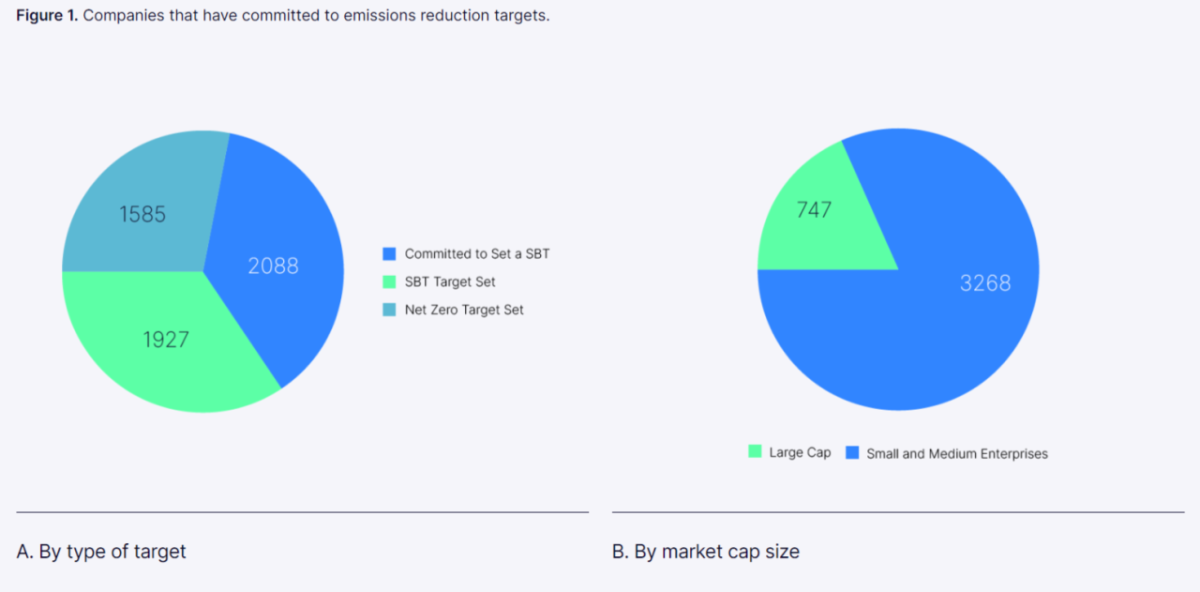
Climate resilience is crucial for all market participants up and down the value chain. To improve their transitional risk resilience, large corporations who have committed to net zero targets are now engaging with their critical suppliers. Large corporate clients are asking their suppliers to provide their GHG inventories, and in some cases, requiring them to set climate-related targets of their own. In this effort to pass down climate targets, these corporations are working to mitigate their own climate-related risks and improve climate resilience throughout their value chain. According to Nasdaq research, currently 58% of S&P 500 companies have a climate-related goal in their 2022 Proxy Statement. In addition, over 4000 companies of all sizes are taking action to reduce their emissions by setting science-based targets through the Science Based Targets Initiative. Almost half of the 4000+ have already set Science Based targets and almost 1500 companies have made Net Zero commitments (Figure 1A). Scope 3 emission targets (indirect value chain emissions) are a significant portion of these commitments.

Large cap companies are not the only ones committing to science-based emissions reduction targets. Small-to-Medium Enterprises (SMEs) make up almost 20 percent (18.6%) of the total companies listed by SBTi (Figure 1B). A total of 747 SMEs have set targets as of November 2022, in comparison to just 29 two years ago. GHG emissions reduction targets are emerging across market caps and organization types, and in many cases the influence of large corporations on their value chain is clear.

We at Nasdaq ESG Advisory hear about these cascade impacts from our clients: their large corporate customers expect them to measure and to reduce their own Scope 1 and Scope 2 footprints, otherwise they risk losing their shared business. This is a significant challenge that smaller and mid-size companies can anticipate in 2023 and beyond. The tide of climate action is rising, and smaller and mid-size companies now face challenges beyond responding to investor pressures and regulatory requirements. They must also address hindered ability to conduct business with large corporate customers. By not having a climate-related target in place, supply chain participants are exposing themselves to climate-related risks that will directly impact their financial health.

Global Transition to Low Carbon Economy and Geopolitical Crisis

Climate resilience has also been challenged this year by the global energy crisis. The 2022 energy crisis, associated with the geopolitical conflict in Ukraine, made energy costs soar. Consequently, high prices on crude oil and natural gas increased the cost of manufacturing and spiked transportation and distribution costs. Lower production levels in the middle east that followed fuel cost increase in the US, only made the situation worse. Additionally, most recently transition to low carbon economy has been under the microscope due to diesel shortages and associated surging diesel cost.

Back in 2020-2021, when marine transportation industry was clogged because of labor shortages, air freight was the only option to deliver goods to customers. Not only is air freight more carbon intensive, but it is also more costly. As a result, we saw increased emissions and narrower margins. Furthermore, in 2022 businesses that rely on fossil-based fuels for energy to produce and transport their goods saw additionally significant operational expense increases. The geopolitical crisis driving energy cost up, combined with a challenging economic environment emphasized the importance of climate resilience. While trying to stop the short-term value bleed, companies need to think about long-term resilience and build-in mitigation strategies such as self-generated energy and increased share of renewables and alternative fuels, so they can climb out of these challenging times ahead of their peers.

Current Economy and Climate Resilience

It is crucial for executives to set up their businesses for resilience in the long term, especially when markets are very volatile. In 2022, decreasing revenue growth rates and shrinking margins have been a focus for investors. Recession and inflation concerns have curbed investor appetite [Scenario Planning and Explaining Your Resilience – Nasdaq’s Advice on Appealing to Investors in Challenging Times]. To build trust with external stakeholders during these times, it is important for companies to explain their resilience to macro concerns like fuel shortage, energy, and raw materials cost. Additionally, understanding the industry trends and setting differentiators from peers will build confidence in management and will help companies to secure capital needed to navigate through the challenging times. Demonstrating financial resilience and climate risks resilience go hand in hand. Companies that are highly exposed to climate-related financial risks, such as energy cost and security, cost of raw materials, cost of transportation and logistics, can prove their financial resilience by demonstrating how they manage these climate-related risks.

Companies in varying sectors have different climate risk profiles, therefore, the way they demonstrate climate resilience would also be different. We encourage each company to access their business specific short-, mid- and long- term climate-related risks and put resilience strategies in place for those risks that companies cannot afford to tolerate in these downturn conditions. related risks and put resilience strategies in place for those risks that companies cannot afford to tolerate in these downturn conditions.

Understanding Your Business Resilience

In times of economic downturn and high volatility, demonstrating to stakeholders that you are an attractive investment, if revenues are down, is a challenge. Companies need to demonstrate how they are planning to capture future opportunities and curb financial risks in current economic conditions. Climate crisis often acts as a risk multiplier. It multiplies all financial risks – operational risk, credit risk, liquidity, underwriting. Being climate resilient company means being financially resilient company. It means capturing climate-related opportunities and mitigating climate-related financial risks better than your peers and competitors.

Knowing what risks your company is exposed to and how they can impact the financial condition and operations of your business across several time horizons and climate futures, will help executives put appropriate resilience strategies in place and build trust with investors.

Understanding industry risks and company specific resilience starts with understanding your risk exposure, risk vulnerability and your risk tolerance and how those might change in the future. For those risks that you cannot tolerate, management strategies must be put in place. At times when it is hard to justify R&D spend on new technologies, products, or services, optimizing efficiencies to reduce operational costs might be the best way to capture climate opportunities and demonstrate climate resilience. By conducting a peer assessment, understanding industry trends and how to achieve a competitive advantage at lowest cost possible, companies can make a business case for themselves and demonstrate to stakeholders that they are an attractive long-term investment.

The Challenges Nasdaq Sees & How We Can Help

Lack of climate expertise coupled with time and resources constraints are the most common pain points for corporates. Companies that are laser-focused on delivering business outcomes during challenging economic times need high efficiency and low-cost solutions. When time is money and when time needs to be spent on delivering products to the market, conducting labor- and time-intensive tasks such as peer benchmarking and assessment is a challenge for resource constrained companies. Staying on top of all the recent regulatory developments and tracking which direction political winds blow is also very time consuming and disrupting.

Climate risk is a systemic risk – meaning it is a risk you cannot diversify from. However, the way it impacts each industry and company varies. Each company’s path along the climate journey is unique. Businesses operate in different geographies, different sectors, have different supply chains and different stakeholders with different short- and long-term priorities. Nasdaq understands that each company has its own set of considerations, and we prepared to partner at each stage of their journey towards climate and financial resilience. Our goal at Nasdaq is to help our community build resilience and trust. We drive impact through cost-effective resources, tools, and guidance around climate data collection, risk identification, and disclosure, ultimately enabling our community to build competitive differentiation. To start your climate resilience journey, contact Nasdaq ESG Advisory here.

About the Authors

Ekaterina Hardin

Ekaterina Hardin is a Lead ESG Advisor focused on Climate at Nasdaq ESG Advisory Practice within our ESG Solutions Business. Ekaterina was previously with the Sustainability Accounting Standards Board (SASB) where she was the Extractives & Mineral Processing Sector Lead Analyst. Ekaterina was also SASB’s climate research lead and Net Zero working group owner. Prior to SASB, Ekaterina was an oil & gas geophysicist for over a decade with an M.S. in Geophysics from University of Moscow, Russia. Later in her career Ekaterina earned an M.S. in Environmental Engineering from UC Irvine, where she focused on Climate Change and Sustainability in the Energy sector.

Lia Brussock

Lia Brussock is a Senior ESG analyst within Nasdaq’s ESG Advisory team. She joins the team with ESG, climate and corporate sustainability expertise. Her prior experience includes environmental footprint management at a global chemical and consumer goods company, where she led engagements with manufacturing facilities to advance progress towards global footprint targets. She is also well-versed in ESG strategy, reporting and benchmarking. Lia holds a M.S. in Sustainability Management from Columbia University and a B.A. in Global Environmental Change & Sustainability with a minor in Economics from Johns Hopkins University.



How Artificial Intelligence Can Improve Companies’ ESG Work During 2023

16 01 2023

By Leon Kaye from Triple Pundit • Reposted: January 16, 2023

The growth of artificial intelligence (AI) has attracted its fair share of criticism in recent years just as it has become central to the conversation about how to scale up and improve ESG performance across corporate America.

To be fair, such concerns about AI are warranted. After all, humans are still designing these systems, so bias is still a risk at many levels, whether it comes to face recognition technology or how companies vet potential hires. Some brands, in fact, have pledged to work together to prevent algorithmic bias from entering the workplace. Google is an example of a company that says it is striving to teach developers about fairness considerations when building, evaluating and deploying AI and machine learning models.

Nevertheless, AI systems in aggregate can offer the ESG practitioner one important tool that will be hard to overlook: The ability to deal with the overwhelming amount of data through which teams must sift as they gauge their companies’ performance.

Some ways in which AI can prove to be useful, and score that “ah-ha” moment among the skeptics is when it comes to the “E” in ESG — as in measuring and finessing environmental performance. As the World Economic Forum (WEF) reminded us last week, one of the most difficult sets of data to measure are Scope 3 emissions, notoriously pesky to track as they comprise companies’ emissions coming from their supply and value chains. Chasing suppliers down for that data — if they’ll even measure and then reveal such information in the first place — is a task no sane person would demand from another. But reporting systems that run on AI can help solve that problem; WEF points to a BCG study concluding that companies harnessing such technologies are about twice as likely to both measure their emissions effectively and reach their emission reduction targets.

Further, while poorly designed AI systems are at risk of amplifying humans’ biases, at the same time on the “S” for social front, they can help to identify top candidates for jobs while identifying teams of current employees who are at risk of being disengaged. Optimized AI platforms can potentially smooth out potential rough patches between managers and their direct reports. “Managers’ biases can also creep in when it comes to setting goals for employees. AI can help by comparing employees’ goals against others with the same tenure and then alerting managers if they’re consistently assigning fewer or less important goals to certain workers,” wrote technology journalist Linda Rosencrance last year.

Outside a company’s office, AI and machine learning platforms can team up to identify possible snags within a supply chain — a lesson many organizations are still learning after what occurred worldwide during the global pandemic. Supply chain managers can deploy these technologies to help monitor human rights violations such as forced labor or risks including unsafe working conditions.

As for companies with a very specific mission, AI is achieving what used to take huge teams of professionals to accomplish. Take the plant-based protein industry, which on one hand can harness this technology to determine what raw materials can recreate the texture and nutrition of meat at a competitive cost — while on the other AI-driven sequencing can even improve their flavors, too.

Finally, at a time when more investors adopt an ESG framework to hone in on companies’ governance structures, AI can also lend an assist. Companies with operations spread all over the globe need to know in real time how regulations differ in different companies and here in the U.S., even in different states. Next-generation risk modeling can help corporate boards make decisions with the best possible information as they evaluate market trends and potential risks. “As for governance, a focus on data sovereignty and the creation of a single view of real-time data ensures that data is treated with respect,” Mike Hughes wrote for Forbes last month. 

To see the original post, follow this link. https://www.triplepundit.com/story/2023/artificial-intelligence-esg-2023/763941


4 tips from a CSR expert on how to make the most impact in 2023

16 01 2023

Effective ESG practices provide companies with an opportunity to demonstrate their commitment to environmental sustainability, community and equity by integrating these tenets into everyday business processes and company culture.

By Jess Welser  –  Director of B:CIVIC and CSR, Denver Metro Chamber Leadership Foundation • Reposted: January 16, 2023

As I look back on the stories shared in this year’s Good Works Colorado content hub, I’m thrilled to see how our state’s leaders have enthusiastically implemented environmental, social and governance policies (ESG) and invested in corporate social responsibility (CSR) efforts. 

ESG and CSR are constantly evolving. ESG is a framework for measuring and managing risks and opportunities around a company’s commitment to environmental, social and corporate governance. CSR is a reflection of what a company believes, expressed by how it impacts its stakeholders internally and externally. We like to think of it as how a company aligns its social and environmental activities with its business purpose and values. Or elevating business for good. More and more, ESG and CSR are recognized as an essential component of a smart, viable business strategy for Colorado companies. 

This was one of our founding goals at B:CIVIC, an affiliate of the Denver Metro Chamber Leadership Foundation. Alongside business and community leaders, B:CIVIC is increasing the amount of impact and collective good for the Colorado community. After eight years of doing this work, there are a few lessons we want to share with business leaders who are on their ESG and CSR journey.

1. Now’s the time for ESG. 

As our community faces unprecedented social, economic and environmental challenges, local corporations are taking ownership of their impact through ESG. Effective ESG practices provide companies with an opportunity to demonstrate their commitment to environmental sustainability, community and equity by integrating these tenets into everyday business processes and company culture. 

As ESG practices advance in Colorado and across the globe, it’s important that business leaders continue to develop and enhance their ESG strategy. Like the ever-changing world around us, these strategies must remain nimble to meet the moment — whatever that moment has in store. 

2. It pays to invest in CSR. 

As we head into what may be a recession, many companies are preparing for economic downturn by downsizing budgets, instituting travel freezes and more. Though the immediate future remains uncertain, we know CSR programs and personnel are an important investment for a company’s long-term success. 

To ensure continued engagement, we are encouraging CSR leaders to double down. The economic downturn will impact industries differently, but we can anticipate that employee giving and engagement will experience a decline. Further, economic hardship causes increased stress among employees. To encourage connection, focus on promoting skills-based volunteering and employee well-being programs that boost morale and build community. As we continue through these uncertain times, we challenge CSR leaders to get creative with their CSR strategies. It pays to invest in the community and your people, especially in times of economic hardship. 

3. Colorado is a good place to do business. 

Did you know Colorado is one of the best places to do business? In a 2022 CNBC ranking, Colorado came in at No. 4 in America’s Top States for Business list. The state also ranked No. 12 in the category of life, health and inclusion. These rankings are in large part due to the social impact commitments of our business community — commitments that are continuing to grow alongside our economy. 

The secret’s out: People, organizations and businesses are making the move to Colorado to join in on the great benefits this state has to offer. As the business community grows, the resources available for CSR and ESG will grow with it. The future is full of possibilities for CSR and ESG impact.

4. Create the infrastructure today to meet the challenges of tomorrow. 

When business leaders invest in a company’s CSR infrastructure today, they are better prepared to speak out and advocate for the issues that matter to their community and stakeholders. In a recent report released by the Edelman Trust Barometer — a metric that studies trust in business, government, NGOs and the media — it was found that employees care about how their leadership demonstrates commitment to the community. 

According to the Trust Barometer, when considering a job, 60% of employees stated that they want their CEO to speak out on controversial issues they care about. Eighty percent of the general population want CEOs to be personally visible when discussing public policy with external stakeholders or work their company has done to benefit society. Further, 60% of people surveyed will choose a place to work based on their beliefs and values. 

It’s clear the workforce wants business leaders to stand up for the issues that matter to them. Implementing ESG and CSR practices is a great way to demonstrate your company’s commitment to the community. 

As your team is planning for next year, we hope that you consider the above guidance to maximize the impact of your CSR and ESG practices. Want to keep the conversation going? Reach out to our team at B:CIVIC. Together, we can increase the impact and collective good of the community.

To see the original post of this article, follow this link. https://www.bizjournals.com/denver/news/2022/12/23/4-tips-from-csr-expert-on-how-to-make-an-impact.html


Newsweek publishes its list of America’s Most Responsible Companies for 2023

15 01 2023

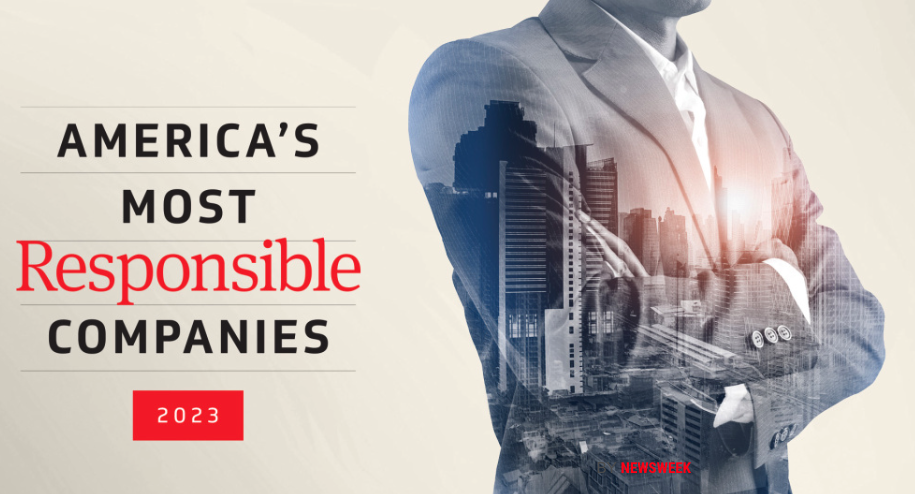
America’s Most Responsible Companies 2023

In recent years, and especially with the rise in popularity of “ESG” (environment, social and corporate governance) focused investing, “corporate responsibility” has become a phrase many companies are happy to use in their advertising. There is no set definition but generally it is used as shorthand for “Our company is not a soulless machine designed to do absolutely anything–no matter how destructive, reckless or dishonest–in pursuit of a buck.” In any given case, it can be hard to tell whether such a statement means a corporation really tries to treat its customers, employees and planet decently or is just public relations blather. Talking the talk is easy, but walking the walk is hard.

To highlight those corporations that are actually serious about trying to be good guys, Newsweek has partnered with global research and data firm Statista for our fourth annual list of America’s Most Responsible Companies. This year our list includes 500 of the U.S’s largest public corporations. They vary dramatically by size and by industry. We found the largest number of responsible companies (55) in the materials and chemicals business; the fewest (12) in hotels, dining and leisure. Our overall number one this year is the computer hardware giant HP.

We are proud to present this year’s ranking and to honor companies that actually mean it when they say they are serious about being good corporate citizens.

RankCompanyHQ StateIndustry RankIndustryOverall ScoreEnvironmental ScoreSocial ScoreCorporate Governance Score
1HPCalifornia1Technology Hardware93.0994.9499.5184.93
2General MillsMinnesota1Consumer Goods91.7992.0686.8496.56
3Whirlpool CorporationMichigan2Consumer Goods91.5393.8385.2195.64
4Merck & CoNew Jersey1Health Care & Life Sciences89.9591.07100.0078.86
5CloroxCalifornia3Consumer Goods89.5694.6888.0886.03
6HNIIowa4Consumer Goods89.4096.2187.9284.15
7Applied MaterialsCalifornia2Technology Hardware89.1291.0289.6486.80
8IntelCalifornia3Technology Hardware88.9888.3092.5186.21
9S&P GlobalNew York1Financial88.8095.2371.27100.00
10TapestryNew York5Consumer Goods88.6991.6087.4287.14
11XylemDistrict of Columbia1Capital Goods88.6895.0277.2193.90
12Abbott LaboratoriesIllinois2Health Care & Life Sciences88.0389.8480.9293.40
13QualcommCalifornia4Technology Hardware87.7283.3583.7996.10
14Keysight TechnologiesCalifornia1Software & Telecommunications87.6889.8679.2194.08
15AptargroupIllinois1Materials & Chemicals87.6896.7888.2478.13
16Texas InstrumentsTexas5Technology Hardware87.3984.5795.1582.53
17MicrosoftWashington2Software & Telecommunications86.9798.7669.1193.14
18Estee Lauder CompaniesNew York6Consumer Goods86.6192.8581.3885.69
19Cisco SystemsCalifornia6Technology Hardware86.5599.5174.5585.70
20Advanced Micro DevicesCalifornia7Technology Hardware86.5293.9775.3790.30
21BroadcomCalifornia8Technology Hardware86.2981.9282.4294.61
22AvientOhio2Materials & Chemicals86.2791.0978.5389.28
23Sensata TechnologiesMassachusetts9Technology Hardware86.0386.7878.1793.23
24Owens CorningOhio3Materials & Chemicals85.8082.4179.8995.19
25CortevaIndiana4Materials & Chemicals85.7981.4080.3895.69
26NVIDIACalifornia10Technology Hardware85.6986.9484.0886.13
27IlluminaCalifornia3Health Care & Life Sciences85.5490.5893.3772.75
28Campbell SoupNew Jersey7Consumer Goods85.2591.9078.6085.34
29Boston PropertiesMassachusetts1Real Estate & Housing85.2399.3878.1378.29
30Analog DevicesMassachusetts11Technology Hardware85.0995.5972.4587.34
31LumentumCalifornia3Software & Telecommunications85.0393.0876.4785.63
32JacobsTexas1Professional Services84.9895.2179.3280.50
33Maxim Integrated ProductsCalifornia12Technology Hardware84.9591.5780.1883.20
34Hewlett Packard EnterpriseTexas13Technology Hardware84.8095.3083.1576.04
35CumminsIndiana1Automotive & Components84.6392.1478.1683.68
36Lear CorporationMichigan2Automotive & Components84.6291.8170.8091.34
37Edgewell Personal CareConnecticut8Consumer Goods84.5789.8977.3486.57
38PayPal HoldingsCalifornia2Financial84.3593.7569.9789.42
39Walt DisneyCalifornia1Hotels, Dining & Leisure84.2793.5776.4082.94
40MastercardNew York3Financial84.2096.2765.9090.52
41ComericaTexas4Financial84.0990.7583.0178.59
42TrinseoPennsylvania5Materials & Chemicals84.0491.9977.8782.34
43United RentalsConnecticut2Professional Services83.7492.0981.6477.60
44Iron MountainMassachusetts4Software & Telecommunications83.7293.3572.5285.39
45Regeneron PharmaceuticalsNew York4Health Care & Life Sciences83.5685.0887.6977.98
46EcolabMinnesota6Materials & Chemicals83.5596.3884.5069.88
47Berry GlobalIndiana7Materials & Chemicals83.5190.2974.1286.20
48Sun CommunitiesMichigan2Real Estate & Housing83.4890.3674.0886.09
49Newmont GoldColorado8Materials & Chemicals83.4066.2194.6789.39
50Eversource EnergyMassachusetts1Energy & Utilities83.3094.1582.1973.66
51Vertex PharmaceuticalsMassachusetts5Health Care & Life Sciences83.2674.6191.8483.40
52SeagenWashington6Health Care & Life Sciences83.1884.0783.0682.48
53American TowerMassachusetts5Software & Telecommunications83.1287.1581.7480.56
54Lam ResearchCalifornia14Technology Hardware82.9992.9887.8868.22
55Granite ConstructionCalifornia2Capital Goods82.9883.9777.9187.15
56General MotorsMichigan3Automotive & Components82.9491.3468.2889.29
57CraneConnecticut9Materials & Chemicals82.7984.8177.9285.72
58IngevitySouth Carolina10Materials & Chemicals82.6372.5188.2187.23
59ZoetisNew Jersey7Health Care & Life Sciences82.6085.4177.7584.72
60Baxter InternationalIllinois8Health Care & Life Sciences82.5992.1780.8074.90
61Moody’sNew York5Financial82.5484.4471.1692.10
62Edwards LifesciencesCalifornia9Health Care & Life Sciences82.4986.8771.6389.05
63Lowe’s CompaniesNorth Carolina1Retail82.4091.2775.8880.12
64Public Service Enterprise GroupNew Jersey2Energy & Utilities82.3380.8381.8984.35
65Kimberly-ClarkTexas9Consumer Goods82.3079.5176.1491.33
66JabilFlorida15Technology Hardware82.1183.5273.9188.96
67Regency CentersFlorida3Real Estate & Housing82.0288.7677.3280.09
68Motorola SolutionsIllinois16Technology Hardware81.9990.4471.8883.74
69Keurig Dr PepperMassachusetts10Consumer Goods81.9888.0874.8683.09
70Dell TechnologiesTexas17Technology Hardware81.9392.2876.1377.47
71AGCOGeorgia3Capital Goods81.9275.6281.9988.23
72Las Vegas SandsNevada2Hotels, Dining & Leisure81.7687.3780.5277.47
73Waste ManagementTexas3Energy & Utilities81.6382.3684.3078.31
74Jones Lang LaSalleIllinois4Real Estate & Housing81.6384.2672.3188.39
75Western DigitalCalifornia18Technology Hardware81.5883.5683.1878.08
76Armstrong World IndustriesPennsylvania4Capital Goods81.4884.0278.0782.42
77RibbonTexas6Software & Telecommunications81.3982.5077.3184.44
78KrogerOhio2Retail81.3488.1571.7684.19
79Principal Financial GroupIowa6Financial81.2183.4873.9486.29
80CaleresMissouri11Consumer Goods81.1481.3281.9880.19
81McCormick & CompanyMaryland12Consumer Goods81.0693.5983.2666.42
82Summit MaterialsColorado11Materials & Chemicals80.9883.8972.8786.26
83Kimball InternationalIndiana13Consumer Goods80.8989.7279.0574.01
84AdobeCalifornia7Software & Telecommunications80.8788.8171.9981.89
85AmphenolConnecticut19Technology Hardware80.8489.6773.7079.25
86Huntington BancsharesOhio7Financial80.8284.5079.2678.80
87Cadence Design SystemsCalifornia8Software & Telecommunications80.7963.7989.2289.41
88PPLPennsylvania4Energy & Utilities80.7868.5799.2874.55
89Ball CorpColorado12Materials & Chemicals80.6986.8479.9575.38
90EXL ServicesNew York3Professional Services80.6777.7272.0392.33
91Healthpeak PropertiesColorado5Real Estate & Housing80.5490.2874.8476.59
92Sherwin-WilliamsOhio13Materials & Chemicals80.4987.9970.0683.50
93Univar SolutionsIllinois14Materials & Chemicals80.4792.8262.6586.02
94American WaterNew Jersey5Energy & Utilities80.4374.2291.9475.22
95HasbroRhode Island14Consumer Goods80.4189.3785.2266.72
96AppleCalifornia20Technology Hardware80.2491.3763.0086.45
97TargetMinnesota3Retail80.1890.2170.3080.10
98Newell BrandsGeorgia15Consumer Goods80.0081.8872.4485.75
99DeereIllinois5Capital Goods80.0087.9387.4364.71
100ManpowerGroupWisconsin4Professional Services79.9393.0972.2774.53
101Agilent TechnologiesCalifornia10Health Care & Life Sciences79.9394.5264.9280.45
102Baker HughesTexas6Energy & Utilities79.8991.9077.3470.53
103American ExpressNew York8Financial79.8793.4664.7181.55
104PNC Financial ServicesPennsylvania9Financial79.8183.3278.9877.22
105Hudson Pacific PropertiesCalifornia6Real Estate & Housing79.7084.2175.6579.33
106First SolarArizona7Energy & Utilities79.6789.7873.5875.74
107Eastman ChemicalTennessee15Materials & Chemicals79.6668.3486.2484.48
108Mettler-Toledo InternationalOhio21Technology Hardware79.6188.1964.8185.91
109NielsenNew York5Professional Services79.5983.7174.1680.98
110HessNew York8Energy & Utilities79.5977.8881.7379.24
111Colgate-PalmoliveNew York16Consumer Goods79.5580.5474.8783.31
112CenterPoint EnergyTexas9Energy & Utilities79.5471.0192.3775.31
113CBRE GroupTexas7Real Estate & Housing79.5272.9977.7187.94
114PPG IndustriesPennsylvania16Materials & Chemicals79.4782.4077.5878.53
115Becton Dickinson andNew Jersey11Health Care & Life Sciences79.4688.5168.8681.09
116Carter’sGeorgia17Consumer Goods79.4188.6974.6774.98
117Verizon CommunicationsNew York9Software & Telecommunications79.3988.2073.2776.79
118UbiquitiNew York10Software & Telecommunications79.1683.5564.8389.18
119BorgWarnerMichigan4Automotive & Components79.0779.1178.4979.67
120PotlatchDelticWashington6Capital Goods79.0578.8472.5185.88
121M&T BankNew York10Financial79.0183.6570.1883.28
122W W GraingerIllinois7Capital Goods78.9576.6775.7484.51
123AutodeskCalifornia11Software & Telecommunications78.9484.1384.9667.82
124IBMNew York12Software & Telecommunications78.8780.9676.7878.93
125Howmet AerospacePennsylvania8Capital Goods78.8580.6369.0286.99
126Deckers OutdoorCalifornia18Consumer Goods78.8369.7382.8284.02
127California Water Service GroupCalifornia10Energy & Utilities78.7770.1489.8476.40
128Regal RexnordWisconsin9Capital Goods78.6793.1167.7375.26
129NasdaqNew York11Financial78.6776.0163.9996.08
130Micron TechnologyIdaho22Technology Hardware78.6480.3678.3077.34
131Zurn Elkay Water SolutionsWisconsin10Capital Goods78.5680.9676.5878.22
132Thermo Fisher ScientificMassachusetts12Health Care & Life Sciences78.5477.0372.5586.11
133CommScope Holding CompanyNorth Carolina23Technology Hardware78.4794.4267.5473.55
134Kraft HeinzIllinois19Consumer Goods78.4581.0870.6483.71
135FMCPennsylvania17Materials & Chemicals78.3885.0167.1283.09
136Tennant CompanyMinnesota11Capital Goods78.3767.7487.1180.34
137CSXFlorida1Transport & Logistics78.2684.6469.5880.65
138CelaneseTexas18Materials & Chemicals78.2669.3497.3568.16
139AZZTexas12Capital Goods78.2083.2765.9785.43
140IDEXX LaboratoriesMaine13Health Care & Life Sciences78.1975.7882.6276.26
141GapCalifornia4Retail78.1977.4367.9989.22
142Williams CompaniesOklahoma11Energy & Utilities78.1766.1492.0376.41
143Emerson ElectricMissouri13Capital Goods78.1385.1172.7676.61
144Church & DwightNew Jersey20Consumer Goods78.0793.4472.0368.82
145Marriott InternationalMaryland3Hotels, Dining & Leisure78.0679.5581.8272.88
146SempraCalifornia12Energy & Utilities78.0565.6388.5680.02
147InvescoGeorgia12Financial78.0391.1365.3277.73
148ValvolineKentucky5Automotive & Components77.9278.8972.4182.54
149Ingersoll RandNorth Carolina14Capital Goods77.8881.9666.9384.83
150UnitedHealth GroupMinnesota14Health Care & Life Sciences77.8891.8671.4470.43
151ViasatCalifornia13Software & Telecommunications77.8487.0373.7772.83
152The Home DepotGeorgia5Retail77.8078.6276.6378.25
153Host Hotels & ResortsMaryland4Hotels, Dining & Leisure77.7890.0668.7874.60
154Norfolk SouthernGeorgia2Transport & Logistics77.7782.8270.7979.77
155RepligenMassachusetts15Health Care & Life Sciences77.7676.5566.7190.08
156VisteonMichigan6Automotive & Components77.7492.0473.4267.87
157Yum! BrandsKentucky5Hotels, Dining & Leisure77.7191.5862.7778.88
158Lennox InternationalTexas15Capital Goods77.7189.8474.6668.70
159ServiceNowCalifornia14Software & Telecommunications77.6878.0168.5286.58
160Commercial Metals CompanyTexas19Materials & Chemicals77.6882.8070.4579.86
161Conagra BrandsIllinois21Consumer Goods77.6390.1369.8173.03
162WatersMassachusetts16Health Care & Life Sciences77.6392.6567.2673.06
163JPMorgan Chase & CoNew York13Financial77.6084.0163.4985.37
164AbbVieIllinois17Health Care & Life Sciences77.5584.3970.8377.52
165MetLifeNew York14Financial77.4881.3467.3283.87
166West Pharmaceutical ServicesPennsylvania18Health Care & Life Sciences77.4479.2469.2283.95
167California ResourcesCalifornia13Energy & Utilities77.2873.0283.6975.20
168DanaherDistrict of Columbia19Health Care & Life Sciences77.2269.8677.6584.23
169FedExTennessee3Transport & Logistics77.2173.6875.9582.08
170NordsonOhio16Capital Goods77.1570.8083.4177.30
171Bank of AmericaNorth Carolina15Financial77.1490.2969.7371.50
172USANA Health SciencesUtah22Consumer Goods77.0274.0575.4481.65
173LabcorpNorth Carolina20Health Care & Life Sciences76.9684.1170.4876.40
174TeradataCalifornia15Software & Telecommunications76.9578.6861.3190.94
175Best BuyMinnesota6Retail76.8892.5272.7665.45
176KennametalPennsylvania17Capital Goods76.8886.1673.5371.02
177Stanley Black & DeckerConnecticut18Capital Goods76.8792.6664.9073.14
178AlcoaPennsylvania20Materials & Chemicals76.8061.4381.7187.33
179KoppersPennsylvania20Materials & Chemicals76.8079.1880.9070.41
180United TherapeuticsMaryland21Health Care & Life Sciences76.7961.4583.9485.03
181PfizerNew York22Health Care & Life Sciences76.7673.3569.7887.21
182MascoMichigan19Capital Goods76.6975.3669.0985.71
183Kimco RealtyNew York8Real Estate & Housing76.6786.4085.3258.37
184Qurate Retail GroupPennsylvania7Retail76.5688.5571.5369.68
185OtisConnecticut20Capital Goods76.5075.2872.0382.26
186Organon & Co.New Jersey23Health Care & Life Sciences76.4376.6284.3168.44
187Reliance Worldwide CorporationGeorgia21Capital Goods76.3867.2675.2486.71
188Air Products and ChemicalsPennsylvania22Materials & Chemicals76.3778.0176.9974.18
189Fluor CorporationTexas22Capital Goods76.3380.7070.0378.34
190SPXNorth Carolina23Capital Goods76.3178.1471.9378.94
191Darling IngredientsTexas23Consumer Goods76.2971.3668.3489.25
192Insulet CorporationMassachusetts24Health Care & Life Sciences76.2479.8077.5771.45
193Essex Property TrustCalifornia9Real Estate & Housing76.1688.5471.3868.65
194Truist FinancialNorth Carolina16Financial76.1168.7882.0477.59
195AtkoreIllinois24Capital Goods76.1175.2667.0686.09
196Pioneer Natural ResourcesTexas14Energy & Utilities76.0982.8079.1966.36
197VMwareCalifornia16Software & Telecommunications75.99100.0045.9282.14
198Regions FinancialAlabama17Financial75.9773.1977.6677.14
199WorkdayCalifornia17Software & Telecommunications75.9778.8867.5281.59
200SnapCalifornia18Software & Telecommunications75.9271.2884.7771.77
201PVHNew York8Retail75.9088.6066.9772.21
202Fifth Third BankOhio18Financial75.8993.1970.2564.33
203InfineraCalifornia24Technology Hardware75.8981.9468.9976.82
204Kilroy RealtyCalifornia10Real Estate & Housing75.8788.9263.4275.36
205Watts Water TechnologiesMassachusetts25Capital Goods75.8380.2466.1581.17
206XeroxConnecticut25Technology Hardware75.8096.3862.4868.63
207PrudentialNew Jersey19Financial75.7881.0965.5580.79
208Digital Realty TrustTexas11Real Estate & Housing75.7780.9278.3968.09
209OnsemiArizona26Technology Hardware75.6885.9956.0785.06
210BizLinkCalifornia26Technology Hardware75.6880.8273.6572.64
211Brixmor Property GroupNew York12Real Estate & Housing75.6573.2787.6166.15
212APA CorpTexas15Energy & Utilities75.5964.6174.6387.61
213Tractor Supply Co.Tennessee9Retail75.5080.3677.1769.07
214Dover CorporationIllinois26Capital Goods75.4773.5368.8184.14
215Universal DisplayNew Jersey28Technology Hardware75.4474.9980.4770.93
216United Parcel ServiceGeorgia4Transport & Logistics75.4375.2074.2676.91
217DanaOhio7Automotive & Components75.4283.1170.3872.86
218MicrochipArizona29Technology Hardware75.4281.4764.4380.44
219Teledyne TechnologiesCalifornia30Technology Hardware75.4180.2369.8976.18
220Element SolutionsFlorida23Materials & Chemicals75.4086.7466.4673.09
221GXOConnecticut5Transport & Logistics75.3276.8379.6269.60
222Fortune BrandsIllinois24Consumer Goods75.2980.4671.9573.53
223Weatherford InternationalTexas16Energy & Utilities75.2570.3578.9876.48
224Federal Realty Investment TrustMaryland13Real Estate & Housing75.2186.3264.4174.97
225J M SmuckerOhio25Consumer Goods75.2086.3563.5275.81
226GlobalFoundriesNew York31Technology Hardware75.1688.6966.3570.52
227AT&TTexas19Software & Telecommunications75.1480.1672.3672.97
228General ElectricMassachusetts27Capital Goods75.1077.6370.3777.37
229HubbellConnecticut28Capital Goods75.0577.6369.0978.51
230VF CorporationColorado26Consumer Goods75.0584.5869.7670.88
231AvalonBay CommunitiesVirginia14Real Estate & Housing74.8392.1467.1165.32
232Vornado Realty TrustNew York15Real Estate & Housing74.7990.4362.6971.34
233Crown HoldingsPennsylvania24Materials & Chemicals74.7774.3063.9286.16
234VirtusaMassachusetts20Software & Telecommunications74.6789.4864.0370.59
235CintasOhio27Consumer Goods74.6075.7168.6479.53
236State StreetMassachusetts20Financial74.5988.5853.6481.63
237Public StorageCalifornia16Real Estate & Housing74.5186.4770.0167.14
238GreifOhio25Materials & Chemicals74.4487.0258.1678.23
239Pacific Premier BancorpCalifornia21Financial74.3783.9369.6469.63
240Helmerich & PayneOklahoma17Energy & Utilities74.3667.6873.1382.34
241Salesforce.ComCalifornia21Software & Telecommunications74.2778.9671.6672.28
242LPL FinancialCalifornia22Financial74.2681.8669.4571.54
243Comfort Systems USATexas29Capital Goods74.2277.0668.9976.69
244Realty IncomeCalifornia17Real Estate & Housing74.2070.2089.5862.89
245National Energy Services ReunitedTexas18Energy & Utilities74.1979.0066.0877.58
246AlbemarleNorth Carolina26Materials & Chemicals74.1970.5883.9368.13
247Crown CastleTexas22Software & Telecommunications74.1571.8972.7077.93
248Arista NetworksCalifornia23Software & Telecommunications74.0576.5065.1080.64
249Quaker HoughtonPennsylvania27Materials & Chemicals74.0375.3460.0586.78
250ADMIllinois28Consumer Goods73.9780.6072.9668.45
251BungeMissouri29Consumer Goods73.9188.1567.9065.76
252UnumTennessee23Financial73.9071.2371.5079.04
253SBAFlorida24Software & Telecommunications73.8767.9566.8286.92
254Hormel FoodsMinnesota30Consumer Goods73.8779.3283.4558.93
255VentasIllinois18Real Estate & Housing73.8171.8170.4579.24
256SpireMissouri19Energy & Utilities73.7964.7785.2471.43
257TimkenOhio30Capital Goods73.7780.5271.7069.18
258Bank of New York MellonNew York24Financial73.7687.9265.3868.07
259Omnicom GroupNew York6Professional Services73.7471.8971.3378.07
260ItronWashington7Professional Services73.7380.4068.4372.44
261Phibro Animal HealthNew Jersey25Health Care & Life Sciences73.7271.0669.6280.55
262Constellation Energy CorporationMaryland20Energy & Utilities73.7064.2985.6671.20
263Juniper NetworksCalifornia32Technology Hardware73.6767.2974.1679.62
264Cirrus LogicTexas33Technology Hardware73.6463.0473.1784.78
265Adtalem Global EducationIllinois8Professional Services73.6377.2271.7771.99
266TeradyneMassachusetts34Technology Hardware73.6079.6349.8891.39
267ABM IndustriesNew York9Professional Services73.6056.9877.1186.77
268CoupaCalifornia25Software & Telecommunications73.5673.9065.7181.15
269Allison TransmissionIndiana31Capital Goods73.5180.6664.3275.63
270MacerichCalifornia19Real Estate & Housing73.5090.0356.9173.64
271Illinois Tool WorksIllinois32Capital Goods73.4482.9468.8368.64
272Kosmos EnergyTexas21Energy & Utilities73.4270.5580.3569.43
273TPI CompositesArizona33Capital Goods73.4273.5382.3564.43
274Knowles CorporationIllinois35Technology Hardware73.4087.2468.2964.75
275TJX CompaniesMassachusetts10Retail73.3773.7766.6679.75
276Avanos MedicalGeorgia26Health Care & Life Sciences73.3676.4873.2370.45
277AMETEKPennsylvania36Technology Hardware73.2686.1570.6663.07
278Tanger Factory Outlet CentersNorth Carolina20Real Estate & Housing73.2583.3574.9861.52
279Cooper-Standard HoldingsMichigan8Automotive & Components73.1190.4672.4156.55
280NiSourceIndiana22Energy & Utilities73.0871.7076.5471.06
281American Axle & Manufacturing HoldingsMichigan9Automotive & Components73.0478.0465.5275.64
282HalliburtonTexas23Energy & Utilities73.0374.0671.4973.63
283Helen of TroyTexas31Consumer Goods73.0079.4579.5360.11
284NetAppCalifornia26Software & Telecommunications72.9667.8260.0091.13
285ResMedCalifornia27Health Care & Life Sciences72.9374.9067.8876.08
286Alliant EnergyWisconsin24Energy & Utilities72.9369.0886.6563.12
287Hilton Worldwide HoldingsVirginia6Hotels, Dining & Leisure72.9275.4267.5775.85
288CatalentNew Jersey28Health Care & Life Sciences72.9281.3068.6368.90
289WestrockGeorgia28Materials & Chemicals72.9064.8270.8183.14
290CarrierFlorida34Capital Goods72.8780.9272.6465.13
291Expeditors International of WashingtonWashington6Transport & Logistics72.8480.8076.3261.48
292GenArizona27Software & Telecommunications72.8061.3167.4189.73
293Mueller Water ProductsGeorgia35Capital Goods72.7974.3470.8073.31
294CaterpillarIllinois36Capital Goods72.7276.5862.0679.62
295Green PlainsNebraska29Materials & Chemicals72.7161.1875.0781.94
296XPO LogisticsConnecticut7Transport & Logistics72.7067.6672.5877.94
297Equity ResidentialIllinois21Real Estate & Housing72.6684.7065.6467.73
298AramarkPennsylvania7Hotels, Dining & Leisure72.6274.9968.8774.06
299Alphabet (Google)California28Software & Telecommunications72.5388.9359.5069.25
300PetcoCalifornia11Retail72.5084.1659.5773.83
301Ormat TechnologiesNevada25Energy & Utilities72.4970.3171.2875.96
302MattelCalifornia32Consumer Goods72.4480.9270.7965.71
303Hecla MiningIdaho30Materials & Chemicals72.3977.5158.8980.84
304FactSetConnecticut25Financial72.3751.5373.5892.06
305Simpson Manufacturing CompanyCalifornia37Capital Goods72.3668.7477.9370.49
306Compass Minerals InternationalKansas31Materials & Chemicals72.3263.9873.7279.33
307Charles River LaboratoriesMassachusetts29Health Care & Life Sciences72.3177.8374.3264.86
308Graphic PackagingGeorgia32Materials & Chemicals72.3069.0072.9974.98
309GrafTech InternationalOhio38Capital Goods72.2670.2871.3475.22
310KeyCorpOhio26Financial72.2579.8559.8777.10
311OshkoshWisconsin10Automotive & Components72.2083.5370.9362.21
312Kansas City SouthernMissouri8Transport & Logistics72.1158.9979.0978.29
313IPGNew York10Professional Services72.1074.3160.2081.88
314HubSpotMassachusetts29Software & Telecommunications72.0979.3851.3685.62
315Goodyear Tire & Rubber CoOhio11Automotive & Components72.0679.6970.6565.93
316Kelly ServicesMichigan11Professional Services72.0270.5775.1170.46
317SimsNew York33Materials & Chemicals71.9781.0564.9969.95
318BalchemNew York34Materials & Chemicals71.9358.1568.0289.68
319CotyNew York33Consumer Goods71.9083.4272.7559.62
320KratonTexas35Materials & Chemicals71.9071.6470.9873.15
321DXC TechnologyVirginia12Professional Services71.8677.4565.6872.54
322Worthington IndustriesOhio36Materials & Chemicals71.8387.7054.7373.14
323SanminaCalifornia37Technology Hardware71.7779.0754.6081.73
324Scotts Miracle-GroOhio37Materials & Chemicals71.7677.4169.0068.94
325NOVTexas26Energy & Utilities71.7569.2375.8570.23
326Columbus McKinnonNew York39Capital Goods71.6990.9464.4559.76
327U.S. SilicaTexas38Materials & Chemicals71.5673.6580.8960.23
328SynopsysCalifornia30Software & Telecommunications71.5169.4463.5281.63
329AECOMTexas13Professional Services71.4655.0880.0879.28
330UnifiNorth Carolina39Materials & Chemicals71.4573.5064.8876.06
331FortiveWashington40Capital Goods71.4256.8962.7694.67
332Schlumberger NVTexas27Energy & Utilities71.4284.8871.9357.52
333Masonite InternationalFlorida41Capital Goods71.4077.2967.4469.54
334HologicMassachusetts30Health Care & Life Sciences71.3870.3058.1185.80
335Pactiv EvergreenIllinois40Materials & Chemicals71.3672.1170.5271.53
336ICFVirginia14Professional Services71.2284.3973.1056.25
337HanesbrandsNorth Carolina34Consumer Goods71.1585.8364.2263.47
338Empire State Reality TrustNew York22Real Estate & Housing71.1280.4452.8180.20
339Union PacificNebraska9Transport & Logistics71.1083.6955.9673.75
340Williams-SonomaCalifornia35Consumer Goods71.0663.2870.1679.80
341National InstrumentsTexas31Software & Telecommunications71.0477.7867.1768.26
342KLA CorporationCalifornia38Technology Hardware71.0440.0677.7295.39
343GartnerConnecticut15Professional Services71.0258.9667.9186.23
344Mid-America Apartment CommunitiesTennessee23Real Estate & Housing71.0085.7553.1574.19
345SteelcaseMichigan36Consumer Goods70.9987.8962.9462.22
346Molson Coors BrewingIllinois37Consumer Goods70.9683.2866.6763.00
347C.H. RobinsonMinnesota10Transport & Logistics70.8964.1975.6572.90
348AkamaiMassachusetts32Software & Telecommunications70.8877.9350.3984.42
349IntuitiveCalifornia31Health Care & Life Sciences70.8862.6377.8572.21
350Packaging Corporation of AmericaIllinois41Materials & Chemicals70.8563.8565.4783.28
351Ralph LaurenNew York38Consumer Goods70.8592.1149.9770.55
352ZendeskCalifornia33Software & Telecommunications70.7365.3467.8779.04
353Silicon LabsTexas39Technology Hardware70.6688.8970.4152.78
354SL Green RealtyNew York24Real Estate & Housing70.6578.4054.9478.70
355Dick’s Sporting GoodsPennsylvania12Retail70.6471.5162.0178.47
356MSA SafetyPennsylvania16Professional Services70.5083.2967.3360.97
357Global PaymentsGeorgia27Financial70.4884.1558.5168.87
358Murphy USAArkansas13Retail70.4463.6471.9975.76
359EntergyLouisiana28Energy & Utilities70.3844.9998.1568.05
360Essential UtilitiesPennsylvania29Energy & Utilities70.3780.1873.4057.61
361Howard HughesTexas25Real Estate & Housing70.2874.9562.1073.86
362Palo Alto NetworksCalifornia34Software & Telecommunications70.2377.1267.2466.41
363ONEOKOklahoma30Energy & Utilities70.2363.8073.1373.83
364Dominion EnergyVirginia31Energy & Utilities70.2150.7387.5672.38
365BrunswickIllinois42Capital Goods70.1865.2564.7780.60
366CF Industries HoldingsIllinois42Materials & Chemicals70.1745.3973.1292.05
367Marsh McLennanNew York17Professional Services70.1157.7364.8387.81
368Bread FinancialOhio28Financial70.0769.0667.2174.01
369Merit Medical SystemsUtah32Health Care & Life Sciences70.0762.3472.2875.64
370PerkinElmerMassachusetts33Health Care & Life Sciences70.0562.7565.4082.08
371Sonoco ProductsSouth Carolina43Materials & Chemicals70.0585.3860.1264.73
372GoDaddyArizona35Software & Telecommunications70.0471.3853.7785.03
373Ziff DavisNew York36Software & Telecommunications70.0254.4768.7386.90
374GenthermMichigan12Automotive & Components70.0177.0562.8670.19
375FormFactorCalifornia40Technology Hardware69.9579.3250.3680.26
376The Cheesecake FactoryCalifornia8Hotels, Dining & Leisure69.9383.3349.5676.98
377Skywork SolutionsCalifornia41Technology Hardware69.9271.8969.8868.06
378AmedisysLouisiana34Health Care & Life Sciences69.8967.7575.1566.82
379Booz Allen HamiltonVirginia18Professional Services69.8756.4771.2981.91
380Polaris Inc.Minnesota13Automotive & Components69.8481.8366.5961.19
381UDRColorado26Real Estate & Housing69.8481.7060.6467.26
382TextronRhode Island43Capital Goods69.8180.6164.9963.92
383Brown-FormanKentucky39Consumer Goods69.8164.3957.9787.12
384KB HomeCalifornia27Real Estate & Housing69.7757.1975.4076.77
385Sensient TechnologiesWisconsin44Materials & Chemicals69.7468.5562.2778.46
386Winnebago IndustriesIowa14Automotive & Components69.6861.4457.2490.41
387BurlingtonNew Jersey14Retail69.6191.2860.2457.40
388Dentsply SironaNorth Carolina35Health Care & Life Sciences69.6081.1476.7151.02
389TimkenSteelOhio45Materials & Chemicals69.5568.2965.2575.20
390SunPowerCalifornia32Energy & Utilities69.5170.8779.4458.30
391DiscoverIllinois29Financial69.4469.6866.2372.47
392Meritage HomesArizona28Real Estate & Housing69.4247.7165.0695.55
393EnerSysPennsylvania42Technology Hardware69.4077.9848.7781.53
394Harley-DavidsonWisconsin15Automotive & Components69.3478.1165.6864.31
395TerexConnecticut44Capital Goods69.3167.0876.0564.87
396Cabot MicroelectronicsIllinois43Technology Hardware69.3084.1169.3554.52
397Clearway EnergyNew Jersey33Energy & Utilities69.2878.6468.7860.48
398DTE EnergyMichigan34Energy & Utilities69.1556.6079.6771.23
399Franklin ElectricIndiana44Technology Hardware69.1374.7869.1963.49
400Corporate Office Properties TrustMaryland29Real Estate & Housing69.0277.0368.9161.19
401ManitowocWisconsin45Capital Goods68.9963.3271.2872.42
402MPLX LPOhio35Energy & Utilities68.9861.1965.1180.69
403H&R BlockMissouri19Professional Services68.9768.0668.1270.80
404Xcel EnergyMinnesota36Energy & Utilities68.9253.4978.7574.58
405Ameriprise FinancialMinnesota30Financial68.9162.6852.9491.19
406AMN Healthcare ServicesTexas36Health Care & Life Sciences68.8966.5768.7671.40
407T. Rowe PriceMaryland31Financial68.8970.4367.5368.78
408T-MobileWashington37Software & Telecommunications68.8392.8549.8763.88
409Lumen TechnologiesLouisiana38Software & Telecommunications68.7774.7466.6165.04
410Renewable Energy GroupIowa37Energy & Utilities68.7682.8078.4145.16
411Iridium CommunicationsVirginia39Software & Telecommunications68.7481.0251.4673.82
412BlackbaudSouth Carolina40Software & Telecommunications68.6279.1352.7474.06
413Sunstone Hotel InvestorsCalifornia30Real Estate & Housing68.5575.4964.4365.81
414Gates Industrial CorporationColorado46Capital Goods68.5269.1775.1461.34
415Thor IndustriesIndiana16Automotive & Components68.4672.1859.2074.07
416International Flavors & FragrancesNew York46Materials & Chemicals68.4474.9265.5264.94
417PrologisCalifornia31Real Estate & Housing68.4069.6468.5867.06
418EquinixCalifornia41Software & Telecommunications68.3963.8266.8674.55
419Vistra EnergyTexas38Energy & Utilities68.3857.1580.4567.60
420CrestwoodTexas39Energy & Utilities68.3259.9883.3261.72
421AlnylamMassachusetts37Health Care & Life Sciences68.3276.4169.0659.56
422CeridianMinnesota42Software & Telecommunications68.2978.1463.8362.97
423LittelfuseIllinois45Technology Hardware68.2578.9469.8956.00
424Brinker InternationalTexas9Hotels, Dining & Leisure68.2479.2956.0769.43
425Hersha Hospitality TrustPennsylvania32Real Estate & Housing68.1385.6756.0062.82
426AARIllinois11Transport & Logistics68.1269.4850.9983.97
427Nextera EnergyFlorida40Energy & Utilities68.1256.4883.8964.05
428Tyler TechnologiesTexas43Software & Telecommunications68.0679.9661.0663.23
429NorthWestern EnergySouth Dakota41Energy & Utilities68.0452.9480.9970.26
430Roper TechnologiesFlorida46Technology Hardware68.0158.0065.8680.22
431Lincoln NationalPennsylvania32Financial68.0087.9367.0949.08
432Automatic Data ProcessingNew Jersey44Software & Telecommunications67.9960.5661.0282.44
433Taylor MorrisonArizona33Real Estate & Housing67.9832.6480.9490.39
434IPG PhotonicsNew York47Technology Hardware67.9859.5366.0678.40
435Western MidstreamTexas42Energy & Utilities67.9653.4465.6984.82
436Hawaiian Electric IndustriesHawaii43Energy & Utilities67.8653.0882.3768.19
437WESCO InternationalPennsylvania12Transport & Logistics67.8572.4870.4060.73
438DolbyCalifornia45Software & Telecommunications67.8452.0070.0781.50
439Southwest AirlinesTexas13Transport & Logistics67.7366.8361.8774.56
440CallawayCalifornia40Consumer Goods67.7260.1968.0674.96
441Alamo GroupTexas14Transport & Logistics67.7078.1860.7564.24
442Cooper TiresOhio17Automotive & Components67.6972.6964.0866.37
443KadantMassachusetts48Technology Hardware67.6869.8752.9180.33
444WolfspeedNorth Carolina48Technology Hardware67.6881.2265.2856.61
445EnphaseCalifornia50Technology Hardware67.6762.9572.2367.90
446CohuCalifornia51Technology Hardware67.6465.3662.1275.52
447Sprouts Farmers MarketArizona15Retail67.6368.2662.3972.32
448Monolithic Power SystemsWashington52Technology Hardware67.6162.2665.6075.04
449FISFlorida46Software & Telecommunications67.5070.3852.6479.55
450Sleep NumberMinnesota16Retail67.5070.3760.6671.53
451Synchrony FinancialConnecticut33Financial67.4459.8277.3965.17
452Paramount GlobalNew York10Hotels, Dining & Leisure67.3964.3068.4469.48
453Henry ScheinNew York38Health Care & Life Sciences67.3565.0661.0676.00
454eHealthCalifornia34Financial67.3469.5570.9461.60
455LiventPennsylvania47Materials & Chemicals67.2773.7766.6761.45
456Carlisle CompaniesArizona48Materials & Chemicals67.1666.9453.4681.15
457Cooper CompaniesCalifornia39Health Care & Life Sciences67.1650.5872.9677.98
458VeecoNew York53Technology Hardware67.1586.5244.8870.13
459O-IOhio49Materials & Chemicals67.1149.8077.2974.29
460Sealed AirNorth Carolina50Materials & Chemicals67.0768.6460.1972.44
461Cornerstone Building BrandsNorth Carolina47Capital Goods67.0675.4965.0060.79
462Pebblebrook Hotel TrustMaryland11Hotels, Dining & Leisure67.0679.5763.7157.99
463GibraltarNew York48Capital Goods67.0566.8474.2260.18
464Varex ImagingUtah40Health Care & Life Sciences66.9969.4466.6464.95
465NRG EnergyTexas44Energy & Utilities66.9549.3072.1679.44
466FiservWisconsin47Software & Telecommunications66.8957.6066.2776.88
467HawkinsMinnesota51Materials & Chemicals66.7464.9661.3074.03
468Rogers CorporationArizona52Materials & Chemicals66.7173.9864.0062.22
469HF SinclaorTexas45Energy & Utilities66.6476.6574.4248.93
470MDU ResourcesNorth Dakota45Energy & Utilities66.6444.7584.9870.23
471National VisionGeorgia17Retail66.5955.1959.0585.60
472TransUnionIllinois20Professional Services66.5883.0254.3762.45
473Paramount GroupNew York34Real Estate & Housing66.5268.0054.8976.73
474Citrix SystemsFlorida48Software & Telecommunications66.4359.4351.1388.79
475ANSYSPennsylvania48Software & Telecommunications66.4369.5962.4567.31
476IntuitCalifornia50Software & Telecommunications66.4071.1659.2468.87
477SwitchNevada54Technology Hardware66.3664.5966.9667.59
478VeritivGeorgia53Materials & Chemicals66.2549.4673.4075.95
479HarscoPennsylvania21Professional Services66.2360.2174.3264.22
480Cabot CorporationMassachusetts54Materials & Chemicals66.2165.1971.1162.39
481The HanoverMassachusetts35Financial66.1968.5657.9972.09
482Americold Realty TrustGeorgia35Real Estate & Housing66.1875.8271.6751.13
483CentennialColorado47Energy & Utilities66.1750.3371.0177.23
484American Homes 4 RentCalifornia36Real Estate & Housing66.1260.8074.1163.49
485Equitrans MidstreamPennsylvania48Energy & Utilities66.1156.5579.7362.11
486Avis Budget GroupNew Jersey22Professional Services66.0962.7165.9069.73
487The Container StoreTexas18Retail66.0677.3550.8570.06
488Advanced Drainage SystemsOhio49Energy & Utilities66.0668.0863.5466.64
489QTSKansas37Real Estate & Housing66.0662.2269.3366.69
490Devon EnergyOklahoma50Energy & Utilities65.9365.3867.5664.92
491Installed Building ProductsOhio23Professional Services65.9251.8769.2176.73
492WabtecPennsylvania15Transport & Logistics65.9260.0368.9468.84
493Caesars EntertainmentNevada12Hotels, Dining & Leisure65.8983.1651.2763.31
494Array TechnologiesNew Mexico51Energy & Utilities65.8869.1360.8567.73
495New Jersey ResourcesNew Jersey52Energy & Utilities65.7756.2966.1674.92
496Range ResourcesTexas53Energy & Utilities65.7657.8876.6862.78
497Hostess BrandsKansas41Consumer Goods65.6858.0368.5770.52
498Kontoor BrandsNorth Carolina42Consumer Goods65.6154.3360.6681.90
499Greenbrier CompaniesOregon16Transport & Logistics65.6064.8867.5764.42

  Visit our rankings portal 

Licensing

If your company was listed in the ranking, click here to learn more about the licensing options.METHODOLOGY

THE RANKING AMERICA’S MOST RESPONSIBLE Companies 2023 focuses on a holistic view of corporate responsibility that considers all three pillars of ESG: environment, social and corporate governance. 
In total, 500 companies were identified as America’s Most Responsible Companies.The initial analysis focused on the top 2000 public companies by revenue and banks and insurance companies with total assets exceeding $50 billion. 

The analysis is based on two metrics:
1. Quantitative data from KPI (key performance indicator) research: More than 30 KPIs from the three areas of CSR (corporate social responsibility) were considered for the ranking.
2. The CSR reputation of each company from an extensive survey of 13,000 U.S. residents: Respondents were asked to select companies familiar to them and then to evaluate the company’s CSR performance in general and in the three sub-dimensions: social, environmental and governance.

  Visit our rankings portal 

he selection of the companies and the definition of the evaluation criteria were carried out according to independent journalistic criteria of Newsweek and Statista. The evaluation was carried out by the statistics and market research company Statista. Newsweek and Statista make no claim to the completeness of the companies examined.
The ranking is composed exclusively of U.S. companies that are eligible regarding the criteria described here. A position in the ranking is a positive recognition based on research of publicly available data sources at the time, the information provided in the validation survey and an extensive survey of U.S. residents. The ranking is the result of an elaborate process which, due to the interval of data-collection and analysis, is a reflection of official ESG data from 2020 or 2021. Furthermore, events following November 3, 2022 were not a subject of this survey. As such, the results of this ranking should not be used as the sole source of information for future deliberations. The information provided in this ranking should be considered in conjunction with other available information. The quality of companies that are not included in the ranking is not disputed. For a complete methodology see newsweek.com/amrc-2023 

ewsweek and Statista make no claim to the completeness of the companies examined.
The ranking is composed exclusively of U.S. companies that are eligible regarding the criteria described here. A position in the ranking is a positive recognition based on research of publicly available data sources at the time, the information provided in the validation survey and an extensive survey of U.S. residents. The ranking is the result of an elaborate process which, due to the interval of data-collection and analysis, is a reflection of official ESG data from 2020 or 2021. Furthermore, events following November 3, 2022 were not a subject of this survey. As such, the results of this ranking should not be used as the sole source of information for future deliberations. The information provided in this ranking should be considered in conjunction with other available information. The quality of companies that are not included in the ranking is not disputed. For a complete methodology see newsweek.com/amrc-2023 


Green jobs are booming, but too few employees have sustainability skills to fill them – here are 4 ways to close the gap

15 01 2023

U.S. universities now have over 3,000 sustainability programs. Photo: Andy DeLisle/ASU

By Christopher Boone, Professor of Sustainability, Arizona State University and Karen C. Seto, Professor of Geography and Urbanization Science, Yale University from The Conversation. Re-posted: January 15, 2022

To meet today’s global sustainability challenges, the corporate world needs more than a few chief sustainability officers – it needs an army of employees, in all areas of business, thinking about sustainability in their decisions every day.

That means product designers, supply managers, economists, scientists, architects and many others with the knowledge to both recognize unsustainable practices and find ways to improve sustainability for the overall health of their companies and the planet.

Employers are increasingly looking for those skills. We analyzed job ads from a global database and found a tenfold increase in the number of jobs with “sustainability” in the title over the last decade, reaching 177,000 in 2021.

What’s troubling is that there are not enough skilled workers to meet the rapid growth in green and sustainability jobs available.

While the number of “green jobs” grew globally at a rate of 8% per year over the last five years, the number of people listing green skills in their profiles only grew by 6% per year, according to a LinkedIn analysis of its nearly 800 million users.

A man stands beside a 3-D printer in a university lab.
When employees are trained to think about sustainable materials and processes, they can improve corporate innovation and the bottom line. Photo: Sona Srinarayana/ASU

As professors who train future workers in sustainability principles and techniques, we see several effective ways for people at all stages of their careers to gain those skills and increase those numbers.

Where sustainability jobs are growing fastest

In the U.S., jobs in the renewable energy and environment sectorsgrew by 237%over the last five years. Globally, the transition from fossil fuels to renewable energy is forecast to result in a net increase in jobs for the energy sector. 

But green jobs go well beyond solar panel installation and wind turbine maintenance. 

Sustainable fashion is one of the fastest-growing green jobs sectors, averaging a 90% growth rate annually between 2016 and 2020. 

The rapid expansion of ESG investing – environment, social and governance – and portfolio management is opening up new jobs in sustainable finance. In 2021, the accounting firm PwC announced that it would invest US$12 billion and create 100,000 new jobs in ESG investing by 2026. 

There is also a growing demand for urban sustainability officers who can help transition cities to be net-zero carbon and more resilient. After all, the world is adding 1 million people to cities every five days and building 20,000 American football fields’ worth of urban areas someplace on the planet every day. 

In 2013, when the Rockefeller Foundation launched 100 Resilient Cities, a network to help cities become more sustainable, few cities had a resilience or sustainability officer. Today, more than 250 communities and 1,000 local government professionals are part of the Urban Sustainability Directors Network

The number of companies with chief sustainability officers in executive positions also tripled from 9% to 28% between 2016 and 2021. But given the scale and business opportunities of sustainability, these skills are needed much more widely within organizations.

So, where can you find training?

Most sustainability and green jobs require creative problem-solving, synthesizing and technical skills. Some of those skills can be learned on the job, but boosting the number of qualified job applicants will require more effective and accessible training opportunities that target employers’ needs. Here are a some training sources to consider.

University programs: Sustainability is increasingly being incorporated into a wide range of university programs. Fifteen years ago, sustainability training was mostly ad hoc – a product designer or economist might have taken a class in sustainability approaches from the environmental science department. Today, U.S. universities have about 3,000 programs with a “sustainability” label, up from 13 in 2008.

A National Academies report recommends looking for a competency-based approach to sustainability learning that blends content with skills and links knowledge to action to solve problems and develop solutions.

Micro-credentials: For mid-career employees who don’t have the time to reinvest in full-fledged degrees, short courses and micro-credentials offered by universities, colleges or professional groups offer one way to develop sustainability skills.

A micro-credential might involve taking a series of courses or workshops focused on a specific skill, such as in wind energy technology or how to incorporate ESG criteria into business operations.

A group of people wearing hard hats install a large window.
U.S. architect Michael Reynolds holds four-week, hands-on training sessions, primarily for architects, in sustainable design principles, construction methods and philosophy. Participation can count toward Western Colorado University’s Master in Environmental Management graduate degree. Photo: Pablo Porciuncula/AFP via Getty Images

Short courses and micro credentials take up less time and are much less expensive than college degree programs. That may also help lower-income individuals train for sustainability jobs and diversify the field.

Specializations: A similar option is jobs-focused online certificate programs with a sustainability specialization. 

For example, Google teamed up with universities to provide online courses for project managers, and Arizona State University is offering a sustainability specialization to accompany it. Project management is an area where the U.S. Department of Labor expects to see fast job growth, with 100,000 job openings in the next decade.

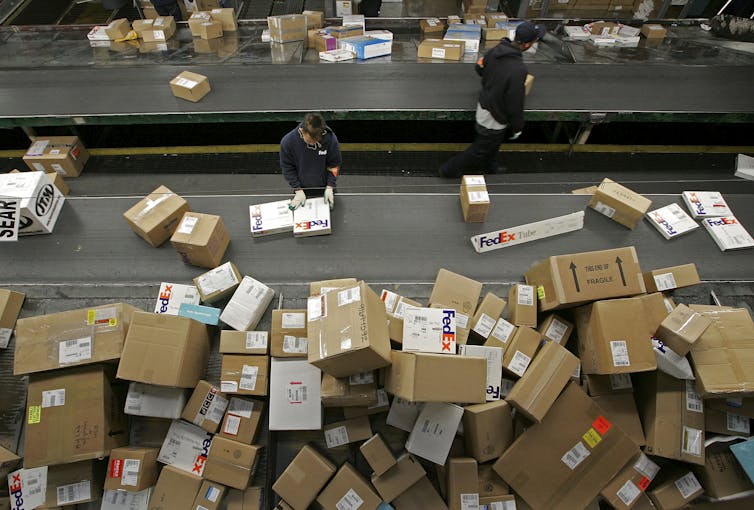
A pile of boxes of various sizes ready for shipping at a FedEx shipping distribution center.
Sustainable packaging design that reduces costs and reuses materials is an area ripe for innovation in many companies as consumer shipping increases.Justin Sullivan/Getty Images

Corporate training: Some companies have developed their own internal sustainability training in climate sciencesustainable financesustainability reporting and other skills.

Integrating sustainability across all functions of companies will require some level of sustainability training and understanding for most if not all employees. Companies like StarbucksHSBCSalesforce and Microsoft have created internal training programs to spread sustainability knowledge and practice throughout their companies, not just for employees who have sustainability in their titles.

Closing the gap

A recent survey by Microsoft and BCG of major companies found that only 43% of sustainability professionals in businesses had sustainability-related degrees, and 68% of sustainability leaders were hired internally. 

It’s clear that on-the-job sustainability training and up-skilling will be necessary to fill the growing number of roles inside of companies.

To meet the sustainability skills gap, we believe more training will be required – at colleges and universities, by professional organizations and from employers. Achieving global sustainability and meeting climate change challenges will become more likely as legions of people commit their working hours to sustainability solutions.

To see the original post, follow this link: https://theconversation.com/green-jobs-are-booming-but-too-few-employees-have-sustainability-skills-to-fill-them-here-are-4-ways-to-close-the-gap-193953


Cone: 76% of Millennials would take a pay cut to for work for a responsible company.

3 11 2016

screen-shot-2016-11-03-at-9-18-28-am

Three-quarters (76%) of Millennials consider a company’s social and environmental commitments when deciding where to work and nearly two-thirds (64%) won’t take a job if a potential employer doesn’t have strong corporate social responsibility (CSR) practices, according to the 2016 Cone Communications Millennial Employee Engagement Study.

The study reveals that meaningful engagement around CSR is a business – and bottom line – imperative, impacting a company’s ability to appeal to, retain and inspire Millennial talent. More than any other generation, Millennials see a company’s commitment to responsible business practices as a key factor to their employment decisions:

  • 75% say they would take a pay cut to work for a responsible company (vs. 55% U.S. average)
  • 83% would be more loyal to a company that helps them contribute to social and environmental issues (vs. 70% U.S. average)
  • 88% say their job is more ful lling when they are provided opportunities to make a positive impact on social and environmental issues (vs. 74% U.S. average)
  • 76% consider a company’s social and environmental commitments when deciding where to work (vs. 58% U.S. average)
  • 64% won’t take a job from a company that doesn’t have strong CSR practices (vs. 51% U.S. average)“Millennials will soon make up 50 percent of the workforce and companies will have to radically evolve their value proposition to attract and retain this socially conscious group,” says Alison DaSilva, executive vice president, CSR Research & Insights, Cone Communications. “Integrating a deeper sense of purpose and responsibility into the work experience will have a clear bottom line return for companies.”

Cone will allow you to download the report here if you register.

http://www.conecomm.com/research-blog/2016-millennial-employee-engagement-study


Cause Marketing Halo Awards: Social Impact To Build A Better World And Bottom Line

17 02 2016

halo_dog_square_with_logo_smaller


The 2016 Cause Marketing Halo Awards announced its 42 finalists of programs designed to yield both social and financial dividends.  The Gold and Service winners in each of ten categories will be announced at the at the 2016 Cause Marketing Forum Annual Conference in Chicago June 1-2, 2016.


CMF_logo_larger


More than 100 entries were received in the Cause Marketing Forum’s competition for North American programs designed to yield social and financial dividends.

Programs named finalists in multiple categories include

  • Bank of America’s “Pass the Flame” campaign with Special Olympics promoting inclusion of people with intellectual disabilities in sports and in life;
  • Think it Up’ Staples/DonorsChoose.org partnership supporting student-powered, teacher-led projects in classrooms across the country;
  • Gateways and Getaways’, a bird- and flight-centric education program for New York families from JetBlue and the Wildlife Conservation Society;
  • Dementia-Friendly Massachusetts’ which Senior Living Residences developed to help people better understand the challenges of living with dementia;
  • #Unlimited’ a tween-targeted back to school program from Old Navy and Boys & Girls Clubs of America to support summer programming for kids.

The Halo Awards will highlight many of the most innovative programs that companies and causes took at the intersection of profit and purpose last year. Some examples include:

  • A video game marathon that raised funds to put veterans back to work.
  • An app that helps autistic children make social and emotional connections.
  • Canvas shoes turned into artwork to support high school arts programs.
  • “Thumb Socks” that help persuade teens from texting and

With the proliferation of cause campaigns reaching consumers each day, the Cause Marketing Halo Awards are designed to bring clarity, innovation and best practices to light.

About the Cause Marketing Forum

Now in their fourteenth year, the Cause Marketing Halo Awards are North America’s highest honor in the field of cause marketing. They are presented to US and Canadian companies by the Cause Marketing Forum, a company dedicated to providing business and nonprofit executives with the practical information and connections they need to succeed.

All Halo finalists can be seen online at: http://www.CauseMarketingForum.com/halo2016

original post  http://www.csrwire.com/press_releases/38699-These-Corporate-Social-Impact-Programs-Build-a-Better-World-and-the-Bottom-Line


New Survey: Only 10% of Americans trust business to behave ethically.

17 09 2015

96 percent of Americans believe it is important for companies to ensure their employees behave ethically but only 10 percent have trust and confidence in major companies to do what is right.

2015_1

Pharmaceuticals and health insurance were viewed to be the least trustworthy industries. The most trustworthy were thought to be manufacturing, technology and large retailing.

Princeton Survey Research Associates International’s 2015 Public Affairs Pulse survey polled 1,600 Americans on their attitudes about corporate behavior, big business and small business, the trustworthiness of companies and industries, levels of regulation, and lobbying and politics. The study found the vast majority of the public expects the business sector to think beyond profits and be valuable components of society.

Other interesting findings include:

  • More than nine in 10 Americans say businesses need to protect the environment, including 76 percent who feel it is very important that businesses limit their environmental damage.
  • 88 percent believe companies should contribute to charities
  • 85 percent believe they should take a leadership role in helping society in ways that go beyond their business operations
  • 39 percent believe it is very important that businesses take more responsibility in helping the government solve problems.

How can companies communicate what they’re doing for these causes? Social media is reportedly the best way that companies can communicate what they are doing for social causes, with 45 percent calling it very effective and 38 percent calling it somewhat effective. Not surprisingly, those under 50 years old were more strongly in favor of social media communication than those over 50.

Only 15 percent say social media has a significant influence on their opinions, while almost 40 percent say it does not influence their opinion at all. Personal experiences as a customer or employee of a major company were the top factors influencing people’s opinions of a business.

Access more of the Princeton Survey here.  http://pac.org/pulse/


Timberland Tires: A Brand With An End Game in Mind

4 11 2014

Timberland’s partnership with Omni United will create co-branded automotive tires specifically designed to be recycled into footwear outsoles when their road journey is complete.


Timberland Tires

According to a joint press announcement, Timberland and Omni United first conceived this partnership three years ago, when sustainability leaders from both brands came together to address a longstanding shared concern. The tire and footwear industries are two of the largest users of virgin rubber. The majority of tires on the market today have a limited life span; ecologically-sound disposal at the end of that life span presents yet another challenge.

In a statement, Stewart Whitney, president of Timberland said,  “Our partnership with Omni United marks a new day for the tire and footwear industries.  An outdoor lifestyle brand and an automotive industry leader may, at first blush, seem unlikely partners – yet our shared values have given birth to tires that express a lifestyle, deliver performance and safety, and prove that sustainability can be so much more than a theory. It’s this kind of cross-industry collaboration that’s fueling real change and innovation in the marketplace.”

G.S. Sareen, president and CEO of Omni United said,  “Omni United and Timberland are taking an entirely different view of sustainability by designing Timberland Tires for a second life from the outset. That is one of the reasons why establishing a take-back and recycling program before the first tire is sold – and choosing an appropriate rubber formulation for recycling the tires into footwear – is so critical.  Our intent is to capture every worn Timberland Tire and recycle it for a second life, so none is used as fuel or ends up in a landfill.”

To bring the tire-to-shoe continuum to life, Timberland and Omni United have established an industry-first tire return/chain of custody process, to ensure the tires go directly to dedicated North American recycling facilities to begin their path toward a second life as part of a Timberland® product. Key steps include:

  • Tire retailers will set aside used Timberland Tires for recycling after consumers purchase new tires to replace their worn out tires.
  • Omni United is partnering with Liberty Tire Recycling and its network of tire collection and recycling firms to sort and segregate the Timberland Tires at the companies’ facilities.
  • The used tires will be shipped to a North American tire recycling facility where they will be recycled into crumb rubber.
  • The crumb rubber will be processed further into sheet rubber for shipment to Timberland outsole manufacturers.
  • The rubber will be mixed into a Timberland-approved compound for outsoles that will ultimately be incorporated into Timberland® boots and shoes. This blended compound will meet the company’s exacting standards for quality and performance, as well as its stringent compliance standards.

Timberland Tires will be sold initially in the United States at leading national and regional tire retailers, as well as online through a state-of-the-art e-commerce platform.

For more information about Timberland Tires, visit www.timberlandtires.com.


Cause Driven Social Campaigns More Effective Than Brand Stories.

21 10 2014

pink2810

New research released in London this week points to the effectiveness of cause driven social campaigns activated by brands – showing superior business results than traditional brand communication stories, especially in social media.

In the report, Seriously Social by marketing consultant Peter Field, research indicates that not only were cause-driven campaigns better at delivering business effects — they also generated greater numbers of brand effects once the non-profits were removed from the equation.

Field analysed case studies from the Warc Prize for Social Strategy – a global competition for examples of social ideas that drive business results – defined social strategy as any activity designed to generate participation, conversation, sharing or advocacy.

“Cause-driven campaigns are more strongly associated with business effects,” Field stated, a finding that became even clearer when stripping non-profit campaigns out of the calculation.

Field was able to compare the impact of campaigns that associated a brand with a good cause, with the impact of those that built a story around a brand.
He found that media usage for cause-driven campaigns was more strongly focused on online, WOM/earned media and traditional advertising channels (excluding TV). Brand story campaigns, in contrast, made wider use of media channels and, as they were more likely to be short-term campaigns, included much more activation.

These patterns had an impact on subsequent effectiveness.  The business effectiveness of cause driven-campaigns was found to increase markedly over time, whereas that of brand story campaigns did not.

“Again, this is a reflection of the short-term outlook of the latter group,” Field said, who suggested that conclusions about effectiveness drawn over a period of less than six months would underplay the true strength of cause-driven campaigns.

Source:  WARC


WHO: 1 in 8 Global Deaths Linked To Air Pollution

8 04 2014

The World Health Organization reports that in 2012 around 7 million people died – one in eight of total global deaths – as a result of air pollution exposure.  This finding more than doubles previous estimates and confirms that air pollution is now the world’s largest single environmental health risk.

CHINA SANDSTORM

Reducing air pollution could save millions of lives.

The new data reveal a strong link between air pollution exposure and cardiovascular diseases and cancer.  The new estimates are not only based on more knowledge about the diseases caused by air pollution, but also upon better assessment of human exposure to air pollutants through the use of improved measurements and technology. This has enabled scientists to make a more detailed analysis of health risks from a wider demographic spread that now includes rural as well as urban areas.

“Cleaning up the air we breathe prevents non-communicable diseases as well as reduces disease risks among women and vulnerable groups, including children and the elderly,” says Dr Flavia Bustreo, WHO Assistant Director-General Family, Women and Children’s Health. “Poor women and children pay a heavy price from indoor air pollution since they spend more time at home breathing in smoke and soot from leaky coal and wood cook stoves.”

“The risks from air pollution are now far greater than previously thought or understood, particularly for heart disease and strokes,” says Dr Maria Neira, Director of WHO’s Department for Public Health, Environmental and Social Determinants of Health. “Few risks have a greater impact on global health today than air pollution; the evidence signals the need for concerted action to clean up the air we all breathe.”

After analysing the risk factors and taking into account revisions in methodology, WHO estimates indoor air pollution was linked to 4.3 million deaths in 2012 in households cooking over coal, wood and biomass stoves. The new estimate is explained by better information about pollution exposures among the estimated 2.9 billion people living in homes using wood, coal or dung as their primary cooking fuel, as well as evidence about air pollution’s role in the development of cardiovascular and respiratory diseases, and cancers.

In the case of outdoor air pollution, WHO estimates there were 3.7 million deaths in 2012 from urban and rural sources worldwide.

Many people are exposed to both indoor and outdoor air pollution. Due to this overlap, mortality attributed to the two sources cannot simply be added together, hence the total estimate of around 7 million deaths in 2012.

“Excessive air pollution is often a by-product of unsustainable policies in sectors such as transport, energy, waste management and industry. In most cases, healthier strategies will also be more economical in the long term due to health-care cost savings as well as climate gains,” says Dr Carlos Dora, WHO Coordinator for Public Health, Environmental and Social Determinants of Health. “WHO and health sectors have a unique role in translating scientific evidence on air pollution into policies that can deliver impact and improvements that will save lives.”


Brandkarma: A new Global Reputation System for Brands

7 03 2014

Screen Shot 2014-03-07 at 2.22.30 PM

“Brands often fall short of their potential to do good – reputation without responsibility. Brandkarma will change that.”

Upendra Shardanand, founder Daylife

Welcome Brandkarma.com – the first social community that will rate and review brands ability to do good in the world.

Consumer research has repeatedly demonstrated that people expect businesses to operate responsibly and to contribute to positive change in the world.  Many people say that if brands fail to operate responsibly, they will stop purchasing the products that the brand provides.

Brandkarma.com was launched to empower consumers to better translate those beliefs into action.  Brandkarma.com allows consumers to see brands holistically – not only the quality of their products but the brand behaviors toward their employees, their community and the planet at large.

Screen Shot 2014-03-07 at 2.27.13 PM

visit brand karma.com here


SOGB: Business Sustainability Progress Has Stalled

27 01 2014
According to the 2014 State of Green Business report published by GreenBiz Group in partnership with Trucost plc., companies around the world are struggling to make progress on climate change, resource efficiency and natural capital dependency.
Screen Shot 2014-01-27 at 12.57.56 PM
“While more and more companies are undertaking a growing number of initiatives to reduce their environmental impacts, there’s very little progress to show for it. Company initiatives are not having an impact at the scale needed to address such challenges as climate change and the availability of water and natural resources,” said Joel Makower, GreenBiz Group executive editor and the report’s principal author.
The seventh annual edition of the report, which measures the global progress of large, publicly traded companies in addressing a myriad of environmental challenges, reveals little meaningful progress across most metrics, including greenhouse gas emissions, water use, waste disposal and other pollutant impacts.
“The environmental impacts of business – air pollution, biodiversity loss, ecosystem degradation and water scarcity – are threatening the ability of our finite stock of natural capital to deliver sustainable growth,” said Richard Mattison, CEO of Trucost. “The challenge for business is to identify growth models that result in reduced environmental impact.
”The report also names the 10 sustainable business trends for 2014. Among them are the growth of collaboration among big corporations to solve mutual sustainability challenges, the growth of chemical transparency for consumer products, the emergence of “shadow pricing” as a means for companies to assess their environmental risks and net-positive buildings.
The 2014 report includes the launch of the Natural Capital Leaders Index, a new methodology for identifying companies that are growing their revenue while reducing their environmental impacts. The 2014 Index found 34 companies from 10 countries that met Trucost’s criteria, which include increasing revenue between 2008 and 2012, disclosure of greenhouse gas emissions and a decrease in environmental impacts during that same period.Among the 34 “decoupling leaders” are Carnival Corp., CSX, Intel, Kimberly-Clark, National Australia Bank, Pearson, Tata Power and Verizon.The Index further identifies US and Global “efficiency leaders” that use the least natural capital to generate revenue compared to sector peers – the more traditional sustainability leaders – which include Adobe Systems, AMEC, BMW, Ford, Manpower, McGraw Hill Financial, Pepco Holdings and Sprint Corp.The metrics from the report were drawn from Trucost’s assessment of 4,600 of the world’s largest companies representing 93% of global markets by market capitalization.The State of Green Business report will be the centrepiece of the upcoming GreenBiz Forum (Feb 18-20), taking place in Phoenix, AZ, where speakers will address many of these trends and metrics.The free report can be downloaded from GreenBiz.com.


CCC: Enhanced Reputation Key Goal of CSR Efforts.

17 01 2014

CSRNew reports cites increased funding, senior leadership appointments, management engagement and reputation enhancement goals for corporate citizenship.  The Center for Corporate Citizenship has released its The Profile of the Practice 2013.  The report explores how the environmental, social, and governance (ESG) dimensions of business—corporate citizenship—are managed in today’s business world, and how these practices have evolved since the last report in 2010.

“Corporate citizenship is managed at higher levels, corporate citizenship leaders are better compensated, and more companies establish both board committees and official budgeted departments to manage their programs,” said Katherine Smith, Executive Director, Boston College Center for Corporate Citizenship said in a statement. “These are all signs that CSR continues to be more deeply embedded in business as more executives realize that positive environmental, social and governance measures correlate to positive financial performance, improved reputation, and solid risk management.”

Among the key findings in the survey:

  • More than 70% of companies cited enhanced reputation among the top three business goals they are trying to achieve through their corporate citizenship efforts. The next most frequently cited goals are improving employee retention (45%), improving employee recruitment (41%), attracting new customers (33%), and improving risk management (22%).
  • The chief executive is more involved in developing strategy, setting goals, and communicating corporate citizenship than reported in both 2008 and 2010. More than 25% indicate that their chief executive is highly involved in corporate citizenship program evaluation.
  • Almost 100% of companies have a corporate citizenship budget today, while just 81% reported being budgeted in 2010.
  • Almost 60% of companies have an executive leading corporate citizenship. This is a 74% increase over what was reported in 2010. Close to one-third of corporate citizenship leaders are within one level of the chief executive.

Screen Shot 2014-01-17 at 1.47.52 PM

The survey was conducted in the Fall of 2013 of 231 companies  and their corporate citizenship strategies, operational structures, and business practices were analyzed. 

About the Center for Corporate Citizenship

The Carroll School of Management Center for Corporate Citizenship at Boston College is a membership-based knowledge center. Founded in 1985, the Center has a history of leadership in corporate citizenship research and education. The Center engages more than 400 member companies and more than 10,000 individuals annually to share knowledge and expertise about the practice of corporate citizenship through the Center’s professional development programs, online community, regional programs, and annual conference. The Center is a GRI-Certified Training Partner. For more information, visit the Center’s website at www.BCCorporateCitizenship.org.


Project Sunlight: Unilever’s Call To Action For Sustainable Living

21 11 2013

Unilever has launched  a worldwide new initiative to motivate millions of people to adopt more sustainable lifestyles.  Launched yesterday on Universal Children’s Day in Brazil, India, Indonesia, the UK and the US, Project Sunlight aims to make sustainable living desirable and achievable by inspiring people, and in particular parents, to join what Unilever sees as a growing community of people who want to make the world a better place for children and future generations.

Project Sunlight was launched with the four-minute film embedded here and created by DAVID Latin America and Ogilvy & Mather London at dawn on November 20th in Indonesia and then follow the sun to India, the UK, Brazil and the US. Additional information can be found at an online hub – www.projectsunlight.com – which brings together the social mission stories of Unilever’s brands across the world, and invites consumers to get involved in doing small things that help their own families, others around the world and the planet.

To mark the launch of Project Sunlight on Universal Children’s Day, Unilever will be helping 2 million children through its ongoing partnerships, providing school meals through the World Food Programme; supporting Save the Children to provide clean, safe drinking water; and improved hygiene through UNICEF.

Ogilvy & Mather Chairman and CEO Miles Young, explains: “Unilever asked us to find a new way to talk about sustainability that would make the benefits real for ordinary people. Project Sunlight is founded on the principle that even small actions can make a big difference and that together, we can create a brighter future.  We are honored to be a part of such a positive and significant movement for the good of our client and our communities.”  Famed film director Erroll Morris directed “Why bring a child into this world?” including moving interviews with expectant parents from around the world.

The project draws on the legacy of Unilever’s founder Lord Leverhulme, who believed that he could change the world with a brand of soap he called Sunlight.

Kudos to Unilever, Ogilvy, DAVID and everyone involved in this important initiative that hits at the heart of the matter: if we can’t work to improve living conditions on our precious planet, how dare you bring a child into this world.


86% of Americans Expect Food and Beverage Brands To Actively Help Recycle Their Packaging.

12 11 2013

Recycling-binsAn overwhelming majority of Americans want brands to get engaged in creating and implementing recycling programs, according to a new survey of 1000 adults by the Carton Council of North America (CCNA).

In a statement, Jason Pelz, VP of environment at Tetra Pak North America, and VP of recycling projects for the CCNA  said, “First and foremost, this survey reiterates the importance of including a recycling message on product packaging.  In an increasingly competitive and green‑minded climate, consumers are revealing they expect food and beverage brands to actively help increase the recycling of their packages.”

U.S. consumers also indicated that they look first to the products they purchase for environmental information, ahead of other resources, with the vast majority (76 percent) consulting a product’s packaging to learn if a package is recyclable, followed by the product’s company website (33 percent) and the consumer’s city website (26 percent).

Importantly, 45% say their loyalty to food and beverage brands would be impacted by that brand’s engagement with environmental causes.

pkg-infogr

The Carton Council is leading a national effort to increase access to carton recycling in the U.S. In 2009, 21 million U.S. households had access to carton recycling in 26 states. Now, 52.5 million households in 45 states can recycle cartons, a 150 percent increase that includes 64 of the nation’s top 100 cities. Food and beverage brands that use cartons for their products are encouraged to join this effort, especially in helping promote carton recycling to their customers. CCNA can provide companies with tools to inform their customers — from the first step, which is adding the recycling logo to packages and recycling information on their websites, to an extensive list of possibilities beyond that.


Survey Shows Weak Collaboration Around Sustainability In Companies

11 11 2013

global_sustainability-green-globe-v4019046

BSR/GlobeScan of 700+ corporate sustainability executives in companies worldwide shows decreasing levels of collaboration between sustainability functions and other core corporate functions.

Survey respondents note a lower level, and decreasing, engagement between sustainability functions and corporate functions, such as investor relations (with 37 percent of those surveyed saying they engage with investor relations, down 1 point from 2011), human resources (34 percent, down 3 points), R&D (32 percent, down 9 points), marketing (28 percent, down 14 points).  The weakest area of engagement is between corporate sustainability and finance at 16 percent, down 2 points from 2011.  Unless greater collaboration is made in this area, the business case for sustainability and its potential positive impact on financial performance will be very difficult to make.

“The trend toward weaker engagement between sustainability functions and core functions such as finance, marketing, HR, investor relations, and R&D, is concerning.” Chris Coulter, CEO at GlobeScan, noted, “Not only is engagement limited with these strategic areas, but collaboration between them and sustainability teams has declined—in some cases by a significant margin. While there is a clear need for external collaboration, there is an equally important case to be made for greater internal collaboration.”

Additional topline findings from this survey include:

  • When asked to choose which sustainability issues need collaboration the most, climate change and public policy frameworks promoting sustainability are ranked highest.
  • Only one in five companies has fully integrated sustainability into business.
  • Engagement between sustainability functions and corporate functions such as marketing, R&D, and finance remains very low.
  • Collaboration by BSR member companies focuses more often on engagement with NGOs and other businesses than it does on engagement with government.

Fewer companies collaborate often with governments (46 percent) or media (27 percent), both of which are rated as the most difficult partners for collaboration.

21 percent report that their company is close to full integration. A majority say that their company is either about halfway to integration (51 percent), or is just getting started (22 percent).

“The survey reveals both the sense of urgency to address climate change, and the sense that meaningful progress goes well beyond the steps a single company can take,” observed Aron Cramer, President and CEO of BSR.  “No one sector—not business, government, civil society, or consumers—can ‘save us’ from climate change.


State_of_Sustainable_Business_Poll_2013_Full_Report__BSR_Globescan


One Year After Sandy: Companies Push White House On Climate Action Plan

29 10 2013

Hurricane-Sandy-Damage

20 leading corporations – including Starbucks, Levis, Unilever and Mars -call on President Obama to follow through on climate change preparedness efforts outlined in the Climate Action Plan announced by the President on June 25th.

The corporate signatories of the letter, which rely on the stability of global supply chains for growth and profitability, cited the economic impacts of severe weather events on company operations and called for ongoing and significant investments to be made in strengthening climate change resiliency both in the United States and the world’s most vulnerable countries. Many of the signatories are members of Business for Innovative Climate & Energy Policy – a group of businesses advocating for meaningful energy and climate legislation.

Critical components of President Obama’s Climate Action Plan included federal investments in climate science, and support for disaster planning and risk management in multiple sectors. On the anniversary of one of the most catastrophic weather events in history, the companies reiterated the need for federal funding of programs and projects that benefit the most vulnerable communities and the businesses they rely on for employment, products and services.

“Our businesses depend upon a resilient infrastructure, resilient communities, and resilient value chains,” the companies wrote in a letter to President Obama today. “In recent years, severe weather events, combined with rising temperatures, have devastated critical infrastructure, decreased crop yields, and threatened water supplies. These trends are being felt globally… We call upon your administration to follow through on commitments for robust support of climate change resilience efforts.”

“Public investment in climate resilience is critical to the economic viability of companies we invest in that rely on consumers, labor, raw materials, and operations located in regions susceptible to extreme weather,” said Bennett Freeman, SVP for Sustainability Research and Policy at Calvert Investments. “We applaud the U.S. government for making investments in resilience and hope to see this strengthened in future years.”

“Extreme weather trends pose challenges to managing reliable supply chains and business planning,” said Anna Walker, Senior Director, Government Affairs and Public Policy at Levi Strauss & Co. “While Levi Strauss & Co. is committed to addressing its climate impact, we believe U.S. government leadership is essential for widespread action on climate resilience to strengthen communities and minimize economic disruption.”

The signatories recognized the Obama Administration’s efforts thus far to address climate change, and expressed support for public and private sector collaboration to continue advancing the implementation of the Climate Action Plan.

“The human and economic costs of severe weather are escalating and it is increasingly important that business and communities integrate climate risk into their operational and decision-making processes,” said Mark Way, Head of Sustainability Americas at Swiss Re America. “As experts on risk, everything we see points to the fact that climate change is something we simply cannot ignore.”


The Aspirational Consumer: 2.5 Billion People Redefining Responsible Consumption

8 10 2013

ecofriendly-world-travel

A new global consumer study confirms the rise of nearly 2.5 billion consumers globally who are uniting style, social status and sustainability values to redefine consumption.

According to the report by BBMG, GlobeScan and SustainAbility : The 2013 Aspirational Consumer Index – more than one-third of consumers globally (36.4%) identify as Aspirationals, defined by their love of shopping (78%), desire for responsible consumption (92%) and their trust in brands to act in the best interest of society (58%). The study draws from a telephone and in-person survey of more than 21,000 consumers across 21 international markets conducted in April 2013.

Asp-infographic-edited-01

According to Eric Whan, Sustainability Director at GlobeScan, “Aspirationals are materialists who define themselves in part through brands and yet they believe they have a responsibility to purchase products that are good for the environment and society.  By engaging Aspirational consumers, brands can further the shift toward more sustainable consumption and influence behavior change at scale.”

Key characteristics of Aspirational consumers include:

  • Trust in Brands: Nearly six in ten Aspirational consumers globally say they “trust global companies to act in the best interest of society” (58%), compared with 52% of all consumers;
  • Seek Style and Status: Three-fourths of Aspirational consumers say “I want to stand out by the way I look, my style” (73%), compared to 53% of all consumers;
  • Positive Influencers: Nearly nine in ten Aspirational consumers say “I encourage others to buy from socially and environmentally responsible companies” (88%), compared to 63% of all consumers;
  • Empowered Shoppers: Nearly eight in ten Aspirational consumers say “shopping for new things excites me” (78%), compared to 48% of all consumers, and believe they “can change how a company behaves based on my purchase decisions” (78%), compared with 66% of all consumers;
  • Responsible Consumers: Nine in ten Aspirational consumers say “I believe we need to consume less to preserve the environment for future generations” (92%), compared to 75% of all consumers, and that they are “willing to pay more for products produced in a socially and environmentally responsible way” (91%) compared to 64% of all consumers;
  • Young and Urban: Demographically, Aspirational consumers make up the largest percentage of Millennial (40%) and GenX (37%) generations, compared to 32% and 33% in the general population, respectively, and nearly six and ten (59%) live in cities; and
  • Strength in Emerging Markets: Countries with the largest populations of Aspirational consumers include China (46%), Nigeria (45%), Pakistan (44%), India (42%), Australia (41%), Canada (40%), Indonesia (38%), Greece (37%), France (36%), USA (36%), Turkey (35%) and the UK (34%).

“Driven by young, optimistic consumers in emerging markets and amplified by technology and social media’s influence, Aspirationals represent a powerful shift in sustainable consumption from obligation to desire,” said Raphael Bemporad, co-founder and chief strategy officer at brand innovation consultancy BBMG. “With Aspirationals, the sustainability proposition has changed from being the ‘right thing to do’ to being the ‘cool thing to do,’ and brands have a profound opportunity to harness sustainable design and societal values to inspire the next generation of commerce and create positive impact in the world.”

“For decades, green marketers have been speaking to the wrong consumers, assuming that by engaging the most committed ‘advocates’ we would create significant business growth, cultural relevance and change at scale,” Bemporad added. “What makes Aspirationals so compelling is that they combine an authentic commitment to sustainability with a love of shopping, design and social status, aligning economic, cultural and social forces to shift the way we shop.”

“With 2.5 billion consumers worldwide, Aspirationals offer an important opportunity to redefine sustainable consumption,” said Mark Lee, Executive Director at SustainAbility. “Like never before, brands can engage Aspirationals to pioneer new models and practices that can deliver economic growth while reducing negative impacts on the environment.”


Read the original press release on CSR Wire.


Stay or Stall? Great Lakes Oil Shipping On Hold….For Now.

24 09 2013

Lake Superior Fishing

This week it was announced that a proposed crude oil shipping terminal on Lake Superior has been put on hold.   The proposed terminal would have shipped crude oil from the Bakken fields in North Dakota to be loaded onto oil tankers to be shipped to the East Coast.  As preposterous as this idea was in the first place, public pressure needs to be raised and continued to ensure that this proposal never comes up again.  Be it feasible or not.

Adolph Ojard, executive director of the Duluth Seaway Port Authority, was quoted in an article in the Minneapolis Star Tribune:   “It was one of those things that was a trial balloon being floated out there.  Economically, I don’t know if it really makes sense to move crude oil on the Great Lakes given the current conditions. It’s more efficient to move it by rail and pipeline.”

Thank god.  But economic conditions change and this idea needs to be permanently put to bed through public pressure and legislation.  There is much more at stake than economics.

Consider the Facts:

The Great Lakes make up the largest body of fresh water on Earth.

The Great Lakes contain one fifth of the freshwater surface on the planet, some 6 quadrillion gallons and 5,500 cubic miles of water.

The United States draws more than 40 billion gallons of water from the Great Lakes every day.

More than 35 million people rely on the Great Lakes for drinking water.

The Great Lakes support a $7 billion fishery industry and $16 billion tourism industry.

More than 800 toxic contaminants have already been identified in the Great Lakes water and sediment.

Even with these facts in hand, oil thirsty prospectors would consider shipping oil across this precious freshwater resource.   Many, many people would be thirsty if this plan goes ahead and inevitably awry.

Dangerous Waters

The combination of severe storms and unpredictable underwater topography make the Great Lakes on of the most dangerous bodies of water for navigation in the world.  The Great Lakes Shipwreck Museum approximates 6,000 ships have been lost – while historian and mariner Mark Thompson has estimated that the total number of wrecks is likely more than 25,000. In the modern period between 1816, when the Invincible was lost, to the sinking of the Fitzgerald in 1975, the Whitefish Point area alone has claimed at least 240 ships.  Proposed oil tankers necessarily would sail past Whitefish Point on Lake Superior from the terminal in Superior, Wisconsin to the Soo Locks.

What We Learned In Alaska

Wildlife, economies and people are still recovering from the devastating natural and economic disaster from a single wreck of the oil tanker Exxon Valdez in Prince William Sound in Alaska.  It is considered to be one of the most devastating human-caused environmental disasters. The Valdez spill was the largest ever in US waters until the 2010 Deepwater Horizon oil spill in terms of volume.  Prince William Sound’s remote location, accessible only by helicopter, plane, or boat, made government and industry response efforts difficult and severely taxed existing plans for response.   Many parts of the Great Lakes are equally inaccessible.

In 1991, following the collapse of the local marine population (particularly clams, herring, and seals) the Chugach Alaska Corporation, filed for bankruptcy protection. It has since recovered. According to several studies funded by the state of Alaska, the spill had both short-term and long-term economic effects. These included the loss of sports fisheries, reduced tourism, and an estimate of what economists call “existence value“, which is the value to the public of a pristine Prince William Sound.  The economy of the city of Cordova, Alaska was adversely affected after the spill damaged stocks of fish in the area. Several residents, including one former mayor, committed suicide after the spill.

But the disaster that was the Exxon Valdez happened in salt water.  People don’t drink salt water.

1990_The_Exxon_Valdez_freshawl.com_e

 Share this article with any Great Lakes residents and lovers that you know.  Write your Congressman.  Start your own campaign.  If you are concerned about your future and the future of your family, please get engaged to prevent crude oil shipping on the Great Lakes.


United Nations: CEOs say sustainability less important.

24 09 2013

ceo-in-boardroom-600*304

In a massive new study which interviewed 1,000 CEOs around the world, The United Nations and Accenture report that only 32% of CEOs believe the global economy is on track to meet the demands of a growing population within global environmental and resource constraints.  Alarmingly, the number of CEOs of saying that sustainability is “very important” to their business success dropped to 45%, a decline from 54% just three years ago.

The third United Nations Global Compact – Accenture CEO Study On Sustainability 2013 points to CEOs concern about an uncertain global economic climate as directly impacting the urgency of addressing sustainable business operations.  Despite the report that 63% of CEOs expect sustainability to transform their business within five years – and 76% believe that embedding sustainability into core business will drive revenue growth and new opportunities – many struggle with market expectations, investor pressure and the difficulty of measuring the business value of sustainability.

The report demonstrates how the world’s CEOs are conflicted on the extent to which they believe that business is making sufficient efforts to address sustainability. with 33% agreeing business is making the acceptable effort, while 38% disagree.  See the report chart below:

UN-accenture-graph

In an executive summary of the CEO survey, the authors conclude:

“CEOs clearly recognize the scale of the global challenge—but may not yet see the urgency or the incentive for their own businesses to do more and to have a greater impact. This disconnect suggests that a gap persists between the approach to sustainability of the majority of companies globally—an approach centered on philanthropy, compliance, mitigation and the license to operate—and the approach being adopted by leading companies, focused on innovation, growth and new sources of value.”

Other key findings in the report include:

  • 83% of CEOs see an increase in efforts by governments and policy makers to provide an enabling environment for the private sector as integral to advancing sustainability.
  • 85% of CEOs demand clearer policy and market signals to support green growth.
  • Only 29% of CEOs regard climate change as one of the most important sustainability challenges for the future of their business
  • And just 14% regard water sanitation as an important issue for their business to address.

Clearly the lack of progress on the global economy and the failure of governments and regulators to provide consistent sustainability frameworks are holding back CEOs from focusing their full attention on the long-term issues of sustainability and threatened natural resources.  As the report highlights, more urgency is needed:

“As business leaders across the world come together this year to set out an architecture to align business action with global priorities, there is a clear and unequivocal call for greater ambition, greater speed and greater impact.”

– United Nations Global Compact

Screen Shot 2013-09-24 at 8.38.41 AM


CDP Report: World’s Largest Companies Doing Little On Climate Change

17 09 2013

CarbonEmissions

“As countries around the world seek economic growth, strong employment and safe environments, corporations have a unique responsibility to deliver that growth in a way that uses natural resources wisely. The opportunity is enormous and it is the only growth worth having.” – Paul Simpson, Chief Executive Officer, CDP

Fifty of the 500 largest listed companies in the world are responsible for nearly three quarters of the group’s 3.6 billion metric tons of greenhouse gas emissions, so finds the CDP Global 500 Climate Change Report 2013 released this week. The carbon emitted by these 50 highest emitting companies, which primarily operate in the energy, materials and utilities sectors, has risen 1.65% to 2.54 billion metric tons over the past four years.

The report is co-written by CDP, formerly known as the Carbon Disclosure Project, and professional services firm PwC. It provides the most authoritative evaluation of corporate progress on climate change.

Inadequate momentum to mitigate climate change is also true of the biggest emitters found in each of the ten sectors covered in the report. Titled Sector insights: what is driving climate change action in the world’s largest companies, the new publication includes industry-specific analysis which shows that the five highest emitting companies from each sector have seen their emissions increase by an average of 2.3% since 2009.

Guardian Sustainable Business offered a biting analysis of the report, concluding companies are making little progress in addressing climate change.

“For all the talk of companies taking the threat of climate change seriously, the latest evidence shows the corporate sector is failing to respond in a meaningful way to the threat of environmental catastrophe,” wrote GSB’s Jo Confino.

Paul Simpson, CEO at CDP says: “Many countries are demonstrating signs of recovery following the global economic downturn. However, clear scientific evidence and increasingly severe weather events are sending strong signals that we must pursue routes to economic prosperity whilst reducing emissions of greenhouse gases. It is imperative that big emitters improve their performance in this regard and governments provide more incentives to make this happen.” 

While the biggest emitters present the greatest opportunity for large-scale change, the report identifies opportunities for all Global 500 companies to help build resilience to climate and policy shocks by significantly reducing the amount of carbon dioxide they produce each year. For example, the emissions from nearly half (47%) of the most carbon intensive activities that companies identify across their value chains are yet to be measured. The lack of detailed reporting and information of GHGs from sources related to company activities (Scope 3 emissions), as opposed to those from sources owned or directly controlled by them, may lead companies to underestimate their full carbon impact.

Malcolm Preston, global lead, sustainability and climate change, PwC says: “The report underlines how customers, suppliers, employees, governments and society in general are becoming more demanding of business. It raises questions for some organizations about whether they are focused on sustaining growth in the long term, or just doing enough to recover growth until the next issue arises. With the initial IPCC report only weeks away corporate emissions are still rising. Either business action increases, or the risk is regulation overtakes them.”

Companies that demonstrate a strong commitment to managing their impact on the environment are generating improved financial and environmental results. Analysis of the corporations leading on climate progress, as based on CDP’s acclaimed methodology and including BMW, Nestlé and Cisco Systems, suggests that they generate superior stock performance. Further, the businesses that offer employees monetary incentives related to energy consumption and carbon emissions are 18% more successful at accomplishing reductions.

The CDP Global 500 Climate Change Report 2013 is available to download free. It launches this week at CDP’s annual Global Climate Forum which is broadcast live online. The public disclosures of climate change information from Global 500 companies taking part in CDP this year are also available on the CDP website. Over 4,500 businesses in markets around the world have disclosed through CDP this year. Their data will be disseminated to investors via various channels, such as Bloomberg terminals, where it is downloaded an average of 1 million times every six weeks.

Read the CDP Report here

Adapted from an original article at Sustainable Industries blog here


Levi’s: 501 WasteLess Jeans Made With Recycled Plastic.

14 05 2013

For 140 years, the Levi’s® brand has made its 501® jean with the same care, craftsmanship and attention to detail.  To that, they’ve added recycled plastic.

The Levi’s® 501® Waste<less™  jean is limited-edition and made exclusively for EKOCYCLE™. That’s the social movement founded by legendary musician and producer will.i.am in partnership with Coca-Cola.  The goal of this jean and EKOCYCLE™ is to change the way we think about recycling choices and waste.

Each 501® Waste<Less™ jean is made with 29% post-consumer recycled content, using an average of eight recycled plastic bottles.  This year, you might be wearing one of the plastic bottles you drank from – and recycled – last year.

935211_317752358354609_571751842_n

Levi Strauss isn’t the first clothing manufacturer to create a new product line from recycled plastic. In 1993, Patagonia became the first outdoor clothing manufacturer to create fleece made from post consumer recycled plastic soda bottles, and the company’s support of recycling via their manufacturing continues. According to Patagonia’s website, the company has saved some 86 million soda bottles from the trash heap over the past thirteen years.

273358

Another apparel company who incorporates sustainability throughout their business model is Puma. InCycle is the company’s first 100 percent biodegradable or recyclable clothing, accessory, and footwear collection. Puma’s efforts towards creating InCycle recently earned them Cradle to Cradle Products Innovation Institute’s product certification.

For an update on the Cradle to Cradle progress, check out The Upcycle:  Beyond Sustainability – Designing for Abundance, the new best selling book from pioneers William McDonough and Michael Braungart.

When it comes to plastic use and its impact on human health and the environment, the various statistics are nothing short of disturbing: plastic takes up to 1000 years to degrade in a landfill; 92 percent of Americans age six or older test positive for BPA; Americans use 2,500,000 plastic bottles every hour.

Check out this video, which features will.i.am, along with Levi’s® James “JC” Curleigh and Jonathan Kirby.

Read more at the original post at http://www.triplepundit.com/2013/05/levi-strauss-creates-sustainable-jeans/


RAIN: Replenish Africa Initiative From Coca-Cola

1 05 2013

rainLogo


Nearly one billion people do not have access to clean, safe water – that’s the equivalent of 1 in 8 people on the planet!  In Africa, preventable waterborne illnesses claim the lives of millions of people each year. No single organization can resolve Africa’s water crisis, but together, with a combination of civil society, non-governmental organizations and government, we can make a positive difference on Africa’s water challenges.

The Replenish Africa Initiative, or RAIN, is therefore the signature community initiative of The Coca-Cola Africa Foundation. Backed by a six-year, $30 million dollar commitment by The Coca-Cola Company, in partnership with other donors, RAIN’s goal is to provide over 2 million people in Africa with access to drinking water by 2015. RAIN will launch over 100 water access programs across Africa, including sanitation and hygiene education programs.

girlatpump

The Coca-Cola Africa Foundation has been involved in community water programs since 2005. To date, 42 water projects in 27 countries have been supported, in partnership with and co-funded by USAID (United States Agency for International Development) under the Water and Development Alliance (WADA) and other partners. Within The Coca-Cola Company’s three-tier global water stewardship strategy which is focused on Reducing, Recycling and Replenishing the amount of water used in Coca-Cola beverages and their production, The Coca-Cola Africa Foundation’s focus is on Replenishing – or community based water interventions.

The-Water-Project-logo-140

The United Nations estimates that Sub-Saharan Africa alone loses 40 billion hours per year collecting water; that’s the same as a whole year’s worth of labor by France’s entire workforce! This is incredibly valuable time.

According to The Water Project, with much of one’s day already consumed by meeting basic needs, there isn’t time for much else. The hours lost to gathering water are often the difference between time to do a trade and earn a living and not. Just think of all the things you would miss if you had to take three hours out each day to get water.

When a water solution is put into place, sustainable agriculture is possible. Children get back to school instead of collecting dirty water all day, or being sick from waterborne illnesses. Parents find more time to care for their families, expand minimal farming to sustainable levels, and even run small businesses.  learn more at http://thewaterproject.org

In collaboration with various partners, volunteers, patrons and organizations, RAIN is not just for the immediate future of Africa, but also for the long-term sustainability of its resources. RAIN is also The Coca-Cola Company’s contribution to help Africa meet the UN Millennium Development Goal on water and sanitation.


U.S. Business Leaders Urge Strong Policy Action on Climate Change

11 04 2013

Ceres_BICEP_logo_final

As the President unveils his budget for the coming year, 33 major U.S. companies, including eBay Inc., Nike and Limited Brands signed a “Climate Declaration,” urging federal policymakers to take action on climate change, asserting that a bold response to the climate challenge is one of the greatest American economic opportunities of the 21st century.

“The signers of the Climate Declaration have a clear message for Washington: Act on climate change. We are, and it’s good for our businesses.  The cost of inaction is too high. Policymakers should see climate change policy for what it is: an economic opportunity.” said Anne Kelly, Director of BICEP (Business for Innovative Climate & Energy Policy) coalition. 

Together, the Declaration signatories provide approximately 475,000 U.S. jobs and generate a combined annual revenue of approximately $450 billion. Extreme weather events like Hurricane Sandy have affected several Climate Declaration signatories and exposed the United States’ economic vulnerability to climate change.  Signatories of the Climate Declaration are among the country’s best-known consumer brands, including Starbucks, Levis EMC Corporation, IKEA, Jones Lang LaSalle, L’Oréal, the North Face, the Portland Trail Blazers, Timberland and Unilever, among others.

“From droughts that affect cotton crops to Hurricane Sandy, which caused extensive damage to our operations, climate affects all aspects of our business,” said Eileen Fisher, CEO of New York-based apparel firm Eileen Fisher, which suffered severe damage and business interruption during the 2012 storm. “As a socially and environmentally responsible company, we are trying to affect positive change, but business can’t do it alone. We need the support of strong climate legislation.”

The signatories of the Climate Declaration are calling for Congress to address climate change by promoting clean energy, boosting efficiency and limiting carbon emissions – strategies that these businesses already employ within their own operations.

“Businesses understand that planning for a successful future takes investment today. One of the most important things Congress can do to grow our economy and protect our planet is to pass smart climate change legislation this year. Our workforce, supply chain and consumers are counting on us to lead the way,” said Anna Walker, Director, Government Affairs and Public Policy at Levi Strauss & Co.

BICEP members have supported several climate-driven policies, including historic automotive fuel economy standards signed into law in 2012 and the extension of the Production Tax Credit for wind power. Innovation within the transportation, electric power sectors and IT sectors, among others, will be essential to meeting the climate challenge.

image_preview

“eBay Inc. is committed to driving a future for commerce that embraces clean energy innovation and is ultimately more sustainable,” said Lori Duvall, Global Director, Green at eBay Inc. “Our efforts extend across our data, employee and distribution center portfolios, our shipping and logistics infrastructure, as well as the actions of buyers, sellers, and merchants on our platforms. We see our participation in this coalition as a key element in bringing to life our vision for enabling greener forms of commerce over the long term.”

The Climate Declaration comes on the heels of the President’s renewed commitment to combat the threat of climate change and a recent study from Ceres, Calvert Investments and WWF indicating that a strong majority of Fortune 100 companies have set renewable energy or greenhouse gas reduction goals. Recent polls conducted by Gallup and Yale University, respectively, indicate that a majority of Americans believe climate change is happening and that corporations, as well as government officials, should be doing more to address the issue.


Cone: Green Gap Shows Actions Don’t Align With Intent

6 04 2013

Green-Question-300x300In the release of its latest 2013 Cone Communications Green Gap Trend Tracker, a record-high 71 percent of Americans consider the environment when they shop, up from 66 percent in 2008*. However, Americans continue to struggle with their role in the life-cycle of products with an environmental benefit.

90% said they believe it’s their responsibility to properly use and dispose of these products, but action isn’t aligning with intent:

• Only 30% say they often use products in a way that achieves the intended environmental benefit

• 42% say they dispose of products in a way that fulfills the intended environmental benefit

• 45% of consumers actively seek out environmental information about the products they buy.

Despite the lack of consistent follow-through, consumers are showing an inclination to learn more.

• 71% of Americans report they regularly read and follow instructions on how to properly use or dispose (66%) of a product.

• 41% said they perform additional research to determine how best to utilize and discard a product for maximum benefit.

Responsible Brands Communicate and Facilitate Change

In a statement,  Liz Gorman, Cone Communications’ senior vice president of Sustainable Business Practices said “Consumers are ready to follow through on the intended use or disposal of environmentally preferred products, but they need companies’ help.  This is the next evolution of environmental marketing. Clear and candid communication can ensure consumers understand the important role they play in minimizing the impacts associated with the product’s lifecycle.  The new green gap is about consumers only taking the idea of responsibility so far, despite feeling responsible for proper use and disposal.  They’re buying with the environment in mind, but they rely on companies to provide access and education to truly ‘close the loop.”

Consumer understanding of environmental messages also presents an obstacle.

Although more than 60 percent of respondents say they understand the environmental terms companies use in their advertising, the majority continue to erroneously believe common expressions such as “green” or “environmentally friendly” mean a product has a positive (40%) or neutral (22%) impact on the environment. Fewer were able to correctly identify these terms as meaning the product has a lighter impact than other similar products (22%) or less than it used to (2%). Despite the attention given to product development and environmental marketing, consumer misunderstanding of “green” claims has remained flat at around 60 percent since 2008.

• 71% of consumers wish companies would do a better job helping them understand environmental terms. Although they feel overwhelmed by the volume of messages in the marketplace, consumers prioritize authenticity over perfection and will punish companies if they feel misled:

• 48% percent say they are overwhelmed by environmental messages

• 69% say it’s okay if a company is not environmentally perfect as long as it is honest

• 78% say they will boycott a product if they discover an environmental claim to be misleading

Abridged from a report on the research in a statement from Cone Communications.  Read the full press release here.

Click to access 2013_cone_communications_green_gap_trend_tracker_press_release_and_fact_sheet.pdf


PwC: Businesses need to be prepared for unpredictability – whether that’s policy, climate or consumer change.

13 03 2013

Melting-ice-polar-bear

PricewaterhouseCoopers, the world’s largest professional services firm, points to a catastrophic future unless radical action is taken now to combat climate change.

“The new normal for businesses is a period of high uncertainty, subdued growth and volatile commodity prices. If regulatory certainty doesn’t come soon, businesses’ ability to plan and act – particularly around energy, supply chain and risk – could be anything but ‘normal’.” said Malcom Preston, PwC’s global lead, sustainability and climate change. 

PwC says any investors in long-term assets or infrastructure — particularly in coastal or low-lying regions — need to consider more pessimistic scenarios. Sectors dependent on food, water, energy or ecosystem services need to scrutinise the resilience and viability of their supply chains. More carbon-intensive sectors need to anticipate more invasive regulation and the possibility of stranded assets.

The trigger for its dire warning comes from the failure of the global community to reduce carbon emissions by anywhere near the amount needed to restrict temperature rises.

“Business leaders have been asking for clarity in political ambition on climate change,” says partner Leo Johnson. “Now one thing is clear: businesses, governments and communities across the world need to plan for a warming world – not just 2C, but 4C or even 6C.”

PwC’s latest report shows the required improvement in global carbon intensity to meet a 2C warming target has risen to 5.1% every year from now to 2050. The improvement in 2011 was just 0.7% despite the global economic slowdown, and since the turn of the century the rate of decarbonisation has averaged 0.8%.

“It’s the boy scout motto – be prepared,” says Jonathan Grant, PwC’s director for sustainability and climate change. “Businesses need to be prepared for unpredictability – whether that’s policy, climate or consumer change. Extreme weather events have become more common, and unpredictability looks set to increase. Businesses that have failed to prepare will find it difficult to keep their operations running smoothly as the risk of disruption increases.

PwC, the largest of the big four accounting firms, points out that even if the 5.1% improvement might be achievable in the longer term, it is unrealistic to expect that decarbonisation could be stepped up immediately – which means that the reduction required in future years is likely to be far greater.

“We have passed a critical threshold – not once since the second world war has the world achieved that rate of decarbonisation, but the task now confronting us is to achieve it for 39 consecutive years,” says the report.

It adds: “Even doubling our current rate of decarbonisation would still lead to emissions consistent with 6 degrees [C] of warming by the end of the century. To give ourselves a more than 50% chance of avoiding 2 degrees [C] will require a six-fold improvement in our rate of decarbonisation.

“Governments’ ambitions to limit warming to 2C now appear highly unrealistic. This new reality means that we must contemplate a much more challenging future. Whilst the negotiators continue to focus on 2C, a growing number of scientists and other expert organisations are now projecting much more pessimistic scenarios for global temperatures. The International Energy Agency, for example, now considers 4C and 6C scenarios as well as 2C in their latest analysis.”

Grant add: “Tools like real options analysis, developed as part of the investment decision-making process in the oil industry for example, analyse the impact of significant uncertainty on a decision.

“Working with our clients, the reality is we will have to advise on a much wider range of climate scenarios. Resilience is the watch word. Businesses need to get engaged on the areas materially relevant to their business. For example if you’re a consumer goods company you need to consider the longer-term security of supply of the resources you need, where you will source them from, and the more day-to-day issues of how you deal with the potential for disruption to their supply or delivery caused by extreme weather events.”

PwC’s report says there will need to be radical transformations in the ways the global economy currently functions, a rapid uptake of renewable energy, sharp falls in fossil fuel use or massive deployment of carbon capture and storage, removal of industrial emissions and halting deforestation.

It also warns against seeing the dash for gas as a long-term panacea. While the boom of shale gas in the United States may buy some time to help limit emissions growth, low prices may also reduce the incentive for investment in lower-carbon nuclear power and renewable energy.

This post is adapted from an original article in The Guardian.  

http://www.guardian.co.uk/sustainable-business/blog/pwc-climate-change-reduction-business-investments


GlobalScan: Environmental Concerns At 20 Year Lows

12 03 2013

Cloud formation in the shape of a map of the world, over a green field

Environmental concerns among citizens around the world have been falling since 2009 and have now reached twenty-year lows, according to a multi-country GlobeScan poll.  Asked how serious they consider each of six environmental problems to be — air pollution, water pollution, species loss, automobile emissions, fresh water shortages and climate change — fewer people now consider them “very serious” than at any time since tracking began twenty years ago.

globescan-enviro-concerns

A total of 22,812 people from 22 countries were interviewed face-to-face or by telephone as part of the GlobeScan Radar annual tracking poll during the second half of 2012. Twelve of the represented countries have been regularly polled on environmental issues since 1992.

“Scientists report that evidence of environmental damage is stronger than ever—but our data shows that economic crisis and a lack of political leadership mean that the public are starting to tune out,” says GlobeScan Chairman Doug Miller. “Those who care about mobilizing public opinion on the environment need to find new messages in order to reinvigorate a stalled debate.”

Climate change is the only exception, where concern was lower from 1998 to 2003 than it is now. Concern about air and water pollution, as well as biodiversity, is significantly below where it was even in the 1990s. Many of the sharpest falls have taken place in the past two years.

The perceived seriousness of climate change has fallen particularly sharply since the unsuccessful UN Climate Summit in Copenhagen in December 2009. Climate concern dropped first in industrialized countries, but this year’s figures show that concern has now fallen in major developing economies such as Brazil and China as well.

Despite the steep fall in environmental concern over the past three years, majorities still consider most of these environmental problems to be “very serious.” Water pollution is viewed as the most serious environmental problem among those tested, rated by 58 percent as very serious. Climate change is rated second least serious out of the six, with one in two (49%) viewing it as “very serious.”


WFA: Marketers Lag Consumers On Importance Of Responsible Brands

9 03 2013

man-shopping-with-mobile

According to new research released this week by the World Federation of Advertisers, some 83% of marketers believe brands should have a “purpose”, but many shoppers have moved ahead of the industry in this area.  Some 56% of industry insiders thought consumers would prefer brands that supported “good causes at the same time as making money”, but Edelman’s consumer research pegged the actual total at 76%.

These figures stood at 40% and 47% respectively with regard to how many people bought caused-backing products at least once a month.

More broadly, only 38% of marketers had witnessed “consumer scepticism” when trying to position their products around a “purpose”, with shoppers in Europe, somewhat surprisingly, the least cynical.

The trade body polled 149 marketers from 58 firms controlling $70bn in adspend. It then compared the results with a global poll of 8,000 shoppers conducted by Edelman, the PR network.  The study was presented at the WFA’s Global Marketer Week, and features insights from organisations like Anheuser-Busch Inbev, the brewer, and Johnson & Johnson, the healthcare giant.

Fully 80% of the professionals polled agreed chief executives should help and be involved in shaping a purpose, a reading which stood at 74% for chief marketing officers, 64% for corporate communications and 53% for all staff.

While 49% of this panel agreed their brands had a purpose, only 38% felt it was communicated well. More positively, a 93% majority said the impact of purpose on reputation could be measured, as did 91% for consumer engagement.

Upon being asked to name the company which has best embraced purpose, Unilever, the FMCG firm, led the charts on 23%, buoyed by its goal to double sales and halve its environmental footprint by 2020.

Procter & Gamble, a rival to Unilever, took second on 15%, and has embraced the corporate mantra of “touching and improving” consumers. Soft drinks titan Coca-Cola was third on 14%.


Oxfam: How The Top Ten Food Companies Rank As Responsible Brands.

28 02 2013

“The social and environmental policies of the world’s ten biggest food and beverage giants are not fit for modern purpose and need a major shake-up.”

– Oxfam Statement

Screen shot 2013-02-28 at 2.12.36 PM

Oxfam released results today ranking the world’s Top Ten food and beverage companies on responsible brand behaviors – evaluating their performance on key measures such as land and water use, response to climate change, treatment of workers, farmers and women, and transparency.

According to the Oxfam report – Behind The Brands – “all of the big ten companies have acknowledged the need for a more just food system and have made commitments to that end.  But the Behind the Brands scorecard shows these very same companies are currently failing to take the necessary steps in their policies to ensure the well-being of those working to produce their products.  Instead they continue to profit from a broken system they should be helping to fix.”

Among several areas the Behind The Brands study identifies as serious improvement:

  • None of the big ten companies have policies to protect local communities from land and water grabs along their supply chains.
  • Companies are not taking significant steps to reduce agricultural greenhouse gas emissions responsible for the climate change affect their supplier farmers.
  • Most do not provide small-scale farmers with equal access to their supply changes or ensure they are receiving a fair price for their goods
  • Companies are overly secretive about their agricultural supply chains, making it difficult to verify and monitor sustainability goals and claims.
  • Only few efforts are in place to address the exploitation of female small-scale producers and farmers in their supply chains.

“None of the 10 biggest food and beverage companies are moving fast enough to turn around a 100-year legacy of relying on cheap land and labor to make mass products at huge profits, with unacceptably high social and environmental costs,” said Jeremy Hobbs, executive director for Oxfam International, in a statement. “No company emerges with a good overall score. Across the board, all 10 companies need to do much more.”


Honda: Buy a new Honda and we’ll solar power your home.

20 02 2013

Honda-Solar-Panels

Honda and Acura are offering a pioneering new partnership with SolarCity that lets Honda customers install solar systems at home for little or no upfront cost.

Through a partnership with SolarCity, a residential and commercial installer, Honda and Acura will offer their customer’s home solar systems at little or no upfront cost, the companies said on Tuesday. The automaker will also offer its dealers preferential terms to lease or buy systems from SolarCity on a case-by-case basis, executives said.

The deal announced Tuesday by both companies will allow Honda will provide financing for $65 million worth of installations and will help the automaker promote its environmental aims and earn a modest return. It could also open the door for more corporate investment in solar leasing companies, which has largely been limited to a small cluster of banks to provide capital for their projects.

Honda approached SolarCity more than a year ago when it was looking for a partner to provide solar installation services for its hybrid and electric vehicle customers, said Ryan Harty, American Honda’s assistant manager for environmental business development. The company then decided to expand to all its customers — a group it is defining “very, very broadly,” Mr. Harty said, to include not just car owners but also those who have explored its Web sites. The offer will be available in 14 states: Arizona, California, Colorado, Connecticut, Delaware, Hawaii, Maryland, Massachusetts, New York, New Jersey, Oregon, Pennsylvania, Texas and Washington, and the District of Columbia.

And SolarCity, one of the few clean-tech start-ups to find a market for an initial public offering of its stock last year, will potentially gain access to tens of millions of new customers through Honda’s vast lists of current and previous owners.

“When we partner with financial institutions, they aren’t promoting us to their customers, they’re essentially just providing us with capital,” said Lyndon R. Rive, SolarCity’s chief executive. But with Honda, he said, the company is gaining, “access to a broader customer base, and a customer base that is conscious of the environment.”

“I don’t think that by finding Honda buyers you’ve homed in on the perfect solar customer, but there’s enough overlapping between the demographics that you’re better off than the general population,” said Shayle Kann, vice president at GTM Research, adding that car buyers were more likely to own their homes and have the income and credit history to qualify for solar leasing.

While the American solar industry in general has been struggling in the face of declining government subsidies, overcapacity in production and a glut of inexpensive Chinese panels, interest and investment in solar leasing, or third-party ownership, has continued to grow. According to a recent report from GTM Research, a renewable energy consulting firm that is a unit of Greentech Media, third-party ownership accounts for more than 70 percent of all residential installations in developed markets like Arizona, California and Colorado and has generated at least $3.4 billion in private investment since 2008.

SolarCity and a rival, Sunrun, were among pioneers of the approach, but players like Clean Power Finance and Vivint, a home security company owned by the Blackstone Group, are also gaining momentum.

In a typical arrangement, a company provides a system at little or no cost in exchange for a long-term contract in which the customer pays a fixed fee for the electricity generated, set at less than the customer would pay for power from the local utility. The solar price often rises over the life of the agreement, which can last 20 years.

The two companies say they hope the joint venture leads to projects that integrate solar power and electric vehicle recharging for its customers.

The program will give Honda and Acura customers an extra $400 discount on top of SolarCity’s normal promotions, which they can use to sweeten the terms of the solar contract, like eliminating the escalation of the monthly payment. Honda projects the fund can finance as many as 3,000 systems on homes and 20 for its dealers. If the program catches on, Honda plans to expand it. Executives said they saw more immediate promise in cutting carbon emissions through solar power than the electric vehicles it would sell.

Abridged from an article in The New York Times.  Link to the original below.


Aspirational Consumers: Balancing Style and Sustainability

5 02 2013

consumer_shopping

A new study by BBMG, GlobeScan and SustainAbility finds that a majority of consumers across six international markets are seeking to reconcile their desire for shopping and style with responsibility to the environment and society through their purchases. According to the report, Rethinking Consumption: Consumers and the Future of Sustainability, nearly two-thirds of consumers globally equate shopping with happiness (63%) while also feeling a sense of responsibility for society (65%). The study draws from an online survey of 6,224 consumers across Brazil, China, India, Germany, the United Kingdom and the United States conducted in September and October 2012.

In exploring the intersection of consumer values, motivations and behaviors, the study identifies four consumer segments on the sustainability spectrum: highly committed Advocates (14%); style and social status-seeking Aspirationals (37%); price and performance-minded Practicals (34%) and less engaged Indifferents (16%).

Aspirationals represent hundreds of millions of consumers globally, and are the largest consumer segment in Brazil, China and India. More than any other segment, Aspirationals care about style (65%) and social status (52%), and equate shopping with happiness (70%). Yet, they are also among the most likely to believe that we need to “consume a lot less to improve the environment for future generations” (73%), and feel “a sense of responsibility to society” (73%).

Aspirationals are looking for brands to provide solutions that both improve their lives and serve society as a whole,” said Pam Alabaster, Senior Vice President Corporate Communications, Sustainable Development & Public Affairs at L’Oréal USA, a sponsor of the study. “Understanding this dynamic tension provides the greatest opportunity for companies to create positive impact through consumers’ purchasing decisions and social actions.”

Aspirationals represent the persuadable mainstream on the path to more sustainable behavior. They love to shop, are influenced by brands, yet aspire to be sustainable in their purchases and actions,” said Raphael Bemporad, Co-Founder of brand and innovation consultancy BBMG. “This consumer segment represents a significant opportunity for forward-looking brands to unite consumerism with social and environmental values.”

“The ideals, influence and size of the Aspirationals segment — particularly in developing markets — is what makes them so compelling for sustainable brands,” said Mark Lee, Executive Director at think tank and strategic advisory firm SustainAbility. “But simply helping people to consume more products that are incrementally ‘better’ is not necessarily the answer. Leading companies will seek to meet the needs of the Aspirationals beyond just products by delivering value through services, sharing, expertise and purposeful engagement.”

Eric Whan, Sustainability Director at GlobeScan, added: “In our fifteen years of market analysis, we’ve never seen an opportunity like this. The Aspirationals will chart the future of sustainable consumption, as long as their favorite brands offer them what they want.”

Developed by BBMG, GlobeScan and SustainAbility, The Regeneration Consumer Study is an in-depth online survey of consumer attitudes, motivations and behaviors relating to sustainable consumption. The study is part of the The Regeneration Roadmap, a collaborative and multi-faceted thought leadership initiative designed to engage the private sector in advancing sustainable development by improving sustainability strategy, increasing credibility and delivering results at greater speed and scale.


Think. Eat. Save. Reduce Your Foodprint.

3 02 2013

think.eat_.save_

Simple actions by consumers and food retailers can dramatically cut the 1.3 billion tons of food lost or wasted each year and help shape a sustainable future, according to a new global campaign to cut food waste launched last month by the UN Environment Programme (UNEP), the Food and Agriculture Organization (FAO) and partners.

The Think.Eat.Save. Reduce Your Foodprint campaign is in support of the SAVE FOOD Initiative to reduce food loss and waste along the entire chain of food production and consumption – run by the FAO and trade fair organizer Messe Düsseldorf – and the UN Secretary General’s Zero Hunger Initiatives. The new campaign specifically targets food wasted by consumers, retailers and the hospitality industry.

The campaign harnesses the expertise of organizations such as WRAP (Waste and Resources Action Programme), Feeding the 5,000 and other partners, including national governments, who have considerable experience targeting and changing wasteful practices.

Think.Eat.Save. aims to accelerate action and provide a global vision and information-sharing portal (www.thinkeatsave.org) for the many and diverse initiatives currently underway around the world.

mainPR

Worldwide, about one-third of all food produced, worth around US$1 trillion, gets lost or wasted in food production and consumption systems, according to data released by FAO. Food loss occurs mostly at the production stages – harvesting, processing and distribution – while food waste typically takes place at the retailer and consumer end of the food-supply chain.

“In a world of seven billion people, set to grow to nine billion by 2050, wasting food makes no sense – economically, environmentally and ethically,” said UN Under-Secretary-General and UNEP Executive Director Achim Steiner.

“Aside from the cost implications, all the land, water, fertilizers and labour needed to grow that food is wasted – not to mention the generation of greenhouse gas emissions produced by food decomposing on landfill and the transport of food that is ultimately thrown away,” he added. “To bring about the vision of a truly sustainable world, we need a transformation in the way we produce and consume our natural resources.”

“Together, we can reverse this unacceptable trend and improve lives. In industrialized regions, almost half of the total food squandered, around 300 million tonnes annually, occurs because producers, retailers and consumers discard food that is still fit for consumption,” said José Graziano da Silva, FAO Director-General. “This is more than the total net food production of Sub-Saharan Africa, and would be sufficient to feed the estimated 870 million people hungry in the world.”

“If we can help food producers to reduce losses through better harvesting, processing, storage, transport and marketing methods, and combine this with profound and lasting changes in the way people consume food, then we can have a healthier and hunger-free world,” Graziano da Silva added.

The global food system has profound implications for the environment, and producing more food than is consumed only exacerbates the pressures, some of which follow:

  • More than 20 per cent of all cultivated land, 30 per cent of forests and 10 per cent of grasslands are undergoing degradation;
  • Globally 9 per cent of the freshwater resources are withdrawn, 70 per cent of this by irrigated agriculture;
  • Agriculture and land use changes like deforestation contribute to more than 30 per cent of total global greenhouse gas emissions;
  • Globally, the agri-food system accounts for nearly 30 per cent of end-user available energy;
  • Overfishing and poor management contribute to declining numbers of fish, some 30 per cent of marine fish stocks are now considered overexploited.

Part of the trigger for the campaign was the outcome of the Rio+20 Summit in June 2012, in which Heads of State and governments gave the go-ahead for a 10-Year Framework of Programmes for Sustainable Consumption and Production (SCP) Patterns. Developing an SCP programme for the food sector must be a vital element of this framework, given the need to sustain the world’s food production base, reduce associated environmental impacts, and feed a growing human population.

“There can be no other area that is perhaps so emblematic of the opportunities for a far more resource-efficient and sustainable world – and there is no other issue that can unite North and South and consumers and producers everywhere in common cause,” said Mr. Steiner.

According to FAO, roughly 95 per cent of food loss and waste in developing countries are unintentional losses at early stages of the food supply chain due to financial, managerial and technical limitations in harvesting techniques; storage and cooling facilities in difficult climatic conditions; infrastructure; packaging and marketing systems.

However, in the developed world the end of the chain is far more significant. At the food manufacturing and retail level in the developed world, large quantities of food are wasted due to inefficient practices, quality standards that over-emphasize appearance, confusion over date labels and consumers being quick to throw away edible food due to over-buying, inappropriate storage and preparing meals that are too large.

Per-capita waste by consumers is between 95 and 115 kg a year in Europe and North America/Oceania, while consumers in sub-Saharan Africa, south and south-eastern Asia each throw away only 6 to 11 kg a year.

According to WRAP, the average UK family could save £680 per year (US$1,090) and the UK hospitality sector could save £724 million (US$1.2 billion) per year by tackling food waste.

For the campaign to reach its huge potential, everyone has to be involved – families, supermarkets, hotel chains, schools, sports and social clubs, company CEOs, city Mayors, national and world leaders.

The campaign website, www.thinkeatsave.org, provides simple tips to consumers and retailers, will allow users to make food waste pledges, and provides a platform for those running campaigns to exchange ideas and create a truly global culture of sustainable consumption of food.

For example, the website provides the following advice, which will help consumers, retailers and the hospitality industry reduce waste – thus reducing their environmental impact and saving money.

Consumers

  • Shop Smart: Plan meals, use shopping lists, avoid impulse buys and don’t succumb to marketing tricks that lead you to buy more food than you need.
  • Buy Funny Fruit: Many fruits and vegetables are thrown out because their size, shape, or colour are deemed not “right”. Buying these perfectly good fruit, at the farmer’s market or elsewhere, utilizes food that might otherwise go to waste.
  • Understand Expiry Dates: “Best-before” dates are generally manufacturer suggestions for peak quality. Most foods can be safely consumed well after these dates. The important date is “use by” – eat food by that date or check if you can freeze it.
  • Zero Down Your Fridge: Websites such as WRAP’s www.lovefoodhatewaste.com can help consumers get creative with recipes to use up anything that might go bad soon.
  • Other actions include: freezing food; following storage guidance to keep food at its best, requesting smaller portions at restaurants; eating leftovers – whether home-cooked, from restaurants or takeaway; composting food; and donating spare food to local food banks, soup kitchens, pantries, and shelters.

Retailers and the Hospitality Industry

  • Retailers can carry out waste audits and product loss analysis for high-waste areas, work with their suppliers to reduce waste, offer discounts for near-expiration items, redesign product displays with less excess, standardize labelling and increase food donations, among other actions.
  • Restaurants, pubs and hotels can limit menu choices and introduce flexible portioning, carry out waste audits and create staff engagement programmes, among many other measures.
  • Supermarkets, hotels, restaurants, companies, cities and countries will be able to use the website to pledge to measure the food they waste and put in place targets to reduce it.


GINN: Impact Investing To Grow 12% in 2013

10 01 2013

Screen shot 2013-01-10 at 11.15.13 AM

The Global Impact Investing Network (GINN) – in partnership with JP Morgan – has published a new report “Perspectives on Progress” surveying impact investment trends.  The survey indicates that respondents report that they committed $8 billion to impact investments in 2012, and plan to commit $9 billion in 2013.

As defined by GINN, “Impact investments are investments made into companies, organizations, and funds with the intention to generate measurable social and environmental impact alongside a financial return. They can be made in both emerging and developed in markets, and target a range of returns from below market to market rate, depending upon the circumstances.”

96% of survey respondents say they measure their social/environmental impact of their investments and four out of five fund managers highlight the importance of impact measurement for raising capital.  The survey measured the behaviors and attitudes of a total of 99 investment organizations.

Sixty-four percent of equity investor respondents stated that they had at least one, if not many, investments significantly outperform their financial return expectations while delivering the expected impact.  When asked about their top motivations for impact investments, investors cited commitment to being a responsible investor, efficiency in meeting impact goals and financial attractiveness relative to other opportunities as the top three reasons for making impact investments.

Interestingly, Sub-Saharan Africa received the largest percentage of impact investments with 34%.  Latin America and North America tied with 32% of impact investments.  Oceania came in last with only 5% of the investments.

Screen shot 2013-01-10 at 11.06.57 AM


You can download a copy of the GINN report here.


A4S REPORT: Future Proofed Decision Making

3 01 2013

“There was a time when we could say that there was either a complete lack of knowledge, or at least room for doubt, about the consequences for our planet of our actions.

That time has gone.

We now know all too clearly what we are actually doing and that we need to do something about it urgently. Better accounting must be part of that process.”

Prince Charles, His Royal Highness The Prince of Wales

The Prince’s Accounting for Sustainability Project (A4S) commissioned research into which types of information may be most effective in driving the integration of environmental and social factors into Board level decision-making.  The A4S research indicated that:

1. There is a growing recognition of the changing business landscape and a potential need for changes to decision-making processes and strategic objectives to reflect new risks and opportunities.

2. The business case for the inclusion of environmental and social factors at Board level is not yet clear, particularly for many CFOs, due to uncertainty around the relevance of these issues to their organization.

3. Environmental and social information is often assumed to have been formally considered by the CSR / Sustainability team (with sometimes limited impact on the wider business) before decisions reach Board level. Information is typically presented as traditional sustainability data e.g. tonnes of carbon — with little alignment to strategic objectives or financial information.

4. Scepticism over the quality and robustness of many types of environmental and social data is preventing more widespread use.

5. A belief among respondents that expressing many environmental and social factors in financial terms can be counter-productive as data can be viewed as unreliable, spurious or unethical.

6. A perception that action can be left to successors who will understand these issues more fully.

The A4S research highlights that there are a number of barriers to overcome before the majority of organizations truly integrate environmental and social factors into decision making, including:

Demonstrate the business case

There is a need to articulate more clearly the commercial rationale for incorporating social and environmental factors into decision making to help ensure that organizations are aware of the risks to mitigate and the opportunities to grasp over the short, medium and long term.

Speak the right language

Narratives that are aligned with the needs and ‘language’ of business need to be developed. These need to be focussed at a sector and organizational level and grounded in commercial understanding.

Develop more robust information

Organizations should work with existing collaborations to develop commonly agreed methodologies to value environmental and social inputs and impacts in financial terms. These should clearly demonstrate the link to an organization’s strategic objectives and financial performance, either directly or via reputational impact. They should work with others to develop a wider set of tools that enable future risk, opportunity and uncertainty to be incorporated into decision making processes.

Bridge the knowledge gap

The need for skills expansion at Board level and within the finance and accounting community should be recognized and addressed.

Create an enabling environment

Organizations need to be given clear signals to drive more sustainable behaviour, including the need to align national and global frameworks with business incentives and performance measurement systems.

Access the full report below.

Prince Charles Photo Credit:  The Guardian


Climate Counts: 15 Companies “Soaring” With Climate and Energy Strategy

8 12 2012

Screen shot 2012-12-08 at 9.32.06 AM

In its 6th annual report, Climate Counts (CC) has released it scorecard of 145 companies’ performance of publicly available information regarding their efforts to reduce green house emissions, support the need for a comprehensive climate policy and report its progress.  15 of those companies have received a score of “soaring” by CC for their leadership and innovation in reducing their impact on the environment.

Unilever leads the pack with an amazing score of 91 (out of 100).  Here are the rest of the “soaring” companies:

Screen shot 2012-12-08 at 9.40.02 AM

In the report, Mike Bellamente, Director of the non-profit Climate Counts, said, “Business leaders are making remarkably innovative progress to minimize waste, employ renewable energy, and design products with a lower carbon impact – all while turning a profit and growing their business. As the economy shows limited signs of improvement, top performers on our scorecard are demonstrating that economic prosperity and environmental sustainability can be achieved simultaneously. We would call that a win-win if it weren’t for the great distance we still have to go in squaring up human consumption with the true carrying capacity of our planet.”

However, some companies are “stuck” according to the CC report.  Among the least improved companies are some household brand names that people should re-consider their patronage based on their lack of progress in assessing and responding to their impact on the environment.  The fast food sector  is particularly guilty of ignoring its impact on climate change as McDonald’s, Burger King, and Wendy’s all squarely in the bottom six companies that rank as least improved over the six years of the Climate Counts reports.

Screen shot 2012-12-08 at 9.46.33 AM

Cheers to the “soaring” companies and jeers to those that are “stuck”. according to Climate Counts.

Read the Climate Counts Report here.


SIF Foundation: Sustainable and Responsible Investing Up 22%

27 11 2012

Two hands hold euro coins where a plant starts to grow

Sustainable and responsible investing (SRI) accounts for 11.23 percent of all assets under professional management in the United States at year end 2011. According to the report, $3.74 trillion out of $33.3 trillion of investment assets is held by individuals, institutions, investment companies or money managers that practice SRI strategies.

This total, an increase of 22 percent since year end 2009, reflects growing investor interest in considering environmental, community, other societal or corporate governance (ESG) issues to refine how they make decisions as they select and manage their portfolios or raise their voices as shareholders.

The new 2012 Report on Sustainable and Responsible Investing Trends in the United States, released today by the US SIF Foundation, found that the total net assets of both mutual funds and alternative investment funds that consider ESG criteria increased significantly:

Mutual Funds: $641 billion, a doubling from 2010.

Alternative Investment Funds: $132 billion, a 250 percent increase from the corresponding assets identified at year-end 2009.

The report also found sizable growth in financial institutions that have a mission of serving low and middle-income communities:

Community Development Banks: $30.1 billion, a 74 percent increase since 2010.

Credit Unions: $17.1 billion, a 54 percent increase from 2010.

Importantly, the report found a significant increase of institutional investor assets involved ESG criteria related to environmental issues since the last report published in 2010.  It now represents $636 billion, 43 percent increase from 2010. Climate change is now considered by 23 percent of institutional asset owners incorporating ESG criteria.

In a statement, Lisa Woll, CEO of US SIF said, “The 2012 Trends report demonstrates that we are moving closer to a sustainable and equitable economy.  From the growth in mutual funds that consider ESG criteria and increased investment in community development banks and credit unions to increasingly large votes on shareholder proposals and the availability of sustainable investment options across asset classes, SRI strategies are on the rise in the United States. We are pleased that this report details many important and interrelated trends that indicate that sustainable and responsible investing will continue its impressive growth and impact.”

About US SIF:

The Forum for Sustainable and Responsible Investment is the US membership association for professionals, firms, institutions and organizations engaged in sustainable and responsible investing. The 2012 Report on Sustainable and Responsible Investing Trends in the United States is a publication of the US SIF Foundation, a 501c3 organization that undertakes educational, research and programmatic activities to advance the mission of US SIF.


Cone: Americans more than twice as likely to buy from companies that promote CSR progress and results.

9 11 2012

Cone Communications has released the results of its new Corporate Social Return Trend Tracker showing that 86% of consumers are more likely to trust a company that reports its corporate social responsibility results.

In a statement, Cone Communications’ Executive Vice President Craig Bida said, “Stakeholders play more powerful roles than ever in a brand’s overall success or failure and they must be consistently engaged in a company’s CSR efforts and results from the outset.  They need to feel a benefit. This mutual return will become the new table stakes for differentiating CSR efforts.”

Some of the other interesting insights from the research include:

  • 84 percent of Americans hold companies accountable for producing and communicating the results of CSR commitments by going beyond the mission to robustly communicate progress against well-defined purpose.
  • 82 percent say they are more likely to purchase a product that clearly demonstrates the results of the company’s CSR initiatives than one that does not.
  • 84 percent recognize that for a company to make societal impact, it must also realize a business return, such as increased revenue or reduced costs

Importantly, the study also underscores continued consumer confusion regarding CSR and where to find the results and reports on CSR efforts.  And documents how CSR efforts need to be communicated and more core to any company’s brand marketing efforts.

  • 63 percent say they don’t know where to find information about a company’s CSR efforts and results
  • 55 percent don’t understand the impact they are having when buying a product from a company that says it is socially responsible.
  • 40 percent say they will not purchase a company’s products or services if CSR results are not communicated

“This shift in stakeholder expectations carries significant implications for companies engaged in CSR,” says Cone Communications’ Executive Vice President Jonathan Yohannan. “Purpose is no longer enough, and successful campaigns must demonstrate return for business, brand and society. ‘Proving purpose’ is the new mantra for effective CSR.” “Companies need to build customized output and outcome measurement components and identify projected stakeholder return at the outset of campaign development, and then track progress along the critical CSR pillars of business, brand and society,” adds Yohannan. “With the stakes so high, measurement can’t be an afterthought or add-on.”

Read the press release from Cone on the research here


Unilever: Partnership to help African Hand Washing Initiative

30 10 2012

Unilever and the Earth Institute have announced a new initiative to bring hand washing with soap – a lifesaving habit – to the Millennium Villages, a project that works with nearly 500,000 people in rural villages, across 10 countries in sub-Saharan Africa. 

”The big issues the world is facing require new approaches, new business models and new partnerships. Responsible businesses must take a more active leadership role.” said Paul Polman, Unilever CEO, “The memo of understanding with the Earth Institute partnering Lifebuoy with the Millennium Villages Project is one such example where working together will enhance our expertise of addressing hygiene in deep rural Africa and enable us to develop more effective solutions to reduce child mortality.”

The partnership supports Unilever’s goal to deliver on one of its commitment under its Sustainable Living Plan – to help more than one billion people take action to improve their health and well-being. Over the past two years, Unilever has successfully changed the hand washing behaviour of 50 million people in Africa and South-Asia, through its leading soap brand Lifebuoy and partnerships with Population Services International (PSI) and UNICEF established through the Unilever Foundation.

“It is unacceptable that two million children die every year from infectious diseases when we have easy and cheap lifesaving solutions, such as hand washing with soap, readily available. Innovative partnerships between governments, civil society and business have a critical role to play in promoting better hygiene practices and in tackling the world’s deadliest diseases.” said Polman.

Millions around the world are asked to pledge on www.facebook.com/lifebuoy. With every pledge, Lifebuoy and its partners will help more children receive hygiene education through their dedicated handwashing behavior change programs.

In a statement, Jeffrey Sachs, Director of the Earth Institute at Columbia University said: “Diarrhoea and pneumonia are the two leading causes of under-5 deaths, accounting for around 30% of children’s deaths globally – more than two million lives lost each year. More than 80% of these deaths occur in sub-Saharan Africa and South Asia. Addressing these challenges through improved hygiene is a vital and effective step towards saving lives and achieving the global Millennium Development Goal to reduce the child mortality rate by two-thirds by 2015.”

Consistent evidence shows that hand washing with soap at critical times – before eating or preparing food and after using the toilet – can reduce diarrhoeal risk by 45%  and acute respiratory infections such as pneumonia, by 23%.  Studies also reveal that primary school absenteeism due to diarrhoea and respiratory infections dropped between 20% and 50% as a result of better hand washing practices .

“We are looking forward to working with Unilever to ensure that straightforward solutions like hand washing reach the people that need them the most,” said Sachs who leads the Millennium Villages Project.  “The poor need solutions that are affordable, products that are highly effective, and information that is practical and accessible.  The benefits can be enormous.”

The partnership will be focusing on villages in Ethiopia, Ghana, Kenya, Malawi, Mali, Nigeria, Rwanda, Senegal, Tanzania and Uganda, and aims to: decrease incidence in diarrhoeal diseases, promote gender equality, increase school attendance, enhance productivity and well-being for all community members. The partnership will also focus on governments. Governments should integrate hand washing with soap into national health and education policy frameworks. Governments and aid donors should ensure adequate finance for hygiene facilities and water availabilities. Business must act too, ensuring their products are even more affordable, and varied so that handwashing with soap is done everywhere and by all. Public-private partnerships have role to play and can help governments harness the power of business for the benefit of their population’s health.

Looking to the UN’s post-2015 agenda, Polman said, “It will be important to ensure that hygiene takes its place alongside targets on water and sanitation. This partnership with Millennium Villages Project will provide further evidence to demonstrate to policymakers how hygiene public policy can be improved, and help bring to an end the scandal of children dying from preventable diseases.


Puma Again: Launching biodegradable shoes and apparel.

11 10 2012

The amazing German footwear and apparel manufacturer Puma is at it again.  This week they announced the launch of a new line of biodegradable shoes, shirts, backpacks and recyclable track jackets.  The products will be available for sale in 2013.  This adds to Puma’s track record of sustainability leadership that has led to it being named “the world’s most sustainable corporation” by EIRIS and has drawn praise as a corporate leader in environmental responsibility by the United Nations.

In an interview with Reuters, chief executive Franz Koch said, “We have decided that sustainability is a mega-trend.  We want to contribute to a better world. At the same time, we also want to carve out our competitive advantage.”

The new collection, going on sale in 2013, includes biodegradable sneakers and shirts and recyclable plastic track jackets and backpacks. At the end of their useful life, the products can be returned to stores for processing.

The sole of the new sneaker is made of biodegradable plastic and the upper of organic cotton and linen. After being shredded, it could become compost in six to nine months.  Puma has demonstrated that 100,000 pairs of biodegradable sneakers would fill 12 trucks of waste during production and disposal against 31 trucks-worth for the same number of normal Puma suede shoes.

A new biodegradable T-shirt would have environmental costs of 2.36 euros in terms of greenhouse gases, water, waste, air pollution, and land use associated with its production, compared to 3.42 euros for a conventional T-shirt.

The company also said it was starting to rate the environmental impact of individual products, narrowing the focus from a study last year that estimated the entire company caused 145 million euros in damage to nature in 2010.

In another interview with Reuters, Jochen Zeitz, chairman of Puma said, “In the long run I think all of this should be standardised, just like we are used to seeing calories on our food products.” , told Reuters. Zeitz conceded that “a lot of people call it a risk” to mention pollution when trying to sell a product. “I think it’s a risk not to talk about it,” he said. “It’s our opportunity as businesses to be transparent.”

In 2010, Puma and Yves Behar of Fuse Project, a global leader in design, announced the launch of its Clever Little Bag, reinventing the typical cardboard shoe box with a much more environmentally responsible package design.  You can see the design and appreciate its reduction in environmental impacts here.

Read the Reuters article here.