Conference Board: What Board Members Should Know About Communicating CSR.

23 03 2012

In a significant white paper directed to corporate board members, The Conference Board has challenged directors to be aware of the benefits of corporate social responsibility (CSR) strategies and the challenges of communicating those actions to key stakeholders in the enterprise.

While the business benefits of CSR activities are now well-documented, the report says, “…communicating these activities are far from simple. If stakeholders perceive a lack of clarity regarding the company’s commitment to CSR, doubt the effectiveness of its CSR initiative, or miss the connection of a certain sociality activity to the core business, a backlash can occur.  CSR communication must overcome stakeholder skepticism to generate favorable CSR attributions.”

The report identified 6 key recommendations for board members to provide guidance for communicating CSR strategies:

1.  Seek CSR activities that fit into the business strategy.

2.  Emphasize CSR commitment and impact to foster consumer advocacy.

3. Seek credibility through the support of independent, external communication sources.

4.  Encourage employee and consumer word-of-mouth.

5.  Select social initiatives with high issue support.

6. Be mindful of stakeholder perception of business industry.

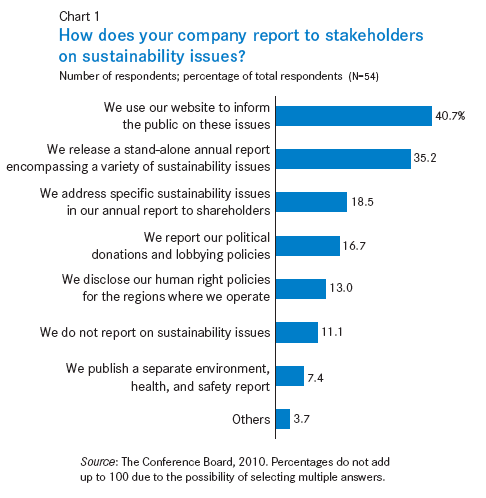
Here is a chart demonstrating how companies are

currently communicating CSR activities.

We are still surprised how passive and latent the CSR communications activities are.  The Conference Board recommends in their research that more consumer engagement is a critical next step to elevate CSR attribution and success.

The report says “a company’s CSR positioning can significantly amplify the effectiveness of CSR communication.  Stakeholders are likely to pay more attention to a comprehensive and coherent CSR message and believe in the authenticity of the social commitment.”

In other words, CSR should become a cornerstone asset in the brand’s equity and marketing focus.

The Conference Board Report Is Here.


UN Global Compact: 29 Laggard Companies Pressured On Sustainability Reporting.

21 03 2012


In a press release issued last week, the United Nations Principles for Responsible Investment indicated a coalition of global investors is pressuring 29 laggard companies who have not published sustainability reports to keep their promises, while lauding nearly 90 companies who are identified as leaders in advanced level reporting.

A summary of the press release follows:

(London, 15 March 2012) – A coalition of global investors from 12 countries managing over US$3 trillion of assets today added its voice to increasing calls for better corporate reporting on environmental, social and corporate governance (ESG) activities.

The coalition of investors, all signatories to the UN-backed Principles for Responsible Investment, is writing to 118 UN Global Compact companies with a combined market cap of an estimated US$2.59 trillion, to either:

  • welcome advanced-level reporting, or, conversely,
  • challenge non-communicating companies to regain full participant status.

This is the fifth year that investors have engaged with Global Compact participant companies on the issue of transparency. Each of the 29 laggard companies, with a combined market cap of an estimated US$136.9 billion, are participants of the Global Compact, but have failed to produce the mandatory annual report that communicates their progress on corporate sustainability. The Global Compact recently announced that it has expelled 3,123 companies since 2005 for failure to communicate progress on their efforts to implement its ten sustainability principles.

From 2008 through 2011, the engagement resulted in an average 40.1 percent of laggard companies subsequently submitting their sustainability reports; this has included firms such as BHP Billiton, Aker Solutions, Severn Trent, Merck Kga, Oriflame Cosmetics, The Gap and LVMH. The status of all companies included in last year’s engagement can be found here.

In addition to writing to laggard companies, the investor coalition has acknowledged 89 leader companies with a combined market cap of an estimated US$2.45 trillion who have been identified as advanced-level reporters.  These leaders include Novo Nordisk, Enel, Daimler, Nestle, Telefonica and Siemens. A full list of this year’s leaders can be viewed here.

Steve Waygood, Head of Sustainability, Research and Engagement at Aviva Investors, one of the investors involved in the coalition, said:
“Since we first proposed this initiative over five years ago it has gone from strength to strength, successfully encouraging some 40.1% of companies over the past five years to make good on their reporting commitments to the UN Global Compact. This bodes well for the discussions at the forthcoming UN Rio+20 conference in June, where corporate reporting on sustainability performance is appropriately high on the agenda of the 193 Member States that will be assembled.”

James Gifford, Executive Director of the PRI added,
“After the global financial crisis many investors believe that improved corporate disclosure of ESG issues leads to better risk management, good governance and enhanced transparency, all of which are necessary to protect long-term returns. Companies that would attract investors need to recognise this if they want to attract capital.”

Gavin Power, Deputy Director of the UN Global Compact added,
“Corporate sustainability implementation and disclosure both lie at the heart of the UN Global Compact. At the upcoming Rio+20 Summit, there will be an opportunity for governments and public policy makers to fully take stock of the rapidly evolving trends in business sustainability and responsible investment — with an eye towards creating new incentives to drive higher levels of sustainability performance and disclosure. We encourage investors to actively participate in the Rio+20 process, and welcome their contributions”.

The PRI and Global Compact initiatives are engaged in a number of mutually reinforcing activities, including an investor engagement urging companies around the world to sign onto the UN Global Compact. As of November 2011, this engagement saw 211 of the targeted companies join the Global Compact.


Print4Change: Work with us. Water for the people.

20 03 2012

March 19-25, 2012 is WORLD WATER WEEK.  UNICEF estimates that that 4100 children die daily due to water borne diseases. Approximately 900 million people do not have access to safe water. About 2.5 billion people are without adequate sanitation.

Congratulations to the team at Print4Change and their branding partner Studio Mpls.  One project working with Print4Change brings 74,000 gallons of clean water to communities in need.  This video challenge brings that project and promise to life.

Learn more about Print4Change here.

See more of Studio MPLS work here.


KPMG: Expect the Unexpected. Building business value in a changing world.

21 02 2012

In a massive report, KPMG’s study, Expect the Unexpected: Building Business Value in a Changing World, identifies 10 “megaforces” that will significantly affect corporate growth globally over the next two decades. It explores issues such as climate change, energy and fuel volatility, water availability and cost and resource availability, as well as population growth spawning new urban centers. The analysis examines how these global forces may impact business and industry, and calculates the environmental costs to business.

Michael Andrew, Chairman of KPMG International, said: “We are living in a resource-constrained world. The rapid growth of developing markets, climate change, and issues of energy and water security are among the forces that will exert tremendous pressure on both business and society.”

“We know that governments alone cannot address these challenges. Business must take a leadership role in the development of solutions that will help to create a more sustainable future. By leveraging its ability to enhance processes, create efficiencies, manage risk, and drive innovation, business will contribute to society and long-term economic growth.”

The study also highlights that up to one third of the world’s population now live in persistent deprivation.  With 72% of the world’s poor now residing in middle income countries.  The report declares that “persistent inequality is not only wrong, it’s bad for business – it prevents huge swathes of the population from being workers and customers and it increases the risks to business from the type of instability seen in the Middle East and North Africa in 2011.”

Yvo de Boer, KPMG’s Special Global Adviser on Climate Change and Sustainability, said global sustainability megaforces will significantly increase the complexity of the business environment. “Without action and strategic planning, risks will multiply and opportunities will be lost. Corporations are recognizing that there is value and opportunity in responsibility beyond the next quarter’s results; that what is good for people and the planet can also be good for the long term bottom line and shareholder value,” De Boer said.

The report was released last week during KPMG’s business leader summit in New York City in cooperation with the UN Global Compact (UNGC), the World Business Council for Sustainable Development (WBCSD) and the United Nations Environment Programme (UNEP).


Hertz Living Journey: Global Sustainability Initiative

13 02 2012

Hertz — the world’s largest general use car rental brand—introduced “Living Journey” last week… the Company’s corporate sustainability strategy. Living Journey positions Hertz to be the leader in Sustainable Mobility and Equipment Solutions through various strategic initiatives that integrate sustainability best practices throughout the Company including:

  • Smart Mobility—Hertz is committed to providing customers vehicle rental options that are fuel efficient and use clean, low-emissions technology such as Electric Vehicles (EVs) and hybrids.
  • Environment—Hertz’s goal is to minimize its environmental footprint and operating costs through efficiency improvements, resource management and renewable energy production.
  • Community—Hertz is dedicated to creating a positive impact and enhancing the communities it serves by giving back through philanthropic and volunteer efforts.

“We have a long-standing tradition of innovation and leadership that includes managing the environmental performance and social impacts of the Company alongside our fiscal responsibilities,” said Mark P. Frissora, Chairman and CEO of Hertz. “In 2011, we made tremendous progress on Hertz’s industry-leading solar generation and Electric Vehicle initiatives in addition to ongoing efforts to operate in an environmentally responsible manner at our corporate offices and rental facilities. As a continuation of our success, we are excited to introduce Living Journey which encompasses all of our efforts as an organization through partnerships, employee education and investments to reduce our impact on the environment, provide customer value, and manage our business sustainably.”

Through Hertz’s sustainability efforts, the Company has:

  • Recycled over 50,000 IT units since 2005 which diverted 2 million tons of e-waste from landfills,
  • Recycled approximately 680,000 gallons of used oil in 2011, and
  • Reduced paper use by 2.8 million pounds since 2006.

In addition, more than 80% of the water used at Hertz car washes is recycled. The Company is currently implementing energy audits and lighting upgrades across many of its facilities. Estimated results from recent lighting upgrades include 1.1 million kilowatt-hours and 776 tonnes of CO2 emissions saved annually (across 20 Hertz locations).

To communicate Living Journey to its stakeholders, Hertz has launched a sustainability website (http://www.hertzlivingjourney.com) which is the first of its kind for the Company. The site highlights Hertz’s achievements and plans in the sustainability arena, which includes energy-efficiency improvements such as lighting and HVAC upgrades, utilizing LEED certification standards for Hertz buildings, solar energy production, global recycling efforts, and delivering fuel-efficient fleet choices to consumers.

Last year, Hertz was recognized by the Global Business Travel Association for Sustainable Practice through Hertz On Demand, Hertz’s hourly car rental program.


UC Davis Study: Carbon Disclosure Boosts Stock Price.

9 02 2012

Companies that disclose information about their greenhouse gas emissions and carbon reduction strategies see their stock values rise.

“Companies should not be as reluctant as they have been to provide this information because we show that it can be shareholder-positive. Our message is that it pays to be green.” said Graduate School of Management Professor Paul Griffin.  Along with his co-author, Yuan Sun of UC Berkeley, Griffin tracked stock prices of firms around the time these companies voluntarily issued press releases disclosing carbon emission information. In the days after the press releases were issued, the companies saw their stock prices increase, Griffin and Sun found.

“When a company makes a voluntary disclosure of this kind, it signals to the investment community that this is a firm that is environmentally responsible,” Griffin said. “Investors are saying they would prefer to invest in an environmentally responsible firm.”

The study, “Going Green: Market Reaction to CSR Newswire Releases,” uses the archives of CSR Newswire to identify climate change related press releases issued by companies between 2000 and 2010. The researchers tracked the stock changes of the companies from two days before a press release was issued to two days after.

For the 172 companies identified as making voluntary disclosures, average stock prices increased just under a half percent in the five-day span around the disclosures, according to the study.

“This is evidence that managers’ voluntary climate change disclosures generate positive returns for shareholders,” Griffin said.

The study looked at voluntary disclosures only, so the authors could not definitively determine if required disclosures by all such companies would have yielded similarly favorable stock value increases.

However, to test their findings, the researchers compared stock movements of these companies to stock shifts of similar firms that did not disclose carbon emission information during the same time periods. The companies that did not disclose climate change information did not see a statistically significant increase in values, the study found.

“The matched sample companies do not behave the same way as the companies that disclose,” Griffin said. “If anything, in the matched sample, the price runs in the opposite direction.”

While much of the concern about greenhouse gas emissions has focused on energy and utility companies, the study by Griffin and Sun examined carbon emission strategies across a broad range of industries, including information technology, health care, telecommunications, and financial services, as well as energy and utilities.

The researchers analyzed separately the stock changes for smaller firms that disclosed carbon emission information. These firms saw an even greater effect on their stock values, with prices increasing 2.32 percent.

Compared with large firms, small firms are not followed as closely by analysts, and investors know less about them, so it makes sense that the release of climate change information would have a more pronounced effect, according to Griffin and Sun.

In recent years, companies have faced increased pressure from environmental activists and concerned shareholders to disclose their greenhouse gas emissions and to develop strategies to reduce them. Many firms have taken up the challenge, examining the environmental impacts of all aspects of their businesses, from supply chains to manufacturing processes to heating and air conditioning in office buildings.

Original post at Sustainable Brands


50 Fastest Growing Brands Serve a ‘Higher Purpose’

8 02 2012


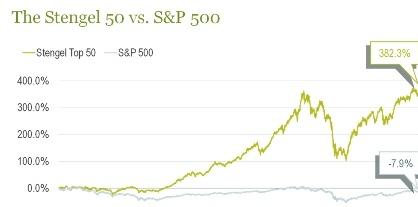
New research on the world’s 50 fastest growing brands found a cause-and-effect relationship between a brand’s ability to serve a higher purpose and its financial performance.

Brand consultants Millward Brown and former Proctor & Gamble marketing officer Jim Stengel developed the list of 50 brands, which they say built the deepest relationships with customers while achieving the greatest financial growth from 2001-2011. Furthermore, investment in these companies – the Stengel 50 – over the past decade would have been 400% more profitable than an investment in the S&P 500.

The list includes numerous brands with strong reputations for sustainability, such as Method, Seventh Generation, Stonyfield Farm and Chipotle.

The study forms the backbone of Stengel’s book GROW: How Ideals Power Growth and Profit at the World’s Greatest Companies (Crown Business; December 27, 2011).

“We wanted to uncover which brands grew the most over the past decade, both in terms of customer bonding and shareholder value,” said Millward Brown Optimor VP Benoit Garbe, who led the study. “Once we identified these brands, our burning question was what, if any, were the common principles that sparked and sustained their growth.”

To arrive at the Stengel 50, Millward Brown Optimor valued thousands of brands across 30+ countries. The list included both B2B and B2C businesses in 28 categories ranging in size from $100 million in revenues to well over $100 billion:

Ideals – The Ultimate Growth Driver

A research team – comprising Millward Brown Optimor brand strategists, Jim Stengel, Professor Sanjay Sood and MBA students at UCLA Anderson Graduate School of Management – uncovered that the most successful brands were built on an ideal of improving lives in some way, irrespective of size and category.

“We define ideal as the higher-order benefit a brand or a business gives to the world,” said Stengel. “Some companies are very explicit about their ideals, like Zappos – their ideal of delivering happiness is on their boxes, all over their offices, even on t-shirts employees wear. Other brands, like Louis Vuitton, are more implicit about it. But all their actions – throughout their products, stores and communications – amplify their ideal to luxuriously accentuate the journey of life.”

Added Garbe, “We found that this ideal is both a source of inspiration externally among customers, as well as a compass for internal decision making. So whether it’s Red Bull which seeks to Uplift Mind and Body or Pampers which is all about Caring for Happy Healthy Development of Babies, an ideal influences all facets of the business from HR and Marketing to R&D and Finance.”

Through case studies, GROW demonstrates how brand ideals aren’t simply about altruism or corporate social responsibility but a fundamental human value that is authentic to the brand and ultimately a driver for extraordinary growth. In fact, Millward Brown Optimor’s analysis discovered that those who centered their businesses on ideals had a growth rate triple that of competitors in their categories.

How Ideals Impact the Consumer Mind

Millward Brown’s team also determined that the 50 brands touch on five fundamental human values:

  • Eliciting Joy: Activating experiences of happiness, wonder, and limitless possibility
  • Enabling Connection: Enhancing the ability of people to connect with each other and the world in meaningful ways
  • Inspiring Exploration: Helping people explore new horizons and new experiences
  • Evoking Pride: Giving people increased confidence, strength, security, and vitality
  • Impacting Society: Affecting society broadly, from challenging the status quo to redefining categories

The list of companies is as follows:

Accenture, management and enterprise consulting services

Airtel, mobile communications

Amazon.com, e-commerce

Apple, personal computing technology and mobile devices

Aquarel, bottled water

BlackBerry, mobile communications

Calvin Klein, luxury apparel and accessories

Chipotle, fast food

Coca-Cola, soft drinks

Diesel, youth- targeted fashion apparel and accessories

Discovery Communications, media

Dove, personal care

Emirates, air travel

FedEx, delivery services

Google, Internet information

Heineken, beer

Hennessy, spirits

Hermès, luxury apparel and leather goods

HP, information technology products and services

Hugo Boss, luxury apparel and accessories

IBM, information technology products and services

Innocent, food and beverages

Jack Daniel’s, spirits

Johnnie Walker, spirits

L’Occitane, personal care

Lindt, chocolate

Louis Vuitton, luxury apparel and leather goods

MasterCard, electronic payments

Mercedes-Benz, automobiles

Method, household cleaners and personal care

Moët & Chandon, champagne

Natura, personal care

Pampers, baby care

Petrobras, energy

Rakuten Ichiba, e-commerce

Red Bull, energy drinks

Royal Canin, pet food

Samsung, electronics

Sedmoy Kontinent (“Seventh Continent”), retail grocery

Sensodyne, oral care

Seventh Generation, household cleaners and personal care

Snow, beer

Starbucks, coffee and fast food retailer

Stonyfield Farm, organic dairy products

Tsingtao, beer

Vente-Privee.com, e-commerce

Visa, electronic payments

Wegmans, retail grocery

Zappos, e-commerce

Zara, affordable apparel

Original post at Sustainable Brands


U.N.: “Resilient People, Resilient Planet: A Future Worth Choosing.”

1 02 2012

The UN High-Level Panel Global Sustainability released its report in Addis Ababa yesterday entitled “Resilient People, Resilient Planet: A Future Worth Choosing.” The panel’s 99-page report, which will serve as an input to the UN Conference on Sustainable Development in June, (otherwise known as the Rio+20 Summit) is a call to action, “to address the sustainable development challenge in a fresh and operational way.”

The executive secretary of the panel, Janos Pasztor said:

We cannot go into sustainable development without making a radical transformation of the economy.”

The long-term vision of the Panel is to eradicate poverty, reduce inequality and make growth inclusive, and production and consumption more sustainable, while combating climate change and respecting a range of other planetary boundaries. In light of this, the report makes a range of recommendations to take forward the Panel’s vision for a sustainable planet, a just society and a growing economy.

 In their summary report, the panel reminded us of the sober reality of the world today.
  • 27 per cent of the world’s population lives in absolute poverty (down from 46 per cent in 1990)
  • Global economic growth is up 75 per cent since 1992 but inequality is still high
  • An increase of 20 million undernourished people since 2000
  • 5.2 million hectares net forest loss per year
  • Ozone layer will recover to pre-1980 levels in 50 years plus
  • Two thirds of the services provided by nature to humankind are in decline
  • 85 per cent of all fish stocks are over-exploited, depleted, recovering or fully exploited
  • 38 per cent increase in annual global carbon dioxide emissions between 1990 and 2009
  • 20 per cent of the world’s population lack access to electricity
  • 884 million people lack access to clean water
  • 2.6 billion people are without access to basic sanitation
  • 67 million children of primary school age are out of school
  • 3.5-year increase in life expectancy between 1990 and 2010

The report says:

“The signposts are clear: We need to change dramatically, beginning with how we think about our relationship to each other, to future generations, and to the eco-systems that support us. Our mission as a Panel was to reflect on and formulate a new vision for sustainable growth and prosperity, along with mechanisms for achieving it.

With seven billion of us now inhabiting our planet, it is time to reflect on our current path. Today we stand at a crossroads. Continuing on the same path will put people and our planet at greatly heightened risk.”

Article originally posted on Triplepundit.com


Unilever’s Bold Move: Launches Brave New Foundation.

1 02 2012

Unilever has announced the launch of The Unilever Foundation, dedicated to improving the quality of life through the provision of hygiene, sanitation, access to clean drinking water, basic nutrition, and enhancing self-esteem.

To help achieve the Foundation’s mission, Unilever has formed partnerships with five leading global organizations that are committed to creating sustainable change worldwide: Oxfam, PSI, Save the Children, UNICEF and the World Food Programme.

The Unilever Foundation is a key action that Unilever is taking to help achieve its goal of helping more than one billion people improve their health and well-being, and in turn, create a sustainable future.

“We live in a rapidly changing world. One where populations are growing, water is becoming increasingly scarce, and where food security is a growing issue. Unilever is committed to addressing the unmet social needs that our business can play a unique role in helping to solve. This is especially true in developing and emerging markets where we have deep roots,” said Keith Weed, Chief Marketing & Communications Officer at Unilever.

“We aim to double the size of our business while reducing our environmental impact and deliver increased social value. Together with our partners, we will deliver life-saving solutions as we work toward achieving these ambitious goals,” he added.

The challenges of the 21st century are increasingly complex:

  • Over 1 billion people do not have access to safe drinking water.
  • More than 3.5 million children under 5 die annually from diarrhoea and acute respiratory infections.
  • One child dies every four seconds from preventable and treatable diseases.
  • 2.6 billion people lack access to improved sanitation.
  • An estimated 925 million people suffer from chronic hunger.

“Two billion times a day, somebody, somewhere, uses a Unilever brand. Our global reach and scale, coupled with a deep understanding of what triggers consumer behaviours that can lead to a sustainable future, uniquely enable us to drive long-term scalable and systemic change,” added Weed.

The Unilever Foundation will be working with its Global partners on a number of life-saving initiatives:

  • The Unilever Foundation’s partnership with Oxfam will improve lives around the world through programmes designed to empower individuals and deliver good nutrition and clean, safe drinking water.  According to Barbara Stocking, Oxfam Chief Executive, “Unilever and Oxfam have been working together across the world for quite a number of years so we are pleased to be working with Unilever with the new Foundation as it is set up. The first way that we are going to work together is in the UK, providing food parcels to the very poorest people and helping them move from surviving to thriving. We are looking forward to extending that worldwide, focusing on two pillars core to Oxfam’s work on tackling poverty and inequality – the rights of women and access to clean drinking water.”
  • In supporting PSI, the Unilever Foundation is making a tangible contribution to improving the health of children and families through delivering behavioural change interventions focused on hand washing, clean drinking water and sanitation. “The launch of the Unilever Foundation represents the best of what is possible in Davos,” said Karl Hofmann, President and CEO of PSI. “By pooling ideas and resources, private companies and health organizations can improve the health of millions of children and families worldwide.  PSI is excited to be working with Unilever, a company that recognizes – and values – the economic impact of good health.”
  • The Unilever Foundation is working with Save the Children to save and improve the lives of children around the world. This will involve improving access to health workers and life-saving vaccines, and ensuring more children and mothers are reached with high-impact health and nutrition programmes. The partnership will also provide a platform to catalyse a global movement and generate the public and political will for a global breakthrough on child survival. Jasmine Whitbread, Chief Executive of Save the Children International, said “Save the Children is proud to be selected as a partner for the Unilever Foundation. This partnership will help us to deliver transformational change to millions of children’s lives around the world through our EVERY ONE campaign. Each year 7.6 million children die needlessly of preventable illnesses. The support from Unilever will bring us a step closer to ensuring that a health worker is within reach of every child, life-saving vaccines are available for all, and children have enough food to grow up healthy. Combining our global reach and joint mbition – we can give children the chance to fulfil their potential.”
  • The Unilever Foundation and UNICEF are partnering to improve sanitation in developing countries through UNICEF’s Community Approaches to Total Sanitation (‘CATS’) initiative, a behaviour change program that promotes good hygiene practices, helps create demand for access to toilets, and raises awareness of the sanitation crisis. “By investing with communities in sanitation, this  partnership is helping us break one of the last taboos in public health – open defecation – and demonstrating real leadership for the private sector,” said Anthony Lake, UNICEF’s Executive Director. “Improved sanitation could prevent the deaths of over one million children each year so these investments have enormous potential for the future health and strength of their societies.”
  • The Unilever Foundation is also partnering with the World Food Programme (WFP) in Project Laser Beam, a public-private partnership that aims to create a scalable and sustainable model to improve nutrition, health, and livelihoods in Bangladesh and Indonesia. “With millions of children around the world suffering from malnutrition, there has never been a better time to take action on this truly solvable problem,” said WFP Executive Director Josette Sheeran. “Project Laser Beam is investing in the next generation by ensuring that our children grow up healthy and strong. The knowledge and expertise of partners like the Unilever Foundation help make this goal a reality.”

Additionally, the Unilever Foundation is also working with other organizations worldwide by providing a combination of direct funding, expertise, products and employee support that help to help address country-specific needs primarily aligned with the Foundation’s mission.


PwC: 50% of CEOs prepared to change strategies based on customers’ environmental and corporate responsibility expectations.

27 01 2012

PwC released the results of its 14th annual Global CEO Survey focused on sustainable growth.  The research was conducted with 1,201 business leaders in 69 countries and also included further, in-depth interviews with 31 CEOs to gain a better understanding of those issues.

In this year’s survey, nearly half of CEOs said they would change their companies’ strategies within the next three years because they expect stakeholders to factor companies’ environmental and corporate responsibility practices into purchasing decisions (see figure). Companies are planning to adapt their offerings—or develop entirely new ones—to address society’s changing sentiments. They’re also planning to answer questions about their environmental and corporate responsibility practices—which includes the practices of their suppliers—to stay in their customers’ good graces.

“Most corporations want to do the right thing. They want to be responsive regarding energy use. The people we’re hiring expect us to be. They want to work for a company that has a value system built around sustainability. I don’t think you need government regulation to drive it.”

– Stephen A. Roell Chairman and Chief Executive Officer, Johnson Controls


New Report: 70% of people won’t buy a brand if they don’t like the parent company.

23 01 2012

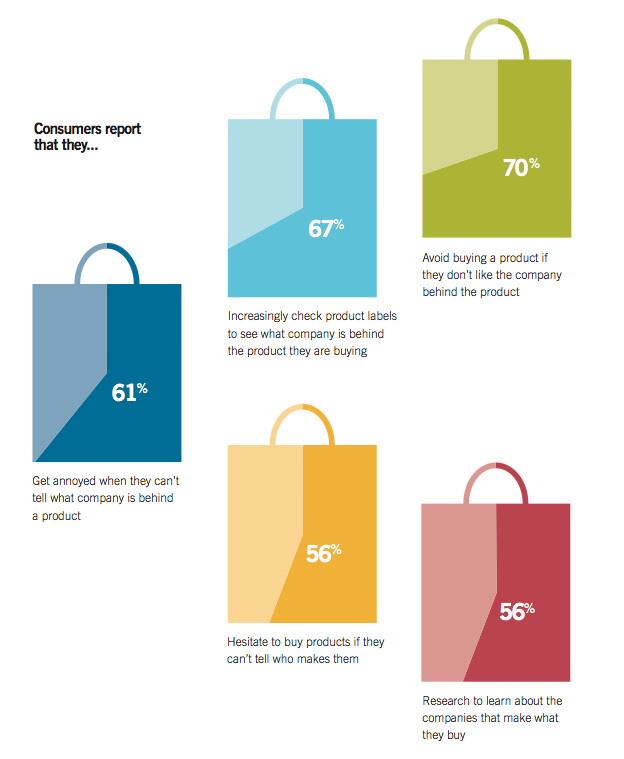
Weber Shandwick has released the results of “The Company Behind the Brand: In Reputation We Trust,” a study finding that 70 percent of consumers won’t buy into a brand if they don’t like the parent company. Among senior execs, 87 percent said that having a strong brand for the parent company is as important as having a strong product brand.

Responsible brand behaviors also influence purchase decisions.  57% of Americans said “more and more I try to buy products made by a company that does good things for the environment or community” – with 83% of Chinese consumers agreeing to the same statement.  57% of Americans say they “get annoyed when it’s not obvious what company is behind a product.” and 56 percent said they “hesitate” to purchase a product if they can’t tell which company makes it.

Says Micho Spring, Global Corporate Chair of Weber Shandwick, “In this always-on, multi-platform, uncertain world, corporate brands are more important than ever because they provide an anchor of trust and credibility in a sea of dynamic, continual change. A strong corporate brand is essential to unlocking the full value of the enterprise and strengthening its brands, products and services as a result.”

Implications from the report included: invest more time and energy in branding the parent company like making website improvements that go into greater detail, clear labeling (more than two-thirds of respondents said they’re checking labels), and use promotional campaigns as an opportunity to talk about the parent company and the individual brands.

The study concluded:

“Corporate reputation and brand reputation are now nearly indivisible. The importance of a firm’s reputation matters more than ever and is unified with the reputation of product brands to create one powerful enterprise brand. Consumers want assurance that their well-earned dollars, yuan, pounds or reais are spent on products produced by companies that share their values. They have higher expectations for the companies and the brands they like and are not hesitant to turn their backs when they are disappointed or fooled.”

Download a copy of the report here.

KRC Research, IPG’s market research firm, polled 1,375 consumers and 575 senior execs at companies with annual revenue of $500 million or more in October and November 2011. Research was conducted online in the U.S., U.K., China, and Brazil.

Original post on PR Newser


She’s Alive. Beautiful. Finite. Hurting. Worth Dying For.

22 01 2012

The anthem for 2012.  

This cut was put together by Vivek Chauhan, a young film maker, together with naturalists working with the Sanctuary Asia network (www.sanctuaryasia.com).


Bloomberg: EPA Providing Water to Homes Near Pennsylvania Fracking Site

21 01 2012

By Mark Drajem – Jan 19, 2012 8:48 PM CT
The Environmental Protection Agency will deliver water to four families in Dimock, Pennsylvania, where residents say their water has been contaminated during hydraulic fracturing by Cabot Oil & Gas Corp. (COG)

The EPA will also test water at 60 homes to assess whether any residents are being exposed to hazardous substances, the agency said in a statement.

“EPA is working diligently to understand the situation in Dimock and address residents’ concerns,” EPA Regional Administrator Shawn M. Garvin said in a statement. “Conducting our own sampling will help us fill information gaps.”

Residents and activists protested outside a venue where EPA Administrator Lisa Jackson was speaking in Philadelphia last week, urging her to force Houston-based Cabot to clean up wells they say were contaminated after drilling started nearby. The company is using hydraulic fracturing, or fracking, a process that injects water and chemicals to free gas in rock.

Cabot has no data that indicates natural gas operations are the cause of the concerns identified by the EPA, George Stark, a company spokesman, said. He said the agency is conducting an “unwarranted investigation.”

“Cabot looks forward to helping educate the U.S. EPA on the ground water and geological features of Susquehanna County,” where Dimock is located, Stark said in an e-mail.

The agency offered water to the families earlier this month and then reversed the decision the next day. The EPA now has agreed to start water delivery tomorrow, Michael Kulik, an agency spokesman, said in an e-mail.

Court Case Pending

Dimock residents say their water went bad more than three years ago. In an agreement with state environmental regulators, Cabot pledged to install methane-removal equipment on wells and set aside $4.1 million to pay residents who say they were harmed. The company didn’t admit fault.

Some residents settled. Others went to court and their lawsuit is pending. EPA officials visited residents at the end of last year, and told some not to drink their well water.

In Pennsylvania, the economic losses from possible environmental damage could be high. Drilling in the state’s portion of the gas-rich Marcellus Shale formation could generate $20 billion for the state’s economy by 2020, up from $13 billion last year, according to an industry-funded study published by researchers from Pennsylvania State University.

Separately, the U.S. House Oversight Committee led by California Republican Darrell Issa today asked the Energy Department for transcripts of interviews regarding fracking.

In an e-mailed statement, Issa said the committee also asked Jackson to explain documents obtained by the panel that “appear to indicate” that the EPA “is planning for a future where new supplies of natural gas are limited because of the agency’s concern about the environmental impacts” of the process.

To contact the reporter on this story: Mark Drajem in Washington at +1-

mdrajem@bloomberg.net


24/7 Wall St.: The Ten Most Hated Companies In America.

18 01 2012

Are you surprised?

24/7 Wall Street’s analysis was based on a rigorous study of two dimensions.  One is public research about consumer satisfaction, customer care, pricing of products and services, and brand impressions. Wall St. research takes into account another set of factors, which include present earnings, profit forecasts, product development and quality, and brand valuations.

Here is how they did their research.

“We examined each company based on several criteria. We considered total return to shareholders in comparison to the broader market and other companies in the same sector during the last year. We reviewed financial analyst opinions on those companies that are public. We analyzed data from a broad array of sources, including Consumer Reports, JD Power, the MSN/Zogby Poll, ForeSee and the University of Michigan American Customer Satisfaction Index. We also considered negative press based on 24/7 Wall St.’s analysis of media coverage and the Flame Index, which uses a proprietary algorithm to review more than 12,000 websites and ranks companies based on the frequency of negative words. Finally, we considered the views of taxpayers, Congress and the White House — where applicable.”

Read the article here.


Portfolio 21 Investments: PEAK > Investing at the edge of ecological limits.

16 01 2012

Congratulations to Portfolio 21 Investments in Portland for a remarkably blunt, clear and inspiring strategic approach to managing investments in “the age of volatility.”

In one of the most compelling presentations regarding the need to re-think investment criteria in a world of ecological crises, Portfolio 21 Investments calls for re-thinking traditional criteria for investment and puts forward a unique pov to navigate a new landscape.  They are making a commitment to factor in new levels ecological risks and to seek the rewards from those that are bringing forward innovation and new ways to confront new realities.

By evaluating companies’ energy and resource efficiencies as well developing new strategies for operating in an ecologically limited world, Portfolio 21 is bringing timely and refreshingly enlightened thinking to the investment sector.

Portfolio 21’s report cautions:  “Investors must be aware of a stark and fairly recent truth:  Our economic system has become so large that is is overpowering and threatening the natural systems that support it.  Our failure to anchor the economy within the earth and its systems facilitates a fallacy:  the belief that the economy can grow infinitely, regardless of the planet’s physical limits.”

Kudos to Portfolio’s 21 fresh and importantly provocative pov.  Let’s hope investors listen and companies heed the wisdom.

Get the PEAK report here.


American Sustainable Business Council: Reject Keystone XL Pipeline

16 01 2012

The American Sustainable Business Council (ASBC), a coalition of 45 business organizations, urged President Obama to reject the Keystone XL Pipeline.

“Contrary to the claims of the U.S. Chamber of Commerce, American Petroleum Institute and other pipeline advocates who threaten political retaliation if the pipeline is not approved, Keystone XL would not deliver on jobs, energy, safety or economic competitiveness,” said ASBC Executive Director David Levine.

  • Most of the oil that Keystone XL would carry from Canada to the Gulf Coast of Texas is destined for export, and the jobs the pipeline would create would be just as fleeting. The State Department estimated the pipeline construction workforce at 5,000 to 6,000 workers and as the Vice President of Keystone Pipeline for TransCanada told CNN, long-term jobs would be in the “hundreds, certainly not in the thousands.”
  • Keystone would deliver far less bang for the buck when it comes to job creation than alternative energy. A dollar of spending in clean energy generates three times as many jobs as a dollar spent on oil and gas, according to U.S. Commerce Department data.
  • Keystone is a boondoggle for oil companies, not an investment in our nation’s economic competitiveness. Keystone will leave us even further behind Germany, China and other countries that are dominating the rapidly growing global clean technology market.
  • Keystone would increase the kind of catastrophic environmental risk the World Economic Forum warns about in its just released Global Risks 2012. Keystone oil will be extracted from tar sands and its carbon emissions are 82% greater than the average crude refined in the United States, according to the Environmental Protection Agency. Keystone will increase carbon emissions and environmental risk. The pipeline would threaten the Ogallala aquifer, a large and irreplaceable supply of drinking water and irrigation in the Great Plains.

“Keystone is a sneak attack on American’s wallets,” said Frank Knapp, Vice Chairman of ASBC and CEO of the South Carolina Small Business Chamber of Commerce.” Its real aim is to import oil from Canada, refine it, and then export it to foreign buyers. For most businesses and consumers in the mid-west, the pipeline will serve up higher energy prices and higher food prices, since food prices include the price of energy and oil-based fertilizer needed to grow crops. That’s the last thing we need for real economic recovery.”

“The Keystone pipeline endangers the Ogallala aquifer — the only clean and reliable water source for drinking and agriculture for much of the Great Plains,” said Fran Teplitz, ASBC board member. “If this supply were contaminated by an oil spill, the costs to the public and business would be incalculable, and some of America’s most productive farmland would be lost.”

“Keystone makes no economic sense for America,” said ASBC co-founder and Director David Brodwin.  “Once we take into account the true cost of oil including subsidies, environmental damage, and military costs, oil is far more expensive than the alternatives.  The best thing we can do for the American economy and for American businesses as a whole is to wean ourselves from oil as quickly as possible.”

About The American Sustainable Business Council

The American Sustainable Business Council is a growing coalition of businesses and business networks representing over 100,000 businesses and more than 200,000 entrepreneurs, owners, executives, investors and others committed to advancing policies that support a vibrant and sustainable economy. www.asbcouncil.org.


BrandAsset® Valuator: Fewer trust brands but trust is key to building brand equity.

16 01 2012

Kudos once again to our friend John Gerzema and his team at BrandAsset® Valuator for another compelling report on the key trends related to trust, brands, and the rise of the what they deem “The Citizen Marketplace”.

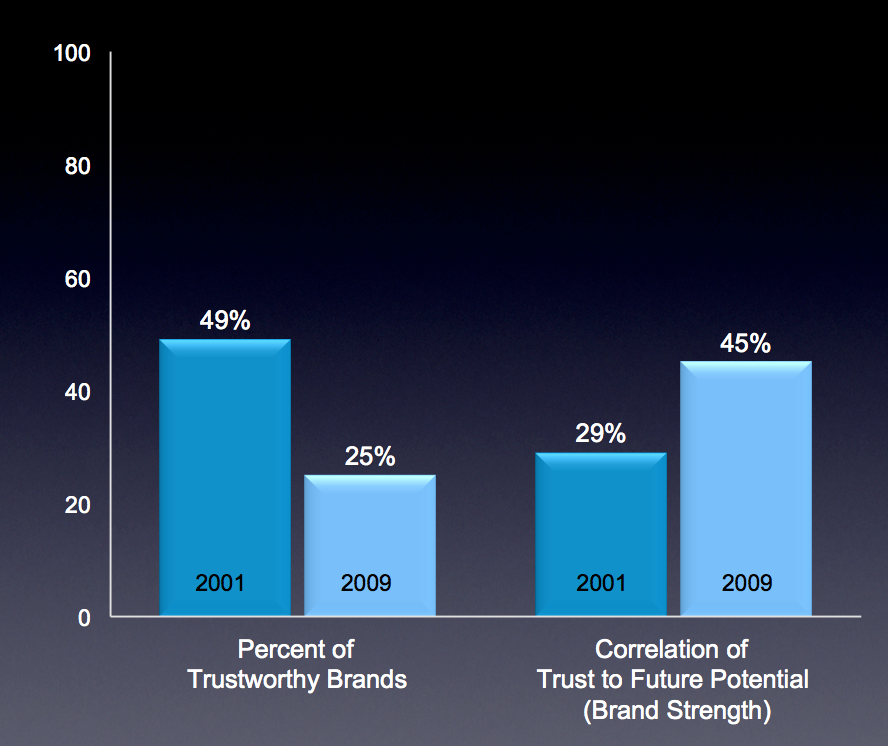
The headlines from their analysis and research demonstrate two inter-related factors as it relates to trust and brands:

That trust is the true, new brand differentiator.

  • 25% of people surveyed trusted brands in 2009, down from 49% at the beginning of the decade.
  • 45% cite trust as key to future potential or brand strength, up from 29% in 2001.

Other key findings in the research is the rise in social media as social contract with trust of social media outlets outpacing that of traditional media (and Twitter leading the trust game among social media outlets).

John and his BAV team conclude the following branding imperatives in the era of the Citizen Marketplace.

  • Trust is the new differentiator
  • There are numerous pathways to trust for companies and brands to pursue based on category requirements and their purpose and values
  • As communications evolve into conversations, social media is moving past social currency to social contract
  • Companies must not think social media, but ‘social as business model’.

Download a BAV presentation on the research here.

Thanks again BAV team for sharing this insightful work.


Edelman Trust Barometer: Only 46% of Americans trust business to do the right thing.

12 01 2012

In their 11th annual global survey on trust, Edelman research reports that people’s trust of institutions and returned to levels comparable to the height of the worldwide financial crises in 2009.

When asked how much they trust various institutions, only NGO’s were trusted by the majority of U.S. respondents.  Business, government and the media are not trusted by the majority of people and media’s trustworthiness as reached record lows.

  • 55% trust non-government organizations
  • 46% trust business.
  • 40% trust government.
  • 27% trust the media.

The drivers to corporate reputations are quality, transparency, trustworthiness and employee well-being.

The study concludes that businesses must align profit and purpose for social benefit.  It reports that people’s demands for authority and accountability are setting new expectations for corporate leadership and that trust is the essential component to both protect reputations and gain tangible benefits.  Lack of trust is a barrier to change.


MIT & BCG: Sustainability “Embracers” Seize Advantage.

29 12 2011

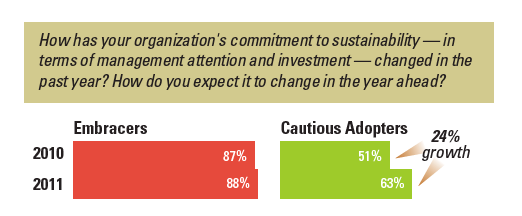
24% of companies surveyed answered positively to three questions –

indicating they were fully embracing the business benefits of sustainability.

In their new report, MIT’s Sloan Management Review – nearly 49% of executives reported that “improving brand reputation” was the greatest benefit to their organization in addressing sustainability.  Brand reputation was the number one drive selected by all companies.

Other key findings in the survey included:

  • 68% of companies plan to increase sustainability commitments in 2012.
  • 57% say that sustainability related strategies are necessary to be competitive.
  • 34% believe that sustainability related activities have added to their organization’s profitability.
  • 45% report that top management responsible for overall business strategy are responsible for sustainability decision-making.

Even Cautious Adopters of sustainability initiatives report significant increases in

attention and investment over the past two years.

According to the report,”Companies that are moving most aggressively on the sustainability agenda are doing more than reducing their environmental impact. And yet by heading down one path – by taking the leap of faith – they are finding many unexpected benefits emerge.  Employees are more engaged in meeting environmental goals than had been anticipated.  Brand value is enhanced, often in unexpected ways.  Partnerships generate unanticipated sources of innovation.  In short, sustainability is revealing new paths that will enhance companies’ long-term ability to compete.”

The survey was conducted with more than 3000 business executives from around the world.  You can download a copy of the report here.

Sustainability- The ‘Embracers’ Seize Advantage


Asda UK: The new weird is to do nothing.

14 12 2011

The retailer Asda has 500 stores across the United Kingdom, serves more than 18 million customers a week, and has a home shopping busienss that serves over 98% of UK homes.

Adsa just released the results of research it did with over 6,000 Asda customers – who they affectionately have labeled Everyday Experts.

Results from the research are encouraging and revealing.  One of the most compelling findings is that levels of caring about sustainability issues did not vary among high, middle or low income participants.

Other key findings in the report included:

  • 80% said they plan to continue or increase the number of green products they buy.
  • 80% said they buy green products because they think it’s just the right thing to do.
  • 70% said they care about being green—no matter what their gender, age, location or income level, with more than a quarter (28%) saying they care very much indeed.

You can access the Asda research here.


KPMG: U.S. companies “scratching the surface” in Corporate Responsibility reporting.

2 12 2011

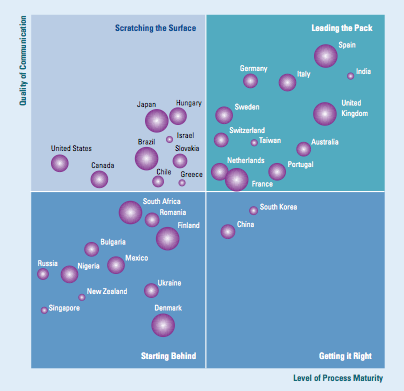
In its 18th year of tracking the reporting of Corporate Responsibility, KPMG has issued its latest annual CR Reporting survey.  KPMG analyzed the reports of 3400 companies in 34 different countries.  Among the findings, companies based in the U.S. are lagging behind other regions of the world in terms of the walking the walk vs. talking the talk on corporate responsibility.

According to KPMG, “Companies that can be seen as ‘Scratching the Surface’ are those that have the highest risk of failing to deliver on the promises they make in their CR report and/or targets they have set. These companies have chosen to focus more heavily on communicating their CR achievements effectively by choosing multiple channels and integrating CR in the regular annual reporting without focusing equally on the CR systems and processes. As a result, they may reach their audiences more effectively than the group that ‘is getting it right.’ However, they could also risk increasing feedback and pressure from their stakeholders, including their investors.”

Among other interesting insights and facts in the report include:

  • Of the 250 largest global companies, fully 95 percent now report on their CR activities. This represents a jump of more than 14 percent over the 2008 survey.
  • With almost half of the largest companies already demonstrating financial gains from their CR initiatives, and with the increasing importance of innovation and learning as key drivers for reporting, it is clear that CR has moved from being a moral imperative to a critical business issue.
  • Companies that continue to utilize only one channel of communication (such as an annual report) for their CR reporting will quickly find that they are losing ground to competitors who offer their data across multiple forms of media that appeal to a wider variety of stakeholder groups. However, the design of the specific systems and processes to facilitate this level of communication and specificity may prove complex for many organizations.

Download a copy of the KPMG Survey here.


The Enlightened Trend: Shared Value vs. Shareholder Value.

1 12 2011

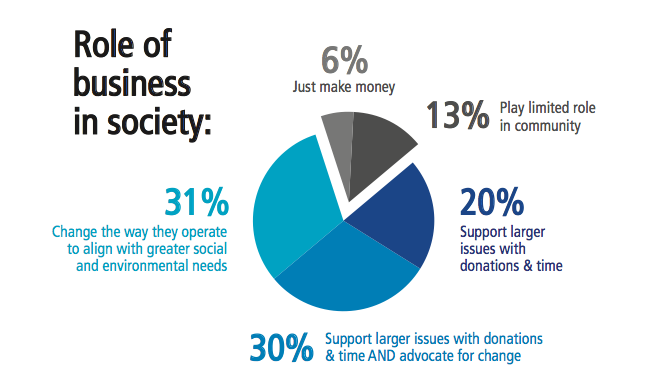
93% of CEOs believe sustainability issues will be key to business success in the future.  The concept of creating shared value vs. shareholder value is beginning to penetrate the consciousness of many corporate boardrooms. This new report from FSG – the nonprofit consulting firm – gives best in class examples of social engagement strategies where corporate and social issues are aligned.

According to FSG, “the most advanced companies have begun to look at social engagement through a different lens entirely.  Rather than seeing business and society in opposition, they recognize the enormous potential of business to contribute to social progress.  At the same time, they understand that firms depend on healthy and well-functioning societies to thrive.  Such companies seek to create “shared value” – incorporating social issues into their core business strategies to benefit both society and their own long-term competitiveness.”

Says Harvard Business School professor Michael E. Porter, “What’s happening now is really a redefinition of the boundaries of capitalism.  Creating shared value is the next stage of evolution in the sophistication of the capitalist model.”

The report was sponsored by HP and features examples from global business leaders committed to creating shared value, including Alcoa, GE, Cisco, and Nestle among others.

You can download a pdf of the report here.

(Figure from FSG)


Consumer Environmental Behaviors Have Shifted For Good.

30 11 2011

In a recent survey revisiting consumer attitudes toward environmental issues vs. 20 years ago, GfK Roper and S.C. Johnson demonstrate how much progress has been made.


The research study reports that 73 percent say they know a lot or a fair amount about environmental issues and problems, up from 50 percent earlier. Compared to 20 years ago, twice as many Americans are taking proactive steps to help the environment. Today, 58 percent of Americans recycle, 29 percent buy green products regularly and 18 percent commute in an environmentally friendly manner.

And the impact can be dramatic.  According to Kelly M. Semrau, Senior Vice President of Global Corporate Affairs, Communication and Sustainability at SC Johnson, “Simply recycling one aluminum soda can yields enough energy to power my laptop for five hours or light up my office for 20 hours using a 60-watt energy-saving light bulb. These individual steps are made possible because individuals have a desire to modify their behavior, but also because businesses and governments have taken a leadership role in facilitating these changes by providing the right tools, products and processes.”


Three-in-four respondents agree that “a manufacturer that reduces the environmental impact of its production process and products is making a smart business decision.” Those are much higher marks than Americans gave business in 1990. Individuals place themselves higher at 38 percent and rank businesses lower at 29 percent when asked who should take the lead in addressing environmental problems and issues.

Said Semrau, “We all have a role to play to protect our earth, and 75 percent of American consumers say they feel good when taking steps to help the environment. That’s huge. Through increased environmental knowledge and with the right products and tools, we can all appeal to that sentiment to make smarter choices for a greener lifestyle.”

Green shopping photo via Shutterstock.


Don’t Buy This Jacket: Patagonia’s Common Threads Initiative

29 11 2011

In a daring and unprecedented move, the long respected Patagonia brand decries consumerism run amok and pledges to improve its own sustainability performance and asks for the same commitment from its customers.  

For a brand inspired by and dependent on the environment, Patagonia is asking customers to pledge to reduce the products they buy and only buy what they need.  It also is asking consumers to repair what’s broken, pass the product onto someone else, and keep it out of landfills or incinerators.

In exchange for the pledge, Patagonia’s pledge is to make products that last a long time, help repair gear that needs it, find home for products you no longer need and will take back Patagonia products that are worn out.

In advertising placed on Black Friday in The New York Times and on-line on Cyber Monday, Patagonia calls itself on the carpet for the environmental impact of the products they manufacture.

“The environmental cost of everything we make is astonishing,” the ad reads. “Consider the R2 Jacket shown, one of our best sellers. To make it required 135 liters of water, enough to meet the daily needs (three glasses a day) of 45 people. Its journey from its origin as 60% recycled polyester to our Reno warehouse generated nearly 20 pounds of carbon dioxide, 24 times the weight of the finished product. This jacket left behind, on its way to Reno, two-thirds its weight in waste.

“And this is a 60% recycled polyester jacket, knit and sewn to a high standard; it is exceptionally durable, so you won’t have to replace it as often. And when it comes to the end of its useful life we’ll take it back to recycle into a product of equal value. But, as is true of all the things we can make and you can buy, this jacket comes with an environmental cost higher than its price.”

The ad concludes: “There is much to be done and plenty for us all to do. Don’t buy what you don’t need. Think twice before you buy anything. Go to patagonia.com/CommonThreads, take the Common Threads Initiative pledge and join us in the fifth R, to reimagine a world where we take only what nature can replace.”

Cheers to Patagonia for honest and authentic communication and for its call for balance and collaboration in a world of too much self-interest and scary levels of divisiveness.

This is world class sustainable branding.

Read more about the campaign on Patagonia’s blog


newSKY: Shoes that re-imagine recycling from New Balance.

28 11 2011

New Balance has introduced newSKY sneakers—which are made from 95% recycled PET plastic bottles and developed a partnership with Coca-Cola’s bottled water brand Dasani.  Great example of companies who can collaborate to achieve mutually beneficial sustainability objectives.

newSKY shoes are available in both men and women’s styles in many different colors.  An interesting holiday gift for the eco-minded family member and friends.

Since its cyber Monday – shop on-line for newSKY here,


WindMade: First Consumer Label Attracts Leading Global Brands

26 11 2011

Major global companies including Motorola Mobility, Deutsche Bank, Bloomberg, Method and BD (Becton, Dickinson and Co.) have produced or have pledged to procure at least 25 percent of their operations’ power consumption from wind energy. They announced their commitment to become certified under the new WindMade consumer label at a Global Launch event in New York.

The companies pioneering the use of the world’s first wind power consumer label were unveiled today at an event hosted by WindMade and the UN Global Compact in New York.

The label allows participating companies to communicate the share of wind power and other renewable sources as part of the overall power demand of their operations. The objective behind WindMade is to drive demand in wind power, thereby boosting investment and growing the renewable energy market.

Here is a video that tells the story of the WindMade label.

“These companies are at the forefront of the global sustainability movement,” said Henrik Kuffner, WindMade’s CEO. “We are delighted to have them on board the unique WindMadeTM initiative, and are confident that many others will follow suit in the coming weeks and months.”

“Consumers are ready to act. 67 percent of 31,000 consumers globally have told us they would favor WindMade products, even at a premium,” said Morten Albæk, SVP Global Marketing and Customer Insight at Vestas Wind Systems, the company spearheading the WindMade initiative. “WindMade empowers people to choose brands that choose wind.”

“We believe clean growth is good economics,” said Sabine Miltner, Group Sustainability Officer for Deutsche Bank. “We are committed to leveraging our core business expertise towards a cleaner and more energy efficient global economy. We believe in leading by example and have increased our use of clean electricity from seven percent to 65 percent over the last four years. WindMade is an important step toward more market transparency and we are pleased to join this new partnership.”

“It is Motorola Mobility’s intent through our participation in the WindMade initiative to encourage greater use of renewable energy sources like wind and solar around the globe,” said Bill Olson, director office of sustainability and stewardship, Motorola Mobility.

“The supply side of the clean energy sector can clearly deliver, but now it is time to galvanize demand. Government has done their part, and it is now up to the corporate community to demonstrate leadership by committing to clean energy development. WindMade provides us with a roadmap for achieving this,” said Curtis Ravenel, head of sustainability, Bloomberg.”Corporations investing in wind energy technology need a global set of standards if they are to provide the transparency that’s critical to their stakeholders as well as gain the competitive advantage that such investments can mean for their businesses,” said Kathy Nieland, U.S. sustainable business solutions leader, PwC.

”Using wind power helps BD become a more sustainable organization, and the WindMade label sends a message to our customers and the industry that supporting clean sources of electricity is a sound business decision and an important choice in reducing a corporation’s environmental footprint,” said Glenn Barbi, vice president, Global Sustainability, BD.

For more information on the founders and pioneers, see http://www.windmade.org.

According to the WindMade requirements, companies using the label must source a minimum of 25 percent of the electricity consumed from wind power. The wind energy share can be procured through a company-owned wind power generation facility, a long-term power purchase agreement for wind power, or the purchase of high quality Renewable Energy Certificates approved by WindMadeTM. The exact percentage of the wind energy share will be stated on the label. Companies can choose to certify global, regional or facility level operations, a distinction that will be clearly communicated on the label itself.

WindMade, which was introduced to the world at this past year’s World Economic Forum in Davos, is backed by the UN Global Compact, Vestas Wind Systems, World Wildlife Fund, Global Wind Energy Council, Bloomberg (as the official data provider), and the LEGO Group. PwC is the official verification partner.

A separate label for products is in development and will be released during 2012.


GREENPEACE: HP Leads Greener Electronics Race. Research in Motion in the cellar.

17 11 2011

In releasing its latest guide to Greener Electronics, Greenpeace has ranked 15 leading technology companies and how they are performing on key measures around sustainability.  The guide is intended to help consumers make better informed decisions when purchasing technology products and help businesses evaluate the performance of their technology vendors in helping them achieve their own sustainability objectives.

Download the Greenpeace Guide here

The comprehensive analysis will help consumers understand the impact of specific products, as well as the sustainability performance of the overall corporation. New criteria added to this edition of the Guide are based on the creation of truly sustainable electronics industry, Greenpeace said, and include a holistic examination of key supply chain issues.

“Right now, HP takes the top spot because it is scoring strongly by measuring and reducing carbon emissions from its supply chain, reducing its own emissions and advocating for strong climate legislation. However all companies we included in the Guide have an opportunity to show more leadership in reducing their climate impact”, Tom Dowdall of Greenpeace said in a statement.

Blackberry manufacturer Research in Motion (RIM) is ranked for the first time and scored well on conflict minerals and sustainable paper policy. But the company ranked bottom of the table because it needs to improve reporting and disclosure of its environmental performance, Greenpeace said.  It is interesting to note that failure to communicate progress – the opposite of the idea of sustainable branding – was a key factor in RIM receiving such a low ranking.


Congrats Honest Tea. Will report sustainability progress on Tumblr.

10 11 2011

Honest Tea’s decision to expand to this new communication channel reflects a trend among sustainable brands to find the most effective way to leverage corporate social responsibility (CSR) reporting to increase dialogue and engagement with consumers.

The organic bottled tea company released the second edition of its annual Mission Report in combination with a new Tumblr site that will update regularly with posts about the company’s progress on social and environmental initiatives.

Honest Tea released a digital version of the report, which is becoming standard practice, and some companies – led by outdoor companyPatagonia’s example – are building entire microsites dedicated to tracking the sustainability of products and services. Others are choosing to incorporate CSR reporting into the traditional annual report, as Clorox did this year, indicating that sustainability performance is reaching the same level of importance as other corporate disclosures.

Honest Tea’s report, called Keeping It Honest, details the company’s initiatives related to products, packaging, people and partners. It highlights achievements, such as the conversion of all teas to Fair Trade Certified, the company’s first annual service day, and the launch of a new product, Honest CocoaNova.

The report also addresses sustainability challenges, such as packaging, providing consumers with an introspective look at how the company strives to scale a mission-driven business.

Acquired by Coca-Cola earlier this year, Honest Tea also will utilize its Facebook page to host a Keeping It Honest tab, during Honest’s “Mission Month”, where Honest fans can choose a personal mission each week, creating their own agenda for change, the company says.

Go to the Keeping it HONEST site here.

Since Honest Tea was founded in Bethesda, Maryland in 1998, the company has sustained an impressive double-digit annual growth rate. The company was listed as one of PlanetGreen.com’s Top 7 Green Corporations of 2010. It also received Greenopia.com’s coveted 4-Leaf Rating as “the greenest beverage company” for the third year in a row and was recently ranked by The Huffington Post as one of the leading “8 Revolutionary Socially Responsible Companies.”


Original article published at Sustainable Brands Weekly


Global Opportunity: Tell It How It Is – according to Cone Echo Research

18 10 2011

In its newly released global research report, Cone Echo Research highlight the opportunity for business to build a stronger relationship with consumers by meeting their expectations that business will address social and environmental issues through their operations, their products and services and their unique expertise.  

The trend is global as evidenced by the results in ten countries and the 10,000 people who were surveyed.  And not surprisingly, communication is critical in bridging the gap between perception and reality.

  • 93% of consumers say they want to know what companies are doing.
  • 91% of people say they want to be heard as well.

This means that reciprocal communication is more than an expectation, its essential in building a strong connection with consumers.  And critical to overcoming the confusion, skepticism and even cynicism among consumers.  

  • 89% of consumers globally believe companies share only the positive information about their efforts, while withholding the negative.
  • 71% are confused by the messages companies use to talk about their efforts and impacts.
  • 61% of consumers believe a company is telling the truth about its social and environmental efforts and impacts, but this varies widely by nationality.

Trust is more complex.

The more trusting a country’s consumers are in business, the more confused they are by a company’s messages. These consumers are putting great faith in the words of business, even though they don’t necessarily understand the messages themselves. In return, they don’t ask for perfection, simply the truth. Nearly nine-in-10 (88%) say it’s ok if a company is not perfect, as long as it is honest about its efforts. This permission presents an opportunity for companies to speak candidly about tough CR issues to build trust.

Follow this link to access the Global CR Study


Men Unmoved By Green Marketing: Radius Research

14 10 2011

New research from global research firm Radius Global Market Research indicates that increased spending on product development and marketing aimed at environmentally conscious consumers may not be getting through to men.

Managing Director of Radius Chip Lister observed “More and more dollars are being dedicated to green marketing initiatives built to associate brands with environmental responsibility but our survey results show that in spite of this increase in spending, the majority of men are not significantly influenced by environmental responsibility when they make a purchase.”

Radius asked U.S. consumers to rate brand attributes across a broad range of products and services in terms of the amount of influence they had on their decision to purchase.

According to the survey, women place importance on a wider range of brand values than do men. Both men and women ranked the same three issues as having the most influence over purchases: (1) Value; (2) Quality; and (3) Trust. After that, however, men appear to be influenced little by any other brand values.

“We found that the value men and women place on environmental responsibility is part of a much broader pattern,” says Lister. “Men are influenced by a much smaller set of brand attributes when they make purchase decisions. Marketers that stray too far from these core attributes run the risk of not being heard. By contrast women seem readily affected in their brand decisions by issues that could almost be considered ‘bigger’, certainly well outside the more direct or tangible deliverables offered by the brand/product.”

Radius’s study was conducted in the third quarter of 2011 and surveyed U.S. households. The firm’s proprietary Know More(TM) panel represents over 3.4 million households, with over 6 million consumers in the U.S. and over 1.5 million consumers in Canada, the U.K. and Europe, Australia and Scandinavia.


Sweet Sixteen: World Economic Forum finds New Sustainability Champions

19 09 2011

Congratulations to the World Economic Forum and Boston Consulting Group for their work in identifying 16 companies in emerging markets that are setting new standards for sustainability.

In the new report by WEF and BCG, they highlight that Brazil, China, India, Indonesia, the Russian Federation and South Korea will account for more than 50% of the world’s economic growth by the year 2025.

From the Executive Summary of the report:

“The World Economic Forum and The Boston Consulting Group (BCG) set out to seek unconventional, practical solutions to the current challenges of growth, aiming to identify and support key business practices, and to relay them to the global community. This project deliberately did not look to governments, environmental organizations or multinational corporations from advanced economies – all sources of well- practiced but as yet insufficient answers. Instead, it went to agents who deal with a wide range of constraints in their daily business: rapidly growing companies originating and operating in the emerging markets, where economic prosperity and populations are growing fastest, and where environmental constraints and stresses are often highest.

As a result of a rigorous research process, the project identified and assessed 16 emerging market-based companies that share a unique mindset and set of best practices: these are the New Sustainability Champions.

Based in countries such as Brazil, Costa Rica, Egypt and Kenya, these companies provide inspiring examples for any corporation around the world interested in tackling the challenges of performance, innovation, growth and sustainability. Specifically, the New Sustainability Champions:

1. Proactively turn constraints into opportunities through innovation

2. Embed sustainability in their company culture

3. Actively shape their business environments

Moreover, they demonstrate superior financial performance when benchmarked against their peers.

The mindset, practices and business models of these New Sustainability Champions offer critical insights for emerging market-based businesses, established multinationals and governments. They could provide multiplier effects and create the basis for replication and extension among companies operating in emerging markets. They also serve as a starting point for redefining the future of growth: one that is robust and efficiently binds together all elements of sustainability – economic, environmental and social”

Here are the 16 companies that the report highlights.

Download a copy of the report here


Back to the Start: Inspiration from Chipotle

31 08 2011

Willie Nelson sings Coldplay’s riveting “The Scientist” as Chipotle and film-maker Johnny Kelly dramatically depicit how our food and farming system has spun out of control.  


Great effort of sustainable branding from this rare thought leader in the quick service restaurant industry.


Timberland & VF Corporation: New heights or swift decline?

15 06 2011

This week, VF Corporation (the mega holding company for apparel and active lifestyle brands such as Northface, Wrangler, Lee, EastPak) purchased the venerable Timberland brand of sporting footwear for $2 billion.

Of course, Timberland put this positive spin on the news.  Timberland Chief Jeff Swartz said in a statement:   “Timberland is proud of its rich heritage, its track record of success and its reputation as a responsible and environmentally-conscious global citizen, all of which will be preserved and enhanced by becoming part of the VF family of brands.  VF is known for its ability to acquire and grow authentic outdoor brands, while protecting a brand’s unique culture and DNA.”

The jury will be out but many eyes will be watching as the sustainable darling Timberland (ranked number 2 out of 150 companies for sustainability performance by the nonprofit group Climate Counts) will be inspiring to VF. or in the pursuit of stated 10% annual revenue growth – Timberland starts a rocky slide down from sustainability heights of greatness.

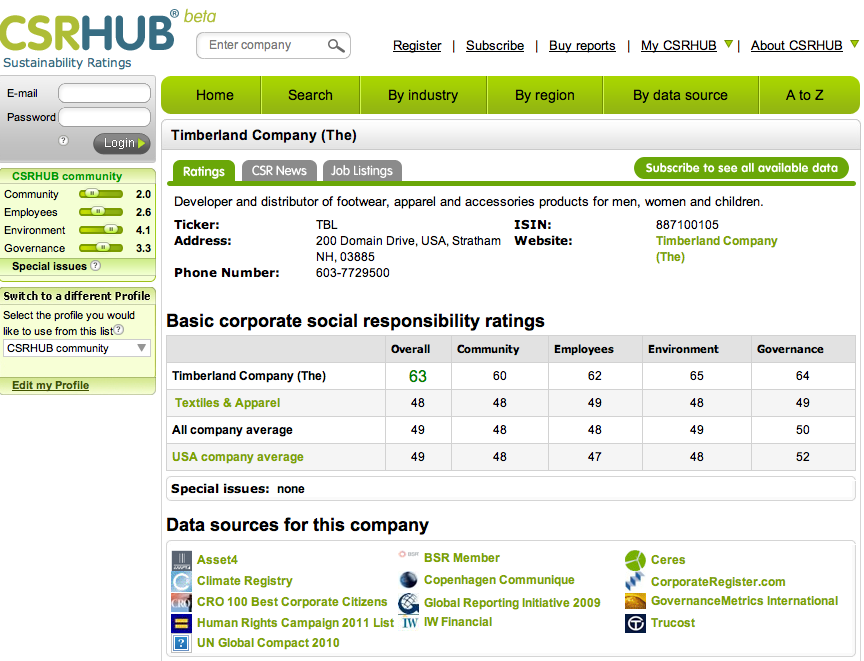
According to CSRHUB.com, VF Corporations current performance on sustainability and overall corporate social responsibility measures is hardly a pace-setter.

VF’s overall CSR ranking is 44 – below the averages for other apparel companies, the average U.S. company and all companies ranked.  Its performance on the environment was 20% below the average for U.S. companies.

Contrary to VF’s rather uninspiring CSR performance, CSRHUB.com gives Timberland an overall ranking of 63 – and a sterling 65 on environment performance measures (vs. 48 for the average U.S. Company).

Timberland’s track record of integrating socially responsible practices and community outreach into their brand marketing efforts make them a poster child for positive sustainable branding.  We worry VF’s leadership won’t cherish the vision and values that has made Timberland special and uniquely sustainable.  Stay tuned.

CSRHUB.com is a great resource for evaluating CSR performance of companies – go here.


ImagePower Survey: 60+% of consumers globally want to buy from environmentally responsible companies.

10 06 2011

Monterey, CA – June 8, 2011– Consumer appetite for green products has increased significantly in the past year, according to findings from the annualImagePower® Global Green Brands Survey, one of the largest global consumer surveys of green brands and corporate environmental responsibility. This year’s survey, which polled more than 9,000 people in eight countries, reveals that consumers worldwide intend to purchase more environmental products in the auto, energy and technology sectors compared to last year. Now more savvy about how green choices in personal care, food and household products directly affect them and their families, global consumers are expanding their green purchase interest to higher-ticket items such as cars and technology.

Industries protecting the environment

Consumers are divided on which industry currently does the best job of protecting the environment. 18 percent of American and 20 percent of Australian consumers say the energy industry does the best job of protecting the environment. By comparison, most of respondents in Germany (19 percent), India (22 percent), China (33 percent) and Brazil (22 percent) cite the technology sector. In the UK, more than 21 percent of consumers say the grocery store industry is the top protector of the environment.

Where consumers are spending

While personal care, grocery and household products are the industries with the greatest representation among the top ten brands list, consumers in the US indicate that they intend to spend more money on green technology, energy and automotive products or services in the next year. When it comes to current usage of green products or services, the 2011 study reveals that the household products and grocery categories have the highest consumer adoption rates in all countries except China, where packaged goods/beverages and personal care are the most used categories, and in Brazil, where household products and personal care dominate. In all countries, consumers indicate that in the coming year they are less likely to buy green packaged goods and beverages, grocery and household products.

“We’re seeing a shift in the ‘In Me, On Me, Around Me’ mentality when it comes to purchasing green products,” said Russ Meyer, Chief Strategy Officer of Landor Associates. “Consumers have a good understanding of how green choices in personal care, food and household products directly affect their families, and they are now seeing benefits like costs savings that attract them to higher cost items like cars and technology.”

Greater perceived value in developing countries

Consistent with last year’s study, more than 60 percent of consumers globally want to buy from environmentally responsible companies. Respondents in all eight countries surveyed indicate that they are willing to spend more on green products. In developed countries such as the US and the UK, roughly 20 percent of those surveyed would spend more than 10 percent extra on a green product.

In developing countries, however, consumers say that green products have a higher inherent value. Ninety-five percent of Chinese consumers say they are willing to spend more on a product because it’s green—with 55 percent of them willing to spend between 11-30 percent more. Similarly 29 percent of Indian consumers and 48 percent of Brazilians say they are willing to spend between 11 – 30 percent more on green products.

“Consumers in developing countries express greater concern over the state of the environment in their countries, which may contribute to their greater willingness to pay more for green products,” said Paul Andrepont, Senior Vice President of Penn Schoen Berland. “Consumers in these markets also differ from their developed-nation counterparts in believing that selection, rather than cost, is the greatest barrier to buying green products. Brands that address these consumers’ very real concern – over air pollution in India or deforestation in Brazil – have the ability to position themselves as premium in the market, a possible competitive advantage.”
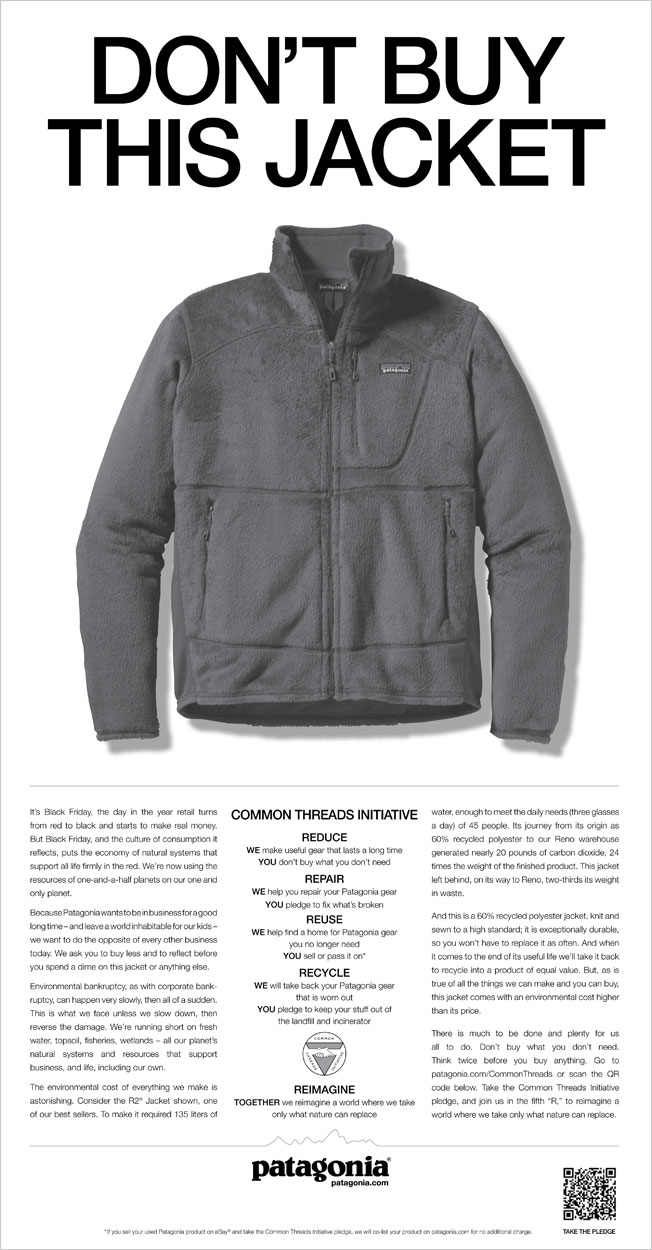
Packaging is critical

Packaging continues to be a matter of great concern for US consumers. Seventy-one percent believe companies use too much material in product packaging – though only 34 percent of US consumers say they consciously purchase products that use less packaging. Almost half of American consumers feel that packaging that can be recycled is more important than packaging made from recycled or biodegradable materials.

Packaging also plays a critical role in communicating product benefits to US consumers. More than 50 percent of American consumers say on-pack information helps them understand how green a product is. Additionally, 40 percent say that packaging is their primary source for information on environmental issues regarding products.

“Other than price, the two biggest influences on purchase decisions are on-package messaging and prior experience with the product, both of which satisfy the consumer need to understand a benefit beyond ‘saving the world,’” said Annie Longsworth, global sustainability practice leader for Cohn & Wolfe. “It’s critical for green brands to communicate the real and tangible benefits of their products in addition to being green, which still feels like luxury to many consumers.”

2011 US rankings
For the first time since the inception of the ImagePower® Green Brands Study in 2006, the four brands perceived to be the greenest are “born green” companies. The full list includes:
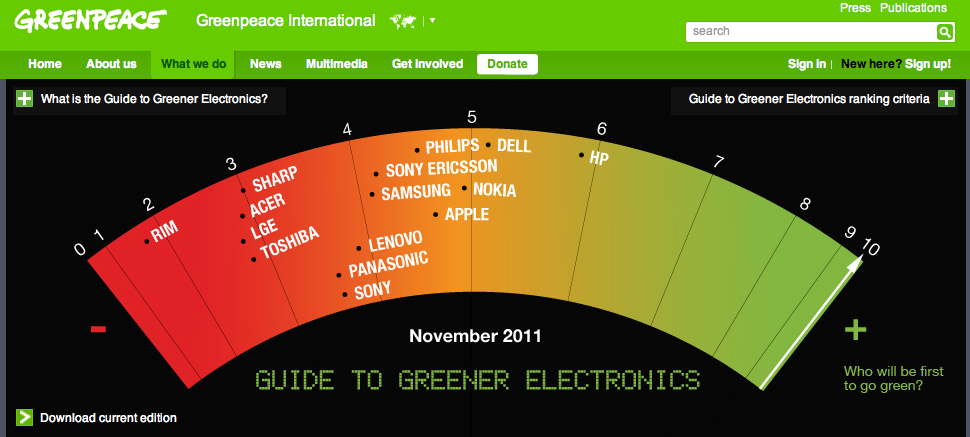
  1. Seventh Generation
  2. Whole Foods
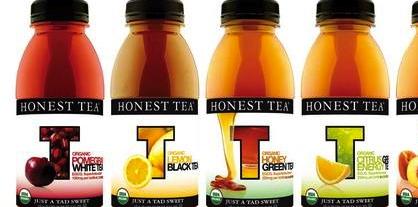
  3. Tom’s of Maine
  4. Burt’s Bees
  5. Trader Joe’s
  6. The Walt Disney Company
  7. S.C. Johnson
  8. Dove
  9. Apple
  10. Starbucks, Microsoft (tied)

“When we analyzed the approach of the top ten brands companies, using our Esty Environmental Scorecard™, it was clear that the winners achieve a product-value-information trifecta,” said Amy Longsworth, partner at Esty Environmental Partners. “The top brands offer clear price value through co-benefits: a great innovative product that meets my functional needs plus green attributes that meet my values needs. These companies also tend to have robust life-cycle insight and complete sustainability strategies across their value chains, which enable them to draw from rich experience and data for their consumer communications.”

Methodology

The seventh annual Green Brands study polled more than 9,000 people in eight countries —including the United States, the United Kingdom, China, Brazil, India, Germany, France and Australia—and was conducted by WPP agencies (NASDAQ: WPPGY) Cohn & Wolfe, Landor Associates and Penn Schoen Berland Associates (PSB), as well as independent sustainability strategy consulting firm Esty Environmental Partners. The Green Brands Study identifies emerging trends related to consumer perception and purchasing behavior of “green” products. The study was conducted online among the general adult population between April 2, 2011 and May 3, 2011. It has a margin of error of +/- 3.0%. In China, India, and Brazil, respondents were from tier-one cities.

To view 2011 global findings, click here. For US findings, click here.


Kudos to Coke: Appoints Global Chief Sustainability Officer

30 05 2011

Congratulations to Coca-Cola with its appointment of former Chief Marketing Officer Beatriz Perez to Chief Sustainability Officer.

Under the vision of CEO Muhtar Kent, Perez will be responsibile for integrating sustainability initiatives into brand and marketing efforts and further demonstrate its monitoring and improving the commitment to the moderate impact of its products and operations on the environment.

We also find it notable that the new office of sustainability at Coca-Cola will include leaders responsible for corporate social responsibility, environment and water, external affairs and sustainability strategy and communication.

Read the news release below.

May 23, 2011 – The Coca-Cola Company (NYSE: KO) has appointed it first Chief Sustainability Officer (CSO) and created a new global Office of Sustainability in an effort to better integrate ongoing initiatives.

Beatriz Perez, who is currently Chief Marketing Officer for Coca-Cola North America, will serve as CSO beginning July 1. She will work to integrate Coca-Cola’s sustainability initiatives in the areas of water, climate protection, packaging and recycling.

“We have made significant progress with our sustainability initiatives, but our current approach needs focus and better integration to further accelerate our system sustainability agenda and meet our 2020 Vision goals,” said Muhtar Kent, Chairman and CEO, The Coca-Cola Company. “We are realigning this important work to create a unified team, strategy and business plan that connects our sustainability work and actions.”

Under Perez’s leadership, the Office of Sustainability will create and oversee Coca-Cola’s integrated global sustainability strategy; set goals and commitments; assess and drive scaled investments; and steward and track all global partnerships and key sustainability projects.

Reporting to Perez, the new team will include John Reid, Vice President, Corporate Social Responsibility; Charlotte Oades, Global Director, Women’s Economic Empowerment; Abby Rodgers, Vice President, Sustainability Strategy and Communication; Jeff Seabright, Vice President, Environment and Water; and Lisa Manley, Group Director, Corporate External Affairs.

Perez will report to Executive Vice President and Chief Administrative Officer Alex Cummings.

Kent said Perez is uniquely qualified for the role based on her passion for sustainability and deep experience at the Company, including the incorporation of sustainability initiatives into Coca-Cola’s North American marketing programs.


LA TIMES: Skepticism grows over products touted as eco-friendly.

27 05 2011
Great article below by Tiffany Hsu from the Los Angeles Times highlight consumer’s confusion over eco-branded products. According to a recent survey, 65% of consumers want a single seal identifying a green product, similar to the way beef is labeled by the U.S. Department of Agriculture.
But for now, there’s a swarm of companies that issue green certification, endorsements and labels for a fee.
A word of warning for all marketers that sustainable branding is not about false marketing claims and green gimmicks.  It is about an authentic commitment to providing responsible and sustainable brands for the future of the planet and the protection of mankind.
By Tiffany Hsu, Los Angeles Times

May 21, 2011

To Marina Meadows, green may be the new white.When she goes shopping these days, Meadows is often overwhelmed by a bevy of products touted as green, from Earth-friendly dish soaps and bamboo-derived towels to eco-detergents and plant-based soda bottles.But the Santa Monica resident, 26, said that while she is willing to pay extra to help the environment, she’s often not sure how much of the labeling she should believe.”Sometimes, I wonder if any of it’s really green or if it’s all a marketing scheme,” Meadows said.With booming interest in the environment, more companies are trying to cash in by promoting themselves and their products as green.

But environmentalists and some consumers are crying foul, saying that many companies are making the products out to be greener than they really are, a practice they call greenwashing.

The term caught on when hotels began asking guests to reuse towels, saying they were trying to conserve water, though skeptics said it was really to skimp on laundry costs.

These days, greenwashing is reaching “epidemic proportions,” according to advertising firm Ogilvy & Mather, which has been pushing for accurate environmental marketing.

“If we allow companies to get away with exaggeration, consumer skepticism will become cynicism and they’ll stop choosing green products at all,” said Scott McDougall, chief executive of eco-marketing company TerraChoice.

Last year, TerraChoice counted 5,000 items in retail stores that claimed to be green, a 73% increase from the year before. But on every toy and 95% of home and family products, at least one eco-friendly claim turned out to be misleading or false, the company found.

Some efforts just seem a bit odd: Plastic Barbie dolls can now sport handbags and accessories made from recycled materials.

“Most companies are engaged in incremental tinkering — symbolic actions without any real substance,” said Kumi Naidoo, executive director of Greenpeace International.

But no one can agree on what exactly makes a product green and therefore what exactly constitutes greenwashing.

As a result, federal regulators have had difficulty setting standards to regulate green labeling. The Federal Trade Commission has a voluntary guideline for eco-advertising, but it is 20 years old. It is being updated.

According to a recent survey, 65% of consumers want a single seal identifying a green product, similar to the way beef is labeled by the U.S. Department of Agriculture.

But for now, there’s a swarm of companies that issue green certification, endorsements and labels for a fee.

One such program, the EcoAd from EcoMedia, a division of CBS Corp., has earned the ire of some environmental groups. They complained to the FTC that CBS was being potentially deceptive when it sells green leaf badges for advertisers to use in commercials.

“An Eco-label that promises advertisers a green image while telling them they don’t need to do anything to earn that image is the very definition of greenwashing,” said Michael Green, executive director of the Center for Environmental Health, in a statement.

A portion of all EcoAd proceeds go to environmental projects, said EcoMedia President Paul Polizzotto. And although there aren’t disclaimers on the ads themselves, viewers are directed to a website noting that the leaf symbol is not meant as an endorsement of the companies that use it.

“If an advertiser wants 30 seconds of your time, they might as well improve the quality of your life, and that’s the furthest thing from greenwashing,” Polizzotto said. “What I usually see in media is a lot of talk about greening and not a lot of action.”

Labels play a major role in helping consumers decide between products claiming to be green. Nearly 40% said they rely on labels, according to a report from the eco-marketing company Shelton Group.

“Many don’t trust manufacturer motives, but they end up making a decision at the shelf based on the packaging, usually just buying the brands they’ve always bought,” said Suzanne Shelton, chief executive of the group.

It can be a tricky call for consumers, who are regularly met by a vast array of vaguely defined green catchphrases such as “natural,” “clean” and “organic.”

Even manufacturers often don’t know the difference between designations such as “compostable” and “biodegradable,” researchers said. Biodegradable goods break down into carbon dioxide, water and biomass over time, while compostable items do the same while also releasing nutrients into the soil, which can be good for growing plants.

“Companies don’t really understand the science behind it and they don’t question it,” said Steven Mojo, executive director of Biodegradable Products Institute, a testing group. “They think that their packaging or product is somehow going to magically disappear in a landfill.”

Claire Scarisbrick, 26, recently spent half an hour sifting through eco-friendly body wash options atWhole Foods. The dental hygienist and chef, who lives near West Pico Boulevard and South La Brea Avenue, said she researches unfamiliar brands on her iPhone and avoids green products from large companies out of fear of being “duped.”

She likes locally produced products that aren’t heavily processed. She didn’t buy a cosmetic company’s “natural” line of face washes after she compared it to the company’s standard product and found little difference in the ingredients.

“I don’t want to be putting something with 30 chemicals in it onto my skin,” she said. “If I’ve got the money, I’d much rather spend more of it on something that I believe in, not something that’s just easily accessible.”

tiffany.hsu@latimes.com


Spring Planting: The Sprouting Of The Plant Bottle

27 05 2011

Marketers are recogizing the value of introducing alternatives to traditional plastic bottles.  We encourage continued innovation and adoption of these strong signs of a commitment to sustainability by consumer packaged goods marketers – and support from their customers.  It’s a great sign of spring and summer and the “growing season.”


The Heinz Ketchup Plant Bottle will begin arriving in stores in July.


Pepsi recently announced they have devleoped the worlds first PET plastic bottle

made entirely from plant-based renewable resources.

Pepsi’s bottle is made from bio-based materials including switch grass, pine bark and corn husks.  In the future, the company expects to broaden the renewable resources used to create the green botle to include orange peels, potato peels, oat hulls and other agricutltural byproducts from its food business.  Pepsi says the new bottle is expected to begin appearing on shelves in 2012.

The healthy sign of a race between arch rivals Pepsi and Coke is Pepsi innovation claims to be 100% renewable materials vs. the PlantBottle currently being deployed by Coca-Cola which is made of 30% renewable resources.


Coca-Cola was among the first to pioneer the plant bottle technology in 2009.


Fair Trade Certified Labeled Products Increases Sales.

28 04 2011
Researchers from Harvard, the London School of Economics and Massachusetts Institute of Technology Release Study on the Value of Ethical Labeling

Fair Trade USA, the leading third-party certifier of Fair Trade products in the United States, reports new findings which confirm that the prominent appearance of the Fair Trade Certified™ label increases sales  among coffee-buying consumers.

To investigate the topic of consumer demand for Fair Trade products, researchers Jens Hainmueller of the Massachusetts Institute of Technology, Michael J. Hiscox of Harvard University, and Sandra Sequeira of the London School of Economics, conducted a six-month research study in partnership with a prominent national grocery retailer. As reported this weekend in the Wall Street Journal, the team examined purchasing behavior among actual consumers at 26 stores and key findings show that:

  • The Fair Trade Certified label alone has a large positive impact on sales.
  • Sales of the two most popular bulk coffees sold in each of the 26 test stores increased by up to 13 percent when labeled as Fair Trade Certified.
  • The study also revealed that a substantial segment of consumers are willing to pay up to eight percent more for a product bearing the Fair Trade Certified label.

The findings are consistent with a Globescan study conducted in 2010, which revealed that 75 percent of consumers said Fair Trade certification makes them feel “very positive or positive” about products; 30 percent said Fair Trade is “likely to increase their purchase interest;” and over half said “independent third-party certification is the best way to verify” a product’s social and environmental claims.

Overall the findings suggest that there is substantial consumer support for Fair Trade,” said Michael J. Hiscox of Harvard University. “The Fair Trade label by itself had a large positive effect on sales, indicating that a substantial number of coffee buyers place a positive value on Fair Trade certification. In addition, a sizeable segment of coffee buyers were willing to pay a premium for coffee if the premium was directly associated with support for Fair Trade. The tests suggest that there are plenty of consumers ready to vote with their shopping dollars to support Fair Trade when it is offered as an option by retailers.”

The study can be referenced online at http://papers.ssrn.com/sol3/papers.cfm?abstract_id=1801942.


Green is Universal Reports Green Consumersim and Brand Loyalty Are On the Rise.

27 04 2011

A new report from Green Is Universal reports that 78% of consumers believing more than ever that buying green is a way to shop with their values and ethics (up 9 points vs. two years ago).  The poll also reveals that an overwhelming majority of consumers feel they have a personal responsibility to take care of the earth (93%), and believe that if we don’t do so, there will be negative consequences for future generations (91%).  Nine out of 10 consumers say companies have a social responsibility to protect the environment.

Sixty-eight percent (68%) of consumers say it’s worth paying more for a green product or service if it is a brand they trust (an increase of 8 points vs. 2 years ago).”These findings underscore that consumers are increasingly shopping with their values, particularly when it comes to the environment,” said Beth Colleton, Vice President, Green is Universal. “This is an enormous opportunity for marketers to communicate their brand’s commitment to green, as a way to build both loyalty and returns for their business.”

Not only do consumers hold themselves accountable when it comes to protecting the earth, but they believe companies should be held to the same standard. and three-quarters (77%) say they have a more favorable impression of companies that promote environmental causes. Putting their money where their mouth is, findings show substantially more consumers who say they have boycotted a company/product in the past year, because it had policies and practices that were not environmentally responsible (27%) (up 8 points from 2009).

Additional highlights from a related but separate Green is Universal poll on re-use, “From Trash To Treasure,” include the following:

  • 62% say they are making a conscious effort to purchase products made by environmentally responsible companies
  • 68% say they are paying more attention to whether products are made from recycled materials
  • 84% appreciate companies who make it easier for them to recycle
  • 78% appreciate companies who make using recycled materials a priority because it provides them with an easy way to help the environment
  • 57% say they are likely to encourage others to buy products that are made from recycled materials
Reposted from Sustainable Life Media.


Mainstream Green: Moving Sustainability from Niche to Normal

21 04 2011

Ogilvy Earth issues an important report on moving sustainability for niche to normal.

The report has some interesting insights into how marketers are creating more confusion and causing more harm than good in terms of getting people to adopt sustainable products into their everyday lifestyles.  To quote Oglivy Earth:

Topline: We’ve been getting the message all wrong

Our research shows that when it comes to motivating the American Mainstream, marketers, governments, and NGOs have been approaching messaging and marketing around sustainability all wrong. Indeed much of what we’ve been doing has actually been cementing the Green Gap by making green behavior too difficult and costly from a practical, financial, and social standpoint.

The study found that 82% of Americans have good green intentions but only 16% are dedicated to fulfilling these intentions, putting 66% firmly in what we’re calling the Middle Green.

Other highlights from the report.

  •  82% of our respondents said going green is “more feminine than masculine.” No wonder then that men clustered to the left, less- green side of our continuum while the greener, right side was dominated by women.
  • 80% of Americans would rather cure cancer than fix the environment.
  • 73% percent of Americans opted for the known, mainstream brand. A legacy of inferior performance prevents consumers from taking the leap to an unknown, eco brand.
Kudos to Ogilvy Earth for helping us better understand the barriers we need to overcome to move green to the mainstream.

Read the executive summary here.